Category: e-commerce

  • Amazon all set to acquire podcast studio Wondery

    Amazon all set to acquire podcast studio Wondery

    MUMBAI: Amazon has inked a deal to acquire four-year-old podcast producer Wondery, in a bid to diversify its offerings on the Amazon Music app.

    However, terms of the deal have not been disclosed yet. Earlier this month, the Wall Street Journal learned that Amazon was in talks to buy Wondery in a deal worth over $300 million.

    “We’re pleased to announce that Wondery — an innovative podcast publisher with a track record of creating and producing top-rated podcasts — has signed an agreement to join Amazon Music,” the e-commerce giant said. “With Amazon Music, Wondery will be able to provide even more high-quality, innovative content and continue their mission of bringing a world of entertainment and knowledge to their audiences, wherever they listen.”

    The deal has yet to close, pending usual closing conditions. According to Amazon, “When the deal closes, nothing will change for listeners, and they’ll continue to be able to access Wondery podcasts through a variety of providers.”

    After Amazon’s deal for Wondery closes, Henry Lopez will step down as CEO to focus on his recently announced Hernan Lopez Family Foundation, and Wondery COO Jen Sargent will take over the operations, Amazon said.

    The acquisition of Wondery is part of Amazon’s long term strategy to monetise the podcast gold rush — and keep pace with streaming giant Spotify’s push into podcasting.

    “This is a pivotal moment to expand the Amazon Music offering beyond music as listener habits evolve. Wondery is already delighting listeners with its collection of immersive podcasts, and the company is evolving this entertainment medium into a truly new and exciting experience,” Amazon said while announcing the Wondery pact.

    Wondery’s original shows include Dr. Death, Tides of History, Bad Batch, Joe Exotic: Tiger King, American History Tellers, The Shrink Next Door, Business Wars, The Daily Smile and Imagined Life.

  • Indian SMEs believe growth in e-commerce will continue post-Covid: FedEx Survey

    Indian SMEs believe growth in e-commerce will continue post-Covid: FedEx Survey

    NEW DELHI: FedEx Express has shared the findings of a recent small and medium enterprise (SME)-focused survey in India to identify trends in e-commerce and digital adoption among SMEs during the Covid2019 pandemic.

    The survey reveals a sense of optimism among SMEs in India, largely driven by the growth in e-commerce sales, with 30 per cent of small businesses and 40 per cent of medium businesses seeing a rise in online sales since lockdown began.

    The pandemic and its resulting restrictions have led to a shift in consumer behavior towards e-commerce, with 35 per cent of small businesses and 54 per cent of medium businesses surveyed believing that e-commerce sales will improve their financial growth following Covid2019.

    The festive season was a highlight for the sector, with SMEs enhancing their e-commerce capabilities and rethinking their online shopping strategies in anticipation of significant sales. 34 per cent of surveyed SMEs expect strong peak season demand. This matches the findings published by Redseer, which stated that peak season sales in India are expected to almost double this year, reaching $7 billion in gross merchandise value compared to $3.8 billion in the same period last year. 

    With the expected continued rise in e-commerce sales, 80 per cent of medium and 58 per cent of small businesses in the survey also believe that increased buying behavior on e-commerce platforms will continue following the pandemic. 

    SMEs are also embracing digital solutions, with 76 per cent of small businesses and 60 per cent of medium businesses stating that they are seeing a rise in digital payments received since the start of the pandemic. Digital wallets are also seeing greater adoption, with higher rates among small businesses (28 per cent) than medium businesses (7 per cent).

    The value of fast and secure shipping is also a consideration for both shoppers and the businesses selling online. The survey highlighted that 41 per cent of SMEs believe that their customers would pay more for faster delivery, making the choice of the right logistics service provider with the ability to support business growth driven by time-sensitive shipments a priority for businesses.

    FedEx Express India VP – operations Mohamad Sayegh said, “Throughout Covid2019, we have seen that consumers are increasingly shopping from home, and with continued travel limitations and efforts to control the spread of the virus likely to prevent people from visiting family and friends this festive season, more gifts are likely to be shipped this year, rather than delivered in person.”

    “With the expected continued surge in e-commerce sales, FedEx has been working with businesses to encourage their customers to shop and ship early. We are confident our global and domestic networks will support the demands of each business and their customers,” he added.

    The FedEx-commissioned survey was conducted by the independent research firm Dun & Bradstreet India.

  • Flipkart sees tier 3+ markets as the new frontier for e-commerce

    Flipkart sees tier 3+ markets as the new frontier for e-commerce

    KOLKATA: With the need for social distancing and prioritising safety, the pandemic has led to millions of people turning to e-commerce this past year, not only in metros but in tier-3 regions and beyond as well. Etailers have focused on ecosystem partnerships, technological advancements and new tools that enable ease of experience for first-time users and to meet the needs of consumers this year, while ensuring business continuity for millions of MSMEs and sellers.

    Flipkart has witnessed interesting demand patterns across India in 2020 as it catered to an array of consumer requirements in this unprecedented year. The company focused on consistently addressing the needs of aspiring customers in tier-3+ regions, who seek the latest products but have limited access, and customers in metros who seek new products with a minimum delivery time frame.

    From changes in category preferences, the emergence of the ‘new essentials’ category, to the adoption of native languages, and surge in new-age forms of payments, 2020 has borne witness to an array of unique consumer trends.

    ‘Bharat’ consumers lead the race in a post-pandemic world

    E-commerce established deep inroads in different regions of the country this year. As people turned to online shopping to meet daily necessities as well as non-discretionary purchases, Flipkart witnessed a new user growth of close to 50 per cent right after the lockdown, with tier-3+ regions registering the highest growth of 65 per cent during the Unlock (July-September) phase. Consumers from tier-2 and tier-3+ regions also spent the most time on the platform, signalling a continuing rise in user engagement and a shift in shopping preferences.

    Increased adoption courtesy voice assistant and vernacular interface

    To ensure that first-time users are at ease while shopping, Flipkart introduced two new capabilities to handhold them through the purchase journey – a voice assistant in grocery, and vernacular interfaces across multiple languages including Hindi, Tamil, Telugu and Kannada. As more consumers joined the e-commerce bandwagon this year, a growing preference to shop in their local language was seen. This year, the adoption of native languages saw a 2.5X increase from pre-Covid to the festive period (January to November 2020).

    Digital transactions reach new heights with UPI surge

    This year, consumers across India embraced and increasingly relied on the convenience of online financial transactions. UPI adoption on the Flipkart platform increased nationally by 4.5X from January 2020 to August 2020, with Maharashtra taking the lead with a 5.2X growth. Andhra Pradesh, Telangana, Kerala, Karnataka and Tamil Nadu were the other states that were at the top of the list for UPI adoption on the platform.

    MSMEs and micro-businesses become atmanirbhar

    E-commerce, over the last few years, has played a significant role in accelerating the growth of MSMEs, micro-businesses, artisans, weavers and handicraft makers across the country. This year, e-commerce played an even more essential role in extending livelihood opportunities and a chance of operational revival as these businesses were hit severely due to the pandemic.

    Flipkart saw close to a 35 per cent increase in sellers onboarded in 2020, in comparison to the same period last year. These sellers came from tier-2 and tier-3 regions such as Tirupur, Howrah, Zirakpur, Hisar, Saharanpur, Panipat, and Rajkot. They primarily catered to categories such as household needs, women’s ethnic wear, grooming, home decor and toys and school supplies.

    To ease the transition of MSMEs to online retail, Flipkart has offered working capital support, constant counsel to leverage unique benefits on its marketplace model, analytics and market intelligence to support business decisions as well as on-ground support to ensure smooth movement of goods.

    The emergence of ‘new essentials’ in 2020

    The term ‘essentials’ got a whole new interpretation in 2020, as consumer needs evolved dynamically throughout the year. Moving beyond what was previously perceived as critical goods, the definition has now shifted to include daily items that a consumer needs, not just for food or health, but also for work and even remote learning. Pre-Covid, the most searched products included personal care, men’s clothing, footwear and women’s clothing. During the lockdown, food and nutrition, household, toys and audio products witnessed the highest demand.

    In fact, this year has been marked by catering to evolving consumer preferences, said Flipkart Group chief corporate affairs officer Rajneesh Kumar said.

    “The emergence of ‘the new essentials’ has seen the creation of greater opportunities and partnerships on our marketplace. This past year, we have strived to expand our offerings across categories to ensure our consumers are well-equipped with everything that they need. We have consistently worked towards creating an ecosystem that serves consumers’ growing needs and also helping Indian sellers and MSMEs access the pan-India market more effectively and efficiently,” Kumar added.

  • CAIT demands 7-day ban on Amazon for not indicating country of origin

    CAIT demands 7-day ban on Amazon for not indicating country of origin

    NEW DELHI: Expressing dissatisfaction with the Rs 25,000 penalty levied on Amazon India by the ministry of consumer affairs, the Confederation of All India Traders (CAIT) has demanded a seven-day ban on the e-commerce giant for not providing the mandatory details of 'country of origin' on the products sold on the platform.

    For the record, the ministry of consumer affairs last month sent a notice directing e-commerce portals to clearly display country of origin on products listed on their websites. However, Amazon and Flipkart were found to be non-compliant, and the former was fined Rs 25,000 for it.

    CAIT has said that the fundamental of levying the fine is to make offenders realise their fault so they do not commit the same offence again.

    “However, the paltry monetary penalty has no significance at all and it is demanded that a seven-day ban on Amazon and other big ecommerce companies who are continuously offending the law and policies, should be imposed on them… Let there be an exemplary punishment," CAIT wrote in a statement.

    CAIT national president BC Bhartia and secretary general Praveen Khandelwal said that imposing such a small fine on a foreign e-commerce giant for violating Indian law is nothing but a mockery of our judicial and administrative system.

    "The punishment should be equal to the damage caused by them on our economy and it should have reflected a clear message to the foreign e-commerce players," they said.

    Bhartia and Khandelwal added that in the wake of the magnitude of e-commerce business in India and PM Narendra Modi’s call for ‘vocal for local’ and Atmanirbhar Bharat, the description of the country of origin is now mandatory and for disobeying this law for the first time, the relevant ecommerce portal should be banned for seven days, for second offence, it should be banned for 15 days and for third offence, the portal should be banned till the time it complies fully with the law.

    They insisted that a fine or penalty should always be exemplary and be in proportion to the offence committed. Having this yardstick as the barometer, the fine of a token amount of Rs 25,000 is more like compromising with the law.

    Further, they claimed that there is some vested interest behind the continuous violation of the Indian law by these ecommerce companies and hence, the fine imposed needs to be steep.

    "Law should be equal for everybody and other ecommerce players (Flipkart, Myntra) should also face the heat for flouting rules. We are unable to understand why they were not fined. Such an indecisive attitude of the authorities towards the foreign e-commerce players is quite unreasonable," they added.

  • Beyond 3D: What virtual commerce industry expects from technology

    Beyond 3D: What virtual commerce industry expects from technology

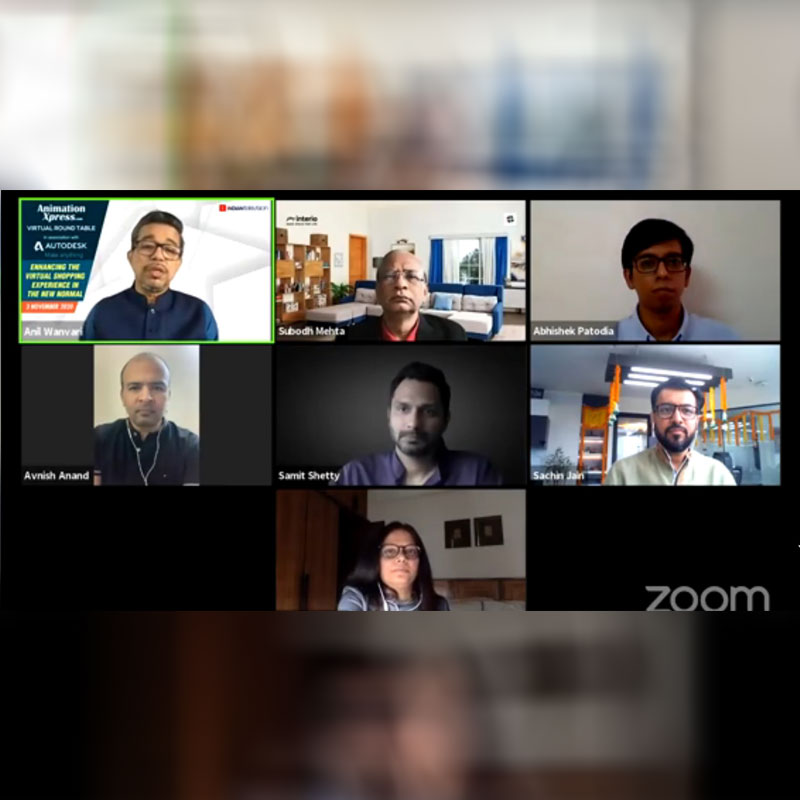
    NEW DELHI: The new-age Indian consumer wants the ease of shopping coupled with the element of traditional look and feel. To cater to this, technology players need to curate solutions that can seamlessly merge the online and offline worlds, as per industry leaders at AnimationXpress.com’s virtual roundtable in association with Autodesk.

    Moderated by Indiantelevision.com founder, CEO, and editor-in-chief Anil Wanvari, the panel discussed how to enhance the virtual shopping experience in the new normal and comprised stalwarts like Carwale SVP (used cars) Abhishek Patodia, Caratlane co-founder and online head Avnish Anand, Hometown CMO Medha Tawde, De Beers India MD Sachin Jain, Autodesk India senior technical sales specialist – media and entertainment Samit Shetty, and Godrej Interio SVP (B2C) Subodh Mehta. 

    Tawde noted that in the furniture industry, it is very important to help consumers visualise the pieces in physical spaces and that’s where the mock rooms in their stores are playing a key role in conversions. She is expecting the technology will bring these visual experiences to life virtually. 

    Mehta suggested, “I would like to tell the technology players that if you really want to create the best virtual experiences, you need to chart out a platform-agnostic customer journey, including the physical experiences, and then pick up those touch-points and create a similar virtual experience. For example, we have store walkthroughs and we have noticed that people themselves like to touch and feel the furniture, they want to open the drawers themselves and see how much space is in there; so we need to replicate it virtually too. The control should be in the hands of the customer.”

    He added that ultra-advanced technologies like scanning physical spaces to take measurements and then using 3D imagery to show how a particular piece of furniture would look in that area, whether it will fit or not, etc, need to be taken care of. 

    Speaking about the jewellery industry, Anand observed that the stumbling block they encounter is how to maintain the authenticity of size and material when using 3D rendering. This is the area where he is counting on some support from tech players. 

    Elaborating the pain points, he said, “It is hard to shoot jewellery because it is shiny. You have to manually edit each piece to make it look hard and the problem with that is that it starts looking fake. Another issue, especially for brands like us operating in the sub-30 category, is with the size of the jewellery. We sell very small pieces but in imagery, it has to be made to look bigger. And that’s also one of the biggest reasons why the return-rate is high in this segment because people are expecting some other size. That is the fundamental problem that needs to be addressed today.”

    However, what has been working really well for the e-commerce industry is the video feature that has solved a lot of problems for the sellers as well as the buyers. 

    Patodia shared that they recently introduced the option for sellers of second-hand cars to upload a video of the vehicle on their platform, which has driven up their number of online consumers. 

    Anand and Tawde also agreed that video calling features and assistance has helped them greatly in scaling their businesses online, especially during the Covid2019 lockdown. 

    Taking cognisance of all the suggestions coming from e-commerce players, Shetty stated that Autodesk is already working on enhancing the experience of virtual selling for both the buyers and the sellers. He highlighted that their focus remains on maintaining and improving the speed and efficiency of their solutions. 

    “To give you an example, we are working with a jewellery client abroad, who is using our solutions to tweak the design of a particular piece virtually, helping customers to customise their piece and see in real-time how it will look,” he stated. 

    During the lockdown, there have been a number of interventions from Autodesk to support the virtual commerce community and Shetty is further trying to improve on those aspects as well. “We made our group conversation tool Shotgun free for all our clients who were working from home to accelerate the communication process. Then, our software like Maya and Max are helping a lot of our clients in real-time 3D rendering processes. We are continuously trying to improve on those offerings,” he concluded. 

  • Paytm payment gateway launches UPI subscription services for businesses

    Paytm payment gateway launches UPI subscription services for businesses

    KOLKATA: Paytm has announced the launch of subscription service for businesses. Named as ‘Paytm Subscriptions’, the service will enable businesses to collect payments from their users via flexible payment methods. The subscribers and customers will be able to choose and pay through their preferred payment option of Patym Wallet, UPI or cards.

    Paytm Subscriptions can support different business models and use cases such as free trials with automatic payments, one-time charge with automatic payments as well as flat or variable charging. Merchants can also integrate the payment option for display on a TV screen or in-app purchases. To provide a seamless experience to users, the payment gateway is built with intelligent features such as pre-debit notifications, smart retry, intelligent routing between multiple bank gateways, card expiry notifications, and intelligent error code handling.

    Paytm vice president Saloni Malhotra said, "We are excited to launch Paytm Subscriptions, which enables companies to receive periodic and timely payments for their services. Businesses of all sizes can integrate flexible payment options for their subscribers. We have already onboarded several leading online platforms and are expecting to bring in more than 1000 businesses within the next 6 months.

    Paytm Subscriptions provides a unique offering to access the largest repository of saved payment instruments – 220+ million Saved Cards, 400+ million Wallets and 100+ milion Saved Bank Accounts. This helps the entire payment process to become faster, with the highest success rate in the industry. Already, popular platforms such as Zee5, Disney+, Epic On, JioSaavan and Gaana, The Hindu among others have started using the service for subscription payments.

  • PhonePe supercharges financial services portfolio

    PhonePe supercharges financial services portfolio

    NEW DELHI: PhonePe announced that it has supercharged its financial services portfolio. The company has added six new products in the insurance and wealth management space in the last four months. PhonePe credits its cutting edge technology platform that encourages continuous innovation, the passion of its people and strong and aligned partners as the key pillars that have helped launch multiple products at a rapid pace despite the lockdown. 

    Insurance and financial services have been deeply under penetrated categories in India due to  problems of distribution, customer education and awareness. PhonePe with its over 230 million user base, is uniquely positioned to solve these problems and get the right product at the right price point to customers across India. What differentiates PhonePe’s offerings is that the products are simple to understand, come with an instant enrollment and are distributed digitally at very affordable prices. What also sets the offerings apart is the partnerships PhonePe has built with industry leaders in both the insurance & mutual funds space. These partners come with deep experience in this space, and have worked very closely with PhonePe to launch tailor-made offerings for its rapidly increasing customer base. 

    PhonePe financial services & payments vice president Hemant Gala said, “PhonePe is building India’s most comprehensive Financial Services platform. Our philosophy has always been to launch customer centric products backed by a deep understanding of customer needs, with simplified payment flows. The customer response to our recent launches has been phenomenal, and we have already become the fastest growing insure-tech distributor in India and have also seen mutual fund investments from over 15,000 pin codes across tier 1,2 & 3 cities and towns.  We will be launching multiple tailor-made products in the financial services space  addressing key use cases and solving critical customer problems by the end of the year.”

    PhonePe head of product management Vishal Gupta added, “We believe that buying insurance and investing in Mutual Fund products should be a simple, frictionless and secure process. All our Financial Service products have been built keeping the above principles in mind. What is also noteworthy is that despite the lockdown, our pace of product development did not slow down and we were able to bring new offerings to the market with the same cadence that we had set for ourselves in the beginning of the year. The deep collaboration, efficient communication and flawless execution across business and products teams made this possible. We will continue to innovate and deliver use case led products while we build out India’s largest Financial Services platform.”

    Here’s a quick timeline view of PhonePe’s new launches:

    The Personal Accident: Launched in July. Offers the customer or its nominee a fixed, lumpsum amount in the unfortunate event of death or total permanent disability of the insured due to an accident. Premium for the same starts from Rs 24 to Rs 480 with sum insured ranging from Rs 1 lakh to Rs 20 lakh.

    The Dengue & Malaria cover: Launched in July. Offers policyholders a fixed cash payout amount on diagnosis and more than 48 hours of hospitalisation due to 6 vector borne diseases including dengue, malaria, japanese encephalitis, kala-azar, chikungunya and filariasis. 

    Hospital Daily Cash: Launched in July. Offers a per day cash payout for upto 15 days on hospitalisation with a minimum 48 hours of hospitalisation payable from second  day onwards. Premiums start from Rs 130 and Sum insured available amount goes upto Rs 75,000

    CoronaVirus Insurance Policy: Launched in April. Offers a cashless and reimbursement payout for diagnosis and hospitalisation due to Covid-19 – upto Rs1 lakh – with prices starting from Rs 396

    Domestic Travel Insurance: Launched in June. Offers an affordable annual insurance cover of up to Rs 5 lakhs for a number of travel-related untoward incidents for Rs 499

    Super Funds: Launched in May. A comprehensive investment solution managed by professional Fund Managers that invests across multiple top equity, gold and debt funds of different mutual fund companies to help investors create long-term wealth in a safer way. Investors can begin investing with as little as Rs 500 per month.

    Follow Tellychakkar for the consumer facing news & entertainment

  • eBay signs MoU with Uttar Pradesh govt for ‘One District One Product’ program

    eBay signs MoU with Uttar Pradesh govt for ‘One District One Product’ program

    NEW DELHI:  eBay today signed an MoU with the government of Uttar Pradesh for its ‘One District One Product’ program. The MoU will enable MSMEs in Uttar Pradesh to leverage eBay’s cross border platform and sell internationally across 190 countries. As part of the MoU, eBay will not only promote local art and crafts but will also help in skill development and self-employment.

    This association will enable ODOP sellers and traders to seamlessly undertake e-commerce retail exports to over 190 markets in the world through a globally established marketplace platform.

    To empower indigenous crafts and goods and support them with a competitive edge, eBay will offer special schemes (pricing and other benefits) curated specifically for sellers and traders associated with the ODOP cell. In addition to this, eBay will train and provide sellers with requisite knowledge and skill-set about various aspects of online retail including listing products online, shipping policies, and product descriptions amongst others to undertake transactions with audiences across the globe.

    Government of UP additional chief secretary (ACS), MSME & export promotion Navneet Sehgal said, “the government is working to catalyze entrepreneurship and creating an ecosystem that promotes better market for outputs, such as handicrafts, leather products, wood & metal craft. At the same time, the MSME sector needs a bridge to swiftly tap hitherto unexplored opportunities and sell indigenous products in the international market.  This is where the role of companies like eBay becomes pivotal. By leveraging partnerships with rural MSMEs and artisans, eBay, like our other eCommerce partners can help ODOP aligned artisans explore endless opportunities across the spectrum of indigenous skills. In order to achieve ‘Make in India’ greater heights, partnerships like these will play an important role in amplifying the multi-sectoral role that MSMEs can play. I hope eBay will also help us to become a global hub for exports of handicrafts and other goods”.

    eBay India country manager Vidmay Naini said, “We are delighted to partner with the Government of Uttar Pradesh’s One District One Product program. Being a true marketplace, eBay has always recognized the immense potential and scope of MSMEs and artisans from across Indian markets. Through this association, we are delighted to introduce the sellers and artisans from Uttar Pradesh to a world full of opportunities across the globe. We will work in conjunction with the state government to further bring about modifications in policies hereby boosting e-commerce retail trade from Uttar Pradesh.”

    “We are strongly in favor of the Hon’ble Prime Minister’s appeal to be local for vocal and promote Indian entrepreneurs globally,” added Vidmay Naini.

    eBay will work closely with Government of Uttar Pradesh ODOP team to onboard sellers and expand their business globally. The association will also allow eBay access to relevant government bodies, industry, and trade associations and initiate meaningful dialogue to ease the norms for e-commerce retail exports in India.

  • Myntra expands international footprint with Myntra Fashion Brands in the Middle East

    Myntra expands international footprint with Myntra Fashion Brands in the Middle East

    NEW DELHI: Myntra has launched Myntra Fashion brands in the Middle East, giving a strong impetus to its international expansion plans. The company has partnered with the leading regional e-commerce platforms, noon.com and namshi.com to offer brands of Indian origin to millions of fashion-forward shoppers in the region. 

    Both Noon and Namshi are a part of the Emaar group, a conglomerate located in the UAE. Noon is a horizontal e-commerce platform with offerings in multiple categories, while Namshi is a vertical platform, focussing primarily on fashion in the premium segment. The brands that have been launched on Noon are, Dressberry, Mast & Harbour, Moda Rapido, Here & Now, Sztori and HRX, while Namshi will list Dressberry, Mast & Harbour, Wrogn and HRX, over the next few weeks. These brands and styles were chosen based on regional trends and consumer preferences. 

    With this entry of the Myntra Fashion Brands into the region, the company is largely betting on casual wear categories, which form a major portion of the business in its domestic market. This is also aligned with the latest trends indicating a recent shift towards T-shirts, comfort bottoms and activewear, prompting a focus on similar categories. This shift in trend is propelled by a considerable change in lifestyle, owing to the ongoing pandemic. Over 75 per cent of the styles being exported by Myntra to these markets are developed in India. 

    Myntra CEO  Amar Nagaram said, “We are elated to announce our overseas expansion. This is a significant milestone in our journey so far and marks the next phase of growth for Myntra. Our research identified high levels of potential channels across the globe offering significant opportunities in the online fashion segment. Amongst these, the Middle East stood out in terms of the audience’s demographic profile, extremely high mobile penetration, the similarity in fashion preferences and a large population of Indian origin. We are looking forward to a 5X growth from the partnership over the next two years. Myntra will continue to explore new markets in order to build brands of international repute and expand its base of global consumers.”

  • Chicco partners with Myntra to accelerate online retail sale

    Chicco partners with Myntra to accelerate online retail sale

    New Delhi: Chicco, the brand that takes care of multiple needs of babies with innovative offerings in nursing, cosmetics, toys, travel and fashion has tied up with leading e-commerce platform Myntra for fashion range.

    Chicco is now ramping up its focus on the digital segment for the Indian market to expand its customer base. Chicco is now showcasing fabulous fashion collection and trendy accessories on the Myntra platform for customers to directly shop from the comfort of their living room. Chicco is present in the baby personal care category also on Myntra and soon plans to launch footwear range. This seems to be the right time for brands to launch their product range online through Specialist e-commerce portals especially when the consumer is shifting more towards e-commerce for shopping and other utilities due to the current scenario.

    As India’s leading destination for fashion and lifestyle products, Myntra has a large base of fashion-forward and loyal customers across the country, making it the perfect partner for Chicco to spread its footprint online in India. Myntra is also today, a leading destination for kids to wear with more than 400 international and domestic brands on its platform.

    Artsana India Chicco CEO Rajesh Vohra said, “We have collaborated with Myntra to give digital experience to our consumers. It’s all the more important in the current situation than ever. The association is very encouraging in terms of the response we have received. The association has helped Chicco fashion range reach our potential consumers throughout the country which was available only in Chicco Exclusive Stores so far.”

    Myntra CEO Amar Nagaram added, “Chicco is a world-renowned brand known for its range and quality of baby products, and is also one of the leading brands in India in the segment. Adding the brand to our portfolio has not only strengthened our offering, but also created the ground for millions of parents to shop for quality products for their kids from the safety of their homes. The kids’segment as a whole is witnessing strong momentum on our platform at present and we believe this trend will continue to shape the future of the category with more and more shoppers across the country opting for buying online.”

    Follow Tellychakkar for the consumer facing news & entertainment