Category: e-commerce

  • Flipkart’s Big Billion Days 2025 turns TV shows into shopping spectacles

    Flipkart’s Big Billion Days 2025 turns TV shows into shopping spectacles

    MUMBAI: Who said sales are just about slashed prices and speedy deliveries? Flipkart’s The Big Billion Days 2025 rewrote the rules, turning the country’s biggest online shopping event into a nationwide celebration of culture, comedy, fashion, and flair.

    This year, India’s homegrown e-commerce giant went far beyond banners and bargains. Teaming up with WPP Media, Flipkart turned the spotlight on an “integration-first” strategy, embedding itself into the storylines of some of India’s most-watched shows,  transforming everyday entertainment into moments of branded magic.

    On Bigg Boss 19, Flipkart dialled up the drama with its in-house “fashion icon” contest. Contestants took on daring style challenges while fans voted in real time, effectively turning the Bigg Boss house into a high-stakes fashion runway. With Salman Khan’s signature flair and a whole lot of attitude, Flipkart cemented its connection with India’s youth and trendsetters.

    Over in Taarak Mehta Ka Ooltah Chashmah, Flipkart became part of the fabric of Gokuldham society. For three days, characters explored The Big Billion Days as part of their daily lives. From Jethalal testing out denim fits to the Mahila Mandali dissecting discounts, the storyline blended comedy, tradition and relatable shopping chatter to position Flipkart as a true enabler of lifestyle, not just logistics.

    In the South, Flipkart struck an emotional chord on Indian Idol Telugu. Through a two-episode integration centred on the theme “Kuch bhi ho sakta hai,” contestants shared surprise wishlists and received unexpected product reveals, transforming a singing competition into a stage for dreams and discovery.

    Flipkart vice president of growth and marketing Pratik Shetty said, “The Big Billion Days is more than a sale, it’s a tradition that millions of Indians eagerly await. This year, with WPP Media, we brought that emotion alive in the shows people love most.”

    WPP Media South Asia president-client solutions Navin Khemka added, “Culture is the new currency of commerce. By weaving the brand into beloved narratives, we transformed a sale into a shared cultural moment.”


  • Stahl Kitchens and Swiggy Instamart serve up speedy kitchenware

    Stahl Kitchens and Swiggy Instamart serve up speedy kitchenware

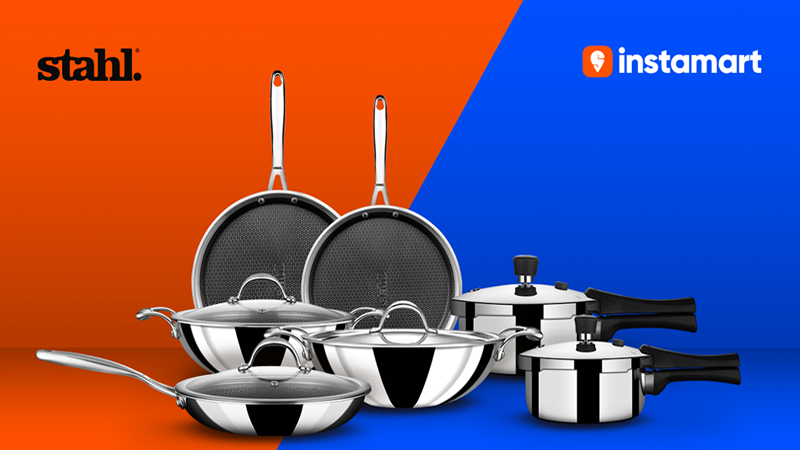
    MUMBAI: Stahl Kitchens, one of India’s fastest-growing premium cookware brands, has partnered with Swiggy Instamart to bring its signature tawas, kadhais, frypans, and cookers to doorsteps in record time, sometimes within 10 to 15 minutes.

    By joining the quick commerce revolution, Stahl is reshaping how consumers shop for kitchen essentials. What once took a week to deliver can now arrive before your dough rises, as the brand debuts across key metros including Mumbai, Delhi ncr, Bengaluru, Hyderabad, Kolkata, and Gurugram.

    The curated selection on Instamart features Stahl’s acclaimed artisan hybrid and artisan triply ranges, known for their durability, residue-free cooking, and chip-proof performance. Also available are the sleek xpress cookers in 1 litres, 1.5 litres, and 2.5 litres variants, designed for fast, safe, and efficient cooking. To mark the launch, customers can enjoy up to 15 per cent off on cookers and 20 per cent off on other cookware for a limited time.

    “India’s culinary landscape revolves around three essential pieces of cookware: tawas, pressure cookers, and kadhais. The inclusion of frypans on Instamart reflects the evolving aspirations of Indian households embracing global cooking trends,” said Stahl Kitchens director & CEO Dhruv Agarwal. 

  • YouTube adds Nykaa and Purplle to shopping affiliate programme as beauty commerce booms

    YouTube adds Nykaa and Purplle to shopping affiliate programme as beauty commerce booms

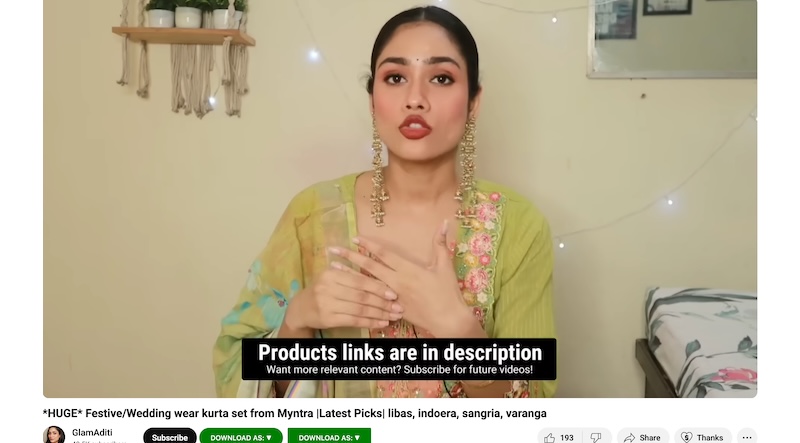
    MU7MBAI: YouTube is turning beauty tutorials into storefronts. The video platform has added Nykaa and Purplle to its shopping affiliate programme, expanding creators’ ability to monetise content as shopping-related watch time in India jumps 250 per cent year-on-year.

    The move doubles down on beauty and lifestyle, a category where 89 per cent of Indian shoppers say YouTube helps them make confident purchase decisions. Creators enrolled in the programme can now tag products from Nykaa and Purplle alongside existing partners Flipkart and Myntra, earning commissions when viewers buy.

    More than 40 per cent of eligible creators in India have signed up since the programme launched a year ago, tagging products in over three million videos. Over 200 million logged-in users in India have made shopping-related searches on YouTube, creating what the platform calls a “complete monetisation ecosystem”.

    “The next era of video commerce is already being defined by India’s vibrant creator economy on YouTube,” says YouTube India managing director Gunjan Soni. “We are scaling content-driven shopping from a successful programme to a complete monetisation ecosystem.”

    YouTube is sweetening the deal with artificial intelligence tools that automatically tag products the moment they’re mentioned in videos, capturing viewer interest at its peak. The platform will also test automatic product identification later this year.

    Flipkart vice president of growth and marketing Pratik Arun Shetty, frames the partnership as commerce meeting creativity. “India’s creator economy is transforming how people engage with brands,” he says. Myntra reports creator collaborations have grown threefold in the past year, whilst Nykaa positions itself as a pioneer in content-led commerce.

    YouTube is also rolling out tools to make brand deals more lucrative: a flexible format for inserting and replacing sponsored segments, links to brand sites in Shorts, and a Creator Partnerships Hub inside Google Ads to connect advertisers with influencers.

    It’s a bet that authenticity converts. Whether creators cash in or merely chase clicks will depend on whether viewers trust recommendations—or just skip to the comments.

  • History in a hurry as Instamart delivers Gandhi’s 1969 centenary edition

    History in a hurry as Instamart delivers Gandhi’s 1969 centenary edition

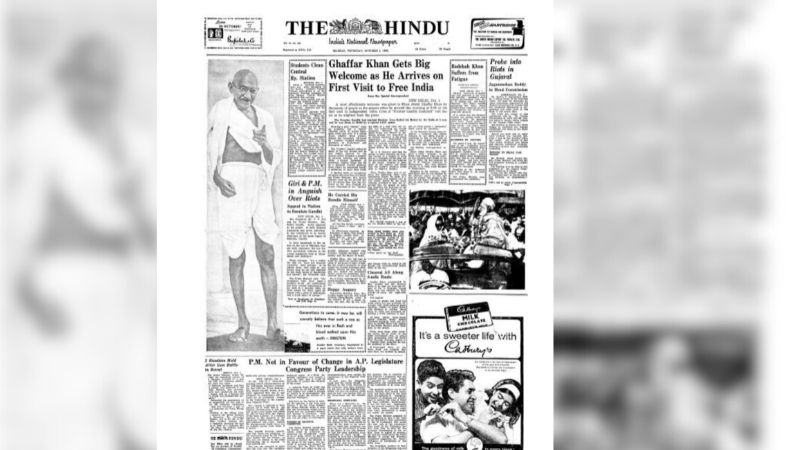
    MUMBAI: Who says history takes time? This October 2, Instamart is making the past arrive faster than you can brew your morning chai delivering a limited-edition reprint of The Hindu’s 1969 archival issue that marked Mahatma Gandhi’s 100th birth anniversary.

    The 23-page collector’s edition, released in partnership with The Hindu, offers a page-by-page journey through Gandhi’s life from his early activism in South Africa to the Salt March of 1930, the Quit India Movement, and finally, India’s freedom and his assassination in 1948. The reprint includes rare photographs: Gandhi with Nehru during the Quit India call, reading letters at Mani Bhavan in 1934, striding along Juhu Beach in 1944, and collecting contributions for Dalits in 1946.

    The edition doesn’t stop at visuals. It also brings back The Hindu’s first-ever editorial mention of Gandhi from 1896, his direct communications with the paper, original coverage of Independence in 1947, and a special 2003 supplement from The Hindu’s 125th anniversary.

    THG Publishing pvt. ltd., CEO Navaneeth L V said, “This commemorative issue reflects not just Gandhi’s extraordinary journey, but also The Hindu’s role as a chronicler of India’s freedom struggle. We are proud that Instamart will help carry this heritage to a new generation of readers.”

    Instamart, AVP & category head Manender Kaushik added, “Bringing this historic edition to readers via Instamart is our way of connecting India’s rich past with today’s fast-paced lifestyles. It’s more than a newspaper; it’s a tangible experience of history and a collectible to be treasured, delivered to your doorstep in minutes.”

    Available in Chennai, Bengaluru, Mumbai, Delhi and select cities, the edition will be delivered in just 10 minutes, giving readers a chance to hold a slice of history without leaving home. Alongside, Instamart is also stocking up on festive essentials from gourmet treats to home décor for those looking to pair nostalgia with celebration.

    For once, the Father of the Nation’s story won’t take a march, it’ll simply knock at your door.

  • Flipkart bags a trip as Marriott Bonvoy turns carts into passports

    Flipkart bags a trip as Marriott Bonvoy turns carts into passports

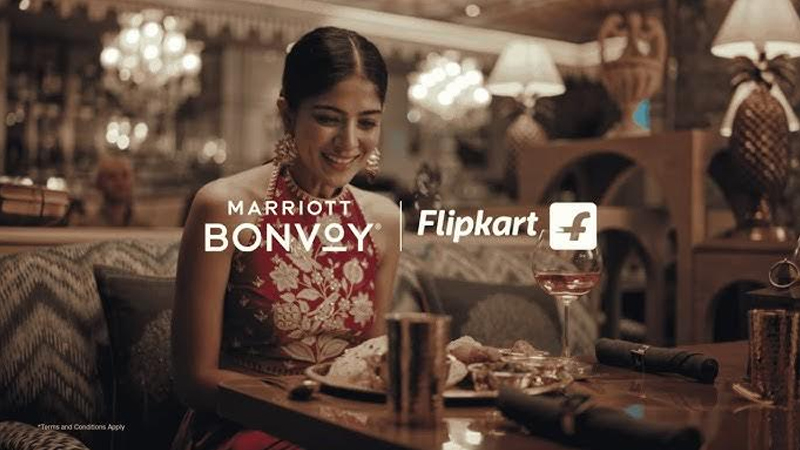
    MUMBAI: Who knew a pair of “Bali earrings” could land you in Bali? Or that “Korean skincare” could be your boarding pass to Seoul? Flipkart and Marriott Bonvoy have pulled off India’s first dual loyalty integration, proving that sometimes your cart really can take you places.

    The campaign, cheekily titled “Your Cart Takes You Places” by 22Feet Tribal Worldwide, hijacks Flipkart’s own search bar. The agency crunched through 300-plus keywords and cherry-picked the top 10 that doubled up as travel destinations. For two weeks, when users typed in searches like “Bali” or “Korean skincare,” the dropdown offered not just products but also Marriott Bonvoy stays in Bali or South Korea.

    It’s a neat twist on loyalty turning points and purchases into serendipitous upgrades. And the films that accompany the campaign pile on the humour, showing shoppers obliviously browsing their way closer to dream getaways.

    “Our partnership with Flipkart is a first-of-its-kind move that connects two different worlds everyday shopping and global travel through a shared loyalty currency,” said a Marriott International spokesperson. “We’re making rewards interchangeable and aspirational while still being local and accessible.”

    A Flipkart Travel spokesperson agreed, “This partnership bridges shopping and travel. Integrating Marriott Bonvoy into Flipkart search makes discovery delightful, and connecting Flipkart Supercoins with Marriott Bonvoy creates a more meaningful rewards ecosystem.”

    The creative spark came from simple human envy, according to 22Feet Tribal Worldwide national creative head Vishnu Srivatsav, “A unique partnership needed a unique experience. We didn’t just treat it as advertising but built on the experience itself. It drew from search habits on Flipkart, and when we told the story, we leaned on envy.”

    The campaign didn’t stop at Flipkart’s app. It spilled over to X (formerly Twitter) with chatter around “happy accidents,” rolled out influencer collaborations on social media, and nudged users to link accounts for a seamless shop-to-stay journey.

    At its heart, the campaign makes one point clear: every click on Flipkart could be a step closer to a Marriott Bonvoy check-in. Suddenly, loyalty feels less like points and more like postcards.

  • Amazon expands Anish’s empire across Middle East and Africa

    Amazon expands Anish’s empire across Middle East and Africa

    DUBAI: Amazon has promoted a veteran marketing executive to oversee both deal-making across the Middle East and North Africa and marketing operations in South Africa, as the American e-commerce giant doubles down on emerging markets.

    Anish  Rajan, who previously orchestrated Amazon India’s flagship sale events generating over $2 billion in revenue, has been handed the expanded role effective September 2025. His promotion adds south African marketing responsibilities to his existing mandate as head of deals and events across the United Arab Emirates, Saudi Arabia and Egypt.

    The appointment reflects Amazon’s growing ambitions in regions where it sees significant untapped potential. Rajan’s west Asian operation already contributes 23 per cent of the region’s annual revenue, whilst launching Amazon-first innovations that have since been rolled out globally.

    His track record spans 15 years across e-commerce, consumer electronics and logistics. Before joining Amazon in 2020, he held senior marketing roles at Samsung Electronics and led marketing communications for fashion platform Jabong during its high-growth phase.

    At Amazon India, Anish spearheaded the deals programme that accounted for 39 per cent of store revenue, building scalable systems and customer experience improvements that were subsequently adopted across Amazon’s global marketplaces.

    His earlier career included stints at Micromax, where he led brand strategy and product launches, and DHL Express, where he managed global partnerships including Formula 1 and Manchester United, overseeing a $30 million retail portfolio.

    The dual-region role positions Anish at the centre of Amazon’s emerging markets strategy, where the company is competing fiercely with local players and other global platforms for market share.

  • CTV clicks with consumers as screen time turns into shopping time

    CTV clicks with consumers as screen time turns into shopping time

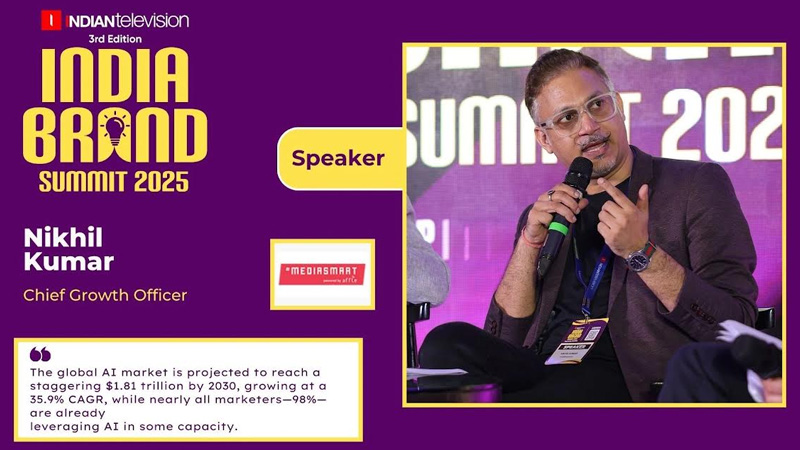
    MUMBAI – From binge-watching to binge-buying, connected TV is rewriting India’s festive shopping playbook. At the 3rd India Brand Summit 2025, Nikhil Kumar, chief growth officer at mediasmart, joined Indiantelevision.com group founder, chairman & editor in chief Anil NM Wanvari to chart how connected TV (CTV) has evolved from a niche experiment during COVID to a Rs 2,500 crore ad magnet today.

    “When we first spoke about it five years ago, we said CTV would change the way the world perceives television,” Kumar recalled. “Back then it was new, almost niche. Today there are dedicated CTV conferences, panels, and players from OEMs and ad tech firms to SSPs and publishers. Everyone knows the power of CTV.”

    The growth numbers back him up. India’s CTV ad spends are projected to touch Rs 2,500 crore in 2025, reflecting 40 per cent growth, as per industry reports. “That’s one of the fastest-growing slices of media we’ve ever seen,” Kumar noted.

    What’s driving this growth? For Kumar, the answer lies in how festive season advertising has shifted. Consumers now hop seamlessly across screens mobiles in the morning, laptops at work, and smart TVs in the evening. “We’ve moved from asking where the ad is shown to who the ad is shown to,” he said.

    Acquired by Affle group, mediasmart has positioned itself not just as a CTV player but as an omnichannel partner. “No consumer lives on a single screen. People are constantly engaging with multiple touchpoints mobile, CTV, even OOH. Our job is to help advertisers minimise frequency fatigue and maximise relevance across devices,” he explained.

    Kumar stressed that AI is now the backbone of ad delivery tracking attention, optimising frequency, and ensuring seamless user journeys from TV to mobile to purchase. From QR codes on screen to shoppable ads and interactive formats, engagement has become more dynamic and measurable.

    “Ads are evolving. A campaign today might prompt a viewer to scan a code, explore an offer on mobile, or engage with gamified elements on their TV. This interactivity is making advertising far more actionable,” Kumar said, pointing to case studies where TV-to-mobile commerce spiked festive sales.

    Brands too have gotten sharper. From weather-optimised ads in Mumbai’s monsoons to contextual integrations in daily soaps, marketers are weaving themselves seamlessly into storytelling. “Consumers don’t want repetition. They want relevance,” he quipped.

    Looking ahead, Kumar sees three big shifts:

    ●    AI-powered personalisation that adapts by region, language, and timing.

    ●    Shoppable and interactive ads that nudge viewers from watching to buying.

    ●    Better measurement, as agencies and OEMs collaborate to unify fragmented ecosystems.

    Kumar signed off with a reminder: “Brands should think beyond ads and impressions. Integrated journeys connecting CTV with offline sync, store visits, and mobile engagement will deliver real festive impact.”

    As the festive season nears, one thing is clear, CTV is no longer just screen time, it’s shopping time.

  • Drawer to dollar Cashify unlocks India’s 219.7 billion dollar resale boom

    Drawer to dollar Cashify unlocks India’s 219.7 billion dollar resale boom

    MUMBAI: Phones that gather dust in drawers may soon gather dollars instead. With the refurbished smartphone market pegged to hit a staggering 219.7 billion dollars by 2033, India is powering up to become the world’s recycling and recommerce hub and Cashify’s Great Indian Upgrade 2025 whitepaper shows just how big this reboot really is.

    Drawing insights from 10,000 survey respondents, proprietary marketplace data, and reports from IDC, Counterpoint and Canalys, the study maps how resale culture has shifted from hush-hush grey channels to an increasingly mainstream movement. Yet, the so-called “Drawer Economy” remains a colossal untapped treasure chest 70 per cent of Indians admit to hoarding two to three unused phones at home, signalling billions of rupees in locked-up value.

    The shift in behaviour is undeniable: 33 per cent of consumers now sell old phones to fund upgrades, 40 per cent are lured by competitive buyback offers, and 63 per cent dispose of devices within six months of upgrading. But the grey market still dominates, with 77 per cent of resale happening informally, Cashify argues this highlights the urgent need for trusted, transparent platforms.

    India shipped 151 million smartphones in 2024, up 4 per cent year-on-year, with the average selling price climbing to Rs 22,100. While Apple’s shipments surged 35 per cent, making India its fourth-largest global market, the brand also dominates resale: it commanded 64.5 per cent of refurbished sales in 2024 and 62.9 per cent in the first half of 2025. Three in five refurbished buyers picked Iphones driven by steady demand for the iPhone 14 Pro, iPhone 13 Pro Max and iPhone 12 Pro in the premium Rs 60,000-plus bracket, which itself grew 33 per cent YoY.

    Following Apple are Oneplus (10.2 per cent), Xiaomi (9.7 per cent), Samsung (6.1 per cent) and Vivo, which is showing the fastest growth, rising from 2.1 per cent in 2024 to 3.2 per cent in H1 2025. Oppo and Realme follow at 2.4 per cent and 1.9 per cent respectively.

    While Delhi, Bangalore and Mumbai remain the epicentres of trade-ins and refurbished sales, tier-2 and tier-3 cities are catching up fast, signalling that circular tech culture is spreading beyond metros.

    Cashify has also unveiled India’s first Repairability Index, ranking brands on spare-part availability and repair scores addressing one of the biggest barriers to longer device lifecycles. A solid 57.9 per cent of consumers say they prefer repair over replacement, though cost (53.2 per cent) and part shortages remain major hurdles.

    Backing this push is Cashify’s “repair-first, recycle-always” ecosystem, powered by 200 plus physical stores, a 10,000 plus retailer network, and an AI-driven 80,000 sq. ft. refurbishment facility.

    Awareness is on the rise: 76 per cent of respondents could correctly define “refurbished” as “like new tested and repaired by experts.” Of all refurbished buyers, 60 per cent chose Apple, with purchasing patterns shifting upwards: 32.4 per cent spent Rs 21,000–35,000, while 17.1 per cent spent over Rs 50,000. The top drivers? “Like new at lower cost” (50.8 per cent), “budget fit” (32.4 per cent) and sustainability (8 per cent).

    What builds trust? A 12-month warranty tops the list (52.5 per cent), followed by detailed device reports (16.9 per cent) and “try before you buy” options (16.9 per cent).

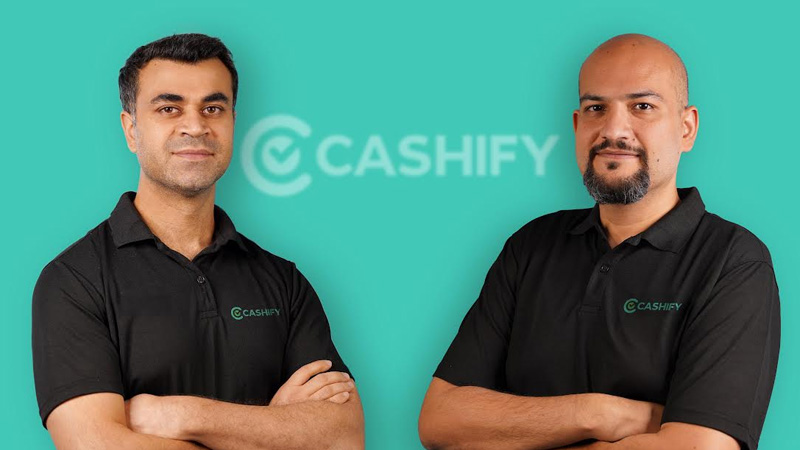
    “India’s 219B dollars resale revolution isn’t just a market opportunity, it’s a chance to redefine how technology is consumed,” said Cashify co-founder & CEO Mandeep Manocha. “Our findings clearly show consumers are embracing resale, yet the untapped ‘Drawer Economy’ highlights the urgent need for trusted platforms.”

    Cashify co-founder & CMO Nakul Kumar added: “For too long, old phones have been treated as clutter rather than capital. India’s upgrade culture is shifting from impulsive consumption to mindful circulation. Repairability is key when fixing devices becomes easier, sustainability becomes everyday action.”

    The whitepaper also calls for supportive policy frameworks, from easing customs on refurbished imports to tax incentives for sustainable recycling and digital traceability for e-waste.

    As India transitions from hoarding to habit, Cashify’s data-rich report positions recommerce not just as a market disruptor but as a mainstream economic force, one that puts forgotten phones back in play, turns drawers into goldmines, and powers India’s leap towards a greener digital future.

  • Zaggle swipes big with Mastercard in co-branded card power play

    Zaggle swipes big with Mastercard in co-branded card power play

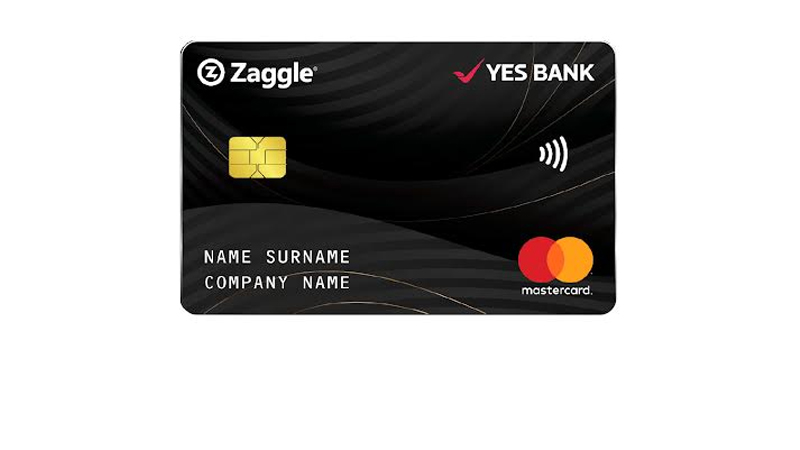
    MUMBAI: When Zaggle and Mastercard join forces, you know the swipe game just levelled up. In a move set to reshape India’s prepaid card landscape, Zaggle Prepaid Ocean Services Limited has inked a five-year deal with Mastercard Asia/Pacific Pte. Ltd., paving the way for a new wave of co-branded domestic prepaid cards.

    The agreement, effective from 22 September 2025 and running until 30 September 2030, will see Mastercard incentivise Zaggle to launch and promote these cards on its network. The deal is positioned as a customer business agreement, but in the wider payments ecosystem, it’s a strong signal that prepaid solutions are no longer niche, they’re going mainstream.

    Zaggle managing director Avinash and CEO Ramesh Godkhindi confirmed the collaboration in a regulatory filing, noting that the tie-up is fully aligned with SEBI’s disclosure requirements. Importantly, there’s no related party angle here, the deal is clean, international in origin, but domestic in focus.

    For Zaggle, this partnership means more than just plastic in wallets, it’s about scaling digital payments for an India that is rapidly going cashless. With Mastercard’s global heft backing its distribution, the co-branded cards are expected to target a wide consumer base, from urban professionals to emerging Tier 2 plus spenders looking for secure, flexible, and reward-heavy payment tools.

    The timing couldn’t be sharper. With India’s digital transaction volumes already scaling new highs and festive spending season underway, the Zaggle-Mastercard alliance is poised to capture both consumer trust and transaction value.

    By the numbers:

    ●    Agreement duration: 22 September 2025 – 30 September 2030

    ●    Nature: Domestic prepaid card co-branded with Zaggle on Mastercard’s network

    ●    Structure: Internationally awarded, domestically executed

    ●    Consideration: Mastercard incentivising Zaggle for launch and promotion

    As fintech partnerships continue to blur the lines between consumer convenience and financial innovation, Zaggle’s latest move signals that the prepaid card is no longer the poor cousin of credit, it’s a rising star. With Mastercard in its corner, Zaggle isn’t just playing the payments game; it’s aiming to rewrite the rulebook.

  • Flash AI clicks with shoppers bringing smart buys to 100 plus countries

    Flash AI clicks with shoppers bringing smart buys to 100 plus countries

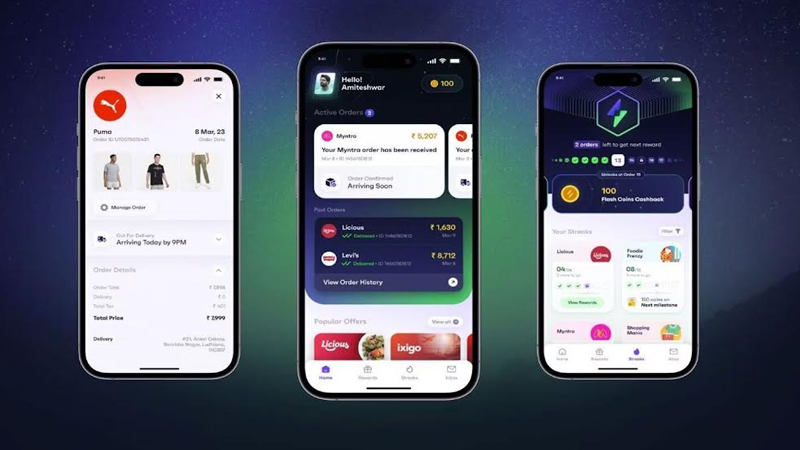
    MUMBAI: Shopping just got a supercharged upgrade. Flash.co has unveiled Flash AI, a first-of-its-kind AI Shopping Assistant designed to make buying easier, smarter and cheaper for over 1 billion ecommerce shoppers worldwide. Launched across 100 plus countries, the tool promises to cut through the online clutter and help users make faster, better-informed decisions.

    The Bengaluru-headquartered startup, founded by ex-Flipkart SVP Ranjith Boyanapalli and backed by Blume Ventures, Global Founders Capital and Peer Capital, introduces a clever twist simply add flash.co/ before any product URL, and Flash AI instantly generates an AI-enhanced product page. Shoppers are served an AI summary compiled from sources like Youtube, Reddit and expert blogs, while real-time price comparisons across multiple online stores ensure no one overpays.

    “With Flash AI, we aim to craft a commerce intelligence layer that helps shoppers make better, faster decisions,” said Flash.co founder & CEO Ranjith Boyanapalli. “Built on insights from over 2 billion anonymised data points, Flash AI will lead the global shift into AI-driven commerce, setting a new standard for the industry.”

    The launch comes at a time when global ecommerce is set to cross 7 trillion dollars, with 30 million plus stores and tens of billions of SKUs vying for attention. With 78 per cent of shoppers admitting to feeling overwhelmed by too many choices, Flash AI’s pitch is timely: clear, authentic insights and the best price in seconds.

    Beyond discovery and comparison, the platform also helps shoppers track orders, refunds, warranties and spending. Available via the Flash website, WhatsApp and mobile app, Flash AI is betting that when it comes to ecommerce, intelligence pays literally.