Category: Broadband

  • Reliance Jio to see phase-wise launch in 2015

    Reliance Jio to see phase-wise launch in 2015

    MUMBAI: The annual general meeting (AGM) of Reliance Industries was much awaited. With the talk around the company only growing in the past few weeks after it acquired Network18, eyes were fixed on the probable outcome of this meeting. The 40th AGM which was held today, saw RIL chairman Mukesh Ambani highlighting the future of the much awaited 4G broadband network in the country under the brand of  Reliance Jio.


    “I had shared the vision of this initiative, Jio- of a digital India- last year and of the unique opportunity that we have to maximise the benefits of the digital age. Digital services will help contribute significantly to the Indian economy and help improve lives of our 1.25 billion countrymen,” he said while addressing shareholders at the AGM.


    He also informed the shareholders that limited set of trials for Jio are already underway and the expanded trials would begin from August 2014 which would continue through 2014 and early 2015. “The year 2015 will see the phased launch of Reliance Jio across India. Millions of customers would have started to use the digital platform and services in their daily lives. The fruits of the tremendous value created by this (Jio) Rs 70,000 crore initiative would start to flow,” he stated.


    The broadband service will cover all states at launch accounting for 90 per cent urban India and 215,000 villages. Eventually it will cover over 600,000 villages. “They would ensure that every Indian has access to the state-of-the-art digital connectivity and services that are on par with or better than anywhere else in the world,” said Ambani proudly. 


    Assuring the shareholders about its future, Ambani emphasised, “Reliance Jio will be one of the largest job-creating and wealth-creating business initiatives in India.” Currently 10,000 full time employees are working on Jio along with 30,000 professionals from Reliance’s partners and vendors across the world. This apart, he said that 100,000 people are working across India in creating the digital infrastructure backbone for the network. “Millions of new entrepreneurs and jobs can be expected to spring up in the tertiary and secondary sectors in new and innovative digital enterprises and services,” he added.


    Throwing light on the reason for acquisition of Network18, Ambani said, “The acquisition through an open offer of Network18 media and investments and its subsidiary TV 18 broadcast by Independent Media Trust, the sole beneficiary of which is Reliance Industries is one aspect of the digital services play.” He stated that this would strengthen its 4G business at the intersect of telecom, web and digital commerce and the media through a suit of premiere digital properties.


    The reason for strengthening its large projects, one of which is Jio is to get Reliance Industries closer finding its way into the presetigious list of  Fortune 50 companies. He added: “Our efforts and focus over the next two years will be to intensify these initiatives and have them reach out to more citizens across the social spectrum. Reliance will be moving from investing in India’s economic future to integrating deeper with India’s social fabric.” 


    The AGM was also significant as it saw the appointment of Mukesh Ambani’s spouse Nita Ambani on the Reliance Industries board. Ambani stated that she was being appointed – as she was an “accomplished individual, the chairperson of the group’s CSR initiative, Reliance Foundation, which has done exceedingly well – “for furthering the group’s growth agenda.”


    Industry watchers have been speculating  whether she will have a role to play in the Network18 group, which RIL is in the process of acquiring totally. The megacorp has denied that this “will come to pass, at least for now.”

    Stay tuned in!!!


  • Time Warner Cable to offer free Wi-Fi to business internet customers

    Time Warner Cable to offer free Wi-Fi to business internet customers

    NEW DELHI: Time Warner Cable Business Class (TWCBC), a provider of communication services for enterprises, is to offer its free Wi-Fi hotspot solution to their business internet customers across all TWCBC markets.


    This solution will enable businesses to offer their customers Wi-Fi access on any Wi-Fi enabled device including smart phones, tablets and laptops, said TWCBC in a statement.


    According to a TWCBC commissioned survey in May, 80 per cent believe their customers expect free Wi-Fi and also rank it as a top way to attract new customers, but 43 per cent of businesses offer it.


    The Wi-Fi access point comes with its own internet connection to ensure security to the business’s private internet traffic — with no interference from their public Wi-Fi internet traffic.


    Enterprise users will benefit as the solution provides a self-service management portal. The business owner can configure the service to require a password for free access or set daily time allotments for free access, ranging from 15-60 minutes. Owners can add their business name, logo and marketing message to the Wi-Fi welcome webpage.


    TWCBC provides signage and marketing materials to the business to promote Wi-Fi availability on-site, also helping attract more customers.

  • Asianet Selects Cisco Technology to Deliver Next Generation Broadband

    Asianet Selects Cisco Technology to Deliver Next Generation Broadband

    MUMBAI: Asianet today announced that it has selected Cisco to deploy DOCSIS 3.0, a next-generation cable broadband network which is a key component of the Cisco IP NGN architecture. This technology increases upstream and downstream speeds to Asianet broadband customers by offering speeds of up to 300 Mbps per subscriber. DOCSIS 3.0 will help Asianet to achieve ultra-high speeds and will help enable the multi-service operator (MSO) to deliver more content over existing networks. The deployment of DOCSIS 3.0 will also allow Asianet to offer broadband services with bandwidth far superior to that of mobile Internet service providers.


    In today’s video-led Internet community, a superior HD video experience on cable TV as well as on broadband has become absolutely imperative. Asianet and Cisco are working together to offer this enhanced video experience to the end consumer. The introduction of DOCSIS 3.0 is also expected to change the business dynamics for Asianet in Kerala, as the state observes Phase III of cable digitalisation. With the deployment of this technology, Asianet will be uniquely positioned to offer an immersive video experience on the same coaxial cable that delivers its high-quality digital video.


    DOCSIS 3.0 technology will help enable Asianet to offer fiber-equivalent speeds on its HFC (Hybrid Fiber Coaxial) networks at an economical price. While GPON (Gigabit Passive Optical Network) is capable of providing 100 Mbps to each home, the cost of building and maintaining a GPON-based fiber network is much more expensive and skilled than with an HFC network. DOCSIS technology allows cable operators to reuse their existing cable plants to offer broadband services by upgrading them to two-way networks.


    As the largest cable TV and Internet service provider in Kerala, India, Asianet has plans to fast-track the deployment of DOCSIS 3.0 modems to deliver an impressive Internet surfing experience to its 200,000 subscribers. The company is one of the early adopters of DOCSIS 3.0 and is offering its cable TV consumers an unrivalled broadband experience and revolutionary consumer entertainment.


    Supporting Quotes: Mr. G. Sankaranarayana, President and Chief Operating Officer, Asianet Satellite Communications Ltd: “Today’s consumers are evolving and demanding more from their cable service providers. We decided to renew our strategies and offerings with a focus on delivering compelling customer services. We are already seeing a lot of appetite for our new offerings in the market and will be the first MSO to offer speeds of up to 50 Mbps per subscriber in the state, in the first phase, followed by 100 Mbps service in phase 2. We needed a technology that could help us deliver superior customer experiences and help us in being a class apart from the competition. And Cisco was our obvious choice, given the depth of understanding it has of the pay-TV and broadband infrastructure business.”


    Mr. Sandeep Arora, Regional Manager, Service Provider, Cisco India & SAARC: “Our engagement with Asianet has the potential to transform the cable and broadband industry in Kerala. Asianet will be delivering a differentiated experience to its subscriber homes by enabling high-speed broadband beyond 100 Mbps on the same cable as digital broadcast channels. Considering the highly competitive and fragmented broadband market, this deal propels Asianet to the pinnacle of the industry in the region. Our IP Next-Generation Network (IP NGN) architecture helps enable convergence of networks and services, providing an immersive experience to cable subscribers. Asianet is getting ready to deliver the connected life to consumers, addressing their immediate needs while laying the foundation for rapid deployment of next-generation services.”

  • Interim Budget: Communications and Information Technology Ministry

    Interim Budget: Communications and Information Technology Ministry

    NEW DELHI: The budgetary allocation in the vote-on-account for 2014-15 for convergence, communications and strategic electronics in the Communications and Information Technology Ministry has gone up to Rs 27 crore.


    In the interim budget (vote-on-account) for 2014-15 presented in Parliament for the first four months of the new year 2014-15 in view of the general elections later this year, the amount set aside in this sector which includes broadband and broadcast convergence has gone up from Rs 15.75 crore in the revised estimates but is marginally lower than the budgetary allocation of Rs 28 crore in the 2013-14 budget.


    An explanatory note says this includes supporting research and development in convergence communications, broadband technologies and strategic electronics. The indigenous efforts are aimed at facilitating developments in emerging, next generation convergence communication, broadband, broadcast and strategic technologies for inclusive and sustainable growth in the country.


    In addition, there is budgetary allocation of Rs 7 crore for Media Lab Asia, which is far less than the revised estimates of Rs 12.75 crore for 2013-14. Media Lab Asia is a Section 25 company aimed at bringing the benefits of the most advanced information and communication technologies to the common man and the needy people.


    Keeping in view large-scale incidents of hacking or damaging websites, the budget for cyber security has gone up three times from Rs 36.87 crore in the revised estimates for 2013-14 to Rs 114 crore.


    The explanatory note says that cyber security is gaining adoption in all types of products for a variety of reasons including national security and appreciation of the consequences of insecurity, and the grants to the Indian Computer Emergency Response Team (Cert-in)

  • Gartner Says Mobile Advertising Spending Will Reach $18 Billion in 2014

    Gartner Says Mobile Advertising Spending Will Reach $18 Billion in 2014

    MUMBAI: Growth from 2015 to 2017 Will Be Fueled by Improved Market Conditions


    Global mobile advertising spending is forecast to reach $18.0 billion in 2014, up from the estimated $13.1 billion in 2013, according to Gartner, Inc. The market is expected to grow to $41.9 billion by 2017. Gartner said that display formats will make up most of the revenue, but video will show the highest growth.


    “Over the next few years, growth in mobile advertising spending will slow due to ad space inventory supply growing faster than demand, as the number of mobile websites and applications increases faster than brands request ad space on mobile device screens,” said Stephanie Baghdassarian, research director at Gartner. “However, from 2015 to 2017, growth will be fueled by improved market conditions, such as provider consolidation, measurement standardization and new targeting technologies, along with a sustained interest in the mobile medium from advertisers.”


    With regard to the different ad formats used in the mobile sector, mobile display ad formats are collectively the single biggest category of ads, and will remain so throughout the forecast period, although this category will shift to mobile Web display after several years of higher growth in in-app display. Uptake of the audio/video format by the end of the forecast period is higher because the tablet form factor will drive video, and the tablet market continues to grow.


    In addition, search/map ad types will benefit from increased use of location data gathered from users, either through them opting into being located automatically through their devices or because they proactively check in the places they visit using apps such as Foursquare and Pinterest. As a result, local advertisers will be more interested in the mobile channel as a means of pushing ads. The split between in-app and Web display is taking longer to shift in favor of the latter, as the use of HTML5 tools in mobile website development is taking longer to impact the market.


    All regions of the world will experience strong growth in mobile advertising spend, although North America is where most of growth will come from, due to the sheer scale of its advertising budgets and their shift to mobile.


    “North America is the region with the strongest general advertising focus and investment. It is also the region where online advertising is most mature,” said Mike McGuire, research vice president at Gartner. “Overall advertising budgets are the highest, so when a portion shifts to mobile, in a multiplatform approach, it immediately impacts the market’s scale.”


    Western Europe’s market for mobile advertising will remain similar to North America’s, albeit at a slightly lower scale, for the duration of the forecast period. “The mobile channel will become more and more integrated into 360-degree advertising campaigns, eating up budget historically allocated to print and radio advertising,” said Ms. Baghdassarian.


    Asia/Pacific and Japan is the most mature region for mobile advertising, and therefore growth will slow between 2012 and 2017, averaging 30 percent a year. Historically, the unusually high adoption of handsets for digital content consumption in Japan and South Korea has given the Asia/Pacific region an early lead in mobile advertising. Looking forward, Gartner expects the high-growth economies of China and India to contribute increasingly to mobile advertising growth as their expanding middle classes present attractive markets for global and local brands.


    In the emerging markets of Latin America, Eastern Europe, the Middle East and Africa, mobile advertising growth will largely track the technology adoption and stabilization of emerging economies, but will mostly be driven by large markets such as Russia, Brazil and Mexico. From 2015, growth rates in this region will exceed the worldwide average.


    More detailed analysis is available in the report “Forecast: Mobile Advertising, Worldwide, 2010-2017.” The report is available on Gartner’s website at http://www.gartner.com/document/2642816.

  • Vodafone launches India’s fastest data dongle k4201

    Vodafone launches India’s fastest data dongle k4201

    MUMBAI: Keeping in view the growing mobile internet penetration and data usage in India, Vodafone India, one of India’s leading telecommunications service providers, today announced the launch of Vodafone K4201, India’s fastest 3G USB Dongle with data transfer speed up to 21.1 Mbps, at a pocket friendly price of just Rs. 999 for its postpaid customers.

    Commenting on the new launch, Vivek Mathur, Chief Commercial Officer, Vodafone India said, “With the growing penetration of data, there is a constant demand for high-speed connectivity. The launch of Vodafone K4201 3G dongle, with consistent connectivity and upto 21.1 Mbps superfast data transfer caters to this demand for high speed mobile data services.”

    Stylishly designed and feature packed with new customer friendly easier user interface, the superfast Vodafone K4201 3G dongle is  best in class quality with high network efficiency and supports all major Operating Systems, like latest Window 8, Mac, Linux, Fedora and Ubuntu. For subscribers who want to store the data as well, this Dongle provides MicroSD card support with expandable memory of up to 32 GB. It is available at key Vodafone retail stores and comes in three colours, viz Black, Red and Dual Tone White & Red.


    As an introductory offer, customers can avail 100 % cash back on the dongle along with attractive postpaid plans:

    ·Cash Back offer – On 3G plans with rental of Rs 650, 750 & 850, get Rs 100 bill discount every month for 12 months. i.e. effectively free dongle

    ·Advance rental offer – Pay rental for 6 months & get next  2 months rental free i.e 8 months of usage, on select 3G postpaid rental plans (650/750/850)


    The software features of the Dongle are:

    ·New Dialer with enhanced user support functionality: Web Chat, Help Line number on dash board, Online Banner for Vodafone offer updates and troubleshooting guidance for common error codes

    ·Vodafone landing page opens on connection

    ·Online Software Upgrade: New version of dialer software can be upgraded online by the user

    ·One click access to ‘My Vodafone’ and ‘Vodafone Online’ Web Chat Support

    ·Set data usage limit alert and monitor usage


    New Enterprise specific functionality:

    ·Capability to disable Micro SD card functionality

    ·Capability to lock SIM card to a specific Dongle through a SIM lock / unlock tool

  • BSNL, MTNL to get financial help on surrender of BWA Spectrum

    BSNL, MTNL to get financial help on surrender of BWA Spectrum

    NEW DELHI: Bharat Sanchar Nigam Limited (BSNL) and Mahanagar Telephone Nigam Limited (MTNL) have got the approval for financial support from the Union Cabinet on surrender of Broadband Wireless Access (BWA) spectrum.


    Upfront charges paid for such spectrum would be refunded.


    The objective of this decision is to provide financial support to the extent of one-time upfront charges paid for BWA spectrum for six service areas of BSNL and both service areas of MTNL on surrender of the spectrum. The six licensed service areas of BSNL are Gujarat, Maharashtra, Andhra Pradesh, Karnataka, Tamil Nadu and Kolkata.


    The amount to be refunded to BSNL is Rs 6724.51 crore and Rs 4533.97 crore for MTNL. The refund will be made to ensure support for the revival and revitalisation of BSNL and MTNL in the competitive telecom sector. It shall also help these PSUs to arrange finances to meet basic financial commitments such as operation and maintenance of their telecom network.

  • Datawind launched low cost smartphones

    Datawind launched low cost smartphones

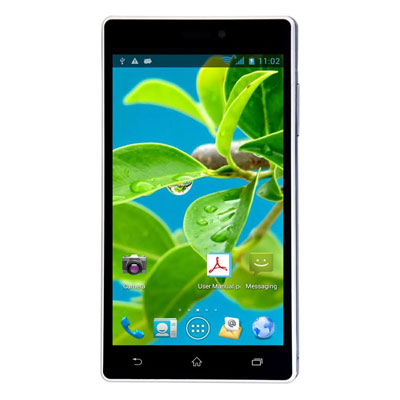
    NEW DELHI: After creating the affordable tablet market in India with Akash tablets, Datawind has recently launched its PocketSurfer smartphones at breakthrough pricing. It intends to disrupt the mobile phone market with this new launch. 

    PocketSurfer5, a range of three smartphones deliver great voice quality, feature a large five-inch touchscreen and also offers a rich internet experience using Datawind’s web delivery platform.

    Speaking at the launch, Datawind CEO Suneet Singh Tuli said in a release: “On the 10th Anniversary of DataWind’sPocketSurfer – the fastest internet device operating through a GSM SIM beating all other internet devises at that time in speed, we’re very excited to introduce these amazing new devices at unbelievably low prices. Intended to again create benchmarks in the smart phone category, DataWind’s new products break the affordability barriers of smartphones and bandwidth constraints of cellular networks to deliver calling facility and internet access to anybody who can afford a simple mobile phone.

    The primary focus of the company is to bridge the digital divide and deliver an affordable means of accessing the internet.

  • Pak journalists insecure about cybersecurit

    Pak journalists insecure about cybersecurit

    NEW DELHI: Edward Snowden has revealed that not even Pakistanis were safe from surveillance of NSA and major portion of surveillance was done on journalists.

    About 13.5 billion pieces of email, phone and fax communications were intercepted from the country.

    The famous whistleblower who resides in asylum in Russia has also said that although Pakistani journalists are victim of major surveillance, they still have little knowledge about cyber security, according to MoreMag.

    He said, “There were people in news organizations who did not recognise that any unencrypted message sent over the internet is being delivered to every intelligence service in the world. In the wake of this year’s disclosures, it should be clear that unencrypted journalist-source communication is unforgivably reckless.”

    A study even revealed that cyber insecurity of data of journalists even puts their physical security into jeopardy. In wake of all these events, a workshop was held by Senate Committee on Defence titled as “Cyber Security for Journalists” to help journalists understand the concept and need of cyber security for journalists.

    Committee’s head Senator Mushahid Hussain Syed said that workshop is not just about informing journalist about the issues related to cyber security but to also take their input for secure cyber space in the country.

  • India fourth in phishing attacks

    India fourth in phishing attacks

    NEW DELHI: India has ranked fourth in phishing attacks in the third quarter of 2013, said RSA, a division of EMC.

    India received three per cent of the total attack volume, said  RSA  in a statement.
    Other countries targeted by phishing attacks were US (53 per cent), Germany (17 per cent), UK (eight per cent) and South Africa (three per cent). In top countries by attacked brands’ India ranked third with seven per cent of the total phishing volume worldwide. The US with 27 per cent and UK with 12 per cent topped the chart.

    RSA identified 46,119 phishing attacks in September globally with a rise in 36 per cent increase as compared to the month of August (33, 861). Phishing attacks in the month of September also mark the highest number of attacks in this quarter while July 2013 saw 45,232 numbers of attacks. Top countries to host these phishing attacks include US (42 per cent), Canada (nine per cent), Germany (five per cent) and UK (four per cent).

    The total amount of losses incurred in third Quarter of 2013 was $1.66 billion. 

    Brands in the US, UK, India, and Australia were targeted by almost 50 per cent of phishing attacks in Q3 2013.

    US remained the top country on the chart, targeted with 53 per cent of the total phishing volume in Q3 2013.

    US incurred a loss of over $882 million followed by Germany with $294 million and UK with $133 million.

    Meanwhile, cyber attack is likely to cost the average home user $418 in multimedia files, but a lot of this loss could be prevented if users purchase digital content after checking that the content is secure.

    Kaspersky Lab in a statement that users can lose files in a number of different ways: losing a device, having a device stolen, or falling victim to malicious users.

    According to the B2B International survey, 27 per cent of respondents encountered a cyber attack in the last one year. At the same time, over 60 per cent of users who were victims of malware that either damaged or destroyed data admitted that they had not been able to fully restore their files. During the same period, approximately 14 per cent of users dealt with the loss, theft or crash of their device.

    Respondents in the 16-24 age group would face an average loss of $670, while those in the 25-34 group would incur an average loss of $455; users aged 45 and older would lose an average of $227.

    Residents of China and Russia were likely to incur the highest average losses at $816 and $807 per user, respectively. This figure is considerably lower in Europe ($378) and North America ($342).

    In order to protect digital assets, users not only need to back up their data on a regular basis – they also need to secure their personal devices against malicious attacks designed to steal or extort data. Smartphones and tablets should also have additional tools to help locate a lost device or to mitigate the potential damages of device theft.