Category: Broadband

  • India seeks re-election to International Telecommunications Union Council

    India seeks re-election to International Telecommunications Union Council

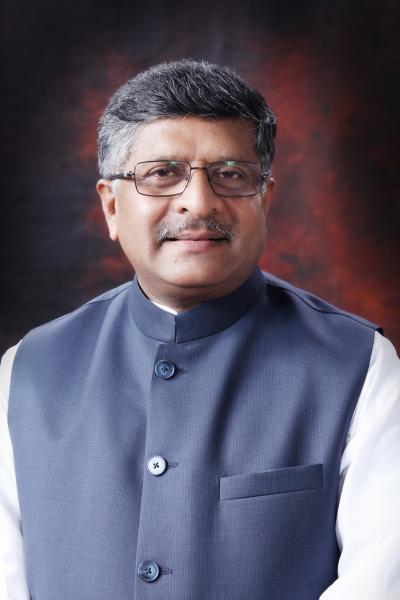
    NEW DELHI: India wants democratisation and broad-basing of the global affairs of telecommunications and internet governance, according to Communications and Information Technology Minister Ravi Shankar Prasad.
     
    Addressing the inauguration of the International Telecommunications Union (ITU) Conference at Busan in South Korea, he said that India’s point is that ITU should take leadership and partner with UN and other International/Regional organisations in executing the Information and Communication Technology projects and programmes in developing countries.
     
    India also wants the ITU to be the supervisory authority of Space Assets. India expressed its desire that ITU should play a more active role in the global Internet governance as envisaged during the World Summit on Information Society (WSIS).
    The Conference was inaugurated by the President of South Korea.
     
    The Indian delegation has been participating in The Plenipotentiary Conference, which is the top policy-making body of the 193 member strong International Telecommunications Union. It meets once in every four years. India has also been pitching for a re-election into the ITU Council.

    During the visit, the Minister also met Samsung SDI president and CEO Sang Jin Park in Seoul. The Minister shared the ideas of ‘Digital India’ and the initiative of ‘Make In India’. The CEO was curious about the changed business environment in India and he informed the Minister about his proposed visit to India next month. The Minister also met various other business leaders in the fields of electronics, communication and Information technology.

  • Reliance Jio and Indus Towers Ink Infrastructure Sharing Deal

    Reliance Jio and Indus Towers Ink Infrastructure Sharing Deal

    MUMBAI: Reliance Jio lnfocomm Limited (Reliance Jio), a subsidiary of Reliance Industries Limited (RIL), the only pan India operator with BWA spectrum preparing to launch 4G services and Indus Towers, the world’s largestand India’s leading provider of telecom tower infrastructure, today announced the signing of a Master Services Agreement (MSA) for tower infrastructure sharing. Under the agreement, Reliance Jio would utilize the telecom tower infrastructure services being provided by Indus Towers to launch its services across the country. As per the agreement,the pricing would be based on prevailing market rates.


    The agreement will help in avoiding duplication of infrastructure and preserving the environment. It will also ensure seamless services to Reliance Jio customers through Indus’ world class tower infrastructure.


    Sanjay Mashruwala, Managing Director, Reliance Jio said, “We are continuing our effort to create a new age network which will provide innovative.and empowering digital solutions to every Indian through our high speed 4G services. We are building our network through a combination of infra.structure network that we are creating on our own and those that we are renting from quality partners. We already have such tower sharing agreements with all the major players in India, and this relationship with Indus Towers will further accelerate the rollout of our services.”


    Mr BS Shantharaju, CEO, Indus Towers said, “We are delighted to partner Reliance Jio in their endeavor to roll-out next generation wireless broadband services. Our footprint in 15 Circles in India coupled with high network uptime levels, cost effective solutions, faster access to market and  lower  operational  costs  will  provide  Reliance  Jio  a  robust  and  seamless  telecom infrastructure; Additionally, our agreement with Reliance Jio will also bring benefits to our existing customers in the form of lower rentals and energy costs. At the same time, the infrastructure sharing will help in avoiding duplication of towers and benefit the environment through lower power and fuel consumption. On this new partnership, we look forward to a long and mutually beneficial relationship with Reliance Jio.”


    Indus Towers has a well-defined  infrastructure sharing strategy to support and to enhance infrastructure sharing in India,thereby allowing for expansion of wireless networks into rural areas and promoting better environmental utilization of resources in metro areas. Currently Indus Towers services 11 operators namely Airtel, Vodafone, Idea, Aircel, Tata Teleservices, Uninor, Reliance Communications,Videocon, MTNL, BSNL & MTS.

  • ‘Digital India’ introduced at Internet Governance Forum

    ‘Digital India’ introduced at Internet Governance Forum

    NEW DELHI: The new government had embarked on a very ambitious initiative called Digital India – which aims to transform India into a digitally empowered society and a knowledge economy.


    While elaborating on the component of Digital India, Department of Information Technology secretary RS Sharma also talked about National Optical Fiber Network (NOFN), National Information Infrastructure (NII) and other efforts of the government.  


    Speaking at the ninth meeting of the Internet Governance Forum, 2014 in Istanbul, Turkey, Sharma noted, “25 per cent of the people in India amount to around one billion people. More than 800 million mobile subscribers are connected to the telecommunication backbone. All possible steps are being taken to connect everyone to the Internet.”


    The fact that just around four billion people around the world have access to internet should be treated as an opportunity and not a challenge, he added.


    The Main Focus Panel at the meet was ‘Policies enabling access, growth and development on the Internet.’ Nigerian Communication Minister Omobola Johnson, deputy assistant secretary of state & U.S. coordinator for international communications Daniel A. Sepulveda and Neelie Kroes, vice-president of the European Commission, commissioner for digital agenda were also present at the panel discussion. 


    Other important components of Digital India, all of which contributed to the improved access mentioned were: Cradle to Grave Digital Identity to every person, mobile phone and bank account to everyone, creation of digital resources in Indian languages and setting up of Common Service Delivery Centres in each panchayat. This will allow transparent and efficient electronic service delivery. In this regard regulations related to Electronic Service Delivery are being prepared and will be implemented in the near future. Additionally, post offices will also be used as Common Service Delivery Centres. Many countries have appreciated India’s excellent public delivery system model. 

    Sharma also emphasised that the problem of access should not be looked merely from the perspective of creation of infrastructure. There are many issues like capacity building, content creation, especially in local languages, business models for service delivery and coordination among various agencies which will need to tackled in a coordinated manner. 

    He also mentioned about the Digital Literacy Programme, an on-going project which aims at building capacity among potential users of the internet. In addition to this, the government has also launched e-Bhasa project or e-Language project which would ensure availability content in local languages. 


  • Govt identifies broadband and mobile networks as key growth pillars

    Govt identifies broadband and mobile networks as key growth pillars

    NEW DELHI: The government has identified broadband and mobile networks as the key growth pillars to achieve its targets under the digital India programmme.


    It identified two areas of growth: broadband and mobile in untapped areas where the Telecom Ministry wants to spend more funds. It started allocating more finance for the initiative and the government is trying to achieve its targets in advance.


    The government has enhanced expenditure on broadband network to connect all 2,50,000 village panchayats to Rs 32,000 crore against Rs 20,000 crore approved by the previous government, according to a PTI report.


    The BJP government is also trying to advance deadline to finish roll out of national optical fibre network (NOFN) to December 2016 from the earlier announced date of March 2017.


    Recently, TRAI chairman Rahul Khullar criticised the delay in executing NOFN project, saying private sector companies should be part of such large projects.


    The Indian government has earmarked Rs 16,000 crore to provide mobile connectivity to approximately 42,300 villages that still don’t have any network coverage. The deadline to offer mobile connectivity in these unconnected villages is 2018.


    The BJP government has decided to create national information infrastructure at a cost of Rs 15,686 crore. The project will include integration of existing programmes like the National Knowledge Network (NKN) and NOFN.


    Under the National Rural Internet Mission, government has earmarked fund of Rs 4750 crore to roll out common service centres (CSCs) across 2.5 lakh villages.


    Through CSCs, people in rural area get access to government services like birth certificate, train tickets, pay various fees etc without actually having to visit the concerned office. The CSCs are present at about 1.3 lakh locations.


    Besides this, the union government has earmarked Rs 200 crore to train one crore students in small towns and villages for IT sector jobs over period of next five years.


    UPA government had started NKN to connect 1,500 universities with high speed broadband network.


    The NDA government has decided to provide wi-fi at all universities in the country with an estimated cost of Rs 790 crore by the end of next year.


    Under digital India programme, government has decided to spend Rs 98 crore on secure email, which will now be the primary mode of communications, for official communications.


    At present 10 lakh government employees have been moved to secure email communication and by March 2015 around 50 lakh employees will be moved on to the new system.


    The union cabinet on Wednesday approved the digital India programme that deals with all projects involving IT and communication technology like e-governance and broadband connectivity. The initial cost of the project, to be implemented over the next five years, is estimated at Rs 1,13,000 crore.


    The Digital India programme has various other provisions which include wi-fi hotspots at public places, e-books for schools, national portal for lost and found children, biometric attendance at government offices for which funds are yet to be finalised.

  • COAI gets a new core member in Reliance Jio Infocomm

    COAI gets a new core member in Reliance Jio Infocomm

    MUMBAI:  In a new addition to the core members of Cellular Operators’ Association of India (COAI), Mukesh Ambani owned Reliance Jio Infocomm Limited (RJIL) has joined telecom industry body, reported PTI. With this, its core members have risen to seven.


    After being at loggerheads regarding spectrum allocation issues, COAI and RJIL have finally put their problems behind and joined hands. This move precedes RJIL’s pan-India rollout of 4G services next year. The company holds pan India broadband wireless access spectrum that can be used for 4G services.


    Prior to RJIL joining the association, COAI had six core members — Bharti Airtel, Vodafone India, Idea Cellular, Aircel, Unitech Wireless (now Telewings Communications) and Videocon Communications (now Videocon Telecom).


    Talking about the new member, COAI’s director general Rajan S Mathews said, “We are delighted that Reliance Jio Infocomm has joined us in our common endeavour to roll out innovative and affordable mobile broadband services to the citizens of India.”


    COAI represents mobile service providers, telecom equipment manufacturers and other communication services and product companies in India. Members of the telecom body jointly have about 68 percent of subscribers and around 71 percent of revenue share in the market.


    Besides its core members, it also has 12 associate members. COAI has opened the associate membership to social media companies like Facebook. Other associate members include Alcatel-Lucent India, Cisco Systems India, Ericsson India, IBM India, GTL Infrastructure, Huawei Technologies, Indus Towers, Intel Corporation, Nokia Networks, Qualcomm India and ZTE India.


    Corroborating the news, RJIL’s managing director, Sandip Das said, “We are pleased to join the COAI, where along with other operators, we hope to create an operating environment that will help us realise this ambition for all Indians as an industry, in the overall context of our nation’s development.”


    In addition to fixed and wireless broadband connectivity, RJIL also plans to provide various digital services in key domains such as education, healthcare, security, financial services, government-citizen interfaces and entertainment. In the past, the company has also entered into agreements with telecom companies including COAI member Bharti Airtel and its mobile tower arm Bharti Infratel.

  • Cable companies need to provide compelling video experience along with broadband: Moody’s

    Cable companies need to provide compelling video experience along with broadband: Moody’s

    MUMBAI: A new report by Moody’s Investors Service claims that value propositions for cable providers are changing as broadband becomes even more necessary than TV. The report titled ‘Couch potatoes are switching screens as high-speed data cable subscribers overtake video’ states that most companies in the US are well positioned to reap the benefits and manage the risks of transition.


    “Cable providers’ largely upgraded networks and high-speed capabilities can make them the first call for consumers seeking fast internet connection. But if cable companies want to sell their video product as well, the onus is on them to provide a compelling video experience at an attractive price,” says Moody’s Investors Service vice president senior analyst Karen Berckmann.


    High speed data subscriber numbers will overtake video subscribers for Moody’s- rated cable companies in the next year, she adds. Fewer video customers means lower programming costs that are paid on a per subscriber basis and servicing the video product tends to be the most challenging and costly part of the business, so margins could benefit from the mix shift.


    However, the report also warns that a magnifying customer base for video also has risks. Companies that have declining number of video subscribers lose economies of scale when it comes to technicians and customer service, driving up costs per customer. At the same time the brand may be affected if it gives up on video in favour of broadband.


    The report states, “Companies with significant overlap with Verizon’s FiOS and AT&T’s uVerse, such as Cablevision Systems and Time Warner Cable, will need to invest in a competitive video product to survive while those with a less intense competitive footprint will find it easier to thrive as primarily broadband companies. An operator that loses a customer to FiOS or uVerse is likely to lose that customer entirely, whereas one losing a customer to Dish Network or DirecTV could still maintain a broadband relationship.”


    Moody’s says that Comcast is one company that is both large as well as diverse enough to invest in video as well as showing that it can sustain its video position. Cox Communications and Cablevision could struggle to grow while Grande Communications Networks and RCN Telecommunciations Services have shown that cable ops can build sustainable business on video penetration of about 20 per cent. For smaller operators, partnering with Tivo would be ideal for the next couple of years.

  • ACT reveals new brand identity, claims largest non-telecom ISP in India with 5 lakh subscribers

    ACT reveals new brand identity, claims largest non-telecom ISP in India with 5 lakh subscribers

    BENGALURU: ACT (Atria Convergent Technologies) Broadband claims that it is now the largest non-telecom ISP and the fourth largest ISP in the wired broadband category in India with its subscriber base of five lakh that it crossed last month.  Only public sector telecom companies BSNL and MTNL and the private sector communications giant Airtel are ahead of ACT, the company claims.


    ACT is a triple play service provider which claims a subscriber base of 10 lakh of Fibernet (Internet over fiber optics), digital TV and IPTV consumers. The company is headquartered in Bengaluru and its services are spread over towns and cities of Karnataka, Andhra Pradesh and Tamil Nadu.


    The company also announced a strategic move in the industry – the launch of its new broadband brand ACT Fibernet.  ACT says that its new brand underscores its continued commitment to offer fastest, most consistent and unparalleled internet experience through the scalable technology of fiber optics. The company announced the fastest speed currently provided by any service provider to the retail segment of 60 mbps.


    What is remarkable about ACT’s achievement is that, while the top three players and most of the other ISPs in the country have a pan-India presence, ACT has  achieved its milestones in Karnataka and Andhra Pradesh, with Chennai coming under its footprint only last year.


    “Over the next two years, we are confident of doubling the broadband subscriber base to 10 lakh,” said ACT managing director Sunder Raju.


    “We have been setting benchmarks in the industry since we began six years ago – when the industry in India considered 256 kpbs as broadband, our benchmark was 512 mbps, our new bench mark is going to be 5 mbps to the industry’s 1 mbps,” says ACT Group CEO Bala Malladi. “Right from the beginning, we have been laying fiber optic wires up to the last mile and hence scaling up to 1 gbps with small changes to the existing infrastructure should not be a problem for us in the future,” added Malladi.


    “There is ample scope for us to double our subscriber base within our current catchment area, but we will definitely look at bringing other towns and cities under our footprint,” said Malladi.


    The company has announced a high decibel marketing campaign with the tagline ‘Incredibly fast’ across print, outdoor, digital, newspaper inserts, handbills, bus shelters, metro pillars, kites, parking boards etc., over the next three months within their catchment areas. Minimum spend is on Television advertising. Company sources revealed that the campaign costs would be in the range of Rs 10 crore. RK Swamy BBDO is the creative agency and RK Swamy Hansa group handles the media buying duties and Madison PR handles public relations.


    The company has received funding from India Value Fund Advisers (IVFA) which would be used for doubling the subscriber base, an industry source reveals to www.indiantelevision.com that ACT had invested around Rs 600 crore in the current phase, of which IVFA funding was between Rs 350 crore to Rs 400 crore.  Last year, the company had raised privately placed non-convertible debenture (NCD) funding of Rs 180 crore.


    “ACT would need funding to the extent of around Rs 500 crore for further expansion. This should not be a problem, considering the fact that ACT has crossed Rs 500 crore in revenue a couple of years ago and has seen operating profits in recent years as compared to many other companies that have been bleeding. The company should be reporting profits in the next two or three years,” says an industry source who works for an MSO and who did not want to be named.


    Keeping its current consumers in mind, the brand has upgraded its entire subscriber base in Bengaluru to new fast plans at no extra cost starting 24 July. An ACT broadband consumer confirmed that his fair usage policy has been upgraded to 50 GB from the 40 GB that he enjoyed earlier.

  • DEN selects Cisco DOCSIS 3.0 technology for broadband

    DEN selects Cisco DOCSIS 3.0 technology for broadband

    NEW DELHI: After multi system operator (MSO) Hathway Cable and Datacom launched DOCSIS 3.0 technology in October 2013, it is now DEN Networks that has selected Cisco’s DOCSIS 3.0 technology for its newly launched broadband service in India.


    DOCSIS 3.0 is a key component of the Cisco IP NGN architecture, which promises speeds of up to 300 Mbps per subscriber. With this, the MSO will be able to provide ultra-high-speed internet to deliver more content as compared to the existing telecom Internet service providers (ISPs).


    DEN currently reaches out to 13 million homes in over 200 cities. The MSO also offers digital cable TV services in India, using Cisco’s conditional access and middleware (set-top box software) and presently reaches over six million digital pay-TV homes.


    To begin with, DEN soft-launched its ultra-high-speed broadband service in one of its biggest markets and its home base, Delhi, and intends to expand the offering to other cities. The adoption of DOCSIS 3.0 is a strategic decision by the MSO to provide its subscribers with a seamless online experience with no buffering, lightning-fast downloads and higher-quality video content compared with existing telecom ISPs.


    Despite a population of 1.27 billion, according to TRAI’s latest Telecom Performance Indicators Report (October–December 2013), India has only 238.71 million Internet subscribers, out of which 18.33 million subscribers are wired Internet subscribers. The remaining 220.38 million access the internet though wireless connections like smartphones and data cards. The country’s major MSOs are preparing to capture this wireline broadband market using DOCSIS technology, giving a much-needed boost to broadband penetration in India, with each MSO also aware of the untapped 100 million cable TV homes in India. Therefore, the deployment of DOCSIS 3.0 across its existing cable networks is a significant step by DEN to capitalise on the enormous business potential of the broadband market.


    DEN COO Mohammad Ghulam Azhar said: “We are excited by the high-speed internet opportunity in India. With this superior technology, we are aiming to provide our broadband subscribers with a fast and consistent online experience.”


    Cisco India and SAARC president, sales Dinesh Malkani added: “Cisco’s vision is to be the leading enabler of ICT (Information and Communications Technology) and broadband acceleration in India through innovative, scalable, high-value technology offerings and solutions. We believe our engagement with DEN has the potential to transform the cable and broadband industry in India by offering high-speed services to millions of subscribers and connecting those who previously were unable to access premium broadband services.”

  • Definition of broadband amplified in consonance with advancing technology

    Definition of broadband amplified in consonance with advancing technology

    NEW DELHI: The government has amended the definition of broadband in the Telecom Consumers Complaint Redressal Regulations, 2012 to amplify the definition of broadband and to bring it in consonance with the Notification issued by the Department of Telecom in July last year.


     Thus, under the Telecom Consumers Complaint Redressal (Third Amendment)   Regulations 2014, “”Broadband” or “Broadband Service” means a data connection that is able to support interactive services including internet access and has the capability of minimum download speed of 512 kilo bits per second to an individual subscriber from the point of presence (POP) of the service provider intending to provide Broadband service.”


     This amendment is also in consonance with the National Telecom Policy 2012.


    Earlier in the Broadband Policy 2004, Broadband was defined as “An always on data connection that is able to support interactive services including internet access and has the capability of the minimum download speed of 256 kilo bits per second (kbps) to an individual subscriber from the Point of Presence (POP) of the service provider intending to provide Broadband service where multiple such individual Broadband connections are aggregated and the  subscriber is able to access these interactive services including  the  Internet  through  this POP. The interactive services will exclude any services for which  a separate licence is specifically required, for example, real-time voice transmission, except to the extent that it is presently permitted under ISP licence with Internet Telephony.”

  • Cancel all Reliance Jio Spectrum licences, says CAG

    Cancel all Reliance Jio Spectrum licences, says CAG

    NEW DELHI: The nationwide broadband spectrum allocated to Infotel Broadband Services, now a Reliance Industries company, should be cancelled for allegedly rigging the auction and violating rules, says the Comptroller and Auditor General (CAG).

    In a draft report sent to the Department of Telecom for comments, CAG said, “The DoT failed to recognise the tell-tale sign of rigging of the auction right from beginning of the auction” in which a small ISP, Infotel Broadband Services (IBSPL) emerged winner of pan-India broadband spectrum by paying 5,000 times of its networth.

    The draft report says IBSPL which is ranked 150th in the list of ISP submitted an earnest money deposit of Rs 252.50 crore “through the covert and overt assistance of third party/private bank”, bid for Rs 12,847.77 crore (5000 times of its networth) for pan-India spectrum and then sold the company on the day of completion of the auction.

    According to the draft report, these “indicated IBSPL’s collusion and sharing of the confidential information with a third party in violation of auction conditions/rules.”

    According to news agency reports, the Mukesh Ambani-promoted RIL, which acquired IBSPL within hours of it winning the spectrum and later renamed it Reliance Jio, outrightly rejected any suggestion whereby spectrum was acquired in any manner other than through a transparent bidding process duly supervised by the Government. It also noted that this was not the final report as the DoT had not sent its comments.


    An RIL spokesperson said the auction for the BWA spectrum was one of the most competitive auctions in the Indian telecom history which fetched final bid price more than six times the reserve price for the pan-India spectrum.


    On bank guarantee, the spokesperson said according to the NIA, bidders were required to submit bank guarantee for desired amount as earnest money deposit (EMD) along with its application. “EMD was based on specific deposit requirement for each telecom circle. Accordingly, IBSPL submitted a bank guarantee of Rs 253 crore in format as prescribed in NIA. Since no money was deposited as EMD, the question of source of deposit does not arise,” the spokesperson said.


    The draft CAG report said, “Due to inclusion of inadequate eligibility criterion for participation in the auction, the promoters of the IBSPL enriched themselves and made unfair gain.” 


    CAG rejected DoT’s response that the eligibility criterion for participation in the auction was finalised after due diligence and on sector regulator TRAI’s recommendations saying it was the department’s responsibility to ensure that only serious ISPs participated in the auction.


    DoT in its response admitted that there was no eligibility criterion with respect to minimum net worth or paid up capital for participation in the auction.


    “Neither the top management of the DoT nor the important committees could detect these tell tale signs of collusion and sharing of confidential information by the biggest bidder, a tiny Internet Service Provider (ISP).


    “The IMC (inter-ministerial committee) did not satisfy itself as to how the IBSPL, a company with a networth of Rs 2.5 crore, would be able to pay the bid amount of Rs 12,847.77 crore within ten days,” it said.


    CAG in the report said, “The government should get the matter investigated even at this juncture, fix responsibilities on the bidders, which violated the auction conditions/rules prescribed and cancel the allotment of the BWA spectrum along with exemplary punishment on the colluding firms.”

    The CAG estimated that the decision of the government to allow an ISP licence holder having BWA spectrum to provide voice services against payment of Rs 1,658 crore resulted in undue advantage worth Rs 22,842 crore to Reliance Jio.

    The DoT has said the auction rules allowed all kinds of telecom operators to participate in auction and there were no inherent limitation in providing voice service using BWA spectrum.

    “Had the successful bidder of pan-India BWA spectrum obtained UAS licence (permits held by mobile phone service providers), he would have become eligible to use BWA spectrum to provide any of the service permitted under UASL including full mobile service,” the official source said.

    Telecom operators like Bharti Airtel, Idea Cellular, Vodafone, Aircel etc hold unified access service licence (UASL) that allows them providing full mobile phone services as well.


    The BWA auction rules gave option to participants to procure BWA spectrum under UASL against payment of Rs 1,658 crore as paid by other operators but there was no guarantee of giving them initial spectrum as was given to incumbents.


    CAG has rejected logic of DoT saying that auction guidelines linking of BWA spectrum with UASL is “unfair and highly inappropriate.” 


    According to the draft audit report, the IBSPL promoter director went on electronic media on June 11 2010 to confirm that they had been in talks with RIL during the course of auction process.

    The report said it was in ‘gross violation of the confidential clause of NIA which had prohibited bidders and insiders from conveying any confidential information to any other person, including any other bidder or its insiders.’


    The CAG has also indicted telecom regulator Telecom Regulatory Authority of India (TRA) for not giving clear recommendation and remaining a passive observer when changes were made in its suggestion to reduce quantum of spectrum in auction.


    TRAI in 2006 had recommended to make available spectrum for entry of 12 players but finally only two blocks of spectrum were put for auction that restricted scope for entry to only two pan-India players.