Category: Broadband

  • e-Governance necessary for citizens’ digital empowerment

    e-Governance necessary for citizens’ digital empowerment

    NEW DELHI: “There is need to focus on strengthening of e-Governance, which is an important pillar of the Government’s ‘Digital India’ campaign – to digitally empower the administrative and Governance process for providing Citizen Centric Services,” said Administrative Reforms and Public Grievances secretary Devendra Chaudhury.


    Inaugurating a workshop on ‘UN e-Government Development Index,’ Chaudhury highlighted the importance of process change, which can be effectively enabled by IT tools and consequential changes in approach to e-Governance as a business model similar to e-Commerce. 


    Commending the government’s plans to transform governance, UN resident coordinator and resident representative of the United Nations Development Programme Yuri Afanasiev said, “e-Governance is like building a house. Build a strong foundation and everything works.”


    In his view, the key challenge for the country was to deliver services to the last mile population, removing the digital divide, towards improving the quality of their lives. 


    Acknowledging India’s progress, Inter-Regional Adviser on e-Government with the UN Department of Economic and Social Affairs Richard Kerby said, “e-Government has to be a part of the national development strategy and sustainable development. While open data is a key to empowering people, it should support a bottom-up approach, with citizens contributing to the data collection process equally with governments.”


    Electronics and IT additional secretary Tapan Ray stressed on the need to “integrate efforts across government to achieve the vision of a digitally empowered India.” 


    A key focus of the workshop was to understand the United Nations e-Government Survey, which assesses e-Government development across all 193 member states of the UN launched in 2003. The global Survey has three components – Telecom Infrastructure Index, Human Capital Index and an Online Services Index. The Workshop threw up a number of innovative and transformative ideas of which the States have undertaken to serve the Citizens. 


    The workshop featured presentations by four States, Karnataka, Andhra Pradesh, Himachal Pradesh, and Uttar Pradesh on innovative e-Governance initiatives launched by them to improve service delivery to citizens.

  • India among top three data consuming countries in APAC

    India among top three data consuming countries in APAC

    NEW DELHI: Around 77 per cent of internet users in India can access the web via a mobile device. In fact, smartphone use in the Asia Pacific region continues to grow at a pace on par with the rest of the world, with page-view volume on mobile websites and apps approaching global averages.


    According to the APAC State of Mobile Advertising report from Opera Mediaworks in partnership with the Mobile Marketing Association, India, Indonesia, Vietnam and the Philippines, countries which Opera refers to as the “P4” (Power 4) sub-region has seen a dramatic 545 per cent increase in smartphone adoption since 2013, making it one of the fastest growing sub-regions in the world.


    The findings in the report are based on Q2 2015 data from 400 million unique users on the Opera Mediaworks platform.


    The P4 countries represent less than half (43 per cent) of the population of Asia, account for less than 30 per cent of regional internet users – and yet over 76 per cent of these users access the internet via mobile.


    Mobile growth can largely be attributed to the rapid adoption of Android devices. In the second quarter, the Android operating system took the no. 1 position in market share of impressions served to mobile devices, accounting for more than 60 per cent of traffic in APAC and over 55 per cent in India.


    There is high demand for and rapid adoption of mobile video-ad units across the region. The ratio of video-ad impressions served in India is 0.68:1, which is higher than the average across Asia.


    “India remains one of the most exciting markets in Asia when it comes to smartphone adoption and rapid shift of consumers to make mobile as primary screen. Mobile advertising, on the other hand, is highly underrepresented in India and there is massive opportunity for advertisers to connect with the prime prospects, deliver rich and meaningful experiences at a time and place when it matters the most,” said Opera Mediaworks MD Asia Vikas Gulati.


    Key highlights from the State of Mobile Advertising report:


    Demographics and behavior of the average mobile users in India:


    .  Male users dominate across the region; in India, 9 out of 10 mobile users are male.  

    .  Indian users are overwhelmingly young; the average user age is under 23. Also, 50 per cent are between 18-23 years old.  

    .  The most visited mobile sites and apps by users in P4 region are in the Social Networking category. However, Indian users are more drawn to sites and apps that serve music, video, media & entertainment content followed by technology content.  

    The top three countries in the P4 region in terms of data consumption are Vietnam, Indonesia and India. The average data consumption in these countries respectively is around 90, 65 and 60 MB per month.


    Revenue winners and emerging mobile ad formats:


    .  Business, Finance & Investing publishers fared well, accounting for a whopping 42 per cent of revenue paid to mobile publishers across the P4 region.  

    .  In India, Social Networking sites and apps provided the highest number of impressions for advertisers, followed by News & Information and Sports category. However, the highest eCPMs were earned by News & Information publishers.  

    .  The impressions of advertising on Communication Services is much higher than global average by and as much as 15x higher for revenue.


    “Opera Mediaworks represents almost 50 per cent of audience share of the market in India. We are making significant investments to grow the ecosystem, share insights on consumer behaviour and trends in mobile content consumption to help marketers better leverage the mobile opportunity,” Gulati added.


    “Collaborating with members of the mobile marketing ecosystem has always been the key to building knowledge and capabilities amongst this the region’s marketers, and the MMA is very excited to partner with Opera Mediaworks on their State of the Mobile Advertising Report. We believe marketers in Asia are best positioned to be leaders in global mobile innovation, building campaigns that harness the potential of the medium and the mobile audience. Opera’s stunning data proves that the future of mobile lies in Asia,” said Mobile Marketing Association APAC managing director Rohit Dadwal.

  • “Private sector needs to own network to connect India seamlessly via wireless broadband:” Rajeev Chandrasekhar

    “Private sector needs to own network to connect India seamlessly via wireless broadband:” Rajeev Chandrasekhar

    NEW DELHI: Member of Parliament and technology entrepreneur Rajeev Chandrasekhar today underlined the need for making high quality Wi-Fi available and accessible across the country. He said that it was imperative for the Government to partner with States and private service providers in the space. 


    Chandrasekhar also recommended that while the government could own the fundamental policy making but the network owner should be from the private sector to make the initiative a success.  


    While delivering the inaugural address on ‘India, Wi-Fi and Smart City Development’ at the Wireless Broadband Vision Forum, Chandrasekhar said that it would be appropriate to provide Wi-Fi access free of cost to a selected faction who deserves it rather than making it free for all. He added that any programme started with the aim of providing free service suffers from suboptimal facilities and poor quality.


    The forum was organised by FICCI in collaboration with Global Wi-Fi Broadband Alliance to advance the policy objectives of the Digital India programme. 


    Chandrasekhar said Digital India has tangible benefits and can have a multiplier effect on the country’s productivity and GDP. He added that India’s internet penetration stands at a low level today, hence it provides a huge opportunity for the government and private sector to make India connected via internet.


    Delhi Government’s Delhi Dialogue Commission vice chairman Ashish Khetan, who gave his keynote on ‘Delhi Wi-Fi – A Smart City Perspective from India’, said it was one of the biggest challenges for the city Government to draft a policy for providing seamless access and quality service of Wi-Fi at an affordable cost. 


    He added that within a few weeks the Request for Proposal (RFP) would be finalised and placed in the public domain.


    Khetan also said that the government proposes to provide speed of 1 Mbps and 1GB data download free for the citizens of Delhi. In the first phase of the programme, all Delhi colleges, including government and private, would be enabled with public Wi-Fi. Subsequently, in the second phase, all villages in Delhi would have Wi-Fi facility and in the third phase the focus would be on connecting unauthorized colonies of Delhi. 


    Wireless Broadband Alliance (WBA) CEO Shrikant Shenwai said these were exciting times for Wi-Fi operators, Wi-Fi equipment vendors and above all Wi-Fi users. The potential of Wi-Fi worldwide is vast and growing. The WBA was committed to helping Wi-Fi fulfill that potential.


    He said end-user focus for next generation Wi-Fi experience means making it easier for users to find and access hotspot service locations; offering a user experience that is simple and consistently better; and allowing seamless interoperability, across devices, operators & networks and WBA aims to achieve this by bringing the stakeholders on the same platform.


    FICCI Communications & Digital Economy Committee chairman Virat Bhatia said that to advance the policy objectives of the Digital India programme, the Wireless Broadband Vision Forum facilitated a thought-provoking dialogue that explored the opportunities and challenges associated with delivering transformational connectivity for the Government of India’s 100 Smart Cities Program. The forum presented an opportunity to meet with global experts from Singapore, San Jose and Seoul and leading Indian policy makers, government officials, operators and ecosystem players in this space.


    FICCI DG Arbind Prasad said that the Wireless Broadband Vision Forum is an initiative to promote the Government of India’s programs of Digital India, Make in India and Smart City. He added that FICCI is partnering with WBA to promote Wi-Fi connectivity throughout the country as wireless is the future of internet and India deserves a revolution in this sector as well on the lines of the one witnessed in the telecom space.

  • Porn ban: IAMAI says notice to ISPs will lead to a chilling effect

    Porn ban: IAMAI says notice to ISPs will lead to a chilling effect

    MUMBAI: The Internet and Mobile Association of India (IAMAI) has said that the latest government notice dated 4 August, 2015, to the Intermediaries (ISPs) is vague and has led to a chilling effect.


    The notice states that the ISPs are free not to disable any of the 857 URLs, as provided in the list earlier, which do not have child pornographic content. However, the problem is with the caveat in the notice mentioning “which do not have child pornographic content.”


    The problem is that the said notice is not accompanied by any specific list of sites or links and the Intermediaries are expected to find out the links or sites containing child pornography themselves. This is not how it works under the law. The correct procedure should have been to provide the ISPs with a specific list along with the notification, as was done in the earlier notice dated 31 July, 2015.


    The ISPs have rightly asked the government to withdraw the notification. The Internet Service Providers Association of India’s (ISPAI) letter to the government states, “We urge you to withdraw the said vague directive as it is not only confusing, but also putting responsibility on ISPs of the website on which ISPs does not have any control.” However, they are wrong in saying that “till further directives, the said 857 sites will continue to be blocked.”


    IAMAI has said that this is a typical case of a chilling effect and its worst fears have come true.

  • FY-2015: Subscription growth leads Sky revenue growth of 4.7%; EPS declines 2%

    FY-2015: Subscription growth leads Sky revenue growth of 4.7%; EPS declines 2%

    BENGALURU: London, UK headquartered pan-European satellite broadcasting, on-demand Internet streaming media, broadband and telephone services company Sky reported 4.7 per cent broad based total adjusted revenue growth for the year ended 30 June, 2015 (FY-2015) at ?11,2083 million as compared to the ?10,776 million in the previous year (FY-2014). Subscription is the biggest contributor to Sky’s revenue. The group’s revenue growth in the current year was led by a 4.6 per cent increment in adjusted subscription revenue at ?9697 million (85.9 per cent of total revenue) as compared to the ?9272 million (86 per cent of total revenue) in FY-2014.


    Across its five territories (UK, Ireland, Germany, Austria and Italy), the group reported 973,000 new customer additions in FY-2015, 45 per cent more than previous year, and 158,000 new customers in Q4-2015. Subscription revenue growth was underpinned by excellent customer growth across the group and strong product growth of 4.6 million (829,000 in Q4-2015), with the largest proportion of revenue growth continuing to be delivered through the UK where revenues were up over ?300 million. Alongside this, the group’s best year of customer growth in Germany drove a 10 per cent increase in subscription revenues, whilst Italy held total customers and revenue flat.


    Other segments


    Sky’s advertising revenue in FY-2015 grew 3.8 per cent to ?716 million (6.3 per cent of total revenue) as compared to the ?690 million (6.4 per cent of total revenue) in FY-2014. Sky attributes growth in advertising revenues with Germany delivering growth of 26 per cent through higher sellout rates and increased inventory around Bundesliga. Advertising revenues in the UK grew strongly, up five per cent, due to the benefit of incremental AdSmart revenues combined with Sky Media increasing their share of net advertising revenue by almost 170 basis points, whilst advertising revenue was down in Italy as we lapped the €27 million benefit of the FIFA World Cup revenues in Q4 last year.


    Transactional revenue increased 21.8 per cent to ?173 million (1.8 per cent of total revenue) in FY-2015 as compared to the ?142 million (1.3 per cent of total revenue) in the previous fiscal. Sky says that it benefited from the success of its Buy and Keep service, which surpassed weekly revenue of ?1 million in Q4-2015, and NOW TV transactions, which totaled almost 1.5 million over the past twelve months.


    Sky’s wholesale and syndication revenue in the current year increased 5 per cent to ?550 million (4.9 per cent of total revenue) as compared to the ?524 million (5 per cent of total revenue) in FY-2014. Sky says that growth was largely driven by continued growth in the UK where revenues were up 19 per cent as success on screen led to more favourable terms for our channels with wholesale partners. Alongside this, revenues were strong through the distribution of our programming internationally and the first time consolidation of Znak&Jones and Love Productions. In Italy, underlying wholesale revenues were broadly flat year on year (excluding the benefit in the prior year from Champions League resale revenues), whilst revenues in Germany were slightly down following the successful migration of former Deutsche Telekom wholesale customers to a retail relationship in the prior year.


    Other revenue was almost flat (declined fractionally) to ?147 million (1.3 per cent of total revenue) as compared to the ?148 million (1.37 per cent of total revenue) in the previous year.


    Adjusted profit before tax increased 5.9 per cent to ?1196 million as compared to ?1129 million in FY-2014. Adjusted EPS declined 1.9 per cent to 56p as compared to the 57.1p in the previous year

  • Ofcom completes first phase of digital communications review

    Ofcom completes first phase of digital communications review

    MUMBAI: Ofcom has outlined the challenges facing the UK in ensuring that consumers and businesses receive high-quality digital communications services over the next decade and beyond.


    Ofcom’s Strategic Review of Digital Communications, announced in March 2015, is examining competition, investment, innovation and the availability of all digital communications services. These include broadband, mobile, landline and bundled services.


    Communications are essential to the functioning of the economy, and to the way people work and live. Improving these services for consumers and businesses is Ofcom’s first priority, and the review forms a fundamental part of that work.


    Ofcom is seeking views on its review, which is focusing on four main areas detailed in a discussion document published:

    • investment and innovation in the market, which can help make services widely available;

    • competition, to deliver quality services and affordable prices;

    • empowering consumers and businesses, particularly making sure they have the information and means to choose and switch between providers; and

    • keeping regulation targeted at areas of concern, and deregulating where possible to allow markets to function well.


    Ofcom CEO Sharon White said, “This review is about ensuring people get the best possible communications services, wherever they live and work.

    “Our priorities are clear. We want to promote competition, investment and innovation, so that everyone benefits from even better coverage, choice, price and quality of service in years to come.”


    Investment and innovation


    UK consumers and businesses have benefited from significant investment in communications services in recent years. 4G mobile broadband is now available to 42 per cent of premises from all four operators, and 90 per cent from at least one. Superfast broadband is now available to 83 per cent of premises, with a range of providers competing on service and price.


    Ofcom wants to see the widest possible availability of high-speed broadband at home, at work and on the move. Ofcom estimates that a broadband speed of 10Mbit/s is necessary to benefit from today’s popular online services, such as on-demand video. However, eight per cent of UK households cannot currently access those speeds.


    Availability is a concern in more rural areas, particularly in the nations and regions, but also in some urban places where roll-out costs or low incomes present particular barriers. Ofcom’s review will seek possible solutions to these problems.


    It is examining how regulation can enable the commercial development of future ultrafast broadband, making it as widely available as possible.


    Ofcom is also considering what further options might be available to improve mobile services. Mobile 4G broadband will reach 98 per cent of UK premises, due to Ofcom rules and industry investment. But consumers’ and businesses’ growing expectations for reliable, universal, always-on voice and data services will need to be matched by network investment.


    Making sure competition delivers


    A major focus of the current review is how well competition is delivering benefits to consumers and businesses. Ofcom’s last strategic review began in December 2003, concluding in September 2005. It led to the creation of Openreach, through which BT is required to provide access to competing providers on equal terms, for them to offer telecoms services to consumers.


    This approach has delivered real choice, quality and value for phone and broadband customers over many years. However, some challenges remain. For example, the incentive for BT to discriminate against competing providers can be limited by regulation, but not removed entirely.


    BT’s network has evolved in recent years, with fibre lines running closer to premises. This may require different models of competition than those that worked best for the traditional copper telecoms network.


    In addition, Ofcom has been concerned that Openreach’s performance on behalf of providers has too often been poor, requiring the introduction of rules for faster line installations and fault repairs.


    The review will address these issues, and Ofcom is today seeking views and evidence on future regulatory approaches, including:


    • Retaining the current model, where Openreach operates as ‘functionally separate’ from BT, and using regular market reviews to address any concerns around competition;

    • Strengthening the current model by applying new rules to BT – such as controls on its wholesale charges with stronger incentives to improve quality of service, or tougher penalties if BT falls short;

    • Separating Openreach from BT could deliver competition or wider benefits for end users. It would remove BT’s underlying incentive to discriminate against competitors. Separation could also offer ways to simplify existing regulation. However, the process would be challenging and it may not address some concerns relating to Openreach – such as service quality, or the timing and level of investment decisions;

    • Deregulating and promoting competition between networks. Virgin Media and a variety of smaller operators own networks, which allow them to provide phone and broadband services without using BT’s network at all. This kind of ‘end to end’ competition, which sometimes involves running fibre lines directly to premises, can help incentivise Open reach to improve its infrastructure. However, it could also lead to duplication of networks and weak competition.


    It will also examine converging media services – offered over different platforms, or as a ‘bundle’ by the same operator. For example, telecoms services are increasingly sold to consumers in the form of bundles, sometimes with broadcasting content; this can offer consumer benefits, but may also present risks to competition.


    Empowering consumers and businesses


    People tailor communications services to their own needs, choosing from a range of providers at a price that suits them. For this to work properly, they need to understand the range of options available to them, and be able to switch between them effectively.


    Ofcom’s review is considering whether consumers have all the information they need to make the choice that is right for them, both when researching the market and at the point of sale. It is also looking at how switching between providers might be made easier.


    On 20 June, Ofcom introduced new rules that mean people can switch provider over BT’s network by only dealing with their new supplier. Ofcom is currently considering whether similar processes may be appropriate for mobile and services bundled with pay TV, as consumers increasingly buy services this way.


    Beyond this, Ofcom is keen to explore new ways in which consumers can engage with the market, in order to benefit from competition. Examples might include making services easier to compare, and increasing access to independent advice or feedback generated by users.


    Targeted regulation and deregulation


    The rules that govern the communications sector must evolve to keep pace with developments in technology, consumer needs and expectations. Ofcom’s review will identify where existing regulation may be simplified, removed or replaced.


    For example, the rise of ‘over the top’ (OTT) internet communications services, such as instant messaging, may create a case for less regulation on mobile operators, or for extending existing rules to internet-based services.


    Next steps


    Today’s discussion document marks the conclusion of the first phase of Ofcom’s Strategic Review of Digital Communications. Since announcing the review, Ofcom has been engaging with a wide range of stakeholders – including industry, consumer groups, the UK Government and devolved administrations – through meetings and workshops.


    Ofcom will now take forward the review’s second phase, and is seeking evidence and responses to the discussion document by 8 October, 2015. This will inform a statement at the turn of the year on priorities and action, which will shape Ofcom’s regulatory approach for the next decade.


  • Sky ties-up with Disney-Pixar’s ‘Inside Out’ to promote broadband offer

    Sky ties-up with Disney-Pixar’s ‘Inside Out’ to promote broadband offer

    MUMBAI: Sky is making superfast broadband more accessible to everyone with the launch of its best ever fibre deal. Effective immediately, customers can get superfast, super reliable Sky Fibre broadband (normally ?10 a month) free for 12 months, the first time that any major broadband provider has offered a whole year of superfast speeds at such a low price.


    To launch the offer, Sky has joined forces with Disneymedia+ and Pixar Animation Studios to create a new TV ad featuring characters from Disney-Pixar’s latest feature Inside Out


    The new campaign, which launched on 10 July, features the characters from the new animated epic, which broke the record for the biggest-ever US opening for an original film and will be premiering in the UK on 24 July. 


    The 50 second animated advert introduces Riley Anderson and the little voices inside her head – Joy, Anger, Fear, Disgust and Sadness – to showcase the emotions we all feel if our broadband fails to perform as we would like it to. 


    The offer is available to everyone switching to Sky Fibre when they take Sky line rental. A one year contract means there is no obligation beyond the free period.


    With more and more people wanting to try fibre, Sky Fibre is a great option for those who want superfast speeds but don’t need unlimited usage. It offers download speeds of up to 38Mbps and comes with a 25GB monthly usage cap, allowing customers to download an album in seconds or a full movie in just over 3 minutes. Customers who want unlimited usage can choose Sky Fibre Unlimited for just ?10 a month (normally ?20 a month).


    The offer represents a saving of ?186.13 over a year when compared with the closest comparable services from BT. According to research by Ofcom, Sky Fibre also has the most reliably consistent speeds and the fastest peak time speeds for up to 38Mb fibre broadband.


    The new campaign follows strong growth in Sky’s broadband business as customers continue to switch to Sky for better quality and value. More than five million customers now choose Sky for broadband including 100,000 new customers in the most recent reported quarter, up 43 per cent on last year.


    Sky Broadband director Lyssa McGowan said, “We know there are lots of people who would like to try superfast speeds but are put off by the high prices charged by some providers. With this ground-breaking offer, we’re making Sky Fibre even more accessible. Now superfast broadband is genuinely for everyone.”

  • Mobiles boost broadband usage by 4.17% during May

    Mobiles boost broadband usage by 4.17% during May

    NEW DELHI: Mobile users helped give a spurt to broadband usage in the country to touch 104.96 million by the end of May, which signified a monthly growth rate of 4.17 per cent.


    It may be recalled that in April this year the broadband users in the country crossed the 100 million mark for the first time.


    Mobile devices users (phones and dongles) went up from 84.79 million to 88.96 million between April and May, signifying an increase of 4.91 per cent.


    However, Fixed Wireless subscribers (Wi-Fi, Wi-Max, Point to Point Radio and VSAT) showed a minor decline of 0.17 per cent thus remaining at just over 440,000 users.


    Wired subscribers went up from 15.52 million to 15.56 million, showing an increase of 0.23 per cent.


    Based on reports received from the service providers, the Telecom Regulatory Authority of India (TRAI) said the top five service providers constituted 83.75 per cent market share of total broadband subscribers at the end of May.


    These service providers were Bharti Airtel (23.39 million), Vodafone (21.27 million), BSNL (18.50 million), Idea Cellular Ltd (15.76 million) and Reliance Communications Group (8.99 million).


    The regulator noted that some wireless service providers exclude incidental data users from their subscriber base, based on minimum usage decided by them.


    As on 31 May, the top five Wired Broadband Service providers were BSNL (9.90 million), Bharti Airtel (1.45 million), MTNL (1.14 million), Atria Convergence Technologies (0.66 million) and YOU Broadband (0.45 million).


    The top five Wireless Broadband Service providers were Bharti Airtel (21.93 million), Vodafone (21.27 million), Idea Cellular (15.76 million), Reliance Communications Group (8.88 million) and BSNL (8.59 million).

  • Online consumers to be better protected by new United Nations guidelines

    Online consumers to be better protected by new United Nations guidelines

    NEW DELHI: Better protection for people buying things online in both developed and developing countries will be among the outcomes of revisions to United Nations guidelines agreed at a major UNCTAD conference in Geneva.


    More than 350 competition specialists from 70 countries gathered from 6 to 10 July to review the so-called “United Nations Set” of mutually agreed competition and consumer protection policies.

     
    UNCTAD’s work on competition and consumer protection has long shown that these can play a direct and important role in promoting economic growth and reducing poverty in developing countries. Competition stimulates innovation, productivity and competitiveness, increases a country’s attractiveness as a business location, triggering investment, and delivers benefits for consumers through lower prices, improved services and greater choice. Empowered consumers who know their rights and enforce them are subject to fewer abuses. This directly improves their welfare.

     
    Last updated in 1999, the United Nations Guidelines on Consumer Protection needed updating in a world of e-commerce and online shopping, and in other areas such as financial services, energy, public utilities, and tourism. With the update, member States agreed to put UNCTAD at the center of global consumer protection.

     
    “If we want citizens to be active players in achieving sustainable development we need to empower them as consumers in the marketplace,” said UNCTAD Secretary-General Mukhisa Kituyi. “I am delighted that member States have entrusted UNCTAD with becoming the privileged international forum for advancing consumer protection worldwide.”

     
    A proposal will be submitted to the United Nations General Assembly for adoption in its next session and contains the request that UNCTAD: establish an Intergovernmental Group of Experts on consumer protection law and policy; monitor the implementation of the guidelines; serve as forum for exchange of best practices; and provide technical cooperation and capacity building to developing countries and economies in transition.

     
    Amanda Long, director-general of Consumers International, which is the world federation of consumer groups, said: “We are particularly pleased with the high level of commitment to establish an Intergovernmental Group of Experts. Effective implementation by member States and business will be key going forward.”

     
    Further outcomes of the conference included renewed support for UNCTAD’s voluntary peer review model. Since 2005, more than 18 countries have been participated in the competition policy peer review process. The resulting reports were used in amending legislation, advocacy (for example in Indonesia and Nicaragua) and establishing new training agenda for staff in Zimbabwe.

     
    UNCTAD’s unique development perspective and experience in working with competition authorities in developing countries, as well as on competition policy worldwide, serve as a guarantee that the voluntary peer review process focuses on fostering competitiveness and takes into account the development needs of countries.

     
    The conference also agreed to reconvene the Intergovernmental Group of Experts on Competition Law and Policy during the next four years until the next ministerial review conference is held.


    Emerging issues this body will tackle include: competition and its role in inclusive and sustainable development; best practices in the design and enforcement of both competition and consumer protection laws and policies; the provision of capacity building and technical assistance, and International cooperation and networking


    In particular, next year’s meeting will focus on examining the interface between the objectives of competition policy and intellectual property; enforcing competition policy in the retail sector; enhancing legal certainty in the relationship between competition authorities and judiciaries; and strengthening private sector capacities for competition compliance.

  • “We will enhance internet penetration from 300 mil to 500 mil within 2.5 years:” Ravi Shankar Prasad

    “We will enhance internet penetration from 300 mil to 500 mil within 2.5 years:” Ravi Shankar Prasad

    MUMBAI: India today launched four world class broadband products by Centre for Development of Telematics (C-DOT). With this, the country has come at par with all other developed countries in the world in respect of quality telecommunication services and effective penetration of advanced broadband based services.


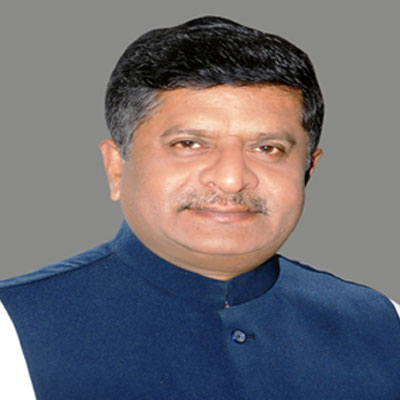
    Union Minister for communication and IT, Ravi Shankar Prasad while launching the new products indigenously developed by C-DOT stated that the NDA Government is committed to bring all 2.5 lakh villages under broadband services and enhance internet penetration from 300 million to 500 million within two and half years. 


    Prasad launched the products in the presence of his Kenyan counterpart, cabinet secretary, ICT in a function organised at C-DOT campus, New Delhi. Prasad further stated that the new products have been launched with an aim to provide an advanced digital infrastructure for ‘Digital India’ Initiative launched by Prime Minister Narendra Modi.


    He further stated that ‘Digital India’ initiative is bound to bring governance available in the palm of every Indian. It is more for the poor, underprivileged and the marginal people like masons and carpenters etc.


    Prasad stressed on the fact that, ‘Digital India’ is a transformational programme and a dream to bring a positive change. The initiative would also go a long way in digital empowerment of the people of India. The initiative launched by Modi would make India developed, globally credible, affluent and would further sync with Make in India and Skill India programme.


    Prasad elaborated the importance of skill development and said that there are ample opportunities of earning in mobile maintenance profession as the number of mobile sets are surging day by day. 

    He also appreciated the role of C-DOT in transforming the telecommunication scenario in the country, especially in the rural India. C-DOT has rendered significant contribution in providing broadband coverage across the nation. He also appreciated the products developed by C-DOT and stated that the long distance Wi-Fi is going to solve the problem of distance, whereas Solar powered Wi-Fi would do away the dependence on the power availability.


    He stated that the Next Generation Network technology is quite important for the service providers for converging landline/ mobile/ data network. MTNL and BSNL users are going to be benefitted as they would be able to transform their landline network into the most advanced network. He called upon C-DOT to come out with more advanced innovative products in order to ensure foolproof telecom services, apart from lending a hand in ensuring digital literacy across the country in respective local languages.


    The Union Minister further stated that digital connectivity leads to good governance and the C-DOT products are great, innovative and dependable, but he would be happier if the products are savvy and are used by more people.


    He exhorted the private sector to go for C-DOT products on large scale as these have been developed after a sustained research and analysis for which the Government invested a substantial amount keeping in view the need to match with the fast changing world. 


    The next generation land line network would not only revolutionise the basic telephony but would upgrade the entire landline services. He added that presently all gram panchayats are connected with broadband, the government is committed to connect all gram panchayats in the country with broadband. 

    C-DOT executive director Vipin Tyagi said that its efforts are in the way of taking dream of Digital India further as he delivered his welcome address.


    He also stated that the C-DOT has been innovating with an aim to empower the weaker strata of the society and developing indigenous products to facilitate continuous telecom up-gradation. He said that technology is big enabler and broadband is big leveler. Roti, Kapda, Makan and Broadband are the basic needs of the human being.