Category: Broadband

  • Consumers expect more devices to be connected with netizens as forerunners: Ericsson report

    Consumers expect more devices to be connected with netizens as forerunners: Ericsson report

    MUMBAI: A research conducted by Swedish telecom gear maker Ericsson Consumer Lab named ‘A Networked Life’ stated that consumers expect more devices to be connected as there are endless options for connectivity. It also predicts that more connected devices will ultimately lead to redefined networked lifestyle needs.

    Consumers have only now begun to enter the era of networked lifestyles, and they expect greater mobility and an increasing number of devices to become connected.

    The report states that consumers recognize the benefits of various devices in their life becoming connected; the analysis has been broadly classified in three categories viz. overall, un-recognised and netizens.

    Data for the report has been gathered through 45,290 face-to-face and online interviews with people form the age group of 15-69 years old, representing about 1.2 billion people across 24 countries including Brazil, Canada, China, France, Germany, India, Indonesia, Italy, Japan, Norway, Sweden, the UK and the US.

    Chile with 32 per cent, South Korea with 29 per cent and Brazil with 28 percent have the highest penetration of internet users.

    The forerunners of the networked lifestyle are the netizens who spend more time online on a wider range of services than others. They comprise 17 per cent globally.

    The report says that 65 per cent of netizens participate in a sharing economy, compared to 9 per cent of un-networked. They spend the most amount of time on the internet.

    Also that 98 per cent of netizens own more than one device (smartphone and other devices like a laptop or tablet).

    For instance, research and analysis showed 52 per cent surveyed internet users want their TVs to be connected to the internet. Whereas 24 per cent of consumers also state that they are using services that allow them to use a movie, TV show or video on one device and then resume playing from another device.

    Based on research in 12 countries, it was found that the average number of devices connected to the internet has increased to 4.1 devices in 2015 as compared to 3.1 devices per household in 2014. Because of this, consumers are spending more time online incorporating digital services and devices with everyday activities.

    The report says that video streaming apps have the potential to become main stream on a global scale in the near future; which could potentially have large ripple effects on the entertainment industry.

    In terms of India the report states that the percentage of Netizens in India stood at 48 per cent. And it has one of the highest levels of peer-to-peer sharing at 79 per cent among the local netizen community. A sizeable 56 per cent of people in India feel it is easier to find products and services on the internet than through friends and family.

    Ericsson Consumer Lab Director Vishnu Singh said, “The reason for people’s increasing use of the internet is that their perceived value of it is growing along with the rise in usage. The networked lifestyle is all-inclusive because the benefit for each individual user increases as more people participate in the internet.”

    The report states that Brazil, China and Colombia are the countries to have high numbers of netizens who use the internet less than once a week or not at all.

    Whereas countries like Germany and US with lower proportions of netizens in highly industrialized countries are balanced by a larger distribution of those who use the internet with some regularity.


  • Tackling pirate radio could save Londoners ?1 million: Ofcom

    Tackling pirate radio could save Londoners ?1 million: Ofcom

    MUMBAI: A new approach to tackling pirate radio has eradicated the problem in one London borough, and could save up to ?1 million for Londoners by being rolled out across the capital.


    Pirate radio harms local communities and the critical communications used by the emergency services. Ofcom, which manages radio frequencies, is hosting a summit on 3 November to explore the new approach to tackling the problem.


    Pirate stations typically use high-rise buildings for their broadcasts, with illegal transmitters installed on rooftops or hidden in lift shafts. This damages residential properties owned by local authorities, disrupting residents’ lives and putting people at risk from falling equipment.


    Ofcom has been working in north London, one of the UK’s most affected areas, with housing body Homes for Haringey. In 2014, 19 pirate radio stations were illegally broadcasting in Haringey. By quickly removing their transmitters and regularly patrolling and securing rooftops, pirate radio has now been eradicated in the borough.


    As a result, Homes for Haringey has saved ?90,000 in enforcement and maintenance costs over the past year.


    On 3 November, Ofcom will be meeting with local authorities from across London to share the success of the Homes for Haringey partnership. If this collaborative and proactive approach is rolled out across the capital, local authorities stand to save an estimated total of ?1 million per year.


    Ofcom’s Spectrum Enforcement team head Clive Corrie said, “Illegal broadcasting harms local communities and risks lives by interfering with vital communications used by the emergency services and air traffic control. By working in partnership with local authorities, Ofcom is tackling this problem. We also strongly urge those broadcasting illegally to get involved with internet or community radio, a legitimate route on to the airwaves.”


    Homes for Haringey executive director of operations Astrid Kjellberg-Obst added, “Pirate radio stations damage people’s homes and can be extremely distressing to our residents. We’ve seen huge success in tackling the problem with the measures that we’ve introduced, removing all pirate radio stations from Haringey and saving the borough tens of thousands of pounds in the process. We will continue to work with Ofcom to keep Haringey pirate-free.”


    Harmful interference to emergency services

    Pirate radio causes interference to critical radio services, including those used by the emergency services and air traffic control.


    In 2014, the UK’s air traffic control service NATS has reported 55 cases of communications interference from pirate radio.


    Ofcom also receives reports each week from the emergency services and other, legitimate radio services of illegal interference. Ofcom has powers to seize illegal broadcasting equipment and prosecute those involved.

  • NASSCOM Game Developer Conference 2015 speaker schedule announced

    NASSCOM Game Developer Conference 2015 speaker schedule announced

    NEW DELHI: The National Association of Software and Services Companies (NASSCOM) announced the full speaker and workshop schedule for its Game Developer Conference 2015 being held at the Westin Hotel from 5 to 7 November in Pune.


    The conference will feature speakers from a wide range of regional and international tech companies, developers and publishers, including Microsoft, Unity Technologies, Google, Epic Games, Zynga and Autodesk.


    “With a mix of India’s independent games development industry and international speakers and delegates, this years program will provide attendees with a foundation of knowledge and networking opportunities that will help drive their studios,” said NASSCOM Games Developer Conference chairman Anando Banerjee. “By learning from the success and failures of other studios, hands-on workshops and an expo floor featuring some of India’s most innovative new IP across mobile, PC and VR platforms, this will be our best development conference yet.”


    Featuring five curated tracks: indie development, game design, marketing and PR, game art and technology, and with over 1300 industry delegates, 70 speakers, 50 games, an Expo promoting Indian video games and a dedicated day for workshops, the NASSCOM Game Developer Conference 2015 showcases the creative talent and upcoming industry trends in interactive entertainment in India.


    The conference will kick off on 5 November with a series of games development workshops from Unity Technologies, Google Play, a Design Workshop by Jitesh Panchal, Nazara, a Start-Up Funding Session from Japheth Dillman, Co-Founder of Yetizen and an Art Masterclass from Glu’s Rahul Philip.


    The next day, the full programme begins with a welcome address and introduction, followed by a presentation of the NASSCOM Gaming Forum-Newzoo Report for Indian games development. British games designer Ste Curran, will then keynote the design track with a talk called ‘Love and Violence’. Wednesday speaking highlights include a ‘Post Mortem – UNWYND: From Android Failure to Editor’s Choice on iOS’ by Ankush Madad, ‘Dropout Games, Getting Consumers to Love Your Game in under 3 minutes’ by Anila Andrade, 99 Games and ‘25 Tips for Video Game PR’ by Audra McIver, Plan of Attack.


    On 6 November, Zynga’s chief visual officer Henry LaBounta with keynote address ‘Learning to See’ on visual effects in games design. Thursday speaking highlights include‘Designing Procedural Content – Good Robot’ by Arvind Raja Yadav, ‘Analytics Driven Product Management’ by Rachna Rao, Zynga, a panel discussion on Indian publishing and a women in game development meet up.


    The NGDC 2015 Expo, running alongside the conference, will showcase 50+ games that have been developed or published in India. The NGF 2015 Awards will also recognise achievements in Indian games development and encourage the creation of building original IP in India.

  • Ofcom to hold spectrum auction in 2016 with ?70 million reserve price

    Ofcom to hold spectrum auction in 2016 with ?70 million reserve price

    MUMBAI: UK communications regulator Ofcom will be releasing valuable new airwaves by holding a high-capcity spectrum auction that could be used to meet the growing demand for mobile broadband services. It has set reserve prices totalling ?70 million for the spectrum.


    The auction is planned to take place in early 2016 for the spectrum, which has been made available by the Ministry of Defence as part of a wider Government initiative to free up public sector spectrum for civil uses.


    A total of 190 MHz of high-capacity spectrum is being made available in two bands – 2.3 GHz and 3.4 GHz – which are particularly suited for high-speed mobile broadband services, because they can carry large amounts of data. This is equivalent to around three-quarters of the spectrum released by Ofcom through the 4G auction in 2013.


    Ofcom spectrum group director Philip Marnick said, “Spectrum is the essential resource, which fuels the UK’s wireless economy. This auction is an important step in ensuring that the UK has the wireless capability to deliver and support new technology. We’re responding to rapid change and innovation in the communications sector, which is placing greater demands on spectrum. Part of our plan to meet this demand is by making new spectrum available and allowing it to be used in a number of different ways.”


    More spectrum for mobile broadband


    There will not be a cap on the amounts bidders can buy. Ofcom believes that any cap could prevent a bidder from buying large blocks of adjacent spectrum. Large blocks have the potential to support very fast download speeds, meaning even faster mobile broadband for consumers, which helps pave the way for 5G.


    The auction is designed to be fair and transparent, enabling the spectrum to be awarded to those who can put it to the most efficient use in the best interests of consumers. Ofcom proposes to auction the spectrum in lots of 10 MHz for the 2.3 GHz band and 5 MHz for the 3.4 GHz band.


    Many existing mobile handsets from major manufacturers, including the Apple iPhone 6, HTC Desire and Samsung Galaxy, are already compatible with the 2.3 GHz spectrum. The band is so far being used for high-speed 4G mobile broadband networks in ten countries outside Europe, including China, India and Australia.


    The 3.4 GHz band is currently being used for 4G wireless broadband in six countries including the UK, Canada and Spain.


    Planning for the future

    Demand for mobile data services is expected to rise considerably in the coming years. To address this, more spectrum is needed – together with new technology to use spectrum more efficiently, and networks of small wireless ‘cells’ to provide greater capacity over local areas.


    Ofcom supports industry and research groups to enable these developments and ensure the UK’s wireless infrastructure continues to play a central role in the growing digital economy.

  • DataWind bags international award for innovative solution for achievement of Digital India

    DataWind bags international award for innovative solution for achievement of Digital India

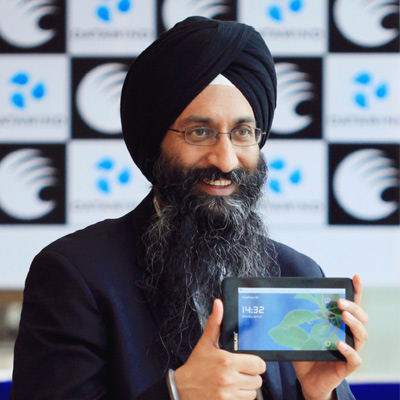
    NEW DELHI: DataWind has been recognized for the Most Innovative Solution for Achievement of Digital India. 


    The award was presented by Malcom Johnson, Deputy Secretary General, International Telecommunication Union, ITU Geneva during the 9th annual NTA ICT World Communication Awards 2015, in New Delhi.


    The award recognizes DataWind’s breakthrough web delivery platform, invented by its founder and Co-Chairman Raja Singh Tuli, which is covered by over 18 US and international patents. Offered through DataWind’s UbiSurfer browser on its tablets and smartphones, this unique technology reduces bandwidth consumption by factors of 10x to 30x, allowing the delivery of web pages across even congested GPRS networks in 5 to 7 seconds (with even faster speeds on 3G and 4G networks).


    DataWind’s products break the affordability barrier and deliver internet access across traditional mobile networks as the company executes a vision to empower the next three billion internet users. The DataWind UbiSlate tablet computers and smartphones incorporate the most powerful technology allows fastest internet access on the remotest locations of India’s mobile networks. DataWind also bundles unlimited Internet browsing for 1 year as an offer on its low cost smartphones and Tablets on Reliance Communications and Telenor connections.


    Customers can access billions of websites, including travel websites, ecommerce sites, educational content, news, cricket-scores, Email and Facebook via the UbiSurfer browser, at no cost.


    CMAI chairman NK Goyal said, ‘CMAI NTA ICT World Communication Awards is the most sought after prestigious industry awards to identify, acknowledge, and recognize outstanding contributions to the field of Communications, ICT and are known to provide greater encouragement and impetus to the players for their contribution in building a robust National Telecom Network and providing an effective means of communication. We offer well-deserved congratulations to DataWind which has shown outstanding research, development and innovations in the ICT sector.”


    DataWind CEO Suneet Singh Tuli said, “We are truly humbled and honoured to receive this prestigious award. We are excited to get recognition on DataWind’s vision for Digital India.”

  • Fork Media picks equity in Wi-Fi ad network Spid

    Fork Media picks equity in Wi-Fi ad network Spid

    NEW DELHI: Ad tech company Fork Media has invested in Wi-Fi ad network Spid Info Media Pvt. Ltd to leverage Spid’s technology for advertisers and publishers by offering them one of the largest audience platforms, targeting on-the-go consumers.
     

    The partnership is in line with Fork’s vision of broadening its core offerings.
     

    Spid currently has a bouquet of over 1,200 locations including all major airports, QSRs like McDonalds, KFC, Starbucks, and Costa Coffee, malls and other retail locations. 


    According to the company, his number is rapidly growing as it partners with ISPs and telecom providers to help monetise inventory. Fork Media aims to use Spid’s platform to leverage the locational behavior of consumers and target them for relevant advertising. 


    Fork Media CEO Samar Verma said, “Having Spid as a part of the Fork Media group is a strategic move for us. We see Wi-Fi as an alternative eco-system – a parallel economy, that’s growing rapidly. With the onset of 4G, a lot of telecom players are investing in Wi-Fi infrastructure to offset the costs involved in setting up 4G. Additionally, the Wi-Fi ecosystem takes location targeting to the next level by not only delivering relevant content to the consumer in and around a certain location, but also offering destination targeting. We are steering Fork Media to be less device-centric and more consumer-centric in our ad solutions. Therefore, this is an extremely important link in the chain for us in the consumer’s journey.”


    The acquisition of equity in Spid is a part of Fork Media’s larger expansion plans. It had recently made its foray into international markets with the launch of its operations in Dubai – targeting the GCC region. Through its tie-up with Spid, the company is now better equipped to provide well-timed offers that consumers are seeking. Fork Media is now poised to tap the immense opportunity that exists in the digital marketing space in India.


    Spid CEO Harsh Nagpal said, “Our partnership with Fork Media is a marriage of strengths. Fork’s reach and expertise in business development will enable us to leverage this unique proposition, further enabling brands to reach out to relevant audiences. With Samar and the entire Fork team’s collective experience and expertise, we foresee Spid deriving maximum value and growing manifold.”

  • Wired Broadband: ACT continues to lead growth, Airtel adds 40K subscribers

    Wired Broadband: ACT continues to lead growth, Airtel adds 40K subscribers

    BENGALURU: ACT (Atria Convergence Technologies) continues to lead the wired broadband growth in calendar year 2015 with 1.6 lakh subscriber additions from 31 January, 2015 until 31 August, 2015. The latest numbers disclosed by The Telecom Regulatory Authority of India (TRAI) as on 31 August, 2015 reveal that the total number of wired broadband subscribers in India stood at 160 lakhs. Hence 6.8 lakh subscribers were added between 31 December, 2014 and 31 August, 2015, and 1.6 lakh subscribers were added in August 2015.

    Note: (1) 100,00,000 = 100 Lakh = 10 million = 1 crore

    (2) TRAI reports indicate data in millions of numbers. Hence it is assumed in this report that a figure of 0.47 million subscribers for You BB for July-2015 would be granular to the nearest 10,000. While percentages perforce have been mentioned up to the two decimal places, the accuracy may vary, depending upon the exact number

    (3) Industry sources say that TRAI numbers in the case of ACT for May-2015 are incorrect at 0.66 million and the correct number would be 0.693.

    While the pecking order remains the same with the top three – Bharat Sanchar Nigam Limited (BSNL), Bharati Airtel (Airtel) and Mahanagar Telecom Nigam Limited (MTNL) also providing voice (telephone) services and many of their wired internet customers use both services – voice and data. The big three are followed by ACT and You Broadband India.

    ACT still continues to lead the growth in wired broadband subscriptions with a net addition of 20,000 subscribers in August 2015, taking its tally to 1.6 lakh subscribers (23.53 per cent of the all India additions) added since 31 December, 2014. ACT’s contribution to the all India additions to subscriber numbers in August was therefore 12.5 per cent. Hence ACT’s market share in the wired internet space in India improved by eight basis points to 4.81 per cent in August 2015 as compared to 4.73 in July-2015

    However, telecom major Bharti Airtel is swiftly closing the gap. The behemoth added 40,000 wired internet subscribers or 25 per cent of the all India additions in August 2015, taking its tally to 1.3 lakh subscribers (19.12 per cent of the all India additions) added between 31 December, 2014 and 31 August, 2015.  Airtel’s market share improved 16 basis points to 9.63 per cent in August 2015 as compared to 9.47 per cent in July 2015.

    You Broadband added 10,000 or 6.25 per cent of the all India wired broadband subscribers added in August 2015, taking its tally to 4.8 lakh subscribers until 31 August, 2015, and a net addition of 60,000 subscribers (8.82 per cent of the all India additions) since 31 December, 2014. You Broadband’s market share has improved by three basis points to three per cent in August 2015 as compared to the 2.97 per cent in July 2015.

    The public sector BSNL and MTNL subscription numbers are same as the numbers reported for July 2015, and hence there appears to be no net growth in wired broadband subscribers on their part. However, since the overall market size is increasing, their market share has declined even further. BSNL had a market share of 62 per cent, down by 63 basis points as compared to July 2015, while MTNL lost seven basis points to reach a market share of 7.06 per cent as compared to 7.13 per cent in July 2015. As on 31 December, 2014, BSNL had a market share of 65.14 per cent, while MTNL had a market share of 7.38 per cent.

    Please refer to the figure below:

  • Ofcom to take over video-on-demand regulation from 2016

    Ofcom to take over video-on-demand regulation from 2016

    MUMBAI: The regulation of video-on-demand (VOD) programme services is being brought fully within Ofcom to sit alongside its regulation of broadcast content. 


    The move follows an Ofcom review to ensure regulation of broadcast and on-demand content remains as effective and efficient as possible for the benefit of consumers, audiences and industry.


    The review included the current co-regulatory arrangements for VOD services. These can include catch-up TV and on-demand services on the TV and the internet. Ofcom designated the Authority for Television On Demand (ATVOD) in 2010 as a co-regulator to take the lead in regulating editorial content for video-on-demand services.


    Following the review, Ofcom decided that acting as sole regulator for VOD programmes is a more effective model for the future than having two separate bodies carrying out this work. This will create operational efficiencies and allow editorial content on VOD to sit alongside Ofcom’s existing regulation of broadcasting.


    VOD services have become increasingly popular among viewers. The proportion of adults aged 15 and over that watch VOD services has increased from 27 per cent in 2010 to 57 per cent in 2014, according to Ofcom research.


    ATVOD has played an important, effective role in regulating on-demand TV over the past five years. Like Ofcom, it is committed to protecting audiences from harmful content. ATVOD and Ofcom are therefore working closely together to ensure a smooth transfer of responsibilities so that audiences, especially children, remain protected at all times.


    As co-regulator for on-demand services, Ofcom already has concurrent responsibility to act in addition to, or in place of, ATVOD. From 1 January 2016, Ofcom will take sole responsibility for regulating VOD programme services. The Advertising Standards Authority will continue to act as a co-regulator for advertising content on VOD services.

  • ComScore launches Mobile Metrix & mobile panel development with Kantar

    ComScore launches Mobile Metrix & mobile panel development with Kantar

    MUMBAI: comScore, Inc has launched two initiatives to expand mobile audience measurement in Indonesia. The global media measurement and analytics company has launched its syndicated Mobile Metrix solution, and has also introduced a joint mobile panel development with Kantar, which will fuel mobile and cross-media audience measurement in the future.


    comScore and Kantar will share more details on these developments at the Mobile Marketing Association (MMA) Forum Indonesia during a joint presentation on The Future of Mobile Measurement. 


    “Kantar and comScore recognise the importance of comprehensive mobile measurement as essential to fostering sustainable growth in the mobile advertising and media ecosystem. The joint building of mobile panels in Indonesia will enable both comScore and Kantar to bring services to market faster, and is an important step forward for the future development of cross-media audience and campaign measurement,” said Kantar chief client officer, Asia Pacific Tim Kelsall.


    “The industry needs insights they can act on now as well as the assurance that measurement leaders are planning ahead to address their future needs in this fast-evolving space. Today, we announced initiatives to support both of these needs,” said comScore vice president, Southeast Asia Kerry J Brown.


    “Starting today, agencies, advertisers and publishers can leverage comScore Mobile Metrix to better inform media buying and selling strategies. As we look to the future, our work with Kantar to jointly build mobile panels will further advance mobile, multi-platform and cross-media measurement to benefit the entire industry. We are excited to announce these developments and look forward to sharing more updates as these solutions progress,” Brown added.


    The introduction of comScore’s census-based Mobile Metrix, now available in Indonesia, allows for reporting of mobile browser and app audiences on smartphones and tablets for tagged publishers.


    This service helps publishers to demonstrate the size and value of their mobile audiences to advertisers, and helps media planners and buyers to better evaluate advertising opportunities on mobile devices. In Asia Pacific, Mobile Metrix is available in 12 markets in addition to Indonesia.

  • Reliance Jio’s Wi-Fi service goes live in Himachal Pradesh

    Reliance Jio’s Wi-Fi service goes live in Himachal Pradesh

    MUMBAI: Dharamshala & Mcleodganj have become the first hill stations in Himachal Pradesh to have Reliance Jio’s Wi-Fi service – JIOnet.


    Minister of Housing, urban development and town & country planning of Himachal Pradesh Sudhir Mishra inaugurated the service. JIOnet’s high speed Wi-Fi service will cover Macleo Chowk and Temple road in Mcleodganj and Kotwali in Dharamshala of Himachal Pradesh.


    It is part of the Himachal Pradesh government’s initiative to convert Dharamshala into a ‘Smart City.’ People and visitors of Dharamshala and Mcleodganj will be able to access the services on their smart phones and tablets. This service will also be available at Mall Road, Manali, Kullu and Hamirpur locations.


    Speaking on this new advancement, a Reliance Jio spokesperson said, “High speed data connectivity is one of the foundations on which future prosperity of cities and nations will be built. By deploying Jionet’ Wi-Fi services at Dharamshala and Mcleodganj, a famous tourist destination, we want people to experience the high speed internet and rich digital content through specially designed apps to enrich their lives.”


    The feedback from users will be used to improve the services further as Jio gets ready for its formal launch. After commencement of service,  4G LTE, Wi-Fi and LTE networks will operate seamlessly with each other.