Category: Broadband

  • BSNL leads in wireline broadband internet subs addition in Sep-16

    BSNL leads in wireline broadband internet subs addition in Sep-16

    BENGALURU: In a change from the norm, the public sector telecom giant Bharat Sanchar Nigam Limited (BSNL) added 40,000 wireline broadband internet subscribers in the month of September 2016 (Sep-16). BSNL had been consistently losing subscribers in the calendar year 2016 (CY-16) until 31 August 2016 (Aug-16). Its gain in Sep-16 was just half the 80,000 subscribers it has lost in CY-16 until Sep-16. At the same time, the other public sector telecom operator – Mahanagar Telecom Nigam Limited (MTNL) has also been bleeding wireline broadband internet subscribers in CY-16 until Sep-16. MTNL has also seen a reduction of 50,000 subscribers in CY-16.Overall, the two public sector players have lost subscribers during CY-16 until Sep-16 and hence dampened the subscriber growth rate among the top five wired broadband internet players.

    The wireline broadband internet (broadband) subscriber base in the country grew by 8.06 percent (by 13.3 lakh or 1.33 million) in the period between 31 December 2015 (Dec-15) or1 January 2016 until 30 September 2016 (Sep-16), from 165.1 lakh to 178.4 lakh. Telecom subscription data released by Telecom Regulatory Authority of India (TRAI) for Sep-16 reveals that the contribution by the top five players’ was just 5 lakh new subscribers or 3.55 percent growth in the current calendar year until Sep-16 (CY-16).Overall, wired broadband subscribers grew 0.96 percent month-on-month (MoM) in Sep-16. The All India wired broadband base grew from 176.7 lakh to 178.4 lakh, while the five top players grew by 0.69 percent in Sep-16 as compared to Aug-16.

    Leading the growth in subscriber additions in CY-16 until Sep-16 are private wired broadband players Bharti Airtel (Airtel, 30,000 additions in Sep-16) and regional player Atria Convergence Technologies Pvt Ltd (ACT, 20,000 additions in Sep-16) with additions of 2.7 lakh and 2.5 lakh subscriber additions respectively in CY-16 until Sep-16. Airtel’s wired broadband subscriber base grew 16.17 percent, while ACT’s base grew by 29.07 percent during the same period (CY-16 until Sep-16). In CY-15 (1 January 2015 to 31 December 2015), Airtel had added 2.6 lakh wired broadband subscribers and grown by 18.44 percent, while ACT added 2.5 lakh subscribers and had grown at a blazing 40.98 percent. By Sep-16, Airtel has already exceeded the number of subscribers it had added in CY-15, while ACT has equalled its CY-15 performance Hence, by the end of 2016, with reports for a quarter of year to be published as yet, the two players should add a lot more subscribers than they did in CY-15.

    While Airtel is a national level player, ACT is a regional player with operations in South India, hence probably making ACT the largest private wireline broadband player in South India. ACT has replaced the public sector MTNL at third place, pushing the latter to fourth spot in Aug-16 in terms of number of subscribers.Another private player among the top five – You Broadband (You BB) has added 70,000 subscribers (13.73 percent growth) in the current year until Sep-16.

    Among the 5 top wireline broadband internet players in India, the public sector telecom player Bharat Sanchar Nigam Limited (BSNL) leads by far with 98.8 lakh total number of wireline broadband subscribers as on Sep-16. However, as mentioned above, BSNL had seen its broadband subscriber base shrink by 80,000 in CY-16 until Aug-16. The largest private sector wireline broadband internet services player Airtel had 19.1 lakh subscribers as on 30 September 2016, ACT with 11.1 lakh subscribers was next and was followed by the other public sector player –MTNL with 10.7 lakh subscribers. You Broadband (You BB) with 5.8 lakh subscribers was the fifth.

    Please refer to Fig 1 below for wireline subscriber data in CY-16 until Sep-16.

    public://F1.jpg

    The top five players have had a slower rate of growth as compared to the all India growth in CY-16 until Sep-16. The share of the top five players among all India wired broadband subscriber addition has fallen in CY-16 until Sep-16 from 85.28 percent as on 1 January 2016 to 81.73 percent as on 30 September 2016. The share of these players was 88.45 percent as on 1 January 2015.

    Month-on-month (m-o-m), the all India wired broadband subscriber base witnessed the second highest growth in CY-16 until Sep-16 in Aug-16 at 1.03 percent, while the top 5 players had a growth of 0.28 percent in that month. Please refer to figure 2 below:

    public://F2.jpg

    Other wireline broadband players in India

    MSOs’ in India have started providing internet services on the back of their television cable networks using DOCSIS technology. In general, they have started reporting double and triple digit year-over-year (y-o-y) increase in internet subscribers and revenue. The television cable players see broadband services improving their Average Revenue per User (ARPU) numbers. Three of the major MSOs and a regional MSO – Hathway, Siti Networks Limited, Den Networks Limited , Ortel Communications Limited respectively whose results are available in the public domain have been showing steady growth in their broadband segment over the past few quarters.

    Overall broadband subscriber numbers for September 2016 including wireless and mobile

    Overall, as per the reports received by TRAI from the service providers, the number ofbroadband subscribers (including wireless, mobile, dongles) grew  by a massive 11.99 percent by 20.59million  or 205.9 lakh to 192.30 million (19.32 crore) in Sep-16 from 171.71 million (17.171 crore) in Aug-16. The growth was led by Wireless broadband subscriber numbers that use mobiles and dongles for internet access have increased m-o-m by 13.31 percent in Sep-16 to 173.87 million (17.387 crore) from 153.45 million (15.345 crore) in Aug-16. Fixed wireless subscribers that access the internet through Wi-Fi, Wi-Max, Point-to-point radio and VSAT have increased 1.27 percent in Sep-16 to to 0.60 million (6 lakh) from 0.59 million (5.9 lakh) in Aug-16.

    The top five service providers constituted 78.62 percent market share of the totalbroadband subscribers at the end of Aug-16. These service providerswere Bharti Airtel (46.19 million or 4.619 crore), Vodafone (35.94 million or 3.594 crore), Idea Cellular(30.72 million 3.072 crore), BSNL (21.60 million 2.16 crore) and Reliance Communications Group (16.74 million 1.674 crore).

    As on 30 September, 2016, the top five Wireless Broadband Serviceproviders were Bharti Airtel (44.25 million, 4.425 crore), Vodafone (35.93 million, 3.593 crore),Idea Cellular (30.72 million, 3.072 crore), Reliance Communications (16.62 million, 1.662 crore) and Reliance Jio (16.00 million, 1.6 crore).

    TRAI’s definition of broadband is internet download speeds greater than or equal to 512 Kpbs.

    Notes:(1) The unit of currency in this report is the Indian rupee – Rs (also conventionally represented by INR).The Indian numbering system or the Vedic numbering system has been used to denote money values. The basic conversion to the international norm would be:

    (a) 100,00,000 = 100 lakh = 10,000,000 = 10 million = 1 crore.

    (b) 10,000 lakh = 100 crore = 1 arab = 1 billion.

    (2) TRAI reports indicate data in millions of numbers up to 2 decimal places. Hence it is assumed in this report that a figure of 0.51 million (5.1 lakh) subscribers for You BB for Dec-2015 would be granular to the nearest 10,000. While percentages have been mentioned up to two decimal places, the accuracy may vary, depending upon the exact number.

    (3) MSOs’ have a number of subsidiaries and alliances, hence broadband numbers are split as applicable. The consolidated subscription numbers of these entities could be larger. Hathway is a case in point.
     

  • Aug-16: ACT largest private wireline broadband player in South India?

    Aug-16: ACT largest private wireline broadband player in South India?

    BENGALURU: The wireline broadband internet (broadband) subscriber base in the country grew by 7.03 percent (by 11.6 lakh or 1.6 million) in the period between 31 December 2015 (Dec-15) or 1 January 2016 until 31 August 2016 (Aug-16), from 165.1 lakh to 176.7 lakh. In calendar year 2015, the growth rate had been higher at 7.77 percent. Telecom subscription data released by Telecom Regulatory Authority of India (TRAI) for Aug-16 reveals that the top five players’ growth was just 4 lakh new subscribers or 2.84 percent growth in the current calendar year until Aug-16 (CY-16).

    Leading the growth were private wired broadband players Bharti Airtel (Airtel) and regional player Atria Convergence Technologies Pvt Ltd (ACT) with additions of 2.4 lakh and 2.3 lakh subscriber additions respectively in CY-16 until Aug-16.Airtel’s wired broadband subscriber base grew 14.37 percent, while ACT’s base grew by 26.74 percent during the same period (CY-16 until Aug-16). In CY-15 (1 January 2015 to 31 December 2015), Airtel had added 2.6 lakh wired broadband subscribers and grown by 18.44 percent, while ACT added 2.5 lakh subscribers and had grown at a blazing 40.98 percent. Hence, by the end of 2016, the two players should add a lot more subscribers than they did in CY-15.

    While Airtel is a national level player, ACT is a regional player with operations in South India, hence probably making ACT the largest private wireline broadband player in South India. ACT has replaced the public sector Mahanagar Telecom Nigam Limited (MTNL) at third place, pushing the latter to fourth spot in Aug-16 in terms of number of subscribers.

    Another private player among the top five – You Broadband (You BB) has added 60,000 subscribers (11.76 percent growth) in the current year until Aug-16. The two public sector players have lost subscribers during the same period and hence dampened the subscriber growth rate among the top five wired broadband internet players.

    Among the 5 top wireline broadband internet players in India, the public sector telecom player Bharat Sanchar Nigam Limited (BSNL) leads by far with 98.4 lakh total number of wireline broadband subscribers as on Aug-16. However, BSNL has seen its broadband subscriber base shrink by 80,000 in CY-16 until Aug-16. The largest private sector wireline broadband internet services player Airtel had 19.1 lakh subscribers as on 31 August 2016, ACT with 10.9 lakh subscribers was next and was followed by another public sector player – Mahanagar Telephone Nigam Limited (MTNL) with 10.7 lakh subscribers. You Broadband (You BB) with 5.6 lakh subscribers was the fifth. MTNL has also seen a reduction of 50,000 subscribers in CY-16. Please refer to Fig 1 below for wireline subscriber data in CY-16 until Aug-16.

    As mentioned above, the top five players have had a slower rate of growth as compared to the all India growth in CY-16 until Aug-16. The share of the top five players among all India wired broadband subscriber addition has fallen in CY-16 from 85.28 percent as on 1 January 2016 to 81.95 percent as on 31 August 2016. The share of these players was 88.45 percent as on 1 January 2015.

    public://Untitled-2_4.jpg

    Among these 5, only BSNL and Airtel could be termed as national players at present. BSNL, Airtel and MTNL also provide wireline telephony voice and data and mobile services while Airtel also has a direct to home (DTH) segment. ACT started off as an MSO with operations concentrated in a few major cities and towns located mainly in South India. It started internet services (ACT Broadband) a little later and has grown its broadband internet subscriber base over time through organic as well as acquisition growth, to the extent that it is quite likely the biggest private wireline broadband player in South India. You BB offers broadband operations in a few cities in Maharashtra, Gujarat, the NCR region Andhra Pradesh and Karnataka.

    Month-on-month (m-o-m), the all India wired broadband subscriber base witnessed the second highest growth in CY-16 until Aug-16 at 1.03 percent. The top 5 players had a growth of 0.28 percent during the same period. Please refer to figure 2 below.

    public://Untitled-2_5.jpg

    Other wireline broadband players in India

    MSOs’ in India have started providing internet services on the back of their television cable networks using DOCSIS technology. In general, they have started reporting double and triple digit year-over-year (y-o-y) increase in internet subscribers and revenue. The television cable players see broadband services improving their Average Revenue per User (ARPU) numbers. Three of the major MSOs and a regional MSO – Hathway, Siti Networks Limited, Den Networks Limited , Ortel CommunicationsLimited respectively whose results are available in the public domain have been showing steady growth in their broadband segment over the past few quarters.

    Among the MSOs’ (besides ACT), Hathway has shown the highest subscriber additions in the year. Its consolidated broadband subscription revenue as per IND AS for the quarter ended 31 September 2016 (Q2-17) at Rs 120.3 crore (37.5 percent of Total Income from Operations or TIO) was higher than its consolidated CATV subscription revenue of Rs110.4 crore (34.4 percent of TIO). Its consolidated broadband revenue in Q2-17 quarter as per IND AS increased 67 percent y-o-y.

    Hathway’sconsolidated broadband subscriber base increased to 8 lakh in Q2-17 from 7 lakh in the immediate trailing quarter (Q1-17). Broadband ARPU in the current quarter increased to Rs 643 from Rs 616 in the corresponding quarter of the previous year, but declined from Rs 670 in the immediate trailing quarter.

    Siti Networks broadband revenue increased 167.7 percent y-o-y (more than doubled) to Rs 24.9 crore (8.6 percent of TIO) in Q2-17 from Rs 9.3 crore (4 percent of TIO) in Q2-16.Siti has added about 28,000 subscribers in Q2-17 taking its subscriber base to 195,000 from 167,000 subscribers in Q1-17. It had a broadband subscriber base of 91,450 in Q2-16.

    Overall broadband subscriber numbers for August 2016 including wireless and mobile

    Overall, as per the reports received by TRAI from the service providers, the number ofbroadband subscribers (including wireless, mobile, dongles) grew 4.75million  or 47.5 lakh to 17.171 million (17.171 crore) in Aug-16 from 166.96 million (16.696 crore) inJul-16. Wireless broadband subscriber numbers that use mobiles and dongles for internet access have increased m-o-m by 3.01 percent in Aug-16 to 153.45 million (15.345 crore) from 148.93 million (14.893 crore) in Jul-16. Fixed wireless subscribers that access the internet through Wi-Fi, Wi-Max, Point-to-point radio and VSAT have increased 8.65 percent in Aug-16 to to0.59 million (5.4 lkh) from 0.54 million in Jul-16.

    The top five service providers constituted 85.16 percent (84.83 percent in Jul-16)market share of the totalbroadband subscribers at the end of Aug-16. These service providerswere Bharti Airtel (45.35 million or 4.535 crore), Vodafone (35.01 million or 3.501 crore), Idea Cellular(29.58 million 2.958 crore), BSNL (21.04 million 2.104 crore) and Reliance Communications Group (15.24 million 1.524 crore).

    Decline in telephone subscribers in August 2016

    It must however be noted that the total wireless subscriber basedeclined from 1,034.23 million (103.423 crore) at the endof Jul-16 to 1,028.88 million (102.888 crore) at the end ofAug-16, thereby registering a monthlydecline rate of 0.52 percent. Wireless subscription in urban areas declinedfrom 589.61 million (58.961 crore) at the end of Jul-16to 585.89 million (58.589 crore) at the end of Aug-16,and wireless subscription in rural areasdeclined from 444.63 million  (44.463 crore) to 442.99million (44.299 crore) during the same period. Themonthly decline rates of urban and ruralwireless subscription were 0.63 percent and0.37 percent respectively.

    The overall wireless tele-density in Indiadeclined from 81.11 at the end of Jul-16to 80.62 at the end of Aug-16. The urban wireless tele-density declinedfrom 148.00 at the end of Jul-16 to146.84 at the end of Aug-16, and rural wireless tele-density also declined from 50.72 to 50.50 during the same period.The share of urban and rural wirelesssubscribers in total number of wirelesssubscribers was 56.94 percent and 43.06 percent respectively at the end of Aug-16.

    TRAI’s definition of broadband is internet download speeds greater than or equal to 512 Kpbs.

    Notes:(1) The unit of currency in this report is the Indian rupee – Rs (also conventionally represented by INR).The Indian numbering system or the Vedic numbering system has been used to denote money values. The basic conversion to the international norm would be:
    (a) 100,00,000 = 100 lakh = 10,000,000 = 10 million = 1 crore.
    (b) 10,000 lakh = 100 crore = 1 arab = 1 billion.

    (2) TRAI reports indicate data in millions of numbers up to 2 decimal places. Hence it is assumed in this report that a figure of 0.51 million (5.1 lakh) subscribers for You BB for Dec-2015 would be granular to the nearest 10,000. While percentages have been mentioned up to two decimal places, the accuracy may vary, depending upon the exact number.
    (3) MSOs’ have a number of subsidiaries and alliances, hence broadband numbers are split as applicable. The consolidated subscription numbers of these entities could be larger. Hathway is a case in point.

  • Aug-16: ACT largest private wireline broadband player in South India?

    Aug-16: ACT largest private wireline broadband player in South India?

    BENGALURU: The wireline broadband internet (broadband) subscriber base in the country grew by 7.03 percent (by 11.6 lakh or 1.6 million) in the period between 31 December 2015 (Dec-15) or 1 January 2016 until 31 August 2016 (Aug-16), from 165.1 lakh to 176.7 lakh. In calendar year 2015, the growth rate had been higher at 7.77 percent. Telecom subscription data released by Telecom Regulatory Authority of India (TRAI) for Aug-16 reveals that the top five players’ growth was just 4 lakh new subscribers or 2.84 percent growth in the current calendar year until Aug-16 (CY-16).

    Leading the growth were private wired broadband players Bharti Airtel (Airtel) and regional player Atria Convergence Technologies Pvt Ltd (ACT) with additions of 2.4 lakh and 2.3 lakh subscriber additions respectively in CY-16 until Aug-16.Airtel’s wired broadband subscriber base grew 14.37 percent, while ACT’s base grew by 26.74 percent during the same period (CY-16 until Aug-16). In CY-15 (1 January 2015 to 31 December 2015), Airtel had added 2.6 lakh wired broadband subscribers and grown by 18.44 percent, while ACT added 2.5 lakh subscribers and had grown at a blazing 40.98 percent. Hence, by the end of 2016, the two players should add a lot more subscribers than they did in CY-15.

    While Airtel is a national level player, ACT is a regional player with operations in South India, hence probably making ACT the largest private wireline broadband player in South India. ACT has replaced the public sector Mahanagar Telecom Nigam Limited (MTNL) at third place, pushing the latter to fourth spot in Aug-16 in terms of number of subscribers.

    Another private player among the top five – You Broadband (You BB) has added 60,000 subscribers (11.76 percent growth) in the current year until Aug-16. The two public sector players have lost subscribers during the same period and hence dampened the subscriber growth rate among the top five wired broadband internet players.

    Among the 5 top wireline broadband internet players in India, the public sector telecom player Bharat Sanchar Nigam Limited (BSNL) leads by far with 98.4 lakh total number of wireline broadband subscribers as on Aug-16. However, BSNL has seen its broadband subscriber base shrink by 80,000 in CY-16 until Aug-16. The largest private sector wireline broadband internet services player Airtel had 19.1 lakh subscribers as on 31 August 2016, ACT with 10.9 lakh subscribers was next and was followed by another public sector player – Mahanagar Telephone Nigam Limited (MTNL) with 10.7 lakh subscribers. You Broadband (You BB) with 5.6 lakh subscribers was the fifth. MTNL has also seen a reduction of 50,000 subscribers in CY-16. Please refer to Fig 1 below for wireline subscriber data in CY-16 until Aug-16.

    As mentioned above, the top five players have had a slower rate of growth as compared to the all India growth in CY-16 until Aug-16. The share of the top five players among all India wired broadband subscriber addition has fallen in CY-16 from 85.28 percent as on 1 January 2016 to 81.95 percent as on 31 August 2016. The share of these players was 88.45 percent as on 1 January 2015.

    public://Untitled-2_4.jpg

    Among these 5, only BSNL and Airtel could be termed as national players at present. BSNL, Airtel and MTNL also provide wireline telephony voice and data and mobile services while Airtel also has a direct to home (DTH) segment. ACT started off as an MSO with operations concentrated in a few major cities and towns located mainly in South India. It started internet services (ACT Broadband) a little later and has grown its broadband internet subscriber base over time through organic as well as acquisition growth, to the extent that it is quite likely the biggest private wireline broadband player in South India. You BB offers broadband operations in a few cities in Maharashtra, Gujarat, the NCR region Andhra Pradesh and Karnataka.

    Month-on-month (m-o-m), the all India wired broadband subscriber base witnessed the second highest growth in CY-16 until Aug-16 at 1.03 percent. The top 5 players had a growth of 0.28 percent during the same period. Please refer to figure 2 below.

    public://Untitled-2_5.jpg

    Other wireline broadband players in India

    MSOs’ in India have started providing internet services on the back of their television cable networks using DOCSIS technology. In general, they have started reporting double and triple digit year-over-year (y-o-y) increase in internet subscribers and revenue. The television cable players see broadband services improving their Average Revenue per User (ARPU) numbers. Three of the major MSOs and a regional MSO – Hathway, Siti Networks Limited, Den Networks Limited , Ortel CommunicationsLimited respectively whose results are available in the public domain have been showing steady growth in their broadband segment over the past few quarters.

    Among the MSOs’ (besides ACT), Hathway has shown the highest subscriber additions in the year. Its consolidated broadband subscription revenue as per IND AS for the quarter ended 31 September 2016 (Q2-17) at Rs 120.3 crore (37.5 percent of Total Income from Operations or TIO) was higher than its consolidated CATV subscription revenue of Rs110.4 crore (34.4 percent of TIO). Its consolidated broadband revenue in Q2-17 quarter as per IND AS increased 67 percent y-o-y.

    Hathway’sconsolidated broadband subscriber base increased to 8 lakh in Q2-17 from 7 lakh in the immediate trailing quarter (Q1-17). Broadband ARPU in the current quarter increased to Rs 643 from Rs 616 in the corresponding quarter of the previous year, but declined from Rs 670 in the immediate trailing quarter.

    Siti Networks broadband revenue increased 167.7 percent y-o-y (more than doubled) to Rs 24.9 crore (8.6 percent of TIO) in Q2-17 from Rs 9.3 crore (4 percent of TIO) in Q2-16.Siti has added about 28,000 subscribers in Q2-17 taking its subscriber base to 195,000 from 167,000 subscribers in Q1-17. It had a broadband subscriber base of 91,450 in Q2-16.

    Overall broadband subscriber numbers for August 2016 including wireless and mobile

    Overall, as per the reports received by TRAI from the service providers, the number ofbroadband subscribers (including wireless, mobile, dongles) grew 4.75million  or 47.5 lakh to 17.171 million (17.171 crore) in Aug-16 from 166.96 million (16.696 crore) inJul-16. Wireless broadband subscriber numbers that use mobiles and dongles for internet access have increased m-o-m by 3.01 percent in Aug-16 to 153.45 million (15.345 crore) from 148.93 million (14.893 crore) in Jul-16. Fixed wireless subscribers that access the internet through Wi-Fi, Wi-Max, Point-to-point radio and VSAT have increased 8.65 percent in Aug-16 to to0.59 million (5.4 lkh) from 0.54 million in Jul-16.

    The top five service providers constituted 85.16 percent (84.83 percent in Jul-16)market share of the totalbroadband subscribers at the end of Aug-16. These service providerswere Bharti Airtel (45.35 million or 4.535 crore), Vodafone (35.01 million or 3.501 crore), Idea Cellular(29.58 million 2.958 crore), BSNL (21.04 million 2.104 crore) and Reliance Communications Group (15.24 million 1.524 crore).

    Decline in telephone subscribers in August 2016

    It must however be noted that the total wireless subscriber basedeclined from 1,034.23 million (103.423 crore) at the endof Jul-16 to 1,028.88 million (102.888 crore) at the end ofAug-16, thereby registering a monthlydecline rate of 0.52 percent. Wireless subscription in urban areas declinedfrom 589.61 million (58.961 crore) at the end of Jul-16to 585.89 million (58.589 crore) at the end of Aug-16,and wireless subscription in rural areasdeclined from 444.63 million  (44.463 crore) to 442.99million (44.299 crore) during the same period. Themonthly decline rates of urban and ruralwireless subscription were 0.63 percent and0.37 percent respectively.

    The overall wireless tele-density in Indiadeclined from 81.11 at the end of Jul-16to 80.62 at the end of Aug-16. The urban wireless tele-density declinedfrom 148.00 at the end of Jul-16 to146.84 at the end of Aug-16, and rural wireless tele-density also declined from 50.72 to 50.50 during the same period.The share of urban and rural wirelesssubscribers in total number of wirelesssubscribers was 56.94 percent and 43.06 percent respectively at the end of Aug-16.

    TRAI’s definition of broadband is internet download speeds greater than or equal to 512 Kpbs.

    Notes:(1) The unit of currency in this report is the Indian rupee – Rs (also conventionally represented by INR).The Indian numbering system or the Vedic numbering system has been used to denote money values. The basic conversion to the international norm would be:
    (a) 100,00,000 = 100 lakh = 10,000,000 = 10 million = 1 crore.
    (b) 10,000 lakh = 100 crore = 1 arab = 1 billion.

    (2) TRAI reports indicate data in millions of numbers up to 2 decimal places. Hence it is assumed in this report that a figure of 0.51 million (5.1 lakh) subscribers for You BB for Dec-2015 would be granular to the nearest 10,000. While percentages have been mentioned up to two decimal places, the accuracy may vary, depending upon the exact number.
    (3) MSOs’ have a number of subsidiaries and alliances, hence broadband numbers are split as applicable. The consolidated subscription numbers of these entities could be larger. Hathway is a case in point.
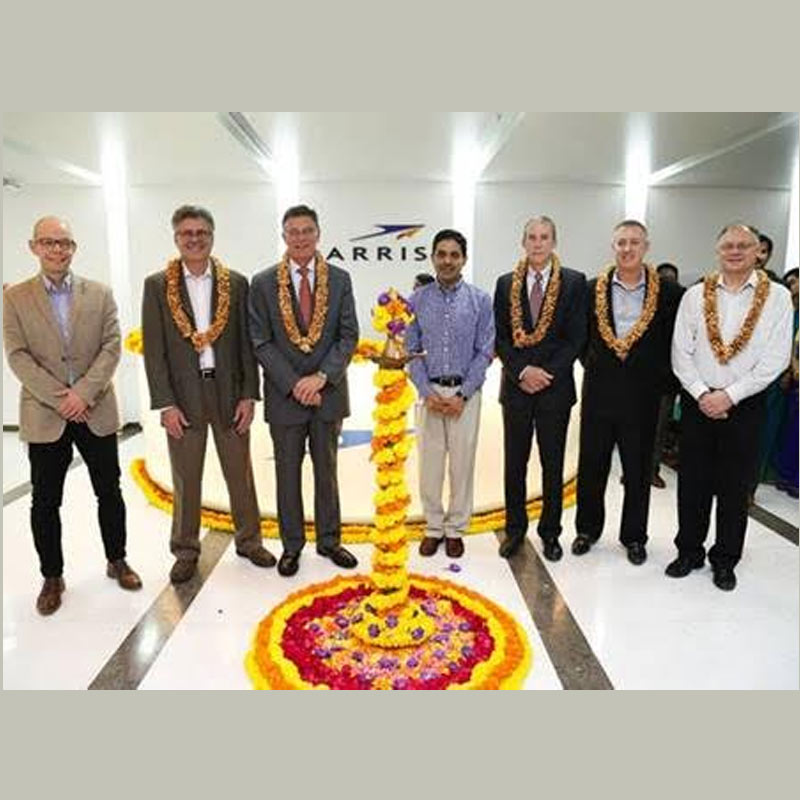
  • Delivering broadband and video tech; ARRIS opens R&D Centre in Bengaluru

    Delivering broadband and video tech; ARRIS opens R&D Centre in Bengaluru

    SINGAPORE: ARRIS International plc (NASDAQ: ARRS) today opened its largest Research and Development (R&D) and operations center outside of the US – in Ulsoor, Bengaluru. The state-of-the-art facility hosts a combination of world-class engineers from two former ARRIS and Pace sites following ARRIS’s January 2016 acquisition of Pace. The center promotes collaboration and the efficient development of advanced broadband and video solutions for the next generation of services – including Gigabit broadband, 4K TV, and Wi-Fi.

    The new, multi-million dollar Bengaluru center represents a strategic investment in high-value IP creation. With cutting-edge lab infrastructure, advanced test facilities, and 24*7 support for installation activities at customer premises globally, the center provides leading design, development, and quality assurance programs across the vast majority of ARRIS global solutions.

    “Our world-class Bengaluru facility is at the center of ARRIS’s global initiative to innovate and scale the technology that will transform how people around the world watch video and connect to the Internet,” said Bob Stanzione, Executive Chairman and Chairman of the Board of Directors. “This center unites two premier groups of engineers and empowers them with the resources to deliver the next era of innovation for our customers worldwide.”

    Kiran Gadi, Country Head and VP, Engineering, ARRIS India, added: “The Bengaluru R&D center represents ARRIS’s commitment to the region, to collaboration across our talented engineering teams, and to our global customers. Together, we’re positioning ARRIS and its customers for the next stage of growth.”

  • Delivering broadband and video tech; ARRIS opens R&D Centre in Bengaluru

    Delivering broadband and video tech; ARRIS opens R&D Centre in Bengaluru

    SINGAPORE: ARRIS International plc (NASDAQ: ARRS) today opened its largest Research and Development (R&D) and operations center outside of the US – in Ulsoor, Bengaluru. The state-of-the-art facility hosts a combination of world-class engineers from two former ARRIS and Pace sites following ARRIS’s January 2016 acquisition of Pace. The center promotes collaboration and the efficient development of advanced broadband and video solutions for the next generation of services – including Gigabit broadband, 4K TV, and Wi-Fi.

    The new, multi-million dollar Bengaluru center represents a strategic investment in high-value IP creation. With cutting-edge lab infrastructure, advanced test facilities, and 24*7 support for installation activities at customer premises globally, the center provides leading design, development, and quality assurance programs across the vast majority of ARRIS global solutions.

    “Our world-class Bengaluru facility is at the center of ARRIS’s global initiative to innovate and scale the technology that will transform how people around the world watch video and connect to the Internet,” said Bob Stanzione, Executive Chairman and Chairman of the Board of Directors. “This center unites two premier groups of engineers and empowers them with the resources to deliver the next era of innovation for our customers worldwide.”

    Kiran Gadi, Country Head and VP, Engineering, ARRIS India, added: “The Bengaluru R&D center represents ARRIS’s commitment to the region, to collaboration across our talented engineering teams, and to our global customers. Together, we’re positioning ARRIS and its customers for the next stage of growth.”

  • Jul-16: Airtel takes lead in wireline broadband subs additions in CY-16

    Jul-16: Airtel takes lead in wireline broadband subs additions in CY-16

    BENGALURU: There’s action in the broadband space – both wireless and wired. Indian telecom major and DTH player Bharti Airtel Limited (Airtel) has been on a net add spree in July 2016, overaking MSO and wireline broadband services player Atria Convergence Technologies Pvt Ltd (ACT) in wireline subscriber additions in the  calendar year 2016 (CY-16) up to now. This is according to telecom subscription data released by Telecom Regulatory Authority of India (TRAI) for the period ended 31 July 2016 (July-16).

    The data, released on 7 October 2016, reveals that Airtel had added 2.1 lakh net broadband wireline subscribers as compared to 1.9 lakh net subscribers added by ACT since 31 December 2015 (Dec-15, or 1 January 2016). Until Jun-16, ACT lead in net subscriber additions in CY-16.

    Among the five top wireline broadband internet players in India, the public sector telecom player Bharat Sanchar Nigam Limited (BSNL) lead by far with 98.6 lakh total number of wireline broadband subscribers. However, BSNL has seen its broadband subscriber base shrink by 60,000 in CY-16.

    The largest private sector wireline broadband internet services player Airtel had 18.8 lakh subscribers as on 31 July 2016, followed by another public sector player, Mahanagar Telephone Nigam Limited (MTNL), with 10.8 lakh subscribers. Not far behind was ACT with 10.5 lakh subscribers, followed by You Broadband (You BB) with 5.6 lakh subscribers. MTNL has also seen a reduction of 40,000 subscribers in CY-16, while You BB has seen its wireline broadband subscriber base increase by 60,000 during the same period. Please refer to Fig 1 below for wireline subscriber data in CY-16.

    Among these top five, only BSNL and Airtel could be termed as national players at present. BSNL, Airtel and MTNL also provide wireline telephony voice and data and mobile services while Airtel also has a direct to home (DTH) segment. ACT started off as an MSO with operations concentrated in a few major cities and towns located mainly in South India. It started internet services (ACT Broadband) a little later and has grown its broadband internet subscriber base over time thorough organic growth as well as through acquisitions to the extent that it is quite likely the biggest private wireline broadband player in South India. You BB offers broadband operations in a few cities in Maharashtra, Gujarat, the NCR region, Andhra Pradesh and Karnataka.
    public://trai-f1.jpg

    In CY-16, the all-India wireline subscriber base has increased by 9.8 lakh, with the top five players contributing 3.6 lakh subscribers or a little more than a third at 36.73 percent. The subscriber share of the top five wireline broadband internet players has declined from 85.28 percent (142.8 lakh) as on Dec-15 to 82.56 percent (144.4 lakh) as on Jul-16. Please refer to Fig 2 for the month-on-month change in wired broadband internet subscribers during CY-16.
    public://trai-f2.jpg

    Other wireline broadband players in India

    MSOs in India have started providing internet services on the back of their television cable networks using DOCSIS technology. In general, they have started reporting double digit year-over-year (y-o-y) increase in internet subscribers and revenue. The television cable players see broadband services improving their average revenue per user (ARPU) numbers.

    Three of the major MSOs and a regional MSO, Hathway, Siti Cable, Den Networks and Ortel Communications, respectively whose financial results are available in the public, domain have been showing steady growth in their broadband segment over the past few quarters.

    Overall broadband subscriber numbers for July 2016

    Overall, as per the data received by TRAI from the service providers, the number of broadband subscribers (including wireless, mobile, dongles) remained stagnant at159.80 million (15.980 crore)  at the end of both Jun-16 and Jul-16.

    Wireless broadband subscriber numbers that use mobiles and dongles for internet access have increased month-on-month by 4.92 per cent to 148.93 million (14.893 crore) in July-16 from 141.94 million (14.194 crore) in June-16. Fixed wireless subscribers that access the internet through Wi-Fi, Wi-Max, point-to-point radio and VSAT have declined 1.06 percent in July-16 to to 0.54 million (5.4 lakh) from 0.55 million (5.5 lakh) June-16.

    The top five service providers constituted 84.83 percent market share of the total broadband subscribers at the end of July-16. These service providers were Bharti Airtel (44.41 million or 4.441 crore), Vodafone (33.6 million or 3.36 crore), Idea Cellular (28.19 million 2.819 crore), BSNL (20.92 million 2.092 crore) and Anil Ambani-owned Reliance Communications (14.74 million 1.474 crore).

    Decline in telephone subscribers in July 2016

    It must, however, be noted that the number of telephone subscribers in India declined from 1,059.86 million (105.986 crore) at the end of June-16 to 1,058.85 million (105.885 crore) at the end of July-16, thereby showing a monthly decline rate of 0.10 percent.

    The urban subscription increased from 609.45 million (60.945 crore) at the end of June-16 to 610.22 million (61.022 crore) at the end of July-16 whereas the rural subscription declined from 450.41 million (45.041 crore) to 448.63 million (44.863 crore) during the same period.

    The monthly growth rates of urban and rural subscription were 0.13 percent and -0.40 per cent, respectively during the month of July-16.

    The overall tele-density in India declined from 83.20 at the end of June- 16 to 83.04 at the end of Jul-16. The urban tele-density declined from 153.22 at the end of June-16 to 153.18 at the end of July-16, and the rural tele-density also declined from 51.41 during the same period. The share of urban subscribers and rural subscribers in total number of telephone subscribers at the end of July-16 was 57.63 per cent and 42.37 per cent, respectively.

    TRAI’s definition of broadband is internet download speeds greater than or equal to 512 Kpbs.


  • Jul-16: Airtel takes lead in wireline broadband subs additions in CY-16

    Jul-16: Airtel takes lead in wireline broadband subs additions in CY-16

    BENGALURU: There’s action in the broadband space – both wireless and wired. Indian telecom major and DTH player Bharti Airtel Limited (Airtel) has been on a net add spree in July 2016, overaking MSO and wireline broadband services player Atria Convergence Technologies Pvt Ltd (ACT) in wireline subscriber additions in the  calendar year 2016 (CY-16) up to now. This is according to telecom subscription data released by Telecom Regulatory Authority of India (TRAI) for the period ended 31 July 2016 (July-16).

    The data, released on 7 October 2016, reveals that Airtel had added 2.1 lakh net broadband wireline subscribers as compared to 1.9 lakh net subscribers added by ACT since 31 December 2015 (Dec-15, or 1 January 2016). Until Jun-16, ACT lead in net subscriber additions in CY-16.

    Among the five top wireline broadband internet players in India, the public sector telecom player Bharat Sanchar Nigam Limited (BSNL) lead by far with 98.6 lakh total number of wireline broadband subscribers. However, BSNL has seen its broadband subscriber base shrink by 60,000 in CY-16.

    The largest private sector wireline broadband internet services player Airtel had 18.8 lakh subscribers as on 31 July 2016, followed by another public sector player, Mahanagar Telephone Nigam Limited (MTNL), with 10.8 lakh subscribers. Not far behind was ACT with 10.5 lakh subscribers, followed by You Broadband (You BB) with 5.6 lakh subscribers. MTNL has also seen a reduction of 40,000 subscribers in CY-16, while You BB has seen its wireline broadband subscriber base increase by 60,000 during the same period. Please refer to Fig 1 below for wireline subscriber data in CY-16.

    Among these top five, only BSNL and Airtel could be termed as national players at present. BSNL, Airtel and MTNL also provide wireline telephony voice and data and mobile services while Airtel also has a direct to home (DTH) segment. ACT started off as an MSO with operations concentrated in a few major cities and towns located mainly in South India. It started internet services (ACT Broadband) a little later and has grown its broadband internet subscriber base over time thorough organic growth as well as through acquisitions to the extent that it is quite likely the biggest private wireline broadband player in South India. You BB offers broadband operations in a few cities in Maharashtra, Gujarat, the NCR region, Andhra Pradesh and Karnataka.
    public://trai-f1.jpg

    In CY-16, the all-India wireline subscriber base has increased by 9.8 lakh, with the top five players contributing 3.6 lakh subscribers or a little more than a third at 36.73 percent. The subscriber share of the top five wireline broadband internet players has declined from 85.28 percent (142.8 lakh) as on Dec-15 to 82.56 percent (144.4 lakh) as on Jul-16. Please refer to Fig 2 for the month-on-month change in wired broadband internet subscribers during CY-16.
    public://trai-f2.jpg

    Other wireline broadband players in India

    MSOs in India have started providing internet services on the back of their television cable networks using DOCSIS technology. In general, they have started reporting double digit year-over-year (y-o-y) increase in internet subscribers and revenue. The television cable players see broadband services improving their average revenue per user (ARPU) numbers.

    Three of the major MSOs and a regional MSO, Hathway, Siti Cable, Den Networks and Ortel Communications, respectively whose financial results are available in the public, domain have been showing steady growth in their broadband segment over the past few quarters.

    Overall broadband subscriber numbers for July 2016

    Overall, as per the data received by TRAI from the service providers, the number of broadband subscribers (including wireless, mobile, dongles) remained stagnant at159.80 million (15.980 crore)  at the end of both Jun-16 and Jul-16.

    Wireless broadband subscriber numbers that use mobiles and dongles for internet access have increased month-on-month by 4.92 per cent to 148.93 million (14.893 crore) in July-16 from 141.94 million (14.194 crore) in June-16. Fixed wireless subscribers that access the internet through Wi-Fi, Wi-Max, point-to-point radio and VSAT have declined 1.06 percent in July-16 to to 0.54 million (5.4 lakh) from 0.55 million (5.5 lakh) June-16.

    The top five service providers constituted 84.83 percent market share of the total broadband subscribers at the end of July-16. These service providers were Bharti Airtel (44.41 million or 4.441 crore), Vodafone (33.6 million or 3.36 crore), Idea Cellular (28.19 million 2.819 crore), BSNL (20.92 million 2.092 crore) and Anil Ambani-owned Reliance Communications (14.74 million 1.474 crore).

    Decline in telephone subscribers in July 2016

    It must, however, be noted that the number of telephone subscribers in India declined from 1,059.86 million (105.986 crore) at the end of June-16 to 1,058.85 million (105.885 crore) at the end of July-16, thereby showing a monthly decline rate of 0.10 percent.

    The urban subscription increased from 609.45 million (60.945 crore) at the end of June-16 to 610.22 million (61.022 crore) at the end of July-16 whereas the rural subscription declined from 450.41 million (45.041 crore) to 448.63 million (44.863 crore) during the same period.

    The monthly growth rates of urban and rural subscription were 0.13 percent and -0.40 per cent, respectively during the month of July-16.

    The overall tele-density in India declined from 83.20 at the end of June- 16 to 83.04 at the end of Jul-16. The urban tele-density declined from 153.22 at the end of June-16 to 153.18 at the end of July-16, and the rural tele-density also declined from 51.41 during the same period. The share of urban subscribers and rural subscribers in total number of telephone subscribers at the end of July-16 was 57.63 per cent and 42.37 per cent, respectively.

    TRAI’s definition of broadband is internet download speeds greater than or equal to 512 Kpbs.


  • BSNL offers cheaper data, free calls; Rs 1250 crore subsidy approved

    BSNL offers cheaper data, free calls; Rs 1250 crore subsidy approved

    NEW DELHI: State-run Bharat Sanchar Nigam Ltd. (BSNL) soon plans to reportedly bring a plan which will give neck and neck competition to Reliance Jio. BSNL chairman and managing director Anupam Shrivastava said that the was closely observing Jio’s performance and the market.

    Plans being considered by BSNL are — lifetime free-voice-tariff plans from January 2017 at Rs 2-4 cheaper than Jio’s offering. (Jio’s entry price is Rs 149) Free voice calls to all BSNL users including 3G and 2G. Mobile customers with broadband can also avail this offer. BSNL users can use home broadband to route outgoing mobile calls through the landline network.

    BSNL subsidy

    Meantime, the Indian cabinet has approved a compensation of Rs.1,250 crore for the deficit incurred in operating rural landline connections installed before April 1, 2002. The subsidy support to BSNL will be paid from the Universal Service Obligation Fund (USOF). The USOF, since inception in 2002, has provided subsidy to BSNL for the rural wireline connections installed prior to April 2002. A total of Rs.8,692 crore has been extended as USOF subsidy support till date.

  • BSNL offers cheaper data, free calls; Rs 1250 crore subsidy approved

    BSNL offers cheaper data, free calls; Rs 1250 crore subsidy approved

    NEW DELHI: State-run Bharat Sanchar Nigam Ltd. (BSNL) soon plans to reportedly bring a plan which will give neck and neck competition to Reliance Jio. BSNL chairman and managing director Anupam Shrivastava said that the was closely observing Jio’s performance and the market.

    Plans being considered by BSNL are — lifetime free-voice-tariff plans from January 2017 at Rs 2-4 cheaper than Jio’s offering. (Jio’s entry price is Rs 149) Free voice calls to all BSNL users including 3G and 2G. Mobile customers with broadband can also avail this offer. BSNL users can use home broadband to route outgoing mobile calls through the landline network.

    BSNL subsidy

    Meantime, the Indian cabinet has approved a compensation of Rs.1,250 crore for the deficit incurred in operating rural landline connections installed before April 1, 2002. The subsidy support to BSNL will be paid from the Universal Service Obligation Fund (USOF). The USOF, since inception in 2002, has provided subsidy to BSNL for the rural wireline connections installed prior to April 2002. A total of Rs.8,692 crore has been extended as USOF subsidy support till date.

  • India lags in fixed broadband, but ahead in mobile: ESCAP

    India lags in fixed broadband, but ahead in mobile: ESCAP

    NEW DELHI: India had just over 100 million fixed broadband subscriptions in 2015 as compared to Iran and Japan which had more than 250 million.

    There were only 1.3 fixed broadband subscribers per 100 inhabitants in the country as against South Korea which had 40.2 per 100 inhabitants and China and Hong Kong which had 31.9. India stood at the 40th place, even below its immediate neighbours Bangladesh and Sri Lanka.

    However, a map of fixed broadband subscriptions per 100 inhabitants in Asia and the Pacific in 2015 shows India as the most developed country in this regard.

    These facts were revealed by the State of ICT in Asia and The Pacific 2016 Report by the Information and Communications Technology and Disaster Risk Reduction Division of the United Nations Economic and Social Commission for Asia and the Pacific (ESCAP).

    South and South-West Asia, Sri Lanka, Turkey, India and the Islamic Republic of Iran progressed well in both online services and telecommunications infrastructure development between 2008 and 2014. Other countries such as Bangladesh and Maldives performed well predominantly in the development of the telecommunications infrastructure.

    India has risen from just under 4 to around 5.5 out of seven in online services index among South Asian countries between 2008 and 2014.

    India was also among the top active mobile broadband subscriptions per 100 inhabitants in the Asia-Pacific region in 2015 with 120 million subscribers in 2015, the study showed.
    Disaster Risk Reduction Division.

    In 2015, China announced the One Belt One Road (OBOR) initiative, based on six economic corridors corresponding to the Silk Road. These economic corridors (China-Mongolia-Russia Corridor; New Eurasia Land Bridge; China-Central Asia-West Asia; China-Pakistan; Bangladesh-China-India-Myanmar; and China-Indochina Economic Corridor) aim to promote connectivity of these economies with China through infrastructure, trade and investment based on the original Silk Road’s pathway.

    The Global NGO Online Technology Report found that there are diverse regional differences in how NGOs worldwide utilize online technology. Within Asia Pacific, the report notes that the NGOs’ use of online technology varies greatly from subregion to subregion. For instance, India has hundreds of thousands of NGOs likely to come online in the next five years, while internet access throughout South-East Asia is growing as smartphone sales soar across the country. In Australia and Oceania, Europe and North America, NGOs’ use of web and e-mail communications, online fundraising tools, and social media is high, but NGOs in Asia, Africa and Latin America lag behind.

    Lack of a robust internet infrastructure is suggested to be a potential cause for this NGO divide. The report remarks that social, economic and political factors have either hastened or hindered the development of the infrastructure, and thereby also the uptake by the NGO sector.

    In a discussion on net neutrality, the paper says “Free Basics, formerly known as Internet.org, has sparked discussions in India and is one such case of net neutrality. This initiative pursues telecom companies in emerging markets, such as India — the world’s second largest market — to provide their customers free access to Facebook and entailing websites willing to play by its rule.”

    TechCrunch notes that these Facebook rules make it difficult to build competing social network or messaging applications. In February 2016, the Telecom Regulatory Authority of India (Trai) announced the prohibition of internet services such as Free Basics, claiming that they offer discriminatory tariffs for data services on the basis of content. While this may be a victory for neutrality supporters, others might be disappointed with the outcome as the goal of the Facebook initiative is to connect people who may otherwise not have internet access. The ruling will be in place for two years but may be open for review — it is still an open question whether the project will succeed in the long term.”

    The competition for spectrum has significant impact on the cost and affordability associated with broadband networks and access. As observed in the cases of the recent fourth generation (4G) spectrum auctions in India and Thailand, the quests for bandwidth and frequency would intensify along with the demand for mobile access and services, and subsequent need for more extensive broadband infrastructure.

    The report says Asia-Pacific countries are expanding their investments in the ICT infrastructure. For instance, in July 2015, the Chinese State Council announced the plan to develop underground telecommunication networks connecting 10 cities, which will be funded by the USD 160 billion bond programme designed for infrastructure projects.

    A mobile operator in India announced its plan to invest USD 9 billion for their mobile broadband network expansion in the next three years.

    Maldives will soon have USD 25 million nationwide fibre optic submarine networks of 1,200 kilometres to provide high-bandwidth services throughout the island nation. A mobile operator in Brunei announced plan for a nationwide Wi-Fi network rollout through more than 60 hotspots.

    The report found that connectivity still constrains not only ICT development but also various socioeconomic development opportunities. For instance, an UNCTAD report found that despite the unparalleled promise of the digital economy, the main barrier to B2C transactions in Asia and the Pacific appear to be the low internet penetration, the relatively poor postal reliability, and the low number of secure servers, which are essential for online shopping sites.

    China has demonstrated an exponential increase in fixed and mobile broadband, while slowest growths have been detected among LDCs, LLDCs and SIDs. The persistent challenge is that one-third of ESCAP member-countries have made only negligible progress over the last 15 years. In these countries, broadband access is still largely unavailable and unaffordable, while the gap as compared to the fast-growing economies is widening. Some sub-regions, such as Central Asia, seem to have made more holistic progress. The report also conducted descriptive statistical analysis using standard deviation on fixed broadband subscriptions per 100 inhabitants so as to statistically understand the digital divide.

    The results showed that Europe is the only region that has demonstrated a reduction in the broadband digital divide, while in Asia and the Pacific, it
    is in fact widening.

    Despite the increasing spotlight on newer technologies such as the IoT that aims to connect millions of devices and machines worldwide, the region still suffers from the lack of ICT connectivity, and mobile devices are mainly used for communication and entertainment.

    The report found that some countries have focused on broadband access expansion over online content and service development, but, in the long run, both infrastructure and content should be developed in tandem. The telecommunications investment seems to co-relate with fixed broadband subscriptions more strongly than with mobile broadband, indicating the investment-intensive nature of the fixed broadband infrastructure, which is a prerequisite for e-commerce.

    The report also found that weak regulatory framework might be associated with slow broadband growth.

    Regional broadband initiatives, such as the Asia-Pacific Information Superhighway, have become an essential and strategic development intervention that will shape the future of the region, the report concludes.