Category: Broadband

  • Net users: India follows leader China; Japan, Indonesia next in queue: Report

    Net users: India follows leader China; Japan, Indonesia next in queue: Report

    MUMBAI: South Korea and Japan are the leading two countries in Asia with regards to internet penetration reaching 91 per cent in 2016. The two are followed by Singapore (84pc), Taiwan (83pc), Azerbaijan (79pc), and Hong Kong (79pc).

    China leads in terms of overall number of internet users in 2016 (730 million), followed by India (290 million), Japan (115 million) and Indonesia (63.1 million). The expansion of broadband was for a long time a phenomenon limited to the developed economies, with narrow-band dial-up access being the norm in the majority of the developing countries of the region, WiseGuy Consultants reported Marketers Media as stating.

    However this has been gradually changing. In those economies, there is now increasing access to broadband, both DSL and cable modem platforms have both proved popular, with DSL establishing a clear advantage. More recently, one ha sseen the arrival of FttX as an alternative platform for broadband access in Asia. There also continues to be considerable activity in the broadband markets across Asia including amongst the many number of smaller countries such as Azerbaijan, Maldives and Macau.

    China leads the fixed broadband market in terms of both overall subscribers and market penetration. Subscribers reached 213 million in 2016 and market penetration reached 53pc. Although China boasts the largest number of broadband connections in the world, annual growth rates are subsiding as housing penetration reaches levels indicative of market maturity.

    China Telecom and China Unicom are the largest suppliers of fixed broadband. Fixed broadband levels in China are expected to continue rise more gradually due to a confluence of factors that includes telecom operators seeking revenue growth, a government seeking to reach ambitious targets, the increasing wealth of end users and digital media giants seeking new audience.

    However, fixed broadband services will continue to grow based on the sheer volume of data traffic as the market shifts from:
    • Connecting people to connecting devices;
    • Increasing usage of cloud services;
    • Increasing bandwidth demands from higher quality HD and 4K streaming services.

    Key highlights of the fixed broadband market in Asia in 2016:
    • South Korea and Japan are the leading two countries in Asia with regards to internet penetration.
    • Behind South Korea and Japan are Singapore, Taiwan, Azerbaijan, and Hong Kong.
    • China leads in terms of overall number of Internet users, followed by India, Japan and Indonesia.
    • China leads the fixed broadband market in terms of both overall subscribers and market penetration (53pc).
    • South Korea holds second place with fixed broadband subscriber penetration of 41pc in 2016.
    • Hong Kong takes third place with fixed broadband subscriber penetration of 32pc in 2016.

  • FCC gets Indian origin Ajit Pai as its chairman

    FCC gets Indian origin Ajit Pai as its chairman

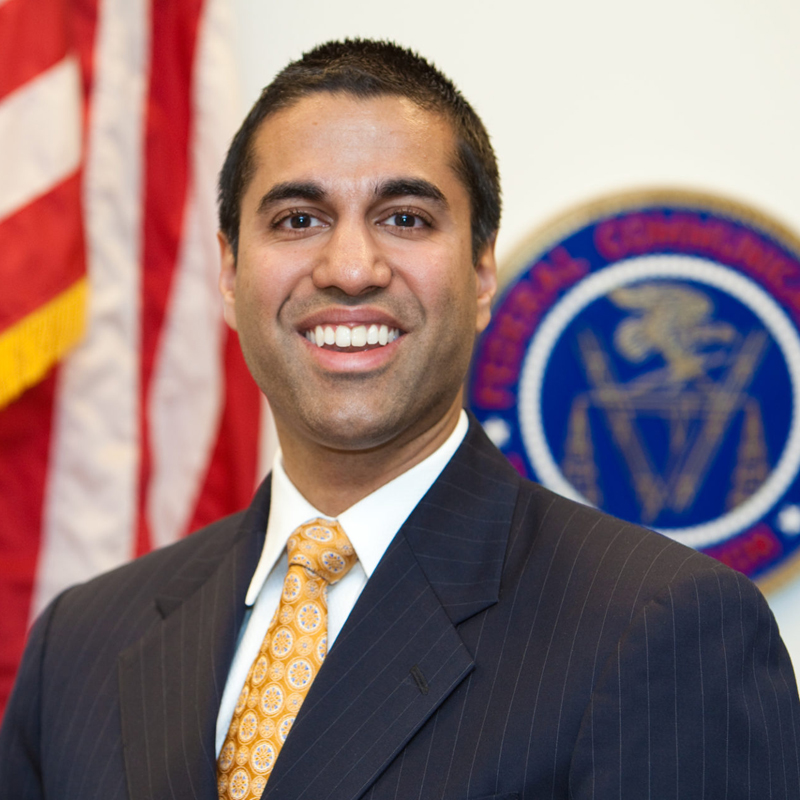
    MUMBAI: Indians are familiar with Ajit Pai who addressed Ficci Frames as a keynote speaker just three years ago. But Pai is the point man designated by US president Donald Trump as the 34th chairman of the Federal Communications Commission (FCC) who will be drawing up communications policy in one of the most highly networked and communications heavy nations on earth.

    Pai, a senior republican on the FCC, was appointed as a commissioner in 2012 by the then President Barack Obama and later confirmed by the senate. He replaces outgoing chairman Tom Wheeler.

    “I look forward to working with the new administration, my colleagues at the Commission, members of Congress and the American public to bring the benefits of the digital age to all Americans,” Pai said in a statement.

    Ajit Pai had credited his family for his successful rise as communications regulator during his Ficci Frames speech: Said he: “I was born and brought up in the United States, but my family’s roots are here in India. My mother grew up in Bangalore, and my father was raised in Hyderabad. In 1971, they came to the United States with just a radio and ten dollars in their pockets. Now, forty-three years later, here I am, in the country of my forefathers, speaking to you as the first Indian-American to serve on the FCC. The credit for this goes to my parents, who, like many immigrants, sacrificed to give me opportunities not available to them as children. It goes to my grandparents, who instilled in my parents the value of hard work and the vision to dream big.”

    According to the FCC website Pai’s rules on communication regulations are as follows:

    * Consumers benefit most from competition, not preemptive regulation. Free markets have delivered more value to American consumers than highly regulated ones.

    * No regulatory system should indulge arbitrage; regulators should be skeptical of pleas to regulate rivals, dispense favors, or otherwise afford special treatment.

    * Particularly given how rapidly the communications sector is changing, the FCC should do everything it can to ensure that its rules reflect the realities of the current marketplace and basic principles of economics.

    * As a creature of Congress, the FCC must respect the law as set forth by the legislature.

    * The FCC is at its best when it proceeds on the basis of consensus; good communications policy knows no partisan affiliation.

    Pai as the commissioner had proposed a:

    * Comprehensive plan to promote broadband deployment to all Americans. The federal government must make it easier to for broadband providers to retire increasingly obsolete copper lines in favor of next-generation technologies like fiber.”

    • It must enable rural residents to have the same choice for stand-alone broadband typically found in cities.

    • It must create a roadmap for state and local governments so that companies that want to compete in the broadband market don’t have to jump through unnecessary regulatory hoops in order to lay fiber to consumers.

    • It must promote common-sense policies like “Dig Once” and reform pole attachment rules to reduce the costs of building digital networks.

    • It must streamline the process for deploying wireless infrastructure, from big towers to small cells.

    • It must free up more licensed spectrum for use by wireless carriers and more unlicensed spectrum for things like Wi-Fi.

    • And it must preserve Internet freedom here and abroad, so that the online world can flourish free from heavy-handed government intervention.

    Additionally, Pai ai was the first member of the FCC in over two decades to call for revitalizing the AM radio band; the basic reforms he proposed were adopted in 2015. He also urged the FCC to create a task force to study the “Internet Protocol Transition” and report on obsolete rules that could be repealed; that task force was created.

    He is likely to undo the net neutrality regime that the FCC had been pursuing under outgoing chairman Wheeler.

  • FCC gets Indian origin Ajit Pai as its chairman

    FCC gets Indian origin Ajit Pai as its chairman

    MUMBAI: Indians are familiar with Ajit Pai who addressed Ficci Frames as a keynote speaker just three years ago. But Pai is the point man designated by US president Donald Trump as the 34th chairman of the Federal Communications Commission (FCC) who will be drawing up communications policy in one of the most highly networked and communications heavy nations on earth.

    Pai, a senior republican on the FCC, was appointed as a commissioner in 2012 by the then President Barack Obama and later confirmed by the senate. He replaces outgoing chairman Tom Wheeler.

    “I look forward to working with the new administration, my colleagues at the Commission, members of Congress and the American public to bring the benefits of the digital age to all Americans,” Pai said in a statement.

    Ajit Pai had credited his family for his successful rise as communications regulator during his Ficci Frames speech: Said he: “I was born and brought up in the United States, but my family’s roots are here in India. My mother grew up in Bangalore, and my father was raised in Hyderabad. In 1971, they came to the United States with just a radio and ten dollars in their pockets. Now, forty-three years later, here I am, in the country of my forefathers, speaking to you as the first Indian-American to serve on the FCC. The credit for this goes to my parents, who, like many immigrants, sacrificed to give me opportunities not available to them as children. It goes to my grandparents, who instilled in my parents the value of hard work and the vision to dream big.”

    According to the FCC website Pai’s rules on communication regulations are as follows:

    * Consumers benefit most from competition, not preemptive regulation. Free markets have delivered more value to American consumers than highly regulated ones.

    * No regulatory system should indulge arbitrage; regulators should be skeptical of pleas to regulate rivals, dispense favors, or otherwise afford special treatment.

    * Particularly given how rapidly the communications sector is changing, the FCC should do everything it can to ensure that its rules reflect the realities of the current marketplace and basic principles of economics.

    * As a creature of Congress, the FCC must respect the law as set forth by the legislature.

    * The FCC is at its best when it proceeds on the basis of consensus; good communications policy knows no partisan affiliation.

    Pai as the commissioner had proposed a:

    * Comprehensive plan to promote broadband deployment to all Americans. The federal government must make it easier to for broadband providers to retire increasingly obsolete copper lines in favor of next-generation technologies like fiber.”

    • It must enable rural residents to have the same choice for stand-alone broadband typically found in cities.

    • It must create a roadmap for state and local governments so that companies that want to compete in the broadband market don’t have to jump through unnecessary regulatory hoops in order to lay fiber to consumers.

    • It must promote common-sense policies like “Dig Once” and reform pole attachment rules to reduce the costs of building digital networks.

    • It must streamline the process for deploying wireless infrastructure, from big towers to small cells.

    • It must free up more licensed spectrum for use by wireless carriers and more unlicensed spectrum for things like Wi-Fi.

    • And it must preserve Internet freedom here and abroad, so that the online world can flourish free from heavy-handed government intervention.

    Additionally, Pai ai was the first member of the FCC in over two decades to call for revitalizing the AM radio band; the basic reforms he proposed were adopted in 2015. He also urged the FCC to create a task force to study the “Internet Protocol Transition” and report on obsolete rules that could be repealed; that task force was created.

    He is likely to undo the net neutrality regime that the FCC had been pursuing under outgoing chairman Wheeler.

  • Jio Fibre rolls out in Mumbai; Airtel FTTH, ACT to match pace

    Jio Fibre rolls out in Mumbai; Airtel FTTH, ACT to match pace

    MUMBAI: The rollout of Reliance Jio fibre has begun. Jio has started laying Jio Fibre in Mumbai. It will soon help provide a speed of up to 100mbps. People living in several buildings in Mumbai would be able to subscribe to the service.

    Jio however is not the only company that upping its FTTH game. Most of the major internet service providers as well as startups such as ACT are offering new FTTH plans in select areas. Airtel too is planning to expand its FTTH services. Late last year, Airtel used ‘V Fibre’ technology to start FTTH service in Chennai, assuring 100mbps speed to subscribers and also offered three months of free service, India Today reported.

    The wireless 4G services of Jio are happening. A part of its upcoming plans is soon to come Fibre To The Home (FTTH) service. In November 2016, the company had stated that it would soon plan to “disrupt” the broadband market. Reliance already has an extensive backbone of the fibre network across the length and breadth of India.

    Jio has established up Jio Fibre connectivity inside a number of buildings and people are already using it. For the first three months, the service is reportedly free. Although Jio had earlier planned to deliver speeds of up to 1 GBPs with its FTTH service; however users are receiving a speed between 70mbps and 100mbps. Jio may prepare to ramp up speed in a few days.

    In November, Reliance had stated that it planned to bundle fast broadband service with multimedia services. Jio Fibre is being offered for free; however there would be a one-time charge of Rs 4500 for the router that it is installing in user homes.

    Also Read :

    ‘Broadcasters could consider different pricing for rural-urban subscribers’

    Reliance Jio to offer 1GBps broadband service to homes

    Reliance Jio declares readiness for 4G launch; imports IPTV STBs

  • Jio Fibre rolls out in Mumbai; Airtel FTTH, ACT to match pace

    Jio Fibre rolls out in Mumbai; Airtel FTTH, ACT to match pace

    MUMBAI: The rollout of Reliance Jio fibre has begun. Jio has started laying Jio Fibre in Mumbai. It will soon help provide a speed of up to 100mbps. People living in several buildings in Mumbai would be able to subscribe to the service.

    Jio however is not the only company that upping its FTTH game. Most of the major internet service providers as well as startups such as ACT are offering new FTTH plans in select areas. Airtel too is planning to expand its FTTH services. Late last year, Airtel used ‘V Fibre’ technology to start FTTH service in Chennai, assuring 100mbps speed to subscribers and also offered three months of free service, India Today reported.

    The wireless 4G services of Jio are happening. A part of its upcoming plans is soon to come Fibre To The Home (FTTH) service. In November 2016, the company had stated that it would soon plan to “disrupt” the broadband market. Reliance already has an extensive backbone of the fibre network across the length and breadth of India.

    Jio has established up Jio Fibre connectivity inside a number of buildings and people are already using it. For the first three months, the service is reportedly free. Although Jio had earlier planned to deliver speeds of up to 1 GBPs with its FTTH service; however users are receiving a speed between 70mbps and 100mbps. Jio may prepare to ramp up speed in a few days.

    In November, Reliance had stated that it planned to bundle fast broadband service with multimedia services. Jio Fibre is being offered for free; however there would be a one-time charge of Rs 4500 for the router that it is installing in user homes.

    Also Read :

    ‘Broadcasters could consider different pricing for rural-urban subscribers’

    Reliance Jio to offer 1GBps broadband service to homes

    Reliance Jio declares readiness for 4G launch; imports IPTV STBs

  • Jaitley, stakeholders discuss broadband speed & penetration, wi-fi, digitisation, open Net & cyber security

    Jaitley, stakeholders discuss broadband speed & penetration, wi-fi, digitisation, open Net & cyber security

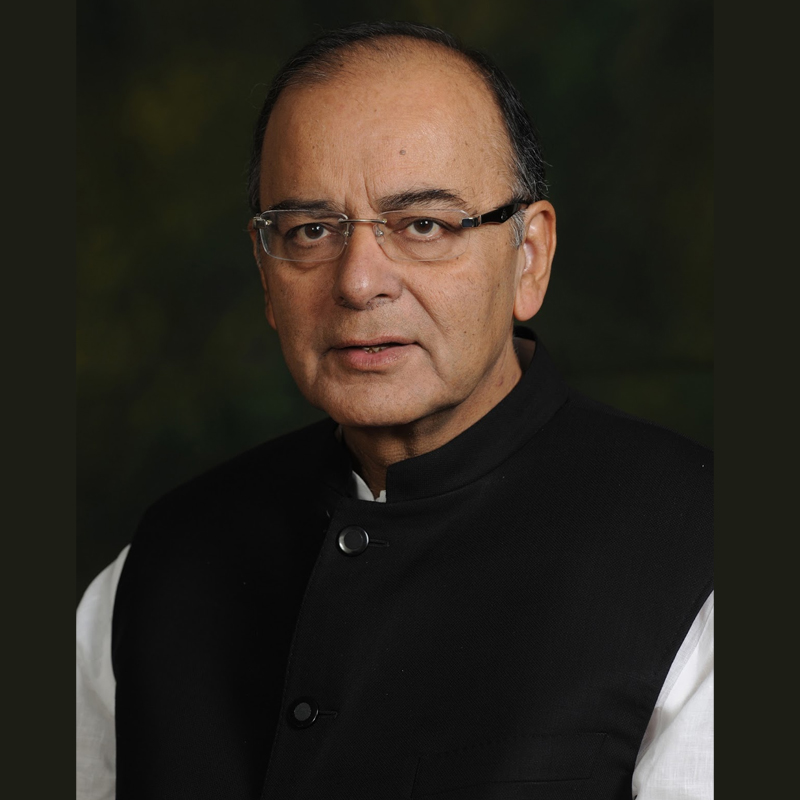
    NEW DELHI: Finance minister Arun Jaitley has said the electronic market in India is one of the largest in the world, and is expected to reach $400 billion in 2020.

    Jaitley said that India’s competence in IT-Software was recognised globally and, in recent times, software development and Information Technology Enabled Services (ITeS, including BPO & KPO) industry had emerged as one of the most dynamic and vibrant sectors in India. He said that the government recognised the potential of IT sector, hence electronic systems and IT & BPM (Business Process Management) are included among 25 sectors in the ‘Make in India’ programme.

    In a pre-budget consultation with stakeholders from IT (Software / Hardware) Sector, he said that India’s external position was more robust of late, and the return to resilience to periodic global shocks was sustainable with lower trade and Current Account Deficits, stable exchange regime and the sound buffer of forex reserves.

    During the meeting, various suggestions were received from the participants for boosting the IT sector. It was brought forth that Government support was required for IT sector in view of increasing trends of protectionism and anti-globalisation abroad. Also rapid changing nature of technology in IT field makes it imperative to focus on R&D in IT, hence, the Government needs to promote R&D and innovation in IT sector in a big way.

    Further, there are issues about speed and penetration of broadband in India. Number of Wi-Fi hotspots is very low in the country. Hence, it was suggested that over-ground towers and underground fiber cable network need to be improved in a big way. At the consumer end, smart phone prices need to be further brought down so that broadband is more accessible to masses.

    It was appreciated in the discussion that green shoots are visible in smart phone manufacturing industry in India and manufacturing of these phones is increasing rapidly. Also, the street price of these Indian-made smart phones is competitive when compared to Chinese-made phones. So, the next logical focus of Indian smart phone manufacturers should be to target the export market.

    To further boost electronic manufacturing in country, suggestions were made to extend the duty differential scheme to all ITA goods, specifically for personal computers (Desktop, Laptop). A proposal requested that list of CPE goods should be make comprehensive for Duty Differential Scheme to further promote and implement ‘Make in India’ initiative. Representatives sought that this scheme must continue to exist in GST regime.

    A proposal for a ‘Component Trading Hub’ was discussed to create an ecosystem for electronics and IT hardware manufacturing. It would bring down logistics costs by creating robust infrastructure for connectivity. Participants also insisted on the need to encourage populated PCBs manufacturing in the country by restricting their direct imports.

    A representative from a robotic firm requested for incentives to boost the robotics sector in country which is non-existent now.

    Adoption of personal computers will be a catalyst for transformation of country to a digital economy and knowledge economy. It was also proposed that easy loans (3-4% per annum) should be provided by banks for the purchase of personal computers and cost of PC should be allowed for deduction under Section 80C of Income Tax Act.

    Concerns were shown in the meeting that increasing digitisation should not lead to increased digital divide in the country. So internet need to be more open, transparent and easily accessible to all. Suggestions were given to improve cyber security structure in India and establish a cyber test range. It was proposed that there should be a mechanism for reporting any vulnerability detected in a Government software System by any private person/agency.

    Along with Jaitley, the Meeting with the representatives of IT (Hardware & Software) Sector was also attended by Minister of State for Finance Santosh Gangwar, MoS (Finance &Corporate Affairs) Arjun Ram Meghwal, Finance Secretary Ashok Lavasa, Economic Affairs Affairs Department Secretary Shaktikanta Das, Financial Services Secretary Ms Anjuli Chib Duggal, Telecom Secretary J S Deepak, Department of Electronics & Information Technology (DEITY) Secretary Ms Aruna Sundararajan, Chief Economic Adviser (CEA) Dr. Arvind Subramanian, and Central Board of Direct Taxes Chairman Sushil Chandra.

    The representatives of the IT (Hardware & Software) Sector present during the meeting included NASSCOM President R Chandrashekhar, Broadband India Forum President T V Ramachandran, CMAI Association of India President N K Goyal, Fast Task Force & National President of Indian Cellular Association Pankaj Mahindroo, Electronics and Computer Software Export Promotion Council Chairman Prasad Garapati, Manufactures Association for Information Technology (MAIT) Vice President Nitin Kunkolienker, Electronic Industries Association of India Prtesident Vikram Desai, Ms Jaspreet Grewal of The Centre for Internet & Society, U B Praveen of Infosys, Arvind V.S. from WIPRO, Pauroos D Karkaria fromTCS, Ms Nisha Tompson who is Founder of Datameet, Ajith Pai who is COO of Delhivery, Sunil Dutt who is President, Device Sales, Jio Mobiles, and Grey Orange India CFO Vartul Jain among others.

  • Jaitley, stakeholders discuss broadband speed & penetration, wi-fi, digitisation, open Net & cyber security

    Jaitley, stakeholders discuss broadband speed & penetration, wi-fi, digitisation, open Net & cyber security

    NEW DELHI: Finance minister Arun Jaitley has said the electronic market in India is one of the largest in the world, and is expected to reach $400 billion in 2020.

    Jaitley said that India’s competence in IT-Software was recognised globally and, in recent times, software development and Information Technology Enabled Services (ITeS, including BPO & KPO) industry had emerged as one of the most dynamic and vibrant sectors in India. He said that the government recognised the potential of IT sector, hence electronic systems and IT & BPM (Business Process Management) are included among 25 sectors in the ‘Make in India’ programme.

    In a pre-budget consultation with stakeholders from IT (Software / Hardware) Sector, he said that India’s external position was more robust of late, and the return to resilience to periodic global shocks was sustainable with lower trade and Current Account Deficits, stable exchange regime and the sound buffer of forex reserves.

    During the meeting, various suggestions were received from the participants for boosting the IT sector. It was brought forth that Government support was required for IT sector in view of increasing trends of protectionism and anti-globalisation abroad. Also rapid changing nature of technology in IT field makes it imperative to focus on R&D in IT, hence, the Government needs to promote R&D and innovation in IT sector in a big way.

    Further, there are issues about speed and penetration of broadband in India. Number of Wi-Fi hotspots is very low in the country. Hence, it was suggested that over-ground towers and underground fiber cable network need to be improved in a big way. At the consumer end, smart phone prices need to be further brought down so that broadband is more accessible to masses.

    It was appreciated in the discussion that green shoots are visible in smart phone manufacturing industry in India and manufacturing of these phones is increasing rapidly. Also, the street price of these Indian-made smart phones is competitive when compared to Chinese-made phones. So, the next logical focus of Indian smart phone manufacturers should be to target the export market.

    To further boost electronic manufacturing in country, suggestions were made to extend the duty differential scheme to all ITA goods, specifically for personal computers (Desktop, Laptop). A proposal requested that list of CPE goods should be make comprehensive for Duty Differential Scheme to further promote and implement ‘Make in India’ initiative. Representatives sought that this scheme must continue to exist in GST regime.

    A proposal for a ‘Component Trading Hub’ was discussed to create an ecosystem for electronics and IT hardware manufacturing. It would bring down logistics costs by creating robust infrastructure for connectivity. Participants also insisted on the need to encourage populated PCBs manufacturing in the country by restricting their direct imports.

    A representative from a robotic firm requested for incentives to boost the robotics sector in country which is non-existent now.

    Adoption of personal computers will be a catalyst for transformation of country to a digital economy and knowledge economy. It was also proposed that easy loans (3-4% per annum) should be provided by banks for the purchase of personal computers and cost of PC should be allowed for deduction under Section 80C of Income Tax Act.

    Concerns were shown in the meeting that increasing digitisation should not lead to increased digital divide in the country. So internet need to be more open, transparent and easily accessible to all. Suggestions were given to improve cyber security structure in India and establish a cyber test range. It was proposed that there should be a mechanism for reporting any vulnerability detected in a Government software System by any private person/agency.

    Along with Jaitley, the Meeting with the representatives of IT (Hardware & Software) Sector was also attended by Minister of State for Finance Santosh Gangwar, MoS (Finance &Corporate Affairs) Arjun Ram Meghwal, Finance Secretary Ashok Lavasa, Economic Affairs Affairs Department Secretary Shaktikanta Das, Financial Services Secretary Ms Anjuli Chib Duggal, Telecom Secretary J S Deepak, Department of Electronics & Information Technology (DEITY) Secretary Ms Aruna Sundararajan, Chief Economic Adviser (CEA) Dr. Arvind Subramanian, and Central Board of Direct Taxes Chairman Sushil Chandra.

    The representatives of the IT (Hardware & Software) Sector present during the meeting included NASSCOM President R Chandrashekhar, Broadband India Forum President T V Ramachandran, CMAI Association of India President N K Goyal, Fast Task Force & National President of Indian Cellular Association Pankaj Mahindroo, Electronics and Computer Software Export Promotion Council Chairman Prasad Garapati, Manufactures Association for Information Technology (MAIT) Vice President Nitin Kunkolienker, Electronic Industries Association of India Prtesident Vikram Desai, Ms Jaspreet Grewal of The Centre for Internet & Society, U B Praveen of Infosys, Arvind V.S. from WIPRO, Pauroos D Karkaria fromTCS, Ms Nisha Tompson who is Founder of Datameet, Ajith Pai who is COO of Delhivery, Sunil Dutt who is President, Device Sales, Jio Mobiles, and Grey Orange India CFO Vartul Jain among others.

  • Broadband Forum report links incentives under GST to Digital India success

    Broadband Forum report links incentives under GST to Digital India success

    NEW DELHI: As online media consumption in India has shown growth over the past few years with mobile devices having taken over as the preferred medium of consuming online media, the government needs to incentivise further mobile handset manufacturing under the proposed Goods and Services Tax (GST), according to a new study.

    The Broadband India Forum (BIF), in association with knowledge partner Ernst & Young (EY), in a research paper unveiled yesterday said that it becomes important to grant incentives to domestic manufacturing in order to set off the “local disabilities” in manufacturing, including the booming mobile handset manufacturing.

    Wider deployment of 4G networks along with affordability and indigenisation, smartphones are going to drive mobile broadband to the next level of penetration, the BFI-EY report stated, adding that mobile handset manufacturing in India has gained fresh momentum in the past two years with a number of OEMs and third-party contract manufacturers setting up facilities in the country. The number of mobile handset manufacturing facilities reached 40 in August 2016 from just three in 2014 driven by the increase in duty differential in Union Budget 2015 to 11.5 per cent from five per cent, the report highlighted.

    According to Partner EY Bipin Sapra, “(Mobile) Handset manufacturing industry has seen a tremendous growth in past few years driven by government’s ‘Make in India’ initiative and policy changes such as duty reduction on domestically manufactured handsets. It is expected that the adoption of smartphones in India will go up to 688 million by 2020 as compared to 238 million in 2015. With the introduction of GST, most of the current central and state taxes/duties will be subsumed under GST. Thus, it is expected that the incentives available to domestic manufacturers under the current regime would decrease and there is need to continue the incentives under the GST regime to meet the increasing demand through domestic production.”

    The report, which notes the country has embarked on one of the world’s most ambitious broadband project with the `Digital India’ programme seeking to transform India into a digitally empowered society and knowledge economy, suggested the government may walk the extra mile to extend similar benefits to the component manufacturers that would encourage more investment in India and give a boost to the handset manufacturing eco-system.

    Pointing out that once the eco-system is created, the prices of parts and components may also become more competitive that in turn will reduce the cost of mobile handsets and make Indian handset manufacturers more competitive globally, BIF president T.V. Ramachandran said, “The broadband device today is a smartphone. We need to increase smartphone penetration as India today has less than 30 per cent smartphone penetration. This can only happen through local manufacturing and by further increasing local value addition.”

    The GST alone will by itself not be the driver for incentivising manufacturing in a country and some of the essential factors for a sustained manufacturing environment in the country are infrastructure, a robust manufacturing ecosystem, skilled manpower, technology, R&D facilities, etc., the report said.

    The report has also come out with a formula that may be adopted to hand out incentives to domestic manufacturing under GST.

    Electronics and Information Technology secretary Aruna Sundararajan, who was present during unveiling of the report, said, “This complementary study by EY-BIF, providing how incentives can be continued under GST to the domestic handset industry, will be helpful for the government to frame a better policy and boost local handset manufacturing.”

  • Broadband Forum report links incentives under GST to Digital India success

    Broadband Forum report links incentives under GST to Digital India success

    NEW DELHI: As online media consumption in India has shown growth over the past few years with mobile devices having taken over as the preferred medium of consuming online media, the government needs to incentivise further mobile handset manufacturing under the proposed Goods and Services Tax (GST), according to a new study.

    The Broadband India Forum (BIF), in association with knowledge partner Ernst & Young (EY), in a research paper unveiled yesterday said that it becomes important to grant incentives to domestic manufacturing in order to set off the “local disabilities” in manufacturing, including the booming mobile handset manufacturing.

    Wider deployment of 4G networks along with affordability and indigenisation, smartphones are going to drive mobile broadband to the next level of penetration, the BFI-EY report stated, adding that mobile handset manufacturing in India has gained fresh momentum in the past two years with a number of OEMs and third-party contract manufacturers setting up facilities in the country. The number of mobile handset manufacturing facilities reached 40 in August 2016 from just three in 2014 driven by the increase in duty differential in Union Budget 2015 to 11.5 per cent from five per cent, the report highlighted.

    According to Partner EY Bipin Sapra, “(Mobile) Handset manufacturing industry has seen a tremendous growth in past few years driven by government’s ‘Make in India’ initiative and policy changes such as duty reduction on domestically manufactured handsets. It is expected that the adoption of smartphones in India will go up to 688 million by 2020 as compared to 238 million in 2015. With the introduction of GST, most of the current central and state taxes/duties will be subsumed under GST. Thus, it is expected that the incentives available to domestic manufacturers under the current regime would decrease and there is need to continue the incentives under the GST regime to meet the increasing demand through domestic production.”

    The report, which notes the country has embarked on one of the world’s most ambitious broadband project with the `Digital India’ programme seeking to transform India into a digitally empowered society and knowledge economy, suggested the government may walk the extra mile to extend similar benefits to the component manufacturers that would encourage more investment in India and give a boost to the handset manufacturing eco-system.

    Pointing out that once the eco-system is created, the prices of parts and components may also become more competitive that in turn will reduce the cost of mobile handsets and make Indian handset manufacturers more competitive globally, BIF president T.V. Ramachandran said, “The broadband device today is a smartphone. We need to increase smartphone penetration as India today has less than 30 per cent smartphone penetration. This can only happen through local manufacturing and by further increasing local value addition.”

    The GST alone will by itself not be the driver for incentivising manufacturing in a country and some of the essential factors for a sustained manufacturing environment in the country are infrastructure, a robust manufacturing ecosystem, skilled manpower, technology, R&D facilities, etc., the report said.

    The report has also come out with a formula that may be adopted to hand out incentives to domestic manufacturing under GST.

    Electronics and Information Technology secretary Aruna Sundararajan, who was present during unveiling of the report, said, “This complementary study by EY-BIF, providing how incentives can be continued under GST to the domestic handset industry, will be helpful for the government to frame a better policy and boost local handset manufacturing.”

  • BSNL leads in wireline broadband internet subs addition in Sep-16

    BSNL leads in wireline broadband internet subs addition in Sep-16

    BENGALURU: In a change from the norm, the public sector telecom giant Bharat Sanchar Nigam Limited (BSNL) added 40,000 wireline broadband internet subscribers in the month of September 2016 (Sep-16). BSNL had been consistently losing subscribers in the calendar year 2016 (CY-16) until 31 August 2016 (Aug-16). Its gain in Sep-16 was just half the 80,000 subscribers it has lost in CY-16 until Sep-16. At the same time, the other public sector telecom operator – Mahanagar Telecom Nigam Limited (MTNL) has also been bleeding wireline broadband internet subscribers in CY-16 until Sep-16. MTNL has also seen a reduction of 50,000 subscribers in CY-16.Overall, the two public sector players have lost subscribers during CY-16 until Sep-16 and hence dampened the subscriber growth rate among the top five wired broadband internet players.

    The wireline broadband internet (broadband) subscriber base in the country grew by 8.06 percent (by 13.3 lakh or 1.33 million) in the period between 31 December 2015 (Dec-15) or1 January 2016 until 30 September 2016 (Sep-16), from 165.1 lakh to 178.4 lakh. Telecom subscription data released by Telecom Regulatory Authority of India (TRAI) for Sep-16 reveals that the contribution by the top five players’ was just 5 lakh new subscribers or 3.55 percent growth in the current calendar year until Sep-16 (CY-16).Overall, wired broadband subscribers grew 0.96 percent month-on-month (MoM) in Sep-16. The All India wired broadband base grew from 176.7 lakh to 178.4 lakh, while the five top players grew by 0.69 percent in Sep-16 as compared to Aug-16.

    Leading the growth in subscriber additions in CY-16 until Sep-16 are private wired broadband players Bharti Airtel (Airtel, 30,000 additions in Sep-16) and regional player Atria Convergence Technologies Pvt Ltd (ACT, 20,000 additions in Sep-16) with additions of 2.7 lakh and 2.5 lakh subscriber additions respectively in CY-16 until Sep-16. Airtel’s wired broadband subscriber base grew 16.17 percent, while ACT’s base grew by 29.07 percent during the same period (CY-16 until Sep-16). In CY-15 (1 January 2015 to 31 December 2015), Airtel had added 2.6 lakh wired broadband subscribers and grown by 18.44 percent, while ACT added 2.5 lakh subscribers and had grown at a blazing 40.98 percent. By Sep-16, Airtel has already exceeded the number of subscribers it had added in CY-15, while ACT has equalled its CY-15 performance Hence, by the end of 2016, with reports for a quarter of year to be published as yet, the two players should add a lot more subscribers than they did in CY-15.

    While Airtel is a national level player, ACT is a regional player with operations in South India, hence probably making ACT the largest private wireline broadband player in South India. ACT has replaced the public sector MTNL at third place, pushing the latter to fourth spot in Aug-16 in terms of number of subscribers.Another private player among the top five – You Broadband (You BB) has added 70,000 subscribers (13.73 percent growth) in the current year until Sep-16.

    Among the 5 top wireline broadband internet players in India, the public sector telecom player Bharat Sanchar Nigam Limited (BSNL) leads by far with 98.8 lakh total number of wireline broadband subscribers as on Sep-16. However, as mentioned above, BSNL had seen its broadband subscriber base shrink by 80,000 in CY-16 until Aug-16. The largest private sector wireline broadband internet services player Airtel had 19.1 lakh subscribers as on 30 September 2016, ACT with 11.1 lakh subscribers was next and was followed by the other public sector player –MTNL with 10.7 lakh subscribers. You Broadband (You BB) with 5.8 lakh subscribers was the fifth.

    Please refer to Fig 1 below for wireline subscriber data in CY-16 until Sep-16.

    public://F1.jpg

    The top five players have had a slower rate of growth as compared to the all India growth in CY-16 until Sep-16. The share of the top five players among all India wired broadband subscriber addition has fallen in CY-16 until Sep-16 from 85.28 percent as on 1 January 2016 to 81.73 percent as on 30 September 2016. The share of these players was 88.45 percent as on 1 January 2015.

    Month-on-month (m-o-m), the all India wired broadband subscriber base witnessed the second highest growth in CY-16 until Sep-16 in Aug-16 at 1.03 percent, while the top 5 players had a growth of 0.28 percent in that month. Please refer to figure 2 below:

    public://F2.jpg

    Other wireline broadband players in India

    MSOs’ in India have started providing internet services on the back of their television cable networks using DOCSIS technology. In general, they have started reporting double and triple digit year-over-year (y-o-y) increase in internet subscribers and revenue. The television cable players see broadband services improving their Average Revenue per User (ARPU) numbers. Three of the major MSOs and a regional MSO – Hathway, Siti Networks Limited, Den Networks Limited , Ortel Communications Limited respectively whose results are available in the public domain have been showing steady growth in their broadband segment over the past few quarters.

    Overall broadband subscriber numbers for September 2016 including wireless and mobile

    Overall, as per the reports received by TRAI from the service providers, the number ofbroadband subscribers (including wireless, mobile, dongles) grew  by a massive 11.99 percent by 20.59million  or 205.9 lakh to 192.30 million (19.32 crore) in Sep-16 from 171.71 million (17.171 crore) in Aug-16. The growth was led by Wireless broadband subscriber numbers that use mobiles and dongles for internet access have increased m-o-m by 13.31 percent in Sep-16 to 173.87 million (17.387 crore) from 153.45 million (15.345 crore) in Aug-16. Fixed wireless subscribers that access the internet through Wi-Fi, Wi-Max, Point-to-point radio and VSAT have increased 1.27 percent in Sep-16 to to 0.60 million (6 lakh) from 0.59 million (5.9 lakh) in Aug-16.

    The top five service providers constituted 78.62 percent market share of the totalbroadband subscribers at the end of Aug-16. These service providerswere Bharti Airtel (46.19 million or 4.619 crore), Vodafone (35.94 million or 3.594 crore), Idea Cellular(30.72 million 3.072 crore), BSNL (21.60 million 2.16 crore) and Reliance Communications Group (16.74 million 1.674 crore).

    As on 30 September, 2016, the top five Wireless Broadband Serviceproviders were Bharti Airtel (44.25 million, 4.425 crore), Vodafone (35.93 million, 3.593 crore),Idea Cellular (30.72 million, 3.072 crore), Reliance Communications (16.62 million, 1.662 crore) and Reliance Jio (16.00 million, 1.6 crore).

    TRAI’s definition of broadband is internet download speeds greater than or equal to 512 Kpbs.

    Notes:(1) The unit of currency in this report is the Indian rupee – Rs (also conventionally represented by INR).The Indian numbering system or the Vedic numbering system has been used to denote money values. The basic conversion to the international norm would be:

    (a) 100,00,000 = 100 lakh = 10,000,000 = 10 million = 1 crore.

    (b) 10,000 lakh = 100 crore = 1 arab = 1 billion.

    (2) TRAI reports indicate data in millions of numbers up to 2 decimal places. Hence it is assumed in this report that a figure of 0.51 million (5.1 lakh) subscribers for You BB for Dec-2015 would be granular to the nearest 10,000. While percentages have been mentioned up to two decimal places, the accuracy may vary, depending upon the exact number.

    (3) MSOs’ have a number of subsidiaries and alliances, hence broadband numbers are split as applicable. The consolidated subscription numbers of these entities could be larger. Hathway is a case in point.