Category: Executive Dossier

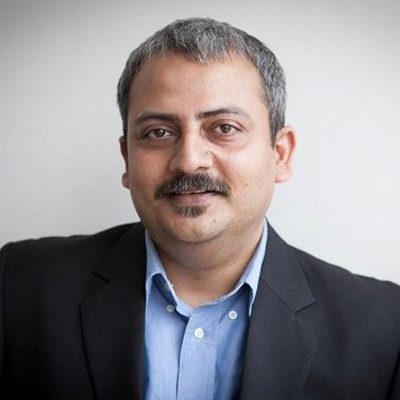
  • We build consumer affinity on the strength of brand offering: Agro Tech Foods’ Asheesh Sharma

    We build consumer affinity on the strength of brand offering: Agro Tech Foods’ Asheesh Sharma

    MUMBAI : Agro Tech Foods Ltd (ATFL), an FMCG player engaged in the manufacture and sale of a wide range of snacks and edible oil products and name behind the household brands like Sundrop Oil and Act II popcorn, recently announced its entry into the chocolate confectionery segment, with the launch of a coconut-centered product under brand name Sundrop Duo.

    The packaged food sector in India has witnessed some significant highs and lows through the pandemic. Despite lockdowns in various parts of the country and the economic impact of the pandemic, the industry showed resilience by bouncing back after an initial slump in 2020. The FMCG industry grew 9.4 per cent in the January-March quarter of 2021, supported by consumption-led growth and value expansion from higher product prices, particularly for staples, according to Nielsen. Significantly, the FMCG market in India is expected to increase at a CAGR of 14.9 per cent to reach $220 billion by 2025,  from $110 billion in 2020.

    Against the backdrop of its growth focus announcement, IndianTelevision.com spoke to Agro Tech Foods vice president marketing Asheesh Sharma in a freewheeling conversation, where he shares how the company engaged with its consumers in the wake of evolving buying behaviour and changing consumer sentiment. Sharma does a deep dive into the journey of its flagship brands Act II popcorn and Sundrop peanut butter, how they fared during the pandemic, and now betting big on the competitive confectionery segment.

    Interestingly, Sharma also reveals the reason why the brand chose not to clamber onto the IPL bandwagon.

    Edited excerpts:

    On the brand’s TG and its current consumer demographic

    For us, our brand’s TG normally does not change with a time period so often. Act II is primarily focused on an age group of 4-14 as its main TG, and then 31-41 for the mothers. For peanut butter, we target TG which’s 15 to 24 because it’s an acquired taste. In the case of popcorn that’s not a problem because it’s a known taste. So the TG hasn’t changed, and our marketing communication has been the same. But we increased our investment behind it to reach more people who were at home. And we think that that’s how the brand Act II will continuously grow even in the years to come.

    Coming to our consumer demographic, we don’t have too much of a presence in rural. We have got growth in all tier 2, tier 3 towns as well as metros. So if we take these one lakh plus towns- that’s where more of our urban market is and that’s where we are focused on. And the phenomenon of people being at their homes was not restricted to these. So our growth came from all of them, partly also driven by the fact that some people had migrated from the metros to their homes in smaller towns with WFH. So there were multiple parameters like e-commerce delivery in smaller towns has improved and so on. So barring a few percentage points here and there we can say our distribution network largely covers the urban area and we mostly grew across the geography that we operate in.

    On investing in the red hot media property that’s IPL

    Cricket and Bollywood are the two religions in India. And we have always chosen Bollywood to go with Act II. Popcorn enhances your film-watching experience, so we just stayed with it. We normally do not participate or advertise in the IPL because we still have a lot to leverage on the films.

    In a similar vein, when it comes to investing in celebrities, principally as a company we don’t believe that we need to have celebrity endorsement or give crutches to the brand. What we do is build on consumer insights, unmet needs, benefit, cost structure, and delivering the brand. We want consumers to come for the benefit that the brand offers, and not do interim jumps of, say, a celeb endorsement.

    We build consumer affinity on the strength of the brand offerings- both in terms of imagery and in terms of product experience in itself. And this is also why our rates of repeat customers and customer retention are very high.

    On the thought behind the business’ foray into the confectionary segment

    A large part of our growth comes from two factors- one is innovation and the other’s the increased spends on advertising. Almost 50 per cent of our growth comes from innovation, and the other 50 comes from the investment, in terms of demand generation in media. It allows us to build products that are differentiated, address an unmet consumer need and is value offerings. Any of our new products have to meet these three criteria.

    So when we decided to foray into this segment our thought was, how do we add nutrition to an indulgent category. That was brief with which we started this work. For if you see, our company’s vision is ‘Nourishing Families, Enriching Lives.’ We always try and build nutrition into it so that the trend towards healthier habits. Thus, our Sundrop Duo confectionery is nearly 30 per cent lower sugar than comparable products of our competitors’ products. Lastly, we made sure that we are competitive with the price, in that we are almost 50 per cent cheaper than the competitor’s products.  

    On the media and marketing strategy for this new segment

    Right now we have not gone digital on our chocolate confectionery. We went on television talking to people about the brand proposition, ‘Taste ka asli fusion.’ We are first doing mass media with it and are building a distribution reflective of the fact that we are going to be doubling our chocolate capacity in Quarter one of FY ’23. And then again doubling it in Q3, so we will be quadrupling our capacity in the next year. Which talks volumes about the response and acceptability of the product. The growth rate and the acceptance have been the biggest driver for me with this product.  

    On how the company’s flagship brands fared during the pandemic

    One very important thing that worked for us was that in the last two years, the amount of time consumers spent in-home was significantly more than what they were spending out of the home. And as a consequence, in-home consumption went up. And that uniquely benefited Act II Popcorn. So for the years of FY ’21 and FY’22, we saw very good growth in our Act II business, primarily led by increased in-home availability of people, and the product was perfectly suited for that. There might have been some peaks and troughs for the reasons of panic buying versus regular buying, but overall the steady-state of consumption was higher.

    The same thing applied to our second category i.e. spreads. This was also the time when people became more concerned about the health benefits. As a consequence, peanut butter which is primarily a healthier alternative to spreads that are available in the market started getting an adaptation. So combined with all these factors, we had a very good run on spreads also.

    Overall, FY ‘21 we grew at almost 35 per cent as compared to our competitors, who were at 16-17 per cent.

    On leveraging the pandemic boom and sustaining it

    A big factor during these two years of FY ’21 and ’22 was that travel was restricted, impacting the businesses of FMCG companies like ours. So what we did very knowingly and selectively was that, whatever savings we got out of this, we deployed them all in demand generation activities of the media. That put us in a very strong base because consumers were coming in, and we kept on advertising. And in this period (FY’21-22) we increased our advertising media by almost 30 per cent versus what we did in FY’18-20. That in my view, was a very significant step because there will be moments and opportunities which come.

    You have to leverage those opportunities to build a steady business going forward. Because the opportunity might disappear but the retained consumer will keep giving you business in the balance years. Hence, even as we see the economy now opening up and people will be less at home than they were earlier during the pandemic, we are very well set to leverage this opportunity even in FY ’23.

    On the media mix adopted by the company

    We still spend 95 to 97 per cent of our ad spend on television, because that is the single biggest mass media reach that we get. For our TG of 15 to 24, this generation, of course, is more digital-oriented. In my view, however, even as the digital adaptation has increased it hasn’t reduced television. We do digital but only as an add-on to TV. So we take Hotstar and we pick these other YouTube channels, and on Instagram the various food handles. But that’s not our mainstay. We do need them and we use it as a medium to just make sure that people are aware of us, and we are present with them as and when they’re receptive.

    One of our philosophies has been ‘talk to the consumer when and where they are more receptive’ and in that, we found that during TV and entertainment which is a leisure time you are more receptive. Versus being on digital when you’re just trying to catch up and to be updated. So we are balancing the two. So it’s 97 per cent on TV and three per cent on digital. Print and radio we don’t do much largely, and might go into decimals. Only if we have a messaging which allows itself to be better communicated on print and as a means of augmenting the communication, we go for it. Otherwise, we are very singularly focused on using television as a medium, as that’s the mainstay for us in terms of mass reach and building a scalable business.

    On the critique that it stands to lose out on its millennial + Gen Z consumer by not leveraging digital enough

    See, the investments are done in proportion to the kind of growth that you need. So normally television for all the single TV households was a family viewing experience. OTT has made it a very personalised viewing. So while we did go on OTT with Hotstar, we did not give away the mainframe of television because we still feel our brand equity is more about family.

    Have the numbers dropped? Maybe there’s a little shift here and there but the people who are watching TV are still sufficient for us to keep growing our businesses. So that was the way we wanted to go and hence, the media choices that we made. In my view, the use of a medium should be determining the quantum of growth and the acceptability of your proposition which happens. And that’s what we do.

    On the FMCG’s road map ahead

    The packaged foods & FMCG sector, both will continue to grow- some years little lesser, some years little more. The interim disruptions that happen, for example, the current Ukraine war may act as barriers here and there. But the bigger picture will be, it is going to keep growing.

    In the ready-to-cook segment at home, we were already anticipating that when the economy opens up, the growth rate may slow down. As of now, we haven’t seen it, but probably when people move out more than they are at home that shift has to happen.

    So we already entered into a newer portion there with the- ‘Ready To Eat Meal Kits.’ These meal kits have already started contributing to the Ready To Eat cook at home. So that has ensured that we continue to grow at our past rate of 15-20 per cent. The categories that we have been historically working with, such as Act II and peanut butter- we have been growing at about 15 or odd per cent.

    And then the newer segments of chocolate confectionery and breakfast cereals would add another 600 to 1000 business points of growth, taking us anywhere between close to 25 per cent growth rate going forward. And half of it probably would come from innovation and a half from the media, that’s the long-term plan.  

    We are a company that relies heavily on innovations to meet unmet consumer needs, have in-house manufacturing to have a very good cost structure, and does moderate media investments. So that there is a sustainable business model for growth forever.

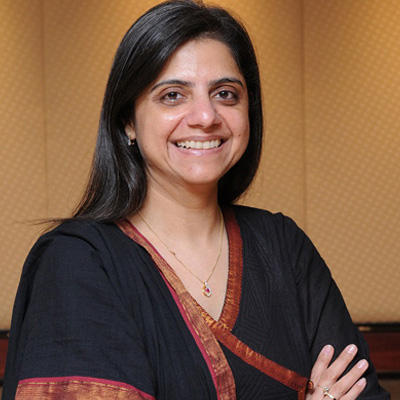
  • Hope 2022 will see Zindagi also going back to its loyal TV audience: Zee’s Shailja Kejriwal

    Hope 2022 will see Zindagi also going back to its loyal TV audience: Zee’s Shailja Kejriwal

    Zee Entertainment Enterprises (Zee) chief creative officer – special projects Shailja Kejriwal, and her brainchild Zindagi channel have had an equally unpredictable, yet exciting journey in the world of media and entertainment. As a visionary storyteller, Kejriwal, to her credit has critically acclaimed content brands and initiatives like Zindagi, Zee Theatre, Star Bestsellers, and an unconventional series of short films called “Zeal for Unity” on one hand, and the TRP-churning, K-series of Indian family dramas on the other.

    Zindagi launched on television in 2014 with the Pakistani soap opera “Aunn Zara,” which ended in just 20 days, a rather ‘blasphemous’ occurrence in the pre-OTT days when TV serials ran into as many 2000+ episodes. With real characters who didn’t wear make-up to bed and finite storylines, the channel came in like a breath of fresh air. Becoming an instant hit, it went on to launch Pakistani stars like Fawad Khan, Sanam Saeed, and Mahira Khan with the popular dramas “Zindagi Gulzar Hai” and “Humsafar.”

    However, post the 2016 Uri attack, Zindagi had to pull the plug on all Pakistani content. Eventually wrapping up on TV, it became a digital-only channel. Starting out on the Ozee app, and later as Zindagi Digital, the channel finally launched on Zee5 in 2020. In the same year, Zindagi began its Originals innings with Asim Abbasi–directed web series “Churails” (2020). It was followed by “Ek Jhoothi Love Story” – a romantic comedy directed by Mehreen Jabbar, the critically acclaimed series “Dhoop Ki Deewar” featuring Ahad Raza Mir and Sajal Aly, “Qatil Haseenaon Ke Naam” – a desi noir anthology helmed by British Indian director Meenu Gaur, and most recently (11 March) Kashif Nisar’s “Mrs & Mr Shameem” – featuring Saba Qamar and Nauman Ijaz.

    Kejriwal’s constant endeavour through all the challenges has been to keep brand Zindagi alive and thriving. In a freewheeling interaction with IndianTelevision.com, she talks about “Mrs & Mr Shameem,” Zindagi’s digital journey, programming for the South Asian audience and diaspora, creating content from out of Pakistan, and her content philosophy.

    Content, cause and creativity

    ‘Short-run programming,’ ‘Hindustani content,’ ‘content for cause,’ ‘alternative mainstream,’ while the content on Zindagi has been classified as all of these and more, the idea behind the brand is simply to tell stories that have a purpose, and hence says Kejriwal, the brief is always ‘why is this story being told,’ and ‘how it will impact those watching it.’

    “There has to be a social comment in our stories; something which provides a different point of view. I believe that in today’s times when everything around us is changing, storytellers have to explore new ways of telling stories, new ways of talking about love and relationships,” she tells.

    Zindagi’s latest release “Mrs & Mr Shameem,” for instance, questions ‘who is the ideal man,’ ‘does he always have to be aggressive,’ ‘can he be like Shameem who is seen as effeminate?’ “What I also like about Shameem’s character is that he doesn’t feel like a victim of this perception of him being ‘less of a man.’ I loved the positivity in the show, and the fact that it is inclusive,” she adds.

    Programming for the South Asian audience

    Programming for the South Asian audience

    Zindagi began in 2014 with a clear roadmap of ‘curate, create and collaborate.’ The channel’s TV days comprised the ‘curation’ phase wherein it got a lot of Pakistani content to see how people liked/consumed it, and the response, shares Kejriwal, was phenomenal.

    “I haven’t met anyone who doesn’t tell me that at least one person in their family watched Zindagi,” she says, adding that, “We also kind of expected that because a) Our shows were fresh, finite and meaningful, and b) there was a lot of curiosity about Pakistan among Indians. While our shared history, language and geographies were an important reason behind it, primarily it was the fact that we’ve not had any visual reference of Pakistan since the 80’s, except the news media. On the other hand, Pakistanis have grown up watching us through our films.”

    The phase Zindagi is in right now on Zee5 is phase two of ‘Creation.’ Moving a step ahead from launching Pakistani actors, the channel began involving writers and directors in creating content for its South Asian audience. That’s when the ‘Originals’ happened. The third phase of collaboration where it hopes to be in the coming years will invite talent from both sides of the border to work together.

    Zindagi’s digital journey

    According to Kejriwal, the biggest advantage OTT as a medium offers is the freedom to tell stories that could not have been told on television.

    Sharing some snippets from what she calls “a fantastic journey on digital.” “It gave us the chance to work with a new wave of filmmakers like Asim Abbasi and Meenu Gaur. Even though Gaur is not into making Pakistani dramas, her work has a distinct South Asian approach that reciprocates with our TG. OTT provided us the platform to experiment and create content that is truly international in its making, and aimed different cohorts,” Kejriwal notes.

    “So, while ‘Churails’ caters to the upmarket or niche and younger audience, ‘Dhoop Ki Deewar’ is meant for family viewing in tier 1 cities. ‘Qatil Haseenaon Ke Naam’ is a metro-centric content piece. ‘Ek Jhoothi Love Story’ and ‘Mrs & Mr Shameem’ are suited for family viewing for audiences across tier 1 and 2 cities,” she further adds.

    Kejriwal says that she is most excited about bringing back Fawad Khan and Sanam Saeed with a new show and a completely new genre and concept of ‘magic realism’ – a first on Zindagi. “We could not have done this on TV where people are used to seeing them in a ‘Zindagi Gulzar Hai.’ That’s the fun of creating for OTT,” she states.  

    And there’s the math too! “We programme for the South Asian audience and South Asian diaspora. When we talk of OTT, we don’t talk of India alone, but the global market. There is a huge Pakistani diaspora that does not have a truly dedicated OTT platform of its own. Therefore, it becomes a low-hanging fruit for us. Our shows have a tremendous fan following among them,” she asserts.

    Back to TV?

    Kejriwal observes that even though OTT allows the freedom to experiment, the audience is becoming increasingly concerned about not getting lost in discovering content and surfing through it.

    “Content discovery can be an overwhelming task, and I propose to make the discovery of Zindagi simpler. That’s where television comes in for me,” she notes. “This is not to take away from the medium, but while the independence OTT gives is amazing, the loyalty on TV is great. OTT has kind of consolidated our viewership across demographics. I hope that 2022 will also see me going back to my loyal audiences on TV.”

  • An Indian general election is the largest TG one is ever going to deal with: Jayshree Sundar

    An Indian general election is the largest TG one is ever going to deal with: Jayshree Sundar

    Mumbai : How does one craft a winning marketing strategy when your brand’s target group (TG) is basically every 18+ out there, and when the entire country of over a billion is potentially your consumer base? Former Leo Burnett president-North and the author of “Don’t Forget 2004: Advertising Secrets of an Impossible Election Victory” Jayshree Sundar gives us the lowdown, in an exclusive in-depth conversation with IndianTelevision.com.

    Having worked extensively across all sectors including auto, FMCG, durables, and government in her advertising career of over two decades, Sundar got a shot at working on a political campaign in late 2003. And not just any, but for the grand old party of Indian politics – the Congress party.

    Circa December 2003:  The Congress party had taken a drubbing in three state elections, and the AB Vajpayee-led BJP government was on a roll with its ‘India Shining’ campaign. And to make matters worse for the party, who had been out of power for nine years, the 2004 Lok Sabha elections loomed large in less than five months’ time.

    Yes, the scenario is not much different from today when the national party has faced a rout in pretty much every one of the five states during the recently concluded assembly elections.

    Nobody expected the national party to even matter in the final reckoning, much less pull off a resounding, surprise victory in May 2004. It’s the quintessential story of an underdog ‘brand’ taking on and winning against a mighty opponent in a segment it has been completely written off, to make election and marketing history.

    Sundar reveals the core differences when it comes to political advertising versus regular brand advertising, while also giving us an insight into what she would do differently if she were to redo the campaign today.

    Edited Excerpts:

    On the core difference between political advertising and regular brand advertising

    At the very basic level, both are the same. Because, you have to find the right set of consumers, you have to target a specific set of consumers and you have to get your brand messaging correct. But there are many differences.

    Firstly, a general election comes once in five years. And what you are really looking for is the consumer or the voter who will go out on the voting day and cast their vote. Here, there is one vote for one person and there is no difference between rich-poor, man-woman, rural-urban, old-young. Every vote is the same, unlike in your normal brands where you have your heavy users, medium users, light users, and non-users. But here every voter is equal.

    Secondly, in political advertising, there is no repeat purchase. So if you miss your voter on the D-day, because they haven’t been motivated enough to go out to vote- it’s over and out. Your campaign, your messaging, your persuasion, the relevance of your messaging have to be so sharp and so good that on the voting day the person is motivated enough to go out and cast their ballot.

    Also, on-ground activations and the scale of execution in a political campaign are huge. It has to go down to the last village – from stickers to posters, to wall paintings et al. So, if you’re executing a creative campaign, it’s a lot of work right down the line, because your consumer could be sitting in a tiny village somewhere. And, we know that more of rural India goes to vote than urban India. So you cannot say, I’ll only focus on metros and mini-metros. You have no such choice in political campaigns.

    Another thing is, like how brands have a brand ambassador, in a political campaign having a brand ambassador- and by that I mean the leadership face- is very important. Without a leadership face, the voter is left confused- ‘Who am I voting for?’ So, it’s crucial to announce that name.

    Likewise, the slogan is critical. Getting a good slogan with good currency with the public, which becomes a part of the popular lingo, like ‘Yes, We Can,’ ‘Let’s Make America Great Again’ etc is key. And it’s complex, because every state is different, and has different issues at stake. So, yes, those are some of the core differences between a regular and a political campaign.

    On how they went about reaching out to the entire country as target group

    This was, without doubt, the largest target audience one is ever going to deal with and the largest target audience in the world: An Indian general election. If you have to reach out to everybody 18 plus and hope that they will vote for you, that goes to over a billion people in India. And obviously, you cannot reach a billion people because then, in media terms, you will need endless money. We had to get going, with a very limited budget. So obviously we knew upfront that we are not going to be able to do that. So then out of that, who do you carve out as your ‘primary target group’ and what you want to message them becomes critical.

    From the research, we found out that in semi-urban and rural areas there were clusters of consumers who were completely untouched by the NDA’s ‘India Shining’ campaign. And these were four clusters. These clusters were the unemployed youth waiting for jobs, women which were 48.5 per cent of the population then, but felt very unaddressed. Then there were the farmers who were struggling with high loan rates etc, and then there was the middle-class. So, this was the group of people we carved out. This was the unserved, unaddressed market, which, therefore, we needed to get in and address. That’s how the core strategy was formed.

    On what was the most daunting part of the campaign and the job at hand

    The whole job in its entirety, I would say. The first daunting part of the job was to crack a winning strategy that would make it past the competitive field of eight agencies who were pitching.

    And, the second one was the huge scale of execution. And also the fact that everything had to be kept top secret- that was the one mandate from their side that nothing should leak out. So, we had to put in a lot of checks and balances to make sure of that. All this was unlike any other regular brand campaign.

    On comparing the media strategy for a political campaign then & now – Would there be any change in the media mix today?

    Yes, there will definitely be a change. The big differentiator today in the media plan would, of course, be social media and mobile. Today there are over a billion mobile screens in India, so we can roughly make an estimate that almost every voter has a mobile. And post-pandemic, the screen time of Indians has gone up drastically. It is now one potent device on which everything happens- work, entertainment, shopping, and social media. And the numbers are mind-boggling. Facebook, for example, in India has over close to 500 million subscribers, quickly followed by YouTube, which is another 300-400 million, and then WhatsApp. Instagram is also catching up. With all of this put together, the main difference social media has brought in is: it’s a two-way communication medium.

    In the case of mass media, you put it on TV or print, but it’s one way- a brand talking to its consumer base. With social media, if I’m a brand or a political party and I’m targeting you, I send you something you can reply to me- there is a connection you can have. You can even do live streaming. And, now with digital coming in, it’s a whole different ball game. If you have the right data you will not have analysis paralysis if you are mining your data properly. As they say, data is the new oil, and if you mine the data properly you can penetrate deep down to the last polling booth. And you can actually have two-way communication and, you know, get to your voter directly.

    Having said that, I must add that the mobile split or the internet split between rural and urban India is still skewed towards urban. Though rural is getting there gradually, it’s 30 per cent connected as of now. So just going the social media/digital way would be a bit off the mark. For instance, for a farmer who’s in a field in a village all day, or the woman who’s cooking in a little hut somewhere – they actually listen to the radio. So you would need to use the radio and go on TV, while print being expensive as a medium one would have to use prudently. However, you cannot ignore mass media or do away with them completely.

    But yes, today one would have to put quite a big chunk of money on digital and social media.

    On what has changed today, as far as ‘audience appeal’ is concerned

    Today’s consumer is very invested in politics. As I say, politics is the new entertainment. While we always heard India has two religions, which is Bollywood and cricket, I think now there’s a third, which is politics. The kind of interest there is, whether it’s programming on TV, or YouTube, or social media, like foot soldiers who are making messages, there’s so much investment and so much noise and buzz. Like when the country was going through the five assembly elections recently, all of India was glued to the results on counting day. It’s got all the elements for excitement- there’s protagonist, there’s antagonist, there’s incumbency, non-incumbency, there are brand ambassadors, there’s a mystery in the run-up to the result day.

    And to answer your questions specifically, you would find some of the issues are the same-  rising prices, unemployment, women’s issues, education, poverty -these are some of the issues that get taken out, year on year. And in some way, you’ll find that they are big issues even today.

    On what she would do differently if she had to redo the campaign in today’s times

    I wouldn’t do too much differently, but definitely, I would have a big piece on social media and then have had fun in creativity with our slogan ‘Aam Aadmi Ko Kya Mila’ on social media. If you’re doing an anti-incumbency campaign, you need to raise the right questions. I can imagine the kind of buzz it would have created today. It was a non-negative and honest campaign. Also, in political campaigning, you can’t just keep saying the other party is bad. The whole picture has to be complete, so you need to give the other side of it- like, what will you do if you come to power.  

    And for digital, we would need to go to influencers because they have a really large following. So I would pick and choose the influencers who would dovetail with our idea, and enlist their services as well.

    On the objective behind penning it all down now – more than 15 years later

    Firstly, although it’s 15 years, there’ve been only three general elections in between. Having said that, yes, it’s a long time since 2004. But I thought I will do such a disservice to my industry, to my profession, to the world of advertising, marketing, branding, politics, and even to the history of India if we just kept this totally among myself and my team. Such a big case study happened and, if nobody knew it wouldn’t be right. Because this, in many ways, was the advent of political branding and advertising in India. 2004 had two amazing campaigns pitted against each other- ‘India Shining’ and ‘Aam Aadmi Ko Kya Mila.’

    It was something that was so integrated. I teach the subject of integrated marketing communications, which is the 360-degree approach to when advertising moved beyond just television, print, radio, and other things like internet, gaming, activation, and on-ground events. And this was a typical first INC campaign of India. So I thought it was important to tell the story about this milestone. And when the pandemic happened it all just came together.

    Of course, I didn’t write it like a boring case study, a textbook with bar charts and pie charts. I wanted to write it like a fast-paced thriller because I wanted to engage a lot more people than just the B-schools and students- basically, everybody who likes a good story.

    On the lessons learnt from the campaign as an advertiser

    As an advertiser, the lesson learned is to get your consumer right. Because if you don’t tug at the heartstrings of the consumer, if the campaign has no relevance to him or her, they’re not going to listen to you or go out to vote on that day.

    Our biggest contribution was the background research and strategy built-up on the basis of solid consumer insights, which went into coining the winning slogan ‘Aam Aadmi Ko Kya Mila,’ and set the tone for the rest of the campaign. Hence, have a strong strategy in place and just stick to your plan and go ahead.

    So definitely in advertising, one has to, first of all, find out who’s the consumer that one wants to target and have to get the messaging right. And that has not changed and will never change.

  • Our future strategy is to be ‘media agnostic’: Wunderman Thompson’s Shams Jasani

    Our future strategy is to be ‘media agnostic’: Wunderman Thompson’s Shams Jasani

    Mumbai : After having spent over 13 years at Isobar, heading the group in South Asia and launching its India division in 2008, Shamsuddin Jasani moved to Wunderman Thompson as CEO South Asia business in November last year. He has also worked with agencies such as Hungama, Mediaturf, and Apnaloan in the past. In his new role as CEO of a creative agency, Jasani is all set to carry forward Wunderman Thompson’s legacy, while integrating it with Digital, Commerce, and Technology.

    In an in-depth conversation with IndianTelevision, the industry veteran talks about the shift from a new-age agency to a traditional agency as he completes three months in office. Jasani also shares his thoughts on steering the agency through a post-pandemic world and on the key innovations adopted by the company in the new year, and the trends that might dominate the advertising and marketing industry in 2022 and beyond…

    Edited excerpts…

    On his priority since taking over as CEO in 2021 and vision for the agency

    My first priority is just making sure that people understand and feel proud of the beautiful legacy that we have, and continue that as we go forward. Number two is how can I add a digital flavour to what’s already there? We’ve been at the forefront of advertising for nine decades. My objective is to get an add-on to that with a lot more digital in there. And number three is really making sure that we are working with clients on some great creative, brave, and innovative work, and making sure that we deliver to them. And of course, powered by technology and creativity. By technology I mean marketing technologies, and from our Commerce perspective.

    On the evolving landscape of the workplace and in the new post-pandemic normal

    I think people have had to work harder towards creativity during the pandemic. For a lot of people, the pandemic has not taken a physical toll but a mental toll. So it’s important to make sure that if any such point comes, one speaks out and seeks help.

    I believe going forward the future of the workplace is going to be a hybrid model of working because we have understood the advantages of working from home and remote working. But at the same time, the advantage of coming back to the office and making sure that we’re creating a great piece of work, the whole idea of an advertising community, people coming together and creating some good content, and solving things working together cannot be discounted. The human element is one of the most attractive parts of our industry, working together is such a big part of our industry. So even though digital has driven that a lot, I do feel the ideal is a mix of the two working environments. It also helps build the office culture & work culture of the organisation. It is slightly more difficult to build culture when we are not meeting people. And that’s where I think the hybrid model will work better.

    On new client wins or brand association or any major campaigns in 2021

    Tata Pravesh is one of the campaigns we did that need to be mentioned, especially because it was very relevant in 2021 due to the pandemic. The second one that we are really proud of is our PepsiCo India campaign, again because of the circumstances then. And then there was Tata steel. There are a lot more coming out in the next few months. Last year Vedanta was a big win for us that happened, Sun Pharma is another big one. There’s also Dell, Shell India, TataSky, L&T Realty, so the list goes on- all clients are important to us and it’s been a great year in 2021. And we continue that as we go into 2022, with a lot more focus on digital.

    On major trends that the advertising and media industry witnessed.

    Clearly the pickup in terms of digital and commerce during the pandemic has changed things like never before. A fundamental shift has happened in the way that people are transacting and communicating, using their devices more than ever before. What has primarily changed over the last two years, was the adoption of technology. Adoption of digital has happened across the board, across consumer demographics that were missing earlier. Also, the lines between what is physical and what is digital consumption is getting blurred. So the strategy for us is that we are going to be ‘media agnostic’. So digital is not going to be an afterthought- we need to think what’s the best strategy for the client and adapt it to the right kind of medium.

    And, commerce has driven a lot of that change. How can we help clients make sure that they are leveraging their communication? So every brand experience that I’m creating for clients’ needs to also have some element on getting them to buy, whether it’s in the physical environment or in the digital environment. That’s the other thing that’s very important for us.

    On digital vs TV ad spend in 2022

    The whole idea of ‘what is digital’ needs rethinking, because a lot of content consumption is happening through the digital pipe. Even TV consumption is happening through apps and not necessarily through Linear TV, and that’s increasing. The whole idea of linear TV and appointment viewership is going to change. When you consume television through a digital pipe, do you call that television or do you call that digital?

    And that is where a different approach needs to come in where you need to be agnostic about it and say, this is how I need to reach my customer. My consumers have already moved. Having said that, yes, digital has come of age. The overall pie of digital is going up and the speed at which digital is growing, will go further up and I think the biggest numbers will come when the IPL rights for digital come out. We are expecting a huge jump in digital rights, in terms of the money that’s going to come in. And that will clearly show how much digital has moved.

    And again, in the last two years, the OTT adoption has been phenomenal, with new-age players like Netflix coming out with India-specific packages, where they are reducing the rates. And then the other big driver is that over the last two years, the amount of original content that’s available on OTTs has spiked, not just English content, Hindi and regional content has really driven a lot of that too.

    But also I think content consumption is at that inflection point where I think TV is still growing in India today. And I still am coming back to the point that it will be very difficult to segregate between what is digital spend and what’s television spend. I think we need to aggregate it and say, this is “video spend” – what I’m going to spend on video. And I think that’s where the change needs to happen.

    On the rise of influencer marketing

    It’s taking the age-old KOLs (Key Opinion Leaders) and putting them online. What has changed is the medium, how can I use the KOLs to really talk about it and how can I use those influencers to take my content strategy, make the center of the strategy, and make sure that I am talking to as many people and influencing as many people as possible. So influencer marketing and content strategy need to be there in all clients and all agencies- big, small and medium- It’s a big part of what we are driving forward. A lot of brands are clearly wanting to do it. And we are working with brands to be able to bring that to life. So, yes, it’s very important.

    On the emergence of new brand categories during the pandemic

    Most of the new brand categories belong to the digital-first category. Whether you’re talking about food tech, or whether you’re talking about e-commerce or the FinTech and crypto brands – all of these are something that belongs to the newer generation of technology. I think in the last two years, and especially coming to what happened in the last IPL- 80 per cent of the advertising was pretty much cryptocurrencies that I could see. So although they are digital-first, from a reach and a brand-building perspective, they are still spending a lot on television, a lot on video and want to work with agencies like us because at the end of the day brands matter the most.

    Another shift that has happened is that Bangalore is coming up as a new place of “advertising destination”. The huge startup revolution that’s happened there is fuelling the growth. Because of the new-age companies sprouting there, a lot of brands are also coming from Bangalore, as opposed to Mumbai & Delhi which were always dominating the advertising space. So it’s not just the shift in categories, but it’s also a shift of where it’s coming from.

    On venturing into NFTs and the metaverse, and what opportunities it holds for brands and marketers

    NFT is growing, no doubt, but I think the real opportunity for brands lies in the Metaverse. That’s about creating an entire existence, a way of life, which is going to exist a lot more on digital.  There are a lot of transactions that are going to be only happening in that space without anything happening in the physical space. How are we going to drive digital commerce, which means how are we going to drive assets that are being only sold on digital and consumed on digital in the Metaverse? Also, how we connect it back to the physical space is going to be important, how does that relate to creating brands in people’s heads.

    It’s an opportunity for brands, and it’s going to be a first-mover basis – whoever goes in there first might be able to create a great experience. So, we are extremely gung-ho about it, we have been thought leaders globally in the metaverse, have got a lot of published articles, and have been doing a lot in that space. In India as well we are working very hard with how to bring it alive. It’s a new space and we are trying to work with brands. It’ll take a little time to take off, but once it does, I think the sky’s the limit.

    On the way forward for the agency and any key announcements in the new year

    A. From a growth perspective, we’ve clearly said in the next three years we are going to double our size (in terms of revenue). Now to fuel that objective, of course, parts of the business are going to play a bigger role. But at the end of the day, at the center of it, we are a creative agency. How do we make sure that when we are working with our clients, whether it’s in the digital space or traditional when you talk about creating great customer experiences, creativity is always going to be at the core of what we offer? So that’s never going to go away.

    Two parts of our business that are going to grow are the MarTech business and the commerce business. Something that’s coming up is an announcement in the healthcare space. Health is going to be a very critical and very important part of our growth ambitions in 2022 and 2023. You will hear about it hopefully in the next two to three weeks, in terms of our foray into that. So I think that’s going to be critical as well. At the end of the day, I think the big drivers are going to be Health, Technology, Commerce along with the Creative business, which is already its core part.

    And finally, to fuel the growth, we would also be looking at acquisitions, by scaling acquisitions in data, MarTech technology, UI UX and consumer experience, and in Commerce- these are the main areas of acquisitions that we’re looking at to fuel our growth ambitions that are going to come from both organic as well as from acquisitions.

  • We want to grow our user base two-fold & daily rides by 3X in 2022: Rapido’s Amit Verma

    We want to grow our user base two-fold & daily rides by 3X in 2022: Rapido’s Amit Verma

    For those of us who have spent precious stretches of time stuck in traffic jams during rush hour, the thought of getting on a bike and zipping through the traffic has definitely looked appealing. It is this everyday challenge that Rapido, a bike taxi service seeks to help overcome. The company which was among the first to introduce the concept of bike taxis in India in 2015, has over one million ‘Captains’ (bike taxi drivers) today, out of this, nearly 15 per cent are women.

    Over the years, Rapido has emerged as a key player in India’s ride-hailing industry by focusing its operations on the two-wheeler taxi segment. The Bengaluru-based startup has expanded its presence to 100 cities across the country that include tier 1 to tier 3 cities. But faced challenges post-2020, as the pandemic forced most commuters to work from home. Things began to look up in 2021, as cases subsided, only to return to the same routine with a new wave of infections.

    As we roll into 2022, IndianTelevision’s Anupama Sajeet caught up with Rapido head of marketing and growth Amit Verma to talk about the seven-year-old startup’s advertising and marketing for the year amid the pandemic. An avid marketer with a decade-plus experience in performance & growth marketing, Verma was previously with self-drive car rental company Zoomcar, and took over the role of marketing head at Rapido right at the outset of the pandemic. In an extensive conversation, he shared the learnings of the past year and his insights on the trends that might dominate the commute and ride-sharing industry in the new year, including the two latest campaigns featuring actor Ranveer Singh and Allu Arjun.

    Edited excerpts:

    On Looking Back at 2021 as a year of disruption or opportunity for Rapido

    Looking back, last year was a blessing in disguise as we got plenty of time to introspect. Since we were not able to run our bike taxi business, because of the pandemic, we focused on launching new verticals like auto and C2C (Consumer-to-consumer) hyperlocal delivery services. On both fronts, we are doing really well and we have a presence in auto & C2C in more than fifty cities today, and it contributes to 30 per cent of our overall business. So that was really helpful to sustain operations amid the disruption in demand for bike taxis.

    From a business numbers point of view, we succeeded in resetting the 1 ½ years of the pandemic. But, today we stand at the same position where we were about two years back when the pandemic hit (in 2020) and our operations went for a toss. So, to be honest, 2021 was about trying to regain our pre-pandemic numbers, of which we have recovered 100 per cent. If you talk of daily levels, we are doing about four lakh rides every day. So apart from the three to four months of lockdown, 2021 has been a good year overall for us. We spent more than 150 cr in the past year on performance marketing, branding et al, which will again go up by 200 per cent this year. We now have close to a 25 million user base, which we plan to grow two-fold this year. 

    On the brand messaging or marketing strategy in 2021

    The two major campaigns we launched in March and November in 2021 were with the aim to sharpen our messaging of  ‘affordable, convenient, and time-saving commute’ options. Even in our previous brand campaigns, we have tried to highlight these three value propositions, and this time too, with our first celebrity campaign, ‘Smart ho, toh Rapido’ campaign featuring Ranveer Singh and Allu Arjun, we aimed to position Rapido as a customer-centric brand and highlight its key USPs, while doing the relative comparison with the different mode of commute, like bus and auto.

    On the response to the ‘Smart ho, toh Rapido’ campaign

    We got a pretty good response on both these campaigns. When we did the first campaign in March we got an approx. 50 per cent jump in upper funnel numbers, and it helped us to garner new users at a faster rate. But unfortunately, then Corona came into the picture and we were not able to fully reap the benefits of the ads. Again, in November we got tremendous results for the Ranveer-Allu Arjun ad campaigns.

    Although Rapido has a pan-India presence, within India one has to accept the fact there are different regions that talk in different languages and with different celeb-affinities. To encash that affinity, and increase the reach of our campaign so as to get good ROI out of it, we chose these two celebrities for the HSM (Hindi speaking market) & the non-HSM markets. Additionally, they also went well with our brand image of ‘young, vibrant and smart’ as they have a similar kind of value proposition as the brand.

    We have also taken up big properties like the recent T20 World Cup that happened in November which has been partially instrumental to bring really good ROIs. We have seen more than 100 per cent uplift on upper-funnel numbers, even the week-on-week growth which we witnessed during this campaign was more than 20-25 per cent.

    On the brand’s ad spend allocation across media: TV, digital, print, OOH

    We are a digital-first brand. Our 100 per cent revenue comes from online bookings, as we don’t do offline bookings. So digital is our first priority. But, we rely heavily on TV for branding. In terms of ad-spends on the campaign we launched to create awareness about the brand, then we spent 65-70 per cent on TV, 15 per cent on OOH, and the rest on Digital. Previously, we have explored Print too, but we did not get a good ROI out of it essentially because we are a non-seasonal brand, and for us, as a commuter category brand that never comes out with a seasonal or festive sale, it did not make sense. So apart from Print, we are using every other media.

    On tapping into influencer marketing

    Although we have not used influencers for the brand campaigns, from our overall marketing expenditure, nearly 5-10 per cent spend goes into micro-influencers and micro-bloggers. With the advent of short video platforms, a new set of micro-influencers have come up, and they have a pretty good reach. As a brand we are in the process of fully exploring influencer marketing, having seen that it not only increases brand awareness, but one can get a really good ROI from these influencer marketing campaigns.

    On the brand’s target audience and consumer demographic

    From a demographic point of view, we have bifurcated the category into two different sections – T1 and T2. In T1 we are mainly talking to those users who fall into the age group of 18-28 years, which is our primary TG and 80 per cent of our business comes from there. These are guys who don’t fall into the high-income bracket. In T2, 60 per cent of business comes from state capital cities- of which we have pretty good coverage. And then we have a long tail of tier 3 cities. We have witnessed really good growth from tier 2, tier 3 cities during the last two campaigns, so certainly we see a reasonable potential over there. Right now we are not looking at expansion into newer regions so much, as we are trying to capitalise on our presence in each and every city and garner good numbers from the growth point of view.

    On plans to cater to the female demographic in the near future

    We have female captains in multiple metropolitan cities like Hyderabad, Delhi, Bangalore etc, only their percentage might be lesser for the simple reason that you do not get female riders very easily. But we are focusing on increasing their numbers going ahead. Unfortunately, when you talk about travel or commute as a category, you’ll get 80-85 per cent of users who are predominantly male. Just because of that, whenever one is drafting one’s brand communication you have to focus more on your TG which is male-centric, due to which regrettably, there has not been much female-centric communication from our end. But in the near future, you will certainly see some communication go out from our brand which will cater to the female consumer also.

    On Looking Ahead at 2022 and goals for the brand

    We don’t have a major expansion plan with regards to new cities. But, we want to increase our user base by 2X and our overall daily rides by 3X, which means we will spend a lot of money on user acquisition and on the repeat users so that we can get more users to take rides, and increase their ride frequency. Also, with what we have witnessed over the last two years, the influencers and micro-influencers have started creating a lot of impact on the user base. So, we plan to leverage that by increasing spend there. So approx. 6-12 per cent spend might go on a regular basis on influencer marketing this year.

    On the key trends that you think might dominate in the industry this year

    I think the next big thing we are betting on is the EV ride, because of the environment-friendly and cost-cutting factors. Everyone in the industry, I think, is trying to enhance their EV capability and general EV mobility in the commute segment. We will also be focussing more on EVs, and on how we can increase the adoption of EVs in the overall commute and bike taxis. As of now, we do have some electric vehicles and we have also done a couple of partnership rides. Recently, we entered a tie-up, where we are providing EVs to our delivery boys that are being used to fulfill deliveries of Swiggy and Zomato.

    On any personal learnings, you would be taking into the new year

    If the last two years have taught us anything it is that- be it an organisation or individual- one should be quick, adaptive, and volatile. With the odds changing constantly, that’s the only way one can survive. That’s the lesson I have learnt and certainly going forward too, we will try to replicate all these qualities so that we can grow further and at a really good pace.

  • Advertisers are closing the gap between TV and mobile advertising: mediasmart’s Nikhil Kumar

    Advertisers are closing the gap between TV and mobile advertising: mediasmart’s Nikhil Kumar

    Mumbai: The growth of Connected TV adoption in India fuelled by affordable internet and smart TVs and availability of a range of streaming devices has opened the floodgates for newer technologies of content monetisation, digital/programmatic advertising and viewership measurement.

    In our continued effort to unravel the complexities of this space, this interview with Nikhil Kumar, who is currently heading the business of India and Southeast Asia for mediasmart – an Affle company, throws light on the Household Sync technology pioneered by the organisation and emerging digital advertising trends in the country.

    Kumar is a consumer marketing professional with over a decade of experience working in FMCG, retail, F&B and ad-tech set-ups with global brands like Puma, L’Oreal, Cafe Coffee Day and more recently Bytedance and InMobi. He was recognised as one of India’s Most innovative Mar-Tech leaders in 2019 by World Marketing Congress. With a career spanning over 14 years, he has worked across multiple functions with his domain expertise primarily being brand marketing (digital & offline), business strategy/ sales and go-to market plan/ execution across consumer goods, retail and start-up ecosystem.

    In his recent roles, Kumar has spearheaded business functions across India, SEA, and EU.

    Edited Excerpts

    On the adoption of CTV viewing in India viz-a-viz global CTV landscape

    Connected TV and CTV advertising are both fairly well-known and penetrated categories in the western markets, especially the United States. India has started well on consumer adoption of CTV and cheaper Smart TVs, Dongles and data plans together with compelling content propositions of leading OTT players are only going to accelerate this change going forward. As consumers have started to spend more time on this device or content format, ad dollars should also eventually move in this direction.

    The India market is expected to see growth for both subscriber-funded SVOD content and advertiser-funded AVOD content on CTV. We thus remain bullish on this opportunity and see India as a key market for the CTV business.

    On CTV opportunities for brands in India and the segments that will benefit the most

    The world is moving towards immersive watching experiences and CTV is an exciting space to be in. Industry observers are keenly following how India’s multi-screen viewing habits are shaping up. CTV has already made a significant impact on the digital advertising industry in the western part of the world and India is following suit. It is interesting to watch leading advertisers across verticals within the country adopt CTV advertising as a critical new addition to their media mix. It is here to stay. While CTV advertising is relevant for all categories active on TV and/or Digital, we expect the maximum impact of our interactive Household Sync augmented CTV advertising to be for categories looking for instant engagement like mobile apps led categories, consumer electronics, fashion etc. 

    On Household Sync Technology and how it can help brands with their digital ad campaigns

    Though programmatic CTV ads have been available in the industry, advertisers can drive interactivity with follow-up household synced mobile ads. This is where mediasmart’s advanced industry-first Household Sync technology helps in taking the advantage of CTV even further. It makes ads more engaging by syncing CTV ad campaigns with ads on other connected devices in the same household. CTV ads can thus be made significantly more relevant by personalising them for specific audiences within the household. This brings together the twin strengths of engaging storytelling associated with TV and CTV advertising and brands can launch CTV campaigns to a specific audience in the same household, measure results, and drive them to the nearest store. It uses fresh data for each campaign and is based on IP addresses, which undergo several layers of validation.

    On the reach and user base of CTV in India

    CTV, which was until recently seen as an alternative to linear TV, has emerged from the shadows and into the spotlight on how audiences consume content. The pandemic has further accelerated the shift in viewing habits as more and more people stayed indoors accepting the “new normal” and taking to CTV as a common entertainment source for families to enjoy together. Of course, the increasing internet speeds and better access to internet-enabled devices have also contributed in many ways to the recent growth of CTV.

    As per the India CTV Report 2021, CTV viewing in India is on a significant uptick and increased by 31 per cent. Globally, while CTV viewing increased by 81 per cent, India is still a young market with tremendous potential for CTV adoption by consumers. In April 2020, 21 per cent of CTV viewing households were cord-cutters (households who cut the cord within the past five years), whereas 22 per cent were cord-nevers (households with no cable/satellite subscription in the past five years).

    On emerging digital advertising trends in India

    Connected TV & OTT – CTV & OTT apps across devices, which were until recently seen as an alternative to linear TV, have emerged from the shadows and into the spotlight on how audiences consume content. The pandemic has further accelerated the shift in viewing habits and contributed to its recent growth due to an increase in internet speeds and better access to internet-enabled devices.

    Multi-screen audience targeting and attribution – Advertisers are closing the gap between TV and mobile advertising by targeting ads and taking advantage of multi-screen environments.

    Privacy and personalisation – There is an increasing demand for data privacy and for a more personalised ad experience, so brands have to play a balancing act to offer relevant experiences through data-driven advertising while also respecting privacy choices at the same time.

    Digital Out of Home (DOOH) – DOOH with its programmatic capabilities, which can automate OOH advertising, is expected to grow because COVID-induced confinements have accelerated the adoption of digital and programmatic methods in the OOH space.

    Mobile measurement – It has been defined this year by the changes in privacy settings announced by Apple with the launch of iOS 14. Incremental app marketing has been a buzzword in the industry for some time, but as advertisers lose access to attribution level data in a considerable percentage of their target audience, measuring the incremental impact of advertising actions should become a reality to more and more advertisers.

  • This decade belongs to the ed-tech industry: Practically’s Mahadev Srivatsa

    This decade belongs to the ed-tech industry: Practically’s Mahadev Srivatsa

    The ed-tech sector in India is witnessing unprecedented growth owing to the accelerated adoption of technology. The pandemic further strengthened the trend, with schools, colleges, and educational institutes shifting online, paving the way for the rise of several ed-tech start-ups. Claiming to be India’s first experiential learning app that brings learning alive through immersive videos, interactive augmented reality, and 3D simulations for 6th to 12th graders Practically is one such startup that also scripted its success story during the time.

    Mahadev Srivatsa, who spearheads the brand team as the ed-tech’s VP – marketing & brand strategy, is on a mission to make Practically a household name in India. An evangelist marketer and brand strategist with a keen eye for consumer insight, and over 13 years of cross-industry experience in brand launch & integrated marketing campaigns, Srivatsa has worked across telecom, consumer electronics, auto, and FMCG to name a few. He was recently adjudged Winner in the Thought Leaders category at Voot.

    Srivatsa, who has been previously associated with organisations such as Vodafone-Idea, ASUS India, H&R Johnson India among others, brought in a unique acumen on how traditional and new-age digital mediums can be leveraged to build a brand. He is credited with launching the brand’s first integrated marketing campaign, including crafting the brand proposition, the campaign strategy, and successful rollout that resulted in a 3X growth in both business and brand objectives. The brand’s first national campaign launched earlier last month, ‘Scan Anything’- a disruptive feature that enables students to learn from their everyday observations – also saw a 2X growth in terms of search volumes.

    IndianTelevision’s Anupama Sajeet caught up with the marketer and branding professional for a freewheeling conversation on an overview of the ed-tech marketing space and digitisation in education. Srivatsa also shared insights on the start-up’s roadmap ahead and the role of online education platforms in lieu of the scheduled reopening of schools and institutes for offline teaching in the coming days…

    Edited excerpts…

    On what differentiates Practically from other online learning platforms

    As India’s first experiential learning app designed for students in classes of 6th-12th with a focus on STEM learning, our content is 3D, immersive, and experiential which makes learning fun and engaging for kids. We have a very comprehensive content of 3000+ world-class 3D videos, 1000+ Simulations / AR experiences and are constantly working to make our library amongst the largest. We are also the world’s first ed-tech company to launch the #ScanAnything feature which transforms the mobile camera into an educational tool allowing learners to interact with surrounding elements freely. It can recognise pictures, questions, exercises, proofs, etc., from textbooks, magazines, newspapers including capturing images of any surrounding objects and presenting linked curriculum learning information on the app for the learners to pick their learning journey and resolve doubts instantly. 

    On the challenges faced by the brand to penetrate this increasingly crowded sector

    In ed-tech, the consumer and the customer are different, so the marketing challenge is always to create a campaign that appeals to both sets of audiences. The TG for the campaign was parents of kids of 6-12 grades and kids themselves. The other challenge was communication in a cluttered market, given the amount of SOV (share of voice) by competition in this space of late. Hence the challenge was also to develop communication that breaks the clutter and gets noticed. And finally, we had to do justice to the ScanAnything feature not just in terms of creating awareness about the feature but also the claim that it’s the first by an ed-tech company.

    So, the entire campaign communication was developed to get the perfect balance of keeping the campaign look & feel to reflect the world-class tech and product offering as the hero and at the same time appeal to our younger TG which likes to see communication that is light, snackable and fun. To make the feature believable and showcase its robustness, we designed the print ad in a manner that users could try out this innovative feature straight out of the ad.

    On Practically’s first national campaign

    Given the need to promote this innovative ed-tech feature, the campaign is digital-first with a robust focus on print. The entire campaign was meticulously planned in four phases starting from teasers on social media to launch, post-launch and sustenance. The digital campaign kick-started with the launch of two films on YouTube and a national press release around the campaign proposition of #StopSearchingStartScanning. The films centered around the feature and the tech as the hero.

    A print ad every week for three weeks on leading national and regional dailies was planned to drive awareness and credibility and was uniquely designed to make people engage with the feature. A robust influencer plan with a mix of celebs, micro and macro influencers at a Pan-India level was also executed to create buzz. We will continue to deploy influencers in the future as well. As a medium this is something no marketer can afford to ignore given the digital age, we are in.

    On the key take-aways post the brand’s campaign launch

    The campaign has been well received with over seven million views for our films so far across all social media platforms. We were at four lakh installs before the campaign and in just over a month have grown at a record speed of almost three times to cross one million installs which was our key campaign KPI. All our in-app metrics (MAU, DAU) have witnessed exponential growth and we recently hit more than 1 lakh MAU (Monthly Active Users). More importantly, we are able to sustain the growth as the campaign reaches its final leg. With respect to the feature, on average so far, we are getting 10,000-15,000 scans a day with the highest being 33,000 on the day of our first print ad.  We have had six lakh scans since the launch of the campaign indicating the likeability of the feature and the marketing impact. We have also seen a 2X growth in terms of search volumes.

    On the media mix, the brand looks to target

    The choice of medium for marketing is always dependent on the product and TG. As a marketer, one always selects the optimum media mix desired for a launch or communication. Being an app, our communication will always be digital-first. Going forward, digital and TV alongside print will be the preferred choice for us. With pandemic almost looking like an endemic now, OOH also can be a good bet as a support medium.

    While Andhra Pradesh, Telangana, Karnataka, Tamil Nadu, and Maharashtra are our key markets, we have already gone national with this campaign and will continue to make strides deeper into these markets. As we enter new geographies, our focus will be primarily metro & tier 1one towns for now. We are also present in the Middle East and are expanding rapidly.

    On plans to scale up the brand marketing in 2021

    Getting a million downloads is a dream for any app and is usually the first key milestone and we are delighted at the pace with which we have achieved it, especially the last mile. All our future marketing campaigns will only be bigger in scale than the previous, given our objective is to make Practically the most loved and trusted e-learning brand. The next goal is three million and then eventually 5ive million installs by this financial year for which we have already started planning the next marketing campaign.

    On the role of online education platforms going forward, with schools reopening

    We believe that technology adoption in the education sector is yet to see its peak and the growth trajectory is likely to continue beyond the pandemic years. The lockdown induced by the pandemic has produced a paradigm shift in learners’ behaviour leading to an exponential increase in the demand for ed-tech products in India. As consumers are more aware of the offerings and accessibility, the urge to learn beyond the syllabus will help in bringing in innovations in learning. With steep competition, players need to modify their offerings to engage consumers constantly. With the implementation of the New Education Policy, online learning in higher education will further experience accelerated adoption as people focus more on upskilling and reskilling.

    Also, in what has probably been the biggest change in ed-tech marketing, today every player wants to be a ‘Brand’ and more importantly behave like one!  With the pandemic firmly establishing the trend of blended learning, this decade is looking like the decade of ed-tech in India.

  • Food, e-commerce delivery constitutes 46% of our primary users: Vogo CEO

    Food, e-commerce delivery constitutes 46% of our primary users: Vogo CEO

    First and last mile connectivity remains an ongoing problem in most parts of India, be it the crowded cities or the remote hinterlands. It is this roadblock in the country’s mobility ecosystem that Vogo Automotive co-founder and CEO Anand Ayyadurai aspired to solve, along with his team of techies. He set out to do this by building a unique platform for daily commuters where they can rent a two-wheeler anytime, and anywhere, for their local travel needs without any human intervention, which also became a vital factor, post pandemic.

    Launched in 2016 by the alumni of IITs and IIMs – Padmanabhan Balakrishnan, Sanchit Mittal and Anand Ayyadurai, Vogo is a tech-enabled personal mobility solution provider that offers convenient, affordable and reliable two-wheeler rides, thus making daily commute more predictable and less tedious for scores of commuters. Today, Vogo is among the largest docked scooter rental providers in India with a 20,000-strong fleet and over seven million rides & 70 million kms.

    Before setting grounds for his entrepreneurial journey, Ayyadurai dabbled with some of the high-growth start-ups and international corporations like IBM Global Services, AstraZeneca, Brainvalley Solutions and GE Commercial Finance. He also had brief stints as the director – Retail at Flipkart and associate vice president at Housing.com. With more than a decade of experience, Ayyadurai has been instrumental in pioneering several radical initiatives across sectors. In his current role, Ayyadurai is responsible for outlining the business strategies of the homegrown startup and managing a meritorious squad. He also envisions untangling the blockades for a sustainable mode of commute.

    IndianTelevision.com’s Anupama Sajeet reached out to the entrepreneur to talk about the brand’s future plans amid the changing dynamics of commuters in a post-covid world, and its vision to decongest the country’s roads and electrify its fleet.  Ayyadurai also shared his thoughts behind the brand’s latest #GoSafe campaign, which addressed vaccine hesitancy and urges youngsters to get jabbed for Covid-19.

    Edited excerpts:

    On the pandemic’s impact on two-wheeler rentals, and the brand’s revenue

    The lockdown has impacted the urban mobility sector at large. With stay and work from home being the new normal, there has been a shift in trends of usage. People are more concerned about safety and hygiene and having the convenience of a vehicle on-the-go. Keeping this in mind, we introduced our short-term rental product Vogo Keep, in April last year which saw quite a positive response. Instead of opting for point-to-point commute and hourly rentals, users could rent a vehicle for a day, weeks or month at a nominal cost. This gave them the flexibility of using a vehicle as per the lockdown norms and hours of commute allowed and also keep a safe commute option with them. While the number of rides per day have reduced over the last year due to the pandemic, the short-term rental plans have helped us maintain higher ARPU (Average revenue per user).

    On the brand’s media mix and how it has evolved during the last year

    Being a digital-first brand, we have primarily focused on leveraging digital touchpoints for our brand’s media mix. Social community and performance marketing have traditionally played a pivotal role for us and continue to do so, supported by hyper-local offline outreach activities to drive pointed use cases. We have also started utilising our 20000+ strong vehicles as our brand connect points and keep trying out different marketing campaigns with a one-to-one focus where we can leverage our scooters to generate visibility with pop-ups and interactive design wraps and compliment the same with an online awareness

    On Vogo’s evolving consumer base and target group

    Since our launch in 2016, up until the pandemic, nearly half of our consumers used Vogo for Office commute. Nearly 28 per cent of our consumers used it for personal work, while 17 per cent used it for leisure activities. Post pandemic, there has been an e-commerce boom in the cities, so currently food and e-commerce delivery constitutes 46 per cent of our primary users. As most companies continue to work from home, office commute has declined to 22 per cent while personal usage is at 19 per cent. Another new category of users during the pandemic is that of the frontline workers who make for 8 per cent of our consumers.

    Given how the pandemic is here to stay for a while and e-commerce is here to stay forever, I would say our future TG would be a mix of office goers, on-demand service workers and those who step out to run errands/ shopping. Once colleges and universities open up, we could see an increase in usage by students.

    On the changing dynamics of commuters in a post-Covid world.

    The pandemic has instigated some major customer psyche shifts. Currently, the top priority of every commuter is safety, followed by affordability and accessibility. Public transportation as well as car-sharing are considered risky at the moment. This opens up a huge market for emerging shared micro-mobility as they minimise human interaction. It’s also affordable for short distances and emergencies, while being the ideal and fastest way to travel in congested urban spaces. Also, short-term subscriptions are more practical than buying a personal vehicle.

    On the brand’s business strategies in the post pandemic world

    Up until the pandemic, Vogo only offered daily rides under the package ‘Vogo Now’. Once the first wave struck, people were averse to sharing vehicles more regularly and on an hourly basis with others. Also with the lockdown restrictions in place, users wanted a product which gave them the flexibility of having a vehicle for personal usage without sharing with others and investing into. So, we introduced ‘Vogo Keep’, our consumer-centric subscription package, whereby riders can rent scooters for up to a month at a nominal price. As of July 2021, our customer retention has gone up by 8 per cent (from 34 per cent to 42 per cent) in Hyderabad and three per cent (from 46 to 49 per cent) in Bangalore and Hyderabad combined.

    We also managed to fix costs by experimenting with the franchise model in Hyderabad. Instead of setting up our own docks, we boarded franchise partners in all the main areas in the city, which act as docks from where people could drop and pick up vehicles. The docked model allows us to keep track of our scooters and ensures that the scooters undergo a strict maintenance protocol after each completed ride and a four-step sanitisation process before it is picked up by the customer. As these franchise owners already had space in these areas, we unlocked value for them and saved substantial amounts on rent. Today, 100 per cent of our docks in Hyderabad are franchises.

    Furthermore, our keyless scooters enable the riders to start their trip just by scanning the QR code—no contact, no hassle. The integration of IoT has helped in developing a human-machine interface that allows for minimum human intervention to start and stop the scooter with the help of Bluetooth.

    On roping in influencers for the brand’s latest #GoSafe campaign and the ROI

    Vaccine hesitancy is a big challenge today globally, especially when it comes to COVID-19. In India, as many 62 per cent people indicated their unwillingness to take a jab when the vaccination program started in January this year, as per a survey by Local Circles. The objective of the campaign was to generate maximum impressions and get as many people to participate in generating awareness about vaccination. Given that we had created scooter stickers and IG filters with “punny” messages like “holy shot” and “it’s my jab”, we decided to take a humorous route. Hence, the list of influencers Rahul Subramanian, Gowtham Shravan Kumar, Zaynab and Ashmitha were a great fit. We had over 3.5 lakh people engage with the IG filters and influencer posts.

    We also integrated the #GoSafe campaign into our app, and rewarded people with free rides for being a good samaritan, getting vaccinated and uploading their vaccination certificates. We gave away free rides worth ₹4 lakhs.  With a mix of social and in-app communication we received 1200+ bookings out of which 376 were new users and total revenue which was 5.6x of the amount spent on the campaign.

    On expansion plans beyond the South market

    Currently we have 20,000+ scooters operating in Bangalore, Hyderabad and Mysore across 500+ docking points. In August 2021, we launched in Udupi and Mangalore. The plan is to ride out pan India and target a wider geographic spread. We are looking at cities like Jaipur, Chandigarh and Gurgaon as our upcoming set of launches next year.

    We are also gradually moving towards adopting more electric vehicles. Currently 10 per cent of our fleet is electric and we are also in the process of building our own electric two-wheeler.

  • Understanding ALTBalaji’s ‘under 35 viewers’ with Divya Dixit

    Understanding ALTBalaji’s ‘under 35 viewers’ with Divya Dixit

    As ALTBalaji senior vice-president – marketing and revenue, Divya Dixit has played a pivotal role in driving the company’s vision in the fast-growing and dynamic OTT sector. She carries over two decades of experience in business, marketing and brand building across the digital, OTT, broadcast, telecom, music, and retail industries. Before joining ALTBalaji in 2018, she was with ZEE5 where she conceptualised and developed the brand ‘ZEE5 ‘and ‘ZEE5 Originals’, as well as launched the platform and multiple original shows.

    At ALTBalaji, Dixit looks after marketing budgets and recovery via direct subscription revenue. She is also responsible for the overall growth of the platform, program scheduling, and analytics as well. Under her leadership, ALTBalaji has been one of the top three grossing OTT apps, having doubled its direct revenue YOY in the years 2018-19 and 2019-2020.

    On Tuesday, Balaji Telefilms announced its financial results for AMJ 2021, as per which ALTBalaji sold a total of 1.8m subs, up 35 per cent QoQ. Its direct subscription revenues stood at Rs 17cr. Boasting a current active subscriber base of 2.4m (excluding subscribers on partner apps), AltBalaji continues to drive growth for the Company.

    Interestingly the platform is also turning younger everyday with 80 per cent of the current viewers being less than 35 years of age. The brand has registered a 100 per cent YoY growth with respect to the same, especially in the hinterland markets. According to Counterpoint Research’s Survey, AltBalaji’s 25-35 audience accounted for 59 per cent of its users in 2019. The development is significant because ultimately it is this age group which drives the OTT market.

    Indiantelevision.com’s Ashee Sharma got into a freewheeling conversation with ALTBalaji, senior VP – marketing and revenue, Divya Dixit to understand this under-35 viewer base and more.

    Edited Excerpts

    On ALTBalaji’s young viewer base and the value it holds for the brand

    Youth programming continues to be our focus at ALTBalaji. We are striving constantly to keep the stories as young, inclusive, and as vibrant as possible in the hope of making a difference to the future of society. Some of our top viewed shows in this category have been Broken But Beautiful Season 3, Puncch Beat, Dev DD, Crashh, Dark7white, and LSD.

    We are here to make disruptive content that breaks stereotypes and is relatable to New India, and this development is significant for us because it implies that our brand has been able to crack the code for the youth and those young at heart. It has made ALTBalaji the benchmark for other OTT platforms. We expect a steady surge in viewership, especially among the 18-35 year olds who are leading the binge-watching trend today.

    On the difference between this audience and the rest in terms of consumer behaviour

    Most of OTT consumption happens with viewers under the age of 35 years who are far more tech-savvy, however also most often the busiest. Shorter attention spans seem to be a universal thing with this demographic unless their interest is piqued. So it becomes necessary for us to create content that catches the viewers’ attention right from the get-go. Nowadays, content is all over the internet, and with the intense competition, cracking the code to a viewer’s interest is most important. We believe we have been successful in this regard. Our engagement metrics have gone up from 48 minutes a day in FY18-19 to 83 minutes currently and the audience comprises 21.29 per cent women, with men dominating at 78.71 per cent. 

    On the content and marketing strategy for the <35 yrs TG

    At ALTBalaji, digital marketing is an important element of the marketing mix. Associating with like-minded brands, engagement across short format apps, using actors’ social media reach, and activities with youth influencers for content promotion, have been our primary approaches.  We have a robust analytics platform with a live dashboard that provides us information on views and engagement, as well as the demographic details of our subscribers. This helps us in understanding behavioural consumption patterns, and drives our content and marketing strategies.

    The youth has most definitely made a shift towards OTT platforms over traditional means of entertainment. However, the debate over their preference for movies or shows is still on. ALTBalaji has noticed the people under 35 lean in favour of shows that break stereotypes and have unique narratives, and so we continue to launch shows across genres such as thriller, crime, romance, and drama, all the while maintaining our focus on out-of-the-box story ideas.

    Moreover, our content is tailor-made to attract larger audiences. Currently, in India, the most widely spoken language among approximately 70 per cent of the population is Hindi which has been the priority for ALTBalaji. 95 per cent of our content is Hindi originals, although various other shows have been dubbed to ensure that the content is not limited to the Hindi-speaking populace. . Our recent shows like Broken But Beautiful, Mai Hero Boll Raha Hu, His Storyy, and The Married Woman have given us a massive surge in viewership. 

    On the thought process behind targeting this age-group 

    This age group is the one that sparks maximum creativity among writers and content creators, and that’s because they have a voracious appetite for unique narratives. Also, it made sense to cater to an audience that is well-versed with technology, willing to experiment and pay upfront for content. The phenomenon of Binge-watching actually started them, and so, it was only reasonable for us to work with the low hanging fruit first. We saw a huge increase in subscriptions, with growth percentages doubling in multiple cities including Lucknow, Rohtak, Ludhiana, Srinagar, Guwahati, Shimla, and Ranchi, to name a few.

    On the impact on advertising revenue, and if attracted similar brands to the platform – brands that catered to younger audiences.

    In 2020 alone, ALTBalaji has partnered with almost 25-30 brands for various shows. Our marketing strategy includes brand collaborations as it helps us to reach out to a larger audience. The partnerships have also kept our existing users incredibly engaged with all the collaborated offers they receive. 

    Young brands including Imagicaa, Pipo Popcorn, My Imagine Store, Growfitter, Ferns N Petals, and Ixigo have recently partnered with us for our youth drama Puncch Beat 2. These associations include value-added services to our existing customers. For instance, Ferns and Petals, our official gifting partners for Puncch Beat 2, provided a 20 per cent discount coupon to our viewers on their next billing. Ixigo is associated with us as the travel partner allowing 20 per cent off exclusively for ALTBalaji subscribers. The offering is based on the insight that the youth love discovering the world. Growfitter, the fitness partner for our recent shows, provided free one-month Growfitter Premium Subscription to the ‘fitness-conscious’ contest winners. In addition, brands like Imagicaa, Pipo Popcorn, and My Imagine store have been roped in as entertainment, snack, and gadget partners, respectively, thus encouraging the new audience to get on board.

    On the evolution of the business and subscription models of ALTBalaji

    Brands are increasingly starting to be aware of the growing popularity of OTT. Associating with the right brands would be a win-win for both partners by gaining visibility among the right target audience through in-show integrations and surround marketing. In 2020 alone, revenue from mobile internet advertising in India was Rs 7331 Cr and is predicted to rise to Rs 22,350 Cr in the next five years, increasing at a 25.4 per cent CAGR as per PwC’s Global Entertainment & Media Outlook 2021-2025. Utilising this fast-paced growth to the maximum potential will prove highly lucrative to businesses. However, the revenue model is still evolving. Constant innovation and timing are both the key and the challenge in this sphere. Getting it right could prove extremely fruitful for both players in the partnership.

    Talking of subscription models, there is a consumer out there for every content choice. AVOD/SVOD/TVOD are business models and the only choice the consumer has to make is if he/she wants an ad free experience or is comfortable with ads interrupting the viewing experience. As far as TVOD goes, it’s yet to see some traction in India as OTT platforms are still priced very economically. However, in developed countries where SVOD is largely the order of the day, TVOD as sampling for a particular piece of content works very well.   

    I believe in the long term SVOD is a more sustainable model, and the good news is that more and more audiences are willing to pay for content which has moved the SVOD needle up from 5 per cent, three years ago to almost 25 per cent currently. Our subscription model is priced at INR 300 annually while our quarterly plan costs 100, and half-yearly is set at 180. This is not just for youth but for democratisation of content in the country.

  • Aiming to produce 50 % of content outside of traditional non-fiction space: Gaurav Gokhale

    Aiming to produce 50 % of content outside of traditional non-fiction space: Gaurav Gokhale

    An accomplished professional with an MBA from INSEAD (France/Singapore), and over a decade-long experience in the industry, Gaurav Gokhale has been at the forefront of handling the day-to-day operations for Endemol Shine India since October, 2018. The content production company has been credited with the success of several large format shows including Bigg Boss, Khatron Ke Khiladi, and MasterChef India in multiple languages. As the chief operating officer (COO), Gokhale is also responsible for the long-term strategy and P&L of the content production company.

    In his career spanning over 13 years, Gokhale has worked with several organisations including BCG India, where he helped organisations solve strategic issues and improve business performance. Later on, he went on to work with Nimbus Communications as head of strategy and business development. In his previous stint at Star India, he handled the strategic mandates across sports and distribution businesses. He also played a pivotal role in launching the Indian Super League and Hockey India League, and was instrumental in managing the business transition of Star Sports.

    As the OTT boom brings a content revolution in the media and entertainment industry, Indiantelevision.com got into a freewheeling conversation with Endemol Shine India, COO, Gaurav Gokhale to understand how the company is gearing up for this evolution. Gokhale also delved upon the challenges in meeting the burgeoning demand for content, growth opportunities in regional markets, and how the company is executing multiple scripted productions in parallel.

    Edited excerpts

    On the OTT boom and how it has changed the consumption patterns of viewers? Also elaborate on new opportunities that it offers in terms of content production.

    We’re seeing more of a big-bang moment in the OTT space rather than a boom. Digital content consumption is going through an exponential expansion phase. At one end, cheap data and entry-level smartphones have made streaming content easily accessible. Today, we have about 800 million smartphones in India priced from Rs 1,000 onwards. One hour of watching streamed content consumes about 500-700 MB of data and costs around Rs 7. Monthly, that’s around Rs.210, which is the average cable TV bill in the country. We can say that watching quality streaming content has now become truly democratised in India.

    Moreover, consumption of content on personal mobile devices offers better privacy and convenience over communal TV viewing. At the delivery end, streaming services and OTT platforms are bettering their streaming infrastructure and content supply to meet this burgeoning demand. A billion-dollar industry today, the OTT content ecosystem is estimated to grow 15X in the next nine years! These numbers are indicative and convey an upward move in demand and supply. As creators of content, we are happy to ride the wave and do what we do best – churn out quality content to satiate the rising consumption.

    On how media entertainment companies can meet this burgeoning demand for fresh, high-quality content, and the underlying challenges

    We need to re-invent ourselves constantly to feed this burgeoning demand and keep making investments into the sector. Media companies, producers and broadcasters need to re-think their existing models and come up with more efficient work-flows to accelerate content creation. Unlike a manufacturing process, AI and Robots cannot replace human creativity. One machine cannot substitute 10 writers and create 10X output. The only way to scale up production in a human-intensive industry such as ours, is to quickly build skills and efficiency and try and shorten the turnaround timelines.

    On the production setup, there are genuine supply-side constraints. There are a limited number of trained writers, technicians, artists and HODs who can work on OTT shows. It’s a problem the Indian IT industry faced 20 years back, and they solved it with concerted skilling initiatives across over two decades. By 2025, it is projected to become a $100 billion industry contributing in excess of five to seven per cent GDP. We need to push ourselves and aspire to reach there one day. This requires fresh thinking in the way we plan shows, the turnaround times for development, the post-production cycle and so on. These are real challenges today and over time, we need to find ways to optimise them.

    On Endemol Shine India’s plan for TV, OTT and cinema going forward

    As a production house, we produce quality content agnostic of form-factor and medium of consumption. Over the last decade, we have produced shows for TV – both fiction and non-fiction and in the last few years, we have ramped up our production for OTT platforms. We are also steadily building our films slate and have announced a few interesting collaborations in this space.

    On the balance between non-fiction factual, drama, dailies and cinema

    We have historically been known for our large format non-fiction shows such as Bigg Boss, MasterChef and Khatron ke Khiladi. These shows have given us the experience and expertise of delivering big productions in tight timelines and to a budget. Platforms prefer us for this proven track record, our audit transparency and clean operations — an emerging new factor for international platforms as they commission marquee scripted shows in India. That is a natural extension to our existing skill-sets.

    Over the last couple of years, we put in place a very efficient modular setup for executing multiple fiction productions in parallel. This year alone, we have more than 10 fiction shows on the floor. Over the next few years, our ambition is to produce 50 per cent of content outside of the traditional non-fiction space.

    On the growth opportunities in regional markets

    Regionalisation is critical for all content creators. OTT has made content language-agnostic and as we have seen from shows like Money Heist and Narcos. Good content finds its takers all around, irrespective of the language in which they are created. We must also remember that in India, nearly 40 per cent of TV viewership comes from regional markets. Over time, regional budgets have also gone up and today we have streaming services and OTT platforms dedicated to regional content. We are currently producing five versions of Bigg Boss for the regional markets (Tamil, Telugu, Marathi, Kannada, Malayalam), four regional versions of MasterChef and four regional daily fiction shows. We are producing both theatrical and finite fiction content in Tamil. There is a lot of talent and creativity in regional that is waiting to explode and the potential is huge.

    On whether co-production will become the new norm, and if yes, then the kind of financial structuring deals we might see coming in this area.

    If you look at the macro trends, we have a roughly Rs. 25,000 crore TV content industry growing at 10-12 per cent annually, and a nascent Rs. 2,000 crore OTT content industry growing at over 30-40 per cent annually. To fuel this kind of future growth in volumes of production, we need to create content hubs and content factories that can churn out shows on a large scale. This will require innovative ways of working and new kinds of investments and partnerships that bring together different individuals and entities with diverse and complementary skill-sets. In such a ‘co-production’, idea-generators join hands with execution experts like us to pitch and create multiple shows. The ‘creative producer’ then takes over development and the overall creative onus while the ‘line producer’ takes on execution onus and delivers the financial target. Such a partnership is based on implicit trust between the stakeholders but if done well, the synergies can yield hugely positive outcomes and most importantly, faster turn-arounds.

    Apart from the traditional commissioning model where platforms fund development and production and are deeply involved in creating a platform original, we are seeing a growing demand from platforms for ready-for-sale shows that help fill content gaps at relatively lower costs, especially given the longer turn-around of commissioned shows. A natural need-gap situation has emerged and offers a very interesting opportunity for an institutionalised fund play.

    Today, wealth managers and funds in India are sitting on undeployed capital and need a differentiator to sell to their HNI clients. Now, if done right, here is an opportunity to invest in a low-risk vehicle with fairly guaranteed returns and a fundamentally strong demand cycle and with an implicit X-factor. With the right production partner to bet on, I see a lot of organised financial investors wanting to participate in this asset class.

    On whether Endemol Shine India is looking at the studio model too, wherein it will work as an aggregator and distributor for smaller producers

    Strategically, our interest lies in producing shows we can actively shape. While tactical distribution opportunities may arise due to our strong relationships with platforms, our core business is to develop and produce shows that we strongly believe in, with talented writers and accomplished show-runners.

    On the company’s positioning in India

    Endemol Shine India is today an end-to-end content production powerhouse. We produce premium fiction and non-fiction shows; regional daily fiction shows and also factual content. We manage some of the largest shows produced in India and our USP is managing large productions within agreed timelines and budgets. We are well positioned to take advantage of the growing demand for more original fiction content from India. We are producing shows for all leading platforms – Netflix, Amazon, Disney+ Hotstar, Lionsgate, MX Player, Discovery Plus and AltBalaji.