Category: Executive Dossier

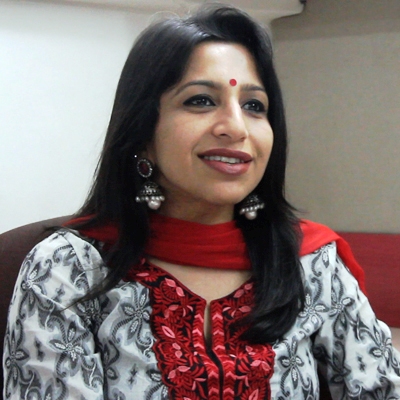
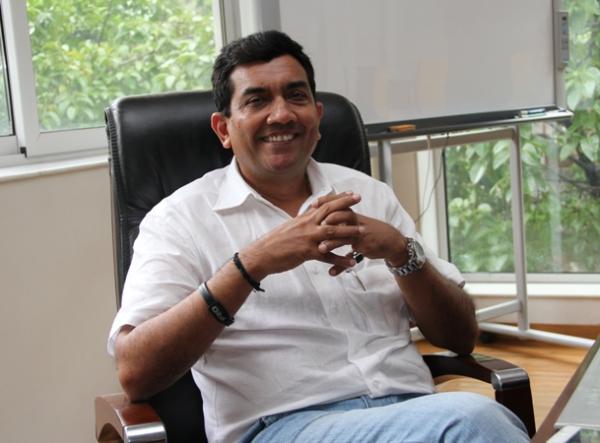
  • Ad spends are likely to get impacted if consumption reduces: Carat India CEO Anita Kotwani

    Ad spends are likely to get impacted if consumption reduces: Carat India CEO Anita Kotwani

    Mumbai: In March this year, India completed a year of double-digit wholesale price inflation (WPI inflation). This is the sixth occasion when inflation has remained over 10 per cent for a year or longer, and it came more than a quarter of a century after the last such episode — between March 1994 and May 1995.

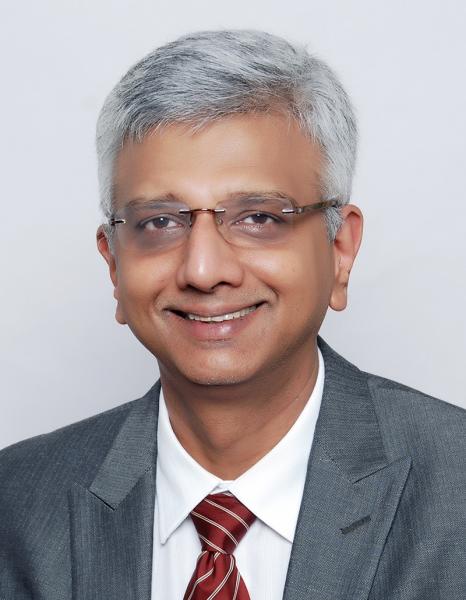
    In an exclusive interaction with IndianTelevision.com, Carat India CEO Anita Kotwani noted that inflation is already impacting FMCG which is the broadcast industry’s highest ad spender. She offers her take on the impact of inflation noting that right now ad spend patterns are unlikely to be impacted and the market is recovering from Covid-19. But she warns that if the price of commodities significantly goes up, then that could impact consumption negatively. And ad spends are the easiest to cut back on when commodity prices rise. She offers the example of domestic aviation cutting back on TV ad spends in a significant manner so far this year. On a more positive note, she sheds light on the resilience of TV as an ad medium.

    Edited excerpts:

    There is talk about high inflation. How is this impacting companies especially FMCG?

    High inflation is likely to bite into the FMCG sector’s volume growth in 2022. Retail inflation in India rose to a seven-month high from 6.01 per cent in January, breaching the upper tolerance level. The rise was mainly on account of high food inflation, which jumped to a 14-month high of 5.43 per cent, along with a high base.

    A majority of FMCG companies have already reported a decline in volume growth in the third quarter of FY22. At this juncture, FMCG firms face the dilemma of choosing between margins and volumes. However, the analysts believe that protecting the margins will further impact volumes as consumers will hold back consumption.

    A recent Nielson IQ report suggests that demand in the rural segment has taken a hit, with volume growth declining by 2.9 per cent. Inflation in the price of fertiliser and diesel has impacted the disposable income of the farmers, thus, impacting the consumption in the rural regions.

    Some of the recent reports also suggest that consumers may have to pay more for their daily essential items. Since the FMCG companies are mulling over another round of price hikes, to offset the impact of an unprecedented level of inflation in commodity prices such as wheat, palm oil and packaging materials. A 10-15 per cent hike is expected across industries. The market is volatile as of now, therefore, brands will consider multiple factors before finalising the incremental in the price for their product.

    Do you see clients’ ad spending getting impacted in the coming quarters as consumer sentiment turns negative and spending slows down?

    Currently, the negative sentiments are not very strong and things are still volatile. Ad spends are likely to get impacted if consumption reduces. However, the impact on consumption will be determined by the increase in the cost of the product. Yes, the essentials are getting a bit expensive but that is largely due to the increased fuel cost led by the Russia-Ukraine conflict. Apart from that, the market has been steadily recovering from Covid and the advertiser spend patterns are unlikely to see any impact. Only if the price of commodities significantly goes up, then that could impact consumption negatively.

    Which are the sectors that you see coming under stress due to inflation?

    As per the Consumer Price Index (CPI) of March 2022, India stood at an inflation rate of 6.95 per cent.

    Amidst the hardening of fuel prices, India’s wholesale price-based inflation quickened to 14.55 percent in March from 13.11 percent in February. Retail inflation for March has also climbed to 6.95 per cent, a 17-month high. According to the country’s CPI-based inflation report, the spike in prices was led by food items.

    A continuous rise in fuel prices since March 22 has not been completely captured in the latest data, suggesting that inflation may remain elevated in the coming months. A surge in crude oil prices to a 14-year high has resulted in broad price pressures on Indian households.

    Among food items, the index for oil and fats recorded the largest sequential price hike, by 5.3 per cent in March. This may raise pressure on the government to make edible oils cheaper.

    The worst affected sectors include food (+1.4 percent over February), clothing and footwear (+0.9 percent over February), and fuel and light (+0.9 percent over February).

    Do you see urban and rural India both being equally affected?

    Since the beginning of 2021, inflation has started to see a gap between urban and rural geographies. For rural consumers, their basket has a higher weightage on food and essentials. Whereas, for urban consumers, the non-food items dominate their shopping baskets as well. Recreation (malls/cinemas) also impact urban consumers more than rural.

    While the inflation gap between urban and rural audiences is always going to remain, rural is also likely to see an impact in consumption due to increased prices of fertilisers and diesel. This impacts the disposable income of people in the rural region.

    The people who are most affected by rising inflation are the final consumers of goods. The prices of goods and services are constantly rising. However, the salaries and income of consumers do not rise proportionately. Hence, there is a lag leading to goods and services becoming less affordable to the final consumers. The CPI inflation witnessed significant and sustained moderation during 2012-13 to 2018-19, before rising thereafter.

    Rural and urban inflation exhibited a similar trend; the only difference witnessed was that urban inflation started rising from 2018 to 2019.

    Moreover, the annual average urban inflation which was ruling below rural inflation till 2017-18, moved above it during 2018-19 and 2019-20 (Chart 1a). Food and non-food inflation contributed to the divergence between urban and rural inflation (Chart 1b).

    The consumer food price inflation for rural areas was 3.94 per cent in March 2021. It went up to 8.04 per cent in March 2022. Similarly, the CPI for rural India has also gone up to 7.66 per cent in 2022, from 4.61 per cent in March 2021.

    The rural food inflation in March has also registered a steep hike in comparison to February 2022. It has gone up to 8.04 per cent in March, from 5.81 per cent in February.

    The Consumer food price inflation for India as a whole, including rural and urban, has gone up to 7.68 per cent in March 2022, from 4.87 per cent in March 2021. Given this understanding, yes, inflation will impact rural and urban consumers equally.

    What does the media industry need to do to prepare for growth potentially not being as smooth?

    Ad spends are the first and the easiest way to cut costs during times of high commodity prices. It is already evident. Hit by high aviation fuel prices, domestic airlines in the country have cut television advertising by as much as 27 per cent , during the first five months of the year.

    When companies try to reduce the ‘extra’ spending, the packages provided by marketers for consolidated marketing become way more lucrative for the brands concerned.
    It is imperative for brands to understand that the focus of cost-cutting should be on reducing wastages and not reducing activity that can generate future sales or build a brand.

    When a brand is in its growth phase, a reduction in ad spends is unadvisable, even during times of inflation. If a brand is sensitive to media ad spends, which consequently drives movement in business impact, then they too should not cut ad costs. This education to brands by media agencies and partners is imperative.

    360-degree media campaigns are the most lucrative campaigns. They combine the most effective and efficient mediums that drive business impact for the brand and further boost media outcomes to the best possible, depending on the category.

    Exploring newer advertising options like addressable TV, geo-fencing on digital, digital OOH and interactive print is not only more efficient but far much more sharp-targeted to the audience, avoiding spillage and minimizing costs.

    Is there a likelihood of revising the projected ad spend growth of  Rs 82,500 crore?

    As an industry we are keeping a close watch on how the media spends are progressing, advertisers and agencies have come to terms that things need to normalise despite rising in covid cases, we will have to co-exist with the virus and continue business as usual. We are hopeful that the situation will not deteriorate, and growth projections if needed will be upward only.

    It is a bit unclear right now if the projection for the ad spends will get changed. There has to be a situation as major as the 2020 Covid crisis for the ad spend projections to change significantly.

    Will print be the first medium to suffer if clients cut back on spends? What is your take?

    In a world wherein all media inputs are determined by ROI, print is the low-hanging fruit. It always witnesses cuts whenever there are budget cuts. A lot of marketing mix modeling (MMM studies) show that for a lot of FMCG brands, print has the lowest ROI, and hence print is always under the scanner.

    Dentsu’s ad forecast report mentioned TV being the most resilient. What is the reason for this?

    Linear television remains to be the most popular and resilient media in India with a 40 per cent share of spend. Linear television ad volumes continued to post a healthy growth starting H2 2021, as marketers leveraged the reach and power of TV to raise the profile of their brands.

    We have seen this in the past as well. In 2021, the TV spends were fully recovered and since TV is still the highest reach building media, brands must leverage TV for building equity and for the movement in top-funnel metrics. While there has been a shift in content viewing with some audiences moving from TV to OTTs and demand for OTT advertising is rising, the impact on TV spends is minimal.

    On TV which are the top five properties for an advertiser?

    The properties are bucketed under different genres and are listed below:

    ⦁ Cricket – IPL & CWC
    ⦁ Dance Reality Shows (“Dance India Dance,” “Dance+”)
    ⦁ Singing Reality Shows (“Indian Idol,” “SaReGaMaPa”)
    ⦁ Unscripted Shows (“Bigg Boss,” “Fear Factor”)
    ⦁ Fictions/Scripted Shows (“Anupama,” “Imli,” “KumKum Bhagya”)

    Will smaller genres like music continue to find the going difficult?

    Over the last couple of years, there has been a drop in the viewership of the music genre. A major reason is the movement of audiences from music to news and film genres, especially post Covid. Additionally, music listeners who also like to watch music videos have moved to YouTube to watch the videos of their choice. While the viewership for smaller genres will continue to remain low, relevant brands can still look at these genres for the right targeting. Brands targeting youth and females can look at this genre to build frequency.

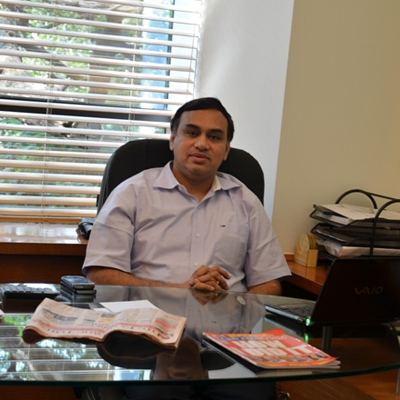
  • Cineline aims to be organised pan-India player: Rasesh Kanakia

    Cineline aims to be organised pan-India player: Rasesh Kanakia

    Kanakia Group’s Cineline India has recently rebranded itself to MovieMax and re-entered the film exhibition industry with the launch of nine properties at prime locations across Maharashtra, including Sion, Andheri, Goregaon, Kandivali, Mira Road in Mumbai; Eternity Mall and Wonder Mall in Thane; The Zone (Nashik), and Eternity Mall (Nagpur).

    Cineline had been in the film exhibition business since 1997. As they have now forayed back into the film exhibition business, they have a redefined objective.

    In a conversation with IndianTelevision.com Kanakia Group chairman Rasesh Kanakia speaks about the rebranding and its objective, growth, the path ahead and more.

    Edited excerpts:

    On rebranding as Moviemax

    Cineline has rebranded itself to MovieMax with a vision to transform the multiplex landscape as the market shifts from single screens to multiplexes. They will be looking at monetising these opportunities to expand across India while also reestablishing a foothold in Maharashtra.

    Explaining how Moviemax will add value to the business of Cineline, Kanakia says, “MovieMax will be the perfect launchpad for us as we add value to our windmill business and our retail estate business. Moviemax will offer a superior viewing experience, and premium and 3D screenings.”
     
    “We have about 75 screens pan India with over 16500 seats,” he highlights.
     
    “This gives us a clear opportunity and space to leverage our expertise in providing a quality experience to our audiences. We additionally plan to keep acquiring more screens in the coming months and intend to build a strong consumer-centric brand in this industry,” he tells.

    Aiming to be an organised pan India player

    Cineline has been in the industry for quite a long time. Talking about the future plans, he explains, “MovieMax expansion plans are based on the emerging opportunity for the cinema exhibition business’s growth potential.”  

    “With many single screens giving way to multiple screens, we want to be an organised pan India player,” he expresses.

    “As a business, we also want to be asset-light and will monetise these assets to reduce debt. We expect about Rs 350 to 450 crore through our monetisation efforts, which will further boost our plans to acquire additional screens in the future,” adds Kanakia.

    Expecting to witness a growth in D2C and B2C brands

    He feels that advertisers have known the value of branding that cinema houses provide. “We have leveraged this aspect to enable brands to channel their campaign message to the target audience effectively,” he adds.

    Highlighting the advertiser’s interest in cinema advertising, he says, “from various sectors such as smartphones, audio peripherals, healthcare, and fitness brands are engaging with the audiences through in-cinema advertising. Even hygiene and jewellery brands are creating cross-functional promotional campaigns to build brand awareness among moviegoers.”

    “Overall, we are expecting to witness a growth in D2C and B2C brands investing in our business,” notes Kanakia.

    Future of film exhibition and gaming businesses

    Kanakia thinks both film exhibition and gaming businesses are set to revive and revolutionise the entertainment sector.

    “Post the pandemic, the relaxation in restrictions has boosted the popularity of theatres and gaming zones in the shopping malls and entertainment hubs. As most of the sectors are witnessing signs of resurgence, we are expecting massive growth across both these segments in the coming years,” he asserts.

    On Cineline gaming business

    “Our gaming business is growing exponentially and we are optimistic about positive growth as the lockdown restrictions have been lifted. Giggles – The Gaming Zone has been an outcome of our vision to provide wholesome gaming and family entertainment. Giggles offer indoor and outdoor gaming experiences along with a premium choice of food and beverages. We want to expand this business from our four outlets to many more in some of our future multiplexes at different locations in India,” he shares.  

    Talking about the gaming industry further, he says, “the gaming industry is at the cusp of a turnaround. With the boom of the OTT and unlimited access to online content, gaming as an entertainment platform also has evolved. At Giggles, we have a blend of indoor and outdoor games. We are investing in digital technology to revolutionise the gaming zones and provide a rich experience for the entire family.”

    “We are infusing a premium touch to our gaming zones with all age groups being able to participate in fun-filled games and activities,” he highlights.  

    In preparations to prevent another Covid wave

    “Cinema business was the worst hit by the pandemic. To prevent another Covid wave, Cineline businesses are keeping a close eye on the regulations and protocols that are being disseminated to the public. In regards to precautionary efforts, all our theatres and gaming zones maintain a high standard of hygiene and round-the-clock sanitisation efforts are in place. Moreover, the health and safety of our patrons are of prime importance and we are ensuring that our preparations to combat Covid-19 are in line with the government’s directives,” he concludes.


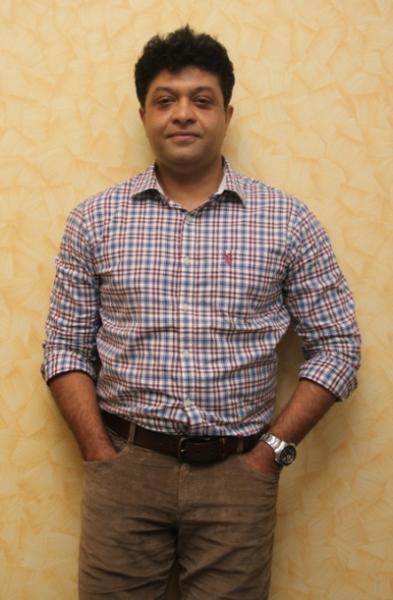
  • International Art Machine’s content lens

    International Art Machine’s content lens

    Soon after moving on as president of Amazon Prime Video and Amazon Studios, Los Angeles-based media executive Roy Price booked a flight to Hong Kong to incorporate the name ‘International Art Machine.’ A journalistic outfit reported that Price was resuscitating his career as an art dealer but the simpler truth is that he was planning his comeback in the content business.

    Price is the executive behind many of Prime Video’s Emmy and Golden Globe-winning shows like “Fleabag,” “Marvellous Mrs Maisel,” “The Boys,” “Maid In Heaven,” and “Patriot” during his over 13-year association with the global streamer. Prior to Amazon, he was a consultant at global management consultancy McKinsey and Co. He also ran content development for Walt Disney Content Animation.

    With International Art Machine, Price has hit the ground running by announcing three projects in association with known names from the Indian media and entertainment industry. This includes projects like Amish Tripathi’s “The Shiva Trilogy” helmed by Shekhar Kapur and Suparn S Varma, “The Kitty Party” with Preity G Zinta and “Gods” with Dibakar Banerjee.

    Roy’s vision is to create originals that will move the needle in their local markets while at the same time whetting the appetite of an international audience. Just the kind of shows that global streamers are desperately trying to make. Netflix has had some success with shows like “Squid Game,” “Money Heist,” and “Dark” and Prime Video showcased the Bong Joon-ho’s acclaimed film “Parasite” but Price believes the best is yet to come.

    In a freewheeling conversation with IndianTelevision.com International Art Machine founder and CEO Roy Price speaks about shuttling between Mumbai and Tokyo, assembling his team, the potential of the ‘Shiva trilogy’ and more.

    Edited Excerpts:

    On being mistaken for an art gallery

    There was an article at one point that I was starting an art gallery and that tells you something about the importance of careful journalism because I’ve never been in the fine art business in my life. I guess someone just looked at the name of the company and decided that was the news story. People perceived it as a sophisticated name, so I never corrected it with anyone.

    On setting up International Art Machine

    When I left Amazon, the major theme I felt in international TV was the growth of Asian originals coming from Mumbai to Tokyo. Almost immediately I booked a ticket and was in Hong Kong and Mumbai within a week. I set up International Art Machine with a vision for a studio that could work locally and serve the growing multinational streamers. I called the studio International Art Machine because I think of TV and film as art. Not because we deal in paintings…although we could extend it to NFTs.  

    Primarily, we’re looking at Asian originals as we’ve seen content like “Parasite,” “Squid Game,” “Drive My Car” mostly from Korea come from Asia since 2017. This trend is going to continue Asia-wide and I knew this was the place to be.

    First, I set up in Hong Kong as it was a convenient mid-point between Tokyo, Seoul, and Mumbai but then switched corporate headquarters to Singapore. Karishma (Naina Sharma) is based in Mumbai and I’m based in LA going back and forth to Mumbai and Tokyo, though mostly on Zoom now.

    Focus on Asian markets

    India, South Korea and Japan are the primary markets followed by Indonesia. There’s China but it is more complicated than it used to be. There’s a robust market in Asia for the kind of international series that we tend to focus on.

    The studio’s content lens

    We want to create a series that could work for the global streamers. Not to say that they primarily cater to international audiences but they have the scope that global streamers are looking for. They would move the needle in a given country and be led by fantastic talent.  It should also have the chance to travel and be appreciated elsewhere just for its terrific quality.

    At the end of the day, streamers want the kind of ambitious shows that are going to stand out in the market. Those shows don’t always have massive special effects or tremendous budgets but are usually creatively ambitious, and have a great team and spellbinding storytelling. It could be like a “Game of Thrones” or something much more personal. For a streaming service, the shows that really make a difference are the top few shows of the year. These top shows will drive 80 percent growth of the platform and bring people through the door. Those are valuable shows.

    Those kinds of shows tend to be non-intuitive game-changers. The thing they have in common is that they’re trying to be different, trying to be new, and tend to have ambitious teams. That’s our mindset and we’re trying to internalise that perspective and find exactly that kind of show.

    ALSO READ | International Art Machine forays into India, unveils content lineup

    On the potential of the “Shiva trilogy”

    The “Shiva trilogy” just seemed like the ultimate web series that had to be made. To bring Shekhar (Kapur), Suparn (S Varma) and Amish (Tripathi) together to tell the story of the novels would make for a compelling watch. To be honest, ‘Shiva’ is a multi-dimensional and complicated character that lends to an interesting story. That’s why the novels have done so well. The Shiva trilogy is a story that delves deep into the complexities of mankind. It is layered with philosophy that’s not only relatable but as relevant then as it is now. We’re really excited about this series and it fits with what we want to do. It is going to be done in the best possible way and will move the needle in India and even outside of India could be interested in the show.

    On creating a show that has legs to travel outside of India

    It is a matter of time before we see a show coming from India that is a global success. There wasn’t a Korean show that really travelled before “Squid Game.” There really hasn’t been a Japanese one either that has been a global hit. We’ve only been making web series and higher budget series for a few years and the number of shows is still small.  As there are more shows and ideas, I’m sure we’ll see a global hit from India. There are so many stories and storytellers that one of them is certainly going to catch on more broadly.

    It is a mistake to overthink it and try to create a show that appeals to a global audience but misses the mark with the local market. We’re going to do it the right way for the local market and it’s going to catch on elsewhere because it is a great show.

    On the timeline to bring projects to screen

    I would like to sit down in Mumbai and watch some of these projects on TV by next year. We’re looking at finishing some of them by the end of this year or at the beginning of the following year. The safer bet would be to actually premiere at the beginning of 2024 but it really depends on what happens in the next four to five months.

    Web series or film?

    At the moment, we’re doing a web series. We’re inventing the web series process as we go along. Since India has only produced so many web shows to date, there are only so many writers who’ve worked on it. As more writers get experience working on web series in the next decade it’ll be easier to create TV shows. We’re working on the scripts for our current projects and are excited to move forward with them.

    There’s such an exciting market in India for film that it is easier to do. The process of filmmaking is well oiled in Mumbai because that’s what the industry has been working on for a long time. It is definitely tempting to work with some of the great filmmakers and move into the film side later on.

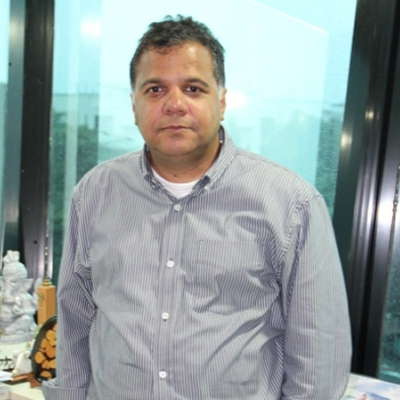
  • There’s oversupply of channels replicating Hindi GECs in Odisha: Sidharth TV’s Sitaram Agrawal

    There’s oversupply of channels replicating Hindi GECs in Odisha: Sidharth TV’s Sitaram Agrawal

    Sitaram Agrawal is a well-known personality in the Odiya M&E industry. He is the MD of Sidharth TV Network, which began its journey last year with three channels, namely, Sidharth TV (GEC), Sidharth Gold (jatras or plays, films and music) and Sidharth Bhakti (devotional). The network’s fourth channel ‘Jay Jagannath’ dedicated to Lord Jagannath of Puri will be launched in May.

    An expert sound engineer, Agrawal built his initial career around a music business. Today, it enjoys an exclusive library of over 12000+ Odiya songs. His film venture has produced over 40 titles. In addition to setting up a 25 million+ YouTube subscriber base across channels, Agrawal also runs a FM radio station which exclusively plays Odiya songs.

    Many commoners in Odisha still associate his name with Sarthak TV, now Zee Sarthak. Launched in 2010 by Agrawal, Sarthak TV was acquired by Zee Entertainment Enterprises Ltd (Zeel) in 2015 in a deal worth Rs 115 crore. The story of how he built a successful GEC brand on the back of local programming is difficult to miss. Within three years Sarthak TV became the reigning GEC, big enough to save Zee’s sinking ship ‘Zee Kalinga’ in Odisha.  Even though a lot of its original DNA is eroded, Zee Sarthak is still the number two GEC in the market, after Tarang.

    Agrawal says he would have never sold Sarthak TV had his financial partner not insisted. But the music business was still there and then digital happened in 2016. He used the medium to build the Sidharth brand this time; Sarthak and Sidharth are the names of his twin sons. Digital became his launch pad into the world of TV once again.

    Agrawal’s confidence in his brand, which he says is ‘regional’ in the true sense, is evident in the fact that Sidharth TV is perhaps the only language channel to be launched in this rather turbulent period for the industry at a premium pricing of Rs 11.90. He refuses to pay ‘placement fee’ for distribution. The 62-year-old MD of the network is personally training a team of fresh, young recruits in the broadcasting business. Moreover, the network has its OTT debut planned for next year.

    All this, and more in this exclusive interaction with IndianTelevision.com. Read on:

    How did you go about building the Sarthak TV brand?

    In 2010, Tarang and ETV Odia were the main contenders in the GEC space. Even though ETV Odia’s content was good, it didn’t get much visibility because of distribution issues with Ortel, one of Odisha’s largest MSOs belonging to the same group as Tarang. So people were left with no option but to watch Tarang. Also, Sarthak Music was a household name by then.

    It was in a milieu like this that Sarthak TV was introduced to give viewers the alternative of local, real and relatable content, rooted in the values and culture of Odisha. Whether we made fiction or reality shows, localisation was paramount. For instance, we had two reality shows then “Rajo Queen” and “Grihlakshmi,” both of which were based on local festivals celebrated in Odia homes in the villages. No one could have thought during that time that such localised events can be converted into glamorous reality shows.

    Other GECs were influenced by national channels. Their programming matched the tastes of a more urban, upmarket audience. So, there was this huge gap that we were able to take advantage of. By 2014, Sarthak TV had become the top GEC in Odisha, beating Tarang.

    You mean you were programming for a rural audience, if others were into urban?

    No. Our TG was, and still is, people who live in the city, but their tastes and preferences are rooted in the village culture. Bhubaneshwar for instance, is a metro city and the capital of Odisha, but 80 per cent of the people living here are from rural areas.

    Tell us something about the nuances of the Odiya TV audiences then.

    Being one of the ‘Char Dhams,’ Odisha is a very strong state culturally. Jatras (plays) and bhajans are popular formats here. In fact jatras are more popular than films, and their viewership is largely urban because people don’t get to see them in the city. Today, Manjari TV gets nearly 30 per cent of its ratings from jatras; they air around eight jatras a week. So you can imagine how big a genre it is.

    The everyday consumption of bhajans is also very high here. For Odia people across age groups, morning bhajan is as important as breakfast. Namita Agrawal, my wife, is a renowned bhajan singer. Out of the two million subscribers on her YouTube channel, 15-16 lakh is young viewership. Odisha is a very different market from other states and national. For this reason, the single biggest challenge I gave my team was to connect as much as possible with the ‘gram’ (villages).

    So how did Zee happen?

    In 2014, Zee entered the market with Zee Kalinga. It was following the same urbanised, Hindi-influenced strategy which didn’t work out. So it gave us the offer in 2015. I was not at all keen, but my partner was quite excited about it. The deal went through at Rs 115 crore at that time when our reach and ratings and sales and distribution, everything was at its peak.

    I left the office with four people who were part of my music company. Everything else was gone. As per the binding clause I could not launch another TV channel for five years.

    How are you planning to differentiate Sidharth TV from the rest this time? How has the market changed since then?

    We maintain the same ‘local’ DNA across all our offerings – fiction, reality, jatras, or films. In just seven-eight months, Sidharth TV has already telecasted 10 different IPs in both fiction and non-fiction genres. We expect reality shows to be one of our strengths because for that a channel needs to have songs as well as the rights to them; we have both through our music company. Also while others are restricted to Hindi songs and weekends, we play exclusive Odiya and our reality shows air on weekdays as well. Further, in the last four years, we have collaborated on nearly 100 jatras with eight jatra parties in Odisha.

    As for the market, yes it has changed, but there’s also an oversupply of channels replicating Hindi GECs – Zee, Colors, and Star (to-be-launched soon). The big networks were able to gain a hold in West Bengal because there were no strong regional players in Kolkata. That’s not the case here, so I am assuming one or two will have to shut shop. Managing a GEC is very difficult if there’s no growth in ad revenues. In Kolkata, Zee Bangla and Star Jalsha could grow the revenue pie by 10 times. Here Zee was able to add only 15-20 per cent to it.

    You recently hired two agencies to handle sales for Sidharth TV. How are you planning to grow your ad and subscription revenues?

    The revenue matrix in Odisha stands at 60 per cent advertisers and 40 per cent subscriptions, which is also something we are aiming for. As our distribution grows, so will the ad revenues. While Sidharth TV is now available on 100 per cent of the cable networks, the growth through DTH platforms is slower because we are not willing to pay placement fees.

    Currently our distribution stands at 33 per cent of the universe of approx. 50 lakh pay TV homes in Odisha. We have started getting steady subscriptions, and it is growing day by day. Apart from Sun Direct, recently we have become available on Tata Play as well which will further the distribution to almost 50 per cent of the base. This availability will surely boost our subscription and reach. The latter in turn will lead to higher ad sales.

    According to the ratings started week 12, we were at No. three in time spent, with GRPs and reach of 62 and 14 respectively. This, with 33 per cent distribution. If we had full distribution strength, the GRP would have been around 200.

    How do the local and national advertisers compare in Odisha?

    It’s eight per cent local and 92 per cent national. Except for some big retail outlets and institutions, local advertisers don’t spend much here. Also Odisha being a P3 market, the ad revenue pie is not growing despite an oversupply of GEC, and low ad rates

    Do you have a partner this time?

    Thankfully not.

  • ‘Wherever a shopper shops, one must make a product around it’: Swiggy’s Swapnil Bajpai

    ‘Wherever a shopper shops, one must make a product around it’: Swiggy’s Swapnil Bajpai

    With the pandemic fuelling a paradigm shift in consumer behaviour aided by digital acceleration and customers preferring doorstep food delivery over dine-in services, cloud kitchens have emerged as viable business model in the F&B industry. Many restaurateurs are now looking to shift from a traditional dine-in facility to set up a delivery-only business to tide over the havoc wreaked by the Covid-19 pandemic. To aid the process and showcase the importance of incorporating cloud kitchens into the Indian restaurant industry, the National Restaurant Association of India’s (NRAI) Mumbai chapter recently held the Cloud Kitchen Convention where prominent stakeholders from the cloud kitchen space got together and shared their knowledge and cutting edge insights.

    Last year, NRAI had launched the #OrderDirect campaign to offer a democratised digital channel with low commissions to reduce their reliance on the aggregator platforms.

    IndianTelevision.com exclusively spoke to Swiggy AVP of sales Swapnil Bajpai on the foodtech brand’s association with the NRAI event. This sheds the spotlight on one of the major concerns of the industry on how to reduce the dependency on restaurants and cloud kitchens on aggregators such as Swiggy and Zomato, and the ongoing debate of whether they are a boon or bane for the F&B businesses.

    The Cloud Kitchen industry is expected to become a two billion dollar industry in India by 2024 as per reports, paving the way for accelerating and revolutionising the concept of dine-in restaurants and cafes. It is this emerging ecosystem that the ‘voice of the Indian restaurant industry’ aims to tap into and grow through such conventions.

    The Swiggy executive was one of the speakers on the event’s panel on ‘Cloud Kitchen marketing – How to stand out amongst the crowd?’

    In this chat, Bajpai further talks about Swiggy’s roller-coaster ride through the pandemic and sustaining the growth going ahead.

    Edited excerpts:

    On Swiggy’s association with the NRAI cloud kitchen convention

    We call our restaurant partners as partners, and we have a partnership with the restaurant association. And this partnership is for something meaningful, not just namesake. We genuinely believe that as aggregators we can learn a lot from the restaurant partners in conventions like these. And we will be able to share our experiences also through which they will also get to learn from us, hopefully. So I look at it as a platform for the mutual sharing of ideas and experiences.
     
    On #OrderDirect campaign by NRAI

    I come from a background of FMCG (Bajpai was previously with Procter and Gamble for close to ten years). And one of the things we learned was wherever a shopper shops we have to make a product around it. And it’s the same for the restaurant partners. When it comes to ordering direct, it’s one of the channels that they would want to operate in. So as aggregators we don’t have a point of view. In fact, if we are able to bring a solution to that, we would also want to do that. So, we don’t see it as competition- it’s just one of those ways to serve the consumer better.

    On Swiggy’s plan to drive awareness about cloud-based kitchen

    Awareness, in general, is created for a brand. Whether the brand is coming from a cloud kitchen or it is coming from a physical restaurant, as a consumer one does not care about it, till the time we know that the brand is preparing the food in a safe way and the quality of the food is good. So we will definitely employ all levers to showcase all brands and their offerings to the consumer – be it cloud or non-cloud in our ecosystem. We already have a bouquet of marketing tools that a new upcoming brand can choose from and we can showcase it on the app. We also go beyond that through our e-mailers and push notifications which we send out to promote and create awareness about the brand.

    On challenges faced during Covid lockdowns

    There have been two cycles of the pandemic that we have seen in wave one and wave two. In the first wave, the biggest concern that people had was whether this delivery would be safe for them or not. Which’s why we saw a massive decline in orders across the board. This coupled with lockdowns and closure of places, movement control etc. In the second wave, this issue was not there, because over time it was established that food delivery is safe. And we also ran many campaigns from Swiggy’s side – I’m sure Zomato also did that, and so did restaurant partners. So mental barriers were taken away from people that food delivery is not safe. Hence after the second wave, we have gradually seen business pick up again, but that first wave to second wave period was very tough when the numbers were pretty low, as compared to 2019 figures. Unquestionably, after the second wave, the platform saw a huge spike in orders.

    On riding the recovery wave post-pandemic

    I foresee a massive potential for food delivery because of the pandemic-fuelled digital acceleration led by increasing internet penetration and also, the frequency of eating out in the country. What delivery does is increase the frequency of ordering out. There are dine-in occasions that you cannot replace with delivery and likewise, there will be delivery occasions that you cannot replace with a dine-in. So each has its own space and they complement one another. Delivery actually increases the frequency of ‘eating out.’ And, now with places opening up, dining-in will also start picking up in its own way. Even pre-Covid when delivery was increasing, dining out was parallelly growing- it’s not as if when delivery picked up, dining actually reduced. So I definitely see food delivery sustaining and scaling up in the coming future.

  • GSEAMS hits its stride with a foray into web series

    GSEAMS hits its stride with a foray into web series

    Global Sports Entertainment and Media Solutions (GSEAMS), chiefly involved in film production, started creating content for OTT players beginning with their first project “Samantar” streaming on MX Player from 13 March 2020. The company hit its stride ever since, with a successful run of series on various platforms including “Raktanchal” on MX Player and “Naxalbari” on Zee5. This year, they are yet again collaborating with MX Player on three projects, two of which are successive seasons of their hit franchises. A new web series is also in the pipeline for the OTT platform Voot.

    The company was founded in 2013 by Arjun Singgh Baran and Kartk D Nishandar who quit their corporate roles to get into the content business. The duo saw an opportunity to create films for Marathi-speaking audiences, who at the time was only served by two major companies Zee and to some extent Viacom18. In a short span, they produced about 15 Marathi films with hits such as “Mogra Phulaalaa,” “Ranangan,” “Tula Kalnnaar Nahi,” “Bhikari,” “Vicky Velingkar,” “Bonus,” and “Bali” and produced more than 500 episodes of a popular TV show “Nakalat Sare Ghadale” for Marathi general entertainment channel Star Pravah.

    GSEAMS is now involved in the production of films, TV shows, and web series content for various media platforms. Their original Marathi films are available on Amazon Prime Video and the latest film “Bali” was released last year as an Amazon Prime Video Original.

    In his past tenure as a corporate executive, Baran was associated with Reliance Broadcast Network Ltd as West India business head for BIG 92.7 FM. He’s been in the media industry for over two decades, has produced numerous hit films and provides strategic direction at GSEAMS. Nishandar was also at Reliance Broadcast Network Ltd in the role of national head and has a background in marketing. During their tenure in the production business, they have produced three web series, 11 films and nine television shows, becoming prolific showrunners.

    GSEAMS directors Arjun Singgh Baran and Kartk D Nishandar talk to IndianTelevision.com about their journey into content production and their foray into the OTT space.

    Edited Excerpts:

    On the inception of GSEAMS

    Arjun: Kartk and I started this company in 2013. We had been professionals working in different media companies. I was a business head and Kartk was head of marketing. GSEAMS started off as a company providing marketing solutions for films and managing talent but we quickly moved into production. Unlike other production houses that first get involved in TV production, we got into film production from the get go and started making Marathi movies. At that time, not many corporate companies were making Marathi films with only major producers being Zee and to some extent Viacom18. That’s when GSEAMS came into the picture.

    We have worked on about 15 Marathi films since 2013 and today half of the Marathi directors either work with us or with Zee. We’ve worked with Swapnil Joshi on many films that appear often on TV channels. We also began purchasing a lot of Marathi films and today we have a bank of 80 films that most of the Marathi channels are airing.

    In time, we realised that we need to move into the OTT space. Any project takes us about two years to develop and we got into the OTT space at the right time in 2019. We got in touch with MX Player and produced “Samantar,” which was a hit with 100 million views.

    Kartk: Now, we’re producing another three shows for MX Player. We’ve done one for Zee5 that is “Naxalbari” and we’re doing a show for Voot.

    Arjun: We started shooting for “Naxalbari” when the whole world was in lockdown. The shooting happened in Goa with 250 people and the cast included Rajeev Khandelwal, Tina Dutta, Shakti Anand, Satyadeep Mishra, Sreejita De. Our main lead Rajeev Khandelwal was staying in Goa at the time. We discovered the entire team from the director, DOP, and artists in Goa and were shooting there with Covid tests and checks. The show began streaming on Zee5 in July 2020.

    Arjun: We are partnering with Voot and Jio Studios for our next web series. The show is called “Rafuchakkar” and it has Maniesh Paul, Priya Bapat and it is directed by Ritam Shrivastava who’s also done “Raktanchal 1” and “Raktanchal 2” for MX Player. It is a story of a con man.

    Kartk: Amazon Prime Video is our partner for Marathi content and hence all the movies that we’ve produced are available on the streaming service. Our latest film “Bali” released in 2021 was a Prime Video Original.

    On the hits produced under GSEAMS banner

    Kartk: Our film “Fugay” released in 2017 starring two superstars of Marathi cinema Swapnil Joshi and Subodh Bhave was well received. We also released a film called “Tula Kalnaar Nahi” in the same year that did well. Another film of ours “Mogra Phulaalaa” released in 2018 cast Swapnil Joshi and Sai Deodhar in the lead and did extremely well with the theatre audience. We made a remake of a South film called “Pichaikkaran” into a Marathi film called “Bhikari” which was released in 2018. The production had a huge scale with ace choreographer Ganesh Acharya as the director.  Our recent release “Bonus” featuring Gashmeer Mahajani and Pooja Sawant in lead roles received 12 nominations from the Maharashtra Times Sanman Awards.

    On their content philosophy

    Arjun: We want to make films that appeal to everybody and have done that by continuously studying what the audience wants and understanding the art and science of production. There are few production houses like ours who are creating content because they know what the audience wants. We’ve had hits and misses like everybody else. But the people who survive in this industry are the ones who continuously work on one project after another. If you wait for something to become a hit then you’ll never become a big company.

    We also thought about ‘how do we do production in a much smarter way’ because the industry is very unorganised. If you go and shoot in Goa, Satara or in the North it’s not compatible for everybody. We are able to manage costs while comfortably completing the entire shooting process. We approach production with the mindset of a corporate company and every project that we do is a little better than the last one. That’s helped us survive over the last nine years. God has been kind.

    When the content is good people will come and watch it. Word of mouth is extremely important. That’s what Kartk and I are looking at ‘how do we create content that will have word of mouth?’

    On the expansion of GSEAMS

    Kartk: Around 2018, we created a writer’s room where we took on close to 10-12 writers. To date, we’ve also blocked around 20 book rights. “Samantar” was a great example for us which showed that a bestselling book will work out as a screenplay. Today, we have a large team of writers working across genres and languages, writing screenplays for production. We also began developing our own content by investing our own money before we approached any platform. We would never wait for the platforms to give us approval for content and that’s why we are managing to produce series back-to-back.

    On content that resonates with digital audience

    Arjun: As filmmakers, everything is 120 minutes long and larger than life stories are told where you shoot in different locations. Television is about telling stories that revolve around characters in a single location.  

    When we look at OTT, you see shows that have done well like “Scam 1992: The Harshad Mehta Mehta Story” to “Samantar.” It is about taking the audience to a particular place or time period and getting it as real as possible. On digital, the audience wants to get immersed in the characters’ lives. In the case of “Samantar” to get it as real as possible we visited 42 different locations and shot in chawls and ‘thanas’ so when you watch the show you get transported to their reality. The basic difference is how real and interesting you make the setting.

    While our strength is in creating Marathi content, recently we’ve been making Hindi content like “Raktanchal” and “Naxalbari.” The setting for these stories is in Maharashtra and Goa so even though the language is Hindi we’re able to depict the cultural nuances.

    Kartk: Every OTT platform has its own audience base. For MX Player, their major markets were in Maharashtra and the Hindi heartland. We study a platform before we create a piece of content. We dive into the culture, say for example a Maharashtrian couple who are staying in a Lalbaugh chawl and how they function. In the end, it is about understanding the dynamics and how the audience relates to the content.

    Recently, a lot of shows based on books have been working in the OTT space. From “Sacred Games” to “Scam 1992,” “Rocket Boys” to “Samantar.” We’re also looking at the biopic space that is becoming popular with digital audiences.

    We’re going to keep creating content that is based in Maharashtra. The show “Raktanchal” was based in the Hindi heartland and did really well. But our core strength is in Maharashtra and we have a dedicated writer’s room that works writing Marathi stories.

    On creating more shows with OTT players

    Kartk: In the two years of Covid, we transitioned heavily towards producing content for OTT platforms and we have kept that process going on. In 2020, we produced two series, followed by three series in 2021 and six shows underway in 2022. Our web division is growing. Films are also coming back. Currently, we’re working with director Vishal Furia of “Chhori” fame who recently created the web series “Forensic” featuring Vikrant Massey and Radhika Apte for Zee5. He’s going to direct the Hindi remake of Prime Video Original film “Bali” in collaboration with a top Bollywood actor. This year we have two theatrical releases, six web series and a major biopic starring a top Bollywood actress.

    We also do a lot of work on TV but only in the form of finite series. We have a finite series in development for a TV channel. Our scope of expertise is in telling finite stories though we produced 500 episodes of a successful show on Star Pravah called “Nakalat Sare Ghadale” which was the Marathi remake of the show “Yeh Hai Mohabbatein.”

    On their business model

    Arjun: When we are producing films the Intellectual Property (IP) always belongs to us. We have put in the investment and are taking the risk. Then we sell the media rights for so many years to various channels or platforms. For our web series, the IP belongs to the platform. Initially, we took the risk and made content because we didn’t want to wait for funds to get started.

    Still, we are continuously buying book rights and investing in screenplays. You start investing in a project on the basis of your faith in the writers and the content. In the content business, out of ten things that you’re working on, only three may go to production. As a production house, you need to keep investing money and pitch to platforms because they expect ideas from you. So, there’s a lot of investment that goes in.

    On the growth of the company and future outlook

    Kartk: We’ve been growing steadily since 2013 at an EBIDTA of 30-35 per cent annually. The biggest growth for our company comes from the IPs that we create. We keep adding new films to our library including ones that we create and acquisitions. If a web series is successful, platforms commission us to do the second and third seasons. Hopefully, we will be able to get to a stage where we create bigger series that are our own IPs like to do with our films and syndicate them to OTT platforms. Developing IP that we own is our ultimate goal.

    Arjun: There are around 300-400 people working for us every year on various projects. Every project has about 250 people working on it. We want to keep creating good content for TV, OTT and theatres which entertain people and give them something to talk about.

  • We aim to penetrate into tier 3 & 4 markets with continued IPL sponsorship: TCL’s Mikkilineni

    We aim to penetrate into tier 3 & 4 markets with continued IPL sponsorship: TCL’s Mikkilineni

    Mumbai : It’s no secret that the Indian Premier League (IPL) is much more than just a show of the country’s love for the sport of cricket, with tons of money riding on the homegrown tournament. Organised by the richest cricket board in the world – the Board of Control of Cricket (BCCI) – the T20 League has many a deal running into multi-million dollar pacts- from the title sponsorship to broadcasting rights to individual team sponsorships. With each succeeding season, the brand value of the league has only grown, with its value in the ongoing season 15 of the Tata IPL set to jump manifold along with the addition of two new teams. The tournament has been a rollercoaster ride with mostly highs and very few lows for all the stakeholders of the IPL. So much so that it would be safe to presume that this is one unique business proposition that is ‘risk-proof’ with the return on investment pretty much guaranteed.

    In this context, it’s only logical that brands and companies across the board wish to partake in a share of the IPL pie and be associated with the league in some manner. So also global television brand and consumer electronics company TCL has reiterated its commitment to officially sponsor Sunrisers Hyderabad (SRH) for the third time in a row this year. This also makes it the brand’s fourth consecutive year of IPL association, having tied up with Delhi Capitals (DC) before this, in 2019. So what prompted the consumer electronics brand’s switch to the Hyderabad-based franchise? TCL India head of marketing Vijay Kumar Mikkilineni explains the rationale behind the decision and the long-standing IPL partnership in a conversation with IndianTelevision.com.

    Background of the TCL-SRH partnership

    “So although we started off our participation with IPL in 2019 through Delhi Capitals, we moved to Sunrisers in 2020. In December 2018 we had our panel factory groundbreaking ceremony in Tirupati, Andhra Pradesh in which we have invested Rs 2400 crore in 153 acres, and which has become operational this year,” Mikkilineni says. “With the established base in Hyderabad, the city became a big market for us and it was but natural for us to have an alliance with the Hyderabad-based team. That is the core essence of our three-years on and still going strong collaboration with SRH,” he adds.

    While Andhra Pradesh has been “one of the top three markets for TCL,” Mikkilineni takes pains to emphasise that the brand does not look at the SRH collaboration as only to be leveraged in the state, but as something that will help TCL to capitalise and capture the brand presence ‘pan- India’ with the huge fan base that players like Kane Williamson and the rest of the relatively young team of SRH enjoy in all the states across the country.

    Rationale behind the three-time collab with SRH

    The brand TCL has been associated globally with sports where the younger audience will be present and which their target group of consumers would connect with, including ice hockey, soccer, FIFA to name a few. Globally it had footballer Neymar and several other players from European Football teams as its brand ambassadors.

    “Coming to India, it was a given that there is no bigger sport than cricket in the country, and no bigger platform than IPL, which is a good 360-degree marketing activity for any brand to leverage its presence in the country,” Mikkilineni says.

    Talking about the trials the league faced in the last two years of the pandemic, Mikkilineni says that it will be difficult to judge the merit of the association merely on the basis of return on investment (ROI). The previous year the tournament was split into two halves, with the first half getting adjourned due to Covid-related issues and lockdowns. “It was very challenging for the sport itself and the players as well, being in the bio bubble and so on. Due to this, we couldn’t utilise the players in physical events. Earlier, if I had a product launch during IPL I would bring the biggest star players of that team and we would have done it in a different way.”

    Despite running into such hurdles in the past couple of years, the brand did not let it impact its decision to further invest in the league and the franchise. “Considering the on-air viewership reach that IPL has in India market, while also taking into account the receding Covid cases in India, I think especially the offline activation this year would be much better as compared to the last two years in April and May,” Mikkilineni believes.

    Expectations from the Tata IPL association

    The brand sees the homegrown league as the platform that serves as a bridge between the brand and its consumers, helping it to stay connected and continuously engaged with its target audience. “I really feel the association with IPL from the last four years- first with DC & now three years with SRH- has taken us to the ‘number four’ rank in India today, in the last five years since our launch in India,” asserts Mikkilineni. With this IPL too, the brand will be looking at stepping into Q3 (with Independence day and Diwali on the horizon in August and October) with a goal to achieve a target of 1.2 million Television sets this year. “We want to keep the momentum going for the brand from the April-May-June quarter with the IPL tie-up, further moving into Q3 where bigger volumes will come up, and then we can achieve the target figure of 12 lakh units that we have  set for the year.”

    Expanding its consumer demographic

    While the electronic consumer brand’s core TG varies according to the product category, Mikkilineni reveals that for TCL as a brand, its target group essentially is the first time job seeker, newly married young couple, the employed young generation and the tech-savvy customer who loves to know more about the latest technology, which essentially comes in the age bracket of 25-35 age group. The next set of higher segment products sees the 35-45 age group as its target customers.

    Sharing the penetration levels of the brand’s TV in the Indian market, Mikkilineni discloses, “The tier 1, tier 2 markets contribute more towards the higher segment of TVs, whereas it skews towards the lower segment when you talk about the tier3, tier4 markets. He adds that currently the brand has a very strong presence in the tier1 and tier 2 markets. “Our target through IPL- the continuous sponsorship and continued BTL activations- is to penetrate into tier 3 and tier 4 markets of the country,” he reveals.

    Leveraging the IPL for user engagement

    To further leverage this collaboration to the maximum, the brand is ramping up its marketing activities, emphasising the brand image, with plans to spend over Rs 10 crore on a 360-degree campaign, which includes digital, social media, channel marketing, as well as, ATL & BTL. “There might, probably, be very few brands from the consumer durable industry- especially the TV industry- who are participating in IPL and spending that kind of money,” avers Mikkilineni. Talking about the omnichannel media mix adopted by the brand, he adds, “Currently, we are looking at a 60:40 split of the marketing spend, with 40 per cent in digital, social, online and PR, while 60 per cent includes ATL, BTL, channel marketing, and partner marketing activities.”

     The brand is already running promotions on its social and digital platforms currently. “We will also be focusing much on BTL activations, having kicked off BTL activations with a strong base of almost 8000 plus retailers in India. The brand stories between the association of SRH & TCL will be running parallel,” he says while adding that the brand has no plans of any endorsement associating with the team players, even as it is looking at associating with the whole team. “We have online events which will be going on, such as interaction with the players, but not towards any particular brand ambassador as such,” clarifies Mikkilineni.

    The brand also has an eye on regional prints ads, which it plans to run later during the league matches in the month of April. “It will be laying out its marketing plans in tune with the launch of its new miniature 8K Mini LED TV model in the last week of May,” reveals Mikkilineni.

    The brand also looks to leverage outdoor media now that all curbs on outdoor movement are off in most parts of the country. “We are evaluating the OOH association with Delhi, Mumbai airports, as well as, another regional key nine metro cities,” says Mikkilineni.

     While the last two years of the pandemic affected every sector, the demand remained steady for television with everybody staying at home. “Now it has become a multifunctional product- not only for entertainment but also for having a video conferencing as well as for the school going children’s education, and the OTT platforms, which are penetrating more and more into the households,” says Mikkilineni. “So we see this year as very positive in terms of the growth,” he concludes.

  • There is strong demand for our content in India: NBCUniversal’s Hendrik McDermott

    There is strong demand for our content in India: NBCUniversal’s Hendrik McDermott

    OTT streaming service hayu was launched in 2016 in the United Kingdom, Ireland, and Australia targeting major English-speaking markets to advance the unscripted reality genre. The content on the service was provided by NBCUniversal, one of the world’s leading unscripted production companies, that adds 2000 hours of unscripted content every year primarily through their flagship pay TV brands in the United States – Bravo, E!, and Oxygen.

    Today, hayu platform boasts 10,000 hours of content all focused on reality TV. While the content library swells predictably each year, the platform’s strategy is focused on bringing that content to more English speakers across the globe. It does this in three ways, launching in new English-speaking markets, increasing its distribution reach, and onboarding platform partners.

    In 2017, hayu launched in the Nordic region (Norway, Sweden, and Denmark) and then into the rest of Europe. The service was launched in Canada and Benelux in 2018. The expansion continued to Southeast Asia including the Philippines, Hong Kong, Singapore, and finally India in December 2021.

    Leading hayu’s charge across the globe is NBCUniversal managing director of direct-to-consumer global Hendrik McDermott, who’s been at the media and entertainment company for over 16 years. Based in London, McDermott is responsible for the territorial expansion and P&L including subscriber acquisition, retention, customer lifetime value, and revenue growth. The platform hayu has completed six years since its launch and is currently present in 29 countries.

    In an exclusive conversation with IndianTelevision.com, McDermott shares his focused strategy for hayu’s international expansion and approach to the Indian market.

    Edited Excerpts:

    On the launch in India three months ago

    Our research showed that there’s a huge appetite for reality TV in this country. As we look at our addressable base (English-speaking audiences), 33 per cent of that base are huge fans of reality TV in some shape or form. Out of that group of people, three-quarters are very interested in subscribing to a US content service. That’s a very high percentage in our addressable base. So, there is a strong demand for the content that we have in this market.

    On monetising unscripted content via subscriptions

    We view our platform as a premium service. Our research shows that people are happy to pay for content and they don’t want advertising on the service. Our platform is an ad-free service and we do not have advertising on our platform in any of our other markets so it’s something that we’ve stayed true to in India. That’s the area (subscription) we hope to grow for now.

    On distribution strategy and partnering with Prime Video Channels

    Partnerships are a hallmark of our strategy and we’re very active in partnership discussions. We are partnered with every kind of platform you can imagine including cable platforms, satellite platforms, OTT platforms, and telcos. In every market that we’re present, we have at least one platform partner. We launched with Prime Video Channels here in February but we have a longstanding partnership with Amazon in other markets as well.

    The types of integrations that we do differ from market to market. For example, in Canada, which is a cable TV-led market, we partnered with all the cable TV operators and built a bespoke app that sits on their set-top-box. The Nordic markets are much more SVOD-led and so we’ve done integrations with the other SVOD platforms. We’re open to all kinds of different partnership conversations. We are partners with almost every App Store and Smart TV across Apple, Google, Roku, etc.

    In India, I can’t speak about specific partners but we are in active conversations for further distribution. The deal with Amazon is a structure where the partner platform ingests our content and we’re open to that. We’re looking to bundle with different smart TV and telco operators as well.

    On a localisation strategy for India

    We are an English language service. The content itself is very topical and when our new shows come out it is written about in the newspapers. We prioritise the speed at which the content comes to our platform and therefore our shows air in India on the same day as the US within two hours of broadcast transmission.

    In India, we’re subtitling some of our content knowing that there is a desire to watch content in local languages. About 4000 hours of content has been subtitled to Hindi.

    On beating the competition in the unscripted content space

    We bring our US-based shows that feature some of the most popular and famous people in the world. These are franchises like “The Real Housewives” and “The Kardashians.” These are premium franchises targeting a specific demographic. We’re not a general entertainment service so we’re not going to try and address the entire market. Our target audience is young, female, and English-savvy.

    Obviously, we’ll sell our service to anyone but we do tend to skew more females than males with 90 per cent of our user base outside of India being female. We also understand that this is a mobile-led market but we’re trying to keep our platform available to as broad a selection of people as possible. So, we’re present on all devices.

    On growing the platform in India

    The performance metric that we’ve been looking at is our viewing engagement i.e., how much content is being viewed by people on our platform. I think that’s important at the launch phase because we’re brand new to the market. Our benchmark in terms of average viewing per person per month varies between 16-20 hours of content. That is broadly speaking the performance of our content in other markets. We’re pleased to note that in India the average at the moment is 17 hours per person per month which is within our target performance.  

    On marketing the service in India

    Marketing in India is no different from other markets. When we launch our service, we were very active in building brand awareness since the brand is new to the market. This includes pay TV advertising and out-of-home advertising that we’ve been active in starting from December. Then we’ll shift our tactics towards digital because globally we’ve seen it is much more common to get people to subscribe to services via digital. You will see our presence on social media channels, influencers, podcasts, and everything else. Once we’ve invested in building our brand, we can shift our tactics to drive subscriptions via digital.

    On making the customer onboarding journey as frictionless as possible

    Our service is accessible via numerous touchpoints. We have a whole suite of apps, 13 different apps, and have made it seamless for people to connect with the platform in any way they want. The simplest is the web where there is a basic sign-up flow. In this market, we offer two subscription packages i.e., a three-month package and a 12-month package. Adding more payment options is in our product roadmap for the coming months. Payment modes like Paytm will be enabled over the course of the year.

    On driving viewership via connected TVs versus mobile devices

    Even in markets where we’ve had integrations with cable TV platforms, the primary viewing of our content genre is happening on the small screens. This includes mobiles and tablets but also to a certain extent laptop computers. While there is some variation from market to market, this is consistent across the board. In India, we found that about 50 per cent of the viewing is happening on the mobile phone. It also skews towards Android devices over iOS devices. Mobile viewing in this market is broadly speaking higher than we’d see in other markets.

    On hayu’s upcoming content slate

    We recently launched a new franchise called “Below Deck Down Under” that’s exclusively on hayu platform. In May, we have a big premiere when the “Real Housewives of Beverly Hills” returns to the platform with season 12. On an annual basis, we add about 2000 hours of content and on any given day four to ten new episodes are coming in from our partners in the US.

  • Gender inequality is more rampant in rural areas: BL Agro’s Richa Khandelwal

    Gender inequality is more rampant in rural areas: BL Agro’s Richa Khandelwal

    When was the last time you saw an ad featuring not one, not two, but three mainstream male actors in the kitchen, donning aprons to cook up a storm? BL Agro’s latest brand film for its flagship mustard oil brand Bail Kolhu, aptly titled ‘Rasode Mein Mard Hai’ does just that by showcasing the three versatile talents of Pankaj Tripathi, Manoj Bajpayee, and Nawazuddin Siddiqui cooking with flair-relishing and savouring every step of the process, right down to serving their preparation. 

    While several brands have championed the cause of gender equality before, what makes this particular campaign special and sets it apart is the fact that it is led by a brand rooted in the HSM (Hindi Speaking Market) hinterlands of Uttar Pradesh with a target audience that comprises primarily of rural and semi-urban consumers. The name Bail Kolhu itself has a strong native ring to it with its genesis ingrained in the traditional process of extraction of the ‘Kachi Ghani’ or mustard oil.

    So what led the desi edible oil brand to undertake this atypical campaign for its cooking oil product? BL Agro spokesperson Richa Khandelwal tells IndianTelevision.com in an exclusive chat.

    The brief given by the brand

    “We wanted to take a very different path than the usual suspects,” says Khandelwal, adding, “Rather than picking up one of the regular marketing concepts, we wanted to associate Bail Kolhu with a social agenda to create an image of a brand that genuinely cares and thinks about its customers.”

    Talking about the title, Khandelwal says, “We, along with our creative agency, Leads Brand Connect, played around with quite a few hashtags and titles, such as #HaathBataaoSaathPakaao, before we set the seal on #RasodeMeinMardHai, because it both resonates well with the semi-urban and rural population and has a stark appeal and recall value.”

    The campaign was an in-house collaborative effort of the creative, production, and media teams, with Leads Brands Connect executing the entire TVC, from concept to film production.

    Enlisting the three Bollywood actors

    “Hailing from Bihar and Uttar Pradesh, the trio was a brilliant brand choice because they are idolised in this Hindi-speaking belt,” says Khandelwal. 

    With the problem of gender inequality more rampant in rural areas, the three Bollywood actors become the perfect fit. “We could have enlisted any celeb face to break the doctrine that men can’t share the load in the kitchen. But we specifically chose Pankaj Tripathi, Manoj Bajpayee, and Nawazuddin Siddiqui because they were the right megaphones for the concept,” she tells.

    The TVC is the launchpad for the first leg of the campaign, which will last three months, and which was unveiled by actor Pankaj Tripathi at a press conference in New Delhi to get the conversation rolling.

    “Launched earlier this month, the campaign has led to a knock-on effect with people from all walks of life and consumer cohorts responding to the ad film,” says Khandelwal. “While women are applauding Bail Kolhu for championing the cause that men should be cooking too, men are actually beginning to think about it,” she adds.

    The thought behind the concept

    Interestingly, Covid-19 became the germination point behind the #RasodeMeinMardHai concept to advocate the fact that men should be cooking too, reveals Khandelwal. “During the initial lockdown men actually became active participants in the kitchen, gradually taking on cooking chores. But with the waves dying down, the situation bounced back to the pre-covid era, with only 6.1 per cent of men participating in the kitchen,” she says, adding that, “essentially, the plight of women did not change an iota.”

    The limited portrayal of men in ads centred around the home and kitchen has further served to reinforce the belief that cooking is solely a woman’s responsibility. “By talking about it through more responsible advertising, we wanted to normalise the issue and bring about functional change,” Khandelwal asserts.

    Media marketing strategy behind the campaign

    The TVC is largely focused on television with the time-slots chosen for the TVC not par for the course. The brand is going aggressive on spending on news channels to capture male viewership on TV, while the #RasodeMeinMardHai campaign is digital-first. The ad spend ratio is 60:40, with the smaller portion dedicated to traditional media and the larger portion to digital media.

    Khandelwal says since radio is also a potent medium in the markets where Bail Kolhu has a major presence – largely in rural and semi-urban areas – the brand will focus on the radio for its marketing campaign. “Besides jingles, we are roping in RJs to promote the messaging and contests for listeners.”

    A long-term goal

    The campaign is not a one-off to nudge the industry towards more progressive gender narratives or tokenism for the just-passed Women’s Day, emphasises Khandelwal. “We’re going to make it a key focus area for the brand to give the messaging more breathing space.” The brand plans to turn it into a multi-year agenda where it will move from the ground up to bring true winds of change. In the pipeline are also outdoor activities that become the “rocket fuel to bring real and tangible” transformation on the ground.

    “Although names cannot be disclosed at such an early stage, expect to see more macro-influencers and more celeb faces. Since it’s a social cause, a multitude of people are interested in contributing, not for monetary gain but for the cause itself,” adds Khandelwal.

    Meanwhile, the Uttar Pradesh-headquartered edible oil and food products company has been on an aggressive market expansion mode and has since expanded its horizons into the nearby territories of Rajasthan, Uttarakhand, Delhi, and recently also ventured into the Southern state of Karnataka.

  • Our approach to local language deals is driven by talent: Beatrice Springborn

    Our approach to local language deals is driven by talent: Beatrice Springborn

    Universal International Studios has been leaning into local language productions over the last six months, reveals president Beatrice Springborn at the Series Mania Forum 2022 on Tuesday. The studio has partnered with French-Vietnamese writer and showrunner Quoc Dang Tran who is behind the series “Call My Agent!” and “Parallèles.”

    In a session moderated by Deadline international TV editor Max Goldbart, Springborn outlines Universal Studios’ ambitions as well as the company’s ability to meet global demand. Springborn has been an influential figure in TV for over two decades. She took over the reins at Universal International Studios in October 2020 after the exit of Jeff Wachtel. Before joining Universal, she was associated with Hulu and led the comedy and drama development, co-productions, and casting across Hulu’s acclaimed and award-winning slate of originals.

    Edited Excerpts:

    How has your past at Hulu shaped your experience at Universal so far?

    I was at Hulu for almost seven years. I don’t think I would have been able to do this job without having been a buyer. When I was a buyer, what was appealing to me about the studios that came to us was that they had a point of view and weren’t necessarily dictating to our mandate. I think it is important as a seller to have confidence in what you want to sell. Network mandates change all the time and our executives need to have a very strong vision of what they want to do and stand behind that. I think that’s appealing to a buyer. My experience at Hulu very much helped how I saw creativity.

    What are Universal International Studios’ ambitions to meet global demand in a world that is replete with content?

    Universal is in a unique place because we have a wide library, lots of IP and while that’s an overused word, when you look at the films we’ve made, the shows that we’ve scripted, our distributor networks, we’ve got amazing deals from executives around the world. We’ve been able to take advantage of that. 

    We always talk about how we’re Universal and while that sounds like a catchphrase, it applies to everything we do. I think about how as a studio you can add value. Our deals are the same as anyone else but we need to be great executives where we’re a partner, creative collaborator to talent. We don’t just want to have a business, we want to offer our point of view, our experience and our connections. A lot of the time we’ve arranged marriages across studios outside the studio based on our relationships as well. My experience has been very much based on book-based development. I love getting ahead of the book market and bringing a really special book to a piece of talent.

    What are the big projects coming down the track and something that you’re particularly excited about?

    After having developed nine exciting series for Hulu, I’m excited for us to be doing “Apples Never Fall” for Peacock (streaming service) with Melanie Marnich. She is producing the series with David Heyman.

    We’re also doing “While Justice Sleeps” with Stacy Abrams and she’s been a joy to collaborate with. It is an honour to be talking to someone who’s such a prolific creator and has been able to create a career for herself in novel writing. 

    We have some projects coming down the pipe which are our local language deals. We just did this deal with Quoc (Dang Tran) who did “Parallèles” for Disney+ and “Marianne” for Netflix. He’s also done “Call My Agent!” He’s got an incredibly wide range of genre experience from family TV to Netflix comedy and we’re excited to be working with him. He heads the projects that we’re already starting to talk about.

    Last year you struck a deal with Buendía Estudios in Spain, is this where you see the future, striking deals with top European talent in such a way?

    We’re looking to expand into new territories. We don’t necessarily want to go to Spain or Italy but we ask who’s the great talent there. We’re going to be announcing a few other deals in other territories like Spain but they’re going to be driven by people who we’re excited to be in the business with. The way we’re looking at our local language originals, we’re going to be more focused on talent. With the Quoc deal, we not only want to be in France but we want to be with the incredible writing talent and quality. We pursued him heavily to come and work with us especially because he could work across so many different genres so successfully. The additional deals that you will see us doing, will be driven from talent first and territory second.

    What’s your process to find the best talent?

    Typically, it comes from referrals from another talent. In some of the deals we’ve done across the studio, a showrunner has come to us and said I love this writer, you should get to know them. We love that because it is a referral network of people who have loved working with us in the past. Sometimes it is just sampling, like reading something amazing or watching a lot of films, plays and theatre. It is across the board in terms of how we’re discovering talent. 

    How does discovering talent dovetail with your taste? What are you enjoying at the moment?

    I have a nine-year-old daughter so we watch a lot of cooking shows across the board. Everything from “Nailed It!” where amateurs try baking and it doesn’t end up great. For the past two years, I’ve loved “It’s a Sin,” the Russell T Davies show. It was done with so much joy and has a great cast.

    My experience is from working at Hulu and a lot of the shows that we developed there, have started to come out now. You will see that some of the shows that we worked like “Only Murders in the Building” subvert genre and tone. That’s one of the things you’ll see from across the Universal studio while creating for Peacock. 

    “Apples Never Fall” which is coming out on Peacock shows my love for books. I’ve been really lucky in my career to have people who’ve trusted me and I feel the same way about the executives who work here. It is hard to have confidence in your creative opinion and be surrounded by people who have their point of view. I don’t want this studio to be worn in my image. I want everyone else to be contributing, coming with their input and hopefully getting shows for everyone which is borne from their passion.

    You’re focused creatively on European talent based on the stuff you’ve announced. What do you think is the current landscape for European content?

    When I’m talking to the creative about the studio, I’m talking about television, so it’s all the same and I don’t think people see those boundaries anymore. Everything from the often referenced “Squid Game” to “Normal People” and shows we’re seen across the board, people don’t look at a piece of content and say that’s an international show, I’m not going to watch it. We’ve seen the world open up in a way that is embracing all kinds of content. Shows like “Squid Game” ripped up the rulebook that defined the popularity of non-English language programming. I also think people want to travel after all this time and experience another culture. There’s a real openness in audiences today to embrace other cultures.

    We’re looking for local and foreign-language shows. Local for the global is a strategy but I also think looking global for local, there is a real emphasis on finding stories that you might not think may translate for the audience but people are just interested in the human experience without language boundaries. So, we’re looking for creators first even if they’re coming from a non-English background to speak to them and experience that universal human connection.

    There are a couple of Universal shows where authenticity comes out such as “We Are Lady Parts”. What’s the process for producers to make a show as authentic as it can be?

    Working Title Television, one of our production partners worked on “We Are Lady Parts” along with Nida Manzoor. Nida had such a specific experience, humour and heart to the show that no one else but her could have brought that authenticity. I think the best way to construct a show is by having the right people and the right chemistry. Like “We Are Lady Parts” could not have been made without Nida there are many shows like that which are lightning in a bottle not because it was a piece of IP that was reverse engineered but because of the amazing group of people that went into producing it.

    What are your key priorities for the next few months?

    I’m seeing a few other local language deals. We’re coming out in some bigger territories and some deals were borne out of us being in love with a certain show or having read a script from the creators. We reached out to them and wooed them to come to Universal. A lot of the deals are based on the relationships that we have with creators. There are some people who I worked with at Hulu and some of them were people, other people I knew worked with. All those deals have emerged out of collaboration and from a relationship perspective first.