Category: Executive Dossier

  • ‘If pay model comes into place, I wouldn’t even think twice before launching four more kids’ channels’ : Zarina Mehta – Hungama TV chief operating officer

    ‘If pay model comes into place, I wouldn’t even think twice before launching four more kids’ channels’ : Zarina Mehta – Hungama TV chief operating officer

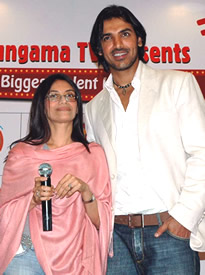
    Hungama TV has recently touched the number two position in the kids' channels space and the channel's chief operating officer Zarina Mehta is in an ecstatic mood. What's more, she is also upbeat about the new talent hunt for kids on the only Indian kids channel beaming in the country.

    The channel has roped in John Abraham for the same and the two kids who win the hunt will get a chance to star opposite the youth icon in a UTV produced movie. This can be termed as a perfect example of synergy between the two brands – UTV and Hungama TV.

    Her enthusiasm and zest for her baby (that's best how Hungama TV can be described) is infectious. In a free wheeling interview with Indiantelevision.com's Hetal Adesara, Mehta talks about the channel's future plans, the kids' space in India and the problems broadcasters are facing due to non implementation of conditional access system (CAS), which will help bring in pay TV revenues.

    Excerpts:

    Hungama TV recently achieved the number two position in the kids' channels space. What has contributed to the growth?
    Overall I think the growth has basically come from excellent distribution for which I have Star TV to thank and my own distribution team headed by Kevin Pereira.

    Secondly, localisation on the marketing and programming front, that has worked on the channel. Whether it is the Hungama Captains' Hunt, which is such a local area that reaches out to the kids directly and pulls them into the channel. They can actually see who is running the channel. Then a show like Hero, which is right now one of our massive driver shows has done really well on the channel so much so that the repeats of the show has got higher ratings that the first time airings.

    The third thing is excellent acquisitions. Doremon is the top rated kids show for the last four – six weeks. This week we got 36 GRPs just from Doremon.

    We did a brand study last year in May because we had a very critical brand problem, which we have now solved. The problem was the logo of the channel with the 'h,' which was perceived as too young. The responses we got from kids about the channel were 'not cool,' 'not for me' or 'my kid sister may watch.'

    The study was done among 2,000 kids and this is when we realised that we had a serious brand problem. So in October 2005, we re-launched with the new logo and in March this year, we changed the entire look and feel of the channel.

    We commissioned the BBC to do design our new on air look but I was very disappointed with what they did. Apart from the new logo with the swirl that they made for us, we re-did the entire on-air look of the channel in-house. This has also helped the channel. Hungama has now become a cool, friendly, fun and Indian channel for kids. The brand perception is shifting now and kids are spending more time on the channel.

    The interesting story about the 141 GRPs that we got a couple of weeks back is that our time spent went up. Hence loyalty and stickiness on the channel are going up, which is very comforting to know.

    How has your role been redefined after becoming COO of Hungama TV? What are the additional responsibilities apart from programming that you are now looking after?
    There are massive additional responsibilities now. Instead of just looking after programming and OAP, I have to look after everything. I am still learning the ropes but so far it has been a good experience.

    I have a great team at Hungama and the people are really passionate about their work. There's Kevin Periera, who is the head of distribution and operations; Siddhartha Roy Kapoor is our group head of marketing who looks after UTV and Hungama TV. Then there is Aparna Bhosle who is vice president programming for the channel, Nilofer Dhund who is vice president sales, Venkatesh G is our head of OAP and Shilpa is the head of research.

    My task is to make sure that the different elements of the channel work powerfully together so that one plus one is eleven, not even four. And that's what I think we are slowly achieving. Marketing, sales, distribution and programming have to work together. We had passionate people before but they were not working together as a team. Now that has changed.

    What are the new shows that you have acquired recently?
    There are three new shows that we have acquired and each one of them is really big. But at this point in time, I cannot talk about it because we haven't yet signed on the dotted line.

    This year, we will be going to Cannes for Mip Junior in October. Last year, we screened each and every show that was there on the market, so now we know the kids' market place.

    What about new local content?
    We have a reality talent hunt show called John Aur Kaun?, which is a magnificent idea. We'll be going across five major cities in search for two kids who will get an opportunity to star in a UTV produced movie starring John Abraham. UTV has signed a two movie deal with John and more than anything else, it is a perfect example of fabulous synergy between UTV and Hungama TV.

    We were thinking of a big idea for Hungama TV and then Siddhartha came up with this one and I immediately lapped it up. My skill is to manage people and recognise a good idea (not necessarily come up with it) and make it happen.

    John has also been roped in as the brand ambassador for the channel. What role is he going to play in this respect?
    John is willing to do the movie with two kids because he recognises how popular he is with the 4 – 14 TG. Then we thought that if we are doing a movie with him; then let's take him on as the channel's brand ambassador. He agreed to that too.

    We are going to figure out ways to synergise the relationship between John and Hungama TV. We are just working all that out and we have at least three innovative ideas but it will take another month or so to finalize the same. When John comes back from his world tour, we will be ready to announce the specifics of what we are doing with him besides John Aur Kaun?

    'I will never ask John to act in 'Hero' or 'Sanya' as it will be a detriment to his brand and also mine'

    Speaking about John, how important do you think is it for a kids channel to have a brand ambassador? If we look at the other channels, Nick had Saif Ali Khan and Animax had Irfan Pathan as brand ambassadors… but nothing much came out of it so to speak…
    Honestly, if I may say, I don't think they used them correctly. I am never going to use John to say – "Watch Hungama TV." I am going to innovate, which is why it has taken me more than seven – eight months to think how exactly to use him in an innovative long term manner, wherein he can bring a long term brand equity to the channel. It is absolutely a no – no that I will ask him to ever act in Hero orSanya. I will never ever do that as I think it is a detriment to his brand and mine because if Hero can't stand on his own two feet then he is not a hero.

    A brand ambassador has to go deeper into the brand and build a meaningful relationship with the kids and I am figuring that out. I will make it work. It cannot be done the way the others did it. Even Sab TV had done it with Karisma Kapoor… it didn't work.

    For my brand it is going to be a deeper connection with the kids. How? I can't answer that right now. The channel will be a medium for kids to connect with John. In no way should either of the brands be diluted by this association… especially his brand.

    Are there any other new local shows apart from this talent hunt that in the pipeline?
    We are doing a whole new series of Hero, which will be launched in June. We have a fantastic new story written by Aarif Ali and I'm sure kids will love it.

    I am also planning a new series of Sanya. Moreover, I think it has a good merchandising and licensing opportunities. All the merchandising and licensing that is happening currently is all international stuff. I want to break to that and I also want Hero and Sanya to become licensing and merchandising powerhouses.

    It's going to take the earth and the moon to do it because somehow Indians tend to buy foreign things, which is sad but true. So we need to break that but I'm going to try.

    So will we be seeing a separate division for licensing and merchandising?
    I must admit that this is one thing where we are nowhere near our competition. However, having said that, we have licensed Yu Gi Oh!with the Pepsi taazzos and it is doing quite well.

    Funnily enough, the very first merchandising property in the kids' space was the Shakalaka Boom Boom pencil and they were a runaway success (except that they got pirated since they were cheap and easy to copy).

    We are lacking there but we are looking at it seriously now. It is going to be quite some time before we actually start making money there or even giving Cartoon Network and Disney any competition there but it will be a beginning.

    There are seven kids channel in the country at present. Together, how much have they managed to grow the market?
    From January 2005 to mid April 2005, there were a total of seven kids' channels, which together contributed 300 GRPs. Compare that to the same time period this year (2006) and the number of channels are the same but the GRPs have climbed up to 500. It's a fantastic, unbelievable and sensational growth.

    I have to compliment my competition as well as us, because together we are driving value to the kids' space. There are a lot of things that we are competing for but there are certain things that we need to do together. We need to change the perception of advertisers towards the kids' space. We have to make them understand that the current big thing that is growing today is the kids' space and everything else is declining. I really believe that 2006 – 2007 is the year of the kids' channels. For me, I value my competition because if they weren't there I would be lazy and bored. I actually want my competition to work because then the space works and it is important for the space to work.

    Overall, the key is to drive our effective rates (ER) up from the current abysmal rates that we have. We should stop selling at low rates because we are worth much more. Even with the cable operators, we should use our clout together. These are the things we should do together. At the same time there is no denying that there is a huge sense of competitiveness amongst Cartoon Network, Disney and Hungama TV. This hots up the space and makes it that much more exciting. No media planner or buyer can ignore us… they may not give us the ERs that we deserve but it is moving in the right direction.

    Programming-wise, what do you think is the way forward for kids' channels – live action or animation?
    It has to be a mix of the two. Originally produced live action is great but we have to admit that it is very expensive. I cannot afford to have more than two or three originally produced live action shows on my channel. I think the rest of the channel has to be filled with acquisition – whether it is live action or animation.

    That is the best way to go. I am very happy with the balance we have currently on Hungama TV.

    Are there any new distribution platforms that you are looking at for your content?
    We were the first to go on the mobile with our Hungaming channel. We launched it in October. Sadly we didn't make a noise about it.

    Kids can download and play the Gol Gol Ghulam and Full Toss games. Also in the pipeline is the Hero game, which is currently being developed. This has been done in association with Indiagames.

    What is the latest on the deal with Sun TV for the two regional kids' channels?
    No comments.

    A couple of years back; at the Ficci Frames seminar you had mentioned that by 2010, we will have 20 kids' channels in India. How realistic does that figure look to you today?
    I still think so. As far as I am concerned, we already have plans to launch two more channels and we definitely need to grow the pie.

    The only thing that is stopping us is the state of cable in the country. Pay TV revenues have to kick in and viewers have to pay for what they get. They cannot keep expecting free stuff as it is not fair to the broadcasters, cable operators or anybody who is running a business. Why should a consumer get it free? It doesn't make sense to me.

    In the market the prices of everything keeps going up but our prices keep going down. Why should it be like that? The government also has to take a hard stand on this. Basically what they are doing is that they are not allowing the market to open. When pay TV kicks in the market will boom again. By not implementing CAS they are actually depressing the growth of the market.

    But do you think CAS will be implemented considering its history in the country?
    I don't know. It is so sad that it is not happening because it is the only way to implement a pay model. And then the other thing is DTH and we are all hoping that DTH will work.

    We have 65 million cable and satellite (C&S) homes and the reporting is a meager five million homes. This is utter nonsense and this is only because viewers are not paying. Cable operators may be underreporting but viewers are actually not paying.

    Let DTH come in and reach that five million homes; I will switch off cable and go to DTH because I need to earn. The fact is that we are spending a lot of money. I don't think any of the broadcasters are profitable as yet. There are a lot of issues that need to be sorted out. But India is the best place to be in and it is the best kids' market in the world. Only if the pay model comes into place, I wouldn't even think twice about launching two or even four more channels.

  • ‘Organising a fashion event is a question of management – order, discipline, logistics, delivery’ : Simon Lock

    ‘Organising a fashion event is a question of management – order, discipline, logistics, delivery’ : Simon Lock

    IMG Fashion Asia Pacific MD Simon P Lock, the man who thrust Australian fashion onto the world stage, is in town for the Lakme Fashion Week, which kicks off tomorrow in Mumbai and runs till 1 April 2006.

    Lock, the founder and former CEO of Fashion Innovators (AFI), as too the region’s premier fashion event, Mercedes Australian Fashion Week, took over as head of IMG Fashion AsiaPac after his company was bought out by IMG in October 2005. The acquisition by IMG also included the management and production of the Mercedes-Benz Start Up program in Australia and New Zealand, the Mercedes-Benz Asia Fashion Award program that is currently held in six countries throughout Asia, the Singapore Fashion Festival and other fashion events around the Asia Pacific region in development, including events in India, China and Japan.

    Indiantelevision.com’s Ashwin Pinto caught up with Lock to find out more about IMG Fashion and its plans.


    How has IMG expanded its presence in the fashion world in the past five years?
    Quite significantly! Here in the Asia Pacific they acquired my company in Australia AFI which produces the Mercedes Fashion Week in Sydney. It also produces the Singapore Fashion Festival. So that has become a part of IMG Fashion family. In India we have the Lakme Fashion Week. New fashion weeks have started in many cities including Los Angeles and Miami. IMG Fashion is also involved closely with a number of Fashion Weeks in Europe.


    Anything else?
    IMG Fashion also has IMG Models. I am involved with developing that sphere as well and we are doing a lot of work in the Asia Pacific region. IMG Models represents some of the leading models in the world. They include Kate Moss, Heidi Klum and Giselle Bundchen. My role is to look for opportunities for those girls in Asian markets. My job is also to spot new talent who can become a part of the IMG fold globally.


    In what way has the business model evolved along with the industry?
    The business model of IMG Fashion is primarily based on the ownership and the development of fashion events. They can be trade events for the industry or events for the public who are fans of fashion. The revenue model revolves around contributions fro m designers to participate in these events and also sponsorship to drive the events.


    How difficult is it to find sponsorship?
    It is always a challenge. You are competing with other parts of the marketing spend. This is the advertising spend, public relations spend. IMG has vast opportunities because it has such good significant properties around the world.

    So if you are an international brand like Lakme or Olympus or Mercedes Benz and looking to create an association with the fashion industry and therefore reach consumers then IMG Fashion can be a valuable partner for you.


    How has the takeover of the takeover of IMG by investment company Forstmann Little & Co impacted the company?
    It has added value to both management and the operational structure. Forstmann has great vision which they have been able to transfer into the development of IMG Fashion. They are bringing in some new things like a focus on the internet and new media.

     
    We are seeing designers images going up on the Internet straight away and retailers copying them. Many designers are considering pulling out of online galleries
     

    How is IMG Fashion looking to leverage the Internet and new media?
    New York is the best example of what we are looking to do. Recently we created a partnership with Microsoft and Sprint to deliver fashion show content online.

    This is the first time it has been done live anywhere in the world. It was successful. The site imgfashionworld.com started to rank alongside other great event sites around the world like Wimbledon, US Open. It is a win win value proposition and allows us another window to showcase our collection.


    Is the mobile also an opportunity?
    Definitely. We are in discussion with a lot of operators. With the advent of 3G and mobile, TV people are coming to grips with what the consumer wants. Do they want five minutes edited highlights of fashion shows? Do they want to be able to see what is happening backstage? Do they want critiques? Do I want to watch it while traveling on a bus or while I am at work?

    As consumers we do not know what we want out of this new media. But IMG Fashion is well positioned to deliver the content in whatever manner it suits the consumer. It is a question how we apply content to the medium.


    How important a market is India for IMG from the fashion side compared to other Asian countries?
    It is significant and we have been here for six years already. India has a vibrant fashion industry that we are partners with. India has a huge growing consumer population. They are getting more involved with fashion.


    Could you talk about some of the learnings from other countries that you have applied for the Indian market?
    Lots! I have been running fashion Weeks for 10-12 years. We bring 20 years of running them and it benefits India. There is a lot of detail, procedure, information.


    What are the ways in which IMG is leveraging the synergies between fashion and the worlds of music and entertainment?
    We did an innovation recently in Singapore. This was a collaboration with MTV. We produced a special MTV Fashionably Loud. This the epitomy of live music rock concert married to a fashion show and developed into a brilliant television programme which will air across Asia, including India, on 9 April 2006.

    It stars top designers like John Paul Gautier, Gucci, Prada. We have an indirect relationship with the film world. Many designers who participate in our fashion Weeks dress film celebrities.

     
    The overall challenge is in fighting for the consumer dollar against different industries like cosmetics, entertainment, food etc
     

    What role do major events like the Oscar Awards play in increasing synergy between the world’s of entertainment and fashion?
    The first hour of a major film programme, whether it is the Oscar Awards, the Golden Globes, the Baftas, focus on what people are wearing. On the red carpet the interviewers are more interested in the outfits than on the films. This is a huge opportunity for designers to get noticed in a way that otherwise would not be possible.

    The downside is that some of the mystique is lost when viewers find out that the dress is being returned tomorrow along with the jewelry. This is something though that the industry has to learn to live with.

    When you have a celebrity for a fashion event the danger is that he/she might have their own aims. This need not be promoting their designers. When the relationship works well in terms of the celebrity talking about the designer and vice versa. It needs to be balanced though. A personal connection helps when a celebrity likes to wear a particular designers clothes, as it looks good on them. It does not always happen though.


    Could you talk about how IMG increases the brand equity of a fashion event through its expertise?
    We have a series of production partners who help us produce events. We have contractors around the world. IMG Fashion also has experienced executives who help manage sponsorships, marketing and bringing in international buyers and producing events. It helps create better outcomes for the participants. Designers will sell more clothes and the media coverage for Lakme Fashion Week will grow exponentially.

    So they know that the return on investment is strong. At the end of the day we bring measurable outcomes to participants. Without commercial outcomes we cannot commercially substantiate our involvement or their involvement.

    Our aim is never to create a homogenous Fashion Week circuit. In New York it has its own style and personality of showcasing sports wear. Los Angeles, Mumbai, Sydney are also distinctive. The inherent nature of the industry allows each event to be different. Indian designers have a certain, style, feel and way of doing business. We have no intention of taking this spirit away. We want to embrace and enhance that spirit. Lakme fashion Week has sense of community and that is the spirit.

     
    What is the main difference between organising a fashion event and a sports event?
    The basic principles are the same. You need organisational skills for both. However, a specific expertise a required to run fashion events. This means that you have to understand the industry. Organising a fashion event is a question of management – order, discipline, logistics, delivery.
     

    What are the ways in which IMG meets these challenges?
    It is about having a plan that will offer a successful outcome. You need to be very structured and focussed. You need great creativity and logistical execution. You need to balance both.

    There is no point in having a creative Fashion Week if the sets fall down. If it is not run on time or the media is not getting what is going on, then the event will be affected.


    Are you satisfied with how television channels cover the fashion industry or do you feel that there is a need for greater in-depth coverage? What I am trying to get at is that the genuine understanding of the fashion business is very low in India among journalists in particular and the media in general.
    It is a good point. Designers need to be more prepared to deal with the media. They need to be more educated. The media needs to understand the subject matter and then put it in an international context.

    If an Indian designer comes out tomorrow on the catwalk with a Gucci rip off then the journalist must be able to spot it. That is your responsibility to the consumer.

    To do that you have to take your journalism and research equity very seriously. We need to see more of that in India. What ultimately works is mutual respect between the two parties.

     
    On its part what efforts is IMG taking to make its fashion events more TV friendly?
    We have excellent lighting and sound. So the quality that we can get out of our events is good. We have great partnerships like with Zee here. We also did one with Microsoft in the US. IMG owns one of the largest television production companies in the world -TWI. So we have a lot of experience in this area.
     

    In India one problem that the fashion industry commonly faces is charges of copying of designs. What in your view is the solution and is this problem faced in other countries?
    This problem is faced everywhere. We are seeing it now with designers images going up on the Internet straight away and retailers copying them. Many designers are considering pulling out of online galleries. I am not sure of what the solution is to this problem.

    The overall challenge is in fighting for the consumer dollar against different industries like cosmetics, entertainment, food etc. Hopefully we will get our fair share and this can be done by providing people with the right products.

     
    Could you talk about IMG’s expansion plans globally on the fashion side?
    We have development plans for new events across the Asia Pacific region. We can talk about this when the time is right.
     

    What are the plans that IMG has for India going forward?
    The way forward is to grow and develop the Lakme Fashion Week. You grow it by getting more buyers and more media to attend. They write for more orders, the designers get bigger. Both parties come back. It is cyclic.

    The event has to be of a high quality so that designers want to participate. So content has to grow.

    Then again there is no good having great content if you do not tell people about it. Our job is to tell people globally what is going on here.

  • ‘We expect our involvement with cricket to improve our market impact by 25-30 per cent’ : Sandeep Tiwari – LG Electronics India marketing head

    ‘We expect our involvement with cricket to improve our market impact by 25-30 per cent’ : Sandeep Tiwari – LG Electronics India marketing head

    Having been in the country for nine years now LG Electornics is for the first time using a Bollywood star as its brand ambassador. It has signed on bollywood actor Abhishek Bachchan to endorse its line of consumer durables like refrigerators, air conditioners. The aim is to connect better with women. This year the company is targeting a turnover of Rs 90 billion.


    Indiantelevision.com‘s Ashwin Pinto caught up with LG Electronics India marketing head Sandeep Tiwari on the sidelines of a media briefing.


    Excerpts:

    With the signing of Abhishek, LG is changing its strategy by moving away from relying only on cricket. What prompted this?

    I won’t say that our strategy has changed. It has been enhanced. Quite a few people expect us to exit cricket. That is not the case. We realise though that two growth engines as far as the advertising fraternity is concerned will work. One is all around cricket and the stars. The other will revolve around entertainment.


    We are going with a double engine effect. Cricket delivers numbers and reaches masses. It however alienates women. It does not address that gender with the same amount of passion. Cricket is better for a consumer electronics television oriented effort for the male audience. It also partially delivers in the air conditioner category as men to some extent make decisions for this product. But when it comes to pushing mobile phones, washing machines, microwave ovens, refrigerators it does not deliver the full impact.


    We will be launching a mobile phone campaign later on. That TG is very young from the late teens. Our brand has to become younger, their generation brand. We do not want to become a brand that is for an older generation just because we have been around for several years. We have learnt from what Coke, Pepsi have done over the years to remain young. This will helps us address all sections of consumers. We want to become a consolidated consumer driven brand that also encompasses mobile and IT.

    Could you talk about LG’s brand positioning in the market and how it allows for differentiation?

    We are differentiated from the Indian and foreign brands. LG does not get classified as either. It is easy for Indians to relate to it. The brand has a multinational lineage while delivering what Indians require. We don’t show any foreign ads.


    Our communication language is not that of a foreigner. Emotions work a lot in India. The warmth and affection that a brand showers upon its target audience will be reciprocated. A brand may be ranked higher but if it is not relatable then it will not do well.

    Has this positioning been tweaked in any way recently?

    I would not say so. In 1997 we were represented in high end markets. We were niche. Today we sell different TV sets, refrigerators. We don’t just have SEC A+ 35+. Our target is total. So our communication must address everybody. You cannot have one for the higher end and another for the lower end.


    That is what we are looking to achieve with a celebrity. The sheer rub off of that celebrity will draw in masses for a high end product. It connects mind to mind. This is where a Saurav Ganguly works.


    This is also what Abhishek Bachchan will do for us. Even in Allahabad, Benares it will work. At the same time we do not use a celebrity for everything. For television sets our positioning has been around the eyes. We used an average child.


    Conventional wisdom says that television watching is bad as it causes strain. Our communication showed that with LG’s eye technology it is not harmful. The position was very different in that we showed that it will give the child a world of knowledge. The child plays a crucial role in terms of buying a TV set. We looked at the TV as being an infotainment medium and not entertainment.

    Speaking of television what are the plans in the television manufacturing area and how challenging are price points as in consumers waiting for prices to fall and then buying TV sets?

    In this area we are targeting a 100 per cent growth for flat panel displays year on year in terms of the number of units sold.


    It is going to be interesting to see how we fare with little penetration of plasma sets and high acceptability of that category. People want a TV that can be hung from the ceiling or mounted on a wall. The big size experience at home is an aspirational product.


    As far as pricing points are concerned I will give the example of mobile phones. Though prices will fall nobody waits. People cannot wait to upgrade and change. People accept that gadgets will not last a lifetime. They want what is the best option as long as the brand is delivering what it promises.


    The consumer has become more experimental in nature. 35-37 per cent of revenue comes from television. Electronics along with IT contribute around 48 per cent of our revenues. Appliances contribute around 36 per cent.


    In 1997 when we started our group turnover was Rs 125 crores (Rs 1.25 billion). In 1999 we crossed Rs 1000 crores. Last year it was Rs 7500 crores. We are looking to touch Rs 9000 crores this year.

    What is a more powerful platform – Bollywood or cricket?

    They complement each other. No brand in our position can afford to ignore one or the other. The cricketing calendar is limited. We take the time for which they are played. For a lot of the months we cannot device our season vis-a-vis the cricket calendar.


    But with a film star we can plan better. A cricketer is only relevant when a game is being played. His performance affects how a brand that uses him is perceived to an extent.


    Brands go through highs and lows. When a cricketer fails the public reacts badly to the ad featuring the cricketer. A Bollywood campaign though cannot only be attributed to the star involved. Actors do not always play themselves. They show more versatility in negative, positive roles. It offers a wider spectrum.

    ‘The 1999 World Cup in England was our first mass awareness programme right from our carton boxes to communication. It became known to everyone

    In what way has the brand communication for home appliances evolved and why choose Abhishek?

    Till now the home appliances communication platform had the health message. Today that platform is being adopted by a lot of me too brands.


    We felt that we therefore needed to break way from that by graduating to a Health Plus objective. From here came the idea of Intello. This means that the products are technologically intelligent and futuristic.


    We want to position the brand as being young, vibrant and premium. So we picked Abhishek as he portrays Indian values. He also exudes an aura of aristocracy.


    The signing of Abhishek marks the start of the second phase of our marketing strategy in India. It is the marketing of a leader phase.

    Which are your key products that will be given a marketing thrust this year?

    Mobile phones are key for us this year. Flat panel displays are also important. Laptops will be third in importance but from the long term point of view as in 2010 laptops will be second.


    ACs have experienced good growth and the market shares are high. The aim is to sustain AC growth.

    To what extent is the marketing budget going to rise this year? How much of this will go towards television?

    The marketing budget will increase marginally compared to last year apart from cricket due to the Champions Trophy.


    We expect our involvement with cricket to improve our market impact by 25-30 per cent. Media advertising constitutes 40 per cent of the marketing spend. Out of that 40 per cent is spent on television and print.

    Does LG feel that there is scope for using television in a more interactive manner to reach consumers? By interactive I mean engaging the audiences in a more active manner.

    This is going to be very important. Using a celebrity is a classical way to approach that. If you could increase market share by simply putting ads then there would be no need for marketing professionals.


    Wittiness and innovation play a crucial role in breaking the clutter. It is not money versus money. It is not a question of Rs 250 crores versus Rs 280 crores. The content of communication and synergies created are what the focus should be on.

    LG is one of the ICC’s official partners. How has this benefited the brand over the years?

    When we associated with them in 1999 it was a big transitional phase. This was because it was our first attempt at national penetration and visibility. From 1997 till 1999 we did not have any television commercials. We were not represented among the masses in a true sense. We were just represented in towns through hoardings, newspapers.


    The 1999 World Cup in England was our first mass awareness programme right from our carton boxes to communication. It became known to everyone. Subsequently the two Champions Trophies and the 2003 World Cup became a mainstay in our efforts to build the brand.


    The ICC association has given us the stature of a mammoth brand. This would not have been possible through regular communication. The ICC association is more to do with the LG logo as a whole rather than with simply different parts of the company like a fridge or an AC. No other medium would have given us that.

    The pre purchase and post purchase experience are important towards enhancing brand value. In the long term word of mouth publicity is key

    How is LG looking to leverage the Champions Trophy which will be held in India?

    What is interesting is that it is coinciding with Diwali. It will be from the second week of October to the second week of November. Diwali falls somewhere in between. We have to figure out how the two communications of Diwali and cricket can work together.


    There will be two objectives to be achieved simultaneously. Can they be jelled to leverage the best out of the two? This is one of our biggest marketing challenges of the year.

    LG and the other ICC partners met recently. What transpired?

    There are two huge events coming up. It certainly required some getting together to figure how to leverage that.


    LG, Hutch, Hero Honda and Pepsi met with the ICC to discuss how we can work together to maximise opportunities.


    These are four large brands that do not compete or fight with each other. We discussed avenues that can be worked on together. How successful this is time will tell.

    Are below the line activities and promotions growing in importance for the brand?

    Significantly. 60 per cent of our budget is spent on these kinds of activities. It is crucial because no technology will work well until it is explained to the customer. At the ground level the product must be on display. The experience that a customer goes through on ground is equally important as using mass media.


    The pre purchase and post purchase experience are important towards enhancing brand value. In the long term word of mouth publicity is key. We have around 1,150 in shop demonstrators and 1,000 counters across the country. This is a force and manpower that no other competing brand has. Exhibitions play a significant role across the country. The portfolio that we have cannot be addressed with just one showroom.


    One showroom can only accommodate 30 per cent of our product line. Exhibitions give us the opportunity to display more products and do something meaningful. We concentrate on training our sales people and upgrading their sales skills.


    Mobile vans and road shows will play a crucial role going forward. We are also using malls as a place for display as a lot of people visit them. In-house demonstrations of products after purchase are another area of focus. Cookery classes for our microwave ovens tells the customer that LG does not just sell microwaves. It is also teaching him how to cook.


    Ladies come to learn cooking and they also learn about the other products available from the range. This activity will be strengthened over the years as India cannot be addressed by only going to 10 or 20 towns. The major growth will have in those middle markets.

    As a marketing tool what potential do you feel the mobile has?

    All our portfolio except for laptops and mobiles are in house. You can only see someone else’s Airconditioner by going to their living room. They remain inside. A mobile phone is flashed around as a personality trait. If you sell a LG phone to a school or college student you are preparing him/her to be a future LG television, washing machine, refrigerator customer.


    So we are catching them young. The mobile phone in the future will be the first entry product into the customers home. After that will come television sets and washing machines.


    It becomes a brand that a person is proud of. However we are staying away from SMS and MMS communication activities on ethical grounds.

    Are you happy with how global sports organisers have combated the threat of ambush marketing?

    I do not think that it is a very big issue. There are enough marketing opportunities for everyone.


    I do not think that media alienation for a certain period of time makes a big difference.

    There are lots of major sporting events this year. So how is LG splitting up its ad spend?

    We are staying away from cricket apart from the Champions Trophy.


    Every brand has limited resources and cricket is no longer an inexpensive proposition. Conserving of resources for better utilisation is what optimisation is all about. We will be doing activities around the Fifa World Cup though.


    We are yet to roll out ideas at the storyboard level. This activity will be in select markets like Goa, West Bengal.

    How do you work with your creative agencies?

    It is a partnership right from the concept generation level to how it shapes out to seeing it delivered to the marketplace. We even address the media together.


    The competitive business environment leaves little room for chance. It has to be a team effort.

  • ‘With all the new delivery platforms, we are at the doorstep of a very interesting phase’ : Pradeep Hejmadi – Tam Media Research vice president

    ‘With all the new delivery platforms, we are at the doorstep of a very interesting phase’ : Pradeep Hejmadi – Tam Media Research vice president

    He has been associated with a wide variety of assignments in the domain of media planning and broadcast management. Now he’s buried into hardcore research.


    It’s been just over six months since Tam Media Research vice president Pradeep Hejmadi joined the company and when we mention that to him, he seems shocked at how time has flown.


    His last assignment was with the kids’ channel Nick. His experience traverses through various media organisations like Turner International, Discovery India, HTA and The Times of India.


    Speaking to Indiantelevision.com’s Hetal Adesara Hejmadi dwells on the various issues that concern the television industry today and also on the exciting phase that it entering.


    Excerpts:

    It’s been just over six months since you joined Tam, how has the journey been so far and what was the mandate given to you when you joined?

    The journey has obviously only begun but it’s been good fun. Being on the broadcast side, you see one view of the world. There I was doing a whole host of stuff that is quite different from what I’m doing here. So from that point of view it is a refreshing change to come to audience research and to help people to converse with data.


    In terms of mandate, the idea was simply to focus on two areas: one is on the needs of the broadcasters and to keep the system abreast in terms of the areas that are emerging as interest areas for the industry per se.


    The other mandate is to get people to make decisions on the basis of the information that they have. Some people tend to have a biased approach towards numbers as research sounds like such a difficult animal to manage and tame. Our focus has been to try and make sure that people are able to read audience behaviour and act on it. And hopefully start seeing some response on the basis of what they are doing so that they can get far more structured in the way they go about their businesses.


    The environment is pretty crazy as we are operating in a very heterogeneous market and it is not easy to use any information and just act on it. Many a times the devil is in the details so our focus is really to find that devil and help people tame it.

    Can you throw light on the new initiatives that Tam is or will be undertaking and in which areas?

    Not too much of what we do is an industry secret, so I’m sure that you know pretty much everything. The Elite panel is something that is going to be launched and the current panel expansion is also underway. The panel expansion is a nine month process that we started in the beginning of this year. By the fourth quarter of this financial year, we should be ready. We have consulted the industry and many people have told us not to make a mid-year change in the measurement science. So after consensus from the industry, we are looking at January 2007 to switch to the new universe.

    What about the launch of the Elite panel and what according to you will be the data thrown by it in terms of viewership patterns? How much of importance will it hold in the coming days in terms of tracking viewership?

    The Elite panel will be up by July this year.


    The way that we have crafted the panel has not been to bring out any nuance but to focus on a segment. Everyone wanted to have an audience profile, which is the top end of our entire market structure. So in Mumbai and Delhi, we are now going to have a panel, which will represent the behaviour of the top three or four per cent of the population.


    Our focus has been to use all the quantitative data that we can get and construct that profile in such a manner that it robustly segments the elite from the national panel. Again we have a whole set of variables through which we have been successful in bringing that point out.


    In terms of behaviour, once the panel is up people will see what happens. There are a lot of myths and that is a constant in any industry. But once the panel is up people will be able to see the reality as it is.


    Obviously, given that the elite are the top three or four per cent of the population will have a different lifestyle and it will reflect in their media consumption as well. Right now we don’t have the panel up so I can’t even force a guess as to what the panel will throw up. But it should be very interesting and the industry is very keen on getting that kind of information.

    Which are the broadcasters who are specifically interested in the elite panel?

    Surprisingly, all the broadcasters are interested. For the Hindi general entertainment channels, the aim is to talk to everybody and they don’t want to exclude the elite. English entertainment channels are also very keen because they feel that the core component of their viewership is the elite. But a lot of these feelings and aspirations that broadcasters have at present are driven by perception. But as the data comes out we will be able to find out the reality.


    A few of the things that we have seen is that for the elite the segmenting elements in terms of defining them differ by market. For example, in Delhi, the definition for elite was a much trickier one than it was for Mumbai. But now for both the markets we have been able to arrive at variables that describe that segment very well.

    ‘In the digital age, numbers will keep rapidly changing so we needed to find ways of being able to pull out from a large sample a very robust estimate of DTH penetration as it stands’

    So the elite panel will be only in Delhi and Mumbai?

    Currently we are looking at only these two cities for the elite panel.

    With new delivery platforms like IPTV and mobile TV coming in this year and also keeping in mind the new DTH platforms launching, is Tam undertaking any research in these areas?

    We have just done a penetration study, which has brought out estimates of what the DTH number is for households, the small number of the addressable conditional access boxes that are there and also what the current incumbent players have in terms of market share.


    Those numbers are already in place. The fact is that in the digital age, numbers will keep rapidly changing so we needed to find ways of being able to pull out from a large sample a very robust estimate of DTH penetration as it stands. The large sample needs to be touched, collected and reported in a very short period of time. We were able crack that by using the IMRB household panel, which has shown very interesting numbers. As things pan out, we will be working towards getting the universe estimates updated more frequently. We will also be able to understand the rollout of this phenomenon in different markets in a very different manner.

    Is this a difference of viewership of people watching DTH and those watching C&S?

    At the moment we don’t know because we are not measuring DTH. To us the mandate from the industry was to measure any phenomenon which had a market share of five per cent and above. If any phenomenon was below five per cent of a market then there is no point in measuring that.


    So from our point of view we have been doing establishment surveys to measure a phenomenon. So if CAS or DTH becomes five per cent of the market then we will have to report on it.

    So are you saying that DD Direct and Dish TV DTH subscribers do not add up to five per cent of the market?

    No it is not five per cent of an individual market.

    Once Tata Sky and Reliance launch their DTH, will Tam begin measuring viewership on DTH?

    Once DTH arrives and reaches a five per cent critical mass, we will begin measuring it. Now whether it is pre or post the launch of Tata Sky DTH is immaterial.

    If you get 300 channels as against 100, will you watch three times the TV? It will be interesting to find out

    What will be the difference in the backend infrastructure for measuring DTH?

    There will be a difference because these signals are digital. Currently, primarily because the market is analog is nature, we had meters which worked on analog. Now we’ve brought in state-of-the-art TVM5 meters which can measure DTH and any digital and IPTV signals. These are the meters that we will be deploying for measuring viewership on DTH.


    So the elite panel will be on TVM5 meters and also all the metros will be moving to TVM5 meters.

    What according to you is going to be the impact on programming content after the launch of these new platforms?

    This is a very interesting question you raised. There is one aspect of what DTH providers will do to justify a person to shift from cable to DTH. And there is another part of the picture, which is what the consumer will do once the new DTH platforms are launched.


    DTH platform players have already realized that to drive people to take a box or dish and to go through the motion of having a one on one relationship with the service provider, they will have to add some value over the basic tier. So from their point of view, they are trying to build and aggregate as much content and provide as much variety as possible. Whether consumers will watch or not, we will know once we know what content has been aggregated.


    It will be a game of wait and watch to find out whether tastes will change. But the fact is that tastes changed when we shifted from terrestrial to cable and satellite. So going by that, tastes should change with DTH coming in but how much and by what measure will have to be seen.


    Obviously some rules of the game will change. For instance, currently distribution does play a very critical role. At that time, the kind of TV sets will not matter because all these households will be remote households by default because they will switch channels off the set top box (STB). All of these households will get all the channels on the STBs provided they pay for them. So it will become television neutral and also cable bandwidth neutral.


    In one sense it becomes a level playing field across consumers. Now if you get 300 channels as against 100, will you watch three times the TV? It will be interesting to find out. I have a feeling that over a period of time people and their tastes change. So you will see a change in behaviour but over what period of time and will it be an easy or painful switch-over will be ascertained by various constituents.


    From our perspective, we need to have measurement that is representative and precise. We need to have people understanding what is coming out of this system so that they can then funnel it back.


    We are actually at the doorstep of a very interesting phase. In six to eight months’ time we will start seeing some things changing.

    What are your views on conditional access system (CAS)? How is it going to impact the industry if and when it comes into place?

    From a long term perspective it is obviously good for the industry. Nothing happens very easily. We know the resistance to change that we as human being have. On CAS it has got into a kind of a mess and has had a bad history. It also got much politicized and hence because of that and a whole host of things, it has made life difficult for CAS.


    But I think once DTH rolls out and channels announce their pricing for DTH, it will help CAS. It is very good that we have a body like the Telecom Regulatory Authority of India (Trai), which has put in certain norms to help platforms iron themselves out. So in their regulation the ‘must provide’ clause has been put in and pricing parity has been brought in so that channels can’t have different pricing for different platforms. This will help CAS and DTH.


    Intrinsically there are some issues with CAS. One of them is inter-operatibility. As far as CAS is concerned, if you stay in Chembur and then move to Churchgate, you might not be able to use the same box. Whereas this problem does not arise in DTH.


    In Chennai, for example CAS did not fly because the tastes of that market is very different. Also the popular regional channels are all free to air. So the number of people who were ready to pay for that box was very small. But in a lot of other markets, most of the Hindi entertainment channels are all pay. As long as they don’t buckle because of advertising revenue pressures and stay pay, they could fuel growth of CAS.

    Tam has been tracking viewership in Chennai, where CAS has been implemented. What have been the learnings from there?

    CAS penetration is very low in Chennai. The pricing is very exorbitant. For instance, initially, the channels that were on STBs and were of interest to the mass population were kids channels and English entertainment channels. If you added up all those channels on an a la carte rate, the cost of the box was four times the cost of annual subscription for these channels. Now that’s prohibitively expensive.


    In that market, it was a first launch, so it is understandable if Sumangali might have adopted the strategy of not wanting to price it down that much. But obviously the value proposition was not that compelling. This is not the case with a lot of northern and western markets. In these markets a lot of Hindi content is pay, which has appeal. Therefore it might drive the box much faster than it did in Chennai. So Chennai is really an exception.

    Going forward, what according to you are the issues that broadcasters will face in the coming years with new technologies launching? Do you have any words of caution for them?

    I don’t have any word of caution for them mainly because of one reason – I don’t see any threat, I only see an opportunity in the way things are happening. Consumers have consumed channels for a while and they like the programming they watch. The positive thing that is happening now is that a broadcaster is seeing an opportunity in a disguised form of various distribution routes.


    If broadcasters see that as an opportunity and seize it, it might be a lot more good news for them than what it seems to be, with certain reservations. If you get your pricing right; if you make sure that as a broadcaster you are not biased towards a distribution platform, it is only going to be better because there are issues with the kind of TVs in a household and in what kind of analog frequency band is there with cable. Plus there are issues with the number of people you can serve with one cable system. All of these will cease to exist with DTH.


    A consumer will start making a choice and give their preferences, whereas broadcasters will be able to solidify the product over a period of time. So that revenue line will become a far more solid line.


    Obviously, there will be a painful and uncertain phase but that is there everywhere. People will have to learn to deal with it but it will take a slightly longer time. Consultation can work much better than confrontation in many a situation. At this stage people in the industry need to communicate more effectively… forget strategy and that’s what will help them.

    Do you see any other major event impacting the television industry this year?

    If I say yes, I might be wrong. If I say no, I might be wrong too. I really don’t know. I think the days ahead are going to be fun as all the different genres are reinventing themselves in order to get a lion’s share, whether it is music, kids, regional or Hindi general entertainment channels, all of them are rethinking their approach.


    I don’t know what else will be big this year, but religious channels are catching up big time. Sports is going through the roof in terms of the number of events. With so much of cricket, I’m not sure whether it will have that novelty value. It will have mass appeal but whether all masses will run for it will be worth watching.

    What are the genres that will work this year? Will reality shows still rule the roost?

    Reality is a very broad term, it’s like saying – serials, which brings everything under one category. But within reality we have seen only a few things happening. Reality has its pluses and minuses, you can’t overdo reality and start running it like a soap as it tends to become boring. It needs to have that ‘Wow’ factor.


    Also notable is the fact that unfortunately all the sequels of reality have not done that well. So it also tells you something about such programming. But there is a growing appetite for it from the consumers’ side. So from that point of view it will stay… in what form and format, we will have to see.


    If you see the number of people going to Mipcom from India, you know that reality is not going anywhere. Over a period of time things will start ironing out in the reality genre.


    In reality a unique concept, which is executed well gets you walk-ins faster than a soap. For anybody who wants a shot in the arm, reality is the quick fix solution. But then, they need to have a solid strategy to retain that new audience and capitalise on it.

  • ‘We are targeting a 50% growth in 2006-07 on the back of the Fifa World Cup’ : Sricharan Iyengar – ESPN Software India Ltd vice president sales and marketing

    ‘We are targeting a 50% growth in 2006-07 on the back of the Fifa World Cup’ : Sricharan Iyengar – ESPN Software India Ltd vice president sales and marketing

    ESPN Star Sports (ESS), a monopoly in satellite sports broadcasting for years, has found challengers like Ten Sports, Max and Zee Sports with cricket content being fragmented. The latest thorn in the playing field is Harish Thawani who walked away with the coveted four-year India cricket rights from BCCI (Board of Control for Cricket in India) for a humungous $612 million.


    For ESPN and Star Sports, the running in the current fiscal has been particularly tough. India-Zimbabwe series was the only India-playing cricket property ESS had. Market observers say subscription revenues from cable TV have seen a substantial dip, with various estimates putting the fall in the region between Rs 1.3 billion to Rs 1.7 billion.


    But ESPN Software India Pvt Ltd vice-president, sales and marketing Sricharan Iyengar has strongly dismissed these as “baseless rumours” in the market. According to him, the two sports channels have become strong brands which consumers want because of their all-round sports content. The company has managed to sustain its subscription revenues from cable TV operators, he says. Besides, direct-to-home (DTH) has thrown up an added opportunity even as Dish TV has managed to gather close to one million subscribers.


    In an interview with Indiantelevision.com’s Sibabrata Das, Iyengar talks about the important properties that ESS has for the next two years including the Fifa football World Cup. Responsible for overseeing the marketing and distribution functions of ESPN and Star Sports across South Asia, he says ESS has a target of 50 per cent growth in revenues for the 2006-07 fiscal. He also elaborates on how ESS has created a wholesome sports network while pursuing with aggressive buying of cricket rights.


    Excerpts.

    Having lost sizeable amount of India-playing cricket, has ESPN Star Sports (ESS) entered into a phase of de-growth in subscription revenues?


    We have been able to sustain our revenues in the current fiscal (ended June, 2006) on the back of other sports like football and hockey. We have achieved this despite the absence of key driver programming. The only India-playing cricket property we had was the India-Zimbabwe series, but we had to share it with Doordarshan. This shows that the ESS brand stands for delivering all-round sports. And it is this that makes us optimistic about the future.

    Does this mean that you will return to the growth path in the coming year?


    There is no reason for us to feel that the business is unhealthy. We are, in fact, targeting a 50 per cent growth next year on the back of the Fifa World Cup and two India-playing cricket series. Actually, for the next two years, we have 9-10 driver events one behind the other (including India-South Africa, India-England, Natwest, Asia Cup, India-Australia, VB series and Euro Cup). We see healthy growth from the hotel business as well which we started two years ago. The peripheral markets like Pakistan, Bangladesh and Sri Lanka are also expected to grow. Significant contributions will come from direct-to-home (DTH) with the new operator, Tata Sky, preparing for launch by the middle of the year.

    But isn’t it hurting to be off several cable networks like ICC in Pune?


    The de-activation rate is just 7-8 per cent. The fact is that the viewer wants our channels because we have a spread of content across sports. Which is why in DTH, we are charging Rs 40 per month on a 100 per cent declaration. That is the power of the brand. As for our contract with ICC, we had certain commercial demands which were not agreed upon. We have consciously sold DTH in Pune. There are 20,000 people who have bought DTH in that market. For all the hoopla about we not having cricket content, all this seems to be negotiating talk. There are short term bottlenecks, but these are taken care of by total market economics.

    So what are the goals you have set to achieve with the World Cup?


    We expect the strong content will provide us the handle to get our channels back on some of the cable networks where we were off and drive in higher revenues. Besides, it will help us reduce the average credit period in the market. With the World Cup, we will also start focusing in rural markets. We have packages for these operators – starting from Rs 3,000 per month. What we need to do now is sell them.

    How will you use the World Cup to drive your other football properties?


    We plan to make the World Cup bigger than India cricket. That, at least, is what we will strive for. The frenzy has to flow into the rest of the football properties that we have and drive in more viewership for the English Premier League (EPL) and Spanish League. The World Cup will create a bunch of new superstars who audiences will follow even after the event is over. Undoubtedly, the two leagues where these superstars will play are the EPL and the Spanish League. We hope to improve the stickiness for that kind of football as well. The big challenge for us is to exploit the World Cup in driving a new spike for football in future.

    ‘We should have marketed EPL and PHL five years back when we dominated cricket content. As market leaders, we should have used the opportunity to popularise multiple sports as drivers’

    How are you promoting and marketing the World Cup?

    Consumer interest levels are high and the World Cup offers us a brilliant marketing opportunity. On the content front, we have designed special line of programming as a build up to the event. We have already started from 13 April a 13-episode series that will bring alive the magical moments from World Cup performances of Pele, Maradona, Platini and others. Starting from 22 April, we have Fifa Marathon which profiles the past and the present stars, the teams who have and will make a difference at the World Cup.


    And from 3rd-24 May, we will show Fifa Preview, a series that will profile stars, coaches and also analyse each nation’s prospects against teams within their groups. Then there is a series of six half-hour programmes that will feature stories on the most surprising and shocking results in the World Cup. (Fifa Stories from 25 May-1 June).


    We are also doing contests around the World Cup. We have a tie up with Adidas for identifying nine kids who will be sent from India to carry the Fifa flag. We will invest heavily in hyping up the World Cup – even in pubs and public screenings. It is a big bang product for us and we will do extensive marketing around it.

    Is ESS’s entire focus now on shifting from a cricket-led to a wholesome sports network?

    A very large part of our focus is on how to develop alternative sports and generate viewership for properties like football and Premier Hockey League (PHL). The challenge is to diversify into more driver sports. Like in the US which has a love for baseball, basketball, American football and ice hockey. As our content has a wide spread of leading sports events, we have to create value for the entire network. While we are broadbasing our channels in other sports as well, we recognise the value India-playing cricket has in this country. We will continue to follow an aggressive policy of buying this cricket so that we can drive our channels to greater growth in future.

    Does that explain why ESS made a desperate bid to grab the India cricket rights from the Board of Control for Cricket in India (BCCI)?

    There was no desperate bid from us. We are not in investment mode. We made our calculations and believed we would have made a profit on the amount that we bid had we bought it at that price. Perhaps, startups like Zee Sports have their own strategies and feel that they need to be in investment phase.

    Why then did you revise your bid from $230 million (global rights including India) to $308 million and subsequently to $400 million (just for India territory)?

    Since our first bid, the rates have gone up and new revenue streams of DTH have emerged which was not there two years back when we made our estimate. Even IPTV is emerging on the horizon.

    How big is DTH today?

    With Tata Sky coming in, we will see quicker absorption of new technologies. This will expand the market size for addressability. Already, we have Dish TV claiming close to one million DTH subscribers.

    Have you concluded deals with any IPTV players?

    We are in talks with Reliance Infocomm, Bharti, MTNL and BSNL. We expect some form of IPTV to launch by the year-end.

    ‘The Chennai experiment has killed the market with just five per cent of TV homes watching pay channels. Given our Pune experience, it is ridiculous to believe that such a small TV viewing population is wanting to watch sports’

    Why do you think no headway is being made on the conditional access system (CAS) front which will speed up the rollout of digital cable TV?

    The CAS meetings have become shouting matches with the main aim being to paint the other side black. All are bothered about their own selfish interests. Nobody has a genuine industry perspective.

    What is the perspective you have?

    Unless each value chain works, the system will crumble. There is no joint interest in pushing the technology. As long as the transition is seamless, we do not have a problem. But it should not become a fiasco like in Chennai. DTH is not mandated. So why have a mandated CAS? The way we see it is that a vast majority of consumers in these CAS cities are happy in paying their cable bills for the services that they currently enjoy. There is only a small minority who want to buy less channels and reduce their cable bills. Let these customers be given a choice of migrating to CAS and buying set-top boxes to pay for the channels they want to watch. Why disturb the entire city and create blackouts?

    Aren’t broadcasters unnecessarily worried about the lack of infrastructure for the smooth rollout of CAS?

    The Chennai experiment has killed the pay-TV market. I don’t want to get into who is responsible but the fact is that we have just five per cent of TV homes watching pay channels. And given our Pune experience, it is ridiculous to believe that such a small TV viewing population is wanting to watch sports.

    Aren’t the cable operators better prepared this time for CAS rollout than in 2003?

    Well, the last mile operators are certainly more open about CAS this time because of impending threat from new technologies like DTH and IPTV. But there are other issues and the entire industry has to get together.

    Are you in support of the downlink policy?

    It is the government of India who decides the policy for the country. All we are saying is that we should know in advance what events are going to be shared with the national broadcaster so that we can work out our business model accordingly.

    Wouldn’t you prefer exclusive content which you needn’t share with Doordarshan?

    Yes, exclusivity would help drive our affiliate revenues better.

    But doesn’t it compensate with the advantage that you would have by selling advertisements for DD as well?

    The incremental ad revenue from DD may not be enough to offset the subscription revenue downside that we would have to suffer throughout the year if we are to lose exclusivity. Yes, downlinking policy is going to limit my business. But we are willing to live with it, no issue on that. All that we want is more clarity and we don’t want it with retrospective but prospective effect.

    Have you worked on minimum guarantee (MG) as a model to ramp up subscribers from cable operators?

    We have not used it as a business model across the country except in a few markets like Bihar.

    Would you support cable networks in markets where your signals have been de-activated or is this weapon blunted by the truce on the ground among the operators?

    We will definitely do all that is possible to remain the most widely distributed channel. This includes supporting new technologies, providing decoder boxes to new operators wherever we can, and funding free-to-air (FTA) headends.

    Is ESPN Plus ready for a commercial launch?

    We are toying with the idea of a third channel but have put it on experimental mode. We are yet to decide on what final shape it should take.

    What are the lessons ESS has learnt over the last few years which has seen the fragmentation of sports properties like cricket?

    We feel that we should have marketed EPL and PHL five years back when we dominated cricket content. As market leaders, we should have used the opportunity to popularise multiple sports as drivers.

  • Kids’ channels line up hot fanfare as summer beckons

    Kids’ channels line up hot fanfare as summer beckons

    MUMBAI: Summer is just around the corner and no doubt kids’ channels have a lot of programming goodies up their sleeves. Movies, live action, animation, contests and much more… it’s all there on Cartoon Network, Pogo, Hungama TV, Disney Channel, Toon Disney and Nick.

    What’s more… comedy seems to be the flavour for the holidays with Pogo, Hungama TV and Nick introducing special comedy shows for the summer.

    Pogo started its summer special programming with Pogo Funny Side-Up, featuring new episodes of Takeshi’s Castle, voiced by some of the winners of the Great Indian Laughter Challenge show.

    Pogo will also launch another new original, live-action production on Pogo following our two summer launches last year, M.A.D. and Bam! Bam! Bam!… Gir Pade Hum.

    On the other hand, Cartoon Network will see the launch of more Indian animation shows and a network premiere of a Beyblade full length movie – Beyblade, The Movie: Fierce Battle in Cartoon Network Theatre.

    Other highlights include, Beylade Marathon – 3…2…1 Hojaye Shuru, which will air every Sunday from 4 – 8 pm. Apart from that, Raja Hindustani – a special one hour block of Indian animation – began on the channel from 16 April and airs every Sunday at 11 am.

    Also new episodes of Tom & Jerry Tales will be aired on Sundays at 10 am. The new series in the Toonami block include Pokemon: Advanced, Beyblade G Revolution and a new show called One Piece. Yet another new show in the Half Ticket Express block called Harry and His Bucket Full of Dinosaurs will also be aired in summer.

    Turner International India Pvt. Ltd managing director Anshuman Misra said, “Summer is an important time for Cartoon Network and Pogo. We have some of the best programming mix lined up for Indian kids during these holiday months. New original productions, new family shows and blockbuster movies will mark their debut during the April – July period.”

    Homegrown kids channel Hungama TV too has a robust summer lineup in store for kids. The channel has acquired a couple of Japanese animation shows.

    In March, the channel already launched Dragon and FiFi & the Flower Tots in the pre-school band. The preschool band has now been renamed Toon Toon Toon.

    The other two bands that the channel will introduce are the Toon Blast band and a two and a half hour comedy band called Ha Ha Ha Hungama.

    The Toon Blast band will air new seasons of Yu-Gi-Oh! and Sonix X. In addition Hungama TV will launch the anime version of one of the most successful Japanese merchandise Amdriver, which has a futuristic storyline of a fight of good v/s evil. Yu-Gi-Oh! will air at 5 pm, Amdriver at 5.30 pm and Sonic X at 6 pm from Monday to Friday.

    The Ha Ha Ha Hungama band will tickle the funny bone with a new show Kochikame at 2.30 pm from Monday to Friday. “This show is the longest running hilarious slapstick comedy in Japan about an inefficient cop who is good in his heart but otherwise is good for nothing,” informs Hungama TV COO Zarina Mehta.

    Another show called Peep and the Big Wide World will also be launched in this band and will air at 3 pm from Monday to Friday. This is a series featuring three birds – a chicken called Peep, a robin called Chirp and a duck called Quack. The story revolves around close friends and their fun and exploration in their neighborhood. Apart from unique humor it also imbibes a positive attitude and inquiry skills that promise to provide inspirational programming for kids.

    “We have always managed to get the best of content for our audience. The shows that are due to launch in April have truly delightful visual appeal offering kids a 360-degree entertainment parameter that will definitely make their vacation a roll-a- costar ride at home,” says Mehta.

    And that’s not all… Hungama TV is also planning a large scale ground event to coincide with a big show launch. But the channel is keeping it tightly under wraps for now at least!

    Coming to Disney Channel, one thing to look out for here is the Oscar-winning ‘fishy’ movie Finding Nemo. The channel will premier the movie in Hindi on 25 June. The film follows the comedic and eventful journeys of two fish – Marlin and his son Nemo. Disney Channel will go the whole hog to promote Finding Nemo including a watch-and-win contest around movie trivia, which will be aired during breaks. Viewers can send in their entries through SMS and IVRS to win cool Nemo merchandise.

    Apart from that, the channel will also air the first Indian animation movie – Hanuman, to which it recently acquired the telecast rights for three years from Sahara One Media and Entertainment Ltd. Hanuman will launch in May on Disney Channel as an eight episode series and will be aired at 9 am on weekends.

    What’s more, the channel will build a 360 degree multi media campaign around all new episodes of That’s So Raven!. On 15 April, Hatim – the saga of a strong and courageous Prince of Yemen will launch on Disney Channel at 6 pm on weekdays.

    Apart from that, the preschool content destination, Playhouse Disney is being further strengthened with the launch of Mickey Mouse Club House. The show will launch on 6 May at 8.30 am on weekends.

    The Walt Disney Television International (India) director programming and production Nachiket Pantvaidya says, “This summer we have an exciting line-up of content for kids. We believe in showcasing a mix of the best local kid’s content and the best international content from the Disney stable. Hits like Hanuman, Finding Nemo and That’s So Raven will draw older kids to Disney Channel.”

    Live action, preschool programming and comedy will rule the roost on Nick. The first in line is a live action comedy show called Drake & Josh. The show revolves around a pair of diametrically opposite step-brothers and will premiere as part of an April Fool’s Day stunt on 1 April.

    Another new show Avatar will be launched in May. This new animated show is about a 12 year old boy who is master of all four elements and must stop the ruthless Fire Nation from conquering the world.

    Nick has also acquired a couple of preschool shows called Peppa Pig and Dougie in Disguise, which will also launch in May. While Peppa Pig revolves around a family of pigs, the Spanish acquisition Dougie in Disguise is about an ordinary kid who plays with sticker albums that come to life through his imagination. Apart from these, Nick has also lined up another new preschool show in June.

    “Summer vacations will be huge on Nick with an enormous programming bonanza rolling out. Starting 1 April, we’re premiering a show called Drake & Josh, which is a live action comedy and also showing a Nick Dhoom double bill on weekends featuring a whole hour of top shows,” says Nick India vice president and general manager Hema Govindan.

    Speaking on the preschool shows Govindan adds, “Preschool is doing very well and becoming a focus for us so we’re expanding our Nick Jr. preschool block. We’re also doing Monday Marathons of hit shows like Kenan & Kel and SpongeBob SquarePants, which means eight hours at a stretch of these shows.”

  • ‘Method acting is about feeling the emotion’ : Ram Kapoor

    The moment Ram Kapoor opted out of playing ‘Rahul’ in Sony Entertainment Television’s daily soap Ghar Ek Mandir, it marked the beginning of viewers’ disinterest in the series. The sudden change was met with nonplused reaction with people wondering why he left when the series was doing extremely well. Ditto among numerous review writers.

    So tuned was the audience to the Rahul-Aanchal (played by Gautami Shroff) pairing that when Ashish Kapoor replaced Ram it failed to click with viewers. But it isn’t just Ghar Ek Mandir that he has stepped out of. He is no more to be seen on Nyay and Kavita on Doordarshan Metro.

    Indiantelevision.com’s correspondent Harsha Khot met actor Ram Kapoor to know more about the sudden disappearing act from the television scenario and what he was currently doing:

    Excerpts:

    When and how did you get a break in television?
    After graduating from acting school, I kept meeting people but the offers I was getting were pretty sideline work. Not that I was looking for only main leads but the roles were uninspiring so I kept saying no. Then in television I got a very good break, thanks to Mr Sudhir Mishra. He first called me to see him for a film. But that film did not work out. So two months later when we met he said there’s a TV serial that he was going to direct and asked me if I would be interested in it. The serial was Nyay produced by Nimbus production house. The serial took time to pick up but once it got on air… six months later my phone started ringing nonstop for television.

    No sooner had you become a name to reckon with in series like Nyay, Ghar Ek Mandir (GEM)and more recently in Kavita, that you suddenly disappeared altogether from television…
    After Nyay for a while I did not take up any work. Then Ghar Ek Mandir came about, the screenplay was excellent, production house was Balaji. That got very popular and got me a lot of television work. Plus at one point I was doing four serials at one time.

    I never wanted to do that much, but it all just kind of fell into my lap. It was kind of hard to say no to work.Sanghursh, Kavita, Nyay, and Ghar Ek Mandir. At that point I decided I didn’t wanted so much.

    So I left two serials. One was Kavita and the second was Sanghursh.
    In Sanghursh my role was such that I go away after 13 episodes for about 8 episodes and then make a comeback. So I took a decision that I would not come back and my producers were okay with that.

    Then this big project came along, I am not at liberty to talk about it but it is a project that an actor like myself has been waiting for. Not that it’s a lead role or anything but it is a fantastic project. And that required a lot of preparation, lot of training, and they wanted exclusivity. Which is justified. So at that point I had to also take a decision to opt out of Ghar Ek Mandir, though I did not want to do that because I was very close to the show for many reasons. It did very well for me careerwise. My fans loved it. Secondly the whole unit was like a family. It was brilliant. In fact I was told to leave it (GEM) by December-end but I still continued through the whole of January, February and half of March because it took me two more months to adjust to the fact that I had to leave it.

    Since then I haven’t taken on any television work and have been doing pretty much only this project.

    Why is the project taking so much time?
    It is a very big project. There are a lot of big names involved because of that coordinating becomes a big problem. So there are a lot of delays happening. It could take at least a year more.

    How has your experience been with the television industry?
    I have no reasons to complain since I’ve been very lucky. I’ve struggled so to speak in the beginning since I had to meet a lot of people when I wasn’t getting work for six months, but then I got my break so I don’t think I’ve anything negative to speak about the industry. Yes it is true in the Indian television industry there is a lot of unprofessionalism. It is not very organised like the corporate world. If you are an actor who has chosen to be a part of this industry then you have to look always at the good and not the bad. If you focus on the bad then what’s the point. There is bad in every industry if you focus on the good then you’re okay.

    You left Ghar Ek Mandir quite abruptly I believe it hasn’t been taken well by audience and even the production house?
    I don’t have anybody else to blame. As an actor definitely you have to be true to your audience, they are everything after all. But in terms of career you are always looking for breaks and when it finally comes you have to take the plunge. I am not a star who has things in control. I can’t say okay I’ll do this one year later and they’ll wait for me. So there I was faced with a choice. Either I continue with my work because I know that’s what my audience wants and I do that at the risk of letting go something like this or since I finally got the opportunity that I was looking for definitely I have to go for it.

    In GEM since most of you all, even Sangamitra and two or three others, left the serial as the same time, couldn’t the show have been concluded before a big chunk of the team left?
    We did talk about it. When I met Ekta (Kapoor, Balaji Telefilms creative director) and Shobhaji (Shobha Kapoor, Balaji promoter) they heard me out completely. They realised it was going to be a problem for the show, but they did understand that from an actor’s point of view, he has to do this. When they spoke to the channel (Sony Entertainment Television), they put a lot of pressure because the channel was getting a lot of feedback from the audience. The Rahul-Anchal track was working very well so they didn’t want anything to happen there. So at that point we – me and my CO-actors – met the scriptwriter, the Balaji team and the channel and suggested that the show be concluded. We offered to give extra dates around the show while an appropriate ending was worked out.

    But at that point the show was doing very well and the channel did not want to end it.

    Additionally, at the time I left, nobody knew that the other people would also leave. Though I was the first to leave, there were no talks at the time of any other people leaving.

    It said that you left “unprofessionally”.
    Who is saying it?

    The viewer definitely and even the production house?
    I told Balaji Telefilms in January that I would have to leave pretty soon. This you can check back with my costars who were shooting with me. Everybody was informed about my leaving in the month of January.

    In February I gave them over 30 days and 15 days in March. And luckily for me all the CO-actors the entire cast gave extra time as and when needed.

    They had over a month’s writing and shooting but instead of planning out a proper exist as they just continued as usual. Because at one end the channel was trying to extend my stay while the production house had hopes that I might stay on, so those 45 days were kind of wasted in terms of making a very crisp ending. So on my part I had informed them and had given them full month and a half. It was not like I suddenly said I am leaving next week.

    ‘Method acting is seen in a bad light because a lot of people don’t see the need for it. It’s too real so a lot of people feel why go through all this when you can act it out. The whole concept of method acting is through your senses … to feel everything – if your are not feeling it then don’t do it.’

    Coming back to acting … What brought you to it?
    I’ve always been into movies. My family has exposed me to movies – not only Hollywood and Hindi films – but movies from all over the world from a very young age.

    By chance I went to a school (Sherwood, Naini Tal) that has a very good acting tradition.

    A very famous person called Amir Raza Hussain used to come from Delhi to direct our Founder’s Day plays. I was in ninth standard when he has asked me to audition. Before that I hadn’t done acting at all. I got selected as the second lead in the play called Charlie’s Aunt and then we did three months of rehearsals and five performances. Other schools came to watch. I think throughout that rehearsal process and the actual performances I realised that acting is something I definitely want to do. After that I went to Delhi and did further theatre …a lot of English plays.

    When I realised I seriously want to pursue acting as a career. I decided to first go abroad and study acting. So I went to America and did method acting from Stanislovsky School of Method Acting because all my inspiration in terms of actors have been ‘method actors’. All the people who get to me have all been method actors right from Marlon Brandon, Robert De Niro, Dustin Hoffman, Al Pacino… anybody. So when I decided that I really want to pursue this.

    I failed to get in at the first attempt so I worked in America for a year and a half. I finally managed admission and did the two year course, graduated and came back and got into the acting circuit. `

    What are the things that you look for in a script?
    I follow a certain thing. I am the kind of actor who will never limit himself to a certain kind of role, whether it is positive or negative. So what I do when the script comes to me is to read it completely and see whether I like the entire script. Is it something that makes sense to me? At that time I don’t read it from the role’s point of view at all. If I find it interesting then maybe after half an hour or so I read it again this time from the roles point of view that they want me to play. That’s when I ponder over – do I like this character. How does he fit into the whole script, what are his good points, is he somebody who makes sense to me? Do I want to play this character? But the minute the script is read if I don’t like it, even if the role is good then I don’t normally take it.

    Then I look into who is producing it, will they manage it. What is the production quality like?


    You’ve acted in four serials so far. Of these, how many scripts have came to you beforehand?
    In the beginning you don’t get that chance because then you are looking for work and anybody who gives you work you are just not in the position to say, let me take a look at the script. But I was lucky enough in the sense that my first project (Nyay) was with Sudhir Mishra and Nimbus productions who knew exactly what they wanted to do with the show and what my character was all about.

    Then, for six months I kept saying no to work I didn’t take up any work till Ghar Ek Mandir came about. Good production house. When Ekta called me and spoke to me about the role she had a complete script and screenplay ready because it’s a remake of a serial in the South Kudumbam, which was a hit, so they had adapted that completely to suit the Hindi audience. Every character was etched out very well, and again I knew exactly where the whole thing was going and where I fit in. So that was good.

    After Ghar Ek Mandir, because it became so popular, my phone was ringing nonstop I said no to lot of scripts. ThenSangarsh came. Girish Mallik (director) called up and explained the role. Now there I didn’t even know how the script and the story progressed but my role was a small and very tight one and it was a grey area. You don’t know whether this guy is positive or negative. In that instance, without knowing the script I took up the role.

    So overall I was just lucky.

    What is you approach in terms of sketching out the character or in getting under the skin of it to bring it to life?
    What is the history of this character? How has he come to this point? I go into the history of the character. Why is he the person that he is other than that?

    A lot of actors, what they do is try and get into the character. I do the opposite. I try and make the character into myself. Everybody has all parts in them everybody has good, everybody had bad, everybody has mischief. All aspects of personality are there in every human being. When you read a character – whether a negative or positive – you find those emotions within yourself and make him as close to yourself. In my experience this comes out as very real. It doesn’t come out as acting because you are being yourself as that person. So that is my approach. Because I studied method acting.

    The Stanislovsky method is a very detailed approach to acting and there are specific things that you do… well I can’t really get into that.


    No please… there are conflicting views about the method acting approach so could you tell us more about it?
    Method acting is seen in a bad light because a lot of people don’t see the need for it. It’s too real so a lot of people feel why go through all this when you can act it out. The whole concept of method acting is through your senses … to feel everything – if your are not feeling it then don’t do it. A lot of training goes into that. Method acting is only big in America. For instance in Europe in places like RADA (Royal Café of Dramatic Arts) where they do Shakespeare plays, there they don’t really do method, their approach is very different, it is external. Despite that approach they are brilliant. There they say what is the point in method acting, which in a way is right.

    In the acting school that I went to the success ratio of graduation in method acting is very low. Less than 50 per cent. In my batch alone when we started there were 28 of us but in the end only 12 of us finally graduated. Some dropped out in the first year.

    I will tell you in one paragraph what method acting is. Basically they believe that our five senses store memory and those memories store emotion. For instance everyone must have experienced this while on a holiday somewhere and they must have smelled something that reminds them about their childhood with their grandparents, or they tasted food that suddenly reminded them of something their grandmother used to cook. So this is just a basic example on how all the five senses store memory, and those memories bring up the emotion that particular memory is related/connected to whether it is a happy memory or sad memory.

    Sense memory or method which uses sense memory is just training yourself more and more to be able to use yourself to bring up memories, to bring up emotion to make that real. So you are actually feeling the emotion. That is what method acting all about, but the problem is that people get too into it, which is why method acting gets a bad name. I like to believe in the concept of method acting. Every actor uses some method or the other to prepare so that makes him or her a method actor anyway, whether you are using sense memory whether you are going at the back of the stage and screaming out you are using a method anyway. I like to believe that is method acting. But yes there are a lot of mixed reviews on the method acting.


    You said that you often catch up with Robert De Niro, Dustin Hoffman, Al Pacino… through their movies. What about them do you like?

    They are the epitome of method acting. Every time I watch them I learn from them. All the biggest names of method acting, they feel whatever they are doing so well that there’s not a single moment when they are laughing or crying or whatever they are doing… they are actually feeling that. They are in it 100 per cent. If it is shown that somebody is dying in front of them and they are acting that they are actually feeling it. That’s the height of method.

    Basically acting is playing pretend. When we were small kids we would play chor-police. To be able to put yourself into this different world and to be able to play this person and be able to feel the person completely is something that has always attracted me. The people who do this the best, I can just watch them forever. Each time I learn something.


    ‘You need to be competent, to be on time, to have a strong work ethic. If you have all these then its fine, you’ll get more work as opposed to the kind of actor who producers don’t want. What they want are people who are fast.’

    Are you ever spontaneous or do you follow method acting only?
    No matter how much you train, acting is basically about spontaneity, about instincts. It’s like painting. When you train an artist it is also very spontaneous and very instinctive no matter how much you learn. So it is a balance of both. You have to follow your gut feel, and your instincts.

    Secondly, in my personal experience from acting in television in India (I haven’t done any television abroad), if you do a lot of method you are asking for trouble. Because there are a lot of things that go into method, that go into it’s research. A lot of preparation is required. But you’ve got to keep all that at the back of your head and forget it and then rely on yourself more to perform.

    You need to be competent, to be on time, to have a strong work ethic. If you have all these then its fine, you’ll get more work as opposed to the kind of actor who producers don’t want. What they want are people who are fast.


    What thoughts ran through your mind while acting during the initial stages? Are they any different now?

    Well what went through my mind at that stage was the hope I don’t mess up. I don’t miss a line. Now with experience, the nervousness will still be there – be it on stage or camera – but it is in trying more and more to get into the character. To be as much like the person that you play as opposed to the person you are yourself. Definitely the nervousness is always going to be there. It will remain even 15 years from now. But it is much more about the role you are playing, the character you are playing, and the kind of dialogues, it is more about these now.

    What brings out the best in you?
    Before facing the camera I like to be prepared as far as my lines go. Have I understood the relationship that I’m having with the people in the scene completely. Once that homework is done, you forget about the script and everybody trusts one another. The actors trust one another, the director trusts the actor.

    But while performing you let loose. Yes, you are following the script but suddenly you are going away from the script but it’s still working. That definitely brings out the best in me.


    Do you stick to the script or try to go beyond it?
    I think what I personally try and achieve is after I’ve understood the script and my character well and how he fits within the framework of the script, you can trust yourself to go wherever.

    And if that is not something the director wants he will cut it. Which is fine but at least it gives the director the opportunity to say cut or he just might say it is good. A lot of actors just stick to the script. I don’t like doing that. I like to learn everything and then I leave it aside.


    What qualities do you look for in a director?
    A director who knows exactly what he wants from the project and he knows exactly what he wants from the actor. And after that a director who is willing to trust his actor. There is a term which I am sure everybody has heard which is called “actor’s director”. Now this term is rather freely used. But an actor’s director is somebody who is willing to trust his actor. The director always has the visual in his mind. At the same time he is willing to see what the actor has to offer. That is trusting the actor.


    What inspires you?
    Acting and movies and plays is my world besides anything creative. Music definitely inspires me. The only kind of music that I don’t like is heavy metal. I derive my inspiration from the people I admire, be it an actor or a musician. Anybody who I feel is 100 per cent into what they are doing. People who are clued to whatever they do, they are honest to their profession and they are willing to do anything and everything for that. That inspires me.

  • ‘The spring of Hong Kong’s film industry is in Mainland China’ : Wong Kar Wai – Hong Kong film director ( published in ‘Yazhou Zhoukan’ )

    ‘The spring of Hong Kong’s film industry is in Mainland China’ : Wong Kar Wai – Hong Kong film director ( published in ‘Yazhou Zhoukan’ )

    Wong Kar-wai believes that the culture and language of films in Hong Kong and mainland China share much in common. With the opportunities made possible by CEPA, there is plenty of room for the development of Hong Kong films in mainland China. The trick lies in how to capitalise on Hong Kong films’ uniqueness and strengths to plant seeds for their growth in the mainland.

    In Hong Kong, Wong Kar-wai is the film director who has won the most awards in international film festivals, yet he finds that the spring of Hong Kong’s film industry is in mainland China, since “the biggest market for Hong Kong films now is mainland China”. Wong is currently in New York preparing for his new film. He will act as the president of the jury in the Cannes Film Festival in May.

    In an exclusive interview with Yazhou Zhoukan, Wong shared his views on the development of Hong Kong’s film industry.

    Excerpts:

    You have recently become the first Chinese to be the president of the jury in the Cannes Film Festival. You seem to be closely associated with France, and a number of French people said they could easily relate to your films without any cultural barriers. What do you think are the reasons?
    The success of a film depends not only on the film’s quality, but good publicity and good film guides are also crucial. In this regard, my French distributor has been doing a superb job. The popularity of “In the Mood for Love” is mainly due to its relatively simple plot and characters. The film’s story and background as well as the characters’ relationships can be found in almost any city. For this universality, the film has been able to touch audiences in many different regions.

    All your films, from “As Tears Go By” to “Days of Being Wild”, “Happy Together” and “2046”, feature stories happening in Hong Kong, yet they can arouse empathy from audiences in different communities and races. They have an international audience. Can you share with us some tips and insights?
    The stories in my films happen mostly in Hong Kong, as Hong Kong is the place where I grew up. I have strong feelings for this city. Over the years, my creative experiences have been intertwined with happenings in this city. In filming “As Tears Go By” and “Days of Being Wild”, most of the shots were taken on Hong Kong streets. For “Happy Together”, although the film was shot in Argentina, the theme is also about Hong Kong. The city in “2046” is also a simulated Hong Kong created out of my subjective impressions from images taken in Thailand, Shanghai and Macau. Like most modern cities, Hong Kong has its own charm and all the characteristics of a cosmopolitan city. Stories happening here may very well happen in any other city. As I’ve said just now, because of this universality, my films can touch audiences outside of Hong Kong.

    The film industry in Asia including mainland China, Korea and Thailand have enjoyed increased box office sales and won wide acclaim. On the contrary, although Hong Kong films dominated the Chinese film market in the 80s and 90s, the industry’s development has not seen any major breakthroughs in recent years. What do think about the present Hong Kong film industry?
    Hong Kong films are now in a stage of transformation. Looking back, the boom in Hong Kong’s film industry had its historical reasons. Hong Kong’s film industry began to develop rapidly in the 40s in the last century. It catered not only to the local market then, but also met the needs of the numerous Chinese residing overseas. By the 70s, 80s and 90s, Hong Kong films basically dominated the Asian market. Backed by such a vast market, the Hong Kong film industry had grown to be so prosperous that not only did mainstream action films and comedies have a market, but other film genres could also exist.

    Take myself as an example, when I first joined the film industry, opportunities abounded for newcomers. But in the past several years, strong competitors have surfaced and eroded Hong Kong’s share in the film markets. Today, the future for Hong Kong’s film industry lies very much in mainland China where there is a population of 1.3 billion who speak Putonghua or Mandarin. Following the opening up of mainland China’s film industry to Hong Kong under CEPA (Mainland and Hong Kong Closer Economic Partnership Arrangement), coupled with the gradual easing of restrictions in the market, the mainland China is a good way out for Hong Kong’s film industry. We definitely have competitive advantages over Thai and Korean films, but have to think hard to identify our niche and strengths in the mainland market. We should revitalise the Hong Kong film industry with the backing of the mainland market on the one hand and have our eyes set on the world market on the other.

    So how do you think Hong Kong films should be positioned in the mainland China market?
    In the past two decades, Hong Kong has made significant contributions towards the development of mainland China’s film industry. Apart from investment in capital, Hong Kong film workers have also influenced their mainland counterparts in areas such as film techniques, creative thinking and marketing concepts. We should seize the opportunities made available by the current expansion of the China film market. Our greatest difficulty now is how to modify our films to meet with the needs of this enormous market, as moviegoers’ tastes in Hong Kong and the mainland differ a lot. We may easily find ourselves ending up in a situation where we pay too much attention to one and lose sight of the other. If we cater only to the needs of the mainland Chinese audience, we may lose our Hong Kong audience and perhaps also the essence of Hong Kong films.

    To address this “indigestion” problem, we have to be familiar with our own strengths and maximise our creative freedom to produce more film genres so that we can tap into more markets.

    What are Hong Kong’s competitive advantages in the mainland China market?
    In the mainland China market, Hong Kong has at least three competitive advantages. Firstly, in terms of culture, for historical reasons, Hong Kong is the point where east meets the west. In dealing with cross-culture themes in films or in partnering with western filmmakers, we definitely have a competitive edge. Secondly, in terms of themes, we have more freedom to create. All along, we have had a rather lenient censorship regime, giving us great flexibility in the choice of themes. Thirdly, in terms of financing, Hong Kong has a healthy and stable economic and finance systems, providing a favourable environment for film financing. This is also one of the strengths of our film industry.

    ‘Restrictions on films gradually easing in the Mainland China market

    The Korean film industry has been flourishing in recent years. What are its lessons for Hong Kong?
    Some people think that the boom in the Korean film industry in recent years is related to the Korean government’s protectionist measures, whereas in fact such measures have been in place for a long time. The prime reason for the boom in Korean films is that the Korean government has lifted restrictions on themes allowed in films in response to the major changes taking place in Korean society. As a result, themes banned in the past are now all of a sudden put on cinema screens. These films have made people sit up and attracted more moviegoers. The success of Korean films therefore lies in filmmakers’ ability to grasp the changes in Korean society and launch a facelift for their films.

    On the other hand, the Hong Kong film industry is very conservative. Perhaps because of the shrinking market, filmmakers are unwilling to take risks and tend to stick to old thinking and work patterns. Hong Kong film workers should widen their horizons and keep a close watch on our fast-changing world. They should not just reminisce on the glory of the past.

    For instance, when Hong Kong film workers complain about the lack of talents, have they ever considered where our talents have gone? If we can export our first-rate action choreographers to other countries, why can’t we borrow talents from other places? I believe that with the solid foundation of Hong Kong films and an open attitude, the prospects of Hong Kong’s film industry are still very promising.

    What are the areas for improvement in Hong Kong’s film industry?
    There are at least three areas where improvements can be made. Firstly, we need to strengthen our communication with banks. Although Hong Kong has a relatively stable finance system, banks are rather passive when it comes to talking about film financing. Secondly, the Hong Kong film industry lacks new blood. Although the government and community bodies have been organising filmmaking training programmes, the problem is that trainees do not have many career prospects when they have completed the training. This has put people off.

    Let’s take a look at the Directors Guild of America. They also organise training programmes in which trainees are put on every process in film production so that they can try out what they have learned. Hong Kong’s operating conditions are less favourable, and we do not have in place a mechanism to find jobs for trainees before the programmes are organised. This is a predicament of Hong Kong’s film industry. Thirdly, Hong Kong lacks professional film producers.

    The creative head and the producer are often the same person. Therefore, it may be difficult for them take a more macro perspective on the mainland China market or the international market.

    What do you think should be the division of work between a film’s creative head and its producer?
    A good analogy will be to liken the creative head to a seed and the producer to a gardener. A good seed needs the gardener to put it in good soil and water it. A good gardener with good soil but without a good seed cannot do much. Hence, the two should complement each other in their roles. For example, the theme of Ang Lee’s Brokeback Mountain was originally catered for a small audience. The director’s role is to film it to the best of his ability, while the producer should provide an environment, under limited costs, where the director can deliver his best, and bring the film to the right market. When a film has the ability to touch people, it can produce a good harvest given the right soil. If we say that a director is the soul in the creative process, the producer is then the guide of the film.

    Being part of the Hong Kong film industry, how do you wish the government can help and support the industry?
    The more urgent and short-term assistance needed is to clamp down on the piracy of films and BT, and the government is working hard on it now. In the long term, the film industry should sit together and discuss the issues that should be brought to the government’s attention. In fact, officials in the related government departments do not come from the film industry and will have difficulty in understanding our needs. It is best that we think about and express our needs to them.

  • ‘Organising a fashion event is a question of management – order, discipline, logistics, delivery’ : Simon Lock – IMG Fashion Asia Pacific managing director

    ‘Organising a fashion event is a question of management – order, discipline, logistics, delivery’ : Simon Lock – IMG Fashion Asia Pacific managing director

    IMG Fashion Asia Pacific MD Simon P Lock, the man who thrust Australian fashion onto the world stage, is in town for the Lakme Fashion Week, which kicks off tomorrow in Mumbai and runs till 1 April 2006.


    Lock, the founder and former CEO of Fashion Innovators (AFI), as too the region’s premier fashion event, Mercedes Australian Fashion Week, took over as head of IMG Fashion AsiaPac after his company was bought out by IMG in October 2005. The acquisition by IMG also included the management and production of the Mercedes-Benz Start Up program in Australia and New Zealand, the Mercedes-Benz Asia Fashion Award program that is currently held in six countries throughout Asia, the Singapore Fashion Festival and other fashion events around the Asia Pacific region in development, including events in India, China and Japan.


    Indiantelevision.com’s Ashwin Pinto caught up with Lock to find out more about IMG Fashion and its plans.

    How has IMG expanded its presence in the fashion world in the past five years?

    Quite significantly! Here in the Asia Pacific they acquired my company in Australia AFI which produces the Mercedes Fashion Week in Sydney. It also produces the Singapore Fashion Festival. So that has become a part of IMG Fashion family. In India we have the Lakme Fashion Week. New fashion weeks have started in many cities including Los Angeles and Miami. IMG Fashion is also involved closely with a number of Fashion Weeks in Europe.

    Anything else?

    IMG Fashion also has IMG Models. I am involved with developing that sphere as well and we are doing a lot of work in the Asia Pacific region. IMG Models represents some of the leading models in the world. They include Kate Moss, Heidi Klum and Giselle Bundchen. My role is to look for opportunities for those girls in Asian markets. My job is also to spot new talent who can become a part of the IMG fold globally.

    In what way has the business model evolved along with the industry?

    The business model of IMG Fashion is primarily based on the ownership and the development of fashion events. They can be trade events for the industry or events for the public who are fans of fashion. The revenue model revolves around contributions fro m designers to participate in these events and also sponsorship to drive the events.

    How difficult is it to find sponsorship?

    It is always a challenge. You are competing with other parts of the marketing spend. This is the advertising spend, public relations spend. IMG has vast opportunities because it has such good significant properties around the world.


    So if you are an international brand like Lakme or Olympus or Mercedes Benz and looking to create an association with the fashion industry and therefore reach consumers then IMG Fashion can be a valuable partner for you.

    How has the takeover of the takeover of IMG by investment company Forstmann Little & Co impacted the company?

    It has added value to both management and the operational structure. Forstmann has great vision which they have been able to transfer into the development of IMG Fashion. They are bringing in some new things like a focus on the internet and new media.

    We are seeing designers images going up on the Internet straight away and retailers copying them. Many designers are considering pulling out of online galleries

    How is IMG Fashion looking to leverage the Internet and new media?

    New York is the best example of what we are looking to do. Recently we created a partnership with Microsoft and Sprint to deliver fashion show content online.


    This is the first time it has been done live anywhere in the world. It was successful. The site imgfashionworld.com started to rank alongside other great event sites around the world like Wimbledon, US Open. It is a win win value proposition and allows us another window to showcase our collection.

    Is the mobile also an opportunity?

    Definitely. We are in discussion with a lot of operators. With the advent of 3G and mobile, TV people are coming to grips with what the consumer wants. Do they want five minutes edited highlights of fashion shows? Do they want to be able to see what is happening backstage? Do they want critiques? Do I want to watch it while traveling on a bus or while I am at work?


    As consumers we do not know what we want out of this new media. But IMG Fashion is well positioned to deliver the content in whatever manner it suits the consumer. It is a question how we apply content to the medium.

    How important a market is India for IMG from the fashion side compared to other Asian countries?

    It is significant and we have been here for six years already. India has a vibrant fashion industry that we are partners with. India has a huge growing consumer population. They are getting more involved with fashion.

    Could you talk about some of the learnings from other countries that you have applied for the Indian market?

    Lots! I have been running fashion Weeks for 10-12 years. We bring 20 years of running them and it benefits India. There is a lot of detail, procedure, information.

    What are the ways in which IMG is leveraging the synergies between fashion and the worlds of music and entertainment?

    We did an innovation recently in Singapore. This was a collaboration with MTV. We produced a special MTV Fashionably Loud. This the epitomy of live music rock concert married to a fashion show and developed into a brilliant television programme which will air across Asia, including India, on 9 April 2006.


    It stars top designers like John Paul Gautier, Gucci, Prada. We have an indirect relationship with the film world. Many designers who participate in our fashion Weeks dress film celebrities.

    The overall challenge is in fighting for the consumer dollar against different industries like cosmetics, entertainment, food etc

    What role do major events like the Oscar Awards play in increasing synergy between the world’s of entertainment and fashion?

    The first hour of a major film programme, whether it is the Oscar Awards, the Golden Globes, the Baftas, focus on what people are wearing. On the red carpet the interviewers are more interested in the outfits than on the films. This is a huge opportunity for designers to get noticed in a way that otherwise would not be possible.


    The downside is that some of the mystique is lost when viewers find out that the dress is being returned tomorrow along with the jewelry. This is something though that the industry has to learn to live with.


    When you have a celebrity for a fashion event the danger is that he/she might have their own aims. This need not be promoting their designers. When the relationship works well in terms of the celebrity talking about the designer and vice versa. It needs to be balanced though. A personal connection helps when a celebrity likes to wear a particular designers clothes, as it looks good on them. It does not always happen though.

    Could you talk about how IMG increases the brand equity of a fashion event through its expertise?

    We have a series of production partners who help us produce events. We have contractors around the world. IMG Fashion also has experienced executives who help manage sponsorships, marketing and bringing in international buyers and producing events. It helps create better outcomes for the participants. Designers will sell more clothes and the media coverage for Lakme Fashion Week will grow exponentially.


    So they know that the return on investment is strong. At the end of the day we bring measurable outcomes to participants. Without commercial outcomes we cannot commercially substantiate our involvement or their involvement.


    Our aim is never to create a homogenous Fashion Week circuit. In New York it has its own style and personality of showcasing sports wear. Los Angeles, Mumbai, Sydney are also distinctive. The inherent nature of the industry allows each event to be different. Indian designers have a certain, style, feel and way of doing business. We have no intention of taking this spirit away. We want to embrace and enhance that spirit. Lakme fashion Week has sense of community and that is the spirit.

    What is the main difference between organising a fashion event and a sports event?

    The basic principles are the same. You need organisational skills for both. However, a specific expertise a required to run fashion events. This means that you have to understand the industry. Organising a fashion event is a question of management – order, discipline, logistics, delivery.

    What are the ways in which IMG meets these challenges?

    It is about having a plan that will offer a successful outcome. You need to be very structured and focussed. You need great creativity and logistical execution. You need to balance both.


    There is no point in having a creative Fashion Week if the sets fall down. If it is not run on time or the media is not getting what is going on, then the event will be affected.

    Are you satisfied with how television channels cover the fashion industry or do you feel that there is a need for greater in-depth coverage? What I am trying to get at is that the genuine understanding of the fashion business is very low in India among journalists in particular and the media in general.

    It is a good point. Designers need to be more prepared to deal with the media. They need to be more educated. The media needs to understand the subject matter and then put it in an international context.


    If an Indian designer comes out tomorrow on the catwalk with a Gucci rip off then the journalist must be able to spot it. That is your responsibility to the consumer.


    To do that you have to take your journalism and research equity very seriously. We need to see more of that in India. What ultimately works is mutual respect between the two parties.

    On its part what efforts is IMG taking to make its fashion events more TV friendly?

    We have excellent lighting and sound. So the quality that we can get out of our events is good. We have great partnerships like with Zee here. We also did one with Microsoft in the US. IMG owns one of the largest television production companies in the world -TWI. So we have a lot of experience in this area.

    In India one problem that the fashion industry commonly faces is charges of copying of designs. What in your view is the solution and is this problem faced in other countries?

    This problem is faced everywhere. We are seeing it now with designers images going up on the Internet straight away and retailers copying them. Many designers are considering pulling out of online galleries. I am not sure of what the solution is to this problem.


    The overall challenge is in fighting for the consumer dollar against different industries like cosmetics, entertainment, food etc. Hopefully we will get our fair share and this can be done by providing people with the right products.

    Could you talk about IMG’s expansion plans globally on the fashion side?

    We have development plans for new events across the Asia Pacific region. We can talk about this when the time is right.

    What are the plans that IMG has for India going forward?

    The way forward is to grow and develop the Lakme Fashion Week. You grow it by getting more buyers and more media to attend. They write for more orders, the designers get bigger. Both parties come back. It is cyclic.


    The event has to be of a high quality so that designers want to participate. So content has to grow.

    Then again there is no good having great content if you do not tell people about it. Our job is to tell people globally what is going on here.

  • ‘I never lose sight of topline, bottomline growth’ : Subhash Chandra – Zee Telefilms Chairman ( Gave the interview to Awaaz )

    ‘I never lose sight of topline, bottomline growth’ : Subhash Chandra – Zee Telefilms Chairman ( Gave the interview to Awaaz )

    It’s been a long haul back on the upward curve for Subhash Chandra’s Zee Telefilms but things are certainly moving north for his network (including the Zee scrip which is currently quoting at Rs 250). With flagship channel Zee TV firmly ensconced in the number two slot in the Hindi entertainment stakes, Chandra’s has a lot to say on the heightened action in the media and entertainment.

    Given below is an interview the media baron gave to Sanjay Pugalia, editor of CNBC TV 18’s Hindi news channel sibling Awaaz, which aired on 17 March. Indiantelevision.com has excerpted it with due permission:

    There is a perception about you that you start something and then forget about it. You move on and start a new project. Whatever you do is known for its novelty. There are reports that you are planning a mega entertainment city. We want to know more about that.
    Our newspaper friends broke the news before time. Still I will say that we are planning an entertainment, health and sports SEZ. Several SEZs have been planned in the country but none in the field of entertainment, health and sports. I clearly see an opportunity in these areas. As you know getting treatment is very costly abroad. Several insurance companies are thriving on this. I have heard insurance companies abroad asking its customers to go to India and get themselves treated. They are even willing pay for airline ticket. Such is the cost advantage in India.
    Similarly, so many people in Hollywood are interested in shooting their films in India. But the process is so complicated. They need 70-80 clearances to shoot their films here. With such SEZ in place, they can come and shoot their films without any hassle.

    How hopeful are you of getting clearance and tax concessions for such SEZ?
    We had applied for it when the SEZ policy was being formulated. We have been planning such a venture for almost five years now. This is not an overnight affair. I am not asking for any extra favour. We are hopeful of getting what is due.

    What is the kind of investment do you see and when do you expect to complete the project?
    What we will do is to build the infrastructure so that others can come and make use of that. We have some land and have asked for some more from the Maharashtra government.

    After such hard work, Zee Telefilms has finally become number number two. When you look back what do you think went wrong?
    Let me correct you. Zee Telefilms has always been number one. It is Zee TV that had slipped. Now Zee TV has reached number two position. However, with the kind of effort that has been put in now I am confident that it will soon regain number one position.

    Suddenly we see Zee stepping up its expenditure on marketing, new shows and new channels. What will be its impact on the revenue side of the company?
    Once you slip you need to put that extra bit to regain the top slot. We are doing exactly that. But this is an investment which will pay rich dividends. As far as new channels are concerned, I am of the opinion that entertainment space is going to expand further and you need to be present in all the segments. While existing players can afford that, it is going to be pretty tough for the new players.

    One of the criticisms against you has been that you spread yourself too thin. That you lose focus. That you are present everywhere even if that means some compromise on quality. Can you recall how many channels the group has at the moment?
    Yes I can. There are nearly 25 channels. I don’t need to personally focus on all the channels. There are good people in our group. Four of my brothers and five people from the next generation are involved with various projects. Then there are capable people who are almost like my family. They are capable enough to handle things on their own. At the level of perception, though, we are seen to be compromising with quality. But that is only at the level of perception. I am confident that this will also change soon.

    What are you focusing on currently? There’s the sports channel about which there is a view that it will take some time before making its presence felt as it didn’t get cricket telecast rights?
    Those who follow the beaten track think that sports channel cannot survive without cricket. I am not one of those. It is a different matter that we could have got a head start if we had cricket. But there are other areas to be explored. India is a cricketing nation. I want it to be a sporting nation. We have got telecast rights for football for ten years. In association with the Indian Football Federation we want to establish many football clubs across the country. I believe that in the next five years, football will be bigger than cricket in the country. As per my own focus, I look after the sports channel and with my colleagues I look after the launch of new channels in South India.

    As you said you are focusing on sports and regional channels. What are the other new initiatives?
    We are doing so many things in the existing ventures. As per new initiatives, we have just launched channels in Indonesia and Malaysia. What we are doing is dubbing Indian content in their local languages. Soon we are going to launch a similar channel in Afghanistan. Efforts are on to dub Indian content in four foreign languages. This will be over and above what we have been doing so far. Zee network is already present in 120-125 countries.

    There are reports that you are planning a channel with international content. Maybe a news channel?
    Now you are forcing me to say things. It is true that we are planning a channel for more than two years. The work on content has already begun and I can assure you that it will be quite unique. Now I will tell you why we slipped. As long as we tried out new and innovative ideas we had no competitor. We launched a show on extra-marital affair theme way back in 1994-95. The launch of Sa Ra Ga Ma was equally unique. We slipped because we started imitating others. Now this is going to change. We have started doing new things. We have realized that the spirit of entrepreneurship is quite strong among Indians. So many people want to do things on their own. To catch that spirit we have planned a new show called Business Bazigar. The contest is open to all. We invite ideas, scrutinize them and if they are worthwhile, arrange for funding.

    Maybe this programme is a reflection of your business journey. Will you please elaborate on this? How will it help people with ideas?
    We invite entries. So far we have received 1.2 lakh (120,000) entries. Our experts scrutinize those ideas. If they feel that ideas are good we invite people to explain their plan. When we realize that they have a sound plan to execute their ideas we make them go through difficult tasks like setting up office in four hours, surviving in Mumbai on a rupee and a glass of bottle for 24 hours. Once through this also, we arrange for funding those projects. It could be five lakhs or ten crore rupees (Rs 100 million). We arrange funds.
    From a shareholders’ perspective, when they see you going for so much investment they often wonder what will be the value of their investment?
    I never lose sight of topline, bottomline growth. As long as topline is growing bottomline will keep growing. So more investment means more topline growth.
    So many people would have asked you this question before. Do you think Indian television space is crowded? Will so many players survive? Is consolidation bound to happen?
    Consolidation has already begun. Your group has bought over Channel 7. Some more things are happening behind the scenes. So consolidation is bound to happen and it has already started. I believe that it will be tough for independent channels to survive.

    So you mean to say that groups with one, two or three channels will find it tough to survive?
    It will be difficult. But you never know. The country never fails to surprise us. I see so many newspapers coming out from so many towns and cities. I cannot figure out what is their source of revenue. But they are there. Maybe they have some other income.


    I keep telling Mr Murdoch that India is not a soft state. It has certain laws which need to be followed


    Quite a strong view on other income of newspapers. What is your assessment of the journey of DNA so far?
    It started off with two lakh copies and the figure is growing everyday. The circulation has reached 2.3 lakhs. We expect that in the next 12 to 18 months it will be close to The Times of India.

    Planning new editions of DNA?
    Yes.
    I believe the next edition will be from Delhi.
    Not necessarily.
    Your group has presence in whole host of businesses.Will you please list out your businesses- from real estate to wireless radio- for people who are not so familiar with those aspects of your group?
    In real estate we are developing properties in Delhi and other cities in North India under the brand name Sun City. We have a partner in this venture. And our joint venture is doing quite well. In the business of wireless radio, we have 18 operating licenses and 80-85 per cent market share. We are thinking of expanding this business.
    In percentage terms what is the contribution of your different businesses to the entire group?
    In percentage terms, media and entertainment business contributes 20 per cent to the group’s revenue, rest 80 per cent comes from elsewhere. There is a group company called Essel Propack. It has 19 plants in 12 countries. It is truly a multinational company and number one in the world in its area of operation. It manufactures tubes for toothpaste and cosmetic items. It has 40 per cent market share in the world.

    Following the High Court order where do you see the implementation of CAS headed now and how will CAS and DTH impact each other?
    I don’t think CAS is an appropriate name. The name sounds a bit negative. CAS is bound to happen. The toss up is between analog and digital signal and I think it is in viewers’ interests to have digital signal. In this respect CAS is bound to happen. One broadcaster is opposing the implementation of CAS because it wants to roll out its DTH business. But I don’t think that is fair.

    How is your DTH business doing?
    We have got one million subscribers so far.

    DD has more?
    Yes, DD has more. It caters to a different segment. It doesn’t charge anything whereas our subscribers have to pay some amount every month.

    This has happened without Sony or Star?
    Yes. Now Sony, Discovery and some other channels are joining our platform. However, we have proved that one million customers can live without Saas Bahu.

    Now that Star too is gearing up to launch its DTH business what will be its impact on the DTH business? What about must carry clause?
    Must carry clause came into force in December 2004. However, Star group never bothered to comply with the clause. Star Group doesn’t seem to have any respect for the law of the land.

    With recent reorganization and all where do you see Star Group headed now?
    My best wishes for Mr Rupert Murdock. We do talk to each other sometimes. He was my partner earlier. I keep telling him that India is not a soft state. It has certain laws which need to be followed. You cannot keep flouting rules and regulations every now and then. Law of land will catch you in due course. But when you are successful you don’t listen to even sane voices.

    Do you think broadcasting sector should have a separate regulator?
    Definitely. Indian media houses representing print, radio and television businesses came together to form Indian Media Group. We have demanded that broadcasting sector should have an independent regulator.

    Given the favourable response of the present government towards globalisation do you see other media giants freely accessing Indian market, something you may not like?
    India already is the most open country in this respect. Each and every country worth its salt has some restriction in this sector. Almost everywhere preferential treatment is being given to local players. We don’t want preferential treatment. We want level playing field. All businesses that operate in this country have to pay taxes.

    One final question. Are you satisfied with the
    present rating system? Do you think it is authentic?

    Like all areas, competition should be there in the
    rating business also. It is not fair to judge people’s mood on the basis of 4 to 5 thousand meters. I think given India’s size, there should be at least 20,000 meters to gauge people’s perception.