Category: Executive Dossier

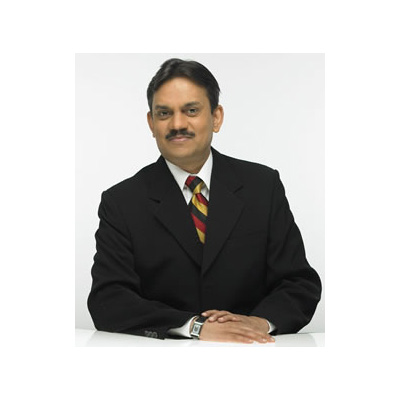
  • ‘With cricket action coming up, Sony has initiatives lined up in the digital space’ : Kaushal Modi – Sony Entertainment Television India head licensing & telephony

    ‘With cricket action coming up, Sony has initiatives lined up in the digital space’ : Kaushal Modi – Sony Entertainment Television India head licensing & telephony

    After establishing its digital platform 2525 with a slew of activities in 2004, Sony India’s 2005 plan was to take it to the next level to turn it into a substantial revenue generating model. To drive the strategies, it needed an experienced hand in this space to head the division. The search ended in Kaushal Modi, who was then a key player in arch rival Star India’s digital strategies. Thus, in February 2005, Modi switched to Sony India in the capacity of head, licensing and telephony.

    Going into the second half 2006, Sony’s game plan now mainly revolves around the game of cricket and Modi is banking on the bonanza to contribute significantly to the growth of his digital activities. “With cricket action coming up, Sony has got lots of initiatives lined up in this space. The action will start ticking from October 2006 onwards. We are still working on our plans,” he says.

    On the licensing front, Modi is exploring new markets and under his leadership, Sony has even entered the arena of format sales. “Sony used to sell its shows in the international markets and was never into selling formats. This year, for the first time, we have tried exploring this space with soaps ‘Kaisa Yeh Pyaar Hai’ and ‘Yeh Meri Life Hai’ and the experiment has generated an encouraging response,” says Modi. And he is betting big on new content platforms such as Video on Demand (VoD) and IPTV to drive the growth in this sphere.

    In an interview with Indiantelevision.com’s Bijoy A K, Modi explains the market scenario, the strategies and the game plan for the year.

    Excerpts:

    This year’s MipTV witnessed the trend of TV producers investing in buying formats as against just broadcasters doing so. Would it make a negative impact on the syndication strategies of broadcasters?
    Yes. Earlier, broadcasters used to drive these activities at MipTV. But, now, the scenario has undergone a change. There are many international format companies, which are very keen on the Indian market. While bigger companies such as Endemol and Fremantle do have direct access to the Indian market through their offices in the country, some of their smaller counterparts — who don’t have direct access to India — depend on markets such as MipTV and Mipcom. This is the international scenario right now.

    Coming to the second part of your question, this trend doesn’t make a difference to our business strategies. We are content aggregators and not content creators. The format owners are never in a position to squeeze money out of their clients. It is up to the broadcaster (buyer) to pick up a format or not.

    Sony has taken its two shows – Kaisa Yeh Pyaar Hai and Yeh Meri Life Hai, which are not game shows – to MipTV in Cannes this year for the purpose of syndication and formatting. How was the experience? Have you struck deals with international companies?
    Earlier, Sony used to sell its shows in the international markets and was never into selling formats. Now, this year, we have kicked off our format syndication activities. We tried exploring this space with soaps Kaisa Yeh Pyaar Hai and Yeh Meri Life Hai and the experiment has generated an encouraging response. We haven’t signed any buyer yet, but there are enquiries from various foreign broadcasters. Some of the Asian and European (Germany and Poland) have expressed interest in the format. They want to recreate the content, giving it a local treatment. The talks are still going on.

    Please comment on the demand for our homegrown properties abroad? Do you keep the international market also in mind, while developing original formats?
    The advent of new technologies is changing the face of the international content syndication market. In the international market, new content platforms including Video on Demand (VOD) and IPTV have been boosting this business segment. The new technology helps the content aggregator to target niche consumer segments, however small in size they are.

    For example, if you have 5000 Indians living in a certain area in Japan and you want to target them with your content, you can do that with the help of these new technologies. Thus, you have a viable business model in hand. This has opened up new markets across the globe.

    Speaking about the potential of Indian properties in the international markets, there is a significant Indian diaspora – though not critical enough to drive the business — supporting the trade. Genre-wise, I would say there is a stress on movies.

    South East Asia has always been the strong traditional market for Indian content. But now, with the advent of new content platforms, Europe and Africa have also started showing interest in our content. European channels such as RTL2 (Germany) have been showing a lot of interest in Indian content. As I mentioned earlier, there is a demand for movies. But, at the same time, some of these European channels now want to try shorter series as well.

    Hence, developing homegrown properties, which can be saleable in the international markets also, sounds a lucrative idea. But, our main focus continues to be India and the strategy has always been to leverage on the original Indian content. For us, the Indian viewer always comes first while conceptualising ideas.

    What will be the size of the content syndication market with regard to Indian television? Please speak on the market dynamics including growth potential and competition.
    It is a highly fragmented market in India and it will be very difficult to put any number to it. Apart from the three or four big players, there are several medium-sized companies and then hundreds of smaller players including sub-brokers. The traditional syndication market is stagnant. New content platforms will drive the business. This will be driving almost 50 per cent of the revenues in the near future.

    Competition is there in all forms, whether it is producers or broadcasters. Speaking about Sony’s content syndication plan, I would say we haven’t yet exploited the segment to the full extent. We have just started. Healthy competition definitely helps. With competition, you have new markets opening up across the globe. Players keep moving, looking for greener pastures.

    The advent of new technologies is changing the face of the international content syndication market

    How much does the content syndication business contributes to Sony India’s kitty?
    It is definitely not a topline driver for Sony. It is more of a bottomline driver. Though it contributes a miniscule compared to other revenue streams, it plays a significant role in the total scheme of things. It creates a market value for the channel. It creates added revenue opportunities through an existing property. We have to keep in mind that, here the channel is not making any new investments.

    Speaking about the future potential, content syndication & licensing will contribute well to drive exponential growth.

    Star India recently revamped its short code 7827 and looks very aggressive on its interactive and digital plans. What can we expect from Sony this year in this space?
    With cricket action coming up, Sony has got lots of initiatives lined up in this space. The action will start ticking from October 2006 onwards. We are still working on our plans.

    Speaking about our digital presence, Sony already has a Wap site. But we haven’t been promoting it much since the Wap technology is still in its nascent stage of growth in India. Hence, we haven’t been banking on the Wap site much to drive user downloads. A good percentage of our content download happens through the telecom operator sites. We are also weighing options to launch a mobile voice platform.

    Please elaborate on your digital and wireless strategy
    The entire department has been created to leverage the opportunities this space offers. Sony envisages that, the future is going to be digital. New technologies driven by mobile phones, iPods and other handheld devices will spearhead an exponential growth. The atmosphere is very encouraging since mobile connectivity in the country has really picked up. Keeping the changes in mind, we are closely working to build a digital content bank and making our programming and content available across all the available platforms. The thrust will be on creating a dedicated mobile and internet community.

    Convergence of television and portals appears to be the latest mantra for entertainment. Please elaborate on Sony’s plans and the progress in this segment.
    We have our online presence in setindia.com. To offer content through broadband, we have tied up with SifyMax. This association helps us to offer some of our popular shows such as Fame Gurukul and Indian Idol through broadband. This way, we are able to capitalise on the significance of SifyMax as a popular destination for online content. This is a win-win situation for both of us. We also have content associations with Indiatimes and Tata VSNL.

    How do you plan to leverage Set India’s programming portfolio with the mobile initiatives? Are there plans to make mobisodes out of your popular soaps?
    I would say, the Indian market is yet to see a proper mobisode. The mobisode revolution is still bit away in the horizon as the technology is not yet ready to accommodate it. What we all have been doing is, repurposing our content for mobile phone. And the advantage: you can target different audience segments with various niche products made out of a single programme.

    Globally, most of the mobile companies are getting out of the content sector to focus on their main areas of strength. In India also, should mobile operators have to move out of the content space? Please offer your take on this.
    The international market has been witnessing lots of alignments between content providers and the technology companies. Internationally, we have entertainment companies sticking on to content operations, while technology companies concentrating on the technical aspects. Obviously, you can’t lay your hands on both the businesses because it is difficult to focus on these diverse segments. The same applies to the Indian market as well.

    Are you looking to partner international companies in the digital space? What is your take on the global scenario?
    Sony in talks with some of the players for digital distribution of content and we have already got Jump TV on board in this space. We are in advanced stages of talks with some of the European and US players and an announcement in this regard will be made soon.

    What are the issues that will foster an even faster mobile market growth in India?
    What is critical is creating best practices and formula for the industry. Industry practices should be standardised so that, it will encourage the players to roll out a variety of services. There should be flexibility in pricing. There is huge potential in areas such as voice offerings and subscription services. By working together as a team, we can capitalise on the huge growth potential the space offers.
    Will web streaming as a concept catch up in India?
    Web streaming is yet to catch up in the country because of the bandwidth issues. But, with falling broadband prices, it has got a huge potential to deliver, especially in the area of interactivity. If the government’s bandwidth targets for the fiscal are met, the market would undergo a tremendous change.
  • ‘Ratings not an apt way to judge Awaaz performance’ : Sanjay Pugalia – Awaaz editor

    ‘Ratings not an apt way to judge Awaaz performance’ : Sanjay Pugalia – Awaaz editor

    If news channels are largely described as niche, then Awaaz is a niche within the niche. Positioned as a consumer Hindi news channel, it breaks the general connotation of a business channel as being designed for people dealing in big business.

    Awaaz is primarily, as Editor Sanjay Pugalia points out, for anybody who wants to spend Rs 100 fruitfully or save even that Rs 100. Looking at the way the India economy is changing, Pugalia expresses that there is a gap that has been successfully filled by Awaaz — the 15+ SEC AB in the Hindi speaking markets.

    Pugalia believes that the existence of Awaaz has given a new definition to this news category.

    In a freewheeling conversation with Indiantelevision.com’s Manisha Bhattacharjee, Awaaz editor Sanjay Pugalia provides a low-down on how the consumer channel has shaped up over the last 18 months.

    Excerpts:

    Awaaz underwent a change in its on-air-look? Isn’t it too early for the channel to undergo a makeover?
    When the channel was launched, we followed the time and tested format of CNBC-TV18. Now that we have completed 18 months in the space, it was time to give a distinct identity to the brand Awaaz, as we are addressing a much broader audience base and our offering is very different from CNBC-TV18. Awaaz is an independent product appealing to our kind of target audience. Earlier, we wore blue and white, now the channel dons red and white.

    What is the unique selling point (USP) of Awaaz?
    The consumer channel is primarily targeted at small investors. It is first and foremost for those viewers or consumers who are earning some money, saving some and need proper advice to invest. The channel has been principally designed in the manner wherein experts provide inputs in a manner that will help consumers take their own decisions on all the possible ways he / she can save or make money.

    The channel is a powerful vehicle for small investors, buyers, sellers, etc and it provides opportunities aimed at effectively reaching our target audience.

    Is this an indication that TV18 failed to target this segment through CNBC-TV18?
    It is wrong to say so. CNBC-TV18 created the business news space within the English space for the big corporates. The channel’s coverage extends from corporate news, financial markets coverage, expert perspectives on investing and management to industry verticals and beyond. The channel has been catering to business more relevant to different constituencies across the nation.

    Awaaz on the other hand is for the small investors in the Hindi speaking market. It indeed covers the entire business space from the consumers’ perspective. Who is the consumer? It could a taxpayer, an employer, a small investor, shopkeepers etc. These consumers are interested in the current share or stock market, trade, small business, managing and saving as well as investing. All these needs are serviced through our shows.

    When you say that the word ‘consumer’ covers a vast gamut of audience, trade, equity, non-equity, financial sector etc? Where do women fit in the gamut?
    It is largely noticed that female viewers are much less in comparison to male viewership on any given news channel. But it is otherwise on Awaaz. We have a very strong female viewership, approximately 45 per cent. Our key driver show is Smart Shopping, which airs at 4:30. When the same show airs at 10:30 pm, it brings in male viewership.

    The unisex shows are Awaaz Plus, Tax Guru (tax is generally perceived as a male subject), Weekend Masti, Hum Honge Kamyaab, Jiyo Zindagi, Chalti Ka Naam Gaadi, Glamour Bazaar and Trend Mill to name a few.

    Let me reiterate a point, ratings is just not the apt way to judge the performance of the channel. It is merely an auxiliary data that gives us an insight to the performance of the channel.

    If you say ratings are not the rightful way to judge the performance of the channel, then how do you pitch it to the advertisers?
    It is difficult for me to comment on the marketing side of the channel. But all I would like to add is that the advertisers solely do not rely on Tam data, they also have other means like their own research and other external research which they commission as well as their gut feelings for the channel to make a decision to spend on the channel. Mind you, Awaaz, like CNBC-TV18, has a good number of out-of-home viewership, which is not recorded by Tam.

    In this fragmented news market how do you deal with your competitors?
    Honestly, we have no competitors in this space.

    Well, you are forgetting Zee Business. Isn’t this channel in the same space and targeting your kind of audience?
    Well, as I said we have no competitors in this space. In any case, we are 300 per cent to 400 per cent bigger then Zee Business.

    Network synergies should not be confused with similarities

    Coming from the same TV18 network, is Awaaz cannibalizing big brother CNBC-TV18?
    We cannot cannibalise each other being under one network. We can only strengthen each other and synergies and leverage each others strengths. But it is necessary to comprehend that as a network synergies should not be confused with similarities.

    22 May experienced a massive market crash. Besides retail investors, even small time investors panicked? As you strongly term your channel as a consumer based one, how did you address your TG?
    ‘Caution’ has always been the word from the day we launch the channel, while addressing the news and information needs to the small investors, the mutual fund buyers, shoppers, small time insurance agents etc. This does not mean either that while cautioning them, the investor should stay away from equities. They have to be convinced about their investment ideas after weighing the pros and cons.

    Let’s take the Tam data during the market crash in isolation. According to the data, on 22 May, Awaaz recorded a 2.3 per cent channel share, beating the general Hindi news channels during the 9 am to 4 pm time band, followed by Aaj Tak (1.50 per cent), Zee News (1.43 per cent), NDTV India (1.16 per cent), Star News (1.15 per cent) and followed by the rest.

    TV18 network is involved in a lot of on-ground initiatives. What kind of on ground initiative is Awaaz into?
    All our ground-initiative is marketing backed and strengthen our brand by involving our viewers. When we carry out any on-ground shows it has to be relevant to the issue and place.

    How different is your weekend band from that of weekdays?
    We have branded our weekends as Smart Weekend, which has been created recently. It’s primarily a day long exercise covering various topical aspects of the week providing a holistic and exhaustive coverage from across the nation. The weekend gone by was entirely devoted to the best colleges of Top 10 cities in India. Besides, for those students who did not secure good marks, we provide inputs from across the nation with alternative college and courses for them.

    Now that TV18 is hiving of its internet business into a separate company, is the network aiming at launching a portal to complement Awaaz, just as in the case of CNBC-TV18 and moneycontrol.com?
    I can’t comment as it is a business decision.

    What is making business news channels such a success in India?
    The news needs of TV viewers has dramatically changed in India, because of growing economy, urbanisation, spread of wealth and increased purchasing power to millions of Indians. They want to know about the things; products and services, they can use in order to make decisions every day about shopping needs, investments, spending and saving… and they want it in a relevant, useful manner.

    Awaaz, in this space does it effectively. Viewers’ habits are changing so fast that sometimes media is not able to keep pace with it. But Awaaz is a product of the future and it will only grow as the economy makes new stride and goes global.

    How will all of the emerging ‘viewer-in-command’ technologies — like IPTV — impact traditional broadcasting?
    New technologies will only grow opportunities and expand the market for us. They will add value to our services. Mind you, those who would be using technology like IPTV, will be in the homes with more than one TV set and more importantly millions of Indians are yet to buy a TV set. Traditional broadcasting will continue to remain 2/3rds of the pyramid and the remaining 1/3rd will consume the new offerings.

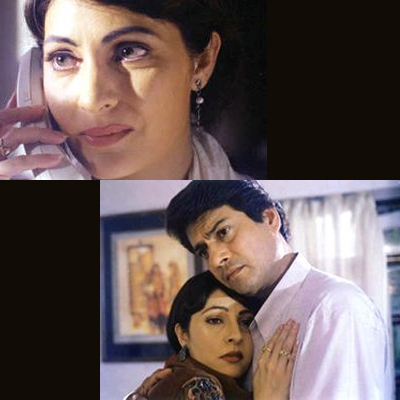
  • ‘There is a lot more to express while playing a negative character’ : Shweta Kawaatra


    Viewers love to hate her, and yet can’t wait to get back home, tune in to the idiot box and relish watching choti bahu (younger daughter-in-law) ‘Pallavi’s antics (played by Shweta Kawaatra) to break up the joint family in the serial Kahani Ghar Ghar Ki. The tussle between the eldest bahu ‘Parvati’ (played by Saakshi Tanwar) and the youngest bahu ‘Pallavi’ has so caught the fancy of audiences on the tube that it has become the second most watched daily soap in India. Often it’s the negative shades that makes a story more gripping and interesting and Shweta has more than managed to get into the skin of such a character.

    The Delhi-based former ramp model got into acting by chance. While doing her graduation she had entered the ‘Femina Look of the Year‘ contest. That is where she was spotted by Hemant Trivedi and Lubna Adams (ramp show coordinators) who expressed keenness in using her as a model for their shows and asked her to come down to Mumbai. Since Shweta was just 19 years old then, she chose to stay put in Delhi until her graduation. She secured a degree in English literature from Jesus & Mary College in the capital. But that initial brush with the arclights had left an impression. And she came down to Mumbai looking for a break in the fashion world. Lady Luck played her tricks and chose instead to direct her into the world of histrionics – on the small screen.

    The serial Suhana Safar aired on Zee marked her debut in serials and was followed by serials like Yeh Kahan Aagaye Hum and Darr. She shifted to Mumbai city from Delhi after signing up more daily serials like Ghar Ek Mandirand Bandhan. Her most recent role in Kahani Ghar Ghar Ki has viewers glued to the TV episode after episode wondering what would be her next plot to score over her arch enemy – her sister-in-law ‘Parvati’.

    Indiantelevision’s correspondent Harsha Khot catches up Shweta Kawaatra and finds out what makes this former national-level roller skating champ tick, especially in roles such as the (in)famous ‘Pallavi’.

    Excerpts:


    Shweta Kawaatra & Saakshi Tanwar in ‘Kahaani Ghar Ghar Ki’
    What made you take up acting?
    I was still doing my graduation when I came to Mumbai around four-and-a-half years back. I actually came here because I was already into ramp modelling. I came to Mumbai in the hope of getting into commercials. I started to meet model co-ordinators and then through word of mouth I got a call to audition for the serial Suhana Safar which was going to be aired on Zee. I auditioned for it. It was simple. And by just reading out a script I got selected.


    When did you realise acting was what you wanted take up as a career?
    During the making of the serial Suhana Safar, after I got friendly with the unit people. The initial phase of acting was a bit difficult because you are not being yourself. A person has to sit in front of the camera surrounded by 20 people, laughing or crying not because you feel like doing so, but only because the script says so. The very idea of laughing and crying or conversing with someone, going through this whole gamut of emotions really intrigued me. This made me more determined to become an actress. The next serial I signed up was a Vivek Agnihotri serial called Yeh Kahan Aagaye Hum. It had a slightly different character in which I play a role of a business minded diplomat. After this serial there was no looking back, and I never really even tried to get into commercials again.

    Among the roles that you’ve played which is your favourite character?
    My favorite of course is ‘Pallavi’ in Kahani Ghar Ghar Ki, because this character is allowed a lot of liberties. The minute someone leaves the room I can make lots of faces, I can smile, roll my eyes, give a dirty smirk or do whatever I feel like doing but within the limitations of the character. There is a lot more to express while playing a negative character than the goody-goody kind.
    Portraying a good character does limit you because in the eyes of the audience you have to build up towards being a good person. While being bad there are no such limits. Although now in the current episode being telecast, it is being shown that the character Pallavi has begun to mellow down a bit as Kamal (her husband in the serial) has become a little more assertive in life. I miss making those sarcastic comments because they had become a part of me. When I reach the sets of KGGK I get into the skin of the character but NOT before the camera rolls (smiles). Another thing that makes Pallavi my favourite is the way she dresses, walks, talks, her hairdo. Everything has been created by me. Ekta (Kapoor – the creative head of Balaji Telefilms) also guided me in giving the right kind of expressions.

    What went into the shaping of the character Pallavi?
    The character Pallavi is a creation of the mind, that too someone else’s mind. To create that personality I had to sit down and talk a lot with Ekta who conceived the character and the serial’s director, since it does take time to know what this character is all about.
    Pallavi is usually dressed in chiffon or georgette saris and her hair is always left untied. Generally, in Marwari families, once you get married then you have to wear a pallu (veil) covering your judha (hair bun), and a nath (nose ring/ pierced nose).
    During the first day’s shoot, I, as Pallavi, was made to wear juda, nathi, pallubangles and dressed traditionally like everyone else in the family. After the first scene I went to meet Ekta…something wasn’t right in my mind about the way I was dressed. I spoke to her suggesting that since the character is different, could I not be different in my appearance also? I went on to describe how I saw the character Pallavi . Not much of jewellery, simple earrings, no nathni, as I didn’t want to adorned with jewelry or makeup. Pallavi’s role demanded that I don’t portray myself as being a happily married women. My intentions are to break the house, then why should I spend so much of my time sitting in front of the mirror. It was not for my husband Kamal because I was not in love with him. I don’t even want him. We don’t even sleep together on the same bed. I sleep on the bed all alone while I make him sleep on the sofa. Pallavi would follow what the family does if she was the same as the other women in the family. Ekta was pretty okay about the change.
    I worked on the character and made it appear slightly different from the rest. Ekta told me exactly how she wanted the character to be.


    You wanted the character to be different because the character is rebellious?
    Well, not exactly. The character is negative so there had to be a difference. Pallavi’s intentions aren’t the same as everyone else’s in the joint family. Pallavi has come to their house solely with the intention of breaking up their family as she thinks that the family had been unjust towards her .
    When I understood the character in my mind , I realised that Pallavi has to keep herself under control and hide her real self from her fellow characters. But in her own mind there are no limitations; she can be as devious as she wants to be. That’s exactly the side Pallavi shows to the audience when someone leaves the room.

    Shweta Kawaatra & Saakshi Tanwar in‘Kahaani Ghar Ghar Ki’

    What went into sketching out the character?
    I asked too many questions. I even asked how should the character laugh – for maybe she is a reserved character and wouldn’t laugh the way I normally do in real life. I wanted to know what exactly is her mental make-up; how she thought; how she behaved, talked; how expressive is she? Is she timid? Or is she glamorous?
    While playing the role I tried to inculcate those qualities on the set and tried to express them in that manner. Then I spoke to the director to get his feedback. Was the shoot okay? Or did I go overboard? Or am I doing less of what I should have done?
    It took me a maximum of about four episodes to really get into the character.

    Apart from Pallavi which other character got you completely engrossed?The other role which had me completely engrossed was Priya’s role in the serialDarr. It was a completely non-glamorous role. If I even put a little bit of lipstick I would get a call from Star Plus asking me to remove that and apply a neutral shade. I always had to be sore-eyed. Priya is married to a crackpot, and is a mother of a six-year-old. The character her husband plays is that of a psycho so she has to deal with a lot of difficult situations. The character Priya is very scared of life since she has never stepped out due to her husband’s dominance over her. But later on she tries to get out of this relationship and goes on to become a strong-minded person. I got very involved with that role because it I had to portray a very emotional person.

    Your career began with Suhana Safar. What was the character like and what appealed to you about it?
    I can’t pinpoint exactly what appealed to me at the time during the shooting ofSuhana Safar. Now I can think from an actress’s point of view and decide for myself, but at the time I didn’t know what I wanted. Everything seemed to be alright. The role was about a split personality, a Jekkyl and Hyde character. The girl I had to portray has a very homely, sweet character, she has a fiancé, but there is another side of her where she’s just the opposite. Her alter ego has a devil-may-care attitude , wears micro-minis and wants to have a ball of a time going to bed with every man who catches her fancy. When she returns to her home and hearth she becomes the same homely person once again, so the character really appealed to me. There was nothing in both of the split personalities that I could completely identify myself with.


    How did you feel when you were facing the camera for the first time?
    I recall that I was terribly nervous when I first faced the camera. The first scene was that I had to seduce the character Madhavan. The character that I had to portray was the dark side of the split personality. In the scene, she pours champagne in two glasses, goes around the bar counter, downs the two glasses, approaches Madhavan and runs a finger around his face. I expected something non-alcoholic – says water or a soft drink but the producer had actually kept a bottle filled with champagne. I was so nervous that I simply couldn’t give an okay shot. So we had many retakes. I ended up drinking the whole bottle. And the scene was shot successfully and okayed. But I got totally drunk, losing control of myself.


    Did they want realism to that extent?
    Couldn’t water have been used instead of champagne? I don’t know. That is something I realised much later. I did not know that they were not supposed to keep actual champagne. I have no clue why they did that. By the time I realised it was too late, then I never really bothered to ask them why they did that.

    What was going on your mind at that time?
    Oh uh… twenty absolute strangers around me and I have to go and seduce the character played by Madhavan! With no acting background, I was so shy that earlier on I would not act in front of the mirror even when the room was empty. So many people sitting around me, watching what was happening with their eyes on me, and to top it all I had to even seduce a man! I think that the alcohol in the champagne worked and made me lose all my inhibitions.

    What are the things that you consider now while taking up a role?
    First of all, I see the depth of the character I have to portray. If the character that I have to emote is not too deep then I can’t make the character strong. There are many things that go into making a successful character. I can only put life into it by good acting. But if the role is not written well, I can’t do much about it. It should be strong in some way and only then I can make it stronger and act well. Of course the director should be good, someone I feel comfortable working with, otherwise I would be tense, if it’s someone who has a problem with me or with somebody else. I might not be able to shut my mind from the problem and that could reflect in my work.
     

    What goes into enhancing the performance from the one that is given in the script?
    Enhancing the script, depends on how well you express the tone of your dialogue delivery. I generally don’t interfere with the script unless I feel something is amiss or if there is an important line and something needs to be added.
    Since I am so much into the character, for instance while acting like Pallavi I would say certain things which I thought would enhance the character. I would approach the director and inform him. If the need be, I would call up and check with the scriptwriters if it was ok if we made some changes.


    You also anchor a show. Will you tell us about it?
    I am anchoring a show on the small screen called Ek Main Aur Ek Tu. It basically involves interviewing a couple who have had a love marriage. My script for this serial consists of their real life story. I prefer not to read the script because then I begin to look a little artificial and my questions don’t come out so smoothly. If you don’t know the script, then you can ask impromptu questions and your reactions are natural, you don’t have to act. And acting when I can be myself doesn’t give me a good feeling. In case I miss out an important question than the director points it out, otherwise I just keep chatting.

    Do you prefer to read the scripts in advance?
    No, I like to read them on the sets just before the shoot so that it remains fresh in my mind and I remember all my dialogues.


    How do you improve on your acting?
    I improve on my acting by being observant and trying out different ways of portraying the same character. Sometimes my co-star and I try different ways to act and it really helps if the co-star and you vibe well. Chaya (Rinku) and me vibe well. In fact I’ve learnt a lot about being spontaneous from her. She would add a line suddenly in the middle of the script and cue me to join. At times the repartee between us goes on even

    Shweta Kawaatra & Rinku Dhawan in’Kahaani Ghar Ghar Ki’
    when the dialogues in the script are over. Your really have to be attentive, so that if somebody adds a line in between the script you shouldn’t be caught dumbstruck and that has happened to me quite a few times.

    As an actress how have you progressed?
    I have progressed a lot but still a have a long way to go. When you get accepted by your audience, people come and tell you that they appreciate your acting. The layman doesn’t really know you so when they come to you and tell you that you are doing a good job, it feels that you must be doing a good job. I definitely have improved. I have become more spontaneous, not being spontaneous was my second biggest drawback (her first drawback according to her is that she talks a lot and asks questions). I would only go by what was written in the script. I wasn’t aware that it was okay to add a word or two of your own while delivering dialogues as long as you remember to say them while giving other shots and maintain consistency all throughout. With experience I got adept at being spontaneous. Now I try and experiment on expressions. Suppose I am given an expression to act out, I try out those emotions in four to five different ways.

    What do you feel about the success that Pallavi has got?
    I feel that whatever little hard work we have put in for Pallavi’s character role is paying off. I like it when people say ‘We hate you but we like you’. A lot of young girls come up to me and tell me we want to be like you. I don’t agree with them because they don’t realise that it is just a character on screen. I don’t want them to be like Pallavi because some day they will also get married. I don’t want them to get influenced wrongly by this character and go about breaking their homes, but I can’t really go to everyone and tell them that this is just a fictional character being played by me.


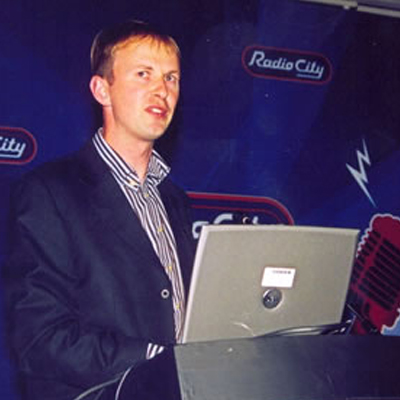
  • ‘Key to successful radio programming is to know what territory you can own & defend against predators’ : Steve Martin – BBC World Service on-air editor

    ‘Key to successful radio programming is to know what territory you can own & defend against predators’ : Steve Martin – BBC World Service on-air editor

    BBC World Service on-air editor Steve Martin has been responsible for the present on-air image that BBC’s English Radio Network holds, be it the sound identity of the network or its on-air promotions. Radio, to Martin, is something that establishes a certain personal connection through what it offers.

    According to Martin, content should be strong enough to trigger emotional reactions among consumers. He emphasizes that the players should better know their audience, the better knowledge they have, more acceptable forms of presentation will be created.

    Martin has his own theory on the sales & promotion aspect, which goes beyond the commercial break. He says the content should be creating and raising awareness of the product or the service.

    On his way to London, BBC World Service on-air editor Martin spent two days in Mumbai, attending a seminar organized by FM channel Radio City.

    Indiantelevision.com’s Manisha Bhattacharjee caught up with Martin during his brief stay in the city, to get a perspective on the evolving business.

    Excerpts:

    Could you provide a brief of overview of the current radio status in UK?
    Today, it is an extremely mature and diverse radio market. BBC now operates 10 national networks some of which are only available on the digital platform, the rest of them on FM and AM in the traditional way. And we also operate a network of 38 local radio stations which is centered in all different cities and towns in England. We run two radio stations in Wales, two in Scotland, and two in Northern Ireland. So in any one place in Great Britain you are guaranteed to get at least five to six BBC radio stations. Plus you will get a similar number of commercial services in some places and in some places there are more. It’s a very developed market now.

    Now that is really diverse. Was there any kind of regulatory push, which also enhanced the market?
    In Britain, it is permissible for a radio group to own several radio stations in one market. This isn’t the case in India.

    When this happens you don’t find much similarities between two radio stations, because if you are going to own two radio stations in the same market, the last thing you want to be doing is exactly the same thing and cannibalizing the same audience. So you ensure that the two radio stations are broadly complementary. That makes good business sense and you ensure that on each radio station in a particular territory, which is not only hugely successful but it is also defensible against any other outside broadcaster. The key to successful radio programming is to know what territory you can own and defend against predators.

    That works for the public service as well. In BBC we are publicly funded and do not have a commercial imperative. We are all there to maximize revenues. However, because we are publicly funded, we have a duty to serve absolutely everybody of the UK population. So we have an obligation to ensure that our services are broadly complementary.

    For example: We run a national new music service, which specializes in breaking new music. It is a patronage in the arts in terms of supporting new talents in new music and it plays hits also of the popular culture.

    Please comment on BBC service radio networks’ programming strategy. How different is it from that of commercial radio stations?
    BBC service radio networks are distinctive from the commercial radio stations. It would be wrong to say that we solely do things that the market can’t support. Because we have an obligation to provide something to everybody, the services have to be popular. But these are absolutely distinctive.

    We would take creative risks with our programming such as of BBC Radio 2 – we will do a speech based consumer phone-in and discussion stations are doing that. On Radio 1 we will break great new music and we will take risks with that. We invest in social action programming, investigating issues that young people are facing in Britain today. And on BBC Radio 3 we support orchestras. So our patronage of the hour is not just something having on the plaque on the wall, it is actually real money going into supporting musicians creating music and support the cultural life of Britain today. So that some of the stuff that we do in music, commercial service radio stations don’t indulge in.

    In speech radio, we are the single biggest broadcast news gathering operation anywhere in the world. And in UK specifically, we run an intelligent speech radio station which is not just news and current affairs but includes drama, documentary and cultural programmes.

    Please comment on the competition between BBC and the commercial radio stations. How does it affect the market?
    Commercial radio is first and foremost a business and these radio stations will try to know the most profitable territories in programming terms. I think it is fair to say that because of the pressure of BBC, which is innovating in programming, the commercial radio stations have raised their game and are not going in for cutting the investment in programming and creating the cheapest programming possible.

    Because of the competition from BBC, we have got a healthy creative section within the commercial radio stations in the UK. Commercial radio stations invest heavily in research and keep us on our toes.

    Also, the regulatory framework ensures through the system of licensing that the stations are held to a particular format and have to comply with the terms of format licensing issues by the regulator. This ensures that there is a spread of different formats in any one market. But the commercial stations would want that in any case because they wouldn’t want two stations duplicating the same output.

    In the present scenario, how different is the US radio market from that of the UK radio market?
    They have a public radio network but that is quite different from what BBC is doing and it appeals to a particular niche audience. In recent years, the arrival of satellite radio through XM Satellite and Sirius Satellite Radio, which has made a huge number of formats available from coast to coast, which is great if you are driving. It allows one to listen to the same station through the journey.

    Last year, 25 % of UK radio revenues came from S&P activity

    The evolution of the radio industry, in particular it’s rapidly growing digital uptake, does that signify a threat posed by digital radio to terrestrial radio?
    More radio is good for the industry; it is good for the consumers, because, it gives more choice. You are more likely to hear what you want when you want it. That’s a positive force. BBC has been a pioneer in digital radio in UK, we have strongly welcomed it. It has enabled us to provide new services and are able to reach sections of the community which were otherwise being undeserved.

    It does mean that more communication radio stations will compete against us but that said that adds to the totality of choice available to UK radio listeners and that’s got to be healthy.

    I think where the challenge comes for the commercial stations is to manage the investment. You’ve got to invest in the new technology of rolling out the transmitter networks providing new radio services before getting enough listeners to turn a profit from those. So there is the issue of funding. That’s where the challenges lie from the business point of view.

    BBC has been leading the roll-out of digital radio infrastructure. So we have been an enabler for the commercial. Because every time you buy a digital radio set, not only do you have new BBC radio station but you have access to the new commercial stations as well.

    Radio is probably looking at greater fragmentation of its audience (like any other media). Is this an encouraging sign for the marketers or advertisers?
    If I was an advertiser and I knew there was a radio stations that supports on a functional and emotional level, with a clear voice to my target listeners. I know I will be able to buy just that station and eliminate waste on my ad spend. It is going to be good for advertisers as there is more choice on where to put spends.

    It may mean that in order to reach the audience you need more than one radio station but you can be selective in the stations you buy and eliminate waste.

    If you have only one station in the market, or all the stations sound the same, then you are guaranteeing to be wasting some of your advertisers’ spend. Because you will be talking to people who are not within your target audience or your advertising campaign. So, the more the fragmentation the easier it is to target the specific audience segment you are interested in.

    More relevant, from an advertisers’ point of view, is maximizing reach – the number of different people who listen in a week. But consumers generally hate advertisements as it is an interruption?
    Well, listeners don’t hate radio advertising. They primarily hate bad radio advertising. Secondly, the scene is changing, first there were advertising spots, and then came sponsorship. But now there’s S&P (sales and promotion) and its growing fast. Last year, 25 per cent of UK radio revenues came from S&P activity. It takes the client beyond the commercial break by creating and raising awareness of the product or the service.

    It can exploit the closeness and personal nature of radio for brands. It can also give brand endorsement from popular and trusted RJs and can create great radio entertainment for listeners. It can bring in new listeners for the radio station.

    Today, the Indian radio market is perceived as an industry which is booming. What’s your perception?
    At the moment of course, we have a situation where a lot of radio stations are broadcasting music, of course with a very similar play list. It is yet to be seen, if anybody has the guts or intelligent research in order to tone down or target their music specifically. That’s an inevitability. Whoever does that will be hugely successful in the market.

    Knowing that the radio FM market is at its nascent stage; doesn’t that give even more opportunities for the players to take risks as they are still craving a place for themselves?
    You have to be extremely brave indeed to say good-bye to a certain section of one audience. The industry is booming at the moment people are running successful businesses with this model. I believe the only question is as the radio market matures, how long the situation can continue before the audience will expect a degree of choice? But I think at the same time it would be wrong to suggest that there isn’t some choice there already.

    Though music is largely played, the individual stations have invested in individual personalities who will become listeners’ friends over time and they will be characterizing differently, between station A and station B. So it just doesn’t have to be just about music. It could be emotional qualities, personalities, attitude of the presenters or RJ’s on the air. There are a number of ways you can introduce to a radio station format something that is particular to your radio stations that is owned by you and over time you become famous for and that is about segmentation and building brands.

    Are players reluctant to experiment primarily due to lack of news and current affairs?
    In any market you have to accept the regulatory framework which is in place. And in India, that’s the regulation.

    In markets where it is allowed to broadcast different types of news on radio channels, it is a popular form of radio programming. And you will also find the people will have different news needs as the day continues.

    At breakfast time for example, people tend to want information, the kind of information they need to get into the day and through the day. Then, later in the day, people may want to think a little more about the issues and not just get information but come to their own conclusion about what it means for them. So, we talk about this journey through the day from information in the morning to an understanding in the evening and people have a need for or devote a lot of time to knowing in the morning and thinking in the evening.

    In the markets where we are producing speech programming through the day we produce a range of news programmes. We run a programme called World Today which is a fast moving double headed presentation programme by two presenters. Very high story counts and have live reports from correspondents from across the globe. It is fairly light in tone. Later in the day, News Hour is a longer broadcast with one or two big stories from the day so far with a range of perspectives from the other BBC correspondents and other figures who are involved in the news story.

    We produce news programmes in such a way that they are available to listeners at a time when they better satisfy their news needs.

    What is the strategy to have a successful station format and positioning of the radio channel?
    A key thing about radio is that it is an emotional medium. Radio is company, a complement for life, and so the key thing to be successful in radio, firstly you research in an audience. Know exactly whom you are talking too. What makes them tick. What their interests are. What kind of tone of voice you need to adapt and from there devising a radio format and delivering consistently. So that your audience knows exactly where to find the things that you are offering and you are rendering the whole thing up in a consistent tone of voice which becomes part of your brand identity.

    People around the world say what they love most about their favourite radio stations are personalities, the music, and the local information that helps get them through the day.

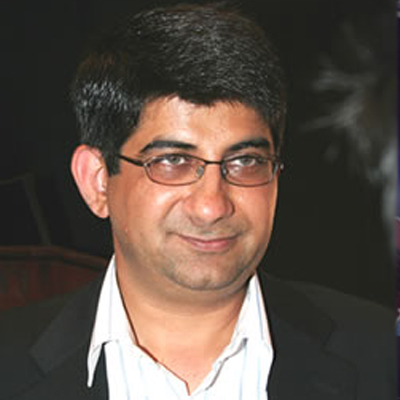
  • ‘We should leverage on each other’s strength and boost the sector by providing the consumer a common platform of services’ : Viren Popli – Star senior VP, Interactive Services

    ‘We should leverage on each other’s strength and boost the sector by providing the consumer a common platform of services’ : Viren Popli – Star senior VP, Interactive Services

    For the last six years, Viren Popli has been an integral part of the Star India system. As the international business senior VP, Popli reported to Kaushik Dalal before moving to the Wireless division to work with Sumantra Dutta. As he puts it, those were days when he worked quietly behind the camera and enjoyed the ‘privacy’ too.


    The so-called privacy was soon broken when he was made the head of Interactive Services in February 2005. As he recognizes the tough task he has at hand to build this emerging business as a strong revenue stream, Popli settles down to give his first interview to the media.


    At the Wireless division, Popli and his team are making efforts to create a highly sought after destination brand for mobile content, Star 7827, to offer specially created and aggregated content for the mobile screen available through SMS, WAP, Web and voice platforms. In this interview with indiantelevision.com’s Bijoy A K, Popli shares Star’s plans and talks about the evolving digital market.


    Excerpts:

    Star India has been spending the last three years to prepare the first draft of its wireless and interactivity plan. And as the first step, the revamped version of Star’s wireless platform 7827 has been unveiled. What went into the research? What are the key findings?

    Several things went into the research. Firstly, we have tried to analyse the effectiveness of areas such as voting, gaming and content. For example, on the gaming front, we have tried to look at the effectiveness of text games and java games. We wanted to know how the product actually sells itself.


    Secondly, we have done a lot of focus group studies and discussions across the country to gather useful feedback. Lastly, while doing the research, we did a series of internal studies which covered the whole News Corp platform. News Corp entities across the globe are doing various things on mobile. Hence, we were able to exchange ideas.


    Research provided us with a total new insight into the market. For example, very few people in this country know how to download using a mobile. There are booklets and help manuals released by mobile phone companies, but you won’t get a solution in any of those. Someone had to teach people to effectively use the mobile phone in such practical situations.


    People are willing to learn technology and pay for it, if they are provided the right content. What kind of content is desired by the mobile community? What is the age group structure here? What is the significance of the word of mouth communication in this segment? Through our research, we got an idea on the kind of efforts we have to make to provide the right response. We also learnt that flexibility, speed and relevance are the most important pieces of this business.

    Could you elaborate on your digital and wireless strategy?

    Our first goal is to make our mobile service 7827 as the most preferred platform both for content owners/mobile operators and consumers. The next focus will be on content. I would rate content space as the biggest challenge in the wireless business.

    What is the next step?

    We want to deliver an all-pervasive service available on all platforms, whether it is text, web or WAP. For an average Indian, Web and WAP are high-end technology words. Hence, we also want to put together an easy-to-access interface method that is more accessible.

    How much of investment has gone into revamping 7827?

    The project requires a significant funding. I can’t provide you the actual figures because we are still in the investment mode. We want to expand in the areas of technology, content and marketing. This is an ongoing process.

    What are the issues that will foster an even faster mobile market growth in India?

    The mobile business has grown tremendously, but the industry is just three or four years old. It will still take some time to evolve. The value chain and the relationship need to fall in place. The audio visual content should reach the masses. The market requires effective strategies and marketing initiatives to attract consumers to audio visual content. This will be crucial for the market to grow.


    3G is still some distance away as far as India is concerned. The Indian market has explored 2G and 2.75G technologies really well, but I would say there is still room for improvement. These technologies have still juice in them to drive innovative concepts and deliver better results.


    Instead of waiting for the arrival of 3G, we should explore the 3C business, which is Cool Connected Consumer. Mobile phone is no more a mere communication equipment. We change our mobile phone models in such frequency, while we never make an attempt to change our fixed phones. Here the content, as the driver of such a phenomenon, takes centre stage. As a content provider for wireless, we want to make sure that the market will not run short of content. That is what we are doing here. We believe that, content can force the technology to catch up or take a leap.

    We have learnt that, flexibility, speed and relevance are the most important pieces of this business

    Will web streaming as a concept catch up in India?

    It is a tremendous opportunity. As I said, it again depends on technology and the technology depends on the content. If the content is really attractive, we will have more and more people opting for the broadband service.

    What is your take on the global scenario? Is there any learning from the China market, where Star Wireless is already operational?

    This space is all about intelligence and experimentation. One interesting development has happened in the international space. Globally, most of the mobile companies are getting out of the content sector. The operators have found working on the content space — which is not actually their main area of strength – very distracting. Across the platform, the players have decided to focus on their main areas of strength.


    In India also, mobile operators will have to move out of the content space. It would be very difficult for them to run content services. Focus on a niche area is very important in this sector.

    Who are the key players occupying the digital and wireless space?

    Yahoo is very strong in the communication space, while Google reigns supreme in search. Entertainment companies are aggressively eyeing the digital space. Fox, for example, has taken major inititatives. There are also many small companies. But once consolidation happens, we will have four or five big aggregators and a range of secondary companies working around them in niche areas.

    What is the role played by News Corp. in Star India’s interactive initiatives?

    There is a macro direction element present in the whole process. News Corp. as a company has been a great idea exchange platform. It is all about sharing ideas and capitalising on the ideas and thoughts exchanged through this vast network. Since each individual country has its own local environment, we won’t be able to accept all the ideas generated. We will have to see what survives in our environment. However, the global platform has helped us tremendously to share and generate information and ideas.

    News Corp recently acquired the social network portal Myspace.com. Are you looking at creating a similar networking platform in India?

    The concept of online social networking has been very successful in the West. Star India is also exploring opportunities to launch a social networking portal on its mobile platform.

    Star India launched mobisodes last year. Now it is more than six months since this happened and how was the experience? How much did the initiatives contribute to Star India’s revenues during the fiscal?

    It did really well. We had significant number of video downloads, though the lack of technology awareness and penetration limited the exercise to certain areas. However, I would say, the initiative covered its costs and made a profit.

    Interactivity works for a channel or a programme, when the viewer chooses mobile phone over remote control

    You are about to launch your mobile voice platform. What are the growth plans for this?

    We have signed agreements with Hutch and BSNL, while more deals are on the anvil. We will have a different short code on Voice. On the technology front, there is bit of a problem since BSNL has a separate short code digit structure. In that case, we will have to market two different short codes for Voice. At present, we are trying to sort this issue out.


    We are also working on the Voice content. The radio channel will offer a mix of created, aggregated and Star India content.

    How do you plan to leverage Star India’s programming dominance with the mobile initiatives? Are there plans to make mobisodes of your popular soaps including Kyunkii…??

    All our programmes can go to mobile as well. At the same time, variations of these programmes can also go. For example, it would be interesting to watch Tulsi’s (the lead character in Kyunkii..) fashion transformation over the years in a mobisode. We can present alternative storylines through mobisodes. Lots can be done in terms of this content variation.


    We have plans to do a lot of things this way. But, I am not in a position to offer a timeline since, once we start such an initiative, we will have to be consistent with our delivery. We can’t provide Kyunkii.. on mobile for a week and forget about it. We will have to offer the Kyunkii.. content six days a week. It requires significant amount of planning and improvisation. The editing of an episode for mobile itself would consume significant amount of time. Hence, to make a formal announcement, we want to be confident of our delivery cycle.

    Does it also work in reverse? Will 7827 also help in driving up viewership?

    It can be assumed that the consumer downloading a mobisode of our programme is a loyal viewer of our shows. The interest in the programme must be inspiring him to download the mobisode of that particular programme. Hence, we believe that mobile holds tremendous potential to boost viewership and audience base.


    Now, how to take it ahead? Here is where interactivity comes in. We are looking at various methods to boost interactivity by way of the existing mobile technologies. Interactivity works for a channel or a programme, when the viewer chooses mobile phone over remote control. There are these traditional methods such as contests and special schemes. Interactivity can be a more powerful weapon, if used effectively in breaks. We are looking at various strategies to improve on this front.

    Any SMS-driven shows from Star? Are you planning any mobile-based gameshow at the moment?

    I have nothing concrete to offer you at the moment. But we are definitely exploring this segment.

    Has Star recently bought any show formats for the mobile and internet?

    We keep scanning the environment. But nothing significant has caught our attention as of now.

    Are you planning to work with film producers for mobile and other interactive initiatives?

    We are looking to work with every content provider in the country, including filmmakers and producers. In fact, we are very keen to work with film producers.

    How much have broadcasters raked in as revenues through SMS services during the last fiscal? How fast will it grow this year?

    It is in the range of Rs 750 million to Rs 1 billion. With more initiatives coming in, we expect this to double this fiscal.

    In the next five years, how much will the mobile division contribute to Star India’s revenues?

    Mobile will evolve as a strong revenue stream for Star India, after advertising and subscription. It is difficult to forecast the figures, because the technology will undergo lot of changes during the next five years.

    Will it be totally subscription driven or is there a scope for ad revenues in the immediate future?

    In the mobile content platform, there have been many experiments to generate advertising revenues. There is this method of inserting brands in content, but it is not generally very effective because of the space constraints. That is just one way of doing it. We believe that the real opportunity is yet to happen and there should be a better way out. Marketing and branding should be handled in a smarter way in this case.

    What is your take on in-game advertising?

    In-game advertising can be effective in the case of console and PC gaming. But, again, when it comes to mobile, we have space restrictions. The brand will look too small to generate appeal. Branded games can be one way out. Still, how many people would want to download a branded game? This space requires an effective strategy.

    What are the plans in India for the Lost game?

    Buena Vista International Television (BVITV) owns the rights for the game and as far as I know, they are very keen to launch the product in India.

    In the next five years, mobile will be a strong number three as Star India’s revenue resource, after advertising and subscription

    Are there any Indian shows that you feel have potential for this kind of an extension?

    Absolutely. I would say, most of our shows have the potential to be extended as various mobile initiatives. But we haven’t really zeroed in on any particular show as yet.

    Have you struck deals with international companies?

    The plan is to aggregate the best content from across the world. We are planning associations with companies working in the areas including content, applications, technology and games. We haven’t reached a position to name any particular company as our associate yet.

    How would you like to explore the interactive market segments such as video sharing, messaging, connecting and email through your digital initiatives?

    We are an entertainment and information service provider. We would stick to what we are doing at present. There is no plan to offer services which are outside our purview.

    How do you rate competition in this segment?

    All the players have competed really well to create their own space in the mobile industry. The next incremental step should be a leap in terms of strategies. All of us should come together to empower the business. We should try to leverage on each other’s strength and boost the sector by providing the consumer a common platform of services.

  • ‘Unless I get a meaningful role, I won’t take it up’ : Kavita Kapoor

    ‘Unless I get a meaningful role, I won’t take it up’ : Kavita Kapoor

    Indian television has not been able to boast of many gorgeous women. And when the few that are, disappear from the small screen, it invites curiosity. Kavita Kapoor is one such. She appeared with a comet like ferocity on the television horizon, making heads turn in Saans and Just Mohabbat and then vanished in a similar haze.

    The young actor has done just a few select serials. Yet her performance in each has left a mark. For someone not trained to act, Kavita’s confidence levels, both in her performances and in real life are amazing. She comes across just as intelligent and discerning as she is good looking. Excerpts from an interview with indiantelevision.com correspondent Amar.

    After being all over the small screen just a year ago, you seem to have suddenly disappeared. Where have you been?
    (laughs) I haven’t disappeared. It’s just that I have always been very selective. The serials that I had been doing have wound up and the newer ones will take time to come on air. But I’m doing Justujoo. At the moment, it’s a small role but will become more prominent as the story progresses.

    I don’t feel incomplete as an actor because I don’t follow the method school of acting.

    Okay, lets go back in time. When did the idea of being an actor first come to your mind?
    I guess it’s always been there. Even as a child, I passionately wanted to be an actor. I wanted to learn acting at the NSD. However, we are a conservative family and my parents were absolutely against the idea. I took up law in college, as a new five-year course had just been introduced and it fascinated me. However, what is destined to happen, does happen. So after completing my studies, I came to Mumbai and acting happened.

    Have you trained yourself as an actor?
    No, I haven’t. I’ve just performed in plays at school and college.

    Is there any area where you feel training would have helped?
    Perhaps it would help my diction. See, much of Amitabh Bachchan’s or Shekhar Suman’s success can be attributed to their command over the language. Unfortunately, in the atmosphere in which we have been brought up, we don’t speak Hindi the way it should be spoken. Training could have helped improve my diction.

    Are you a method actor or do you go by your instincts?
    I go purely by instinct. I apply my mind to how a character would behave in a given situation and try to lose myself in that character. There was an occasion in Saans where I had to enact a scene portraying a violent rage. Now, I got carried away by the character to such an extent that I had to be cautioned lest I smash things. I have always trusted my instincts.

    Do you feel there is no need for anything like method acting?
    I wouldn’t make a sweeping statement like that. But I am very clear that I don’t feel incomplete as an actor because I don’t follow the method school of acting. Tomorrow if I feel there is a need to learn method acting, I might even take it up.

    Many untrained actors tend to overdo things or simply overact. Did you face this problem?
    No. On the other hand, I have had people asking me if I deliberately underplay. People don’t realize that 95 per cent of the times, they are acting in real life too. Even a simple act of concealing something about yourself is acting. People tend to overact when they are consciously thinking that they have to act. But I was always very clear about my style of acting. I never took to the loud and overplayed style.

    What factors do you take into consideration before taking up a role?
    Primarily, it’s the role, followed by the story and the production set-up; in that order.

    It’s not easy to be so selective given the dearth of quality stuff and the economics of the medium.

    Doesn’t acting in TV serials get monotonous and clichéd beyond a point?
    No, not for me. The reason for that is I have not taken on similar roles. That is also the reason why people remember my characters. In fact, I refuse twice as many roles as I accept. See, the purpose of acting should not be to be just seen. Unless I get a meaningful role, I won’t take it up. And when I say that, let me also add here that it’s not easy to be so selective given the dearth of quality stuff and the economics of the medium.

    How do you keep yourself charged? Do you follow a regimen?
    I thoroughly enjoy my work and that is what keeps me charged all the time. I give a lot of thinking to any character I play, watch my own performances so that I may work and improve on them. Beyond that, the only regimen I follow a fitness schedule that keeps me in shape.

    On a scale of 10, how would you rate yourself as an actor?
    4.5.

    Aren’t you being modest? Which areas do you feel you need to improve?
    No I’m not being modest. I feel I need to be more uninhibited in my body language; my dialogue delivery in different roles needs to be more distinctive and my diction needs to improve.

    Who are your favourite actors?
    Balraj Sahani, Guru Dutt and Sanjeev Kumar.

    Have your picked any stylistic elements from them?
    None. I have been very careful to project myself as an absolute original. In fact, very early in my career, I’ve had people emulating my style – the way my hair is done, the way I speak etc.

    Are you satisfied with what you have achieved in your career on TV so far?
    No. In fact, I am eagerly looking forward to doing real challenging roles that haven’t come to me so far.

    Why haven’t they? Do you feel your unconventional good looks make people undermine the actor in you?
    I don’t know. Agreed I look westernized which rules me out for certain roles but then unconventional looks are thriving today. Doesn’t Aishwarya Rai have unconventional looks? Besides, I’ve never really depended so much on my looks. In fact, I’ve had the writers of Saans tell me that only I could have brought out the character so well.


    Which has been the happiest moment of your career?
    That was in 1996 when after a hugely successful ad campaign for Ericsson, my parents told me they were proud of me and reassured me that I was on the right track.

    What does the future hold for you?
    At the moment, I’m not thinking of anything apart from acting. For the next few years, it’s going to be acting and more acting. I just hope I get the kind of roles I’ve wanted to do.

  • ‘Consolidation in news business is an inevitability’ : Laxmi Goel – Zee News Ltd director

    ‘Consolidation in news business is an inevitability’ : Laxmi Goel – Zee News Ltd director

    Laxmi N Goel, director Zee News Ltd and the second of the three brothers of Essel Group chairman Subhash Chandra, is not given to hype and hoopla.

    Even when he has to announce his organisation’s achievements, true to his style, he’s most likely to hold the event in modest surroundings. A case in point being the launch of the book Pehal, which he authored, done in Federation of Indian Chambers of Commerce and Industry auditorium in Delhi instead of a five star hotel. As he says, every paise or penny saved is that much earned, which can be reinvested into the company.

    He doesn’t have any formal training in business management or television programming, but has still managed to oversee the functioning of Zee News channel quite successfully over the years after it was decided to do away with professional CEOs at the helm to manage news.

    These days Laxmi Goel spends more time discussing annual budgets and increments of his colleagues than on the exercising cycle. After all, the restructuring of Zee Telefilms has landed him added responsibilities of all the Zee family regional channels, which have been hived off into Zee News Ltd to conform to government guidelines on foreign investment in television news entities. “I wish I could find some more time for my daily walks,” Goel rues.

    In an interview with Indiantelevision.com, held at the Zee News’ headquarters in Noida on the outskirts of Delhi, Goel discusses some aspects of the restructured Zee News.

    Excerpts:

    Why was the de-merger of Zee News necessary?
    When the organization becomes big, this type of de-merger helps in better control of various aspects of business. However, for me, things still remain the same. We have to do well and show good results to our shareholders. That was the theme earlier. It’s still so.

    Have you settled down in your new role and what would be the agenda now?
    It’s still early to spell out agendas as it’d take five to six months for things to settle down completely.

    But, as I said earlier, the basic process remains by and large the same. We have started a Bengali news channel (24 Ghanta or 24 Hours) and we would evaluate our expansion options as the market pans out.

    The Bengali channel seems to be a case of the Right shaking hands with the Left. Zee’s promoter family are said to be Bharatiya Janata Party and parent RSS sympathizers, while Bengali channel partner Akaash Bangla owners are known backers of the Left parties. Comment.
    I don’t understand what political ideologies, if at all there is one, has to do with business decisions? 24 Ghanta was a business decision where Zee News thought Akaash Bangla to be the right business partner. Moreover, as Akaash Bangla is an existing TV channel, its owners had the advantage of understanding the TV business.

    What would you like to do with the organization now that you have more properties to look after, apart from Zee News and Zee Business?
    The functioning of the organization remains more or less the same. It has just taken a different avatar. What is remarkably different is that there would not be any consolidated profit and loss account for Zee News any more. You journalists can say that we would not be able to hide behind Zee Telefilms with our financial performance any more. Now, that’s a challenge too. We would have to continue showing good results and keep our shareholders happy by nurturing the bottom-line.

    Apart from that, we are now free to take independent decisions on expansion, which will always be guided by market forces. At the moment, we are not actively considering any addition to the present crop of channels, but I cannot predict the future. If a sudden need arises to have a product in a certain segment of television business or geographical area, we can consider it then.

    Do you feel that so many news channels, including those from the Zee News stable, will survive in the long term?
    India is a growing market where increasingly people are formally getting educated. A combination of this has fuelled consumption of news. The trick lies in delivering news quickly and in a manner that is consumer friendly.

    But such mushrooming of news channels all over is unlikely to be supported by the market in the long term. The process of consolidation has started.

    We would have to continue showing good results and keep our shareholders happy by nurturing the bottom-line

    Will the economics of running news channels force consolidation?
    Partly yes. Let’s take, for example, a news channel that aims to have a national presence. On an average capital expenditure on national news channel can range between Rs 800 to Rs 900 million. At times it can go beyond that too. Then the running expense per month for a national news channel comes to approximately Rs 80 million, which would include expenditure on news gathering and marketing activities. Now these figures are not small, though not huge either.

    As different news channels have different business models, over the years mounting expenses will force consolidation. This can happen in the form of mergers and acquisitions or can result in cutting down cost on news gathering and infrastructure by evolving a model where some sharing is done by various players in the industry.

    Carriage fee that most TV channels pay to cable operators, coupled with growing employee wage bill in news organizations, also add to the cost. To outsiders, these costs might not look very important, but let me assure you that carriage fee and increasing pay packets of TV journalists do weigh down a TV news organization.

    Since the Indian news market is still very active, the exact shape of consolidation is difficult to predict accurately. But consolidation is an inevitability.

    How is Zee News Ltd addressing the problems of carriage fee and bloating wage bills?
    We are not as aggressive as other news channels in holding back people who want to leave for another channel for a better pay packet. We do talk to people who want to leave and try to reason out the advantages of Zee News Ltd. However, we feel that beyond a point it’s futile to negotiate on remuneration as the demands and wish list of some people just don’t seem to end. Such people would leave anyway. If not today, then tomorrow.

    In such cases, Zee News lets people go for the larger benefit of the company and its bottom-line. And, there have been innumerable cases when former Zee News employees have requested to be taken back at the salary that they had been drawing at the time of leaving.

    As far as carriage fee is concerned, we feel CAS is the solution. Newer technologies like CAS and DTH would help in arresting the demands of cable operators, which can be unreasonable at times.

    What is the revenue mop up level for Zee News and Zee Business channels?
    A majority of the revenue, of course, comes from Zee News, which is in the range of Rs 10-20 million per month. Out of this, subscription revenue is more than advertising money.

    How are the regional channels doing financially and ratings wise?
    Most of the channels are doing well, but the actual process of consolidation is still on. Only after the formal work is complete, we’d get down to evaluate the prospects of each channel in our company (which include Zee Bangla, Zee Telegu, Zee Gujarati, 24 Ghanta, etc).

    How many news channels do you foresee in the next two to three years?
    At the national level, I foresee 2-4 channels surviving in the next three to five years time.

  • ” In Early Edition, my character is one people would like to be in real life – a good guy and all ” : Hallmark’s Early Edition lead actor Kyle Chandler

    Early Edition, the series, commenced telecast on Hallmark since September. The hero, Gary Hobson ,is a man who gets the newspaper one day in advance, courtesy a cat. He can prevent various tragedies from occurring.
     

    Hobson is played by a US-based actor ,Kyle Chandler .The tall, strapping actor has come a long way from his roots in the small town of Loganville in the US. He even managed to win the Saturn award for his portrayal of the character in the teleserial. Indiantelevision.com correspondent Ashwin Pinto caught up with the star via email and got him to talk about his character Hobson, his choice of roles and the future as he sees it. Excerpts –


    How believable do you think your character is in the show, in context to the storyline?
    In Early Edition, I’m able to indulge in drama, comedy, and everything in between. There was no insecurity about trying to play the role of Gary. As an actor, it completely freed me up.

    Of course, the fact that he gets the newspaper a day earlier is a little unreal, but I would like to think of what would happen if I really get a newspaper like this. We’ve got Fisher Stevens on one side, who indeed is the dastardly fellow, who would do anything with the paper, that’s not good. Shanesia Davis on the other side, who plays a blind character, has sort of a sixth sense and…she does the right thing and I’m stuck in the middle.

    I think my character is one people would like to be in real life – a good guy and all!

    How different is it acting in made-for-television films such as Sleep Baby Sleep and Quiet Victory, when compared to acting in full length box office films like Mulholland Falls?
    Well the ground rules for acting are the same. Acting a different character has a different experience altogether. When you are an actor, you just work hard and do whatever you can to do your best, it does not matter whether it is TV films or box office films, you just give it your best shot and wait!

     
    Tell us something more about your television career, right from the time you made a foray to when you received the Saturn for Early Edition?
    Well, it goes a long way back one drunken night when I met friends in college. I was quite young then and we were having a chat on careers. Very playfully, they suggested A Comedy of Errors, a Shakespearean play. I tried and got the part. My friends applauded and I found a career.

    I enrolled at the University of Georgia, where I completed a BA in theatre. I kept acting side by side. Then came my first award where I was awarded the Outer Critics Award for my Broadway performance as Hal Carter in the Roundabout Theatre’s Picnic. One experience that I never fail to mention is working with Peter O’Toole. Ever since high school and seeing The Ruling Class, I dreamt of working with Peter O’Toole. Not only did I work with him, but the fellow bought me a scotch. Then the Saturn award happened. That is a dream come true! Today, people know me as Gary from Early Edition.

     
    “The Saturn award is a dream come true! Today, people know me as Gary from Early Edition
     

    Do you miss doing theatre since you were extensively involved in it during your graduation days?
    I’ve been fortunate enough to do TV, features, theatre etc…. My goal is to continue all of these endeavours. Theatre is definitely something, I think all actors miss once theatre once they get into TV.


    What kind of television roles are you looking at? What’s your forte?
    Well, I have a couple of things on hand though I would not like to talk about them now as we are just about finalising things.

     
    Isn’t the lure of Hollywood stronger?
    I have never run after roles. I have just given my best shot to every role. When I am in front of the camera or the audience, I know I belong there. Hollywood has its own temptations. I am extremely happy with my work. I know I am here to be an actor and am here to stay. And I know I am going to be around for a long, long time to come.
  • ‘Wireless data bandwidth one of the incredible challenges faced by any technology firm’

    ‘Wireless data bandwidth one of the incredible challenges faced by any technology firm’

    As the mobile continues growing as a source of entertainment, companies are looking at ways in which they can enhance the value that this medium provides. One such firm is the Singapore based Sydus which specialises in creating music-to-mobile lifestyle expressions.

    Founded in 2002, Sydus has attracted technology experts interested in advancing the distribution of digital entertainment to consumers. Last year the company, in partnership with Virgin Radio, introduced MobileRadio, claimed to be the world’s first 3G radio.Indiantelevision.com‘s Ashwin Pinto caught up with Sydus president Saumil Nanavati to find out more.

    Excerpts:


    How do you create music-to-mobile lifestyle expressions?
    Sydus has three ways to express mobile music lifestyles:

    – MobileRadio – This we believe is setting the trend radio broadcast for global mobile services with the universal language of music. MobileRadio breaks geographical limitations and, eliminates restrains of the home and office environment, crossing boundaries only imaginable before

    On the advertising front MobileRadio presents radio advertisers a global reach. It also gives telecom service providers the chance to monetise their infrastructure investments through increased use of data services. It also empowers brands to communicate to their consumers no matter where they maybe through branded radio services

    – OnDemand – This is the only streaming service in the world that packages a consumer’s favourite audio content on their mobile phones. It allows consumers to instantly stream from more than unlimited songs. It delivers audio in near CD-quality and gives consumers the flexibility to tap into an extensive catalogue from any place that is connected via mobile phones. The Phone Jockey feature customises recommendations and mobile music channels for the consumer

    Live – This offers operators and sponsors an option. It breaks the challenges of venue capacity and geographic reach, bringing sponsors a global audience and revenues. Sponsors get borderless reach. Live creates more intimacy between fans and their favourite artistes.


    What were the challenges faced by Sydus in developing audio streaming technology for the mobile?
    There are two incredible challenges faced by any technology firm. The first is wireless data bandwidth. Consumers today are used to a high degree of music quality in the digital lifestyle consumption. Delivering music through a mobile medium is no exception. Sydus is the only firm who can deliver high quality in near-CD-quality audio over GPRS networks, which is similar to dial-up modem with a greater degree of volatility.

    The second challenge is making the technology easy-to-use. Using any service or application on an incredibly tiny mobile screen is/always will be a challenge for all. Sydus’ challenge was to make the user interface very innovative, attractive and yet very simple to use.


    Could you give me an idea of the way in which the mobile is evolving as a source for listening to music and consuming media in Asia?
    There is tremendous growth potential in the mobile content area. This is allied to the sharp increase in 2.5G and 3G handset adaptation and will combine to deliver global mobile entertainment revenues of more than $ 59 billion by 2009, 16 per cent of which will be generated through music, according to a study by Juniper Research.

    According to a recent study, The Future of Mobile Music, which studies the growth of the mobile music market in 28 countries the mobile music market is the most valuable mobile content market globally, generating gross revenues of $4.4 billion in 2005, rising to nearly $6 billion in 2006. Mobile, it is said, now accounts for nearly 15 per cent of the entire music market globally.

    The Asia Pacific region will be no different from the rest of the world. For one, there is tremendous growth in mobile adoption in the region. Data from Wireless World Forum’s Indian Mobile Market 2006 statistical handbook, for instance, reveals that mobile ownership in India will pass 100 million in 2007. This will only encourage the rapid growth and demand of mobile content, with mobile music being one of the key requirements.

    Also, with the growth in demand of mobile music, the popularity for mobile radio services that reach global audiences – like those by Sydus – will also increase. With Virgin Radio UK, for instance, we have noted that there is a large demand for free content made available in mobile phones. In Asia, Thailand, India and Turkey are the three major markets for Virgin Radio’s MobileRadio service.

    This might also influence the adaptation rates of 3G technology. A report by TelecomView projects that 3G will have more than 300 million subscribers and generate more than $200 billion in revenue in 2009.


    Which are the top three countries that use your services the most?
    Based on our experience with Virgin Radio UK, the top ten countries in the world that use Sydus’ MobileRadio service are the Russian Federation, United Kingdom, Italy, USA, Thailand, India, Sweden, Czech Republic, Turkey and Finland.


    ‘There is tremendous growth potential in the mobile content area. This is allied to the sharp increase in 2.5G and 3G handset adaptation and will combine to deliver global mobile entertainment revenues of more than $59 billion by 2009


    You earlier mentioned the deal with Virgin Radio. What does a mobile phone need to have for the user to enjoy this service?
    Consumers require either a Symbian, or Microsoft Windows handset. To-date, there are over 189 handset models and variants, with a footprint of over 65 million handsets, that are compatible with Sydus’ MobileRadio technology.

    With a Sydus-compatible handset, users have to simply download the application for their mobile phones from Sydus’ WAP site.

     
    Which are the other radio stations Sydus is talking to regarding tie-ups?
    There are number of content publishers, which include radio stations and lifestyle brands that Sydus is talking to with regards to partnerships. At this stage, however, we are unable to disclose any details.
     

    In what way does this enable the advertiser to better engage with the user compared to traditional radio?
    Unlike traditional radio, users of Sydus’ MobileRadio service are not geographically bound to enjoy the radio experience. This means that an advertiser can reach out to an audience all around the world.


    How does the revenue sharing arrangement with Virgin mobile and the advertisers work?
    Sydus has built a new business model for content publishers such as Virgin Radio UK, by creating a favourable situation for the content publisher (radio station), advertiser, mobile operator and the end-user. Ultimately, it’s a win-win situation for all.

    Content publishers benefit as they have access global audience with minimal costs. They can Refresh campaigns/promotions (on an hourly, daily, or weekly basis) to keep the brand active.
    They can put the brand in the consumers’ eyes on a daily or hourly basis. Actively track impressions and locations of the consumers. It offers them a platform to launch aural and visual campaigns.


    ‘Unlike traditional radio, users of Sydus’ MobileRadio service are not geographically bound to enjoy the radio experience

     
    Do you also have deals with music companies regarding customised playlists?
    Customised playlists are one of the options that music companies can consider while addressing the lifestyles of the consumer on the go. Sydus is currently talking to music companies regarding customised playlists.
     

    How long do you feel it will be before the phenomenon of listening to FM radio on the mobile comes to India?
    Indian users are early adopters of mobile phone-related technologies and the phenomenon of listening to radio on mobile phones has already been tried and is on the rise in the country. In fact, Indian users are amongst the top six users of Sydus’ MobileRadio technology for Virgin Radio UK’s service.


    Are you in talks with mobile operators in India regarding incorporating the FM radio service as part of their offerings?
    As part of Sydus’ new business model, we work directly with content publishers and not with specific mobile operators.


    Apart from music, which are the other areas where your audio technology comes in handy?
    Sydus recently partnered with Immedia Broadcasting, the UK’s leading provider of live tailored radio for retailers. With Sydus’ technology, Immedia can now offer their clients the flexibility of customised radio with global reach and allow them to communicate effectively with their staff and consumers, regardless of geographical location. Thus, Sydus’ technology can come in handy for internal communication within multinational companies, especially.

    Sydus’ technology can also come in handy in times of natural disasters or national emergencies, when specific emergency-related messages need to be communicated over large geographies and when people are not bound to a geographical area.


    Could you talk about the ways in which Indian television channels and radio stations can benefit from Sydus’ technology?
    With Sydus’ technology, radio stations can reach out to both regional and global, active audiences, tapping into markets such as, Non-Resident Indians or Indian-content-loving users, that have never been explored before.

    Advertisers, on the other hand, will have access to a larger audience base. They can choose to advertise with a radio station using Sydus’ technology, and send out key messages to many more people at one particular time.

    Sydus’ technology can enable Indian television channels to extend the experience beyond the particular channel. Television shows, likeIndian Idol, for instance, can now link up with Sydus and produce content that is accessible from anywhere in the world.

    Television channels can benefit from advertisers that would like to associate themselves with certain shows to reach out to their target audiences, all around the world.


    What has research conducted by Sydus thrown up about the way in which mobile users consume music?
    After the launching the Virgin Radio UK service, our research has shown that even people in Botswana use the service on their handsets. The data from the availability of such services preserves some of our assumptions about consumer behaviours whilst dispelling others. We ruthlessly review all data poured on to us by our services.

    Also with service data, our team has personally spent time watching youth and young people at popular places like Starbucks at various locations in the world, to see how they communicate and use their phones. This allowed us to understand that there is a need for free mobile content.


    ‘Mobile TV has severe limitations and according to a recent report by Northern Sky Research, the mobile TV market is expected to reach 107 million subscribers by 2010 – this versus the 65 milion Sydus can serve today

     
    The next step is consuming television on the mobile. What plans does Sydus have in this regard?
    We are constantly looking for ways to deliver lifestyle content on the handset, and will continue to watch and plan as the industry evolves.
     
    Could you talk about the new technologies emerging that are allowing a smooth flow of visual data?
    According to a recent report by Northern Sky Research (NSR), it is believed that new technologies such as the Multimedia Broadcast and Multicast Standard (MBMS) and High Speed Downlink Packet Access (HSDPA) will be critical to the growth and projected rollout of mobile TV over 3G networks.

    MBMS is an IP-based technology designed to more efficiently deliver multimedia (video, audio and text) content over 3G radio and network resources. It offers a way for 3G network operators to offer multimedia content over their GPRS/Edge or WCDMA 3G networks without unnecessarily consuming capacity for voice communications.

    HSDA is a packet-based data service in WCDMA downlink with data transmission up to 8-10 Mbps over a 5MHz bandwidth in WCDMA downlink. In 3G partnership project standards, Release 5 specifications focus on HSDPA to provide data rates up to approximately 10 Mbps to support packet-based multimedia services.


    When computers got more sophisticated the virus threat grew. Is the mobile going to face a similar threat in terms of security?
    According to a study released by McAfee Avert Labs, mobile security threats are expected to triple in 2006 as smart phones and other mobile devices become more prevalent. The number of malicious software programs created for mobile devices is expected to reach 726 by the end of 2006, according to McAfee.

    However, just like how computers are now installed with anti-virus solutions, mobile phones will have mobile security standards to curb security threats. For example, BlackBerry phones are equipped the BlackBerry Enterprise Solution, which uses Data Encryption Standard (Triple-DES) or Advanced Encryption Standard (AES) encryption methods to encrypt data in transit.

    Most recently, Nokia announced in Europe that F-Secure Mobile Anti-Virus will be available through Nokia to the users of four recently announced devices based on S60 3rd Edition – Nokia N71, Nokia E60, Nokia E61 and Nokia E70.

    This proves that handset manufacturers are increasingly developing new solutions to keep mobile phones secure, as they are, after all, the most personal devices.


    Is movies being streamed for mobile something that will grow in popularity given the small size of the mobile screen?
    Mobile TV has severe limitations and according to a recent report by Northern Sky Research (NSR), the mobile TV market is expected to reach 107 million subscribers by 2010 – this versus the 65 milion Sydus can serve today. However NSR president Christopher Baugh, who is also the report’s author, also points out that several business and technical issues are still not resolved, and the resolution of these critical issues is vital to ultimate market success.

    It is also estimated, as per this report, that it will take time for broadcast networks to be deployed and handsets made available, therefore many 3G carriers are now searching for ways to make their existing networks more efficient for carrying video. In view of this, we believe that it has yet to be seen whether mobile TV will grow in popularity. However, we believe that content that is created especially for the small screen format i.e. music and that keeps the consumers’ attention for a few minutes, is the best option.


    Now there is talk about the advent of 5G. What do you think that will bring in terms of offering a multimedia experience for mobile users?
    The evolution of 5G will form a real wireless world, make an important difference and add more services and benefits to the world over. For mobile users, it will make mobile content more accessible and enjoyable.

    However, we will have to wait and see how the industry evolves. Sydus will, nevertheless, take advantage of new technologies available and continue to develop innovative technologies in line with the user’s demands to do what they want, on the move.

  • ‘Zee Telefilms to see ad revenue growth of 12 – 15% in FY07’ : Rajiv Garg – Essel Group CEO of corporate strategy and finance

    ‘Zee Telefilms to see ad revenue growth of 12 – 15% in FY07’ : Rajiv Garg – Essel Group CEO of corporate strategy and finance

    Cable and direct-to-home (DTH) is where Zee Telefilms Ltd (ZTL) chairman Subhash Chandra is planning to put the accelerator on. Wire and Wireless India Ltd (WWIL), the cable outfit, will enjoy an investment of Rs 5 billion to lay out a digital platform, gear up for triple play and expand in value-added services. And to fight Tata Sky in the DTH business, he will pump in Rs 2.5 billion over two years.

    Zee News Ltd. (ZNL), which will have news and regional channels under its umbrella, is looking at a turnover of Rs 2.5 billion this fiscal. The listing of these demerged companies is expected to be in September-October.

    In an interview with Indiantelevision.com’s Sibabrata Das, Essel Group CEO of corporate strategy and finance Rajiv Garg talks about the reasons for the demerger and the expansion plans of these separate entities.

    Why did Zee Telefilms Ltd (ZTL) decide to demerge its businesses into separate entities?
    The driving argument for demerger was that all these businesses had become big in themselves. Huddled together under Zee, they were not given the right strategic focus as the company was very broadcast-oriented. In cable, for instance, we felt that we were not doing justice to its growth potential. Also, in certain lines of activity the government regulations were impinging upon the growth prospects of the company. The idea was to see if we could create that focus and comply with the government guidelines. With so many technological advances taking place, we felt it was the right environment to carry this out. We decided to create independent governing structures and managements, delink cable from broadcasting, and put together certain news-bearing channels into an independent entity.

    Why was the direct-to-home (DTH) business housed in complex structures which did not allow for tax efficiencies?
    The idea was to provide specialist services in specific entities. As the competencies lay in them, the DTH business was spread across three outfits. Integrated Subscriber Management Systems Ltd, for instance, has an expertise in such areas like subscriber billing. Siticable has been negotiating content from the time the cable industry began in India. New Era Entertainment formed the marketing and ad sales arm. The aim was to create a revenue-sharing arrangement with ASC Enterprises Ltd (Ascel), the DTH license holder. When we did this structuring, there was no service tax applicable to the industry which was introduced later. We did not anticipate taxation developments to happen so quickly and cause financial inefficiencies. Besides, demerger will provide clarity of structure and add value to shareholders.

    Since regulation allows for a broadcast cap of 20 per cent, why didn’t ZTL hold stake in the DTH business?
    It would have happened in due course. We were in no hurry as we wanted to present the DTH platform as broadcast neutral. The internal intention was to acquire equity once the key relationships came in.

    What does the demerger process in the DTH business involve?
    In the first stage, Siticable will hive off its cable TV business into Wire and Wireless India Ltd (WWIL). The residual Siticable and its wholly owned subsidiary New Era Entertainment Network Ltd will then merge with Ascel, thus consolidating all the DTH operations under one company. Zee Telefilms shareholders will get 23 shares of Ascel for every 10 shares held.

    How did you arrive at this exchange ratio and why did you prescribe for a subsequent cancellation of shares?
    It is the independent valuer (Deloitte Haskin & Sells) who came up with this ratio. As for cancelling three of every four shares held in Ascel, this is to bring back the capital base to the pre-merger level. The paid-up equity of Ascel would have bloated to around Rs 1.66 billion after the merger, up from the base of Rs 411 million. This would have been too large an equity for a company of this size. So we wanted to compress the capital base. We could have given a predetermined base, but didn’t know the ratio the valuer would arrive at.

    DTH revenues will touch Rs 8 billion in FY08 as subscribers rise to 3.15 million and ARPU to Rs 310

    Zee’s operating revenues from the DTH line of business was Rs 818 million in FY06 while losses stood at Rs 790 million. What is the investment plan and how do you see subscribers and average revenue per user (ARPU) size up over the next two years?
    The net expense for DTH operations so far is Rs 3.8 billion. We are planning to pump in a further Rs 2.5 billion over the next two years. But we are sitting on a dynamic model and if Tata Sky and us are aggressively competing, there is a possibility of the subsidy amount further increasing. It is a factor of what strategies we adopt to develop our subscriber base. By the end of FY06, we reached close to one million subscribers. We project a gross revenue of Rs 3.2 billion in FY07 on a subscriber base of 2.4 million and an ARPU of Rs 250 (up from Rs 190) mainly because of the launch of value-added services. And in FY08, we see ourselves growing to a revenue of Rs 8 billion as subscribers rise to 3.15 million and ARPU to Rs 310.

    When do you expect to sign up with Sony and how do you see content growing?
    We expect Sony to happen within a month. Gradually, the content kitty is filling up. We are also looking at creating new DTH channels. Our plan is to expand to 200 channels.

    Will transponder space be a limitation?
    We will have to find space. We may have NSS when Doordarshan’s DD Direct vacates the satellite to move to Insat 4B. We are also talking to Isro (Indian Space Research Organisation) to launch a dedicated satellite for us.

    Are your Korean set-top vendors planning to set up a manufacturing facility in India?
    I don’t think it is viable at this stage. The volumes are too small for us to ask our STB vendors to manufacture in India. When we scale up to five million (boxes a year), then it may be a feasible project.

    Which do you think will attract investors first, the DTH or cable company?
    Both have attractive growth paths. We are looking at a mix of debt and funding coming from strategic or private equity investors.

    Are you looking at a small dilution initially of up to say 26 per cent?
    It all depends on what is the offer. Yes, if you initially dilute a small stake you have the advantage of discovering value as the company grows. But we have a flexible approach and it all depends on how lucrative the proposal is.

    Have you started talking to investors?
    We have been approached by many, but nothing is imminent yet.

    Will WWIL infuse massive capital towards digitisation of cable and triple play?
    We know the cable business has a lot of undiscovered value and will be giving it a big push. WWIL has a business plan which would take in an investment of Rs 5 billion over three years to drive digitisation, broadband and triple play rollout. It is a classic example of how the focus has been lacking and we have not taken advantage of the technology advances. We are looking at a million digital cable subscribers in the first year as we bundle service and hardware together in some form of subsidy. We also plan to make the network available to telecom operators for voice. Valuation of the cable business can only go up as the industry is badly suppressed. Conditional access system (CAS), digitisation and triple play will liberate the industry and growth in revenues can be rapid.

    How much debt you will raise to fund the expansion?
    We are looking at a debt-equity ratio of 1:1. The net worth of the company currently is not that strong to support that size of debt. We are, after all, planning to pump in Rs 5 billion to expand the business.

    What was the need for restructuring Zee News again?
    The restructuring started a couple of years ago when the uplinking guidelines were changed. Since we had a substantial foreign holding in ZTL, broadcasting of news and news-bearing channels were placed on a separate footing. Gradually as a response we shifted news gathering and uplinking to a separate company, Zee News Ltd, which was in compliance with the guidelines.

    But in the last few months, we have been mutilating this model as we found that there is a lot of strategic gap or clarity between the thinking of the producer (Zee News), the distributor (Zee Telefilms) and the team that exploits the commercial rights (Zee Telefilms) to such channels. So we thought we would close the gap and put everything in an entirely separate entity. All strategic decisions should be taken in an integrated manner by one team – be it production, news gathering, programme slotting, distribution or commercial exploitation.

    So what were the strategic gaps?
    The differences sprung because there was a revenue sharing arrangement between the two, but I can’t give you the minute details. It is not a good idea tactically to unite even if both of them are part of the same family.

    Zee news and regional channels had a combined turnover of Rs 2 billion in FY06. Were regional channels brought under Zee News Ltd (ZNL) because they could add to the company’s topline growth?
    The main reason for this kind of arrangement is that they are news-bearing channels; the regional channels have a strong component of current affairs and news programming. One of the consequences of this combination, of course, can be fattening of the topline. We are projecting a revenue of Rs 2.5 billion in FY07 and Rs 2.9 billion in FY08.

    As part of the restructuring, 137 ZNL shares will fetch 100 shares in ZTL. But with the total foreign shareholding in ZTL at 54.69 per cent, how does ZNL fall within the regulatory cap of 26 per cent?
    ZTL chairman Subhash Chandra will be transferring his foreign holdings (22.77 per cent is foreign promoters holding in ZTL) to an investment company in India. Also, foreign institutional investors (FIIs) will be given preference shares to bring the cap under limit (FIIs hold 31.51 per cent in ZTL).

    When are you planning the launch of Tamil and Malayalam language channels? How much are the new southern channel launches consuming as investments?
    The two channels should see launch in the current fiscal and in FY08. Along with the Kannada launch, the total investments would be in the region of Rs 350 million.

    With the demerger, won’t the topline of core Zee Telefilms see an erosion?
    Even after physically transferring the topline out, there is enough of a mandate to register growth. We have the number two and three (Zee Cinema and Zee TV) channels in the country. If they continue to focus on the products they have, their growth path is mandated. The flagship channel, Zee TV, is seeing a surge in ratings and ad rates.

    For core ZTL (after demerged businesses), we expect an advertising revenue growth of 12-15 per cent in FY07. While international business will sustain its 10-12 per cent growth (adding of channels and gain from Middle East), domestic subscription will stay steady. Overall, the core ZTL (after demerged businesses) will see a growth of 10 per cent in the current financial year.

    Will the bottomline look healthy after hiving off the loss-making businesses?
    The pullout is of minor loss-making businesses. The impact will largely even out as Zee News and the regional channels were profit-making. Still, there will be some positive outcome.

    How will Zee Sports play out on ZTL’s bottomline, particularly after bagging at a whopping price of $219.15 rights to 25 offshore cricket matches over five years?
    Zee Sports is at a development stage and there will be investments made for the long term development of the channel. There is a particular sequence in which we have to pay and the outgo for the first year will be $5.04 million per match. That will give us reasonable time to drag on the investments and build the channel. Besides, we will be bidding for other major sports properties including the ICC World Cup which is coming up for grabs.