Category: Executive Dossier

  • Kanwalpreet Walia reveals that Titan’s Irth sees potential in organised styling

    Kanwalpreet Walia reveals that Titan’s Irth sees potential in organised styling

    Mumbai: With a robust presence across categories such as jewellery, eyewear, fragrances, accessories and Indian wear, Titan Company, which owns the famed watch brand under the same name, recently forayed into a new lifestyle category – handbags – with Irth.

    The handbag market is home to various popular brands such as Lavie, Baggit, Peperone, Hidesign, Lino Perros, Da Milano, Ladida, Caprese, Esbeda, The House of Tara, Calvin Klein, Aldo, LVMH Moet Hennessy – Louis Vuitton, Guess etc.

    Based on the company’s research, the women’s bag category is approximately Rs 4,500 crore, whereas the organised market size is about Rs 1,600 crore. The compound annual growth rate (CAGR) for the organised market is estimated to be around 13 per cent.

    Close to 70 per cent of the organised women’s bag market in India is dominated by masstige brands catering to a price point of up to Rs 4,000; this is then followed by premium and luxury brands with a market share of about 30 per cent.

    Priced economically between Rs 2,495 – Rs 5,995 to suit every pocket, Irth bags straddle the upper end of the masstige and premium segments.

    Delving into Irth’s assortment, the brand has a product portfolio ranging from work bags, tall totes, shoulder bags, handhelds, slings, cross-body bags, clutches, and wallets. Delights and organisers are the categories unique to Irth.

    Delights is a line of special bags. Many specific need-based bags today carry solutions but are not the most stylish. The Delights range is an evolving cluster starting with mom bags. Mom bags come with insulated milk bottle slots, changing mats, water repellent slots for soiled clothes, and can be hands-free with detachable straps to be hooked onto the stroller. There are many more little pockets to organise the little things of both the mom and the baby.

    The detachable organisers cluster is here to make mobility styling organised. The launch pack comes in four different sizes, S, M, L and XL, based on the carrying needs.

    The delight in Irth bags is the little features: padded shoulders, key holders, wire organisers, detachable sanitizer pouches, detachable pouches, etc., to keep your secret things secret and precious things safe.

    The launch pack of Irth has a wide choice of 90 bags and four organisers in two colorways to choose from, each bag crafted with a deeper understanding of women’s journeys.

    In a confab with Indiantelevision.com, Titan Company marketing head of fragrance and fashion accessories division Kanwalpreet Walia discusses the nuances of the brand, its future plans, and more.

    Excerpts:

    On the reason for coining a brand name such as Irth and the significance behind it

    Irth intends to create long, meaningful relationships with its consumers, making their purchase process exciting and special. Suggestive of the brand’s name, Irth symbolises the care and attention applied to the product design and exemplifies the sense of wonder and emotion inherent in the brand.

    On the opportunities that are waiting to be tapped in this category, and which Irth looks at catering to

    Every woman today carries a bag and owns multiples. However, for this huge potential market, the existing solutions today are largely geared toward vanity. Titan sees potential in organised styling as a space that is unoccupied by anyone. Typically, a woman’s fancy-looking bag is a big jumble inside. Our concept is to provide a practical solution in which a woman organises her world inside a stylish bag.

    Given the large loyal base of women consumers that Titan caters to, Irth is yet another endeavour to enhance her every day. A thoughtfully designed women’s handbag brand with a deep understanding of the consumer.

    On positioning Irth as a brand designed with a deeper understanding of women and to elevate their every day

    Irth’s positioning is to offer a thoughtfully designed bag with great Titan quality at a very affordable price range of Rs 2,500–6,000. So the customer value proposition is to get international-like premium quality that is very well designed at a far lower ticket price.

    On the kind of revenues the brand is aiming for in the initial 5 years

    We want to be experts in the women’s bag market in India while optimising all aspects of the value chain, from design to manufacturing, the supply chain, etc.

    For now, we are following the right processes and building the brand from scratch, but our vision is to reach a milestone of Rs 1000 crores with the ladies’ handbag portfolio of two brands, Fastrack and Irth.

    On the plans for retail and expansion of the brand

    Right now we are present in irth.in, Shoppers Stop and Tata Cliq. We will soon have many more marketplace partners and also open exclusive brand outlets (EBOs) by the end of March 2024.

    Our channel mix will be offline and online, both substantially penetrated, as bags as a category are an impulse and joyful purchase for many women, and we want to be with them wherever they shop.

    On the kind of target group the brand is aimed at

    We are hoping a lot of consumers sitting at mass and economy levels would upgrade to this. From a consumer segment point of view, we want to be a part of women who are on an active journey, women following their passion and pursuing their journey and seeking a solution. We also have different organisers depending on different bags. We have a delight range for mothers, and we are identifying other special needs with great functions and great looks.

    From a communication target group point of view, we are thinking about 23 years and above, urban women.

    On the advertising, marketing activities, and media mix planned for the brand

    The launch campaign celebrates this live-and-let-live ethos, using warm language and nuanced, open-ended communication to drive home the brand idea. We respect the intelligence of the audience we are speaking to, and our bags are thoughtfully designed and filled with possibilities. It will always be theirs to define.

    With the tagline “Yours To Define,” the brand adds meaning and value to every woman’s journey without any stereotypes. Irth bags are meant for the women of today to elevate their everyday. Irth bags are focused on both design and functionality.

    Irth’s brand film brings alive the “Yours To Define” brand world. The beautiful frames capture the premium Irth bags in the best way, showing the many possibilities any active woman has with Irth bags.

    The brand will also be launching feature films that will highlight the many nuances of functionality built into each Irth bag in the most stylish manner.

    The aim at the moment is to create awareness while bringing alive the space of organised styling in the women’s bag industry. All the advertising and marketing efforts will be aligned to achieve this.

    On the trends noticed in the handbag category

    Women of today are doing a lot more, and there are countless possibilities packed into their days, thereby increasing demand for practical bags that are high on ergonomics and offer organising possibilities paired with great looks. Irth bags provide for this need! Irth bags organise her every day and make her journey joyful.

  • Adman Sumanto Chattopadhyay discusses his creative journey and rewinds ‘The Good Times’

    Adman Sumanto Chattopadhyay discusses his creative journey and rewinds ‘The Good Times’

    Mumbai: One can’t match his English skills and the research that he puts into defining every idiom, metaphor, and phrase with so much ease unless you are a walking-talking-living version of a Thesaurus yourself! Yes, ladies and gentlemen, we are talking about the much-proclaimed ‘The English Nut’ aka long-haired Sumanto Chattopadhyay (also fondly known as Sumo by his advertising fellow mates).

    Very recently, Sumo (as I address him as well because I have known him since I started writing about the advertising and marketing segment in 2006), who had been holding the fort at 82.5 Communications as chairman and chief creative officer for the last five years, hung up his boots. He had been associated with the Ogilvy group for 30 years.

    At 5:30 p.m. on his last day at the agency, 30 September, Sumo was asked to unveil a book. To his surprise, it turned out to be a comic book called “Fearless Sumanto.” It was created by 82.5 Communications’ co-chief creative officer Mayur Varma with inputs from many colleagues at the agency. It brings to life a few incidents that reveal facets of Sumo’s personality and working style. Guess, Varma just thought that turning Sumo into a comic-book superhero would be a nice tribute to him.

    With an MBA from McGill University, Montreal (Canada), Sumo began his career in advertising at Response in Kolkata, in 1990. After a short stint of two years, his tryst with Ogilvy began. After joining the agency in Kolkata, he moved to the Mumbai office in a couple of years. He climbed up the various rungs to the creative director position – in those early days, becoming a creative director was a really big deal. A few people made it to that level. It took him a long time to get there. In those days, there wasn’t the so-called ‘designation inflation’ that we see now.

    Sumo was finally pronounced executive creative director of South Asia at Ogilvy where he spent 25 years before he donned the hat of chairman and chief creative officer at WPP’s Soho Square in 2017, which was later rebranded to 82.5 Communications in 2019.

    A man with a creative predisposition, he has dabbled in various forms of art from modelling to acting and also has an alter ego which he is famous for on social media – The English Nut. The English Nut is a celebrated video work of English idioms, metaphors, synonyms, phrases, etc., by Sumo wherein he decodes the English language in a simple manner, more in the form of educational content. He scripts, produces and enacts in these videos. The English Nut will take the form of a book soon!

    Sumo has been bestowed with national and international recognition at Cannes, the Clios, the One Show, the London Festival, the Abbies and Kyoorius, and has been privileged to work with some of the best and most influential brands in the country.

    Sumo in a conversation with Indiantelevision.com, discusses his experience of setting up 82.5 Communications (previously known as Soho Square), his three-decade-long journey with the Ogilvy group, his mentors at the agency, The English Nut and so much more.

    Edited excerpts:

    On his 30 years at Ogilvy

    One of the things that attracted me to advertising was the casual dress code, especially for creative people. But I took it a step further and started wearing shorts to work. It was not a done thing in those days. I remember one of my seniors asked me if I found the weather exceptionally hot. And once, I was stopped from entering the Hindustan Unilever (HUL) office. The security guard called my client and said a ‘chaddiwala’ had come to meet him. My client had to come down and get me in! It’s these kinds of incidents and memories that make it fun to look back at the past.

    On the brands and campaigns, he worked at Ogilvy which are dear to his heart

    I worked on a lot of HUL brands—Dove, Pond’s, Lakmé, Sunlight, Comfort, etc. In the early days, the Ogilvy office was at Churchgate and the HUL office was a short walk away. Because I worked on so many of their brands, their office became a second home. Years later both companies relocated to the suburbs and we were relatively close to each other again.

    I have also worked on brands like Maharashtra Tourism, Diu Tourism, Star Plus and The Economist—which have required me to wear completely different kinds of creative caps.

    On even though it is the same group, what is it that made him switch from Ogilvy to 82.5 Communications (the erstwhile Soho Square)

    It was the challenge of trying to make a success of a new entity that made me take up the 82.5 role. And the realisation that hit me was that while I was at Ogilvy a large part of the status that I enjoyed among clients was because of the Ogilvy aura surrounding me. Though 82.5 was an Ogilvy company, it had to prove itself on its merit. As its chief creative officer, the same principle applied to me. This lesson made me a little humbler and wiser.

    On the thoughts and goals of putting 82.5 Communications in place

    82.5 degrees east is the longitude of Indian Standard Time. We gave ourselves this name because we were going to work mostly with Indian brands. Also, as our slogan says, we are about ‘ingenious Indian ideas’.

    On the memorable brands and campaigns that he worked on at 82.5 Communications

    The most famous campaign by 82.5 is the one for Bisleri. I have been closely involved with the work on Himalaya, LAVA, Ghadi, Slice and Havells among others. I also enjoyed working on the branding of 82.5 itself.

    On his experience in the advertising industry and movie business

    I’ve lived and breathed advertising for all these years. It’s been an exciting profession to be a part of. I think there was more room for having fun back in the day. Or maybe I just feel that way because I’m older. Perhaps the youngsters of today are having as much or more fun. One should ask them!

    I love acting too and I have done a bit of theatre and acted in a few films over the years. But I can’t say I know much about the movie business. Though as a viewer I can see that OTT has transformed the kind of movies and serials being made; it has broadened tastes. There’s a lot more diversity in what’s hitting the screens today.

    On how he has seen the advertising industry take shape in the last three decades

    It was all about TV, print and radio when I started. Print is something that has experienced a great decline – not just in terms of the money spent on it but also in terms of the ideation going into it. Today you still see full-page ads – so it means that money is being spent on the medium in spurts – but the ads are usually tactical or offer-led and often don’t have a creative soul.

    Coming to digital, while some people may feel that it’s only about algorithms and data, I think that the future will show that it is only when these things are combined with a great idea that you will have breakthrough communication. You don’t even have to wait for the future. Cadbury’s Diwali communication with Shahrukh Khan (SRK) has demonstrated it beautifully. Ogilvy India chief creative officer Sukesh Nayak, who was a key player behind this campaign, used to be a key player in my team. I’m proud of his work.

    On his mentors at Ogilvy and 82.5 Communications

    Piyush Pandey is a mentor for the entire Ogilvy group. At 82.5 the other person who played a special role as a mentor to us is Madhukar Sabnavis—the man who initiated and developed the planning function in the Ogilvy system. There are others as well—Zenobia Pithawalla, Hephzibah Pathak, VR Rajesh, Prem Narayan, Sujoy Roy, Mayur Varma to name a few who have always been there for me.

    On the reason for his retirement from the Ogilvy group and what is that he seeks after this

    I’ve had three wonderful decades with Ogilvy. It’s time to explore the world beyond it. I am waiting to find out what new adventures are there around the corner.

    On the story behind ‘The English Nut’

    The English Nut started as a ‘side’ hustle in 2019. But it has become a special part of my life. It has received a lot of love from the people who follow it. I would like it to continue for as long as possible.

    About the book, somewhere along the way a publisher discovered ‘The English Nut’ and asked me to write a book along similar lines. I started writing the book a while back but could not finish it because of work commitments. I hope to complete the book in the next few months.

    On whether we will get to see more of him in the movies and his plans

    R Balki, Pradeep Sarkar, Shoojit Sircar, Amit Sharma, Anvita Dutt, Juhi Chaturvedi, Kopal Naithani and all the other directors who know me from advertising—I’m waiting for them to cast me!

    On his favourite memories of his stay at Ogilvy and 82.5 Communications

    The years have been punctuated by some wonderful events. I played David Ogilvy in one such event. In another event, I played the Love Guru. Getting to interact with colleagues informally on these occasions, revealing other aspects of our personality, helped strengthen the bonds. It’s the strength of these bonds that made me want to stay all these years.

    On the learnings that he carries further with him

    For me, it’s always about the people. And it’s about loyalty. I hope I have been loyal to those I value. Because there is nothing I value more.

  • “The media and entertainment industries are particularly primed for a blockchain revolution”: Tezos India founder & president Om Malviya

    “The media and entertainment industries are particularly primed for a blockchain revolution”: Tezos India founder & president Om Malviya

    Mumbai: Tezos India is a blockchain adoption entity in India. As innovation in the blockchain space advances in India, Tezos constantly strives to address key barriers facing blockchain adoption to date in India: developer, education and training, and ecosystem development. Tezos is a self-upgradable blockchain that enables forkless upgrades with its on-chain governance system, improving accessibility and longevity for solutions built and utilised by the Tezos community.

    As part of Tezos’ ambitious plan to spread awareness regarding the positive use of blockchain technology across India, a new initiative titled “Tezos India Game Launchpad (TIGL)” has been rolled out, which will be a platform that will assist developers with grants, technical support, game publishing, fundraising and shall support them to launch their games on the Tezos blockchain.

    TIGL is intended to tap the potential of Indian developers by imparting knowledge about learning, creating, and marketing their games on the web. Through the active participation of developers and publishers, Tezos’ novel initiative sets the ball rolling for harnessing the power of blockchain technology. TIGL will start its operations in India, but at the same time, it will look to expand in other emerging markets for play-to-earn gaming. Tezos India is also a grantee of the Tezos Foundation.

    Indiantelevision.com caught up with Tezos India founder and president Om Malviya. He is extremely bullish about the future of bitcoin, decentralised finance, fintech, Tezos and decentralisation (powered by blockchain).

    Back in his college years in 2015, Malviya’s elder brother—who is an entrepreneur and engineer by profession—told him to check out bitcoin and blockchain technology. Ever since there’s no looking back! Over the next few years, Om researched, delved deep, and gained invaluable hands-on experience in this space. He then started the portal “ItsBlockchain” to educate people about bitcoin and blockchain technology, as at that time no other medium/platform existed where people could learn about the technology and latest developments in the crypto and blockchain space.

    A few years later, Malviya wanted to switch from the media space to a more tech-centric, product-based domain. With that in mind, he attended Draper University in 2018, where he eventually met his co-founder, Bernd Oostrum. Both Malviya and Oostrum were die-hard Tezos fans, and hence they started building actively on Tezos with multiple experiments and innovations. Over the years, they have built plentydefi.com, naanwallet.com, and several other Tezos tools. One of the duo’s products, Tezsure, is dedicated to developing DeFi instruments and tools for onboarding the masses onto the Tezos blockchain.

    Despite facing initial challenges like lack of adoption of web3, crypto and Tezos itself, Malviya firmly believes that Tezos is bound to grow significantly in the years to come. Eventually, he was proven right! The space grew as did the users, and hence Om and his co-founder were able to find their perfect product-market fit.

    In 2019, Malviya added another feather to his cap by founding Tezos India to create a well-rounded Tezos ecosystem in the country. As Tezos India founder and president, Malviya’s work encompasses defining the budget, hiring for key roles, defining strategy, streamlining internal organisational processes and using his network to get business development leads to onboard startups, companies, and other organisations.

    Edited Excerpts:

    On the market gap

    Om: Tezos India was launched in late 2019 before Covid hit the country. Things became extremely intricate for the initial month, but awareness and acceptance have increased since then, and it’s still growing. To educate and support these prospective creative communities, Tezos created its arts and culture vertical as a result of the significant growth of NFT artists and communities.

    There has been significant overall growth in the market as the number of NFT users and crypto holders have increased. Developers are recognised for their potential, and are joining this market with innovative ideas and projects, and are working on cases in a way that has never been done before. Now there are many jobs and financing options for them.

    On Tezos India’s projects

    Om: Tezos India envisions making blockchain technology freely accessible to the Indian populace because it can help a variety of business profiles operate more efficiently. The Tezos blockchain is thus being promoted in India through a variety of events: meetups, hackathons, panel talks, and gaming tournaments. We recently held the TezAsia Hackathon, one of the biggest hackathons, by Tezos India in partnership with TZ APAC, with enormous cash prizes, internship opportunities, and PPO offers to not only promote blockchain but also to support the developer community by giving them career opportunities and enlightening them with the offerings of this revolutionary technology.

    Similarly, the “She-Crypt” campaign was designed to encourage women in crypto and blockchain to increase overall women’s participation in the domain. Many of these projects have been implemented throughout time to inform and inspire individuals to make the most of the blockchain environment.

    On Covid-19 challenges

    Om: Since we function as a non-profit organisation rather than a business, it didn’t affect us. But in general, one could argue that a lot of people who entered this field discovered prospects for blockchain businesses.

    On the rising demand for blockchain

    Om: With the introduction of blockchain, the underlying technology that provides transparency and immutability, the “fad” is catching up with the currencies that are emerging from it. According to publicly available information, Indians have invested more than $10 billion (Rs 1,000 crore) in blockchain alone. Apart from that, we also see that the use of the underlying blockchain technology has found the most takers in the banking and financial sector.

    Furthermore, the fact that the Indian government is actively utilising this for land title registry, vehicle lifecycle management, farm insurance, and electronic health record management speaks volumes about the awareness, willingness, and pace at which blockchain is intended to be ingrained into the social and economic fabric of the nation.

    On scepticism that crypto is a “fad”

    Om: For logical reasons, cryptocurrencies have been grabbing the investors’ and media’s interest. According to some reports, cryptocurrencies are merely a craze. Cryptocurrency values had plummeted by early 2022 compared to their peak in late 2021. According to analysts, the present value of a risk asset would decline due to the increase in interest rates. Additionally, cryptocurrency dealers and investors in India are currently becoming cautious, and a noticeable decline in cryptocurrency purchases has been noted.

    On blockchain impacting M&E industry

    Om: Major industries, including finance, telecom, healthcare, automotive, supply chain, and retail, are studying the potential benefits of blockchain technology as it quickly spreads throughout society. When it comes to the use of distributed shared technology, the media and entertainment industries are often the most underappreciated. The intriguing thing is that the media and entertainment industries are particularly primed for a blockchain revolution and stand to benefit greatly from the myriad benefits that the technology provides.

    The decentralised approach has already had a significant influence on startups in the entertainment industry, content producers, and music businesses. Although blockchain-based smart contracts have not yet significantly changed the entertainment industry, they may affect contracts and open the door to a safe, secure alternative to conventional discussions. Additionally, the use of blockchain networks can prepare the entertainment industry for better and more reliable payment methods for creators and promote smooth crew participation methods on international projects, removing the barriers that limit entertainment players’ prospects.

    Salman Khan, Sonu Nigam, Kamal Haasan, and Amitabh Bachchan were some of the first actors in Bollywood to adopt NFTs (non-fungible tokens). Making NFTs and digital collectibles based on a large fanbase and following not only provides business for these celebrities, but also provides a significant boost to India’s NFT and blockchain industries. These are digital assets that are shown as tokens on a blockchain, each of which is distinct and has its worth. Duplication is uncommon even when the assets are intangible since buyers are aware that it would “lower the value of the property.”

    On blockchain boosting operational efficiencies

    Om: Business operations involving several organisations (businesses or partners) frequently struggle with inefficiency and poor data quality. Imagine a small portion of an entire business process that is distributed across several parties, fully secured, auditable, and free from the requirement for data duplication or centralised “governor” oversight. This is one way to conceptualise blockchain.

    Blockchain technology enables the flow of transactions between numerous parties while maintaining data security at all times and making transaction auditing simple.

    This technology involves distributing a shared ledger of data to numerous parties. Without the need for a central governor, this information is distributed among all stakeholders via a distributed network.

    Due to the way blockchains are developed, anyone messing with the blockchain will be discovered by users. A central controller doesn’t need to perform any reconciliation because the blockchain makes sure that transactions are validated according to the business rules themselves. Each participant completes this validation in parallel to one another.

    Since every transaction is documented and immutable (cannot be modified), it is very simple to audit to determine who performed which activities. Therefore, we can say that blockchain technology is full of miracles if used constructively.

    On Tezos India Game Launchpad (TIGL)

    Om: Web3 gaming is flourishing, with over $2.5 billion (Rs 250 crore) invested in just the second quarter of 2022. With a base of more than 400 million gamers that is only going to grow in the coming years, the groundwork has been laid for a web3 gaming revolution in India.

    Thousands of well-known web2 games are already making headway in this market. But it can be difficult for game makers to grasp the complexities of blockchain and know where to begin.

    Tezos India has introduced the TIGL, a platform that will facilitate game developers in raising money, releasing their games on the Tezos blockchain, and receiving funding and technical support.

    Web3 gaming is going to explode since it’s giving players and game creators new business and creative opportunities. Accessing the $100 billion gaming market is possible. With this endeavour, Tezos India is laying the groundwork for a decentralised gaming future in which widespread adoption is anticipated shortly. The game makers will be able to work together internationally through strategic relationships with TIGL’s international partners, including Tezotopia, IndiGG, and others. The finest game launchpads will also be made available to selected developers, and they will have the opportunity to collaborate with TIGL’s partner VCs for investment support.

    This is because industry executives have concluded that the blockchain is where gaming will go in the future. Games are migrating from web2.0 to web3.0. To give the coaching and direction required to create top-notch blockchain games, TIGL has partnered with leading blockchain games, gaming guilds, and venture capital companies.

    On web3 and the gaming industry

    Om: Blockchain gaming has the potential to monetize a bigger player base than the free-to-play model, where, on average, less than two per cent of players buy in-game goods. Due to the advantages for players outlined in the section above, there is a greater propensity to spend money, which makes it possible to monetise users. In traditional gaming, all transactions take place within a closed ecosystem, making it possible to capture value across ecosystems. With blockchain technology making interoperability possible, interaction with other ecosystems and games would open up a new revenue source in the form of on-chain royalties.

    On the shift to Play-2-Earn (P2E)

    Om: The Play-2-Earn (P2E) idea, in which players get compensated for their time, effort, and skills, is made possible by blockchain technology.

    The concept of P2E has seen a sharp increase in attention since the beginning of last year. Web3 gaming players climbed 24 times between January 2021 and January 2022, from 3,43,000 to 8.51 million, according to DappRadar.

    The blockchain gaming industry is still in its infancy, though. Though some significant gaming companies, such as Ubisoft, EA Sports, and Zynga, have begun experimenting with blockchain-based games, the majority of the development has been driven by crypto-native businesses.

    On NFTs as a monetisation tool

    Om: Content creators now have easier access to the web3 world thanks to blockchain technology, particularly NFTs. Future creator economies are being driven by these tokens. NFTs are granting content producers more control over monetisation and content rights, allowing them to increase their income. Over the past year, NFTs have expanded at an explosive rate. The cumulative NFT 30-day trading volume for the top five markets exceeded $2.8 billion (Rs 280 crore) in 2021, according to DappRadar’s NFT marketplace tracker.

    Despite the fact that these tokens have been popular for a while, the fashion has been changing frequently. Sports highlights, trade cards, and GIF-animated artwork initially dominated NFTs. After that, the craze for digital treasures began, and this year, NFT-related crazes have begun with movies, music, fashion, virtual property, gaming assets, avatars, and virtual pets.

    Even though the ecosystem has produced some extraordinary discoveries, one application of NFT utilities—the creator economy—is just starting to gain traction. The new audience using NFTs to generate and advertise their abilities is made up of content creators. These niche content producers use NFTs in their content strategies for everything from music to video.

    On smart contracts in blockchain

    Om: A smart contract on the blockchain aims to make business and trading between identified and unidentified parties easier, sometimes without the need for a middleman. A smart contract reduces the formality and expenses linked to conventional approaches without sacrificing reliability and trustworthiness. By accelerating transactions, minimising bureaucracy, and fostering cost-efficiency, smart contracts can bring about a fundamental shift in how international trade and business are conducted.

    Smart contracts might have a big impact on a variety of industries, including the arts, music, real estate, banking, manufacturing, retail, supply chain, and telecommunications. If the platforms that host them accepted payments in all currencies rather than just cryptocurrencies and brought them under the jurisdiction of the present judicial system, the adoption of smart contracts would be sped up.

    On regulatory framework

    Om: Indians are free to trade cryptocurrencies at the top exchanges because there isn’t a strong regulatory framework in place. Investing in cryptocurrencies, as well as any other “virtual digital asset,” such as non-fungible tokens, is now subject to a 30 per cent government tax (NFTs). Additionally, cryptocurrency intraday traders would be subject to a one per cent tax deduction at source (TDS) on trades that exceed a predetermined level.

    Although some people may view this as a punitive step, it’s good news for Indian cryptocurrency fans. Those in India who are optimistic about the potential of cryptocurrencies and blockchain technology see these levies as an official government endorsement of crypto assets as an alternate form of investment.

    On opportunities in the blockchain & crypto space

    Om: The money aspect of crypto is going to be a massive hit in the near future. Being able to send $10,000 (Rs 7,96,985) within one minute from one country to another has huge implications. Stablecoins are already big and are going to be even bigger in the years to come.

    Increased institutional adoption will accelerate the adoption of bitcoin and cryptocurrency in general.

    DeFi is one of the least frictionless ways to get access to financial products. A lot of users do not have easy access to structured products, perpetual and derivatives trading, lending and borrowing, etc. DeFi removes that and makes it easier for everyone.

  • “We help machines learn the content and AI understand the content”: TMW COO Ratnendra K. Pandey

    “We help machines learn the content and AI understand the content”: TMW COO Ratnendra K. Pandey

    Mumbai: Indian hyperlocal content and resource distribution platform TriVayu Media Works (TMW), which was founded on 29 March 2020, is going from strength to strength. The Noida-based company, which claims to be the country’s first hyperlocal content distribution company, today has more than 10 micro-offices and over 10,000 content partners in India. It was co-founded by Tanu Shree Rawat and Ratnendra K. Pandey. TMW said that it helps Indian companies target the hyperlocal market by creating super-niche content, marketing, and resource services.

    TMW has been providing a wide array of services which include resource management (end-to-end customer success services in 12 languages); content learning (content moderations, tagging, grading services in 12 languages); creative designs (2D, 3D, motion graphics, VFX); bulk content (India’s largest ecosystem to manually crawl content, write articles, create memes and photos).

    Presently, TMW has 15 full-time employees, 60 project-based (ad-hoc) employees, and 600+ contract-based partners.

    TMW says that its mission is to make the youth of India self-reliant with the simple tool of the internet and to create an effective ecosystem which recruits and trains more and more candidates. TMW has a network of over 10,000 people and has a unique micro-office-based model that it claims no other company currently offers.

    TMW added that it has catered to the needs of over 110 clients and reached out to over one billion users through its various social media platforms. The company is targeting Rs 50 crore in revenue in the new fiscal and expects 10X year-on-year growth. TMW is aiming to open two studios to support India’s rising live streaming content industry. One studio will be based in Noida while the other will operate out of Lucknow.

    Indiantelevision.com caught up with Ratnendra K. Pandey to find out more about the company’s plans. His responsibility is to manage the lead operations and steer the strategy for all departments. As the Chief of Operations, he is keen to raise the brand as per the companies’ requirements and immediate goals.

    He started his career as a journalist at a time when very few realised the potential of internet content. Initially, he started working at the digital desk of Star News (now ABP News). He has also worked with many companies, including Terrevive, a Hong Kong-based tech company; CCM Benchmark, a Paris-based content company; and a couple of more clients.

    To kick-start TMW, Pandey invested rupees eight lakh in 2020 from his own savings to strengthen the operations, on-board the right talent, and boost the growth of TMW.

    In his free time, Pandey loves to travel and explore new destinations. From 2017 onwards, he has explored 50 cities across 10 countries in the world. Traveling re-energizes the lost soul and fosters a sense of unity and love among his family members.

    Edited excerpts:

    On the market gap that he saw when launching TriVayu Media Works in 2020

    Ratnendra: The story of TMW started five years ago. When I was working with UCBrowser, I saw that when I had to reach out to people in tier two and tier three cities, I had no agencies. Agencies were in the metros and it was unusual for them to reach out to tier two and three cities. If they wanted someone who could create a video and write articles, it was difficult to find.

    This was the market gap that existed. So, before starting TMW, I spent six months developing a community network. These people are very well-trained in creating and writing content in hyperlocal languages based in tier two and tier three cities. They can do multiple things in the content domain.

    On whether COVID-19 forced a course correction

    Ratnendra: When I started TMW, Covid-19 had not yet arrived. In January 2020, I visited multiple cities in UP and Rajasthan. I thought of training people in these cities. For me, it is a personal story, since I come from a small city. TMW gives them training. I did this before officially launching operations. Covid-19 came in March. It gave us the power to support brands that were struggling. Brands were not getting the support from agencies as, all of a sudden, everyone was working from home. We were working on developing in a community that worked from home.

    On the services that TMW offers, like resource management and content learning

    Ratnendra: When you talk about resource management, there are two major domains, one being content moderation, tagging, and placing. Fake news is a concern for brands. On Instagram reels, you see similar content on your timeline. The majority of content is tagged by a human. So if someone is driving a car in a short video, it will be defined to the machine by a human being. Every video is defined. Similarly, if there is a bad video on level one, it will be filtered by AI (artificial intelligence), but on level two, there will be human interference. It is human interference that is tagging the content. We help machines learn the content. We help AI understand the content.

    On the 10,000 content partners that TMW works with

    Ratnendra: We try to develop smaller communities in tier two and three cities. In Rajasthan, we have around 1,500–1,600 people working for us. They are college graduates or post-graduate students. There are communities in 13 cities. In some, we have 100 people, 200 people, or 1,000 people. We educate and on-board them for more and more work.

    On the work that TMW does with clients like ShareChat and MXPlayer

    Ratnendra: We have been providing them with content services. For MXPlayer, we provide content learning services. A show concluded recently. The show was streaming 24*7. There is the comment section open to everyone, so people may use abusive language while commenting. It is the platform’s responsibility to not allow such comments. We were helping them filter such comments, delete them, and take action against the users. It was moderation work for the platform. For Sharechat, we provide them with trending content services based on events.

    On TMW’s USP vis-a-vis competition

    Ratnendra: There is no company that gives all our offerings. Some companies provide 30 percent of what we do. We also have quickly available resources. We work on that side before a client approaches us. We can service a client in 48 hours. We organise smaller events to train employees on clients’ requirements. So a brand may come tomorrow and ask for 20 people.

    We are ready for it and we are quick in terms of providing resources. We are also strong on the hyperlocal side. So we can provide someone in Rajasthan with a local dialect. Haryanvi farmers speak Haryanvi—a dialect and not a language. We can provide a company with someone who speaks this dialect and can then create a promotional video. The aim is to make the communication process smooth.

    On the two studios that will be opened to leverage the streaming opportunity

    Ratnendra: Streaming is the next big thing that is happening in the country. We are opening one studio in Noida and another in Lucknow. It is about serving as many businesses as possible. Resource or content creators must not have to travel as much. The aim is to save clients money, time and make it more feasible for the creators. If this is successful, we will open more studios and penetrate deeper.

    On the key things that marketers need to keep in mind when they use Internet-based channels to generate maximum ROI

    Ratnendra: The most important part is choosing the correct medium, whether it is influencer marketing or another platform.If you have to target a farmer and promote a tractor, you should target a Youtube influencer to do the job, not someone on Instagram or Facebook. They have a specific way of narrating & more and more people watch them from the farming community in villages. This is why research is important.

    On trends seen in influencer marketing

    Ratnendra: The trend is going to be hyperlocal. It has always been there. When you travel by road in Europe, the language changes. When you go from one country to another, the language changes. If you take a highway from Chandigarh to Maharashtra, you will encounter six to seven languages. You have platforms that target a certain language.

    Similarly, on social media, you see content in different languages. You do not have to use Hindi to speak to a farmer in a tier two or three city. If a brand is targeting consumers in Uttarakhand, then why not create an app in the Kumauni language? Why must you use Hindi? That is the opportunity for TMW.

    On the role of regional in brand storytelling

    Ratnendra: This trend started four years ago. Increasingly, you are seeing billboards in local languages. Other media will soon adopt more local languages. There is also a joy in conversing in one’s mother tongue. If an advertiser or brand wants to communicate a message, why not do it in a language that the consumer is most comfortable with? It is important to adapt to things in the local lingo.

    On whether brands use social media platforms like Instagram and Twitter better

    Ratnendra: Brands explore them. They use them. It is just that initially there was only English, then Hindi came, and then came the local languages. In the future, more local languages will debut. Brands that aspire to become big will go the local language route in communication.

    On TMW launching a podcast

    Ratnendra: The podcast aims to connect the brands that work with us with more people from tier two to three cities. The podcast communicates through voice. We will make multiple cuts and distribute them through multiple platforms, like short video apps. A podcast is the only thing that can be cut and distributed in as many mediums as possible.

    Memes are also doing well, but they target only a specific kind of audience. But the podcast format has a future in the country. It is still in an early stage in the country, and in the future it will take a larger piece of the communication pie. We are seeing influencers in fields like finance using podcasts and doing pretty well.

    On how brands are using augmented reality, AI, and machine learning to enhance their campaigns

    Ratnendra: Access is a challenge for augmented reality. There is a section of Times Square where such advertisements can be seen, but there is no such platform in India. Technology has to become easier to access. Most of the country stays in tier two and tier three cities. Until they can access it easily, it will not become a trend. In video creation, you do not need to involve AI or ML; you only use them for content distribution. They do play a role in determining where the TG of a campaign resides.

    On trustworthiness being an issue when one talks about digital trust

    Ratnendra: This is where branding comes into the picture. You will struggle till people trust you, especially if you are a D2C brand. You have to convince them, or you will not be able to sell.

    On LinkedIn’s efforts at content creation

    Ratnendra: LinkedIn is a professional community focused majorly on corporate intellectuals. The platform has also started paying attention to the creators. So, as it is majorly targeting people in metro and tier 1 cities, it is not likely that we see a lot of content in languages other than English. Yes, they have recently started promoting Hindi. It is exciting! The content on LinkedIn generally floats in two directions—formal or more educational. I believe, as far as the video content is concerned, it is an early stage for them. It is a promising area, but the category is limited. Success stories are popular. Business and finance stories are popular. But if you talk about the massy content, it will not get that kind of traction on LinkedIn. In fact, users on LinkedIn clearly understand it. However, during the last few months, LinkedIn has also become video-friendly. But right now it will not appeal to tier two, tier three cities.

  • We have addressed inflation concerns by understanding the needs of the consumers: GCPL CMO Somasree Bose Awasthi

    We have addressed inflation concerns by understanding the needs of the consumers: GCPL CMO Somasree Bose Awasthi

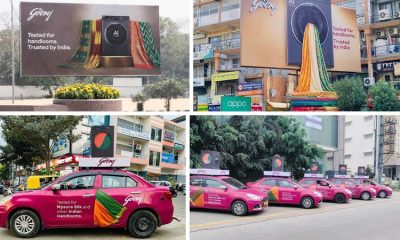
    Mumbai: Godrej Consumer Products Ltd (GCPL) on Tuesday unveiled Godrej Magic Bodywash, a ready-to-mix bodywash that aims to offer consumers a bodywash experience at the price of a soap, while ensuring it is eco-friendly by encouraging the habit of “reuse and reduce.” Actor Shah Rukh Khan has been roped in as the brand ambassador for the product and will feature in a mass awareness campaign.

    In 2018, under the ‘Magic’ portfolio, the Godrej Group’s FMCG arm launched its powder-to-liquid handwash, Godrej Magic Handwash. The bodywash is the second addition to the ready-to-mix category with which the brand hopes to empower people to make a sustainable choice for their daily life activities.

    The company also pledged Rs 100 crore to be spent over the next three years towards mass awareness initiatives endorsing the message of an environment-conscious lifestyle along with social initiatives.

    On the sidelines of the event held at Mumbai, IndianTelevision.com had an exclusive interaction with Godrej Consumer Products Ltd (GCPL) India chief marketing officer Somasree Bose Awasthi to know more about the FMCG’s sustainable initiative and what it hoped to achieve through it, both in the short as well as long terms. Awasthi also highlights the company’s plans to extend the concept of the ready-to-mix format across its other product categories, such as liquid detergent.

    A Godrej group veteran, Awasthi completes two decades at the conglomerate, having joined as a management trainee in 2003 and working her way up. She was appointed as GCPL associate vice president-marketing (personal care) & aircare in 2014 and elevated as the chief marketing officer (India) in October 2021.

    She also discusses the steps Godrej Consumer is taking to mitigate the effects of soaring inflation on the FMCG sector as a whole, as well as its marketing strategy and whether the company has reduced its AdEx and/or marketing spends to protect its bottom line in the current uncertain market conditions.

    Edited excerpts…

    On launching a new product category at a time when most FMCG companies are cost-cutting and postponing or putting on hold new launches due to rising inflation.

    Awasthi: Actually, the timing itself was an inspiration for us to launch this product. As you rightly pointed out, because of inflation, prices are only going up. Today, a 200 ml body wash would cost anywhere between Rs 100 and Rs 200, and people are possibly dropping the category. This was the time when we thought that if we cut down on the “low-utility items” (of the product), can we bring down the cost? It may sound like an oxymoron that at a time like this, we talk about reducing costs. But we realised that there was this formulation which allowed us to reduce plastic to only 16 per cent, reduce fuel to less than half, and reduce energy to just 19 per cent compared to the current body wash. Then we went right to the root and put in our margin, etc., and we realised that we could actually give it to the consumers at one-third of the cost (of a bodywash) and actually at the cost of a soap!

    So, for someone who wants to upgrade from soap to bodywash for a better experience (because it is usually softer on the skin than soap), but is unable to do so due to the inflationary pressure of rising prices, we are offering this at the price of soap.

    Thus, the timing was just right in terms of both the inflationary pressure, which we handled, while also making it environmentally sustainable.

    On whether the FMCG company hopes to target the youth and form a connection with the youth consumer segment through this “sustainable” outreach.

    Awasthi: Today, right from the youth to everyone, talks about wanting a better earth. Everybody’s aware of the climatic conditions, global warming, etc. Without a doubt, the youth enters the picture because they have strong opinions and questions about everything. This is something that they care about, so yes. But is youth the only target? No! Our TG is the changing mindset of every consumer group. Hence, this product that uses less plastic, energy, and fuel is for all those who believe that this behaviour change is critical.

    On whether the brand would look to expand the ready-to-mix concept across its other product categories, like liquid detergents.

    Awasthi: So, we have done this in the handwash category in 2018 with the powder-to-liquid handwash. Now, three to four years after that, we have incorporated it into the body wash category. And more is coming, but for that we’ll have to wait and watch.

    On addressing the challenges posed by soaring inflation in the FMCG sector, such as increase in input costs, fuel price increase, shipping costs, and so on.

    Awasthi: What we have done is try and keep the consumer at the heart of our efforts to tackle inflationary pressures. And that’s how this new product development happened. If I talk about other categories, like hair colour, for instance, we realised that people want to use the better quality of hair colour with the crème, but are unable to do so because it comes at a price of Rs 30 plus. So we launched a smaller sachet priced at Rs 15. Thus, in this inflationary environment, the smaller packet helped retain consumption behaviour without denting the pocket.

    Similarly, in other categories like soaps, we have been careful to not completely pass on the inflation to the consumer. We have also taken a hit, but we have ensured that we do not tamper with the quality of the soap.

    Thus, we have addressed the inflation concerns by understanding consumer needs at such a time. Firstly, by reducing the price, or by coming up with smaller sachets, or else by passing on some part of the inflation but not the full burden of it onto the consumer and by launching innovations like this. So there are a plethora of activities that we have undertaken to ensure that people can still afford and access our products. And this is the reason why we have been able to sustain our market leadership and also the consumer’s goodwill.

    On the overall market outlook on the FMCG sector currently- have the market conditions improved in the face of macro uncertainty and inflation?

    Awasthi: Inflationary pressures continue, and that is making us, the marketers, think differently. In the boardroom, the discussions are always around how we can ensure consumption continues. And that’s where these strategies are coming from. In such an environment where people are being very careful about what they spend, how do you ensure that your share in that pocket doesn’t come down? Hence, strategies like those spelled out earlier—reducing the product quantity, making it affordable, not touching the quality but absorbing some of the pressure, and hoping that consumers are not negatively impacted and are still able to get access to them. That’s what we are trying to do.

    On the effect on Adex, has there been a dip in the resources allocated towards advertising & marketing spends

    Awasthi: We are proud to say that we have continued launching our products and have been repositioning our advertisements. In fact, we have been adding to our advertising expenses by investing in newer products. For example, we recently shifted our Goodknight positioning from efficacy-led campaigns to a “full night’s sleep” campaign. The highlight of that campaign is the amazing bond that the father and child share and how he tries to ensure that the baby’s sleep is not disturbed. It has made it to some of the top ads recently.

    We also invested in a new category altogether. We used to advertise the toilet variant. Now we have started advertising for the aer-matic, the automatic fragrance diffuser. We are the first brand to start advertising in mass media for this premium product category (priced at Rs 570). Because even in today’s uncertain environment, there’s a certain kind of lifestyle that people want to have. It’s for those premium consumers’ benefit-seeking campaigns that we have launched this campaign.

    We are also advertising the smaller sized sachets of hair dye through Anoushka Sharma. Thus, we have relaunched, launched new products, and started new campaigns. So overall, the ATL expenditure has only gone up for us. What we believe is that at this point in time, the consumer is super-conscious of where he’s putting his money. So, if our brand is the one that is present-giving the right, relevant message to the consumers, we will get picked up. And we are seeing the fruits of that.

    On optimising the company’s advertising expenditure, which medium sees the major portion of the advertisement pie? Also, have there been any changes in ad spend allocation in the last two years since the pandemic?

    Awasti: We are chasing the consumer where they are. So we are present across 360-degree media, whether it is television, whether it is increasing investment in digital, whether it is going on print or on outdoor media. What we’re doing is segmenting the market by consumer profile and investing where we can reach the most relevant consumers. And that’s the whole strategy because every product is different.

    On changes in adspend post-pandemic, I would say, yes, there’s been a rise in the way we spend beyond television. Digital obviously has been a rightful candidate because more and more people have shifted to digital quite a bit during the pandemic, and that’s one place where we have raised our investment. Apart from that, we are doing quite a bit of print, quite a bit of outdoors etc. As I said, wherever we are getting maximum reach for our TG we are there.

    On tackling emerging competition from D2C brands in the personal care sector and marketing strategies to enhance penetration.

    Awasthi: The marketing strategy is very simple. It’s like the basics of marketing: understand the consumer’s needs in each of the categories that we are present in and, possibly, even not present in but seeing a trend. And enter the newer markets with products that are differentiated and relevant to consumers. That would be our objective. And for products where we are already leaders and doing well, that’s where we would be investing very hard to maintain our leadership.

    The emerging D2C brands are still in a very niche space, I would say, with the economy today still limited to a few. Of course, it’s growing and we have to take cognisance of it. But having said that, at the moment it’s still the general trade which is ruling the roost and that’s where Godrej has the power of distribution.

    The majority of Indian consumers still prefer to interact with their friendly neighbourhood kirana and to touch & feel a product before purchasing it. So as of now, we still have that strength. But yes, D2Cs are an emerging segment, and as and when we see fit, we will adapt our strategy to the changing environment.

  • “India is the strongest media market in APAC”: Intelsat’s Bill O’Hara & Terry Bleakley

    “India is the strongest media market in APAC”: Intelsat’s Bill O’Hara & Terry Bleakley

    Bill O’Hara and Terry Bleakley make for an odd couple – they are as different as chalk and cheese. O’Hara is a true blood American, while Bleakley is from that distant land called New Zealand, and is a Kiwi. But they have one thing in common between them: the company they work for – global satellite major Intelsat. 

    As general manager of media, O’Hara leads global sales/revenue, marketing and product management. He has also been charged with increasing its $700 million a year top line while keeping a sharp eye on the bottomline. An industry veteran with nearly six years at his current firm, O’Hara has taken a stab at turning into an entrepreneur when for three years from 2013 onwards he ran a direct-to-consumer streaming service called KlowdTV. 

    Bleakley , on the other hand, has been a bird man for almost all of his working career, with organisations such as Panmsat, Intelsat, and then Measat., following which he came back to Intelsat to grow its Asian business. 

    The organisation is well positioned to grow, even more robustly, not just in Asia, but globally. With a fleet of more than 50 satellites in the sky, teleport gateways, terrestrial networking infrastructure and robust managed services, Intelsat claims that it offers the world’s most extensive and secure communications network. Its focus now is on building the future of global communications with the world’s first hybrid, multi-orbit, software-defined 5G network designed for simple, seamless, and secure coverage precisely when and where customers most need it. 

    Indiantelevision.com founder & editor-in-chief Anil Wanvari caught up with Bill and Terry during last month’s BroadcastAsia conference in Singapore to get insights on how Intelsat is gearing for the requirements of a data and IP-driven media industry going forward. 

    Edited Excerpts:

    On how the company is structured today.

    Terry: We went through financial restructuring and came out of it about two or three months ago. We shed about $8 billion of debt. We took our debt from $16 billion to about $7billion. We are receiving $4.8 billion for the clearing spectrum for the US government. We have received $1 billion of that payment already. And we are also owed $1 billion for the cost of clearing that spectrum. And those payments come by the timeline that has been set which is by end-2023. That takes our balance sheet down about $2 billion in debt, way down from when we hit $16 billion of debt. We bring in about $2 billion in revenue. That’s a really low debt structure for an organisation. You normally want a ratio of 3 to 4:1. So our balance sheet has been as strong as it has been since 2002. As we emerged from our financial restructuring from a public company to a private company, the creditors whose debt was shared got new equity. So it is now a private company from being a public company.  

    On how Intelsat evolved in response to move toward IP delivery for video customers.

    Bill: I think that while there are a lot of changes in this industry, the satellite is still central to distribution, regardless of whether the content originates as IP or is delivered as IP to the end consumer. We recognise this and our strategy is very much to be IP native, to plug ourselves into different parts of the ecosystem, where our customers are going. We are a very customer-focused company – always trying to move with our customers as they move along. For example, as our customers have moved to the cloud with greater velocity, we too have been forging cloud partnerships so that we can source content directly from the cloud, directly from folks like AWS. With it, we have a public partnership so that we can bring content either to the cloud or take it away from the cloud and distribute it to our customer base. 

    Our value position as a media business, however, is connecting an audience with content. And we do that today with cable TV distribution and direct-to-home. But tomorrow, especially with the acquisition and integration of our commercial aviation business, we can connect new viewers with other types of content, perhaps on board planes. So streaming partnerships with many of our content owners today, and our customers could be the way we distribute OTT content tomorrow to a new audience we have not capitalised on serving in the past. 

    Terry: Further let me give you some numbers on this. Go-Go Commercial Aviation, which we acquired around 18 months ago, has around 1700 connected commercially around the world. They have 1300 on the backlog, and they are getting an antenna put on top of them as Covid goes away. That represented, in 2019, precovid, 200 million passengers a year. That’s an audience that was not tapped into with the media. If you look at 2019, how many people travelled on airlines globally, it is 4.5 billion people a year. So if we can stream content, whether it is some of our broadcast partners who are going direct to consumers, and start reaching this audience for them, we think there’s a lot of value in that. 

    And there’s another play with telcos. We are also building a 5G core for our network going forward, and we are going open standards. We call it a unified network. And as we develop this 5G core satellite network that can run with other networks like Jio and Airtel and others, then the idea is that the experience of a person with a mobile phone, when they get on a plan, then it’s like roaming to another country. It’s a 5G native infrastructure that we have got there, they don’t have to put an SSID number, they connect and they don’t realise they are paying for a service to their provider, a roaming charge. So you get past the issue of payment to an aircraft which is expensive. They feel like they are getting it for free because they are roaming on to our service which is our roaming 5G core that is sitting on the aircraft. And a whole new audience comes in from there too. 

    Bill: So fundamentally when you put these ideas together: the content owner who is going direct to consumer, like any one of them have done – Paramount+, Discovery+, Disney+, any of these major players. Or it is with an MNO. By controlling the ecosystem that is on board the plane – both for connectivity and the end user experience – that is an audience that is highly desirable and hard to capture. That we have the exclusive ability to deliver through satellite. 

    On how the airlines’ in-house entertainment system will be impacted.

    Bill: I think this will be determined on an airline to airline basis. It’s a three-way partnership: the MNO, the content owner, us, and the airline. And different airlines have different strategies. 

    Terry: They pay a lot for those entertainment systems to get the content. So technically, if people can access their content when they get on board then they can reduce the cost of an airline to get content. We already are seeing hybrid systems in play in airlines wherein you have inflight entertainment, you have live TV as an option. So you can watch sports live. And this is being made thanks to advancements in connectivity to aircraft through satellites. In a high throughput satellite, the antenna can take a lot more megabits. It’s a lot more efficient in delivering real-time internet to an aircraft that you can now do these services. We think there’s a play where we can do streaming services. 

    On the strategic plan going forward.

    Bill: Our five-year strategic plan is to be an aggregator of networks. Somebody has to sit in the middle of all this. And with a universal terminal – with multi-orbit, multi-band capabilities to integrate low earth orbit (Leos), medium orbit (Meos) and geostationary earth orbit satellites (GEOs) – that is operating via standards – open standards – integrated into a 5G core, 3GPP compliant. All of these things add up to a scalable system that develops the right kind of connectivity at the right time for the right application with one terminal, one modem, and one integration into the broader telecom infrastructure. I believe that’s a very powerful place to be. And I think it takes a very specific entity to do it. I think we are in the best position to do so with our infrastructure and our geo play. 

    Terry: As far as open standards are concerned, you have to remember satellites in the past, and I am talking telecom, not broadcast…and now the two are converging again…and it’s happening greater today than it ever was thanks to the internet and video…Satellites have tended to be heterogeneous. Satellites have tended to be on the side of a network, with their standards, its proprietary hardware. And it’s not homogenous like the telecom industry. We have been pushing a standard to adopt within 3GPP to have satellites included in that so that we are no longer a pimple on the landscape. 

    And release 17 of 3Gpp which comes out in the next few weeks, they have got a thing called NTN which is non-terrestrial networks. That allows satellites to be a part of the 5G core going forward. So that’s massive because the benefits of that as we start getting economies of scale of mass silicon production for 5G chipsets. So a Snapdragon chipset for a mobile phone is $30 today. We pay $300 for the same silicon in satellite modems because they don’t have the same scale that a mobile phone has. Once we get 5G in there we can reduce our silicon costs by ten-fold. That makes us more relevant there and we stream into the network a lot more efficiently. 

    But two other standards are more relevant: Meth (metro ethernet). We are the first satellite operator to be accredited with Meth. The other part is a thing called Digital IF. Today, our IF is all analogue and there’s no open standard around how we can take it from an analogue play to a digital one. We chaired the forum and Digital IF has created its first standard and Microsoft has come on board, SES has come along. All of the antenna manufacturers have joined up. And we are an open standard that takes analogue IF (intermediate frequency) and converts it into digital. 

    We are a homogenous network and what can this translate into: today the annual spends on telecoms and pay TV is $1.6 trillion annually. We only have one per cent of that. As a satellite operator we represent a whole selling capacity of $1 billion a year. So with our unified network and what we are developing around that if we can go from a one per cent share to two per cent…it’s huge and it’s not that hard to do. And we believe that that’s what is about to come with the adoption of the 5G core that we are developing which will be able to interface with MNOs, which are these giants we want to be part of.

    On how the geo play will pan out.

    Terry: We are at 52 geostationary satellites. Six of these are high throughput. We are all around the globe. We have 30 in the Asia Pacific. Our satellites are in the spectrum of one year old to 15 year old. We have also been putting some into inclination. And for two others we performed scientific feats like using missing extension vehicles to extend their life. Part of our $2 billion build out to our unified network is a virtualisation of the network, software defined satellites. So we have ordered four software defined satellites – two with Airbus, two with Thales. They are being built at the moment. Two will sit over Asia, Indian Ocean. Two over the American region. And they will be online 2025. We also have eight satellites in the factory which are going to be used as part of our clearance for spectrum for 5G in North America. We have 12 satellites in the factory.  

    On their view about India. 

    Terry: We have three very large neighbourhoods in India. So IS-17 and IS-20 are two of the satellites that are covering India. We have high MSO penetration to cable TV headends, which is still a very strong business. We saw a shift of some channels to Insat, but the tier one channels resisted that. Our business in India is stable. However, we did see a growth in movement from SD to HD from 2018 to 2021. We still see potential there. So then we got NXT Digital from Thaicom. And they are kind of loving it because we can do so much more throughout per transponder. We have got HITs, SunTV, and Viacom18. Thanks to Covid some other channels could not sustain themselves because of the lack of advertising revenue and the content crunch. Overall channel count decreased. Some of them were forced to look at distribution options. 

    I believe we have seen a great big rebound. India, we believe it is the strongest media market in the Asia Pacific. 

  • “The best in the film-exhibition sector is yet to come” – PVR’s CEO Gautam Dutta

    “The best in the film-exhibition sector is yet to come” – PVR’s CEO Gautam Dutta

    Gautam Dutta is a veteran of the theatrical business. As CEO of PVR, he is taking the multiplex major through one of its most exciting phases, following the tough two years of the pandemic forcing it to shut down cinema halls. 

    A couple of months ago – March 2022, to be exact – PVR’s promoters – the Bijlis – announced that it was amalgamating with another major theatrical player Inox Leisure, which is run by Siddharth Jain – the brother-in-law of Sony-Zee managing director Punit Goenka.

    Post the merger, the combined entity will have under its umbrella 1,546 screens across 341 properties in 109 cities. Post the merger, the joint entity is to be renamed PVR Inox. Screens that already exist as PVR or Inox will continue under those names but those opened after the fusion will operate under the combined name.

    Dutta joined PVR in 2006 and has managed various portfolios spanning from marketing, media sales and now overall operations. Under his leadership, media sales grew from Rs 7 crore to Rs. 375 crore in FY 2019-2020. He is also credited with launching the bowling chain bluO. 

    As CEO, Dutta is responsible for advancing PVR’s mission and objectives whilst keeping the brand relevant to the changing audiences, developing and monitoring strategies for ensuring the long-term financial viability of the organisation, promoting revenue and profitability, technology adoption and innovation. Dutta is also a director of Zee Maize, a subsidiary of PVR that owns the 4700BC Gourmet Popcorn brand

    Indiantelevision.com’s Ashwin Pinto caught up with the once-upon-a-time advertising exec (he worked with MullenLowe Lintas and Rediffusion DYR earlier on in his career) and spoke with him about consolidation in the exhibition sector, the future and why the theatrical experience and OTT will co-exist.

    Excerpts:

    On the factors that prompted PVR to merge with Inox Leisure.

    The combination would augur well for the growth of the Indian cinema exhibition industry, besides ensuring tremendous value creation for all stakeholders, including customers, real estate developers, content producers, technology service providers, the state exchequer and above all, the employees. With consumers at the core of the decision, the merger would focus on using the strengths of both the organisations to provide exceptional customer service and cinema experience to Indian moviegoers. 

    On whether consolidation is going to be a big theme in the multiplex industry in India and globally this year.

    The film exhibition sector has been one of the worst impacted sectors and is going through a rapid transformational change due to the advent of technology. To compete effectively, creating scale to achieve efficiencies, it has become imperative to consolidate for the long term sustainability of the business. The merged entity will allow it to accelerate the pace of growth for further expansion to more tier two and tier three markets and take the modern multiplex experience to new cities and towns across the country in a severely under-screened market like India.

    On whether consolidation will help multiplex operators negotiate better terms with movie distributors.

    Consolidation will bring enhanced productivity through scale, deeper reach in newer markets and numerous cost-optimisation opportunities while continuing to delight cinema fans with world-class experiences and landmark innovations. 

    On whether the direct to OTT movie release day and date release on OTT will impact the theatrical business.

    Cinema is an experiential medium that is difficult to replicate and the entire package comes in the form of technology, F&B, service standards and comfort. While OTT is long-form storytelling, cinema is a three-hour movie-cation experience. OTT like all other home entertainment will continue to coexist with theatrical entertainment as both are differentiated by content. 

    During the period while cinemas were shut, filmmakers responded to the exceptional circumstances by releasing new films on streamers, leading to a rise in OTT audiences. Audience behaviour to consume entertainment did change on account of the pandemic. Being confined at home, OTT became a necessity for people and became a part of their daily lives. But otherwise, home entertainment through VCR, video, DVD, cable TV and streaming was always there.

    Now with the cinemas open, producers are back to theatrical releases as this is where they make money. A theatrical release earlier before OTT makes commercial sense to them as they know the performance of the movie and pay the price for the content accordingly. But the good thing is that due to OTT, producers get back their money and they get encouraged to make more content. There is a much bigger opportunity and not as if one thing is eating into the other. 

    On whether the box office in the exhibition sector has come back to normalcy. 

    The pandemic was unexpected and unprecedented but it is not going to stay forever and people are getting vaccinated. Things have started to regain normalcy as people flock back to cinemas with a consistent supply of good films. A host of big-ticket films have hit the theatres post the third wave.

    Recently, Doctor Strange: In the Multiverse of Madness performed well in the opening weekend alone and has become the second-highest Hollywood grosser since the reopening of cinemas. Our belief in the ability of the industry to bounce back swiftly was further vindicated by our quarter’s results. Over 90 lakh admissions in March and a stellar content pipeline for the next few quarters tells us that the best is yet to come.

    On how PVR adjusted during two difficult years of the pandemic when it came to operational expenses.

    The Covid-19 pandemic disrupted business across the country and impacted the company’s operations. During this challenging phase, the company placed greater emphasis on safeguarding the health and well-being of its employees, customers, and communities on one hand, and continuing the business operations with greater responsibility on the other.

    With zero revenue from our business never witnessed any time in the past, sustaining business operations was very difficult with restrictions on normal capacity utilisation due to the implementation of social distancing measures. 

    The company undertook decisive action to mitigate the adverse impact of covid-2019 on businesses by implementing cost optimisation strategies, enhancing liquidity and prudent cash-flows management

    On whether the pandemic resulted in only certain kinds of films being viable in the multiplex when you talk about Hindi, Hollywood and regional cinema as older audiences may still be reluctant to visit multiplexes.

    In the film exhibition business, a multiplex is viable because it can screen a wide range of films be it Hindi, Hollywood and regional with different shows in different auditoriums catering to diverse sets of audiences. In addition, there is an audience for various genres of movies that get made. For instance, while Marvel fans span multi-generation though primarily in the 15-35 age group, there are more mature audiences for movies such as Kashmir Files which have a distinct and strong storyline. 

    On the other hand, the appetite for movie viewing is higher in south India with passionate audiences, hence we see major Hollywood movies being dubbed in south Indian languages to reach a larger section of the cinema going audiences. India is a heterogeneous market for movie content be it regional, Bollywood or Hollywood content with their unique areas of strengths and would appeal to all kinds of audiences.

    On how 2022 is looking in terms of the release slate.

    We are witnessing a growing trend with regional movies breaking the geographical and language barrier leading to a cosmopolitan effect. Starting from Pushpa – The Rise – a Telugu language origin film which was released in Tamil and Hindi – received huge appreciation from pan-India audiences. The ‘Indian film’ success formula continued with the huge success of RRR which was released in five Indian languages (Telugu, Tamil, Hindi, Kannada and Malayalam) and resonated with all kinds of audiences. KGF: Chapter 2 originally a Kannada film (additionally released in Malayalam, Tamil, and Telugu) saw the Hindi version breaking all records in the first weekend of release with huge success in Hindi-speaking regions.

    Audiences are returning to the cinemas for good content, unmatched sound and projection quality, the big screen experience and a community experience. Movie lovers can look forward to a robust content lineup due to the huge backlog of movies that are waiting for their turn for releases in theatres as big ticket movie producers space out their content to prevent any clashes with other big titles. 

    On whether PVR will be picking up films for distribution during film festivals like Cannes. 

    We conduct the movie distribution business through PVR Pictures, our wholly-owned subsidiary. PVR Pictures is the largest distributor of independent foreign-language films in India as well as a prolific distributor of Indian films as well. PVR Pictures aims to be the preferred distributor for Hollywood production houses that do not have a base in India for distributing movies. Our team is already there in Cannes evaluating the films that are being screened there for picking them up for distribution in India.

    On the potential for multiplex growth from the smaller towns and cities which do not yet consume much OTT content.

    Over the past several years, the movie-going taste has transformed in India, with audiences’ preference for multiplexes going up multifold. The multiplex growth is linked to the mall culture which has become an aspirational space, hence multiplexes have percolated to the smaller towns and have appealed to audiences due to limited options for out of home entertainment.

    A lot of expansion in PVR lately has been around in smaller towns such as Jamnagar, Narsipatnam and Rourkela in view of its strategy to increase its presence in tier-2 and tier-3 cities to address the growing demands for the big screen experience from the local populace. 

    Better infrastructure availability, improved lifestyle choices and rising disposable incomes amplify the aspirational levels of people in smaller towns. A young and large working population have led to increasing footfalls at multiplexes. The multiplex experience characterised by a great aural and visual experience, good ambience, and comfortable seating is some of the factors driving this demand. These factors act as great opportunities for multiplexes to expand in tier-2 and tier-3 markets. Mall development is happening at a great pace in these towns providing large spaces at lower lease rentals which multiplexes find attractive. 

    On whether the current box office split between Hindi, Hollywood and regional cinema will change. 

    In the pre-pandemic year of FY 2019-20 which is a true representation of the film exhibition business, Hindi was the largest segment with a 44 per cent mix in the overall Indian gross box office collections (GBOC). This was closely followed by 41 per cent regional and 15 per cent Hollywood. Regional movies’ share in total GBOC increased from 41 per cent in CY 2019 to 54 per cent in CY 2020.

    India produces the maximum number of movies due to its multi-lingual content and now Hollywood studios also consider India as an important market due to the sheer size of the movie going audience. Box-office collections of Hollywood movies have started to grow further due to their deep penetration in the Indian market. They are now being dubbed in multiple regional languages due to their easy acceptability among audiences located in varied geographies. 

    Regional films are becoming an important element of the Indian cinema industry, accounting for a considerable portion of net box office earnings. Films are being released in a variety of languages and the popularity and presence of regional cinema are growing at a rapid pace.

    On whether screen expansion will happen now or post complete disappearance of covid-19. 

    We are consciously foraying into the rapidly expanding sub-urban markets to address the growing demand for the big-screen experience. Setting our foot across small towns and cities across regions in India, we at PVR are trying to reinvent and redefine the cinema experience for our patrons to provide them with a memorable one each and every time they visit us. We look forward to expanding our footprint and there is a strong impetus on screen addition as the company plans to add 120-125 screens in FY’23.

    Besides, we feel extremely encouraged by the recovery trends and audience willing to come back to cinemas for high-quality content and hence we will continue to remain extremely bullish on the company’s long-term expansion plans to invest and innovate in bringing richer and more experiential formats for our audiences pan India. 

    On whether a 3D version of a movie helps grow revenues. 

    For the entertainment industry, a whole new level of interactivity and immersive storytelling and visual spectacle through presentation technologies combined helps retain cinema’s edge over home entertainment. These include 3D, Imax, 4DX, P[XL], Onyx immersive experiences that can’t be replicated at home. These formats command premium pricing, hence contributing to a higher average ticket price (ATP) and thereby revenues. 

    This is the precise reason in addition to Hollywood mega-blockbusters that come in these formats, there is an increasing trend among Bollywood and regional movies being made in 3D, Imax and other premium formats as well to get the extra share of the pie in the box office collections.

    On the sentiment towards cinema advertising amongst advertisers. 

    Advertising sentiments have been turning pro on a much faster rate with the exciting big-star releases that we witnessed week on week which get further bolstered by the robust content lineup of blockbusters lately announced. Providing further fuel to the positive sentiment is the week-on-week increment of occupancy and footfalls due to the robust content lineup. Witnessing this growing trend, most of our large-scale reckoning clients have already resumed their association to capitalise on this resurgence of footfall and occupancy to increase their audience reach.

    On the in-cinema advertising experiential solutions that PVR is offering. 

    Recently, we collaborated with OOH company Xperia group to introduce industry-first experiential in-cinema advertising in India. It would offer a one-of-its kind exposure to in-cinema advertisers and push the boundaries of on-screen cinema advertising to create a larger than life and immersive experience of brands in the mind of the consumer. This special feature of experiential in-cinema advertising intends to increase the ‘wow’ factor of the commercial which can make viewers stop, look, observe and relate.

    On whether inflation will impact families’ proclivity to spend on movie outings.

    The movie-going culture and love for films have long been ingrained in the public consciousness. Over the past several years, the movie-going taste has transformed in India, with the audience’s preference for multiplexes going up multifold.

    In PVR, we have witnessed that in FY 22 even though admissions were lower, higher ATP and spending per head (SPH) contributed to the increase in revenues. In FY 22, we recorded the highest ever ATP of Rs 235 and SPH of Rs 124 demonstrating the fact that movie viewing is a discretionary spend and people value this form of out-of-home entertainment to bond with their loved ones as a shared experience. This shared experience of watching a movie together rates much more than other entertainment avenues as movie viewing continues to be the cheapest form of out-of-home entertainment. 

    The average household income is expected to grow over the next few years, resulting in a greater number of people with capabilities for discretionary spending. This is likely to have a positive impact on ticket sales and viewership. It is estimated that the average household spending on movies was pegged at Rs 620 in FY 2019-20 and it is projected to increase to Rs 660-680 by FY 2024-25.

  • PFT is best to help M&E companies embrace cloud technology: CEO Ramki Sankaranarayanan

    PFT is best to help M&E companies embrace cloud technology: CEO Ramki Sankaranarayanan

    Mumbai: As media and entertainment companies increasingly make the move towards digital this spells a big opportunity for players like Prime Focus Technologies (PFT). It is the creator of Enterprise Resource Planning (ERP) software, CLEAR, for the Media And Entertainment (M&E) industry. It offers streaming platforms, studios, and broadcasters transformational AI-led technology and media services powered by the Cloud that help them lower their Total Cost of Operations (TCOP) by automating their content supply chain.

    PFT works with major M&E companies like Walt Disney-owned Star TV, Hearst Television, Channel 4, Sinclair Broadcast Group, A&E Networks, Warner Media, PBS, CBS Television Studios, 20th Century Fox Television Studios, Lionsgate, Showtime, HBO, NBCU, TERN International, Disney+ Hotstar, Cricket Australia, BCCI, Indian Premier League and more. PFT is the technology subsidiary of Prime Focus, which offers M&E industry services.

    IndianTelevision.com caught up with Prime Focus Technologies founder and CEO Ramki Sankaranarayanan to find out more about the company’s plans and growth strategy.

    What are Prime Focus’ focus areas for 2022?

    Driven by the need for velocity in a changing landscape of ever-increasing volume and variability, we feel that our customers are incredibly busy meeting their supply chain demands. One of the toughest challenges facing them is the coordination amongst vendors globally to meet the launch windows and yet be in control.

    With leading brands going global with their streaming platforms, there is a massive demand for content, not just for bringing back catalogue but also for commissioning originals worldwide. And we play a role in both. We endeavor to help our clients manage their supply chain on the Cloud.

    We enable bringing catalogue back to streaming platforms faster with AI (Artificial Intelligence) by discovering content segments, preparing cut downs, compilations and marketing clips, conform and create new versions, and re-time subs/dubs. We want to automatically generate, transcribe, and trans-create subtitles for our customers to expedite the entire process. In addition, with modern MAM, onboarding vendors, tracking consumption, reviewing vendor-specific dashboards, and more, we believe bottlenecks can be avoided, and our customers can take control of the supply chain.

    With originals, through Vision Cloud, we are looking at AI Everywhere across the content supply chain — Segmentation, Content Discovery, Conform, Content Localisation, Subtitle Retiming, Compliance and more.

    Our concentration is also on providing support for a complete spectrum of mastering, compliance, localisation, and versioning services specialised in managing projects to deliver the highest quality while adhering to tight turnaround times. We are hyper-focused on helping customers meet all these challenges, focusing on content supply chain automation in 2022.

    As we mark 100K hours of AI processing this year, what is worth mentioning is that our ‘Making AI work for you’ proposition has been hugely successful as our AI data and action tool kits have become one of the best in the entire industry.

    What is the strategy to grow the business?

    PFT believes in continuing to invest in innovations required for automation so that we can reimagine the supply chain with the application of AI in business processes wherever applicable. In addition, we focus on making AI work for our customers to ensure dramatic cycle time reduction and drastic reductions in reducing the TCOP further and let them take complete control.

    Further work order automation will undoubtedly expand our purview to manage tasks, internal resources, assets, and workflow orchestration across the multi-vendor supply chain for content versioning, localisation, QC, mastering, and delivery.

    PFT has been working closely with media and entertainment (M&E) companies to evangelise the benefits of moving to the Cloud and address dilemmas related to that important decision. With over 13 years of highly successful global hybrid cloud deployment experience, PFT is the best place to help M&E companies embrace cloud technology to drive business outcomes like greater efficiencies, lower cost of operations, and net new revenues. In addition, PFT shares its wealth of knowledge and best practices with customers wanting to make that ‘Journey to the Cloud’ but may not know when and how.

    What trends are we seeing in technologies used by the media and entertainment industry this year to improve their P&L?

    The M&E industry has been harnessing AI and extensive data processes for quite some time now. The industry had its initial issues of business returns not being significant compared to the AI/ML (Machine Learning) introduction costs. However, the missing point was that any M&E enterprise’s business problems in their totality could not be solved accurately by any one or more off-the-shelf AI solution in the market.

    The experiments with limited resources, budgets and the choice of available AI offerings hit a wall with the search for a complete solution that has adequate accuracy to make AI work for the business use cases.

    We are witnessing an acute interest in AI now, more than ever, and people are cautiously exploring the Cloud and how Cloud can impact costs and thereby influence P&L.

    With native media recognition, Vision Cloud makes AI work for our customers by solving real-world business problems through its perfect blend of consulting and technology, providing accurate and actionable data. It fuses the expertise of home-grown models along with world-class AI engines like AWS, Google and Microsoft, all wrapped in our secret sauce, ‘Machine Wisdom’ to make AI data more accurate and actionable.                    

    There is greater use of asset management in remote post-production areas (to continue to enable remote work in the post-pandemic era). Post-production and workflow have drastically changed. The need to ‘go remote’ has accelerated the need to embrace Remote Postproduction. In addition, the pandemic has made the industry successfully embrace virtualised edit workstations.

    • Footage required for a project has grown, and the I/O departments have expanded in size. Round-the-clock interventions have become more demanding for storage management, ingesting and restoring content for postproduction. There is an acute need to run postproduction workflows on the Cloud — create work orders, tasks within the postproduction process, etc. Collaboration is vital— share media and metadata, seek review and approval even from the remotest locations.

    CLEAR offers remote postproduction Adobe workflows with automatic, single-click backups from home to the Cloud and restoration to “my workspace” with different iterations every day.

    How has Covid-19 impacted the increased use of technology and workflows?

    Covid has impacted virtualisation at large in such a positive way. With new tools and techniques in production and postproduction, we have ensured non-stop workflows. In addition, cloud technology has made remote postproduction so easy and manageable.

    Using online tools for collaboration helped deal with the inabilities of being face to face during the pandemic, with reviews/ approvals of dailies/cuts managed effortlessly. Editors can collaborate on projects, share media and metadata, seek review and approval regardless of where they are, use visual mark-ups and free-hand annotation, and chat and share notes.

    In our case, over 600 editorial staff and thousands of artists continued working from home, generating Academy-winning work, all during the Covid times, thanks to technology and workflows. In addition, Prime Focus’ DNEG (VFX), animation, and stereo conversion arm, won its sixth Academy award in the last few years, substantiating that increased use of technology and workflows have been so much for the better.

    How important is Cloud technology, and how long did it take for you to develop CLEAR?

    Cloud adoption is already mainstream; if you are not on Cloud even now, you are already behind your competition. In 2022, more than $1.3 trillion in enterprise IT spending is at stake from the shift to cloud, growing to almost $1.8 trillion in 2025, according to Gartner.

    Cloud has explored and enabled new possibilities, making AI possible. With agility, it has helped to centralise business processes in the supply chain while adhering to utmost security standards. It provides flexibility and scalability, and those who were already on Cloud before the pandemic could adapt to remote working more easily than the others. It drives collaboration efficiency, and it offers better insights from big data.

    We are in the third generation of CLEAR. We started in 2008; CLEAR was born in the Cloud solving for 4Vs (variety, variability, visibility, and velocity) in the content supply chain. The 4 Vs are imperative for us in producing content as each holds its own forte’ Variety for PFT ranges from the genre, location, and talent to consumer preferences. Through velocity, we refer to our solving complex problems in lesser times in the digital age in tandem with consumer choices. Of course, we also believe in creating everything new; our variability is in new challenges, choices, suppliers, or content. Lastly, we believe visibility is essential to ensure transparency of all processes across the production supply chain.

    Deployed globally, CLEAR is now a leading choice for content enterprises to deliver compelling results and offers never-before-seen advantages to media and entertainment businesses in managing their content.

    Today, digital has made everybody a content creator. What is Prime Focus Technology’s strategy to enable companies to manage digital assets easier?

    Thanks to Cloud, best-of-breed tools are available today to the content creators worldwide – they can store, edit, manage, and distribute content. Cloud has made it viable for any creator to pick the world’s best application for every need, every user, and business case. Moreover, some of the best tools are now in the power of a browser with commercially easier and pay-per-use models.

    PFT believes in leveraging the power of AI to manage digital assets. Our CLEAR Vision Cloud, a Media Recognition AI platform, is a fusion of home-grown AI engines (over 35 & counting) and best-of-breed AI models enveloped by PFT’s unique Machine Wisdom layer. Some use cases deployed for our customers include

    · Conformance: Automatically conform regional edits, subtitles and dub tracks on global masters in a multiple frame rate baseline.

    · Segmentation: Eliminate play-out errors drastically and increase monetisation by auto-generating frame-accurate segmentation metadata.

    · Localisation: Automatically generate, transcribe, and trans-create subtitles in over 60 languages.

    · Marketing: Locate the right clips needed to build a variety of cross-platform promo material with the high-quality discovery of data automatically.

    · Content QC: Automatically quality-control the bag and tag versions of several promos daily to deliver 100% quality and prevent leakage in your advertising revenue.

    We make AI work for the customers by providing suitable learning to the AI models for specific content and business needs, altering the models to adjust for the specific nuances.

    What’s the importance of metadata in content discovery?

    Metadata is the key to transforming any audio-visual content into a dynamic asset. Tags have changed decision-making from days, weeks, and often months into seconds. Metadata aims to facilitate quick searches for specific content, making the quality of the tags used extremely important. The value of metadata in our current time is even further enhanced because the quantity of content that already exists and what is now being created are so extensive.

    If AI techniques can help human evaluators review new or existing content and create valuable metadata, it can help organizations unlock additional value in these assets.

    Using AI to improve metadata processes can help an organisational business case. Making the most of digital content often requires M&E enterprises to move beyond basic asset management and embrace new-age, Cloud-based MAM solutions. With extensive data models and built-in tools for cataloging and metadata tagging, such solutions help organise content in useful ways, make it easily accessible, and open new avenues to monetize assets. Ultimately, they streamline and improve the overall efficiency of digital content creation, boost monetisation, and drive creative enablement.

    Finally, how important are events like NAB and IBC?

    NAB and IBC are always great meeting places. It’s excellent having face-to-face interactions with people, learn about their challenges, and get to know what’s new in the arena. There was a much-relaxed atmosphere; unlike the previous NABs, it was well organised, complete with safety measures and protocols.

  • Working towards increasing penetration of kits from 17% to 26% by 2026: Prega News’ Joy Chatterjee

    Working towards increasing penetration of kits from 17% to 26% by 2026: Prega News’ Joy Chatterjee

    MUMBAI : Mothers everywhere and, perhaps, more so in India are held to unreasonably high standards, wherein they are expected to lean in at work whilst remaining primarily responsible for the domestic front. This perennial balancing act leads to an intense pressure to ‘perfectly’ manage both work and home for most working moms today, or ends with guilt about their inability to live up to socio-cultural ideals of a ‘good mother.’ It is this narrative that Prega News’ latest campaign #SheIsImperfectlyPerfect released ahead of Mother’s Day chooses to highlight and challenge. The pregnancy detection brand from the house of Mankind Pharma unveiled the second leg of the campaign on Thursday with celebrity influencers and mom bloggers that further attempts to normalise a more ‘realistic’ version of motherhood.

    IndianTelevision.com caught up with Mankind Pharma general manager- sales & marketing Joy Chatterjee to find out what drives the brand to challenge societal stereotypes on a sensitive subjects like pregnancy and motherhood. The interaction also saw a deep dive into the brand’s journey from 2007 to becoming a leader in the category with an 82 per cent market share through its marketing activities.

    According to the brand, it has witnessed a steep spike of over 20 per cent in its demand during the Covid-19 lockdown, and has been growing in healthy double digits annually. Over the years, Prega News has managed to create a unique brand proposition, becoming synonymous with ‘at-home pregnancy detection.’

    A marketeer who self-confessedly “works to balance bottom and top line” with more than 20 years of Industry experience, Chatterjee currently heads the OTC division of brands like Manforce, Health ok, Gasofast, Acnestar, Unwanted 72 etc- apart from Preganews- at Mankind Pharma, having joined the company in 2006.

    By Anupama Sajeet

    Edited excerpts:

    What was the thought behind the #SheIsImperfectlyPerfect concept, and why do you think it is essential to get these conversations going?  

    There is always needless pressure on every mom to be perfect, which puts her in self-doubt about being a good mother. The campaign encourages society to embrace the imperfection of a mother who is always on her toes to work best for her child. The entire ad was curated with the aim to spread the message that it’s completely fine to be not so perfect. The film breaks the age-old narrative of mothers always portrayed as the perfect personalities, highly adept at everything they do. It disintegrates this stereotypical image of a mother who always forces herself to be perfect in everything.

    With time the number of working women has increased over the years and the trend of living in a nuclear family has been evolving as a lifestyle option. Considering that this number is only going to escalate in the future, it is important to have conversations around embracing the imperfection of a mother to not pressurise the new generation and make them scared to enter the motherhood phase in their lives. We have all observed that working mothers are always chasing the balance between her job and being a mother. The pressure of being perfect makes her life stressful. We don’t want our mothers to live in any stress or guilt for not being able to meet the expectations of a “perfect mother” imposed by society.

    What worked in favour of creating brand recall value for Prega News since its inception?

    Since its inception in 2007, throughout the journey, the brand focused on educating women and their families about pregnancy to break the stereotypical mindsets and to address the myths existing in society. We continuously come up with campaigns be it on digital or on TVC to spread awareness and take a firm stand on what we believe in as a brand. These campaigns helped us in creating a special bond with the target audience.  

    One thing that majorly worked in our favour was that we were determined to develop an emotional connect with the audience by shedding light on the various issues faced by women and also portraying an inclusive conversation aimed at bringing about a social change. The primary purpose at Prega News is not to promote the product but we strive to touch upon the lives of our consumers and create awareness around the sensitive topic of pregnancy. We closely study the problems existing in society and come up with solutions to help people get acquainted with the options they have ahead. At Prega News through our initiatives, we urge the people to be more responsible when it comes to pregnancy.

    Given that this method (pregnancy home test kit) was very new for the rural masses, we strived to create awareness around pregnancy care for which we worked towards breaking the stereotype connected to pregnancy detection cards in rural India. Considering the intensity of preconceived notions existing in these parts of the country, we tied up with Asha workers and local NGOs who hold a strong influence on people as key opinion leaders for effective message reception amongst the audience. Also, to create awareness, we organised a caravan activity for 25 days across 125 districts of Uttar Pradesh to establish a better line of engagement with the people there through door-to-door invitations, announcements and distribution of gifts, and many fun activities. We took the opportunity to give detailed information on the do’s and don’ts during the pregnancy. From the proper diet with the right nutrition to what food to avoid was touched upon at large in the activity.

    Over the years, the brand has collaborated with some of B-town’s leading actors and of late, influencers. What was the idea behind roping in celebrities?

    We aimed at leveraging the various tools to increase our visibility amongst the potential audience throughout the journey of Prega News. When we started in 2007 we wanted to make the brand a household name by making it acquainted with the people at large. For which we collaborated with Neha Marda who was a popular face at that time in every household. Therefore, by roping in Marda we were able to introduce our product in the market. Over the time when we realised that Prega News has made a decent place in the market we wanted to amplify our reach by making it the top brand in the country. For this, we collaborated with leading B-town actors such as Kareena Kapoor Khan, Anushka Sharma and Shilpa Shetty to give mileage to our brand reception. Further to penetrate deeper into the market we also ventured into influencer campaigns where we roped in more than 21 regional mommy bloggers in an influencer activity campaign to spread awareness about the important RTBs of Prega News for expectant mothers.

    Considering that pregnancy is a very sensitive topic, what is the primary challenge you have faced in the segment?

    The lack of awareness amongst the people is the biggest challenge the brand faces till now. From the very initial stage, it has been a persistent roadblock acting as a deterrent that makes people skeptical about the product and inhibits them from coming forward to find solution to their persisting problem. Hence, to overcome the challenge we realised that along with the promotion of the product we needed to elaboratively talk about the sensitive problem of pregnancy at the root level and encourage women to break free from their inhibitions and come forward to try new solutions to improve the quality of their lives. To achieve this, we continuously organise on-ground events and collaborate with local NGOs and Asha workers to throw light on various aspects of pregnancy and make women acquainted with family planning as an important option.  

    How do you plan to further amplify the brand’s penetration into the market?

    To penetrate deeper into the market beyond the metropolitan cities, we take an alternate route, as mentioned earlier. In order to reach out to the masses beyond metropolitan cities, we deliver content in their preferred vernacular language to ensure better reception. Previously, we have launched Shakti Awareness program to spread awareness about the product’s benefits. Through the programme, we stressed upon how the pregnancy detection kits were important for early pregnancy detection that could help in reducing any chances of health hazards for the baby as well as the mother. We tied up with local Asha workers and NGOs to spread our message and establish a more personal interaction with the local people. They became the solution providers for the women in the village, helping them with the healthcare-related needs.

    The entire campaign was unique as it was the first time ever a pregnancy detection card brand had initiated rural activation. We organised local events at the field level to better interact with the audience. We invited 50 to 100 Asha workers and gynecologists to spread awareness around pregnancy and contraception. To date, we have organised 20 such events by tapping around 750 Asha workers across India.

    Share about your recent inroads into regional markets with local brand ambassadors.

    Over the years, we have realised that content is better received and reciprocated in the regional language. Audiences are better able to form connections with the brand and understand the comprehensive message the brand wants to convey when it is communicated in their own mother tongue. Hence, multilingual campaigns help in entering into a more concentrated market that lies beyond the metropolitan cities but can make up for a larger customer base. Hence, understanding that vernacular content enhances the brand penetration into the regional market, recently we collaborated with Kajal Aggarwal for a TVC as she is a well-known face in the South, helping us form better connectivity with the masses there. Prior to this, we had also roped in Priyamani to amplify our presence in the South and reach the remotest parts of the market. Likewise, Prega News is focusing to expand its visibility in other regional areas as well and has roped in Bengali Film actress Srabanti Chatterjee as the brand ambassador of West Bengal to intensify its reach and regional connection in West Bengal.

    Tell us about your future plans. Any upcoming announcements in 2022?

    Currently portraying a market share of 82 per cent, Prega News has marked consistent growth and come a long way from 67 per cent in 2019. Passionate to further expand our product into the unorganised and unbranded market we strive to form an emotional connection with the expectant mothers not just in metropolitan cities but make our presence felt in the rural market as well. Considering that the segment penetration across the country is very narrow, we are working towards a unified goal of increasing the penetration of kits from 17 per cent to 26 per cent by 2026.  

    We are intensively reaching out to small towns with the help of our rural outreach strategy to penetrate deeper into the regional market. Last year we launched an awareness drive with Asha workers in Lucknow to create awareness around the use of contraceptives and pregnancy detection cards. It was our first interactive session in Malihabad, Bachhwaran (Lal Ganj), Nawabganj (Unnao), Varanasi, Meerut, Kolhapur, Patna, and Bulandsheher in Lucknow and Bihar aimed at breaking the myths prevalent in society and motivating people to adopt family planning in advance. In the future too, the company is keen on conducting such sessions in a phased manner and amplifying its endeavor to educate people on sexually transmitted infections, different contraceptive methods, and regular use of available contraceptives.  

    Finally, would you say Prega News’ 2022’s Women’s Day campaign with its #SheCanCarryBoth message is at odds with your latest one for Mother’s day, which acknowledges that a mother can be humanly imperfect and not excel at every role as dictated by society?

    Both the campaigns are unique in their own way touching upon the different aspects of women’s life. I would say that the message conveyed through #SheCanCarryBoth and #SheIsImperfectlyPerfect complement each other. When we said that women can don multiple roles, we never implied her to be perfect. We encourage the empowerment of women where we do not believe in putting incessant pressure on them. Rather we want them to explore new possibilities in life at their own will and at their own pace, and to evolve over time by learning from their own experiences.  

    #SheCanCarryBoth campaign video:

    #SheSheImperfectlyPerfect campaign video:

  • Partnership with MI helped DHL expand TG & become a household brand: Sandeep Juneja

    Partnership with MI helped DHL expand TG & become a household brand: Sandeep Juneja

    MUMBAI: The sports sponsorship market is booming. Never before has more money been pumped into marketing sporting events, athletes and sports teams- globally as well as in India. According to a recent Nielsen study, sports sponsorships were up by 107 per cent in 2021, even as sponsorships drove an average of 10 per cent lift in purchase intent among the fan base. Today, aided by accelerated digitalisation, sports sponsorship offers brands entirely new opportunities than a few years ago, that’s especially attractive. And when it comes to sporting properties in India, it goes without saying that the Indian Premier League (IPL) is indisputably the mother of them all!

    For the second consecutive year DHL Express India, one of the leading players in logistics, parcel delivery, e-commerce shipping and international supply chain management is the principal sponsor and official logistics partner of Mumbai Indians (MI). The deliverables entailed in the partnership are indicative of the brand’s 360-degree approach. While the brand logo can be prominently seen on the back of the players’ jerseys, DHL branding is visible in the player dugout banners, stadium concourse, outdoor, as well as digital and print ads of the MI team and all its official stationery. And that includes the right to present the coin toss in one home match!

    As DHL Express (DHLE) India, enters its second year of partnership with Mumbai Indians, IndianTelevision.com had an exclusive interaction with DHLE India VP of sales and marketing Sandeep Juneja to try and understand the background and rationale behind the continued association. Having joined DHLE in 2004, Juneja worked his way up in the organisation, taking on the mantle of VP- sales & marketing in October 2013. He has played a key role in driving the sales and marketing strategies, especially in the new normal.

    Juneja also shares insights into the value and ROI that DHLE gained basis the partnership as well as the campaigns it has planned to further leverage the collaboration. Despite its bad run at the IPL this year the MI team remains one of the crowd favourites. The brand recently released its latest ad film featuring the MI players titled ‘DHL #TheTeamBehindTheTeam for Mumbai Indians – 2022.’

    Edited excerpts:

    On the value/ROI that DHLE gained basis its partnership with Mumbai Indians in 2021

    2021 was a bit different for the Indian Premier League. While it started with an in-stadia audience, the second wave of Covid-19 put a halt to the game, moving it to the later part of the year. However, for DHL Express India, it still ended up being a fruitful association with the team. As per Broadcast Audience Research Council (Barc) India data, while the tournament’s reach (live matches on TV) in India was 405 million, matches featuring Mumbai Indians were watched by 306.5 million households. In fact, the buzz on social media around the team also saw an 18 per cent growth over 2020.  All this data only strengthens our belief in Mumbai Indians and this partnership. In fact, the presence of DHL’s logo on the back of the jersey positions us as the team behind the team and we have enjoyed great brand visibility with this association.

    On the background and rationale behind the long-term partnership with IPL & Mumbai Indians

    DHL, globally, over the years, has supported some of the world’s largest and most popular sports formats – from football to rugby, Formula One and even e-sports. Collaborating with prominent events helps brands, such as ours, to generate leads, and build customer loyalty and credibility. Cricket is a game that is well-loved and followed with ardent devotion in India, and many nations across the world. If you talk about the Indian Premier League, it is a festival in this country. The league has been able to successfully bring together sports and entertainment, making it an event for everyone, regardless of age or gender. IPL brings countries together and gets them all on one single platform.

    Even within the IPL, it was essential for us to partner with a team that shares similar values. For DHL Express, the partnership with Mumbai Indians demonstrates our support for sports given the shared spirit of speed, passion, teamwork, and a can-do attitude. Mumbai Indians has proved its mettle in the game. If one has to go with pure data, they tick all the boxes: five-time champion, most popular team in IPL, highest social media buzz generator during the game, and many more. Mumbai Indians demonstrates “Excellence: Simply Delivered,” which is in sync with our mission. Therefore, we are glad to be the principal sponsor and official logistics partner for Mumbai Indians for the second consecutive year.    

    Sports sponsorships, like the one with Mumbai Indians, gives us an opportunity to widen our canvas and expand our target audience. It helps us build brand awareness and equity with not only a more varied target group but also reconnect with our customers and stakeholders through multiple touchpoints, a necessity in a post-pandemic world. Through this partnership, we hope to better connect with our customers and reach out to a wider customer base.  

    On how does the brand aim to strengthen its bond with its TG through this association

    The viewership data for IPL suggests that the tournament cuts across sections, gender, geography and age groups. It is a great platform to reach out to people, primarily in the age group of 25-35, especially from tier I and II cities. This partnership with Mumbai Indians has helped DHL expand its target group and become a household brand. This season, we are looking forward to amplifying our MI partnership through a carefully curated and immersive 360-degree campaign with a focus on digital.

    With our various digital activations, we created multiple touchpoints, thus giving us an opportunity to have instant and engaging conversations with our audiences across gender, geography, and age groups. We have introduced an all-new brand film featuring the crowd favourite Mumbai Indians players, to establish ourselves as the team behind the five-time league champions, as well as our customers. In fact, our digital video on #TheTeamBehindTheTeam trended number two in the first hour of it being activated on Twitter. Also, via our several social media fan contests and campaigns like Six for a Cause, DHL Match Ke Stars, the interaction with both the MI players and fans were much more authentic. We were able to tap into a new set of customers and build a greater connection with our existing customers via this crowd favorite game.

    On the strategy and activations planned to further leverage this collaboration

    With the traditional and digital worlds merging, it is vital for brands to leverage new technology and utilise digital platforms to develop engagement like never before. After a fruitful partnership last year, this season, we aim to amplify the association via a 360-degree marketing approach. Through digital, social, radio, print, and outdoor mediums, we will take our activations to the next level. We have leveraged all these mediums to ensure our visibility on and off the field.

    Given that people are stepping out of their homes again, we have focused on outdoor advertising as well. This will include personalised branding on over 50 DHL vans, outdoor ads & radio spots. We are working on creating interactive content to engage with our target audience on social media.

    We will also engage with Mumbai Indians fans as well as our current and potential customers via fan contests on social media like ‘DHL Match Ke Stars’ and through our alpha campaign – ‘Six for a Cause.’ The campaign will showcase Mumbai Indians players holding interactive sessions with the blind cricket team. We will also donate Rs 20,000 for every six that a MI player hits during their game. The proceeds of this will go to Samarthanam Trust for the Disabled which supports blind cricketers.

    The focus for any brand that wants to build and retain its market position should be put on continuous user engagement, via digital touchpoints such as search engine marketing, snackable digital content, online knowledge sharing and round-the-clock availability of sales executives. We employ a 360-degree marketing mix to build stronger customer relationships. Be it television, radio, online or print, we try to ensure our brand visibility across media channels. We believe in leveraging all these channels throughout the year.