Category: Executive Dossier

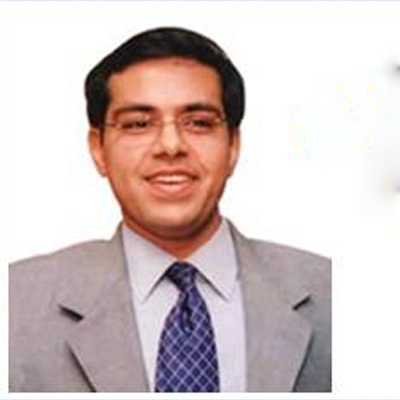
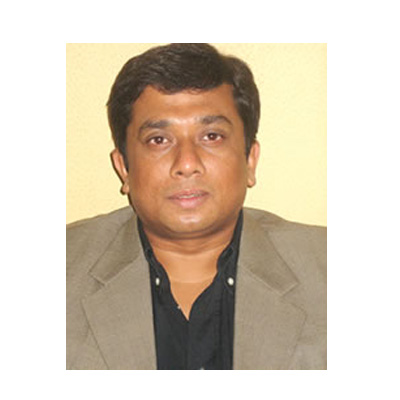
  • ‘Our target is to reach the number one position in Kerala market within the next two to three years’ : Sudhakar Jayaram – Amrita TV director & CEO

    ‘Our target is to reach the number one position in Kerala market within the next two to three years’ : Sudhakar Jayaram – Amrita TV director & CEO

    Amrita Enterprises Pvt Ltd (AEPL), promoted by a group of investors closely associated with Mata Amritanandamayi Devi, launched Amrita TV in 2005 April on an initial investment of Rs 500 million. On the launch, its positioning as a general entertainment channel raised eyebrows. After all, the channel was named after Mata Amritanandamayi Devi, the renowned spiritual leader from Kerala.

    The initial scepticism soon gave way to acceptance and acknowledgement as the channel made attempts to develop its own identity in the highly contested Malayalam language market. The icing on the cake came when Amrita TV made an almost clean sweep at the 2005 Kerala State TV Awards. Though yet to pose a real threat to market leaders Asianet and Surya, the one year old channel is now recognised as one of the strong players in the market by pundits.

    At the helm of affairs at Amrita TV is the young and sophisticated director and CEO Sudhakar Jayaram, who has spent over 15 years in global organisations such as Bank of America and Infosys, USA, holding senior management positions. Jayaram returned to Kerala in 2004, responding to the motherland’s – or rather the Mata’s — call, as he puts it. Amrita TV was about to launch, and as fate would have it, Jayaram was offered the top management position.

    Not just that! He has also been given the responsibility to manage the Amritanandamayi Super Specialty Hospital at Kochi, Kerala. Entertainment and medicine stand oceans apart, but this youngster holding MBA, B.Tech degrees has made the task look much simpler. On the occasion of an Onam celebration Amrita TV conducted in Mumbai early this month, Indiantelevision.com’s Bijoy A Kmet up with Jayaram.

    Excerpts:

    Amrita TV has completed one year in the Malayalam television market. Please give us a perspective on the journey so far?
    Looking back, I would say the channel has done a decent job. Top of all our achievements, I would like to mention the 15 State TV Awards we won in our inaugural year itself. To make a mark, we have opted for quality content, which is youthful and vibrant.

    We have in fact a three-pronged programming strategy in place. First of all, we have our share of unique channel ID programmes, exploring the programming segments untouched. We have got lot of accolades from the market on the quality of our graphics and the high visual standards.

    Then, we tried to give a total new dimension to the market’s popular programme genre, which included serials and other entertainment shows. Our strategy was to explore progressive ideas and thus distance ourself from run of the mill stuff. Thirdly, we made our best efforts possible to depict our culture and heritage through various non-fiction programmes. And the results have been very encouraging for a new channel such as Amrita TV.

    What was your strategy to gain an identity in this highly competitive market?
    It is a very competitive market, with market leaders (Asianet & Surya TV) commanding almost 70 per cent share. But, at the same time, this is a market where you can make a mark with innovative strategies. You need to spot the vacuum and work on areas which are still unexplored and then you will have a decent product with its own identity in hand.

    Our entry strategy was to come up with a product, which is classy and vibrant, different from the existing products. We wanted to make Amrita TV very dynamic and also with full of life. And at the same time, it was very important for us to carry along the mass General Entertainment Channel (GEC) tag with entertaining and appealing content. The idea was establish our roots as early as possible.

    The core team of Amrita TV is constituted by people who are well aligned with the market professionally. For example, the programming department is headed by noted film director Shyamaprasad. The news department is lead by noted journalist Neelan, who has over 35 years experience in electronic and print media. Getting such established professionals on board has also helped us position ourself really well and create a strong awareness in the market.

    Which are the key factors that are driving this market? What are the latest market trends?
    Kerala as one of the most challenging television markets in the country. The viewers here are very different and you just can’t play with your strategies in Malayalam. I would say, if a strategy works here, you will be able to move it more confidently in the other regional markets.

    Like any other television market, soaps, movies and news play key roles in the Malayalam market also. The prime time band is ruled by soaps on weekdays, while weekends are dominated by films, film-based programmes, non-fiction shows and programmes covering the music genre.

    Malayalam television is ruled by the female audience. Even when targeting this segment through prime time soaps and other programmes, you need to alter this system a bit to help the market to expand. How will you do it? The answer is ‘youth programmes’. If you can make programmes, that can rope in females and the youth at the same time, that would make some positive impact on the market.

    Given that Soaps, Movies and News drive the market, what is Amrita TV’s strategy to explore each of these segments in the best manner possible?
    Our channel driver programme is a reality talent hunt show Super Stars, made on the lines of Indian Idol. This programme is doing well in the 8:30 – 9:30 pm slot and we enjoy a channel share in the range of 12 – 16 per cent in this particular time band. Then we have our dose of serials for the prime time band. As I mentioned earlier, we have made our best efforts to make our soaps stand out. We have made it a point not to manipulate the viewers’ emotions through soaps. Our soaps are not emotionally far fetched, which give a lot of stress to the viewer. Our soaps are there just for entertainment.

    Then we have our USP in our non-fiction programmes which are made in-house. These are mainly cultural programmes, which actually carry along our channel ID. We have our non-fiction programmes well spread out across the week. Our belief is that there is space for good, tasteful and nourishing content on TV, as people are coming back to their organic roots.

    Then there is this biggest draw of the lot – Movies. When we launched, the lack of popular and blockbuster movies had crippled our weekend strategies to an extent. But the issue is being resolved now. In the last one year, we have acquired 15 of the 40 top Malayalam box office grossers. We have lined up two of the latest blockbusters for the upcoming Onam festival. Amrita TV has a library of about 500 movies now.

    Having said that, I would like to point out that, Amrita TV will never bank on movies. We want to explore all the programming segments and movies are just a part of this strategy.

    We have given a lot of stress on our news programming also. Amrita TV has a strong network of journalists across Kerala and Delhi, while stringers and independent reporters bring us news from the other areas and international locations. In the next phase, we have plans to beef up our news segment. We are planning to set up bureaus in all the hotspots of the country, including Mumbai, Bangalore and Chennai.

    On an average, how much you spend on programming per month?
    Programming budget ranges from Rs 65,000 to Rs 200,000 per episode for soaps. We spend about Rs 20 million on our in-house productions per month.

    If a strategy works in Malayalam, you will be able to move the same more confidently in the other regional markets

    Last year, the lack of blockbusters in your kitty has seen you adopting the strategy of dubbing popular Tamil movies in Malayalam. Did the strategy work and will you retain this tactic in the changed circumstances? Also, is there any plan to explore dubbed Hollywood movies?
    Yes, we have been telecasting popular Tamil movies dubbed in Malayalam – especially during festivals such as Onam, Christmas and Vishu. This has been an inspiring experience for us. Our decision to use popular Malayalam cine stars for dubbing has really helped us to pull it off. For example, we had Mohanlal himself dubbing for Iruvar, when it was dubbed in Malayalam. We will retain this strategy. Amrita TV will be telecasting two Tamil blockbusters dubbed in Malayalam during the upcoming Onam festival.

    We have no plan to explore dubbed Hollywood movies as we believe that, Malayalam audience will only accept a theme, which has lot to do with the Kerala culture and heritage. On the other hand, Tamil movies serve this purpose really well.

    Telefilms also is an area, where Amrita TV has proved itself. We have produced about 22 short films last year and have plans to do almost the same number in 2006 also. We have a strong team of creative professionals, who bring lot of quality to the table.

    What is your take on the movie acquisition scenario in Malayalam?
    The number of films produced in Malayalam has gone alarmingly down and consequently, acquisition costs have shot up. Acquisition rates have shot up by almost 60 per cent. Since movies are a crucial part of the strategy in Malayalam, you can never opt out of the game. Last year, we set aside about Rs 100 million for movie acquisition.

    Event programming is evolving in the South Indian market in a big way? What is Amrita TV’s strategy?
    Amrita TV does not do many events. Our strategy is to conduct events with a relevance. Events should serve a purpose. In my opinion, the size and magnitude of an event is important and not the quantity. If you are doing an event, it should make an impact.

    This month, we conducted a De-addict Kerala campaign, which was an on-ground activity to highlight the after-effects of addiction, stories of addicts, de-addiction centres, preventive and curative aspects.

    I won’t be able to give a low-down on the event budget as it varies from one activity to another.

    What is the size of the Malayalam television market in terms of advertising revenues? How is Amrita TV positioned?
    The size can be in the range of Rs 1.7 billion to Rs 2.2 billion. The market expansion is mainly driven by the retail boom that Kerala is witnessing presently. Hence, retail clients command a significant place in any channel’s sales strategy. Also, the entry of new players such as MM News and Bharat TV can expand the market further. After Asianet and Surya, Amrita TV commands a prominent space in terms of value for money. Being a young channel, we are making our best efforts to better our position.

    What is the plan of action for 2006 and what is your take on competition?
    We target to reach the market leader position within the next two to three years. The first year’s result has boosted our confidence tremendously. Now, we want to expand this clout. We are looking forward to the real battle.

    I think the next five year strategy may be totally different from that of the past five years. New viewer habits will give shape to new strategies. The formulas are changing. You need to adapt yourself to the changing times and we are very strong in this area. Being a relatively new player in the market, Amrita TV has got the flexibility and the know-how to understand and accept any new challenge and this is our main advantage.

    We have been constantly working on our content. We keep a tab on the market trends through research updates and studies. For example, before launching Superstar, we had done a thorough research on Sony’s experience with Indian Idols. So, instead of letting the competitor’s moves decide your next strategy, we have been making consistent attempts to know the audience pulse and bring new products accordingly. Keeping the viewers happy and filled is the real challenge. Competition is secondary.

    Please comment on your progress on the distribution front? Have you managed to get as 100% presence in India by now? What is the plan for foreign shores?
    We are now in the prime time band of the Malayalam bouquet across Kerala, placed near Asianet and Surya TV. We are also available in Delhi, Mumbai, Chennai and Bangalore, in certain cable networks. We are working on this front and will be improving our availability across the country at the earliest. We are also available on the DTH platform Dish TV.

    On the international front, Amrita TV is available in the United Arab Emirates and in the US. We have also signed a carriage deal with the IPTV operator JumpTV. Amrita TV will be entering Europe and the UK very soon. We are working on the plan.

    Onam season, which contributes maximum to the kitty of Malayalam channels, is here. What is the tactic you have employed to market your Onam shows the best way possible?
    Onam festival is the most crucial festival for any Malayalam channel. Amrita TV has conceptualised a slew of innovative programmes for Onam. We have explored all the areas of entertainment thoroughly to bring an array of quality programmes. These include telefilms, music shows, film-based programmes, talent shows and cultural programmes. As I mentioned earlier, we have a couple of latest blockbuster movies to drive the festival. We are well-prepared to take on the challenge.

    What are the new ventures AEPL is planning in the next phase?
    AEPL is planning to set up a separate division for feature film production. Though the business plan is still in its primary stages of evolution, the company is targeting a February 2007 launch of the initiative.

    The plan is to enter into partnership with key stake holders in the market such as producers and distributors and offer our expertise in this field to launch feature film projects. We will be also launching solo projects as well, making us an independent producer. An important objective of the initiative is to solve the supply demand issue that, which is threatening the movie acquisition business presently. This way, we will be able to beef up our movie library with latest hits.

    Then we have plans to launch more channel initiatives, but a concrete plan is yet to emerge. Our next venture will be a news channel – I can say at least that.

    What is the role played by Mata Amritanandamyi in the channel’s operations?
    Mata Amritanandamyi neither plays any role in the channel’s operations, nor is she involved in the business financially. We have a spiritual programme, conducted by Mata on our channel and that’s it. But, we are driven by her vision and it gives us immense strength and courage to execute the strategies.

    Though the ultimate aim of Amrita TV is not really commercial, the market demands such a stance. To stay afloat in this business, you need to position yourself as a strong commercial player and we are just doing that. However, our focus remains on adding quality to people’s lives through human-oriented programming.

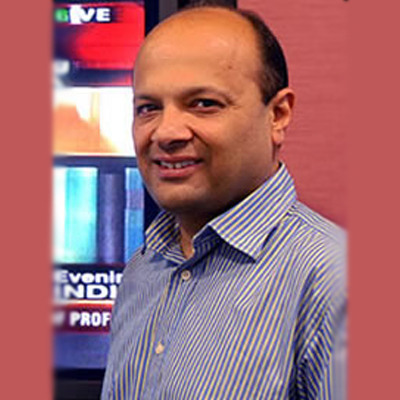
  • ‘We believe that it is not in numbers but in the quality and nature of programming that is getting us noticed’ : Aditya Tripathi – Discovery Lifestyle Networks vice president

    ‘We believe that it is not in numbers but in the quality and nature of programming that is getting us noticed’ : Aditya Tripathi – Discovery Lifestyle Networks vice president

    Discovery Lifestyle Networks VP Aditya Tripathi began his professional career with Living Media India Ltd., and has worked in senior positions with some of the biggest media houses in the country. He made the move to Discovery in 2000 and his expertise in creating brand empathy, marketing and promotion has gone a long way to reinvigorate the various Discovery brands in India, especially Travel & Living.

    India is attaining prominence because of the socio-economic developments taking place in the country. Ahead of Discovery Travel & Living’s (DT&L) first local production The Great Indian Wedding to be aired on 20 August, Tripathi spoke to Indiantelevision.com’s Usha Thomas about how the lifestyle channel was gaining eyeballs with incessant demand from both Indian and foreign viewers for India-centric content.

    Excerpts:

    How did the concept of a lifestyle channel come about?
    With its growing and dynamic TV market and emerging middle-class, India was the right place to begin Discovery Networks’ new lifestyle endeavour. Some years ago, we took stock of the international TV landscape and we identified the presence of established global leaders in different genres: news, sports, movies, factual. And, among all this we identified a niche in the lifestyle space. There was no global brand and given that we had some experience in lifestyle and travel genres, we felt that this was an area we could occupy and dominate in the years to come.

    The senior management from the parent group came to India and wanted to be convinced that India was the right place to launch a lifestyle channel. After a day of the usual presentations, we took them to Gurgaon and showed them the homes, buildings under construction, call centres and malls. They looked around and said if this is the future of India, then lifestyle is the future of India and right there in the middle of a shopping mall, we were given the go ahead to launch DT&L. And, hence India was the first country to launch lifestyle networks.

    What is the positioning of the channel?
    Since its launch in November 2004, DT&L has striven to make its positioning distinct from that of factual channels. From day one, the strategy of our channel was to offer varied, non-fictional content as it is our strength. But, we don’t need to stick to factual alone. We can be factual as well as be in the lifestyle group and our positioning in the lifestyle group is aspirational, yet attainable. It’s just not about enjoying life, it is about celebrating life. It is good looking entertainment. So our channel is aspirational yet attainable, hedonistic, pacy, edgy …always stylish and trendy. We believe in good looking, entertaining television.

    Who is your target audience?
    Our primary target audience is upscale SEC AB audience – males, females and couples, between the age group 18 – 45 years. But, for us SEC, age, gender are limiting definitions. Our focus markets are Top 10 cities in India. Apart from these, the aspirational character of the channel will attract a secondary audience as well. It’s a state of mind that we are looking to capture so we are targeting a person with an international outlook, a person who has travelled abroad, may have even lived abroad, whose kids may be studying abroad and one who has seen international television and international lifestyle. This is common in Travel & Living in the UK, US, Singapore, all over the world. Nationality is not important for people with this mindset.

    Outline your performance in viewership, reach and among advertisers?
    Today, we reach 3 out of 4 cable homes in the country and in the top six metros, we reach 4 out of 5 homes. As far as viewership and relative channel share compared to other English entertainment channels Star World and Zee Café is concerned, we are growing considerably with time. We don’t share content with these channels but almost eight months after our launch, we had overtaken Star World in terms of numbers.

    Word of mouth and strong advertiser response is an indicator of our success. We are looking at the mindset which goes beyond demographics.

    Though TAM is a very democratic form of measurement designed to measure television groups across the country, groups, cities & towns, it is not designed to measure our target audience. For us, it is the people in malls, in fine dining restaurants, our ad agencies who are watching the channel. We believe that it is not in numbers but in the quality of programming and nature of programming that is getting us noticed.

    DT&L is about innovative, up market and interesting programming and we seek to experiment with properties that transverse different genres. We also pride ourselves on understanding our audience. Audience feedback has greatly attributed to our success and word of mouth is what makes us tick.

    In the first year, we had 236 brands on the channel and each time we go to an ad agency, the decision makers and their families are watching the channel so we have got very positive response from the advertisers to this channel. Also, despite the rapid growth of the television industry in India, advertising spends on lifestyle brands have traditionally been restricted to the print medium. The lifestyle channel provides advertisers with a dynamic media vehicle to reach a well targeted and defined viewership profile. It attracts 120 advertisers from across product categories, further cementing the channel’s unique value proposition.

    DT&L is providing a variety of shows, apart from just travel based shows. The programming strategy on DT&L since 2004?
    DT&L is essentially a lifestyle channel and along with travel, the programming will give viewers the inside track on all the latest trends in luxury and includes travel, health, relationships, wine, cuisine, home, car, bikes, the good life with a little bit of celeb and glam life.

    We have evolved keeping our original concept in mind and have grown far more than expected since our launch two years ago. Content is the key driver. We have made it our policy to incorporate as many different genres as possible and to acquire international programs or create localised programming in order to form a strong bond with our viewers.

    The Theme Week and Sunday Brunch strategy introduced in end December 2005 targeted at both viewers and advertisers. These programming blocks were created to appeal to the various target groups at times that they prefer while at the same time giving advertisers a focussed platform to reach key audiences.

    We have introduced a number of genre-defining programmes that have never been seen before in India, for example,American Chopper, Faking It, Million Dollar Agents, Miami Ink. We have all along explored different different genres of programming and experimented with reality factual programming with a difference.

    We don’t do celeb focusssed programming and are not overawed by celebs. Shows that we have incorporated have ranked extremely high in terms of quality and appeal and capitalize on wit and local humor, apart from being real.

    What are your views on DTH in India?
    The encouraging DTH scenario was also one of the reasons why the Indian management had been advocating the case for a lifestyle network in India. The channel has been established as a lifestyle channel, roping in the upwardly mobile. Currently available in 22 million homes across the country, DTL is also now available on the DTH platform.

    Today, we have the choice to choose the bouquet you want and the channel you want, so we welcome it. Internationally, the Discovery family of channels has thrived in all DTH markets. All three of our channels – Discovery, Animal Planet and Travel & Living are available on Dish TV and Tata Sky. We get to see the channel we want rather than with cable ops where they run all the channels and one can’t choose. For DTH, exclusivity is important and that suits us.

    10-15 per cent of the programming will be Indian. At any given point, we will have one local show on air and every quarter, we will premiere a new series

    Can you tell us about Discovery producing programs in India?
    India’s relevance on the world map is increasing. There are more people around the world interested in India, coming to India to work and travel so therefore DT&L is producing programming on Indian audiences but this will go to our channels across the world. The programming will show India in a positive light and in turn we get eyeballs from other regions who see these programs and maybe plan to visit India on seeing it.

    The way the Discovery format is used, we make a program on one part of the world and we show it in other parts of the world. That is the nature of our programming and all the shows on the three channels Discovery, DT&L and Animal Planet are of global interest. Similarly, we know our channel here is an international channel that provides high quality entertainment for a global audience.

    Give us the complete lowdown on the first local production The Great Indian Wedding?
    With our decision to commission local productions in India, we had been identifying various ideas that fit our programming strategy. Amongst many other concepts, we zeroed down to The Great Indian Wedding show. Also, in our discussions with many production houses, Delhi based Blue Mango came up with the very same idea. They were given the go ahead to make a pilot, mainly to serve two purposes: Get the formula right and then make the rest of the series.

    At the time that we decided on the wedding series, the media was all agog about the Chatwal wedding. Many other channels were trying to get the coverage and when we spoke to the Chatwals, they readily agreed to give us exclusive access to all the happenings on the wedding which was to be held in three cities in India – Mumbai, Udaipur and Delhi.

    The Great Indian Wedding is a one of a kind series, allowing the viewer to experience the wedding as an insider. The focus is on weddings with a difference and have a twist to them: opulence, glam quotient, location and theme. The pilot episode premieres on 20 August at 8 pm.

    During the ad break of this pilot episode, a banner will be streamed asking viewers if they have a great Indian wedding coming up. Based on the responses and our research, the 13 part series will be made. The remaining episodes will go into production in the 2006-2007 wedding season. We are looking at ethnic, different weddings and need not be of the same scale as the Chatwal wedding. Apart from the many applications received for the upcoming wedding season, we expect many more once the pilot episode is aired.

    The programme captures the glamorous theme parties extending from exotic locations like Jag Mandir in Udaipur to premium hotels in Delhi, the striking performances by Indian and international artists and the romantic and religious wedding ceremony. The host, Natasha Mago presents an insiders view, chatting up the bride, groom, guests, the challenges and frustrations of the wedding planner and the actual wedding ceremony.

    All guests invited at the wedding who appear on the show have given their signed consent in this regard, mainly to avoid legal hassles later, what with the high celeb turnout for this wedding.

    Our aim is to showcase India and showing a wedding held at the opulent and historical venues at Udaipur & Delhi, we hope to do our bit in promoting tourism in India. Keeping in tune with the high standards that Discovery is associated with, budgets were high especially as it was all shot on digibeta cameras. It was not studio based and there will be no compromise on the quality of the film, light, sound and effects used. We are clear that each programme should include a unique and entertaining story, credible facts and high-quality production values.

    We plan to get into merchandising by early next year by releasing DVD versions of our popular series and those currently on air

    What are the marketing initiatives being undertaken for the new local shows?
    We have already started airing promos and teaser campaigns for the pilot episode from 15 July and these have evinced a lot of interest among the viewers and the advertising fraternity. On the day (20 August) that the pilot episode will be premiered, we will be placing advertisements in all the major national dailies.

    Have you set targets regarding the amount of India centric content?
    It is essentially an international channel and India productions will be a small but significant part of the repertoire of programmes. The Indian programming will never dominate the channel as we clearly make it with the intention of airing it in other parts of the world. So, maybe 10-15 per cent of the programming will be Indian. At any given point, we will have one local show on air and every quarter, we will premiere a new series.

    What outdoor activities are being planned in India in order to extend the brand beyond television?
    We plan to get into merchandising by early next year by releasing DVD versions of our popular series and those currently on air. We have tie ups for the same with firms based out of Singapore and hope to soon associate with local firms.

    Name few acquisitions made recently?
    Among the recent acquisitions are a home interiors show called Trading Spaces and one on the training methods for airline cabin crew called Flight Attendants School. In January, we will be airing another BBC title Hairy Bikers Cookbook which captures the journey of two motorbike freaks as they travel to different places and learn about the local food.

    Are Indian viewers different from their counterpart in other countries?
    Honestly, there is no difference as our target audience matches up to any other in a similar genre in the world. They travel a lot, may have been educated abroad or visit countries on business and their lifestyles, eating habits and aspirations are similar to those abroad.

    Any plans of incorporating broadband and mobile into your business?
    We are looking at what technology may allow and what audiences are looking for and yet marrying that to the core DNA attributes of what Discovery has represented and people have loved through the years. We do not consider them a threat and with time, will integrate them in our business. Flipping channels is a reality and we are evaluating on working with mobiles, VoIP and other different platforms. We have been at the forefront of incorporating technology in the way we program and market the channel.

    For the series aired last quarter Five Takes, we had selected young people in their early to mid-twenties, and have given them $50 a day, a camera to film and software to edit so they document their daily lives. We gave the audience the opportunity to vote on the net and via SMS to decide where these young people should go and what they should do.

    In the niche channel environment where perception counts for a lot customization, do mention any customised solutions that have been done for clients?
    We recently had our first initiative in this regard with HSBC Bank for the HSBC Premiere card. They target the same high net worth individuals like us and they invited their customers and potential customers to a dinner and whisky tasting event at elite hotels in Delhi, Mumbai and Bangalore. We spoke about different whiskeys, their history and they also got to taste the best available in the world. We got tremendous feedback from those invited and HSBC and will hold many more customized events with like minded firms in the future.

  • ‘They (Sony) did not live up to their promises’ : Shekhar Suman

    Shekhar Suman served a shocker to the television industry by announcing yesterday that he was bidding au revoir to Sony Entertainment Television’s talk show Movers & Shakers, a programme which helped build up his personna. For more than three years, Shekhar has grilled and nailed celebrity guests in a jocular manner, while aping and mimicking famous (or is it infamous) personalities like Laloo Prasad Yadav on a show which has come to be very closely identified with him and Sony Entertainment.

    Indiantelevision.com’s Harsha Khot spoke to Suman after his announcement on why he chose to quit and what now for Shekhar.
    Excerpts from the interview:

    Why did you quit?
    I quit yesterday and have told them about it. In fact they were going to invest in the new sets (for the show) and since I had already made up my mind I thought it was better to do it before they sunk in money. Also it would be unethical for me to walk out when the sets are ready.

    You just can’t make an actor sit around. Though we share a beautiful relationship, they had been promising me a lot of things but did not live up to their promises. They kept delaying the new format of the show. They fixed a date and even then nothing was done. I am an actor first, and then an anchor.

    Are you expecting any reaction from Sony Entertainment’s side since you have a five year contract with it? Do you think there is a possibility of a suit?
    I am prepared for whatever the channel may choose to do. But I don’t think there is any possibility of them suing me because both of us have an exit clause which says that either of us can move out of the project after every term. It is a five-term contract signed for Rs 24 crores (Rs 240 million) which has to be renewed at the end of February every year.

    It’s so sad that a show which is so closely identified with Sony had to come to an end the way it has. It has very strong brand associations with Sony. Mention Sony and the first show that comes to mind is Movers & Shakers. But I did not have a choice. I had waited too long. It’s so sad that Sony has slipped to No 3. Zee TV has got its act together and is focusing on what it must do right. So must Sony.

    We already are in June so hasn’t the contract for this term already been signed?
    No, in fact it was supposed to be signed in March, but then there was further dilly-dallying about the new format. It was supposed to be signed after finalising the new format, which was postponed to 2 May after I was to return from the US. But even then it was not ready. I gave them time till 2 June, but even now there are no signs of any firm decision. All this dilly-dallying indicated that they wanted to kill the show which I would not have allowed them to do. The traffic has to be two ways. It seemed as though it was only I who was interested in driving and not they. My team was getting demoralised.


    Were there any problems at the production outfit, Inhouse Productions?
    No the problem mainly was from the channel. There was a lot of confusion, they were not able to decide properly. I didn’t want to be a part of the resulting chaos so I stayed away.

    The show was supposed to be launched in a newer and more interactive format wasn’t it? Then why quit now?
    Yes it was supposed to start from 4 May. I was in America for sometime and I was told the show would be shot in its new format after I flew back. But when I returned, things were still undecided and there was a lot of vagueness, whether one particular idea or another one would bring in enough audiences and all that.

    I believe that the show itself has enough audiences as a lot of people were attached to the show. Everyone right from the prime minister, to chief ministers to other ministers like Sushma Swaraj love the show. Laloo Prasad Yadav hugged me and told me he loves my impersonation of him. So does Rabri Devi. Everywhere I went people would tell me how much they liked Movers & Shakers – be it in the US, the UK, Tanzania, the Middle East or the Far East.

    Add to that there was a lot of confusion in the channel after the success of KBC (gameshow Kaun Banega Crorepati) on Star Plus. Nobody knew exactly what was happening in the company. Since I didn’t want to get into office politics, I stayed away. Many new programmes were introduced, timings were changed.

    Movers & Shakers was shifted from 10 to 10:40 pm and I wasn’t even told about it till they had already decided the time slot. I asked them why was this being done and they did not have an answer. I was told that it would be shifted back to its original timing of 10:00 pm but instead the aired time was pushed further to 10:50 pm. Ever since the programme went on air three years ago the show has been getting good ratings, it had ratings of 12 TRPs then. Even now, three years later, the show is getting a TRP of 5-6 despite everything, which means it is doing pretty well.

    Then again Sony was losing its identity, it was heading towards becoming a me-too channel. There was a new programming head.

    Who owns the show?
    Movers & Shakers is my idea. I mentioned a stand-up comedy act to Mani (Aiyar – Inhouse Productions promoter) and he liked it. His COO Sailesh Dave added elements like the band, the interviews and made it more like the Jay Leno show. Most people like the stand-up comedy act which is essentially my idea. I will have to see what I do with it now. All the channels have been approaching me to do something. I have been flooded with calls ever since the news broke out that I was quitting.


    Otherwise, what was it like working on Movers & Shakers?
    It has been a very good experience working with Sony Entertainment on Movers & Shakers. TheMovers & Shakers programming team at Sony Entertainment was fabulous to work with.


    Are you working on any other project?
    Not right now I am not taking any projects. I am cleaning up my slate. Remember, I quit Jab Khelo, Sab Khelo a short time back. I won’t be doing much television but I will not leave it completely. I am doing a film with David Dhawan and am concentrating on my production company.

    About your production company: are there any projects that you are working on?
    Yes. We have Dil Chahta Hain on Sabe TV. There is one more serial that will be aired on Sahara TV in the coming month. There were two more serials but both had to be called off because of problems at the channel’s end.

    Are you going to act in any of the serials that you will be producing?
    Yes there is one serial that I am working on. It is about a guy and a lot of kids. It’s quite similar toThe Sound of Music.

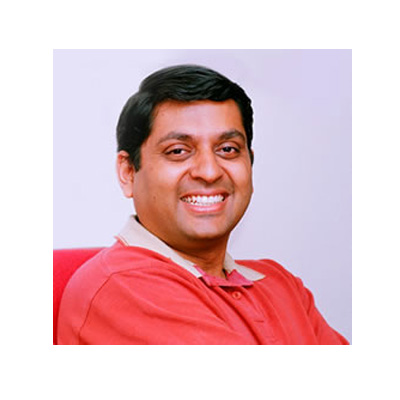
  • ‘Our aim is to give history a more broad based appeal, which is why we are focussing on entertainment’ : Nikhil Mirchandani – The History Channel India MD

    ‘Our aim is to give history a more broad based appeal, which is why we are focussing on entertainment’ : Nikhil Mirchandani – The History Channel India MD

    Live the Story! With the aim of competing better in the English entertainment space The History Channel is pursuing a new strategic direction in India. The aim is to spread the appeal of the channel to more viewers and increase the stickiness level through a variety of shows. These include television movies, documentaries, mini series and long running series.


    Indiantelevision.com’s Ashwin Pinto caught up with The History Channel India MD Nikhil Mirchandani to find out about the plans and what lies in store.


    Excerpts:

    Could you talk about The History Channel’s new direction?

    I would like to point out that we have not changed our positioning. We own the theme of history and will continue to do so. Our aim is to give history a more broad based appeal, which is why we are focussing on entertainment. Over the last three years we did a few things that set the stage for what we are trying to do today.


    We established our positioning of history that no other channel has. History is our middle name so to speak.


    In a scenario of over 300 channels distribution is very important. We are the 16th best distributed channel in the country. We managed to do that since we are a part of the Star family.


    We established a loyal viewer and advertiser base. We have also marketed ourselves well like getting Diana Hayden to host Biography. Moving towards entertainment is the next logical stage of evolution in our product lifecycle. Our aim is to attract more viewers and advertisers.

    In what way has the programming strategy been embellished?

    We begin our primetime with factual content at 8 pm. Then there are drama series at 9 pm There will be classic product from our library at 10 pm. At 11 pm there will be a thriller band. On the weekends you have a television movie on Friday at 9 pm For example Hitler The Rise of Evil.


    There will also be a combination of fact and fiction. For instance you could see a biography of Marilyn Monroe followed by a drama or a television movie. We are also targeting women in the afternoon with programming that we are confident will appeal to them.


    The primetime moves from a youngish factual content to drama to thriller. That evolution of our programming blocks is logical.

    According to research how do viewers perceive the channel?

    Viewers perceive us as a well respected credible authority on the subject of history. They have constantly expected that of us and we will not dilute that offering. They find us interesting as we deal with personalities like Hitler, Helen of Troy.


    The great thing about the History Channel is that it is not restricted by formats. That is not the case with a movie channel that focuses on blockbusters. If they deviate one immediately notices that. Our only concern is whether the story is historically relevant. I would say that English movie channels are undifferentiated from each other.


    We have a wide basket from the lifestyle genre, to thrillers to even perhaps stories on 9/11. It will be in terms of formats. By this I mean documentaries, movies, series, one off biopics, long series. The topics have also grown. We will also showcase concerts like Woodstock. History is never going to be the same again and we take advantage of that.

    ‘The new stories we are telling are universal. Also with our dubbing initiative in Hindi we see the appeal spreading beyond the current TG that we have

    Is it fair to say that the audience has become more sophisticated and demanding in the last three years as their exposure has grown?

    They have more options today. A time will come not far from today when they will have options to choose how they watch content whether it is through cable or IPTV or DTH. He will also have the choice of when he wants to watch it. The environment is also getting more sophisticated in terms of addressability.

    What is the viewer mix like on the channel?

    It is pretty equally distributed between male and female. While our core audience is male-female SEC A, B 25-44 Metros and mini Metros we do realise that there are viewers coming in from other demographics.


    The new stories we are telling are universal. Also with our dubbing initiative in Hindi we see the appeal spreading beyond the current TG that we have. Having said that our acquisition and scheduling strategy is governed by the SEC A,B TG in the Metro cities.

    To what extent have acquisition costs gone up?

    Significantly! The drama content are all epic big budget productions. We will leave no stone unturned.


    Over a million dollars has been invested in the acquisitions and also on dubbing and marketing activities.

    Could you talk about the strategy The History Channel has followed to debunk the theory that history is boring and staid?

    We have done focus groups to find out what our viewers think. We tested the entertainment initiative out. Previously they might think that history is boring and what they remember from school as in being a textbook, black and white.


    However when we shown them our content where history is brought to life then they want to immerse themselves in the story, the cultural setting. Production values also help a lot. One viewer even told us that our television movie Spartacus reminded him of Gladiator. Their minds open up and their imagination works overtime. It becomes a great story that they want to know more about which they may have only read about previously.

    Apart from Biography which of your other shows have proven to be popular?

    Conspiracy, Crusades, Secret Agents, Breaking Vegas were appreciated. The last one was about MIT graduates who cracked the codes in Vegas and made history. They were able to fool the casinos. That is what I mean by becoming more broad based. This is about the glamour of Las Vegas and not dull black and white.

    We think that we should be close to the English movies and English entertainment space. This is between 0.4 – 0.6% of the total C&S viewership

    What are the major property acquisitions that have been made in the past couple of months?

    There are many. There is Marilyn and Me. There is Nero, Augustus, Saint Peter. We have formed alliances with BBC, Disney, Granada, Universal, Warner Bros.

    There are two major media events coming up. One is the release of the film The Da Vinci Code. The other is the Fifa World Cup. Will you be showcasing any specials around these two events?

    In June you will see interstitial on the World Cup. June will a Rome month. We will debut the show Rome: Engineering an Empire. This is to coincide with the film release with Tom Hanks. For Fifa there will be short form programming like biographies.

    What targets have been set in terms of viewership?

    We think that we should be close to the English movies and English entertainment space. This is between 0.4 – 0.6 per cent of the total C&S viewership. Our dubbing will help here.

    Who does the dubbing for you?

    UTV does the work for us. Drama dubbing is more difficult than documentary. There is a lot more dialogue, emotion involved with fiction shows. The drama has to be put forth succinctly.


    When you dub emotions the talent involved needs to be far better We already offer a parallel feed. In the North and West regions we find that a lot of people prefer the Hindi feed. But down South they would rather have English.

    One challenge for the English entertainment genre is to create a 360-degree environment. This means interacting with the consumer through other mediums besides on air. What plans does The History Channel have in this regard?

    As I pointed out earlier when we exposed out content in our focus groups their minds opened up. This showed us that we need to constantly expose our content to viewers at different outlets. They need to sample us more. So we will use the Star network.


    Cinema halls will be important as an audio visual medium best brings out our offerings. We will also use Internet auditoriums. Here you can download links and watch clips, promos. This lets people touch and feel us. This will help us break the myth that history cannot be entertaining.


    We are looking to have a presence in malls as they have high footfalls. We also realise that History Channel aficionados also watch movies and read books. So we are trying to tap into them at bookstores and DVD rental libraries. We are looking to expose our content through them through posters.

    Is The History Channel taking a cue from the success NGC has had with its mission property in terms of on ground initiatives?

    We are exploring available opportunities. It wouldn’t be fair though to compare the History Channel to NGC as the content is different.

    Is The History Channel looking to localise? Kindly elaborate.

    We will shortly be airing a show on the Mughals. Next year is the 150th anniversary of the 1857 uprising. We will be doing something around that. We have in the past aired biographies on Gandhi. We constantly talk to production houses to do work. This will unfold over the next couple of years.

    Are you planning initiatives like maybe school and college contact programmes to create awareness about your product?

    This will depend on the show. Most of our audience as I mentioned earlier is in the 25-44 age bracket. If however there is a property that demands that we go to a school then we will.


    For example if ninth class students are reading about Mein Kamph or are studying about Hitler then it makes sense for us to show themHitler the Rise Of Evil. That will give them a perspective. As Mein Kamph was written by Hitler a complete perspective is not present. This I am sure will make the subject more exciting for them.

    On the advertising front how is The History Channel being sold to clients? What targets have been set?

    We are looking to double our revenues in the next fiscal. We have a transparent rate card. We are looking to allow the advertiser to pick and choose the content he wants to be associated with. This marks a change in how television channels are sold.


    It is not clubbed with NGC. The History Channel has a separate dedicated team and they have their own set of targets. Nokia, L’Oreal, Samsung are some of our major clients. We have received positive feedback from them on our new initiatives.

  • “I was destined to be in show business” : Salil Ankola

    The transition from cricket to acting has never been easy. Several willow-men have tried it, rather unsucessfully. Among these: Salim Durrani, Sunil Gavaskar, and Sandip Patil. But Salil Ankola seems to be doing very fine, thank you. He’s got a clutch of television series under his belt and is also signing on films thick and fast. (see profile) And he looks set to break the hoodoo that has jinxed cricketers-turned actors by succeeding in new vocation. indiantelevision.com’s Nupur Rekhy spoke to this cricketer-at- heart, and actor-by-profession, on his yesterday, today and tomorrow. Excerpts:

    Q. How did television happen?

    A: After my tumor operation I could no longer play. And one day I just got an offer to act. Let me tell you, I was not even thinking of becoming an actor. So I feel it was destined for me to be in show biz.

    Q: What does it take to be a good actor?

    A: I believe, that the only thing that matters is the ‘eye’ statement rather than emoting any other way. So I just let my eyes speak.

    Q: How much do you involve yourself in your work?

    A: See, I did not go to any institute so I have very little knowledge of camera angle or the technical side of acting. I do give my opinions and I do express my point of view, But only when asked! I laugh and enjoy my work. As for scripts I never say the same line in the same way twice. But, I have no clue about direction.

    Q: What roles do you relate to most ?

    A: I relate maximum to intense roles and any thing to do with a hurt past. I love to emote emotions but I want to get into comedy also which will strike instant rapport. Not some slapstick comedy which dominates the scene right now.

    Q: Who are your favourite co-stars?

    A: Pallavi Joshi as she is very helpful and lets you grow a lot. Renuka Shahane is nice, even Mahima Chowdhary.

    Q: Who are your favorite directors?

    A: In films its Gulzar and Hrishikesh Mukherjee. And B.P Singh, the director of Khaki. Its not that I don’t like others. But Singh treats his plot so well. He is the camera man himself. So he is very involved.

    Q: How much have you achieved?

    A: I would say not even one percent. Because if I feel I have got what I wanted, then I would not be able to find fault, and improve myself.

    Q: Do you have role models?

    A: No role models as such but yeah! I do admire Amitabh Bachan, Paresh Rawal and Al Pacino.

    Q: Which is your favorite channel and why?

    A: I like Star Plus, Zee, Channel 9 and B4U as it has excellent quality. I wish India should also get good concepts like Hallmark. I would love to be in it, because I want to do new things all the time.

    Q:Which are your future movie releases ?

    A: Kurukshetra has been released recently. Then there is Deva and Shiva. The others still have to get a name.

    Q: How important are religion and family values?

    A: Religion should be practical and not imposed. I am a Hindu and read my shlokas everyday, as there’s some force behind them. But I believe in all religions. As for family values, I am not a disc or a pub person. I like to go to my club or be with my family or be with my friends.

  • “Though I love acting, I want to take the spiritual road to where there is lasting happiness.”

    “Though I love acting, I want to take the spiritual road to where there is lasting happiness.”

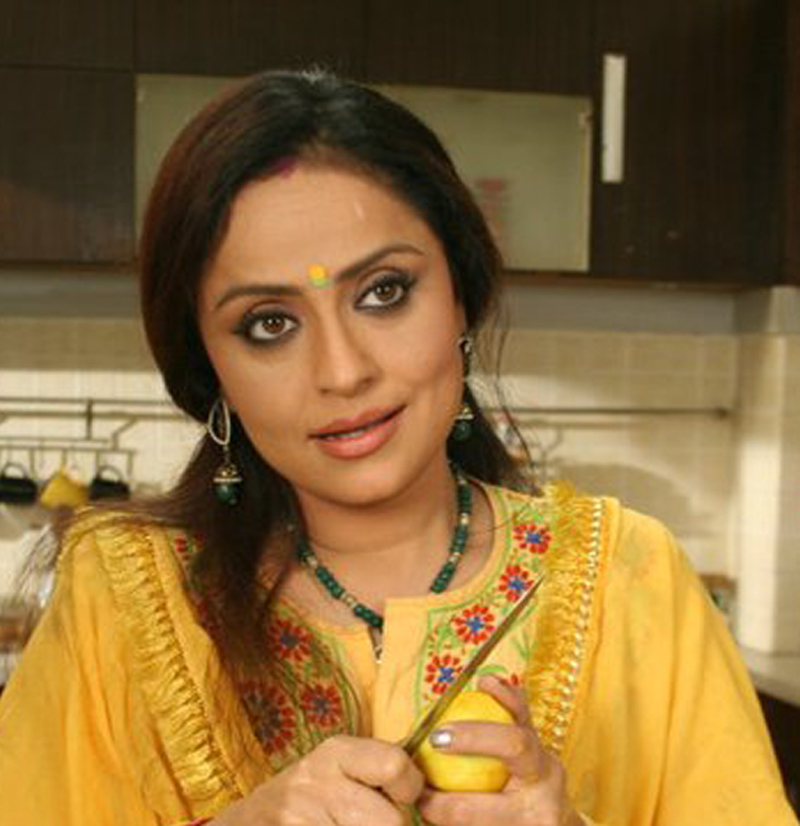
    Playing the lead in Choti Maa.. Ek Anokha Bandhan, Vaishnavi Mahant or Macdonald finds herself on totally new ground. The big budget and strong team aside, it is the challenging title role that is giving this young actress her much needed toehold in the fickle television industry.

    This Madhya Pradesh-born, Hyderabad-bred 25-year-old is deeply spiritual. The turning point in her life, she says, came ten years ago when she had a unique spiritual experience, which changed her from being a ritualistic Hindu to a devout Christian. This strong believer in God goes to church regularly, contributes half her successes and failures to destiny, although she is a disciplined worker herself.

    We meet her on the sets of Suraag-The Clue, the Adhikari Brothers’ hit thriller, being shot at Andheri, suburban Mumbai.

    It has been hectic for Vaishnavi the last few days. She has been shooting continuously and the previous day’s dubbing had stretched till two in the morning. Still, she was on the sets at eight in the morning. Excerpts from an interview held recently with indiantelevision.com’s Harish Patil:

    You look quite refreshed inspite of a hectic schedule ?
    My priorities are quite clear. I don’t mull over unnecessary things, and I don’t lose sleep over trivial matters. I also practise meditation, whenever I can. Of course, if such schedules continue for a while, it reflects on my face. Sleep is the only solution then.

    How did your acting career take off?
    I started my acting career at the age of eight, as a child artiste in Ramsay Brothers’ thriller Veerana and a couple of other films. Veerana was a medium success and my work was appreciated. It was like a picnic for me as everything was new and interesting, and there was hardly any pressure. Then I went back to Hyderabad to pursue my studies. I was set on studying to become a scientist. The desire to do films surfaced in my mind again when I visited Mumbai during a long vacation. With the support of near ones, I prepared a portfolio, which was shown to producers.
    Around that time, Bharat Kapoor was looking for fresh talent for a big budget film Barsaat Ki Raat. I was selected for the role. Inspite of having the best of talent availabale, like choreographer Chinni Prakash, Saroj Khan, cinematographer W B Rao, music composers Laxmikant Pyarelal, it did not work. For some reasons, the schedule stretched on for four years taking the film’s budget to nearly Rs 4 crore (Rs 40 million), and the film turned into a flop.Personally, it was like a school. I made mistakes but also learned a lot. This was the first time that I really looked and tried to understand the art of filmmaking. I started looking at it seriously and enjoyed every moment of it.
    During the same period, I received offers for a few other films. Bambaika Ka Babu, Ladlaa and Danvir … But nothing worked, except that they added to my confidence and maturity.

    My role in Chingari is that of a very strong woman who
    believes in herself. She knows she is right and so stands for what she does. I like to play such roles, which convey some
    message to viewers.
     

    What happened next? How did you turn to television? Was it with a kind of negative mindset?
    No, not at all. True, there was pressure from people around that I should continue only in films and that I would get the right role sometime. This was over four years ago, when moving from films to television was definitely taboo. But I am not the kind of person who will just wait and watch. More importantly, I could not adjust to the kind of atmosphere and “demands” of some of the players in the film industry.
    Luckily or otherwise, I was not branded in films, which would have otherwise been a problem for me while doing television. So I was as good as new for TV audiences. That was the time I got an offer to work in Shaktimaan (Vaishnavi replaced Kitu Gidwani in the fantasy serial).

    It must have been a novel experience to work in a tele-serial after doing four films. What difference do you observe in the two media ?
    The scale is totally different. The budget, time, resources don’t have any constraints in a film. There can be any number of retakes if the director feels that the shot is not ok. Television is very different in that sense.
    But as far as creativity or characterisation goes, I feel television is no lesser than films. It also gives you much needed space and time to settle in the character. On television, you have to be more like what you are unlike in films, where you are larger than life. Even the environment here is much better than in films.

    How was your experience working in Shaktimaan (on national broadcaster Doordarshan’s DD1 channel) as firebrand journalist Geeta Biswas? Does technology overshadow acting prowess in a fantasy serial?
    True, special effects do rule in a fantasy serial. But viewers’ attachment with Shaktimaan and Geeta is intense because the human angle has been developed well. The director keeps hammering into us the fact that we have to be careful with our portrayals since a majority of the audience is children.
    Even in the interior parts of the country, I am known as Geeta Biswas. A few months ago, when my character was put off air due to a change in the storyline, there were thousands of calls and letters to the producers demanding my return. After eight months, they had to call back my character. These are definite receipts of your efforts.
    Vaishnavi has appeared in a couple of episodes of Saturday Suspense on Zee TV, and has co-anchored the show Awaz Ki Duniya (DD1) with Rohan Kapoor, as well as acted in a couple of other serials like Chingari, Gharana and Dushman, which are now either off the air or no longer feature her. In Chingari, she etched a crucial role of a woman of substance.

    What about serials like Dinesh Bansal’s Chingari where you played a strong woman?

    My role in Chingari is that of a very strong woman who believes in herself. She knows she is right and so stands for what she does. I like to play such roles, which convey some message to viewers. The serial did well on Zee TV and my role was appreciated.

    But sometimes, it so happens that you just can’t understand the character. You don’t get the soul, in which case it is very difficult to do justice to that characte

    And how you did you get Choti Maa?
    There were nearly 100 aspirants trying for the role (well known actress Tabu too had been considered at one point). The director, Mohena Singh, had seen the pilot of Naqab made for Ashok Shekhar, in which I am playing a strong character.
    I think my Indian looks and eyes helped me getting the role. I was initially confident of clearing the audition, but got the jitters when I realised that even the channel and the producers would have to approve of me.
    Eventually, I got a call from Mohena asking me to find time for the serial’s shoot, which was already on in Pandharpur (where the early episodes are shot). At that time I was doing Gharana and Shaktimaan. I had a tough time convincing the producers of Gharana. Eventually the character in Gharana was replaced. And I landed in Pandharpur for the shoot ofChoti Maa.

    What was your initial reaction when you got the role?
    Frankly, I was not even aware of Chithi, the original Tamil mega hit serial on Sun TV. So it was like getting just any other role. But eventually when I read about Chithi and heard about it from people, I could understand the magnitude and importance of the project.

    Did you prepare specially for the role?
    I was like a clean slate. I had decided to be as spontaneous as possible. Sharda (i.e Choti Maa) is a unique character. She does not believe in God, but in human power. She believes in the strength and purity in human beings that makes it divine. She is against rituals.
    I had to take much care while portraying her character. My voice is very high and thin, which sounds like a young girl. Sharda is a mature woman with a lot of authority in her voice though she is young, so I have to deliberately keep my voice low, firm and with a strong base. At the same time, it has to be clear and should not sound fussy. For this, I literally take my pitch/voice to the ground, and physically take my hand towards the ground and take it up to the level I want from there. It was a bit difficult initially. I try to feel the character while dubbing too.I have no ego problems. I am always ready to change. My director and others give me a lot of tips, which help me understand the character better.

    There was a courtroom scene in Chingari that was 14 minutes long with three changeovers, totally focused on me. I had the dialogues by heart and I needed only one retake.

    Do you look to Radhika (who played the title role in Chithi) for inspiration or do you have other role models?
    I had not seen the original Chithi even once before I started shooting. The reason was we wanted to do it our way, taking our target audience into consideration. Radhika once came to the Choti Maa sets in Bangalore. She congratulated me on my performance, which I think was very valuable to me. She also gave me some crucial tips on posture and carriage. Such tips are very important for perfect characterisation.
    And I have kept Jesus Christ as my ideal person, because the way he carried himself is quite amazing. So I can identify Sharda’s character with him.

    Who are your favourite directors?
    I like Mani Rathnam and Sanjay Leela Bhansali for their sensitivity in handling the subject. On television, among my favourites is Ravi Rai for the way he handles emotional scenes. Anurag Bose is another of my favourites. I like the way he handles drama and perfect characterisation.

    Do you follow any particular acting pattern?
    I don’t follow any particular school of acting. I have not taken any formal lessons in acting. If the character is close to my nature, it is easy for me to play that. But sometimes, it so happens that you just can’t understand the character. You don’t get the soul, in which case it is very difficult to do justice to that character. And whenever it happens, it puts me off. I compare acting with singing. Each Avatar (character) is like a raga, there are different sur (tune) to play different characters. If you can’t find that sur, the singing is useless.

    Do you believe in living the role?
    Not to a great extent. Whenever I am on the set, I feel like I am playing that character. It is the case with strong characters like Sharda, especially when I shoot continuously. I feel that impact even when I leave the set. Normally I don’t read the script before going to the set. But in the case of Choti Maa, I read the whole story beforehand, which helped me understand the character.


    Shaktimaan Vaishnavi

    I have no ego problems. I am always ready to change. My director and others give me a lot of tips, which help me understand the character better.

    Do you take special efforts to remember dialogue?
    My memory is quite good. Most often, I easily remember dialogues. There was a courtroom scene in Chingari that was 14 minutes long with three changeovers, totally focused on me. I had the dialogues by heart and I needed only one retake. Everybody on the set applauded.

    Who are your favourite actors?
    Renuka Shahane, Sachin Khedekar and Pallavi Joshi are my favourites because of their natural and intense performances. I also liked Shefali Chhaya in Hasratein.

    Which channels do you usually watch?
    I watch Zee and Sony. I particularly watch Hum Pardesi Ho Gaye on Sony and Sarhadein on Zee.

    How do you spend your leisure time?
    Reading is my passion. I read anything that gives knowledge. There is no specific genre that I go for but I am interested in philosophy and spiritualism. I like religious books that deal with spiritual experiences

    Acting, I feel, is making me a self centred person. Everything is me, my, mine. I think we should also look at the people outside our periphery. There are so many people whom you can help to improve life.
     

    So what is Vaishnavi all about?
    I don’t know. I am very difficult to understand. At times, I behave like a kid. I like to laugh a lot. I don’t have ego problems. I am a down to earth person and vibe well with similar people. If I don’t like somebody, I just withdraw from the conversation.

    I am very close to my mother (who handles her career) and my younger sister is my greatest pal. And of course my fiancé (who is in the navy). Whenever I get time I like to spend time with my sister.I believe in God and destiny. I feel every success is 50 per cent hard work and 50 per cent destiny.

    What are your plans for the future?
    I will be pursuing acting as a full-time career for the next two years at least. I am simultaneously working on another project, which might make me give up acting after two years.
    I may take up some acting assignments in between. Acting, I feel, is making me a self centred person. Everything is me, my, mine. I think we should also look at the people outside our periphery. There are so many people whom you can help to improve life. If you can do it, I feel one can really live his life.

    So what is this plan of yours?
    All I will say is that it will not be related to media. (In an interview three years ago, she had spoken of her involvement in church activities, related to slum development and literacy).

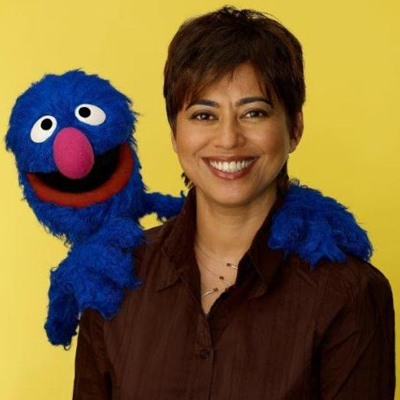
  • ‘Culturally, linguistically diverse India is a test case for us’ : Sesame Workshop India ED Sashwati Banerjee

    ‘Culturally, linguistically diverse India is a test case for us’ : Sesame Workshop India ED Sashwati Banerjee

     For both Sesame Workshop and its newly-appointed executive director for Indian operations, Sashwati Banerjee, India is a big challenge. The US-based Sesame Workshop might have revolutionized pre-school education through various initiatives, including the path-breaking TV show Sesame Street, but replicating a global model here will be a tough task.

    Rather, if communications expert Banerjee is to be believed, Sesame Workshop is adopting an entirely new game plan for India, apart from innovating on some aspects that incorporate what it has done in other parts of the globe. She agrees that India may become the incubator for a model that could be replicated elsewhere too.

    Founded in 1968, Sesame Workshop changed television forever with the legendary Sesame Street. Today, the Workshop continues to innovate on behalf of children in 120 countries, using its proprietary research methodology to ensure its programmes and products are engaging and enriching.

    For Banerjee, who’s dabbled in various assignments from India to Hong Kong to the US, the changeover to children’s education from healthcare communications is a step that was not taken easily. But after initial doubts were cleared by Sesame Workshop CEO Gary Knell, it has been hectic work for the lady who grew up and studied in Delhi, but spent quite a few years in Hong Kong doing “this and that”, as she would modestly say.

    In this conversation with Indiantelevision.com’s Anjan Mitra, Banerjee spells out her priorities and gives a glimpse into Workshop’s plans for India. She also cribs a bit on procedural delays and lack of readily available comprehensive data/research on government-aided education initiatives and child behaviour.

    Excerpts:

    What’s the aim of setting up Sesame Workshop India?
    Sesame Workshop India would primarily be the outreach arm to promote early childhood initiative and the educational curriculum of Galli Galli Sim Sim (the Indian version of Sesame Street) through a multi media platform, especially to children who are most in need or underserved. The educational curriculum of Galli Galli… has been designed by Indian educators, researchers and writers keeping in mind India’s cultural and social diversity and needs.

    How will that be done?
    What Sesame Workshop really brings to the table is technical knowledge and expertise in early childhood education and development. These are the two broad areas we are working with. How will it go about doing it? One arm of the education initiative is the television show Galli Galli… which is going to be broadcast on Cartoon Network, Pogo and (terrestrial broadcaster) Doordarshan. The other aspect of the initiative is to see how we can extend and reinforce that learning through a variety of other activities with the help of technology to bridge the digital divide.

    The target audience is children aged between two to six years and their caregivers, which include parents and teachers using educational materials that are fun and make learning engaging “because all children deserve a chance to dream and discover, to understand the world and their place in it, to reach their highest potential…”

    We would be working with other organizations that are already active in this field and our mandate is to help them develop programmes that will take such initiatives forward.

    Seed Funding has been provided by Turner India

    How would Sesame Workshop leverage Galli Galli…?
    Television is just one of the ways in which the educational curriculum will be delivered is television. Sesame Workshop India will help to deliver Galli Galli… across other mediums – from print, training, interpersonal communication to high technology initiatives like the internet. While the television series is expected to reach audiences across India, there is still a large population who have limited or no access to television. It is through Sesame Workshop India’s outreach efforts that this population will be reached.

    Moreover, research has shown that children who watch Sesame Street or its various local versions in countries round the globe are better prepared for school in terms of cognitive learning and the show has helped prevent children from dropping out of school.

    When is Galli Galli Sim Sim likely to make its debut on Cartoon Network and Pogo?
    Galli Galli Sim Sim will premiere on Cartoon Network in mid-August after which it will be aired on Pogo. But for those broadcasting details, Turner is best placed to provide more information.

    How is Sesame Workshop funding its initiatives in India?
    Seed Funding has been provided by Turner India (a Time Warner company). Sesame Workshop India, like any other not-for-profit organization, will raise funds to support its activities in India.

    When Indiantelevision.com spoke to Sesame CEO Gary Knell, he had said corporate houses too would be roped in for funding activities. Has any development taken place in this regard?
    Those things would take place after we set up shop formally and get our basic act in place. Presently, we are in the process of getting our clearances from various government agencies.

    However, we’d like to tap big corporate houses for funds as part of a corporate’s social responsibilities. There are quite a few business houses that are involved in educational initiatives and we’ll look at partnering with them in various ways.

    What role would the Indian government play in Sesame’s scheme of things? What are those few things that Sesame must consider as it goes forward?
    In order to understand the critical priorities of the Indian government – where Sesame Workshop can collaborate, and highlight areas of concern – Sesame Workshop had organized a workshop that brought together a cross-section of relevant stakeholders in New Delhi in early December 2005.

    Briefly, the discussions were participative and each government department and agency, professional educational bodies, and the voluntary sector brought their own set of issues to the fore providing for comprehensive inputs towards future planning and strategy. In fact, there was a consensus around the fact that the media can help overcome constraints posed by the existing administrative structures across the country, which are highly segmented.

    We are hoping to work with diverse partners, develop and create innovative materials and build capacity at all levels. Our vision is to reach as many children as possible in India by partnering with government’s Sarva Shiksha Abhiyaan or Universal Education programme with material that will make learning joyful and help the government in reaching its educational objectives.

    Considering Turner International India had provided the money for a corpus, what would be its role?
    Turner is the TV series’ co-producer and distributor of Galli Galli Sim Sim. Together, Sesame Workshop and Turner are committed to making Galli Galli Sim Sim a break-through educational programme and brand. Sesame and Turner are working closely to ensure that India’s children will have access to this new show and its educational messages, and are actively pursuing promoting the show on multiple platforms across India.

    Is the telecast deal with Turner exclusive or can it be done with other broadcasters in other Indian languages too?
    As far as the agreement with Turner is concerned, all I can say is that it’s for at least five years or five seasons of Galli, Galli… I cannot hand out any financial details or presently comment on the fact whether we can work with other broadcasters or not.

    Generally, Sesame Workshop works with the public service broadcaster of the country concerned, but there had been some initial problems with Doordarshan, which, I am told, have been sorted out now by Turner India.

    India is a vast country and getting educational initiatives in all the local languages would not be possible. But we would certainly be exploring at least one South Indian language, if not two, apart from Hindi. The details haven’t yet been worked out and would be done in consultation with Turner.

    Will the Indian ops undertake merchandising activities too?
    We are focusing on the launch of the show and have nothing to announce at the moment.

    How are such merchandising activities done elsewhere in the world?
    Sesame Workshop operates in 120 different countries. The modus operandi varies from country to country and partner to partner.

    How is the revenue generated from such activities used and what will be the game plan for India?
    Like I said, Sesame Workshop is a not-for-profit organization. Any revenue generated through merchandising or licensing go towards providing quality early childhood education and development around the world – to those who are most in need.

    How important is India as a market for Sesame?
    Of the 103 million children aged 2-6 years, over 35 per cent in rural areas and 48 per cent in urban areas can’t access Early Childhood Care and Education. Roughly 100 million live in urban slums alone, which have no access to Integrated Child Development Scheme (ICDS) that is the primary vehicle for Early Childhood Care and Education in India.

    While Early Childhood Care and Education is definitely a felt need and lot of efforts have been put in by the government and private institutions, other issues like malnutrition and child heath take precedence for ICDS. Demand has never been an issue in education. Supply is what we need to focus on.

    Does Sesame Workshop feel that the Indian regulatory environment requires too many procedural clearances impeding quick start of operations?
    Actually, the Indian regulatory environment has been extremely supportive for us. We have had representation from the government and other public education bodies right from conceptualization to production of Galli Galli Sim Sim, which is being produced for Turner by Miditech. We work closely with Indian educators to arrive at the educational curriculum that looks at ‘whole child’ approach and is very much in line with the education policy of this country.

    However, India is a test case for Sesame Workshop as it is uniquely ahead of most developing countries in terms of market and economy and the size of population. More importantly, India is not a donor funded country as sizeable infrastructure is being built by Indians. Then in India, we are not working primarily with the terrestrial broadcaster, unlike in other countries. We do hope that the time block on DD will continue airing Galli Galli… for a long time to come.

    I don’t see Galli Galli… broadcasting in 22 Indian languages. What we can do is to take the essence of educational initiatives and roll it out in outreach that can happen in multiple languages.

    In those terms, India is a learning experience for Sesame to see what kind of partnerships work best and how sustainable models can be built up for impact in a country that is culturally and linguistically diverse.

  • ‘We will be a Rs 5 billion company by 2008’ : Atul Goel – E-City Ventures CEO

    ‘We will be a Rs 5 billion company by 2008’ : Atul Goel – E-City Ventures CEO

    His is a tale that is not just about multiplexes. E-City Investments and Holdings chief Atul Goel is hooking up a film exhibition, distribution and digital delivery business.

    At the centre of this game is the multiplex business. Fun Multiplex Pvt Ltd is on a massive scale up exercise, planning to ramp up from 23 screens to 150 by FY08 while acquiring 100 single screens to gain a pan-India presence.

    E-City Digital Cinemas will deliver movies to theatres via satellite as well as hard disk in a format that operates on low margins but is profitable. Being part of the Essel group, it will use the Essel Shyam facility at Noida near Delhi which is also utilised by Zee for uplinking its channels.

    Goel recently got IL&FS to invest Rs 1 billion for a 26 per cent stake in E-City Entertainment, the hived off entity that handles real estate development. His next big target: a combined turnover of Rs 5 billion by FY08.

    In conversation with Indiantelevision.com’s Sibabrata Das & Bijoy AK, Goel unveils the expansion plans he has chalked out for E-City.

    Excerpts:

    Why did you decide to hive off the multiplex and real estate businesses into separate companies?
    The best way to attract investors is to divide the two segments of business. They can enjoy their own valuations and investors. For instance, the investors in real estate may not necessarily want to take exposure in the multiplex business. We got Infrastructure Leasing & Financial Services Ltd (IL&FS) to pick up a 26 per cent stake in E-City Entertainment, which handles real estate development like setting up malls, for Rs 1 billion.

    Are you in the hunt for an investor in the multiplex business as well?
    Fun Multiplex Pvt. Ltd. still needs to scale up as we ended the last fiscal with a turnover of just Rs 450 million and a net profit of Rs 60 million. We are planning to pump in Rs 2.5 billion and have 150 screens by FY08. We have already put in Rs 300 million. We plan to raise money in a debt-equity ratio of 1.5:1. Our target in FY08 is to have a total income of Rs 2.5 billion and operating profit of Rs 720 million by FY08.

    What makes you project such a fast rate of growth in two years?
    The revenues will come mainly because of newer developments. We have 23 screens and are opening up three properties this month. We, in fact, will be adding 10 more screens by 15 August.

    Do you see revenue growth also coming from increase in ticket rates?
    Pricing power will continue to be more a movie-based strategy rather than a rate hike in tickets across the board. In case of Krrish, we increased the ticket rates. We will also see the emergence of differential pricing for off-time shows. We have, for instance, lowered the rates for early morning screenings.

    Multiplex operators are in a build up phase and Inox has even taken the acquisition route in Kolkata to enhance its pan-India presence. How are you planning to scale up your operations?
    We are also planning to take the inorganic route. We will be acquiring single screen theatres across the country. We aim to have 100 single screens by FY08. This will be in addition to the 150 multiplex screens we will have by then.

    The future trend could be special alliances between distributors and multiplex operators

    Multiplex operators have been made to pay more for premium film content by Yash Raj Films (YRF). When YRF asked for an increase in revenue share for the Aamir Khan blockbuster Fanaa, you took a hard stance. What made you compromise later?
    Initially, all the multiplex operators protested against the hike. But the unity didn’t stay and some of them went ahead to sign the new terms with YRF. Let me reiterate here that we were in a pure business deadlock and not a confrontation of any kind.

    Has YRF, with a lineup of Hindi blockbusters like Fanaa, Krrish and Kabhie Alvida Na Kehna, started a trend where film content distributors would push for higher revenue shares from multiplex operators?
    We are not in a position where we can take a hard stance against YRF. We have a business relationship going with them and are showing Krissh. The new terms are exceptional to YRF but with such high ratios, we can only break even. The future trend could be special alliances between distributors and multiplex operators.

    Are you in any such alliance with a big distributor?
    It is too early to carve out such relationships. In fact, we urge the distributors not to start hiking rates or getting into special relationships with certain multiplexes at this stage. The industry needs to scale up the infrastructure, there is an opportunity sitting out there. We should take measures that grow rather than kill the industry at this early stage.

    Have you taken a cautious approach in the film distribution business?
    E-City Films (ECF) has distributed Hindi movies like 36 China Town in Gujarat where we control 90 theatres. The market is fragmented and will take time to consolidate. Some companies are also acquiring some movies for distribution at unrealistic prices. We are cautious and have no plans to set up a film distribution outfit overseas. For international movies, our strategy is to distribute 10-12 a year. In the past, we have distributed Alexander (December 2004), One Dollar Curry (February 2005), Million Dollar Baby (March 2005) and Sahara (July 2005). Among ECF’s recently acquired movies are Astronaut Farmer, Babel, Miss Potter and Michael Clayton.

    Have you closed down your content syndication business?
    It is in a state of lull now, but we have revival plans.

    What are the expansion plans for E-City Entertainment after IL&FS has taken a stake in it?
    We are investing Rs 1 billion each for the Kanpur and Coimbatore properties. Lucknow will attract a further funding of Rs 250 million. We have already pumped in Rs 2.17 billion in developing four projects (Rs 600 million for Andheri in Mumbai, Rs 750 million in Lucknow, Rs 550 million in Ahmedabad and Rs 270 million in Chandigarh). We will have 10-15 properties by FY08. We expect our turnover to climb from Rs 210 million to Rs 800 million by then. As these are rental incomes, E-City Entertainment will always be a profitable venture.

    How are you funding these properties?
    We will be raising fresh equity. But we have not started talking with anybody yet.

    When is E-City Digital Cinemas starting satellite delivery of movies to cinema theatres?
    We plan to launch it by the end of this month. We will be using the uplinking facility of Essel Shyam at Noida near Delhi. Currently, the hard disk is physically distributed to the 22 theatres in Gujarat (we control 90 theatres there) which we have taken on long term hire basis. We are using Real Image’s encryption technology so that piracy is safeguarded. The movie is first converted into digital master using the telecine machine, after which it can be taken on to D5 tape or captured directly on the encoding server. After encryption and compression, the movie is uplinked to the satellite via transmission server and downloaded at the playout local server which is installed at the theatre. A digital projector is used for screening of the film. E-City Digital Cinemas will target A-class towns where the current net collections are over Rs 100,000 per week.

    How many theatres will have the digital system?
    We plan to digitise 500 screens by FY08. We have already acquired 30 cinemas including a few in Mumbai. The business operates on low margins and, on a turnover of Rs 300 million last fiscal, we have reached a break even situation. As we ramp up theatre acquisitions, we expect our revenues to touch Rs 2.5 billion by FY08.

    So will E-City Holdings go for an initial public offering (IPO) or will the different entities have separate listings?
    We haven’t decided anything yet. We have no IPO plans, as of now. But by FY08 the entire venture will be a Rs 5 billion company.

  • Indian television advertising is very much underpriced’ : Joy Chakraborthy – Zee Network executive VP Network Sales

    Indian television advertising is very much underpriced’ : Joy Chakraborthy – Zee Network executive VP Network Sales

    Joy Chakraborthy took charge of Zee Network as ad sales head in early 2005, at a time when Zee TV was going through a crucial phase. Chairman Subhash Chandra was strategising a turnaround for the flagship channel and a number of big ticket shows were being readied, with the expectations of re-writing Zee TV's fortunes in the Hindi GEC arena.

    As Network sales head, Chakraborthy's first challenge was to project Zee in a new light. "Zee had a perception problem in the market and a section of the trade had written it off. We wanted to create a new impression and build on that," Chakraborthy says."There couldn't have been a better time for me to head the network's sales team," he gushes.

    Speaking to indiantelevision.com's Bijoy A K, Chakraborthy elaborates on the strategies that worked for Zee, future plans and on the industry scenario.
    Excerpts:

    You have completed a year as the sales head of Zee network. Please elaborate on the key industry learnings you could gather during this period?
    A crucial lesson we have learnt is on the significance of soaps in the GEC prime time game. We have learnt that GEC is all about soaps, but different from Saas-Bahu sagas. People buy a channel for consistency and not for spikes only. In the industry, on an average, 70 per cent revenue is tied up on a long-term basis and only soaps can fulfill that promise. Innovative programming is fine, but they should be scheduled and timed very effectively. When you innovate, it should not be just a programming decision but a collective decision including sales, marketing and programming.

    Everybody had written Zee off. But we could pull off a turnaround — what seemed impossible until some time back – through team work, discipline, passion, accurate timing and by keeping the faith intact. As expected, the trade has responded to this change very positively, and now we enjoy the backing of the entire market. This is because of the strong relationships we had built during this period. What I am driving at is the fact that, relationships play a key role in this industry. This period also showed us who are our real friends and who are opportunists. Also, it has been a learning for me that both, people and organizations are important, and one cannot exist without the other.

    How is the industry evolving? Give us a low down in the recent developments and the trends?
    Indian television advertising is very much underpriced and we have decided to bring this issue into focus, under the banner of the Indian Broadcast Foundation (IBF). In a couple of months, we are planning to come out with certain guidelines on pricing, which would hold a lot of significance for the industry. Our main concern is the underpricing of television. It is a powerful medium and it should get its due, especially at a time when the costs of programming and marketing have skyrocketed. All network sales heads are now represented in IBF and we are united on this cause.

    The present scenario is very confusing. Television is booming, but clients are very tentative to take a call on TV as compared to the print as television research is more confusing and dynamic and changes everyday. I think an increase of 15 per cent to 20 per cent in rate is due immediately. It should also be noted that cricket of late has not affected GEC/Hindi movies viewership, which are the primary revenue drivers in C&S. The Hindi movie genre is still very much underpriced and same is the case with regional channels.

    I keep hearing that the English entertainment space is shrinking, but I don't agree with this as this is the genre with least wastage and where even an advertiser is a viewer.

    Does GEC still hold an edge over other genres when it comes to delivery and demand? Or has there been a change in the pattern?
    GEC will always hold the edge as maximum revenue comes to this genre. For any client, the reach build up and in some cases, frequency by smart scheduling comes from GEC. According to me, the genre pecking order would remain as: GEC, Hindi Movies, Regional, News, Sports – in that order.

    In the last two years, unique content channels have seen so much of a price cut that the FCT has increased drastically and revenue in the genre has hardly moved. I sometimes wonder how they are still surviving in business.

    Regional television space holds a lot of potential though it faces tough competition from print. The key segments driving growth in regional are: Retail, education and real estate, in addition to general categories like FMCG, telecom services, consumer durables etc.

    Zee has already started working on all these segments. We have started roping in retail clients and our next focus is on the real estate and education. Though there is a slow transition of main print category advertisers to television, the good news is that these clients have realised the power of television.

    Did the recent stock exchange fluctuations impact sales?
    The fluctuations haven't affected us at all. Actually, Zee recorded better sales during this period of May-June. June-July usually has a lean period tag attached to it, but this year, it was different. This is one change in the normal pattern. These days, there is nothing called lean or peak period. This is due to the boom in categories such as telecom, services, finance and the perennial FMCG.

    Today, advertisers are not limiting themselves to a particular genre due to media fragmentation. Most clients are there in almost all the channels/genres. Earlier, there used to be a particular set of advertisers for particular genres, such as premium products for English entertainment channels. These days, even FMCG brands are keen on English channels. It is a trend of aspirational marketing.

    'With the good performance, our viewer base has also expanded and this, in turn, helps us to better our performance on a consistent basis'

    The last one year saw Zee TV pulling off a turnaround in Hindi GEC, by reaching the second position. Could you briefly outline what happened during this eventful phase?
    During this period, the sales team was able to initiate a lot of changes successfully. To start with, we decided to remove the paid bonus system and agreed to reduction of ad sales inventory. This helped to change the general perception that, Zee has unlimited inventory. Then, we made it a point to keep away from attempting any innovation in terms of sales. This is because, the delivery of innovations take too much of time for the value we generate. Also, I have observed that in spite of doing innovations, the clients/agencies are always unhappy with the implementations, however good you might do. So why do innovations?

    We also focused on doing more client/agency meetings and met people at all levels. The Zee Network had a perception problem in the market, and the sales team has positively addressed this. I felt a lot of our positives were not known to the market. We had been very firm in our decisions and we always made it a point to abide by our well-defined sales policy. I have ensured all commitments/deliverables are in writing and not verbal, as this avoids conflict when people change at channel/agency side. When it comes to deals, the attempt has been to create win-win situations. We reduced our FCT to an effective level to create demand and initiated a very transparent sales policy.

    We also introduced the Matrix system, which played a key role in bettering the network performance. We appointed individual sales heads, responsible for strategy, revenues and targets of their channels. We have senior people as branch heads in the business deployed in key markets such as Delhi, Kolkata and the South whose roles are more tactical and they ensure revenue spread across all channels and have their branch targets. Both sales heads and branch heads work very closely with themselves and with me.

    For me, Zee has turned out to be a great place to work. It is a place with total freedom and great empowerment. I would say internal stability in Zee is very high. All decisions are discussed and not pushed down your throat. We have the best bunch of professionals, both at senior and junior level.

    Please comment on your face-off with Star. Star recently initiated its counter strategy to block your surge in the 9-10 pm time band. What impact has it made on your game plan?
    You feel happy when the leader reacts. Zee has pioneered the strategy of launching soaps with innovative media breaks. Seeing Star also doing the same for their show has been an ego booster for us. Coming to the second part of your question, it felt even better when the leader's tactics didn't affect our numbers and the market demand.

    With the good performance, our viewer base has also expanded and this, in turn, now helps us to better our performance on a consistent basis. Earlier, when we launched a show, rating in the range of 1 TVR to 2 TVR was considered as satisfactory or good. Now, our new launches pick up very fast and the shows even record an opening rating of 2+ TVR on an average basis. This has inspired us to fight Star in its own bastion – the 10 – 11 pm band – with non-soaps such as Johny Aala Re and Sabash India.

    So what is the next big idea? What will be Zee's next focus?
    We have now settled ourself comfortably in the 6 pm – 8 pm and the 9 – 10 time bands. You will be seeing some more launches in the months to come which will strengthen our FPC even further. The programming, marketing and sales wings are now working on the strategies to strengthen the 8-9 pm band.

    What is the strategy you follow to sell Day Parts?
    We have made lot of efforts to increase the demand for the Non Prime Time (NPT) band. Each sales package has got a mix of PT and NPT. We ideally would love to sell at 30:70 for PT/NPT. We have also been selling early NPT and late night slots for religious/tele shopping properties. As a result of focusing on NPT, our inventory FCT consumption has doubled in NPT.

    Which are the client segments that top your delivery list these days?
    Still FMCG is number one, though there has been a major upswing in Telecom/Services/Auto/ to name a few. The concern has been the consumer durable category with a few big players not clear about their plans. Additionally, SMS has emerged as a key revenue driver for us for our interactive shows.

    Speaking about the network performance, what is the scorecard?
    Zee TV is on top followed by Zee Cinema. Zee TV was underpriced when I took over, and now we are steadily moving in the right direction of rate. We activated rate corrections twice for the network during the six months and now, as the festival season is coming, you can expect another correction soon. For some channels, it will be across all day parts and for some it will be programme based.

    Revenue wise, maximum share comes from Zee TV followed by Zee Cinema, Zee Marathi, Zee Bangla, Zee English cluster, Zee Music and Zee Smile. The beginning of the year has been very good and I am sure we will touch a new high this fiscal.

    Now let us take it one at a time. To start with, please comment on the performance of Zee Cinema. What is the plan for this year?
    As a sales person, I can't ask for a better channel than Zee cinema which has been consistently delivering for years in the face of stiff competition. My colleagues in programming and marketing have given us a product which is a must have in all media plans, specially if it is targeting the "cow" belt (Hindi heartland). Since the last two years, the Amitabh movie band Shaniwaar ki Raat Amitabh Ke Saath has been our key driver. This year, we have introduced a youth block – Klub. We have our own share of blockbusters for the year also.

    Zee Smile has been keeping a low profile these days. Is the channel in an orphaned state, or is there a plan on the anvil?
    You will soon know our plan for Smile. But for sales, Smile has been a great help to get incremental revenues. The channel is very well distributed in non traditional markets and hence, you will find lots of brands advertising on Smile.

    Speaking about regional channels, you are in charge of sales of two key players Zee Bangla and Zee Marathi. How did these two channels fare in the last one year period?
    This year, we have practically re-launched Zee Bangla with a slew of new programmes and this will boost its sales potential. We are again going to do sales initiated programmes like Durga Pooja and Jatra.

    Zee Marathi has now become the clear number one. We are there in almost all plans. We have also set up a separate sales team to develop retail and non traditional advertisers like educational institutes, real estate, local jewelers, classified etc and the results are showing.

    Comment on the delivery of your event properties.
    During the last one year, there has been an extra thrust on good events, and the efforts have paid off very well, I would say. We have converted the Saregama finals as an on-ground event and the attempt has met with great success. This had inspired us to take the Saregama Ek Mein Aur Ek Tum finals to Dubai. Apart from winning a global appeal, going to international venues helps sales also. Zee Cine Awards, Mauritius and even the Zee F- Awards, have done very well for us.

    We have Zee Astitva Award, Zee Marathi Awards, Zee Gaurav Puraskaar, Zee Amader Gaurav, Zee Songeet Puroshkaar to name a few, lined up in the next few months across various channels.

    Have you retained Amap's service as an alternative rating agency to Tam?
    Yes. We need to have two meters because the industry needs competition in this realm also. It is always good for the trade. It brings out the best of everyone. According to me, each of them can coexist, triggering healthy competition. I am not making a judgment here, but for the betterment of industry, we need two parallel rating systems. The earlier we acknowledge this, the better it would be for all of us.
  • ‘Our expansion plans are not too dependent on CAS or DTH or any other new technology’ : Sameer Manchanda – Global Broadcast News Jt. MD

    ‘Our expansion plans are not too dependent on CAS or DTH or any other new technology’ : Sameer Manchanda – Global Broadcast News Jt. MD

    He is credited with having stitched some lucrative deals for NDTV — rather it’s said that the so-called one-sided deal that NDTV had with Star for content on Star News for five years was a combination of his ability to draft agreements and talk foreign partners into deals and NDTV promoter Prannoy Roy’s charm and credibility. In certain quarters, he is also described as the merciless corporate honcho who leaves no stone unturned to achieve success.
    Whichever way you look at it,
    Sameer Manchanda is a go-getter, easily moulding himself according to varied situations. A Fellow of the Institute of Chartered Accountants of India, he has been with the television industry since 1984 — NDTV to be precise — and has seen major stages of evolution in this sector. He has considerable and varied experience and expertise in distribution, strategic and financial planning, capital structuring and restructuring, funding, business valuations, mergers and acquisitions, collaborations and joint ventures.
    No wonder, in 2005 the entrepreneurial bug bit him when Manchanda set up Global Broadcast News Ltd along with Television Eighteen Group promoter Raghav Bahl, TV18 CEO Haresh Chawla and managing editor of NDTV Rajdeep Sardesai. He was also instrumental in formulating and finalizing the alliances with CNN and Channel7.
    In a rare interview with
    Indiantelevision.com’s Anjan Mitra, Manchanda, the joint MD of GBN (managers of English news channel CNN IBN and its Hindi sibling Channel7), looks at the industry, peers into the crystal ball for the changes taking place, the challenges ahead and what makes him tick.
    Excerpts:

    What’s the big picture in the television industry as you see it?
    Digital television and various delivery platforms for content are certain to make things exciting. The new digital wave is going to change the consumption patterns of electronic content. Platforms like DTH, IPTV, mobile TV, podcast and broadband will all happen and audiences would not be just passive onlookers, but participants and partners in the business of packaging, delivering and consuming content.

    We will need to be ready for all these. For example, mobile video is going to be a big thing in India too in the near future.

    At a time when all these things are poised to happen — and happening — the biggest challenge for any management is to figure out ways to cope with technological advances. In India, there are over 100 million mobile phones, over 100 million TV homes out of which approximately 60 million are cable and satellite homes. Just look at the consumer power of these various platforms. I see this as the future.

    Any management that could figure out ways to make its content consumable worthy for people on such different platforms would be the real winner. In the next five years, I foresee Indian media companies scaling up their operations.

    Do you foresee multi-billion dollar Indian media companies, especially broadcasting companies, coming about in future?
    Why not? If they can do it in other parts of the globe, why not in India? With ramping up of operations, valuations too would go up. If you can have a Viacom being valued at $25 billion, CBS at $20 billion, Walt Disney at $65 billion, News Corp at $20 billion and NTL at $ 7 billion (all valuations mentioned are approximate), why not a multi-billion India broadcaster?

    As India globalises and broadcasters scale up operations, in the next five to six years we could see several multi-billion dollar media companies in India.

    How is Global Broadcast Network, managing CNN IBN and Channel 7, gearing up to take advantage of the developing scenario?
    The first thing for us was to get CNN IBN on track and build it up as a strong, credible news source. After having done that, we are going in for increased interactivity as audiences are our partners and their involvement is very necessary. The programme Citizen Journalist is just one such initiative. Once people get used to that, then the advertising revenue will follow.

    Second, as a news company we decided not only do we have to be present in the English space, but also in the Hindi segment. For this we decided to go the acquisition route for Channel7. From a management perspective, while CNN IBN is on a growth path — our ratings have been good — Channel7 gives us presence in the vast Hindi market. In future, we’ll launch more channels, but getting Channel7 up there with the big boys and increasing its market share is the big task ahead of us all.

    Getting Channel7 up there with the big boys is the big task ahead of us all

    How do you want to consolidate your position as a company?
    As a group — GBN is part of the Television Eighteen Group — we do have synergies and from the management’s perspective it’s to build up an organization that would be present in all spheres of general and business news in both English and Hindi. (Television Eighteen runs CNBC TV18 and Hindi channel Awaaz).

    As a bouquet of channels, over a period of time we’d go pay to exploit the various distribution platforms. When that happens, we would also tie-up with one of the existing distribution bouquets (Zee Turner, Star, and One Alliance).

    When will the group channels actually align with an existing distribution bouquet?
    Pretty soon. We would engage in a dialogue and tie up with one of the existing distribution platforms. All such platforms need good content and we feel that our channels make compelling viewing. Within a year you’d see developments on this front.

    Would that mean both CNN IBN and Channel7 become pay channels?
    CNN IBN certainly would as all other English news channels are. CNBC TV18 draws in a substantial amount of subscription revenue. We’d keep Channel7 free to air (like other Hindi news channels) till the time leaders in this space decide to make some radical moves.

    Has GBN given up altogether an option of foraying into non-news segment of TV broadcasting?
    AT GBN, the charter is to concentrate on the news segment. Over a year’s time, we’d continue to launch more channels, but within the news segment. News is not just as we see it. It can be lifestyle and sports too as news encompass all these things. GBN would continue to operate within its core strength and there I don’t see an entertainment channel fitting in.

    How much of the expansion will depend on technologies like CAS and DTH proliferating in the Indian industry?
    Our expansion plans are not too dependent on CAS or DTH or any other new technology. Things like CAS and DTH are already making their presence felt. However, we do assume that newer technologies will come in and we should be ready for the situation. But if the future doesn’t also arrive over the next 12-18 months, our expansion plans are unlikely to get affected.

    How would you describe the present distribution scenario? You are considered a wiz in that field having, reportedly, done wonders in your previous organisation, NDTV?
    At this point of time distribution is an important component of the business. It’s like having good content. Look at FMCG companies like Coke and Pepsi. They are doing well because not only do they have popular products, but also great distribution and marketing strategies. The television business too is like that; at least evolving into one where it is important to not only have compelling content, but also good distribution. People are realizing this and have started investing in distribution to have the right mix.

    Distribution will also play a key role as the TV business goes forward with newer technologies and platforms coming up. Whether a TV channel needs to be on all platforms, whether podcast is good for only news and not entertainment, whether long term deals are good…questions like these would have to be asked by a management and answered.

    At GBN, we have decided that our channels should be on all platforms and available everywhere with the final aim of building up a rapport with the consumer in whichever way he wants to consume news. With India presently facing bandwidth problems where one TV channel is less clear than the other on a cable network, for example, it’s very important to be available on other platforms too. It’s all about building relationships with consumers, distribution partner(s) and clients.

    Though you said the company is planning to join hands with an existing distribution partner, there are reports that GBN and TV18 Group would like to build up a distribution team of its own. Comment.
    As far as GBN is concerned, we’d join a bouquet as of now. We do have an in-house distribution team, which services the clients. But that’s more from the point of view of relationship building. You need a different arm to collect money from the market and a different set-up to build relationships. We feel it’s better to have two arms doing (seemingly) separate work.

    Star, One Alliance and Zee Turner have built up an expertise in the area of collecting money and the feeling at GBN is that we should go along with it, even as an in-house team works on affiliates and relationships with them. Both can be complementary to each other.

    You mean to say the in-house distribution team would just concentrate on building relationships, while the actual work is outsourced. Seems a bit strange to me, but what do you feel? That’s how the Indian market has developed so far and we are not here to change things overnight. Our distribution team may help a foreign client, which we are doing. We have just signed up to be the Indian agent of Australian Broadcasting Corporation (ABC), an infotainment channel with large doses of news and travel shows. We don’t mind forging relationships with such foreign channels.

    Did GBN pay carriage fee when it launched its first channel?
    We did pay some amount, but that’s a standard practice. Whenever a new product is launched, one pays for visibility. Even abroad TV channels pay for visibility in the initial stage. These are considered part of the overall expenses.

    Would GBN go in for CNN-type of licensing deals as it expands its portfolio?
    We are very clear that we want to build on our existing relationships and forge new ones. We have learnt a lot from CNN at CNN IBN. Would we do similar deals as we move ahead? It depends on the value a foreign partner, or for that matter any partner, brings on the table. If for a future channel, we feel a partner can bring some value on the table, we’d explore all possibilities.

    We have just signed up to be the Indian agent of the Australian Broadcasting Corporation

    Was it a tough task integrating the working of Channel7 with the group?
    Some of the integration process is still on, but on the whole the exercise has been smooth and quite seamless. People have been busy with the re-launch, but over a period of time the management would concentrate on the integration in its entirety. The former owners understand our goals and appreciate that a lot of effort is being put in to build value.

    How did GBN/TV18 Group zero down on Channel7 for acquisition?
    I think it just happened. But two things contributed to the deal going through. One, the promoters of Jagran (which formerly owned Channel7) were professionals and, second, there was hardly any baggage in the sense that the channel was barely one- year old. We felt that the management expertise at GBN and TV18 Group could do wonders with Channel7 and, as I said, it just happened.

    What’s the next stage for Channel7?
    When we took it over, Channel7’s market share was between 6-7 per cent. Not bad for a year-old channel, but Hindi is a very competitive market. That it’s also big, makes us optimistic. So, we started off with 6-7 per cent market share of Channel7 and have managed to ramp up the share up to slightly over 10 (based on data of a week before the interview took place). The need is to carry on growing.

    From a management perspective, do you foresee any trend emerging in the mass Hindi news market?
    Aaj Tak continues to be the leader, remarkably hanging on to the advantage it took when it started several years back, but the viewership pattern for other channels are changing. In recent times, Star News has occupied the No. 2 slot, which was earlier ruled by NDTV India. This changing viewership pattern gives us some hope. It’s a long haul for Channel7, but we would certainly like to build it up as the next most credible platform for news in Hindi.

    As subsets of the TV business, what are the other revenue streams being tapped by GBN?
    Making content enabled and customized for different platforms is certainly one. Syndication of programming from the archives is another. And, taking the channels international would be a big thing. Especially if we can manage to strike lucrative deals abroad in markets like the Middle East, the US and the UK.

    We have signed a non-exclusive pact with a telecom major to make mobile handset-enabled content and feel that such relationships with other telecom companies would bring in substantial revenue over the years.

    I also feel the company needs to have a separate division where people think and make customized content for various delivery platforms. It’s not easy to encapsulate 30-minute news bulletins into one and two-minute capsules. All over the world, people are experimenting and so are we on various aspects of this business like which content will work on mobile TV, for example, and what will not.

    What percentage of the overall revenue do you think is likely to accrue from such subsets of the business?
    Quite significant over the years. In the next five to six years about 10-12 per cent of the revenue would come from content tailored for various platforms. At the moment, we are trying to form relationships for the convenience of the consumer. Going forward, this would increase also. It’s all in the future, but for that we need to be prepared. We are very clear that we are doing it and that’s why we are also building up a strong tech team.

    What sort of investment has gone into GBN up till now?
    I think in the excess of Rs 100 crore (Rs 1 billion), excluding the acquisition cost of Channel7).

    As the management head of a young company what’s your priority — the topline growth or would you rather watch the bottomline?
    We would do both. First, we’d build value, which we are doing. Second, we are also focused on the balance sheet. We are very clear that apart from building values and credibility, we are here to do business too.

    It’s too early to comment on the topline growth, but it’s picking up and doing better than our expectations. By the time we complete a year around January 2007, as a company our financials should be healthy. Unless, of course, something very dramatic happens with the economy and it goes into a tailspin over the next six months.

    When do you think the company would reach a breakeven point?
    Very soon. I am confident that by March 2007, we should be in a position to tell our shareholders some good news. Presently, we are doing well quarter-wise and the company is fairly comfortable even now. We have got the viewership, which will lead to revenues. It’s amplified in the fact that we have about 80-100 brands on our channels.

    What made you get into the entrepreneurial mode? Was it lack of due recognition at NDTV where you spent almost two decades engineering lucrative deals for the company?
    It was a combination of various factors. As a distribution and finance person, I could foresee the changes that would take place in India — changes where you need to move in and be part of. Such opportunities don’t come every day.

    Moreover, the equation and mix was just perfect to try taking advantages of the changes happening in the Indian industry. Rajdeep (Sardesai) brings in the editorial strength, I bring in the business acumen, while Raghav (Bahl, the promoter of TV18 Group) and Haresh (Chawla, the CEO of TV18) bring in the group synergies and infrastructure. It was a combination of like-minded people.

    Let me make things clear that it was not that NDTV was giving me a short shrift or not agreeing with my vision. NDTV is a fantastic company. It was pure entrepreneurial spirit where one wanted to chart out one’s own path and take some risks. It has worked fairly well till now and let’s hope that in future also it does so.