Category: Executive Dossier

  • Honda’s Activa celebrates 1 mn sales with ‘Activa Happy Family’ contest

    MUMBAI: Celebrating sales of 1 million Activa scooters, Honda Motorcycle and Scooter India (HMSI) president and CEO Yukihiro Aoshima awarded the winners of ‘Honda Activa Happy Family’ contest.
    Yukihiro Aoshima said, “Honda’s commitment to India is much deeper than produce good products and sell it to customers. When a customer buys a Honda product, he not only gets the worldwide Honda reliability but also gets into a lifetime relationship with the company and becomes a part of the global Honda family. This contest was a tribute to all the great Honda Activa family members who have helped realize the dream of Honda Activa crossing the magical One Million mark.”

    HMSI director sales and marketing Yoichi Mizutani added, “Honda Activa Happy Family Contest is unique and very close to our heart. The main objective of the contest was to thank all our valuable Activa customers from our heart. By this contest we have learnt many experiences of our customers and realized how deeply Activa has become a part of their lives.”

    To thank all one million customers HMSI had organised the ‘Honda Activa Happy Family Contest’ where customers from across the country shared their memorable experiences with Honda Activa by writing a short story. HMSI received over 4200 entries for the contest. The stories received in the contest were internally evaluated and screened by a panel of four judges, on parameters such as quality and impact of the story, family linkage and Activa’s role in their memorable experience. Out of the 4200 entries that were received, five first prize winners, ten-second prize winners and hundred consolation prize winners have been announced, informs an official release.

    An all expenses paid two nights three days family trip to Singapore was given to the first five winners. The five lucky families who received the first Prize during the ceremony included S Ramesh (Chennai), D Kadambini (Hyderabad), M L Bachani (Jaipur), Pallavi D Dusane (Aurangabad) and Anita Pereira (Goa). The winners of the second position bagged an all expense paid two nights three days family trip to Goa whereas the rest hundred have been handed over designer Honda jackets.

    In addition, Honda Motorcycle and Scooter India Ltd also unveiled a Coffee Table book named ‘My Honda Activa and Me’ that is a compilation of the award winning stories. Commenting on the occasion, Deputy GM sales and marketing N.K.Rattan said, ” At Honda Motorcycle and Scooter India Ltd, it has been our constant endeavour to not only provide quality products and service to our valued customers but also bring delight in our customers lives by exceeding their expectations. The organisation of this contest is a reflection of our belief in this motto.”

    Activa, HMSI’s first offering in Indian market changed the scooter market scenario which was undergoing a dormant phase. With its state-of-the-art style and expedient features like Clic, tough up tube, under seat space etc. The sales figure saw an exponential growth across all the zones as it went on to acquire 70 per cent market share in its segment and Activa family became one million strong within a very short span of less than 5 years.
  • ‘The real value of cricket is now going to show up’ : Rohit Gupta – SET India executive vice president ad sales and revenue management

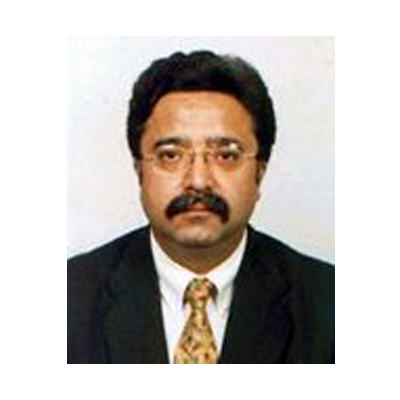
    ‘The real value of cricket is now going to show up’ : Rohit Gupta – SET India executive vice president ad sales and revenue management

    Cricket, cricket and cricket. That is the exciting scorecard SET India will have for display in the fiscal 2006-07.

    A lineup of eight sponsors that is set to gobble up 50 per cent of the inventory. A bulk deal with Dentsu that eases the pain of selling individually to clients. Sony’s ad target: Rs 5 billion upwards. A figure that many in the industry are sceptical about, but the team at SET India is confident of achieving.

    Centring around the World Cup will also be a slew of high-profile programme launches. The aim: to give SAB TV and Sony TV the much-needed lift.

    In an interview with Sibabrata Das, SET India executive VP ad sales and revenue management Rohit Gupta talks about how media agencies should go beyond ratings and rates to work with broadcasters for deriving value from sports and other big properties. The industry with 70 million cable & satellite (C&S) homes, he says, is under-served and undervalued.

    Excerpts:

    What exactly is the deal with Dentsu?
    Dentsu has bought a high proportion of inventory on Max for the two ICC tournaments. By coming in early, the agency has ensured that its clients get into the World Cup without paying a real high premium (settling between the sponsorship and spot rates). The deal has put less pressure on us to individually sell that many spots.

    Was there a proposal to handle the entire inventory on a minimum guarantee (MG) and revenue share basis?
    Dentsu did make an offer. But we couldn’t have done that in India because of ICC restrictions. Besides, we were clear that we wouldn’t do one block deal. We still have to maintain our relationship with other agencies and clients.

    Is the Dentsu deal going to be a trendsetter in sports selling even as acquisition costs for cricket TV telecast rights go up?
    It definitely is an eye opener for a lot of people. What Dentsu has done, most agencies should start doing – engaging with broadcasters well in advance. Agencies shouldn’t try to beat the ground pricing always. As much as I have to sell, they have to buy. Everything can’t boil down to rates; then you will never get value. Where are the CPRPs (cost per rating point) for Super Bowl in the US? There is something called an ‘impact buy.’ Cricket should be looked at from that perspective; it not only brings in new audiences but is also a religion in the country.

    Is SET India targeting an advertising revenue of Rs 5 billion from the two ICC tournaments?
    I can’t disclose the exact figures. But we are going to double our revenues from the last World Cup.

    How?
    Just look at the cable and satellite (C&S) viewing universe which will have more than doubled from 32.5 million homes in the 2003 World Cup to 70 million by the time the March 2007 edition kicks off in the Caribbean. That would mean a potential viewership of over 300 million glued on to their TV sets.

    Besides, the two tournaments sit on a perfect timing with brands being active from October (festival season) to April (summer spending). Add to this the advantage of the Champions Trophy being played in India.

    We will use the World Cup to lift Sab to the next level. With cricket and Fame X, we have a far more aggressive growth plan for the channel

    How much money have you tied up from the eight sponsors?
    I can’t go into the specific details, but 50 per cent of the total inventory is consumed by the two presenting (Reliance Infocomm and Nokia) and six associate (Pepsi, Hero Honda, Maruti, Hewlett Packard, LG Electronics and ITC Foods) sponsors. We have sold the two tournaments together as they involved huge outlays from clients. We will eat into the share of the biggest channel’s revenues.

    What are the brands you target for Extraa Innings?
    This is a very big property for us and we sell it to a separate set of sponsors. We target smaller brands who do not have that kind of budgets to be on the World Cup matches itself. Extraa Innings is not just wraparound programming but is fun and entertainment. We monetise every property that we have.

    How much of a revenue advantage will the Hindi feed on Sab TV be?
    Doordarshan gets 30 per cent of its viewership from C&S homes because of the Hindi commentary. Our aim is to eat into this. We are, thus, simulcasting 18 key matches on Sab in Hindi. We are offering value to the advertisers who would have also bought on DD. We want to own the entire C&S homes.

    During the last World Cup, SET India’s strategy was to push Max. Are you working out a similar strategy with Sab this time?
    We will use the World Cup to lift Sab to the next level. We did that with Max during the last World Cup and raced ahead of Zee Cinema, which had an early mover advantage, in one year’s time. We have planned big launches like Fame X (the refurbished version of Fame Gurukul) on Sab TV. We have also recently put up a clutch of comedy shows.

    Have you changed the positioning of Sab TV after buying it out?
    When we acquired Sab TV, it had a fuddy, duddy image with an appeal in the Hindi heartland. As this old image restricted growth in ad revenues, we felt the need to reposition it as a youthful, light hearted channel. Sony as a network stands for the youth brand. With cricket and Fame X, we obviously have a far more aggressive growth plan for Sab. Our aim is not to make Sab TV a flanking but a strong channel standing on its own.

    Sony is in talks to acquire stake in Ten Sports. Do you feel the need of a complete sports channel?
    I wouldn’t like to offer comments on this.

    Is the time right to hive off Max into a complete movie channel in the changing scenario?
    With so much of cricket happening now, it is certainly good to have a sports channel. Because in a hybrid channel, you are disrupting the viewership and revenues. But it all depends on what properties you are acquiring. For us, Max has worked well as a hybrid channel. We have been able to marry together both the passions – movies and cricket. The ICC property we had offered major tournaments every two years; we could change gears effectively. Max is no more a poor cousin of Sony, but rakes in ad revenues over Rs 1 billion (from around Rs 280 million before the World Cup) purely on its movie strength. Whether we will continue down this road, I don’t really know. I wouldn’t at this stage be able to comment for the future.

    How will revenue support high telecast fees for the next World Cup bid?
    The industry will have to use new ways. As TV telecast rates climb higher and higher, we may have tie-ups with agencies and clients at the time of bid. We don’t know – all that may happen to minimise risks. We will have to explore all options. Cricket, after all, will be a dominant monopoly at least for the next ten years. Of course, other sports like football will emerge. But cricket will continue to rule in viewership and revenues.

    Will advertising back up such acquisition costs or the model be driven by subscription revenues?
    Ad rates will have to go up. When Harish Thawani starts selling this time, he will have to get real pricing because his company Nimbus has paid that kind of money to get the telecast rights for cricket in India. He couldn’t do that last time because he didn’t have a channel. The real value of cricket is now going to show up because the new rights where people have paid huge money are now coming in. So the next 6-8 months in cricket is going to be exciting because you will see the rates go up substantially. Otherwise, somebody is going to get bankrupt.

    We will also see money shift from on ground to on-air advertising. The value of on ground properties is diminishing.

    What about subscription revenues?
    Direct-to-home (DTH) and conditional access system (CAS) will form a revenue component when the ICC bid comes up this time. We had factored in some inflows from DTH when we made the bid last time, but it got delayed by two years. For us, it has been advertisement-led and we have successfully achieved that.

    With Zee TV on a resurgence, how has the slip in Sony TV’s ratings affected the revenues?
    As a network, our ad sales will grow by 30 per cent this fiscal. Sony TV saw a blip last quarter but with the launch of Jhalak Dikhla Jaa we are sorting it out. We will also be using cricket in a big way to promote our properties and are launching Big Brotherimmediately after the Champions Trophy. Unlike the last World Cup, we have planned up big show launches just after the tournament.

    Isn’t Pix slow to take off?
    We have now got the distribution right. We will start focussing on selling. We are looking at premium brands as the positioning of the channel is for SEC A.

    Pix has a library from MGM but lacks new movies which HBO and Star Movies are able to telecast. How do you plan to correct that?
    The two movie channels show premium new titles only once a quarter. We don’t plan to have those titles for at least the next one year. But that won’t affect us. We have a good library. Besides, there is space for three English movie channels.

    What are the plans for AXN?
    We will continue to do at least three big local ground events. That is the advantage AXN has against its competing channels. We integrate events with the local brands. Man’s World is also coming up. AXN is a youth and adventurous channel which telecasts action titles.

    Is there concern that the World Cup almost coincides with the implementation of CAS?
    We see it as an opportunity. The World Cup will drive CAS. Much like brands being born out of the World Cup. We have seen how the top two players in any sector (consumer durables, telecom, automobiles, etc) have used cricket to grow. That is the power cricket has over audiences in India.

  • ‘In 3 yrs, there will only be 2 sports b’casters who will have any kind of market share’

    ‘In 3 yrs, there will only be 2 sports b’casters who will have any kind of market share’

    Other rights like ICC come up for grabs. Is Nimbus chasing these properties or is India cricket sufficient with other smaller properties?
    We will evaluate all opportunities as they come up. The ICC has currently started a process of inviting companies for discussions. Once details are made available on what the opportunity is a commercial decision will be taken.


    There is talk that the ICC rights might go for a billion dollars or more. In 2011 when India hosts the World cup DTH will have taken off, condition access will be in, IPTV, Mobile TV might have come in. So it might be worth the price. Your thoughts?
    I don’t think that there is a sticker price. It is not like a Bata showroom where they advertise the price. Talking about price is a question of speculation.

    Someone might speculate that it will go for less than last time. Another person might speculate that it will go for more. In 2011 there might not be five sports broadcasters in this country.

    There might be two or one or ten. Crystal ball gazing on price for products that are going eight years forward is even more difficult than crystal ball gazing on the BCCI rights that went four and a half years forward. With ICC it might go for half a billion (dollars) or even five billion when there is speculation of one billion. There will be some interesting turns and twists.


    On the distribution front could you talk about your deal with Star? The deal with Star gives strength to their bouquet as they now have a complete array of products to offer.
    We have India’s strongest possible distribution partner. Their knowledge, skills, market relationships, powerful array of channels, augers well for us. They have assured us that they will be able to roll us out in four to five million homes on day one. This is very impressive.

    We are going free view for one month. We will not pay carriage fee for Neo Sports. Cricket is a solid product. When Neo Sports Plus launches we might consider paying carriage fee. We have seeded 10,000 decoders in the market. Star is looking at us to push DTH.


    There was a report that indicated that Nimbus has managed to get a little over $350 million from Star as MG on the distribution front. Any comment.
    We have not quoted any figures. I question the wisdom of the industry or amateur observer to break everything down into figures. Eight hours a day, 1,500 crores (Rs 15 billion) of MG, four years of rights. It suggests that people do not have the ability to understand the industry beyond kindergarten concepts. Why are these figures so magical? Why does it have to be four years of rights? Why not 25? Why not three?


    There is industry talk about a shakeout happening in the sports broadcasting business as it is getting extremely expensive. Your thoughts.
    I agree. The market is in a stage where consolidation is bound to happen. If that amounts to a shakeout or a voluntary consolidation remains to be seen. I forecast that in three years time there will only be two sports broadcasters who will have any kind of market share.

     
    The Rs 5 pay channel pricing is an issue on which the last word has not been heard yet. Industry will have to wait for the outcome on various pieces of litigation that are either being heard or filed
     

    But Tam data shows that Ten Sports is ahead week in and week out in the sports genre?
    Ten Sports’ gets high ratings primarily due to wrestling – WWE.
    The channel is not delivering WWE numbers in the Hindi heartland or in the Tamil heartland. It is doing well in the big cities and the skew in the way in which the Tam data is measured tend to make Ten Sports look like a bigger network.

    Take WWE away and Ten Sports will struggle on its GRPs. Advertisers do not want to be associated with wrestling.

    I know this because we were offered a very good competing product to WWE. Before we took it we asked ourselves whether it fits in with our internal ethics code. The chances are no. But we are business minded.
    If the consumer wants it we might have to look at it.

    So we went to the advertiser and asked him if he was willing to put money on this product. The client said “No. It is not good for our brand to be seen in the context of a violent sport. With children we want to do things that have a good value. You want to do Disney, cricket, knowledge based shows like what is featured in National Geographic and Discovery.”

    WWE has got a very thin spread of advertising. Nimbus, meanwhile, will also stay away from boxing.


    There is also the Rs 5 question of channel pricing in the CAS regime that Trai has announced. Your view?
    This is an issue on which the last word has not been heard yet. The industry will have to wait for the outcome on the various pieces of litigation that are either being heard or filed. If it stays at Rs 5 then channels, sports federations will have to rethink their revenue models. Advertisers might have to pay more to compensate for the shortfall in subscription revenue. Employees may have to accept wage cuts across the board. There will be tectonic changes based on what many believe is an irrational price tag.

    Broadcasting is not like telecom where the government leases out spectrum and so has a stake. The broadcasting sector is independent. Will the authorities take that into account? Will the courts intervene? Will Parliament intervene? This remains to be seen.

  • ‘Trai has come up with the correct CAS economics’ : K Jayaraman – Hathway Cable & Datacom MD & CEO

    ‘Trai has come up with the correct CAS economics’ : K Jayaraman – Hathway Cable & Datacom MD & CEO

    The Telecom Regulatory Authority of India (Trai) has laid out a fertile ground for digital cable TV take off. The formula is simple: price everything low and large volumes will create a viable market dynamics.

    India has seen it in mobile phones. The lessons will repeat itself in the television industry. Despite the initial blip, the industry will correct itself and grow as at the centre of this pull of gravity rests the consumers.

    Broadcasters are not in tune with this logic. Their programming costs are rising. So why not let them have the freedom of pricing their products?

    The cable operators, along with the consumers, are in love with the a la carte pricing of pay chanels at a maximum of Rs 5. The multi-system operators (MSOs) feel that a new business model is being set.

    In an interview with indiantelevision.com‘s Sibabrata Das, Hathway Cable & Datacom managing director and CEO K Jayaraman argues how every stakeholder will eventually stand to gain. The a la carte pricing will make digital cable popular while the revenue share across the value chain has been “very accommodative.”

    Excerpts:

    Do you agree with what the Telecom Regulatory Authority of India (Trai) has fixed as the price and revenue share under conditional access system (Cas)?
    The regulator has come up with the correct economics. Consumers will have choice and at a real affordable cost. The a la carte pricing of channels at a maximum of Rs 5 in Cas areas will increase the penetration of set-top boxes (STBs) and drive in volumes. The revenue share allocation across the value chain is also very accommodative. Broadcasters will get 45 per cent share and have access to advertising revenues as well. While multi-system operators (MSOs) will have 30 per cent and carriage fee, local cable operators are also given a fair share with full revenue on the free-to-air (FTA) package and a 25 per cent share on pay channel revenues. Also, the government will get more tax revenues.

    Broadcasters complain that the maximum price of Rs 5 per channel is too low and doesn‘t take into account their high programming costs.
    When subscription becomes transparent, the rate has to be low. For digital technology to take off, we need such a price regulation. Let us face the reality: these are the consequences of a new environment and a change in business model. Besides, the price regulation is only for one year. Free market will prevail and price will be discovered eventually.

    With a la carte pricing, cable bills are expected to drop. How will falling ARPUs (average revenue per user) affect the cable companies?
    Nothing can be worse than the current model. But under Cas, we will, at least, have a legally sanctioned revenue, albeit lower. No doubt we will get a Hindu rate of return. But we will not have under-reporting of subscribers. We are happy that a proper business model is being set. Revenues Will grow once the business model settles. Everybody will be on the move. As consumers have choice, broadcasters will have to worry about pricing their channels correctly within a maximum of Rs 5. If they do that, then MSOs can also make money. We will have to focus on providing quality cable TV service. If we don‘t do that, we have competition from direct-to-home (DTH) service and will face threat of being wiped out.

    Cable companies will also have to subsidise the boxes. Do they have the resources to absorb subsidy costs and still scale up?
    All of us will have to be in investment mode because the business model is changing. The initial subsidy on each box will work out to Rs 1,500. This is the price we have to pay for a change in the business model. But this can be squared off once it settles down. The price of STBs will fall by 15-20 per cent with a surge in volumes. Cable companies will have to raise resources, either through debt or equity. For those who can‘t, survival will be tough. The telcos like Reliance Infocomm are waiting to step in. We should be prepared for a high volume, low margin game. Distribution, initially, is a volume business.

    Won‘t your traditional business from non CAS areas be a support?
    Yes, we will have other businesses to run: internet, non CAS placement fee, ad revenues from local cable channels. We will also have carriage fee from FTA channels in a CAS system. For cable companies to cover up their overhead and variable costs (STBs), they will have to do other related businesses.

    A la carte pricing will drive down our ARPUs. But we are happy that a proper business model is being set

    Like having a well-rounded revenue stream?
    If you are a composite cable company, you will survive. We will have to provide video, voice and data through a common pipe. Standalone players will have a tough time. We, for instance, are preparing to launch voice over internet protocol (VoIP) services by the last quarter of this year. Test runs are currently on. We are also be aggressively pushing digital cable TV in non CAS markets. We recently launched in Jalandhar, having rolled out our digital services earlier in New Delhi, Mumbai, Pune, Bangalore, and Hyderabad.

    Do you see DTH having a perceptional advantage over cable?
    DTH platform providers are well capitalised and have a more long term vision. Their ARPUs can also settle higher as they better their products. But they have a huge variable cost in occupying transponder space. Cable companies, in contrast, have already made the investments and have low operating costs. Of course, now they will have a variable cost towards procurement of boxes. But they have an existing relationship with customers and cable is two-way enabled. Digital cable can also offer more channels. Composite cable companies with focus on multiple revenue streams can effectively fight DTH.

    How are you planning to infuse capital to fund digitisation?
    We will raise Rs 1 billion as debt to fund the first phase of CAS The bulk of the investments will be towards subsidising the STBs. Funding will also be required in setting up VoIP and expanding broadband infrastructure.

    Is it a good time to acquire last mile operators?
    If cable companies have the resources, acquisition of last mile will make sense. In the CAS areas where you have an administered price regime for one year, the payback period will be longer. But once the price is market-based, then recovery will be faster as more channels come under the pay system and people start subscribing to them. Even in non CAS areas, acquisition will provide size upon which a digital platform can be built later. But in case of Hathway where we have limited resources, we would rather put the money in placing more STBs.

    Will Valuations of cable companies go up under CAS?
    CAS will bring some semblance of order into the business. But it is a long term roll out and needs cash flow. What is more important is that cable companies will attract capital, whether in the form of equity, debt or convertible bonds.

    Will there be a consolidation in the industry?
    Consolidation will happen wherever digitisation is required because of new technology and service requirements.

    Zee network‘s Wire & Wireless India Ltd (WWIL) is planning to launch a headend-in-the-sky (Hits) platform and has expressed intent to make inroads into south and western suburbs of Mumbai. Do you see territorial warfare among MSOs returning?
    Hits is right now viewed more as a fashion statement. We are delivering digital without having Hits. If it is necessary, then everybody will do it. As far as poaching of operators go, it is an open ground. Cable companies who focus on good service and have capital to create capacity will turn out winners. Competition is not a one-way street.

  • Neo Sports appoints Sanjay Bhoer as VP marketing & sales strategy

    MUMBAI: Coming off the back of recently announced ex-Nimbusite Sunil Manocha’s appointment by Neo Sports as senior VP – advertising revenue, is the appointment of yet another ex-Nimbusite Sanjay Bhoer as vice president – marketing and sales strategy.


    As the network is in the process of beefing up its senior management, Bhoer will work closely with Sunil Manocha and his key responsibilities would lie in defining strategies for advertising sales as well as consumer marketing.
     

    Bringing with him over 10 years of experience in media, Bhoer started off his career with Hindustan Thompson Associates, then moved to Fulcrum after which he went on to join Nimbus in 2002 where he spent two years closely involved with the advertising sales team in selling airtime on the terrestrial platform for the ICC Champion’s Trophy 2002 and the ICC Cricket World Cup 2003. In 2004, Sanjay joined the TV18 Group as head – consumer research for its channels CNBC TV18, Awaaz, CNN-IBN, IBN7 and played a key role in building acceptance and scaling up revenues for business television in India, informs an official release.

    Bhoer is a science graduate with a Masters in Management Studies from the Jamnalal Bajaj Institute of Management Studies.


    Commenting on Bhoer’s appointment Sunil Manocha said, “Sanjay comes with in-depth knowledge of the media landscape; having worked together with him on cricket before, I am sure he will get greater insights and be a valuable asset to the team.”

    Bhoer added, “This is a very exciting time to be in sports broadcasting and with Neo Sports poised for market leadership, the challenge of working in a strategic function in a large scale broadcasting operation and an intellectually stimulating environment that Nimbus has always had, urged me to move.”

  • ‘We are competing for the entertainment share, not radio share’ : William Sabatini – Worldspace VP Global Programming

    ‘We are competing for the entertainment share, not radio share’ : William Sabatini – Worldspace VP Global Programming

    Worldspace VP Global Programming William Sabatini has more then 22 years of major market radio experience working at radio stations in New York (WNBC-AM, WXRK-FM and WCBS-FM) and Los Angeles (KCBS-FM).


    Sabatini has worked with the biggest names in the radio business in the US, including Howard Stern, Cousin Bruce Morrow, Dan Ingram and Wolfman Jack. He has been with WorldSpace for more than 8 years now, and started in 1998 before the satellites were even launched!


    Sabatini joined WorldSpace as director of Music Programming and was responsible for designing and launching the first original music channels which were created in the fall of 1999. Currently, his responsibilities include development of content strategy, building new content, partnering with third party content partners, implementation of content plans – managing the content on a global scale, encompassing numerous markets such as India, Middle East, Europe, South Africa.


    During a recent trip to Bangalore, Sabatini found time to speak to indiantelevision.com’s Taro W. Excepts from the interview:

    WorldSpace is about getting music at an affordable cost. How do you propose to face the challenge from the growing FM Radio explosion in India from the programming perspective?

    In truly providing different niches of music, whether it’s Indian music or Western music like in the case of the States where you have the XN series, we provide things that FM can’t provide. That’s kind of the starting point.

    What are the things that FM can’t provide?

    Well, we are going to have 65 music channels. An FM station can do one format. So you have a platform that will reach out, that’s it.

    As far as FM is concerned, it’s free, you only need a radio, a standard receiver, but in your case you require a separate receiver and a subscription charge. So what’s the differentiator? Suppose I was to subscribe to you, how would you get me to do that?

    Our job is to just provide that value, to demonstrate to the consumer why the value for the money. FM is free; we’re not, why come to us? That’s part of our job.

    So how do you go about doing that?

    What we’ve found in the States; Europe is that you have to really experience the product. People have to be explained the value proposition. And once they get it demonstrated to them, whether it’s through an audio retail outlet, or through the GM cars, people would get it for two months free. Once people heard it when they got it … Oh My God! Yes you have X number of stations in the market, the format would never be on FM radio, they’d never be able to provide individual stations with these kind of niche products. When you are on FM you are all about providing mass appeal, in all mass appeal, you’ve to track advertising revenue. It has to be the biggest broadest format. You can’t do a jazz channel, you can’t do a Carnatic classical music channel, and you can’t do a Punjabi music format. You can have a big brand, you know the Bollywood hits format, which is cool, we have one ourselves, but we also offer this variety of music formats that are not heard on traditional FM radio.


    The benefit of having a whole platform and the value proposition that we hopefully are, well unlike FM. Yes there is a subscription cost, but this is what you get. You get 40 plus channels of music. So hopefully the consumer understands that.


    We recently did an event in the US. It’s a big existing kind of yearly concert. We go there while we are on the ground, we get access to all the artists, we interview all the artists on the stage and we do it (a) Live on the channel and (b) we pick that and package it and distribute it to different channels in a format that makes sense for them and again that is an example of unique stuff that people have access to. People can have a CD of an artist, but they are not going to have the interviews and things like that.

    And your job is to organize the content basically.

    Right, I handle global content, developing the content strategy, trying to figure out what is it that people want. We have X amount of bandwidth on our system, how do we use that to get people what they want. Most in demand music formats for instance, you know, create demand.


    We have to think about content all the time. Providing content that is unique and compelling to people obviously. When I think about the content, I think about two things – the breadth of the content, all the different genres and varieties and choices that you have from A to Z. Then also within that channel selection of breadth, the depth of each particular channel, and what does that channel provide that is unique and compelling.


    Getting back to your original question, we’d like to articulate that – Yes, we have these variety of choices which are cool and great.


    Even for the channel choices, we really try to go deep and offer – like our New Pop (NP). You know NP is our globally focused Pop channel. We play the pop hits from around the world. Who are the big stars in Italy, in France, here, the US and everywhere? What we did last year, actually this year, was we went to Studio2 – the Beatles studio in London where they did everything. We went there for three days, brought in 20 plus bands and we recorded sessions with them which we broadcast.


    The event itself was cool; we repackaged that, nowhere else could you get that. A lot of up and coming British acts, some established British acts, and they were just excited to come, because they were in the place that the Beatles did all the great stuff in. Those are the kinds of things we look to do on all the channels, in sync with the channel, of course. A long answer to you question.

    Do you do some research to know kind of stuff that people want?

    At the end of the day, it’s not what I want, it’s not what anyone in the content department wants, it’s what our subscribers and potential subscribers want. They are the ones who are going to pay the subscription fees, so we’ve to give them what they want. We constantly do research to. We poll our subscribers, the satisfaction levels that they have with the channel, what do they like that we have, what don’t they like that we have, what things do they see missing on the platform, what do they like to see more of. A lot of those kinds of things. We’re constantly polling our subscribers and potential subscribers who may not even be aware of WorldSpace, that way we are always informed.

    Third party content, how easy, or how difficult is it get in different countries? Do you find different regulations all over the world?

    Yeah, it greatly varies. It varies on our partners, on their goal, what they want. Sometimes a partner might just want to be ubiquitous, they may just want distribution, WorldSpace can take this and it’ll be easy to get them on. In other cases, not so much. Maybe they already have distribution on some other platform. There’s no kind of set answer to that. It depends on the brand or the third party, what their goals are.

    What about from the regulations point of view? Do different countries have different rules as far as sharing of content, payments, other things are concerned?

    It’s not an issue at all.

    You have been in the music industry for 22 years.

    Yeah, I started in Radio New York City, and then worked with some big high profile people in Europe and then Los Angeles; I have been with WorldSpace when we didn’t even have the satellites up yet.

    What are the future plans for WorldSpace?

    Just generally, in terms of the content which I can best speak about – it’s continually staying on top, I talked about the research with our listeners; it changes from time to time. It’s about trying to figure out what’s the right mix of channels so that we can keep the subscribers happy. I am basically a consumer myself too, so I put myself in position of the consumer here or anywhere else that we do business and I want what I want. I am just trying to keep that consumer mindset in my mind when we program all these channels, and try to communicate that to all the people who run the channels and we really have to be in touch with all the listeners, in this day and age we can really communicate with people through email and message through to text, whatever. Chances are that they are communicating with the head of the channel, they like the channel. This is the core people who listen to your channel. We’ve to figure it out what they want from this channel.


    The RIFF Jazz event that we are going to do is the first of many events. This is the kind of thing that I want to do more of here – taking us to the people. We are just talking about Jazz in this event in particular. You know Jazz isn’t kind of high profile format; it’s an important format that’s got a core base of listeners. One of the reasons is because it doesn’t get the kind of exposure, people aren’t exposed to jazz, even in the states we have just 30 radio stations nationwide that are dedicated to Jazz. So people don’t grow up knowing about Jazz, they are not exposed to it, they are intimidated by this whole thing they don’t know about.


    So this kind of event will take Jazz to the people. This is the going out and explaining kind of Jazz to the people and demonstrating it and making it more acceptable. That’s what we do across all our channels, especially channels like this – Jazz and Classical. There is a wealth of knowledge and a wealth of history behind this kind of format. I want to replicate this kind of setting across multiple formats with different genres and do these kind of events all over India.

    India only? What about the other countries?

    You know with our satellites we cover 134 countries. If business climates call it, that will roll out as well. That’s not for me to talk about. There are future plans for the company, but right now obviously our main market of interest is India. That is quite clear.

    While we are going to have 65 music channels covering various formats, an FM radio station can cater to only one format

    Over the last eight and a half years, what are the different trends you’ve seen – Most music life is a few months or few days?

    Every person that we have hired to run the channel, I consider is a kind of expert in that field. We have also taken people on board who don’t have a lot of radio experience, but are a kind of an embodiment the format; they kind of live the format. You can literally teach people the basics of the radio, how to program a radio station, but you can’t teach them the lifestyle of the music. We are not in one place, we are in many with a million different expectations of what comes out of the radio, we can’t do research of one market like you do in a regular market and hire somebody, I am hiring you because of your instincts, on your gut feeling, we’ve to rely on you as an expert on this genre of music to program the station.


    Coming here to WorldSpace kind of liberates a lot of people, because they can program the station based on their own creativity and ideas and without having this pressure of “OH MY God! I can’t play this song because this section doesn’t like it. That’s why it’s really important for all the program directors of all the stations to (a) use their gut instincts (b) also be informed and try and stay in touch with the market with people all the different forms of communications because we have to understand what is going on the ground.


    Getting back to your question, people who are embodiments of these formats, people who know the lifestyle of that format, like Pamela Hall in the US. She grew up in a Jazz environment. She lived the life of Jazz.


    It’s up to the people to control the individual format and brand to constantly be on top of changing trends within their universe. Our people have to stay in touch, especially the current music – Pop. For example Reggae Pop, 3-4 years ago, it didn’t exist. We just started a channel called Flavor that is a globally focused hip-hop channel. Hip-hop started as a purely American form and the biggest Hip-hop, western people like that. What it’s done over the years is that in addition to people all over the world listening to hip-hop, they’ve got influenced by that and they’ve built their own versions. So we’ve this channel that globally focuses on hip-hop.


    That’s what we do on all the channels; we try to make them as globally focused as possible. Certainly not all formats can do that. Country format – for example -American country music. Our people are constantly aware of the trends, not just in the US, but everywhere.

    Today, internet has made geography history; do you see music becoming common globally? For example an album that is released in the US has a simultaneous release the world over. People globally are aware of it, on television, on the internet. How common is the content across different countries? The content that really gives you a good audience.

    One of the benefits of our platform is that we present a lot of different content. We have Indian produced channels that are very specific and focused on some regional languages and some more Indian formats, as well as the western content. Certain amount of that stuff applies globally. I have spent time here going to places such as bars, pubs, etc and just hear what people are listening to, especially some of the bars where the DJs’ are playing. It’s stuff that we all play on our channels.


    You walk into some of the bars here and they are just playing good old Led Zeppelin and the Who. And obviously that is the trend, no matter where. I’ve heard that kind of stuff everywhere. I think there is a certain commonality with some of the music, maybe on the platform, a lot of it, everywhere, but there are certain things that are specific to this market and maybe wouldn’t be trendy outside this region. So there is a kind of combination of both things on the platform. But I certainly agree it’s changed the music industry, that ubiquitousness of music has crossed the world; you will certainly see the kind of cultural exchange between people, people are aware of the other artists and, this wouldn’t necessarily happen if it weren’t for the easy access.


    We have a channel, a platform called World Zone to take the world of music and present it in a form that makes sense. I mean, literally, and I am not talking about just pop music, it’s more Chip Mammy, Sting, Peter Gabriel, and all these artists from around the world and putting it all into one mix representing it in the way that it is (1) first and foremost is entertaining, (2) but also educational.


    You remember when Sting came out with Chip Mammy, every one knew Sting, in the States at least, no one knew what Chip Mammy was, by virtue of being partner with Sting, people started paying attention to that. That’s what we are trying to do in World Zone, to bring all that music to people’s mind. We try to help in the process of globalization of music.


    Very often people may not like some of the music, something that they may not be yet interested in. We expose it to them, and play something they like, they give you the benefit of doubt, let’s stay with the channel, they kind of trust your instincts. They know, okay I like this channel they’ve introduced me to a lot of some cool music, it’s a sort of a global channel, that’s what we try to do. To kind of present the music to people they may not be familiar with, in the right context of course.

    Unlike Television, you don’t have methods of tracking listenership.

    No we don’t. Not yet. We just have the internal research that we do. We hope to have something like the TV ratings in the States for satellite radio. We’re pretty obsessed with the research that we do.

    What is your biggest competition?

    I think the biggest competition is not really the radio stations, it’s entertainment. I mean we have to make this a really compelling medium that people want to listen to us. Not just TV or news channels, or FM radio, it’s just entertainment. We are competing for the entertainment share, the entertainment ear if you will, so lots of forms. Satellite Radio series in the States are competing with each other, competing with FM, they are also competing now with I-pods. People have got I-pods in their car, it’s their music, when they want it. We have to give them a compelling reason with all these channels, give them stuff that they’re not going to get, can’t get on their I-pod. It’s also the serendipity of listening to a radio station, of not knowing what’s coming up, of being entertained by the DJ or the RJ.

    What about the internet, you have a choice to internet radio with so many channels in hold.

    You sure do, and I have thought a lot about that over the years, especially the kind of activities have increased, and with broadband, it’s easy to listen to internet radio, and as cities are getting wired, how long is it till internet is in the car. We can’t narrowly define our competition as this because there are maybe contrary things come up that attract attention for people. We just have to focus on the basics – content – how do we make our content so compelling, so unique that people just want our content.

    So content is the only differentiator?

    That’s what people are buying, they’re not just buying the receiver because it’s a cool receiver. It’s what they get from the box , and that’ why a subscriber probably just comes to us, they get things that I can’t get elsewhere, not on my I-pod, not on FM. That’s what we are selling on WorldSpace-content. And our music channels are commercial free, that’s another compelling reason.

  • ‘In some areas, we have done better than One Alliance, while in some areas we have done as well as Star. But no denying that at a national level Star bouquet is way ahead of others’ : Arun Poddar – Zee-Turner CEO

    ‘In some areas, we have done better than One Alliance, while in some areas we have done as well as Star. But no denying that at a national level Star bouquet is way ahead of others’ : Arun Poddar – Zee-Turner CEO

    Arun Poddar is an industry veteran with an enriched experience and excellent track record of over 23 years in sales and distribution. He brings with him vast experience in media and broadcasting industry and proven ability in the FMCG sector. A business management graduate, Poddar started his career with Maxwell Industry. During his tenure of seven years with Maxwell, he successfully established a robust distribution network in the eastern region of the country.
    One of the many important tasks that Poddar undertook during a stint at ESPN was seamless transition of ESPN from Modi Entertainment Network, which used to be responsible for ESPN’s distribution. After working with ESPN Star Sports for seven years, Poddar joined Ten Sports as vice-president, distribution and marketing. Utilizing his expertise in sales and distribution, garnered over 21 years, he successfully structured and developed an in-house distribution team. At Ten Sports, he also established a working and monitoring format to create a direct relation between company and trade.
    After spending two years at Ten Sports, Poddar joined Zee Turner as its chief executive. A person who loves to read, paint and listen to music, Poddar in this interview with
    Indiantelevision.com Anjan Mitra holds forth on various aspects of the broadcast industry.

    Excerpts:

    What is your overview of the present scenario of the broadcast industry?
    If you really see the broadcast industry in the last 10 years, then it has evolved a lot from being totally fragmented to a situation where big corporate bodies have come in and are trying to evolve a corporate structure. The distribution segment too has seen this happening with big MSOs coming in and trying to bring a semblance of order in the business.

    At one point when big corporate entities started coming into the industry’s various segments it was felt that the industry as a whole would shape up faster having well defined corporate identities and professionally managed businesses as in other sectors. Unfortunately, that did not happen.

    From a broadcaster’s point of view under-declaration of the subscriber base had always been an issue, which slowly became an accepted norm. The whole flip-flop on CAS since 2003 has added to the confusion in the market. However, CAS in its second inning now seems to be more of a reality than just talking about bringing in new technologies.

    With the arrival of DTH and CAS, the choice of a consumer gets widened. It gives broadcasters a competitive edge as good content and a strong channel would be a winner. From cable operators’ point of view, new technologies not only bring in transparency in the whole system, but also some orderliness.

    Don’t you think that intra-industry differences and constant appealing to the umpire (the government or the regulator) has impeded industry’s growth?
    Fundamentally, everybody had their own agenda. There has always this issue of declaration or under-declaration between the cable fraternity and broadcasters. Most industry disputes emerged from this basic issue of want of more declaration of the subscriber base or a resistance to it.

    Now this basic issue gave rise to subsidiary areas of dispute. I’d say that want of more subscriber base, price hike and introduction of new channels on limited bandwidth are at the core of ills afflicting the industry. These always created an environment that was not very conducive for business on either side.

    The regulator’s efforts to address industry issues cannot be negated. At the end of the day, any industry difference would affect the subscriber. It’s always beneficial to have a neutral agency to oversee an industry as it helps the industry too to go to such a body and bounce off ideas.
    Over the last 18 months or so every issue, major or otherwise, seems to be going to disputes tribunal, which results in loss of time and inconvenience to subscribers. What do you have to say about this trend?
    This was bound to happen. When (industry) grievances are kept captive for long one glimmer of hope in a tribunal makes stakeholders run to it. Had there been a regulator or a disputes tribunal from the start or even earlier, the rush of cases in TDSAT would not have been there. It’s like giving vent to accumulated fury.

    As part of the broadcast industry, are you, unlike some others, in favour of a regulator?
    I am definitely in favour of a regulatory body.

    Even if the regulatory body may end up over-regulating the industry?
    A regulation is a regulation. At least in India you have the freedom to stand up and ask the reasons for a particular regulation and what led to its formulation. Ideally, a regulatory body should take care of the interest of all stakeholders, including consumers. It’s foolish to think that broadcasters should grow and the MSOs shouldn’t. If a particular segment is not growing, then the whole industry suffers.

    It’s easy to put the blame for all industry ills on one particular segment, but that’s not the case and a regulator should see it turns out to be a win-win situation for all.

    What do you think of the revenue share formula that the Telecom Regulatory Authority of India (Trai) has mandated?
    At this point of time, I feel there is scope to better it (from a broadcaster’s point of view). Also, at this juncture we could put across our views to the regulatory body, which would be done in all probability.

    If you ask me, what should have been the broadcasters’ share of revenue accruing from pay channels, I’d say 50 per cent, instead of 45 per cent. The remaining could have been divided in the ratio of 20:30 between the MSOs and local cable operators.

    I am giving the LCOs more share as they are the retailers, while MSOs are whole sellers. In marketing practices, retailers always have the bigger margin.

    Why do you think broadcasters’ share of the revenue gravy should be more?
    Simply because broadcasters are making investments in programming. If cable TV subscribers and viewers in general want high quality programming, then broadcasters need to invest in such shows. Quality production can only come through higher investments and costs cannot be limited or capped.

    How would broadcasters bring quality stuff if their margins are clipped? Every business runs on the formula that the return on investment is balanced. Low investments could also mean low quality production values. Would Indian viewers settle for shoddy programmes and production values?

    What’s your opinion on Trai’s move to legitimize carriage fee charged by MSOs, a reality that was never discussed openly or accepted?
    I don’t think carriage or a fee paid for carriage on cable networks’ prime band would be an issue in a digital era towards which everybody is working. A digital system will take care of not only quality of broadcasting, but also the shortage of space that’s plaguing cable networks.

    Do you feel that ratings of various TV channels will get affected during initial phase of CAS, scheduled to be rolled out from 1 January 2007?
    Any change will have its rub-off effect on all stakeholders, including customers. A transition phase always throws up some doubts, which would get ironed out over a period of time.

    'Ideally, a regulator should take care of the interest of all stakeholders.
    It’s foolish to think that b'casters should grow & MSOs shouldn’t'

    Is there a chance of some pay TV channels going free in CAS areas to safeguard their reach, which is important vis-?-vis advertising revenue?
    I really don’t think so. If the content is powerful, consumers will pay for a channel. It can happen that broadcasters introduce new free to air channels. I don’t foresee a scenario where existing pay channels turn free to air.

    Do you foresee a scenario where a consumer picks and chooses channels in a CAS regime depending on events for a short period of time?
    It is a possibility and will revolve around marketing initiatives. For example, a pay channel can be made available to a consumer for a year at X price. Now if that consumer wants the channel for just six months, then the cost would X plus a certain percentage. Shorter the period, higher would be the premium.

    This trend could be a big concern for sports broadcasters as actual pay-per-view comes into vogue. These are advanced technologies, which will follow when digitalization, DTH and CAS set in properly.

    Will CAS turn out to be beneficial from a distribution point of view?
    Certainly. Apart from bringing about some transparency in the whole system, CAS would make the environment competitive, while giving more choice to a consumer. Distribution will have a bigger role to play in such a scenario.

    With the introduction of CAS and expansion of DTH services, the focus of distribution will be more on consumer rather than just a broadcaster’s client, which is the MSO. As a distribution person, I’ll also have to keep in mind the interest of my client’s clients (consumers). Therefore, there would be a lot of play while servicing clients.

    To facilitate a loyal customer base for a cable operator, it will be very important for me to also go and directly talk to the consumer about a broadcasting product.

    What will Zee Turner do to dial the customer directly?
    The primary objective should be the content and then creating awareness about it. As a company we would try to create a communication channel with the consumer/viewer to keep him in the loop about my product in its entirety.

    The approach would have to be 360 degree in the sense that we get feedback from consumers, hitherto not permitted by cable operators to approach directly, and then create products or upgrade existing channels depending on the feedback.

    In a small way, Zee Turner has started hooking up with the consumer. But it’ll take more time for this exercise to bloom fully as some doubts still persist. Those uncertainties have to be removed before a full-fledged consumer relationship exercise can be rolled out.

    What are the future plans for Zee Turner?
    With consumer becoming the king as options for him open up, thanks to new technologies, I need to be more close to him. Most company activities will be revolving around this theme of getting up close to the consumer, apart from satisfying my direct customers, the MSOs.

    For this to happen, activities like events have to be organized either via TV channels or on the ground. As a bouquet, Zee Turner has the largest number of channels (32) across most possible genres of programming. The task before us is to pick up our positives and pass it on to the consumer in a way that is understood by him.

    'In some areas, we have done better than One Alliance, while in some areas we have done as well as Star. But no denying that at a national level Star bouquet is way ahead of others'
    Do you think the regulator is doing a fair job on the pricing front? (The question was asked before Trai mandated all pay channels will be priced at Rs 5.)
    I think the regulator is trying to do a fair job.

    Has a deal with Tata Sky been concluded?
    We are talking to each other. We had suggested a price for Zee Turner bouquet of channels based on the formula mandated by a disputes tribunal in case of Dish TV and Star India. Tata Sky is not comfortable with the suggested price.

    What are the issues bogging down an agreement to be concluded?
    Tata Sky wants to be selective in terms of channels (from the Zee Turner bouquet), which we are not agreeable to; especially when such a criteria has not been adopted for other bouquets.

    Has Tata Sky given any reason for being selective with Zee Turner channels?
    The reason is quite obvious: lack of transponder space to accommodate all channels. But we also feel this reason is not true. We are keen on giving our channels to Tata Sky, but one cannot have different set of conditions for different broadcasters. Moreover, we are guided by an order from TDSAT.

    What are the revenue targets for Zee Turner this financial year?
    Zee Turner with a subscriber base of 4 million for bouquet 1 and 3.7 million for bouquet 2 is targeting a turnover of Rs 4000 million by the end of this financial year in March 2007. This should translate into 30-35 per cent growth in revenue compared to last year. I am not taking into account bouquet 3 as the subscriber base and revenue is negligible at this point of time.

    I can say with pride that we have been improving our performance. In some areas, we have done better than One Alliance (Discovery-Sony distribution joint venture), while in some areas we have done as well as Star. But there is no denying that at a national level, the Star bouquet is way ahead of others.

  • Viacom takes full ownership of MTV Japan

    Viacom takes full ownership of MTV Japan

    MUMBAI: US network MTV has agreed to acquire the remaining interest in joint venture MTV Japan from private equity firm H&Q Asia Pacific (H&QAP). This will give MTV a 100 per cent ownership in MTV Japan.

    The acquisition will be MTV’s largest in the Asia-Pacific region and will enable the broadcaster to accelerate growth in Japan and facilitate cross-pollination of innovations across the region and worldwide.

    In addition to the MTV Japan joint venture, MTV currently owns and operates Nickelodeon and the digital media brand Flux in the market. Upon completion of the deal, MTVN will combine MTV Japan with Nickelodeon and Flux into one cohesive business where the assets of each brand can be optimised across the entire operation. Prior to this agreement, MTV held a minority stake in MTV Japan.

    MTV’s parent Viacom president and CEO Tom freston says, “Japan is a huge and important market with a very advanced digital infrastructure. By taking sole ownership of MTV Japan we can now seamlessly operate all of our companies there on a multi-platform basis, putting us on a path to significantly grow our Japanese business.”

    MTV US chairman and CEO Judy McGrath says, “This deal represents an important step forward in our strategy to drive international growth. Japan is one of the most dynamic media markets in the world, and we are now positioned to lead the Asia-Pacific region in terms of delivering innovative entertainment content to young adult consumers across all platforms.”

    H&QAP chairman Dr. Ta-lin Hsu says, “The success of MTV Japan underscores the acceptance of the brand and its importance across emerging economies in Asia. At H&Q Asia Pacific, we are proud to have played an integral role in helping MTV Japan establish a leading market position.

    “This transaction demonstrates our ability to migrate consumer brands to the Asia-Pacific region.”

    H&QAP says that it was instrumental in bringing the MTV brand to Japan in 2001. H&QAP acquired Japan’s music channel Vibe from Pioneer in 2000 and subsequently created a new joint venture partnership with MTV that became MTV Japan in 2001.

    Capturing the potential growth in Japan’s cable
    and satellite TV industry and seizing the emerging Internet & mobile opportunities by leveraging MTV’s strong brand in cable and satellite TV, MTV Japan was created to provide multi-platforms for audiences and sponsors.

  • “Zee wanted a fall guy..they chose the wrong one” :

    “Zee wanted a fall guy..they chose the wrong one” :

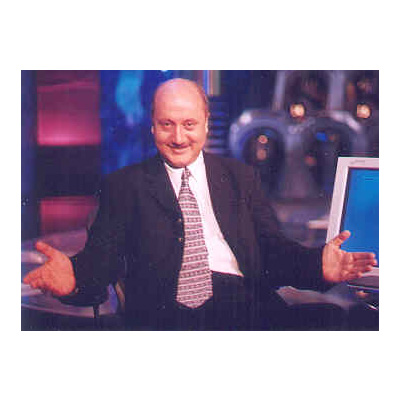
    Anupam Kher is an extremely angry man. And he has been speaking out openly in the media against Zee TV’s decision to drop him as co-anchor of the game show Sawal Dus Crore Ka. For a man who is known to be mild-mannered and professional, it is a sign that he believes that he has been wronged. Indiantelevision.com’s Nupur Rekhy caught up with him and spoke with him just before he left to catch a flight to Hyderabad.Excerpts:

    Q.Have you got the official termination letter from Zee TV?

    Ans: No. I have not. And I can only take any action after I get it.

    Q: Are you going to fight this out to the end?

    Ans: I am convinced about my case, and I have the support of my family and I believe I can also get the industry’s support for my cause. The Zee TV officials are having a long meeting today and should reach a decision later this evening. I will take legal action only after I know the details.
     

    Q. What if they change their mind and reinstate you?

    Ans: I don’t know if I would like to do the show now. It has been a very bad experience.

    Q.What do you think went wrong with the show?

    Ans: I am from theatre and I am used to chaos. Our training is such that we are part of the team. There were some teething problems but otherwise the show was pretty fine. I believe that they should have made some preparations before taking it on air. They got the show going in just three days. Also, they wanted to make changes while the show was on air. To add to that they decided to redo the show as the chemistry of the team was building up …the artistes, the technicians and the viewers…they were slowly gelling together and they decided to redo everything.

    Q.Do you think what has been done to you is fair?

    Ans:Not at all. No one has the right to do what they have done especially a corporate. They should have big values as their identity is known by the values they have, so I do not think what they have done is anywhere fair. They wanted a fall guy and I feel it is the wrong guy they chose.


    Q.What made you do the show?

    Ans: It was a prestigious show, the money was good, for me the process of work is more important than the results.

    Q.Do you think the show will do better now?

    Ans: Not until they come out with a better concept. The TRPs stated that they need to change their attitude, but no one has implemented that as yet.

    Q.What do you think of the changes they are doing? Why do you think Ashutosh Rana stepped into your shoes?

    Ans: Zee TV has made a mistake. I think they should not have changed the host at this stage. But if they were serious about changing the host and taking the show places they should have taken somebody like Shahrukh Khan who has a lot more hold over the masses than me. While Ashutosh Rana is a good actor, he will take some time to come into people’s eyes like I have. I am not trying to act proud. But it will take him time. There are a lot of reasons for Rana agreeing to come in my place. Money is a very big part of it and the desire to be successful. Every artiste would desire that.

    Q.Do you think Zee TV is going through financial turmoil?

    Ans: Yes, I believe they are going through cataclysmic upheavals.

    Q.Do you think they will compensate you?

    Ans:Financially it is a set back. But it is not a disaster situation. They should compensate me and I hope they do.

    Q.How have you taken this?

    Ans: It’s a terrible shock as I had no idea this was coming but I believe in walking on in life and there is a theory that if you’re walking and you step on shit you don’t stop walking. You just brush off and you go on. I think personal dignity is more important to me. I’m not petrified and insecure in my work and neither I’m a vindictive kind of person.

    Q.Did you find it different working with Zee TV?

    Ans:No, there is no difference. Zee started as a very good channel and it was the most watched channel at one time. It was good working with Zee. Zee TV was more friendly because it could reach into the interiors. The concept of the show was original but the execution was alike that of KBC.

    Q.Do you have anything in hand right now?

    Ans:I have a lot of work. I’m completing my prior assigned movies. I’m directing a film so I’m concentrating on my direction.


    Q.How much hard work have you put into this?

    Ans:Hundred percent hard work because that’s the way I work.

    Q.Do you think Manisha was carrying the show well?

    Ans:See Manisha is not a theatre artiste. But she was doing okay.

    Q.Do you blame Manisha?

    Ans:I don’t blame Manisha at all for what has happened. I blame the channel. She may have told the management whatever she wanted. But it’s up to them to follow what she wanted or think about the programming.

    Q.We believe she constantly kept you waiting on the sets by arriving late? You had a row about this last week?

    Ans:I am quite used to this. I am a professional. I gave it my best from 9 am in the morning to 2 am the next morning when I was there. What transpired last week is not important. What I am concerned about is the attitude of the channel’s management.

  • Bharti Airtel inks $ 1 billion network expansion contract with Ericsson

    Bharti Airtel inks $ 1 billion network expansion contract with Ericsson

    MUMBAI: Bharti Airtel today announced the signing of an estimated $ 1 billion network expansion contract with Swedish telecommunications equipment manufacturer Ericsson.

    The contract will enable Bharti Airtel to rapidly expand its mobile services footprint further and reach out to all towns and cities in 15 telecom circles in the country. The three-year service contract with Ericsson is towards the design, planning, supply and installation commissioning of Airtel networks in these circles.

    Ericsson will also upgrade the network with mobile softswitch (Media Gateway and MSC Servers), the solution that paves the way to an all-IP network. Bharti Airtel will be able to reduce the operational costs and introduce new services in a cost-efficient way.

    The scope of the agreement extends to 15 Airtel circles of Delhi, Haryana, Punjab, Himachal Pradesh, UP (West), Andhra Pradesh, Tamil Nadu, Chennai, Karnataka, Kerala, Rajasthan, UP (East), Jammu & Kashmir, Assam and North East.

    Manoj Kohli, president, Bharti Airtel said, “At Bharti, it has been our endeavor to find innovative business models to deliver better customer experience. Our partnership with Ericsson is testament to this belief as it allows us to focus on delivering better customer experience even as we leverage the world class expertise of our partners to roll out our networks across all census towns by March 2007. In addition, we are also sourcing next generation products that will allow us to deliver innovative products & services to our customers.”

    This partnership will enable Airtel to channel its resources and expertise to its core areas of product innovation, value added services, marketing, branding & pricing, while simultaneously providing world class mobile services by leveraging Ericsson’s world class expertise in network management.

    “Our partnership with Bharti Airtel resulted in the first managed services contract in the industry. Speed of roll-outs plays an extremely important role in large expansions of this nature. Ericsson has demonstrated expertise in this area. We are honoured and pleased that Bharti Airtel has chosen to partner with us to expand their footprint across India” said Mats Granryd, managing director, Ericsson India.