Category: Executive Dossier

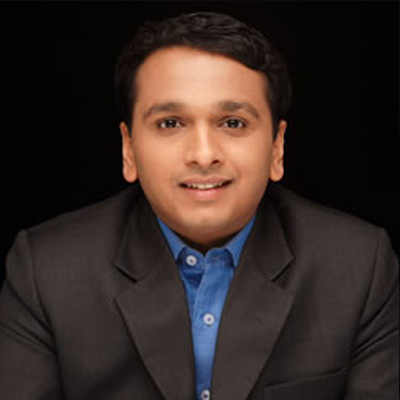
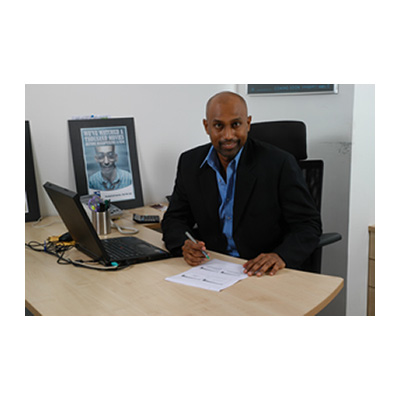
  • ‘80% of activity where brands are engaging themselves with films is in associative marketing’ : CEO Navin Shah

    ‘80% of activity where brands are engaging themselves with films is in associative marketing’ : CEO Navin Shah

    This year the Indian film industry has entered the spotlight with release after release that has caused a stir in the media. Amidst all this, there have also been several others contributing to the noise and much like ‘parasites’ seem to be clinging on to the fame! In short, brands are increasingly riding the tide of Bollywood, transforming this activity into a more organised format by investing ‘big monies’ towards it. This trend seems to be gaining ground in the Indian sub-continent with a whole host of advertisers jumping in the ‘brand-wagon’ of blockbusters including Krrish, Lage Raho Munnabhai, Don and the latest addition Dhoom 2.

    Highlighting the potential of this relatively new yet burgeoning industry, P9 Integrated CEO Navin Shah took some time out to speak with Indiantelevision.com’s Renelle Snelleksz.

    Excerpts:

    What are the various options available to advertisers when associating with a film?
    A product placement is only one aspect of what a brand can do with a film. In fact, product placement only forms 10 per cent of all the activity. Actually a lot happens outside the film, in what is popularly called associative marketing or co-promotion, where the film rides on the brand to get promoted and in turn the brand rides on the euphoria of the film.

    Firstly, there is no lag in the time period, like for Salaam-e-Ishq, which is releasing on 24 January, the planning can be done now. Secondly, even if there is a high integration of the creative of the brand footage and the film, it is only outside and is short lived. It is irrespective of the fate of the film, because you are doing an outside association you are assured of your ROI as it is media linked. The association can be amplified via other mediums like television, print, cinema hoardings.

    Therefore, 80 to 90 per cent of activity in which brands are engaging themselves with films is in associative marketing.

    Is it not a big risk that brands are taking with in film associations, especially if the movie doesn’t do well?
    If you look at it from purely a visibility perspective, while it is a risk, when you have product placement x amount of viewership is guaranteed. However, today there are a couple of more avenues where the brand is going to be seen, most importantly is satellite television because sooner or later the movie will be released on TV, not just once but at multiple times so in that case visibility is assured. In addition, in the Indian context, the home video segment is really growing so even the shelf life of the film is largely increased with the sale of DVDs. To that extent, the risk gets slightly amortized but in-film per se is a ‘high risk high return model’ because if it works then the returns can go as high as Rs 20 to 30 crores. Therefore, the marketer is always aware of the fact that he is pumping in on something that can give him a disproportionate return.

    Brand associations are then a viable option and filmmakers stand to gain as it not only provides additional revenue but also helps to market his film?
    In fact this is what most of the advertisers think. But if you look at it from a filmmaker’s perspective he makes a mutli-million rupee film, the brand monies are inconsequential in terms of its overall PNI. In this scheme of things. the brand actually rides on a Rs 15-40 crore project. It’s not only the producer that benefits from this activity. If done right it’s a win-win situation. In fact, for a client it’s a huge opportunity because in India films are such a big passion that if something works, the magic can help reap benefits for years to come.

    A classic example is ICICI and Baghban, that’s a four year old story while the shelf life of that can grow to be about 20 years as satellite TV keeps replaying it over and over again. Thus, it is a disproportionately skewed equation for the brand and if brands realise this they can use it to their advantage.

    How much are brands willing to spend on the medium?
    Worldwide there are brands, including automobile companies, glass manufactures, mobile phone companies that spend almost 20-30 per cent of their marketing budget on product placement, like for instance new versions of the Audi have been launched via films. In India, there are at least 40 brands that spend more than Rs 100 crores in a year.

    This year’s blockbuster Krrish is often sighted as a popular case study, but what happens when there are more than 10 brands incorporated in a film, in that case how does it prove to be a ‘clutter breaking’ approach?
    It’s not about whether there are four brands or 500 brands in a film. If the brand is shown in the right context, then I think there is place for even 100 brands where every brand will stand out in three hours. If you take the example of a Bond film, there are about 20 brands placements and each one gets its own glory so there is no question of ‘clutter’, it’s the context and the way you portray the brand.

    Among several brands in film, will a particular brand have to pay a greater premium for more visibility?
    It’s more about the idea and not about the show time measured in seconds that a brand came in. An example is a product placement I had done for Kodak in Hum Tum where it was as small as 10 seconds in which Saif remembers Rani getting married to Abhishek and the thought freezes as a photograph on which he scribbles “Maybe a perfect Kodak moment?” That in my mind is more than a brand trying to tout his product for 10 minutes in a film. So it’s not about one trying to outdo the other, everybody can be equally good as long as the idea behind the placement is imaginative.

    The biggest role to my mind is that of expectation management

    Who implements the placement in this set up? How does it work?
    It is the director’s prerogative, he is the final decision maker. One can however give inputs and suggestions.

    For an organization like P9 Integrated, what is their hand in the whole process?
    Firstly, we are match makers and secondly the biggest role to my mind is that of ‘expectation management’. The client may often think that by putting a certain amount of money he owns the film, while the filmmaker is any which way making a film on his terms, so P9 would ideally bring the two parties to a common platform and manage their expectations to start with, help the brand in ideating and help the producer in execution as expectation managers.

    Do several media agencies come to the table with different brands to be integrated in a film, or does one agency handle all the placements for a film?
    There have been instances where we have taken up the exclusive rights for the film and so we become a ‘toll gate’ so anybody in the market ranging from a media agency to a client will have to come to us. A case in point is the recently acquired exclusive rights for Salaam-e-Ishq for any co-promotional activity.

    Internationally, what is the scope of the market? What is being done in that space?
    Globally the industry is a three decade old business making it a mature market, today it is growing at a pace of 6-8 per cent, which would be almost 5 per cent of the overall advertising pie used on this medium. Growth will continue until it reaches a critical mass which it has not yet achieved.

    We have done several co-promotional marketing tie-ups in India for Hollywood movies including the work on Superman and Mother Dairy cheese, we had also done MI3 and Gabanna and likewise we are in talks with many films, one of the big films which is slated for December is Happy Feet on which we will be doing something interesting.

    What can we expect in the coming months?
    We have just finished working on an association for Kinetic for Apna Sapna Money Money. We also did Mentos and Jaaneman.

    There are three key films in the pipeline with a huge amount of stuff being done – for Guru, some mind blowing activity on our home production Traffic Signal which Madhur Bhandarkar is directing and of course Salaam-e-Ishq. In addition, we are also working in the regional market with Telegu films.

    What do you identify as being the way head for the industry in India?
    The future for this industry is that brands for a particular target audience and particular style and stature will require experts like us to be their entertainment AOR experts, not only for implementation but to play a complete advisory and consultancy role and give them a blue print of the strategy for the whole year of how entertainment will play a role in their brand.

    Secondly, there is some amount of measurement emerging in terms of effectiveness and impact. Companies like Media e2e are attempting to put in those measures into place.

    Measurement should become an integral part of the any project exercise so we should actually have a directional tool of getting a report card at the end of every activity to determine what worked and what didn’t work.

    Thirdly, we need to bring a lot more discipline into the whole business of branded entertainment. The biggest drawback is the lack of trained talent in this business. Additionally, there is a need to train even the professionals and the practitioners of marketing to talk of a common currency in terms of best practices, category knowledge, trends, ROI, economics and legal aspects of branded entertainment as it is an option that probably allows one to marry their passion with their career.

  • ‘I believe in understanding the heart of the character’ : Niki Aneja

    Riding motorbikes and jumping over walls was the norm for actress Niki Aneja until she chose to take up modelling and acting, instead of aspiring to become a pilot.

    Niki’s striking resemblance to Madhuri Dixit got her noticed in the ad world. The ad stint was soon followed by movie offers. But the 70-mm experience proved disastrous for Niki with Mr Azad – her first and last movie, co-starring Anil Kapoor – turning into a dud at the box office. Films have been out for her ever since, unless of course, a Shyam Benegal film comes along…

    TV, however, turned out to be the medium that made her. Today, Niki has etched a place for herself on the small screen as a fine actress, an absolute contrast to the tomboy she once was. Audiences readily recall her roles inSeahawks on DD-Metro, as Simran in Piyaa Binaa, Pooja in Gharwali Uparwali, and Indu in Patang, even though this last serial was pulled off air midway.

    Niki has been out of circulation for the last four months following a horrific accident on the sets of Gharwali Uparwali that left her bed-ridden for nearly two months.


    Indiantelevision.com’s correspondent Harsha Khot met this versatile actress who is poised to make her presence felt again with two forthcoming serials. She is closely involved with serial maker Nandita Kothari’s upcoming project whileKhauff, a thriller, will go on air on Sahara TV at the end of October.

    How and when did you take up acting?
    I began acting eight years ago, although I had planned on becoming a pilot. It started with modelling, with my brother (Parmeet Sethi) suggesting that I try my hand at modelling to make some money during college vacations. I soon had offers from Danabhai Jewellers, Ponds Dream Flower talc, Siyaram and lots of others.

    The first person who made me aware about acting was Mukul Anand. We were shooting for a Pepsi ad. I had to hold a bottle of Pepsi, swirl it and mouth the catch line. That particular action caught his attention and he immediately stopped the camera, approached me and said that I looked like Sharon Stone. He asked me if I had ever thought about acting. He said I was meant to sell more than a product. He said: ‘You need to sell a character, you need to act’ and those words ‘sell a character’ played on my mind.

    Pahlaj Nihalani saw me in one of the ads and noticed my resemblance to Madhuri. He approached me with a lead role inMr Azad opposite Anil Kapoor. I was surprised. I really didn’t want to act. My father owned film studios, and we were well connected within the industry. But I did not like the industry atmosphere much. It was only on Pahlajji’s persuasion that I did the film. It did moderately well but I was completely put off. I realized I was not comfortable in this scenario where there were too many compromises right from the dance director’s level to the director’s level. I decided then I would never do commercial films again.

    ‘I am against taking scripts home, because I don’t work on them. I have to be around my colleagues while they are discussing their character with the director.’

    A scene from Patang aired on DD-Metro (Channel Nine Gold)

    When did you decide to take up television?
    Television came later, a while after I left the film world. I took up television because I couldn’t go back to flying as the education rules had changed by then. I was
    psychology student, while they wanted a commerce graduate. I had been getting TV offers for some time, and decided to take them up.

    What do you look for in a script?
    What kind of roles do you take up? I look for characterisation. By the time I did Gharwali Uparwali, I had already proved myself as an actress, having done many serious roles. The Gharwali Uparwali character had to be very impetuous and funny. I make sure my characters in each serial are not similar in any way.

    In Samander, I played a strong woman taking on the entire family, financially as well as emotionally. In Piyaa Bina, I was a character loaded with a past. In Baat Ban Jaaye, I played myself while in Sea Hawks, I played a naval doctor. You normally have directors approaching you with great stories but the characterisation is similar. I always make it a point not to do such roles.

    I essayed the character of a call girl in Chocolate, a telefilm directed by Vivek Agnihotri. It was Zee’s first telefilm. The role of this rock actress who is also a call girl worked wonders. It did require me to show cleavage because that was what the character required. I’m willing to do these things for the script, but I will not simply bare my body and dance.


    A scene from Samandar aired on Zee TV
    ‘It (the character in Chocolate) did require me to show cleavage because that was what the character required. I’m willing to do these things for the script, but I will not simply bare my body and dance.’

    How has it been ever since you took up acting?
    I feel I am growing in the field every year. As I became familiar with the camera, the inhibitions got less and less.

    Anchoring shows also helped. I got an opportunity to meet people of different wavelengths, people who follow different cultures. It opened my mind. Talking and interacting with people while doing Patang helped me to understand relationships better.

    Do you draw your approach to acting from real life?
    I wouldn’t call myself a meticulous actor or a method actor. I treat characters opposite me by relating them to someone I know. So it automatically becomes easier.

    What was the transition from training to be a pilot to a TV actress like?
    I wore only jeans and T-shirts in college. The first time I bought myself a mini skirt was when I started modelling. Earlier, I used to be happy to get under cars, fixing motorbikes, opening videos, playing around with the television picture tube.

    My behavior changed slowly as my career took shape. The bandannas I wore gave way to more feminine scarves, my footwear changed from boots to sandals. My friends refused to let me go along with them for our regular motorcycle rides after the changes!

    The transition started with modelling. Working with Lubna Adams and Hemant Trivedi was a funny experience. My stride was like a man’s, so they gave me high-heeled sandals to wear. They would put a book on my head and ask me to balance it as I walked.

    I remember when I first wore an evening gown. I was feeling so conscious that I wore a jacket over it. That was hilarious. I would ask myself if the change was worth it and the answer would be – yes.

    Did you have to work on your voice? There has been an interesting change from Sea Hawks to Patang?
    No, I didn’t have to work on my voice. Just working with people like Mehr Jesia and Rachel Lopez made me conscious of the importance of appearing sensuous and feminine.

    Observation has been my teacher. As compared to Sea Hawks, the role in Patang is so mature. I was 22 when I did Sea Hawks and 27 by the time I did Patang. So there was this whole tenure of growing as an actress and as a person.

    ‘A part of me is still a tomboy. Of course, the years have made me tougher. I don’t give in easily to harsh situations.’

    With Mansi Joshi and Mukul Dev in Gharwali Uparwali aired on Star Plus

    Has this brought any change in your personality?
    A part of me is still a tomboy. Of course, the years have made me tougher. I don’t give in easily to harsh situations.

    Which character did you enjoy playing the most?
    Indu in Patang. Indu is a sober character, yet there is a child inside her, hurt by her failed love marriage to a professor, 20 years older than she is. The role required me to play a teenager moulding herself into a 35-year-old, quite a complicated thing to do. After her marriage fails, she comes back to the environment where she grew up but cannot relate to the teenager she had once been.

    Partha Mitra wanted that to be seen and felt on screen and I hope the effect came through. Every emotion that I expressed had to be controlled.

    Do you prepare for a character beforehand? How do you sketch the character?
    I am against taking scripts home, because I don’t work on them. I have to be around my colleagues while they are discussing their character with the director. On the set, I watch colleagues acting, and react accordingly.

    For instance, in Patang, after Indu goes back to her house and her brother gives her a stern look, the director might have expected me not to scream back, but to handle the situation in a mature way. But I said, why not? Indu had had to grow up because she was married, it doesn’t mean that she has to behave like a mature sister.

    I don’t believe in understanding the basics of a character. I believe in understanding the heart of the character. Understanding her body language always works. Since I am a psychology student, it makes things easier for me.

    I enjoy my work so much because I’m getting a chance to be someone else and understand things from their perspective. It is not what everybody gets to do. I get to live life.

    For instance, in Chocolate, where I play a character of a Rock star whore, I did not wash my hair for three weeks. The character had to appear such that at first glance, people should think – ‘Oh, that bitch!’
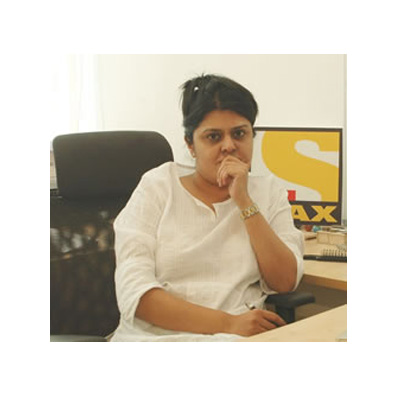
  • ‘What we need to do now is concentrate on our week day prime time band’ : Sneha Rajani – Max business head

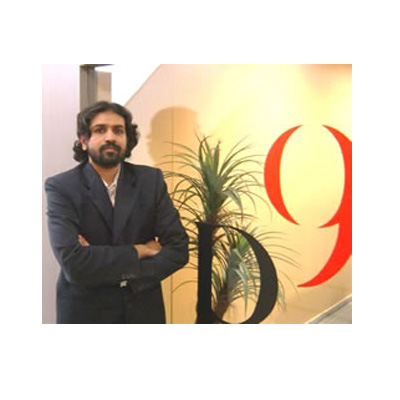
    ‘What we need to do now is concentrate on our week day prime time band’ : Sneha Rajani – Max business head

    It has been an eventful time for Max. It recently aired the champions Trophy. Having successfully shored up its share on the weekend due to its focus on Sunday, it is now concentrating on strengthening its week day prime time band. It is also putting together plans for next year’s cricket World Cup.

    Indiantelevision.com’s Ashwin Pinto caught up with Max business head Sneha Rajani for a quick chat. She recently took over from former head Albert Almeida who was tapped to head Sony.

    Excerpts:

    Firstly, could you talk about the push given to The Champions Trophy by Max?
    If you look at the, ratings you will see that once again cricket on Max has delivered higher ratings than on any other channel. This started four years back. The non-India match ratings have been a revelation. It has been the highest since the World Cup. Our ratings were certainly helped by the buzz that Extraaa Innings bought and the innovations we did.

    Some advertisers I spoke to were not too happy. Do you feel there would be some cooling off in the next edition of the event?
    One grouse is that a lot of the matches including the final finished way too early. I think the advertisers are smart enough to understand that its in nobody’s hand whether the game ends before 100 overs or goes on till the end. This Champions Trophy has been fascinating from a cricket point of view as it has been unpredictable. When you have a high scoring game you have an idea of who will win and lose. Here dodgy totals kept viewers in suspense. It could swing either way. This is why the non-India ratings were more than what was achieved in 2004. So I don’t think it would in any way effect the next year’s Trophy.

    A lot of matches did not last 100 overs as it was a bowlers tournament?
    Matches ending early is in nobody’s hand. As an advertiser, if you decide not to put money the next time around in 2008 because of this and most matches last 100 overs it will be a lost opportunity. You cannot pre-empt anything.

    What is Max’s game plan going to be to build up buzz and anticipation ahead of the World Cup?
    We tailor our campaigns around where an event is happening. The campaign is always skewed to reflect the country a tournament is being played in. So when the Champions Trophy was in Sri Lanka it had a sub continental feel to it. In England we incorporated the stiff and proper mannerism into our campaign.

    In India we did the Shaadi campaign to emphasize the spectacle. Everything was shown as larger than life and melodramatic. Now when we go to the West Indies the campaign will be around beaches, sun and sand. It will have a carnival atmosphere.

    You are doing a ‘Host ka Dost’ hunt. What are the logistics involved to find someone to go the West Indies?
    This initiative is being done in collaboration with Reliance. It is a hunt for someone who’ll be part of the Extraaa Innings team for the World Cup and other cricket that we may have.

    If one is selected from the call they would be asked to come for an audition at Reliance Webworld, where they have to give a two to three minutes performance in front of the camera. There will be five finalists who would be further shortlisted by public voting. At present we are just at the call stage. We should wrap this up by the second week of January.

    Matches ending early is in nobody’s hand. As an advertiser, if you decide not to put money in 2008 because of this and most matches last 100 overs it will be a lost opportunity

    What are the big properties that Max has lined up for now till March?
    We signed some big movies recently. Fanaa is coming up as a weekend premiere. We also have Apna Sapna Money Money. January and February 2007 is where big titles will be shown. In terms of thematic blocks right now we have a King Khan festival.

    Certainly having a theme block associated with a star brings in loyalty. We will also have a comedy festival lined up for December.

    How do you push the non-blockbusters?
    It’s simple. We market and promote them in a way that has not been done before. It is all about the buzz you create – old wine in a new bottle. On air promotions are a key. You find a key moment that defines a film and you push that. We had a movie called Nayak, which tanked at the box office. It has delivered tremendous ratings for us though.

    In the past you focussed heavily on Sunday with housefull and then the blockbuster at 1 pm. How did this help grow your share over the weekend?
    Our reach has grown by 20 per cent. A 12-hour slot delivers an average of 1+. We will continue to focus on Sundays as well as festivals that happen once in a month. What we need to do now is concentrate on our week day prime time band. The evening slots are fine. The afternoon band is doing well where we have a block for women.

    My job is to strengthen the Monday – Friday prime time band from 9 pm. There will be a mix of titles. We have 36 China Town, Golmaal.

    What libraries were recently acquired?
    To name a few we have acquired Sajid Nadiawalla’s library, Yash Chopra’s library and Ramesh Behls library recently. Our library is over 1000+.

    What are the changes that have happened in the acquisitions process in the past couple of years?
    We have always focussed on acquiring the top five to six films in a year and that will stay. The scenario has changed with more players. More buyers for the same product means that the pricing has become buoyant. Competition is good and It keeps us on our toes.

    One big change that has happened, especially in the past year is that films are acquired before their theatrical release. This is a risk that all broadcasters are taking. This was not the case earlier on. Then it was more staid. You now go by track records in buying films pre-release. We just presume that a certain star cast with so and so director and producer should be doing well.

    If you go with established producers you should be fine. Sony has great relationships with them. Shaadi Se Pehle was a title that we bought pre release. The acquisition process is very organised. The producers are fairly realistic, they know which film is to be priced at one crore and which at 10 crores.

    How important are dubbed Hollywood films?
    Extremely! We launched Hollywood Hungama two and a half years back. It is one of the most loyal slots on our channel. Each year we acquire 25-30 titles.

    You had in the past done the innovation of the onebreak film. What further innovations can we expect to boost viewer loyalty?
    It worked for us initially and then it did not. Viewers got worried that why is the channel not having a break. They might feel that one ad break equates to a channel not doing well. They are conditioned to having breaks in between a film. Also we had a lot of ads on our plate to schedule. The one ad break did not prove to be economically viable.

    We keep looking at innovations that will surprise people. In this Champions Trophy we had huge cut-outs of Mandira Bedi and Virendra Sehwag at Mahim. We will do some wrap around programming on films and we are also looking at an innovation during our ad breaks. We do outdoors on special occasions, like for Lucky we had done an outdoor and we might do it for Fanaa too.

    Are you also looking at new formats like chat shows, news related film specials to add variety or is there too much of this already on Indian television?
    No! We already have Sony and Sab for this kind of content. We have a news show Current Bollywood but we will not be adding to this.

    New media segment is growing in importance in terms of mobile and the internet. What can we expect from Max in this regard?
    We did a lot of mobile activity for the Champions Trophy. It was very interactive. We offered movie trivia on the mobile and did contests as well. Clips we do not offer as the rights belong to either a mobile firm or a producer. Whether we go beyond will be an a decision that will be taken as an organisation and not as a channel. We won’t rule it out though. On the net right now Max site basically offers film information.

    One way that Max has separated itself in cricket has been through personalities like Mandira Bdei. Are you planning to extend this association further through the film platform?
    We already do this. She used to anchor Extraaa Shots which was a wrap around show for our films. Manish Vanicha is now anchoring the show. He is now doing stuff on cricket. So while Mandira moved from a cricket anchor to a film anchor Manish did the opposite. Next year you will see more personalities.

    Besides cricket and films what other events is Max looking at over the next few months?
    We have the Max Stardust awards coming up. We have been doing that for the last two years. I would say that it was the best looking awards show last year. Concerts air across the network.

    Could you talk about how your client portfolio has grown as well as ad rates?
    In the last year our client base has grown by 25 per cent. I am not in a position to talk about revenues or increase in ad rates.

  • ‘Our competitor is the number one player in the pink daily space’ : B Sai Kumar – TV18 Media Network CEO

    ‘Our competitor is the number one player in the pink daily space’ : B Sai Kumar – TV18 Media Network CEO

    Television Eighteen has been on the acquisition mode for a while now to create more revenue opportunities for its shareholders. After creating a new division for marketing and ad sales TV18 Media Network, its CEO B Sai Kumar has chalked out a strategy, which is to emphasise on all the TV18 products in terms of delivering value to shareholders.
    Sai Kumar is trying to position the TV18 brands in such a manner that they will continue to achieve consistent and profitable growth. TV18 Media Network has also conceptualized ‘CNBC Universe’ for such concerted activities for various products.
    In a free wheeling conversation with Indiantelevision.com’s Manisha Bhattacharjee, Sai Kumar speaks of the TV18 brands, and how they will make a measurable contribution to earnings.

    Excerpts:

    Why has TV18 created an umbrella brand called CNBC Universe?
    It has been named so to denote all brands that the group controls. Through products and brands like moneycontrol.com, which is the second best portal globally, commodities.com, compareindia.com, CNBCTV18, Awaaz and the mobile service of 2626, we are telling people that TV18 is an integrated business platform for advertisers and viewers.

    It helps us demonstrate the power of the CNBC Universe platform and shows a tangible integration of different media offerings. It is also about reaching out to multiple communities — from retail investors to foreign institutional investors and even company managements. CNBC Universe is about how much more you can dominate in the business space.

    With the kind of growth our network has seen, the challenge is now to do justice to individual products, individual streams. If you look at the television part of the business, I am extremely kicked about the prospectus of CNBC Awaaz as we have touched operating break even. Of all the elements of CNBC Universe, CNBC Awaaz is the joker in the pack. On the revenue side I see at least 100 per cent growth for the quarter.

    Why do you say the business space is all about influence and not as much as viewership delivery?
    For me, if today CNBC Universe is a Rs 150-160 crore brand, you can only go out and make it Rs 250-300 crore brand. This despite the money that’s getting into print medium. That increasingly is going to be very, very big. So, one of the big reasons for pushing CNBC Universe is to leverage a strong position across television and internet.

    Are you indicating that despite being in the television space, your main competitor is the print medium, pink dailies to be precise?
    Anybody could be your competitor. But if you were to prioritise our efforts at CNBC Universe, it has got to be seriously looking at the pink dailies and the number one player in that segment. Also, from where such dailies get revenues. Indeed, our biggest competitor is the leader in the pink space.

    Has TV18 started working with TAM to address the out of home viewers?
    We have to live by the rules of the game. It is not much of a concern as every advertiser knows that there is a premium to CNBC TV18 as there is some amount of factoring is happening in the minds of the buyers and the clients.

    Have you identified the strong holds of the pink papers in order to wean away advertisers and clients?
    We are going to advertisers and saying that CNBC Universe or CNBC TV18 is country’s largest business medium and not just a business brand. So we are actually telling them that it is not about print vs television. It is about which is the largest medium today. Beyond a point we cannot change people. For instance, it is very tough for advertising relating to obituaries coming to CNBC TV18.

    CNBC Universe is the country’s largest business medium and not just a business brand

    What’s happening on the global front?
    Of course we are addressing that also. Today we tell our clients that as part of CNBC Universe, we offer you CNBC global, which is present across 89 markets. If you are an advertisers and your TG is broadly people who spend money or are investors or CEOs, or analyst, then come to the CNBC Universe.

    What’s the reason behind TV18 initiating a restructuring in its marketing and ad sales set up?
    The media market is a cowboy’s game where structures didn’t exist. We have put a structure of people clearly with a mind to consolidate television revenues business. We have grown almost perpendicular in terms of revenues and for now we need strong leaders to manage these revenues. So, on the television side of the business we have Raj Kamath to oversee inventory sales for the entire TV18 Network. Sanjay Dua will be responsible for advertising sales for the IBN Network – which includes CNN-IBN, IBN-7 and Ibnlive.com. Anil Uniyal has been named as the sales head of the CNBC Universe.

    I will continue to oversee CNBC Focus which is our non-inventory solution cell that reports into Anil, but he will still report into me as I am still involved in that part of the business. And I continue to be involved in the internet side of the business.

    Web18, which comprises moneycontrol.com, easymf.com, commoditiescontrol.com, compareindia.com and tech2india.com, will be handled by an independent team working on this. We already have a 12-member team in place with Raghavan Srinivasa handling internet sales.

    What is the kind of growth the internet business has seen over the last quarter?
    We have seen growth that is almost close to 120 per cent quarter on quarter. That’s not saying much as it can grow further. The medium per se is growing. It does not mean that we are not doing a great job. For us now it is not only about joint sales with television but independently growing the Internet side of the business too.

    How are you pushing your online properties — content or packaging?
    Just as we have done on television with a lot of tailor made solutions, we intend to proceed with the same on the net. We have opened up with live stream, canned stream, running television ads, (like MSN TV), but we do not give it free. It is an independent sales team handling it. As far as powereyourtrade.com goes, we already have 65,000 subscribers, that’s another line of revenue on internet paying us an average of Rs 150 per month.

    So are you indicating that it is content that drives ad sales and marketing activities?
    If you look at TV18, our biggest asset has been content. It is content lead. Ad sales are all about how you leverage content and not influence your content. For example, if I have a CEO interview, I just don’t put a banner. If you brand that CEO interview and go to a B2B player, like a Sun Microsystems, and get it to host an online interview with other CEOs, then that’s adding value and going beyond banner sales. The new mantra in the group is to add value for customers.

    Our biggest challenge is to do justice to individual brands in the TV18 stable. We had to work out a structure by which these brands get adequate attention and well lead by clearly thought-out strategies. So, each of these professionals have the mandate to take business decisions independently.

    What kind of network solutions are you providing for your clients?
    Everybody wants network solutions, the moment you manage more than one channel everybody wants discounts. We have individual teams who go and talk to the clients about the attributes of the brands. We ensure that the channel for example; IBN 7 is taken on its own merit and independently on its plan. Not because he is getting five per cent discount on CNN-IBN. We don’t go and say that CNN-IBN is established, which cost you Rs 100, but you will get it for Rs 90 if you take IBN7 also. That does not happen with us.

    Are you saying that the network does not indulge in combo deal?
    We do any kind of sweetening of the deal if we have a giant share of the news pie. For example: if the client has Rs 100 to spend on the news genre and if I am getting Rs 75, we are ready to sweeten it, otherwise not. We do not sweeten the deal because the client has taken all the four channels. There are some grids in place where, if you take all four channels, you may get some per cent off, but that’s like any rate card. But anything over and above depends upon how much you are dominating the plan, vis-?-vis other news networks.

    Which product in the CNBC Universe needs pushing?
    The best thing about TV18 is that it is not even close to peaking. The biggest fear any person would have who is responsible for revenues is to think of the way forward. But at TV18, almost all our products are on the growth curve. For example, IB7 can only go up from where it is. It is a new product and it can only go up from where it is and I can see growth in revenues. Ibnlive.com and the ones we have acquired or are just getting acquired are attracting traction in the market place.

    The market place has started embracing the internet only recently, so it can only grow. CNN-IBN had an excellent launch, but no way close to the peak. That’s why my question is: what is NDTV going to do next as they have already touched between Rs 90 crores to Rs 105 crores with NDTV 24×7. For CNN-IBN, it is only going to be 100 per cent growth over the next one year.

    Well, that’s because CNN-IBN’s base is small?
    No. The base isn’t that small. We have already achieved operating break even with CNN-IBN business. At any point in time, while we are creating new strategies, they push down our products leaving room enough for growth. TV18 is creating potential for generating more revenues streams.

    For example, I would be extremely concerned if I was running Star Plus. What do you do next when you have already achieved Rs 1,500 crores. Last year, I did Rs 150 crores and there are expectations the entire network may touch Rs 250-Rs 260 crores.

    TV18 has been very aggressive on the acquisition front, especially in the online space? Are you looking at converting any of your online properties that will be largely leady by subscription?
    At this stage it is too early to speak much about it. But we are contemplating creating a portion of moneycontrol.com for subscription opportunities, but it is too early to speak about the plans. Jobstreet.com may look at starting advertising sales once it gets established and the placement revenues kick in. But, subscription for the rest of the online properties, it is too early to say anything.

    You are now the TV18 Media Network CEO, besides overseeing the sales aspects of TV18 properties, are you looking at venturing into commission business?
    TV18’s philosophy is to own IPRs. We will sell what we will own, unlike our competitors who get into the ad sales model. For example: If we make Moneycontrol a 20 crore or 40 crore story, we need to own it. There’s no point in making it a 20 crore (story) for somebody else to own. We are into building long term brands, which add value to the shareholders. If I do sales for ‘A’ product, the brand is built and the shareholder of that product gets to reap the benefits.

    TV18 has moved from a production house to a broadcast house, why? Because we wanted to own our content. In the production space you are selling your content and getting dwindling margins. But in the broadcast space, you own every piece of news that’s going up and this is monetizable and encashable in various forms.

    We are into brand building, product building and business building. We are not into selling. TV18 is an integrated company.

    What does CNBC Universe mean to the advertisers?
    Purely from the editorial side, it is leveraging through the multiple media platforms. From clients’ point of view, he is exposed to non-inventory solutions to our events division; we do around 140 to 150 events a year. We can get the elusive and the affluent audiences on to CNBC TV18, moneycontrol.com.I tell my editors, ‘Dominate the minds of the viewers’. The same thing I tell my advertisers, ‘Come here. It is one stop shop where you can catch every investor, business user, decision maker in the country’.
    Whether they are sitting in the car, or they are money controlling in their office, or they are at home watching CNBC. That is what an advertiser wants to do, he wants to catch the same guy in multiple locations and enter their mind space. If you can’t catch him anywhere, you can catch him at the CEO cocktails at The Oberoi through CNBC events.

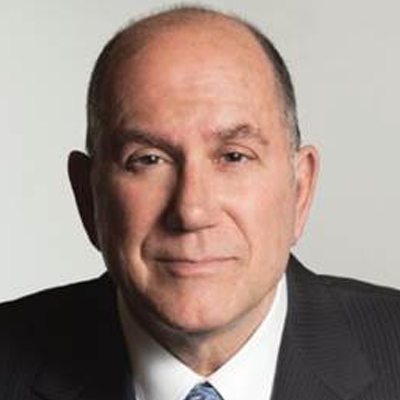
  • ‘The only thing that supercedes creativity is accountability’ : Laurence Boschetto – DraftFCB president & COO

    ‘The only thing that supercedes creativity is accountability’ : Laurence Boschetto – DraftFCB president & COO

    It was in June that media conglomerate Interpublic combined its Draft and Foote Cone & Belding (FCB) units around the world to create a channel-neutral agency model DraftFCB. Heading DraftFCB as its president-COO is Laurence Boschetto, previously president-COO of Draft.


    Hardly has Boschetto had time to gather his breath on the ramifications of the new entity has come an even more radical announcement. Which is that Interpublic is reorganizing its media operations with Initiative becoming aligned within DraftFCB and Universal McCann coming under McCann Worldgroup.


    The reorganisation came just ahead of news that the newly integrated DraftFCB has been awarded the account of retail behemoth Walmart worth an estimated $570 million. That the monster win came on top of new business that DraftFCB had won from Citigroup, Merrill Lynch and Atari has been more than a validation for Boschetto and the team at DraftFCB.


    In conversation with Indiantelevision.com, Boschetto, who over the last three weeks “has been on the road to every single region introducing them to the new model”, throws some light on just what’s happening at DraftFCB, as too the vision thing with IPG.


    Excerpts:

    Is it fair to say that IPG’s reorganization of its media operations represents the most significant example of support for those against the unbundling of media that we have witnessed over the last 20 years or so? And extending that posit, can we then argue that making media and creative interdependent is the best way forward?

    Over the last decade we stripped everything out of an agency, we have taken strategic planning, we stripped away media and now they have basically become interchangeable parts, the ‘value has been devalued.’ So what we are doing right now is we look at the client, we look at the demands and pressures that they have, we look at the environment that their end user works in and we say ‘how do we change the game.’


    This might look like the old model but it’s packaged in the new model formulation, an offering of complete integration of products and services but not doing it syllogistically under the model.


    What we are saying is that there is one management team, there’s one P&L and the palette consists of all the different skill sets, so the clients don’t have to manage all those relationships and the agency can come back with a business solution orientation based on the real business issues rather than the disciplines that they are confident in.


    Today we often hear clients say, ‘I want channel agnosticism and discipline neutrality.’ Yet there isn’t really any channel agnosticism. We didn’t build organizations in the industry that way, we have people that are proficient in strategic planning, in branding, in advertising, in PR and in retail. Now they are asking for renaissance marketing communications people, that’s what this whole model is about, it’s about building another class of business builders in the marketing communication field.

    The new media strategy represents the third major organizational change Interpublic has instituted this year. What is the broad direction that IPG is taking with all this?

    When you take a look at the advertising industry, you cannot ignore client structuring and their constituent parts because this tends to have a ‘domino effect’. The environment that the customer lives in has radically changed, technology has changed they way that they live and breathe, how they interact and connect with each other, this has created one basic phenomena ‘immediacy’.


    Technology has changed the way we work and engage. This has put tremendous pressure on the CMOs, as they also live in an environment and at a time when their CEOs are demanding performance in their books. It is estimated that every CMO has a life expectancy of roughly 24 months. However, if they have to produce they will have to figure out how to navigate through a company, what the alliances are, who their end user is and quarter after quarter their performance based on real business metrics will determine what their life expectancy will be.

    Over the last decade we stripped everything out of an agency, we have taken strategic planning, we stripped away media and now they have basically become interchangeable parts, the ‘value has been devalued’

    If you say that a CMO has an average 24 month life cycle, what happens if he continues to deliver what the client demands?

    As defined, stage I is to develop a way of operating to deliver that media and channel neutrality and agnosticism and that’s by bringing together not just one person to lead the business but all the discipline leaders at a round table, to form a team for the client.

    Now, if one client is more strategic in nature then they may have a strategic person in the key position, while someone else who is more data driven might have the data person heading it, but the way we think through the issues are holistic. The goal is that over time we are not expecting that someone who is highly proficient in strategic planning and database modeling to be interchangeable. But the person who heads up strategy must be able to think more holistically, so that when they come to a business situation they determine what’s right for the client.

    But will these individuals continue to function within their respective units?

    The goal is to make sure that the purity and the authority of every discipline still resides in an agency so that we never lose that foothold. In the process of giving clients that ‘channel agnosticism’, the days of only the account person holding that relationship, we are saying that before we get there we need to have a team consisting of media, strategic planning, account services and a creative database all sitting at the table and having an equal voice in determining how to solve a business issue.

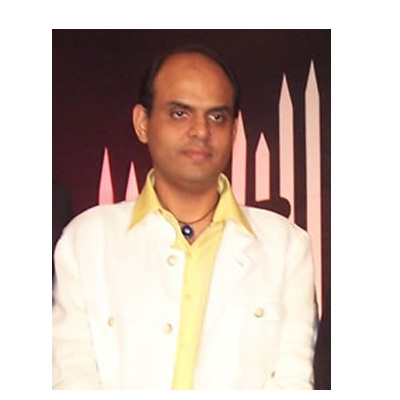
  • ‘Sony’s agenda is to focus on prime & then take on the rest’ : Sandiip Sikcand – Sony chief creative director take on the rest’

    ‘Sony’s agenda is to focus on prime & then take on the rest’ : Sandiip Sikcand – Sony chief creative director take on the rest’

    Sony Entertainment Television India’s chief creative director Sandiip Sikcand is the newly appointed man in the newly created position, tasked with the job of scripting a turnaround in the ratings fortunes of the network’s flagship channel Set. And it is a task cut out for the experienced hand from Balaji Telefilms, who has been the creative head for projects such as K Street Pali Hill, Kkusum, Kaisa Ye Pyar Hai and Kahaani Ghar Ghar Kii.

    After a four-year stint with Balaji working under the overarching leadership of Ekta Kapoor, Sikcand is tuning himself to a corporate structure, wherein he will be steering the creative aspects of Sony and also concentrating more on fiction. Geared to making a mark and getting the channel going, Sikcand talks about his plans and the road ahead in a conversation with Indiantelevision.com’sManisha Bhattacharjee.
    Experts:

    You are handling Sony, but the network also has Sab, so how do you differentiate and segregate the shows between the two channels?
    The operations between the two channels are different and very clear. Though part of the same network, the guidelines inscribed for Sab TV is poles apart from Sony. The latter is into hardcore soaps, melodrama, while the former is more youthful, catering to a more niche audience. It will be on Sab where the network can experiment with different kinds of concepts or shows. Sony will continue to offer a hardcore soap diet. It is broadly chalked out and chances of overlap are minimal.

    With Sony now in third position, what is the course of action that the channel is planning?
    Well, we have lined up new shows and are strengthening the 8 pm to 11 pm band. The shows will be rolled out over the next six months. We have tied up with Tony and Diya Singh for Jeetiya Hai Jis Ki Liye, which will star Renuka Shahane. We have Also tied up with the Anuj Saxena’s Maverick productions for a drama titled Akhand Sau Bhagyawati. There is Khamoshi, Durgesh Nandini, Viruddhwith Smriti Irani. A Variety show with Anupam Kher, which is a talk show.

    You are looking at launching only soaps, does that signify that reality will take a back seat?
    No, Sony has always maintained that reality will be an important component. Reality shows are likely to be relegated to Fridays, Saturdays and Sundays, while the rest of the week will see soapy dramas taking centre stage.

    We are presently running Jhalak Dikkhla Jaa. And will be launching Bigg Boss on November 3. In May, we have scheduled the launch of the third season of Indian Idol. We are also devising our own little reality show, which will be aired twice a week, which we are targeting to launch in February or March.

    I do not see Sony coming back to number 2 or number 1 position overnight

    So what is this reality show that is homegrown?
    I can’t speak much at the moment as we are yet to finalise on certain aspects of the show.

    Not being on a strong wicket as of now, and launching so many shows, isn’t it too much too soon?
    No. These will be spread across and launched in a phased manner. The emphasis is on the strengths Sony has already shown. It has been structured accordingly so we are confident we can succeed. The idea is not to shock the audience.

    Likewise, I do not see Sony coming back to number two or number one position overnight. It is process, which we have already started working towards. I am not saying either that all the shows are going to be stupendous successes. Some of the shows might not even work, we might have to pull them off and replace them with some other products. We are all geared for that. But it is a definitive step towards changing the number position of the channel.

    It is a tough battle for Sony, as it has to fight the leader Star Plus and Zee, which has bounced back after a long while?
    I think we have to fight it out with everybody. I have to even fight Sab, Zee Café, Star One, Zee Cinema, Star Plus and Sahara One. Every channel is competition. Sony is not going to be pulled back by its competitors. Sony is first going to stand up on its own feet and in that process if there is competition so be it.

    So what is the strategy you are looking at employing to help the channel stand up?
    There is no strategy. I think in the television and entertainment business, the essential ingredient is just entertainment. As an audience, if I find a show entertaining, whether it may be appearing on ABC or XYZ channel, I will watch it. The endeavour and the aim of Sony is to give wholesome entertainment; that’s the strategy.

    Besides looking at strengthening you prime band. Are you looking at the other bands?
    We will be focusing on the afternoon band and launching a slew of shows there too. As of now, we run movies for Saturday and Sunday, we may look at having movies only on Sunday. But that will be once we get our other line-ups fixed. The agenda really is to focus on prime and then take on the rest.

    What’s this obsession networks in general seem to have with reality shows?
    It is a trend. You can’t discount it. It has always happened in India. For example, in Bollywood, if you have one film of Nagin (snake) succeeding, there will be 10 other films based on the same. As I said earlier, Sony has always maintained that we will be doing reality shows, which we are and will continue doing.

    But, the point being that the ratio with be 80:20 (in favour of soaps). We will have specific reality show making sure that we do not bring in the fatigue factor and also that we do not overkill it.

    The channel will be shortly launching Bigg Boss. There are many who are skeptical about the chances of success in India of a show that is so in your face voyeuristic as Bigg Boss is? What makes you confident the Indian public will like such a concept?
    Well, we all have a peeping-tom somewhere, which we do not accept. But, the reality show Bigg Boss has all the elements that any other soap holds. We are confident that the success Big Brother has enjoyed (elsewhere) will be visible here too.

    I do not believe in bifurcating my programmes into reality or fiction. Eventually, it is all about entertainment. It is important to understand that if soaps give you a certain amount of interest, so does the reality show.

    The fact remains that reality shows are clicking and drawing in viewers and that soaps have always brought in audiences.

    So are you saying it is not reality vs soaps?
    All I am trying to say is that the kind of entertainment a Bigg Boss will provide is not to say that watch Bigg Boss and not Kaajjal. The shows provide you different elements of entertainment. The viewer has to be entertained. I do not think that the audience will say “I will not watch reality show because I never watch a reality show.” For the audience, what matters is entertainment.

    CAS is likely to change the dynamics of the television market? Your thoughts?
    Well, being on the creative seat, what can only be a deterrent for me is if I tell them that you have to pay more to be entertained?

    How do you view the whole general entertainment market?
    The whole television market has a lot to offer and the entertainment business is growing. The audiences will have an amazing offering to chose from in the future. Although we are growing rapidly, but by the time we grow to reach the standards that are followed outside, it will involve a lot of hard work. I believe across the line producers have to realize what television is all about and give a lot of importance to creativity. I think it is happening. Thus there is lots to look forward to.

    You were present at Mipcom. What were the formats that you enjoyed?
    Well, there was this Endemol game show where one can win a fixed amount of money for his entire life span. Another show that I enjoyed was a reality show where a girl has to spot an eligible guy out of three where you have a gay, one already taken and a single guy. It is a show that can never be made in India. But the concept was interesting.

    So have how many formats are you buying?
    We are still in the process of weighing the pros and cons. We have not yet locked any deal.

    Has the tie-up with Smriti Irani affected your channel’s relationship with Balaji?
    Yes, it has already affected it. But, I must say that I am proud to be a product of Balaji. I left the production house for some personal reasons. Reasons I would not like to go into.

    Now that I am with Sony, anything that I have to do, I will do for the betterment of the channel. Smirit had an amazing concept. So I see no reason why I should not do that show.

    In fact, Sony had been approaching Balaji for the last two months even before I joined. Ekta had her own reasons for not doing a show for Sony as she said that she is tied up somewhere else. But she is to do a show for Sab, for which she has time, which is great. That she has no time to do a show for Sony, is absolutely fine and acceptable. As and when she has a concept for Sony, all she has to do is dial my number.

    Today, Sony is third, Zee had been lurking in this position for long. Zee’s soaps have given them a fresh lease of life?
    The journey of Zee is very motivational. After seven years, it is really something to talk about. If Zee can do it, Sony can well do it. Competition keeps you going. I was the creative head on Kasamh Se and my interactions with Ashwini (Zee programming head Ashwini Yardi) have been great. It is very inspirational.

    In the current situation, with your experience is it a tough battle to manage a channel’s programming?
    It is a whole new corporate world. I feel at home. In this world of entertainment it is a combination of competitiveness and fun. I belief I too need my fair chance to prove myself.

    What is the road map for Sony for 2007?
    Well, all efforts will be towards bouncing back.

  • The Pusan International Film Fest 2006 to screen ‘Krissh’

    The Pusan International Film Fest 2006 to screen ‘Krissh’

    MUMBAI: The Pusan International Film Festival from 12 October to 20 October 2006 in Korea, will screen its first Bollywood movie, Krissh during a program called ‘A Window on Asian Cinema’ on 16 and 19 October 2006.

    The Film Festival has been credited with bringing Asian Filmmakers together. Other programs include ‘New Currents’, ‘Korean Panorama’, ‘World Cinema’, ‘Wide Angle’, ‘Open Cinema’, ‘Critic’s Choice’ and ‘Special Programs in Focus’. The festival seeks to be non-competitive, with the exception of ‘New Currents’ which is a competitive program, states an official release.
    The next section ‘World Cinema’ will screen new works by World renowned Filmmaker, offering a better understanding of the recent trend in world cinema. The ‘Open Cinema’ will feature a collection of new films, combining both the art and mass popularity, along with the Internationally acclaimed works, while ‘Korean Panorama’ will offer a presentation on the latest outstanding Korean films. 

    ‘Korean Retrospective’ on the other hand, is a re-cap on the history of Korean cinema by spotlighting the films on a certain notable director. ‘Wide Angel’ is a section dedicated to showing outstanding shot films, animation, documentary and experimental films presenting different and distinct visions via broader cinematic viewpoints, while ‘Critics Choice’ screens films chosen by five renowned critics in an attempt to discover new film artists.

    The news sections included this year are ‘Midnight Passion’ which introduces 12 films of the latest Cult Films from around the world. There is a special program titled ‘Special on French Movies’ in commemorations of Korea and France’s 120 years of amity. Also, ‘The Remapping of Asian Amateur Cinema’ will show it’s second edition as a continued effort to discover major Asian cineastes who left their mark in their respective countries but were unknown internationally.

  • ‘There are lot of shows out there about Hollywood and actors. But if it does not contribute to the movie watching experience, then it will not suit Pix’ : Sunder Aaron – Pix business head

    ‘There are lot of shows out there about Hollywood and actors. But if it does not contribute to the movie watching experience, then it will not suit Pix’ : Sunder Aaron – Pix business head

    These are busy times for Sony in the English entertainment space. Earlier this year it launched an English movie channel Pix. It also revamped Animax which is now a youth and lifestyle brand as opposed to being a kids brand earlier.


    AXN meanwhile is taking its local initiatives to the next level with Amazing Race Asia which kicks off next month.Indiantelevision.com‘s Ashwin Pinto and Renelle Snelleczk caught up up with Pix business head and AXN, Animax India country manager Sunder Aaron for a lowdown on the plans.


    Excerpts:

    How much of a challenge has it been to push Pix into homes both on a distribution level and on a sampling level for the consumer? In a sense it is a niche within a niche.

    Our library is a mix of older and newer films. The point is that we want to show films that have great stories It does not matter if it is old or new. When you say niche within a niche you are thinking of a classic film channel. We are not that. Our marketing and positioning focusses on telling good stories.


    What you find is that a lot of English movie channels are focussed on brand new titles, big stars, big budgets, big special effects, big Hollywood stars. That gets you as lot of people who don’t even speak English just checking the channel. They touch it which gives wide reach. What we have though is a high tel appeal. My audience is a little more older, more affluent and they stay with us a little longer.


    Strong stories are what guarantees a good movie. There are lots of examples of films with big stars, budgets etc which are not good. Getting into homes wasn’t that big a challenge as we are with the One Alliance. It already has relationships with the cable fraternity Our focus is on the main Metros. Cable operators make it difficult. We are growing though and have surpassed Zee Studio.


    We have been careful in our communication and marketing efforts. Our communication makes sure that our viewer gets the message that films are specially chosen after going thousands of titles.

    Then there is the question of adult films not being allowed. How is Pix coping with this situation in terms of getting titles cleared?

    The different parties are meeting with the I&B secretary this week. Hopefully a solution will be found. When you think Adult you normally think of nudity or sex.


    However a lot of English films are rated ‘A’ because the themes are mature.

    Do you feel that an exception should be made for DTH as technology allows for parental control?

    While the technology is there how many people will use parental locks? The greatest control at the end of the day is parental. What you are saying is taking the job of the parent and putting it on the programmer and service provider. It also comes down to what one considers to be an adult film.

    A show like Inside the Actor’s Studio gives Pix variety. What plans do you have as far as showing content other than films is concerned?

    We have ideas. But the important thing is that it should not distract from the fact that Pix is a movie channel.


    There are lot of shows out there about Hollywood and actors. But if it does not contribute to the movie watching experience, it it does not feel like a cinema oriented show then it will not suit Pix.

    The Man’s World returns for a second season. There
    will be a kickoff on 17 November. It has been on my
    mind to look at a sports based reality show

    You had earlier mentioned plans for localisation as as getting titles from independent studios. Has any progress been made here?

    We will be airing Being Cyrus next month and 15 Park Avenue soon after that. Down the road we will create original shows that are reality based.


    We are going to Mipcom this week to get titles. We will also go to the American Film Market in Los Angeles. Pix will be also be used as a vehicle to push theatrical films like Casino Royale. This will be part of an integrated 360 degree marketing campaign.

    You are now going after the advertisers with Pix. What is the pitch being made?

    The pitch is that we have content that have great stories which will draw in viewers. Our philosophy which is stated in the film Field of Dreams is that if you build it they will come.

    What is happening with AXN?

    AXN will unveil The Amazing Race Asia next month. It was produced out of Singapore and was a pan regional effort. The Indian team taking part will add local interest.


    The teams basically travel across Asia in a race to finish first. As is the case with the US edition there is a gradual process of elimination. We have been secretive about the show in terms of locations the teams will visit and other details since if word gets out about who won or lost interest will dissipate.

    What else can we expect from AXN on the localisation front?

    The Man’s World returns for a second season. There will be a kickof on 17 November. It has been on my mind to look at a sports based reality show. Once these two initiatives that I mentioned conclude then we will be in a position to focus on the other ideas.

    Any other new initiatives?

    We have a marathon for Diwali. This is from 20-22 October 2006. It starts with a seven hour marathon of the World’s Most Amazing Videos. Then Fear Factor will have an eight hour marathon the next day. There will be three phases. The first is about adrenaline junkies facing their fears. The second phase deals with families and friends.


    The third is where people are competing to win a million dollars. Then there will be a movie marathon. We have the Elite Weekdays at 11 pm from Monday –Thursday and the Elite Weekends from Saturday to Sunday from noon to 2 pm. We have shows like Nip/Tuck,CSI airing here. This is for the serious, thinking audience.

    Animax was originally positioned as a kids channel.
    What we realised was that the animation we are showing is much more sophisticated in the sense of the storylines. So it wasn’t really appealing for little kids

    Could you talk about the revamp of Animax?

    Animax was originally positioned as a kids channel. What we realised was that the animation we are showing is much more sophisticated in the sense of the storylines. It is like dramatic serials. There is more conflict, human emotions, deeper characterisation. So it wasn’t really appealing for little kids.


    The target audience that we are focussed on now that we should have focussed on in the beginning is 15-24. It is young adults who are just starting to consume. It is an exciting group to go after.


    They are going to cafes, getting a new phone every few months. They wear designer jeans. There is nexus between Animax and gaming and all those teenage aspirations. While Animax’s programming is animated it is not kiddie cartoons. It is what we call animation grown up. For the revamp we changed some of the colours. The appearance and look were changed. We also have animated hosts. We have also taken off shows that could be construed as being for kids. You will see more and more young, mature stuff. We also have new programming blocks.


    There is Aniblast in the evenings. A little later on there is AniSutra which is more cutting edge. AniFlix on Saturdays shows films. It will take time though for the viewers perception to change. It will take several months to completely change market expectations whether it is viewers or advertisers. It will feel like a lifestyle and animation channel.

    So you are also competing with the likes of Star World and Zee Cafe?

    I would say that we are also competing with the likes of MTV, Zoom, Discovery Travel And Living. Right now we are still seen as competing with kids channels and the challenge is to get the message out that we are not in the same space as Cartoon Network.


    We will talk more to our viewers. We wil go out talk to our TG and put them on the channel. There will be local vignettes. Gaming is an area we are looking at. We already have Gamemax on the channel.


    Eventually we will get to a point where we can commission some shows. But that is still some time away. Right now it is an English feed. The problem was that we had Hindi mixed in earlier which confused operators and viewers. Down the line as the channel gets re established we will look at a Hindi feed as well.

    You are also looking at on ground activities?

    Yes. We are planning one that will be campus oriented towards the end of the year. We are also looking at doing a gaming event year on year. We are looking to provide a touch feel experience which is what AXN has done really well. AXN is a badge of pride brand for viewers. That we are hoping will happen for Animax also. Even if you do not get the stories it is cool in terms of the visuals.


    Our marketing has also changed. We will not do a school contact programme. It will be a college campus connect initiative. Animax might help people get jobs in the animation industry or do career counselling. The profile of advertisers will also change. Brands like Nike, Pepsi will be seen instead of say a kids health drink brand.

    Is merchandising also an option?

    We feel that there are a few shows that look promising in this area. It will not be as big an area for us as Disney though. We will use merchandising to push the channel. Disney does the opposite.

    Looking at the English entertainment scene DTH and addressability does give players the chance to launch channels dedicated to specific genres like crime which AXN has done in Europe. Are there plans to launch more channels like this in India sometime in the future?

    Let’s see. We have a challenge to see that the channels we have including Pix which we launched earlier this year, Animax which has repositioned itself this year do well. We always have ideas and we are considering launching other channels in India.


    The best way for a channel owner to thrive is to launch new channels which I am sure we will do sometime down the line.


    If for some reason cable addressability again gets stalled is there a chance that Sony might take the English chanels off cable and put it only on DTH?

    I don’t think so. As distributors of content we want to take it to as many platforms as possible and as many modes of distribution as we can. We are agnostic when it comes to that. The basic game for any programmer is to distribute content on any platform whether it is DTH, IPTV, mobile or cable.


    Of course we want a fair price. This is where the challenge lies in India. English entertainment is a growing niche. The affluent English speaking
    population is very desirable. So though we are relatively small businesses compared to the main Hindi channels it is nonetheless expanding. Each English entertainment channel from Sony has a unique offering. The more the number of viewers exposed the better they will do. That will not be the case if we do not have it on one platform.

  • ‘Indian television by & large lacks the art of crafting shows’ : Vikas Bhal – Sony SAB senior vice president and business head

    ‘Indian television by & large lacks the art of crafting shows’ : Vikas Bhal – Sony SAB senior vice president and business head

    From the world of advertising to the world of television. That’s exactly what Sony Sab senior vice president and business head Vikas Bahl has done. Now at Sab he has the enviable task of not only revamping the channel after a takeover by Sony Entertainment TV India in November 2005, but also look at revenue generation on the back of conservative budget.

    Though the channel has a fresh lineup of shows only for one and half hour only, Sab is optimistic of touching 90+ GRPs by the end of FY2006-2007 as the programming lineup slowly expands.

    In conversation with Indiantelevision.com’s Manisha Bhattacharjee, Bahl holds forth on Sab’s revamp process and other issues like getting the right mix of programming to exploit the channel’s brand identity.
    Excerpts:

    Why don’t you give us an overview of Sab after the takeover by Set India?
    Well, the revamp of the channel is still on. From the time I joined, in terms of numbers, the channel has grown 300 per cent in terms of revenue and new advertisers on board. But admittedly the base of the growth was small.

    On the revamp front, we are quite clear we wanted to gain from Sab’s positioning as a comedy channel. But we did not want to stick to that as its only strength. The channel has its set of loyal audience who come to Sab typically for alternative viewing. And, that alternative viewing was by and large comedy, people who had grown sick of watching saas-bahu type of programming. But it was a fleeting audience, which came, saw his or her favourite programme and then moved on.

    So, we realized that on the face of fatigue in viewership across general entertainment channels (GECs) — most GECs, in our opinion, were falling in the same trap of having family drama — our audience was pretty much the one that was questioning the kind of programming. Such a feedback also indicated that that a large base of audience was tired of saas-bahu syndrome and had no place to go and we were in a position to take a chance by getting into alternative programming.

    What, according to you, would be viewer profile?
    In short, people who are young at heart and have a younger mindset. Now this profile cuts across SECs and age groups.
    So, Sab’s viewers are not Gen X. They could be from a small town in Madhya Pradesh, South Mumbai to Jammu up north to Jamnagar in the West. The common link between all such viewers is their mindset, which is progressive and not regressive.

    But Sab’s first alternative viewing after the Sony takeover, Twinkle Beauty Parlour, was taken off the air suddenly as it failed to click. Comment.
    That serial admittedly was a key project at that point of time. It was the first show after the revamp that was set in and we did an out of box marketing for it too. I think the channel got a lot of traction at the point in time. We followed it up with Left Right Left, which completely defined what we wanted to offer to the people and what they wanted to watch on Sab.

    Twinkle Beauty Parlour was started with the aim of being ‘destructive programming’. After Left Right Left was launched, we realized Twinkle Beauty Parlour was not conceived to be a `young’ show and consciously we had to take it off. We are glad that the second time round we started connecting with the audience through Left… All these talks of understanding one’s audiences’ looks very good when stated, but the important thing is to convert them into reality.

    And, normally reality can take time a lot of time. It looks like we are getting it right (on the programming front), but we still have a long way to go.

    What’s the ‘reality’ for Sab with new programming after Left Right Left?
    The revamp is just about kicking off. Initial response from viewers and advertisers has been excellent. Sab’s present channel share is six per cent, which grew from 1.5 per cent at the time when Sony took it over.

    Sab, which was doing an all-day GRP of 23 to 24 last October, is presently doing 70 GRPs. Our channel is driven by 15 to 34 age bracket and those in 50 to 65 years age group.

    Is Sab also looking at movies as a viewership driver?
    Sab is not a movie channel, though presently the channel is airing films. The reason: fill space on the channel, while we figure out fresh programming. We also pick up a certain genre of ‘light’ movies that seem to have done well with audiences of all age groups — films like Gol Maal and Chupke Chupke (comedies all).

    Sab’s brand identity is dictated by its programming. So if the brand is about young new India and we are sticking with that. Presently, 25 per cent of our programming is still very ‘light’, but in the process we do not want to lose our loyal viewers because they have been driving our channel for a long time.

    Twinkle… kicked off with the aim of being a destructive programming

    What’s the new programming line up looking like after all the feedback on viewers?
    We have Mohalla Mohabbat Walla launching on 13 November and Fame X on 24 November as the base line. A big difference that has been incorporated in the second season of Fame X that aired last year on Sony is that the contestants will not undergo any makeover.

    After these two shows, we are looking at a show from Anurag
    Basu, which likely hit the tube in about two months. However, I must point out that we have launched a few shows like Behanji, Ishq Ki Ghanti, FIR and Party and have retained Yes Boss from the earlier lineup. What we also did is try cleaning up Sab by setting in motion a phasing process for old programming.

    You have roped in Anurag Basu (director of films such as Murder and Gangster) who is now more into film making? Is there not enough talent in the already existing TV market?
    The same way we are trying to get those viewers on board who had given up on television, we are tying to get those professionals on board who have given up on television and had stopped crafting shows for television. We also have Timangshu Dhulia directing Mohalla…

    What is important is that the directors of our new TV shows are not the guys who’ll like to make the saas-bahu type of serials. It’s unfortunate that almost all the GECs are going in that direction (of saas-bahu mush). But must admit that at the moment such serials are doing well businesswise — a trend that we intend to buck.

    Most popular entertainment channels depend heavily on Balaji Telefilms for shows. Will Sab also do that?
    Yes, I agree with you. We are also in talks with Balaji, but hopefully the production house would be willing to do something different. Till now viewers had little choice (but to watch saas-bahu type of serials), but someone must not get swayed by the trend and create different programming. We are trying that at Sab. Writers who had stopped crafting for television are coming to us with ideas willing to do different things. They are not big names, though.

    Sab lost out its biggest and most successful show, Office Office, to Star. What do you have to say on such a loss when the channel is trying to establish itself?
    I personally feel that gems are created once and people should not try to recreate them. Office Office was a gem and in that sense it’s a loss. Still, whether it can be recreated for a second season or not is debatable.

    Today, we run repeats of Office Office and it delivers the same numbers as the new one on competition’s channel. Without spending additional money, the old Office Office does as well as the new one. Creativity cannot be transferred.

    Repeats of ‘Office Office’ delivers the same numbers as the new one on competition’s channel

    Is there any new strategy for selling airtime for day parts?
    As the revamp process is still on, we are concentrating on building on prime time. Our prime, unlike the rest of the channels, begins at 8:30 pm and ends at 10 pm. So, we actually have only one and a half hours of fresh programming. From 13 November onwards with Mohalla Mohabbat Walla, we will have two hours of fresh programming. With Fame X launch the prime time band will be extended to two and a half hours. On Fridays, we depend on reruns.

    The GECs closest to Sab like Star One and Sahara One have at least five hours of fresh programming on prime time, while our prime time is shorter. With just one and a half hour of programming, we are faring well and hopefully will pick up further with new shows coming on air soon.

    From the advertising point of view, Sab’s entire advertiser base has changed with an entirely new set of advertisers who have come on board in the last eight months. Earlier the advertisers who were not keen on being on Sab because of the previous brand identity and other factors are now looking at the channel. Presently, the advertiser base includes big brands like Pepsi, Nokia, Visa, Levers and Perfetti.

    Sab’s audiences are fragmented throughout the day. Being a channel undergoing a revamp, sampling of all shows happens across the day. So each time a show gets repeated, it brings in a unique audience. For instance, women who are not willing to give up their daily dose of soaps on other channels at 9 pm and skip Left Right Left on Sab catch up with the repeat at 2 pm next day. For advertisers and the channel this is a new set of audience base.

    But repeats are done by other channels too and they too claim fresh viewership.
    For established players, when they air shows at 10 pm they get all their audiences at that time and generally don’t do reruns as they want to consolidate the viewership. We are not in a position to consolidate that way at the moment, so we spread our audiences through the day.

    As the revamp is on, is Sab working with a lavish programming budget?
    We have been very conservative with our spending right now. It is pretty much growing in sync with our numbers. In short, we have not gone and splurged money. That’s why even after eight months (of Sony takeover), we have just three new programming. I do not know what Sab’s earlier owners used to spend, but from last year there has been an increase of 40 per cent in programming budget.
    The budget assigned to me hasn’t been exhausted completely and it will be ramped up as we continue testing the programming waters.

    Is Sab being sold to advertisers along with other Sony channels as a package deal?
    No the channel is sold separately. For example, Sab is not being sold along with Sony as both have different and distinct identities, which will be retained.

    Has there been a revision in ad rates of Sab after the Sony takeover?
    The rates have doubled and the channel’s inventories are full. At times, we have had to reduce show time to accommodate ads. The response seems to be good from the market, but admittedly the base for rate hike was small.

    Target: As business, new advertisers on board was the target. The response from there is pretty much visible. The monthly figures that we need to achieve are pretty much there to get to our annual figures. In terms of viewership, with the kind of lineup we hold the viewership we expected we are very there.

    Has the strategy of putting on Sab a Hindi language feed of cricket matches for which Sony has telecast rights helped?
    The channel recorded an average ratings of two on all-day part for all India matches in the (just concluded) Champions Trophy, which was as good as the ratings obtained by (terrestrial broadcaster) Doordarshan. The cricket feed has been incorporated largely to get Sab’s distribution act in place and is being used as a marketing device. This will help the channel bring in newer audience to sample our new shows.

    What are the plans leading up to the cricket World Cup in 2007?
    As per the strategy, cricket matches will be available on Set Max and Sab instead of on Max and Sony. We expect the audience coming on to Sab for cricket will remained tuned in for other shows.

    What is the target that Sab has set for itself in terms of channel share and revenue?
    As far as channel is concerned, the target is to take the GRPs up to 80-90. We are already clocking GRPs of 70 and with new shows coming on air we are likely to achieve our goal. With every new programme, Sab has received incremental audiences.

    What is the road map for Sab?
    The channel will maintain its positioning as a channel airing fiction. Though there will be booster shows like Fame X or probably something similar next year. We are not going to dabble in reality shows or events because we do not have the budget and, second, we have a strong fiction team whose core competence will be exploited to our advantage. The dailies will run from Monday to Friday.

    When is the revamp process going to be completed?
    The whole revamp process will take one more year. So by FY 2007-2008 Sab will have a healthy prime time and will deliver numbers too. By that time the channel would also hopefully have enough number of new shows that will reduce our dependence on repeats.
    At the moment, Sab is a channel airing new programming only between 8:30 pm to 10 pm.

    Branded entertainment seems to be new age mantra for the GECs to offer something different. Will Sab also look at this aspect of entertainment?
    We are extremely careful about crafting television shows for Sab. I don’t think branded entertainment works for advertisers unless integrated properly with the storyline. If Indians can learn from the James Bond movie experience about branding and integrating such initiatives with the storyline, then the result can be fabulous. If they can’t, then there is a fear of killing the advertising product as well as the show.

    Personally I feel we do an appalling job of it (integrating advertising with entertainment) most of the time. Unless we manage to do a quality job, it ruins both the show and the product(s). To top it all viewers hate it too.

    Indian television by and large lacks the art of crafting shows right now. Forget crafting of advertising integration, the industry even lacks the art of crafting shows. I think if the art of crafting is brought back to television, viewers will love you for it.

    However at Sab, we are hoping to do some advertising integration-related work as we did some work by employing unused footage of Indian Idol to create Indian Idol Tak Taka Tak. I think we did justice and a lot of crafting went into the creation of the property then.

  • ‘I forecast that in three years time there will only be two sports broadcasters who will have any kind of market share’ : Harish Thawani – Nimbus Communications chairman

    ‘I forecast that in three years time there will only be two sports broadcasters who will have any kind of market share’ : Harish Thawani – Nimbus Communications chairman

    Early this year in February, Nimbus shook up the sports broadcasting sector by bidding $ 612.8 million for the rights to India cricket. Driven by the vision of its chairman Harish Thawani, the company has just launched its cricket centric channel Neo Sports. A second channel Neo Sports Plus, which will look to converge somewhere between sports and entertainment, is soon to follow in the next few months.

    It then signed a distribution deal with Star, which besides cable is also looking at Neo Sports to push DTH. Nimbus has also put a team in place to run Neo Sports. Indiantelevision.com’s Ashwin Pinto caught up with Harish Thawani over lunch for a lowdown on the company’s plans, the importance of improving stickiness, the advertising game plan, and a possible shakeout in the sports broadcasting sector.

    Excerpts:

    These are exciting times for Nimbus. First, the acquisition of India cricket, which allows you to enter the big league. Now you will be launching two sports channels. What is the vision you have for Nimbus Sports Broadcast?
    These are exciting times for the Indian broadcasting sector as a whole. We are seeing growth rates that are unprecedented and not slowing down. The growth forecast is robust for the next three to five years. The broadcasting sector is growing faster than the economy. We are seeing 7.5 – 8.5 per cent growth rates in the economy while for broadcasting, it is growing at 17-19 per cent.

    The interesting thing is that the sports sector seems to be growing the fastest. The spends on sports, whether it is on air or sponsorship or even on leisure activities, is big. You will notice that the sales of sports products like Nike, Adidas are all up.

    It is interesting that we are entering the sports broadcasting industry at a time when new alignments, new partnerships are taking place. The industry is maturing in such a way that you can compete with one party in one segment and collaborate with them in another segment of business.

    Our distribution alliance with Star is an indication of the growing maturity of the marketplace.

    So yes, I would say that we very much look forward to the impact that Neo Sports will make, not just on the broadcasting sector but also on consumers.

    More than Neo Sports, which is obviously cricket centric, we are even more excited about seeing the impact that Neo Sports Plus will make. It will be relatively slower as cricket being a bigger driver allows Neo Sports to be the bigger channel of the two. In the medium term, which is one to two years, we will be able to see what Neo Sports Plus has been able to achieve. Preliminary research shows that there is a huge appetite for a channel that converges its programming somewhere between sports and entertainment.

    When they launch, what will the programming of Neo Sports and Neo Sports Plus look like?
    We are launching only Neo Sports first. The launch date of the other channel is yet to be firmed up. We had earlier scheduled to launch it in the second quarter of 2007 which is April – June. But I can confirm that we are likely to bring that forward. We have been able to get ready faster. It is running ahead of schedule. For Neo Sports, the momentum will start building up towards the end of December just ahead of the first major international series.

    The industry is maturing in such a way that you can compete with one party in one segment and collaborate with them in another segment of business

    ESPN Star Sports had tried a soap concept Dream Team. That did not work out. Will you be doing this kind of programming on Neo Sports Plus?
    I am not off hand familiar with what ESPN Star Sports tried. I do recall them running some internationally syndicated football show.

    If that is what they chose to do then our vision is different. We have hit upon insights that may be unique. More importantly, as a company that has produced both sports and entertainment at disparate ends with more than reasonable success, the skill sets that we bring to the table are perhaps somewhat unique. It is not just based on understanding the consumer but also being able to deliver what the consumer wants.

    To pick up the case study of ESPN Star Sports, I think that running an English language soap opera on a minority interest sport like football is perhaps not the formula for succeeding and establishing an audience that is loyal to the concept of sports entertainment. English language soap per se does not do well.

    Football, while being a global sport, still lags significantly behind cricket in India. A Hindi language football soap opera might have done better. A Hindi language cricket soap opera will do even better.

    We are not planning to do that. We will move away from the obvious and move towards the slightly more complex solutions. I hasten to add that the perception of sports entertainment is presenting sports in an entertaining manner. That is now what we are attempting to do. We are looking to converge the two.

    Could you talk about the team that is being put in place to run the channels as well as the organisational restructuring?
    Shashi Kalathil has joined as chief executive of Neo Sports. We wooed and persuaded him because of the outstanding track record he has as a senior management professional. He is said to be a great motivator and is a young CEO. His many years at Pepsi have given him unique insights into how large advertisers buy cricket. He has been on the customer end to what was then the largest buyer of sport in cricket in India.

    It was also possibly one of the top five buyers of sport worldwide.

    Traditionally the tendency of a broadcaster is to look for a domain specialist out of broadcasting. We found that we needed domain specialists from the consumer products side of things. The second advantage he brought to the table is that he has worked in a startup Aircel. A startup has its own unique set of issues to confront.

    Scott Ferguson is the Asia-wide COO. He came out of the Sky Sports system. He worked with Orbit in the Middle East. We then tried to ensure that everybody under Shashi was from the broadcasting sector. Ranjith Rajasekharan is our marketing head. He come to us from MTV. Sanjay Goyal is our VP research and planning. He came back to us from CNBC. Sunil Manocha is the ad sales head and returns to us from Mindshare.

    Sonali Rege is our head of production. She comes to us from Channel [V]. Hitesh Sabbarwal is our VP affiliate sales. He comes to us from Zoom, and before that Sony. Each one of them is a domain, sector specialist.

    Shashi is spared the headache of having a role of having to tweak the broadcasting side of things. Customer acquisition, brand focus, revenue growth are the areas that Shashi will be able to focus on without having to worry about the back office so to speak.

    Where does Digvijay Singh fit in all this?
    He runs Nimbus Sport, which is the international sports rights management agency and production company. He does not fit into Neo Sports. Interestingly enough, Nimbus Sport and Neo Sport will compete in certain segments like rights acquisition.

    They are two different, separate arms. There will be conflict between the two and why not? Star Sports is a partner with ESPN and Star India is our distribution platform.

    This is an example where a business of one company may compete with another business of the company. The theory for us is that if 10 per cent of Nimbus Sports’ profits are eaten into by Neo Sports then it is fine.

    Cumulatively, they will profit much more than one entity might have done on its own. There is also a physical separation between the two entities. One is headquartered in Singapore. One is headquartered from India. Except for rights there is nothing in common with the two. One is a service provider for the industry. The other is a product delivered to the consumer.

    Nimbus Sport may provide services to Neo Sports. Nimbus Sport is a global player in rights management while Neo Sport will only focus on acquiring India rights.