Category: Executive Dossier

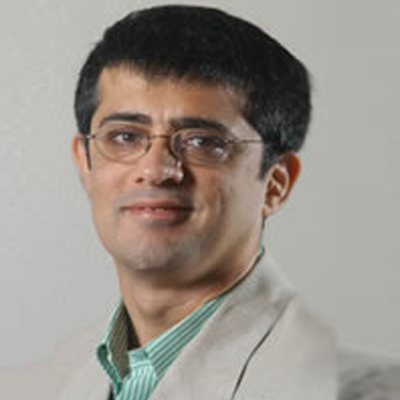
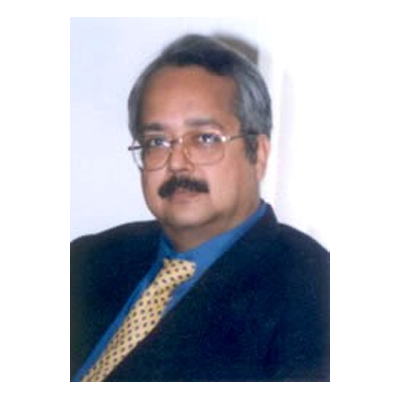
  • ‘B’cast pros will benefit from tec choices at Expo’ : AS Guin – Engineer-in-chief at AIR and president, BES

    ‘B’cast pros will benefit from tec choices at Expo’ : AS Guin – Engineer-in-chief at AIR and president, BES

    The NGO Broadcast Engineers Society is holding its 13th Expo this year from February 1 to February 3 at Delhi’s Pragati Maidan. It is a much larger exposition this year, and with the government setting the cut-off date for digitalisation, will showcase technology options. Possibly the most socially significant technology presented will be the low-band community radio system, supported by Unesco.


    Indiantelevision.com’s Sujit Chakraborty met AS Guin, engineer-in-chief at AIR and president, BES, to find out what’s on offer this year.


    Excerpts:

    The BES Expo is just a few days away. What are the new things expected this year?

    There are many changes in respect to last year. The participation has grown manifold and instead of the earlier venue of Hotel Taj Palace, as in 2006, this year we have to shift to a much larger arena, the Pragati Maidan, which gives us 20 per cent additional space.

    In terms of revenue, what is BES’ business model?

    Here too, there will be a 20 per cent rise in receipts. There will be 16 new companies who will take part for the first time. BES depends mainly on revenue from the exhibitions and membership. We have 1,600 members across the country, and we expect the number to grow further next year. We have to cut some of the costs, but then we also plan to start an educational programme, which will be no-loss, no-profit.

    What are the major technological windows that you wish to open this time?

    The biggest is of course the community radio solutions and mobile TV and radio. These would be most important in terms of both business and community service, with local NGOs being able to broadcast on their own radio, with all the support of AIR experts. Even our retired engineering staff is willing to offer their services free to persons willing to set up local channels.


    As I told you, we have 1,600 members across the country and they give us a tremendous outreach to help spread the low-band community radio movement. We are very excited about this programme, which will be a prime exhibit this year.

    Who all are supporting this event?

    The event is supported by the Ministry of Information and Broadcasting , Government of India, and endorsed by International Association of Broadcasting Manufacturers and also by Prasar Bharati, Asian Broadcasting Union, UNESCO, IGNOU and Department of Information Technology, Government of India.


    UNESCO is going to showcase its low-cost technological innovations and is with us at BES EXPO 2007, and will push forward the community radio programme. They are going to present suitcase radio, hand-wound sets (which need no battery or electricity to run) solar-powered FM transmitters, and other radio equipment compatible with Indian conditions.


    They will also set up in their stall a community multi-media centre, including radio, internet, and content networking programme, with live content programming.

    Many private sportscasters have announced their mobile programmes and one is running already, but these show snaps only. So how is your system going to be different?

    No, ours will be a full streaming. This will not be clips. In fact, this will completely shift prime time to office time, with people seeing DD or hearing AIR news and programmes on their way to office. These will not be clips, but as you see or hear news.

    New technology will always remain in the public domain, because of the sheer scale of operational costs, which the private sector would find very difficult to match

    Is this Prasar Bharati’s own technology?

    There is technology available in Europe and the US. The latter is using the MediaFlo. technology and Europe is using DVB-H. MediaFlo is a proprietary system, while DVB-H is an open system. An expert committee constituted by the Ministry of Information and Broadcasting has recommended DVB-H .With Secretary level approval a final decision is still awaited.

    What are the technical and operational differences in the two?

    DVB-H is IP-based and an open platform, where as MediaFlo has proprietary elements MediaFlo has less channel switching time than DVB-H. Both employ battery-saving techniques. They have different encoding and modulation schemes.

    What is the delay, and how long would it take?

    The proposal has been sent to the Planning Commission, which will study it and will have to sanction money. This could take eight to 10 months.

    What will be the outcome of the event?

    Broadcast professionals will be highly benefited in enhancing their knowledge about emerging broadcast technologies and also have a look and feel of new broadcast equipment systems in the exhibition. It will help the broadcast planners to choose viable and right technologies for their digitalisation plans.

    You have said that AIR and DD will turn digital during the 11th Plan. What is the cost you are looking at?

    For AIR, we have asked for something like Rs 5,900 crore and for DD another Rs 6,000 crore. But these are very large sums of money and chances are we might not get it all during the 11th Plan itself. But even if we get something like half of this, we could go digital and AIR could have seven digital channels. The output would be almost FM quality.

    Would these channels be available on the normal radio sets we use today?

    No, that technology is not available so far and even in the west, it is very costly, about $80 for a digital radio handset.New technology will always remain in the public domain, because of the sheer scale of operational costs, which the private sector would find very difficult to match.


    This will completely take away perhaps the only joy of millions of poor Indians who are totally dependent on AIR for news and entertainment, besides the public services as on health and agricultural advice. Well, the decision to go digital, across the world, has been taken, so this will have to happen. In any case the cut-off date set by the government for transition from analogue to digital is 2015. But then, as demand goes up, the prices will come down. A normal radio handset now costs Rs 200, and these sets will cost something like Rs 500, at the most, with cheaper technology coming in. But do remember that the audience will have a choice of seven channels.

    Any other benefits on offer for this costly technology?

    Interactive broadcasts and a number of value-added services will be possible. Well, one of the most important things will be the pro-active role AIR will get to play in disaster management. We will introduce a system all across the channels on the coastal belts, which will be integrated with the early warning systems. Thus, whenever an early warning is triggered off the computer linkage with the radio stations will ensure that the channel would automatically switch over to transmitting the warning, with the ongoing programme switched off. Once the warning has been issued, the radio station would switch over to the normal ongoing programme. This will give a huge lead time for people to evacuate.

    How do you see prices coming down?

    Take the example of DTH. When it started the companies were asking for Rs 5,000 per dish, but we are now giving our DTH, DD Direct Plus at Rs 1,200. So this depends on two things, content and demand.

    Who are you looking to as technical collaborators?

    You see, the US has HD radio, and Korea uses DMB but that’s mostly for TV. China uses DRM technology for external services. We have spoken with China about DRM .It has shown a keen interest and once the two countries collaborate, the prices of receivers would dramatically come down. China would have to collaborate to set up factories in India, because if we have to import, prices would be very high.

    What are the network plans?

    The digitalisation process would start with all the studios. It would be the Short Wave transmissions that would go digital first. Each state capital would have one Short Wave transmitter and there will be three transmission complexes with five transmitters per complex for national digital radio coverage. These complexes will be suitably located., Each complex will transmit five digital channels across the country, including regional language channels. This will mean that these channels will be accessible across the country. So, a Bengali in Mumbai would not have a problem if he wishes to hear All India Radio Kolkata.

    Being a public broadcaster, how do you think the private players would match your line of thinking?

    Interestingly, I think that introduction of new technology will always remain in the public domain, due to the sheer scale of operations and costs that private enterprise would find it difficult to match. This is a Plan expenditure with government support. Only after it is introduced in the country will public private participation happen. For example, the private players have invested a huge amount in Phase 1 and 2 of FM, which is in the analogue mode. AIR is proposing digital FM in the near future, using DRM+, or DAB or HD Radio technology. But forget replacing the existing transmitters, even initial investment will not be easy for the private entrepreneurs, unless the receivers for digital broadcasting become low cost and catch the imagination of the public.

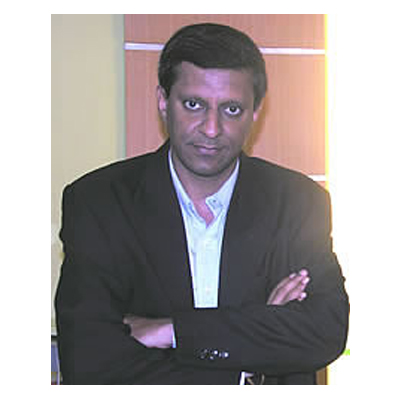
  • ‘Channels building bouquets to provide the advertiser discounts is an unfortunate and shortsighted perception’ : Sunil Lulla – Times Now CEO

    ‘Channels building bouquets to provide the advertiser discounts is an unfortunate and shortsighted perception’ : Sunil Lulla – Times Now CEO

    Times Now CEO, Sunil Lulla has been associated with the business of television over the last two decades. His strength lies in building brands from scratch. And the channel is going to need all that experience as it continues to find its feet. 30 January would mark the completion of one year for Times Now but the man at the helm knows that he still has a long way to go.

    Indiantelevision.com’s Sujatha Shreedharan caught up with Lulla to discuss the channel’s performance over the past year and how it hopes to take on the competition in what is turning out to be the most fiercely competitive space on television.

    Excerpts:

    What’s the big picture in the news broadcast industry as you see it?
    While news channels are trying new formats, there are certain restrictions as an English news channel that we have to contend with. Our audience is niche, the kind of formats they have adapted to so far dictate our content too. We need to break out of that mould.

    That said, is there space for a focused or niche channel? Yes of course there is. While weather does not play such an important part in our news unlike the US – there is a space for a specialized Weather news channel or Sports news channel. But as of now we are confined to the (general) news space and this is where we will bat it out. There was a time when we had five channels gunning for about 80 per cent viewership. Today we have over 30 channels looking at the same viewership. There is audience fragmentation but that has also meant a certain rating system and therefore a certain level of accountability. Look at our ad to GDP ratio. It is perhaps better only than a Bangladesh.

    As the market grows, the consumer will have more choice. This proliferation is necessary as it will grow the ad curve. One of the more underleveraged areas in my knowledge is India’s ability to produce content for international markets. We need to take our content and license it to other players.

    The last year seems to have been as much about sorting out what exactly is the personality of the channel as anything else. Have you arrived at clarity on this?
    We were always clear that we were and are a general news channel and as such our competition is also in the general news space. When we started out NDTV was the only dominant player and our natural competition in this space. The launch of CNN IBN was a surprising entry. This meant that there was a huge amount of viewership traction.

    So in terms of competition you would name NDTV 24×7
    I have no problems naming NDTV 24×7 as our competitor. I think NDTV 24×7 being the first English news channel in India and the vast experience it has behind it will remain a competition and a benchmark for all the following channels.

    But you were also competing with the English business news channels in the 8 to 4 band?
    Yes, we do have a business band that we took a re look at and decided to restructure it. We have now made our business band slimmer. The restructuring of the business band happened around 16 July and I think we’ve bounced back pretty fast.

    Our focus is on the ‘Big story’. This is what has worked for us. So if that big story is Abhishek and Aishwarya, then we’ll cover that. If it is Sourav Ganguly and cricket then we will track that.

    What improvisation is being made on the content side to build up a loyal audience?
    On the cusp of our one year completion, we can only plan things for ahead. But using this as an anchor point, we will have announcements and changes to make on the content front. We are in the process of launching an entertainment based show to air during prime time weekend. We are already experimenting with different formats. We have our sports show ‘The Game’ repackaged and presented in a fresh format especially focusing on the World Cup.

    We will start the new entertainment based show in February while March and April will see us beefing up and fine tuning the weekend programming. Prime time for the weekend would be a combination of news and programming. Wraparounds are the way forward.

    Times Now will also launch its campaign coinciding with its completion of one year on 31 January called ‘One year: In tune with what’s next’. It will be launched as both a print and television campaign.

    Speaking of content, due to cut throat competition, news channels are increasingly resorting to sensationalizing what they broadcast and even becoming quite sordid. This is only giving a greater handle for regulation to come into the sector which is hardly what anyone wants. Isn’t this a cause for concern for all news broadcasters?
    Within the breaking news format, it has always been the combination of activism, regulation and media that has pushed up the immediacy of news. So whether it is Bollywood or cricket – both of which have shown pretty dismal performances – is always covered by the Indian media. I think where the idea of sensationalizing news needs to be questioned is by the news network itself. That is a matter or an individual call of what one must not do. There is a certain sense of values the news network follows or maturity it shows in handling issues.

    Then there is regulation. Sure it’s a concern when it becomes interfering but the regulation is simple, lucid, clear to understand and detailed. We live in what is called the ‘google world’; we have information at the tip of our fingertips. So to shy away from news, whatever the content would not be fair. How we approach it is another issue.

    Now that Times Now has settled down, what’s the strategy to take it forward and drive up ad sales?
    There are a few things which come together to create ad sales – performance in a genre in which you are perceived to be a habit, traction in terms of ads, to hold prices and take them up, offer properties which will attract the advertiser. For instance, we will have a budget special coming up soon. But by the first week of January we had already sold that. Similarly we have the ET Awards. The idea is to ROS advertiser for which you are a reach vehicle. We need a pipeline that’s full but at a healthy price. We need to identify tent pole properties which will rope in the advertisers. Obviously we accept that NDTV has more advertisers than us.

    What do you think is the number of channels that are practically sustainable in each genre of news?
    Just last week, as I was talking to someone, the whole discussion about the number of channels in India came up. There was this realization that we are about 300 channels short. Within the next three years, there will be about 250 million homes with television out of which about 71 million homes have cable and satellite while about 30 million of these are what we know as urban homes. And these are only homes that are reported. The number increases as more and more black and white television sets are replaced by colour television. So we are talking here of a paucity and not an overcrowded situation.

    One unique aspect of the news channel business is that buyouts are the exception. The only one that comes to mind is Channel 7 in the recent past. Is that about to change soon? And if and when Times Now does view the regional market how would you go about it? Would you look at acquisitions or developing your own channel?

    You are right when you say that buy outs and acquisitions are new to the Indian news space. But if you are talking growth then we believe in both organic and inorganic growth. We have no phobia to either approach. But the reason for such growth should be stronger and better shareholder value.

    I personally think channels building bouquets to provide the advertiser discounts is an unfortunate and shortsighted perception. The priority should always be the value. I would rather have one channel at a good quality pricing than have 10 channels.

    That said, I think Zee has done a better job at being a bouquet. I wouldn’t count the regional channels because they are almost stand alone channels in that region. Star Plus and Star One again leave their other channels far behind.

    This is not the kind of orientation we have at Times Now.

    ‘Turning pay may have hurt us as a business’

    As management head of Times Now, what’s your priority — toplines or would you rather watch the bottomline?
    What is important is to generate quality content, build relative rank and close the distance between us and our competitor. We understand it’s not about a short term game. The more often we manage to satisfy our consumer or advertiser, revenue growth will increase accordingly. Right now the priority is to get the content mix right and secondly to get the channel across. This does mean investing in distribution.

    What sort of investment has gone into Times Now up until now?
    Blood, sweat, grime and lots of hard work and planning …. (Refuses to state numbers)

    Has the channel reached breakeven yet?
    Honestly, it won’t happen so soon. It will take at least 4-7 years.

    News channels no longer run on televised content alone. It has to have value add like online, mobile or on ground properties. What are the other revenue streams being tapped by Times Now? What is the overall percentage of revenue likely to come from these subsets?
    There is a need to develop our web property and that will be our focus in 2007. The web strategy was not focused because there was a need for monetizing opportunity. At that point, TV was a more important monetization opportunity so concentrated on getting that right.
    Now we will focus on building a stronger web connect for our advertiser and viewer.

    As for mobile properties we were the first to tie up with a telecom company, Reliance Infocomm and are in talks with Idea as well. The format will be similar with streaming feed and select videos. But if you ask me what the revenue we accrue from them is, well it is very marginal. The telecom operator keeps the majority chunk. If this needs to be explored as a prospective revenue stream, we will have to work out better partnerships.

    All indications are CAS will be spreading to cover the metros fully and later at least the Tier 1 cities. In such a scenario isn’t it better to stay in the pay tier rather than take the short term (some would say short-sighted) approach of going FTA?
    First of all, if you read the fine print on CAS, it clearly mentions that the channel can opt to a pay status given four weeks of notification. So it’s not like we are risking anything. We are just saying that given the situation today and subscription offers being limited we thought it best to stay FTA. In case you noticed, by January a whole lot of unprepared viewers were staring at blacked out screens. But Times Now was available. When we know that the timing is appropriate we will go pay.

    By that you mean that you would have a run a risk by going pay now…
    Yes, it may have hurt us as a business. But for now we are available on all platforms – digital, Sky, Dish, analogue…

    Times Now consistently topped the most watched news channel by India’s affluent sections in the first findings of TAM’s Elite Panel set up to understand TV viewing habits of the country’s elite…
    We are very clear that our ratings don’t begin or end with the findings of the TAM national or elite panel data. Also the Elite panel was set up recently and if you look at the last quarter percentage analysis Times Now has maintained its position between No. 1 and No.2 in the past 13 weeks in a row. (Counting up until the 31st). Look at the sampling used by the peoplemeter – 25+ males, 1 million population cities, etc- whether it is TAM or Amap or other broadcasters – this is how they set their benchmarks.

    The advertisers may worry about it but if we look at the news space itself – it started out with being a one horse race, then a two horse race and now they call it a three horse race. Either ways we are benefiting from the category but that does not mean we look at their findings to mould our content.

    One of the findings of the Elite panel suggested that most viewers watching English news channels prefer to watch news even on weekends. Has that finding been considered by the channel?
    We firmly believe that the heartland of news lies on prime time. But yes, we are bringing a sharper news focus to our weekend lineup.

    When Times Now launched it made no bones about the fact that it would be a urban channel? Is there a fear that you might be losing both an audience and an advertiser in a non metro by positioning yourself in this niche bracket?
    We maintain that we are a urban channel with a special focus on urban issues. We cannot satisfy everyone, we will have to choose and serve our target audience. The big focus in 2007 will be to prove our presence in the market place. Our intent is to make ourselves a habit.

    Every single property from the Times Group is a leader in its field. Does that mean mounting pressure on you?
    I think we are allowed to work fairly independently. But yes, we know the baggage we carry. The complexities to be a leader are far more severe in our case.

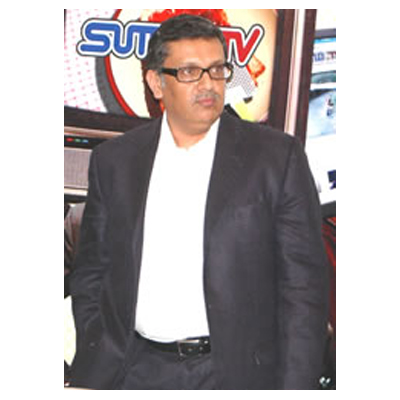
  • ‘You cannot build a sample on psychographics’ : LV Krishnan – TAM India CEO

    ‘You cannot build a sample on psychographics’ : LV Krishnan – TAM India CEO

    Media research agency Tam is in an expansion mode. Recently, it increased the number of peoplemeters from 4800 to 6917. And as direct-to-home (DTH) and conditional access system (Cas) took root, it also came out with the Elite Panel. The aim: to give broadCasters and media planners an idea of what the cr?me de la cr?me consume.


    Indiantelevision.com’s Ashwin Pinto caught up with Tam India CEO LV Krishnan to find out how the agency is gearing up to meet the challenges that new distribution technologies are throwing up.


    Excerpts:

    With conditional access system (Cas) and direct-to-home (DTH) taking root, what is Tam’s strategy going to be?

    We expected digitisation to happen sooner or later. We have been getting ready for it since a year. In April 2006 we released our first study under the Blinx series where we had the first DTH penetration data coming out. We also did a multi-city study on what was happening on Cas. We looked at the international availability of technology that could be used to measure these two platforms.


    We began work on the digital peoplemeter which we call the TVM5. Today all the six metros are completely aligned to the TVM5 digital peoplemeter. The peoplemeters are technologically hybrid. This was stage one done last year. We expanded the panel two weeks back and introduced the Elite Panel. After that, quite a large number of homes in the Elite Panel have moved onto DTH. In the regular panel a significant amount of homes are converted to Cas.


    This is clubbed with the C&S (cable & satellite) data and sent to the industry for usage. While this happens and the market moves from analogue to digital, there is growth in DTH and Cas for both panels. To validate this we are doing a regular penetration study. The data for this month will be out shortly. We will do studies in February and March to find out DTH and Cas penetration in the notified areas. It will be matched with our Elite Panel penetration also to see if it matches with those kinds of homes. Then data will go out to the user.

    Will Cas or DTH prevail and why?

    It is difficult to say which one will succeed. Each has advantages. Finally it is the service ability that counts. The demand is there. Pricing is important.


    Then there is the marketing activities done. Feedback is that demand for set top boxes is rising dramatically. But the service ability is the need of the hour. This is preventing more penetration.

    Tam has also increased the number of Peoplemeters and coverage area. Could you talk about this?

    We have been working with the joint industry body (JIB) for the last year and a half to look at the next step. Hence the decision to go to 7000 peoplemeters.


    Three things prompted the expansion. Firstly the universe has changed since the last expansion that happened in 2002 – 2003. The number of C&S homes has increased. New towns have been added on different strata of the population. The second reason is the sheer amount of fragmentation that is happening. With the number of channels available, TV viewing has become more fragmented. To look at data from specific segments of the population you need to go deeper. The Hindi speaking markets which is the North and West is where the bulk of the new metering has been done.


    In the South, the time spent on viewing is higher in proportion to the number of TV homes present. More samples have been added there. Then we wanted to plan for the future with new platforms coming in. You will see further fragmentation with DTH and Cas arriving. IPTV is also soon to launch. We wanted to be ready for this change.

    How much has Tam invested and what have the challenges been?

    The expansion has taken 10 months of work. We started last February. We moved from 73 towns to 151. We brought in the digital peoplemeters. At the same time we needed to ensure that the homes are counseled to deliver quality research. It has been great working along with the industry. Over Rs 250 million has gone into the expansion.

    Why did it take it so much time to expand?

    We touched 4800 in 2003. In 2004 there was no establishment study. We had to wait for 2005 to see the kind of growth rates that have happened. When we got NRS 2005 there was also census data for 2001 which came out in 2005. That data came to us in the second half of 2005.

    We are examining the possibility of expanding the Elite Panel to other markets like Bangalore, Chennai and Kolkata

    How do you choose the homes and how is user compliance ensured?

    The homes are chosen on the basis of key control variables divided into primary and secondary variables. The former are socio economic classes, the ability to watch C&S or terrestrial television. Number of home members is another variable. Apart from that, secondary variables include ratio of colour to black and white TV sets. In 2007 we have added a new variable, which is the presence of kids. A metric is used to gauge the compliance of a home to the peoplemeter which is button pushing. So we do surprise checks with these homes. Once we are sure that they are stable we add them to the reporting data.

    Rival ratings service aMap talks about the importance of pyschographic profiling and that 25+ SEC A is not enough if you want to know what for instance an executive consumes. Your views on this?

    You can include additional variables. However a panel needs to be put on strong foundation stones. They have to be stable over a period of time. Then you look at SEC, cable and satellite or terrestrial. Pyschographic variables are ever changing in nature. You cannot build a sample on psychographics. If you list pyschographic variables, which could be 100, you diminish your sample to miniature levels.


    You cannot have attitudinal factors being linked to viewing behaviour patterns. Attitudinal factors can be included in one off studies. But to expect a panel to give you solutions for every little thing will not be possible. A panel is supposed to give continuous behaviour changes so that you can do projections for the future based on past behaviour.


    In a dynamic market you have a cable operator changing the channel line-up, marketing etc. If you can pick up these changes and tie it to the numbers you can make better sense of the data rather than try to report things based on things that are affected by changing attitudes. It is important to have data that gives a clear picture of the changing marketplace rather than have a variable that is there for the sake of it.

    How has the channel standings been affected by the expansion of the panel?

    In general the expanded panel has come in with Cas implementation. Pay channels have taken a hit in Mumbai, Delhi and Kolkata. But the figures will improve as homes move to Cas or DTH. Distribution is key in the towns. Also when you geographically expand your ratings presence you see a difference in terms of power cuts. This environmental factor also affects channel shares. A strong distribution of channels in smaller towns will mean that share is not affected.


    Regional channels share has gone up. So has news. The free to air channels are also faring better. The mainline channels continue to stay strong. Certainly there is more fragmentation. Music and the English entertainment channels are stagnating. This has to do with content along with marketing. Colour TV sets have jumped to 70 per cent in the C&S homes. Remote control penetration has also grown. There is faster surfing and more sampling. The ad rate viewership is slipping vis-?-vis programme viewership. There is a 20 per cent difference. News has eaten into the share of GEC.

    What findings has the Elite Panel thrown up?

    The elite segment spends a limited amount of time on television. It is around an hour and a half each day compared to two hours and 10 minutes for the general panel. For those who own a DVD player it goes down further to around an hour and 10 minutes. The more the leisure opportunities present, the less he/she watches television. They are extremely choosy. What is interesting is that although the main language of 45 per cent of the Elite Panel is English, the time spent on watching Hindi content is more watched. English entertainment needs to touch the heart of the consumer better.


    It is clear that the members of the Elite Panel do not approve of the quality of content on the English entertainment channels, which is one reason why they are not spending much time watching television. They are basically surfing through the English channels and then going back to the Hindi shows. The English channels need to understand what the viewer requires. The elite segment represents an opportunity.

    Can you highlight any other findings that emerged from the Elite Panel?

    Firstly we need to segment general entertainment into two parts. One is soaps and the other is reality shows. The former is consumed by the housewife while the latter is consumed by the youth. On a national scale you have one TV set homes mostly. But in the Elite Panel there are multiple TV set homes. So while the overall numbers are the same when you break it down into soaps and reality shows the viewing is split evenly in the Elite Panel. This means that the second TV set is being used to watch reality shows by the younger members. This gives channels an idea of the kind of shows that can be created for the Elite versus what is being done for the rest of the country.


    The Elite segment has nuclear families with bigger homes. There are two kinds of homes. One is executive which has lesser kid’s, while some of them are Dink (double income no kid’s) homes. The business family is larger. The day parts both watch are different as also is the content.


    Another difference is the behaviour of this audience towards weekends. In a national panel time spent declines. Here it goes up. News is watched a lot. Sports viewing depends on the significance of an event. It needs to be interesting. They will watch an event whether it is cricket or tennis or Formula one if the match is interesting. Schumacher’s last Grand Prix touched a rating of over three in the Elite Panel while in the national panel it was 0.22. Viewing of sports depends more on the quality of the match rather than on the tournament per se. Kids and movies fare better on the Elite Panel.

    What has the media feedback been like for this service?

    It has been good. We are examining the possibility of expanding it to other markets like Bangalore, Chennai and Kolkata. It has been two years since we started work on the panel. The challenge was to keep the panel intact. We have 125 homes in Delhi and 125 homes in Mumbai.


    Technologically we had to make sure that data could be downloaded which is not easy given that the telecom infrastructure is already overloaded. We did special techniques to recruit homes. We spoke to them in terms of what we are trying to do. We had trained people visiting the homes with laptops.

    Can sports viewing for non-cricket grow?

    There are some learnings from cricket. Firstly you need star appeal. Would you watch cricket without Sachin, Saurav, Dravid and Dhoni?


    Secondly media coverage is crucial. The reason why the soccer World Cup last year fared so well was due to the enormous coverage and hype in the media particularly in newspapers. Then there needs to be drama. Cricket has controversy, which creates aura. For instance Saurav coming back sparked debate.

    What is your outlook for radio this year?

    We have expanded our measuring to 32 stations now for AdEx. Earlier it was 13 stations. We are seeing radio ad expenditure growing.

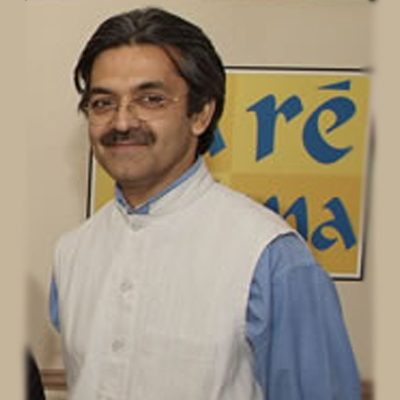
  • ‘User generated content is popular in news, music and sports genres’ : Pankaj Thakar – Cellcast Interactive India CEO

    ‘User generated content is popular in news, music and sports genres’ : Pankaj Thakar – Cellcast Interactive India CEO

    With user generated content (UGC) on the rise globally,UK-based Cellcast is betting that its Sumo.TV platform for broadcasters would catch on in India and other parts of the world. People can send in video content and if it is fit for television viewing, it will be put up.


    Cellcast is also looking to launch shows on different TV channels for which it buys airtime. Indiantelevision.com’s Ashwin Pinto caught up with Cellcast Interactive India CEO Pankaj Thakar for a low-down on the company’s plans in India.


    Excerpts:

    Could you give me an overview of Cellcast and the services it provides?

    We work in the area of developing participative content. People watch television and consume it either by mobile or IVR or the internet. Cellcast is a technology and a format company mixed into one. We have integrated technology that is inexpensive to use. Both small and big broadcasters depending on what they want can use our formats.

    What are your different revenue sources?

    Our main revenue source is through mobile, IVR and internet. People pay for premium services like SMS, MMS, Wap, GPRS. We have a show called Bid2win which be participated through SMS or IVR or you can go to the net and log on to the website. We buy airtime on channels and showcase our content.

    In India you worked with Star on their reverse auction format and with Zee on their PlayTV channel. How was that experience in terms of viewer uptake and channel response?

    We did some projects with them. The results were positive with both and the projects were big. We got PlayTV off the ground pretty fast. However we feel that we have to be in control of our own destiny. We are out of PlayTV. We have bought airtime on Sony, Zee, Sahara, Zoom. That is why we could not continue with PlayTV.


    For PlayTV, we did a Housie format. We used formats that work in a diptest environment so you know whether or not the audience is ready to respond. We are now looking to increase the number of formats on air on different channels. By March we hope to have six formats on air.

    Could you talk more on this?

    We currently have bid2win and Bollywood Dhamaal. The latter was launched on Max on 7 January. In the first episode alone we got 100,000 responses. It is a game show where two anchors talk to the audience.


    There are some puzzles shown on TV. Some people get to call live and if they solve the puzzle they win prizes. At the end there is a jackpot round for Rs 100,000.

    What are the other formats being looked at?

    We have a sports format called Beat them All. We have been talking to Max about this. We are talking to Max to use this as the World Cup is coming up. It is a virtual cricket set up that you play along with. If you beat six top players you win Rs 10 million. We did an offline test with a mobile operator and we got 100,000 responses for an India versus South Africa match. This works via SMS and IVR. We are looking at an interactive astrology show, a social networking show, a music show and a matrimony show.


    By social networking, I mean making friends through television. Already it is happening on the net through sites like MySpace. For astrology a viewer can send in an SMS and the astrologer will answer the query. The matrimony show will involve helping the person make the initiative to find a partner. TV is a powerful social medium and can attract people from all parts of life if it is put in a social environment. I am not sure if girls would want to do this but a guy can put his picture and say that he is looking for a bride and this is his background.

    How cost effective is it to acquire airtime?

    It is cost effective in a sense. If the response rates are good, you will be fine. The rationale behind buying airtime is to show people that our formats work. 250 episodes of bid2win got 20 million responses. It has generated $1.4 million in revenue. It is a clear-cut winner. A broadcaster otherwise has to produce his own content, find advertising money. Here we give them free content and pay for the slots. So it is a win-win situation for everybody.

    Could you talk about your channel business in the UK?

    We run six channels on the Sky platform. We also have airtime on Freeview. We have been operating them since 2002. Since we run our own channels, we can experiment with different types of content, technology. This is then exported. Our channels include a psychic astrology channel. We started with one hour and the channel has grown. We have a network of psychics who take calls. We have a dating channel and so people can call up and find people and do matchmaking. We have a shopping and auctions channel.


    Apart from this we operate a channel in China in Shenzhen called Mymobile TV. We operate quite differently outside the UK. We form partnerships with broadcasters to provide programming or buy airtime.


    We would like to eventually start a channel in India on a DTH platform. Our goal is to set up channels on satellite in different countries. We have experience in running small, vertical channels in a multi-platform environment. Our speciality besides providing content lies in running channels in different genres. Our dream would be to run an auction channel and a game show channel in India for sure down the line. However we have not set a timeframe.

    What have the key learnings been from running your own channels?

    I think that it is in terms of the nature of your whole business model. To bring in a niche audience you have to really know how to engage that audience and look for alternative sources of revenue. There is no advertising and subscription income. While profits have taken a hit our revenues in the UK are strong.


    Our channels in the UK are freely available for those who have Sky. You have to provide an engaging experience that people are willing to pay for. Our motto is pay and play. Our experience has been that people will pay for services like an auction.

    Won’t it be difficult to launch a channel in India as DTH has a transponder space problem?

    We face universal constraints. Measat 2 has launched for South Asia. Suddenly space for 400 channels is available.

    bid2win got 20 million responses and generated $1.4 million in revenue. We will increase airtime buying on channels

    How did the concept of Sumo.TV come about and what were the technical challenges initially faced?

    It came out of the participative content that we do. In the UK when we did MMS participation, people sent pictures, lots of videos. We realised that since there is a huge market out there we can actually encourage people to create their own content and send it to us. The challenge was to build a content management system. The other challenge is how do people who participate be a part of the value chain. With mobile technology that allows you to download services we have solved that puzzle also.


    Sumo.TV basically invites individuals to share their personal or creative videos that can be featured on primetime television. Sumo.TV has already launched in China and in the UK. In fact in the UK we have started a 24-hour channel where content is distributed solely by the viewers. This exceeds what youtube and MySpace can do. All content can be shared through the site, www.sumo.in, where viewers can through the net or mobile post their content, which can then be viewed and shared.

    How does the monestisation process work?

    It is very simple. If you download content through mobile or net we charge for it. The content creator gets a percentage of the revenue accrued. There is a pre-agreed revenue sharing arrangement for all the partners in the value chain. Every time content is downloaded by another user or shown on television or streamed on the mobile the creator gets a percentage of revenues. Effectively Sumo.TV users are being invited to set up their own mini-channels. In the UK everyday the site gets 80,000 unique visitors. Of course there is a filtering process and so all submissions are not accepted. This is how we are different from youtube. Whatever is accepted must be fit for television viewing.

    What about India?

    We are talking with Indian broadcasters regarding airing user generated content on their channel.

    Have any special services been introduced in India?

    Cellcast India has introduced three services in India. One is Sumo Ki Pehchaan. This is where you submit a clip and the best one wins Rs 100,000. Then there is Sumo Ki Sangeet. Here you can submit a video of you singing or playing a band. While Indian idol gives an opportunity to talent, Sumo.TV will open avenues to talent that had been previously hesitated to come forward. Then there is the Super Sumo challenge. Here one can submit a short socially relevant film. We will look to help broadcasters build on content.


    A UGC platform like Sumo.TV allows for expansion of content and the most important part is that it connects viewers to viewers. Right now 100 TV programmers decide what a billion people should watch.

    But while India is a huge mobile market the concept of user generated videos is new. Mobile participation is as of now mostly limited to SMS, chat. How long do you feel it will be before UGC takes off in India?

    Well 30 per cent of mobile phones in India in 2009 will have a camera. This means 60 million camera phones or one camera for every 20 Indians. The question will be whether any event can remain in the private domain.


    An event which can’t be published in a newspaper or be seen on television can be put on Sumo.TV by someone who feels that the event is important. More video content will be consumed. This will however not replace traditional television. The fact that Apple has come out with the iPhone, which has video ipod, web, camera, shows convergence. Right now there are nine million phones that are GPRS enabled. This itself is a big number.


    The UGC process can be described as aim, shoot, compose, post and share. Our strategy with broadcasters will be with licensing and revenue sharing. The first step will be to help them aggregate content. Once that is done there will be licensing fee and a revenue share with downloads if for instance Sony asks viewers to send in content.

    What genres are popular with UGC? How do you authenticate content?

    In the short-term shock therapy works. So news, music videos and sports are the three main genres. For authentication we are developing tools. Doctored video we have figured out. But as far as the authenticity of the actual event is concerned, it is for the broadcaster to figure out.

    What are the advantages for advertisers in a participation environment?

    You can tag the product lines, do product placement along with return messages. Participation means a two way communication process. There is a chance for the advertiser to put in a tagline. At first advertisers did not understand the power of UGC. They were also worried about issues of IPR. Once those get sorted out, they will be more than happy to come on board.

    Could you talk about how Cellcast is taking advantage of the synergy between mobile and the internet?

    Going forward, five years from now net will be as present on the mobile as it is on the PC. I do not see a reason to treat them as two separate mediums. Once bandwith prices get rationalised, people will use the mobile to access the net.

    How important do you feel India will be for Cellcast five years down the line in terms of business being generated?

    India is a key market along with UK, China and Brazil. That is where the mobile uptake has been at its most healthy. It has been a long, hard road to get to where we are in India but now we are stable. We have a team that is expanding. From two people, we are now 30 people. We get creative work outsourced from India as the talent here is fantastic.

  • ‘Expanding home video relationships with the Hollywood studios into other areas will be a big ticket for us’ : Subroto Chattopadhyay – RPG Enterprises – Ent. Sector president and CEO

    ‘Expanding home video relationships with the Hollywood studios into other areas will be a big ticket for us’ : Subroto Chattopadhyay – RPG Enterprises – Ent. Sector president and CEO

    Saregama, India’s oldest music company, is in makeover mode. Having slipped into the red with a net loss of Rs 211 million in the nine-month period ended 31 March 2004, the RPG Group company has chalked out a five-year growth plan in music, movies, TV content, home video, events and digital formats.


    The man responsible for this new script: RPG Enterprises – Entertainment Sector president and CEO Subroto Chattopadhyay. The company has turned around and in FY06 posted a net profit of Rs 88.7 million on a turnover of Rs 1.19 billion.


    The focus so far has been to put in place the management bandwidth for running the businesses. Now it is all set to execute these plans and scale up operations as a content company available on all platforms.


    In an interview with Indiantelevision.com’s Sibabrata Das, Chattopadhyay talks of the efforts made to regain the grand old company’s status as a creative hothouse and of the challenges he faces in establishing Saregama as an entertainment powerhouse with stress on bottomline.


    Excerpts:

    How has Saregama managed to turn around after slipping into the red?

    We have put in place a five-year strategy. We have decided where to place our bets and where to withdraw. We, for instance, have taken a stance that we won’t get into owning radio stations. We have divided our businesses, are getting into adjacent areas and have identified touch points.

    What is the plan for the music business with T-series grabbing the lion’s share in acquiring rights to new Hindi movies?

    We have decided to be a content company in music and not a distributor of CDs and cassettes. We will create, acquire and make available to consumers music while remaining platform agnostic. We will be exploiting different delivery systems like mobile and radio. That is a positioning we have taken as part of our restructuring strategy. And we are buying music rights for new Hindi movies like Gangster, Bluff Master, Anwar, Kaliyug and Vivah.

    Have you tied up with the mobile and FM radio station operators?

    We are doing such deals through the Indian Performing Rights Society (IPRS) and the Phonographic Performance Ltd (PPL). That is a strategic decision which we took upfront. We have tied up with all the mobile operators. We also see upside in revenues from radio stations which would soon be springing up across the country. Out of our total revenues, 15 per cent comes from digital format. Our earnings from digital exploitation should go up. Digitisation is critical to our business model.

    What are your digital initiatives?

    We are launching an entertainment portal and it is likely to be called saregama.com. The aim is to make it the digital supermarket of entertainment. Consumers can download music and later on we will add movies. We are behind schedule by four months as we are adding many other features.

    How much of Saregama’s library is digitised?

    We have digitised 190,000 out of the 300,000 tracks we own. We will have the remaining content digitised and work on it will start by April-May. This process, in fact, has helped us discover our vast library. We, for instance, came to know that we have 30,000 tracks in Tamil. The challenge is for us to go out and make our products locally relevant.

    Valuations are too high at this stage for acquisitions. We are in the make rather than buy mode

    Saregama had stopped producing movies as it started losing money. Why is it making a re-entry?

    When we sat down and took stock of the company, we decided that we had to be on the content side of the business. We identified our second vertical should be films because it is adjacent to music. The ecosystem is changing and we believe technology will have an impact. The game will change dramatically and we won’t have to depend entirely on the current star-loaded model.

    What is the business model you are adopting?

    We have identified creative people to head the business. We have taken on board BR Sharan of Lalita-ji Surf ad fame and noted film actor-director Aparna Sen who will look after the Hindi and Bangla movies. We will be producing movies in these two languages initially. Bangla is a widely spoken language and the overseas population (including Bangladesis) is large. There is shortage of good content and we can create a business out of this market. Noted cinematographer Vijaylakshmi will also be involved.

    What will be the budget size and how many movies will Saregama be producing in a year?

    We may start with mid-budget movies and see how we can scale up along the way. We have just taken in the people and will be firming up the business plan within three months. We will try and build a financial logarithm to movie making. Our focus will be to make good movies with strong scripts.

    Saregama already produces TV content in the southern languages. Will you be expanding into Hindi as well?

    We produce 14 hours of programming per week for the Sun group of channels. We will be transferring that capability to the other languages. We have Sharan, Sen and Vijaylakshmi to take care of the TV content business.

    Saregama was in negotiations to buy controlling stake in K Balachandar’s TV content company Min Bimbangal, but the talks failed. Is there a conscious decision not to take the acquisition route?

    We are in the phase where we realise that capability build up is crucial to us. We were in the buy mode, but now have decided to be rather in the `make your own product’ mood. Valuations are too high at this stage and the overall company philosophy is that we make rather than buy. It is because of a mix of both these reasons that we are not acquiring.

    Do you have plans to ramp up your home video business?

    We are exclusive partners with some major Hollywood studios like Paramount, Warner Bros, Universal, Dreamworks and MGM for distribution of their home videos in India. We have access to 20,000 films and it contributes around Rs 250-300 million to our revenues. It is a nice business to be in. If we can expand our relationships with the studios into other areas, it will be a big ticket for us. We also distribute Hindi movies but our fundamental positioning in the home video segment is that we provide the best of international flavour.

    Moser Baer has entered the home video segment and drastically dropped down prices of VCDs and DVDs. How do you see that impacting the industry?

    We don’t believe in price drops as a competitive strategy if we can hold them firm. People, after all, buy content. They will pay more for better content.

    Will you be getting into event management as well?

    We will have a presence in this vertical as it brings consumers and entertainment together. Our broad plan is to be available for music, home video, theatrical, domestic and international consumers.

    Saregama was earlier thinking of merging its two overseas subsidiary companies RPG Global Music and Saregama Plc. Is that plan dead now?

    We are happy being in the state of status quo. Our focus is to first fix the business and create clean surpluses in each subsidiary company so that they become robust. We use them to deliver products to consumers in different areas of the world. While Saregama Plc focuses on the UK, US, Europe, Canada, Caribbeans and South Africa, RPG Global looks at Middle East, South East asia and New Zealand. And as India globalises, our subsidiaries will become good and strong.

    What is the status of HamaraCD.com?

    We are changing the positioning and it will become B2C. Consumers can place an order and we will get it delivered to them.

    How much will Saregama be investing for expanding its business?

    We will be firming up our fund requirement after we decide what we will make and what we will buy. We are evaluating our options and haven’t taken the decision yet. We have been busy cleaning up our operations and strategising to be in businesses where our performance not only becomes successful but also sustainable.

    Won’t Saregama forego a big opportunity by chalking out a slow process of growth while some media companies are taking an aggressive route?

    We have been funding our growth from internal operations and internal accruals. Our purpose is to keep tight control and make the businesses sustainable. Our ability to accelerate will be better two years later. We have not yet become a creative hothouse as we were earlier. We are preparing ourselves towards that. The entertainment industry needs management bandwidth to run the businesses. None of that was required in this industry earlier. But those days are gone.

    Will you not then be left with too little space in the marketplace?

    We will be moving fast in the areas of exploitation, music and cinema content. We have formed business units and are building competitive advantage and strategy for them. If those dots join up, then it will be very exciting for us.

  • ‘Investors are waiting for Cas to roll out before they come up with definite valuations’ : Ravi Mansukhani – IMCL director-in-charge

    ‘Investors are waiting for Cas to roll out before they come up with definite valuations’ : Ravi Mansukhani – IMCL director-in-charge

    Cable TV is in the midst of transition. We are seeing Cas being just implemented. Consumers are wanting set-top boxes (STBs) so that they can see their favourite pay channels. Multi-system operators (MSOs) are gearing up so that demand doesn’t outstrip supply. They know this is their last chance: if they don’t do it right, direct-to-home (DTH) will take over and they will become dinosaurs.


    In an exclusive chat with Indiantelevision.com’s Sibabrata Das, IndusInd Media and Communications Ltd director-in-charge Ravi Mansukhani discusses the dynamic changes taking place in the area of cable TV, the exciting prospects for digitisation, and the challenges that lie ahead as way of competition from emerging technologies.


    Excerpts:

    HTMT had earlier decided to consolidate its media businesses under InNetwork Entertainment Ltd (INEL). What made it change track and bring IndusInd Media and Communications Ltd (IMCL) as the umbrella entity?

    Suddenly the cable distribution business, which is with IMCL, has become big and is heading towards transparency under conditional access system (Cas). It has got a definite growth path now. That was not the case earlier and we thought we would bring everything under INEL which is the content company. The track has changed and content will sit on distribution. So we are merging In2Cable ( the broadband subsidiary) and INEL into IMCL. The parent company for the consolidated media business will be HTMT (an existing listed entity). The demerged IT/ITES entity will be listed under HTMT Technologies.

    While Zee Telefilms has demerged its media entity, your restructuring process is actually consolidating the media business. Is this because the different lines of media business are still having nascent revenues?

    We couldn’t have separated the different media activities as we don’t have size at this stage. We are only demerging the IT/ITES business from the media activities as we believe these have separate identities, will need independent focus, and can unlock value for the shareholders.

    Will HTMT (residual) also house the real estate business?

    The company will have the media businesses, Shop 24 Seven (shopping channel) and the real estate business. The demerger process is underway and a listing is expected by February-end after the restructuring process gets the necessary regulatory approvals.

    Isn’t this a strange mix for an investor in the company?

    There is some real estate property which was sitting there earlier in the company. Since we aren’t expanding on that at this stage, we are leaving it as it is. Real estate may become a play later.

    How much cash will be allocated towards expanding the media business?

    We will have Rs 5 billion for this. This will be used for new business initiatives, acquisitions and funding the expansion of the media and entertainment business.

    Like Zee’s Wire & Wireless India Ltd (WWIL), are you planning to make last mile acquisitions to expand your network?

    We are adopting a different business plan where we want to partner rather than buy out operators. WWIL, on the other hand, wants to acquire 51 per cent in cable networks. Our expansion plan includes offering to operators shares in HTMT (after demerger) as they form an integral part of our distribution chain. This will be based on the subscribers they declare. No decision has been taken as to the exact ratio that would be on offer.

    Will one share be issued to operators for every declared subscriber?

    We are working towards that.

    Do you think your strategy will be more acceptable?

    We have decided that is the best way to go forward, even in the non Cas (conditional access system) areas. By becoming shareholders, operators won’t perceive us as a threat. They can own their network while we make the investments on technology and digital cable. This way they can retain their customers, particularly as they face threat from DTH and other digital cable service providers. We are not exercising the buying option yet. If they want to sell, we may step in later. And by having ownership over the network, it would be in their interest to drive up ARPUs (average revenue per user) and launch value-added services.

    Will ARPUs fall?

    Initially, it will fall or stay flat. The subscriber ARPU in the Cas areas where we are operating is Rs 250. We see this going up to $10 (Rs 450) in two years and, perhaps, to $15 (Rs 675) in five years because of value-added services. Our topline is going to be rammed in the first year, but the bottomline is going to improve immediately as we will have an assured distribution margin.

    Would you prefer inducting a strategic rather than a private equity investor?

    We would favour a strategic than a pure financial investor. We feel inputs from a strategic partner would give us a competitive edge.
    But the possibility of roping in an investor would likely be after the listing of the two entities.

    We are not looking at customer acquisition via bouquet packages. For the ground to open up territorially for the MSOs, it will take time.

    Are investors keen to know about the content side of your story?

    Investors at this stage basically want to know our distribution plan. Our focus right now is on the distribution side of the business. Perhaps, by April we will have an investment plan for content and the other lines of media business.

    Have you initiated talks with global major Liberty which has shown interest in entering into India?

    There are a bunch of them who are interested in India’s cable story. But all the investors are waiting for Cas to roll out before they come up with definite valuations.

    Multi-system operators (MSOs) have announced bouquet packages. Do you see this as a price war to win consumers or local operators from rival networks?

    Our schemes are directed to make our existing consumers happy. We are not looking at customer acquisition via packages.

    Isn’t there a conscious effort to protect your turf from WWIL, which wants to poach operators to increase its thin presence in Mumbai, and DTH service providers like Tata Sky?

    We took care to offer a better quality package than WWIL or Tata Sky. We are offering six months of free subscription for consumers who have to pay just Rs 1500 (plus taxes) in the Cas areas. We are offering three bouquet packages – Star loaded (Sitara with 18 pay channels), Sony-led (Sona with 20 channels) and Zee-Turner (Zabardast with 35 channels). Under the STB rental scheme, we are offering the Optimiser package (Star and Sony bouquets) at Rs 120 (second TV set Rs 55) and the Super Saver scheme (Star, Sony and Zee bouquets) at Rs 190 (second TV set Rs 100). DTH has a high entry barrier as installation of the boxes are costlier than cable. And for the ground to open up territorially for the MSOs, it will take time.

    With WWIL intending to poach operators, do you have a truce on the ground with Hathway Cable & Datacom?

    We would like to keep the peace on the ground.

    With Cas already on, do you see a situation where demand for STBs will outstrip supply?

    We are confident of tackling it. We have in stock 168,000 STBs and have seeded over 40,000 boxes. We are installing more than 5,000 boxes a day. People are waking up as the pay channels are blacked out. We are ready to meet the surge in demand. We have also ordered for over 100,000 STBs from a Korean vendor.

    How keen are you to beef up the content side?

    We will put all our energies into distribution now. Once we have a solid distribution platform, then we are actually de-risking on the content front. We want to get into movie production and are looking at the distribution chain as well. We have earlier done movie financing and have funded around 14 movies from the current crop.

    Are you going to line up special channels for Cas subscribers?

    We are launching thematic channels without advertisement breaks. We have already started In Digital Premium which was made available first in Mumbai. It will also be seen in Delhi and we have movies in different themes – action-oriented, comedy and drama. We are planning to charge Rs 5-10 per movie. We will add more channels.

    What are your plans for CVO?

    The cable movie channel is highly popular and is licensed across 55 cities. But it has been stagnating over the last few years. With our distribution growing, it will bounce back into the growth path. We continue to acquire movies. Last year, we bought 150 movies.

    Revenues from cable internet and content have been depressed. How are you planning to promote your broadband business?

    We are revamping our broadband business. We will be aggressive on pricing. Our focus so far was on quality, not price. We never believed in LAN-based (local area network) internet. Now we will be doing that model. For the last two years, we concentrated on consolidating and upgrading our networks. Even we will start VoIP (Voice over Internet Protocol). We have this system connecting all our Hinduja offices across the globe. We will have to see how we can expand on that and launch commercially.

    What are your revenue projections this fiscal?

    We did Rs 1.6 billion last fiscal, with cable distribution accounting for Rs 1.38 billion, INEL Rs 170 million and In2Cable Rs 50 million. We are not sure how we would finally end up this fiscal as we expect the last quarter to be chaotic. But the topline should leapfrog by FY08.

  • ‘Cable ARPUs in Cas areas to touch Rs 400 in five years’ : Jagjit Singh Kohli

    ‘Cable ARPUs in Cas areas to touch Rs 400 in five years’ : Jagjit Singh Kohli

    Subhash Chandra is betting big on his cable TV business. Wire & Wireless Ltd (WWIL), the demerged entity of Zee Group, plans to invest Rs 7.14 billion over two years. A major chunk of this will be consumed by set-top boxes (Rs 3.28 billion) and customer acquisition (Rs 1.14 billion) as he attempts to hold grip in the distribution business.


    When WWIL gets listed sometime in January-February, investors will have a touch and feel of the valuation that cable business will enjoy in the digital era.


    Launching the aggressive drive, WWIL CEO Jagjit Singh Kohli says he has ramped up 250,000 customers at an average valuation pegged at Rs 2000 per subscriber. The ambitious target in year five: 9.6 million.


    In an interview with Indiantelevision.com’s Sibabrata Das, Kohli elaborates on the steps WWIL is taking to emerge as a leading multi-system operator (MSO) with plans to launch Headend-In-The-Sky (HITS) and STBs that have internet and VoIP (Voice over Internet Protocol) capabilities.


    Excerpts:

    Is WWIL close to roping in a strategic investor?

    We are in talks with both strategic as well as financial investors. They have shown interest in our business. We would go with anybody who gives us the maximum valuation.

    What is the valuation WWIL is now getting?

    The investors are discussing of valuations in the range beyond $600 million. Our expectations are higher. We are likely to get listed by mid-January or early February. The true valuations will come out then.

    Are investors valuing the cable TV business based on the number of subscribers or future revenues?

    In India, it is too early for a subscriber-based valuation. Investors are using the discounted cash flow method. The valuations are obviously based on our future target of touching 9.6 million subscribers. There are two reasons why we will get valued more: we are doing Headend-In-The-Sky (HITS) and we are using set-top boxes (STBs) designed by Pacenet which will offer multiple usages like internet and VoIP (Voice over Internet Protocol).

    MSOs will have to make major investments on STBs. Is it going to comprise as high as 46 per cent of your overall investments?

    We are planning to invest Rs 7.14 billion in the business over two years. For STBs, our fund requirement could be Rs 3.28 billion. We are planning to pump in Rs 2.21 billion towards hardware. Another area where we will be aggressive is customer acquisition. We plan to put in Rs 1.14 billion for this.

    What is the debt to equity ratio and how are you meeting the initial fund requirement?

    The ratio will be firmed up once we know the price WWIL quotes after getting listed in the exchange. That in a way will determine how much debt component we would require to raise. Our initial fund requirement is Rs 5 billion. We have lined up a debt of Rs 2.15 billion. We have already got Rs 500 million from Infrastructure Development Finance Corporation (IDFC).

    WWIL is on a drive to acquire customers. What is the price of acquisition?

    We are offering to cable operators a valuation of Rs 2000-3000 per subscriber. While WWIL will be a 51 per cent partner, the balance 49 per cent will be with the operators. We have already ramped up 250,000 subscribers in recent months through aggressive acquisitions.

    What is the average valuation for acquiring 250,000 subscribers?

    The average valuation works out to Rs 2000 per subscriber.

    Won’t you have to handle too many operators by doing JVs with them?

    We are making proposals to networks with decent size. In Mumbai, for instance, 12 local operators are creating a company and entering into a JV with us. We want to reduce the number of JVs. Otherwise, it will be impossible to manage.


    In some of our acquisition models, we make MSOs buy out the local cable operators.


    We have set a target of ramping up our direct subsciber base to 9.6 million within five years. We expect 7.6 million to receive digital cable. Our aim is to have 4.4 million through our own digital cable service and an additional 3.2 million through our HITS platform. We will have two million through analogue acquisitions. We have expanded operations from 35 to 43 cities. We plan to be in 66 cities in three years.

    WWIL has a thin presence in Mumbai. Even in the lucrative market of South Mumbai, which is a Cas notified area, you have a negligible presence. What are you doing to correct this?

    We have linked up optic fibre and have commissioned a digital headend a few days back at Worli. We will be in the Cas notified area of south Mumbai and several operators from rival MSOs are joining us. We have acquired control over 5 Star which operates in Andheri, a western suburb of Mumbai. We have also poached a few operators from Incablenet in Andheri East and others from rival MSOs are joining us.

    The average valuation of acquiring 250,000 customers works out to Rs 2000 per subscriber.

    How are you expanding your footprint in Delhi?

    In Delhi, we have acquired a 51 per cent stake in Satellite Channels. We have also signed up with Spectranet and Sanjay Cable Network. All these MSOs were disqualified for Cas as they were found not ready by the Telecom Regulatory Authority of India (Trai) for making the switchover to addressable system by 31 December. As for Kolkata, we are very much a dominant player after buying out Indian Cable Net (formerly RPG Netcom), a leading MSO, in May 2005.

    What is the price of the STBs?

    While the cost of the basic box is Rs 2000, the one with internet is Rs 2500 and internet plus VoIP Rs 3000. Customers can enjoy interactive games and online share trading through this. We are looking at a monthly fee of Rs 70 for internet and Rs 75-100 for movie-on-demand. Subscribers will have to pay Rs 1499 as deposit and Rs 45 as monthly rent. We haven’t, though, arrived at the final pricing. We plan to introduce the internet-enabled boxes after two months and those with VoIP sometime in April.

    Who are your STB vendors?

    We have Korean and Chinese vendors who will be supplying us the boxes. We have also ordered 200000 STBs from Bharat Electronics Limited (BEL).

    Earlier, in 2003 when Cas was to be introduced, Pacenet had ordered STBs from TVS Electronics. Why haven’t you included them in the list?

    We are also considering them. But at this stage it makes more business sense to import the boxes.

    Were you doing some tests with BSNL for VoIP?

    We were testing out whether our technology would work on BSNL’s network. The tests were successful.

    Is WWIL serious on launching a HITS platform or is it a mere hype?

    We are going to do HITS and have expressed our intent to broadcasters. This will provide us a national footprint and hasten the pace for digitisation in the country. We can tap cable operators even in places where WWIL has no presence. We have booked four transponders on Thaicom satellite with effect from 1 January, with the option of taking three more. We plan to launch HITS before the end of February.

    Do you see ARPUs (average revenue per user) falling in a Cas regime?

    For one year, it may come down. Let us not forget that cable TV rates have been suppressed for artificial reasons for too long. But by deploying STBs, this scenario is going to change. We may start off with an ARPU of Rs 250 per month, but like in case of cinema theatres with the launch of multiplexes, this will go up. By year five, we may be looking at ARPUs in the region of Rs 400.

    Hathway Cable & Datacom has come out with bouquet packages along with the a la carte choices. Will you offer something similar?

    We will be introducing a combo package where consumers who buy STBs on outright purchase and take annual subscription will be offered an attractive subsidy. This scheme will make available 100 TV channels. We will be offering under this at least 20 pay channels. We will be subsiding the boxes.

    Unlike DTH, broadcasters will have to make their pay channels available on an a la carte basis at a maximum rate of Rs 5 on cable networks in Cas areas. Will this mean that they will do content deals where they give their bouquets to MSOs at lower cost than to DTH service providers? Otherwise, MSOs can create bouquets picking and choosing the best channels and dumping the weaker ones in the bouquet.

    Yes. If broadcasters don’t do that, they will always be faced with the dilemma that the MSOs can pick and choose the stronger channels in their bouquet while ignoring the rest. The other reason why we should get better costs than DTH is because we have to share the revenue with the distributors and local cable operators across the value chain.

    How does cable compare with telecom operators in triple play service?

    Indian cable systems are ready to do telephony. They have pipes already laid including ethernet. The cable architecture throughout the country is in a position to provide triple play. All that is required is the box and IP can provide the return path for voice, data and interactive services.


    The public sector telcos, on the other hand, require strong compression technologies and ADSL2+ signals are good only for distances up to 1.5 km. The private sector telcos do not have a system suitable for large scale deployment and will require a high capital cost of $300 per line, even if we take the fact that their network is ready for IPTV (which is not the case). IPTV could have happened in markets where ARPUs are high. But India is not a high ARPU market.

  • ‘Trai has kept entry barrier low to make Cas acceptable’ : Nripendra Misra – Trai chairman

    ‘Trai has kept entry barrier low to make Cas acceptable’ : Nripendra Misra – Trai chairman

    The cable TV industry is on the cusp of change. The multi-system operators (MSOs) have chalked out plans to roll out digital cable, a transition that they believe will make their business models viable and add value to their networks.


    Perturbed by the cap on a la carte pricing of their channels at Rs 5, the broadcasters, on the other hand, have taken shelter in legal cases.


    Crucial to making Cas (conditional access system) a reality has been the role played by the Telecom Regulatory Authority of India (Trai). It has not only come out with a consumer-friendly tariff order but also made sure that progress is made by the MSOs on the implementation front.


    In this interview with Indiantelevision.com‘s Sibabrata Das, Trai chairman Nripendra Misra reiterates that digitalisation is the way forward. Cas will be implemented and even regulating direct-to-home (DTH) in areas of quality of service is on Trai‘s radar.


    Excerpts:

    How ready are the multi-system operators (MSOs) to implement Cas in the notified areas of Mumbai, Delhi and Kolkata?

    The progress is satisfactory and let there be no doubt in the minds of stakeholders that Cas is going to be implemented on the due date. There is no element of uncertainty. We already have reports of 10 MSOs (as of 16 December) having conducted the trial runs for testing out their digital systems under Cas. We want to be sure that there are no glitches in implementation of Cas and that the transition is smooth.

    In Delhi, Spectranet, Satellite Channels, Sanjay Cable Network and Star Broadband Services have been issued letters by the information and broadcasting ministry that they are not in a position to switchover to addressable system by 31 December as they are not ready with the digital systems including headend, Cas and set-top boxes (STBs). What is the action Trai has taken?

    There are four networks who we found are not in a position to roll out their service. We have asked the other MSOs (Hathway Cable & Datacom, Incablenet, Wire & Wireless India Ltd. and Home Cable Network) to step in so that consumers falling under the Cas belt of Delhi do not suffer blackout of their cable TV service. We are constantly monitoring the progress made by the MSOs.

    How many MSOs have applied for licence and got approval to operate in the Cas areas?

    There were 21 MSOs and five more applied later. Our focus is on 21. Out of this, as I told earlier, 10 (as of 16 December) have started trials.

    Estimates are that there are around 1.2 million cable & satellite homes in the Cas areas. Have the MSOs brought in adequate number of STBs?

    There are already a total of over 300000 boxes available with the MSOs. It is tough to estimate the exact number of C&S households in the Cas region. The whole cable TV industry is marked by high levels of under-reporting of subscribers. But supply shouldn‘t be a problem as the MSOs say that they can quickly import the STBs in case of demand. Their argument is that they shouldn‘t be stuck up with investments if Cas, for any reason, doesn‘t pick up. We expect 40 per cent of analogue subscribers converting into digital. That apparently is in line with the global trend. Digitisation is a way forward and consumers falling under the Cas notified areas should start ordering for STBs from now so that there is no crowding towards the end.

    What gives you the confidence that Cas will take off this time?

    Unlike in 2003, we now have a broadcast and cable regulator in Trai. We have kept the entry barrier as low as possible so that Cas can get accepted by everybody. Consumers also can select individual channels and we have fixed a price cap on a la carte channels at Rs 5. The tariff order also means that STBs are available on rental schemes with a fixed deposit amount (Rs 30 per month on a deposit of Rs 999 and Rs 45 for a deposit of Rs 250). Besides, this time there is competition from direct-to-home (DTH) with DD Direct, Dish TV and Tata Sky already offering their services. In fact, we have found medium-sized MSOs in some non Cas areas investing around Rs 15 million on diogital headends so that they can compete against DTH.

    The average monthly bill for digital cable TV subscribers will not see a sigificant drop as they will be loaded with an entertainment tax of Rs 45 (other areas different), Rs 45 as rent on the STB (if they pay a deposit of Rs 250) and a service tax. Add to this a payout of Rs 77 on free-to-air (FTA) channels and there is a slim chance of lowering down the bills. Would you agree?

    We shouldn‘t be talking of a system where we do not pay taxes. The taxes are applicable even under the current system. That is no way to calculate the cable TV subscription rates. Consumers can now pay as little as Rs 5 for the channel they want to see and limit their bills.

    ‘Regulating DTH in the quality of service area is certainly on our radar

    Will the rental schemes attract value added tax (VAT)?

    Yes. In any case, taxation is not a subject which falls within the purview of Trai.

    Consumers complain that costs will go up as they have to pay for the second TV set as well?

    We have decided not to regulate on the concessional rates for the second or more TV sets. Market forces should take care of that – as has been happening now. In any case, a large percentage are single TV households. We shouldn‘t regulate wherever we can, but only in areas where there is need.

    How long will this price of Rs 5 and a minimum subscription commitment of four months for any channel last?

    We are open to taking a relook at this. As we determined on a price as low as Rs 5, we also decided to balance it by asking consumers to subscribe a channel for at least a period of four months. After six months, we intend to first assess whether a review on the pricing and other related issues is necessary at all or not.

    Are you looking at coming out with some kind of regulations for non Cas territories?

    We are considering if we should step in and regulate the non cas areas so far as quality of service is concerned.

    Will Trai try to encourage various modes of digitalisation?

    We have a forward-looking approach. We generally feel digitisation is the road ahead. Besides mandated Cas, we are looking at voluntary spread of digitisation across all technologies. We will be having a serious of discussions from January-June. The first round table kicks off on 27 January. There are various alternatives – DTH, Cas, IPTV. We will be having a series of regional meetings where we want to discuss and review all these things. Then we will send our recommendations to the government.

    Is Trai going to regulate DTH as well?

    Perhaps, we need to look at regulating DTH in the quality of service area. It is certainly on our radar. As the DTH base grows, subscribers need to be protected. But DTH is at an infant stage and it may be too early to regulate it like cable. Let us not forget that cable TV has grown in India so far as an unorganised industry.

    As the DTH base grows, subscribers need to be protected. But DTH is at an infant stage and it may be too early to regulate it like cable. Let us not forget that cable TV has grown in India so far as an unorganised industry.

  • ‘We will get into local movie production early next year.’ : Ian Diamond – Turner Entertainment Networks Asia, Inc. Sr VP & GM

    ‘We will get into local movie production early next year.’ : Ian Diamond – Turner Entertainment Networks Asia, Inc. Sr VP & GM

    Turner Entertainment Networks Asia, Inc. senior vice president and general manager Ian Diamond is gearing up for the challenge. He realises Walt Disney is in aggressive mode and has gained market share in kids television space by snapping up Hungama TV. But, as he says, “it is demanding on the content providers to keep up the speed.”


    Turner’s aim in 2007 would be churn out more original content in series. The leader in the kids’ genre would also be getting into local movie production, he says.


    In an interview with Indiantelevision.com’s RENELLE SNELLEKSZ, Diamond reveals the opportunities that the rapidly emerging new delivery mechanisms and retail infrastructure throw open in India.


    Excerpts:

    Looking back on 2006, could you provide an overview of how the year has panned out for both Cartoon Network and Pogo?

    Galli Galli Sim Sim which was launched on Independence Day in the Indian market , balances the line between entertainment and education and is more than a television show, it’s actually a ‘culture of education’.


    We also launched SnapToons, promoting the idea of developing animation in India.


    The Pogo Amazing Kids Awards (PAKA) though in its third year, we keep trying to re-invent it and this year we decided to change the format by rolling it thorugh 19 half hour episodes, a series that celebrates child heroes.


    By breaking beyond the folds of television, Cartoon Network Enterprises (CNE) has launched 18 different categories across 4,000 retailers and 1,000 different product variants in the market across 20 cities. Being a licensing business, we have not only licensed our successful brands like Tom & Jerry but have also licensed third party brands like Beyblade. All in all, CNE has seen a 50 per cent increase in its overall business.

    What has been the biggest achievement for both the Turner channels this year?

    Our achievements have been that original productions like MAD (Music, Art and Dance) continue to top the charts. If you look across the year, Cartoon Network and Pogo are still the No. 1 and 2 channels. In a fragmented market it’s great that people continue to see us as a strong brand.


    I wouldn’t diminish any of the achievements by saying that one is superior to the other. Galli Galli Sim Sim and PAKA mean something to me but that doesn’t imply that the other activities were any worse. What I’m happy about is that 2006 has been a good year all round. It is important that we do a lot of things well, rather than a couple of things that stand out so that there is continuity in the activities undertaken.

    How much of the pie does Cartoon Network and Pogo separately corner in kid’s television market?

    Pogo is about 22 per cent a share while Cartoon Network is 28 per cent. Also in terms of distribution Cartoon Network is viewed 26 million and Pogo 17 million.


    We not only continue to rule the roost in the television space but its important that whether it be in publishing, licensing, marketing events we try to provide ‘choice’ to our consumers. It’s a sum of parts kind of business where you do many things that all come together to give the flavour of the brand. It is demanding on the content providers like ourselves to keep up the speed on what people want as their tastes and needs change.

    Do you think there is space for more players to enter the kid’s television arena?

    I do. What’s interesting about India is that the retail environment is still nascent, when more organized retail structures come in, the kids business is going to radically open up in terms of new clients, new advertising partners and new products that Cartoon Network and Pogo can provide a platform for. It’s going to get really exciting, it’s only just started.


    It’s also something I am looking forward to, as we are working to be well equipped as it happens.


    When we launched 11 years ago people thought we were mad to take the kids business seriously and I’m heartened to see that there are others players coming into the market, seeing the values, merits and potential that we saw so many years ago.

    What strategy will you adopt to counter the consolidation of three players under one brand, Disney?
    We pride ourselves in the fact that we have studied the market for 11 years, you can’t just come into the market and expect to know it overnight. You must learn about the people you are talking to.

    We have studied the market for 11 years, you can’t just come into the market and expect to know it overnight

    Currently, at what stage does the theme park rollout stand?

    By mid next year Planet Pogo will be ready, while Cartoon Network Townsville will open a little later as it is on a much larger scale spanning 6.8 acres in comparison to Planet Pogo which is 3.5 acres. These will have state-of the-art rides and safety measures. It will be India’s first branded theme park environment.

    Have there been any trends that have emerged from recent research?

    The biggest trend is gaming and is something that has also been highlighted in the recent Next generation findings that show that about 40 per cent of kids are computer users and 1 in 6 of these also surf the internet. Their favourite internet activity is playing games (32 per cent) and that led us to roll out an Xbox video gaming championship Toonami Game On.

    The spurt in growth of kid’s channels has lured both conventional and non-conventional advertisers to come on board. Which new advertisers have joined in and by how much has the ad sales increased over the year?

    Several new categories have joined in like PCM software (Apply, Sify, Lenovo), Amusement Parks (Black Thunder, Prakash Amusement park, Ocean Park Multitech) and consumer durables (LG, Whirlpool) have been added to our client base.


    It’s interesting to know that kids have a strong influence in the purchase decision which non-conventional advertisers like Maruti and Bajaj are recognizing. Like for instance, ICICI introduced that young star account for which we licensed Tom & Jerry. Research also supports that 71 per cent of parents agreed that their child influences which brand is chosen while buying television sets, 70 per cent for computers, 67 per cent while buying mobile phones and 66 per cent on the purchase of a car. Other non traditional clients include BPCL, ING-Vyasa, All-Out, Citibank, Bombay Dyeing and Red Label, among others.


    On a business level, we have seen a 21 per cent ad sales growth year on year.

    We have seen a 21 per cent ad sales growth year on year

    What advice would you give parents who think television viewing is harmful as it decreases outdoor activities and habituates kids to become ‘couch potatoes’?

    Watch Galli Galli Sim Sim! Kids like to watch TV. The important thing for a broadcaster is to provide choice, something that falls back on an educational element having strong positive values. Also our preschool block like Tiny TV with shows like Oswald, Make Way for Noddy are created to enhance development. Even MAD helps to reinforce what is often lost out in school, creativity.


    But at the end of the day the parent has the responsibility to monitor and regulate the content that the child is consuming.

    What can we expect from the Turner twins next year?

    At the moment we are in the process of moving into the movies space. I will be back in India early next year to announce our line up of a lot more original content in terms of movies and series in India. In addition, we will also provide a platform for materials that other people make through acquisitions. There must be a balance between international and locally produced content hence we have to juggle around to give the right mix so that the menu is good, making people come back.


    In addition, the radical evolution of retail infrastructure and new delivery mechanisms like new media, especially the mobile will drive change in this space. Although, I still get excited about old mediums used in a new way, you need to reinvent yourself and reinvent the medium you play with to speak to people in new way.

    What do you see as the biggest challenge for Turner in 2007?
    To build on the events of 2006 and continue to raise the bar to provide quality entertainment for kids via multiple mediums. Our mission for next year is to extend beyond television to build kids super brands and push the envelope.

  • ‘Fall in STB prices make digitisation affordable in low ARPU countries.’ : Dr. Abe Peled – NDS chairman & CEO

    ‘Fall in STB prices make digitisation affordable in low ARPU countries.’ : Dr. Abe Peled – NDS chairman & CEO

    With conditional access system (Cas) coming in next year and DTH already in, the time is right for television technology firms to take a serious look at India. One such firm is NDS, which provides technology solutions for digital pay-TV. It has opened a dedicated sales and support operation in Mumbai. Indiantelevision.com’s Ashwin Pinto caught up with NDS chairman and CEO Dr. Abe Peled for a lowdown on the company’s plans and the emerging digital age.


    Excerpts:

    For NDS, DTH is a high revenue earner. How is the company gearing up to new delivery technologies, particularly at a time when investments are coming into IPTV and growth in DTH subscribers is slowing?

    The market for satellite is getting competitive and complex because of triple play. We have 70 per cent of our revenues coming from DTH. We expect our growth in this area to stay strong as DTH service providers are going in for advanced technologies. We will benefit not primarily from subscriber growth but because of penetration of new technologies. We, for instance, have shipped 4.2 million digital video recorders (DVRs) and there is a scope for explosion in this segment as prices drop. But we realise that IPTV is also offering opportunity and have 14 different contracts including Yahoo in Japan which has 200,000 subscribers.


    You have just acquired for $107.5 million Jungo Ltd. which is a leading provider of software for residential gateways. Will this help you penetrate the broadband television market?

    It will definitely help us better serve the telecom network operators to offer reliable video over broadband services. We are looking at acquisitions in the IPTV and mobile space even as pay-TV operators are looking at different delivery platforms.


    With Cas coming in next year and DTH already present, how is NDS tapping the growing opportunity in India?

    We actually started selling our products in India three years back with Hathway Cable & Datacom. The reason why DTH and Cas are coming in now is that the technology is sufficiently inexpensive to be able to be used even in countries where subscriber revenue is a few dollars each month. The first set-top box (STB) launched by DirecTV in the US cost $700. But now the cost of the STB is below $50. Also, the cost of digital compression has fallen. All this makes digitisation affordable in countries which have low ARPUs (average revenue per user). China and India are key growth markets for us.

    NDS is seen as a high-cost encryption system. Do you have a pricing strategy for the low ARPU countries like India?

    We have a product called VideoGuard which addresses this issue. There is a myth spread by our competitors that we are not affordable. We are very competitive and cable operators will have to take a long term view. It is not the Cas mandate that they have to service but also look at interactive features. Besides, we see a consolidation take place in the cable TV industry here.


    DTH has grown wherever there has been premium content. How do you see the Indian DTH market evolve?

    I have a word of caution. While we would like to supply technology to lots of people, the experience is that in satellite very few places have room for more than one player; it is just not cost effective. In France, the two operators merged this year. The US has two operators as it is a large country. So maybe India will follow the US. But surely there can’t be space for so many players who have expressed their intent to join the fray. Exclusive content is also not allowed and the sectoral cap on DTH of 20 per cent stake by broadcasters can seriously hamper big capital coming into the business. But Tata Sky is off to a good start. And with DVR prices falling, we see it as an incentive to push digitisation.


    Are you in talks with the major telcos like Reliance Infocomm for IPTV?

    We are looking at expanding business in India and are in talks with several companies. But I can’t give any specific details. We have opened office in Mumbai specifically for this purpose.


    Are you also ramping up the research and development facility in Bangalore?

    We have almost 600 people in our Bangalore lab and are still hiring. We have just moved into our new office premises which can house double the capacity we are operating in now. Bangalore is a key part of our research and development operations. The EPG (electronic programme guide) was developed out of here and the middleware was adapted for our two clients, Tata Sky and Hathway, in India.

    What are the challenges that lie ahead for NDS?

    As the media landscape changes, pay TV operators are facing more competition. There are new modes of delivering and distributing content that perhaps bypass traditional avenues. Our challenge is firstly to help our pay TV customers embrace new technologies and broaden the entertainment experience that they offer. At the same time, we want to work with telecom firms or people who want to distribute content directly to the PC or are keen to get into triple services play. We will be an enabler in this changing, fluid media landscape.


    How has NDS been able to quickly identify consumer tastes and preferences with evolving technology?

    While consumers are not our direct customers, our success critically depends on them enjoying the entertainment experience. For example, in the early days of interactive television the first instinct was to say that we will allow consumers the technology to access the web to view television. We did not do that, as we understood that is not the case. We, instead, moved towards enhancing the television experience, which means interactive sports and other programmes. Companies came to us wanting to sell stuff through interactive TV. MTV wanted to sell music CDs. But we learned quickly that there isn’t a good enough business model to do that. The margins are not enough after you account for all the costs. We focussed on things that allowed channels to increase their viewership share like interactive quizzing. This way they could hike their ad rates. One of the key lessons was that T-commerce does not really work. We are working with Nickelodeon in the UK for games that you can overlay onto the programme.


    There is something called Pie in the face. So if you score enough points you can throw pie on an actors face. These things enhance the television experience.

    Is there a resistance from consumers for digital TV?

    The only resistance from the consumer is the price. They appreciate what the DVR and EPG have done. Price is determined by two factors. One is the absolute cost of the technology, which is coming down. Second is the business model of the operator. Will they bundle the cost into subscription and spread it out over several years or expect consumers to pay upfront? That is what dictates the rate of adoption. If the payment asked for upfront is modest, the adoption is quite quick. If the upfront is higher, the adoption is slower.

    What are the key markets for NDS in terms of revenue?

    The US accounts for 35 per cent of our revenues while 20 per cent comes from the UK. Asia is about 11 per cent. Our hope is that in five years time Asia will contribute at least 20 per cent. Last year in China, one million STBs with our technology were deployed in Shenzhen. This year we expect three million deployments.

    Market for DTH service providers is getting competitive & complex because of triple play

    Has China been a more difficult market to penetrate vis-a-vis the rest of Asia as you need to show demonstrable commitment and the fact that the Chinese government takes a personal interest in how TV technology develops?

    The Chinese government takes an active interest in content. I don’t think that it takes a greater interest in technology than governments in other countries. We have a small development lab in Beijing as we are committed to it. The challenge is that there is no premium content that an operator can offer. So digitilisation is a result of government initiatives rather than a demand from consumers for getting more premium content. NDS has contracts with the larger Chinese provinces.

    How is NDS coping in the face of competitors like Kudelski and Irdeto?

    In terms of scale, NDS has 66.6 million STBs deployed worldwide. Irdeto has two to three million. Kudelski, a Swiss firm, is our main rival but we are ahead. The fact that we have so many deployments gives us the scale to invest in research and development. That enables our technologies to be more sophisticated and secure.


    Secondly NDS has a much broader offering for pay TV operators. While conditional access is necessary, you have other technologies like interactivity and games. None of our competitors have this broad range of technological capabilities. It is not just about providing Cas but also about providing an enhanced experience. We are at much better place to do that vis-avis our competitors. Our competitors can offer price but we are competitive there as well.

    NDS recently was ranked as the top research and development investor among all UK-based software companies. Could you talk about your R&D centers and their importance?

    We believe in being a leader in television technology. We spend over 30 per cent of our revenues on research and development. We have centres in Israel, UK, Bangalore, France, Korea, US etc.

    Is NDS also working in the mobile sphere which allows for content viewing anytime, place?

    We have a DVB H system that we are doing trials with. Korea is the most advanced country in terms of mobile deployment. We are doing a trial there with WiFi Hotspots. If you go into that Wi Fi it will pick up different channels that you can watch by streaming.

    Finally what are the major changes you see in the digital television landscape five years from now in India and Asia?

    A large percentage of homes will have a box. It will offer interactive TV. A percentage of that will be DVR I would hope at least eight per cent. A similar percentage will have broadband capabilities. I am not sure about the potential of High Definition. It will be a small percentage.