Category: Executive Dossier

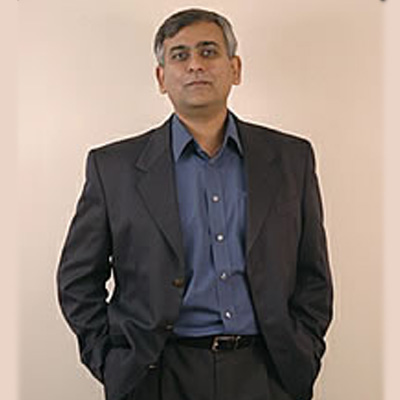
  • ”Music channels need to differentiate themselves’ : Amit Jain- MTV India managing director

    ”Music channels need to differentiate themselves’ : Amit Jain- MTV India managing director

    Viacom’s channels in India have not had an easy time in the last couple of years. For starters, the music genre has been stagnating in terms of viewership. Nick, which is being given a push now, had also failed to compete with the likes of Turner and Disney.

    The company’s recent focus has been to improve operating margins by removing unproductive costs. It is also looking at its brand solutions business as a way forward.

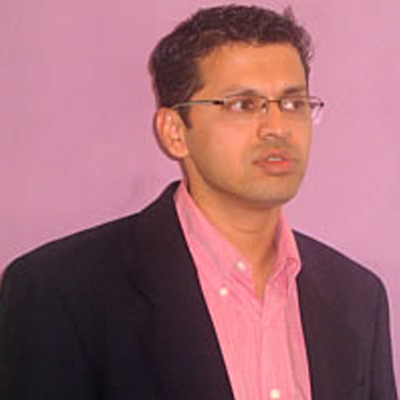
    Indiantelevision.com’s Ashwin Pinto caught up with MTV India MD Amit Jain to find out more about the company’s growth plans.

    Excerpts:

    MTV globally has positioned itself as a brand solutions provider. What is the strategy to transpose that to India?
    As a backgrounder, we have brands in the music, kids and entertainment space. The challenge is to evolve this into a business model which is viable, profitable and works in the long-term. MTV globally is different from other channels. We don’t believe that we simply air content. We are brands. Our channels stand for a specific brand promise to a specific audience.

    We are not about simply putting a pipe out and putting in content that tests well. We have a whole consumer focus which is investment in consumer insight, investigating tastes and preferences of audiences, their lifestyles. We are then able to take decisions based on insight as opposed to taking a show concept and doing research.

    We looked at whether we could take the attitudes of our listeners which is talent, careers and getting double big results in half the time and use that as an insight into our positioning and channels.

    You have brands, research and most importantly in-house creativity. A typical channel thinks of a show concept and gives it out to a production house.

    We, however, have a deep rooted philosophy where we create our own content. 90 per cent of our content is in-house and this allows us to get more aggressive in our programming. We have only outsourced news from a learning perspective. You have everything from A-Z under one roof. On Nick, while we haven’t done local productions before we now have the confidence to do it ourselves.

    Finally instead of being space sellers our team over a period of time has been very client focussed in terms of offering solutions and client integration. While everybody does it here you have a small repertoire of clients. Our managers sit down and discuss with them. They are invited to meetings.

    Agencies take us for client meetings. We are invited to talk about youth branding. We are in a position to understand consumers and clients requirements when we create solutions in-house. We are not a middleman who puts things together and gives it somebody else.

    We use our VJs, events, international properties to create solutions. We are in a position to create value for clients that goes beyond plain vanilla advertising.

    In this manner, we are feeding of our own competence. Viacom Brand Solutions is a premium service for select clients. We are not going out there and making pitches. We work with clients who seek us out and want to do innovations. Our top 10 clients want to work with us in a more effective manner.

    When was the service launched and who are the clients?
    We launched it in January. We have a roster of over five clients. We have worked with Cadbury’s, Unilever, Nokia. The most interesting one was what we did for xBox.

    xBox invited us to popularise the concept of gaming. With MTV we did a short film. It was featured on MSN’s desktop ads. VH1 created modified videos which had gaming characters. Nick had Jimmy Neutron making gaming simple for children. We extended this to the web and now we are looking at other applications. Nokia wanted to position a phone brand strongly in the music space. We tied up with a band pentagram and they gave us the music score. We invited user generated content and a video was to be created. We were stunned at the sheer creativity of untrained minds. The rub off that VHI and Nokia got through the advertising, on the website was good. VH1 did a creative job of making the first user generated music video in the country. Any of around 50-60 entries could have been used.

    Cadbury’s was very different. They wanted to do an innovation around Bytes. It launched with a new package and on purchase of the package it gave the consumer an opportunity to download an MTV ringtone.

    It brings together our expertise in partnerships in the mobile space, our creative expertise. We got seven mobile operators for this deal and around 85-90 per cent of the country’s mobile users were covered by the promotion. Cadbury’s also asked us to work with agency and create a commercial spot. This is an A-Z solution. The technical delivery across different platforms was very good. We had some operators calling up and complaining that the download of the ring tone was not working.

    Our guys were scrambling in places like Madhya Pradesh where the ringtone was not activated on Idea Cellular. There were tense moments but when it came together it rocked. Most recently we worked with HLL. This was Lux Body Wash. They worked with our team to create music videos. They wanted to own the space of dancing, music. We created a music video for them based on their brand positioning. The music video is called Friday Night Fever. The song was written in-house and produced within our own studios. They have asked to make one more video and this time around we are working with an internationally famous VJ. We have international scriptwriters. While it is early days if clients are saying that they want to do more, it is a pretty good report card. We have three more upcoming projects.

    So a recent media report that says that MTV is looking to outsource ad sales is rubbish?
    Yes! You could not have summarised it better. I don’t know where that came from. It doesn’t make logical sense. The beauty of the Brand Solutions division is that we are not in conflict with anyone. The client and media agency welcome us. We are in a joint venture with the creative agency. It is a truly collaborative effort and we are not substituting anyone at anytime. Brand managers constantly look at ways to activate consumers in a unique way. There aren’t too many options of activating consumers in a relevant manner. We offer solutions to address youth and kids. The solution will never be mass market though.


    MTV globally is in restructuring mode. Is this impacting India in any way?
    We now report directly to MTV international. Earlier we reported to London. Bob Bakish who is the head of MTV International is my boss. There is better focus and we get a lot of support from MTV International. For a lot of our brand solutions we are getting excellent help from our global digital team. There is a lot of sharing of experience.


    Could you talk about the new team that has been put in place?
    This is my favourite topic. The big challenge is that while we have always had a creative team, how do you convert it into a business? We have put in place a completely empowered matrix structure. There are three general managers. They are Ashish, Keertan and Nina. Then you have functional experts – head of ad sales, distribution. The general manager and functional expert jointly run the channel. This is the innovation that we have brought in. I do not make too many decisions.

    I set the policy and hire people. My job is to drive the culture and set a course for the future direction. I look at the vision three months to a year. We are a collaborative organisation. I run a skip level lunch for those who have been with the company for a couple of months. There are no bosses and no hierarchy. Everybody for a secretary to a general manager attends the lunch. We have freewheeling dialogue about how the experience has been. We are a young organisation. All our general managers are in their mid-30s. Sanjeev Hiremath and myself are the only 40 plus grey hairs in this organisation.

    One of MTV’s key goals globally is to increase operating margins. What is the gameplan in this regard in India?
    It is simple. Identify unproductive costs and convert them into productive costs. Drive the yields. We used to outsource 40 per cent of production, editing and post production work. We have invested in an integrated production and editing facility. The easiest thing that I see people do is outsource jobs that they do not want to do. That is not what we are doing. We are among the most cost effective content producers in the country today. We also cut costs. Last year the entire leadership team including myself did not stay in a five star hotel or fly business class. While these measures will not affect the bottomline, they are symbols of the importance of belt tightening.

    We took out overheads and invested them back into the business. We focussed on remunerative clients. We were not afraid of letting clients go who were not paying us a remunerative rate. We improved our client mix in a challenging year. We brought down our inventory by 30 per cent as we wanted to clean the environment. We took down our inventory and took up our use. We now have a strong revenue line on the back of less inventory, We are looking at a high double digit revenue growth.

    Tam data indicates that ratings for music channels are falling. What is the way forward for MTV?
    This is the most important question. The genre has been stagnating for quite a while. So what do you do about it? There is a lot of fragmentation happening in this genre. Last year four more music channels launched. We have held on to our share. Now you have 16 music channels. Typically the leader gets affected. We have however managed to avoid that.

    In difficult times Ashish and his team have done a creditable job in keeping up in the midst of competitive pressures. After eight years what generally happens is that new entrants take bites out of the leader. It is never number three or four that is hit. We however have not been hit despite being the leader. We are sitting on 34 per cent of viewership.

    A few things need to happen. From an industry point of view music channels need to differentiate themselves. This is critical. Being the leader, we have to show the way. Consumers listen to Bollywood music. You cannot be presumptuous and tell them to listen to other stuff like ghazals instead of Bollywood music. Led by consumer insight, we found that for youngsters getting up in the mornings is the most dreary part of the day. Getting a lift is very important.

    So we launched MTV Kickass Mornings. It starts with a high energy promotion with two ninjas. We have hits, humour, horoscopes and health. Most content here is audio driven. For instance health tips like how to cut down on spicy food, how much water to drink are spoken. Whatever you are doing, you will not miss out.

    Music channels get 30 second, 60 second clips as an entry point. As they do not have to pay, they are happy to play them. We are investing in content though. We are doing full length music videos. Thanks to our relationship with music labels we normally get a first look. The entire Kickass Mornings is about new music. From 100 videos a maximum of 30 are chosen. We are offering a newer and richer music experience than anybody else. And we are packaging the whole proposition. MTV helps your day get brighter and better. This is our message.

    We also recently started Soundcheck. As a leader we want to take a call and put our reputation on the line by saying what works and what does not. It is a music ratings service. There are speakers that determine the rating. Music experts are helping us make these choices as to what is emerging music as opposed to what is selling. We are not afraid to take on big names saying that their music is absolute rubbish. Some popular videos have been thrashed by us.

      http://www.indiantelevision.com/sites/drupal7.indiantelevision.co.in/files/styles/large/public/Amit%20copy.jpg?itok=e0oJYruk

    How important is MTV’s reality portfolio in the programming mix and is it mostly males tuning for this?
    Research shows that youth are tiring of fiction. They genuinely see soaps as there is no alternative. If they are given quality programming in their space they will switch despite the presence of single TV homes. Last year we took a punt on ramping up Roadies. There was an 18 city audition and covered 3600 km from Kerala to Kashmir down to Sikkhim. It was niot stage managed. We did not handpick good looking faces.

    There were kids selected by the sheer dint of their talent. We had a fantastic partnership with Hero Honda. Their ability to manage large selection was invaluable. The show had a rating of 1.9 in the metros which is really good for a special interest channel. The Roadies finale got a rating of six. Reality among the urban youth is a conceopt that will work really well.

    How would you describe your relationships with the Indian music labels and film producers who always want more in terms of license fees?
    We have a win-win relationship with them. A lot of labels look at us as an extension of them. That is because we are careful about partners. We see ourselves as a marketing arm. If you look at the likes of Yash Raj Films most of them give us a first look.

    We premiered the making of Tara Rum Pum on MTV. If it is in the youth space, film producers give us a first look. We are not victims of hard bargaining. They see the value we deliver in marketing to the right audiences. We do not have the buyer seller relationship. It is a genuine partnership.

    Could you talk about how taking up social causes like Aids has helped boost MTV’s brand image and perception?
    In terms of perception it come down to whether it is fun and frolic or does MTV have a larger meaning. It adds a reason for our existence. We are now going into an additional initiative and we are taking up the cause of illegal human trafficking on an international level across borders. We are looking to build awareness around that.

    The Indian government recently banned FTV and earlier AXN on the grounds of obscene content. What steps has MTV taken to ensure that its music videos and shows do not offend anyone?
    I must admit that early last year we faced this challenge. We got a notice. Our response was to fly down and apologise. We promised that it would not happen. We later told them why it would not happen.

    The entire MTV team showed them a new system that has been put in place. Since that incident the Ministry has complimented us for the work that we have done.

    I would appreciate your views on the proposed content code.
    This should be formulated by dialogue involving all parties. Accountability should not rest with one party. Besides the broadcaster the content cerator should also be held accountable.

    Could you elaborate on Nick’s strategy to challenge Turner and Disney?
    I am a believer in doing the basics and not trying to do too many things at one time. We will not take on Disney in the South. We have to be a serious player among the first two to three channels in the Hindi Speaking Markets. Now we are not yet there. But six months back we were the number seven market player. Now we are going to be number four.

    In six months the stickiness on Nick has doubled. The time spent has moved form the 50’s to the 90’s. Distribution, time spent, promos are in place. Now we are focussing on marketing and brand building. In the last four months a strong brand building promos are in place. They are not multi crore promos. We did a Bakra Pakdi initiative and got 80,000 entries.

    Nick has appropriate and safe content. We take our responsibility as a broadcaster seriously. We avoid violence. We are the safest babysitter available. If a mother is to leave her child in front of the television it would most likely be Nick. I can say that with confidence. We like to be the best destination for comedy. So Nick is about fun, smiles and seen from a child’s point of view. I would be surprised if we are not number three by the end of the year.

    Has the deal for ad sales with NDTV worked?
    Well our MTV and VHI teams have fared so well people wondered what we were doing. Here is where I come from. When you grow a business you need a portfolio approach. You have to make choices.

    Strategy is about what to do and what not to do. That is what I tell my team. You cannot do a little bit here, a little bit there and hope to succeed. Last year people were shocked that nick did not invest in marketing. We were focussed on building up content.

    Now in the priorities of Nick do we want to make a multi crore investment in a sales team or do we want to put the same money into brand building? We have chosen to do the latter. The deal with NDTV allows us access to several hundred clients for a share of revenue. We have limited resources and we decided to build the brand and let an expert handle client management.

    How is VH1 faring?
    It is a uniquely different brand in the Western music and lifestyle space. There is no brand close to it in this space. BH1 is delivering the highest quality audience in the country. While it may be small it delivers the highest incidence of car, refrigerator, mobile owners etc. We target a high propensity to consume buyers. Clients get no wastage. Its wastage factor is the lowest in the industry.


    On the distribution front what progress has been made to boost the reach of the channels across Asia?
    When we launched in Pakistan late last year people were sceptical. But if you look at it over the last three years with the growth in the Pakistan economy siome disposable income has come into the hands of the youth.

    Economic growth leads to a more Westernised consumption culture. Over the last three to four years the McDonalds, KFCs, Pepsis, Cokes and mobile operators have opened the doors of consumer culture. Their economy is growing as fast as ours. This has formed a middle class.

    The television industry in Pakistan is ad driven. If you do not have consumption expenditure among a large audience you cannot have an ad sales proposition. MTV was also waiting to have enough content to have a sustainable 24 hour channel. Their music video content is as good as ours. Sometimes it is better. We have Indus Television as our partner. We did research about the brand MTV. Will it be rejected? Are there going to be any negative connotations by some elements of society?

    The consequences have been positive. We trained the Pakistan team in terms of promotions, packaging.

    Then we launched Nick in Pakistan with Ary. It launched this year in English. Our markets are all licensing deals except for Pakistan which is ad driven. The tourism economy has helped us grow in the Maldives. A lot of our revenue comes from the resorts there.

    With India going through digitisation with Cas and DTH the time seems ripe to bring in more channels. Are there any plans in this regard?
    We are waiting for the digital platforms to consolidate. Let DTH reach four million homes and then we will examine options. Comedy Central is one channel I would look at bringing in. Spike TV is a channel for men is another as it is a clear differentiator. There is a correct time to do things.

    VH1 launched at the right time. I come back to the point about what I tell my team – strategy is not only about what to do. It is also about what not to do. In hindsight one can say that Nick should not have been launched so many years ago. If the management team at that time was not going to invest in it then the launch should have happened later. It is now that we are investing in it and giving it a clear direction and goals that it is moving towards.
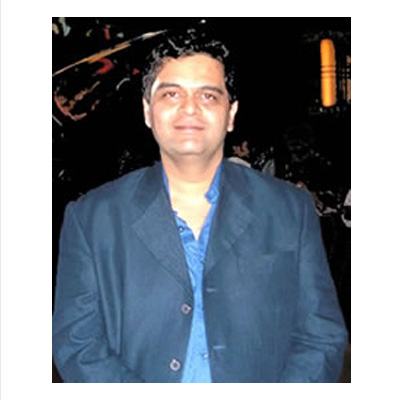
  • ”Economically sensible model is a combination of CPT and correction of income growth’ : Paritosh Joshi- Star India President

    ”Economically sensible model is a combination of CPT and correction of income growth’ : Paritosh Joshi- Star India President

    It’s now a known fact that HLL has pulled its advertising off the Star India Network, but whether a non co-existence and exchange between the biggest advertiser on television and the top rated television network in the country is a healthy proposition for either of the two parties, is the moot point?


    Even though TRP rates have declined across the network by 1-1.5 per cent after the implementation of Cas, it is also true that the television universe has grown drastically. And the truth is, Star has been singled out, leading one to question if there is a larger issue at stake here between the two mammoth corporations in this face-off that kicked off in March this year.


    Star president advertising sales and distribution Paritosh Joshi says that it is more than just an individual client issue but part of a larger debate for which the industry cannot behave like a cartel because that is unethical.


    Presented here are comments made to Indiantelevision.com on the matter by Star India president Paritosh Joshi. Additonally, relevant comments made in earlier interactions with Indiantelevision.com by HLL GM – Media Services Rahul Welde and Zee Network executive V-P Joy Chakraborthy have been provided in an attempt to offer a more rounded overview of the issue.

    Excerpts:

    How do you propose to address the issue that HLL has put the forth through its boycott of the network and rejection of Star’s advertising rate card?
    A solution to this will emerge as a fallout of the understanding of two dramatic developments in television. First the growth in television homes in the Hindi speaking markets of the East, West and North but not the South that is already saturated.

    Secondly, the GDP, which is estimated to grow by 8.9 per cent year on year. However, there is a disproportionate income increase in which the top 60 per cent of the population absorbs this growth. Out of the 120 million TV homes, 70 million are C&S, therefore with the kind of growth in disposable incomes that the country is seeing, the number of C&S homes will grow by twice that rate.

    The aggregate value of television ad sales is likely to see 20-22 per cent Y-O-Y growth. If this is not reflected as an industry then we are under monetized.

    Is CPT is the answer?
    I believe an economically sensible model is a combination of CPT and correction of income growth.

    Should broadcasters be united on this front?
    The industry cannot behave like a cartel because that is unethical. We have to, as individual broadcasters, explain this to the client in a sensible manner and get them to recognize and find merit in the argument.

    But how then do you fill up the bulk of your inventory?
    The Cricket World Cup has in some ways contributed to clients looking for a more reliable, robust and stable inventory. With April to June being a buoyant period with new category launches and the new financial year, there are enough interested clients. We are seeing high activity from the skin care sector, bottled beverages, refrigerated foods and air conditioner brands.

    XXXXXXXXXXXXXXXXXXXXXXXXXXXXXXXXXXXX

    Money is shifting from the big to the small or from the leaders to the challengers

    With HLL always known to be television heavy, what happens in the case of mass channels and niche channels, what strategy would you follow in that case?

    Well, we do spend on niche and mass channels, but with the whole area of fragmentation of audiences with multiple channels emerging, where stickiness is a challenge and competition is high. Now what it really means for us is that segmentation and multiplication of channels provides the opportunity to peg note and talk to the consumer.

    Unfortunately, the costs have increased and given that the overall advertising pie is fixed. The ad pie doesn’t grow because there are more channels, but what is happening is money is shifting from the big to the small or from the leaders to the challengers.

    The growth of channels, we will see an increase in the number seconds, but what is often interpreted is that spends are also increasing in the same proportion. It is of course a big challenge as fragmentation makes the task of planning even more difficult, where agencies will produce software and optimizers making the process more sophisticated. This scenario is good for segmentation, bad for costs. Thus I don’t know whether to call it a ‘happy situation’ because after a point of time your returns become sub-optimal when costs are high. Then that becomes a worry.

    XXXXXXXXXXXXXXXXXXXXXXXXXXXXXXXXXXXX

    The big news currently seems to be around how Hindustan Lever is significantly increasing spends on your network. You have even been on record as saying you are looking at a growth of at least 100% on Lever spend in FY08 over FY07? How do you justify that optimism?
    Levers is the biggest client in the television space and we have channels across all genres, Levers is a good client for consumption also because they are perennial clients. There has been rate correction but we have also given them big properties. At the same time, Levers buying process over the last two years has changed, initially they used to buy slots that appeared at a particular time band but now they have started buying quality as well so they would necessarily have to pay for that. Therefore, there has been a jump in ad sales rates this year over the previous year.

    When you say ‘rate correction’ – what do you mean?
    The Zee network itself is very under-priced, so we are continuously correcting our rates. I have over my tenure here (which is two years) revised my rates three times, but no rate correction is very drastic, it’s really a gradual correction.

    After all we are still in a World Cup year and although India is out of the tournament, we will see loads of other cricket action as well?
    As a network, we haven’t suffered at the hands of cricket. However a lot of money is diverted there. But thanks to cricket and sport, I believe that the overall PUT (people utilizing television) will also increase, because of World Cup TV sales will also increase, so the whole space is only going to expand.

    It will eventually benefit us also, but my only concern and what I see as a challenge this year is that the unofficial currency is cost per rating point (CPRP), which has to move cost per thousand (CPT). CPT is more important and with Tam’s expanded panel the absolute number of people watching has increased by 50 per cent and we as an industry should be paid for that. Even more, if you are a listed body you also should subscribe to the CPT model, which will happen sooner or later.

    But how soon do you think the transition from a CPRP model to CPT model will take to materialize?
    The IBF and AAAI have already met on two occasions, the next one is in April. But at the end of the day this shift will benefit all of us. It’s not that it is unfortunate for the client alone, as the television medium continues to grow the cost of programming, distribution, marketing and manpower is increasing every day. With the CPT model the ad rates will go up, infact most agencies buy on CPRP and give it to the client on CPT, but after expansion the minimum rate has increased. The recommendations of these two industry body’s should materialize within a month’s time.

    It has been previously stated that Cas impact only accounts for a 1- 1.5% drop in C&S 4+ level across TV. However, with moves to extend Cas to cover the full metros and then possibly go into other cities and towns this argument cannot be sustained for much longer. How does Zee view this situation and how do you plan to use it to your advantage?
    Cas is here to stay but the thing is that Cas growth was marginal, across the Zee network the drop accounted for 2.5 per cent, which is very less in comparison to the kind of growth that we are experiencing.

    With Cas rolling out further, the pressure from media buyers on rates is only going to go up? Do you see the possibility of many channels, including entertainment channels, going FTA to protect advertising revenues? For instance, Peter Mukerjea’s Hindi entertainment channels will be FTA when it launches…?
    Sometime we really wonder whom the media buyers really work for, the channel or the client. They will always pressurize us. Do you think they deal with rate hikes easily? They will fight for each rupee just as we fight for the same. But that is what makes our relationship so lasting.

  • ‘Our aim is to come up with total telecom solutions’ : Rajiv Agarwal – Essar Telecom Retail

    ‘Our aim is to come up with total telecom solutions’ : Rajiv Agarwal – Essar Telecom Retail

    The mobile retailing space is hotting up in India. Essar Telecom Retail, an Essar group company has entered mobile retailing in India with the launch of its “The MobileStore” outlets across the country. The basic aim is to be a complete telecom solutions provider.


    It has tied up with global media firm Virgin to provide the backend solutions like customer care. This marks Virgin’s entry into India’s burgeoning mobile sector. Virgin founder Richard Branson believes that this is an opportunity for the two parties to fundamentally change the face of mobile retailing in India.


    Indiantelevision.com caught up with Essar Telecom Retail CEO Rajiv Agarwal for a quick chat on the plans.


    Excerpts:

    Could you give me an overview of Essar’s mobile retailing initiative?
    This is a chain of retail stores that will serve as one stop shop for the needs of the mobile consumer. We are looking to fill a void that is present in the retail market. Today we have international players on the operators side, on the manufacturers side. But on the retail side we do not have an organised player. The customer is the most important element as all these people are working for him/her.

    As the number of mobile subscribers, users becomes more and more the market is becoming more complicated, which has created a void. Our aim is to come up with total telecom solutions for the customer.

    What are the different products and services being offered?
    One can buy cell phones, get repair services, do bill collection. We also have value added services like ringtones. We have media services like games, DTH connections, ipods, cameras. All are fast moving.

    What is the synergy that the group has in setting up telecom retail?
    Essar has decided to be in retailing in all their core businesses. We have been in telecom over the last 12 years. Our aim is to get closer to the customer. We have knowledge and awareness about telecom.

    As per research, what does the mobile user expect from a mobile retail chain and how is Essar going about fulfilling his/her needs?
    The mobile customer is looking for a range of products that he can touch and feel. He/she wants a store that is next to his house. He wants value for money, after sales service.

    Why did you decide against going the franchise route for your stores?
    There would have been the risk of our brand value being diluted. Also you have to manage many entrepreneurs if you walk down that road. This is a business where you cannot allow your service proposition to get diluted.

    The franchise route would have meant that there would have been no difference between us and any other mobile store.

    We have media services like games, DTH connections, ipods, cameras. All are fast moving

    Given that Indians are an extremely price sensitive won’t it be difficult for mobile retail to make a margin and have sustained revenue?
    That is the case for any product. We have developed our business model keeping this in mind.

    What is the investment being made and how many stores are being set up?
    In the next three years we are setting up 2,500 stores at an investment of Rs 1,250 crores (Rs 12.5 billion) across 600 cities.

    Over 70 stores have already been launched in places like Mumbai, Delhi, Kolkata, Hyderabad. In the next six to eight weeks we will have opened up another 100 stores. In the next six months we would be operating 700 stores.

    The stores are in three formats – large (1,000-1,500 sq ft), medium (800-1,000 sq ft) and compact (200-500 sq ft). The ratio being identified is 20:60:20 across large, medium and compact stores respectively.

    We are looking at a breakeven of three years for the business. The stores will cost between Rs 500,000 – Rs 5 million each to set up.

    What are the factors looked at to select each location?
    You look at places where customer footfalls are high. This could be in a mall or on a busy street. We will have the shop in shop concept to a certain extent going forward. Around 15-20 per cent of the stores will be in Metros.

    In terms of revenue how much comes in from where and who are the companies you have tie-ups with?
    Handsets contribute to 75 per cent of our revenues. We have tie-ups with all the major manufacturers like Nokia, Motorola, Sony. Mobile repairs are our core area. We have trained people in our stores who can look after the problem. We have straight tie-ups with the manufacturers and operators.

    We have a tie-up with Mauj Telecom for mobile games. For DTH there is Tata Sky, Dish TV. There are also opportunities for in-store advertising and merchandising.

    Could you talk about the back end solutions that have been put in place?
    We have a tie-up with Virgin. They bring retail knowledge in terms of softer skills in terms of customer relationship management. The deal is for brand licensing, technical and consultancy services.
    Virgin will provide their expertise in the areas of branding, marketing, customer care, store operations and staff training.

    We chose Virgin as that brand stands for good quality, brilliant customer service, innovation, fun and good value.

    Finally what marketing activities are being done to create awareness?
    We are airing ads during the broadcast of the cricket World Cup. A large portion of mobile users will be watching the event. We will also be doing a lot of print and outdoor activities.

  • ‘CNN is an American-owned news channel, but we are not America-centric’ : Rena Golden – CNN International senior vice president

    ‘CNN is an American-owned news channel, but we are not America-centric’ : Rena Golden – CNN International senior vice president

    A little girl from a small town in Bihar who migrated from India to the US when she was just six years old, Rena Golden is today at the very top rung of the hierarchy at global news major CNN International. As senior vice president, she visited India this week to announce the latest edition of “Eye on India”, focussed this time on the youth power of the country.

    Credited by her colleagues with amazing skills, journalistic and managerial, driving the world’s largest news broadcasting company CNN from just an all-American channel (“I joined 21 years ago when people used to call CNN Chicken Noodle News!”), to an international one reaching 2 billion viewers across 200 countries, she still retains a disarming level of simplicity.

    It is perhaps natural that an American of Indian origin would also be the head of CNN’s Diversity Committee, ensuring that community parity is maintained not just within the organisation but also in the dissemination of news.

    Golden, who studied in two universities in North Carolina, graduating in English with Honours (“My father wanted me to be a doctor, but I wanted to study English”) and started working with CNN from 1985, spoke to Indiantelevision.com’s Sujit Chakraborty on the present status and future plans of CNN.

    Excerpts:

    You have a large hand in shaping the strategic direction of CNN. What is the most significant area you are looking into at the moment?
    I think it is expansion of news beyond the television sphere. We are on the Internet, mobile phones… I think what CNN is interested in becoming is your news source, on whatever platform it may be… your phone, your Blackberry… We want to become your news information source and travel with you, wherever you are.

    CNN’s news website is a tremendous success which attracts a billion users every year. And CNN International has just launched its news service on mobile phone. We are also looking at video on demand and IPTV… we want to be platform agnostic.

    How is IPTV doing in America… there is content available on that platform here in India as well, but the problem is we do not have downloading technology or bandwidth?
    I think even now in the US market the bandwidth is still not there, but the market is growing in South Korea, in Hong Kong and in some of the Nordic countries in Europe, where we can stream the CNN news channel completely on mobile phones. We are still not there on that platform in the US, but I think the important thing is to have your foot in all the areas. CNN is known for that and one of the areas we are looking at is (improving) technology in news gathering.

    That is my second question, in fact. You also deal with the technology of news gathering?
    Yes, for instance, earlier, when we would go for coverage, say in India or the war in Iraq, we would have to travel with 30 suitcases of equipment. Now, thanks to CNN working with Sony, with Panasonic, and other organisations, we have cameras that fit in a suitcase, which you can take as your carry-on luggage.

    When we went to North Korea, we could move in easily and cover news in a much easier manner, which is often cheaper.

    What are the latest innovations and what are the next technological frontiers in news gathering and dissemination?
    Things are getting smaller and smaller… we are looking at shooting footage on a mobile phone. Only last week, we used a Nokia mobile phone and went “live” on CNN. You don’t have to book satellite space. You can just dial into the CNN offices in Hong Kong or Atlanta, and stream news live, so technology is getting smaller and mobile.

    CNN has more than once made public its ambitions to go regional and local. But at least in the context of the Indian subcontinent it has not happened. And now with the explosion in television news in the country, it looks like it never will. I can see your CNNj in Japan, then Turkish and Korean CNN, so why not in India?
    OK, what we have done in India goes beyond what we have done in some of the other regions. We have partnered with IBN and additionally, we have CNN International which covers India not just for Indians but for the rest of the world. Our partnership with CNN-IBN is less than a year old but it has emerged as the number one news channel in this country. That partnership is as strong as what we have in some other regions, say in Turkey where we have tied up with a media channel that broadcasts CNN in Turkish.

    I think there are different models for different markets and the model that we have for the Indian market… Wow! I mean we couldn’t have imagined this. There could be a partnership with some Hindi channel… I am not ruling that out, but what we need is as strong a partner as we have in CNN-IBN.

    We do not have anything to announce here (in terms of a regional channel) so far. We believe in having local partners and we would not do that in India and open a Hindi channel for instance, without a strong local partner. Local partners understand the country much better… So what you see, this partnership with CNN-IBN, is one of our proudest achievements.

    Chris Cramer had told us last year that BBC has a certain Mark Tully factor advantage in India. For the first time though, now both CNN and BBC can be said to running neck-and-neck. It’s been a long while coming but don’t you think it has come too late in the day because of the way Indian news channels have captured virtually all the mind space?
    Sixty years… not just Mark Tully… I think it is a huge association.

    I think also right from the days when we were ruled by the British there was some association, so what do you feel you are looking at here to change that?
    This is the only market where BBC leads the CNN. I think you just put your finger on that. India has a long historic association with Britain and BBC, especially BBC radio, which was here decades before CNN even came to the market. I respect the BBC, no doubt about that.

    But where CNN excels is in breaking news… that’s our DNA, the DNA of CNN-IBN. We also don’t have a British style of presentation, a British view of the world. We have journalists from 50 different nationalities covering news for us. Don’t get me wrong, I have a lot of respect for BBC, but I think CNN has very successfully differentiated itself.

    Unlike a few years ago, when even a major train accident here would not be covered on BBC or CNN, there is a lot of India on these channels now. But I also feel that there are documentaries that need to be made on India. What are the kinds of documentaries you think CNN ought to do on India in the near future? Do you have a kind of road map for that?
    I am glad you brought up that question. CNN has a documentary division, and one recent documentary was on Britain’s Muslim population. We also have a couple of them from Iraq and from Africa, etc. We are also doing documentaries with foreign filmmakers. We have partnered with a filmmaker from Sierra Leon who has done five or six films on the major issues of Africa. That gives us the opportunity to get into some of the under-reported stories of the world. So we are looking at filmmakers to partner with for making documentaries.

    But having said that, the important thing to remember is that we are not a documentary organisation, not a documentary channel. Our first and foremost work is 24-hour news. We believe in context, not only what’s happened but why it has happened.

    Everyone knows now India is changing, especially in the economic and knowledge sectors. What are the specific areas of change that excite you the most and why?
    I think it is the influence that Indians are now having in the diaspora… and not just the diaspora, because many Indians are also coming back home. India’s influence outside India is a story that really excites me.

    In the US, Indians are doing a lot of things. There are Indians heading technology companies, there are a couple of Indian filmmakers in Hollywood, and of course there are those in medicine and engineering. But one area where Indians are not there in the US is politics, which I think is important for us.

    The other thing, which is the topic of this edition of Eye on India, is the Indian youth. There is no other country in the world where 50 per cent of the population in under the age of 25.

    In the early days of the Iraq war, the media was not as critical as it should have been and a lot of American society regrets that

    Looking at the global picture, is there a region-wise break-up of how it all reports back to Atlanta? How does it work?
    Well, we have an Asian production hub in Hong Kong and a hub in Europe and the headquarters is in Atlanta, but we as an organisation are very decentralised. In India, we have 15 people in the bureau, but we cover India primarily by people who have been journalists in India. It is not just Atlanta dictating what stories are to be done, it’s journalists here saying that ‘these are the stories on the front pages of the newspapers today. We think these are the stories that need to be told about India’. It is people who are working in this country, living, breathing India that drives our India coverage (and likewise, across the globe). That is what makes CNN so unique.

    And speaking of regions, can you offer how revenues stack up in percentage terms?
    Our revenue increase over last year is 22 per cent. Which is very good, very, very strong growth.

    A lot has changed in the last 5-7 years. A global news perspective is not solely in the hands of the likes of the CNN and BBC anymore. The impact of Al Jazeera has been well documented. Now the French have also launched their own global news channel. How is CNN changing to meet the challenges of a world view that is no more ruled from a western Anglo-Saxon perspective?
    Let me put this clearly. CNN International is American owned, and we are proud of our American ownership, but CNN International is not America-centric. It would be crazy for us to be broadcasting internationally but from an American perspective. From the business point of view, that would be ridiculous.

    But I think competition always makes us stronger, because competition means we have to be always ahead. We welcome competition. We have been there for 25 years and there is vast acceptance, because CNN’s journalism is top notch. And we feel there is enough room for others as well.

    And we have been talking about ethics and so forth, so what are the checks and balances that are in place to make sure that stories are fair and accurate?
    First of all, we have the standard-practice guidebook, which, of course, all news organisations have, which all CNN journalists have to abide by. Obviously, the journalist reporting knows the story best, but that story is vetted by many people. Along the way there are many different people who touch that story and fact-check it before it actually goes on air. We are much more interested in getting a story right than getting it ‘first’. We are the Breaking News leader, but we would not be that if our objectivity failed.

    Yes, but say you hire me from India and I, for that matter no one, can be totally objective… maybe I am slightly with the BJP or the Congress or whatever, so a tinge of bias creeps in. So how do you correct that? At the desk level?
    Yes, there is always the issue of being subjective, but there are things like hard facts that cannot be changed. That is why we lay so much emphasis on attribution. If you watch the news channel you will sometimes find that one person has been quoted but the other one has not been… this happens sometimes even if the journalist wants to be objective. It’s in their DNA, but it happens, so we tell them, ‘Hey, that guy’s quotes are not there, so go get it’.

    There have been occasions when a story has been held back for a week to make sure that all the players have got the chance to comment. I can’t tell you how much CNN lives and dies by its credibility factor.

    We’ll pick up on a touchy issue, with American media in particular – “embedded” journalism. Isn’t the way the whole Iraq story has developed a severe indictment on the way the media reported on it from the very beginning? What’s the point of the truth coming out now, when all that is left is death and destruction?
    Well, I think the media had not been as critical as it should have been in the early days (of the Iraq war). Not only the media, there are many politicians and different segments of American society that regrets not having been more critical (at the outset). I think that a lot has changed.

    Because and after the massive Iraq fiasco?
    Because of the war in Iraq and other reasons, because of the political season in general, but I do think that a lot of that has changed. I do think the media has got a lot proper.

    Veering off from your day job, as it were, you are on the advisory board of the Atlanta Woman magazine. Tell us something about the magazine and your area of interest in this.
    I am no longer on the board, but this is a local magazine from Atlanta focussing on the businesswomen. I think as a person involved with international news, I am always interested in what’s happening outside my world. And as a mother, as a wife and as a citizen of Atlanta, Georgia, I also have my responsibility of giving something back to my community.

    As the head of the CNN committee on diversity, what are the crucial diversity issues you face and how do you resolve them?
    The diversity issue we face overall is to maintain the diversity of coverage, to be sensitive to diverse cultures. With American, Latin American, African, or Indian people, all working together in the newsroom, it can be tremendously exciting but there is a lot of opportunity of misunderstanding. And what we encourage is a very open communication in our newsrooms, where people can talk to each other honestly, without feeling they are being attacked. But it’s really difficult to work with such diversity of cultures. It’s a tough challenge.

    Sure, but the question is, how do you resolve that?
    We resolve that by getting people to get together and discuss issues together. And we also give people opportunity to take their issues up without putting their names. If somebody wants to talk to me about a report that he or she feels has been unfair to a particular group of people, they can send me an unsigned note.

    We also hold functions where I may not be there but my managers are there. Transparency is the most important thing.

    You are in charge of talent scouting too. What do you think of the talent pool in India in your line of work and how do you plan tapping that pool?
    Well, I’ll tell you what kind of talent we are looking at. There is a lot of talent here. For CNN International, the presenter has to be a really strong journalist, people who know how to write, and more importantly, people who can speak extempore without a script. There are times, during Breaking News stories, when people have to work for four hours at a stretch in front of the camera without a script. These are people who have to have a fairly strong recall, they have to know the history, the culture, and feel confident enough to express themselves without the written script.

    There are people who differ with me and say, ‘No, an anchor is very different from a reporter. They have to look good, have a good voice, look polished all the time… and it’s the reporter who has to be out there and do the story. No. I can’t afford to do that in CNN International.

    Our anchors are the ones who are on the field as much as possible. Because to my mind, there is no difference between an anchor and a reporter. In the case of Lebanon issue last year, for example, I had three or four anchors going from Atlanta reporting alongside CNN reporters.

  • ‘Size of ready to eat market Rs 700 m.’ : Ravi Naware – ITC Foods Division CEO

    ‘Size of ready to eat market Rs 700 m.’ : Ravi Naware – ITC Foods Division CEO

    ITC Foods, the foods division of ITC Limited has built many brands and sub brands through aggressive advertising and marketing moves. This year the foods division is expected to add about Rs 10 billion to ITC’s annual turnover. ITC has recently announced the launch of their sub brand of biscuits – Sunfeast Sachin’s Fit Kit under their flagship and umbrella brand Sunfeast to coincide with the World Cup that will be played over the next few weeks in the West Indies.

    ITC Foods Division CEO Ravi Naware shared some insights into the various aspects of the business with Indian Television Dot Com’s Tarachand Wanvari. Excerpts from the interview.

    Excerpts:

    The promotion spends in the World Cup, what would be the proportion for them vis-?-vis your annual spends? You must have a separate budget for the World Cup. Could you share the figures?

    Of course, we have budgeted a specific amount for the World Cup. The World Cup is expensive so it’s a fairly decent percentage.

    You have said that a major portion of the World Cup spends budget will be towards promotion of Sachin’s Fit Kit, could you speak some more on this?

    I think if we don’t put money behind this brand, we’ll be doing a disservice to ourselves. We have launched the brand with Sachin’s name associated with it. On its own it’s going to be high profile from the reception point of view. I don’t mean that we are doing a razzmatazz kind of a launch. Sachin’s Fit Kit and the World Cup, the whole thing matches.

    How big is the ready to eat market?

    I really don’t have a number, because I find that the ready to eat market is not very well defined. You get tinned rasgollas. Will you include them in ready to eat? Some people do, because that is ready to eat, processed, cooked and packed. The definition is not very clear on that segment. If we stick to ‘so to say’ dinner table items, but then rasgollas can also be a part of the dinner table item, we’re talking primarily about vegetable curries, paneer, chicken, birayanis, dals, this is the kind of market we construct, then we have close to 48 per cent market share. But then you go and ask someone else, they are very likely to say that claim is too high.

    By your definition, who would be number two and three in the ready to eat market?

    No 2 would be MTR Foods, next would be Kohinoor. But then there could be disputes too, because I also make halwas like gajjar ka halwa, moong dal ka halwa, we include those. Comparatively, biscuits or soft drinks have become well defined markets. So you won’t include potato chips in the biscuit segment. You don’t include fruit juices with soft drinks. Its undefined, but not a huge category.

    What about your Kitchens of India brand of ready to eat? How does it compare with Aashirvaad ready to eat?

    Both would be about equal in size. Plus, we have a fairly large export market, which add a fairly large proportion to our sales. Only Kitchens of India are exported.

    So what is the size of the ready to eat market?
    It’s approximately Rs 600-700 million, the way we look at it.

    If you are building a branded business, the brand must acquire power, stature and then you can generate the consumer pool from that

    How are your Pastas doing?

    We’ve got some very, very loyal customers who are quite happy with the performance. We’ve launched Benne Vita. Many people know how to make good pasta sauce, but the pasta is difficult to make. Earlier one had to buy imported pasta, now they can buy our Benne Vita 400 gm pack.

    You are competing with Nestle’s Maggi in terms of noodles with your pasta? Has it reached anywhere near that stage?

    Well I suppose in terms of the mental space we are competing with Maggi. But we are small and Maggi is large. It is a different product, which by now is a fairly standard one. There are lots of unbranded noodles also available in the market, maybe a similar genre, because that’s become a very popular item. Others are also getting into it.

    Compared to the existing players, you are new, just four or five years into foods Aren’t you spreading yourself with so many products?

    In 2002, when we entered the food business, if you wanted to enter almost any food product you would have competition that had already established itself. Nestle had a fairly large range of products, they have been in India about 60 years, Parle is about 60-70 years old, Britannia has been around for almost a 100 years. Then take tea or coffee, you had Tata, HLL or instant mixes, there was MTR and Gitz.


    Pasta has been introduced by us for the first time in India. If you say that we compete with noodles, then noodles have been around for 25 years or more. We are late entrants which is a fact of life. And as a late entrant you don’t want to get into chocolates. Cadbury and Nestle are already there in that space. You name any category, dairy products – you have Amul and several others already there. In that sense, there was hardly any totally new “New category” where we could enter.


    We decided to enter into those categories where we felt that we had some inherent competitive advantage. For example, when we entered atta (wheat flour), we said that we’d leverage our entire e-choupal connection. Having entered into atta and this area, we thought that we would enter into the wheat vertical space. So we got into biscuits, we got into pastas, and there are other products ideas based on wheat which would be relevant.


    Through e-choupal we buy larger and larger quantities of wheat, and at that stage, there are scale economies which give us benefits, selectivity, we can choose the right kind of wheat for the right kind of product and so on. Secondly we got into confectionaries because India has 3 million cigarette selling shops. ITC was present in those shops for the last several decades. Most of these cigarette selling shops also sell candy. So we thought that we’d have that advantage in distribution.


    This is how we chose the broad categories that we would enter where we felt that we had some competence, some in-house capabilities.


    For Kitchens of India, we had all the great recipes from our hotels. So we could make a Dal Bukhara, we could make a Chicken Chettinad, we could make a Paneer dish and so on. That was how we selected the products, otherwise, for me it was impossible to find a completely new line that we could get into.

    Do you have advantages because of your e-choupal initiative?

    We do have some advantages, we are able to source wheat through e-choupal for our atta (wheat four). We are market leaders with 15 per cent market share in the branded atta segment, which is upwards of Rs 30 billion in India. The market size `is across all brands, not just the ones that advertise. This means regional brands too.

    So what about bread, that too is a wheat vertical, isn’t it?

    Bread is a very, very difficult industry. It also requires specialized distribution. Just having a distribution network is not enough. You need to have trucks that need to got out at 3 in the morning, then you go distribute the bread, on the return you collect money. There are spoilages in bread, maybe 10-12 per cent of the bread gets spoilt, the manufacturer has to take it back. It requires a completely different distribution channel and method.


    Pepsi and Coke were already into handling bottles and liquids, they have given out coolers to their retailers, for them it was a natural entry into drinking water. Their distribution and the storage at the retail end fitted in well with their existing setup so they could launch the Aqua Fina and the Kinleys drinking waters. We didn’t find that kind of synergy with what we had for bread. I think it’s a multi local industry or a national brand industry. Each locality has its own famous bakery.

    Over the five years that you have been here, are you satisfied with all genre’s of products, or do you feel that you could have done better somewhere?

    I am very happy and very satisfied with the progress. Of course some things move much faster, some move slower. I think in Sunfeast we have had a very good run so far. Today we’re clearly the number 3 player and there is a very apparent and a visible gap between no. 3 and no. 4. A year ago that gap wasn’t so very visible. Apart from a size of 8 per cent, I think Sunfeast as a brand has acquired a good standing, a good stature in the market and in the consumers mind. And that to me is a prerequisite for building a business. If you are building a branded business, the brand must acquire power, stature and then you can generate the consumer pool from that.

  • ‘TV will continue to be important, but its importance will decline’ : Rahul Welde – HLL general manager – media services

    ‘TV will continue to be important, but its importance will decline’ : Rahul Welde – HLL general manager – media services

    For over 50 years FMCG major Hindustan Lever has dominated the Indian market with brands that have become a household name for many. Now it is about to turn over a new leaf to welcome its mother company Unilever. After having hogged the media space, especially television and now opening its doors to new media like internet and radio, the time seems right to question its experts on their outlook to the fast developing media landscape.


    In conversation with Sujatha Shreedharan and Renelle Snelleksz, HLL general manager – media services Rahul Welde, who is most uncomfortable in front of a camera, puts aside all his inhibitions once he begins speaking on his area of proficiency – media and advertising.


    Excerpts:

    With the HLL name change announced, the next question is how would this pan out in terms of a branding and marketing strategy?

    Since it’s just been announced, we haven’t really planned that out as yet. It will be put to vote in the AGM in May, after which it will get adopted and implemented.

    One of the biggest advertisers on television, HLL is now looking beyond the medium. What kind of media mix does HLL now look at? You have also maintained that TV is bound to decline?

    Television will continue to be important. However it will also continue to decline in importance. The reason for this primarily has to do with the way consumers are reacting to television messages. Studies indicate that there is a greater degree of ad avoidance, greater degree of clutter on television and that has resulted in lesser interest in television by consumers.


    Simultaneously people are spending more time outdoors, doing other things than just watching television. As a result television is facing a lot of competition from the other media.


    There was a time when there was no television and print had all the advertising – but that lasted only until television made an appearance. It ate big time into print advertising. Something similar will happen to television with the advent of radio, internet, mobile communication and other types of new media. Eventually they will fight for the same share of the rupee.


    I don’t think anything as drastic as the death of television is bound to happen anytime soon but it is staring into the face of a huge challenge even while other media grow at an exceptionally fast pace. The same applies to our understanding of media buying as well. Our focus has shifted to alternate media and is much higher than what it used to be two years ago.


    Also, I must say that there is also nothing like an HLL mix, as it depends on our brands. Some will focus on TV and spend nothing on print and vice versa, so the strategic thinking as to what to use comes from the brand and consumer lens. We are thus excited about the internet when it comes to youth brands, while outdoor and DD are key for brands like Wheel. From an industry perspective, I think radio will experience growth.

    With HLL always known to be television heavy, what happens in the case of mass channels and niche channels, what strategy would you follow in that case?

    Well, we do spend on niche and mass channels, but with the whole area of fragmentation of audiences with multiple channels emerging, where stickiness is a challenge and competition is high. Now what it really means for us is that segmentation and multiplication of channels provides the opportunity to peg note and talk to the consumer.


    Unfortunately, the costs have increased and given that the overall advertising pie is fixed. The ad pie doesn’t grow because there are more channels, but what is happening is money is shifting from the big to the small or from the leaders to the challengers.


    The growth of channels, we will see an increase in the number seconds, but what is often interpreted is that spends are also increasing in the same proportion. It is of course a big challenge as fragmentation makes the task of planning even more difficult, where agencies will produce software and optimizers making the process more sophisticated. This scenario is good for segmentation, bad for costs. Thus I don’t know whether to call it a ‘happy situation’ because after a point of time your returns become sub-optimal when costs are high. Then that becomes a worry.

    Given that you are the biggest advertiser on kid’s channels, what is the potential that you see in this space and how do you (as an advertiser) think it will shape up in the coming years?

    For us it is important, but the degree of importance it would be very low because you have to look at it from the brand and consumer fitment perspective. There are a few of our brands that actually talk directly to kids while a larger percentage of our brands look at the older demographic.


    Even then we are the largest advertisers. So you can imagine if kid’s were to become important then we would really have to up our spends. But the interesting part is that kid’s involvement in influencing the purchase decision is growing. Now does that mean that they participate in the decision to buy a laundry powder? My guess is that they don’t.


    Thus, it’s not really a major part of our media thinking but it’s interesting because there is a lot of stuff happening in the kid’s space.

    You’ve shown a lot of enthusiasm about radio. But it seems HLL mostly uses AIR and not private station. How do you view private FM?

    I see private FM as a very exciting space for us because suddenly with the addition of newer towns, viewers will have more choice in media. This viewer engagement will attract more advertising, so from our perspective which brand will resort to using radio will depend on the brand and consumer fit. Right now we are in the process of taking stock of radio advertising and as we see it increasing to about 300 stations, but more importantly the excitement is about the increase in towns.


    Now whom we are in partnership with has to be strategically thought out, but we are in talks with several partners. The good part is that there are new and established players coming into the fray. Even now we are the largest advertisers on AIR and FM, this will only mean that our footprint will become broader within the radio space.

    Media planners are hesitant about radio due to the lack of key differentiators, what are your views on that?

    Somewhere a woman/man is being wooed and while people begin to analyze this space I think we will get on to the bus much faster. We have in the past invested in the medium and will continue to do so. We will not wait to see who emerges as different, as differentiators are what you create. You don’t view TV the way you used to therefore, radio will also be consumed differently. I don’t know what media agencies generally view this space, for us what is important is what we can do to it. Currently, we are holding our excitement.

    Following Wheel Smart Shreemati and Rin Mera Star Super Star will AFP’s be given greater importance going forward?

    All our AFP’s played out very well for us, Wheel was the top rated show on Doordarshan. Although, it may appear like something we mounted and happened to do well for us, but the truth is we were working on it for three years. In 2004, the germ of the idea began, 2005 we tested it on a smaller channel and 2006 we took it to DD. Our planning and research helped us get to where it is as the top rated show.


    The challenge is that you have to combine the arithmetic of the brand, communication and commercial and get the trio to work. However, the effort required for AFP’s is disproportionate. It calls for a genuine collaborated effort with the channel, the clients and the production house. It gives a new lens to the planning effort and it’s the next practice.


    We have been cautious with in-films as we don’t really know how it pays back. It is one step higher than AFP in terms of collaborative effort, in fact it ends up being more of a ‘punt’ than TV.

    Talking about the online space could you highlight what is currently being done with online marketing after Sunsilk Gang of Girls and Axe land?

    We have got stuff in progress but not in the development stage yet. The Gang of Girls gave us better results that what we expected both from the returns and consumer engagement we got. The sheer numbers were amazing, we tracked all the measures and it appears the time spent by these girls was almost 11 to 14 minutes. We did it to get engagement rather than exposure and it was a collaborated effort with partners like Monster.com, Elle and Cosmopolitan. It went beyond just talking about hair to discussing everyday issues among friends, to have an extended conversation with the consumer. So both thematically and in terms of engagement it played out very well.


    Also with Axe we did Axe Unlimited Academy and will roll out something along the lines shortly. So will we have all brands participate aggressively on the net? Probably no. But definitely our youth brands will, because it’s really about redefining the role of engagement. Therefore for us the whole space of internet is going to grow very fast and it will grow through a combination of such websites and simultaneously through traditional web based advertising. The net allows a huge amount of interaction but it depends on how you exploit it.

    How does this translate into sales?

    This was a brand building effort, but of course everything that goes towards building a brand must translate into sales. But it is about driving brand preference and an alternate way of communication.


    A big change is likely to be seen which is currently under the surface, but the in the coming years the numbers in terms of advertising will show that.


    The only thing that we consider is the brand and the consumer, the media needs to fit into that, so if online would largely be urban, but this is also applied to the rural I-Shakti programme, however, net penetration is still restricted to urban India, but progressively it will spread.


    Even the outdoor space is very interesting, however it’s not being exploited sufficiently. Every time people travel, it’s an opportunity for advertisers. In fact, among different forms of media there are definitely some that are really likely to rock!

    Could you name three different media that you think will rock in 2007?

    I think for the next two-three years radio will rock, maybe not in 2007 because lets not forget that print is some 1,000 crores (Rs 10 billion) and radio only some 100 crores. If I were to have a prognosis I believe that radio will really double, because it’s just the sheer scale that cannot be ignored. But within this space there are also so many players, coupled with the lack of measurement at the moment will make it even more difficult, so who do you back, how do you know it works? Thus a half baked science gets applied. But the minute you put measurement, predictability and science behind it that will cause inflection, otherwise people will be cautious.


    What will also make a big shift, whether it will rock financially I cannot say, but the whole business of in-store on-screen advertising, suddenly you will find them all over the place and therefore it will peel off mainstream advertising and then get evaluated analytically by agencies.


    Even in the TV space, the whole area of Cas and DTH will keep the excitement alive. DTH is getting into rural space so that will be interesting. There is great action happening there as well, KBC 3 and others.


    Another thing is that regional media is also getting more and more important across all genres, whether it has been Marathi, Bengali, Oriya and traditionally Telugu, Tamil and Kannada have been strong anyways.

    We’ve talked conventional media and new media but HLL has always been a strong advocate of rural marketing? But the focus keeps shifting and after some time all talks of rural marketing die out. Can you give us an update on what has been happening on this front?

    The biggest challenge for us is that a large part of India is still media dark. What that means is that television or print does not really reach there. Then there is the problem of infrastructure and literacy. Therefore from our perspective we’ve really tried to concentrate on on ground activation- demonstration, sampling and events.


    While the problem of infrastructure, non motorable roads, etc. remains there is also a challenge of scalability. We’ve been active in the rural areas for a long time and progressively have increased our thrust in this area. The big change is of course in the scale. We have upped the scale in these initiatives.


    We’ve got two-three programmes which we have been looking at for the last few years. One of them is Lifebuoy Swasthya Chetana- a rural communication programme around Lifebuoy that has touched over 130 million consumers across Bihar, UP and Rajasthan. Similarly, there is Project Shakti. The Shakti Vani is a programme that we started keeping in mind communication with rural consumers.


    While Lifebuoy Swasthya Chetana is a brand specific programme, Shakti Vani cuts across all the brands to speak to the consumer. The action in rural India is all about being ‘their type.’

    Is there also a challenge of making these initiatives profitable? You have talked to us about scaling it up? Since you do talk about the challenges, how do you go about building your capabilities and expanding it?

    The issue is not so much about profit although there is a worry of cost effectiveness. So when you know that there is a cost involved in physically being there which cannot always be done. When I say scalability, the challenge is to do with two things – one is to do with researches on ground.


    If you want Western class communication to reach rural India, you need a full stream of resources which works down the line, is well trained and which understands what is being spoken about. The fact remains that the scope of the country is so vast and immense that no matter how much you do, it’s never going to be enough. Despite this, I don’t know any other company which does as much in rural marketing as we do.


    We work with one agency on our rural initiatives – Ogilvy Outreach and have built a strong network through our vendors. I think over time we have built our capabilities in this segment. As for expanding this further, yes we would look into that as well. We are expanding in almost every sphere and rural marketing will come under that focus too.

    Big monies are being pumped into cricket on TV, but I don’t see the same quantum of returns

    If we could just talk about HLL brand and brand categories. You have largely spoken about brands in the health and personal care segment, in this respect has the push in the food division been milder?

    We do have firm positions in beverages. In fact, we just re-launched Taj across a multimedia campaign. There is excitement in foods but the scale and salience is very different. It is largely to do with the category and not so much to with the brand itself. Our tea brands are the largest in the category but if you look at these brands in advertising terms they are not as active as the personal care. Inevitably you would see Lux, Lifebouy, Sunsilk, Surf, Rin as large media and advertising brands.

    As opposed to the parent company, which has a strong presence in the food category, therefore would the recent global alignment following the inclusion of Unilever into the companies name, mean that there expertise in foods would be brought to India?

    It’s outside my remit to comment on that because that’s a matter of corporate strategy and how the food units would grow and I can only comment on advertising. But in totality the investments in this space are as hot as personal care and it’s growing as much. It is smaller in scale but as active.

    Finally, with the World Cup Cricket right around the corner, any new initiatives or plans for the season?

    (Laughs) You know every year there is great excitement over World Cup Cricket among advertisers and also channels. We share that excitement too, but we don’t want to be carried away by it. We will have certain things in place for cricket, some of our brands will have World Cup Cricket branding. But the fact of the matter is that a lot of money is pumped into cricket on television. The question to ask is where does this extra resource come from? It is but obvious that it is either pulled out from some other kitty or companies start following a cost cutting plan. So while I may be excited about it, I don’t see the same quantum of returns in World Cup, so I am cautious.


    So it is great that the advertisers are looking at World Cup. For us the larger worry is the movement of eyeballs from the general entertainment channels to the sports and news channels. Finally it’s a question of checks and balances. Is this rupee spent worth it? Any advertiser would ask himself that before putting up his money. Otherwise it becomes like a punter’s game.

  • ‘Higher price cap than Rs 5 would have allowed us to play within that float’ : Anuj Gandhi – SET Discovery president

    ‘Higher price cap than Rs 5 would have allowed us to play within that float’ : Anuj Gandhi – SET Discovery president

    SET Discovery has been riding high on the wave of ICC cricket for over four years. Having the ICC Championship and World Cup in a single year, the company is targeting a 40 per cent growth in turnover to end 2006-07 at Rs 4.5 billion.


    In an interview with Indiantelevision.com’s Sibabrata Das, SET Discovery president Anuj Gandhi talks of the challenges digital cable faces and how the distribution scenario would shape up in future to impact the pay-TV broadcasting business in India.


    Excerpts:

    Are you happy with the way Cas has rolled out so far?

    We are terribly disappointed. The multi-system operators (MSOs) were not fully prepared. Their systems were not in place and there weren’t enough set-top boxes (STBs). Some operators were even providing boxes without smart cards.

    MSOs say broadcasters created an uncertain environment till the end by approaching the courts. Isn’t it true that they got very little time for actual preparedness?

    There was enough indication that Cas would happen. We were challenging the pricing and not introduction of Cas. Broadcasters signed their contracts with the MSOs on time. Some local cable operators (LCOs) who were against Cas, moved the courts but could get nothing in their favour. If Cas has to take off, this blame game has to stop. All the stakeholders have to play their role.

    Is it a case of low consumer demand for boxes?

    That is a separate issue and, if need be, can be tackled with different marketing schemes. We are in a situation where the MSOs aren’t quite ready. There is lack of information flowing into us, the subscriber forms have not been filled up, and in some Cas markets analogue signals are available of popular general Hindi entertainment channels in prime time.

    Why then couldn’t this market substantially move to direct-to-home?

    DTH is more expensive. It has a higher entry price and there is no big subsidy on the STBs. Besides, DTH operators took time to service this market. With cable operators not capitalising heavily on Cas, we have lost an opportunity to create a build up for a massive ramp up in demand for STBs at the time of the World Cup.

    Will the World Cup drive a 40 per cent penetration in STBs as predicted by some positive analysts?

    We see the World Cup acting as a catalyst and expect the STB penetration to touch 45-50 per cent in the Cas markets. Only when we reach that level can all the stakeholders make money. Already DTH service providers Tata Sky and Dish TV have announced their schemes for the World Cup. MSOs should also be sorting out their issues and coming out with a plan for the big event.

    Is SET Discovery targeting a revenue of Rs 4.5 billion in 2006-07 on the back of the World Cup?

    We have set an aggressive target this year and are going to hit it. We will benefit from key cricketing events like the ICC Champions Trophy and the World Cup. Besides, we had cricket on Ten Sports. For the first time, we would be capturing revenues from DTH as we signed up Dish TV and Tata Sky during the year.

    Will Cas affect the business?

    In the overall scenario, Cas has a very limited number of cable and satellite homes. Besides, Cas has come into effect only in the last quarter of the fiscal.

    Do you see broadcasters dropping prices of their weaker channels in a bid to push sale of STBs?

    With a price cap on a la carte channels at Rs 5, it won’t make business sense to further drop rates. The whole justification for this is to have higher volumes. But we could have got the current levels of box penetration with a more liberal pricing.

    DTH growth for the last six months has been as we had expected. It is only digital cable numbers which have been disappointing

    Are you suggesting a price ceiling but at a higher rate?

    This would have allowed us to play within that float. We could have weighed the weaker channels, observed their relative strengths in the marketplace, and come up with a differential pricing while staying competitive. The whole subscription model at Rs 5 doesn’t give us scope for such pricing play and is unfair to niche channels. There is precious little that content providers can do and dropping prices would be bad for the MSOs as well. Besides, we haven’t yet got any billing data from the MSOs on the Cas subscribers to chalk out a strategy.

    Are you planning to take any action as the deadline has crossed?

    It should have come to us by 15 February, but we haven’t received any information from them yet. If we don’t get any feedback from them in the next few days, we will issue them notices as specified by the Telecom Regulatory Authority of India (Trai) in order to safeguard our interests.

    Trai is trying to push for voluntary Cas. How do you think this can speed up in other parts of the country?

    Digitisation is a reality but will take a while to happen. Cas has been a learning process and we have to evolve a phase-wise strategy for digitalisation. We have to fix a sunrise and a sunset date where we have to give adequate time taking into account availability of boxes, prices and investments by MSOs.

    MSOs are saying that broadcasters should be more understanding and not ask for more subscribers in voluntary digitalisation as the collection of money from the LCOs doesn’t improve. Isn’t entering into commercial agreements between MSOs and broadcasters crucial for the success of voluntary Cas?

    The analogue and the digital markets have to be distinguished. The MSOs can’t argue that they can’t recover money and so can’t pass it on to us. Then how will broadcasters make money from voluntary Cas? There has to be some incentive for broadcasters to push for digitalisation.

    In the newly notifuied Cas market, we are seeing a three-MSO play. Do broadcasters welcome such a strong wave of consolidation?

    There shouldn’t be a problem so long as the business is transparent. If there was one monopoly player emerging in the cable TV distribution arena, then it would have concerned us. Besides, the market is large enough for other players to emerge. And the independent operators who have aligned with the MSOs would continue to remain as franchisees. We don’t see them disappearing from the chain.

    Will carriage spread to new towns where Tam has expanded its reach?

    It is too soon to say how carriage will impact in Tam’s new panel. A lot will depend on how the channels are getting affected. The market has more or less stabilised. Broadly, however, as ratings towns get added, carriage will move there. But I don’t see budgets of broadcasters towards carriage really bloating. What would happen is that they would be picking and choosing the places where they want better placement and carriage.

    When do you see DTH significantly contributing to the kitty of the pay-TV broadcasters?

    It will take DTH a while for getting those numbers. But it has certainly started impacting the business because MSOs are having to think twice before blacking out channels so that they don’t upset their subscribers. And DTH growth for the last six months has been as we had expected. It is only digital cable numbers which have been disappointing, but we will soon see that changing too.

    SET Discovery will have no cricket to play with in the next fiscal while in the GEC space, Sony TV is dropping in ratings. How tough will it be for the company to post growth?

    Cricket, no doubt, is a big play in India. In a MSO market, you can still do with no big impact hitting us. But when you go down into the interiors, this is the only driver. We have grown rapidly for over four years on the back of cricket. We will try to maintain what we have and ask for realistic increases. But we have no channel as such that will make carriage on cable networks a problem; there is strength in our bouquet.

  • ‘Mobiles will be the first introduction to the internet for an awful lot of people’ : Vinton G Serf – Google’s vice president and chief internet evangelist

    ‘Mobiles will be the first introduction to the internet for an awful lot of people’ : Vinton G Serf – Google’s vice president and chief internet evangelist

    Google’s Vice President and Chief Internet Evangelist Vinton G Serf is regarded as one of the fathers of the internet. While in Bangalore, he shared his views, Google’s objectives and the future of the internet, with Indiantelevision.com’s Tarachand Wanvari.


    Excerpts:

    IPR issues – You say that Google would like to make information available everywhere globally. Recently a Belgian court passed a ruling against Google over copyright. Google has been accused of dragging its feet in bringing in technology to take care of IP rights and help fight piracy. What does Google propose to do now on this issue?

    First of all, I’d like to point out that Google does not preview the content and we don’t claim any ownership or anything like that. Our intent is to make people aware of content which is already on the network. There are issues arising when someone who pulls copyright material and someone else has put that material improperly on the network. Google is unaware of any of the copyright claims when that information shows up on the net, it was there.


    Our package is very much like the package that was established in the US called the Digital Millennium Copyright Act.

    The US DRM is not as good as the framework in the EU.

    Actually, there is some tension in here between the piracy laws and the copyright laws and there is uncertainty as to how that is going to be resolved. The European Commission is trying to figure out how to adapt their intellectual property and content protection laws to match the US DRM laws.

    Google earth has run into several problems with regards to security. Lot of concerns have been raised about sensitive locations being viewed easily. What do you propose to do about this?

    Our policy is that whenever we have an issue arising with the national authorities, we take it away. We do understand their problems, and in fact there are any number of images that have been adapted. But I do need to point out to you that the data that we are using is not ours, typically it is available for free like the Nasa Landsat. Anyone could have access to it, and so removing it from Google Earth does not necessarily solve the problem, because the imagery is there. It’s also commercially accessible, in other words if you wanted that information, particularly if someone deliberately wanted the security overhead in order to mount an attack, if they have a coherent capability to attack, they probably also may have the ability to purchase this information quite independent from Google. So the problem is more complex than taking things out of Google Earth. The problem is that a lot of the overhead imagery is widely accessible. Period.


    I actually do not know of the specifics of the issues here in India, I can say that for some US installations we have removed or replaced information with less resolution or in some cases actually wiped out – like the White House for example, you can’t see the roof, it’s simply been covered up digitally. So those are things where actions have been taken.


    We face this all the time with regards to content that is indexed in different parts of the world you’ll find governments with different views, usually the Chinese example, the one everyone brings up, but I want to mention that there are other places. For example in France and Germany, it is illegal to profit form Nazi war memorabilia, and so it is considered illegal literally to put up images of these materials. So we have to consciously remove them form the google.de and the google.fr index. We understand that and we try to work with governments.

    The way mobile penetration is going on compared to laptops and desktops, do you see the internet more as a virtual net?

    In some ways yes. I think that we’re going to see expansion in all directions 802.11, Wifi, as opposed to physical networking technology. Lots and lots of mobiles which I think will be the first introduction to the internet for an awful lot of people in the world. Their first opportunity to interact with the internet may be on a mobile device.

    The ability to respond to an individual interaction, and to produce relevant advertising material in these different media is very important for us to consider

    As evangelist at Google, is it right for Google to acquire companies like Youtube, etc. Basically your core competency lies in developing search engines, aren’t you moving away from those core competencies?

    I disagree that we are going away from our core competencies. First of all, we acquire a lot of companies, because their technology we think is helpful. It’s true that our primary business is search and we have never lost track of that. But remember what’s driving the company right now is advertising, because advertising is how we pay for everything. And so you have to remember that the core of the business is revenue generation through target advertising. And we are very interested in all the mediums, not just the online internet, which has turned out to be wonderful for us. But that doesn’t mean that the other advertisement mediums should be ignored. They are still quite valuable.


    Youtube and Google video are media and so is radio. So we have been experimenting with video advertising, with audio advertising and with print advertising. Using similar kinds of techniques, the thing which is probably the most critical is the ability to produce an intervention in real time as opposed to the traditional thing where you produce a video advertisement which is a part of a television show actually prepared months or weeks ahead. The ability to respond to an individual interaction and to produce relevant advertising material in these different media is very important for us to consider.

    Could you speak on Web 2.0 and Web 3.0?

    I actually think those are two marketing terms and I sort of reject them out of hand as being overly simple. I do think however that the web as we know it with xml and html and so on has created an infrastructure layer on top of which you can now do things and so to the extent that there is a Web 2.0, maybe it uses web services and Service Oriented Architecture, it’s still very nascent, still very infantile. Long ways to go before we see it grabbing hold. I even chatted with Infosys this morning abut that and we have a similar view that it is still very much in its infancy.


    But, the concept is very compelling that you could standardize interaction. I hope we do it right this time. We tried once before in 1980, we called it the Webtronic Data Interchange and it didn’t work out because it was too vertical. So I sort of don’t like the terms Web 2.0 and Web 3.0., the thought behind them is standardizing of exchanges creating a layer of infrastructure that everyone can use and build on.

    How much is your India R & D center involved in solving these issues and challenges?

    In very obvious terms, we have a large number of Indian researchers and engineers at Google working very hard on many of these problems. So it’s a direct contribution at least to Google.

  • ‘The focus for Nick in 2007 is to drive reach’ : Nina Elavia Jaipuria – Nick India vice president & general manager

    ‘The focus for Nick in 2007 is to drive reach’ : Nina Elavia Jaipuria – Nick India vice president & general manager

    While Viacom’s smallest wonder, Nick India wants to be synonymous with fun and laughter, the network seems to have found the perfect fit in Nina Jaipura as a head for the channel. With ‘all smiles’ Jaipuria epitomizes the values that the channel stands for and bursts into sudden bouts of laughter as she describes her favourite shows on the channel like Bakkom, the funny bear, which she gladly advices her team to watch (even at work) to de-stress. Although, the channel entered the Indian terrain in 2000, there has been a singular lack of activity, but better late than never, the Nick team seems to have finally got their act together. In a free flowing conversation with Indiantelevsion.com’s Renelle Snelleksz, Jaipuria outlines the game plan for Nick in India, and the efforts to sprint ahead in 2007.

    Excerpts:

    On recently assuming the position to spearhead operations at Nick, what strategy have you outlined to up its presence in India this year?
    During the latter half of 2006, we made several programming and grid changes as well as modified content strategy to get our content right. We also made inroads into distribution and we are now No. 2 in distribution with about 42 per cent C&S connectivity in the country today. Following this we doubled our time spent by 110 minutes, similarly the market share of Nick also doubled from 6 to 12 per cent over 2006. Once all this fell into place we got a ‘sticky’ audience.

    Having said that, the focus for 2007 is to drive reach for the channel because just having a sticky audience is not good enough, you need to increase the ratings. We will use this year to establish our brand and characters. Basically, it is a year for consolidation since we now have the content right and with distribution and promotion in place, now it’s about driving reach.

    How does the channel plan to implement awareness building initiatives?
    The way we want to do this is through a 360 degree marketing approach and while we have our on-air presence and promotion we are also going to step outside the channel as well.

    In fact, we started our marketing activities last year with the ‘Masti Dosti’ contest and the marketing campaign we did around it. It was about consolidating all the pieces and putting it together for the kids, so while we did school contact programmes, we also did cross channel promotions and even painted school buses with Nick themes. In addition, we did a lot of meet and greet sessions for kids, because it involves getting kids to learn about the characters. We are planning to continue to extensively use school contact programmes with our brand ambassadors SpongeBob and Patrick. In fact, we are also looking at bring Dora from Dora The Explora to India this year for our pre-schoolers.

    By taking these characters into malls, multiplexes and getting them to run alongside kids during the Mumbai Marathon we wanted to give them a touch and feel experience as well as sample shows on the channel. That’s how we intend to look at Nick in the way forward.

    You will also see us across many other channels where kids are viewing other shows. We will have syndicated blocks and Nick advertising on Sony, Max, Zee and Zee Cinema. In addition, we are also into regional channels like an ETV Marathi or Zee Bangla. We are reaching out to kids through various means, as you have to touch them at their touch points.

    In the kid’s television space how will Nick differentiate itself from growing competition?
    As a channel we stand apart from the rest and what differentiates us is that everything on our channel today is something that is going to make you laugh. We are a comedy destination and this is the stand we want to take forward.

    The laughter quotient actually operates as a brand filter for all content that goes on our channel. The second aspect of our content is that it has to be appropriate in terms of being absolutely safe and completely non-violent. Therefore it goes through the gatekeeper, which is the mother and we have her trust as well. The content is also universal in terms of gender and is age appropriate catering to kids in the entire 4-14 age group.

    Apart from this, we do have a message for younger kids as well, with the Nick Jr. block which is a mix of education and entertainment. It’s about edutainment where you learn while you play and in which every story has a moral.

    Nick has been a leader in international markets especially US and UK. However, it hasn’t been able to deliver the same results in India despite its launch in 2000. Why so?
    Well it’s all about timing. The focus of the network is now on Nick which was not there earlier. We now have a core structure which is aligned to the business objectives of the channel. In fact we already saw it happening in the last quarter of 2006 and we will see more activity this year.

    We will continue to create a loyal audience and keep delivering on content that has been adopted globally, which has placed us in the first and second position in most countries.

    Why are Indian kids not yet hooked onto Nick, despite its seven year existence in India? Is it that they cannot relate to the content?
    It’s not about kids not liking the content on Nick, but more about kids not sampling the content on the channel because it’s not been out there for them. Once we spread awareness, we will get kids hooked as the content will speak for itself.

    It’s about how much we can do and how fast we can do it.

    Nickelodeon recently unveiled a virtual community playground ‘Nicktropolis’ – What about an interactive website for the channel in India?
    We are also looking at launching a grand website for ourselves as what you see today is a very small portion of it. It will be very comprehensive, telling kids about the initiatives at Nick, it will have all the shows and characters and of course it will host several contests and games. It will give kids a chance to interact and play around with these characters.

    In today’s digital environment, is there effectiveness in reaching out to kids via the mobile phone?
    I think this is a metro specific phenomena, as most kids have access to their parents’ phones, so its still too early to say now, but it will definitely grow. Therefore, all our websites have a mobile SMS function for contests and activities. Once we believe that kids have direct access to this medium we will get onto downloads, ring tones and wall papers. We have already started with digital based products with the SpongeBob PC game.

    Can we expect to see an expansion on the merchandise front?
    We tied up with Bombay Dyeing for bed linen, a SpongeBob PC game has been developed and is available at Planet M, Dora the Explora apparel range has been unveiled and can be found in Landmark and Pyramid and a whole collection of party products in Big Bazaar and Hypercity.

    We have also kicked off what is called a ‘Nicksters Club’ using a database, to send out monthly flyers via snail mail or email. Along with giving kids activities to do, it also announces their birthdays and sends out a little gift to them, which is nice gesture from the channel.

    Apart from International acquisitions, do you think it’s time to strengthen localized programming, a strategy that several other kids’ channels have also adopted?
    The strength of Nick lies in its pedigree and the of kind that has been produced for over 27 years in various countries. That content has proven itself across the world therefore we need to first optimize on the content that we already have. There is a lot of scope to bring that content to India, package it and give it an Indian flavour and then roll it out to kids.

    While we may look at local productions sometime in the future, currently there is a great opportunity to cash in on the pedigree that exists with us. Kids are not really very culture specific, they are so universal in nature that everything works for them, and it’s really how you deliver it.

    Will the channel introduce any new shows?
    Yes, in fact we will launch two acquired shows Tumoya Island and Meteor and The Mighty Monster Trucks on the pre- school block Nick Jr. this month.

    Any plans to bring to Indian initiatives like ‘Kids Lets Just Play’ that encourage children to go outdoors and play or the ‘Kids Choice Awards’?
    It is just a matter of time, as the focus currently is to create a presence that will connect with kid’s, activities such as these will then be a follow up. These are our own International properties and there is no reason why we will not bring them here. But there is still time for that, first we need to establish a larger viewer base.

    What is the time line that has been set to achieve this?
    My clock is already ticking! (She laughs) There is really no time line, it’s about how much we can do and how fast we can do it. Like I said, the intent is there we just have make it happen.

    Could you elaborate on the NDTV Media’s role and some of their activities? Which new advertisers have been roped in and by how much has ad sales increased?
    The last quarter has been good for us even in terms of ad sales, we put the infrastructure in place by outsourcing this to specialists like NDTV Media. They have helped us rope in four main new sponsors for SpongeBob Pakdra Pakdri contest including LIC as the main sponsors, co-presenting sponsors Maggi rice noodles Mania and associate sponsors Perfitti’s Big Babool and Tata Sky. Britannia, Liberty Shoes and Zapak.com are a few more advertisers that joined in, so we look forward to a happy year on that front with a lot more brands joining us.

    As for the ad sales increase, it would be an abnormal percentage to mention, as you could almost say we started from scratch, however we look forward to many more initiatives and NDTV is surely going to have its hands full.

    Currently, what’s the management structure like in terms of a marketing, content and creative team?
    Under my stewardship I have a programming director – Anu Sikka, a marketing director – Shalu Wadhwa, on air promotions – Shuchita and a research director – Shatrupa Thakar and a team of about 18 youngsters.

    What do you perceive as the way forward for a kid’s broadcaster in the highly competitive scenario in India? What is the biggest challenge in catering to kids?
    There is long way to go, we need to get to the top of the chain and that’s the intent right now. The kid’s category has always been dynamic and competition will continue to be there but there is definitely space for more players, giving more choice to the viewer.

    The challenge lies in the fact that kids have a short attention span so if you don’t capture them in the wink of an eye you might as well not at all. At any point of time if the child is surfing channels, you should be able to grab his attention, therefore everything that you put on your grid of the channel makes a huge difference.

  • ‘Radio will certainly see consolidation next year’ : Apurva Purohit – Radio City CEO

    ‘Radio will certainly see consolidation next year’ : Apurva Purohit – Radio City CEO

    The radio industry is poised to make its next big leap as radio stations gear up to implement the Phase 2 licenses. The metros have been covered and it is now the turn of the smaller cities to experience FM magic. Radio City has been a pioneer in the FM boom with the first ever FM station in India- Radio City, Bangalore set up in 2001.

    Five years on Radio City CEO Apurva Purohit details the changes in this dynamic industry and all the challenges it’s yet to face in an interview with Sujatha Shreedharan from Indiantelevision.com

    Excerpts:

    The Phase 2 bidding has seen the major networks, including Radio City, expanding their footprints to cover mini metros. What are the unique challenges one would face when it comes to setting base in a small local setting?
    Clearly, when we had decided to go in for the second phase of bidding we had decided to restrict ourselves to metros and mini metros only. Essentially what we were saying is that we will go for the top 15 cities where we have over 70 per cent of the advertising revenue and they are in certain tone and manner and feel similar to the large towns we have been operating in.The only exception is the whole Maharashtra belt which includes Ahmednagar and the smaller stations. And this is a call that we took because networking is allowed only in these cities which means you set up your network in Ahmednagar and run Sangli and Nanded from that station. We took that call because we wanted a network station in our portfolio. Also Maharashtra is a rich state and works from the advertisers perspective. We also believe that our SEC A and B market are not dramatically different in these regions whether it is in terms of sophistication, exposure to media or even exposure to FM. They may be at different life stages but in terms of consumer, percentage of SEC AB population, income level or education or even ethos they are broadly similar. Also you must remember that we have been running the Lucknow FM station for five years. We have the experience of running a FM station in a mini metro and we hope to translate this experience into other smaller cities.

    What about the language and flavor of these upcoming FM stations?
    Radio City does believe in typically adapting itself to the local flavor. At the same time you must remember that we are positioned as a premium, up market SEC AB kind of stations. Therefore our language mix does tend to be different from the typical mix than a mass station is concerned. For instance in Bangalore we do run a lot of English, Hindi and Kannada whereas the other stations are typically Kanada stations. In Chennai, we are very much English and Tamil. In that sense, the kind of RJ talk will be focused on the premium market.

    What about a city like Pune?
    You know Pune is culturally very similar to Mumbai, so that is the kind of mix one is likely to find. Of course it will be adapted to the local culture of Pune which is rich in theatre or Marathi music.

    With the setting up of stations in mini metros, Radio City will now look at dual competition – from existing network players who are also setting up their stations as well as from single city players. How will you tackle that?
    Certainly the local players have taken a single city or selected a particular city because of various reasons like their already established status in say print or publishing. So they are very focused and are able to get into a mass position because they are local. Besides radio while it may have a national brand, does tend to also try to be local. So there is competition. Big, small, single city networks – they are equal competition. The other thing is that I think the position we have taken which has evolved over the last five years is differentiated not only from single city players who are local or mass but also the network player. What I am trying to say is that single city players tend to take the bottom end of the pyramid – local, regional, SEC ABC, while network players have taken the SEC AB kind of position which is mass but on a network level. Direct competition is therefore the network players, while local stations tend to be competition to players like RED FM.

    What about advertising revenue accruing from mini metro stations?
    In fact content is where you could say that differentiation gets greyer. As far as revenue is concerned, that’s a no-brainer since we are trying to get ads from the corporate clients and large national players. In that sense the local players are no competition. The question to ask is – Is the advertiser trying to buy radio because you also have print or is the advertiser trying to buy a good network which is either number one or two. We are very clear that we as a network focus on the right kind of network in 15 of the top cities. In revenues there is no competition. As far as content goes, there will be competion with local players.

    A few years ago, differentiators were perhaps easy to identify within the few radio players. With the numbers growing how does one still hold on to or reinvent that differentiator?
    I think the whole industry is in a state of flux. My opinion is that now, when the newer players come in they will have to recognize that if they want to grow the listenership pie they better come in with different options. The newer guys have to come in with different languages or different formats and personally if you ask me that is not happening right now. All the newer guys have really not lived up to our expectations of trying to build a differentiator and as you are rightly saying therefore today there is a mass of similar feel players. You could also say that there are certain brands which have been there for five years and therefore they have equity and there are others which are just entering the market and they are broadly similar. You must also remember that the investments in brand building have happened only recently. Before this the whole industry was struggling to find its own feet. In that sense the industry is still very nascent in terms of trying to build an image for itself. Given those kind of issues and challenges, we have been trying to portray Radio City as a brand, say, which is different from a Radio Mirchi perceived as a more aggressive and in your face – teeny bop kind of station to our more softer, slightly older 25- 30 years, premium listenership. And that has developed over a period of time and is becoming clearer only over the past year or so. Sure, the differentiation worked in a non competing market. Today, however, you have to take it to the next level and we at Radio City are doing exactly that- pushing this whole process of identifiable branding to the next level.

    Could you explain how you plan to do so?
    It is a little premature to say that, except that the intent is very much there. But if you had to look at international examples certainly there are differentiations that could be built in at the psychographic and demographic segment. Even demographically, what an 18-year-old youngster wants is different from what a 25- year-old youth wants although they may fall under the similar youth category. So if there is a difference in the kind of music they aspire to hear, they must be given that. And the radio that pushes this difference will be the radio station that stands out in the long run. I think where people have failed is that they have tinkered with the branding or marketing story but have done nothing different with the product. At Radio City we are very clear that we will only talk about the differentiation when we can actually demonstrate it in the product. No one has made that differentiation although we have tried various innovations. With Mughal-e- Azam or Babbar Sher or more chat shows. But we believe that we can really fine tune the product far far better.

    Is there a sense that this overdependence on Bollywood by all FM stations is the real cause of similarity in programming?
    I think that there is Bollywood and then there is an equally vibrant music industry although we tend to put them all in the same basket. But if you remove the animal out of the Bollywood cage, then you will realize that there is almost a 100 years worth of beautiful music. It’s just that a lot of it happens to be mostly from Hindi cinema. Ultimately it’s the music of the nation. All of us are using popular music and that is a fact of life. We are ultimately mass stations aren’t we? If we were niche stations we would have jazz. But it’s not fair to say that Indian radio stations are equal to Bollywood and therefore ‘Che!’ They are not different. Internationally also all mass stations do look at popular music. Almost 80 per cent of international stations play popular music except that they are able to differentiate themselves in terms of appealing to a particular target group or by playing only a particular ‘sound’. Unfortunately in India, we are yet to go to that second level. This can be due to various reasons- nascent industry, unsound policies. Besides how old is this industry? About five years old. Out of which four years we spent struggling to stay afloat. It’s very easy to beat up this industry with the ‘Bollywood tag’. But we’ve barely stabilized over the past two years. So there’s no doubt that the differentiation has to come and will come. And it will be led by pioneers like Radio City. If you ask me, even within the context of popular music you can differentiate.

    How long do you think this process of evolution will take place?
    According to me FM started evolving last year when the government announced regulatory corrections and a fresh package. Look at the growth since then. We have grown in stations. The number of players in each city has also increased and even in terms of content – you have an Indigo which plays English music or a Fever FM which experiments with format radio. So one phase of evolution has already happened. The second phase of evolution will start now where players like us really chart out our different positions which will happen in the coming six months. Then there will be an era where there will be more consolidation and regrouping. Some players will fall by the wayside, some players will push ahead. In the next year there will certainly be a lot of consolidation. Then there is the station setup, scaling up. A year ago radio city had about 100 people. We are now looking at having about 300-500 people in the next few months. Isn’t that a spurt? The natural evolution in any other industry would have been ten years; we have done that in three years.

    ‘The natural evolution in any other industry would have been ten years; we have done that in three years’

    Do you believe that there is bound to be a clutter with the number of radio stations coming in?
    I don’t think there will be a clutter, but in the frenzy to launch radio stations I believe that learning will not happen as it should. Learning and qualitative inputs. There is no luxury to actually test market a product or try a pilot launch. Now you say, lets launch first and we’ll figure out in the market if it needs to be changed.

    There is a huge debate over the tools used to measure listenership and advertising on radio. What does Radio City turn to?
    Of course the first thing that this industry needs to do is set up a robust currency to determine advertising and listenership. There is a strong movement towards it and sooner rather than later it will have to evolve. We prefer to use NRS and then we have Synovate which does our brand research for the last three quarters. We are just waiting for the industry to stabilize before we declare these findings publicly. We are looking at listenership understanding, listenership pattern in different cities, psychographic and demographic pattern.

    Is the industry complaining about the FDI regulation in radio which allows for only 20 per cent foreign equity?
    Currently we are happy with whatever the government has allowed considering we spent five years working hard to convince them. We are quite ecstatic about what we got. I think the government itself needs to realize that the industry is in a state of buoyancy and it must give whatever impetus it can – news and current affairs license, networking, multiple frequencies or FDI. Quite honestly, the first three rather than FDI.

    Is Radio City looking at multiple licenses and what kind of stations would you be interested in?
    Yes we would. But for now it would be like blue sky gazing. We would look at news and current affairs, different genres of music, spirituality or even different languages.

    Is there a worry about lack of a sizeable talent pool to choose from?
    Talented and skilled people is something all radio stations are worried about. Where does one get trained people from? You have to do your own training. Fortunately we realized sometime ago and we have invested reasonably in increasing the skill set. Since we’ve been here for five years, we have had a large number of people working for us. Even then it has been a challenge for us.The other problem is of course being attractive enough as an employer for a talent pool to come to us. We try to build ourselves as a brand which is informal or a fun place to work. Very ‘un media’ is how I would describe it.

    What does the re entry of Star mean to Radio City?
    It is purely an investment decision at a shareholder level. At the operational level of the company it has zero impact. And besides we have alliances with most networks as clients or media partners – DNA, Zee, Sony and Star. So there won’t be any special content tie ups with Star. So operationally nothing, it’s purely an investment decision.

    Can you give a comparative understanding of how radio looks – 2006 versus 2007?
    In terms of the ad pie there has been no dramatic change. While there has been a 30 to 40 per cent growth, there will be no big change since the new stations have not been all set up and operational. Between 2005 and 2008 one is looking at doubling the industry. It will grow from 2.5 to a minimum 5 per cent simply due to geographical coverage area. In fact we would have more than doubled if there were far more genres on offer. It won’t go up to a 60 per cent unless people start segmenting and providing different products. If I were a new player, that’s a question I would ask.

    What about the revenue and listenership growth at Radio City in the past year?
    Revenue wise we have clocked a 40 per cent growth last year. As for listenership, if I were to give a Bangalore example it has grown from 1.5 million to about 2.5 million listeners which is almost 60 per cent growth.
    Radio City has also jumped on the bandwagon to have celebrity RJs on air?
    We are very clear that a celebrity won’t work unless it’s what the programme wants or what the brand wants. Using a celebrity just for the heck of it won’t work. Taking a TV star and putting him on radio is just gimmicky. We concentrate on RJs in terms of their music understanding power. Sonu Nigam speaks about Mohammed Rafi, Roop Kumar Rathod talks about ghazal maestros. In so far as the celebrity enhances the music experience on our audience, we’ll entertain the concept. And this is the case for all radio stations, not just Radio City.
    What about the music industry and the high rate of fees it charges radio stations?
    Somewhere we will have to understand that radio will only help drive their CD and DVD sales.The cost of purchasing music must be justified. We as a large network may deal with it but what about smaller stations.
    Radio City recently tied up with Vibgyor Brand Services for on ground activation? What kind of details have been discussed since the launch?
    We are in the process of client briefings with various advertisers. We are already offering one level of on ground activity. But our clients are asking us for more than just sales promotions. They want more exciting ways of integrating our client’s needs.
    What according to you would be the next fillip for radio?
    The next fillip is of course the launch of stations in 91 cities. After that, the sky is the limit. How we use radio with net, outdoors, events, with new age media will also come under sharp focus. Look at radio and mobile. Radio used mobile much better than television. We receive 2-3 million text messages from one city, while television sees that number nationally. As for us, currently we are in the process of setting up our stations in Gujarat – Surat and Ahmedabad – and are in the process of employing people.