|
|
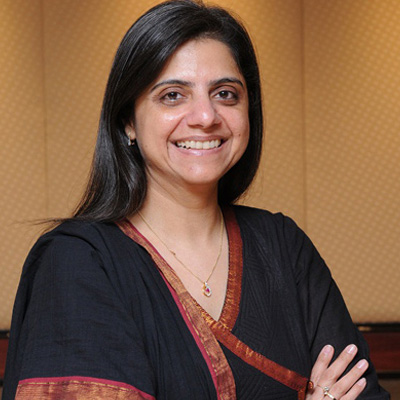
Driving Nick India from a market share of a mere 9 per cent to 18 per cent has been a phenomenal journey for Nick India VP and GM Nina Elavia Jaipuria. The eight-year old kids’ channel got its act together last year and since then there has been no looking back. After years of relative reticence, popular characters Spongebob, Ninja and Perman are lifting the channel up.
In an interview with Indiantelevision.com’s Richa Dubey, Jaipuria reveals what strategy worked for Nick and how she plans to grow the kids’ channel in a fiercely competitive marketplace.
Excerpts:
|
Nick has taken its channel share from 9 per cent in January 2007 to 18 per cent by the year-end. What has led to this fast growth?
Everything done on the channel was done in a fashion to connect with kids – right from the way we packaged our shows, to dubbing and selecting the content, and scripting them.
We have been very innovative in marketing our channel. We add an Indian flavour to whatever we do. For example, we celebrated festivals like Janmashtami by putting slime in the handi. We did Holi with Holi flash. |
|
|
While every channel in the genre is trying to do the same, how did you ensure to look different?
We interacted with kids more and more. We were no more a passive channel that they used to watch. We became a regular destination for them. We built a bond with the child and at every point of time the kid could have a dialogue with us through IVRS, SMS or through our website. There were initiatives like “Bhoot Aya,” “Chaddhi Buddy,” etc. which kept the kids engaged.
In 12 months, we did some 19 initiatives. This means that at any given point of time, a kid could actually interact with us. |
|
|
Nick was perceived to be a very western channel. Wasn’t that a hindrance in getting the kids’ eyeballs? |
|
|
How interactive was Nick with kids?
Engagement is very important as it keeps kids away from the remote. Our programming was such that it made them not to surf in and out of the channel, and made it very sticky for the kids. Following this, channel stickiness grew by 40 per cent. We are the second stickiest channel in the category today. |
|
|
What was the 360-degree approach you adopted?
We also did a lot of activities in shopping malls and schools. Nick went beyond TV and made it tangible. Kids could touch and feel their favourite characters, and that is the ultimate thing for them.
Today it is all about viral and word of mouth. We also went on to retail our properties across various categories – apparels, story boards, PC games, water bottles, etc. Nick characters also appeared in Diamond Comics. |
|
|
|
|
In terms of programming, how have you distinguished yourself from the other channels?
We realised that movies are a big source of entertainment for kids. So we launched “Nick Home Cinema” which has so far done very well. |
|
|
Could you please elaborate on your summer line-up?
We will show an entirely new series of Ninja Hatori and Perman which will be aired back to back. We are also planning interactive stuff around Mother’s Day which falls on 11 May. |
|
|
Like others in the genre, do you also have plans to foray into local content production? |
|
|
Do you think that frequent channel launches are affecting the kids’ genre?
There has been an increase in kids viewership. Kids are continuously getting enticed by the channel offerings. GECs do not focus on kids at all. The more focused and customised the offerings, the better is the growth of the category.
Moreover, pester power is also influencing parents to let kids spend more time in front of TV. |
|
|
How much has passive viewership helped the channel? |
|
|
Advertisers are taking advantage of that?
We ourselves started with 17 brands and now we have around 80 on board. |
|
|
Even GECs show kids’ programmes during weekends. Do you see that spoiling your Sunday line-up of shows? |
|
|
How do you ensure that Nick reaches to kids beyond TV in tier-2 cities?
We are available to around 24 million C&S homes. |
|
|
Do you have any plans to expand in the southern market?
We have syndicated some of our shows like Dora-the Explorer and Avtaar to Sun Network’s Chutti TV. We also have a tie-up with Jet Airways, who play our shows on the flights. |
|
| Is there an increase in ad sales during vacations? Yes, there is but not much as it is seasonal. As far as viewership is concerned, vacation-watching contributes 20 per cent of the channel’s total audiences. |
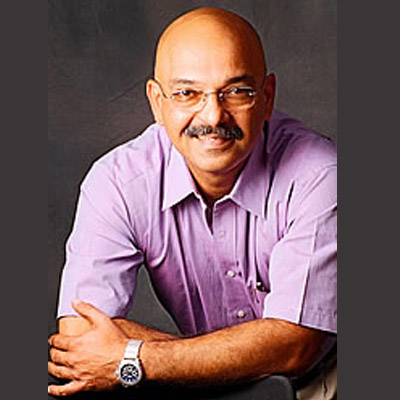
Being a regional player in the media business, Deccan Chronicle saw an opportunity in IPL to grab the national platform in line with the company’s strategy to step into new markets. It bought the Hyderabad team franchise which was named as Deccan Chargers while GroupM ESP played the consultancy role.
Indiantelevision.com’s Ashwin Pinto caught up with GroupM ESP managing partner Hiren Pandit to find out about the plans for IPL, its usefulness as a brand-building exercise and the progress that has been made so far.
Excerpts:
|
What progress has GroupM ESP made since launch?
In the film space, we help with in-film placements and also with partnerships. We do 25-30 in-film placements and partnerships a year. We got Reebok involved with Goal. Reebok launched a range of Goal products in their stores.
Another innovation was helping Virgin Mobile partner with Channel (V) for the first live movie shot. Richard Branson actually danced on stage. We also worked with the Johnny Walker Golf tournament. Now we are working on the IPL with our partner Deccan Chronicle. We act as a consultancy for them. |
|
|
What is the aim when you are providing solutions to clients?
In the partnership space we have deals for content creation, sales. We partner companies with implementation capabilities. The thinking, planning is what we do. The implementation is sourced. We are looking at a partnership for the marketing of sporting events and sports products. We also work with production houses. We worked with Miditech for the NGC show. The client requirement is our priority. A partnership is driven by a client need. |
|
|
What role does the IPL play in the overall scheme of
There are two poles of thinking. Some feel that it will not work. We feel that it will work. It is already a $2 billion industry straight away. The industry has been created overnight. The way the top players come in shows that the boards back it strongly. IPL is about cricket first and then entertainment. You cannot let the two merge. If it does, then the event will not do well. The cricket element should not be touched. As long as the quality of that is high, everything will fall into place. |
|
|
How does IPL help Deccan Chronicle from a brand
While Deccan Chargers is a separate business, it can be used as a platform to build awareness for Deccan Chronicle. Markets like Delhi and Jaipur will get to know of Deccan Chronicle through the IPL which otherwise would not have been possible. It makes it easier for them to enter new markets.
At the same time they have put in a lot of money to get the team and we have to make sure they get their money back. |
|
|
What was the strategy you followed in bidding for
We were, thus, able to figure out the bidding range we should be at. There were other players like GMR who are Hyderabad-based and so we needed to ensure that we came out on top to keep them out of Hyderabad. We got what we wanted. As far as the team is concerned, it took us two weeks of work to form a strategy. We gave ourselves five options of teams each of which were unique by themselves. They took into account the IPL rules as well as the local talent available in Orissa, Hyderabad and Andhra Pradesh.
There was $5 million available. $17 million was the total base bid price of all players. Since the total purse that could be spent was $40 million, $23 million was the possible variation. We listed what we believed players would be bought at. Some players were given at 25 per cent or 50 per cent or 80 per cent depending on their availability to play. So you had more money to play with. VVS Laxman was graceful enough not to take icon status so that we would have more money. We followed a batting order process to select players we wanted. Some players were got reasonably but we did not overprice ourselves with any player.
We looked at it from a T20 perspective. We wanted players who can bat up and down the order like Afridi. Gibbs can also do the same. Gilchrist has a dual role of a batsman and wicketkeeper. Symonds is also a match winner.
Ladbrokes has rated us as one of the top teams to win the IPL. The onus is for the players to make sure it happens. The job of delivering a good side has been done. It is now a question of on-field delivery. |
|
|
Could you talk about the team’s positioning? |
|
|
What plans are there to attract women and children?
We started communicating with people from the day that we got the Hyderabad franchise. We ran an ad asking what people would want the team to comprise of. The build up started from there. We are doing activities in malls and multiplexes in Hyderabad. We have made a huge bat so that people can sign wishing the team good luck. |
|
|
What about creating a fan base? How long will it take
They already want a T-Shirt and so build up is happening. We are looking at privileged dinners, special ticketing offers, T-shirts, player interaction as time goes by. People at the moment are not used to a city-based team that has players from different loyalties. That connection has to be built up by the franchisees. Today fans relate to cricket with the country but over time people will root for their city. They will believe that an Andrew Symonds can play with VVS Laxman in the same time. This is when fans will start to bond with teams. |
|
|
|
|
How is the team doing in terms of sponsorships?
We will have a team partner. That partner will have ownership of the team. The logos on the team will go to the partner.
The second partner is entertainment. Anything to do with entertainment from cheerleaders to fours and sixes hit goes to that party. The third partner is the performance partner. This is for things like man of the match, six sixes in an over etc. Then there is a partner for pre game entertainment. The fifth partner is the apparel partner. Each association is distinct and has clear value. We do not want to be like a F1 car.
The entertainment partner has to be related to entertainment. The performance partner has to be known for performance. Otherwise you mix things and brands get associated with things that do not fit with what they stand for. We have structured our partnerships so that we leverage the value. We will announce deals in this regard next week, as that is when our players will be together.
Since we are a newspaper we advertise in it. Other teams would have to buy ads. SRK uses the PR route and has also tied up with Telegraph locally. Our media costs come down since we are a media owner. We look at the IPL as a business and a media investment. If someone is losing money it could be that he is using it as an investment for his own benefit. In this case you need to look at it as a media investment and not as a revenue opportunity.
If you treat it as a business you can make money in the first three years. In three years we expect to make money and it could be for our pocket and also for media investment opportunities. |
|
|
One of the challenges is to keep the brand alive after
Our involvement with cricket is not just about IPL. We will tie up with the Hyderabad Cricket Association, Orissa Cricket Association to see how we can get involved with their tournaments and bring value. We are also looking to get involved with other sports. |
|
|
What about taking the team abroad for matches? |
|
|
If a team fares poorly in the IPL and finishes eighth,
As far as players are concerned, if one plays badly then the news will travel and the player will be dropped. It is about delivery. A lot of money has exchanged hands on account of expectations. The effort needs to be put in. |
|
| What on-air and mobile plans do you have? Our site is already up and running. There are lots of forums and debates. On the mobile we will look at it in terms of ticketing and SMS. But the real fun will come when 3G applications come in and they will impact how people view cricket. This will be in the form of streaming video. |
|
| What about tying up with channels for content related to the Hyderabad team? We are in talks with channels that want to do off-cricket coverage of our team. We will do this in conjunction with our players. |
|
|
With the IPL trying to attract women and children, do you see this helping other forms of the game in expanding the viewer base?
I don’t see it affecting test cricket. It might help ODIs after a period of time. T20 means a faster rate of scoring which will be transferred to ODIs. If you score six to seven an over in T20, you will see the same rate in ODIs. When a lot of action is going on in terms of high scoring, we have noticed that more women tune in. On the negative side the kind of stroke play that takes place should not deviate from what quality cricket is. Technique should not suffer due to T20. |
|
|
GroupM ESP also has a tie up with John Abraham. What
is the nature of this deal? We have got into the celebrity endorsement and management space. We look after his sponsorships and endorsements. We are looking at other celebrities. The celebrity space has blown apart with Dhoni and Yuvraj and MGs (minimum guarantees) being the norm. We are not sure about taking that route. The celebrity management space is different in India. Abroad, companies manage this sphere. In India, though, individuals manage it. The Indian model must evolve. There is no valuation process in place to see if the return on investments are good. It has to be a win-win situation between the celebrity and the client. Right now, this is a cluttered space.
The brands that John has endorsed like ESPN and Wrangler stand for values that fit John. You need to keep in mind the sentimental values of individuals. Many celebrities, though, endorse brands where there is no fit. The association is unreal and nobody believes it. Consumers are not dumb. |
|
| How do cricket and Bollywood stack up against each other? Celebrities have to be careful about the brands they endorse. If they make a mistake, then they pull their own brand value down. Bollywood is less risky. If an actor has a flop, his value does not go down. If a cricketer, however, gets dropped from the national side, there is a huge difference. Brands that he is endorsing will not get full value. The young cricketers are coming in at scary price points. I am not sure how many brands can afford them. If he is not in the team six months later due to in injury, the brand is in trouble. The valuation equation should make sense. |
The Indian Premier League (IPL), which kicks off next month, has brought in $2 billion into the Twenty20 format over a 10-year period, involving big corporates like Reliance Industries and Bollywood Badshah Shah Rukh Khan.
Emerging Media, which has two other shareholders in Sporting Investment Group and Lachlan Murdoch, has bought the Jaipur team franchise for $67 million and is hoping to rake in profits after the third year.
Indiantelevision.com’s Ashwin Pinto caught up with Emerging Media CEO Fraser Castellino to find out about his plans for the team and the impact IPL will have on the game.
Excerpts:
|
What prompted Emerging Media to be involved with the IPL?
We came into India in 2006 and launched the reality show Cricket Star based on the T20 format. We are looking for the next Indian superstar. We saw IPL as a big opportunity as we also have experience in running clubs. |
|
|
What is the IPL trying to achieve?
By whipping up support for city-based league teams, the BCCI is also trying to bring new fans into the stadiums. |
|
|
The tradition of supporting a regional team is not present in India. Do you feel that this will be a hindrance in terms of the IPL taking off? |
|
|
Another issue is that the BCCI wants the IPL to be for India what EPL is for English soccer. At the same time, the players are with EPL for several months each year and there is no conflict with an international schedule. How will IPL manage to do this? |
|
|
Having bought the Jaipur franchise for $67 million, what breakeven period is Emerging Media looking at from IPL? |
|
|
How much will Emerging Media spend towards marketing? |
|
|
What brief was given to the agency? |
|
|
Have you tied up revenue deals? |
|
|
Is there any chance that Emerging Media might sell a stake in the IPL team? |
|
|
|
|
What is the strategy you followed in selecting your team?
During the first auction, we picked players and also set price points at which we felt that they had good value for us. If they exceeded these price points, we let them pass.
We did our research, and went after certain players. Now when you look at my team, they are at least as good as the others if not better. And we have spent $3.5 million while the others have burnt $5 million. |
|
|
Are performance and marketability of players of equal importance? |
|
|
Could you talk about the branding of the team and how your star player Shane Warne will be used?
Shane Warne was a strategic choice that many people do not understand. He has an incredible record in county cricket. When we signed him as both captain and coach, other teams who have specialist coaches were surprised. Specialist coaches are fine but Warne transformed the fortunes of Hampshire in county cricket. He took them from being a non-performer to a team to be reckoned with.
The IPL is about youth and developing domestic cricket. Now that he has retired, Warne is keen to come in and give back to the game by helping youngsters. The IPL is the perfect platform for him to do just that. |
|
| Has Emerging Media also appointed a consultant to help its IPL team form a cohesive unit? We have a support team in place that includes physiotherapist John Glocter and assistant coaches. We believe that our team will be inspired by our captain and the support structure, and become a cohesive unit. |
|
|
Has T20 brought sports and entertainment closer?
In India, while it has not been played often, we feel that this format will be well accepted. Since the IPL games will be played in floodlit stadiums in the evening, it will attract more women and families to enjoy an evening out. |
|
| How will IPL broaden the corporate involvement with cricket overall? One of the things that will happen is that IPL will support academies, coaching centres, etc. These are feeder systems into T20 cricket. |
|
| How did the idea of doing Cricket Star come about? We wanted to be a body that works with the BCCI but at the same time goes off into areas where it has not managed to find talent. We believe that there are people who, while possessing talent, do not have the money to turn up at the BCCI’s coaching camps. We give them the chance to spend just two days with our experts and decide if they are good enough or not. If they are good enough, the sky is the limit. |
|
|
How have you grown the event over the years and how successful has it been in uncovering hidden talent?
We are clear in terms of what we look for in a T20 cricketer. Last year, we found two boys who were very good. But we had restricted entries to those who were absolutely fresh and had not played first-class cricket. They had never been part of an under 15 or under 17 squad. This year, we have opened it up for everybody. |
|
|
Finally, are you looking at other sports? |
|
|
The Indian Premier League (IPL), which kicks off next month, has brought in $2 billion into the Twenty20 format over a 10-year period, involving big corporates like Reliance Industries and Bollywood Badshah Shah Rukh Khan. Emerging Media, which has two other shareholders in Sporting Investment Group and Lachlan Murdoch, has bought the Jaipur team franchise for $67 million and is hoping to rake in profits after the third year. Indiantelevision.com‘s Ashwin Pinto caught up with Emerging Media CEO Fraser Castellino to find out about his plans for the team and the impact IPL will have on the game. Excerpts: |
|
|
What prompted Emerging Media to be involved with the IPL? We came into India in 2006 and launched the reality show Cricket Star based on the T20 format. We are looking for the next Indian superstar. We saw IPL as a big opportunity as we also have experience in running clubs. |
|
|
What is the IPL trying to achieve? By whipping up support for city-based league teams, the BCCI is also trying to bring new fans into the stadiums. |
|
|
The tradition of supporting a regional team is not present in India. Do you feel that this will be a hindrance in terms of the IPL taking off? |
|
|
Another issue is that the BCCI wants the IPL to be for India what EPL is for English soccer. At the same time, the players are with EPL for several months each year and there is no conflict with an international schedule. How will IPL manage to do this? |
|
|
Having bought the Jaipur franchise for $67 million, what breakeven period is Emerging Media looking at from IPL? |
|
|
How much will Emerging Media spend towards marketing? |
|
|
What brief was given to the agency? |
|
|
Have you tied up revenue deals? |
|
|
Is there any chance that Emerging Media might sell a stake in the IPL team? |
|
|
|
|
What is the strategy you followed in selecting your team? During the first auction, we picked players and also set price points at which we felt that they had good value for us. If they exceeded these price points, we let them pass. We did our research, and went after certain players. Now when you look at my team, they are at least as good as the others if not better. And we have spent $3.5 million while the others have burnt $5 million. |
|
|
Are performance and marketability of players of equal importance? |
|
|
|
|
|
Could you talk about the branding of the team and how your star player Shane Warne will be used? Shane Warne was a strategic choice that many people do not understand. He has an incredible record in county cricket. When we signed him as both captain and coach, other teams who have specialist coaches were surprised. Specialist coaches are fine but Warne transformed the fortunes of Hampshire in county cricket. He took them from being a non-performer to a team to be reckoned with. The IPL is about youth and developing domestic cricket. Now that he has retired, Warne is keen to come in and give back to the game by helping youngsters. The IPL is the perfect platform for him to do just that. |
|
| Has Emerging Media also appointed a consultant to help its IPL team form a cohesive unit? We have a support team in place that includes physiotherapist John Glocter and assistant coaches. We believe that our team will be inspired by our captain and the support structure, and become a cohesive unit. |
|
| Has T20 brought sports and entertainment closer? The emergence of T20 has been interesting because as working life has become more hectic, people are increasingly looking for instant gratification. In India, while it has not been played often, we feel that this format will be well accepted. Since the IPL games will be played in floodlit stadiums in the evening, it will attract more women and families to enjoy an evening out. |
|
| How will IPL broaden the corporate involvement with cricket overall? One of the things that will happen is that IPL will support academies, coaching centres, etc. These are feeder systems into T20 cricket. |
|
| How did the idea of doing Cricket Star come about? We wanted to be a body that works with the BCCI but at the same time goes off into areas where it has not managed to find talent. We believe that there are people who, while possessing talent, do not have the money to turn up at the BCCI‘s coaching camps. We give them the chance to spend just two days with our experts and decide if they are good enough or not. If they are good enough, the sky is the limit. |
|
| How have you grown the event over the years and how successful has it been in uncovering hidden talent? I think what Cricket Star lacked in the first season was the gratification platform. It wasn‘t clear what would happen with the chosen talent. Today anybody who is selected gets a contract with the Rajasthan Royals. The format has not changed much in terms of the testing process. We are clear in terms of what we look for in a T20 cricketer. Last year, we found two boys who were very good. But we had restricted entries to those who were absolutely fresh and had not played first-class cricket. They had never been part of an under 15 or under 17 squad. This year, we have opened it up for everybody. |
|
|
Finally, are you looking at other sports? |
|
Zee is on an upsurge, driven by its flagship Hindi general entertainment channel. Kicking in ad revenues for the fiscal has not just been Zee TV but also the two regional channels – Zee Marathi and Zee Bangla – who together will make Rs 2 billion. And despite less aggressive movie buying, Zee Cinema will see a 25 per cent jump to rake in Rs 2 billion.
As revenue head for Zee Entertainment Enterprises Ltd, Joy Chakraborthy takes credit for it. His role extends to the regional general entertainment channels (except south) which reside in sister company Zee News Ltd. The sports side of ZEEL’s business, however, doesn’t fall under his supervision.
“I handle the power brands where effort to returns are high,” he says.
Joy also takes pride in continuously doing price-correction deals. Even then Zee is under-priced and there is scope for growth, he says.
In an exclusive interview with Indiantelevision.com’s Sibabrata Das, Joy talks of how Star Plus’ loss in GRPs has been pocketed largely by Zee TV and its regional channels. He also elaborates on Zee’s plans to pile up a huge bouquet so that it stays as the best network prepared for the digital era.
Excerpts:
|
How much of an ad revenue growth will ZEEL see in the current fiscal and is this still disproportionate to the rise in GRPs of the network?
The revenue has grown disproportionate to the GRP growth. The pricing, though, needs correction. We feel we are under-priced. With every new deal, we have corrected the price upwards. |
|
|
Are the channels that fall under you (ZEEL channels except sports, and the regional GECs barring the south languages) going to post a revenue of Rs 12.5 billion during the fiscal? |
|
|
As Zee TV is the predominant revenue earner, isn’t ZEEL in as risky a position as Star India is with the dominance of Star Plus? |
|
|
Zee Next was launched as a flanking channel in the GEC space, but it doesn’t seem to have worked at all? |
|
|
What is the purpose of launching a flanking channel without aggressively distributing it when in the marketplace there is a scramble for space on choked cable networks?
But we still have to be realistic on the carriage fees. Otherwise, it will affect the business model of the whole network; we are, after all, not a single channel company. We have to take a business rather than an emotional call.
The channel will take time to build. Any GEC with less than 130 GRPs will continue to bleed – and we have been seeing that. But with a new plan in place, we will sort out the distribution and other issues that need to be corrected. |
|
|
|
|
Isn’t growth of GEC as a category slowing down? |
|
|
Could you elaborate? |
|
|
One reason for the growth of these two channels, according to you, is because the leader ETV is falling. But what sort of ad growth are both of them going to post this fiscal? |
|
|
After rolling out Zee Talkies to addess the Marathi market, are you planning to launch a Bengali movie channel? |
|
|
Like Kalanithi Maran’s Sun network, are you looking at packing in regional music channels as well? |
|
|
Doesn’t Zee have such plans for Gujarat? |
|
|
Though Zee Cinema is the second biggest channel in the network, it has been less aggressive in movie buying this fiscal. Will this hurt the revenues? |
|
| As revenue head, why haven’t the sports, news and southern language channels come to you? I am handling the power brands where effort to returns are high. The sports business is cricket-centric and needs dedicated attention. So Ten Sports is handling the ad sales. I already have too much on my plate as the network revenue head. |
|
| Will subscription revenues be sluggish, driven by slowdown in international business and foreign exchange loss? Domestic subscription will grow by 30 per cent – and we see the situation improving in next fiscal. The Star bouquet is strong, but we have been catching up this year. We have more pull channels than anybody else – Zee TV, Zee Cinema, Zee Cafe, Zee Marathi, Zee Bangla, Zee Talkies and Zee Studio. International distribution is outside my ambit and I can’t comment on that. |
|
| There is a buzz in the market that the TV18 group channels including CNBC TV18 will soon move to Star DEN? There is still time for some channels to move out, if at all. We will soon be making an announcement of more channels in our bouquet to make it stronger. |
|
|
Are you referring to Ten Sports moving out from SET Discovery (now MSM Discovery) to Zee Turner? |
|
|
Zee has the largest bouquet of channels. With carriage fee on the up, how does it impact the business at the net level? |
|
|
What is being done to beef up Zee’s English genre channels? |
|
|
What is your revenue forecast for the next fiscal? |
|
|
Do you see BARC (Broadcast Audience Research Council) taking off any time now? |
|
|
Zee is on an upsurge, driven by its flagship Hindi general entertainment channel. Kicking in ad revenues for the fiscal has not just been Zee TV but also the two regional channels – Zee Marathi and Zee Bangla – who together will make Rs 2 billion. And despite less aggressive movie buying, Zee Cinema will see a 25 per cent jump to rake in Rs 2 billion. As revenue head for Zee Entertainment Enterprises Ltd, Joy Chakraborthy takes credit for it. His role extends to the regional general entertainment channels (except south) which reside in sister company Zee News Ltd. The sports side of ZEEL‘s business, however, doesn‘t fall under his supervision. “I handle the power brands where effort to returns are high,” he says. Joy also takes pride in continuously doing price-correction deals. Even then Zee is under-priced and there is scope for growth, he says. In an exclusive interview with Indiantelevision.com‘s Sibabrata Das, Joy talks of how Star Plus‘ loss in GRPs has been pocketed largely by Zee TV and its regional channels. He also elaborates on Zee‘s plans to pile up a huge bouquet so that it stays as the best network prepared for the digital era. Excerpts: |
|
|
How much of an ad revenue growth will ZEEL see in the current fiscal and is this still disproportionate to the rise in GRPs of the network? The overall revenue growth, however, is still disproportionate to the GRPs. The pricing needs correction. We feel we are under-priced. With every new deal, we have corrected the price upwards. |
|
|
Are the channels that fall under you (ZEEL channels except sports, and the regional GECs barring the south languages) going to post a revenue of Rs 12.5 billion during the fiscal? |
|
|
As Zee TV is the predominant revenue earner, isn‘t ZEEL in as risky a position as Star India is with the dominance of Star Plus? |
|
|
Zee Next was launched as a flanking channel in the GEC space, but it doesn‘t seem to have worked at all? |
|
|
What is the purpose of launching a flanking channel without aggressively distributing it when in the marketplace there is a scramble for space on choked cable networks? But we still have to be realistic on the carriage fees. Otherwise, it will affect the business model of the whole network; we are, after all, not a single channel company. We have to take a business rather than an emotional call. The channel will take time to build. Any GEC with less than 130 GRPs will continue to bleed – and we have been seeing that. But with a new plan in place, we will sort out the distribution and other issues that need to be corrected. |
|
|
|
|
Isn‘t growth of GEC as a category slowing down? |
|
|
Could you elaborate? |
|
|
One reason for the growth of these two channels, according to you, is because the leader ETV is falling. But what sort of ad growth are both of them going to post this fiscal? |
|
|
After rolling out Zee Talkies to addess the Marathi market, are you planning to launch a Bengali movie channel? |
|
|
Like Kalanithi Maran‘s Sun network, are you looking at packing in regional music channels as well? |
|
|
Doesn‘t Zee have such plans for Gujarat? |
|
|
|
|
|
Though Zee Cinema is the second biggest channel in the network, it has been less aggressive in movie buying this fiscal. Will this hurt the revenues? |
|
| As revenue head, why haven‘t the sports, news and southern language channels come to you? I am handling the power brands where effort to returns are high. The sports business is cricket-centric and needs dedicated attention. So Ten Sports is handling the ad sales. I already have too much on my plate as the network revenue head. |
|
| Will subscription revenues be sluggish, driven by slowdown in international business and foreign exchange loss? Domestic subscription will grow by 30 per cent – and we see the situation improving in next fiscal. The Star bouquet is strong, but we have been catching up this year. We have more pull channels than anybody else – Zee TV, Zee Cinema, Zee Cafe, Zee Marathi, Zee Bangla, Zee Talkies and Zee Studio. International distribution is outside my ambit and I can‘t comment on that. |
|
| There is a buzz in the market that the TV18 group channels including CNBC TV18 will soon move to Star DEN? There is still time for some channels to move out, if at all. We will soon be making an announcement of more channels in our bouquet to make it stronger. |
|
|
Are you referring to Ten Sports moving out from SET Discovery (now MSM Discovery) to Zee Turner? |
|
|
Zee has the largest bouquet of channels. With carriage fee on the up, how does it impact the business at the net level? |
|
|
What is being done to beef up Zee‘s English genre channels? |
|
|
What is your revenue forecast for the next fiscal? |
|
|
Do you see BARC (Broadcast Audio Research Council) taking off any time now? |

As India enters a digital environment with more delivery platforms like direct-tohome (DTH) scheduled for launch this year, television technology firms are looking to service broadcasters who will face new challenges. One such firm is Avid. It offers products and services for digital nonlinear media creation.
Indiantelevision.com’s Ashwin Pinto caught up with Avid country head Krishan Sanghi to find out more about the company’s plans.
Excerpts:
|
When Avid says that it is a pioneer in digital nonlinear media creation, what does it mean?
Through its Unity storages and Interplay, Avid has pioneered this further to allow multiple users to simultaneously work on the same media and edit, modify and create them in a collaborative environment. This allows processes to be conducted independent of a particular sequence and is, therefore, nonlinear in nature. This technology has revolutionised content creation in video, audio, film, animation, gaming and TV broadcast industries. |
|
|
Could you give me an overview of the products and solutions in Avid’s portfolio?
Avid provides solutions in areas like video, news editing, film editing, special effects for video and films. We also offer integrated newsroom solutions as well as networked storages for workgroup editing. Besides, we offer broadcast and playout automation as well as on-air graphics and animation. |
|
|
What is the global broadcast technology market worth? |
|
|
What is Avid’s share in this?
We are currently present in 22 countries including India, the US, Canada, Japan and Korea. |
|
|
In terms of revenue and business generation, how much do India and Asia contribute?
Our customers, installed base and revenues have been steadily growing, especially in the broadcast industry. Customers’ confidence in Avid’s technology, products and services is reflected in repeat orders for their new projects. We have invested in trainings and have the best trained manpower in broadcast support and as a result we are targeting a very healthy growth. |
|
|
|
|
What growth is being targeted from here?
Till date, Avid provides training which is available at more than 50 training institutes, a high percentage of which is part of graduation in mass media. We expect to double this number this year, and to achieve this we are partnering with leaders in the IT industry. |
|
|
Who are Avid’s major clients in India and could you give me examples of how your solutions are being used by them?
These customers use Avid’s Unity Isis shared storage media networks which is focussed on the real-time requirements of broadcast production workflows. The new file system and storage architecture combine to provide industry-leading availability, and dramatically increase storage capacity, bandwidth, and client connectivity. |
|
|
In terms of providing technical support and servicing, what does Avid offer its clients?
We understand our responsibility to update the technical expertise of the industry. We are, therefore, investing in providing specialised trainings to technical resources available here so that the project implementation is quick and economical.
Support training on equipment requires a huge pile of equipment, and that’s why traditionally we have been imparting technical support training only at our regional headquarters. However, realising the regional need, we are bringing the experts and required kits to the region at high costs in the second quarter of this year. This will help add to the local knowledge and expertise, and in turn improve the support level considerably. This will be an opportunity for customers to train their own team, and keep the equipment and workflow efficient, at a fraction of traditional costs. |
|
|
Would you say that cost-effectiveness is an advantage that Avid offers clients vis-?-vis competition?
At the same time, we minimise the loss in revenues by building resilience and reliability in the system and processes. Furthermore, today it is important for media companies to market their assets in more ways than one. We enable our customers monetise their assets in multiple ways. For example, the film captured for production can be easily re-purposed in TV, mobile, IPTV and net, etc. Sharing the media across states and across nations has become important, and Avid makes this possible and easy. |
|
|
The technical departments of channels globally often do not understand fully the technology they have bought and its capabilities. Does Avid face this problem vis-?-vis clients?
Yes, we face the challenge wherein the purchases are highly box driven. Judicious customers look at the big picture and visualize, and thereafter make provisions for growth in the very beginning. If you will look around, you will find Avid customers whom we have helped migrate technologically to the latest and are now using their resources for multiple revenue streams. For these companies, growth has been a painless process while others are struggling with incompatible products or obsolete technologies and have to bear the cost of running various parallel operations.
It is important for broadcasters to bear in mind that technology is changing so fast that even experts may lack information. Therefore, we educate companies in current technologies. Selecting a right product is more important for small companies who cannot afford to take a wrong step. |
|
|
Insofar as advancements in broadcast technology are concerned, what are the trends noticeable in India and Asia?
Traditional broadcast is growing by leaps and bounds. Every broadcast station is now a network of a few channels. We are seeing that international content and participation is increasing. We are also seeing a proliferation of small regional channels.
Sports and entertainment are looking at HDTV. Compression will play an important role here. Avid is the first company to have solutions fully compliant with SMPTE VC3 that allows HD handling at lower rates. News broadcasting will spread to the mobile and internet as well.
Tape will loose further ground with all acquisition and distribution being digital. The post-production houses will be next to use the digital wave. |
|
|
As we move towards a digital environment in India and Asia where new platforms like online and mobile will emerge, what are the challenges that broadcasters will face on the technical front?
Speed is another criterion that is a challenge as the news industry depends on it. As seen in the World Trade Center bombing, the news channels with modern workflows were faster than the ones with traditional workflows. Sky News and Fox were the first to broadcast the bombing and both use Avid solutions. |
|
|
Has Avid signed deals with Indian broadcasters that are launching new channels to create their on-air look, graphics, etc?
However, at the same time we do not recommend any particular on-air look or feel. We have an on-air graphic solution called Deko, which creates on-air graphics in real time. |
|
|
What are the new solutions that Avid has recently introduced in India?
We expect some more products to be announced in the near future. The future is good. |
|
|
In terms of the news genre, how do your solutions facilitate the expanding roles of journalists?
Another product iNews Instinct is a storytelling tool with scriptwriting, shot selection and video and audio editing specifically designed for journalists. |
|
|
HD is an area of intense focus for Avid. How long do you feel it will take for HDTV to come to India?
HD has already taken off in a big way outside. However, in India it may take a while. Our expectation is that HD will arrive with sports and general entertainment. |
|
|
Could you shed light on Avid’s research and development (R&D) facilities? How much investment goes into this activity?
Our efforts also include networking and storage initiatives to deliver standard-based media transfer and media asset management tools, as well as stand-alone and network-attached media storage systems for workgroups.
Avid spends one of the largest percentages of its income, of any company in the sector, on R&D. For instance, our R&D expenditures for 2006 were $141.4 million. |
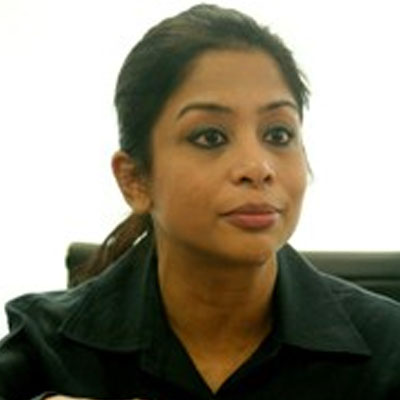
From starting as a human resource (HR) consulting firm in 1996 to entering the fast-growing broadcasting space, INX Media has travelled a long way.
INX’s music channel 9XM has notched the top position in its genre while the general entertainment channel (GEC) 9X is making slow but steady strides.
Next in the roll-out pipeline is NewsX. Despite controversies dogging the news channel venture with the exit of Vir Sanghvi and his senior editorial team, plans are being put in place to launch the channel in March. Regional channels are also part of INX’s growth agenda.
In an interview with Indiantelevision.com , Mukerjea talks about her company’s growth plans.
Excerpts:
|
INX was a recruitment search consultancy company that you ran successfully for years. What pulled you to the broadcasting space? |
||
|
But isn’t the mainstream broadcasting space too cluttered? |
||
|
Though 9XM has shown rapid growth in the ratings game, it is a channel that runs songs without breaks. What does the revenue front look like? |
||
|
Isn’t the growth of 9X, your flagship Hindi general entertainment channel, on the slower side? We see GEC as a long-term game. We are playing a Test match and not a T20. We want to build this block by block. The critical part is to stay there. It is very important to sustain. So, we have a five-year plan in the horizon to which we are sticking, and this is what I believe is going to make us sustain. |
||
|
So you are thinking of breaking even after five years? |
||
|
||
|
But there are other channels like NDTV Imagine that have shown faster growth in a short term? |
||
|
Your programme ‘Mission Ustaad’ failed commercially? |
||
|
Aren’t you pumping in a huge amount of money for distribution and promotion? Also, whoever goes up quickly has a tendency to go down as well. So we are patient. Our investors are long-term players. It’s not that if we pull out a programme, things will crash. We have not launched a channel based on one programme. And now, as we’ve established ourselves, I think we need at least another five months to bring in full programming. Strategically, it’s like a baby in my mind: a baby takes shape in nine months and we feed it when it’s born. |
||
|
On the ratings front, only one show has TRP of over one. Besides, isn’t it true that the channel’s GRPs are mainly being driven by movies? |
||
|
As a syndication deal, have you paid Sony Rs 400 million for 60 movies? |
||
|
What do you think about syndication of movies as a business model? |
||
|
Mythologies seem to be coming back on Indian television. Is Ekta Kapoor doing Mahabharata for you? |
||
| But what do you have to say about the invasion of mythos? Mythological content has always been a part of Indian television. Be it Sai Baba, Sri Ganesh, Jai Maa Durga, Jai Hanuman – they have always been there. But it’s important for a channel not to overuse such content. You have to have a combination of movies, serials, soaps, fantasy, reality, etc. A good mix is essential. |
||
|
When are you launching NewsX? |
||
|
What content will the channel focus on? |
||
|
How will it be different? |
||
|
Are we going to see more channel launches from INX Media in 2008? |
|
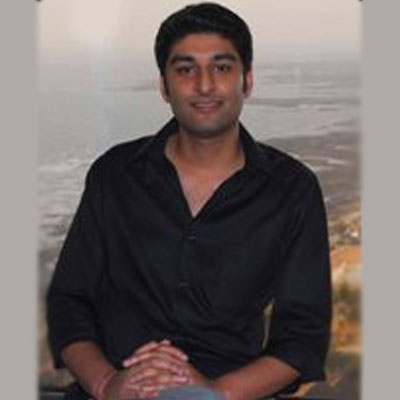
Akash Sharma has been at the forefront of acquiring, developing and launching high-quality prime-time hit shows in India since 2005.
An economics graduate from the University of Michigan, Ann Arbor, USA, Sharma spearheaded Bulldog Media & Entertainment’s efforts to be awarded the Indian licence to the international format of 2007 “Are You Smarter than a 5th Grader?” from Mark Burnett Productions. He is currently serving as an executive producer to the Indian version of “5th Grader” on Star Plus hosted by Shah Rukh Khan. Interestingly, Sharma shares his birthday (2 November) with SRK and likes to refer to this as a coincidence indicative of their similar destiny.
In an interview with Jaahnavi P Paal, Bulldog Media & Entertainment MD Sharma reveals all about “Kya Aap Paanchvi Pass Se Tez Hain?,” the company’s future plans and lots more.
Excerpts: |
|
|
Who are the stakeholders in Bulldog Entertainment? What are the core areas that the company is concentrating into? |
|
|
‘Are You Smarter Than a Fifth Grader’ is a format owned by Mark Burnett. How did you acquire the format of the show? |
|
|
Do you think the format is suitable for the Indian market?
The show is being produced by Synergy and Bulldog. Out of the 50+ territories in the world, we knew that it was most relevant in India because we focus on education more than anywhere else. Right from the start, we knew that it was an SRK, Star plus show, and hence we did not go anywhere else.
In India, it will go on air when kids go on vacation. And will go on at least for a year. But what’s interesting to share is the fact that Paanchvi Paas will be telecast in the UK and USA for the NRI audience. We are in talks with representatives from New Zealand, Canada, Indonesia and Australia so that Indians across the globe can watch it.
We are also launching a licencing and merchandising division with Star Plus where we will promote toys, games and apparel during Paanchvi Paas. |
|
|
How would ‘Paanchvi Pass’ be different from KBC? |
|
|
How does the deal that you have recently inked with CBS Paramount for the show ‘America’s Next Top Model’ look like?
We are also looking at casting A-list model-cum-actors to host the show. |
|
|
How is the format of the ‘America’s Next Top Model’ different from so many other shows currently running in almost all Hindi GECs? |
|
|
|
|
How big would be the prize money for the show? |
|
|
What are the other shows that are in the pipeline? This concept has been sold to Fox in USA and now we have the rights in India. It will be a heavily promoted show for them, and is scheduled to be launched this fall on prime time. |
|
|
What are the future plans for your company? |


