Category: Executive Dossier

  • “To ‘live in the role’ is an absolute myth”:Sachin Khedekar

    “To ‘live in the role’ is an absolute myth”:Sachin Khedekar

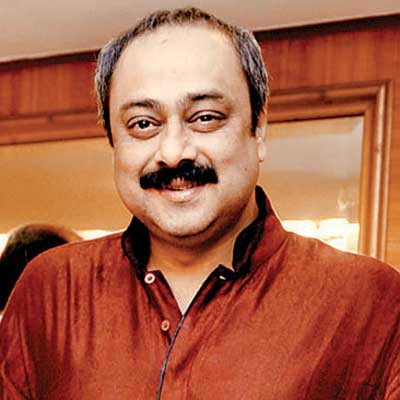
    Though Sachin Khedekar has been around in television for more than 15 years, in terms of visibility he is just five years old. Imtihaan was his first television serial. And his latest project is the big screen film Astitva by Mahesh Manjerekar in which he plays a negative character. He chose it because the story was meaty and Mahesh is a fabulous director. According to him, he ‘arrived’ with the teleserial Sailaab. His ultimate ambition is to do a Broadway musical. Because as a theatre man it is the only medium that truly excites him.

    The man loves acting. So much so that even in school his only hobby was acting. And Marathi plays were the passion. In fact in school they had their own group which organized cultural programmes. He began his stint in theatre with well known actor-director Vinay Apte and then moved on to television so he could expand his horizons.

    Born in Mumbai’s Vile Parle, he comes from an orthodox middle class family. He is an environment engineer and has two years of consultancy behind him. Very much the family man, he has been married six years and has a three-year-old son whom he loves to drop to school. Khedekar’s trademark moustache marks him out. He also happens to be a self-confessed misfit among the ‘in’ crowd.

    The ever-modest Sachin Khedekar gets into talk mode with Nupur Rekhy.
     

    You are known for your sensitive portrayal of roles. Is there a special method behind it?

    I was never professionally trained. I have learnt with practice. Whenever I have to act in a scene I remember how I used to approach that particular emotion in real life. The attitude of the character just flows in me. I just react to space and actors around me. Let’s just say there is no special method behind it. I have just improved with time. I do not believe in the myth of living in a role and in people who claim they are born or instinctive actors. I believe acting is an art form and it evolves.

    Is there some special effort that you have put in to improve your acting ability?

    Yes I have worked hard on my Hindi. I used to read newspapers loudly.

    Are you an actor by choice?

    I have no moral obligations to anyone or anything so I am very selfish and I act just for myself.

    One gets the feeling that you think that television has an upper hand over films as a medium. Is that true?

    It is a known fact that television has better actors, directors, and writers in number. And television is bigger in terms of reach. The story structure is bigger and there is huge variety. All these are lacking in Hindi cinema.


    How do you get over the monotony of acting?

    I do get bored at times when there is a lack of variety in roles so I always seek variety. To get inspiration I go back to theatre and do a rigorous 30 days of practice. But I don’t have the problem of living the character. I just switch on and off when I want. It has never happened that the borrowed character has personally effected me. Nerves do tighten at the end of the day when I have played some very emotional roles. Sometimes it also drains me emotionally but I just meet friends, producers, talk about films, deviate the topic towards food and always try to meet successful people.

    Why successful people?

    So that I always have the inspiration to work harder and strive for more.

    How do you prepare yourself before a shoot?

    Basically I try and ‘cook’ out the traits of the character and I do wish that I could get the script before hand but it never happens so I just ask assistants to give me an idea about the characters. When I have to act out very emotional scenes, it depends on my emotional memory, which triggers and influences that scene. Basically my preparation is always my personal experience. Plus the impression of the people around me and the director’s guidance. And I have a lot of sensitivity to my co-actors and that helps me a lot.

    Who are your favourite actors and directors?

    In theatre I like Dr (Shreeram) Lagoo, Satish Shah and Pankaj Kapur as actors and I admire Amitabh Bachchan and Naseeruddin Shah.

    What is your emotional state on a set. Are you nervous?

    I am not nervous but I am restless (I shake a leg all the time till the director says action,) and yes there is high anxiety and nerves are tightened before a shot. And I always feel that since there are such a number of ways to say my lines so I just wonder how should I say it.

    Given a choice between theatre, television and films, which is your favorite medium?

    I like all of the three but theatre is the one that truly excites me. Theatre is the only ground for an actor to prepare. The process of rehearsal is the most important for theatre. It goes on for 30 days. And after that hard work the audience response plays on the character.

    Why did you choose the silver screen finally?

    For exposure to a different medium and to a different audience. Every actor wishes for more and more people to watch him and I am no exception. Every activity has a different type of audience and you want to relate to all kinds of audience. It’s a thirst to see different audiences watching you. And naturally money is important.

    How do you react to criticism?

    It shocks me and it makes me feel I am not up to the mark and that makes me work harder.

    Is there anything in your life that you really want to do but have not been able to yet?

    I want to do a Broadway musical. In fact I would love doing anything that would allow me to travel around the world. I would love to play the character of Hamlet but there would be so much rehearsals involved that I am sure I would not be able to manage it.

    Any message for aspiring actors?

    Life is more difficult for new actors nowadays because if you are not good no one will watch you. The competition is huge. The approach should be bookish and without knowledge you should not even enter.

    There should be more acting schools. Because satellite television is growing so fast that there is no time for trial and error. I had a lot of time – some 10 to 15 years – to reach where I am but for newcomers time is the most important factor.

    And finally… who is the real Sachin Khedekar?

    He is a 35-year-old Taurean. He constantly works on himself to have more magnetism. He lacks ambition but is extremely positive and optimistic so the whole thing around him works. And he tries to induce all kinds of positivity in his life. Except ambition he does not lack anything. He likes a lot of space around him. Is religious and that is his great strength. And has no clue as to what is ‘in’ and what ‘out’ and confesses that till date he has never seen a fashion show.
  • ‘We are not a business model-oriented channel’ : Suneet Tandon – Lok Sabha TV CEO

    ‘We are not a business model-oriented channel’ : Suneet Tandon – Lok Sabha TV CEO

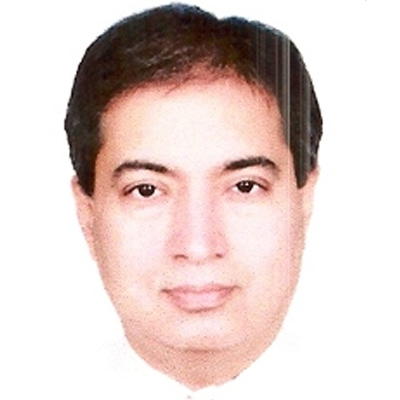
     ‘The no-confidence motion against the UPA government last month gave Lok Sabha TV’s ratings the much required boost as well as an opportunity to rake in money by sharing its feed with privately run satellite news channels.


    Indiantelevision.com’s Anushree Bhattacharyya caught up with Lok Sabha TV CEO Suneet Tandon to find out more on his plans for the channel. Interestingly, Tandon was elevated as CEO less than a week before the crucial vote. He was earlier the channel’s executive director-marketing.


    Excerpts:

    How has the channel fared in the two years of its existence? What are major changes that have taken place?
    The first year was devoted at consolidating the position of the channel. And in its second year, we established the channel’s presence. People now know who we are.


    There are channels that spend large amounts on advertising and marketing. We have not gone that route, yet we have carved out our very own position. All this has happened primarily due to the coverage of Lok Sabha sessions as well as other programmes like debates, discussion and documentaries.

    What is the composition of Lok Sabha TV? Apart from Somnath Chatterjee (whose brainchild the channel is), who are members of its governing body?
    The channel owes everything to the Speaker. But the channel is institutionalised under the overall power of the Lok Sabha. Under the Speaker, we are headed by the secretary general. In addition, there is also an advisory council to guide the functioning of the channel and is chaired by the Speaker. The vice chairman of the council is the deputy speaker of Lok Sabha. The council also consists of leaders from all the major parties in Parliament. So there is also that structure which has been set up to help offer the balance.

    How much investment has been made into Lok Sabha TV?
    Well, at this point of time, it is difficult to speak about the figures as I don’t have them with me right now.

    The channel has to depend on the audio-visual unit of the Lok Sabha secretariat for its expenses and infrastructure. Do you face any constraints in funding since you do not have a business model as such?
    We are not a business model-oriented channel. We are a public service channel for which funds are made available by the Parliament from Parliament’s own funds. Though there have been no constraints on our funds, it is our desire that we don’t want to become a burden on anyone. We need to do it in an economical and careful manner and are very conscious of that. We do not try to spend liberally just for the sake of spending.

    How many hours of feed were sold by Lok Sabha TV for the two days (during the Trust Vote)? How was the business on these two days for the channel?
    We did not sell any number of hours of feed as such. News channels picked up largely the important segments. We had earlier informed all the news channels about the rates. We had adopted Doordarshan’s practice of sharing feeds for important events in Parliament.


    We are using the same rates used by DD. Apart from charging Rs 1 mn beyond every five minutes of feed, there is also a provision for a one-time payment. For the one-time payment, a news channel has to pay Rs 3 mn in advance and can use the feed for any three important events, which makes it Rs 1 mn for every event.

    We also try to spread cultural awareness not in terms of entertainment but by spreading awareness for our classical heritage and folk heritage. We also air awardwinning films on our channel

    Since it’s all about garnering TRPs, how does a channel like Lok Sabha TV manage to catch the attention of viewers?
    By being a credible, sensible and balanced channel. We are not trying to attract the attention of viewers and TRPs by showing any sensational news. We like to deal with our viewers intelligently and try to reflect their concerns because this channel is meant for the thinking citizens of this country. We are very conscious that Lok Sabha TV has to reflect and balance all shades of political opinion. And I must say that there is a lot of feedback that we have got saying that people like watching our channel because we don’t sensationalise anything.

    Do you keep an eye on the ratings of Lok Sabha TV? Are the ratings satisfying enough?
    Yes, we do. We have subscribed to Tam (television audience measurement) every week. Considering the niche nature of the channel, it is very satisfying. Lok Sabha TV is neither a news channel and nor is it a GEC, yet our ratings have been consistently more than CNN and BBC. Also in metros like Delhi and Mumbai, our ratings have been better than many of the established news channels. It’s actually a good reason to be happy for a young channel which does not offer any traditional sensation to its viewers.

    The channel’s viewership soared on 21 and 22 July. Do you feel that Lok Sabha would have been able to garner more ratings if you had not shared the feeds?
    Of course. Those two days were extremely important for Indian democracy. And had we not shared the feed, we would have got as much viewership as that of all the channels put together… all those who took our feed and our viewership.

    Apart from covering the Lok Sabha, what else does the channel concentrate on?
    People have begun to look at us as in terms of quality discussions, debates and documentaries on socio-economic, constitutional and government issues. Moreover, we also try to spread cultural awareness not in terms of entertainment but by spreading awareness for our classical heritage and folk heritage. We also air awardwinning films on our channel.

    At any point of time, have any member of the Advisory Council or the Speaker shown an apprehension on maintaining balance while covering any session?
    No within the Parliament the balance is maintained by the Speaker himself or whosoever is in the chair at that time. And our duty is simply to cover what has happened. And as far as rest of the programmes are concerned, we have not yet faced any significant criticism. But if there are any observations, we take corrective actions.

    In terms of programming, what are the changes that you would like to bring about?
    Every television channel has constantly tweak its programming and look for new ideas to develop interesting programmes. I think we need to give a little more emphasis on fresh programming. And I would also like to see if we could have some more involvement from other states and cities. We also have phone-in programmes where we have toll-free numbers and people can call from anywhere in the country.

    Though there is a website dedicated to Lok Sabha, there is no online property for the channel. Any plans to develop a dedicated web portal for Lok Sabha TV?
    Well, that is something that we can certainly consider taking up. During the time of the debate, many people who had logged on to watch a simultaneous webcast had found that our server had reached its maximum capacity as people from all over the world had logged on it. The servers for loksabha.nic.in got jammed. So, yes, may be there is a need to set up a separate website and increase the bandwith.

    What lies ahead for Lok Sabha TV?
    Technically, we are already at power with any other channel. Our visual quality is as good as any other channel. Yes, we would definitely like to have more interesting programmes and would also like to increase our scope of operation.
  • ‘A price war will expand the DTH market’ : Anil Khera- Bharat Business Channel Ltd CEO

    ‘A price war will expand the DTH market’ : Anil Khera- Bharat Business Channel Ltd CEO

     Venugopal Dhoot sees opportunity in the direct-to-home (DTH) business as he plans to push Videocon’s Plasma, LCD and premium TV sets.


    As part of Dhoot’s backward integration strategy, the consumer electronics giant will also manufacture the set-top boxes (STBs) in the Aurangabad factory.


    Bharat Business Channel Ltd (BBCL), a separate company for the DTH venture, will have a war chest of Rs 10 billion over two years as it readies to enter a turf that will see intense price competition.


    DTH in India, with players like Dish TV, Tata Sky, Reliance ADAG and Bharti, will be a low ARPU (average revenue per user), high volume game.


    Dhoot, not new to price wars, believes that the DTH market will expand and his distribution network will provide the pipeline for him to mop up one million subscribers in the first year.


    Heading the DTH venture is Anil Khera , who was earlier in charge of Videocon’s Sansui and Kelvinator brands.

    In an interview with Sibabrata Das, Khera talks about BBCL’s plans to quickly penetrate the DTH market across the country.


    Excerpts:

    Why does Videocon want to enter into the DTH business when the market has too many players and the race for subscriber acquisition is going to be led by a huge subsidy element?
    The total number of television households is pegged at 125 million and is growing at 12-15 per cent. The DTH subscriber base, which is currently a little over six million, is expected to touch 15 million by 2010 with the entry of new players like Reliance ADAG, Bharti and us. The DTH market will expand rapidly and there will be enough space for all the players. India will become the world’s largest pay-TV market by the stretch of numbers.

    Is Videocon entering the market because it sees DTH as an integrated business model with its consumer electronics business?
    We will be pushing our plasma, LCD and premium TV sets through our DTH service. Though we will firm up our offer plans closer to the time of launch, there will be some packaging done with subscription pricing, STBs and the TV sets. In many models, we will have in-built STBs. Unlike other DTH operators, we are a TV manufacturing company and will be making the STBs ourselves.

    Will Videocon Industries have any holding in BBCL and how much is being pumped into the DTH business?
    BBCL is a new company that has been floated for this purpose by the Videocon promoters. D2H+ is the brand name under which the service will be offered. We have already budgeted an investment of Rs 10 billion in this venture over the next two years.

    Is BBCL in talks to rope in an equity partner?
    No comments at this stage.

    How many subscribers are you targeting in the first year and at what ARPUs (average revenue per user)?
    We are looking at one million subscribers. We will be a premium service and expect our ARPUs to be Rs 200 in the first year.

    We will be pushing our plasma, LCD and premium TV sets through our DTH service. Unlike other DTH operators, we are a TV manufacturing company and will be making the STBs ourselves

    At what subscriber and ARPU level will BBCL break even?
    We expect to break even faster than expected because of our backward integration model. We will be manufacturing STBs and have strong distribution skills. The market will also expand better than expected due to competition from so many players.

    Aren’t you entering at a time when the price war will be at its height as Reliance and others launch their service?
    There will be a price war. That is when the market will also expand.

    Will Videocon manufacture STBs only for BBCL?
    Videocon has a strong manufacturing background. It will be manufacturing the STBs at its Aurangabad factory with the Korean technology. The STBs will be supplied to BBCL. Already 50,000 boxes have been manufactured.

    When will you launch and how many channels will be on offer?
    We will launch by October-end. The end-to-end instrument testing will happen in a week’s time. We will then conclude the date for friendly users test. We will start with 200 channels. We will have a range of packages available to our customers – from basic to the family and premium range. We will offer choice to the customers and will cater to the entire demographic pop strata, including the regional flavours.

    What is the differentiating content BBCL will offer to mop up subscribers?
    We are working upon many customer friendly schemes which we will announce when the commercial launch is about to happen. We are working upon few unique channels. We will also have a HD ready platform which would be bundled with the offers.

    How many Ku-band transponders have been booked and on which satellite?
    We have taken six Ku-band transponders on SingTel’s ST-1 satellite. We are using MPEG-4 compression technology and will be able to pack in more channels per transponder. Our encryption technology is from Irdeto. The uplinking centre is at Greater Noida.

    What is the call centre facility being created?
    We will be having a multi-lingual 24-hour call centre based at NOIDA/Gurgaon initially. Later we will have one each in the region of South as well as West.

    The telcos feel that they have IPTV plans and DTH will complement that growth. What is the synergy Videocon sees in the DTH business?
    We have been associated with consumer durables for over two decades and have a deep understanding of the viewing experience that a consumer seeks. We will drive penetration across the country soon.
  • ‘It is a good time to launch specialised channels as they help break through the clutter’ : Rahul Johri – Discovery India senior VP

    ‘It is a good time to launch specialised channels as they help break through the clutter’ : Rahul Johri – Discovery India senior VP

     Discovery is in restructuring mode. Earlier this year, it announced a reshuffle at the top to handle India operations. And the India office, which was reporting directly in to the Discovery headquarters at Silver Spring, Washington DC, will now come under Singapore as part of the integration strategy.


    On the content front, Animal Planet introduced a Hindi feed in April to increase penetration. Discovery Travel and Living is eyeing to put its personality-driven shows at the 10 pm slot.


    The company is also adding new channels like Discovery HD to grow the market in India.


    Indiantelevision.com’s Ashwin Pinto caught up with Discovery India senior VP, GM Rahul Johri to find out more about the company’s aggressive plans in India.


    Excerpts:

    What is the main reason behind the restructuring that took place in Discovery recently?
    Discovery went into local markets in Europe a few years back, and this yielded very good results. Applying the same model, the Asia Pacific region has been broken up into six – the Saarc countries which include India, China, Japan, North Asia, Australia/New Zealand and South East Asia (Thailand, Malaysia, Indonesia, Singapore).


    In India, people have moved up a level. I have management responsibility for India while Rajiv Bakshi looks after marketing. Then there is a regional managing director who sits in Singapore.


    We now work and coordinate with Singapore. The response time is much quicker.


    Earlier when we reported to Washington, the time zones were different. Also, what is a priority for us may not be as important for them. Now operations are easier in terms of taking decisions and getting clearances.

    How does the new operational structure help Discovery India?
    Discovery Asia has a strong infrastructure. This will now be more accessible to us. We can approach opportunities on an Asia wide basis as opposed to simply focussing on one country. For instance if a local production is being done out of India or Singapore, it can then be expanded to include other Asian countries. Solutions can be provided to enable this. On the client side also, we can provide solutions more easily so that they get visibility across the region and not just in one country.

    What are the key focus areas for India?
    Collaborating with the other regions in Asia to drive growth will be important. Sharing of content and resources will be key. We will also strengthen the branding of our channels by making the content more definitive. We will keep refreshing content across all the channels so that audiences get what they want to watch.

    Are you looking at growth through launch of more channels?
    Yes! As the Indian television market matures, it is a good time for specialised channels to launch as they help break through the clutter.


    We have 14 channels and we will bring what we feel will click the best. Discovery HD is definitely a channel we are keen on bringing to India. Discovery Science is another channel that we feel would work well here. Of course, it is also important for cable to go digital. Otherwise getting carried gets difficult.

    Discovery has launched Planet Green, a new channel for environment, in the US. Do Are there plans to launch in India?
    The channel has just launched in the US. A band of the channel will launch in Southeast Asia. We will see how viewers respond to it. We will test the programming in India and then decide on whether or not to launch the channel here.

    Starting Hindi feed worked for our two channels as there is a lot of commentary. This won’t work in Discovery Travel and Living

    In terms of revenue, how important is India within Asia?
    India is one of the top markets along with Japan, Australia and New Zealand. Subscription plays a key role everywhere. In India there has been strong growth in ad sales.

    How is Animal Planet faring after going Hindi?
    The most important thing was the Hindi feed being introduced in April. Now we are able to compete better with National Geographic. Going Hindi was, thus, a progressive step. We play to the core strength of the channel which is focussing on the animal kingdom. We also have hosted shows.

    Will you be doing a Hindi feed for Discovery Travel and Living?
    No! It worked for our other two channels as there is a lot of commentary. In Discovery Travel and Living, though, it will not be natural to see, for instance, two Chinese people speaking in Hindi.

    How has Discovery Travel and Living evolved as a brand since launching four years back?
    DTL is perceived as being a distinctive lifestyle channel for upmarket viewers. People are now familiar with our anchors like Nigella Lawson. They also identify with individual shows like our biker content. We keep refreshing our programming. We bring new shows regularly.

    What have been the programming highlights for the channel this year?
    We did a show with Manish Arora. We are doing two more India productions which will premiere later this year. Our big show now is Cheese Slices. Food is a popular genre for us. So we will kick off a show, Indian Food Made Easy, which will be hosted by Anjum Anand.


    We will be launching a multimedia campaign to push our 10 pm slot. This is because our viewers tune in a little later. Personality-based shows will air at this time, seven days a week. The message of the campaign is that at this time you will see hosts like Nigella Lawson, Ian Wright and Anthony Bourdain; the campaign theme will focus on the most recognisable faces on the channel. This will be the largest campaign ever done for the channel.

    Is the aim to bring in appointment viewing?
    This is one of the goals. The campaign will showcase our biggest properties. We are hoping that it will help expand the reach of the channel and drive in new viewership. It is important that our campaign not focus on just one show. By pushing a band, the recall will be high among viewers.

    In what way is the programming strategy being fine tuned for local audiences?
    When we started, we had very little India content. We now produce shows from India. Every global show that is being produced, has a segment on India. So if Anthony Bourdain does a new season, he will visit India as well. This is how the relevance of India is growing. Ian Wright used to just host Globetrekker which is about backpack travel. Most of our viewers do not do that. So we tweaked it and now Wright does VIP Weekends. He visits the best hotels globally.

    Has the thematic weekend concept worked?
    It has done well and the thematic weekends are continuing. But over time our aim is to build a theme across a day – rather than having one theme continuing everyday. Our aim is to strengthen the genres. For instance if you take shows like Anthony Bourdain and Cheese Slices, it is not just about food. It is also about travel, visiting new places. Different genres get intertwined.

    What do you look for in a local show?
    We always look out for good local concepts. Our aim is to have a definitive show in a certain genre. Once we have decided on this, then we go with the best talent. So we roped in Manish Arora to do a fashion show. He is suited for television as he is so colourful.


    Our shows have to have an individual and distinctive personality. They need to be of the same class and quality as the other shows that we air. There can’t be any compromise as the same shows travel abroad and showcase India to the world.

    What are the other time bands that DTL is developing outside the 10 pm slot?
    We are also looking at the midnight to 1 am time slot. People watch us at that hour. I think that some channels are missing out on viewership by not concentrating on this audience. They simply run repeats at this hour. Many people work till late and then watch television.
    Is it difficult to get clients to commit serious monies for Discovery Travel and Living with the economy in a downturn?
    Our market is on an upswing. Our TG has not been impacted by the downturn. We have over 600 brands with us including L’Oreal and the car companies. Volkswagen is starting a marketing campaign and they are using our channel as a vehicle. Packaged good companies also advertise with us. Companies that want to target the premium audience cut out wastage completely when they come to us.

    What are the tentpole properties coming up for Discovery?
    Ultimate Olympics is a show that we will air. It looks at the work that has gone behind putting the Olympic Games together. The show gets over a day before the Games start. Another show that will air is Download. This focusses on stories from the internet like the competition between EBay and Amazon.


    We will also celebrate Nasa’s 50th anniversary with a show When We Left Earth. Nasa has given us footage of the Apollo Missions. This is the first time that Nasa has done this.

    What is Discovery’s new media strategy?
    We already have our website. For the mobile, 3G has to happen; the phones have to support rich media content. Right now one is still with ring tones and music tones.
  • ‘2008 has been HBO’s best year in terms of quality and quantity of programming’ : Shruti Bajpai – HBO South Asia Country Manager

    ‘2008 has been HBO’s best year in terms of quality and quantity of programming’ : Shruti Bajpai – HBO South Asia Country Manager

    As the television landscape gets more crowded with new entrants, the challenge for existing players is to keep innovating. HBO, which has bought out the stakes of its partners in the Asia venture except Paramount, still has exclusive licensing arrangements with Sony, Universal, Warner Bros and Paramount/DreamWorks.

    Late last year, the English movie channel launched an anchor slot HBO Wicked Hour. The focus in this slot is on action, thrillers, suspense, sci-Fi and critically acclaimed movies for the late night male viewers. This is part of the channel’s strategy to create new programming blocks to cater to specific TGs.

    In an interview with Indiantelevision.com’s Ashwin Pinto, HBO South Asia country manager Shruti Bajpai talks about the challenges that confront English movie channels and the pressure to focus on content and branding.

    Excerpts:

    Why did HBO buy out its partners in the Asia venture except for Paramount?
    This was a management decision in keeping with HBO’s expansion plans across the world. HBO wanted to further build on its strong position in the US. The majority equity stake in HBO Asia is a further testament to this expansion.

    Does the channel now have to bid for new titles coming from its former partners?
    We have exclusive licensing arrangements with Sony, Universal, Warner Bros and Paramount/ DreamWorks. This arrangement continues uninterrupted. This is the reason why we have such a strong inventory.

    What are the challenges that are going to confront the English movie genre over the next few years?
    The last few months have seen a spate of launches in the Hollywood/International cinema and there are some more expected this year. There is an intense amount of clutter in the overall TV channel space and the viewer is spoilt for choice.

    I am of the firm opinion that channels with compelling and consistently ‘winning’ content will continue to flourish while the others will just about manage to survive at the periphery. Hollywood movies are beginning to grab a bigger chunk of India’s huge movie market, traditionally dominated by Bollywood.

    A larger Indian audience than ever before is viewing the Hollywood movies and the appetite for such content seems to be increasing. Breaking through the clutter and being able to hold on to the attention of the audience, which is usually short due to the ample choices available, will be a rising phenomena in this category.

    How has HBO fine tuned its programming strategy?
    HBO has been following the mantra of ‘Big, New, Most’ for Indian viewers. We have always devised innovative and topical themes around our movies, instead of fitting it in a “genre for each day” bracket. We do not believe in doing automatic repeats the morning after, like other channels.

    Has HBO spruced up the content this year because of new competition?
    It will not be wrong for me to state that 2008 has been HBO’s best year in terms of the quality and quantity of programming. We have a supply of blockbuster hits that take center stage every month like Superman Returns, Ghost Rider, Happy Feet and Mr. Bean’s Holiday.

    In addition, we also air critically acclaimed movies and blockbusters that anchor the Saturday primetime slot at 9 pm. These have included Munich, World Trade Centre, Memoirs Of a Geisha, Blood Diamond. Upcoming titles include Spiderman 3, Surf’s Up and The Pursuit Of Happyness.

    What is also important is our focus on entertaining themes. These are conceptualised for the channel every month. They target different TGs and advertisers. Some examples of these are HBO Animation Fest, Mad About Diamonds, Fast Cars and Gorgeous Babes, HBO Earth Day.

    Also playing a role are tentpole events. We did a Hollywood’s Best initiative which featured Oscar nominated/winning movies, HBO is Summer during May and June, which featured Summer of 60 Nights. Here, a blockbuster movie was shown every night. Moreover there were also mini-stunts under the HBO is summer umbrella like Entrapment, Martial Arts Specialists ‘Codename: SuperKids etc. All these have resounded with our target audience.

    To add to this, we have looked to raise the bar when it comes to quality programming with original series like Entourage, the third season of which has just begun on the channel and themes like HBO- Movies with a difference that showcases movies that make us sit and think.

    Have new programming blocks been created to cater to different TGs?
    Our most current anchor slot HBO Wicked Hour was launched late last year. It focuses on action, thrillers, suspense, sci-Fi and critically acclaimed movies for our late night male viewers.

    Right now, we are focussed on building this slot and also other key slots like It’s a Guy Thing, Midday Matinee, Family Sunday etc. We are always on the lookout for creating new programming blocks to cater to specific TGs.

    As the audience gets more fragmented in the metros, the challenge for English movie channels is to reach out to the smaller cities as well. How is HBO targeting these viewers who are aspirational?
    Television is one of the biggest sources of entertainment for people across categories in India. Where the audiences have evolved, programming has also seen a huge turn around on the small screen. With the choice and variety on offer for the Indian audiences, the television industry today is booming. It is not only in the metros but also the smaller towns where there are potential viewers. What matters ultimately is the content that is shown – if the content is different and unique, it is well appreciated by the viewers.

    The increase in multiplexes in smaller towns and the increase in global travel by Indians from all across the country have added to the familiarity with Hollywood movies and shows. HBO is a global brand and this helps in the affinity towards the channel.

    How has the channel fared on the ad sales front?
    The ad revenues are growing year-on-year. Turner, our ad sales partner, has done an excellent job to maximise revenues and also retain a number of advertisers exclusively on HBO.

    ‘DTH is growing, but the format is still the classic ‘one price for all channels’ rather than specialised packages. This is expected to change as the market matures

    Has perception among clients about this genre improved?
    HBO is perhaps one of the few channels that is more than just a channel; the brand gives a big boost to the channel’s perception.

    Also, English movies is a genre that our ad clients consume on a regular basis.

    What are the kind of packages you offer clients that go beyond the 30-second spot?
    We have different packages that are tailor made for different clients. One of our packages is the brand integration package where we seamlessly integrate the positioning of the brand that is being advertised into the theme for the month. We also have a lot of contests that we do for the advertisers that go beyond the 30-second spot.

    Channels have started advertising on rival bouquets. Does HBO accept ads from other channels that are not part of Zee Turner or is there a conflict of interest?
    We do accept advertising from other channels, but are careful in picking those that have the right fit. Some of the channels that have recently advertised on HBO are BBC Entertainment and English business channel UTVi.

    Is HBO looking to boost its content around news shows to add variety to filmed content?
    HBO has always believed in giving its Indian audiences the best of international programming and content across genres. We already have a diverse mix of blockbusters, all time favourites and original productions. In fact HBO is the only channel to have both the raters and the differentiators.

    The third season of the show Entourage just premiered in late June and we have Big Love coming soon. Also, the recently-aired two part mini-series in the US, The Andromeda Strain, which is based on the best-selling novel by Michael Crichton, is going to be on our channel soon.

    Does HBO do a lot of marketing and promotional activities to create awareness?
    HBO’s marketing and promotional activities have always looked to be innovative and clutter breaking. This year we have had many multimedia campaigns to announce our Summer line-up, our mega blockbusters and our shows.

    We have a well planned strategy for the rest of the year, especially during the festive season of October-December. As we speak, we are running a multimedia campaign that includes a contest, to promote Spiderman 3.

    The hope is that addressability will get a push this year with DTH (direct-tohome) seeing new launches this year. How do you see the distribution scenario evolving?
    As new launches increase, distribution becomes critical. We are also hoping that addressability gets implemented in the right manner.

    DTH is also growing, but the format is still the classic ‘one price for all channels’ rather than specialised packages and introduction of new tiers. This is expected to change as the market matures.

  • ‘The branded slots, big movies have fetched revenues and viewership for the channel’ : Mohan Gopinath – Zee Cinema business head

    ‘The branded slots, big movies have fetched revenues and viewership for the channel’ : Mohan Gopinath – Zee Cinema business head

     Being the oldest player in the Hindi movie genre, Zee Cinema enjoys a good brand loyalty. The movie channel’s strength has been its huge library of movies. Regular festivals and branded slots have also helped the channel to maintain its audience base.

    In an interview with Indiantelevision.com’s Richa Dubey, Zee Cinema business head Mohan Gopinath discusses about the dynamics of the Hindi movie channel market and the plans ahead for the channel he heads.

    Excerpts:

    How has Zee Cinema evolved as a brand?
    Over the years, Zee Cinema has grown a consistent base of viewers. And we have continuously taken care of our brand.

    In 2007, we created many branded slots like ‘Showman Show’ which was a Raj Kapoor and Subhash Ghai film festival. It ran for 22 weeks wherein we showed almost all the RK Films like Bobby, Prem Rog, Sri 420, Ram Teri Ganga Maili.

    We created ‘Bhakti Ki Shakti’ for mythological movies on every Sunday morning at 8:30 am.

    This year we had a kids’ film festival called ‘Dopahar Zee Cinema Par’ for which we roped in Darsheel Safary as brand ambassador for the slot. We showed children films like Life Ho to Aisi, Tarzan the Wonder Car daily at 12:30 pm for almost a month.

    There are other slots like ‘Shaniwaar Ki Raat Amitabh Ke Saath’ and ‘Cinema Hall’ that have been worked as differentiating factor for us.

    Besides the branded slots, big movies have fetched revenues and viewership for the channel. All these factors have taken the channel to a grander scale.

    With movie acquisition taking the syndication route, how do you see the industry shaping up?
    For all the Hindi movie channels, there has always been a good supply of films over the years. However channels only prefer the ones that have worked in the box-office and are popular. As these films are only limited to 25 to 30 titles, the cost of satellite rights of these films have increased. Because of which the channels have formulated the syndication route. We have to still wait and watch as to where it goes.

    Have you syndicated any titles to other channels?
    Lately we have not done any such deal.

    All the Hindi movie channels are adopting this new business model. Why have you kept yourself away?
    We dont want to plunge into things. We would like to go with our own bank of movies.

    The newer films have shorter life span compared to the older ones. We are not discounting the newer set of movies but in older films there are some memories which you would want to recollect. Everything has its own patent time. Older movies have also done well. We have a different strategy and we would like to go ahead with that. We have done this since last so many years and established the brand.

    You can’t get better than a Big B. Ultimately the movies have to blend into good ratings and then monetize.

    The strength of Zee Cinema has been its huge bank of library films

    What is your strategy to combat the increasing prize of a movie?
    We are very title driven. We are careful what we want to show with very limited purchase. We believe that equilibrium has to be maintained. Our purchase has been very careful.

    In that case you have not been very aggressive towards purchases?
    The strength of Zee Cinema has been a mixture of old movies. We have a huge bank of library films. Our viewers have constantly enjoyed watching them.

    And in terms of big ticket purchase, for this year we have Dhol, Dhamaal and Taare Zameen Par. So we have a happy mix of both.

    What other innovations have you done in the channel?
    We have tied up with Jaane Tu Ya Jaane Na to promote our branded slot ‘Shaniwaar Ki Raat Sitaaron Ke Saath’ (Saturday 8 pm).

    We are running a contest wherein we will ask a question during the Saturday film. We have invited answers from colleges across India. The college which sends maximum right answers will meet Imraan Khan, the lead actor of Jaane Tu Ya Jaane Na.

    Shaniwaar Ki Raat Amitabh Ke Saath developed its own set of loyalty. Why then did you think of revamping the slot?
    After four years we have revamped the slot ‘Shaniwaar Ki Raat…’. Now we will be showcasing all the big titles in it.

    We wanted to take things forward to a much larger canvas. Along with Amitabh films we will also premiere other big films with big stars.

    We have titles like Phir Hera Pheri, Dhol, Dhamaal, Vivah, Taare Zameen Par lined up for this slot.

    But conventionally big ticket film’s premieres are on Sunday in early prime time. Don’t you think a Saturday night premiere is too late for your viewers?
    If I want to explore my library to the fullest and want every movie to do well, then this is the best slot. And the kinds of movies that we have kept for this particular slot come with that kind of brand value and image.

    The premiere time depends from channel to channel. There is no hard and fast rule on Zee Cinema. Vivah can also come on Sunday 12:30 pm or on a Saturday night. It is a family oriented film.

    Is the market ready to accommodate new players?
    Every market goes through a correction. At the end of the day every channel has a good strategy. What is required is a good three to four months of consistent viewership. I acknowledge the presence of every player. The competition will make us healthy.
  • ‘We have seen double digit revenue growth’ : Rajesh Sheshadri – NGC India senior VP content and communication

    ‘We have seen double digit revenue growth’ : Rajesh Sheshadri – NGC India senior VP content and communication

    With DTH growing in the country and cable addressability expected to spread more channels, special interest broadcasters are looking to increase their offerings. One of these is the National Geographic Channel (NGC). The broadcaster is looking to bring four more channels in the near future.

    Indiantelevision.com’s Ashwin Pinto caught up with NGC India senior VP content and communication Rajesh Sheshadri to find out about the network’s growth plans in India.

    Excerpts:

    NGC is looking to launch more channels in India. Could you shed light on this?
    The four new Nat Geo channels that we plan to launch in India have already proven to be popular in countries where they are currently available. Nat Geo Music, Nat Geo Wild, Nat Geo Adventure and Nat Geo HD allow us to expand our commitment to quality programming and to create specialist channels in genres which are at the very heart of the National Geographic brand.

    The core channel will continue to expand its successful contemporary science, technology and exploration strands and will be clearly differentiated from the specialist Nat Geo Channels.

    Our aim is to offer compelling programming across genres and we feel that this is the right time to launch new channels that will cater to the growing public appetite for high quality television viewing.

    When is the launch happening?
    We have applied to the government for the licenses. We are looking to launch these channels within a month after we get the approval. We would look to launch all four of them together as the impact would be much more.

    Is there a gap that these channels are looking to fill in an environment where audience expectations are growing exponentially?
    Absolutely! All the channels are unique in their category. There are no other channels that compete with them. We need to create channels to cater to the maturing taste of our audience.

    Will local content play a key role in these new channels like it does for NGC and THC?
    Yes! 15 per cent of content on our existing channels is local. We want to hit this mark as soon as possible for our new channels as well. It could happen within the first quarter of launch. Local content will allow us to connect in a very effective manner with our TG.

    Distribution is going to be a huge problem for the new channels with cable networks demanding high carriage fee. How do you plan to tackle this?
    We will have to plan our distribution strategy carefully and see that we are present with those operators and platforms who best serve our TG. There is no need for us to be present en masse.

    What is the core TG for these channels?
    The programming on these new channels is targetted at audiences eager to stretch the boundaries of their knowledge about the world they live in. In some cases, the channels will target the same demographic but clearly a different psychographic.

    Nat Geo Wild will appeal to the entire family: men, women, children, from 6-60 years old.

    Owing to the technology involved, Nat Geo HD will attract premium, affluent households in the bigger cities. With the enhanced picture frame composition, sharper picture quality and surround sound system, National Geographic Channel HD will deliver more intimate, closer to life and theatre-like experiences. The channel will feature explorers and cutting-edge filmmakers. It will showcase documentary programmes, stories and credibility that viewers expect from us.

    Nat Geo Adventure, whose DNA is around travel, adventure and culture, will be targeted towards the 18+ age group while Nat Geo Music is targetted at an older audience above 25 years.

    As far as your two existing channels go, what kind of revenue and viewership growth are they seeing?
    Both the channels have grown significantly in terms of viewership and revenues over the last few years. They have registered double digit growth in revenue over the last year. We are also seeing an increase in viewership and in time spent on the two channels.

    What prompted the rebranding of The History Channel?
    In its two years of existence in India, The History Channel had established itself as a credible authority and owner of the theme of history. The strategic shift allowed us to move the channel to the next phase of evolution and broad base its appeal.

    The History Channel’s fresh and stylishly packaged look and feel has been created and designed internally to reflect a much more distinctive on-air presence. The primary objective behind this makeover was to make history entertaining for our audiences. The look is more edgy and young.

    What are the major tentpole properties coming up for it?
    History Rocks, one of our biggest properties this year, is currently on air and will go on till September. A 17-part series, it brings together concerts, documentaries and interviews featuring rock icons of yester years and offers a glimpse into the life of these rock legends.

    We organised a series of rock concerts across Delhi, Mumbai and Bangalore featuring some of the best Indian rock bands including Parikrama (they performed at the first History Rocks concert held on 23 May in New Delhi), Galeej Gurus (performed on May 30 in Bangalore) and The Works (performed on 5 June in Mumbai)

    Going forward, you will see more big-ticket activities. We will air Warriors, a new series from 4 July every Friday night at 9 PM, which will comprise spectacles based on the lives of eight men who shaped the world around them, either by sheer force of will, genius, courage or even greed.

    Another series that is in the pipeline is an eight-week show called Human Weapon, starting 21 August every Thursday night at 10 pm. This new series features two martial arts adventurers, who embark on a journey to reveal the history behind the different forms of combat.

    Chinese Whispers is a series wherein each episode will challenge an accepted fact to uncover the truth behind history’s most intriguing topics – using the latest DNA and underground technology and new archaeological evidence. This new series will be aired every Wednesday night at 10 pm starting 3 September.

    Is THC also creating TG specific slots like for women and kids?
    Yes, we have specific slots for women and children as well. We have a band in the afternoon that caters to women. For the children, we have a weekly slot on Sundays called THC Classroom. THC classroom showcases curriculum relevant content for school children. We believe that this band will help make history more entertaining and engaging to children.

    Fifteen per cent of content on our existing channels is local. We want to hit this mark as soon as possible for our new channels as welle
    In what manner has THC grown its community outreach programmes like Save Your History over the past few months? How important is it from a brand building perspective?
    Save Your History is a concept that we believe in since it brings history closer to an individual. However, last year there was an internal realisation that we had to make this concept into a much bigger initiative than initially planned.

    Such platforms are important for us as The History Channel is committed to making history entertaining. Initiatives such as these allow people to share and collaborate on entertaining facets of the genre. Currently, we are revising our plans for this initiative. We’ll be able to share these plans once we firm up the details.

    In terms of local shows, are you talking with local production houses to explore ideas?
    Yes we are. We are always looking at ways to localise the channel. We believe that local content always has that additional traction with viewers.

    The Mission properties have been key for NGC. What have the learnings been from doing this over the years?
    Over the years, Mission properties have become synonymous with NGC, which I think is a great achievement given the clutter in the market and the absence of clearly differentiated content. From our perspective, the largeness and the uniqueness that is associated with it puts a lot of responsibility on us too.

    We don’t want to commoditise that positioning and hence we are very careful when it comes to using the ‘Mission’ name for any property. We, therefore, need to ensure that the topic being covered is also unique and a first.

    Before deciding on a subject, what are the key elements that you look for? How much research goes into it?
    A Mission property by definition is a ‘by India, for India‘ property. Through the Mission property, we look forward to reach out to a larger segment of people. The idea, therefore, should have a broad based appeal, should be locally relevant and above all should be in sync with our philosophy of making viewers ‘Think again‘. The idea here is to take viewers to places where no one else can. It has to, therefore, be unique and an unparalleled 360-degree experience.

    What is next in this regard?
    There are always a lot of ideas but a Mission property is a big initiative. It requires a lot of planning and background work. We are planning to launch a Mission this year and will share the details soon.

    Are there any changes going to be made in terms of how NGC is programmed like time slots, genres?
    Right now, we are focussed on building specific nights. We have our existing slot of Megastructures on Thursdays at 8 pm, which is performing extremely well. We plan to build that slot. Later this month, we will be premiering a new series Super Factories on that slot. Super Factories takes viewers inside the shop floor of iconic brands like BMW, Corvette, etc.

    We also have Brand New Sunday, which showcases our newest and best programmes. We are looking at renewed product and communication to strengthen these slots.

    Over the next three months, we have an exciting and interesting line up. We have Long Way Down featuring Hollywood superstar Evan Mcgregor, World’s Deadliest Animals and Food Lover’s Guide to the Planet. All these are extremely informative and entertaining shows and we believe that these properties will get the requisite traction from the viewers.

    On the advertising front, how are the two channels faring?
    We had an inventory growth of 15 per cent on NGC and 30 per cent on THC. We also had a 10 per cent increase in the number of active clients on the channels. These I think are great indicators of how the revenue is shaping up.

    What are the kinds of solutions that long term clients can avail of that go beyond just the 30-second spot?
    At Nat Geo, we take pride in seeing each brand as a unique entity and offering innovative solutions that best suit the advertiser’s needs. Our association with brands like Godfrey Phillips Bravery, Lufthansa, Titan and Makemytrip.com are examples of our ability to go beyond the brief and delivering out of the box solution for our partners.

    With our latest initiatives ‘Lufthansa Nat Geo Genius‘ and ‘Trapped‘, we went way beyond the conventional 30-second spot and incorporated our sponsors’ messaging in a simple yet effective manner without it looking like a forced fit for viewers.

    Godfrey Phillips Bravery has been honouring the brave since 1990 and we found there was a natural fit between their mission and the essence of our series ‘Trapped‘, which was to showcase and salute the strength of human endurance, will and determination. Similarly, our internationally acclaimed game show’s Indian edition, Nat Geo Genius was a perfect platform for Lufthansa to reach out to its target audience.

    As part of the innovative tie-up with Titan, we created an exclusive commercial for their new Aviator range using the exclusive footage on fighter planes from our ‘Top Gun’ series. For makemytrip.com, we created a special adventure zone on their website by sharing assets such as Nat Geo adventure wallpapers and screensavers to boost their adventure travel segment.

    These associations demonstrate our ability to provide integrated marketing solutions to our partners and going beyond the conventional commercial time.

    Abroad, broadcasters have started to create separate channels for the mobile and Internet. Content is specifically tailored for them. How far away are NGC and THC from doing this?
    For NGC, we have mobile-ready content. We have a complete range of short form virals (30-45 seconds), mobisodes (3-4 minutes), ringtones, wallpapers, text based content, etc. We are in talks with both mobile service providers and handset providers to launch NGC on the mobile.

    We are already present on the Plus application on 57827. We run regular SMS contests on the channels to engage with our viewers. In addition to the mobile space, we are also making significant investments in the online space. We are redesigning the NGC website and the new version should be launched in the next couple of weeks. The NGC website, going forward, will function as a full fledged destination in itself.

    The English entertainment space will see new entrants over the next two years. Do you see this growing viewership for the genre or will it simply increase fragmentation?
    Today, every brand must make that additional effort to connect with the consumer whose needs and wants are changing by the day. As long as a channel owns a clearly defined space in the mind of the consumer, fragmentation wouldn’t really matter.

    National Geographic Channel and The History Channel have a clear and distinct positioning in the mind of the viewer. All initiatives by the channels are to reinforce this distinct positioning, and as long as we keep doing that, the launch of other channels will not affect us.

  • ‘Star One is repositioned to become suitable for youth audiences’ : Ravi Menon – Star One EVP and GM

    ‘Star One is repositioned to become suitable for youth audiences’ : Ravi Menon – Star One EVP and GM

    Star One was launched as an upmarket Hindi general entertainment channel, second to Star Plus. Pioneer of big ticket shows like Nach Baliye and The Great Indian Laughter Challenge (TGILC), the channel is now on the path of repositioning.


    In an interview with Indiantelevision.com’s Richa Dubey, Star One executive vice president and general manager Ravi Menon talks about Star One’s road ahead as the channel takes up a new positioning to address the youth while tapping family audiences.


    Excerpts:

    Star One has deviated a lot from its earlier positioning of an upmarket channel. What made you to shift from your earlier positioning?
    You can’t target the urban market with less money. And when you put in huge amounts, there has to be good returns. So we wanted to expand the market – for viewers as well as revenues.


    Upmarket audiences are also not very sticky in nature. We found this in some of our popular shows like Sarabhai vs Sarabhai.

    Is Star One on its way of getting revamped?
    I would not call it a revamp. But from the time it was launched, Star One’s positioning and programming has changed.


    Our programming has now become suitable for youth. Our fictions are focussed towards youth, though families can still watch. In reality shows like Zara Nach Ke Dikha, we have roped in young participants and included family elements in it.


    Our channel is primarily for youngsters. But we also respect family viewing.

    What would you identify as your target group (TG)?
    Star One targets the 10-30-year-olds. The core TG, though, is 18 to 22 years. But we are definitely not addressing the kind of TG that channels like Bindass or Channel [V] have. Our content is for the homogeneous market. We produce shows for youngsters wherein the entire family can sit and watch. We get family audiences, but on the back of these youngsters. People from all age groups can connect with all our shows like Annu Ki Ho Gayi Wah bhai Wah, Dil Mil Gayi, Pari Hoon Main and Choona Hai Aasmaan.

    How have the advertisers responded to your current repositioning?
    We have become a platform for the brands that want to address the youth. We foresee more brands that will come in. Advertisers are ready to pay money for new kind of shows.

    Don’t you think that the youth positioning is risky as we have seen in the case of Zee Next which has a mere 1-2 per cent of market share in the GEC space?
    When you are addressing such a TG, there has to be a habit formation. We have been very successful in keeping consistency in viewership.


    As I said earlier, we get the entire family to watch our channel on the back of youngsters. This strategy will lift Star One above the rest of the other new comers.

    We have been a trend setter in the stand up comedy front. Other channels have started cloning us soon after the success of The Great Indian Laughter Challenge

    Though Star One became the number three GEC for a week in January, since then there has been a constant dip and presently it ranks number 6. How do you explain this?
    The important thing is that we are continuously reaching out to our TG. We are a GEC focussing on youth. But the new entrants in the market are targeting to compete with Star and Zee. So though we have become number 6 from number 3, in our target audience we are still the leader.

    Overall, the GEC market share has got segmented because of new entrants. Do you see that affecting Star One?
    The GEC market is segmented but brands are still willing to pay money. Presently if Kyunki Saas Bhi Bahu Thi gives a rating of 4 TVR, that is good enough in a fragmented market for media buyers and advertisers to put money behind them.

    What kind of money is being pumped in for programming?
    The programming budget depends on the requirements of the channel. We rework on it every quarter.


    But GECs today roughly spend around Rs 7-8 billion. That is because the reality shows are very costly, – jury, studio, star costs have surged.

    With such high money being pumped in, does it become to protect profitability of channels?
    A good thing about reality shows are that they come with 10 to 12 sponsors and become popular – and they are for a short period. Although fictions do not come with so many sponsors, they are for long term and become popular gradually. So every show has a break even. Although the market is cluttered, that does not affect the bottomline because there are many brands ready to advertise.

    Your weekday prime time fresh programming is of two hours. In the other day parts you show repeats of your present as well as older shows like India Calling and The Special Squad. Are you going to expand original content on the channel?
    We sell advertisers our original programmes. Putting fresh shows on every time slot is expensive; we, thus, run repeats of the older shows. We have bulk deals with advertisers.

    For Star One, reality shows like Bol baby Bol and Funjaabi did not become as popular as Laughter Challenge?
    Bol Baby Bol did fairly well, delivering a rating of 1+ TVR in some weeks. We experimented with Funjaabi and Kisko Milega Cash. While announcing the launch, we had said that the show will run for a month and if it does well, then we would continue it further.


    Doling out prize money daily was a mistake that we did. Probably if we were to bring another series of the show, we would give money only once a week.


    But we have been a trend setter in the stand up comedy front. We hunt the talents and raise the stars. Other channels have started cloning us soon after the success of The Great Indian Laughter Challenge.

    How will you create an equally big property like Nach Baliye?
    Now our aim is to create equally clutter breaking shows like Zara Nach ke Dikha.

    What big shows are coming up?
    We have Zara Nach Ke Dikha which is a celebrity dance competition between boys and girls. It will go on air somewhere in mid July. The slot and day has not been decided yet. There are a few more shows which will be unveiled soon.
    Can we expect this show to be slotted for weekend prime time while other shows will fill up the weekday primetime band?
    Currently the slotting of shows has become very crucial, especially for the prime time. After IPL, many channels have launched shows at the prime time; they were all waiting for IPL to get over. Colors will launch in July and we will monitor everything closely before we fix the timing of our shows.
  • ‘If there are large eyeballs to address with local content, we will do it’ : Sumantra Dutta – Star country head, Middle East, Africa and Pakistan

    ‘If there are large eyeballs to address with local content, we will do it’ : Sumantra Dutta – Star country head, Middle East, Africa and Pakistan

    Star is eyeing growth in Middle East, Pakistan and Africa. Which is why it has created the new post of country head for these three markets and appointed Sumantra Dutta, who has been in the News Corp family for 14 years, to take up this role from 1 July.


    Dutta rejoins Star from News Outdoor India (News Corp‘s out-of-home subsidiary), where he served as the company‘s managing director.


    Dutta was also involved in the FM radio start-up venture and successfully established Radio City as a strong brand with a revenue that fell just below market leader Radio Mirchi which had a seven-station presence compared with Star‘s four.


    Prior to this, Dutta led Star India‘s advertising sales and marketing teams.


    In an interview with Indiantelevision.com, Dutta talks of his new role and the company‘s growth plans in the three markets that he will spearhead.


    Excerpts:

    By creating the new post of a country head for Middle East, Africa and Pakistan, has Star identified these three as high growth markets?
    Middle East is emerging as the hot spot for growth. Pakistan is also expected to boom because of globalisation. Africa is an almost virgin market for us and there is scope in taking our channels to various countries there. The businesses in these three markets is under exploited. The task is to identify the opportunities, develop distribution, push ad sales.

    Will Star‘s effort include localising content for the Middle East market?
    India and the Middle East share similarities in TV content consumption. In India, Star Plus is the leader channel and the Star bouquet is very strong. The task is to aggressively grow the Star brand in the region. The need to develop connect with the larger audience base is always there. We will study the market and find the right profiling, language and content offering.

    Even Zee network had to experiment with local content for further growth. Is the advertising revenue skewed heavily towards local content?
    The television ad spend in Middle East is broadly in the region of $1.5 billion. The free-to-air (FTA) channels account for 90 per cent of the total ad pie and within this category, Arabic content gets the lion‘s share.

    So will Star get into local content with local partners?
    There is scope to grow ad revenues even within the pay-TV segment. The Middle East is booming – be it in real estate, tourism, or other areas of business. Star has clear plans in servicing the burgeoning demand in this market. If there are large eyeballs to address with local content, we will do it. But our first task is to study the market and identify the gaps.

    How challenging is the Middle East market to conquer?
    The challenges are similar to that of India. It is a highly competitive environment and has about 360 channels beaming into the region. The only differentiator is that media buying and planning is much more sophisticated in India. The idea is to put the learnings of this market in place in the Middle East.

    I have the added advantage of being associated with Star‘s start-up businesses. The size of the business is really in the opportunity that it throws open for the company to exploit

    Isn‘t the distribution scenario also a lot more different?
    Distribution is much more organised than in India. The region has DTH (direct-to-home) and FTA. In India, cable TV continues to be strong. The idea is to also find newer channels and revenue streams. The mobile telephony base, for instance, is big and Star has not tapped this segment.

    What is Star‘s strategy going to be in these three markets?
    It is too early for me to define that now. But we need to go into a higher growth trajectory. Faster, higher, stronger – that is the credo. We will play the same game but with more attitude. We will be growing the team – because you are only as good as your team. The idea is to go and knock the ball out of the park.

    Don‘t you feel that you are being continuously marginalised into businesses that are relatively smaller in size than what you were earlier handling being part of Star India‘s core team in the broadcasting arena?
    I have the added advantage of being associated with Star‘s start-up businesses. I moved from the high of television to the FM radio space. I was out not to just launch a FM radio station, but to kick-start the entire category. In the outdoor advertising business, the challenge was to bring respect to the category and get the local administration lease out long-term contracts. The size of the business is really in the opportunity that it throws open for the company to exploit.

    Since News Corp is globally getting out of the outdoor business, is the India part up for sale?
    I wouldn‘t like to comment on this.

    For somebody who has been associated with Star for such a long period, which are your most precious moments?
    The launching of Star News in 1998 and National Geographic Channel in 1999 were momentous events. But nothing beats the launch of the Amitabh Bachchan-hosted game show Kaun Banega Crorepati (KBC) in July 2000 as it changed the fortunes of Star in India.

  • ‘The real push for digital cinema will come when biggies like Adlabs decide to ramp up’ : Senthil Kumar – Real Image Media Technologies director

    ‘The real push for digital cinema will come when biggies like Adlabs decide to ramp up’ : Senthil Kumar – Real Image Media Technologies director

    Already setting cash registers ringing across Hollywood, with movies like Beowulf, Hannah Montana and Meet the Robinsons, Digital Cinema has been touted as the next big thing in the entertainment industry. And Chennai-based Real Image Media Technologies (RIMT) is already geared up to herald a major resurgence of the film exhibition industry in India with the introduction of this new technology.


    In an interview with Indiantelevision.com’s Anindita Sarkar, Real Image Media Technologies director Senthil Kumar says that the future of cinema lies in digital and unveils the company’s growth plans.


    Excerpts:

    Do you see digital cinema growing faster from now on?
    Several things that were roadblocking the growth have got sorted out. Prices have fallen and the technology has settled down. Film producers, distributors and exhibitors have realised that digital makes better economics. There has been an improvement in sound, though we do not see the same jump in picture quality.

    What will fuel the growth?
    Digital cinema will grow on its own as it is an effective tool against piracy and saves on print costs. But what will further fuel this growth is the emergence of 3D. Across the world today, there are around 5000 digital screens of which at least 1000 are 3D – that is 20 per cent already. In India, we are already seeing a 15 per cent conversion of theatres (about 10,000) into digital. We haven’t seen a 3D wave as yet, but I am sure it will come. More and more people are finding that with plenty of 3D Hollywood ventures coming up in the next two years, 3D makes a lot of sense commercially. That realisation will come in India too.

    What will drive digital cinema growth in India?
    We are already seeing decent growth in India. We have installed 550 digital systems across the country. UFO Moviez has touched 1000 theatres. Reliance ADAG’s Adlabs is testing the technology.The real push will come when Reliance decides to ramp up.

    What is the model that you follow?
    We sell our equipment to various providers like E-City, Pyramid Saimira, and PVR. UFO Moviez, on the other hand, follows a rental model; they act like a technical service provider.

    So you are not looking at the rental model….?
    The rental model is not lucrative for us right now.

    Digital cinema will grow on its own as it is an effective tool against piracy and saves on print costs. But what will further fuel this growth is the emergence of 3D

    But doesn’t this model provide UFO the volumes?
    If you put out the money and you operate at the theatre saying pay me a rental, why would you not have takers? Theatre owners do not have any commitment. If the theatres want the digital systems for two weeks, UFO will give it for that period and then take back the services when they do not want it anymore. So it is an easy scheme. Therefore, it is quickly chosen. But these theatres do not always run on digital systems.

    Isn’t your system more costly?
    We charge Rs 3 million for installation of our system. But we have a cheaper option where theatre owners have to pay Rs 1-1.2 million; they can upgrade later on. Most of our customers are from this bracket. For the 3D system, theatre operators will have to further part with Rs 2 million. So it takes Rs 5 million to do digital plus 3D.

    Is the growth coming in from smaller cities?
    No.These 550 equipments are mainly with mainstream A and B theatres including multiplexes. E-City alone is using 150 systems, mainly in Gujarat. Pyramid Saimira has taken 100 while Sri Venkatesh Films in West Bengal has installed our systems in 40-50 theatres. PVR is also using our systems.

    Is an export market available?
    We have sold 150 systems in overseas markets. Our main clients overseas are in US, Canada, Korea and European countries.

    How effective has digital cinema been in tackling piracy?
    We have put in invisible water markings into our system to fight piracy. If a film has been shot from the screen directly, we can tell exactly from which theatre the copy came from. And the best thing about these water markings is that it cannot be edited. We also lock the projector and the server in such a way that the projector is unable to work with any other server.

    Do you see digital theatres tapping new streams of revenue?
    Advertising is a new revenue opportunity. We are going in for consolidated advertising. We have a technology wherein you can put in an ad at a particular time to get the best audience attention. You can also decide the number of times the ad could appear, thereby hitting at the target audience directly. Using this technique, You can also choose the theatres in which you would want your ad to get displayed. This leads to targeted advertising, next only to internet.

    How big an attraction is 3D?
    3D is definitely an attraction – like digital. Take for example the 3D Disney film Hannah Montana that is stated to have made $30 million during its opening weekend.


    3D is also lucrative for other programmes like live concerts and sports. Today, concerts are being covered in 3D and released; sports are being covered live on 3D and released.

    Is the cost of covering a live concert on 3D the same?
    Covering live concerts on 3D is much more cost effective when compared to films. When you are making a full movie, of course, the cost on the budget will go much higher; live event coverage is on the other end much cheaper.

    How is the installation done?
    The movie is placed on the server to a digital projector and we transmit the movie through satellite or by hard drive depending upon how many theatres are receiving it. Our system accecpts anything. There are two kinds of technology that can produce a 3D effect, the passive and the active.


    When it comes to the passive technology, we put them up along with the system in our servers. For example the external rotating polarizing filter that works with a single projector for the single screen. We have taken this technology from Master Image. The other technology is for the dual projector with fixed polarizing filters on each projector. It is for the silver screen. Here there is not active involvement of the eyewear.


    The active systems include the infrared emitter and shutter glasses technology from XpanD. It requires a single projector and has and active eyewear and is for the white screen.

    How cost effective is it in converting old movies into 3D?
    The cost varies between $5 million to $30 million, depending upon how lengthy and complex the movie is. There is only one company that is currently doing it. It’s called In3.

    How many movies have been converted till now?
    Nothing has been released yet. But yes, there are movies like Star Wars (1979) that have been converted.

    What are your 3D plans for India?
    We are trying to act as a catalyst to make 3D happen in India, in both production and exhibition.


    Satyam in Karnataka has already installed one screen with 3D and we assume that a few more will be coming up very quickly like Adlabs and PVR. Also, we will start helping Indian films shoot in 3D. And this we see will definitely bring in a huge boost to our technology.

    Since the digital market is growing, will you need to raise money to fund your expansion?
    We are looking at a third round of funding within 6-12 months and expect to raise Rs 600-800 million. The funds will be mainly used for rolling out digital cinema and development work. We are also looking at expanding in the area of 3D. We already have Intel Capital supporting us in the second round. Street Edge and Novastar have participated as initial investors.