Category: Executive Dossier

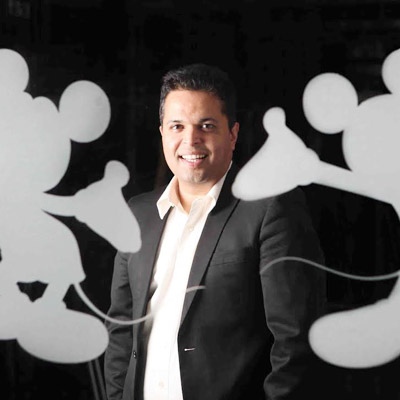
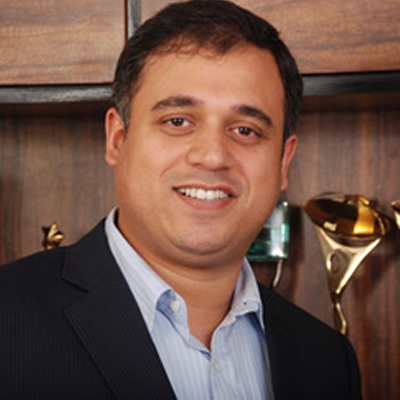
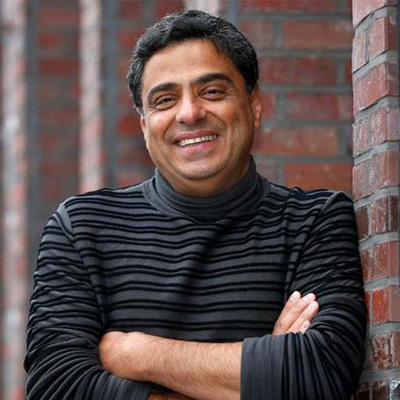
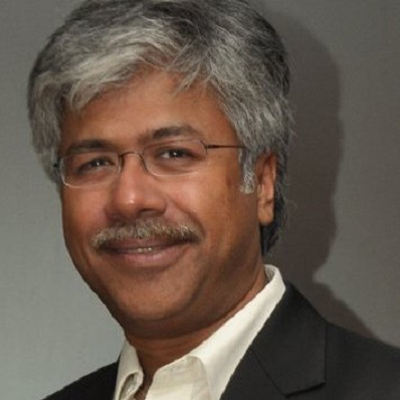
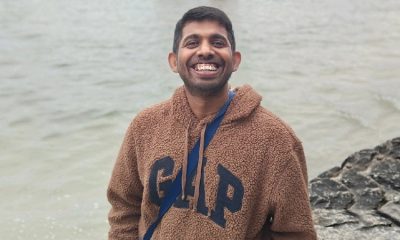
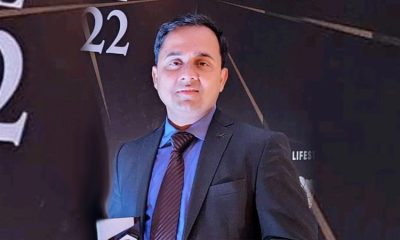
  • While our main focus remains within India, we see great potential in expanding our reach globally: Harikrishnan Pillai and Manish Solanki

    While our main focus remains within India, we see great potential in expanding our reach globally: Harikrishnan Pillai and Manish Solanki

    Mumbai: A few years ago, there were Boutique Digital agencies, many got acquired and few went on from strength to strength. TheSmallBigIdea is a full-service digital agency which completes nine years and has expanded its portfolio and its services include Social Media Management, Video Content Production, Digital Media Planning & Buying, Social Listening & ORM services, and Augmented & Virtual Reality amongst other ancillary marketing services.

    Today TSBI has offices in Mumbai and Bengaluru serving client requirements in India, the US, UK & Middle East. They believe in combining the ability of technology to integrate and the power of human minds to visualize to deliver results for their clients. Their proprietary creative-tech tool ACE has enabled brands to arrive at campaign messaging by integrating insights from social sentiments & enterprise data. Over the past nine years, they have established a robust clientele in Media & Entertainment-Commerce, Tourism, Sports, Lifestyle& Education.

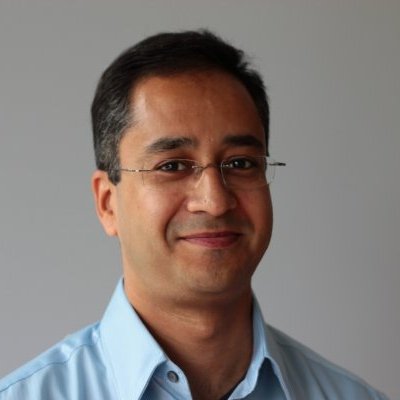
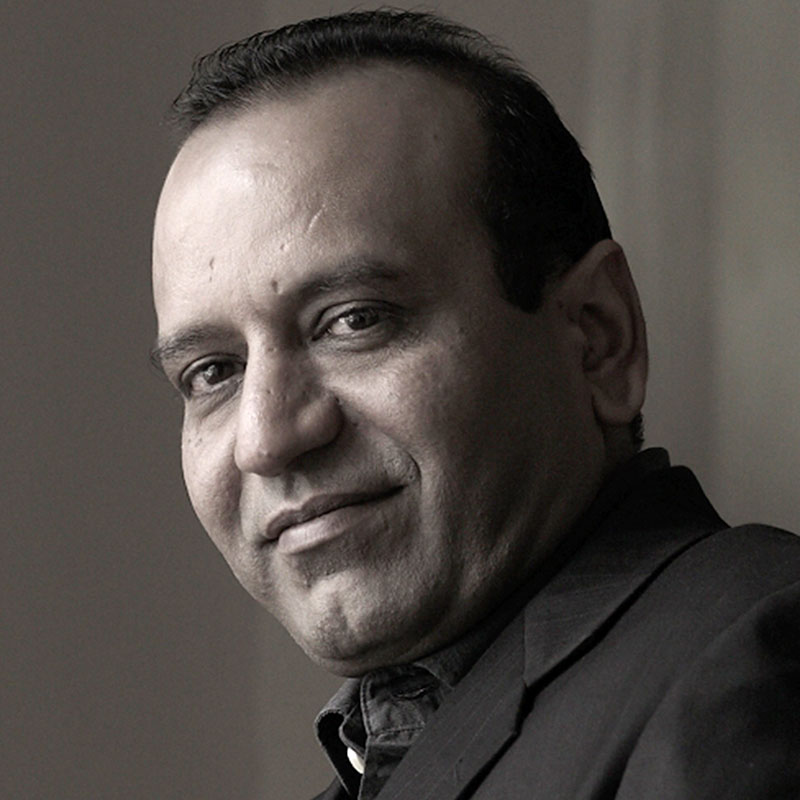
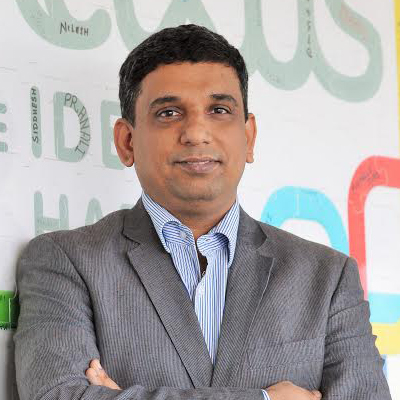
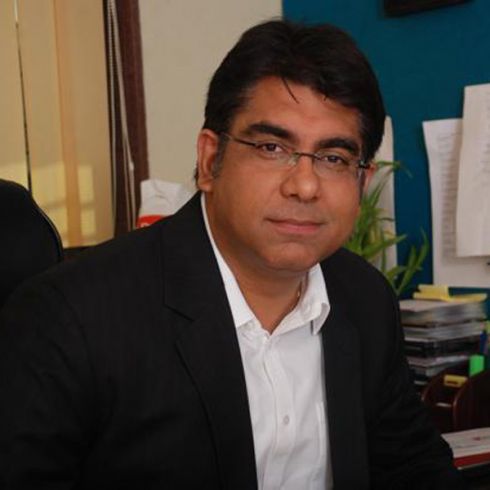
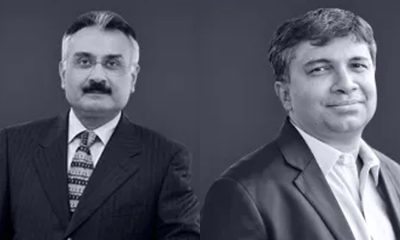
    Harikrishnan Pillai is the CEO and co-founder of TheSmallBigIdea, being a marketing head to brands before he set off on an entrepreneurial journey, He understands the pain point of consistency and quality of service delivery with service providers.

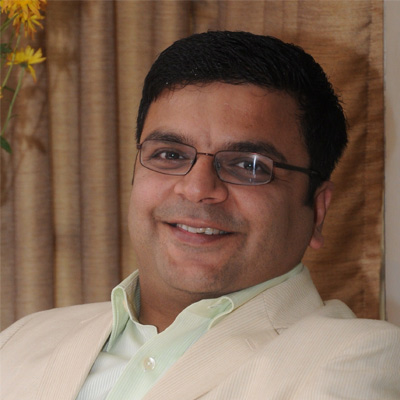
    Manish Solanki, COO & co-founder, TheSmallBigIdea, his strength lies in understanding and planning the scope of an assignment, importance of each internal and external, nature and tone of the message to be delivered and thus planning, forecasting and breaking down an assignment into smaller pieces and fixing accountability for each piece.

    Indiantelevision.com caught up with Harikrishnan Pillai the CEO and co-founder of TheSmallBigIdea and Manish Solanki, COO & co-founder, TheSmallBigIdea, on the growth of the agency over the years, the challenges and expansion to the other aspects of digital marketing and much more…..

    Edited Excerpts..

    On completing Nine Years. How has your journey been?

    Harikrishnan Pillai: The past nine years have been an amazing journey of tremendous learning and self-discovery. With the added challenge of COVID, we re-evangelized the way we did business. Over the last nine years, we have also had the opportunity to explore various domains. Initially, we only focused on social media, but we have now diversified into ad tech, ad films, movie marketing, and digital transformation for e-commerce brands. We began by serving only the Indian market, but we now have clients in the US, UK, Middle East, and Africa.  

    On the pandemic being a boon for digital agencies

    Harikrishnan Pillai: Over time, we encountered several brands with a very traditional approach who aimed to establish a direct-to-consumer (D2C) business. Recognizing this need gap, we have been extensively working on digitally transforming these brands, working with them on developing their e-commerce platforms and sales funnel.  

    Moreover, the significance of digital content has grown immensely, as people now follow brands that double up as entertainment channels rather than just advertising. Brand communication is not just about product, it is about driving affinity through softer narratives.

    Manish Solanki: We addressed the needs of business owners and elevated their expectations. In addition, we were able to attract talented professionals from across India, who helped us navigate through the challenges posed by the pandemic and accelerate our growth. Despite the obstacles, we were able to manage everything very effectively, and we are satisfied with our overall performance.

    On your USP?

    Harikrishnan Pillai:  Our biggest advantage is our ability to be extremely nimble-footed. This trait is not only critical in current times but also in the digital domain, which demands agility. As an organization, while we are decently sized, we don’t move like a giant. Agility is at the core of our functioning.

    The second advantage is more personal and pertains to Manish and me. As former clients ourselves, we bring a unique perspective to the table. I worked with ZEE and Reliance, while Manish worked with ZEE and Times Group. Our direct experience as clients has heightened our empathy level, enabling us to better understand our client’s challenges and issues. This empathy level plays a pivotal role in delivering successful outcomes. Additionally, our nimbleness allows us to achieve speedy time-to-market, enabling us to quickly adapt to changing circumstances.

    We were ahead of the curve when it came to regional conversations, having launched TSBI Bharat and created a structured conversation for Indian languages. Similarly, when the Metaverse and NFT gained prominence, we were already building META worlds for brands and celebrities. Our agility as an agency is good, with a high speed to market and robust insights that have significantly reduced the time between ideation and execution.

    On being recently certified as a great place to work and what do you attribute this to?

    Manish Solanki:  Our organization’s core DNA and focus have always been our people. We firmly believe that our team is the backbone of our success, and our Great Place to Work certification validates that belief. It instils confidence in us that our people feel supported and valued, and it helps us attract more top talent in this highly competitive industry. Working in entertainment and other sectors, it is essential for our potential employees to understand our work culture and recognize TSBI as a great place to work. The certification has given us a better understanding from an employer perspective, motivating us to strive for even higher levels of excellence.

    On the rise of Indian languages and brands wanting to talk in that language to their TG. Can you share a few case studies?

    Manish Solanki: The demand for regional content is growing rapidly. Considering that we have been in the content industry for a considerable amount of time, in 2019, we recognized the need to cater to the Bharat of India and therefore launched TSBI Bharat with the objective to penetrate the non-English speaking markets in the non-metros of India. The emergence of short-form video platforms has made language a crucial aspect. We always anticipated that the next wave of digital consumption would come from these non-metro markets and thus, we established the division called TSBI Bharat, initially targeting approximately five markets. We commenced operations in the Bhojpuri and Punjabi markets with a clear focus to tap this market that was yet to be captured. We have talent based in these markets as we believe they are better acquainted with the market. After all, they are part of that market economy. Currently, we have a presence in Patna, Punjab, and the southern markets.

    Harikrishnan Pillai: Indian language is the language of comfort. English, even today is the language of aspiration, but one’s mother tongue is the language of comfort. And eventually, one always wants to use the language of comfort and I think that is why we are seeing this surge. The second and last point is that we do not merely rely on translators. Our biggest unique selling proposition is that the people who work with us are not translators who take an English copy and write it in Hindi or Bhojpuri. Instead, they are cultural experts and not copywriters who live in the respective regions and understand the language nuances. Their understanding of cultural nuances sets us apart at TSBI Bharat.

    On now creating and producing ad films

    Manish Solanki: Both of us have worked as television marketers, and we know that content is at the core of any successful marketing strategy, no matter what the format is. During the pandemic, we faced many challenges, but we also discovered digital formats that allowed us to produce content without requiring many people to come together physically. This led us to explore newer formats, such as creating CG and VFX content. We also recognized that the demand for short-format content was increasing, so we began producing content based on the specific marketing needs of our clients. These capabilities were already present within our organization, and the pandemic provided us with an opportunity to further develop them.

    On movie marketing which is completely different from normal creative business.

    Harikrishnan Pillai: I believe that our team shares a common love for cinema. Personally, I have grown up watching Malayalam cinema and I strongly believe that the writing in this industry surpasses that of any other. Collectively, we felt that it would be a great opportunity to approach this and make the best of it. However, at the end of the day, we see ourselves as storytellers. The advantage we had was that we didn’t have any preconceived notions about how movie marketing in the cinema industry is done.

    When we were approached to market the film “Badhaai Ho” starring Ayushmann Khurrana, we decided to take a different approach. From a digital standpoint, it is still considered to be one of the best film campaigns. Our strength lies in working on films with great stories, and we have marketed over 40 such films. We are preferred by those who want to market such stories because we can weave the narrative together. Even films like ‘Jugjugg Jeeyo’ and ‘Good News’, which were all about glitz and glamour, we approached from a storytelling standpoint and added value.

    So tight, insight-driven, content-first narrative is what we bring on to movie marketing. It is this combination of insight, content and solid delivery that makes us a preferred agency for a lot of studios and producers. While we have largely worked in the Hindi film industry, we have also marketed the Malayalam film ‘Sufiyum Sujatayum’ and worked for films on OTT.

    Also, the complete digital mandate for Ajay Devgn is managed by us.

    On the changes and elevation in the company. And now what would be the new roles and functions

    Harikrishnan Pillai: In our 9 years of operation, we have retained employees for up to 7-8 years. We have organized the agency into clusters, each with its own mini-agency led by dedicated team members who have been driving successful campaigns for the past few years. Currently, we are aiming to move these team members from managerial roles to leadership positions, overseeing multiple functions within the agency.

    We plan to appoint leaders for each of our agency clusters, such as the studio business and entertainment social business, who will focus on expanding their respective divisions in a specific manner. Meanwhile, Manish and I will concentrate on other markets within and outside of India. We already have a strong presence in the US, UK, Middle East, and Africa, and we are optimistic about further growth opportunities in these regions. While our main focus remains within India, we see great potential in expanding our reach globally.

    On the expansion plans and vision for 2023

    Harikrishnan Pillai:  

    At TSBI, our main focus area will always be to tell great stories for brands. We believe this is something that technology will take a long time to disrupt. Media buying, performance marketing, analytics, and e-commerce can all be disrupted by technology. Currently, 60-70% of our digital media spending occurs on Google and Facebook. However, these platforms could change the way they operate in the future, forcing us to realign ourselves. While we do use performance marketing and analytics, and have a strong team and our own tools for these tasks, our main focus is on storytelling. This is something that will never go out of fashion. Machines will take a long time to learn how to emote and understand stories because they still require human data as their primary input.

    The idea is that nowadays, every brand’s main objective, particularly for the digital audience, is to create entertaining content. And we are the experts in entertainment content, whether it is broadcast, movies, or OTT. Today, TV shows alone cannot create entertainment due to numerous media challenges. Every brand should create their own content. In the future, brands must have their own content channels as people will continue to consume content. This is where we can bring our strength of creating great entertainment and stories to give it to brands. We will enable and allow them to be great storytellers. Once they achieve this, half of their battle is won.

    On the ASCI guidelines on influencer marketing

    Harikrishnan Pillai: The guidelines are very prudent and extremely important. As advertisers, clients, and creators, it is our duty to safeguard the interests of the consumers who place their trust in the communication presented to them by the brand or creator. Although there may be some glitches, and confusion concerning the implementation of these regulations, in the long run, they are in the best interest of all stakeholders, including the consumer, the brand, the agency, and the creators. We are big supporters of these regulations.


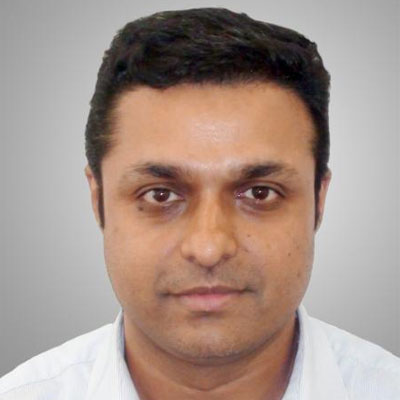
  • Today we have grown to become, a mainstream channel: Curt Marvis, CEO & Co-Founder of QYOU Media Inc

    Today we have grown to become, a mainstream channel: Curt Marvis, CEO & Co-Founder of QYOU Media Inc

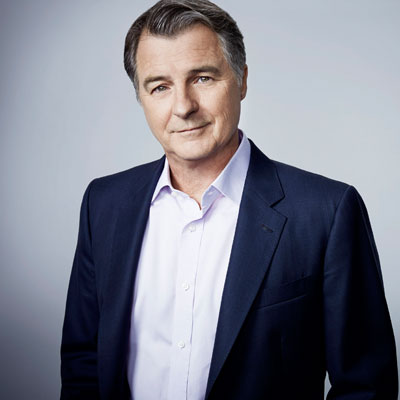
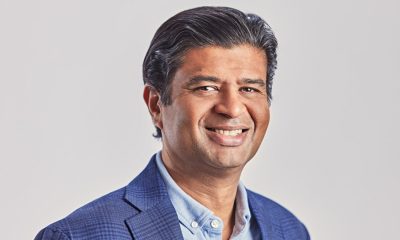
    Mumbai: Curt Marvis is recognized globally for his vast and successful experience in both traditional and digital media and for his pioneering efforts in digital distribution.

    Marvis is currently CEO & Co-Founder of QYOU Media Inc., a publicly held company (TSXV: QYOU OTCQB: QYOUF) which operates in India and the United States producing and distributing content created by social media stars and digital content creators. In India, the company’s flagship brand, The Q, curates, produces and distributes premium content including television networks and VOD for cable and satellite television, OTT and mobile platforms.

    QYOU Media’s India-based influencer marketing division, Chtrbox, is among the leading influencer marketing platforms in India for connecting brands and social media influencers. In the United States, the company creates and manages influencer marketing campaigns for major film studios, game publishers and brands.

    QYOU Media in India the growth & the penetration.

    The growth is massive for us if compared to when we started. We launched as a VAS  channel on TATA Sky with English content and a very small audience base. We then shifted our focus to create a Hindi language version and began partnering with better creators and people that could relate to the audience that we were trying to reach. As this was being rolled out,  COVID hit and hurt us a little bit in 2020; just as we were starting to get off the ground with advertisers. So, we waited until the situation settled and focused on the product. In late 2020 we were chasing channels like Zoom, Bindass and MTV on the GRP level. Our reach and the size of our audience just kept climbing. At this point, our COO, Krishna Menon insisted that we get our channel on DD Free Dish.

    Today we have grown to become what I believe is considered a mainstream channel. We have since gone on to launch new channels on Connected TV, which we’re big believers in. We’re on app-based platforms like Snap and on mobile platforms like Jio TV. So, we have really expanded the audience reach with what we’re doing. We acquired Chtrbox two years ago and as a result added an influencer marketing business and agency here in India. So as a company, we are drastically more developed than we were when the original vision was to put a little channel up on TV in India. We also very recently acquired Maxamtech Digital Ventures, a gaming company, as part of our business.

    On the growth of Connected TV and how has QYOU capitalised on it?

    I’m a huge believer in the Connected TV business globally. More specifically for India since it’s free, and people want to have broadband connections. In addition, even without broadband if you can take your phone and you just cast your phone to the TV. So, I’m a huge believer in the Connected TV business in general.

    We have witnessed the growth of CTV in the United States where if you are into a broadcast or a television business you must be part of the Connected TV space. This is going to happen here in India, and it’s just going to keep getting bigger and bigger. It’s going to spread out into the rural areas. The Connected TV prices are also very competitive. So, for us being on Connected TVs is a priority. It’s as important as anything that we’re doing right now.

    On acquiring Chtrbox and Maxamtech Digital Venture.

    We started as a single television channel, but the concept behind our business was always to be a media business that was multi-tiered. In terms of the platforms that we were on, the television channel was just the first step and the first building block of a much larger vision that we hope to accomplish. Our belief is that our audience is what we call ‘Young India’. And we believe that young India is dialled into what’s happening around the creator economy.

    Everything we do is set up using this as the centre of our universe. Therefore, we are going to compete and do things with other products that are not just television, but mobile apps, and games. We are going to do things that people are going to use and be able to engage with transactional content and social commerce. All of this is on the roadmap.

    On the recently launched Q PLAY direct-to-consumer app?

    Q PLAY app aggregates all our channels under one roof. And it’s a lightweight app that requires no registration. The purpose of Q PLAY is that as a company we will get increasingly into a direct-to-consumer relationship. Now that we’re starting to build up more of a critical mass of reach on a weekly basis. Q PLAY app is putting our foot into the swimming pool and building that direct-to-consumer relationship.

    On being on Free Dish and how does it drive business to your channels

    DD Free Dish is a spectacular platform in terms of the number of users that it has. It really was a game changer for us because I think it also exposed us to an audience that we didn’t even necessarily know about but that we do know now. This is an audience that had never seen a lot of what we were doing and a lot of people that watch us on Free Dish hadn’t really been that exposed to YouTube or to social media.

    As a brand, we’re trying to be new, fresh and different. Our tagline is ‘Zara Hatke’ for a reason. We think we are a little different. We are a little offbeat. We also think that young people all over the world, especially in India, are very cost conscious about content. Hence our audiences are going to show up on a platform that they can get for very little money. So Free Dish aligns with where we are at as well as in that regard.

    Way forward for 2023

    There are several things. The direct-to-consumer strategy that we were talking about is an important priority for us to continue to venture cautiously into it. I think a lot of what 2023 is going to be about is starting to leverage the direct-to-consumer relationship. To build the foundation. It’s also about doing more of what we have done right now better, to monetize it, satisfying the consumer to drive more consistent audience numbers. All of those things are a huge priority for us right now. We are at a place right now in India where we need to make sure that we’re optimising all that we have been building over the last couple of years. It’s not just about running onto the next thing; it’s about making the most of what we’ve got. So that’s a big part of what we want to do this year.

    On linear TV and Connected TV co-existing in India in the future

    Change always takes longer than everybody thinks; people are creatures of habit. I’m a big believer that human nature is kind of constant, even from country to country and that people don’t change their habits instantaneously. Even young people, we talked about how fickle they are, it still takes time for people to change how they do things. Traditional linear is going to be around for years and years. Areas like rural and tier two, tier three, and tier four cities are single television households and they have only one smartphone. There’s a lot that’s got to change before that kind of transitions into the world that we know in the metros and urban areas today.

  • “Create work that will be loved and feared. Collaborate with the right partners to achieve this end goal”: Mayur Varma & Anuraag Khandelwal

    Mumbai: 82.5 Communications was set up as an agency to help brands succeed in the Indian market and to help take Indian brands abroad. It is part of the Ogilvy Group and a WPP company, the young agency already has two Grand Prix at the coveted EFFIES to its credit and a host of Indian and MNC clients in its roster. The agency follows an open source model, which brings together its core services of strategy, creative and brand custodianship, along with the best of WPP partners’ allied skills, for its clients.

    After the exit of Sumanto Chattopadhyay (fondly called Sumo by his friends and advertising colleagues), Mayur Verma and Anuraag Khandelwal were elevated as Joint Chief Creative Officers at 82.5 Communications.

    Varma prior to 82.5 Communications was one of the youngest Group Creative Directors at Ogilvy, Mumbai. He has won several international awards including the Design Gold Cannes Lion. He has the rare achievement of completing a clean sweep at Kyoorius, winning the Black Elephants at both Design and Advertising Awards.

    Beyond advertising, Varma has been a Ted speaker and also likes to design his own clothes hoping to turn that into a label someday.  

    Khandelwal entered Ogilvy India over two decades ago armed with a BFA in Applied Art and a short stint at Ambience Advertising.

    He was instrumental in launching the Indian Premier league, the Indian Soccer League and the Indian Hockey League. Khandelwal’s first prestigious award was the Young Cag he won in his final year of art school. Since then, he has won over 80 national and international awards for campaigns including the Grand Effie for the BJP 2014 political blitz.

    Khandelwal’s passion for creativity and his ruthless compassion has given birth to the award-winning Red Ramp Project that brought to light the lack of accessibility issues in India for the physically challenged. He has graced the cover of Forbes India magazine and makes the time to mentor university students. Outside of work, Khandelwal dabbles in cooking and wants to start a chain of gyms which will break down doors for the physically challenged.

    Anuraag Khandelwal (AK) and Mayur Varma (MV) in conversation with Indiantelevision.com discuss their roles as Joint Chief Creative Officers, their creative passions and how 82.5 is home to them and much more…..

    On 82.5 launched as an India specific advertising agency three years ago?  

    AK: 82.5 is not an agency, it’s our home. We wake up, we brush our teeth with some ideas, have some coffee…lunch on ideas, we banter, we play around with new tech, we fight over the best form of media for the brand and the idea, be it social, digital, phygital, traditional, guerrilla whatever.

    We are basically an ideas powerhouse! Every creative, planner, client servicing and finance person has ideas. Even our clients contribute to our ideas.  

    And like any household, we’ve had our ups and downs. Our share of successes and failures. We celebrate, we learn, we move on. But most importantly, we have lots of fun.

    MV: 82.5 is an ever-evolving dream – to see Indian brands grow to unimaginable levels. Today, when we think of huge brands, mostly international brands come to mind. With so much innovation in products, services and technology happening in India now, there are these absolutely amazing Indian stories being created that the world ought to know.

    We have been galloping to work every day to tell these stories. It reflects in our growing partnership with small, medium, and large Indian businesses and also with the international brands that are keen to imbibe India and write the most exciting chapter of their brand story.  

    On your individual journey’s?

    MV: Advertising is a profession one chooses to be in. No one ever forces anyone to join advertising. Have you ever heard of anyone joining advertising because of peer pressure? When you join a profession of your choice, you want to learn, contribute and achieve. After my first day at Ogilvy, I remember feeling there is so much here to learn, contribute and achieve. And after almost two decades I feel the same here at 82.5. The similarity, in some ways, ends there. My journey at Ogilvy was where I thrived in its great culture. At 82.5 my journey will be a tad more challenging and exciting – for here I will get to contribute to shaping an absolutely new culture with and for an enthusiastic team to thrive in.  

    AK: When I first walked into Ogilvy, I felt exactly the same buzz as I feel when I go to visit my relatives and their huge joint families. It was a collection of the wildest mix of creative, planning and client servicing talent in India! It is a family that is still glued together by Piyush Pandey. My journey has been nothing less than extraordinary.  

    The people I have had the honour to work with, the characters that touched my life, the opportunities I got, the successes I enjoyed, the failures that I never experienced alone, the handholding, the mentors, the friends, the love… everything and everyone has played a role in where I am today. I have learned and continue to learn from big brother.  82.5 gives me the same excitement today as Ogilvy did.  
    The excitement of creating together and celebrating together.  

    On being joint CCO’s what will be your creative strategy for the agency?

    AK: We want to create work that is both loved and feared.  
    Loved by our consumers and feared by our competitive agencies or clients.  

    We want to have John Wick like qualities – focused and committed along with sheer will to move our clients businesses above and beyond. We want to achieve this by going beyond just campaigns as our currency – but, help brands become a part of culture and build through communities and collaborations. I personally want to bring back the art in advertising.

    MV: We want to see 82.5 evolve into a creative platform where individuals and teams can plug and play their most creative selves and approach brand story telling in their unique ways. We believe in diverse creativity. We all have always known that there is never only one right perspective or one right solution. Especially while architecting a brand voice across different mediums and over a period of time, I’d like 82.5 to be a place where a bartender, an acapella group, a sommelier, a Lego sculptor feel excited to express their idea of what an agarbatti can be. Those ideas viewed through 82.5’s brand lens will be priceless for the agarbatti brand!

    On  some of your most exciting campaigns?

    MV: Since I have been thinking a lot about cultures and communities of late, I am reminded of the ‘Future Hai Football’ campaign we did for Indian Super League. It marked that moment in Indian football where we started believing in our football players at a national level and wanted to know their back stories. I am also proud of the “Wear Her Name” campaign we created for Star Sports where Indian cricketers walked into a cricket match wearing their mother’s name on the back of their jerseys. #CleftToSmile became The World’s Most Tweeted Logo and also Ogilvy India’s first ever Design Gold at Cannes. Vodafone iFold roared at Cannes too while saving 800 trees every month by adding an extra fold to bills that were mailed in those days.

    AK: The BJP 2014 campaign was a once in a lifetime learning. 

    It was extremely fulfilling to create the “Acche Din Aane Wale Hain” campaign
    and see very different reactions to it.

    I’ve really enjoyed creating is the Bisleri Camels #SamajdaarBisleriPeetenHain campaign. The camels appealed to the hearts of the people and Bisleri, for the first time in its 50 years of existence, became the No1. Most Trusted brand in India!  

    And to top it all, both BJP and Bisleri won the Grand Effies. ‘

    Launching IPL in India, launching the Indian Super League with the #LetsFootball campaign, turning Tata Motors into a new force to reckon with the famous Leo Messi #MadeofGreat campaign and more recently, digital campaigns for IDBI bank with #BankAisaDostJaisa and Bisleri Limonata #LetLoose.

    On the vision, hope, plan, for 82.5 in 2023 and beyond? What would be the main focus areas?

    As mentioned earlier, we want to deep dive into communities, cultures and collaborations. While Gen Z is a hot topic, we would also like to do some future gazing and look beyond Gen Z. We want to create fabulous relevant brand stories that are consumed by the consumers without them feeling “oh this brand is trying to sell me something”. If we can appeal to the right communities with the right cultural insights and collaborate with the right partners be it media or tech, we will hit home. Every time.  

    On the thoughts you would like to share with your colleague’s at 82.5 in this context?

    The message is clear. Create work that will be loved and feared. Collaborate with the right partners to achieve this end goal. If the idea is relevant, fresh and exciting – nurture it with your life. Fight for it. Get the right people involved. Make it happen. Keep your constructive egos alive and get rid of the toxic ones. And make sure to have lots of fun along the way.  

    On talent today and as an agency, how have you been nurturing, retaining and growing talent?

    There’s an organization that works in the so-called efficient MBA way. People delegate. It makes super-efficient use of talent. The output is measurable. Everyone goes home feeling they have done their bit. Then there is an organization that works like kids in a play area. Here talent has fun. Here the output is priceless. Everyone goes home feeling excited to come back the next day.

    We would like to see ourselves increasingly become like the second organization. Our wish list to our CEO, our clients and the McKinseys of the world is to devise a business model where maintaining creative topline and bottom line is made as equal a measure of success as financial metrics.  

    On the changes in Media & Advertising, how are you seeing creativity changing from then to now?

    In two or three specific ways. Earlier, each piece of execution had a lot of importance – there were craft specialists and idea specialists (who usually became creative directors and leaders). Today, social has turned creative pieces into inventory and AI would also be good enough to handle it. The average youngster cracks smart lines memes and limericks on a good morning. So, human creativity at its pinnacle, at its very best must focus on #breakthroughs and what is the overall large brand narrative that these number of posts/per day or memes are parts of it. Can we write it, control it, direct it, produce it?  

    Second, #collaboration. The new-age agency doesn’t have remits and definitely not sequence. A takes brief, gives to B, B mulls and creates a creative brief and hands to creative. It is slow, industrial and counter-productive. Agile creativity will be the new norm – a room, specialists like planners, social media people, creative techies and creative minds each building on their ideas to build a SOLUTION.  

    Third, if you can dream it, you can find a way to make it. We call it “#limitless” – it is way beyond mediums or even metaverse. The conception of a world of a solution or an idea and then going about making it happen.  

    You can call it our 82.5 BCL formula if you like!  

    On being CCO’s how are you seeing relationship between new age clients and an agency as compared to say the past decade?

    In our experience, new age clients are far more willing to listen and trust.  

    They come from the same connected world as ours and so the understanding of an idea is often better and sharper. They understand that if they want to get the best out of us, giving us the space to play is very important.  

    Most of our agency-client relationships are human, open and respectful.

    While there are exceptions, the mindset of “I am the client, so do as I say” is dwindling fast. There are healthier, respectful debates and sharing of POVs.  Today, smart clients understand that their agencies are not mere vendors, but #BrandShareholders – lifelong partners to whom the same outcomes matter and there is a shared vision of what success looks like.  

    But then there will always be a variety of clients who want to engage for a bit and move on. Practically, they come for interventions they need specialists for – the business calls these projects.  

    On the surge of regional and vernacular communication

    We began on this way, way earlier before it became a mainstream discussion – so, we are not in the early days of “tackling this”. In fact, we saw it coming and it has been one of our raison d’être and a favorite service amongst our clients.  

    We have Bengali, Marathi, Punjabi, Marwari, Tamil, Telugu, Kannada, Malayalam, Gujarati and Bihari language specialists who have refreshed ABP Network’s regional news channels across 7 states, captured state specific regional campaigns with cultural nuances for PhonePe and created winning regional communication for Bisleri, Ghadi Detergents and Nestle Milo.  

    Nothing connects better than a story told in your own language.

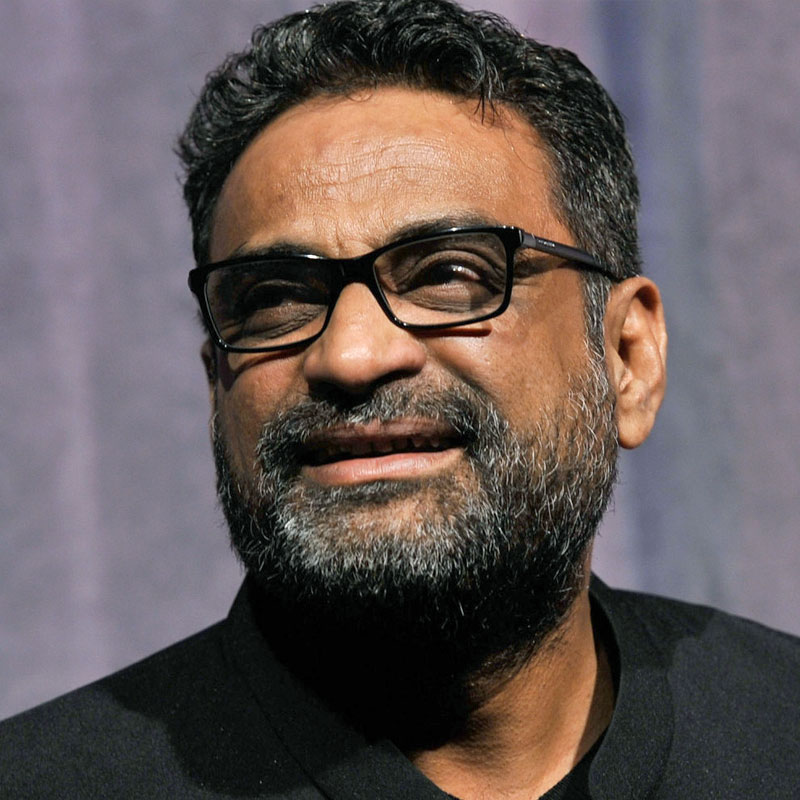
  • “Business has been kind to us that we’ve been sustaining fairly in the not-so-short journey, in a good trajectory”: Scarecrow’s Manish Bhatt Part – 2

    “Business has been kind to us that we’ve been sustaining fairly in the not-so-short journey, in a good trajectory”: Scarecrow’s Manish Bhatt Part – 2

    MUMBAI: In the second part of the conversation with Manish Bhatt who holds the fort as the founder of Scarecrow M&C Saatchi, Indiantelevision.com tries to delve into what he thinks about the role of women, the evolution of the advertising industry, valuing human relationships, re-scaling up operations if given the chance to do so again and more.

    Edited excerpts:

    On considering scaling up operations, once again

    Scale is a by-product, scale is not an objective. If we see the whole world has gone to a down spike of covid – the entire world, each and every business has its own repercussions.

    In the last three years, the agenda is to not get affected or be less affected or come out from the unforeseen which the world has seen in the last few years. So that was the common agenda not only for us, but the whole world, and the entire economy. So we are party to that – we work harder, so that we don’t lose the spirit. It’s like wartime – we’ve seen the worst – and all that could go wrong.

    So we’ve seen it, we came out, we sustained and we survived. I think that’s the agenda that has been for the last three years or four years. Apart from that, I think the scale and expansion – I think we don’t really operate as one of those corporations operate – I think, more philosophically, we want to sustain the brand, and build and strengthen the brand Scarecrow, I think everything else the business follows. Creativity is not a business like the stock market or selling some FMCG or something like that. It’s a business of passion. It’s a business of the highest level of job satisfaction, the highest level of doing something like creating something every day.

    I don’t think it happens so easily. The scale of discovery might be big for an innovator or a scientist. Creators here invent or create something every hour, something on a small scale – probably less significant sometimes a thing in the scheme of things of supply and demand and chain of the economy.

    But of course, it’s significant. It’s very inspiring. It’s just very fulfilling and very human. I think if you just look back to the journey that is what we built. I think business has been kind to us. We’ve been sustaining fairly in the not-so-short journey, in a good trajectory – we’ve sustained, we’ve been a collective cause of the livelihood of always 50 to 100 people all the time.

    I think that is the achievement – it’s a human achievement I think that is more meaningful. I think scale is an inflation of your ego and your general corporate ego. I think we won’t change that if it happens, we’ll be very happy. But we just see also there are brands which are behaving like large corporations in our industry. And then there are brands like Mother or W+K, BBH in one point of time in some sense or some of these other agencies like Crispin Porter and all those agencies – they have never chased scale in that sense. But they’ve been respectable agencies even though. I think we just wanted to be respectable to the respective client. We want to be respectful to the young talent which we nurture because someone has to do that job.

    I think we concentrate a huge amount of time nurturing talent. I don’t think many agencies in this country are interested in hiring 15 people who are freshers, training them and spending a significant amount of time.

    We have this initiative called MOM – we have been doing it for almost more than a decade now. We have started with the reverse internship, going to institutes and doing a good thing for the freshers from institutes.

    We had been consistently doing workshops and sessions in institutes. We’ve cultivated this since 2018. We consciously hire young talent from the art colleges and all. We have been training them personally. Like I spent a lot of my time or my colleagues spent a lot of time. We curated and put and exposed lots of stuff even pre and post-pandemic. We had sessions physically in our office and also through Zoom. That’s around 17 such sessions. And we do a lot of other things. So I think we’ve been doing the job which is probably a need gap for the industry. If you won’t be happy, we won’t be able to do that. I think we are one of the happy bunch who really cares about the culture of the industry as well as our own agency and in general, believe that the young talent needs bridging, training which is normally would have between haves and have-nots.

    So I think we try to fulfill that and we do all sorts of things. We are probably fairly an extroverted agency to call people that are office premises. We do events and stuff sometimes to invite industry people. We had enough initiatives like we did Aam Aadmi Party Award which was actually felicitating unsung advertising talents and stuff.

    So, all the time we’ve been doing something or the other, which is helpful to the industry as a whole. It is like altruism where we think that the species should survive – our advertising, the creative species should survive. I think one has to do that also. I think we are fairly concentrating on those areas. If our stomach is not full, we will not be able to do that. I think we are very happy doing what we’re doing in terms of the trajectory of business and growth in the trajectory in the kind of directly proportional to the industry growth and trajectory. I think we’ve been matching with that in our own unique way and I think we are very, very satisfied about our journey in that sense.

    On your thoughts about the role of women in Scarecrow

    I think whether it’s women, children, or elderly people – I think compartmentalisation itself is a disservice. When we did a Holi film, blind children playing Holi in 2007 for Eye Bank Association, if you remember, the film was treating blind people in an absolutely normal manner.

    It’s just a normal performance in the film. We didn’t even treat them specially. We rather gave a message that public caused films where we generally normally show the misery of deprived people. I think what we tried to show is that there’s a celebration in their life. We showed the positive side of it. And I think it worked and touched a lot of people. I think we borrowed from that. We got inspired by the work we did. I think we always choose not to discriminate against people on the basis of gender or any sort of classification.

    We just simply treat people with their meritocracy and we don’t really have special or unusual treatment for people. I think there are enough women – every year, if you see our list of freshers, we have so many women from art colleges who join us, and many of our colleagues are fathers or mothers of a daughter.

    I think we all respect both and all genders. Rather we do have people from the gender other than male and female also in the past. And we have never even judged them. They work like normal employees and then go, spend their good time here – we have a testimony of such people and I don’t think we either upscale or downscale based on their gender or any other classification. We think that they are treated equally and I think the industry also believes in that.

    I think it’s not an issue – as far as I can understand and whatever time I have spent in the industry, I think making that a debate itself is probably a disservice to the respect that they should have, that’s what I personally think.

    On the evolution of the advertising industry and its myriad phases

    I think we are losing self-belief, and when I say losing self-belief, I mean the entire set of people who deal with the industry – be it clients, be it the people from our advertising community who create things. Everybody is losing self-belief due to a lot of reasons. I think first to start with the crudeness of the economy and its byproducts – the entire economy which is driven by a developing country like us who’s sometimes extraordinarily ambitious to scale up. I think scale is not the answer to everything. Scale sometimes becomes inversely proportional to the quality which we deliver and create. I think because we are always trying to change the number game and in that we sometimes lose the meaning of doing so.

    So, the brands market, the business is changing due to the new competition which has been opened up for consumerism which is the internet and digital world, where everything is now getting compared with not a shop in your local city or a village, you’re now competing with the whole market in the whole globe.

    It is good to create a spirit which is competitive but it is bad to be unfair to the quality which we developed. Like, someone makes dosa on a thela, which is in your corner, and he’s known for that. Now, if he scales up, it affects the quality of the dosa which he serves, I think that’s not something one would want. So I think there are lots of businesses, brands and creative services that do need that attention and time being spent to do good things. I think it affects that. I think that is where commerce is actually affecting the art of our field, the art of our industry as a whole.

    And then the second thing is that science and technology were supposed to reduce labour, the blue collared-ness in us a little – like ease and convenience was the thing. But then we got caught up a little too much with the fanciness of this technology and tried to use it not so insightfully. I think we’ve been putting technology in all the little things. Like, for example, as humankind, we just wanted to be less vulnerable to each other. So we put machines instead of humans. But in the end, over a period of time, we converted transactions into relations. Now, putting relations back to the transactions, we are making it a cold world. That is what. Probably that is the byproduct of the technology which we are ending up with.

    I think at Scarecrow, we still value human relationships, emotions and all. In fact, the quest for technology is going to make emotions more valuable and I think we are sticking with the fact that emotions are our human wealth and relationships are actually our human wealth.

    I think over a period of time we wanted to champion human emotions and when technology becomes a commodity, I think we will try to stick around with human emotions as our power and our differentiator. I think we would like to champion that and we would want to urge people also to do so because otherwise there’s no end.

    On how 2023 is going to be any different for Scarecrow as compared to the previous years

    No, Scarecrow is a progressive agency. I think we are really not ready for any change. I think anything which is an organic change, we are very ready for it. Anything which is drastic, we count as a novelty value and ignore it because those things will come and go.

    Anything which is insightful and organic change, I think we welcome and we want to mould ourselves in that without losing the classics and timeless, time tested value which we have developed and adored over a period of time.

    So I think without losing the old values, we try to adapt ourselves to a new thing, but not be desperate about it.

    On the expectations from Scarecrow in 2023

    I think the inclusive work which we do with our young talent is very fascinating. Basically, I think we have seen community lunches, we do community creative. I think we really use a lot of our young talent at its best. I think the pressures, the kind of creative output they generate, I don’t think most of the industry has patience and probably paid attention which should be and I would say that all agencies and more agencies should do this.

    But I think we at Scarecrow, for whoever believed in Scarecrow and joined as a young and fresh talent, we have been really channelising them at their best and I think what they’re generating is something which you need to look out for.

    I think all our latest work has been an outcome of the youngest of the lot and I think we’re really proud of that. And I think since 2018 we are conscious about it and I think what we’re generating out of them, I would say it’s a new phase of our culture and I think we’re really cherishing that.

    On the business side of the agency

    It’s actually a difference in the culture. We’ve been very organic.

    A lot of clients who open our business credentials deck ask how we grew. I think we have two ways to put it. One is that. Like if you see our client list, I think we have worked with many conglomerates – those conglomerates would not put their trust in us if they don’t really think that we are not worthy of it.

    Sustainably, we work with a lot of larger companies. Now, the biggest case study of that has always been that whenever we got an opportunity to work with one humble brand of a group or a conglomerate, we always grew within that group.

    So we have case after case. We worked with, let’s say, to start with Religare. When we started we had one brand which is Religare Macquarie. When we pitched for them, the Scarecrow name didn’t exist – we had a visiting card with Me, Raghu and Joy with Barista and CCD on our visitor’s cards that time, and we won a business against Ogilvy and a couple of other people. That was the first account of Religare. And then we virtually handle everything of Religare.

    In the Essel Group, we handled Zee Khana Khazana to some ten odd brands we used to work with, from AndPictures to a lot of things.

    So be it any group. Mahindra, Reliance, etc. Whenever we got an opportunity to work with one small humble brand we’ve always done that much that they put more trust and we kind of grew within that relationship.

    Yes, I think that is the most valuable thing – that we have when you believe in us, we grew. I think that’s the condition. Like we want people to believe in our culture, our solutions, and our people and I think we grow with you.

    I think that is what we say. I think we may have worked with two of the conglomerates, then slowly by three or four or we grew in terms of the number of big companies we worked with. And along with that, we have also worked with brands/companies within that group. That is one way – in terms of a rational way of putting it.

    Creatively, what we did is we tried to develop absolutely a new genre of communication all the time. Like, for example, we have done a number of music-led work.

    I think we always believe that when advertising started in India and internationally, there was a lot of music in that industry. We’re trying to put belief back into action and categorically trying to do a lot of music-led stuff.

    Similarly in culture, like for example, we all heard and believe that Santa Claus was a product of Coca-Cola’s advertising. I think we tried to do more and more cultural work and we believe that working on culture is going to go beyond the limits of businesses and in general, advertising limits.

    I think it has power, I think, just like we see any other commercial work. I think great monuments are someone’s commercial real estate assignments and which become a landmark or a monument or an inspiration for centuries to come.

    I think just because advertising is a commercial art, we don’t value it less and think that we have a strong belief that it will go beyond. And I think that belief is something which we kind of constantly work upon.

    On the vision and way forward

    Talking about that, I said something with regard to this on our ninth anniversary. And that would still be my belief. I had said that technology will probably make humankind crippled by offering the carrot of convenience and by showing the stick of speedy life and gradually turn our life into a robotic lifestyle. In that robotic era, in 2028, Scarecrow M&C Saatchi will be the champion in infusing human emotions to the brands like no other in our industry, when most brands and their consumers will be craving for the highest level of emotional quotient.

    So this is what probably I think our vision is – that when technology will almost invade everything, we probably think that emotion will be rare and precious and that is what we wanted to kind of hold on to and invest in, so that it will become very valuable at that point of time.

  • “Ideas and creativity are the deities, we want to build a temple and it is all based on the belief called Scarecrow”: Scarecrow M&C Saatchi’s Manish Bhatt – Part 1

    Mumbai: 13 is an unlucky number for many, but not for Manish Bhatt, who is the founder of one of the country’s largest and most successful independent agencies, Scarecrow M&C Saatchi. His baby, his agency, celebrated its 13th anniversary this month, and they couldn’t be any happier! Sharing their happiness is Indiantelevision.com and talking to me, in the first part of this confab, Bhatt elucidates his journey, the federation of entrepreneurship with M&C Saatchi, his challenges and learnings and much more.

    A civil engineer turned ad veteran, Manish has 29 years of experience in advertising and has had a strong and undeterred creative bond with co-founder Raghu Bhat (who is a chemical engineer turned ad veteran) for 27 years.

    Before setting up Scarecrow, Manish worked at Ogilvy, McCann Erickson, Contract, Ambience Publicis and Bates. Over his career, Raghu had been associated with Contract, Clarion, Ogilvy, McCann and Publicis.

    Edited excerpts:

    On the journey of Scarecrow

    So I think we started Scarecrow in 2010, precisely after working for 15 years in various agencies, with the likes and kinds of Ogilvy, Contract – in Delhi and Mumbai.

    Then Ambience Publicis, McCann Erickson and Bates Clarion. And a small stint at Capital, where I worked with. So putting together 15 years, we worked in various places. And then in 2010, we started Scarecrow, which is completing 13 years – eight years as an independent agency and in 2018 we partnered with M&C Saatchi.

    So that’s more of a chronological journey description. More from a detailed perspective, I think we have been consistent in terms of growth.

    We are around 70 people in Scarecrow. We did have Mumbai and Delhi, both offices, at one point of time. For five to six years, we had the Delhi office as well. We closed down because most of the operations were happening from the Mumbai office in terms of creative, and this is in today’s time – it is a technology-driven thing. In fact, from the beginning, we had accounts from Delhi and Calcutta to start with. So we had Rupa, Emami and Joy Cosmetics and a couple of others in Calcutta.

    And then we also had Religare, Nestle and Bacardi Eristoff and a couple of others in Delhi as well. So we were handling outstation accounts. It was that particular one or two brands wanted us to have a base in Delhi from an operational perspective.

    And if you remember, there’s a person called Anindya Banerjee. Now he’s the creative head of Publicis Health. He showed a lot of interest when he was in Delhi to start a Delhi office. So due to his initiative, we started the Delhi office.

    And the Delhi office had some people like Anuj Mehtani and Iraj Fraz – Anuj was from the client servicing side and Iraj Fraz was an ECD from the creative side. So we had a Delhi office, and we ran it for five to six years. But then we felt that it is basically not making business sense to have a Delhi office because we were operating from the headquarters only. So we thought that let’s just consolidate everything from the Mumbai office. It was always headquartered in Mumbai, always in the old vintage area of Mumbai, which is you can say old Bombay, largely in Fort and Ballard Estate.

    So first till 2017, we had a physical office on DN road, opposite Kitab Mahal and beside Residency Hotel which is called Bilquees Mansion which we had from 2010 to 2017. And around mid-2017, we moved to a larger office, which is in Ballard Estate. A more vintage office, more beautiful office, more like a taller office. It’s a 150-year-old building in Ballard Estate. We really care about how the office should look because we thought that the culture starts with the way – where you work and how you work, basically.

    So we always believe that Scarecrow is not just another transactional entity which actually served clients’ needs, but it is a culture. It has to have a feeling. It has to have a look and feel. And we always believe that the spirit of Mumbai is old Mumbai.

    And then that spirit which we retain with our both offices because both offices were in Mumbai, and have its own character. And so we did build it that way. And we’ve always been conscious about the way we work and we do new businesses the way we do, the way we are in the office, or the way our initiatives are in our office – are meant to have a culture, and we have our own style, ethics and philosophy to work.

    And I think we retained that for 13 years. And I think we always believed in hard work, passion, commitment and talent – the four pillars, and this reflects in our talent hiring to the way we work. So we always have these four things.

    We always believe that hard work is the biggest differentiator, which one can build. It all can be comparable, measurable and doable, but the efforts which you put in can be extraordinary and cannot be matched if you really do hard work basically.

    On you taking up the challenges that have come your way in these 13 years

    I think we always believe that anything you want to build – be it a company, be it a product, be it a service – it has to have an insight, it has to reflect a common truth of the industry. We were aware that we are in a hundred-year-old industry and it has its own pain points. The pain point is basically when we floated our company, we did know that the industry has a lot of senior people, but it’s like someone climbed Everest like Edmund Hillary and Tenzing.

    So if Edmund Hillary climbs the last step and put the flag and he can see the whole new world there from there. But Tenzing is a successor. And if you don’t tell him what is being visible from there, what is that nice, interesting new world and how we achieve that, then what will happen is that the second run or successor is always going to be deprived in terms of legacy, which our senior people would build.

    This thing actually reflected in the product which we started creating. I think many of our senior people did not really think that the agencies do need a second order in command. And hence what happened is that the agency scaled up and all clients, whether big or small, would want importance to their activities and brands which automatically because of the lack of empowerment to the second order in command I think was there obviously, there is a latent demand that is there an alternative to these agencies where their brands also get sufficient love, care and affinity. And that’s when the emergence of the new people who started their agency, I think along with us a couple of more agencies like Taproot or Creative Land Asia or L&K – all of them started at one point in time.

    And the thing is that it’s always happened in our industry like there was an era where Ambience, Enterprise, Trikaya, Contract and Rediffusion started and then they scaled up and they got either acquired or merged with international entities.

    Similarly, there was an emergence of a new set of agencies. I think we were one of the few new agencies that sprung up at the start of the emergence. The only thing is that over a period of time, few agencies did not survive, unfortunately, and fewer survived.

    It always worked on a common truth. We reflected certain things which were pain points, paying ample and due importance to the brand and activities which clients feel important. We have always been mindful of the fact that I think for clients, whether smaller or bigger, work is always a very, very important thing. And I think we worked harder to solve the problem. We do understand that the bigger agencies also have a set of people whom they will put on the brand. But of course, there’s a comparison between ‘A’ size of an account versus ‘B’ size of an account.

    And I think there was a need gap. There’s an agency that probably reflects and treats its brands and accounts with a similar amount of love and importance. I think we worked harder on that aspect.

    We reflected and balanced our reputation, with our relationships, with our resources, external and internal, to solve the problem in the best possible manner. And I think that is reflected in the body of work which we put in.

    And we sustained that by early investment in senior talent. We did not really be calculative in terms of hiring very senior people at a very young age. So we’ve been investing back in people.

    We understood that it’s a people’s industry and people are important. So we did that also at the right time. And then as a result, we have some of the people who are here, in our 13 years journey – some of them are here for 12 years with us, some of them are here for 10 years with us.

    And I think all these people put together created a culture. For numerological reasons, we put 13 of them on the list, but of course, there are more than that number of people also who have put in a lot of effort to create the culture which we built and I think that’s the result.

    We also concentrated, and it was initially by default and then we did it by design that we must have a long relationship with our brands. So instead of doing projects, we insisted that we work on a retainer and we had a long relationship with a lot of brands.

    Sometimes they are challenger brands, sometimes they are leaders. But we definitely continued working with them, like for example, Nickelodeon or Nick Sonic – basically they’re working with us for almost 12 years and 13 years.

    We have had a long, long stint with a lot of clients and that also, you know, gave a lot of results in that sense.

    On your lessons and learnings for Scarecrow throughout these 13 years

    I think we need to see there’s a generic of entrepreneurship that no work is small work.

    We have to respect all the work which is important for our brand and client. Be it Scarecrow as a brand or be it a brand which we work for. We don’t really judge the opportunity. Be it a very mass rural brand, or a very niche, luxury brand. We never judged the opportunity neither in our career of 28 or 30 years nor in Scarecrow we have judged the opportunities. I think we always believe that problems make the solutions richer.

    I think the opportunities should be organic and we must embrace all the opportunities and try to find solutions. That way our experience will be richer. We’ll have a variety of categories and brands; we didn’t see it as a staunch business model.

    We’ve always tried to build culture because culture sustains, the brand sustains – the business is always going to come and go, and second, the people are also going to come and go. But we must create a belief.

    It’s like that ideas and creativity are the deities and we want to build a temple and it is all based on the belief called Scarecrow, and then automatically otherwise without belief, everything, every entity will become a ruin.

    But we thought that the belief makes the entity a temple. And I think it’s a temple of ideas. It’s a temple of creativity. Where we put creativity or ideas in the centre. For example, when the world is running after moment marketing, we didn’t shy away to create campaigns which take six months. What we did and we do for Reliance Jewels. The series of cultural communication is on the variety of history and culture and art – those campaigns, each and every campaign takes four to six months to create because we do a very religious research behind it. We go, we do a cultural recce. We understand, we don’t see things as a small seasonal opportunity and campaign. We always see that when we have an opportunity to do branding, we just don’t make an identity of four or five letters of the alphabet. We create the whole typeface for each collection which we entice. So we also try to build something long-lasting for the brand. We don’t really see the opportunity that this is the season, so let’s just do it for that.

    We always do and go by our beliefs. So let’s say everything is like an overnight glory, and everything is about running after, we think that our work will definitely speak for itself – even after the campaign is over. When we create music for our film, like, for example, let’s say we create a music for collection based on the Rann of Kutch, we always create music not only for the communication which we create, but it would be also for someone who’s going to search for or need inspirational music or a song for the Rann of Kutch.

    I think the song which we may have created for the ad would come up in the search. For example, if you see Michaelangelo built the Sistine Chapel, it was just a painting on a ceiling. But it becomes relevant even after centuries to people to get inspired. I think we believe in that long term-ness, we build cultural elements which actually go longer than the seasons of the campaign.

    We always build things like even before Scarecrow, when we did a campaign for the insurance brand Aegon Religare, we built the nomenclature called KILB campaign. I think even after almost 15 years, people would still recall that campaign, in the financial category – the Irfan Khan campaign. I think we believed genuinely like that. And I think we try to build as many things possible which go beyond the hygiene of the campaign.

    And I think that will pay in some form to our industry, to the people who are creating along with us and to the brands who are actually giving us this opportunity. I think they all will gain over a period of time, for sure.

    On the way Scarecrow changed with its partnership with M&C Saatchi

    It’s actually not changed at all. When we partnered, it was on a simple principle and I think M&C Saatchi clearly stated and even Maurice Saatchi at that time stated that it’s a federation of entrepreneurs, it’s a federation of like-minded entrepreneurship. It’s not really a staunch network which actually tried to inject Western philosophy into our Eastern world. It’s nothing like that.

    What operates in South Africa, may not operate in Australia and may not work in Indonesia and may not work in India. So I think the idea is not to put the philosophy of running the business across the world. It is more about creating a business together to help each other and work with unity and diversity at the same time. So I think it was that and hence I think we don’t feel that we are becoming now bound with the network. We are as independent as we were in our journey, basically.

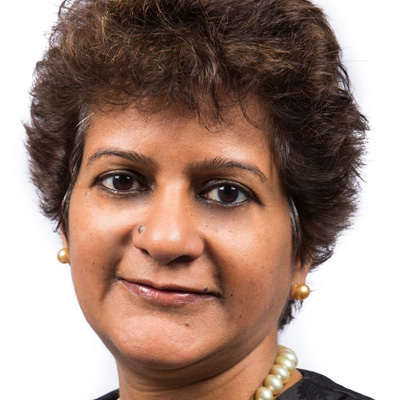
  • We aim to grow into a company that offers everything in the digital space and the creator economy: Simran Hoon

    Mumbai: Today the FTA channels are doing extremely well and channels like The QYOU Media India are giving the consumers of FTA content what they want to watch. Though connected TV is surging due to low data prices and the entry of JIO they are holding the fort. QYOU is now a major player in the digital landscape as well.

    As Chief Executive Officer at QYOU Media India, India’s youngest and fastest-growing entertainment network, Simran leverages her experience and insights to provide strategic direction to create new opportunities for the company and drive organizational growth.5

    Since her appointment, Simran has built a robust entertainment ecosystem for QYOU Media India. Under her aegis, the organisation has witnessed exponential growth in the industry with numerous milestones. With an experience of over two decades in the media industry, Simran is one of the youngest women in a senior C-level leadership role in India. 

    One of the fastest-growing creator-media companies, QYOU Media operates in India and the United States producing, distributing and monetizing content created by social media influencers and digital content stars. In India, under our flagship brand, The Q, curates, produces and distributes premium content across television networks, VOD and OTT platforms, mobile phones, smart TV and app-based platforms. 

    QYOU now has 5 emerging content destinations engaging over 125 million Indian households weekly – The Q (mass entertainment), Q Marathi (regional content), The Q Kahaniyan (animated content), The Q Comedistaan (comedy-focused) and our latest Q-GameX (live gaming). Our influencer marketing company, Chtrbox, has been a pioneer in India’s creator economy, leveraging data to connect brands to the right social media influencers. 

    Indiantelevision.com in conversation with QYOU Media India CEO Simran Hoon, on their growth and way forward in 2023….

    On QYOU Media India as a niche broadcaster and prominent player on the FTA.

    When we launched The Q as a Free-To-Air (FTA) channel, there were no challenges but just untapped opportunities. Although there were formidable FTA players, their primary Source of Content was the Pay-TV market. With QYOU Media India, we entered a market that was entirely underserved with good content, particularly the tier-2, tier-3, and smaller towns in India. While the FTA players who arrived earlier than us did have that as a benefit to their offering, I believe that the emphasis was lacking.

    At QYOU Media India, we realized the untapped market for good content, particularly digital content. There are regions in smaller towns where digital penetration is high but consumption is still in its early stages and hence, we made it quite clear when we entered the FTA market, that this is where we want to remain. At QYOU Media India, we stepped in to curate content for that untapped market. Our founders, Curt Mavis, and Sunder Aaron envisioned the tremendous potential of this market where 70% of Indians live in smaller towns. The ability to be able to provide them with content that is differentiated was an opportunity that we have capitalized upon.

    On NTO 3, connected TV surging, Jio entering the market and with most GEC moving away from FTA where does QYOU stand.

    NTO 3.0 is more for what the paid broadcasters need to do, but it is a great opportunity for us, nonetheless. With the implementation of NTO 3.0, the Pay-TV market will undergo a complete rejig. And as we all know, one of the best price points that sell is free. So, for folks like us who are FTA players, it is going to be a huge opportunity. There will be a funnel of audiences with top-end, crème de la crème audiences being in the OTT and connected TV space. The Connected TV space, will funnel down further with TV sets and data becoming cheaper.

    Right from choosing one OTT, Pay-TV, or FTA connection or wanting to watch content on a mobile device, everybody in India, at every economic stratum has a choice to decide the content they wish to consume. At the low end of the funnel, Doordarshan FreeDish, a one-time installation is available. While the four channels exited, six more entered to grab the opportunity to expand their portfolio. With content being platform agnostic, distribution is about to become much more democratic.

    On the content, line-up to attract non-metro-rural audiences.

    Doordarshan Free Dish reaches around 42 million rural homes on which we are available. For the smaller towns, television is one of the largest windows to the world because that’s the major source of entertainment. Audiences in these regions prefer to watch content that resonates with their beliefs and values and therefore we aim at providing relatable, resonating content. In terms of genres, they prefer watching content in the comedy genre since it provides respite. Also, in the past two years, with the pandemic and growth in online learning, the urge to learn something through television has attracted audiences in non-metro-rural regions.

    On QYOU Media India reaching out to the aspirational market with a different kind of programming and content strategy.

    Most of our content comes from YouTube which has a lot to do with influencers and social media content creators, making it an aspiration that we also work on. The influencers, in the comedy space, on our network, are from very small towns who with their entertainment and engaging skills have grown to become equivalent to influencers who are now celebrities. As a result, influencer-driven content is a big aspect for us. We believe that it doesn’t matter where one comes from, one can come from a small town and still be powered by digital content to grow to become the next content creator.

    On QYOU Media India upscaling and strengthening its position in the market today, both in linear and digital. 

    We aspire to be the next powerful network and I have had the fortune of working with networks when they were at their conceptual stages. At QYOU Media India, all of us have a big dream of being in every aspect of the ecosystem that is evolving in a very different way. There is a whole audience that is cutting the cord and moving on to connected TVs which are still at the top end of the funnel. A connected TV is a perfect hybrid between a linear and a digital platform. With CTVs becoming affordable, the first thing that people will do is get a broadband connection. Considering there are 20 million homes, this space is going to explode. Economic strata will have a big role to play here. With the growth in broadband connection, audiences will have an option of getting FAST channels which are embedded in their television sets.

    On pay tv revising rates 

    At QYOU Media India, we have a unique proposition in terms of the content we broadcast as opposed to a traditional GEC that airs daily soaps. We are the only ones with a differentiated content strategy and I don’t see us being influenced or affected.

    On the reach of linear TV will Connected TV also emerge as a forerunner in non-metros.

    Television, as a medium, is going to be completely remodelled. Today, linear television is at the cusp of becoming digitized. While television will continue to remain a gold standard, the question is whether you want to watch it through linear TV or connected TV. Digital platforms, too, are now moving into AVOD. Television isn’t going anywhere, it’s just a matter of how television is delivered, whether via satellite cable or WiFi. It will always stay as an ‘and’ market.

    On consumers still watching Saas-Bahu, your thoughts 

    Television, in its new avatar, continues to bring families together. India’s almost 65 per cent of the population falls under the below 35 years of age category and this young population is spending most of their time on digital platforms and have stepped out from watching the typical daily soap content. This is where we as a network differentiate ourselves in terms of catering to this young audience. We want to stick to our content lineup and bring people, who are not a part of the daily soap era, back on television with family-inclusive content. That is the kind of niche we want to be in and keep investing in because it is all about the young population. Young Indian audiences believe in influencers and therefore we have an influencer marketing company called Chtrbox for them. Our target audience indulges in gaming and therefore we have Maxamtech, our gaming platform. We have also got The Q, a Hindi GEC that caters to the Doordarshan Free Dish audiences and we also have Connected TV channels such as Q GameX, The Q Kahaniyan, The Q Comedistaan, and Q Marathi. We get our content from digital platforms, resonating with the youth. We are curating content for them so that they can watch it with their family rather than searching for it.

    On the YoY growth 

    For the first few years, The Q was just a VOD channel available only on DTH platforms. But our main focus shifted when we joined DD Free on April 1st, 2021. Since then, we have been doubling our revenues year-on-year. And we expect to outperform the market by 30 per cent in the coming year.

    On the learnings, you bring from Zee, Sony, and Colors to QYOU Media 

    The most important thing I have learned is how the best teams can come together with a very propelling vision of what can be done. A startup culture that is entrepreneurship-driven, high energy and doing or creating something is what excites me. My entire learning has been focused on what it takes to turn startups into successful brands and how it all comes down to people, entrepreneurship and energy. At QYOU Media India, everyone thinks of the company as their own and comes with a common vision.

    On the way Forward

    We aim to grow into a company that offers everything in the digital space and the creator economy. We already have a television channel in the linear form. We have connected TVs that we are already into; we are into gaming and influencer marketing, too. These are all future directions in which the world is currently moving. Keeping in mind the young population of India, and how they can be entertained, influenced, and educated, that’s where we see ourselves going in 2023.

  • Do’s and Don’ts for Getting a Personal Loan

    Do’s and Don’ts for Getting a Personal Loan

    MUMBAI: Personal loans enable both salaried and self-employed individuals to meet their short to medium term financial obligations without having to furnish any collateral or security. As individuals looking for a personal loan have several options to choose from, they may have a difficult time in selecting the right lender for their personal loan. The chances of availing approval for personal loans may increase or decrease depending on the loan applicants’ financial behaviour. Moreover, these actions may also end up having long-term consequences on the financial health of the prospective borrowers. Hence, it is important for prospective borrowers to understand more about personal loans before they opt for this unsecured credit instrument. Here are some do’s and don’ts for personal loan applicants as well as for existing personal loan borrowers:

    Do’s for Availing Personal Loans

    Compare the interest rates offered by various personal loan lenders

    The interest rates offered on personal loans usually start from 10.49% p.a., with some public sector banks offering lower rates of interest on their personal loan schemes. Prospective borrowers should first check the personal loan interest rates with banks and non-banking financial companies (NBFC) with whom they share a deposit, credit card or lending relationship. Then they should visit online financial marketplaces to compare the interest rates on personal loans offered by other lenders based on their credit profile. These financial marketplaces also allow loan applicants to apply for personal loan online with their partner lenders.

    Select your loan tenure after factoring your EMI affordability

    The loan tenures offered by most personal loan lenders extend up to 5 years, with some lenders also offering tenures of up to 7 years. Opting for longer loan tenures will lower the EMI amount but increase the overall interest cost while shorter repayment tenures will reduce the total interest costs but increase the EMI. Thus, personal loan applicants should use the online personal loan EMI calculator to find their optimum loan tenures and EMI based on their finances. Loan applicants should also account for their unavoidable monthly expenditures and monthly contribution towards their crucial financial goals while selecting their optimal EMIs.  

    Keep your EMI/NMI Ratio within 50-55%

    EMI/NMI ratio is the sum total of an individual’s total EMI obligations (including the EMI of their proposed personal loan) as a proportion of their net monthly income (NMI). Lenders offering personal loans usually consider this factor as an important indicator of their repayment capacity. Lenders usually prefer lending to loan applicants with total EMIs within the limit of 50-55% of their net monthly income. Those exceeding this limit have lower chances of personal loan approval. Thus, loan applicants can use the Personal Loan EMI Calculator to find out whether their EMI/NMI ratio, after factoring in the EMI of the proposed personal loan, is within the desired range. Applicants exceeding the above mentioned limit can select longer loan tenures to increase their chances of loan approval.

    Check the total cost of availing a personal loan

    Although interest rates play a vital role in deciding the overall cost of opting for a personal loan, there are other fees and charges associated with a personal loan which can inflate the overall cost. As a prospective borrower, you should be aware of the processing fees, prepayment charges and other expenses levied by lenders under their personal loan schemes and opt for the lender with the lowest total cost for availing a personal loan after factoring their interest rates, processing fees and other charges.

    Check the eligibility criteria

    Although every lender offering personal loan has their own eligibility conditions, lenders usually offer personal loans on the basis of their loan applicants’ income, credit scores, existing financial obligations, employment profile, etc. Therefore, loan applicants should check if they meet the eligibility criteria set by a particular lender before they apply for a personal loan. Failure to meet the eligibility conditions may result in loan rejection and negatively impact their credit score. Instead, loan applicants should visit online financial marketplaces, which provides loan offers to the applicants on the basis of their credit profile and loan eligibility matrix set by the individual lenders.

    Don’ts for Availing Personal Loans

    Don’t ignore your credit score

    Credit scores are a numerical indicator of an individual’s creditworthiness. Lenders use this score to determine their applicants’ repayment capacity. Applicants with lower scores may be denied loan approval or they may get loan sanction at higher interest rates. Thus, loan applicants should regularly track their credit scores by fetching their credit report and take corrective steps to improve their credit scores. Fetching their credit report will allow applicants to check for any clerical errors or incorrect information present in the report and rectify those errors. A rectified credit report will increase the loan applicant’s credit score and thereby, improve their personal loan eligibility.

    Don’t apply with multiple lenders within a short duration

    Whenever you apply for a new personal loan, the lender fetches your credit report from the credit bureaus in order to assess your creditworthiness. Credit bureaus consider such credit report requests from lenders as hard inquiries, which leads the bureau to reduce your credit score by a few points. Therefore, multiple such inquiries within a short span of time will sharply reduce your credit score, thus reducing your chances of availing personal loans.

    Loan applicants should instead visit online financial marketplaces if they want to make multiple such loan inquiries. Such credit report requests from financial marketplaces are considered as soft inquiries, which do not reduce your credit scores.

    Don’t skip EMI payments

    Lenders usually charge late payment fees if you miss your EMI repayment deadline. Although the lender might offer an extension under certain circumstances, borrowers usually have to pay the penal interest rates on failure to repay their EMI. As the repayment history of an individual receives the highest weightage while calculating their credit score, non-payment of EMIs by their due date may also end up in reducing their credit scores, which in turn would reduce their future loan and credit card eligibility. Thus, personal loan borrowers should always try to pay their EMIs by their due date.

    Don’t borrow from unrecognised lenders    

    Loan applicants should exercise caution while checking personal loan offers from multiple lenders. There are many unrecognised platforms which may promise lower interest rates or other favourable conditions on their personal loans. However, such unscrupulous lenders may steal your personal information or they may have other hidden charges which will end up ballooning your borrowing costs. Therefore, prospective borrowers should always apply for personal loans with lenders recognised by the RBI having good customer reviews and reliable lending history.

  • “We are all set to foray into the D2C segment with Zaeden’s line of perfumes in Q1 of this year”: Represent’s Aayushman Sinha

    Mumbai: Represent founder Aayushman Sinha had a humble beginning as a marketing and ticketing agent for music concerts in the country while in high school, which opened up a new demographic for live entertainment in Mumbai. His journey began as a marketer and artist manager at the age of 18 whilst still in college and has grown to build four successful start-ups in varied fields – Represent, BlackCab, Radar and Patronus.

    Putting things in perspective, the Indian music, entertainment, and talent management industry is a large and rapidly growing industry. The Indian music industry alone grew by 24 per cent in 2021 and is expected to reach Rs 28 billion by 2024. The Indian media and entertainment (M&E) sector also grew by 16.4 per cent in 2021 reaching Rs 1.61 trillion according to a report by FICCI. The industry is expected to continue growing at a fast pace, crossing Rs 3 trillion by 2024.

    As a 27-year-old entrepreneur from Mumbai, Sinha is actively involved in the media & entertainment (M&E) landscape. Set up in 2019 by Sinha, Represent, is a media and entertainment company which specialises in providing 360-degree management services to all its artists which range from DSP and store marketing, TV and radio servicing, PR, digital marketing, video production and creative direction as an in-house function to support independent artists in pushing out their art without having to worry about these moving parts.

    Sinha flagged off his first start-up while in college and had to wrap it up as his management business grew tremendously and the limited hours and workforce didn’t support the situation. Many years later, he joined his three best friends from college to grow their start-up BlackCab, an integrated marketing agency, where he is currently a partner. BlackCab now handles mandates for the biggest media, entertainment and D2C brands and has over 60 full-time marketers.

    To support the growing demand for augmented reality (AR) solutions in marketing and content, Sinha, together with two partners set up – Radar, one of India’s first AR content solutions agencies. His fourth venture, Patronus, is an early-stage venture firm that partners with and invests in high-growth potential businesses in their early stages (pre-Seed, seed and pre-series A).

    From co-creating IP’s with Instagram to helping launch Triller in India, Represent has made its mark on the Indian M&E map. The company also consults one of the world’s biggest consumer brands – Coca-Cola, with an end-to-end mandate to build music into Coke’s DNA and scale this pan India.

    Indiantelevision.com spoke to Sinha about him basking in the success of Represent for the past year, his plans for 2023 and his opinion with regard to the M&E industry at large.

    On the differentiating factor, Sinha reveals that the company set itself a class apart from its contemporaries by expanding from artist management to label services, brand consultation, creator management, and angel investing through its venture arm. Represent has already completed three investments in pop-culture-relevant businesses and is all set to launch its first D2C consumer brand in the segment of perfumes with Zaeden in Q1 of this year.

    When asked about his vision and way forward for Represent, he is quick to say, “To define and redefine pop-culture, time and again, while making a positive difference in the world.”

    Edited excerpts:

    On the 1 billion+ streams on Spotify from a roster of independent artists in 2022, and the reason for such a success

    Our entire artist roster clocked a combined total of 1 billion+ streams on Spotify in 2022; this is owing to the artists enjoying a cult following for their music on streaming platforms as well as a growing acceptance for independent and non-film music in the Indian music circuit. As independent music has pulled in more listeners, the space as a whole has been growing and contributing largely to the Indian music business and will only continue to become bigger in the coming years.

    On the shape that the Indian music and entertainment industry is taking, and the evolution of independent music

    The Indian independent music and entertainment space has evolved and adapted in its own way since the pandemic struck us, with a wide variety of genres and styles represented. The independent music scene has also seen significant growth with independent music labels, artist management companies and venues fostering local talent. The increase in digital platforms has also allowed independent artists to reach a wider audience and gain recognition.

    Overall, the music and entertainment industry in India is also becoming increasingly class-defying, with a growing number of global collaborations and partnerships, which is helping to increase the visibility of Indian music and entertainment around the world. The share of independent music in the entire music industry has also witnessed a steep rise compared to previous years as listeners are exploring more obscure artists, leading to the genre becoming fairly dominant compared to other music categories.  

    On your roster scaling up by 100 per cent in less than a year in 2022

    2022 has been a great year for us in terms of the new artists that our company signed. As we went independent in April last year, we had the flexibility and capacity to grow as a company and onboard more artists on the roster; as our company grew in size, it enabled us to approach and onboard newer talents as well as collaborate with more partners for our artists.

    Hence, we signed artists such as Hanita Bhambri, one of the leading female independent artists in the industry; Ananya Birla, a compelling voice in the Indian pop music circuit; Raja Kumari, a globally recognised hip-hop artist;  MC Stan, one of the most prominent wavemakers in the Indian hip-hop scene; Raman Negi, an exceptional talent in the Indie-rock music space; Jai Dhir, a young and upcoming Punjabi-Pop talent; Madoc, a class apart DJ and producer and finally OAFF, the indie artist who shot to fame with his music in the movie ‘Gehraiyaan’.

    Saying that the team and artists are pumped to build the pop-culture will be a mere understatement at this point.

    On the 500 shows that you have done, on India as a consumption market when it comes to shows and the kind of shows that really work in India

    Our live events vertical was buzzing in 2022 with 500+ shows conducted for our artists across the roster. This included shows in both tier I and tier II cities all over India as well as international shows in London, Nepal, US and Dubai. To elaborate on some highlights for live shows in 2022 – DJ Chetas planned his US tour, Anuv Jain performed at his biggest show in Delhi with 20,000+ tickets sold and performed at his first international show in Nepal, Zaeden concluded his ‘Genesis’ and ‘A to Zae’ tour with multiple sold out venues as well as performed in Dubai and London, Yashraj and Raman Negi made their debut appearance with their solo acts at NH7 Weekender and finally, our artists got the opportunity to open for one of the biggest international acts that took place last year at Zomato’s Feeding India concert inviting Post Malone.

    The targeting for these shows is primarily in the age group of 18-30 including college students, festival attendees, club hoppers, and of course, music aficionados. We have experienced a great response from shows organised in cities such as Delhi, Mumbai, Bangalore, Kolkata, and Ahmedabad among others with a huge footfall especially after the live events space opened up wholly in the last year. In terms of the kind of shows that really have been working in India, music festivals have been popping out with varied artists performing at a single venue in addition to getting a bunch of queries for college shows.

    On working successfully with brands such as H&M and Coke

    In 2022, we worked with a host of brands for our artists across categories such as apparel, cars, perfumes, technology and beverage brands. We collaborated with some of the biggest brands such as H&M and Coke for our artists Armaan Malik, Zaeden and Anuv Jain. H&M launched their Linen collection in India by bringing Armaan Malik on board as the face of the launch. They also launched their festive campaign ‘Brighter Than Ever’ with Zaeden featuring in the ad campaign alongside other stars such as Jim Sarbh, Manushi Chillar, Shantanu Maheshwari, Chum Darang and Isha Talwar.

    Coca-Cola India collaborated with Armaan Malik for their Uplift campaign for which they onboarded him as their brand ambassador along with South superstar Allu Arjun. Represent worked with Coca-Cola India for this campaign end-to-end as a consultant giving rise to their anthem #MemuAagamu, which fuses together Hindi, Korean, and English lyrics, with a Telugu hook. Coke also collaborated with Anuv Jain for their global brand platform – Real Magic. We were fortunate to create a difference with brands such as Bumble, Meta, Budweiser, and other international brands as well.

    On the four ventures coping with the pandemic

    The pandemic struck us in the middle of nowhere in 2020 and like other businesses, we also eventually adapted to it. As all three ventures (BlackCab, Radar and Patronus) were in their initial stages of growth and development, we did face a bit of a bump, especially since the media and entertainment industry had gone into a slowdown. However, we didn’t stop working.

    A team consisting of music enthusiasts, marketers, and live music experts, Represent was amongst the first to embrace the ‘new normal’ and develop new business verticals when covid hit the entertainment industry. With over 45 song releases across the roster during the lockdown, the artists hit the #1 spot on multiple music charts in different languages. Armaan Malik created history as he landed on the Spotify Times Square billboard in NYC and held the #1 spot on the inaugural US & Global Billboard Triller charts for three weeks. Lost Stories became the first Indians to be a part of YouTube’s premier artist development program, Foundry.

    Represent also built record label-esque services for its artists’ independent releases to secure top slots on the most popular playlists on streaming platforms, and made their presence felt on various independent charts like the internationally acclaimed Genius chart. Represent along with Instagram India conceptualised as well as curated ‘Live In Your Living Room,’ one of the first online musical concerts featuring Armaan Malik, DJ Chetas, Lost Stories, and 12 more crème de la crème musical talents.

    Represent entered a new vertical of tech consulting by partnering with Triller, a social video application that recently launched its India operations and helped in building its local presence by creating a strong creator network boasting the likes of  Bhuvan Bam, Awez Darbar, DIVINE, and Badshah along with global heavyweights such as Dimitri Vegas and Like Mike, KSHMR, and more. The collaboration, in turn, allowed Triller to gain over 40 million local users in less than a month. Currently, Armaan Malik is the most followed Indian creator/artist on Triller. The agency also played an instrumental role in facilitating one of the biggest tie-ups of the year between JioSaavn and Triller.

    Represent also co-produced DJ Chetas’ television show called ‘Lockdown House Party’ with MTV Beats in 2020. This partnership enabled him and his meticulously constructed sets to reach out to 50 million households.  When live entertainment hit rock bottom, brand collaborations became a key source of income for artists and we helped our artists ink deals with the likes of Puma, Bumble, Amazon, Swiggy, JBL, and Absolut during the lockdown.

    On launching RE:Play, and its success story

    RE:Play is our newly launched bookings and agenting division headed by my friend and business partner, Nitin Kandhari, that caters to everything related to live entertainment and events for our artists across the roster as well as other independent artists like KING, Darshan Raval, Lucky Ali, Dream Note among others. In the past 6 months, RE:Play has successfully executed more than 150 shows which includes a tour with Jay Sean, Anuv Jain’s Delhi show that witnessed 21,000+ people turning up, ‘A to Zae’ tour with Zaeden along with his sold out London show and over 50+ college shows.  

    On issues concerning the music, entertainment and talent management industry; and Represent as seekers of the appropriate solutions for these issues/concerns

    One of the major issues that the artists in the music industry particularly face is the ownership of their work – as a solution-seeker, we at Represent focus on providing a platform to support independent artists, empowering them to take control of their careers, and connecting them with fans and other industry players. We do this by focusing on fostering a transparent relationship between artists and all industry stakeholders from fans to streaming platforms as well as everything in between.

    On your plans for Represent and your other businesses going forward in 2023-2024

    We have big plans for Represent this year as it marks the beginning of the company’s second year of operating as a full-blown independent media and entertainment company. We have a lot coming up in terms of the launch of our first D2C brand, the launch of our creator management division, new music releases from our artists and other exciting collaborations. We plan on onboarding a few more artists to our roster this year and working in tandem with them to grow collectively and challenge our possibilities. In terms of brands, we are eyeing to collaborate with a few international brands for our artists along with working together with a bunch of popular Indian brands.

    On the trends catching up in the music and entertainment industry

    There were several trends that popped up in 2022 – social media was conquering the space with every other creator hopping on to reel trends that were coming up at the time. Music artists also started promoting their music using reels more uniquely and started paying more attention to using social media tools to reach the right audience. Further, we also saw the rise of independent music with more sync deals taking place as a result of a growing listenership for music by independent artists.

  • We will get through this year if we are smart, efficient and can stick together: Sunder Aaron

    We will get through this year if we are smart, efficient and can stick together: Sunder Aaron

    Mumbai: There are production houses and more today, Locomotive Global Media is entering the Indian market with its original series Rana Naidu which is an official adaption of the American crime drama, Ray Donovan. It is slotted to premiere on Netflix soon. The company is partnering with Gurinder Chadha’s Bend It Films and Applause Entertainment to co-produce an international drama series named Seeker.

    They are in talks with premium OTT platforms for various projects and 2023 is looking very exciting for the company. 

    Locomotive Global Inc., is an international production company focused on developing, producing, and distributing Indian-themed content for India and the world. It is majority owned by Chicken Soup for the Soul Entertainment (NASDAQ: CSSE).

    Sunder Aaron is the co-founder and managing partner of Locomotive Global Inc. (LGI), the holding company he founded with its investors in 2012. Locomotive Global Inc., is an international production company focused on developing, producing and distributing Indian-themed content for India and the world. It is majority owned by Chicken Soup for the Soul Entertainment. Locomotive Global Inc.’s primary focus is to incubate and launch new India-oriented businesses.

    Aaron is also the co-founder and managing director of QYOU Media India, the division of QYOU Media which operates linear channels and digital programming services for the Indian market. The channel is currently distributed on pay TV, linear TV and digital.

    Indiantelevision.com in conversation with Sunder Aaron co-founder and managing partner of Locomotive Global Inc. on the year gone by and what is in store for 2023.

    Edited Excerpt:

    On the year 2022

    Well, it was wonderful for us since we had a new collaboration with a public company investor from the United States (CSSE), giving us a solid foundation to build on. It also enabled us to expand our team. As a content developer and production company, it was important that we build a great team that is both skilled and dynamic. 

    Then, of course, there was a general downturn in the world, both macroeconomically and in the content creation business. When it comes to content, India has been somewhat shielded from the severe changes around the world, particularly when compared to the West. However, there has been a slowdown in India as well. So, while it has been a good year for us in terms of our projects, like everybody, we have not been immune to some of the changes that have occurred with our partners, such as platforms and studios.

    On the learning’s

    One needs to be very shrewd about what one develops and creates. And when we are looking for partners, we are always thinking about what is best for the market, and what Indian audiences will like, but we also have to keep in mind exactly how the platforms, studios, and other financing partners are doing, what they are valuing, and what their current situation is, what is best for them and content-wise, what will strategically help them. So, putting that extra effort into what we put in front of them, and understanding the context of what they are going through, just makes us better partners and content creators. 

    On the content

    First, it must be formatted and presented well. That is half the battle won. What is the purpose of having a fantastic project or story, if you don’t present it well to potential partners? Nobody will comprehend it. You will be unable to convey its genius to anybody. So, first and foremost, it must be effectively presented. It sounds superficial, but every studio and producer will tell you that there is so much material that comes in, that only if something catches your eye, will it have an advantage when they are considering what to invest in next.

    Second, the content must be sensitive to the market and a specific target audience. You cannot create something that does not address a specific audience. Who exactly are you making this show or this movie for? Whoever is the creator, whether it is us or someone bringing an idea or script to us, the material must have a clear understanding of its target audience.

    Third, have an economic sense of the content. You must be fiscally responsible because it is the producer who is putting in the money and developing the show/film. You are likely to get money from a platform or from a studio to produce it, so it is important to be mindful of both the fiscal and economic aspects. No matter how good an idea may be, if it is not mountable in a fiscally responsible way, then it’s worthless.

    The fourth and final thing essential to ensure the success of a project is that the script or the concept must be passionate and compelling. If something is truly captivating on a story level and human level, then it will be something we’d be excited to look at.

    On Rana Naidu

    We spent much of last year in production and post-production, to get everything right. We are nearing the end of post-production and should be delivering all the episodes shortly. We are really excited for Rana Naidu. This show has two bona fide, major stars from the south industry – Venkatesh and Rana Daggubati along with a terrific ensemble cast. It’s a very daring show, but at the heart of it, it is all about family. This show will hopefully do well and reflect well on Locomotive and help us mount other shows with partners in India, and abroad. During my work trip to London, I spoke to a few people and sensed that everybody is interested in the happenings of India and have got an eye on what we are creating. I hope with Rana Naidu, we get noticed around the world, and hopefully, draw more interest not only to India but also to Locomotive.

    On adapting Rana Naidu for Indian audiences

    Ray Donovan is an American show that was released almost a decade ago. Adapting it for Indian audiences through Rana Naidu will not hamper the latter. A show must stand on its own merits, regardless of how many times it has been adapted. We have seen Applause successfully adapt numerous shows. A show, if well-written, can work in any market. At the end of the day, it doesn’t matter what you’re adapting; what matters is how well you tell or retell the story. 

    On the risk of adapting shows especially for Indian audiences

    As a producer, you are always looking for ways to mitigate and diminish risk. That is why we develop things to such an extent that we are confident in how the story will look before we invest in production. This is critical. And if you already have an established story that you can adapt, you can diminish some of the risks because it is already a good story that viewers and audiences, even in other parts of the world, have responded to.

    No matter how strong a story is or how well-received a film or a show has been overseas, it won’t work in India unless it is developed with that audience in mind. We obviously have selected some outstanding talent to work with, including Karan Anshuman, who is our showrunner. He was responsible for Inside Edge and Mirzapur. Karan is somebody who knows the Indian audience and what they like to watch. This is the first step to getting people to understand the audience here and what they want to see. Every day I am made aware of how well the writers, creators, and production team know how to create something that works for the Indian audience. But how do we adapt it? It all starts on the page, as the writer’s room works very hard to adapt the storylines and characters from the original show while making them uniquely Indian.

    We had an edge because Ray Donovan is a narrative about family, and in India, family comes first. You can tell that by watching the show that it would work when adapted for Indian viewers. I am sure it will translate well in certain other cultures and markets, particularly in India. You also have Bollywood as the counterpart for Hollywood. As a result, the problem solver in Hollywood is Ray Donovan whereas in Bollywood it is Rana Naidu. As we like to say, “Rana Sort Kiya!” 

    On Hollywood and how is the Indian market perceived

    Although expenses have been rising for production in India, the economics of creating something in India remains significantly lower. Making something in India, like a comparable product or an hour of premium dramatic television in India will cost anywhere between one-fifth and one-tenth of what it would cost in the United States or the United Kingdom. That is a significant distinction that we should all capitalize on.

    Another difference is that writing in the West, particularly in the US especially is so advanced and proficient, and our writers in India have some ways to go but are surely getting there. Their quality is evolving really rapidly. If you think about it, we’ve just been writing for premium scripted television long-form content for the last four or five years, whereas in the US, they’ve been writing for television on this level for 40-50 years. We have a lot of catching up to do and we are evolving rapidly as writers and as filmmakers.

    Our DOPs and directors are getting on par with their western counterparts. Some of our Indian filmmakers are already overseas, in LA and London, talking to people about doing projects there, which is fantastic since platforms like Amazon Prime Video, Disney+ Hotstar, and Netflix are raising the prominence of all our artists. If you write something really terrific in India, direct something, or are a DOP who produces fantastic work in India for a show that’s on one of these leading platforms, it won’t go unnoticed around the world.

    On crime genre which is the go to for Indian story tellers and other content choices of Indian audiences 

    We decided to adapt Ray Donovan because we knew it was a great show already with great writing, and since it is in the crime genre, Indian viewers would immediately have a level of interest. The platforms want crime because viewers and audiences in India demand such shows. Clearly, crime thrillers are a dominant genre.  

    The viewer’s today demand it, platforms and theatres are interested in the crime thriller genre, so that’s one, but everything fluctuates and evolves. Maybe, five years from now, you will see more horror and science fiction. Indian viewers are being exposed to a wide range of content. Look at how popular Korean and Turkish content has become, simply because Indian audiences are receptive to such things, which suggests that their tastes are evolving and therefore, we will have to evolve with them. 

    We must have the courage to lead with shows and stories from unexpected genres and categories. In India, people enjoy romantic comedies as well as musicals, which are still popular in Bollywood. But even those are changing.

    On the slew of appointments in India for LGM

    We are fortunate enough to have the capability to expand our scale. Our intent is to invest in development and people. To build up the number of projects that we are producing, we have to find the right people to work with.

    We are venturing into films and therefore hired Kanupriya Iyer formerly from Colour Yellow Productions. She has joined us as head of films. We also hired Roshni Ghosh to spearhead our premium television business. She joins Locomotive Global Media from Emmay Entertainment and Motion Pictures. We got a few more teammates who are strong, creative, aggressive, and proficient. We want people that are dynamic and I believe we have found them.

    On the various partnerships LGM has entered into recently

    Applause is a terrific partner with whom we have two projects. One is a show with Gurinder titled Seeker. That is something we are still working on. It has taken a couple of turns as sometimes shows take a little bit of time to find their right path, but we all remain committed to the story and material we have developed.  We are really excited about that. We’ve got another show with a working title Case Closed. It is an episodic procedural crime series for which we partnered with both Simon Mirren and Benjamin Anderson. Simon was the showrunner for Criminal Minds.

    On consuming content on OTT versus stepping out to go to the theatres

    Given the present nature of theatrical distribution around the world, people are expecting really big films to be distributed in theatres. As a result, there is a market available online, for smaller-scale film production. For instance, you would not make Avatar and then release it only on Disney+ Hotstar. A big-budget picture will almost certainly be designed for theatrical release. And those mid-level films that were always created are now making their way onto streaming platforms. 

    On preference between theatre and OTT platforms

    I don’t have a preference. I enjoy going to the movies. I recently saw Avatar: The Way of Water, and it was an incredible experience. And even though it was a three-hour-long film, I didn’t notice it. Basically, watching anything for three hours at home might be incredibly engaging and fun, but at the end of the day, you’re going to take breaks and end up being distracted. But theatrical is altogether another experience. Both mediums lead you to your destination, which is hearing, watching, and experiencing a good story. It is merely two different ways of getting there.

    On the rise of regional content

    We already have some projects in the works. I am delighted to see that the market is finding a lot of traction for regional content, especially for south Indian films and television. I am thrilled to see this happening, and this is something we have been working on for quite some time. It’s also great to see that streamers are investing more and more in regional content. There are voices all over India that have great stories to tell in each and every language too!

    On plans for 2023

    Besides Rana Naidu, we have got a couple of other projects in development, one is a co-production with Endemol India, for which we have a terrific showrunner, Prashant Nair, who recently did an exceptional job on Trial By Fire on Netflix. This will be a True Detective type of series, set in the foothills of the Himalayas. I believe it will have a global appeal and in addition to this, our showrunner is a terrific talent. We also have an exciting and unique Tamil language series that we are setting up now. It is in the writing stage now, but when done it will definitely blow people away. It has a very Guy Ritchie kind of feel set in Chennai.

    Personal expectations from 2023

    I hope it’s looking good for everybody. We simply have to remain optimistic, despite the challenges that we are all going to face. And we are fortunate to be in India because the rest of the world is suffering a lot more than we are. Ideally, we will be able to get through this year, and hopefully, by the end of 2023, the conflict in Ukraine will be over, and we will begin to feel that the world is returning to normal.

    There are other macroeconomic concerns that must be addressed, including inflation and trade. Everything has slowed down since the outbreak, but issues have been exacerbated by the war that Russia is waging in Ukraine. Once all of this is under control, a positive trend will begin to emerge. Last year was probably required for rationalisation in our business. We needed to get better at creating content for less budget and this encouraged everybody to think more shrewdly and sharply in this manner.

    Slates, investments and overheads have been rationalised and nobody in the media business is immune to that. It is actually a good thing that we are compelled to reassess our business every 10 years to ensure that we are operating as effectively and efficiently as possible. The same goes for all of us in our personal lives as well. We will get through this year if we are smart, efficient and can stick together.

  • The passion and love for storytelling consumes us and drives us to do better: MX Player’s Gautam Talwar

    The passion and love for storytelling consumes us and drives us to do better: MX Player’s Gautam Talwar

    Mumbai: Riding high with several back-to-back successes of its original series & continuing to innovate with several new products in the last year, MX Player stands tall as it ranks #1 in India and #3 worldwide, in terms of downloads (source: State of Mobile Report by data.ai 2023). With a steady growth performance trajectory, all MX platforms are geared up to grow into their next phase by enhancing data-driven innovation, building the scale of revenue streams, and gaining maximum impact for all stakeholders.

    The new products launched last year include MX Gold, MX Live, MX One, MX Blue, MX Studios, and MX Advantage. MX Player also launched many new features on the local player – MCloud, video clipping, video downloader, and video playlist and it has a separate MX gold tab and watch party. 

    Be it MX Studios branded content like Uni ki Yaari, Business Baazi, Salesman of the Year, Spin Around Dubai or the award-winning superhit MX original series like Campus Diaries, Lock Upp, Aashram 3, Shiksha Mandal, the long format series Roohinayat and Tu Zakhm Hain, and the latest blockbuster Dharavi Bank that has given Bollywood star Suniel Shetty the biggest OTT debut in a web series while the show continues to rank #1 for the last seven weeks (source: week 52 COTT), it’s undeniable that masses in India love MX Player’s narratives, casting choices, and diverse genres. With 250 million users in India and 350 million users globally, MX Player chief content officer Gautam Talwar is in conversation with Indiantelevision.com on what’ve worked & plans ahead.

    Talwar brings to the table over 20 years of experience in the content, advertising and entertainment space. He began his career with Grey Worldwide, followed by several years at Lowe Lintas in account management and strategic planning. His career path then took him to Lateral Solutions (Netpreneurship) followed by Lowe Dubai, Kaleidoscope Entertainment Pvt Ltd and then Rediffusion Y&R.  

    Talwar has been with MX Player for the past five years and he has been instrumental in conceptualising great content for the platform. His constant source of inspiration is music, movies and spirituality. He is endlessly fascinated by unearthing insights and motivations that drive human behaviour.

    Edited Excerpt:

    On the success of seasons 1 and 2 of Aashram, and the audience’s expectation and response to season 3

    The response has been phenomenal for 2022. Fresh narratives, new faces and diverse genres were our motto for this year and we have successfully managed to implement the same in our slate this year. IMDB gave Campus Diaries, the distinction of being the highest-ranked show across all OTTs till June 2022 and along with Aashram 3, Shikhsha Mandal and now Dharavi Bank, we believe we have accomplished the desired aim of entertaining our audiences for the year with regaling stories and continue to build a robust and exciting slate for 2023. 

    On the launch of Shiksha Mandal, and the kind of research that goes into these kinds of shows

    Shiksha Mandal took us more than two years to write. Once the concept was approved, our research included going to Madhya Pradesh and meeting with victims of the scam, along with some people who knew the inner workings of the scam. It was disheartening to see that the noblest of all professions was brought down to becoming an industry for profiteering. 

    The brief for casting was to find actors who could earnestly depict the realities of the scam and we were lucky to have Gulshan Devaiah, Gauahar Khan and Pawan Raj Malhotra agreeing to essay the lead parts. They brought to life the characters embroiled in the scam and did it with great authenticity. Shiksha Mandal has also performed very well on the platform and we are proud of that show as well.

    On Roohaniyat, the long format show and how does it work for your viewers

    We are experimenting with long-format content and we have released two shows with episodes dropping weekly – Roohaniyat and Tu Zakhm Hai. We have a very loyal base of committed audiences who want to be engaged regularly and it is for them that we have started to make long format shows with a minimum of 50 episodes. Retention is one of the main reasons for creating such content which drives the audiences to return to the platform as and when the episodes are dropped. The experiment has been a success and now we are building an entire range of such content with at least 4-5 more shows in the pipeline.

    On the launch of Dharavi Bank at the fag end of the year and the thought behind this storyline

    There were two large reasons to bring this story to life on MX Player. Firstly, it’s a narrative that holds mass appeal and will, therefore, strike a chord with our vast and diverse audience base and secondly, it’s probably one of the most unique revenge dramas that you will watch on OTT.

    The motive that drives JCP Jayant Gavaskar essayed by Vivek Anand Oberoi to bring down the ruthless Thalaivan played by Suniel Shetty goes beyond the regular cop and gangster drama. The distinctiveness of the revenge, complimented by the backdrop of Dharavi is what compelled us to greenlight this series.

    The show has done extremely well for us, with a number four rank in the most anticipated list of IMDb shows before launch, Dharavi Bank has garnered a massive nine plus rating on IMDb. The platform pulled out all stops with a high-decibel marketing campaign and received a cumulative reach of over 200 million across YouTube, Facebook, Digital impact, and DOOH, in less than 10 days. The launch of Dharavi Bank also witnessed success through a customer-centric, personalised, and omnipresent marketing and communications approach across a blend of traditional and digital mediums, making it the talk of the town amongst all stakeholders.

    On the project being mounted on a large scale, the script panning out, and the reason behind casting big names in the show

    Yes, this is one of our marquee shows that we have mounted on a large scale. The fact that this series and MX were the platforms of choice for Suniel Shetty’s digital debut and Oberoi’s return to OTT after a hiatus is a testimony to the power of this series. Dharavi is a maze and we chose to shoot in real locations to bring alive this intense revenge thriller. We have an extremely talented ensemble to support the show ably like Sonali Kulkarni, Luke Kenny and Freddy Daruwala amongst others and the casting was done keeping in mind the representation of two diverse cultures in Mumbai. 

    One was the representation of Thalaivan’s Tamilian family wherein for the first time; we included talent from the South like Shanthi Priya, Bhavvana Rao, Shruti Srivastava, Sandhya Shetty and Vamsi Krishna in key roles. And then, the representation of the Maharashtrian world by Vivek Anand Oberoi as Gavaskar, Sonali Kulkarni, Santosh Juvekar, Nagesh Bhosle, Chinmay Mandlekar and others who gave it that authenticity. For the script, we all worked together as a team with the writer Sarthak Dasgupta, whose brainchild it was along with Seneka who wrote the dialogues for the series.

    On Dharavi Bank being different from the slew of gangster-cop dramas on OTT and in the film genre

    Dharavi is an emotion and we have treated it akin to a character for this show. We have painstakingly built a world which is immersive and the characters within the show are unique with novel conflicts and individual graphs that are so intrinsic to the plot. Along with it being a gangster and cop story, it’s also a never before seen revenge drama, which can only be explained when you watch the show. 

    On getting the nuances right for the shows that are dubbed in regional languages and the response from the audience

    I think every show has distinct data points on how the dubbed versions perform which range across factors like the backdrop of the story, the actors, or the generic theme of the plot. We usually dub all our shows in Tamil and Telugu but with shows like Matsya Kaand, we also experimented with Punjabi dubs that saw a decent uptake in the region. When the narratives are universal as are the emotions, it so happens that when a good story is available in a local language – the reach of the show automatically increases manifold.

    On regional content being planned

    We are one of the pioneers to invest heavily in regional shows like Queen (Tamil) and Samantar 1&2 (Marathi) and we will continue to do the same. Queen 2 is already in production and we believe we have another winner on our hands again.

    On the secret sauce which drives you to come out with content like this

    I think the passion and love for storytelling consume us and drive us to do better. We strive to ensure that our audiences remain engaged and entertained throughout the year and there is no bigger reward than seeing these shows excel on the platform. That’s the driving force behind the originals team at MX.