Category: Executive Dossier

  • ‘Carriage market has exploded and will close this fiscal at Rs 14 billion’ – Gurjeev Singh Kapoor

    ‘Carriage market has exploded and will close this fiscal at Rs 14 billion’ – Gurjeev Singh Kapoor

    Broadcasters are being hit hard by hefty carriage fees as bandwidth is getting choked both on analogue cable and DTH (direct-to-home). Building formidable distribution bouquets is high on their agenda as they struggle to ramp up subscription revenues which are estimated to touch Rs 28 billion this fiscal.

    Star Den, a 50:50 joint venture between Star and Digital Entertainment Networks, is quickly adding regional channels to complete its otherwise strong Hindi and English entertainment-news-kids bouquet. Zee-Turner is the only other broadcasting distribution company which has a formidable regional content lineup.

    Star Den is eyeing a revenue of Rs 10 billion at a time when the television industry is beginning to feel the first serious signs of a slowdown in advertising revenues. Analysts say this will be a hard task to achieve, despite the boon from DTH revenues. Big TV and Airtel Digital TV launched later in the year, reducing prospects of a full-fiscal revenue gain for the broadcasters.

    In an interview with Indiantelevision.com’s Sibabrata Das, Star Den Media Services chief executive officer Gurjeev Singh Kapoor talks about the dark holes in the distribution business and how the company plans to ramp up growth in a tough business environment.Excerpts:

    Is the steep climb in carriage fees upsetting the business model of broadcasters?
    The carriage market has exploded and is expected to end this fiscal at close to Rs 14 billion, up from Rs 6 billion a year ago. As there is a huge amount of bandwidth constraint on analogue cable and even DTH, the industry has changed in terms of carriage. DTH operators are offering 200 channels while the Information and Broadcasting ministry has given the nod to 370 channels. A plethora of channel launches in the Hindi general entertainment, news and regional space has meant that there is a fierce fight for frequency. In a market where funding was easily available, channels were willing to pay more for space on cable networks. Insanity ruled the market.

    Will we see a correction in the carriage market?
    The balancing act has to happen now. With private equity and other sources of funding drying up, many broadcasters have started contracting their distribution budgets. We could see a flat carriage growth next year as channels start rationalising their costs. Broadcasters are in no position to be omnipresent in all cable networks; they will have to pick and choose where they want to be present and optimise their resources.

    But we will continue to see more channel launches next year as Reliance ADAG is planning to get into broadcasting space. Even existing players like Star India have plans to add more channels. Won’t this ensure that the carriage tap continues to flow freely?
    We may see a 10-15 per cent growth in carriage fee market in FY’11 as more channels enter the race. The next two years will be the blue litmus test for many broadcasters. For the weak channels, there could be a shake out. The fact is that distribution costs have grown unmanageably high.

    There can be no potential threat to carriage revenues unless the digital universe expands to at least 25 per cent. When we reach that stage, other models can emerge like broadcasters getting into agreements for sharing their distribution revenues with delivery platform providers.

    Are broadcasters getting united to resist on carriage fees?
    Broadcasters have doled out so much money in the past because of competition that it will be difficult to correct the system fully. More so, as we will see new channel launches. Carriage fee is being governed by market forces. But it is good that the thought process has started to fight carriage fees collectively. How far that will succeed only time will tell.

    Would you want Trai to (Telecom Regulatory Authority of India) come out with some regulation on carriage?
    I wish there could be some kind of formula that can be arrived at to regulate carriage. As an idea, it is definitely good since the regulator has mandated pricing issues.

    How difficult is it to ramp up subscription revenues in the backdrop of MSOs (multi-system operators) consolidating the cable TV market and Trai introducing pricing regulations?
    Subscription revenue for pay-TV broadcasters will close at Rs 28 billion in FY’09, up from Rs 23 billion a year ago. Even though there is a slowdown in the market and the times are tough, the industry expects a 10-15 per cent growth in FY’10.

    Isn’t that growth mainly because of DTH?
    DTH, undoubtedly, has expanded the market. But ARPUs (average revenue per user) haven’t grown in the DTH business; they are virtually the same as that of cable. IPTV, though much talked about, has also not happend this year.

    Will Star Den’s revenue touch Rs 10 billion this fiscal?
    While we are looking at very aggressive numbers and have set ourselves a very challenging task, I can’t comment on our financials.

    Do broadcasting distribution companies see the consolidation in the cable TV sector as a welcome change?
    The marketplace will make it difficult for small networks even as broadcasters rationalise their distribution budgets. Networks who have a geographical spread can bargain hard with broadcasters. In the short term, they will get paid more and will be reluctant to pay for more subscribers. But in the long term, it is better that the industry moves towards a better structured environment. MSOs and broadcasters have to join hands and realise that ultimately money has to come from the ground.

    Since the parent owner of Star Den also runs a cable TV company, how do you leverage the power of your bouquet to push the cable distribution business?
    We operate as independent entities. We treate Den like the other MSOs.

    Star India had earlier inked a distribution deal with sports broadcaster Neo which did not last long after the new management took over. Do you feel that the Star Den bouquet is strong but still incomplete without sports channels in its mix?
    We are currently distributing 23 channels and are in a very strong position to post growth. We have great quality content in the Hindi general entertainment space with Star Plus as the leader and Star One in the fifth spot. In the news television space, we have Times Now which leads in the English segment, CNN-IBN, IBN7 and Star News. CNBC TV18 and Awaaz, of course, are leaders in their segments and are powerful subscription-driven channels.

    In the kids genre, we have Hungama and the three Disney channels. For the English-viewing audiences, we have a formidable presence in Star Movies, MGM and Star World. We also distribute NGC and Zoom.

    We are now filling up the missing pieces and adding the regional bouquet. With Star buying majority stake in Asianet, we will cover all the languages down south. Star has also launched a Bengali and a Marathi general entertainment channel while the one in Gujarati is in the pipeline.

    Will Colors (the second most-watched Hindi GEC from the Viacom18 stable) automatically come to your bouquet when it decides to go pay?
    I wouldn’t like to offer any comments.

    Will you also be getting the MTV channels after Viacom’s contract with One Alliance expires on 31 March, 2009?
    I don’t want to comment on this.

    What about the wedding and home shopping channels that Star is planning to launch next year?
    Whatever niche channels Star launches, we will be happy to service. Niche channels will have a demand particularly on digital platforms. One the Fox channels launch, we will also be happy to distribute them.
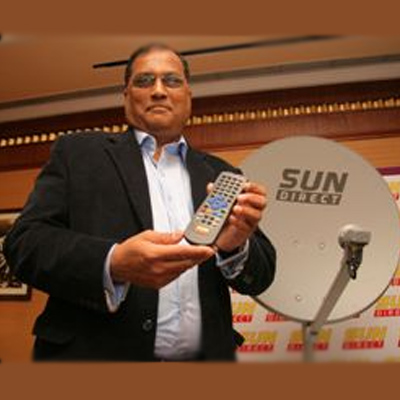
  • ‘Pricing and creation of bouquets is our big differentiator’ : Tony D’silva – Sun Direct COO

    ‘Pricing and creation of bouquets is our big differentiator’ : Tony D’silva – Sun Direct COO

    Kalanithi Maran is building his DTH empire on one key proposition: pricing. Mopping up two million subscribers in his home turf, Maran expects to taste success in the northern pockets of the country with the very same recipe.

    Armed recently with Hindi content and sports channels, Sun Direct has launched in Mumbai and will be quickly moving to other markets as a pan India direct-to-home service. The target: six million subscribers by FY’10.

    Sun Direct plans to invest Rs 35 billion in the venture over two years, out of which Rs 20 billion will have been consumed by the end of this fiscal. A large chunk of this will be towards providing set-top boxes (STBs) free.

    Malaysia-based Astro has taken a 20 per cent stake in the company for Rs 5.90 billion. Sun Direct is a zero-debt company and there are no plans to raise further money through dilution of equity.

    Sun Direct’s ARPU (average revenue per user) is the lowest among all the DTH operators, ranging between Rs 85-90. But the costs are tightly controlled and the company hopes to break even in six years.

    In an interview with Indiantelevision.com’s Sibabrata Das, Sun Direct COO Tony D’Silva speaks about the company’s ambitious growth plans.

    Excerpts:

    How much is Sun Direct investing in the DTH venture?
    We have an investment plan of Rs 35 billion over two years. We would have consumed Rs 20 billion by the end of this fiscal. We are pumping in the balance Rs 15 billion by FY’10.

    How much has Astro put in so far?
    Astro had made a commitment of putting in Rs 5.90 billion for a 20 per cent stake in Sun Direct. The full amount has already come in. The promoters have invested the rest of the amount. We are a zero debt company.

    Is there a plan to raise further money through equity?
    We have no such plan. We are considering whether it would make sense for us to raise debt and sit in excess liquidity at a time when the money market is tight. No decision has been taken in this regard. The promoters are ready to pump in whatever it takes to grow the business.

    Since Sun Direct is offering STBs free, wouldn’t the company have to absorb huge losses?
    The loss for this fiscal would be in the region of Rs 4.50 billion. This is very much a part of our business plan. For anybody who wants to build scale, the only way forward is to acquire customers with high subsidy offers. We have already mopped up two million subscribers and are looking at ending FY’09 with a base of three million. High volumes will help us reach break even as our costs are not as high as the others.

    Even when Sun Direct’s ARPU is the lowest among all the DTH operators?
    We have grown in the southern region and our current ARPUs are at Rs 85-90. We don’t see them going up significantly even after our launch in Mumbai and the rest of India. In the volumes game, the margins will improve once you reach a particular threshhold of numbers. Our infrastructure cost is also less than the other DTH operators. We will break even in six years.

    Astro has put in Rs 5.90 billion. We are a zero debt company and expect to break even in six years

    Is your content cost also lower than many of the other DTH operators?
    Our content cost is 45-50 per cent, one of the lowest in the industry. We have not done MG (minimum guarantee) deals with broadcasters. Our main strategy is a la carte pricing.

    What is your customer acquisition cost?
    When we made our initial purchases, the STBs were costing us $55. But the economic meltdown is driving down the prices and our STBs currently cost $45.

    The advertising budget for this fiscal is Rs 1.5 billion. We aim to spend a similar amount in the next fiscal unless the market dynamics changes drastically.

    Our customer acquisition cost is Rs 4500. But with our pricing strategy, we expect to garner six million subscribers by FY’10.

    The pricing strategy can attract wrong customers. Isn’t it a dangerous model to have if your churn rate is high while the customer acquisition cost is steep?
    We have a five per cent churn rate. We realise that it is important to have a lower churn.

    What is the strategy Sun Direct has adopted to repeat its success model outside its home turf?
    While 99 per cent of our current two million subscriber base comes from the south, we have an aggressive pricing policy which will help us garner subscribers from the other pockets of the country. Our regional package, “My Pack,” will create hype in the market and drive our growth everywhere. Our bouquet of packages are value for money as we have custom designed packages for every state and region. We spent considerable amount of time since our launch last December.

    We have also introduced a Hindi package. The ‘Shine Pack’ is available at Rs 499 and Rs 999 for five and 10 months respectively.

    We have the highest number of add-on packages, ranging from Rs 6 to Rs 195. And the sports channels are available on a la carte rates.

    Doesn’t it make sense to offer sports channels in packages?
    The rates are too high for us to offer the sports channels in basic tiers or in bundles. We recently added the three ESPN Star Sports channels into our offerings. They are available on a la carte rates – ESPN and Star Sports are priced at Rs 38 each per month while Star Cricket costs Rs 32. Ten Sports is priced at Rs 20 while Zee Sports costs Rs 15. We are in negotiations with Neo.

    Why was your launch in Mumbai delayed?
    Adding Hindi and sports channels in the bouquet took time and the launch in Mumbai was delayed by a shortage of supply in STBs. There has been heavy snowfall in China and Beijing Olympics also delayed the supply of boxes. So during the festival season of Diwali, we did not have STBs to sell. Now the supply is comfortable and we are in a position to launch in other parts of the country.

    Have you added more STB manufacturers into your list of vendors?
    Our STB suppliers are China-based Coship and Korean firm Homecast. We have just added Samsung into our list.

     
    Have you launched high-end STBs?
    We have, but only in the southern market. They are priced at Rs 10,000 and are made by Homecast. Only a couple of hundreds have moved and we are just testing the waters.
     
    Are you lining up premium content?
    We feel the market is too early for premium and interactive content. Our first task is to be successful as a pan India operator. The creation of bouquets and pricing has to be a big differrentiator.
     
    Some DTH service providers are advertising their Hindi movie offerings. Is Sun Direct going to create such content to grab viewers outside the south?
    We don’t have any such plan at this stage. We are examining whether we should do that or go for HD. We have space for 5 HD channels. This will be for the top-end of the market and give us higher ARPUs.
     
    Has Sun Direct approached Isro for more Ku-band transponders?
    We have asked Isro for two more transponders. We offer 200 channels including 23 radio channels and video-on-demand. We are fortunate that we are co-located on the same satellite used by DD Direct Plus and so can get their channels without consuming our own bandwidth.
  • ‘The mad race to get cricket rights has created a bubble’ : Venu Nair – WSG South Asia CEO

    ‘The mad race to get cricket rights has created a bubble’ : Venu Nair – WSG South Asia CEO

    With the Indian Premier League (IPL) in its catch, the World Sport Group (WSG) is sitting pretty. Even as it plans to cash in on the new T20 format that is set to change the cricket economy, the sports marketing company has also set its sights on the growing popularity of soccer and golf.

    In an interview with Indiantelevision.com’s Ashwin Pinto, WSG South Asia CEO Venu Nair unveils the dynamics of the sports business.

    Excerpts:

    How far has World Sport Group progressed in India?
    When we set up our office in India two years back, we had a plan to establish a credible business over a three-year period. We looked at cricket, soccer and golf. We decided to develop each of them independently. Cricket and golf has grown phenomenally. However, with soccer it is still an uphill task.

    We changed our football outlook to a five-year plan. We own all the rights and work closely with the Asian Football Confederation (AFC), with whom we have been working since 1992. Our current contract runs till 2011. The fact that we have worked with them for so long to promote soccer across Asia speaks of the fact that we are long term players.

    How have you grown the cricket business?
    We have brought in professionalism into the management of the title and central sponsorship rights. We tell clients what they can avail of over a year. From a brand perspective it works, as they are able to plan forward. This gave us an entry into cricket at the highest level.

    During 2006, the BCCI’s sponsorship rights were available. We paid Rs 1.8 billion for it. Prior to us, these rights were vested with corporates and not with a proper sports marketing company.

    How is this deal with the BCCI working out?
    We work on a margin of 15-20 per cent. When we acquired the rights, we bought it at a premium. Two years down the line we have managed to stay at par with our revenue targets.

    Where are the opportunities for WSG in cricket other than the BCCI and IPL?
    There are opportunities to represent other boards. People are looking inward into India and they see the job we have done for the BCCI. As far as IPL is concerned, we have aggregated the media rights and sold it outward.

    But aren’t sports bodies working directly with broadcasters?
    Broadcasters are limited by the region that they want to serve. They often tend to sell the rights outside their interests to other parties. This puts the broadcaster into an agency position, which is not often a comfortable area to be in as it is not their core expertise. So, to say that sports bodies increasingly work with broadcasters is an anomaly.

    Fifa, for instance, works very closely with sports marketing agency Infront.

    You will have to put higher monies on the T20 format and put the squeeze on Tests and ODIs

    WSG managed a coup with the IPL rights. What targets have you set?
    We expect to start making money by the end of the third year. We have sold rights it to many territories including the US and Canada. We have let some territories sample the product like Sky in Italy. We sold IPL to the Southeast Asian countries including Singapore, Malaysia and Thailand.

    Are these deals long term?
    We have sold everything with the ability to re-look at periodic intervals at the contract. We will see how it is working. It had to be a partnership model. The format was something new.

    How does the IPL build in club loyalty and sustain viewership interest?
    Teams will have to build more local heroes. Catchment areas have to expand. If the IPL franchise owners treat it just as a balance sheet-led proposition, then it may not survive in the long run.

    The IPL will face competition from other boards. England wants to start a league in 2010. Australia, South Africa and New Zealand want to start a joint league in 2011. How does this affect the IPL?
    In soccer different leagues like the EPL, Spanish league, and German Bundesliga are played at the same time. But the EPL is most watched. The IPL is a home grown product and has the first mover advantage. More home grown talent will take centre stage. Foreign players might want to play the IPL to shore up their revenues. They will then reach a stage where they might want to play in another league to enhance their skill. The player migration seen in soccer will happen here as well.

    But when other leagues come up, won’t some monies shift from IPL to them?
    No! 100 per cent of the IPL revenues come from home grown clients. They want the local audience and so they will not invest in an Australian or an English league.

    In India sponsorship revenue is higher than ticketing revenue. In England it’s the reverse. However, a time will come in India where ticketing revenue will grow. Hospitality is another area which, if developed properly, can be a solid, successful revenue stream. Soccer clubs in Spain and England make a huge line of revenue from this area.

    If the revenue potential is so strong, then why are owners already selling stakes so soon?
    They are looking to sell a stake at a premium. They are not looking at funding their working capital needs.

    Will Test cricket and ODIs lose some of their lustre as T20 comes up?
    That is the market reality. Next year there are around 120 games, which include IPL, T20 World Cup, Champions T20 League. And one would not have known about it two years back.

    You will have to put allocated monies on this new format and squeeze monies on the other two formats. Even from a viewer’s experience how many takers are there for a Test Match! The purists are in a minority. Cricket is now more about entertainment. T20 has taken that window; you can watch a game in three hours.


    The PCB got $140 million for its rights. So isn’t there still value in the traditional formats?
    In bilateral events, the icon series will get money. If it is India versus Pakistan, then advertisers and viewers will chip in. The whole value of the deal with the PCB comes from these two series that are present in the contract. At the same time, there is no guarantee that they will get the same value. They will probably get the same monies as in 2004 when India toured Pakistan after a long time.

    However, the acquisition costs have shot up. In advertising you may not see a corresponding incremental value as it could get diverted to T20. The escalation may not happen.


    Is there a danger of some broadcasters going bust due to a huge escalation in rights fees?
    Yes! Ideally, ad rates should double which probably is not going to be the case. The rights fee has gone up disproportionately due to the need for content in a calendar year. The challenge for broadcasters is to figure out where the business is going. You also need to take care of distribution. In India sports channels have to have a certain number of events in a year. Otherwise the cable operator may stop beaming you. Cricket is reaching a saturation level and there will be a tapering down of values.

    The mad race to get cricket rights has created a bubble that will eventually burst. For example, tennis went through this huge bubble a few years back. It also happened with soccer.

    Broadcasters who have bought rights at high rates will have to sit down with their books at the end of next year and strike out the red. Market forces will pull prices down as the high price cannot be sustained. As a sports marketing company, I can bid a certain amount but if it is not in touch with the reality, then I stand to lose.

    Sports bodies, however, have to realise that the value that sponsors attach to the older formats of the game will increasingly be less. A sports body, though, will not lose money as it will get transferred from one format of the game to the other.


    Even the 2010 soccer World Cup rights went for a five-fold rise. Why?
    You cannot underestimate the fact that soccer is catching up. This is especially the case in urban India which has been fed a diet of quality football from world leagues.

    The awareness of global soccer icons due to the media coverage is also high. This is why premier tournaments are time bound. It has the carnival atmosphere. People follow certain teams. Once people watch it, advertisers also want to be in on the action.


    You wanted to do a league around soccer with AIFF and use the franchise model. What happened to that?
    We worked on a plan around a year ago. We did not go anywhere because of a combination of reasons. Firstly there already exists a certain kind of league. The soccer development process in India is not as robust as it should be.

    If the AIFF actually chalks out a 20-year plan to grow soccer at the grassroots level and has a realistic target, it can work. It is not about sending the team to the next World Cup.

    Cricket has been managed well at the administrative level. Cricket has also had periodic highs like winning the 1983 World Cup. This ensures that interest stays. After the 1950s, there has not been a high in soccer. Even followers of the sport do not have role models to look up to. If the AIFF comes up with a proper plan, then I am sure that there are enough corporates out there who are willing to invest.

    Bharti Airtel has committed Rs 100 crore. If it is spent in the right manner, it will give you results in 10-15 years. But thinking about reaching the 2010 World Cup final is a folly when you cannot reach a South Asian tournament.

     
    How has your work with the AFC been progressing?
    It has done well. The Asia Cup is held every four years. The AFC Champions League happens every two years. Everybody plays it. Australia has come through. We work with the Australian Football Association also on their leagues. Australia reaching the soccer World Cup was a culmination of many years of work. The sport has been revived as the body had a long term plan.


    What activities does WSG do in Golf?
    We acquired the rights for the Indian Open which is the most prestigious event. The deal is for six years and slowly we have been able to increase the prize money. The Indian Open is now a million dollar product. Next year we will add $250,000 more to the event.

    Our aim is to take the prize money to $5 million given the fact that Golf is slowly growing in appeal in India. Our goal is to develop another multi-million dollar golf property in the first half of the year. We want to have two Indian Golf events that occupy a prominent position on the Asian Tour calendar.

    What is working in our favour is the fact that marketing managers today want to invest to reach different levels of the strata.


    What are the plans in the player representation business?
    In India cricket is intricately linked to player management. You cannot stay away from this. We figured that small entrepreneurs were running this business. There was no professional marketing company running athletes in India. To a large extent this is still the case.

    We manage Sachin Tendulkar. We have a five-year deal with him so that we can monetise his brand. Since Sachin has aged, we have moved away from brands that he was endorsing in the past. He is a family man; his core values are honesty, integrity and long-term commitment. That is why you have brands like Aviva, Royal Bank of Scotland and Canon. We are looking at brands that can go past his playing days.

     
    Are you looking at more stars?
    Yes, but a decision will only be taken after the second season of the IPL gets over. Player management is a tricky business. We have to be convinced that the player wants a long-term partnership rather than a short term money-making venture.


    What impact will the economic downturn have on the business of sports marketing?
    There will certainly be an impact. What the extent will be is early to say. Numbers will get reduced by 15-20 per cent. It will depend on the extent that the global economic crisis has on India.

    We may have to look at our cost basis. We have to re-look at future acquisitions; we will have to work with experts to get a fix on what the economy might look like three or five years down the line before making another acquisition. Our buys will be made on the basis of market realities.

  • ‘We are entering into an era where capital will be scarce’ :  Citi Venture Capital International managing director India region head PR Srinivasan

    ‘We are entering into an era where capital will be scarce’ : Citi Venture Capital International managing director India region head PR Srinivasan

    There may be pressure on Citigroup Inc. to remove the flab with the US government agreeing to infuse $20 billion of capital as part of a rescue package, but Citi Venture Capital International (CVCI) is drawing up plans to make acquisitions at attractive valuations. Out of the $4.5 billion fund, it is yet to invest $3 billion, almost a third of which will pour into the Indian market.


    Though CVCI has made only one media investment in You Telecom, a broadband and cable TV company, it is also eyeing the direct-to home (DTH) and Hindi entertainment broadcasting space.


    In an interview with Sibabrata Das, Citi Venture Capital International managing director India region head PR Srinivasan talks about the opportunities of investing in various sectors including media at a time when capital is going to be scarce.


    Excerpts:

    Being in the midst of an unprecedented global economic turmoil, how comfortable is Citi Venture Capital International (CVCI) in its funding structure to grab buying opportunities in Indian media companies?
    We have a $4.5 billion fund, out of which $3 billion is yet to be invested. We have already invested $500 million in India. We are likely to pump in a further $750 million-$1 billion in this market while the balance will be put in China, Eastern Europe, etc. You Telecom has been our only investment in the media and entertainment sector. But as asset prices come down, we are open to picking up stakes in other verticals within the media sector.

    Have you initiated talks with any of the media companies?
    We see a good investment opportunity in DTH and are talking to one player. We may also start looking at TV channels in the Hindi general entertainment space, if they come at attractive valuations and are managed well. Even if we are headed for a slowdown, the truth is that people will still want entertainment. Since we have already acquired You Telecom, we are not looking at parallel investments in the cable TV sector. We would expand and make further acquisitions through You Telecom.

    Since CVCI has a running investment in a broadband and cable TV company through You Telecom, why is it that you are eyeing a competing distribution platform like DTH?
    There is space for all three forms of carriage – DTH, cable TV and IPTV. No form of distribution is superior or dominates over the other. In the US, both cable and DTH enjoy substantial market shares. The only country which has a single dominant platform is UK where DTH has a content advantage in form of exclusive sports telecast rights. India, however, has a content-neutral policy. The regulatory framework is also in favour of independent distributors and is neutral to broadcasters. The DTH sector also has a 20 per cent equity cap for broadcasting companies.


    The main cost in DTH is advertising. Unlike cable which has a capex requirement in the distribution architecture, DTH doesn’t have a wired cost. If you get scale in DTH, you will become profitable. The expense mix will change with volumes. But in India with so many players getting into the business, not all will get the scale.

    When CVCI bought out British Gas’s broadband business, was the investment attractive because the infrastructure of You Telecom could be used for cable TV service?
    You Telecom had world class network built to FCC standards. We were clear that we would buy this asset and wait for both competition and regulation to fall in place so that this can be developed into a last mile home entertainment network. When the government came out with Cas and DTH became active, digitalisation got a push. For the cable TV business to grow, there was need for competition, the right market, and the right regulation. We are in that environment today. India is in the early stages of having second TV – so we could have a situation where we have both cable and DTH.

    Were you not in discomfort because the cable TV sector has too many players and there is very little of last mile ownership with the multi-system operators (MSOs)?
    In terms of reaching homes, cable with 80 million does much better than telecom. The sector needs to get more organised; it is only a matter of time before this happens. The cable industry in India is a marathon and not a sprint. Though there is a capex requirement and last mile is still not under control of the MSOs, the mix looks good once you have a base of one million digital subscribers.

    ‘For the cable TV biz to grow, there was need for competition, the right market, and the right regulation. India is in the early stages of having second TV – so we could have a situation where we have both cable and DTH

    Why did You Telecom take so long in moving into cable TV service?
    Our efforts to do the video business evolved with the DTH industry. We acquired a 50 per cent stake in Bangalore-based Digital Infotainment, a small-sized cable network, to make our foray into the cable TV business. We also took a majority in Scod18 Networking, an association of cable TV distributors in Mumbai. We have cable TV operations in Mumbai, Bangalore, Vizag and Dharwad in Maharashtra.

    In You Telecom, CVCI has 85 per cent stake. How did you restructure the equity structure as the government allows only 49 per cent FDI (foreign direct investment) in a cable TV company?
    We floated Digital Outsourcing, the company that would handle cable TV business. Tulsi R Tanti and his family members, promoters of Suzlon Energy Ltd, have acquired 49 per cent stake in this company. You Telecom India owns 36 per cent while the rest is held by high net worth Indian individuals.

    How much is You Telecom investing to expand its business?
    You Telecom plans to pump in Rs 4 billion over the next two years to expand its cable TV and broadband business. If we decide to go for Headend-In-The-Sky (HITS), we will require another Rs 1.5 billion. We have 1.3 million cable TV subscribers and expect this to go up to three million. We have seeded 60,000 digital set-top boxes and expect to touch one million in the next 18 months. The cable business will grow through setting up own headends, acquiring networks and forming joint venture partners in different geographies. There is a lot of entrepreneurial talent in the cable community and we want to tap into that.

    Do you have an aggressive plan in acquiring last mile operators?
    The challenge in cable is to get direct points. We bought 5000-7000 points. Our strategy is to own last mile, but all in good time. Our plan is to own a headend and then acquire the last mile. The valuations for last mile were inflated because people thought there was abundant capital available.

    Have the valuations dropped drastically?
    For the last three years, there has been abundant capital and liquidity. Though we purchased at 18-24 months revenue, there were MSOs who bought at 30-40 months turnover. That kind of money is not available; we will not get financing for making purchases like that any more.


    Most of the mid caps have fallen over 80 per cent. The last mile business has to follow along those lines. People are not going to bid prices up. It is only a matter of time before people accept the new world realities. We are entering into an era where capital will be scarce. Business plans will have to evolve accordingly.

    Do you see yourself in an advantageous position because you are sitting on cash at a time when the credit markets are frozen and capital is hard to get?
    Money is not going to be available on tap. This will impact the way the new financial system is going to be reshaped. Every sector will feel the jolt. As new broadcasters need to raise capital, MSOs who have planned carriage revenues over the next 2-3 years to support their business models will find the going very hard. Many of them will have to redraw their plans.


    It is a good time to have cash. For those who are investing now, the returns will be higher than the previous years.

  • ‘IPL has aspirations to evolve into a major league like the EPL’ : Ravi Krishnan- Rajasthan Royals vice chairman

    ‘IPL has aspirations to evolve into a major league like the EPL’ : Ravi Krishnan- Rajasthan Royals vice chairman

     After succeeding in the first edition of the Indian Premier League (IPL), Emerging Media-owned Rajasthan Royals has big plans to develop the franchise into a global brand. Part of the agenda is to do a variety of lucrative commercial deals and break even before three years.


    Emerging Media is looking at raising around $20 million by selling 10 per cent of its stake. The company is in the process of appointing bankers to find a private equity partner, ahead of an initial public offering (IPO).


    In an interview with Indiantelevision.com’s Ashwin Pinto, Rajasthan Royals vice chairman Ravi Krishnan spells out the franchise’s future strategies.

    Excerpts:

    The IPL franchisees are said to have recovered close to 80 per cent of the money they paid to the Board of Control for Cricket in India in the first year. Does the huge success of the first edition of IPL mean that Rajasthan Royals will break even faster than the earlier three-year target?
    We are revising our plans positively, though I can’t comment exactly on the figures. We spent less on acquiring the franchise and invested judiciously. We did not sign an expensive contract with a Bollywood star; nor did we spend heavily on advertising campaigns. I have never seen Chicago Bulls run an ad campaign; it is PR-led and builds value from the success that it enjoys. You could focus on the peripheral stuff as well, but the IPL at the end of the day is a sporting competition.

    Since we played well and won the inaugural IPL tournament, this has opened up more opportunities for us like playing in the Champions T20 League. We will, thus, be in a position to rake in more money.

    What are the commercial opportunities that have opened up for you after your success?
    We are scouting for strategic partnerships. There are some obvious ones like sponsorships on the shirt, etc. Then there are those that are not so obvious that will showcase the success of our franchise. We will be announcing more details later.

    What are the plans in the licensing and merchandising arena?
    We are in discussions with different parties for tie ups. We have a very broad licensing and merchandising programme, which would cover a range of goods and services.

    Would it be a challenge for franchisees to get sponsors at high value because of the global economic downturn?
    Even if some sectors have been affected by the downturn, other clients will come on board. When the tobacco embargo came in and Wills stopped sponsoring cricket, there were predictions of doom. However, other companies stepped in. Advertisers can’t ignore the IPL. I do not think that there is cause for any of us to panic.

    Why are some franchisees including Rajasthan Royals looking at raising funds by divesting stake. Isn’t this coming too soon and at a time when there is a global downturn?
    There are different reasons for selling a stake. For us, the aim is to fund the development of the franchise.

    We will be diluting a small part of the equity and are looking at the private equity route. We are in the process of appointing bankers

    Are you looking at private equity investors as it is a bad time to go for an IPO?
    We will be diluting a small part of the equity and are looking at the private equity route. We are in the process of appointing bankers.

    Up next for the Rajasthan Royals is the Champions T20 League. How do you see this developing as a property?
    I think that it will be as significant for cricket as the Champions League is to soccer. In tennis you have the year-end Masters Cup where only the best of the best get to play. The Champions T20 League will occupy a similar mind space. It is being held for the first time and so there is some uncertainty among some parties; but I think it will do really well. It will be the icing on the cake when you talk about global domestic competitions.

    One of the things that EPL (English Premier League) clubs have done is to market themselves through foreign tours. What plans do you have in making Rajasthan Royals a major brand?
    You have to remember that the EPL and its clubs are 100 years old. IPL has just finished its first year. While it is new, the IPL has aspirations to evolve into a major league in world sport like the EPL.

    What role will Rajasthan Royals play in helping Emerging media become a player to be reckoned with on the global stage?
    I think that the success of Rajasthan Royals will provide a platform for the company to enter into other areas. However at the moment, we are going into the Champions T20 League, which will be followed by another IPL season next year.

    What is your strategy going to be when the trading window opens on 15 December?
    We are looking at various permutations and combinations. The fact is that our team had seven nationalities. The public loved seeing Shane Warne, Sohail Tanveer and Graeme Smith on the same team. This lent freshness to the proceedings.


    The trading window is an innovation that fans look forward to. Who is going to be in the team? Who will not be there? Who will be traded? There will be a lot of drama around this. This is what happens in the US with college drafts for baseball and basketball. The composition of some teams in the IPL will change which will cause speculation and excitement.

    What were the things discussed at the recent meeting in Bangkok to improve the IPL?
    We had a conference in Bangkok to debate on the areas where we can improve upon. It was a three-day session that looked at different things – from organisation to ticketing to hospitality.

    Hospitality as you mentioned is an area that could be improved upon. What are Rajasthan Royals’ plans in this?
    We recently launched our membership programme. We benchmarked this against other membership programmes globally. It is a five-tier programme and also includes kids. Creating a community can contribute to the financial success of the franchise as they would buy tickets, merchandise products and also attend special events. We are the first IPL franchise to launch a structured membership programme.


    Our membership programme could create life-long fans for the franchise. I have supported a football club in Australia since I was five years old. I am a repeat buyer of their jerseys and other club merchandise. It is about building a community and then finding ways to get them excited. Giving them special offers is one such way.

    What is the impact that IPL will have on world cricket and on the business of sports marketing?
    Let me take the second point first. In terms of sports marketing, it is providing a viable platform for companies to get involved with cricket. It could be through attaching themselves to the league itself or to a franchise or getting visibility on the broadcasting platform. The fact that there is also a Bollywood element to it has made the IPL an interesting marketing platform.


    The IPL has also brought in opportunities for service providers like ticketing companies, ad agencies and firms that specialise in hospitality.


    As far as the world of cricket is concerned, the IPL has found its place. English and Sri Lankan players badly want to play in it. The IPL offers players the chance to make the most out of their short career spans. While the Future Tours Programme might make it difficult for all players to take part, the way the BCCI and other boards are dealing with the issue is good.


    The IPL has also upped the ante as far as careers in sports go for Indians. Cricketers who were unheard of, can make more money here than from playing the Ranji Trophy.

    As a sports marketer, do you feel that there is danger of Test cricket and ODIs getting devalued as T20 grows in importance?
    This sport has had its origins in Test cricket and it would be wrong if the people in charge of the future of cricket, were not concerned about this format losing its lustre. The gatekeepers need to ensure that there is enough opportunity for the various formats to survive. The administration has to see to it that no format is overplayed or underplayed.
    Would the league franchise model for another sport like hockey or soccer work?
    A lot of things have to be pulling together in the right direction for this to succeed – the sports administration, the broadcast platform, the corporate community and the players.
  • ‘Music channels are under pressure to increase revenues’ : Prashant Chothani – Media Worldwide director

    ‘Music channels are under pressure to increase revenues’ : Prashant Chothani – Media Worldwide director

    With an already cluttered and competitive music channel market, acquiring a good chunk of market share was not easy for Music India. Having achieved that, Media Worldwide, the company that operates the channel, has plans afoot to launch two regional music channels.


    In an exclusive chat with Indiantelevision.com’s Richa Dubey, Media Worldwide director Prashant Chothani attributes the success of Music India to a complete Bollywood masala content and a strong focus on distribution.


    Excerpts:

    Music India had initiated talks with Sahara for diluting stake. What is the status now?
    We are still in talks with a few broadcasters. We have nothing to announce at this stage.

    Isn’t it tough to exist as a standalone music channel broadcaster while others are part of networks?
    We are actually planning to expand our bouquet. We are launching two regional music channels. The first one to come up this year will be a Bhojpuri music channel. The Marathi music channel will follow soon. Besides Music India, we have a Bengali music channel called Sangeet Bangla.

    How will you manage to raise funds for the two channels?
    We can fund it ourselves – and we can always raise debt.

    Isn’t this the wrong time with a host of new broadcasters preparing to enter the market while analogue cable bandwidth is already choked?
    Distribution is definitely getting more expensive as there are a lot of channels and there is not enough space available on cable networks. One has to deal with carriage fee. But I have old relationships in the cable industry. And we run a popularly watched Hindi music channel.

    But aren’t revenues difficult to come by for music channels?
    Music channels are under pressure to increase revenues. GECs are dishing out a lot of music content; they are also airing music talent hunt shows. Even news channels run music promotions. But we are doing well, as is reflected in our ratings.

    Our content is primarily Bollywood based. We prefer showing Shah Rukh Khan rather than the VJs

    Why are MTV and Channel [V] infusing a lot of non music programming?
    MTV has put a lot of non music content. They identify themselves as a youth channel -and want to stay connected with the youth. Although Channel [V] does not have non music content as much as MTV, both of them are trying to tap into the semi-GEC space.


    As a result, they have diverted from the concept of music television. I believe a music channel should primarily play music.

    So how do you define your channel profile?
    When we started a year back, our tagline was ‘Simply Music’ and we have stuck to that. Unlike the other music channels, we don’t have VJs. Everything on the channel is fresh and we have all that a music lover wants. We provide latest ring tone codes, availability of CDs, etc. We have not diverted from music. Our audiences want to consume entertainment which is film and lyrics based. Anything related to Bollywood music is available on Music India.

    Is ‘Simply Music’ enough to drive a music channel?
    Only music works. As our ratings demonstrate, we are strong competitors to Channel [V] and MTV. Sometimes we are even ahead of Channel [V].

    How do you compare in terms of reach?
    In cable TV homes, we are No. 2 after MTV. On the direct-to-home (DTH) platform, we are on DD Direct Plus and Dishtv. Both MTV and Channel V are not on DD Direct. Our core focus is to make the channel available to as many people as we can because all viewers want to see music.

    What is special about your content?
    Our content is primarily Bollywood based. Our programming and scheduling is also distinctively different. We believe that we can’t do anything better than the song that is playing on the channel. We prefer showing Shah Rukh Khan rather than the VJs. We have a programme called Lagey Raho which runs across the day and has songs playing a particular theme – dance numbers, romantic and sad songs among others.. We keep refreshing this every 15 minutes. These are then followed by movie trailors in Just Trailors.

    But one hardly comes across ads on Music India?
    That is how we schedule it. We don’t want consumers to get bored of an overdose of ads. We, therefore, do not place more than one or two ads every break; we have a perfect balance. Ultimately, viewers are here to see songs and trailors. Even if the ads come, viewers do not shift the channel because they know that we will be back with music. That is the credibility we have built. We deliver good RoI to the advertisers.

    What is the major source of revenue for Music India?
    Our business model is ad driven. About 50 per cent of our revenue comes from ads. Movie trailers account for the balance 50 per cent. Our core TG is 15-34. We have brands like Coke, Pepsi, LG, Sony Ericson, Motorola, Nokia, Vodafone, Idea, Tata Indicom, Bajaj, Hero Honda, Margo, HUL, Cadbury, Asian Paints and Perfettis.

    How about your other channel Sangeet Bangla?
    A lot of content on Sangeet Bangla is exclusive. Besides music, we also show a movie every day at the prime time slot.
  • ‘The Hindi GEC market can only grow between 10-15 per cent’ : Anita Nayyar- Havas Media CEO

    ‘The Hindi GEC market can only grow between 10-15 per cent’ : Anita Nayyar- Havas Media CEO

    The Indian advertising and television industry has started to feel the heat of the global economic slowdown. With advertisers trimming their ad budgets and postponing launches of products and services, the entire sector is beginning to feel the pinch.


    In an interview with Indiantelevision.com’s Anushree Bhattacharyya, Havas Media CEO Anita Nayyar speaks about how the Indian television and advertising industry is trying to cope with this financial crisis.


    Excerpts:

    How much has the global financial crisis affected the Indian advertising industry?
    The Indian advertising industry, pegged at Rs 160 billion, has been clearly affected by the global economic meltdown. The television segment, which accounts for Rs 72 billion, was growing at 18-20 per cent. Given the current situation, growth will slow down.


    Lots of big launches of products or services have been postponed. Advertisers are waiting till the first quarter of next year to see how the market is going to evolve. It is too early at this stage, thus, to quantify the pace at which the ad industry will grow.

    Looking at the current economic crisis, how deeply hurt will be the TV sector? Are the Hindi general entertainment channels (GECs) headed for further trouble due to the on-going dispute between the TV producers and workers?
    Out of the Rs 72 billion television ad industry, almost 50 per cent (Rs 36 billion) comes from the Hindi GECs. Looking at the current strike and the global financial crisis, the Hindi GEC market can only grow between 10–12 per cent. The strike between producers and Federation of Western India Cine Employees (FWICE) is, however, a temporary phase and would not continue for long. So the GEC market would pick up pace once again, after the strike in Mumbai gets over.


    FMCG is the category that advertises mostly on GECs. And presently it is one of the least impacted category. Hence advertising will gain momentum once the strike gets over.

    Will the TV news channels feel the pinch?
    It is true that the five to six categories that include banking, insurance, automobile, aviation and real estate are the worst hit by the global financial crisis. And so news channels would be affected. The news television market could see a 5-7 per cent growth. Interestingly, I think now is the time for the banking sector to advertise to regain the confidence of its clients. But it seems like banks are restraining from further advertising spends in a major way.

    What about the growth of sports and movie channels?
    Sports and movie channels are based on events and film titles. Channels like these will not get affected to a large extent and will grow between 5-10 per cent, each time they show events or big titles. Thus for sports channels, the more the sports events they have, the more they will get a chance to grow. In sports, cricket will keep bringing the advertisers in. However since the TV rights acquisition cost for live cricket is very high, it will be difficult for broadcasters to break even.

    Do you feel you have been able to bring Havas out of Euro RSG’s basket?
    I don’t think that we have ever tried to project that Havas Media works under the limelight of Euro RSCG; in fact we are trying to bring Havas Media out of the shadow of Euro RSCG. Today we have Havas Media as the umbrella brand which has various other brands like Euro RSCG, Havas Sports, Havas Entertainment, MPG, Media Contacts etc. Thus wherever there is an opportunity, we try to bring the Havas brand in front.


    Havas Media has clients like Reckitt Benckiser, which is our biggest client. It also has Voltas, Bank of Baroda, Air France, ibibo.com and Hindustan Motors as its clients.

    News channels will feel the heat as banking, insurance, automobile, aviation and real estate are the worst hit by the global financial crisis

    Interestingly, when you moved out of Starcom you were blamed for taking away both people and accounts?
    I don’t know how to answer these allegations. There were people who had shifted from Starcom even before I had joined Havas Media. Nevertheless for people who joined Havas after me, all I can say is that they were all intelligent people and no one has brainwashed them. So they were aware of their decision.


    As for the businesses that I got from Starcom, those moved based on pitches. But this also proves another point – that I share a very good relationship with the clients.

    Havas Group introduced Havas Sports in India. How has sports marketing picked up in India, especially after IPL?
    Sports marketing always existed in India. However thanks to the Indian Premiere League (IPL), it gained recognition. Sports marketing companies like Total Sports Asia and Globosports have been investing in sports like Golf tournament, Tennis matches, marathon etc. After the success of IPL, companies have openly accepted sports as an event to endorse their products or services. Cricket, however, continues to hog the limelight.


    We at Havas Sports have clients like Good Earth products, A1GP, etc. Havas Sports is also involved in celebrity endorsement.

    How are your clients reacting to this financial crunch?
    Fortunately for Havas Media, clients have not yet decreased their advertising budget or postponed launch of their products. So far, we have not seen our clients reducing their budgets.

    How is Havas Media tackling the situation, because sooner or later your clients will also reduce their ad budgets?
    We are looking at various cost efficient alternatives like internet, multiplex, radio and below the line activities.

  • ‘We are targeting 20 per cent revenue growth this fiscal’ : Anooj Kapoor- Sab senior vice president & business head

    ‘We are targeting 20 per cent revenue growth this fiscal’ : Anooj Kapoor- Sab senior vice president & business head

    From launching new shows to experimenting with new genres and time slots, Sab has been running from pillar to post to get the ratings right.


    Post Sony acquisition, Sab has been dabbling with an ‘identity crisis’. From being a comedy channel to a youth-centric channel and now returing to its original positioning, Sony Entertainment Channel’s sibling channel has seen it all. It has experimented with various genres – youth-centric patriotic shows, stand-up comedies, reality-based acting shows and detective stories.


    In conversation with Indiantelevision.com’s Nasrin Sultana, Sab SVP and business head Anooj Kapoor shares the channel’s programming strategies.


    Excerpts:

    Sab has been accused of experimenting too often with its positioning. How long will this new positioning last?
    We have repositioned ourselves as a complete comedy channel. It is the only channel in the country which does linear family comedy shows. All comedy shows in India are episodic. After the repositioning, we are doing light-hearted soaps like other Hindi general entertainment channels (GEC), but in the positive manner.


    We have recreated the concept of soaps. The shows can be watched by the entire family. All the other soaps till date have upheld the joint-family system as a negative institution with so much added conflict in it. In our shows, we are upholding the virtues of a joint family.


    Unlike other soaps on Hindi GECs, new shows (Lo Ho Gayi Pooja Is Ghar Ki, Mein Kab Saans Banoogi? and Jugni Jali Jallandhar ) on Sab have a woman protagonist; but she does not indulge in kitchen politics.


    Our content is fresh and differentiated. We have decided not to go by the Amar-Akbar-Anthony route which every GEC is treading upon. Wherein Amar is reality show, Akbar is mythology and Anthony is fiction.

    What kind of new shows and segments of comedy will you be introducing?
    We will get into various kinds of comedy. Gradually, we will be introducing horror comedy, courtroom comedy, hospital comedy and the likes. We have many surprises to unveil.

    With so much of comic content being thrown in by different channels including news channels, do you think there is still enough space for a complete comedy channel?
    Viewers are ready to digest a complete comedy channel. As far as comedy on news channels is concerned, they feed on GECs. GECs are not showing comedy content in the truest sense but only have stand-up comedy shows. We have amalgamation of all, which is working well for the channel.


    Earlier all comedy shows were targeted at male audiences while GECs were meant for the females. There was no channel to fill up this gap. We are providing content for happy family viewing.

    How have viewers taken to Sab’s new positioning?
    The new positioning has really worked well for us. Our GRPs also have seen a boost after the change in positioning.


    Our driver show Taarak Mehta Ka Ooltah Chashmah has been garnering 0.8 TRPs and is currently the most watched family comedy show on Indian television. After Wagli Ki Duniya, Taarak Mehta … is one of the most successful comedy shows adapted from a book (column in this case). It is compared to cult shows like Office Office.

    Are new advertisers hopping on?
    Definitely we are attracting more and new advertisers. New brands are coming on.

    For a channel, youth positioning is not a feasible biz model in India

    Will Sab see revenue growth as a result or are you dealing with falling rates to fill up your inventory at a time when the whole industry is set for a slowdown?
    With the new positioning, we are targeting 20 per cent ad revenue growth this fiscal.

    How are you pushing forward your new shows? Which cities are your touch points?
    We have rolled out our new marketing campaign Asli Mazaa Sab ke Saath Aata Hai. Sab (meaning everybody in Hindi) is a key word in the entire campaign. Very logically, we derived this theme and our attempt is to convey the message that it is complete entertaining when you are together with your family.


    We are targeting all the Hindi speaking markets in India like Delhi, Mumbai, Gujarat, Maharashtra, UP, MP, Punjab and Rajasthan.


    We will be indulging in various forms of on-ground activations like wall painting etc. India has laughter clubs in many towns and cities, we are trying to get associated with all the laughter clubs. We are going to malls, beauty parlours, grocery shops and ladies coampartment in local trains for a Sab experience by distributing gifts.

    With so many show launches and changes in positioning of the channel, isn’t it natural that your marketing costs have to be pushed up?
    Yes, in marketing our new shows we are investing a considerable amount. But we are able to convert it into profits.

    What are the difficulties to sustain as a youth channel?
    India still has single-TV homes wherein the remote is still with the women of the house. So what pleases her is watched by the entire family. And as far as a youth viewer is concerned, he has many more modes of entertainment – irrespective of he coming from a small town or a metro. Youth positioning of a channel is not a feasible business model in India because of the consumer behaviour that this segment is exposed to.


    As per our internal research, people still associate Sab brand as a comedy rather than a youth channel. So we decided to go back to our original positioning.

    What all innovations you are introducing after the establishment of the new positioning?
    For the first time in India, we are introducing jokes in the mobile platform. These jokes will be edited clippings from our comedy shows which can be downloaded from the mobile operator. We are in talks with various telecom operators.

  • ‘We will disrupt the market with our content, distribution and marketing strategies’ : Kulmeet Makkar- Big Music & Home Entertainment CEO

    ‘We will disrupt the market with our content, distribution and marketing strategies’ : Kulmeet Makkar- Big Music & Home Entertainment CEO

     Anil Ambani is pushing hard the home video business to complete his presence in movie production, exhibition and broadcasting business.


    Big Music and Home Entertainment is targeting a revenue of Rs 1 billion by the end of this fiscal. The company has signed up four big Hollywood studios – Warner Bros, Universal, Paramount and DreamWorks SKG – for home video distribution, controlling 60 per cent of Hollywood content. The content strategy is also to grab rights for big ticket Bollywood movies.


    In an interview with Gaurav Laghate, Big Music and Home Entertainment CEO talks about the company’s growth plans.


    Excerpts:

    Why is the home video market still to explode despite the entry of several players?
    The home video market, which is a huge revenue spinner in developed markets, is yet to take off in India. In the US, this segment contributes to 55 per cent of the total filmed entertainment revenues.


    In India, this figure is not even six to seven per cent. Due to several reasons including piracy, home video is a very small segment. India is purely a theatrical dominated movie market.

    How does India shift to a strong home video market?
    There are several issues which need to be addressed in a country where the pirated market is as high as 85 per cent. The distribution system is also largely music-driven – the music companies are also home video companies. We need to change this as the profile of the home video audience is different from the audio music buyers.


    The hardware penetration of VCDs and DVDs is still not good. Home video companies also need to spend more money on marketing and distribution. This is beginning to happen and we will grow exponentially in the next few years. There are estimates that the Rs 8.3 billion market will grow to a size of Rs 15 billion by 2011-12.


    There is also a much disorganised movie rental market which is again driven by a high level of piracy. Only recently large operators like Bigflix, Seventymm and Nimbus have come up. This is good news for the sector as we will have more organised players in the rental business.

    Isn’t Bollywood still dominating the home video business?
    Bollywood and regional home video content garner around Rs 7 billion. The biggest player in the domestic market is Moser Baer, followed by Shemaroo and TSeries. In the Hollywood movie front, which fetches Rs 1.3 billion, we have rights to 60 per cent of the content.

    Will the home video market benefit from increased competition?
    The market will expand as more organised players step in. The focus will be on better distribution, marketing and packaging.


    So far, the video market has not been handled in an organised way. There was a 16-18 week window between the theatrical and home video release of a movie. Obviously, that window is shrinking now and consumers are getting to watch films through the home video chain much earlier.


    There is also better and more filmed content coming in as movie production companies are scaling up. The content availability on home video will, thus, be more.

    With prices dropping to the bottom of the pit, are businesses becoming unviable?
    Every company has its own business model. For Moser Baer, it makes sense to compete at low prices because they have a DVD manufacturing plant.


    Reliance also believes in mass distribution at a good and affordable price. Our strategy is to have various segments of content. We believe in premium content.


    For Hollywood content distribution in India, we have partnered with four studios – Warner Bros, Paramount, DreamWorks SKG and Universal. We have acquired rights of Ironman, Hulk, Babe, Indiana Jones, Kung Fu Panda, The Dark Knight, Sex and the City, Mama Mia, among others. We are launching these films by January.


    We believe in creating or acquiring content which is premium, then localising it, and selling it at an affordable price. Indiana Jones in English, for example, will be sold with great packaging, value-added content and at a price which the target audience will not mind to pay.


    We will release the dubbed version in different languages – Hindi, Tamil, Telugu and Malayalam. The pricing will be around one-third of the English version content.

    We want to disrupt the market with our content, distribution and aggressive marketing. We will be promoting home video content as if we are marketing the film. We will not just be playing the pricing game. Pricing doesn’t drive the business, quality does.

    We are looking at a turnover of Rs 1 billion by the end of this fiscal. About Rs 700 million will come from the home video segment

    Will you have a differential pricing model?
    Yes, this is a global practice. During launch, you will have a certain price; you will bring this down three weeks down the line. Welcome was initially priced at Rs 149 per DVD, and later we brought it down to Rs 49.

    What kind of promotions are you planning?
    It will be related to the size of the product. Today in home video, there is hardly any promotional spend. We are going to market this through TV, print, internet, out-of-home, on-ground and FM radio. We are taking a 360-degree approach.

    You have signed licensing deals with four major studios which were with Saregama. You also were a part of Saregama at that time…
    Reliance is a huge brand in India and outside. It is because of this that we got to ink these deals. We will also be pitching for Fox and Disney once their contract gets over with Excel.

    Do you have given a minimum guarantee (MG) or revenue share arrangement with the studios?
    We have given a MG to the studios. A certain part of it is also on an agreed revenue share proportion.

    How much will the home video segment contribute to Big Music and Home Entertainment?
    We are looking at a turnover of Rs 1 billion by the end of this fiscal. About Rs 700 million will come from home video, while music labels will contribute Rs 300 million. As ours is more of a new content company, 50 per cent of our music sales will be in digital (mainly mobile) form.


    We have Big Music, Big Home Video, Big Talent, and Big Music Publishing under the same company.


    The business model of Big Music Publishing will be announced soon while we have already rolled out Big Talent.

    What is the size of the music industry?
    The music industry is pegged at Rs 9 billion, of which Rs 6.5 billion still comes from physical sales while Rs 2.5 billion comes from digital sales.


    Piracy is hurting digital sales with file sharing, iPods etc. There is also leakage as the licensing business is not yet formalised.

    What is the content strategy for the company?
    We plan to acquire 40-50 per cent of the top ten films of Bollywood every year. We have acquired Welcome, Jodhaa Akbar, Singh is Kinng and Rock On.


    So far as music goes, Bollywood would still be the driver content. The new model which we are working on is artist management – we work with them not just on the music, but also build them as brands. We have signed Hard Kaur not only for albums and films; she will also be with us for live performances, events, brand endorsements, appearances on TV and radio.


    As a group, we can drive on the synergies. We can put an artist on Big FM or on our TV channels when they roll out. We also have Reliance mobile, Zapak and Big Pictures where we can promote them.

  • ‘The price war has come at an early stage of the DTH game’ : Vikram Kaushik- Tata Sky MD & CEO

    ‘The price war has come at an early stage of the DTH game’ : Vikram Kaushik- Tata Sky MD & CEO

     Tata Sky, a direct-to-home joint venture company between Tata Group and Star, is betting big on value-added services such as PVR (personal video recorder) and is ready to pump in another Rs 20 billion as it eyes a subscriber base of eight million by 2012.


    The focus is on building a strong brand with heavy spending on advertising. While rival network Dish TV has used Bollywood star Shah Rukh Khan, Tata Sky has Aamir Khan as its brand ambassador. Occupying a premium position in the mindshare has been part of the strategy as the company has the technology support of News Corp. and the trusted name of the Tatas.


    The DTH game has got tougher with competitive entries from Sun Direct, Reliance’s Big TV and Bharti’s Airtel Digital TV. This has meant a rise in project expense from Rs 30 billion to Rs 40 billion, lower ARPUs and high customer acquisition costs.


    Cable TV, which has a strong footprint across the country, is also offering stiff competition to DTH operators.


    In an interview with Indiantelevision.com’s Sibabrata Das, Tata Sky MD & CEO Vikram Kaushik talks about the company’s decision to stay away from being a discounted brand while fighting at different price points to tap different consumer segments.


    Excerpts:

    Has Tata Sky revised upwards the project cost from Rs 30 billion to Rs 40 billion?
    When we first formalised our business plan, we were looking at an investment of Rs 12 billion. Then we came up with a realistic estimate of Rs 30 billion. We revisited that plan and now believe our funding requirement for the venture would be Rs 40 billion. We have already invested half of this amount.

    Has the project cost gone up because of the higher element of subsidy in the Indian DTH market?
    When we first did our business plan, we didn’t expect so many DTH operators to come in. There is a lot of activity in the category and the price war has come at an early stage of the game. Competitive entries and an explosive growth in volumes mean higher costs. Customer acquisition accounts for a significant percentage of the costs.

    Will this mean that the gestation period for profitability will go up?
    I wouldn’t like to comment on when we would reach the break even situation. DTH is an infrastructure business and requires high investments and long gestation periods. We have no illusions about that. Generally, the break even for this kind of business is in excess of five years.

    Industry estimates put Tata Sky’s losses at Rs 8.15 billion in FY’07 and a little more than that in FY’08. Do these losses fall in line with your business plan?
    I can’t talk on financials.

    Are you in line with the projected subscriber growth?
    We have already touched 2.7 million subscribers and are targeting at least eight million connections by 2012. When we were at the drawing board, our broad plan was to add a million subscribers every year. We are growing faster than that.

    ‘When we first formalised our business plan, we were looking at an investment of Rs 12 billion. We revisited that plan and now believe our funding requirement for the venture would be Rs 40 billion

    But are ARPUs (average revenue per user) in place?
    I can’t reveal to you where our ARPUs currently stand. But there are definite efforts to push ARPUs up with the launch of value-added services such as PVR (personal video recorder). This technology allows subscribers to watch a particular television show while recording another. Viewers can also pause and rewind live television programmes. We have priced the set-top boxes (STBs) for PVR, which will use MPEG-4 compression technology, at Rs 8,999. For our existing subscribers, we will be offering at discounted rates.

    Isn’t the pricing on the higher side?
    Being below Rs 10,000, it is very competitively priced. We are aggressively marketing Tata Plus. In just a couple of days since launch, we have already sold 2500 PVRs. It took BSkyB 3-4 years to convert 50 per cent of its eight million subscribers to Sky Plus.


    Our priority is to make this really big as the product is very powerful and also addresses the ARPU issue. We realise that people in India are investing in high quality entertainment at home as out-of-home is becoming expensive. The PVR is a recognisation of this trend and we want to capitalise on it.

    Are you looking at niche content for lifting your ARPUs?
    Unless we have a critical mass, we can’t slice the market that thin in India. The Indian DTH market is endemically short of satellite capacity. We have 12 Ku-band transponders on Insat 4A, but want more and nothing is available at this stage. We can address niche audiences and offer more channels to consumers if we have more transponders available.


    It is, however, possible to offer premium content like lifestyle within large segments. On our interactive service, we have NDTV Good Times offering specialised cookery.


    Segmentation in the marketplace is also possible. And we have interactive services like Actve Wizkids (for children and pre-schoolers), Actve Darshan (24-hour darshan of Sai Baba, SiddhiVinayak, Iskon and Kashi Vishwanath) and Actve Matrimony. But the problem with interactivity is that it is very bandwidth hungry.

    What is the premium content you are lining up?
    We are in talks with movie producers like Sony Pictures, UTV, Eros and Fox for sourcing their movie content. We are looking at recent Bollywood, international and Hollywood content for our pay-per-view service. The challenge is how to get into revenue share deals as we can’t pay high MGs (minimum guarantees) and it is not attractive for the content suppliers if there are not high volumes.

    How about getting premium content channels?
    For premium content channels, we are at an early stage of development. There is also the transponder capacity issue. One area we are looking at is HD channels.

    Are you planning to strengthen your regional content line-up?
    Regional markets are integrated into the overall content plan. We have national, regional, international and eclectic consumers.

    Sun Direct has mopped up over one million subscribers in a short span of time because of its aggressive pricing. How has that impacted you in the southern market?
    Our growth has not stopped in the South because of Sun. We have the right kind of share in the right kind of segment. Sun’s pricing is unviable and we are at 30 per cent premium over them. Their strategy seems to reflect the pressure of their cable TV business while pricing their DTH proposition. The danger is that you can attract the wrong kind of customers – and you are vulnerable to a high degree of churn. In DTH business, this is a recipe for disaster because of the high subsidies involved in customer acquisition.


    The South has been a high pay-TV penetration market because of pricing. In this blood bath situation, one has to be cautious and keep away from just adding subscriber numbers.

    Isn’t market leader Dish TV also involved in the price war?
    More than Dish TV, it is Sun Direct which is acting as a discounted brand. The DTH market in India is open to segmentations. We are also offering subscriptions at Rs 99. But the question is how much at the bottom of the market you can afford to go.
    Why hasn’t the Tata Sky brand been able to stop Dish TV from mopping up a high number of incremental subscribers?
    Dish TV has followed a discounted brand strategy. We have operated at a Rs 1000 premium over them from the moment we launched. Dish TV has also picked up the low hanging fruit in smaller markets. Besides, they continue to work as an integrated media company and have leveraged that advantage as a vertical player.
    Has regulation worked against the DTH players?
    Regulations relating to the broadcast industry have been largely progressive. The problem has been the lack of a level playing field across the different addressable platforms. Why should cable operators get channels capped at Rs 5 in the Cas (conditional access system) areas? There is a structural inconsistency in this. Besides, the tax burden on DTH is scandalous. Around 40 per cent of our revenue goes towards taxes and licence fee. When our national objective is to push digitalisation, let’s lower the barriers and incentivise the sector.
    Hasn’t the Telecom Regulatory Authority of India provided some relief to the DTH operators by way of directing broadcasters to offer their channels at 50 per cent of analogue cable TV rates besides making them available at a la carte pricing?
    When we started, there was no RIO (reference interconnect offer). In fact, it is amazing that most of the content deals were done in the court. New players like Reliance, Bharti and Sun would have found it tough if the RIO regulation hadn’t come about.
     

    But even now there is an anamoly. Why should we get content from broadcasters at 50 per cent of what they offer to analogue cable when the Trai and the Information & Broadcasting ministry have formally admitted that the cable sector operates on 20 per cent declaration of their subscriber base?


    Besides, DTH should get content from broadcasters at Cas rates since we are an addressable platform.

    But aren’t cable operators offering set-top boxes even below the regulated price because of competition in the marketplace?
    Pay TV in India is subverted by cable prices which are artificially depressed because of under-declarations. DTH operators have had to drop prices because they have to compete with cable. Today the gap is higher between the two because cable TV pricing is artifically suppressed. If some DTH operators decide to go as low as cable, then it becomes unviable.
    Don’t you think exclusivity of content will allow platform providers to raise ARPUs?
    The ARPUs in the UK, US and Australia vary between $60-80. In India, the ARPUs are a fraction of this. Exclusivity of content is there in all markets except India. But we hope the regulation on exclusive content will also wither away. This will allow us room for being more creative and innovative.
    Since cable already has a wide presence, do you see them winning the war against DTH in India as in the US?
    DTH has already tapped over six million subscribers and will see explosive growth from now on. In the US, cable companies have made massive investments to digitalise their networks. And even there, 40 per cent of the market is still with DTH. Indian cable companies have not made such investments. Besides, the cable TV market here is hugely fragmented. And the last mile challenge (multi-system operators do not own much of the last mile which is with the local cable operators) will not go away.
    Tata Sky and Dish TV are on MPEG-2 compression technology while the new players have MPEG-4. What is the status on the inter-operable issue?
    There is a regulation on DTH boxes being inter-operable. But why have a law when this is not being followed?
    But why was Tata Sky opposing the inter-operable clause then?
    The regulator can say that the inter-operability clause was a mistake and just do away with it. We are asking for more clarity on the issue. If we are to switch over, then we want some amount of subsidy which the government can give from the revenue share that we part with them.
    There has been a drive to reduce the revenue share with government. What is the status on this?
    The Telecom Disputes Settlement and Appellate Tribunal has ruled that the licence fee for DTH services should be based on adjusted gross revenue – and not on the basis of gross revenue. But the government has not yet issued any notification on this.
    After Temasek Holdings took a 10 per cent stake in Tata Sky for $55.5 million, have we seen a rise in DTH valuations?
    I can’t talk about valuations or the price at which we got Temasek to invest in. But Temasek has 10 per cent while Star’s holding is untouched at 20 per cent and the Tata Group’s stake has come down from 80 per cent to 70 per cent.