|
BAG Films and Media founder-promoter Anurradha Prasad has put up a mighty fight. Not many would have dared take her seat a year back as she had to fend for her two newly-launched channels amid an epic global economic downturn.
News24 was fighting for space in a crowded Hindi news TV market. The top tier – Aaj Tak, India TV, Star News and Zee TV – had settled. Just down below were IBN7 and NDTV India, both big brands and threatening to pace up.
Prasad promised hard news, a gap that wasn‘t being serviced too well. But down the road she realised that news consumption was changing. Riding the cyclic wave was important. So she changed gears without compromising the basic ethics of journalism. “We have to bring in the interesting element. India is a youth population. We have to show news that appeals to them,” she says.
News24‘s market share improved, inching close to seven per cent. E24, the Bollywood news channel, was also gaining currency. While the slowdown allowed her to trim costs, revenues also started looking up. The net result: bringing down the broadcasting business‘ operating loss to Rs 122.36 million during the first nine months of FY‘10.
The struggle, though, is far from over. The broadcasting business is still bleeding while the TV content production, which used to rake in revenues of around Rs 600 million, is almost blank.
In an interview with Indiantelevision.com‘s Sibabrata Das & Gaurav Laghate, Prasad says the broadcasting business will operationally break even this fiscal and the focus will be to revive the content production business.
Excerpts:
We have raised Rs 804.5 million ($17.4 million) through a GDR issue to fund our existing broadcasting business. The board had taken an approval to raise $30 million over two years. We will need new capital when we decide to launch two more channels.
Yes, we are still posting losses, but they are much less than the earlier fiscal. The two channels will be operationally breaking even this fiscal. We will be raising our ad rates by at least 20 per cent while we have brought down the costs.
For News24, the cash burn is around Rs 600 million, while our revenue at this level is Rs 400-450 million. We are starting with a hike in ad rates in the first quarter of the fiscal, but expect to post more growth during the course of the year. We will also be tapping more clients. As for E24, we are already very close to being in a break even state.
We had raised Rs 2.4 billion from India Bulls promoter Sameer Gehlaut, High Growth Distributors and Fidelity. Add to this the Rs 804.5 million we have just raised. There is still a shortfall but the original plan included the launch of four channels. We have put the launch of two channels on hold.
We deferred the launch of our two channels. Our revenue projections also went for a toss. But the slowdown actually acted as a blessing in disguise. We could rationalise our costs very early into our expansion into the TV broadcasting space. We transferred our E24 operations from Mumbai to Delhi. This was a bold step as we had to take the risk of running a Bollywood news channel from Delhi, but we succeeded. We also initiated multitasking at the junior level.
Did this also mean trimming manpower? Our peak staff strength came down from 900 to 650 people. But I did not make any compromise on the editorial and we did not ask anyone to leave. By restructuring operations, we brought down our costs by 30 per cent on a monthly basis. And now with the market improving, we see ourselves ready for growth.
We have had to change along with the tastes of our viewers. So we brought in the “interesting” factor in news without compromising on our journalistic ethics. For example, we aired a story on prostitutes dancing on a cremation ground in Varanasi. We wouldn‘t have shown this two years back. Visually, it was a great story. We must remember that India has a dominant youth population and they consume news so differently. And why blame them? It is a twitter age. So is news getting redefined? Let‘s face it. A generational shift is happening in the TV news space. And there are cyclic waves of viewing preferences. After the Mumbai terror attack, all channels started ‘Pakistan bashing‘ while the ‘bhoot-pret‘ (ghosts and demons) element came down. And audiences loved that.
Indians love experimentation in every aspect. I also believe that though English has become the link language, Indians typically think in Hindi. Which is why some of the English news channels are also changing. In such a cluttered Hindi TV news market, how will News24 wing its way up? Our focus this year will be on distribution. We feel we have a strong chance of going up the ratings ladder among the second tier of Hindi news channels once this is taken care of. I firmly believe that chaos leads to creation.
We see a high growth and revenue potential for News24 as there are still over 200 advertisers to tap. And the effective rate of advertising is still the lowest in the broadcasting sector. We believe the market will expand to accommodate more players.
Also, the sporting events like Commonwealth Games, T20 World Cup and ODI World Cup will generate a lot of excitement, which will help the news channels. Do you have plans to launch your channels in international markets? We have international expansion plans for our broadcasting business. We plan to launch both the channels in the Middle East by the first quarter of this fiscal.
We already give the feed of E24 to DirecTV in USA for two hours daily.
Since our broadcasting business is under control, we will bring back our focus on the TV content business. We understand that side of the business very well. We will make soaps as they are the staple diet of all Hindi general entertainment channels. Non-fiction content is expensive and the RoI (return on investments) is not good; broadcasters are realising this.
We have 10 operational radio stations at this stage. We will take a call on bidding for more stations once there is clarity on regulation. There are still question marks on royalty and permission of news on radio. Since we are already in TV news, we believe permission of news on radio will give us a definite push and advantage.
We will wait for further price corrections. Recent movies like LSD (Love, Sex aur Dhoka) are good business models. |
Category: Executive Dossier
-
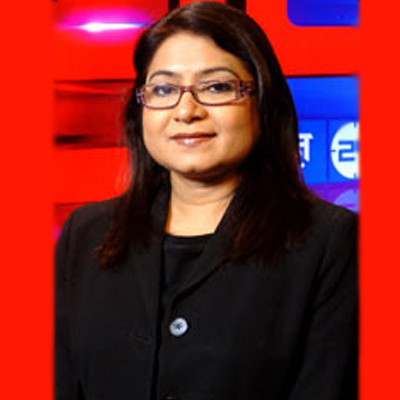
‘A generational shift is happening in the TV news space’ : BAG Films and Media CMD Anurradha Prasad
-

‘Break even will take five to six years for new franchises’ : GroupM ESP managing partner Hiren Pandit
Bigger, better, richer. That is what the franchises hope the Indian Premier League (IPL) will grow into year after year.
In an interview with Indiantelevision.com’s Ashwin Pinto, GroupM ESP managing partner Hiren Pandit talks about the vast revenue opportunities that are waiting to be tapped as the IPL grows into a sporting spectacle.
Excerpts:
How is GroupM ESP involved with the IPL this time around?
We do deals with franchises on behalf of our clients. There are logos on T-shirts and also innovations that have not been done before. We create revenue opportunities for the client as well as the franchise. This is in the form of licensing and merchandising.Are franchises able to fetch better rates this year with the economic situation somewhat improving?
Keep in mind that last year local activation could not take place due to the shift to South Africa. This year, some amount of rationalisation has taken place. There is measurement in place. You know whether you should pay Rs100 or Rs 150. Most team sponsorships have been sold.In terms of local revenue, how will franchises fare this year as per your calculations?
It will increase by around 20 per cent for each franchise. Revenues on T-shirts are anywhere from zero for Bangalore (The UB Group uses its own brands) to Rs 400 million for Kolkata. Delhi and Chennai will each earn Rs 330 million. Mumbai, Rajasthan and Punjab will individually earn Rs 300 million. Hyderabad will earn around Rs 200 million. The big difference is the logo on the right chest which will add Rs 30-50 million in revenue. Licensing and merchandising is just starting to happen. So this will take time to grow.Kolkata will get hit in terms of gate receipts as the two large stands that seat the most number of people is being reconstructed. Mumbai’s matches will happen in the CCI and DY Patil. Ahmedabad should boost Jaipur’s gate receipts. I, however, do not know the extent to which Dharamshala as a venue will help Punjab. The question that remains is Hyderabad. There needs to be some clarity on where the matches will be played.
If you include the central pool, how much revenue will franchises earn?
It will be a 25 per cent growth overall. Each franchise will earn $12-14 million from the central pool. The local pool will contribute around $8-10 million. Revenues from theatres, YouTube and Colors will also kick in. This will add a certain amount but it will not be dramatically different.Will Hyderabad’s revenues be hit due to the venue being shifted?
I am not so sure that Hyderabad sponsorships will get hit as it depends on TV exposure. On the back of that, activation will be done. In-stadia activity, though, will be hit. But licensing and merchandising may stay unharmed. It depends on the kind of deals that they will do. It remains to be seen how much revenues come from ticketing.‘Franchises will see a 25 per cent growth overall. Each franchise will earn $12-14 million from the central pool. The local pool will contribute around $8-10 million. Revenues from theatres, YouTube and Colors will also kick in‘Is there a danger of sponsorship getting cluttered?
From what we gather, the number of brands on IPL was 40 in the first season and 68 in the second. We expect the number to touch 80 in the third season. It is clutter but since it is at home, clients can do more activation. There needs to be innovation done by companies in terms of their campaigns. You cannot do what was done earlier unless you are sure that it will stay fresh. It needs to be different. Just keeping a logo on the T-shirt is not enough.Could you give me a couple of examples where team sponsors have successfully leveraged the IPL?
Idea Cellular did something different with the Mumbai Indians in the second season. Their users could have conversation with players. Wrigleys did something different by associating with all teams. Vodafone did the Zoozoo campaign which was a wake up call to competition. Sprite did the unique ‘Seedhi Baat, No Bakwaas‘ campaign with Kolkata.What is the key to a successful licensing and merchandising campaign?
Both parties have to make money. The distribution platform has to be solid and give access to all potential buyers. Under licensing and merchandising, the franchisee gets a flat amount and then a share on revenues – depending on sales. It will be a slow burner, though. And it will not kick in from day one. A substantial amount of promotions will be needed.Licensing and merchandising is different from having a logo on a T-shirt. People are still struggling to figure out what is the difference between advertising and licensing and merchandising. These two categories are separate but are getting mixed up. That actually helped Wrigleys who did a smart number on franchises. They did a partnership at a low cost and signed up most franchises for three years. From what I understand, Wrigleys can now milk the value of its deals to such an extent that franchises feel that they did not get the value that they were looking for. I don’t think that Wrigleys shares revenues of its products. Franchises now realise that the deal might have been a mistake for them.
Have the franchises got it right on ticket pricing?
I assume that they would have learnt from the first season. They will know what works and what does not. You need to analyse in detail what was done in the first season – what was right and what was wrong. If they have not done that the same mistakes will be made again. You also need to do activities to make fans come to the stadiums. The in-stadia experience will be far better this time. Catering is centrally managed. There are now turnstiles and so the number of people entering and leaving can be checked.Will the break even period elongate for the new franchises as the IPL has set a fourfold increase in base price?
The revenue opportunities have grown. The break even position, however, depends on how one manages costs and the revenue generation potential of a city. Some cities will perform better than others. But generally, it will take five to six years for the new franchises to break even. The time taken to break even is also a question of how innovative can the new owners be in generating revenues. Local revenues should rule over the earnings from the central pool. Anybody who can do this will have a model that will set themselves up to making money that would justify the price tag.Who has fared the best in this area so far?
The closest that anybody has come to achieving a great model is Kolkata. The fact that Shah Rukh Khan has lent himself to his sponsors like Nokia and Sprite has worked. He has extracted more revenues as a result. So instead of charging Rs 40 million, this franchise can charge Rs 70 million. Other teams also have values but I am not so sure that they are using it to their maximum potential. No franchise is optimising local sponsorship the way that they should.Also, keep in mind that with more teams coming in, costs and revenues will go up. The impact will be felt across the board. Player costs, travel and stadium maintenance costs will rise. Sponsorship revenues will also go up. All this has to be taken into account by whoever is bidding.
Another issue is that current franchises will be allowed to retain some key players even after the third season. This could limit the pool of payers who are available to the new franchises. How do you see things panning out?
A middle ground will have to be found. This is a sticky issue. On one hand, you have India Cement saying that since they have invested in Dhoni and have built their team around him, he must be retained. Otherwise the team’s value will be affected. On the other hand, the new franchises need to have a solid pool of players to pick from or else they might decide not to play. A balancing act will have to be performed by the IPL Governing Council.Rajasthan Royals has tied up with other cricket clubs globally. Is this the trend for the other franchises as well?
If you have world class players who can play in different countries and fill a stadia, then it forms another revenue stream. The IPL guidelines state that Rajasthan Royals cannot play against Kolkata in, for instance, England. So by doing this kind of a tie up, they avoid that situation. Events can take place all over and more money flows in. There is an opportunity here.Do you see the IPL playing out well in cinema theatres?
This year it will be a tried and tested concept. The concept looks very impressive. You will have high definition which makes a big difference. The 16:9 screen size will allow you to see more ground. This is the summer and people might want to go to an air conditioned place and enjoy it together. It is about the quality of experience. If it is good, then word of mouth will spread.How important is the YouTube deal in spreading the IPL brand globally?
It is fantastic on two levels. In India, you can sit in the office and watch matches. It is a question of bandwidth. I would expect people to avail of the highlights package for matches that happen between 4-7 pm the next day. Then there is the Indian diaspora who want to watch the IPL but have no access.The question is how YouTube is going to monetise the IPL property. Will YouTube become pay for international markets? Today they have said no. They can continue to say no if there is enough ad support.
The Champions T20 League got off to a slow start. Where do you see it going from here?
I was surprised that it got off to such a slow start. But if people thought that the Champions Twenty20 League would do as well as the IPL, then they were wrong. The IPL and Champions League are about clubs. The club culture has not yet come in the country. It will take time. The second reason is that the three Indian teams did poorly in the Champions League. The interest among audiences fizzled out.The franchises and the IPL need to start developing a club culture. Nobody says that they want to go for an IPL match to see a particular franchise play. They simply go for great cricket. That has to change. You need to create a fan base that is passionate about the team per se, even if it comes last. Franchisees need to invest money in creating a club culture.
-

‘To not take a position is not a virtue’ : Times Now Editor-in-Chief Arnab Goswami
A late player in the news game, Times Now sits at the top with its hard news stance and round-the-clock news focus.
The Mumbai terror attack coverage is where the tide turned in Times Now‘s favour as the older players ceded ground. Though it is still a close chase in the ratings race, the channel has stayed ahead at a time when the news genre is finding it difficult to expand.
Some critics have attributed the channel‘s success to its sensational treatment of hard news. Times Now Editor-in-Chief Arnab Goswami, the architect behind the channel‘s uprise, however, believes that the channel has stayed away from it and also kept a distance from the mixing of news and gossip.
For a channel that just completed four years, the bespectacled Goswami does not hesitate to take a point of view in an obvious case of right and wrong. “In the Ruchika case, we called Rathore a molestor DGP,” he argues. As he says, “to be unsure of news is not a virtue.”
In a candid interaction with Indiantelevision.com‘s Gaurav Laghate, Goswami shares his views on the definition of news, the relevance and importance of hard news vs sensationalism and the leadership of the channel he manages.
Excerpts:
Did the coverage of 2611 Mumbai terror attack help Times Now increase its viewership share?Yes, 26/11 increased our viewership share. We were No 1 even before that but the channel‘s consistent leadership gap grew from then on.
Many people believe that it‘s because of something different that we did during the terror attacks. I can‘t pinpoint at what we did differently because I was live all the time. So I can‘t give a comparative view. But yes, after that there has been an upsurge in our viewership.
If you look at all weeks after 2611, there would be about 60 weeks or so that have passed. And we have been number one in 99 per cent of the weeks since 26/11.
What data are you quoting? Tam says in 25+ All India market, the competition is neck-to-neck…
We take 25+ AB, 1 million-plus towns. This is the market that everyone considers when it comes to English news channels.
We are 13-14 per cent ahead of our closest competitor NDTV in this market, and we are very happy with this viewership figure. There is no competition in that sense.
But from the content point of view, have you incorporated any changes in news gathering after the attacks?We don‘t have to do it. Those who may have made mistakes would have to do it. We did not make any mistakes, so there is no question of making any change or taking any corrective step.
But isn‘t the overall quality of news journalism declining?
Quality keeps increasing. There is more news content today than there was 2-3 years back. The focus on hard news is coming back. Yes, there are lots of channels which show programmes not centred on hard news, but the excesses are fewer.
There is a strong code of conduct which seems to be working. So, all in all, I think the last 2-3 years have been good for the news channel industry.
So you think NBA is the right body to tackle the issues of content regulation? Or is there a need for an independent body?
I strongly believe that self-regulation is the only way out. Both the NBA (News Broadcasting Association) and the BEA (Broadcast Editor‘s Association), of which I am an active member, are the best forums to carry out that self regulation. There is no scope for slightest government interference in regulatory processes. And I think there is total unanimity amongst them.
‘Yes! I had a point of view in the Ruchika case. We called Rathore a molester DGP. Is that wrong? We called the killer of Francis Induwar a Maoist terrorist‘
Not government interference, but a body like OfCom (UK) may be?
No. I think the way people are regulating right now is good enough. You don‘t need a new regulatory system. You don‘t have to reinvent the wheel. Self regulation is working, it should be encouraged and that‘s that.
Are news channels running the risk of dipping into sensationalism to shed the image of bland coverage?I don‘t do sensationalism. I don‘t believe in sensationalism, so I don‘t want to discuss sensationalism as it has nothing to do with me.
But what is sensational and what is not is sometimes a matter of perception. For some people even covering the IPL may be sensationalism. These are subjective matters and I don‘t want to pass a sweeping judgment on it.
Times Now has completed four years on 1 February. Where do you find yourself today?It is quite apparent to us in the Times Now newsroom that almost every other English news channel and several Hindi news channels follow us. I find it flattering.
What has changed is that with the leadership of Times Now, people in this country are given the news clearer, faster and more directly than any channel or group in the past has given them. People love that. Whether or not it will work for other channels to copy us, I don‘t know. But so far, it doesn‘t seem to be working.
I will say that Times Now has set totally new standards in news reporting, which some seem to be taking a cue from. And I am happy about that. Besides that news is news, definition of news does not change anywhere.
And what is the USP of Times Now?The USP of a news channel has to be news. I don‘t believe that getting 100 people to sit together and talk for 100 minutes is the job of a news channel. Some channels still do it.
In my view that is an antiquated approach. Some people believe that the town hall approach, where you get 100 people to sit and talk, is what a news channel should be doing. I don‘t think so.
So you come to Times Now; it‘s the only place among the news television channels in India today which has news every second, every minute. It works for us.
So what were the high points in these four years?In 2007, when we hit the No. 1 spot for the first time, and within 15 months after entering the market, it was a major high point for me and my team.
The opportunity to make a real change in our society, and be part of a campaign that reopened the Ruchika case recently, personally was a very big high point.
I will not call 26/11 a high point, because it was not. It was a painful experience for all of us. But in terms of objectivity of our reporting, it was a high point. My reporters did not hype, did not over dramatize; they were straight forward, to the point and honest. And I think the difference showed. Professionally it was a high point, though personally it was a sad event for all of us.
And when we completed 2009, we won 50 weeks out of 52, it was a high point. You see, to win is good but to win decisively, like we did in 2009, and that too without any major news event besides the elections is a high point for us.
For me, staying there is more important than getting there. It means a lot to me and my team. Biggest high point was that my core editorial team has supported me and stayed with me in every step since launch. Many of them are behind the camera, but they run the systems in the channel and help us stay No 1.
So what all has changed during these four years?Oh! Dramatic changes… Times Now today and Times Now when it launched… In fact, there is a new thing happening daily on the channel. On an average, we have introduced over 200 changes, which may be in production style, graphics, shows, nature of reportage… it may vary. I am a great believer of innovation and I think one of the reasons we have won is because we have a very innovative team. But that‘s the beauty of our business which constantly enables us to change according to what‘s happening around us.
That‘s where we stand out from competition. They do the same and they look the same. But may be it‘s got to do with the youth and energy of Times Now and the average age of our team compared to competition. We have got far more energy and passion as compared to any of our competitors.
‘Some people believe that the town hall approach, where you get 100 people to sit and talk, is what a news channel should be doing. I don’t think so‘
Aren‘t you disturbed that the news genre has shrunk as per Tam data?
I am not concerned about the news genre. I am concerned about my share in the news genre. But what it means is that despite Times Now gaining share, the others collectively are losing. So the others should be worrying.
I am very pleased with our viewership trend, because it is just growing. If I go by latest Tam figures for the C&S 25+ AB market, we are averaging about 36-37 per cent channel share.
But why is the news genre shrinking?
I do not think news genre is shrinking. Everything is relative. The viewership of news channels is greatly dependent on news events. So when there is a major event, you may find a 25 per cent jump and it may not grow further till the next event. But it will not fall majorly. So it means that people who came to you largely stayed with you.
Now within this share, why Times Now is growing and why NDTV or CNN IBN and other channels are shrinking is something they should be worried about. My relative share is increasing week on week. My polynomial is showing an upward curve.
Today there is a lot of gossip shown on news channels. So is hard news dying?I don‘t think that people will accept gossip after some time. You cannot mix up news and gossip. And so it‘s best if we don‘t cross that line. A lot of gossip passes as news on many channels, but not on Times Now.
Hard news is what I believe in; it is the only thing that we do, and the only reason why Times Now is No. 1.
You said your focus is on news only. You don‘t see the need for specific features and shows?We do specific shows – The Newshour at the very critical 9 pm slot holds almost 60 per cent share. None of the other English news channels come close. Weekend shows like Total Recall is hugely successful. We have feature programming, but yes, I do not believe in diluting news with features.
Do you consciously take an aggressive stance on television?To not take a position is not a virtue, to prevaricate is not a virtue, and to be unsure of news is not a virtue. You look at all the stories recently, and you ask yourself which channel do I remember? Answer is Times Now.
Take the Australian racial attacks, for instance. Nowhere my reporting was stilted or prejudiced. Similarly, the BT Brinjal case. To not talk about the health issues with BT Brinjal is not appropriate. Similarly, questions raised on RK Pachauri. To report the questions is not taking a position. So the reporting we do is transparent and honest. People see it and accept it. Let viewers decide.
But you have very strong opinions which are visible on the screen.If there is an obvious case of right or wrong, I can‘t pretend not to know what is right and what is not. And if in that situation, I prevaricate or chose to be silent, then that is wrong.
Yes! I had a point of view in the Ruchika case. We called Rathore a molester DGP. Is that wrong? We called the killer of Francis Induwar a Maoist terrorist. On the contrary, you should ask people, who do not call them Maoist terrorists, why they are not calling them that. I am stating the fact.
I am sure in what we do and my viewers are sure that Times Now will not deliberately keep the truth away from them.
You say news should be popular and not populist. But isn‘t this a very thin dividing line?It is a thin line but the challenge of our job is to be sure on which side of the line you are in. There is not a single story where people can say we did anything populist on Times Now.
My concern is not with my competitors but with my viewers. We have never done anything which is factually incorrect, ethically wrong, or journalistically compromised. And as long as we don‘t do any of these three, we don‘t need to explain where we stand.
What do you think about investigative journalism?Ours is not an investigative channel, it is a news channel. There is nothing called 100 per cent investigative channel, neither is Times Now, nor is any other channel. I am no expert in investigative journalism.
But some channels have investigation teams…
I don‘t have. You should ask the channels which have had or have special investigation teams. What I can certainly tell you is that I don‘t take or do sting operations from anybody or for anybody.
How much focus is on the website, timesnow.tv?
We have a very successful website. And we are continuing to innovate on it. There is a lot of synergy between Timesnow.tv, Indiatimes and TimesofIndia.com.
We have large viewership through these synergies, which we continue to build and expand. And in the future, this is going to be a major thrust area for us. We are planning to increase and revamp our online content, reach and connectivity. This is the area we will be working a lot on in 2010.
Times Now had taken a very strong stance against Pakistan. But after Times Group‘s “Aman Ki Asha” campaign, it has mellowed down?It is not true. What we do on the news and what we do on the campaign Aman Ki Asha are not mutually contradictory. And we have done several shows on Aman Ki Asha, of which some have been the highest rated shows.
But it doesn‘t mean that we do not report on what Qureshi or Gilani say. Whether the peace process will really move forward or it is just symbolic – we do both. There is no contradiction in this.
Does the network strength help?
With campaigns like Aman Ki Asha, it does. It also gives us access to lots of quality content. And our news stories sometimes find space in Times of India, purely on merit of course. So there is a natural synergy.
-

‘Success of a TV channel is to find homogeneity in a heterogeneous market condition’ : Sony Entertainment Television VP marketing Danish Khan
2009 was an eventful year for Sony Entertainment Television (SET). Languishing behind the top three Hindi general entertainment channels (GECs) and even newcomer NDTV Imagine, the channel relaunched with a bunch of differentiated shows. Some worked, some didn‘t, and the programming overhaul failed to lift the ratings to any position of strength.
Sony then discovered the value of its old horses in C.I.D and Aahat. The channel zoomed to a GRP (gross ratings point) of 180 and the road ahead looked promising with the launch of YRF shows. But the leading film producing house evoked a tepid response among audiences for its TV shows, leaving Sony in hunt for new properties that would aid it to move up the ratings ladder.
Marketing several new properties and the relaunched channel has been a challenging task under these circumstances.
In an interview with Indiantelevision.com‘s Anuradha Ramamirtham, Sony Entertainment Television VP marketing Danish Khan talks about the strategies that Sony adopted during this period as it searched for width and depth of reach across markets.
Excerpts:
How tough was it to market Sony Entertainment Television in a year when a bruising battle was fought at the top among the three leading Hindi general entertainment channels?The GECs were in a growth mode last year and the leadership battle became intense. Marketing, thus, became much more strategic and key to a channel‘s fortune. Sony was clearly on the growth path and we were able to build the brand with high impact campaigns for our bigger properties like Indian Idol 4, Dus Ka Dum, Bhaskar Bharti, Aahat -the all new series and Iss Jungle Se Mujhe Bachao. We also rejuvenated the brand CID. All these shows were successfully marketed in challenging times and conditions.
What exactly were you looking at marketing when the channel went for an overall overhaul?SET has existed as a brand for long and our aim was to refresh the look and feel of the channel. The relaunch wasn‘t just of getting a bunch of new shows to appear on the channel; it was also about refreshing the channel‘s identity. While we retained the logo, we went for a new packaging and brand identity. On the programming front, we retained some of our old properties like CID, Boogie Woogie and Comedy Circus and introduced some new fiction shows including Bhaskar Bharti and Ladies Special. This helped us in improving the channel‘s ratings by over 150 per cent over a nine-month period.
Did your marketing spend expand during this makeover period of the channel?The channel‘s marketing budget stayed almost flat. We were fortunate in that for the first half of the year, the media cost was stagnant due to recession. We also changed our media buying mix a bit by increasing our exposure to low-cost mediums like digital and experiential marketing. We could have a similar impact at lesser cost. The marketing was much more rigorous and we did all to stretch the value of every rupee that we spent.
With the Tam panel expanding and new markets opening up, will you have to tweak the marketing plan for the channel?With the TAM panel expanding, it‘s going to be a challenge not only for us but for all marketers in the channel space. Thankfully, we have a strong distribution network. In 2003, when Tam was moving to smaller cities and towns, Sony was the fastest to reach to new markets and develop a strong brand affinity. With the new markets opening up, it will be a good opportunity for us.
How different is it to market in smaller towns as compared to tier I cities?The tier I cities and metros are mature markets and are organised in nature. In these markets, there are multiple media options available to reach to the consumer like availability of FM stations and organised outdoor media. Consumers in these markets are early adopters to new trends and there are huge amounts of touch points available to reach out to them. Hence, these markets are easier to monitor.
These markets are, however, cluttered. The challenge here is not restricted to reaching to the consumers but also creating a high impact as they are bombarded today with hundreds of messages. In addition to availability of multiple media options, the markets have also become expensive. So, the challenge is both being impactful and cost effective.
The smaller markets are not organised. There is lesser number of touch points and everyone wants to reach there. Experiential marketing works wonder in small towns if it is sprinkled with mass media applications. Consumers here are fresh to meeting celebrities and such activities are hugely accepted and help in creating the right buzz.
‘For the first half of the year, the media cost was stagnant due to recession. We also changed our media buying mix a bit by increasing our exposure to low-cost mediums like digital and experiential marketing‘
What was the most cost effective medium for marketing during recessionary times?Recession or no recession, television is the most cost effective medium for marketers. Thankfully, we have a very robust network with five performing channels; these form the base for all our marketing plans. Outside television, we use different mediums. In 2009, Internet and mobile (digital medium) were used more judiciously to reach to the youth who are tech savvy. Also, experiential marketing (BTL activities) was pushed hard last year and they yielded good results.
With advertisers spreading their focus into smaller markets, how will GECs and particularly Sony benefit from this?Like television, most categories and brands today have a pan India presence. TV is increasingly becoming relevant across categories as its spreads out both geographically and demographically. Like any other marketer, Sony is also keen on small towns. Besides, the channel enjoys a robust distribution platform across India.
How do you address such a heterogeneous market?
The success of a television channel is to find homogeneity in a heterogeneous market condition. In India, the markets which we cater to are extremely heterogeneous in nature. A Punjab market, for example, will think and behave differently than a Maharashtra market which, in turn, will be different from Uttar Pradesh. But there are certain universal themes that work across markets. The content and communication has to be based on this. Media behaviour and mediums can differ. As far as the message is concerned, it should always be built around something that works universally. That applies to successful shows as well; they have messages that are universal.
YRF is a strong movie brand. What marketing steps did you take to extend it into a television brand?It was challenging to work on the YRF shows. These are early days yet and the five weekend shows have started attracting a definite set of loyal audiences. We are doing a lot of on-air promotions and experiential marketing to build the popularity for these shows.
-

‘We have helped in the democratisation of the business news market space’ : CNBC Awaaz editor-in-chief Sanjay pugalia
Five years and counting big. CNBC Awaaz dominates the Hindi business news segment, leaving counterpart Zee Business behind, and even marching ahead of elder sibling CNBC TV18 in terms of audience reach.
CNBC Awaaz has become more interactive along the way and has shaped up as a well-defined channel with a clear focus on utility news. It treats news with the aim of helping viewers take informed positions on investments.
The fundamental challenge that CNBC Awaaz faces is in scaling up revenues. The cost restructuring will, however, help the channel in improving its profitability.
In an interview with Indiantelevision.com‘s Gaurav Laghate, CNBC Awaaz editor-in-chief Sanajay Pugalia talks about the channel‘s growth in the last five years and the path ahead in terms of content that would guide viewers in the verticals of stock, tax planning, commodity and SMEs.
Excerpts:
CNBC Awaaz has completed 5 years. How has the Hindi business news market shaped up?
Five years back there was no Hindi business news channel. Today, with just two channels in this segment, there are close to 38 million Hindi business news viewers and we command a 70 per cent market share in this.If you take the total viewership of the business news channels, it was close to 10 million five years back. Within two years of our launch, the pie grew to 30 million. Today, the combined viewership base for English and Hindi business news stands at almost 55 million.
How come the Hindi viewership base is higher from just two channels while the revenue is much lower?On a mass basis, our appeal is larger then even CNBC TV18. Our viewers include small investors, consumers and businessmen. So in a way we have helped in the democratisation of the business news market space.
On the revenue front, even some English business news channels can‘t command the kind of advertising rates we do. But yes, it is also true that the dynamics of the market is that English business channels get higher rates.
So is it true that Hindi business news channels do not have a scalable model?
There is a myth that Hindi is not so upmarket. But if you do an affluent audience profiling, we are as good as that of CNBC TV18. And if you see our viewership pattern, most of them come from Mumbai and Delhi, followed by Gujarat and Maharashtra.It is pertinent to note that the initial five years were a build-up stage. We will see much faster growth from now on.
What made you edge out Zee Business when both were launched around the same time?
The focus of our channel is in outlining the utility of news. There might be 10 important stories in a day, but how many are affecting our viewers? We decode such news in a manner that helps them understand the implications.We will be covering other news as well, but our main emphasis will be user-centric. We focus on helping our viewer make the right investments to increase their wealth. Take real estate as an example. Our focus stories will be on the ground realities the sector faces rather than talking about how to improve the policies on real estate. Our object will be how to help viewers decide on which property to buy and we will suggest the rates and other things there.
Going forward, do you see space for more channel launches in this segment?
Business news viewership will definitely increase with time. With more and more people getting capital to invest and more awareness spreading on personal finance management, this market segment is set to grow.Our estimate is that out of every 100 new consumers, two-thirds will come from the Hindi speaking belt, so you can imagine the future that the Hindi business news genre has.
I would say there is scope for new channels, but the success will depend on the strength of the network and how much credibility they can build. It won‘t be easy for new players.
Recently TV18 went through a cost restructuring and 12 per cent permanent jobs were cut. How effective has the move been in achieving profitability?
Cost rationalization is a necessity for any business. But you will not see any change in the editorial content. I can‘t share the absolute numbers, but very few editorial jobs have been cut.
‘The focus of our channel is in outlining the utility of news. There might be 10 important stories in a day, but how many are affecting our viewers? We decode such news in a manner that helps them understand the implications‘
So do you mean to say there was flab?
No. There were different growth plans during the bull run. We were focusing on extended news gathering. Now the market scenario has changed. We also have sensed that the news gathering needs are different. You see, the market dynamics are changing very fast and we have to change our FPC as per viewer‘s needs.So we have reduced the number of shows but consolidated the information in them. We have also increased the coverage on commodity, personal finance, stocks and property.
How has the channel evolved over time?
Along with time, we have become more interactive; we promote direct involvement and grievance redressals. The treatment towards the stories has changed – and we are now positioned as an innovative business news channel.We are catering to the specific needs of our viewers. I get more then 6000 SMSes and emails daily. And we try to reply to most of the queries. We are not just a business news channel; we run more like a campaign or a movement.
So what will the future focus be?
As I said earlier, the focus will predominantly be on the markets, SMEs, commodity and tax planning.We will also continue to reach to our consumers on-ground with our activations and award properties.
The way India is progressing, there will be lot more new and young entrepreneurs. Our one-year focus is to organize more of financial literacy campaigns, help SMEs to grow, and cover miraculous entrepreneurial stories from different places.
And what about hard news?
I am not missing out on news. News hour shows are sacrosanct. But we need to have other strong offerings.
Hindi general news channels are into sensationalising content for gaining TRPs. Do you also see such a need for the business news segment?I do not think there is any need to sensationalise. I am not against presenting news in an interesting and stylish way, but there is no need or room to sensationalise.
So how will you define your channel?
To sum it up in one sentence, we help viewers in spotting opportunities to prosper.
-
‘Fiction will help us scale up’: Endemol India managing director Deepak Dhar
For Endemol India, it has been a roller coaster ride. The international content creator has established itself as a leader in the reality TV genre and has expanded into other strands of content. Now the gameplan is to speed up on the fiction front.
Endemol, which produced 1400 hours of content in 2010, is planning to scale up in several verticals including regional language, sports and food and lifestyle programming. The company recently formed a JV with Rhiti Sports, the company which manages Indian skipper MS Dhoni, for sports formats.
In an interview with Indiantelevision.com’s Ashwin Pinto, Endemol India managing director Deepak Dhar talks about the company’s growth plans.
Excerpts:
What progress did Endemol make in India last year?
The progress has been 360 degrees. Initially, we were known for reality. Now it is not the only thing; we are known for other strands of non fiction also.
We have an array of fiction shows. We have moved into regional as well with Bengali and Southern language content. We have also gained from being in the Hindi general entertainment channel (GEC) space.
How does India compare to other Asian markets?
It is growing. The entire world is looking at us. Our parent is looking at what India can do. We did over 1400 hours of production last year. We have done well if you look at the state of our productions or business development. We have had double digit growth.
Could you shed light on how you are scaling up the fiction business?
We are seeing ideas that can be exploited in the Hindi GEC space. They can also go into the regional space, south, Bengali, Marathi. We are looking at slots that need newer storytellung. We are meeting with our broadcast partners to see what the synergies are.
We do a lot of non fiction and format work. In terms of scaling up, growth will come from fiction.
We will be making two to three announcements in the next few weeks.
What kind of shows are you looking at?
We are not focussing only comedy or only drama or only thriller. We are known for 360 degree entertainment solutions. Anything that fits the household will be our focus.
Are you looking at forming JVs with local production houses?
We are constantly analysing it. Now we are largely focussing on organic growth. We will look at inorganic growth, but at this point of time there is nothing serious.
‘Now we are largely focussing on organic growth. We will look at inorganic growth, but at this point of time there is nothing serious‘In terms of margins, how are you faring?
Margins are always tough in this country, espcially in the broadcast and production sector. In our formats and even our fiction business, we have kept a healthy balance in our margins due to product efficiencies. In a year, we do around nine non fiction shows.
But in the fiction space aren’t margins squeezed?
They are squeezed but again for us the emphasis is great storytelling. We want to be happy with the stories being told and we will manage the margins. Comedy has its own space. In drama, emotions are integral to the Indian psyche. That will never go out of fashion.
How do you manage costs?
It is a challenge. Broadcasters are always looking to push costs down without the quality falling. Broadcasters, though, understand that to have a quality product the margins must be healthy. The production house must be given some breathing space.
Non fiction shows have a larger budget. You get a bang for 13-26 weeks and that is it. With fiction it is like running a marathon. You need to have the stamina to push the idea and engage the audience.
Balaji to some extent has lost dominance which has created a gap. How are ou tapping this?
We have already tapped into this. We are doing three fiction shows at this point of time. We will be adding two more within a month or so. We have stepped into this opportunity. We also look at the competition and what is on the horizon.
Fiction is where the horizon is. The margins can improve in this genre. People will look at us as an Indian producer and not just as a format producer. We will focus largely on fiction.
Indian production houses are known for doing one kind of show. We are not like that. We do things from ‘songs and dancing’ to reality and action-based shows.
How were you able to broadbase youreself into fiction?
This has to do with the team. We have Gadgi and Kartik as the creative and business heads. They lend credibility and experience to Endemol’s fiction slate. We believe that if you have the right talent on board, then the right discussions start flowing out.
Geet has worked. Mili Ye at one point really worked. But the story ran its cycle. These stories have been channel drivers for Star One and Star Plus; they will help us consolidate our next line of fiction.
In the non fiction area, you entered the food genre with two shows. What scope do you see in the lifestyle space?
Lifestyle is a niche space. However, we do not want to leave any space untapped. The opportunity might seem small. But an opportunity needs to be seen.
Documentary and speciality channels are growing in popularity in the West. You will see the same trend happening here. A new spate of speciality channels from science and technology to crime and thriller to food are bound to come in. This is a new space we will be busy with this year.
Is the approach here different from how you look at other areas like formats?
Yes! In lifestyle you will have to create original ideas; it is not about replicating an idea from the US. We don’t want to simply pick up a format. it has to fit into an opportunity.
The local version of Wipeout launches tomorrow. Has the format been changed in any way?Not really. You will see the same thing. It will be extremely engaging, funny and competitive. It is the new next breed of reality shows that we will roll out on Indian television. We want to push trends and get trends into the country.What trends are we seeing abroad in the format space?
A lot of game shows are doing well at this point. 1vs 100, Million Pound drop Aare two big game shows. We are bringing them to India.
Deal Or No Deal has done well. We produced 300 episodes of this on the Sun Network. We did five seasons back to back for them.
You will see us pushing a lot of gameshows going forward. Howwever, reality will always be the flavour of the season. People like to watch others in pressure cooker scenarios. This is the spectrum of ideas you will see.
We are also looking to bring in State of Panic to India. Circus Of The Celebrities is another one. It is an engaging, high end primetime experience. The common thread is people being pushed into pressure cooker situations; in others pure true human emotions are glorified on primetime television. As long as the emotions are true, it will help some of these format shows stand.
We are also doing things in the ad funded space. Rin Mera Star Superstar, Fair And Lovely Choo Lo Aasman have done well for us. This is what I mean by having a 360 degree approach. We are pushing ideas in this space. We need top keep a balance between the needs of a broadcaster and an advertiser. You do not want an advertiser funded show to look like one. You have to do something that has been well thought through and engages.
What is the gameplan to tackle the South market?
We will take our big ticket gameshows there. We are also taking reality shows there.
Currently the South is a growing part of our business. This year we will add a few more fundamental blocks to make it stand on its own.
We are concentrating on the Tamil and Telugu markets. We producing a lot in the Malayalam space as well.
What balance are you looking at between fiction and non fiction content?We want it to be 50:50. We are on track to achieve this. We have been the market leader in the non fiction space. The challenge is to see how we can fast track our business and sales. We are adding new pieces like sports into our business. This will bring in new challenges as every business has its own dynamic. We have a good tab on the competition.How did the tie up with Rhiti Sports come about?
We have been exploring this in terms of doing things in the sports space. We want formats like The Match, Next Great Champ. We are looking at basketball, football, boxing, cricket. Rhiti Sports with their credibility will help us monetise the formats across sports broadcasting and GECs as well.
The sports genre is not tapped in terms of formats. Sports formats are consumed a lot by the youth, kids and women. We have a rich library of content in the sports format space.
You used to do a Call TV initiative with ETV. How did that fare?It was a good experience. In the interactive TV space, we do a lot internationally. There was a need to create a low cost game show. We produced Break The Bank. The market size, though, is small. The telecom industry versus the content industry faces its own set of challenges. So we did not push it too hard.Are you looking at new media?Yes! We do a lot of content for the mobile internationally. With 3G coming in, we are keen to tap this space. We have formats tailored for the mobile like small comedy interstitials. The youth love to sample something really fast. They are restless. They don’t only want content on the television. A lot of discussions are going on globally regarding how to cater to the mobile audience.Where do you see Endemol five years from now?When we came in four years ago, the idea was to Indianise the Endemol brand. Now we want to localise and regionalise the Endemol brand. We want to adapt our content to a lot of regional markets. -
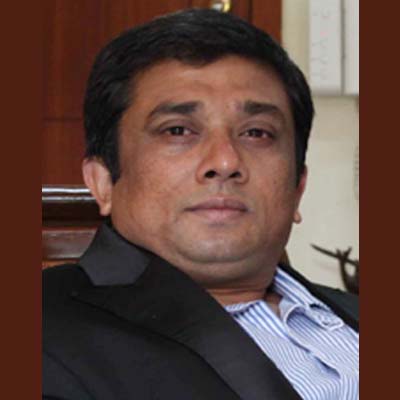
‘Fragmentation has actually helped the Hindi GEC ad market to grow’ : ZEEL Chief Revenue Officer Joy Chakraborthy
Zee Entertainment Enterprises Ltd (Zeel) has a pool of channels that would drive its topline. The transfer of the six regional entertainment channels from Zee News Ltd (ZNL) would reduce Zeel‘s dependence on Zee TV as Zee Marathi, Zee Bangla and Zee Telugu write good revenues. The gain could be to the tune of Rs 4.4 billion on an annualised basis.
Zeel went through a second wave of consolidation when it decided to bring under it ETC‘s broadcasting business. while ETC Music will complement Zing, ETC Punjabi stays as a strong force in the Punjabi market.
Zeel‘s south story is set to bloom. With market leader Sun TV deciding to up ad rates across its network channels after a gap of two years, Zee Telugu is in a strong position to shore up its revenues on the back of soaps, movies and a dance-based reality property in Aata. Zee Kannada is also on the growth track.
Competition from the two Star regional channels could hurt Zee Bangla and Zee Marathi in the long run. Star Jalsha has become a clear No. 1, but Zee Bangla is currently holding on to its revenues due to unduplicated viewership and a smart utilsation of inventory and ad pricing. The Bengali general entertainment channel (GEC) ad market could, however, expand.
Despite Star Pravah‘s rise, Zee Marathi continues to be in leadership position and is aided by Zee Talkies.
Bruised by a weak property in Indian Cricket League (ICL) that ran out of action last year, Zee has plans to launch a few sports channels.
Maximising the company‘s value share is Zeel chief revenue officer Joy Chakraborthy. His academic armoury includes graduation from National Defence Academy, masters in marketing management from NMIMS and, more recently, the Advanced Management Program from Harvard Business School.
In an interview with Indiantelevision.com‘s Sibabrata Das, Chakraborthy talks about the company‘s focus on revenues, profitability and monetisable GRPs.
Excerpts:
How much topline growth would come to Zeel due to the transfer of six regional entertainment channels from Zee News Ltd?
Zeel would be a big beneficiary as the six regional entertainment channels are riding good revenues. They will also help us offer complementary media propositions to our advertisers. We expect Zeel to add about Rs 4.4 billion on a full year basis due to this transfer.
So Zeel‘s dependence on Zee TV will reduce?One can‘t undermine the contribution of our flagship brand in our bouquet of channels. With the regional GECs, we will, of course, have more driver channels in the bouquet such as Zee Marathi, Zee Bangla and Zee Telugu. Nonetheless, Zee TV’s contribution to the overall ad pie of Zeel will be in the region of 35-37 per cent.
Doesn’t that spread out Zeel’s risks at the right time when we are seeing the emergence of a new star in Colors and further fragmentation in the Hindi general entertainment channel (GEC) space?
With the industry maturing, fragmentation is obvious. In fact, fragmentation has actually helped the Hindi GEC ad market to grow. The introduction of Colors has transformed the GEC space from a bi-polar into a tri-polar segment with each of the three players creating their own relevance. As such, we expect the Hindi GECs would take away Rs 24 billion in ad revenues during FY’10 (i.e. up from Rs 19 bn in PY). And going forward, this space is bound to grow if all players get their pricing strategy right.
But hasn’t the 3-horse race for the top slot in the GEC space damaged the pricing power and impacted Zee TV?
Zee TV is the No. 1 revenue channel. It gets maximum campaigns and advertisers spend due to two key reasons: consistency in ratings and effective leverage of a huge network. Also, we sell more on plain vanilla FCT (free commercial time) with few but quality innovations.While our rival networks have taken to very expensive programming, we have delivered with soaps and reality content without flashing Bollywood stars. We have developed Dance India Dance and Saregamapa into our strong reality properties. We have also stayed away from buying GRPs through movies. Our focus is profitability – and not just simply becoming a No 1 GRP channel.
Also, advertisers don’t buy GRPs; they want relevant ratings. A lot of channels are running break-free content. What is the use? An afternoon GRP is not the same in value as a primetime GRP. And Zee TV has been leading consistently in primetime. So, the point is to develop “monetisable GRPs”.
What about the economic downturn?
There is no doubt that broadcasters have experienced a tightening of their revenues. But the slowdown has resulted in a host of positives (especially for television – as a medium).Clients and agencies have intensely evaluated their ad-spends and experimented with mediums. They have invested in value-for-money genres where risks were low like GECs and movies. High value flashy investments were curtailed. They have looked at TV a lot more optimistically than print. While ad spends on TV will end at Rs 91 bn for the year, (up from Rs 83 bn in PY), print will grow only marginally from Rs 98.20 bn to Rs 99.30 bn.
In fact, the last four months have been particularly good for us. Being the largest network has helped us in attracting advertisers. Though we saw a slump in ad spends from real estate, banking & finance sectors, it has been compensated by FMCG, telecom and auto, which have been high spenders on GECs.
‘A lot of channels are running break-free content. What is the use? An afternoon GRP is not the same in value as a primetime GRP. The point is to develop monetisable GRPs‘
Has cricket eaten into the GEC space?
We had expected that our biggest threat would come from cricket. But it has under-delivered. Cricket has taken a severe beating, resulting in some channels offering guaranteed CPRP deals. As such, advertiser confidence on GECs has been high.On the whole, with Tam expanding its panel this year and the economy improving, GECs will stand to gain.
Have the movie channels also been hit by recession?
Advertisers in this downturn have realised the true potential of television in terms of reach. With consumption expected from every nook and corner, the Hindi Cinema genre, which is high on reach, played a very crucial role in the marketer‘s overall communication scheme. This has led to the Hindi Cinema genre witnessing significant growth in revenues despite a marginal fall in GRPs. This growth has come from rate increase as inventory has always been 100 per cent utilised.. Though GECs have been the first to air big ticket movies, movie channels, being well penetrated, go beyond Tam markets, and are value-for-money proposition for advertisers. Zee Cinema’s consistent performance is due to its strong presence not only in the metros but also in the smaller towns and rural markets.
Sun TV network has increased its ad rates after two years. Will this augment Zeel‘s revenues from its south-language regional channels?
Despite being a leader, Sun TV’s pricing has always been highly cost-effective. For any market to expand, the leader has to take a leap in pricing. Hence this initiative by Sun TV will only help the entire Southern market grow further. We are doing particularly well in the Telugu space and are highly optimistic on Zee Kannada as well. South will be the big story for us in the years to come. The transfer of the southern channels to Zeel will help our regional sales team as they can offer a complete regional package.
Will the rise of the two Star regional channels hurt Zee Bangla and Zee Marathi?
In the Bengali GEC space, Zee Bangla has lost its leadership position to Star Jalsha, but, over the last couple of months, we have undertaken new initiatives and the channel is looking up again. More importantly, our focus has been to ensure profitability and towards that end we are, even today, writing much more revenues than Star Jalsha. This is primarily because of our two-pronged strategy: optimal inventory utilisation and appropriate pricing. One of the noteworthy propositions of Zee Bangla is its high unduplicated viewership. All of this has helped us ensure against loss of any campaign. Having grown, we now hope that Star Jalsha increases its rates to sustain the market expansion.In Marathi, we are almost three times that of our nearest competitor. Zee Marathi is a clear leader and is well complemented by Zee Talkies, both in terms of revenues and viewership.
Zee‘s sports business falls under your ambit. Are there plans to launch more channels?
The various sports-led initiatives of Zee that straddle not only on-air (Ten Sports & Zee Sports) but also on-ground properties like Mumbai FC, AIFF (All India Football Federation) and cricket (Zimbabwe & Sri Lanka) are a part of my Sales responsibility. Print properties like All Sport Magazine also come under me.In our sports business, our focus has always been to look beyond cricket. So, our sales approach will also be one that is inclusive of all sports genres wherein we shall bundle various properties. And, yes, given the potential that we foresee in the near future, we are in the process of evaluating new channels.
With the producers going on strike and Bollywood having less releases and hits this year, what has been the impact on music channels ETC and Zing?
For the film-based trade genre, ETC is a must-have. Moreover, in this genre the buying parameter is not GRP-led; instead, the trade evaluates the channel‘s brand equity. Being the undisputed leader in this space, ETC has performed exceedingly well.Post relaunch, Zing has aggressively followed an approach of co-creating value propositions that are customised to its business constituents’ communication objective. This approach has helped showcase a much greater value proposition to our advertisers, insulating us from the vagaries of hits and flops. The channel has posted higher revenues.
-
![‘We are completely format and genre agnostic’ : Channel [V] GM Prem Kamat](https://wordpress.indiantelevision.com/wp-content/uploads/2025/12/Prem-Kamath-2.jpg)
‘We are completely format and genre agnostic’ : Channel [V] GM Prem Kamat
Badly bruised by MTV. Not really. Not really. Channel [V] has turned around to the same formula – cut down on music content while adding reality format shows.
The overhaul to fit into the garb of a youth channel is beginning to pay rich dividends. Channel [V] has shored up its ratings and, more importantly, the brand is being polished to cater to an expanded audience base.
Channel [V]‘s focus is on the seven metros. That is where its grip on audiences is strengthening as it tries to catch up on market leader MTV.
In an interview with Indiantelevision.com‘s Gaurav Laghate, Channel [V] GM Prem Kamat talks about the drive to expand the brand across TV, internet, mobile and on-ground platforms.
Excerpts:
It‘s been more than three months since the relaunch of the channel. How has the response been so far?It‘s been fantastic. Actually, it has surpassed all our expectations…both from a market share point of view as well as the revenue standpoint. The kind of upswing that we are seeing is absolutely phenomenal. When we started out- even before the revamp when we began changing things around the channel and getting some basic things in place, transforming the kind of music we play, all of it – we were having a 0.2 – 0.3 per cent share. And as per the latest data, our share now has increased to 0.81.
That‘s actually a fourfold increase. We were expecting to be at this stage probably in the next five to six months down the line, but we have reached that point already.
Also, shows like Dare 2 Date have become hugely popular. There are websites dedicated to it. There are fan pages on Facebook and popularity is huge.
But how do you see competition with MTV and Bindass who are much ahead in viewership and targeting the same youth audience?The case is pertinent to the time when we started out. However today, MTV‘s share is 1-1.2 per cent while we stand at 0.8. Thus, our gap with MTV has significantly narrowed.
Talking about focused markets, we have been always ahead of Bindass. So for the slice that we take amongst the youth, we have been consistently ahead of Bindass. Specially, post the relaunch.
But the Tam data does not show the kind of growth that you are boasting of. You talked about your focused markets…
As you know, slicing the audiences is a game that people play to suit themselves. We always maintain that we are a youth channel; we focus on the seven metros. So we are an upscale urban youth portal, channel, medium… whatever you call it. And 15-24 is really the age group that we define.So that‘s really the set of people we talk to.
But just the seven metros. Don‘t you think youth is scattered across?It is. But I think it is very important for us to define what our focus areas are and which are the places we wish to operate. When you say seven metros, it still counts to about 55 per cent of the Tam markets. So it is a significantly large percentage of the population.
In terms of consumption, for most brands these seven markets will contribute to over 60-70 per cent of their volumes. In terms of television viewership, these again contribute about 60 per cent of the total viewership. So it‘s really about saying that, of course Channel [V] is consumed outside these seven metros, but every time we create something when we use audiences as a guiding force for the kind of stuff that we should be doing, these are the markets that we talk about. And hence, everything that we measure revolves around these markets. These are the set of people we are catering to.
Coming to shows, music channels are shrinking their music content while upping their format shows. Is this the inevitable model?No, not necessarily. I really believe it depends on how you define your own programming philosophy. I think there are two ways to approach this. One is by staying faithful to the genre, second is by staying faithful to your audience.
At Channel [V] we always say that we are going be faithful to our audience and not the genre. So, if a 15-24-year-old wants to consume a certain kind of content, that‘s the kind of content Channel [V] will put up.
We do not believe that we are a channel which stays faithful to the genre. This particular audience has a wide variety of interests. It is our endeavour to try and reflect every aspect of that in the edgiest, the most interesting and most entertaining form possible. That is what you will see happening on our channel as well.
It‘s not that Channel [V] has stopped playing or showcasing music. A large part of our content is still music, but we have taken a conscious call to move beyond music and get into a whole series of different things.
‘We are seeing Channel [V] as not just a television channel but as a brand with legs like TV, internet and mobile. In short, an all round engagement platform‘
MTV had started the transition in 2007 when it shed its music content from 80 to 60 per cent. Now it is just 20 per cent of their programming. Is Channel [V] taking the same route?Like I said, it‘s not a decision that is driven by the genre at all. While I cannot comment on MTV‘s stand on this and how they are approaching it, our take is very simple. We pride ourselves on having a very strong pulse on what the consumer needs and what our target group enjoys. Our endeavour is constantly to be on the ball as far as this consumer pulse is concerned. Our content mix will always be a reflection of this.
If the genre shifts in a completely new direction tomorrow, and the trends indicate that the youth choices are changing, that will be the direction we will take.
Currently, your music content share is 60 per cent. Are you planning to cut it further?Currently, the kind of yield that we are getting from our shows is very good. But that doesn‘t mean that we are going to abandon music and populate the whole channel with shows. There are a variety of other constraints and considerations to take into account.
This is the content mix that we decided on at the beginning of the year in July (as per News Corp‘s financial calendar) and we intend to continue this till at least June-end. Then, we will take a call on our content again.
So with your revamped programming, you mean that youth is more interested in reality?Absolutely. I think it is fairly clear for everybody to see that. And it is not just reality. Reality is just a format, a form of programming. We are not constrained by that at all; we are completely format-agnostic and genre-agnostic. So it does not matter to us if the show is reality or fiction or documentary. What matters is whether it interests our target audience. And we have ample evidence all around us to say that their interests go far beyond just mere music.
For example, our show Campus Buzz can‘t be put under any genre. Here students make video blogs and submit it to us. It is user-generated-content on television, but the engagement is also online.
These are things that are representative of how we can push beyond the boundaries of genre and reality and fiction or non-fiction content.
Also the cost of content for these kind of shows is very small?Absolutely, because a large part of it is user generated. We do guide them to some extent. But you are right in saying that the cost of producing something like this is very very small.
But isn‘t the cost higher for other reality shows like Exhausted, Kidnap, or [V] The Player?
Different shows have different cost structures, depending on what you are doing with it, where the shoot is, who you are getting and length of the shoot. But yes, on a ‘per half hour‘ basis, creating your own custom programming is more expensive than playing music. But it also offers you the advantages of creating something that is unique, something that is differentiated and something that is much more of a fit with your brand personality. And most importantly, creating something that the audience will find engaging and interesting.
But is the revenue also looking up?Yes, because what these shows also do is provide you with customised solutions for clients. When someone (client) comes to Channel [V], it‘s not merely for the reach or for the conventional matrix of reach and frequency. They select a channel like us for the kind of engagement that we provide with the audiences. I think it is fair to say that a consumer of Channel [V] is far more involved with the brand than let‘s say the consumer of a regular conventional GEC (general entertainment channel) or a movie channel for that matter. That is really the advantage we can offer to the advertisers.
What we bring to the table is a far higher degree of engagement with the viewers and far greater avenues of engaging with these people than just playing a 30-second commercial.
Coming to promo properties, Channel [V] has created characters like Quick Gun Murugan, Lola Kutty and Sampoo Singh. Has the focus shifted now?Not really. Probably there has been a lull in the last two years for various reasons. But it is not that we have stopped. For example the ‘Bai‘ on Channel [V] that says Itne Paise me itna hi milega. It‘s something that the Bai said on Channel [V] and has become a very popular lingo.
We are also creating more characters. Bai has been joined in by Bhai, her brother who is on-air right now. Things like these catch on with the audiences on their own…we can never promote these. Our best bet is to create these characters and put them out to see what happens. It will be very arrogant to believe or to say that we can create these characters at will.
Do you see the no-appointment viewing pattern as a problem for youth channels like yours?For certain shows yes, for certain shows – no. Channels like ours don‘t have the kind of appointment viewing that a GEC has. Therefore, all of us follow an alternative model of airing a high number of repeats. If on a GEC a show repeats once or twice, on a channel like ours it will repeat 11-12 times. It gives us an opportunity to far more sample that show.
The business model for us is a combination of attempting the scheduling in a different manner and finding new avenues for more consumption, whether it‘s online or mobile.
So that is why you are more bullish on internet?Exactly. If you see our revamped website, only 10 per cent is about the content that we put on TV. It is our firm and unshakable believe that people don‘t go online just to see what is on TV. Hence, even if the website caters to the same kind of audiences and the same areas of interest, it does so in a manner that is suitable much more for the internet.
You will find a lot more articles and advises on youth-centric issues, love and relationships. It is created exclusively for the internet, though it is for the same set of audiences.
How does the strength of a network like Star help Channel [V]?
It gives us a very strong platform to promote our shows. It is also a very strong source for driving in efficiencies, weathering cost efficiencies, and learning. Because of the network, we have far more channels from where we can learn or cross pollinate ideas. Also, we can source content on a much larger scale, which gives us a cost advantage.
What is the way going forward?You will find that we will continue to do shows. Internet as well as mobile and digital will become important for us. On-ground is also another important proposition. We are planning to take our brand on-ground on a grand scale.
We are seeing Channel [V] as not just a television channel but as a brand with legs like TV, internet, mobile and on-ground. In short, an all round engagement platform.
-
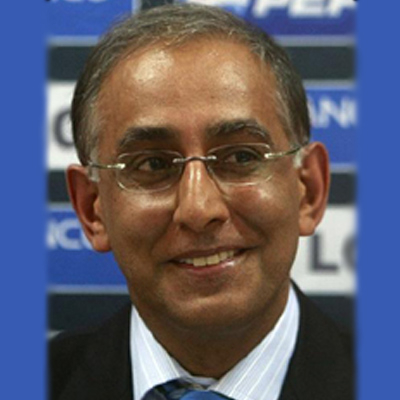
‘The ICC will continue to manage its economics on a global basis with India as a key market’ : ICC CEO Haroon Lorgat
Wearing the International Cricket Council (ICC) hat isn‘t an easy job these days. With the Indian Premier League (IPL) becoming the new economic powerhouse, scheduling international cricket can be a tough task.
The challenge of the ICC is to ensure that a balance is maintained between the three formats – Test cricket, one-dayers and T20 – of the game as each has its own attraction and value proposition.
The other task is to take the game to new markets including the US and China. The ICC has set aside $300 million for the development of the game.
With the BCCI (Board of Control for Cricket in India) gaining superpower status in world cricket, the role of the ICC is to manage its economics on a global basis with India as a key market.
In an interview with Indiantelevision.com‘s Ashwin Pinto, ICC CEO Haroon Lorgat talks about cricket continuing to be in a healthy state as it has three viable formats of the game running at the international level.
Excerpts:
How would you describe the health and state of cricket at this point of time?Cricket is in a very healthy state at present. We are fortunate to have three viable formats of the game at the international level – Tests, ODIs and T20Is. Having these three formats is a huge opportunity that offers our fans, sponsors and broadcasters different options. No other sport can boast three viable formats of the game at international level.
What is the ICC‘s strategy going to be to ensure that all formats of the game co-exist?
Depending on how all of us collectively manage the game, we believe that all three formats can survive because each has its own attraction and value proposition: Test cricket has its endurance, cut and thrust, and its tradition of more than 130 years and, importantly, it is regarded by the players as the ultimate format. It is the benchmark by which they will be measured.
ODIs have a history of their own with nine ICC Cricket World Cups stretching back to 1975. This format offers a chance for sides to recover from difficult situations while still affording a result in a single day.
It boasts the biggest attractions in the World Cup and largest team prize in the game.
Twenty20 is a great new attraction and vehicle to develop the game at domestic level. This short and sharp format draws new interest and allows tournaments to take place over a short period of time.
It is important that the ICC and our members get the balance right, particularly in terms of scheduling.
What measures are being taken to protect Test cricket‘s status as the pinnacle of the game?
There are three important factors – competitive matches, context and the spectator experience. Improvements can be made in all of these areas and we are working with our members to achieve this.
Some current examples of this are the current investigation into developing greater context for Test cricket, the possibility of staging day/night Test cricket in territories that would benefit from that, and more effective and consistent marketing and promotion of Test match cricket.
Could we see the day night concept being introduced post 2012 for Test cricket?
We need to make sure that Test cricket is accessible to the supporters that want to watch it. The indications are that in some markets supporters may be more interested in watching Test cricket, at the venues and on television, if it is played in the evening.
Day/night Test cricket is one of several options under consideration. It is dependent on successfully developing a cricket ball that can be used in night conditions and this would need to be trialled at the domestic level first.
While you maintain that the ODI format is fine, the fact is that the Champions Trophy will now be held once in four years and not every two years. The Twenty20 World Cup will take place every two years. Doesn‘t this indicate that to some extent the balance of power in terms of viewership and revenue is shifting from the ODI towards Twenty20?Don‘t forget that the ICC cricket World Cup is also held every four years and between this and the Champions Trophy, there will be a 50-over tournament every two years until 2015. In other words, the World Twenty20 will alternate with a 50-over format every year.
Not surprisingly the 50-over format at international level remains very popular with players, spectators, TV viewers and sponsors. The highly successful ICC Champions Trophy event in South Africa demonstrated that yet again as have other recent bilateral series.
‘Our major events are televised into more than 200 countries with hundreds of millions of viewers. Cricket receives the second highest amount of TV viewers of any team sport after soccer‘
Are you satisfied at the progress that has been made in terms of the preparations for the 2011 World Cup?Yes, we have done extremely well with preparations during the course of this year.
How much revenue will the ICC and the boards make from cricket‘s showpiece event?In terms of commercial and broadcast interests, the World Cup 2011 is bundled with all the other major ICC events over an eight-year period. The current deal will run from 2007 to 2015 but the details, as you would appreciate, are confidential.
We will, though, be investing $300 million into the development of the game in our associate and affiliate members over the course of this cycle.
Do you see the IPL posing a threat to international cricket? Already last year Sri Lanka withdrew from their tour of England so that their players could take part in the IPL which offers much more money?
On balance, the IPL has been very positive for the sport overall. It must be remembered that it is a domestic tournament under the auspices of the BCCI and does not take precedence over international cricket. This is something that the IPL itself and the BCCI has made clear to the players and public.
Is the ICC examining the possibility of creating a window for the IPL?
Being a domestic event, there is no consideration for a window at present and there is also no request for one.
Australia, New Zealand and South Africa are also planning a league. Would this pose a challenge to the ICC in terms of formulating the FTP post 2012?
I am not aware of such a league being planned. In any case, it would not impact the FTP post 2012 as this has already been agreed subject to a few provisos.
India dominates the game economically in that 80 per cent of the revenue generated comes from here. Does the ICC have a gameplan to reduce this imbalance which cannot be healthy for any sport?We are always pleased when our members are able to generate funds and optimise their revenues domestically. On the other hand, we have always been fortunate to attract local and global sponsors that are not purely driven by the Indian market.
However, given the huge market in India, it is not a surprise that this is the revenue generating powerhouse for world cricket. We will, therefore, continue to manage our economics on a global basis with India as a key market.
Does more need to be done in terms of how the game is covered on television or are you satisfied?I think that the coverage the game receives worldwide is excellent. Our major events are televised into more than 200 countries with hundreds of millions of viewers. Cricket receives the second highest amount of TV viewers of any team sport after soccer.
New media is growing through mobile and the Internet. How is the ICC taking advantage of this to spread the reach of the game?We have an excellent partnership with Yahoo! in relation to our website and other internet platforms. We also work with our commercial partners to make the most of the mobile platforms.
The BCCI recently formed a consortium to fight piracy. Is this a serious threat from your point of view?ICC supported the BCCI in this regard and is also working seriously to handle this issue. We are working with our stakeholders to form a coalition to actively address and counteract online piracy.
Could you shed light on the strategy that the ICC follows when it comes to doing local sponsorships for its events?
The strategy we adopt depends on the event and the market in which it is taking place.
In truth, it was not really difficult to get in sponsorships for this year. We managed to secure some excellent local sponsors despite the global recession and we were very pleased with the overall outcome. That is a reflection of the good health of the game and the value we are able to offer our commercial partners.For instance, we got Standard Bank to sponsor the World Twenty20 cricket championship. Local partners are an important feature of all ICC events because they tend to have a vested interest in the markets in which our events are staged. The ticketing component of the local partner packages offers an excellent platform for targeted sales promotions by sponsors.
Our marketing research suggests that the dollar value of the televised brand exposure that local partners receive far exceeds their level of investment, primarily because our events are uncluttered in terms of the number of branding messages.
What are the steps taken by the ICC to avoid ambush marketing?We implement sensible and practical measures during our events to ensure that orchestrated ambush marketing does not occur. I don‘t want to go into too much detail. But it is suffice to say that we are vigilant in our efforts to preserve our commercial partners‘ rights and make sure they receive value for their investment.
Is it easy to spread the reach of cricket to emerging and new markets?We invest more in developing the game than any other sport, apart from soccer. The Pepsi ICC Development Programme is spending around $300 million over the next cycle to develop and promote cricket below Full Member level.
The Development Programme has made huge strides over recent years and we have seen teams like Ireland, Kenya, Scotland and the Netherlands come through that programme and put in competitive performances against the top sides. Ireland made it through to the Super Eight stage of Cricket World Cup 2007 and the World Twenty20 2009 beating a number of Full Members along the way. We recently saw the Netherlands beating England at Lord‘s in the World Twenty20. Participation has doubled over the last five years with the biggest growth areas being junior and female players.
Finally, do China and the US play an important role in the ICC‘s growth plan?We have identified the US and China as two obvious areas for potential growth and, through our regional structures, we are involved in developing the game there. They are two very distinct and different markets for cricket and so cannot really be compared.
However, there is no doubt that both offer a wonderful opportunity for cricket to continue to spread the sport and we intend to do just that.
-
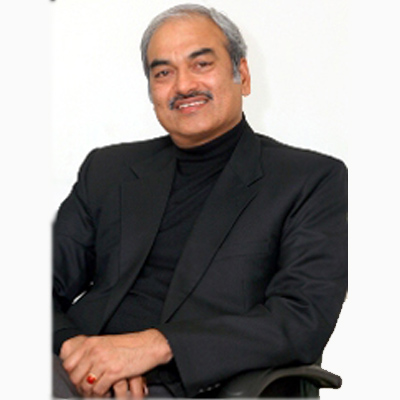
‘NDTV is a debt-free company and we are sitting on a cash pile of $70 million’ : NDTV Group CEO KVL Narayan Rao
Two years back, Dr Prannoy Roy-promoted NDTV Ltd crafted a growth path in the entertainment business. Riding a bull run, the news broadcasting company launched NDTV Networks Plc to house subsidiary arms NDTV Imagine Ltd and NDTV Lifestyle.
NBC Universal invested a whopping $150 million for an indirect 26 per cent in NDTV Networks at a time when valuations were running high. Besides, NDTV raised $100 million in step-up coupon bonds.
The global downturn led to the exit of NBCU, freeing NDTV to scout for investors for its non-news verticals. US-based Scripps Networks snapped up 69 per cent stake in NDTV Lifestyle while Turner International agreed to take 92 per cent of NDTV Imagine.
So where does this leave NDTV? Are its growth wings clipped?
In an interview with Indiantelevision.com‘s Sibabrata Das, NDTV Group CEO KVL Narayan Rao says at the end of a whole chain of transactions NDTV is left with a cash pile of $70 million to focus on its news business while retaining portions of the non-news business.
Excerpts:
What prompted you to get out of the entertainment business?
We wanted to focus on what we are best at: running news operations. We are a credible news organisation and there is enough scope to grow that. Besides, we will still retain 5 per cent stake (3 per cent post issue of primary shares to Turner) in NDTV Imagine. As for the Hindi GEC space, it was clear that a strong international strategic partner would bring in funding and global expertise. We are delighted that we have this deal with Turner.
Did the global downturn and the exit of NBC Universal spur the chain of events?
No. We bought out NBCU‘s stake. As a result, we got the opportunity to find a good investor who would run the company.
NBCU had invested $150 million for the 26 per cent stake. Did you pay $25 million to buy back their stake?
The deal is confidential. I can‘t comment on that.
Was the deal with Turner dependent on repurchasing the bond holders who would have held 20 per cent in NDTV Networks?
We had set out to do a few things. Buying back the bond holders was part of that process. We paid $72.4 million for that. This allowed us to pursue investors for our different verticals.
But wouldn‘t the payout have been $115 mn (along with interest payments)?
There was a negotiation that took place. We bought out the bonds and that allowed our subsidiaries the flexibility for restructuring and financing the businesses including being able to access bank finances for working capital and other requirements.
‘We wanted to focus on what we are best at: running news operations. We are a credible news organisation and there is enough scope to grow that‘
Did you decide to retain a higher stake in NDTV Lifestyle because it would involve less funding while NDTV Imagine would guzzle in more money?
We entered into an agreement with the US-based Scripps Networks which has experience in creating lifestyle brands. They took a 69 per cent stake and the transaction value was $55 million.
Will NDTV get $30 million while the balance go as investments into NDTV Lifestyle?
I can‘t comment on the specifics.
Two years back, NDTV decided to expand because of a bull run. The market tanked and the scenario changed dramatically. Was it a mistake to expand into the non-news business?
We have completed a chain of transactions. But at the end of it, NDTV is a debt-free company and we are sitting on a cash of $70 million. Perhaps, we are the only TV news organisation that would be sitting on such a large cash pile. We will still have some non-news businesses running. We also have NDTV Convergence. We have a decent future to look forward to.
NDTV had posted a standalone net loss of Rs 731.8 million on a turnover of Rs 3.09 billion for the fiscal ended 31 March 2009. How do you plan to turnaround in the news business?
For FY‘09, we had a one-time cost of around Rs 400 million. We have taken substantial cost-saving measures this year.
Do you have major plans to invest in NDTV Convergence?
It is one of our important properties. A lot, though, will depend on getting the right revenue model.
NDTV has shut down MetroNation Delhi. Do you have any revival plans?
It is too early to comment on this.