Category: Executive Dossier

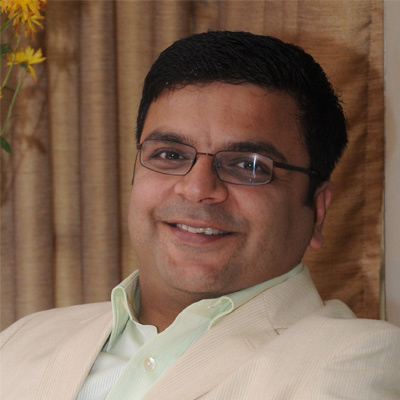
  • ‘Collecting subscriber numbers is not enough’ : Tata Sky MD & CEO Vikram Kaushik

    ‘Collecting subscriber numbers is not enough’ : Tata Sky MD & CEO Vikram Kaushik

    When Star floated a company for DTH, there were several issues raised on shareholding and other related matters. Was that a ghost that initially haunted you when you joined Tata Sky?

    When on its own, Star made no progress and the DTH venture couldn‘t kick off due to reasons outside their control. Then they floated a joint venture company with the Tatas and I joined to head that. The past never bothered the venture. We developed a blueprint from the first day itself, but the project was delayed as we chased for licence approval.

    The delays were not entirely due to the government; competitors wanted to delay the project. The bad thing that happened is that several retrograde steps were introduced which should have never been there in the first place. Interoperability, no exclusive content and foreign direct investment (FDI) cap of 49 per cent, for instance. There is still a lot of nervousness regarding foreign ownership.

    But isn‘t the government more comfortable with DTH now?

    The government has started understanding that without digitalisation, the media and entertainment industry can‘t grow; you won‘t get transparency and addressability in the distribution chain.


    Has the government then become supportive?

    The government needs to do much more. Across the world, the government has provided subsidies for digitalisation. In India, the private sector has entirely taken up this responsibility – and this investment is coming at a very high cost.

    The DTH sector is heavily taxed. There is also a distortion because of the under-declaration of subscribers by the cable operators. This leads to the inevitable need of regulatory intervention to correct these anomalies.


    Despite these anomalies, the DTH sector is on a fast growth track. When you first outlined the business plan, did you foresee such an exponential growth in DTH subscribers? 

    We are somewhat surprised by the volume growth. But nobody expected that India would have six players and with deep pockets. The marketing activity stimulated the sector‘s growth. Also, the digital cable initiatives could not match up to the DTH challenge; cable has not been able to upgrade.


    How did you strike a balance between volume chase and maintaining a premium brand positioning?

    When we started out, we decided that we won‘t go to small towns and villages and chase low lying fruits. Our strategy was to first capture the top 50 towns and then spread out. Dish TV, on the other hand, tapped the cable dry areas and expanded outside.

    We feel ours has been the right approach. We have a better quality subscriber base. And while Dish TV has more subscribers, we are the biggest Indian DTH company when it comes to revenues.

    The dilemma continues even today: Should we go largely for value or look at volumes. It is easy to chase volumes. In the longer run, the correct strategy is not to lose sight of volumes but focus on value. We never panicked when our competitors mopped up more subscribers in a month. What matters in the long term is higher ARPUs and sticky customers.

    ‘Given the cable ARPUs and lack of exclusive content, it is difficult to independently drive them up beyond a point. The content cost is also high, while the hardware prices are not low enough. It is a tough game to play‘

    What other hard decisions did you have to take at the start?

    We had to decide whether the STBs should be given free or sold. We believed the free model, in vogue in matured ARPU markets, wouldn‘t work in India. That turned out to be the right decision.


    Why did you soon have to revise your investment plan from Rs 30 billion to Rs 40 billion?

    We were initially looking at an investment of Rs 12 billion and then came up with a realistic estimate of Rs 30 billion. Subsequently, we revisited that plan and estimated our funding requirement to be Rs 40 billion. There are too many DTH operators and the price war came at an early stage of the game.


    Has that business projection gone through further changes?

    Our fund requirement will be over Rs 40 billion. We have already spent more than Rs 35 billion and have mopped up over six million customers. We are on course for operational break even. Broadly, this takes 5-7 years.


    Aren‘t you disappointed that Tata Sky still lags behind Dish TV in subscriber numbers?

    They may have more subscribers because of their first mover advantage, but we have beaten them in revenues. Though ARPUs (average revenue per user) for the sector are still pretty bad (Rs 135-150), ours is the highest in the industry (Rs 195).

    What we have learnt in this business is that collecting subscriber numbers is not enough. This is a sector where subscriber acquisition costs are high and ARPUs low. If you have a faster churn, then you have a real problem. Sun Direct and Videocon d2h run a danger in that.


    Can ARPUs rise to a comfortable level?

    Given the cable ARPUs and lack of exclusive content, it is difficult to independently drive them up beyond a point. The content cost is also high, while the hardware prices are not low enough. It is a tough game to play.

    The hyper competition among the DTH players has not been healthy. Everybody has bled heavily on account of the price war.


    And still in this clutter, Tata Sky has stood out as a brand. How did you manage that?

    Building a brand in this sector is a unique challenge. We build a pedigree brand with our high quality and performance focus. When you have the ‘Tata‘ and ‘Sky‘ names behind the product, the challenge is to weave a double-barrelled branding. The fact is that we have stood up against Airtel and the others.

    We have also extended the brand to franchises like Tata Sky Plus. The satisfying part is that in a highly cluttered environment, we have spent less for many years than our competitors, but used the medium much more effectively. We have also used celebrity advertising in a manner that was never done before.


    How has Sky been an advantage?

    We could have the best and world class knowhow from them. There were 30 expatriates working in Tata Sky before we even started our service. That resource is continually available to us.

    The Tata brand, in turn, brought in credibility with the government, trade, consumers and potential employees.


    Q. Star has upped its effective stake in Tata Sky to 29.8 per cent. The additional 9.8 per cent stake for Rs 3.24 billion pegs the valuation of Tata Sky at Rs 33.06 billion. The market cap of dish TV is Rs 74.73 billion. Are you happy with this valuation?

    Star will hold close to 30 per cent in Tata Sky. The Tatas will have around 60 per cent and Temasek 10 per cent.

    As for Tata Sky‘s valuation, this won‘t be the right way to look at it. The stake acquisition is done by one of the promoter partners. This is an internal and not an external valuation.


    Q. What are the technological advantages that Tata Sky has brought to the sector?

    We continue to lead the way in terms of technology, customer service or innovations relating to packaging. We are the leading platform to promote education – be it to small children or to housewives learning English. We pioneered the concept of pre-paid customers in DTH. We are clearly at the forefront when it comes to PVR, VOD and other interactive services.

    We have played a significant role in bringing the hardware costs down. Interestingly, the set-top box (STB) cost is cheaper from China to India than in China itself. We have also set some global benchmarks in productivity, growth and value creation.

    We have used consumer research very effectively. TruChoice, for instance, recognises viewership habits and makes that content available. People tend to buy genres and that is related to the nature of the family. For those families having children, it is important to have kids programming and knowledge in the menu. Families with older people will tend to look at movie packs.


    Q. How do you approach the South India market?

    We don‘t compete on price. The market is too unremunerative.


    Q. On the content cost front, do you see the Trai tariff order (channels to give to DTH at rates 35 per cent of analogue cable) as the right formula for DTH companies?

    This is a step in the right direction, though we feel it should have been closer to 20 per cent. Broadcasters shouldn‘t have moved the court. Addressability is in the interest of the broadcasters; and yet they are resisting any kind of tariff regulation. I see short term perspectives prevailing in the entire media industry.

    Q. Do you see the telecom companies having an advantage in the DTH space?

    The telecom players feel that there will ultimately be convergence and they will stand to gain. They are, perhaps, driven by some fancy strategists. The truth is that there is need for domain expertise in each of these businesses. And each of these businesses are unique.


    Q. Why is private equity reluctant to invest in the DTH companies?

    I do not see too much private equity coming into the DTH sector. There will be a selective and long term approach. Fundamentally, the business model is saddled with high taxation, low ARPUs, and too many players. Profitability is an issue. In many cases, by piling up customers, you are not building assets but liabilities.

    We could, perhaps, see consolidation in the next few years. There will be space for three players and maybe a regional operator.


    Q. How much of capital will be required by the time the DTH sector reaches 50 million subscribers?

    The industry will need Rs 200-250 billion for 45-50 million subscribers. There is already an investment of Rs 120-150 billion. But there won‘t be shortage of capital to fund the sector‘s growth.
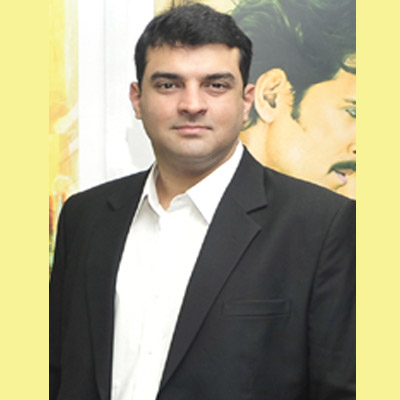
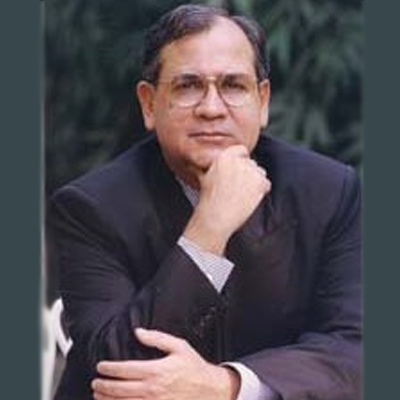
  • ‘The ability to de-risk is more now’ : UTV Motion Pictures chief executive officer Siddharth Roy Kapur

    ‘The ability to de-risk is more now’ : UTV Motion Pictures chief executive officer Siddharth Roy Kapur

    UTV has expanded its movie slate for the fiscal and is eyeing a revenue of Rs 4.5 billion from this segment, up 43 per cent from the year-ago period.

    Upping its operations over the years, UTV has a roster of 12 movies this fiscal. UTV‘s scale-up goal: to have a peak pipeline of 15 movies a year.

    Narrowing its risks, UTV has indulged in a high element of pre-sales activities. The environment has been conducive as prices for satellite TV telecast rights have ballooned with Viacom18 planning the launch of a Hindi movie channel next year. The syndication model, widely popular last year, is being thrown out of the window.

    After delisting from London‘s Alternative Investment Market (AIM), UTV Motion Pictures is not looking at raising further capital as the business has reached a self-generation mode.

    In an interview with Indiantelevision.com‘s Sibabrata Das, UTV Motion Pictures chief executive officer Siddharth Roy Kapur talks about the balance film studios need to perfect between scale and a de-risked strategy.

    Excerpts:

    Indian movie studios were talking of scale a few years back. Now de-risking seems to be the mantra. Is it because in the process of scale some of the studios burnt their fingers?
    Building scale and de-risking are not parallel processes. It is just that the ability to de-risk is more now with the overall slate of movies going up.

    But the trend is to lock in the music and satellite television telecast rights before the theatrical release of the movies. Haven‘t studios increased the pre-sales deals this fiscal?
    The opportunities have definitely increased as the market for satellite TV rights has heated up with a broadcaster planning to launch a Hindi movie channel. The syndication model, widely popular last year, is being thrown out of the window. As broadcasters are chasing exclusive rights, the rates have gone up. This is working out well for the broadcasters and the producers.

    Also, with a diversified and expanded slate, studios have been able to derive higher values. We at the early part of the fiscal, for instance, had locked in Rs 2.37 billion from pre-sales of different rights.

    Aren‘t you in the process sacrificing an upside potential?
    We are offered a premium even before the movie is out. And if we foresee a significant upside potential, we do not go for pre-sales. We decide on a film-to-film basis.

    We have also come out with new models. In case of Raajneeti, we did a satellite deal based on the theatrical performance of the film. We looked at higher slabs based on the performance index.

    But don‘t you have a de-risking approach for each movie?
    We have developed the ability to de-risk on each movie. As a strategy, we look at de-risking on the satellite and music rights front. On the theatrical distribution front, we prefer to handle it ourselves.

    With pre-sales opportunities on the rise, aren‘t you tempted to scale up further?
    We have managed to scale up to 12 movies a year and have a diversified slate in terms of genre and talent. We have a mix of movies ranging between as low as Rs 30 million and as high as a blockbuster can cost. We have the ability to release in 45 countries.

    As for the future, we are looking at a 12-15 movie slate. We feel that it is not a feasible model to scale up more if you are to maintain the same level of quality control.

    Around 50 per cent of the slate will be through co-productions. UTV will, however, handle the marketing and distribution of these movies.
    ‘We are looking at a 12-15 movie slate a year. We feel that it is not a feasible model to scale up more if you are to maintain the same level of quality control‘

    So are we going to see a slower growth in the top line?
    We are on course to achieve a turnover of Rs 4.5 billion this year (up from Rs 3.15 billion). There will be organic growth and we will also do bigger movies.

    With more multiplexes and digitisation coming up, there will be growth in theatrical revenues. We also don‘t see a softening in rates for satellite TV rights in the near future as broadcasters have planned for their growth.

    Our focus, though, will be on profitability. We are confident of posting a 20 per cent year-on-year bottom line growth for the next three years.

    UTV Motion Pictures delisted from London‘s Alternative Investment Market. Is it now looking at raising funds for its movie business?
    We are pretty much well funded and have no fund raising plan. The business has reached a self-generation mode.

    Is the slate firmed up for the next fiscal as well?
    We are sitting in a pretty position and expect to see strong growth in the next fiscal. We have only 3-4 titles to lock up. Our pre-planning is well in place. As a studio, we stand in a unique position as we are a producer and not a content aggregator.

    Is UTV looking at aggressively producing movies in regional languages, particularly Tamil and Telugu?
    We are keeping watch on how the regional play is emerging. But our focus will be totally on the Hindi slate. Strategically, Bollywood is our core business. We may do a one off movie in the regional space on a tactical basis.

    In the south, the game is riskier and the ability to de-risk lower. The theatrical dependence is huge in the south. The sensibilities are also different.

    In the revenue mix, how much does theatrical account for?
    The box office accounts for 55 per cent of the revenue mix, while 20-25 per cent comes from sale of satellite TV rights. Music accounts for 5-7 per cent, overseas for 7-10 per cent; home video for 3-5 per cent and the remaining comes from new media. Going ahead, theatrical will fall to 50 per cent while new media will increase.

    Piracy impacts our overseas home video revenues. We see that compensated over the years by the growth in the new media space. The launch of 3G in India will also augment our new media revenues.

    Has there been a correction on the cost front?
    Costs have fallen to a suitable level for the industry as a whole, but a lot more needs to be done.

    UTV has expressed concern over the rise in marketing costs. How far has the industry come together on this issue?
    There has been a 10-15 per cent increase in promotion and publicity expenses over last year. The industry spends around 50 per cent of the theatrical revenue for domestic marketing, if one calculates the net distributor share to each of the producers. Due to the competitive framework and the increase in media options, we tend to out-shout each other. We are advertising more than we need to.
    A meeting took place among some film producers and everyone seems to be committed to see that this gets corrected as it is affecting our profit margins. It is work in progress and a solution, hopefully, should be on sight soon.

    UTV has shied away from releasing films during the IPL Indian Premier League). Will you be more conscious to plan the movie releases in such a way that bumpiness does not happen from quarter to quarter?
    UTV will have some releases during the IPL this time. While we are looking at ways to ensure that bumpiness does not take place, the right release date is our top priority.

    Yash Raj Films is trying to create a segment for youth films. Do you think the industry has matured for a segmentation approach?
    The first task is to find a great story. This may or may not include some target groups. But the secret to success is working on interesting scripts. Working backwards is not always the solution.

  • ‘We are refreshing BBC Entertainment in January’ : BBC Worldwide Channels director South Asia Deepak Shourie

    ‘We are refreshing BBC Entertainment in January’ : BBC Worldwide Channels director South Asia Deepak Shourie

    BBC Worldwide Channels is looking at cracking the Indian market a lot more seriously. The two channels, BBC Entertainment and CBeebies, were almost invisible for three years with a sole presence on Tata Sky, a DTH service provider.

    Now a lot more investments are being planned and the focus will be on beefing up the content and distribution of these two channels.

    BBC Entertainment is being refreshed in January and programming will be designed based on time bands for India.

    A local feed for CBeebies in Hindi is being examined, though a definite plan on this is some time away.

    For BBC Worldwide Channels, Asia is the fastest growing market. And within this region, India is emerging as an important market.

    While India has been flooded with American English entertainment content, BBC believes that the British flavour will be its big differentiator.

    In an interview with Indiantelevision.com‘s Ashwin Pinto, BBC Worldwide Channels director South Asia Deepak Shourie elaborates on the India plans for the two channels.

    Excerpts:
    How has BBC Worldwide grown its channel business over the past couple of years across Asia?
    The BBC Worldwide Channels business is ?262.5 million, up from ?225.5 million in the earlier year. The revenue from Asia grew from ?19 million to ?37 million. Asia is, thus, growing faster compared to the rest of the world.

    BBC is investing in new channels and geographies. About 35 per cent of BBC Worldwide‘s revenue comes from the channel business.

    In India, people say we are too late to enter. Are we? Global media companies are looking at India now. English content is watched by the affluent class. But is there space for everybody? People will have to find their strong propositions. BBC Entertainment will appeal to audiences who watch factual, entertainment and lifestyle content. We are bringing all of these genres into one channel. Our aim is to be a one stop destination.

    How important is India as a market for the BBC compared to that of Hong Kong and Singapore?
    The size is attractive. It is a market that is hot now. The other markets are good, but small demographically. India will be a very important market for us going forward.

    What is the roadmap that BBC Worldwide has set for their channel business in India?
    BBC World News is already there distributed in 34 million homes and holds its own as a premier news channel.

    As far as BBC Worldwide‘s channels are concerned, we have had BBC Entertainment and CBeebies in the market since 2007, but only as a small presence on DTH. They have not been mainstream. These two channels have had no advertising.

    We are refreshing BBC Entertainment in January with the tagline ‘Seriously Entertaining.‘ Our TG is 15-34 SEC A,B. In the daytime, viewing is leisurely. So we have lifestyle shows like Grand Designs that has Kevin McCloud following homebuilders. In the evening, we have factual entertainment like wildlife. Lifestyle content also airs like Extreme Makeover: Home Edition. At night, from 10 pm onwards, we have shows like Spooks, Top Gear and Sherlock.

    But why wasn‘t a push made earlier?
    That is always going to be a million dollar question. Should we have pushed earlier or is now the right time? The English market is expanding rapidly. So there is nothing wrong in entering now. The BBC Worldwide team in the UK is looking at India seriously now.

    How much is being invested in India and when do you expect to turn profitable?
    I cannot talk about numbers. However, all that I can say is that we see an opportunity here. Any market takes time to mature. Viewership traction has to be built along with the advertising base.
    ‘Research has confirmed that the audience we look at does not want localisation. There is enough local content around. The English audience wants international content‘

    Is the look and feel of BBC Entertainment being changed?
    The whole look and feel will change. The aim is to make it more vibrant and colourful.

    And from January, we will design programming based on time bands for India. There will also be a lot of fresh content and new shows.

    From 6-11 am, you have will light content like Trish‘s Fresh Country Kitchen. Early evening from 7 pm -10 pm will have a mix of lifestyle and factual shows like BBC Earth. Post 10 pm, we move towards more edgy, fast paced content like Luther which is about a detective who is fascinated by the darker side of human nature. London Live, which looks at the music scene, will also air at this time.

    The English GEC space is known for having ‘snacking‘ viewers. How do you plan to build loyal viewers?
    People want quality entertainment. It is not so much about storyline building as it is in the Hindi GEC space. People will come back to the show because of quality – there are shows like Wonders Of The Solar System and Human Planet. The key is to reach the audience with relevant content and, thus, offer advertisers relevant eyeballs. If you do this, then loyalty will automatically build.

    Is having a British flavour going to be your USP?
    That is important. Most content on air is from America. The BBC produces a wide ranging amount of content which has not been seen like Wallander, with Kenneth Branagh playing a detective in Sweden. The channel will give you everything.

    You also have other players coming into this genre like Big CBS. Do you see viewership growth happening as a result or will there simply be fragmentation?
    Viewership will change and grow. The question is whether everybody will get the viewership they are targeting. Fragmentation is a challenge. To counter it we are giving consumers everything in one channel. Our aim is to make an impact in the English entertainment space. The more you fragment by focusing on one genre, the chances are that people will see it.

    Are you selling BBC Entertainment to advertisers?
    Yes! The response is encouraging. We want to fill our inventory with quality clients. You have premium brands coming into the country. The world‘s most expensive car, Bugatti Veyron, has just been launched. They need to reach out to the relevant audience who are upscale. We will provide this audience segment. BBC Entertainment is being pitched as the Best of the BBC.

    The English space is worth $200 million and I see it growing. The nature of the market is such that you will depend more on advertising. Digitisation needs to spread for subscription revenues to really pick up.

    What are the synergies between BBC Worldwide Channels and the other businesses of BBC Worldwide?
    The magazine business has properties that the channels can exploit. An example of this is Top Gear.

    English GECs have started following a stripped strategy where one show airs at a time block across the week as opposed to a different show airing each day. Is BBC Entertainment doing something similar?
    A stripping strategy is good if you have long running shows. If it is not there, then it will not work as a concept. It depends on the concept. You can have factual content at a certain hour across the week, which we do. A documentary, though, cannot have that. The runtime is limited.

    Will localisation play a role in your strategy?
    No! Researchh

    has confirmed that the audience we look at does not want localisation. There is enough local content around. They want international content. The English audience is getting more confident. They are world citizens. They want world programming. Local shows will add a lot of cost for us, but not much value.

    What is being done for CBeebies?
    We could look at launching a local feed for it in Hindi in due course. As of now, we have not come up with a strategy for it.

    Are you launching more channels in India like BBC Knowledge?
    Not at the moment. BBC Entertainment has everything. When the time comes to have a wider bouquet of channels, we will look at it.

    BBC is launching BBC HD in more territories this fiscal. Is HD still some time away for India?
    HD is the future. Right now there is a bandwidth issue. Also, there are not many consumers who have HD ready television sets. When these two issues are sorted out, you will see a push for HD content. There will come a time when SD becomes HD.

    How will you leverage the mobile with 3G coming in?
    We will focus on this when the time comes. We know that people will want not just news but other genres like factual content.There will come a time when SD becomes HD.

  • ‘Our aim is to become the currency tool for media research’ : Ormax Media co-founder & CEO Shailesh Kapoor

    ‘Our aim is to become the currency tool for media research’ : Ormax Media co-founder & CEO Shailesh Kapoor

    Ormax Media, the consumer knowledge and consulting firm for the media and entertainment industry, was launched jointly by Vispy Doctor, the managing director of Ormax Consultants, a specialist in qualitative research, and former Filmy business head Shailesh Kapoor in July 2008.

    The company has expanded across categories like television, radio, films, and media agencies. It has launched various tools, which can predict the future of a show or a film.

    The expansion plan includes doing research in the news and South Indian market. The aim is to establish Ormax Media as the currency tool for media research.

    In an interview with Indiatelevision.com‘s Gaurav Laghate, Kapoor sheds light on the research needs in the media and entertainment industry and Ormax Media‘s drive to plug the gaps.

    Excerpts:

    You have worked with companies like Sony, Zee, Zoom and Filmy in roles across marketing, content and business strategy. So what led to Ormax Media?
    The idea was always there, I wanted to start something of my own. And I wanted to set up something which combined the media and entertainment industry where I came from with the marketing and consumer understanding that was always my interest.

    The exciting part is that we are working on multiple categories – like GECs (general entertainment channels), niche channels, movies, radio and digital. So there is a wide variety that makes the learning experience far more dynamic than it would have been in a traditional media role.

    What the company has achieved in these two years?
    Since it has been a new company, the first year focus was on consolidation and the second year was really of growth and expansion into new categories, businesses and clients.

    We started with TV. It was for two reasons – a far more organised industry in the M&E sector and also because of size.

    In 2009 we started with GECs, then moved on to niche channels and radio. During this time, we also started creating specific products.

    How did you identify the need for the product offerings?
    As we met more and more people, we recognised that there were common needs across the category. For example, there was common need for tracking marketing campaigns for TV programmes. This resulted in a tool – Showbuzz.

    You said you are in expansion mode. What all categories are you looking at?
    Initially, we spent time on developing tools, products and methodology. Then our focus was clearly on categories where we had strength. Like Bollywood – so we launched Cinematix. We are planning to launch a structured product of test screening of Hindi movies soon.

    How has the film industry responded so far?
    We have already worked on 7-8 movies in the last six months. And I think for an industry which is still getting used to the idea of research, it‘s a pretty healthy number. Going forward, the film industry will continue to be the focus. First we were trying to get them on board and trying to make them understand the whole idea of research. And we were pleasantly surprised. Once they (film industry) were exposed to this; they were more than willing to receive research in a far more flexible manner.


    What are the challenges you have been facing for getting clients?
    The biggest challenge has been to meet more and more people and give them the flavour of what research can give them. And once they get the right flavour and do one project, they certainly understand the importance of it.

    Apart from films, what are the other areas you will be focusing on now?
    The areas which we are going to focus on now are specific categories – like South and news.

    What opportunities do you see in the southern regional market?
    South is a very big market for both TV and cinema industry. The fundamentals of TV and film research are not different. And we have teams in the four southern states.

    And what are your plans for the news industry?
    The news market is one that largely relies on Tam. But at the category level, there may not be any tools and products available. So we are looking at that option.

    News is also a big category in terms of revenue. It is a category where the advertiser buying is often based on decisions based not directly on the function of the ratings. Particularly English news channels where many different parameters come into play.

    All your tools basically try to asses and predict the future – cinematix or showbuzz?
    A lot of our work is going into putting tools and analytics in place. We are trying to create ways in which future prediction and future analysis can be made rather than just looking at the past and getting a sense of that.

    Research is not just looking at today and giving feedback at what people are liking or not liking. I think the more important area, where a lot of our energies are focused on, is to predict the future.

    So what all services you offer to clients?
    We have three kinds of products. Syndicated products are owned by us like Showbuzz, Cinematics, Characters India Love, RJ Files. We do them at our cost, irrespective of who is subscribing or not subscribing to it. This is data which is registered and trademarked to us. Whoever subscribes to it, gets it.

    These products are most cost effective for all as they are common to the industry. Multiple people are subscribing and paying for it . It cannot be affordable for someone wanting to do it alone.

    Second is commissioned research, which could be qualitative or quantitative research. These are need based research.

    We also do consulting work, which is specifically beyond consumer research and is more advisory in nature. But it is not our main area of work. We are primarily a consumer understanding firm.

    How much market share are you looking at acquiring in future?
    We hope to be controlling at least 75-80 per cent of the research market in a couple of years. That doesn‘t mean we are going to compete with already established systems such as Tam, Ram etc. We are going to complement the information available through them. So if Tam gives the viewership, we will add value by explaining the viewership understanding. We are more about adding value beyond the measurement systems.

    If some other similar company starts working on the same lines, what will be your plan of action?
    See, eventually, in a category like this, one becomes currency. We have seen that in case of Tam. The second player to come will have a disadvantage. It is difficult to say at this stage who will become currency, but my sense is that till the time other players will come, we will be established as the industry currency. We are moving in the right direction.
  • ‘Japan, India & Australia are our biggest markets in the Asia Pacific region’ : Discovery Networks Asia Pacific executive VP, MD Tom Keaveny

    ‘Japan, India & Australia are our biggest markets in the Asia Pacific region’ : Discovery Networks Asia Pacific executive VP, MD Tom Keaveny

    Discovery is upping the ante in India. Leading the infotainment genre, the company has crafted three channel launches in India this year: Discovery Science, Discovery Turbo and Discovery HD. It has also introduced regional feeds for its flagship channel, Discovery.


    While media companies across the world cut down on their costs due to a global economic downturn, Discovery continued with its annual expense of $1 billion on content. The idea: Discovery drives on premium content.


    Japan, India and Australia are Discovery‘s top markets in the Asia Pacific region.


    For expanding in India, Discovery is taking the organic route. Acquisitions are not on the agenda.


    In an interview with Indiantelevision.com‘s Ashwin Pinto, Discovery Networks Asia Pacific executive VP, MD Tom Keaveny talks about the company‘s growth plans in the region.


    Excerpts:
     
     
    Could you give us an overview of the strategy that Discovery has followed to grow the business across the Asia Pacific region over the past couple of years?
    Having local people run local markets is the first thing. I know that this sounds obvious but it is important to have Indians run the business in India. They know what people want, when they watch it and why they do not watch things.


    Secondly, the local people schedule programming on channels according to viewer tastes and feedback; they also do localisation. In India, for instance, we launched feeds for Discovery in Tamil and Telugu this year.


    Then there is content creation. It started a few years ago with The Great Indian Wedding on Discovery Travel and Living (now known as TLC). We also had Shah Rukh Khan Living With A Superstar, which also was a success in Malaysia. We do local content on the basis that it can be used in other markets.


    In the US, there was a certain amount of re-organisation with a clear focus on being more cost efficient. What shape has this taken in the Asia Pacific region?
    We have always been cost efficient. In a recession, you are forced to look at costs but the areas where we carried on investing was content and branding of channels. We spend $1 billion a year on content.


    In India, the recession meant slower growth. Australia was having a mineral boom, and so there was ad sales growth. China grew. Japan has had inherent problems, but so much of our business here is based on distribution revenues that we were less affected.


    What impact did the economic downturn have on your growth trajectory?
    I won‘t say that we were not affected. However, other companies probably cut back more than us. We are seeing the benefits of continuing to invest in content.


    For the second quarter Discovery reported increased ad revenue growth of 38 per cent for its international networks. Does this mean that the difficult economic climate is behind international broadcasters like Discovery or do challenges and difficulties remain?
    Sales is a difficult job. But we have had ratings growth. Some of this ad revenue growth you mentioned has to do with the fact that last year was a lower base.


    Do I think that we have seen the end of the downturn? Well, whatever happens economically, our audiences have grown. We have had a 27 per cent audience growth in India. This has been replicated across other Asian markets.


    How much revenue comes from the Asia Pacific? Which are your top three markets?
    Japan, India, Australia are our biggest markets. Malaysia and Taiwan come next. India is growing at a good rate. However, I cannot tell you how much revenue comes from the Asia Pacific.


    ‘With new channels coming in, you would expect to see cannibalisation. But that has not happened for us. With competition, the profile of the genre has got an uplift‘


    To what extent has Discovery increased the number of feeds over the past year across Asia?
    We have launched more feeds in Australia, Malaysia, Philippines. We are going into more languages. Demand is significant. The assumption is that if you launch more networks, audiences will go down. For us it has been the reverse. The more networks there are, the higher is our viewership.


    Is fragmentation a worry for Discovery with international broadcasters launching channels in the movie, entertainment and infotainment space?
    With new channels coming in, you would expect to see cannibalisation. But that has not happened for us. When we launched Discovery Science and Turbo around the world, we did not see Discovery Channel‘s audience dip. Instead it grew. With competition, the profile of the genre gets an uplift.


    What impact do you see the three new channels having on the Indian infotainment landscape?
    I can‘t think of a market in the world where Discovery Science will be better received. India is a technology hub. It is a young nation and there is a thirst for knowledge. So having a channel dedicated to science makes sense.


    And Discovery Turbo can take encouragement from the fact that the automobile sector is seeing robust growth in India. But I also see it being important as a male lifestyle channel.


    Recent research showed that there is still a degree of uncertainty about the benefits of HD for television viewing. How do you see HD as a value add?
    Our content which includes natural history and wildlife fits into HD very well. We launched Discovery HD in Japan in 2005. It has only been in the past two to three years that other channels started investing in this technology. For us investing in technology is in our DNA. It is part of our psychological profile because it is a brand promise as well.


    We have a future proof library. For example, Shah Rukh Khan Living With A Superstar was filmed in HD. Once viewers see HD, going back is a difficult proposition. But everybody has to work towards it. It cannot be just one or two networks that are doing the heavy lifting.


    Have you done any research among the creme de la creme viewers to find out what they expect from a network like yours?
    There is congruity in terms what viewers to want to watch. Travel and cooking are key genres. Shows that combine these genres like Anthony Bourdain also work well. Grooming shows also work. Shows like Man vs Wild, Deadliest Catch, Mythbusters work globally. At the same time, you do have to take into account local tastes.


    A lot of focus has been given to Animal Planet over the past 18 months. The aim was to make the programming sharper, more edgy. Is this increased investment starting to pay dividends?
    In the digital environment, it has been one of the fastest growing channels. There is a lot of co-viewing happening. We constantly look at the schedule, find out what works and attempt to be contemporary.


    Are you satisfied with the joint venture relationship Discovery has with Multi Screen Media?
    It was the right deal to do at the right time. We have developed and grown our networks. The deal was a gamechanger and formed a template for others to follow.


    How do you get a revenue uplift from India quite in line with the success you have had with the audiences here?
    We have a two-pronged strategy in India. We launch new networks that will rate and grow audiences for us in this market. This is how ad revenue will grow. On the distribution side, there is a tipping point where analogue shuts down. Australia went quickly from analogue to digital. In India, how quick will the transition be? At what point do addressability, cable, DTH, number of channels and package costs come into play? That is something we all are trying to grapple with.

     
    Global media companies are setting up JVs with local companies in India. Is Discovery looking at something like this to grow its business in India?
    JVs are being done now by companies that were maybe 10-15 years late in getting into India. The question is whether they are doing a JV because they want to do it or because they have to. Companies that came into India early like Discovery have done it on their own terms.

    Having said that, there are times when a strategic alliance makes sense. In Japan, for instance, we have a JV with JCom. The Hub, our new channel that is set for launch, is another good fit as it brings together two strong brands in production and distribution.

  • ‘The pharma industry needs an absolute mind shift. They have to think FMCG and act pharma’ : McCann strategy director Manjunath Hegde

    ‘The pharma industry needs an absolute mind shift. They have to think FMCG and act pharma’ : McCann strategy director Manjunath Hegde

    Manjunath Hegde, masters in marketing management from Jamnalal Bajaj Institute, has over 23 years of experience in 360 brand management and consumer insight based strategy and creative. Over the years he has worked on some of the best brands – P&G, Unilever, Infosys, Taj Hotels, Lakme, ICICI, United Brewries, Marico, Zee TV, CRY. He is also associated with agencies such as Ambience Publicis, Leo Burnett and Bates Clarion.

    Hegde has also spent a couple of years in Dubai as COO, Liwa Advertising, restructuring the agency to global standards and getting business worth millions during the peak of recession. He also co-founded the brand consultancy firm ‘Chlorophyll‘.

    Hegde is presently McCann strategy director, specifically focusing on the pharmaceutical industry.

    In an interview with Indiantelevision.com‘s Anindita Sarkar, Hegde talks about the various advertising and marketing challenges that the pharma industry faces today.

    Excerpts:

    Unlike yesteryears, today there is a lot of brand communication talk happening within the pharma industry. Why this shift? 

    Until now pharma companies had not found a need for real brand management. But they are slowly waking up to the need. And this is because pharma companies have recognised that there is a need for multiple touch points to contact its various stakeholders – patients, chemists, doctors, relatives – for a range of categories as the market in ever expanding and is hugely competitive.


    You have been involved in branding at various levels. How similar or different is brand building in the pharma industry?

    The brand building process of a pharma product is very challenging. The principles of brand building will always remain the same; it‘s the manner of executing them that change when it comes to the pharma category.

    Look, for example, it is quite easy for the FMCG advertisers to create brands because they have access to the mass media. But when it comes to the pharma industry, there are media and legal restrictions; you need to take care of your audience and the key influencer, which is the doctor. Because, in this case, you cannot reach out to the consumer directly by foregoing the doctor.


    So, what is the communication challenge of an OTC product?

    See, an OTC product can be divided into two categories. The first kind is one which can be purchased across the counter and, therefore, can be advertised like cough syrups. The second category is where by repeat purchase (self medication), the product steadily falls into the OTC bracket again. And in both these categories, it is a must for the products to build an image of their own. The brand communication has to create space in the consumers‘ life; it has to be an experience by itself. It cannot behave indifferently. Only then will the brand be recognized by the consumer. And this is the communication challenge in this category.


    How do you deal with the branding strategy of a pharma product as against any other category?

    In the pharma industry, unlike an FMCG product which talks to masses or for that matter any other category, we are dealing with problems that are related to health issues. So, here you are talking to someone who is ill and while your audience is that one affected person, the relatives and family members also become an important audience. Also, here the communication has to be done with the key influencer or the qualified influencer, which is the doctor. And in addition to this, there are also the strict government rules which one needs to adhere to. So the category advertising by itself is extremely challenging and the treatment is very different. Here the product has to go beyond the regular talking about what it will do as a drug and rather become a part of the affected consumer through a new life changing story.

    For example, if it is a product that is made for diabetic patients, then it should talk about the healthy lifestyle approach that one needs to take if affected. It has to show support and concern. Only then will it become a part of the patient‘s life.


    What is the primary difference between promoting an OTC brand versus a general brand?

    In an OTC brand, you talk to the consumer directly. But for non-OTC, you cannot use mass media; you are not allowed to. These brands have to be prescribed by a doctor. So in this case, the communication is directed towards the doctor.

    Also, most brands decide not to go OTC (and sometimes they cannot go because its ingredient based) because it is a different ball game altogether. The media spends are higher, the exposure to competition is on a severe basis; it‘s a large market now and totally volume based. So it‘s largely a pull versus push strategy wherein you make the consumers come and ask for it. Whereas, when it comes to non-OTC, it is only a push and push strategy. The companies push it down to the doctors and then the doctors push it to the consumers.  

    ‘A larger trend is moving towards the wellness category – it is a huge market out there. So there is a huge growth opportunity in this segment.‘


    So many times is it a conscious decision to go non-OTC? 

    Absolutely. Many times it happens that brands have become OTC by default. And this means that at some point of time they were prescription based, but gradually the consumer has moved to buy the product on his own through repeated purchase. Now, one could take a decision to go OTC but in that case, it may lose out on the prescribed category because the doctor will now stop prescribing that medicine.

    The doctor has to and should refer a non-OTC brand and, therefore, companies who are pharma strong will give a window to the doctors.


    In a category like this where you cannot advertise through mass media, what are the primary marketing platforms? 

    In this category there is a need to be present so that you are seen and can touch consumer life in areas where you can meet them. These could be jogging parks, treadmill companies, doctor‘s clinics, conferences and forums. The brands have to talk about their own essence, and say, “I am there.”

    Also, the pharma industry needs an absolute mind shift. They have to think FMCG and act pharma. This means they have to look into the product from the consumer‘s point of view.


    Is there alternative medicine market in India (like ayurvedic products, etc.)? Is there a fair consumer tilt towards these?

    Today consumers are becoming more and more health conscious and, thus, there is a trend wherein people are moving towards organic and non-toxic products, courtesy the internet. A larger trend is moving towards the precaution and wellness category – it is a huge market out there. So there is a huge growth opportunity in the wellness category.

  • ‘Market needs to rationalise their payouts to distribution bouquets’ : MSM Discovery President Rajesh Kaul

    ‘Market needs to rationalise their payouts to distribution bouquets’ : MSM Discovery President Rajesh Kaul

    MSM Discovery is targeting Rs 10 billion in FY’11, an almost 40 per cent jump over the year-ago period, as it adds Neo Cricket into its distribution muscle.

    The rise in revenues will also be aided by stronger performance from some of the existing channels such as Sony Entertainment Television (Set) and Sab.

    Being the only distribution company that has entertainment and sports channels in its bouquet, MSM Discovery expects cable networks to rework their payouts to broadcasters and not take their decisions based on legacies.

    Shepherding MSM Discovery‘s growth drive to combine the subscription revenues of an entertainment and a sports bouquet is Rajesh Kaul. As president of the joint venture company between Multi Screen Media (formerly Sony Entertainment Television India) and Discovery, his 11-year stint at ESPN Star Sports could come into use as he hopes to play the ‘soft-and-hard‘ tactics game to ramp up revenues.

    In an interview with Indiantelevision.com‘s Sibabrata Das, Kaul talks about the need to drive up consumer ARPUs and have a regulatory policy that is fair to all stakeholders including broadcasters.

    Excerpts:

    Will the addition of Neo Cricket and Neo Sports compensate the loss of the Viacom18 channels including Colors?
    I can‘t comment on the exit of the Viacom18 channels as the matter is sub judice. But we are still the biggest distribution company in the country.

    When we had taken up the distribution of Colors, Sony Entertainment Television was around 75 GRPs and Sab 35 GRPs. Today, Sony is 197 GRPs while Sab has touched 134 GRPs.

    So a big change has happened to our existing channels. And we are the only distribution company that has entertainment and sports channels in our bouquet.

    Which is why MSM Discovery is targeting a turnover of Rs 10 billion this fiscal?
    I can‘t comment on the financials but we are looking at a 40 per cent growth. With the addition of the Neo channels, we should be getting the combined subscription revenues of an entertainment and a sports bouquet.

    Isn‘t that an ambitious target in today‘s environment when broadcasters are jostling for space in choked analogue cable networks?
    We expect a redistribution of monies to take place. We are the only bouquet in the industry which has 3 out of the top 10 channels – Sony, Max and Sab. The mother channel, Sony, may not be No. 1 at this stage but is doing well. With KBC coming in and Amitabh Bachchan hosting the game show, the channel‘s ratings can only get better. We have leaders in Discovery, Animal Planet and Aaj Tak.

    We also have the biggest sporting content in IPL (Indian Premier League) and BCCI cricket. We are, in fact, the best sports providing bouquet in the country. Let the cable networks and the DTH operators analyse the content and rationalise their payouts on the ground rather than be influenced by legacies.

    Are you hinting at subscription monies moving out of ESPN Star Sports (ESS) as sports content has got fragmented?
    I can‘t comment on whether ESS‘ content pool has weakened. What I can say is that probably people need to pay more to Neo and rework their payouts. For the next 15-20 days, we are going to carry out this campaign across the country to educate the trade.

    Sources who are familiar with the deal say Neo is guaranteed a payout of Rs 2.7 billion net over three years. Isn‘t this an expensive deal as it excludes the DTH side of the distribution business?
    Without getting into the commercial terms of the deal, let me state that we have paid the right value for the product. India cricket does not come cheap.
    ‘With the addition of the Neo channels, we should be getting the combined subscription revenues of an entertainment and a sports bouquet‘

    Market sources say Neo was making an annual subscription revenue of Rs 600 million from analogue cable. Isn‘t your payout on the higher side particularly when the BCCI cricket has to be shared with the pubcaster?
    Neo has got a guarantee of around 20 Test matches over three years that will not be simulcast on Doordarshan. That gives 100 days of Test cricket exclusive on Neo. Test matches still have a fan following and a very loyal base. We, in fact, will have 3-4 months of BCCI cricket, including ODIs and T20s, and almost 2 months of IPL in a calendar year. That puts us in a formidable position. While for all broadcasters major growth in the past has come from DTH, we also expect a healthy analogue growth this year because of Neo.
    A correction is needed in the payouts. And redistribution has to take place, both in entertainment and sports bouquets.

    Has Star Den become weaker after the exit of the Disney and Network18 group channels to Sun18 while in your case you tapped Neo?
    Yes, I think so. But it is for the trade to decide.

    The market feels that MSM Discovery has not exploited the IPL to drive its pay-TV revenues to the maximum. Is this true?
    I agree that we haven‘t collected as much money as we should have, particularly when the IPL has become bigger in value. We need to collect the IPL money (from distribution) now. And with Neo and other things (improvement in performance of some of our existing channels), we will give it a combined push to ramp up our revenues.

    Will you deploy the ‘hard‘ distribution tactics that you learnt during your 11-year stint at ESS?
    I am hoping that the hard approach will not be needed. We will give friendship a chance. If people are not being fair, we have to use different strategies. For the next one month, as we have the India-Australia and India-New Zealand series, we will educate the trade on the depth of our content.

    Are you looking at adding more channels to the bouquet?
    Both the partners (Multi Screen Media and Discovery) are looking at launching new channels over the next 18 months. They are considering different genres – regional, music, kids, infotainment. They have deep pockets and are committed to investing in this market. This gives security to the joint venture company. Besides, we are talking to distribute third party channels.

    The Telecom Regulatory Authority of India (Trai) has come out with a pricing cap for all digital addressable systems. The broadcasters have moved the court. What is your take on this?
    I can‘t run into specifics as the matter is residing in the court. But on a more generic level, we feel Trai has been fair to other stakeholders so far except the broadcasters.

    What do you think will drive the distribution business for the sector as a whole?
    There is one thing that has not happened on the distribution front. Consumer rates, which are the cheapest in the world, will have to go up. That is where the actual business is – and not carriage. The MSOs have not worked on subscription rates because of carriage revenue. All broadcasters should come together to help MSOs collect more subscription from the ground and the consumers. Consumer ARPUs (average revenue per user) have to increase. That is going to drive the industry.

    Why is that not happening?
    I think the internal trust between the MSOs and the broadcasters is not there. The MSOs and the broadcasters are also fighting amongst themselves.

    What gives you hope that this will change now?
    Frankly, I do not have too much of hope. But I think good sense is ultimately going to prevail over us because there is pressure on bottom lines for everybody. Maybe this will lead to this kind of revolution.

    But DTH has not been able to drive up ARPUs?
    My concern is that in this country ARPUs, whether analogue or cable, are low. DTH played the penetration game when they possibly could have taken a premium position. The need of the hour is for ARPUs to go up. I hope that consumer rates will rise in case of DTH.

    What do you think will drive cable digitisation?
    Cable digitisation is going to be a slow process in India. Cas (conditional access system) was not implemented properly and could not be a success. The regulator also should have come out with a policy that made all the stakeholders happy to push for digitisation. A cap at Rs 5 was, perhaps, not the right decision. Besides, digitisation would require huge capital and India is a vast country.

  • ‘2009 was our defining year’ : OMD India managing director Jasmin Sohrabji

    ‘2009 was our defining year’ : OMD India managing director Jasmin Sohrabji

    It was in 2007, when global marketing communications holding company, Omnicom, entered India with its media planning and buying network OMD.


    Jasmin Sohrabji, a double post-graduate in Economics and Business Management who had spent 16 years with MediaCom, was taken on board as managing director and the agency went on to make a fortunate start with clients like Ambuja, Parle Agro and J&J in its kitty.


    2009 was almost a defining year for OMD as it took up quite a few biggies under its banner, expanded footprints to Delhi and Chennai and set up new offerings in analytics and digital.


    And now it’s kicked off 2010 on a high note too. It has bagged businesses like Sony Network, Ferrero and Reliance.


    In an interview with Indiantelevision.com’s Anindita Sarkar, OMD India managing director Jasmin Sohrabji speaks about her company’s growth plans at large.

    Excerpts:

    In comparison to the other agencies, OMD is still a new player in the Indian market. Has it been a tough journey so far?


    OMD launched in India in early 2007, and the experience has been exciting, challenging and gratifying ever since! We kicked off with a very sound base (Ambuja, Parle Agro and J&J) and have built consistently and successfully since. 2009 was OMD India’s defining year where we established ourselves as a strong, top player at a national level.

    Being a new entrant, was facing up with the slowdown heat in the Indian market more challenging to gain clients?


    We were very fortunate to have our best year in 2009. We had a record number of wins (HP, Henkel, VISA, Danone, Nissan, etc); we set up two new offices (Delhi, Chennai); we launched our Analytics and Digital offer and we closed the year with global awards and recognition.

    Can you revisit the time when you started off in the Indian market and the transitions that you witnessed through time?


    Gosh, I have spent two decades in this industry and witnessed too many changes and transitions! One of the most striking of all has been in the area of availability of research and access to data; technology…both in the medium itself as well as in accessing and interacting with media and consumers; the other noteworthy change has been the shift in the role and definition of what media agencies provided as a service…we moved from a very simple ‘planners and ops executives’ managing client budgets to a much evolved, technologically sophisticated and consumer-centric thinking and creative solutions.

    What has remained consistent through the decades is ‘never having enough talent’!

    How has the first half of the year fared for the OMD in terms of revenues and clientele?


    Very well. We kicked off 2010 with the Sony Network win, and followed up with Unilever’s digital biz. More recently we won Ferrero and Reliance, among others. We hope to maintain the growth momentum we have been experiencing through the remainder of 2010.

    Has it been better than last year?


    Given the operation is just over three years old, the growth over last year has been extremely high.

    How is dealing with the Indian clients different from the others globally?


    Clients differ depending on their needs and experiences with agencies; they differ in the level of interaction and involvement with their agency partners, and on many such and other parameters. However, I really do not have a strong point of view of difference between Indian and global clients. Among our global clients, we have some who operate largely within the local environment and strategic needs; and there are those who are very much aligned to global strategies and/or processes. In fact, we recently won an award (The Internationalist, UK) for best local execution of an international campaign…so it really does not matter how different the client style is, what’s important is whether the teams at OMD India have a keen appreciation for individual working styles and are able to deliver standout strategies and solutions to the briefs we are given.

    We moved from a very simple ‘planners and ops executives’ managing client budgets to a much evolved, technologically sophisticated and consumer-centric thinking and creative solutions. What has remained consistent through the decades is never having enough talent!

    How are your other divisions of OMD faring?


    Our most successful offer outside traditional is digital. In addition to existing full service clients, we added digital only clients (Unilever, ICICI, HCL, etc). Additionally, we set up Analytics, which has now started gaining momentum. We have two new offerings starting up later this year.

    CPRP is often the final clincher for a pitch and the sole aim for all to target and deliver. Do you see any new change in this methodology?


    Not sure why we are focusing on a change in methodology…we should be looking at value adding to the metric with more engaging qualifiers. If the job of the metric is to compare cost to cost, CPRP does its job. If we are looking to add new dimensions of effectiveness to the cost of contact, then let us evaluate other metric options, not just methodology.

    While above 50 per cent of investments for brand building is made towards above-the-line activities, advertisers are also making investments in below-the-line activities. How do you perceive this medium?


    Below the line activities have always been a relevant part of the recommended mix. The issues around these activities were largely to do with measurement and scalability. What began as ad-hoc and experimental, has now become a critical piece in the communication mix. One is, and will continue to see a lot more action in this space. The biggest advantage of BTL activation is it allows for flexibility and does not have to be templated. The scale, the message, the execution can be customised to the budget, the market and the core TG!

    Which advertising platform is expected to show the maximum growth?


    While digital and radio have the potential to scale up on their currently smaller bases, TV itself will offer newer platforms of addressability and technology through DTH, etc. Radio has never really seen its potential in this market, while digital has already made small dents in traditional media budgets! TV continues to hold out in its traditional avatar…and keeps re-inventing its offer – through content, scale and technology/addressability.

  • ‘India is among the top three markets for us in Asia’ : HBO South Asia country head Shruti Bajpai

    ‘India is among the top three markets for us in Asia’ : HBO South Asia country head Shruti Bajpai

    For 10 years, HBO has warmed up audiences with big movie titles, library content and branding as a premium English movie channel.


    The arrival of more players has not shaken up HBO‘s positioning. The channel has grown amid audience fragmentation and India surfaces today as the top three markets in Asia.


    In an interview with Indiantelevision.com‘s Ashwin Pinto, HBO South Asia country head Shruti Bajpai talks about the the channel‘s decade-old existence in India and the plans ahead.


    Excerpts:

     
    We are at a time when a lot of English channels are looking to come in. What is the reason for all this rush?
    There has been an influx of channels for some time now but it is not as though it is happening all of a sudden. Nevertheless, what is happening now is that with HD and DTH spreading their reach, a lot of specialised channels are looking at India. There is more interest as licences have been got and we are now hearing about more launches. Since Indian television has expanded, there has been a steady increase and there is more of an influx of English entertainment channels.


    For long-existing players like HBO what challenges does this present?
    The challenge is to retain existing viewership and get new viewers. And it is not just competition from the English entertainment channels, but also from theatrical releases and other forms of out-of-home entertainment. We have to be on our toes in terms of constantly refreshing content, delivering our promise of blockbusters and giving the extra value of entertainment that viewers don‘t get to watch anywhere in the form of HBO Originals.


    We will continue to do this as more and more channels come in. We have been successful as a brand and as a channel by increasing our offerings year on year.


    In the English film space, new entrants have caused fragmentation. Players including HBO have lost some share. What is HBO‘s overall game plan to counter this?
    I will answer this on two levels. All genres have fragmented with new players coming in and the English movie genre is no exception. Content has to be compelling for people to continue watching. On the other hand, maybe the way English entertainment viewership is tracked needs to change. Our measurement is still traditional. As more people enhance their TV watching experience through digitisation, channels get watched more. We need to look at the reporting of English entertainment space.


    I don‘t believe that the picture presented through traditional measurement is completely true. Why is there so much interest by companies to launch English entertainment channels if people were watching less of it? I am not sure if we feel that the measurement of digital homes has no scope for improvement. It has to capture the actual increase in the television viewing universe. Perhaps the measurement base has to be expanded. The measurement system has to keep pace with the pace of digitisation.


    How is HBO celebrating 10 years of operating in this space?
    From September on, we have 10 best films of the year. Our spots will celebrate the landmark.


    We are also refreshing our look and feel. This is being done in-house out of Singapore and comes into effect next month. The graphics, colours and fonts are being improved upon to give the channel a livelier and friendlier look.


    In terms of business generated and viewership, where does India stand versus other Asian markets like Singapore and Hong Kong?
    It is a priority market. India is in the top three. It has the potential to surprise you with viewership increases.


    ‘I can‘t give a timeframe as to when we will launch more channels. As I have said before, it has to make business sense. The timing has to be right and the market has to be large enough‘


    Has there been any difference in focus this year compared to the previous years?
    There has been more focus on HBO Originals. Our line-up has been better than in previous years in terms of the slate of movies like The Dark Knight, Star Trek, Terminator Salvation, Angels and Demons. Hollywood Premier League continues to grow for us. The aim is to balance the quality and quantity of content and to better ourselves at our own game.
     

    Has any research been done to find out how HBO is perceived?
    It is our mix of raters and differentiators that has led to a high perception among viewers. When you do a poll and research, viewers say that they like us for the kind of films we show. Even now we get talked about for movies like An Inconvenient Truth, Blood Diamond, A Mighty Heart, The Kite Runner. A lot of movies that will come to HBO like Invictus are doing well critically and theatrically.


    There is a high quality perception that viewers have of HBO. This helps us maintain our brand image. We are not known by the last title we show. What makes a viewer remember a channel more than the last title is the entire package and this is where we score.


    Has loyalty come into this genre or is it just a question of who has the better titles at primetime?
    It is a mix. You have the top two channels – HBO and Star Movies. Then there is a distinct number three. This has been happening for 10 years. There is a diverse selection on HBO ranging from romantic films to sci-fi. You cannot just have raters and one kind of film. Otherwise a dubbed English movie channel would be on top.


    We keep our ears to the ground and make the schedule as sharp as possible. It has evolved over a continuous basis. The number of movies shown is highest on HBO. You need to see how you hold the audience‘s interest. Make sure it is known as a brand not just for raters but also for things like True Blood. If somebody wants sci-fi, they can watch films in that genre. If they want blockbusters, it is there. The variety we offer is something nobody else has and this has led to the loyalty. It is not just about stitching films together and launching a channel.


    What are the steps that HBO has taken to grow the audience base over the years?
    Our primetime is not what has been traditionally defined. It is when people are watching it the most. Then you can grow it. Are there specific opportunities for genres like action and romance? When are women watching it the most? When do men come in? What about teens? It is the on-going job of the person in charge of programming and scheduling to look at ways and means to use this data to expand viewership.


    We were the first to come out with a block for women – HBO Time Out – years ago. We did a ‘HBO See It First on Sunday‘ block and now Star Movies has come out with something similar. We created a slot for kids, teens with Whazzup years back. If you remember, other channels did things like Action Mondays, Romantic Tuesdays. It was genre based and not viewer based. We were the ones who came out with a viewer based, profile targetted strategy.


    Has the way in which viewers consume HBO changed over the past three years?
    Three years back I would not have expected our series, True Blood, to have done so well. It is not all about creepy crawlies and a sinking ship. Thinking man‘s films are doing better now. I would give the example of Revolutionary Road which got positive feedback. Over the years due to more exposure, people have grown to appreciate films like this. But the basics do not change. Action continues to do well.


    Are you looking at dubbing?
    We do this as a one off. I don‘t think that it works to do it often as it can put viewers off. The channels that show dubbed movies are targetting viewers who do not understand English well. This is expanding the market for English films. For us, though, subtitles are enough. It helps with those films where accents are tough to understand.


     When do HBO‘s licensing deals with studios come up for renewal?
    These are multi-year deals. I cannot talk about the time frame.


    Pix has now gone into the blockbuster space as library content does not work that well. How do you see this impacting the other players?
    Every movie channel has some blockbusters. I don‘t understand the big deal. There is no comparison to the number of blockbusters HBO and Star Movies brings versus what the other channels can bring. The key is to compare how blockbusters rate among the channels.

     
    What role does library content play in getting viewers?
    You need to have good amount of blockbusters that rate. But library also delivers ratings. It is this mix that makes or breaks a channel. We make sure that library titles are something that Indians want to watch. We do not have a library for the sake of it. We do programming around franchises like Lord Of The Rings. We are running a Star Trek franchise. It has to be relevant. 
     

    How will HBO be celebrating the festive season? Which are the big properties coming up?
    Our festive season kicks in early due to our 10th anniversary which we celebrate next month. We have the 10 Best Movies Of The Year initiative. On the television series front, we will air True Blood followed by Number One Ladies Detective‘s Agency followed by Hung over the next couple of months. We will have films like Public Enemies, Gran Torino, Julie and Julia. We will have a big Diwali Festival. We will have the Diwali Blockbuster of the month and Blockbuster Of The Year coming up in November. There will also be India specific programming. We are looking at two shows in this regard.

     
    What unique initiatives have been lined up on the marketing front in a crowded marketplace?
    We don‘t spend a lot, but we spend smart. We will be doing a campaign next month to push films and the fact that we are celebrating 10 years. We will use social networks to talk about 10 years and the message will be Celebrating 10 Years.

    The digital platform is definitely important for us. The teenagers going into their 20s are absorbing media. Where are their touch points? We focus on social communities because we have to be there where the potential viewers are. Sometimes we do not have to spend a lot but focus on building communities where goodwill for our channel can be garnered. This cannot be one off for a title. The online conversation has to be about the HBO brand.


    With the new players coming into the English entertainment space as a whole, do you see the ad pie correspondingly growing?
    It will not de-grow. There is a high level of involvement that happens with the English movie genre compared to other genres like English news. So there are advertisers who will always want to reach out to this segment. You have FMCGs that have a luxury range. You have holiday destinations, insurance companies. Cola companies will come out with more offerings. They want to reach the viewer as you cannot take Hollywood out of the life of an Indian. I see a healthy ad revenue growth this year.

     
    How is the mood in the ad market this year compared to last year?
    It is more upbeat. We are back on track in terms of the interest levels among advertisers. Our primetime inventory is almost completely utilised for the year. It is about the brand image that we have cultivated over the years that has stood us in good stead. We make sure that there is not much clutter on-air.

     
    Could you give me examples of packages that HBO offers clients that go beyond the 30-second spot?
    We have been pioneers when it comes to brand integration. We once did a ‘Maruti Suzuki Live The Moment‘ initiative. The movies were about living the moment. For an initiative with HDFC Children‘s Plan, we showcased films like Pursuit Of Happyness. For the two wheeler Scooty, we did a Babelicious initiative. We also do things like HBO Scorecard that builds engagement. All this has solidified our relationship with advertisers.

     
    Do you feel that the English movie genre should compete better against other genres like English news for ad revenue?
    The involvement is different. We would be higher in the pecking order in terms of the kinds of ads shown. We have a disciplined niche quality when it comes to advertising and the viewer experience. The engagement that a viewer has with news would be much less compared to movies. The engagement is deeper with English movies. An English movie viewer might check out the news first when he gets home at around 8 pm or so. Then he will watch a movie at around 9 pm. To compare the two genres though is not fair.

     
    How is the deal with Zee Turner working out in terms of reaching the smaller towns and cities more effectively?
    The relationship with Zee Turner been working well. There is an opportunity to grow more in the smaller cities and towns. At the same time, our marketing budget is limited. There is only so much we can do. We have to focus, prioritise and take a call. But it makes sense to expand the market. It is part of our long term plan.

     
    Do you see 3G having a big impact on this genre?
    This is not something immediate, but it will definitely happen. We have to take a cautious approach initially to this. It will be slow and steady for us. 3G will happen at its own pace and time.

     
    HBO also has a women-centric channel abroad. When will this come in?
    I cannot give a timeframe as to when we will launch more channels. As I have said before, it has to make business sense. The timing has to be right and the market has to be large enough. The distribution scenario is changing as we speak. Cas is not spreading as had been expected earlier but digitisation is. 

  • ‘In a genre that has seen a drop, Star Movies holds over 40% share’ : Star Movies& Star World VP Jyotsna Viriyala

    ‘In a genre that has seen a drop, Star Movies holds over 40% share’ : Star Movies& Star World VP Jyotsna Viriyala

    It has not been an easy year for Star‘s English channels. In a nine-player nine scenario, Star Movies, however, has weathered the storm and held on to its leadership position. Fine-tuning its strategy this year, the channel supplement its library with locally acquired titles.


    Star World has created horizontal programming bands to suit the viewing habits. The channel, ranked second in the genre, has still to plug a few gaps in its programming.


    In an interview with Indiantelevision.com‘s Ashwin Pinto, Star Movies and Star World VP Jyotsna Viriyala elaborates on Star‘s plans for fortifying the position of the two channels.


    Excerpts:

     
    How has Star Movies fine-tuned its strategy this year?

    We are supplementing our library with locally acquired titles. We will also be more aggressive in our marketing.

     
    Is this being pushed due to audience fragmentation with new entrants coming in?
    Fragmentation ate into our nearest competitor‘s share, not ours. We managed to hold on to our share in a category that has seen a drop, thereby increasing market share. We currently hold over 40 per cent of the share in a nine-player scenario.


    Which properties have delivered?
    Our drivers are the ‘movie of the month,‘ the 9 pm and the 11 pm bands. Over the years we have ensured that the right mix of titles are acquired and made available on time. We have also focussed on creating appointment viewing.


    Is there a different strategy in acquiring big titles this year?
    The big releases include Alice In Wonderland, Percy Jackson, Australia and Avatar. The split between our library content and premieres remain largely unchanged in the coming year. Programming wise, the top three players are all playing the same combination of premieres and library content.


    Of course, the proportion would vary depending on the specifics of strategy and budget. Earlier, Star Movies and HBO played in this space. Pix joined the race effectively over the last one year with some big premieres.


    Have you created new blocks recently to cater to different TGs?
    Every title airs at a time relevant to the TG available. No new blocks have been created, but we continue to have our 11 pm festivals and movies of the month.


    ‘In case of Star World there are some missing pieces and we do have plans in place to fill them shortly. Our choice of drama and sitcoms is being fine tuned‘


    What strategy is being followed to reach viewers in the smaller towns and cities?
    Our key audience resides in the metros and we are reaching them effectively. At the same time, there is the potential to reach out better to people across 27 million + towns. It is clear where we need to focus currently.


    Last year you said that the focus would be on communicating to advertisers that they should spend more on this genre compared with English news channels…


    We met with clients and embarked upon a ‘myth busting‘ exercise. All clients were positively surprised at the findings and they were going to ask their agencies for more information and re-evaluation of plans.


    So that exercise did its job then. But it‘s a perception change exercise and when perceptions are so deep-rooted, it will take time for substantial results to start showing. But the good thing was that all clients were very receptive to the information.


    Have viewers‘ perception of Star Movies changed over the years?
    Research shows that Star Movies rates very high on perception and we believe that this has strengthened over the last one year.


    Is there a lot of innovation in terms of the packages that Star Movies and Star World offer advertisers beyond the 30-second spot?
    Yes. We invest resources, monies and time into providing solutions to our advertisers. For all substantial spenders, we extend huge value.


    What new acquisitions were made for the two channels?
    For Star World, we recently acquired the second season of Moment Of Truth and Masterchef Australia. We are in the process of reviewing content that was shown at other markets to make our selections.


    On the movies front, we signed a deal with Disney for films. It is a package of new releases and library content. We are in the process of closing the deal with another leading studio.


    Could you talk about the programme restructuring that Star World went through last year?
    The restructuring of the schedule was done with the objective of creating appointment viewing on the channel. We created horizontal programming bands to suit the viewing habits of the viewer better.


    We have seen a 24 per cent increase in viewership after this change over the previous quarter. If we replicated the scheduling pattern that is followed in the US, we would not be able to build viewing habit or attract newer audiences.


    Data shows that Star World‘s share has only grown marginally and it is still a clear number two. What is the missing piece in the game plan to catch up with competition?
    Data shows that the gap has reduced substantially. We have been number one twice in the last few weeks in digital homes. We have been number one now for the last 9 of 12 weeks, even amongst the SEC A,B audiences. There has been growth. Directionally therefore, we believe, we are on the right track.


    But you‘re right. There are some missing pieces and we do have plans in place to fill them shortly. Our choice of drama and sitcoms is being fine tuned. We have acquired popular shows like Moment Of Truth. It‘s no secret that we will have Koffee With Karan. This is just a sample of what will populate the year‘s calendar.

      
    Is Star World also creating time slots for different TGs?
    Well, not really. There is a core TG that we will cater to and all programming will necessarily appeal to this. What we will do is schedule in a manner that will best suit the audience present at any hour.


    Is Star World looking at any local initiatives?

    Yes we are. It is definitely a part of our programming mix.

     
    What is the criterion for selecting shows for Star World?
    Core audience appeal and fit with channel imagery are the foremost criteria. ‘Appeal‘ of course has many layers and is dictated by our understanding of the core audience and the role our channel plays in his/her life. 

     
    While action thriller remains the most watched content in this genre, the lifestyle quotient has picked up and has replaced comedies as second most popular. Have audience tastes changed recently?
    That‘s true. Lifestyle has indeed picked up. However, I would not go as far as saying that they have replaced comedies because it depends on the sitcom in question.
    Audience tastes have evolved as the environment around them changed. Spa and luxury holidays were not within reach earlier. A wine trail or Latin American dancing were even more niche earlier. Stand up comedy was not so big earlier.


    The two channels use digital marketing a lot. How effective is it compared to traditional media?
    We have been heavily using digital media. Television, though, will remain the primary vehicle in our media plans.

     
    New players like FX are coming in. Will this boost viewership share for the genre or simply cause fragmentation?
    If there is more of the same thing, then fragmentation is a given. Because nearly 80 per cent of the English general entertainment viewership comes from less than 20 per cent audience. Even if there are gains, they will be marginal.

    Unless you can get sampling from light viewers or maybe non-viewers, a viewership boost is difficult. We will be doing our bit to expand the genre.