Category: Executive Dossier

  • Godrej Fab: Affordable liquid detergent at Rs 99, TVC in Southern States

    Godrej Fab: Affordable liquid detergent at Rs 99, TVC in Southern States

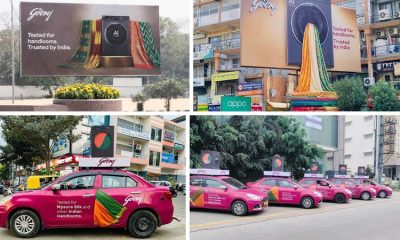
    Mumbai: Godrej Consumer Products Ltd (GCPL), a leading emerging markets company, is reshaping the Indian laundry care category with the introduction of Godrej Fab. The product is a high-performance liquid detergent here to redefine the laundry experience. Exclusively launched in Southern India, Godrej Fab is available at an attractive price point of Rs 99 for a one-litre bottle, thus offering a good quality product at almost half the cost compared to other liquid detergents in the market. Additionally, a convenient 100ml sachet is available at just Rs 10, providing double the quantity of competing liquid detergents. Be it for consumers opting for bucket washing or machine washing, Godrej Fab eases the chore of doing laundry, transforming it into a gratifying experience.

    Commenting on the launch, Godrej Consumer Products Ltd (GCPL) chief marketing officer – India Ashwin Moorthy said, “Godrej is a pioneer in the liquid detergent category with Ezee – dominating the market in North and East with its winter specialist credentials. From household insecticides; hair colour to soaps, Godrej Consumer Products has always democratised categories. With Godrej Fab, too, we are leveraging our expertise in the liquid detergent category and making it accessible to everyone, thereby democratising access to quality laundry care.”

    He further added, “The liquid detergent category is one of the fastest-growing categories. This growth is due to increased household penetration of washing machines across the South. Consumer awareness and adoption of liquid detergents is also growing with features such as easily soluble format, quality wash experience and more fragrance compared to powder detergents. Godrej Fab will further support the growth of the category by catering to consumers who seek an enhanced laundry experience at a competitive price point.”

    The liquid detergent category is one of the fastest-growing categories in India’s FMCG sector.  The growth of liquid detergents is spearheaded by the Southern region which commands close to half of overall nationwide sales.

    As part of the launch, a TVC campaign of Godrej Fab has also been unveiled across South India. The commercial is conceptualised by Lightbox, the in-house creative studio of GCPL. The TVC features comedians who are household names in the south – VTV Ganeshan and Redin Kingsley.

    Speaking on the Godrej Fab TVC’s creative thought, Godrej Consumer Products Ltd (GCPL) lead creative strategist – Lightbox Shalini Avadhani said, “Reputation is a lot like a white shirt – Pure and powerful when clean, but also delicate enough to be ruined by a simple stain. When both are at stake, we wanted the brand to be the heroic saviour. We felt a weighty payoff like this is best delivered with comedy.”

    Godrej Fab offers a superior laundry experience at the consumer’s convenience by effortlessly dissolving in water, leaving no residue after minimal rinsing, preserving vibrant colours, and ensuring fresh, fragrant clothes post-wash. It is suited for bucket washing, semi-automatic and fully automatic top-load washing machines.

  • “We remained dedicated to our core values”: Zouk’s Disha Singh and Pradeep Krishnakumar

    “We remained dedicated to our core values”: Zouk’s Disha Singh and Pradeep Krishnakumar

    Mumbai: The bags, footwear, and accessories category is an ever-evolving one. With sustainable, vegan, and cruelty-free products seeing an uptick and without it compromising their style statement, consumers are certain about what they want. A change in style and fashion every now and then is most welcoming; however, there are always some classics that never leave the shelf.

    Zouk is one such modern Indian classic that seamlessly combines contemporary and traditional elements to infuse subtle elegance into your lifestyle. Handcrafted, cruelty-free, and proudly Indian, Zouk celebrates the vibrant Indian culture and presents it to the world. The brand offers products in the bags & wallets, footwear, and accessories categories.

    Putting things into perspective, the bag and accessories direct-to-consumer (D2C) market in India is around one billion dollars and is growing at the speed of 50 per cent.

    Founded by IIM Ahmedabad batchmates and husband-wife duo, Disha Singh and Pradeep Krishnakumar, Zouk’s journey began when Singh visited Kutch for an IIMA course. She observed that her friends appreciated the local handicrafts but refrained from buying them because they weren’t functional. This led Singh and Krishnakumar to build a modern lifestyle brand from India for the world.

    Zouk’s product designs draw inspiration from Indian architecture, cultural diversity, and traditional handicraft techniques, making it a proudly Indian brand. All products are cruelty-free and responsible, with the brand being a PeTA approved vegan brand.

    With over 400,000 happy customers who have purchased products from their D2C website and other marketplaces, Zouk’s proudly Indian and cruelty-free offerings have garnered immense love and support. The brand has raised $4.5 million so far, with marquee investors mentoring and supporting it at every step. In its last funding round, series A, Zouk raised three million where Stellaris Venture Partners led the round, with Sharrp Ventures, JJ Family Office, Deutsche Bank India CEO Dilip Khandelwal, Manoj Meena of Atomberg, and Vineeta Singh and Kaushik Mukherjee of Sugar Cosmetics participating.

    Indiantelevision.com spoke to Zouk co-founders Disha Singh and Pradeep Krishnakumar at length about the journey of the brand, extending from being simply a bag brand to footwear and accessories, the D2C market, celebrity associations, and more.

    After earning her MBA from IIM Ahmedabad, Singh launched Zouk in 2016 with a clear focus on designing high-quality products that blend Indian handicraft design with modern functionalities, all while using 100 per cent vegan materials.

    Throughout her journey with Zouk, Singh has taken immense pride in upskilling and supporting over 400 expert artisans who help make Zouk’s proudly Indian products. As a woman in a traditionally male-dominated industry, she is proud to be supporting a diverse range of artisans and providing them with opportunities to grow and thrive.

    Aside from production, Singh takes on a variety of roles at Zouk, including product design, brand building, and digital marketing. Her husband and IIM Ahmedabad batchmate, Krishnakumar, oversees other aspects of the business.

    Under Krishnakumar’s leadership, Zouk has experienced remarkable growth, nearly 10x since the last fundraising round, the Pre-Series A round in mid-2021.

    Before co-founding Zouk, Krishnakumar worked at various organizations like Deutsche Bank, McKinsey, Guild Capital, and BrowserStack, gaining valuable experience in operations, strategy, growth, and venture capital. He has expanded Zouk’s distribution from being a purely D2C website driven brand to becoming a bestseller on Amazon.

    At Zouk, Krishnakumar takes care of operations, distribution, finance & investor relations, while Singh oversees other aspects of the product portfolio and brand building. Together with their team, they have recently conceptualized two successful events: Vegan Creator Day and Awards 2022, which celebrated content creators, and the Proudly Indian Fashion Show, which featured top content creators showcasing the brand’s heritage-inspired products in honor of India’s 74th Republic Day.

    Krishnakumar believes that India is a brand-starved country, and hundreds of exciting brands will be created in the coming decade. He is passionate about promoting entrepreneurship and frequently speaks at events and webinars on this topic.

    Zouk’s bags have appeared in the popular Bollywood movie Sherni and the celebrated OTT content, the Netflix series Little Things 3. The brand’s products have also been presented as gifts to Indian dignitaries visiting abroad.

    Edited excerpts:

    On the journey and evolution of Zouk since its inception

    Singh: The journey of Zouk since its inception has been an exciting one. We started as a brand focused solely on bags, offering stylish and authentic alternatives. Over time, we noticed the growing demand for ethically made products, which encouraged us to expand our product category to include footwear and other accessories. As we progressed, we remained dedicated to our core values, which helped us connect with a community of conscious consumers who appreciated our offerings.

    On witnessing the evolution of the D2C bag and accessory market in India, the kind of consumer trends that have shaped the industry, and upcoming innovations and trends

    Krishnakumar: Throughout the years, we’ve closely tracked the remarkable evolution of India’s D2C bag and accessory market. Consumer preferences have shifted towards ethical practices, driving a surge in demand for eco-friendly and cruelty-free products. Today’s customers are increasingly mindful of their purchasing choices, actively seeking out brands that resonate with their values and proudly celebrate their Indian heritage while making positive contributions to being a member of the proudly Indian family.

    Innovations and trends that are expected to disrupt the D2C bags, accessories, and footwear market might include advancements and manufacturing processes, the integration of technology for enhanced functionality, and the use of data-driven insights for personalized customer experiences.

    On expanding into different categories

    Singh: The motivation behind expanding into different categories like footwear and accessories was primarily driven by customer demand and market trends. As a brand, we wanted to offer a comprehensive range of cruelty-free products that catered to various lifestyle needs. We will continue to explore other relevant product categories in the future, always keeping in mind our core values and the preferences of our target audience.

    On the advertising, marketing and media strategy that you have put in place for Zouk

    Krishnakumar: Our advertising and marketing is focused towards reaching out to our customers in a way that they feel. The values that Luke is propagating is something that they associate with. So you will also see as you’re doing campaigns around Women’s Day and other festive times where they make their customers still the face of the brand. So everything that we do in our marketing and advertising is also centered around how we can project our products, in a way that that consumer understands their use cases, how useful it will be for them.

    We have a strong focus on digital media and social media platforms. These channels allow us to connect with our target audience more effectively and engage with them through creative and impactful content. While we recognize the importance of traditional media like TV, print, and radio, our primary emphasis remains on the digital space, where we can build a more personalized and interactive relationship with our consumers.

    On new-age brands aligning celebrity associations with their marketing strategies, brand ambassadors boosting sales and marketing efforts, and insights into specific collaborations such as the one with Sara Ali Khan

    Singh: Aligning celebrity associations with marketing strategies for new-age brands involves finding the right balance between the celebrity’s image and the brand’s identity. The chosen ambassador should genuinely connect with the brand’s values and resonate with the target audience. Additionally, it is essential to ensure that the collaboration feels authentic and not forced, as consumers are quick to recognize inauthenticity.

    As co-founders of Zouk, we believe that brand ambassadors can indeed have a significant impact on boosting sales and marketing efforts. They play a crucial role in increasing brand visibility, creating a positive image, and connecting with the target audience on a more personal level. Collaborations with the right brand ambassadors can help build trust and credibility, which, in turn, can positively influence consumer purchase decisions. One of the notable collaborations is with Sara Ali Khan, who is a well-known Bollywood celebrity also, well known for her social media presence. Her popularity and appeal to our target demographic helped us expand our reach and engagement on various platforms. Sara’s association with Zouk also aligned well with our brand’s values of cruelty-free practices, which further strengthened our brand identity.

    On leveraging social media influencers alongside traditional celebrities to maximize the brand’s reach and engagement

    Krishnakumar: To maximize our brand’s reach and engagement, we leverage both social media influencers and traditional celebrities. Social media influencers are excellent for creating authentic and relatable content that resonates with their followers. On the other hand, traditional celebrities can bring a sense of aspiration and glamor to our brand. By combining the two approaches, we can reach a broader audience and create a more diverse and engaging brand image.

    On the criteria for choosing a celebrity ambassador to ensure a strong brand fit, your advice to other D2C brands looking to initiate celebrity associations as part of their marketing strategy, and key learnings

    Singh: When choosing a celebrity ambassador for Zouk, we carefully consider several criteria to ensure a strong brand fit. Firstly, the celebrity’s values and image should align with our brand identity of being vegan, cruelty-free, and ethical. Their personality and lifestyle should complement our brand ethos. Additionally, we look for someone who genuinely resonates with our target audience and has a significant presence on social media platforms.

    Celebrity associations can be a powerful marketing tool when executed strategically and with a genuine alignment of values between the brand and the ambassador.

    Here are the points-

    a) The brand needs to ensure that the chosen celebrity genuinely resonates with your brand values and aligns with your target audience’s preferences.

    b)Look for a celebrity whose personality and lifestyle complement your brand ethos, creating a seamless fit between the ambassador and the brand.

    c)Leverage social media influencers alongside traditional celebrities to maximize reach and engagement across different platforms.

    d) Consider long-term partnerships with ambassadors who are genuinely invested in your brand’s mission, allowing for more impactful marketing efforts.

    On the significant markets for the brand, and international expansion

    Krishnakumar: The Indian market remains a significant focus for Zouk, and we are continuously looking to expand our presence in various regions across the country. Currently, the markets we are targeting include Mumbai, Bangalore, Chennai, Delhi, Pune, the Southern region, and the Western region. Regarding international expansion, it is indeed part of our long-term vision. We will carefully assess potential markets that align with our brand values and have a receptive audience for cruelty-free products.

    On retail expansion plans

    Singh: We are currently focused on expanding our retail presence both offline and online. For our offline expansion, we plan to open new stores in strategic locations. Additionally, we aim to establish exclusive brand outlets to offer an immersive experience. In the online realm, we’re expanding our product range and partnering with e-commerce platforms to reach a wider audience. Our omnichannel approach ensures a seamless shopping experience, integrating online and offline channels. With a commitment to customer satisfaction, we look forward to our continued growth and brand impact.

    On the consumers’ tastes suddenly seeing a shift towards sustainable brands

    Krishnakumar: The shift in consumer tastes towards sustainable brands can be attributed to increased awareness of environmental issues and the desire to make responsible choices. Consumers are becoming more conscious of the impact of their purchases on the environment and society, and they seek brands that share their values and contribute positively to the world.

    On your vision and way forward for Zouk

    Singh: Our vision for Zouk is to continue being a leading brand in the cruelty-free space, offering a diverse range of high-quality products that cater to various lifestyle needs. We aim to strengthen our position in the Indian market and explore opportunities for international expansion in the future.

  • We plan to reach a revenue of approx Rs 300 cr in 4 years: Good Flippin’ Burgers’ Sijo Mathew, Sid Marchant & Viren D’Silva

    We plan to reach a revenue of approx Rs 300 cr in 4 years: Good Flippin’ Burgers’ Sijo Mathew, Sid Marchant & Viren D’Silva

    Mumbai: Who wouldn’t love to dig their teeth into a crispy burger, the one which makes a crunchy sound each time you bite into it? We all certainly would love to. Hop on to the ride wherein we take you through the story of Good Flippin’ Burgers, which has made quite a ‘sound’ in the QSR (quick service restaurant) market ever since it sprung up in 2019.

    Launched in Mumbai, the brand currently has a total of 21 outlets across the city and Delhi, with a headcount of more than 250 employees. With 14 stores across Mumbai, the brand made inroads in Delhi this year with seven new outlets, which include one exclusive mall outlet too.

    It all started with the simple aim of creating a haven for foodies that serves fresh, delicious burgers that are priced right. Since then, the burger chain has been flippin’ hearts from one customer to the next every day across all its outlets.

    The size of the organised QSR sub-segment is estimated to be Rs 348 billion, and the chain QSR segment is estimated to be Rs 176 billion. The QSR chain segment is expected to grow at a compound annual growth rate (CAGR) of 23 per cent over FY20–FY25. The QSR market is led by international brands such as Domino’s Pizza, McDonald’s, and Burger King. International brands dominate this space, as players such as Domino’s Pizza, McDonald’s, Burger King, KFC, and Subway cumulatively account for about 52 per cent of the chain QSR market in India.

    In an exclusive tête-à-tête with Indiantelevision.com, Good Flippin’ Burgers founders Sijo Mathew, Sid Marchant, and Viren D’Silva discuss the QSR market, starting up almost at the onset of the pandemic and still making it through, et al.

    Good Flippin’ Burgers plans to finish with an annual revenue of Rs 40 crore this year and is on the way to getting to approx. Rs 300 crore in under four years.

    In 2022–2023, the brand aims to expand geographically in Mumbai, Delhi, Pune, and Bangalore with multi-formats that include cloud, dine-in, hybrid, malls, and airports. It has been building for scale from day one. The current menu includes 13 burgers, 11 sides and two hotdogs for vegetarians, non-vegetarians, and vegans alike. Dine-in outlets also serve an entire coffee & shake menu as well.

    Earlier this year, Good Flippin’ Burgers announced a fresh round of funding amounting to one million dollars. It was led by Kerala Blasters Football Club director Nikhil Bharadwaj, IIFL Wealth & Asset Management founder, managing director, & CEO Karan Bhagat, IIFL Wealth & Asset Management co-founder and joint CEO of wealth management business Yatin Shah, Deen Dayal Investments index trader Manish Hathiramani. Along with these respected names, others from the Mumbai entertainment industry also participated in this round, which included Netflix India general counsel Kiran Desai, Vikram Malhotra, Mamta Anand, and Vedant Bali.

    Three passionate foodies, Matthew, Marchant, and D’Silva, moved from their corporate backgrounds to start an entrepreneurial journey in the food and hospitality industries. Each member brought a unique and varied experience to the table that created synergies, building on each other’s strengths. The one aim that bound all of them together was the dream to make Good Flippin’ Burgers India’s most loved burger brand. Their individual experiences all added up to creating goalposts to reach this vision.

    Under their leadership, Good Flippin’ Burgers endeavours to ensure burgers are served as they are meant to be: fresh, full of flavour, non-messy, and delicious. As the patrons grew, one delicious burger at a time, investors who loved Good Flippin’ Burgers and wanted to be a part of its growth journey came on board, keeping people, processes, products, and patrons as its key stakeholders.

    Marchant is a first-generation entrepreneur, a certified Q grader (coffee), and a Specialty Coffee Association trainer. He started his career in retail real estate and progressed to the food and beverage industry. The former category head (food & beverage) of Tata Starbucks has an overall 17 years of combined experience in the retail real estate and food & beverage industries. Marchant co-founded KC Roasters (formerly Koinonia Coffee Roasters) and successfully ran a Tibbs Frankie franchise. He also conceptualised and introduced Starbucks’ first Diwali blend coffee internationally. Driven by sheer passion and business acumen, he identified the premium burger QSR chain business as a niche with immense growth potential and hence started Good Flippin’ Burgers.

    D’Silva started his career as a contributing journalist for mid-day while still in college, which nurtured his interest in brand communication. His work experience spanning 20 years across various managerial roles in the sports industry gave him the opportunity to explore various aspects of running a team. These included the role of CEO Sports for two franchises in the ISL (Indian Super League) for Kerala Blasters and the PKL (Premier Kabaddi League) for Tamil Thalaivas, launching a sports channel – Prime Sports – in the Middle East with Arab Radio and Television, and sales of international media rights for the IPL with World Sport Group.

    D’Silva met Marchant when he partnered with him in the Tibbs Frankie franchise and developed a great working relationship. He came on board to scale and grow Good Flippin’ Burgers as a national brand.

    Mathew was born and raised in the Middle East. He moved to Afghanistan in 2007 to support his brother’s efforts to support the US military and NATO in their peacekeeping efforts. He later worked for the US department of defence in Kabul as a logistic expert till 2016.

    Over the years, he kept working on his passion project: the perfect recipe for the perfect burger. As his recipe and taste buds evolved, he became a burger purist and a firm believer in the fact that burgers are meant to be simple. The flavours of the meat must do the talking instead of all the accompaniments and sauces. Prior to joining hands with Sid and Viren in Good Flippin’ Burgers, Matthew was a part of the Bay City Grill, a popular burger joint in Bandra.

    At Good Flippin’ Burgers, Matthew heads product development, a role the self-taught chef is happy to potter around in as he picks up customer conversations and experiments with creating new burgers that will delight foodies. All the lip-smacking and unique recipes of Good Flippin’ Burgers have been created by him. 

    Excerpts:

    On launching Good Flippin’ Burgers almost at the brink of covid, and the way the pandemic affected your business, especially when you were just starting off

    Matthew: A lot of restaurants were affected by the lockdown, forcing people to stay in rather than dine out. The pandemic, however, accelerated our growth as people were ready to experiment and try out new forms of fine cuisine via online delivery. Burgers were one such category that benefited, and it became an acceptable and much sought-after category under online delivery. We started off as a delivery brand, so we were well poised and ready to cater to the needs of our customers during the pandemic.

    Hygiene is our topmost priority and is non-negotiable at Good Flippin’. Customers who regularly ordered from us were assured of the quality, taste, and great hygiene standards of our burgers and recommended Good Flippin’ Burgers to their friends and families, which helped our brand gain popularity soon. We serve delicious, juicy, non-messy burgers that have great packaging, on-time marketing, and assured customer support to ensure that, in 30 minutes or less, we are able to deliver the customer as close to a close-in dine-in experience as possible. All of this created a favourable environment for us and accelerated our growth. 

    On the USP of Good Flippin’ Burgers and drawing so much popularity for the brand in such little time

    Marchant: We believe popularity is a by-product of consistently doing the simple things every day with a focus on the product, people, and process, and on the patrons to whom we listen. Their valuable feedback constantly helps us improve ourselves. The USP of Good Flippin’ Burgers is that it has been built for scale from day one and provides our customers with the best and most consistent experience, crafted with love and joy, be it home delivery or a dine-in experience.

    On starting a burger brand like Good Flippin’ Burgers when there are already so many burger brands in the country

    Marchant: Yes, there are various burger brands, but there are very few national brands and even international homegrown brands. The market was underpenetrated when we started, and over the years, many new brands have entered the market.

    On you three finding a way to each other – whether being friends/acquaintances from before, the common love for food or something else brought you three together to launch Good Flippin’ Burgers  

    D’Silva: It is interesting that you put it that way, and God definitely played a part in bringing us together. Sid and I go back 15 years, and food has always been on the periphery of our conversations. We started TIBB’s franchises as a side hustle whilst we had corporate day jobs. But we did not have our own product that was a reflection of our ambitions, and that’s when Marchant met Matthew, the man with the magic hands who made the best burgers we had ever eaten. The lure of creating a home-grown international brand was too much of an opportunity as well as a challenge to let go, so we quit our corporate jobs and became the power of three with the vision to be India’s most loved burger brand.

    On the investments made by Good Flippin’ Burgers and fundraising for the company (apart from the funding that you raised earlier this year) – your future plans?

    D’Silva: Good Flippin’ Burgers has invested in people and processes. With people, be it the corporate team or people who work at the stores, we have never tried to cut corners as they are the human capital we have invested in. With the process, we have focused on automation, replication, and identification, be it the automated equipment in our stores or product creation in the central kitchen. We invest in understanding our consumers by listening, learning, and reacting in a personalised manner. Technology plays a crucial role in the area of investment.

    Fundraising is a continuous process, but we only raise money to grow and expand. The right capital from the right people is important, and by God’s grace, our investors have backed us and supported us a lot. We will have another fundraising round shortly, having delivered on our goals from the fundraiser earlier this year.

    On the way, marketing plays an important role for Good Flippin’ Burgers in beating the competition in the QSRs market

    D’Silva: The reason investors and franchisees flock to well-established international brands is that creating a brand that resonates with consumers is not easy. But there is greater value in creating a brand, and that is not just valuation-wise; it is also because the four to six per cent royalties that you pay to international brands are saved when you create your own homegrown brand. With investments in marketing, it’s virtually impossible to create a brand, but we do it in a nimble manner using the power of new-age media to tell our story. The more people hear about us, the more they try our products, so we focus on building a great experience for the customer. I believe there is no greater marketing asset than a satisfied customer, so the highest NPS score possible is where we invest the most.

    On the challenges faced by the Indian QSRs when international QSR brands are expanding their roots in India and are customising their menus as per demand like – Tim Hortons and Starbucks

    Marchant: Indian QSRs have seen more misses than hits historically, so getting people to believe that something homegrown can be as good if not better than any international brand that comes into India is a challenge. Creating SOPs, building teams, and not falling prey to investors who would like 10 stores to open a month are the challenges Indian QSRs face today.

    On India witnessing a resurgence in the number of QSRs as many brands are expanding 

    D’Silva: It’s fantastic, and we can only grow together. We see competition in many ways as something to learn from and expand the overall market. QSR is poised to grow at 23 per cent CAGR in the next five years.

    On the significance of product innovation for brands to beat the competition in the market

    Marchant: Keeping a lean and focused menu is probably as important as constant innovation. Matthew leads our product innovation, and everything that comes out of our stable is special. We also test product-market fit with limited-time offers.

    On the challenges that you have faced as a newly launched brand amongst a host of large international and national brands, and overcoming those

    D’Silva: In the early stages, it was a belief, but as we have grown, numbers speak for themselves, and larger capital has become more readily available to us, something big brands have had from day one. The only way to overcome the obstacles is to hit those goals and the matrix on a consistent basis. We have grown 3x in store count while maintaining a store profitability of 20 per cent. We understand this.

    On the trends and innovations that the Indian QSR market will witness

    Marchant: New entrants are coming into the market with great products and founders, and they are challenging the status quo. The trend we are noticing is that customers are willing to pay for a better and fuller experience, and their tastes are also maturing with more exposure. QSR has to focus more on the product than the novelty of fast food.

    D’Silva:  The use of AI and kitchen automation will leapfrog in the next five years.

  • E-sports even though being a dark horse, has various monetising factors: Orangutan’s Jai Shah 

    E-sports even though being a dark horse, has various monetising factors: Orangutan’s Jai Shah 

    Mumbai: Orangutan is a multi-faceted organisation operating in three verticals – e-sports, talent management and apparel. The e-sports division includes competitive teams in BGMI, Valorant and Free Fire, which will compete to win tournaments and championships while creating niche gaming content. The talent management vertical has a diverse pool of content creators and influencers who collaborate with the company’s partnered brands to create, produce, and promote unconventional content. Orangutan will eventually launch its premium line of apparel and merchandise.

    Indiantelevision.com caught up with Orangutan Gaming co-founder Jai Shah to find out more. Born and raised in Mumbai, Shah is an entrepreneur and an e-sports enthusiast. Right from building a state-of-the-art e-sports training facility to having competitive teams in five different games, he has built Orangutan as a premier e-sports organisation from day one. With a goal to have a globally loved organisation, he works towards it every single day. His love for finance, along with his passion for e-sports, has helped him build successful partnerships with some of the best brands in e-sports.

    Edited Excerpts:

    On the market gap

    The gaming industry in India is still at a very nascent stage, and the industry is growing at each stage. Pre-covid, only a few organisations or brands were engaged with the e-sports industry. But post-covid due to the penetration and expansion of the internet in India, it has played a major role in the success of the industry. With the growing interest and intrigue that arose during this period, we, as an organisation, determined that now was the time to enter the market and disrupt it. In 2021, there were many e-sports organisations, but this period also gave rise to a new era in the industry with the entrance of even more competitive teams, tournament organisers and brands, showing the true potential that e-sports could achieve in the near future.

    On the brand name Orangutan Gaming

    Orangutans are the smartest apes to exist after humans. They are known to lead troops fearlessly. Our players represent the spirit of orangutans in the true sense. Our facility is named The Forest, which is synonymous with smart, wild, raw, powerful, and fearless. Our facility was built keeping in mind these principles. E-sports are just as challenging as any other traditional sport. To put things into perspective, we approach e-sports like a common man would approach cricket in India. The motto of every sport is “come and conquer.”

    On its USP vis-à-vis competition

    I will lie if I say that everyone in the e-sports industry is not into the verticals that we exist in, but what sets us apart is the keen eye for quality along with a premium touch to it. At Orangutan, we stand for quality in whatever we do, and it is our top priority, be it with our e-sports vertical, talent management, or apparel. At each stage of the organisation, we have never let go of that and have embedded the needs of each of our followers, people associated with brands, etc., but with a keen eye towards disrupting the industry and going over and beyond what one has seen.

    On the strategy

    E-sports, even though they are such a dark horse, have various monetising factors, and such opportunities are possible in various ways. On the surface, it appears that there are only a few handfuls, but with the right minds working together, you will be surprised at the opportunities to capitalise on the resources that are available in the industry. We at Orangutan have cracked the code and are striving towards new heights, and this wouldn’t have been possible without the team and people who are actively striving to achieve this milestone. 

    On 5G, contributing to the growth of e-sports hype

    The e-sports industry is null and void without the internet. The existence of the internet is the most crucial factor for anyone associated with this industry. During covid, the penetration of the internet in tier II and tier II markets in India boosted e-sports as a whole. The upcoming wave of 5G and its mere introduction have shown nothing but the true potential of what e-sports could achieve with quality and seamless gaming opportunities.

    On the talent rosters

    Our talent rosters for BGMI, Free Fire, Valorant, and PokemonUnite are nothing less than prodigies. Our players are carefully recruited with the help of our e-sports heads from all over the world. There are many fish in the sea, but finding the right one is always difficult, as each and every game that we participate in is a multiplayer game. It is more important to select the right team player than the right player.

    On how Inox and Star Sports are helping make esports more mainstream

    It is a classic example of brand positioning. Most traditional sports enthusiasts are also interested in learning about e-sports if they are not already fans. Star Sports is the official broadcasting partner of all sports in India. Likewise, theatres have the resources to provide live screenings in comfort. Star Sports and Inox Cinemas, to further expand and reach out to an untapped or newer audience, have started to participate in this industry. Another example from Orangutan’s end is our collaboration with Too Yumm in helping them foray into sports. E-sports is an upcoming market that big brands today are identifying, and they are aware of the gap that they are missing out on.

    On the company’s goals for 2023

    At Orangutan, we have three baskets: e-sports, talent management, and apparel. For our plans in 2023, we plan on introducing our new vertical, ApeLabs. This has been introduced as a strategic decision, as today no person can game, compete, or interact with their fans without the existence of a PC. At ApeLabs, we want to foray into providing the most seamless process for getting a PC for any need, from gaming to business to anything. Along with this, we plan on providing PCs on rent for events and tournaments. Along with PCs, we would also be selling add-ons such as mice, keyboards, microphones, and headphones from well-known and trusted brands, as well as the best in class service.

  • Our USP is that we intend to be solution oriented: The Platform’s Sukrit Singh

    Our USP is that we intend to be solution oriented: The Platform’s Sukrit Singh

    Mumbai: The Platform is a collective of companies that collaborate to create incredible experiences across offline, web 2.0 and web 3.0, seamlessly weaving all of them together with their O2O2M model to create 360 degree solutions that are truly unforgettable.

    In a confab with Indiantelevision.com, The Platform founder Sukrit Singh brings out how the six companies – Metaform, XP&D, XP&DLand, TCMP, Zoo Media and Spotlight – have carved a niche for themselves in the market with their roster of clients, the USP of The Platform and much more.

    For starters, it is essential to have an understanding of The Platform that Singh runs as part of the six companies in his trench coat. Metaform is a company that pertains to all things web 3.0 in terms of IP rights, management, and the creation of new properties. Its goal is to serve as a thought leader in the web 3.0 space, talking about all things blockchain, cryptocurrency, metaverse, and NFT. Regarding its project portfolio, Metaform handles several ventures into the web 3.0 world, including MetaDevotion and Web 3.0 Dissect.

    XP&D is an experiential marketing firm tailored to create experiences, activations, and on-ground activities for clients nationwide. It conceptualises, develops and creates incredible spectacles for worldwide audiences. XP&D has helmed projects like the IPL 2022 Closing Ceremony, the launch of the Kia Carens, and the Khelo India Opening Ceremony, amongst many others. 

    XP&DLand serves as XP&D’s foray into the web 3.0 world, focusing primarily on services for NFTs, blockchain-based business, metaverse spaces and developing digital assets. The company’s primary goal is to service clients venturing into the world of web 3.0 by developing and executing comprehensive content strategies blending both web 2.0 and web 3.0.

    TCMP is a joint venture between TCM, Zoo Media, and XP&D; TCM is a digital sports marketing team that manages activations and social profiles for clientele pertaining to sports. TCMP has managed portfolios for the ACC, BCCI, Pro Kabaddi League, FIFA, and most recently, the Formula E-Prix set to take place in Hyderabad.

    Zoo Media is a media network of seven agencies providing integrated, specialised and customised solutions for new-age business problems, from social media management to website design to influencer marketing and tech-oriented solutions. Zoo Media’s clientele includes Lucknow SuperGiants, Kingfisher, Star Sports, OLX, Mahindra and countless others.

    Spotlight is a content and production house, with the purpose of scripting, directing, and producing different forms of content for clients, event grounds and more. With experience in AVs, anamorphics, projection mapping, presentations, and much more, their objective is to capture an audience’s attention and hold it firm. Their clientele includes Asian Paints, Kia, Hyundai, KPMG, and many more.

    Out of the six companies under The Platform’s umbrella, XP&D and TCMP draw in the maximum clout and moolah.

    Led by Singh, The Platform extends its reach with clients like Asian Paints, Gujarat Titans, Government Of India, IPL, SONY, Kinder Joy etc. to name a few.

    Singh (aka Webzero) is a media and communications veteran. Having co-founded Encompass in 1999, he successfully led it for two decades making it a market leader in the experiential space. The company was acquired by WPP in 2009 after Singh worked as CEO for a decade.

    Singh has led several mega events including 10 IPL opening ceremonies, South Asian Games, Khelo India, The BRICS Summit, India Africa Summit, mass rural outreach programs and several auto shows.

    In 2019, Sukrit rebooted his entrepreneurial journey with the launch of The Platform. The Platform has interest in the spaces of brand marketing and activation, last mile digital and sports.

    Singh believes, “The web 3.0 opportunity is a collision of the experiential and the internet where people have shared and social experiences as their avatars inside other 3D internet.”

    Edited excerpts:

    On the market gap that were you looking to bridge when you launched The Platform in 2019

    When I came up with the idea for the platform, there were hundreds of service-based agencies in the market, each solving a different problem. However, the vision for The Platform was to become something more than that; it was to become an all-encompassing 360-degree service agency where we took people from online to offline back to online, building now as well with the metaverse.

    On how the identity of each of the companies under the umbrella are unique in its own way, and are still inclusive of The Platform’s single core idea

    Digital, offline, broadcast, production, web3 and more are all intertwined in a multi-sensory, multi-screen world of ours. The Platform aims to leverage the same seamlessly across different mediums and in essence, offer a “platform” that is meant to house all these different companies with different areas of expertise, offering a complete 360 degree suite of offerings/services for any and all kinds of needs.

    On The Platform’s USP

    The Platform intends to be solution oriented. With our partners, subsets, and vast bank of experience in all-things experiential, digital, and web3, we work with clients across verticals to create new and unique solutions to their marketing problems. In doing so, we built the O2O2M model. Offline 2 Online 2 Metaverse signifies the user journey, and we hope to create something that works across all realms of reality and caters to the broadest audience, ensuring that our clients get their point across to anyone and everyone.

    On being the pioneer when it comes to utilising metaverse for an FMCG brand (Kinder Joy) in the country, and what the entire exercise entailed

    The metaverse space is a relatively new idea in India, especially for brands to venture in. However, we must begin to take strides into the metaverse, with the latest technological innovations shaping the present in ways we couldn’t have imagined a decade ago.

    With Kinder Joy, the goal was simple, to draw attention to their new line of toys, for which we immediately set out to create a one-of-a-kind metaverse space where we brought the toys to life in a virtual natural park. Combining the metaverse space with an on-ground VR activation and promotion on digital, we fulfilled the O2O2M circle and built a holistic experience that led to a staggering amount of footfalls.

    On getting the Gujarat Titans to be the first Indian sports team to enter the metaverse, and the thought and target behind the same

    The foray of the Gujarat Titans into the metaverse stemmed from the need for more interactive and immersive fan interaction. With the limitations that covid had placed on holding physical events, the metaverse presented itself as a brilliant opportunity to bring technology and humanity together.

    Developing the Gujarat Titans’ dugout was an enriching experience where we picked up on the finer nuance of the metaverse and how we could use it—bringing cricket legends into the very same space as our audiences gave them a chance to meet, socialise and interact in a completely new manner, all while remaining in a virtual reality space.

    On launching The Platform in 2019, which was almost at the onset of covid – and how it was impacted by the pandemic

    The pandemic was a blow to everyone’s business, with companies across the globe scaling down or cutting costs wherever they could. However, for The Platform, we did end up changing course slightly. Our original model, O2O2O (Online to Offline to Online), wouldn’t cut it since the offline aspect had been disturbed quite thoroughly. So instead, we pivot to the O2O2M model, allowing for experiential marketing now told through digital means with the metaverse as our centrepiece. 

    On the strategy used by The Platform to help sell brands to consumers

    Here at The Platform, we want to create experiences that immerse, enthral and capture every target audience, no matter which brand we work with. In doing so, our multi-layered approach using O2O2M enables us to create immersive activities and social environments for every kind of audience, be they web1, web2, or web3 natives. 

    On the ‘immersive experience’, and how can brands exploit its true potential

    An ‘immersive experience’ inherently refers to capturing the undivided attention of an audience. It could be done through either the story told, the technology used, or how both are executed. Our job as experiential marketers is to create new and innovative experiences that do exactly that, using the latest technologies and methods to create an experience that sticks with people long after it’s over. Truly immersing them in an alternate reality where they only see what we want them to see.

    On how are web3, NFTs, metaverse, and blockchain going to simplify and shape our lives in their respective roles

    Much like the revolution that web2 caused with instant messaging, social media, layers upon layers of interacting with new people over the internet, and much more, web3 basics like blockchains, NFTs, and the metaverse hold similar promises. Although it is difficult to predict exactly where this new internet will be in the next five years, we can look at some things that are taking place today to form our assumptions. The concepts of data ownership and privacy are becoming increasingly important to the average user, with immersive experiences and the use of new technology following close behind. We should all keep an eye on the new kind of 3D, creator-centric internet as it continues to grow. 

    On the lessons and learnings that you look forward to implementing in the future

    The world of web3 is fast evolving, and a new set of features get added every once in a while. One of our key learnings is that we need to constantly expand our suite of web3 services. For that, the critical task is to seek out more metaverse platforms that offer new forms of utilities and development tools that can help create even more immersive and interactive experiences for brands, as interactivity is a significant aspect, and gamification drives massive user stickiness.

    On the trends you have noticed in the field of web3, NFTs, metaverse, and blockchain

    Though the baseline of memes, viral trends, and influences doing silly things on the new internet will always be things that we’re comfortable with, the next generation of Web3 native internet users will likely grow bored of it all. Instead, their focus will primarily lie on understanding and interacting with innovations. Be it the spaces, stories, or new forms of technology, the current generation’s fascination with all things new will shape the way trends form in the Web3 universe.

    On the significant innovations that took place in 2022, and the innovations that are expected to disrupt the market in 2023

    Mixed Reality (MR) boomed in 2022 and became a crucial standout in many web3 projects. Hopefully, the same will evolve and help us develop new ways to visualise and interact with data, implement more IRL (in real life) visually embedded games and even help drive new medical and infrastructural innovations.

  • An influencer marketing activity without word-of-mouth marketing to complement, is like using your money for gambling: Brandie’s Pranav Kosuri & Douglas Andersson

    An influencer marketing activity without word-of-mouth marketing to complement, is like using your money for gambling: Brandie’s Pranav Kosuri & Douglas Andersson

    Mumbai: Brandie is a Sweden-based word-of-mouth platform that enables brands to drive user-generated content at minimum cost by connecting brands with real customers and genuine reviews, thereby helping brands reach a larger audience and build a community.

    Brandie democratises marketing by giving the benefit of the top one per cent of social media users to the other 99 per cent with an average engagement rate of 22 per cent and 6–8x better results than an influencer-led campaign.

    For brands, this means they can harness the power of word-of-mouth on social media at scale. For users, this means that they can connect with their favourite brands and be rewarded for the content they share. Brandie has over 80,000 advocates on its platform whom brands can source and mobilise for their campaigns.

    Founded by Swedish entrepreneurs Pranav Kosuri and Douglas Andersson, Brandie has activated over 76,287 content creators, reaching 130 million social media users via their campaigns.

    The brands onboard Brandie are BookMyShow, Truecaller, Dominos, Nivea, P&G, Swiggy, Puma, Air India, Tata Salt, Fevicol, and Wellbeing Nutrition, among others.

    Before commencing his entrepreneurial career, Kosuri studied at Stockholm University and at the California Institute of Technology (Caltech) and holds an M.Sc. in Molecular Biology. He is a marketing expert and successful entrepreneur who has founded four companies in Silicon Valley, as well as in Europe.

    He has taught entrepreneurship at the Royal Institute of Technology and at the Stockholm School of Economics. He holds a board seat at the Sweden-India Business Council and was recently named Sweden’s Top Entrepreneur Under 30 by Sweden’s largest business magazine, Dagens Industri (DI).

    For three years since 2017, he has been invited to India to give lectures to 2,000 students from over 40 universities across India, with the vision to help Indian teenagers venture out and start their own businesses.

    Five years ago, he created Scandinavia’s most successful crowdfunding campaign for his company, Flic—the world’s smartest button. His venture rapidly rose to success and was named Europe’s hottest hardware startup by Wired Magazine. Since then, Flic buttons have been used more than 30 million (three crore) times in 110 countries, largely through lasting partnerships with major corporations including Google, Volvo, Spotify, and Uber.

    Andersson, meanwhile, has extensive experience in B2B sales and brand building. He has been pronounced Sweden’s Top Salesman 2014 (awarded by Hi3G). With an impressive resume in business development for both large corporations and rising tech startups, he brings extensive insight on how to do product development with a focus on design and sales.

    Being the head of the business development team at one of Sweden’s fastest-growing media companies, Newstag, he has been pioneering their launch into the Southeast Asian market. Douglas has been awarded multiple scholarships to attend China’s top management and engineering schools, Peking University and Tsinghua University. He holds a degree in industrial engineering and management.

    Edited Excerpt:

    On the market gap that Brandie saw when it launched and its USP vis-a-vis competition

    Prior to Brandie’s launch in India, before micro-influencers and nano-influencers were a thing, influencer marketing was blooming with a hundred per cent growth year on year. We noticed that the number of influencers and celebrities (with massive reach) was minimal and only represented a fraction of the total social media users. With different brands approaching the same set of influencers and them promoting more and more brands, influencers and celebrities would/will eventually lose trust in their network. Even as brands look at new segments of micro and nano influencers, the problem would be less obvious but remains. We predicted that paid opinions would affect the viewers’ trust as time passed.

    The gap we saw was to promote word-of-mouth marketing from authentic people and use this opportunity to build trust in the activities done with prominent influencers. The solution was to build a technology that allows brands to work with their community of customers—people who actually use and love their products and already promote brands on social media daily. We never saw influencer or celebrity marketing as bad. However, for them to be trusted, the conversations needed to be balanced with recommendations from regular friends and family. In addition, we wanted the space to be more democratic so that the products that people actually love are the ones that get the spotlight on social media. However, the model for influencer marketing needed to be more scalable, as it’s impossible to work on a one-to-one basis when handling thousands or millions of customers.

    On the key verticals that Brandie works in like lifestyle, sports, food and beverages

    Brandie works in any vertical with products and services that people use and appreciate. The more people love your product and service, the easier it is for us to generate thousands of UGC (user-generated content) recommendations. We have done campaigns with sports brands like Puma, food brands like Domino’s Pizza, beauty products such as Nivea, and pharmaceutical brands such as Cipla. Other verticals that we have worked with are education, banking, and streaming services. Any brand or company that believes they have a product or service that their customers would recommend to a friend can work with Brandie’s word-of-mouth marketing.

    On how covid has impacted the word-of-mouth marketing medium

    In the short term, it took a lot of work to develop a new product and market segment to fill a gap in the market. Then, as lockdowns went down and companies started slimming down their marketing budgets, we needed more time to pitch them on trying a new innovative marketing medium in these uncertain times. However, the feedback we got on the product was always very positive; it’s just that the timing to test it out wasn’t optimal.

    Now that the worst part of covid is over, we see considerable interest in Brandie. The pandemic has led more and more people to spend time on social media and adapt to online shopping. This means that trusted word-of-mouth recommendations on social media are more important than ever. We also see a trend that, globally, the trust for influencer marketing is going down, which is something we see as benefiting us as we allow brands to have the same presence and impact on social media. Still, instead of using paid opinions, they can rely on trusted recommendations from peers on a much larger scale.

    On the challenges that brands face in using word-of-mouth marketing

    It’s challenging to make brands understand that UGC from trusted friends and family is more diverse and subjective than traditional marketing or advertising.

    The best recommendations are made by each individual uniquely because each person knows what their followers like to consume best. Therefore, as long as the recommendation is positive, the customer should own the creative part to maximise engagement in their network. However, this can be hard since many brands still need to feel comfortable letting go of control. To counter this, we have built a technology that guides brands and screens content to guarantee brands’ safety without compromising the users’ unique opportunity to influence their network of followers.

    Another challenge is to convince the brands that word-of-mouth marketing is not a ‘one-time solution’; instead, it should be a long-term strategy to ensure that brands always have positive conversations on social media throughout the year. So new prospecting customers can easily see that the brand is liked, active, and trusted.

    On what Brandie’s clients expect and how their ROI is defined

    Clients often expect similar KPI and ROI as traditional advertisement or influencer marketing, which sometimes works very well, but for some brands, that’s not always the case. It’s important to understand that the conversation may not always happen at the moment the content is displayed. For example, when looking to buy a new phone, surveying reviews, articles, and trends is crucial, but on the day of purchase, a recommendation from a trusted friend has a greater influence.

    We try to keep the expectations right depending on the brand and activity planned for awareness marketing and building trust. As far as traditional metrics such as reach, impressions, and engagement are concerned, Brandie has been over-delivering on every single campaign. However, we try to avoid those metrics and instead focus on the story itself, as consumer recommendation has the most value in the content. We want the brand to not mistake Brandie for another tool to deliver huge numbers but instead value all the valuable word-of-mouth recommendations coming their way.

    On the importance of word-of-mouth marketing for early-stage startups

    Brandie was initially created to counter the unfair advantage of large companies’ marketing budgets. The big brands can always pay to get their products displayed through paid ads, but what startups have is not money but rather loyal fans. So instead of spending valuable resources on expensive ads, we created Brandie so that startups can work with their community of customers to drive meaningful marketing and grow the company without having to waste money on paid ads that no one likes anyway.

    On the role that word-of-mouth marketing plays in the overall marketing mix

    All marketing channels serve their purpose, and we don’t try to replace any other channel per se; instead, we see Brandie as the tool to create more conversions and boost the value of the brand’s other marketing activities. Furthermore, Brandi is the tool for increasing trust and conversion in all other channels. The likelihood of someone clicking on, buying, or engaging with an ad they don’t trust is small. However, the likelihood of conversion increases drastically when a close family member or friend recommends a product or service. In addition, adding Brandie to the marketing mix ensures that the brand’s other expensive investments (such as a celebrity influencer) are well-spent.

    On recent work that Brandie has done with clients that stands out

    There are so many that we would like to highlight, but to mention a few: Cartoon Network, Domino’s Pizza, Nivea, Fastrack, Prasuma, Redrail, and Truecaller. However, if we are forced to highlight something, it is working with causes, as we did with Truecaller, where we engaged their customers to shed light on harassment against women in their #itsnotok campaign.

    On the importance of getting customers to be advocates for brands

    We usually give the example of the saying, “The crying baby gets the milk.” That means that brands today have routines and protocols for how they should interact if a consumer talks negatively about them on social media: they apologise and compensate the person. However, the same is not the case if regular but happy customers write about them on social media—then brands do nothing. By doing this, brands positively reinforce the behaviour you don’t want to see and do not encourage positive word-of-mouth, which will increase negative word-of-mouth. This is an enormous missed opportunity since even people who don’t have a marketing degree understand the power of word-of-mouth in our daily purchasing decisions or personal lives.

    On Brandie’s business model

    We currently offer two models. The first is that the brands pay per unit for how many consumers we activate. The second is a B2B SaaS solution where brands can leverage the power of Brandie’s word-of-mouth technology to drive their consumer advocacy campaigns with their community. The first model is preferred by brands who want to work with our Brandie community, while the second model targets brands who already have a community or want to build their own community to drive word-of-mouth marketing on social media at scale.

    On whether word-of-mouth marketing complements influencer marketing effectively

    Marketers will soon realise that an influencer marketing activity without word-of-mouth marketing to complement it is like using your money for gambling. The modern customer is not easily fooled (less than four per cent trust influencers today) and will look for second opinions after seeing an influencer promote a product or service. If the brand already has plans to complement its marketing message with word-of-mouth, they don’t have to worry that its marketing message feels one-sided. Imagine a celebrity promoting a new drink flavour, saying it’s the best they have had, and at the same time, you see thousands of regular customers also giving their view on how they like it—that’s how you build hype from the top down while building trust from the bottom up.

    On Brandie’s plan to grow into 60 markets in 2023 and the game plan to get there

    Brandie will go live globally much faster now that we have started to offer the Brandie software as a B2B SaaS solution. This means that any brand in any market can use our technology to create meaningful relationships with customers while driving effective social media marketing. We have a lot of global brands that we are currently working with and are well on track to hit our goals.

  • Shamsuddin Jasani sheds light on the agency’s new vertical – Wunderman Thompson Health

    Shamsuddin Jasani sheds light on the agency’s new vertical – Wunderman Thompson Health

    Mumbai: Shamsuddin Jasani, fondly known as Shams amongst his advertising mates, took over the reins as CEO of Wunderman Thompson’s South Asia operations a year ago. And he seems to be nothing less than modest about joining the agency network, which has had a strong foothold in India for the last nine decades.

    Shams is a veteran of the media and advertising industries, with more than two decades of experience, of which 15 years have been in leadership roles. In his current role, he leads the Wunderman Thompson (WT) South Asia group, which comprises Wunderman Thompson, Mirum, Contract, and Wunderman Thompson Commerce in India.

    As part of his South Asian role, which includes India, Sri Lanka, and Nepal, Shams’ major focus is on scaling up the business in India, because 95 per cent of the revenues come from there. Considering the kinds of headwinds that exist, he is of the opinion that India is not going to be as impacted as other parts of the world. So his focus is on driving and working with clients in India to give them a very loyal, integrated offering across all the services that the agency network has.

    Shams is one of the leading voices on digital, commerce, and martech, in addition to advertising and marketing, in the industry.

    Prior to joining Wunderman Thompson, he fulfilled his role well as dentsu Isobar’s CEO and was responsible for managing over 600 people across Isobar, Fractal, and Taproot Dentsu.

    Under the leadership of Shams, WT India has won more than 20 new businesses in a year which includes accounts like Skoda, Sun Pharmaceutical Industries Ltd, Edelweiss, Barbeque Nation, Cavin Kare (HTAM), Kyndryl, Mahindra One, Abbott Gutfit, Dr.Reddy’s Labs, Zydus Wellness, CERA, Nestle OOS, Unilever – Novology, Kotak Mahindra Bank Ltd, Manyawar and many more.

    Some of the successful campaigns that have been churned out by the agency during this year include those for brands such as The Times of India (the Trust campaign), Nestle Munch, Hero Xtreme, Apollo Trampler, SF Sonic Battery, and Tata Pravesh.

    One of the growing areas of focus for the agency is the WT Health vertical, which Shams has brought together; the new biz wins under this vertical are Abbott – Troponin, Dr. Reddy’s – Alfoo & Dutas T, GSK – Physiogel, Zovirax, Zimig & Zoderm, Sun Pharma – Revital, Volini, Pepfizz & Abzorb and HUL – Novology.

    In his interview with Indiantelevision.com, Shams speaks about doubling the agency’s growth in the next three years, acquisitions, focusing on areas such as health, and even discussing the technology side of the advertising business at length.

    Edited Excerpts: 

    On revenues and growth chart for the WT group

    We are back to 2019 levels of business, to pre-pandemic levels of business, which is a substantial growth over 2020 – 21. The year 2022 was very good, both, in terms of revenue as well as overshooting our targets, as far as profits are concerned. We’ve done better than what we had thought we would do for 2022. And we are back to our 2019 numbers as far as our growth is concerned.

    We have a very ambitious growth goal of doubling our size over the next three years. So that’s a stated goal that we have set. If you just add it up, it’s about 33 per cent growth a year that we’re looking at. And it’s a very high growth rate that we are targeting for our company, especially given the size and scale of what Wunderman Thompson is, but we are quite confident that we will be able to deliver that growth based on the new mix of services that we’re offering—not just the advertising side of the business, but martech, commerce, and health. I think these things combined will give us the growth that we’re looking for. 

    On the formation of and focus on WT Health

    It’s that these skill sets have been with us all along; we just brought them under one roof.

    Over the past two to three years, Wunderman Thompson has been winning a lot of business in the healthcare sector. And that just happened. There is Sun Pharma; there is GSK. And you know, there are a few health clients on the consumer side of the business, which means that how do we take what we are talking to them about and do a brand experience with them for consumers? But on the Mirum side of the business, too, there was organic growth among what we call healthcare professionals. So creating communication towards healthcare professionals—again, this was completely organic; this had nothing to do with, you know, timing the market or anything like that.

    Both of these existed in silos; they were talking differently. But what we did was combine the strengths of our brand business, which talks to consumers, and our healthcare professional business, which Mirum does beautifully. And they have an entire army of people who are actually working on that side of the business and have brought it all together under one roof, which is Wunderman Thompson Health.

    The idea was that we are able to deliver across the spectrum of services that any healthcare client and the category require—both talking to consumers as well as talking to healthcare professionals. So it was just a logical integration of already existing healthcare services and getting them to work together. I think that was something that happened organically.

    And I think it’s just a market need as well, because, especially on the healthcare professional side, there is a very particular skill set required because, to write and create that kind of content, you need to have a certain understanding of that category. And the language that you will use has to be a doctor’s language, for example. So it’s a very different skill set from what you would do on the brand side of things that we’re doing.

    So I think, as far as the growth is concerned, it was small when we started just six months ago, but the growth has been phenomenal, but the base is small. So I think that 2023 will be the real scale for growth for Wunderman Thompson Health. 

    On new-age acquisitions

    They’re all under process and will take time. These things take time. Around the middle or end of 2023, we should be able to announce something. But it’s a very exciting chapter. The way that we’re looking at it is this: there are complementary skills that we’re looking at acquiring, and additionally, there are a lot of things that we’re doing organically.

    On the usage of adtech and martech by brands to its optimal potential

    I’m very wary about the words “martech” and “adtech,” because I think a lot of people still haven’t understood that the integration is slightly difficult when you’re talking about adtech and martech. But yeah, so I’ll give it a shot.

    So I think, increasingly, I’ll just put everything under marketing automation, whether it’s martech or adtech. By that, I mean that adtech is more about media automation, and media buying is part of marketing automation, while martech is more about marketing automation. So I would just say that adtech is technically a subset of martech because, at the end of the day, marketing is the overall mothership. And media is part of marketing.

    So increasingly, clients are looking at automating a lot of their marketing capabilities. And how do they work with agencies like us to be able to help them do that? That could be on the pure advertising and marketing side of the business, or it could be on the media side of the business, where ad tech plays a major role. So it really depends on the scale and scope of how you’re using this to transform your business. And it’s a part of the overall digital transformation project that a company takes forward. So, marketing automation, adtech as a part of marketing automation—all that is part of having an entire digital transformation journey. And that is, I think, an end goal for us as well, which is also to talk to clients about how we can help them on their digital transformation journey, where martech is a part of it, of course.

    So I think, finally, it’s about how we can have discussions beyond just marketing and how digital plays a role in transforming the entire business that a client wants, and adtech and martech are subsets of that. 

    On data analytics and consumer privacy

    So I think we still are a little way away from cookies and third party data completely being done away with – it’s going to happen eventually. But I think in that kind of a context also, I think us as WT, as WPP, globally – GDPR (General Data Protection Regulation) has always been taken care of. So it doesn’t matter if those are in India or not; we are governed by global laws. So, data privacy is extremely important to us, irrespective of which country we’re working in, and we are working with clients to be able to make sure that the data of the consumers are protected, and we don’t have understanding and reading of that micro level data. 

    But I think that we are able to make a sufficient leap of understanding and faith. And that’s where I think creativity comes in: being able to use a spark. I always say that if you have 100 per cent of the data correct, you don’t need to make decisions. Because, as you know, pretty much all the data is giving you everything.

    So I think it works very well for creative agencies, because we’re always the teams that take that leap of faith; we create those moments of inspiration out of just that little spark that happens. So, as creative agencies, we need that spark; that’s it. So I don’t feel that there’ll be a big challenge for creative agencies to really understand or be challenged by this whole thing, because we only need to work with clients to understand how consumers behave with them in their own ecosystem. That’s about it. We don’t need to know the exact details about the consumers. So I think that spark is enough for us to create great campaigns and great advertising. 

    On whether data analytics is the appropriate tool to measure the performance of campaigns

    What I would say is that the success of my campaign really depends on the KPIs I set at the beginning. The KPI could be a brand metric, a sales metric, or it could be in terms of the word-of-mouth that has happened.

    There is too much data out there. What you need to understand is what your final objective is, and you need to be very clear about what your objective is as a brand and as a business that you’re achieving. And you and the agency are together responsible for driving those objectives. One suggestion is not to get daunted by the amount of data that’s available, but rather to just focus on what it is that you want your final objective to be.

    If you set the right kind of objectives? Yes, you need to measure them properly. There is a measurement metric. Now the measurement system varies depending on what the objective is. If it’s an ecommerce only in play – then you’re looking at metrics, which says how many conversions or how many people bought, what is the ticket size that is there. If it’s a brand-only play, then I need to understand what the demand metrics are and how that got kicked off? So it really depends on what you are using it for. 

    On how metaverse, NFTs, web3 and blockchain are going to change the way advertising is being portrayed and utilised by brands

    With regard to creativity being used in newer technologies, you need to understand how to creatively use a new technology that comes along. So, NFT again, I would say is kind of still far away. But take the metaverse for example – within the metaverse, you will use NFT. And this whole thing but for example, when we talk about mixed reality, or metaverse, or any kind of immersive virtual reality, of course, you can have your regular advertising. For example, if you’re in a gaming environment where you’re using metaverse, or you’re in Meta when Meta actually comes up with their metaverse program, there will be advertising out there wherein the formats will depend upon what is the kind of reality that you’re in – either in virtual reality or augmented reality. And hence, the formats will change in terms of pure advertising. 

    But I think the focus should be in terms of delivering a great experience for your brands to the consumer. So it should not just be about saying, Let me just put up an ad within that universe and just say, Can someone see my ad? That’s one part of it. More importantly, if a particular consumer is within an ecosystem, or whether it’s inside the metaverse, how are you making yourself relevant, and at what stage are you giving him/her a great experience to then become relevant to him/her and have recall? This is something that I think is very critical.

    The simple answer that I’m saying is, how do you build relevancy for your brand within the confines of that universe of technology? That is going to be more critical than just being there. And that’s fair; I mean, right now, we’re just scratching the surface. So, everyone is just kind of figuring out what to do with it. So your first step is just to be there; let’s just do something. But eventually, I think it’s more important to be relevant by doing something that creates a brand experience for your consumers within that space. That is, in the end, what we must strive for.

  • “MiQ’s secret sauce is our partner-agnostic, tech-enabled and people-powered approach to programmatic:” MIQ’s Siddharth Dabhade

    “MiQ’s secret sauce is our partner-agnostic, tech-enabled and people-powered approach to programmatic:” MIQ’s Siddharth Dabhade

    Mumbai:  Today we are seeing the rise in programmatic advertising and MiQ  (www.wearemiq.com) is a programmatic partner for marketers and agencies combining industry knowledge with technology and data analytics to offer better-connected marketing solutions for over 1,100+ clients globally. We are experts in data science, analytics, and programmatic trading, and are always ready to solve challenges quickly and ensure our clients always spend their media investments on the right things in the right places. They’re present in 22 cities across 9 countries, with over 1,000 people. The company has a Center of Excellence in Bengaluru, with a global technology, analytics, and innovation base, where it develops cutting-edge programmatic advertising products for India and the rest of the world.

    Siddharth Dhabhade is a luminary of the technology and internet industry with over 21 years of experience across management, business development, digital marketing, key customer relationship management and business advisory roles with global technology giants.

    As managing director, Dhabhade is responsible for the growth of MiQ’s programmatic and analytics solutions, relationships with brand and media agencies, revenue growth and P&L management and strengthening the company’s leadership position across India, China and SAARC countries. He is also a part of the global operational board and helps drive the global strategy and operations for MiQ.

    Prior to joining MiQ, Dhabhade held a variety of technology, business development and management roles with industry giants such as Google, Microsoft and IBM, with his most recent position leading the Indian business of global retail technology and advertising leader, Criteo. At Google, he scaled the business 11x, and at Criteo he made India region as the fastest-growing region for Criteo worldwide with innovations in mobile/apps solutions.

    Indiantelevision .com in conversation with MiQ (India China and SAARC) managing director Siddharth Dabhade on the growth of MiQ from a start-up to a Unicorn, on data privacy, use of AI, MiQ innovation in data science, programmatic talent and much more…….

    Edited excerpts

    On the journey of MiQ

    Our growth story has been extraordinary; we have grown from a few hundred to over 1,000 individuals globally. We’ve had stupendous growth in the UK, US, and Canada markets, and we are expanding in emerging markets including India, China, APAC, and MEA to chart out our next wave of growth. India is a key market for us globally, and we continue to invest in adding more agencies, clients, partners, and talent to our India portfolio.

    MiQ has been present in India with our Centre of Excellence (CoE) in Bangalore since 2012, and it has been an integral part of our global operations, serving as a hub for technology, data science, analytics, and innovations. We launched the India commercial business during the pandemic in 2020, but over the past couple of years, we have grown nearly 10 times more than the industry average. We’ve always been focused on growing profitably, and today we work with over 300 brands and almost every digital media agency in India.

    On the funding front

    Our founders, Lee Puri and Gurman Hundal, initially bootstrapped to grow in the UK and Europe but MiQ was first funded by ECI back in 2017, and that was our first foray into private equity. It was beneficial to us on a strategic level. We’re really proud to share that in ECI’s 40-year history, they have made the best ever return with us, making nearly 6.1x return on their initial investment.

    Last year, we partnered with private equity firm Bridgepoint to fuel our long-term growth strategy to deliver the next phase of programmatic media solutions, with a focus on continued international expansion and client growth.

    On advertising unfolding globally and in India

    Data privacy is the foundation on which future-proofed, privacy-centric advertising solutions are being built. Globally, the entire AdTech and Digital marketing ecosystem is gearing up for a cookieless world. This means advertisers and marketers are investing in technology that will help them identify, target, and measure without using third-party cookies. Brands are investing to bolster their first-party data, and enrich it with second- & third-party data to succeed in their marketing and advertising campaigns.

    Cookieless measurement is one of the most challenging aspects facing advertisers as we move toward a privacy-forward future, as the AdTech industry is heavily fragmented – consider all of the media channels, formats, ad exchanges, ad servers, demand vs. supply-side platforms, and the different data, measurement, and analytics available within walled gardens versus on the open web.

    Virtually all channel marketers utilize today will be impacted by the deprecation of cookies, including measurement data. Household reach, IP-based conversions, footfall, incremental lift, ROAS and CPA all currently rely on cookie-based attribution for measurement of the interlocking key between channels.

    Technology companies will embed AI into their products and solutions, which will have a transformative impact on personalization, media planning, unlocking consumer insights, campaign optimization, and measurement. We’ve been using AI, and data science algorithms to programmatically do things differently than our competitors.

    On that secret sauce that makes MIQ stand out in terms of technology, data science and programmatic talent

    MiQ’s secret sauce is our partner-agnostic, tech-enabled and people-powered approach to programmatic. In India, we have a team of over 400 data scientists, analysts, technologists, and programmatic traders, which gives us a winning edge in doing programmatic differently.

    .   Custom Analytics Solutions: MiQ offers bespoke data analytics solutions that go beyond traditional media campaign analytics. We leverage our expertise in data analysis to help businesses address major challenges such as reducing breakage and churn, identifying high-converting customers, and solving supply chain issues. This ability to apply analytics to various business aspects sets us apart by providing valuable insights and driving better performance.

     Data Science Expertise: At MiQ, we have a team of skilled data scientists who possess a deep understanding of data analysis, modeling, and statistical techniques. These experts are proficient in extracting meaningful insights from complex data sets, enabling them to provide valuable recommendations before the campaign begins and drive data-driven strategies to achieve campaign goals.

       Programmatic Trading Capabilities: MiQ has a pool of programmatic talent comprising expert traders and professionals well-versed in the programmatic advertising ecosystem. Our programmatic trading team understands the intricacies of media buying and optimization, ensuring efficient and effective campaign execution.

    .    Partnerships and Collaborations: MiQ has established strong partnerships and collaborations with data providers, technology platforms, and industry experts. Our strategic alliances allow us to access diverse data sources, cutting-edge tools, and specialized knowledge, enhancing our capabilities and enabling us to provide comprehensive solutions to clients.

    By combining our custom analytics solutions, advanced technology, data science expertise, programmatic trading capabilities, and valuable partnerships, we offer a unique combination that sets us apart in the realm of technology, data science, and programmatic talent. This comprehensive approach allows us to deliver impactful insights, optimize performance, and drive business outcomes for our clients.

    On India today making a name for itself in the global arena for its creative work

    With a large talent pool of tech, digital and creative professionals, India has the potential to become a global hub for digital and programmatic advertising akin to IT and technology services. Most global organizations (including MiQ) have their centre of excellence, captive and capability centres in India as it offers them significant advantages in terms of skills, costs and infrastructure. I personally believe that with investments in upskilling, digital infrastructure, new technologies and industry collaboration, India will become a digital advertising hub for the world over the next few years.

    On concepts such as connected television, cookie-free and sustainable advertising, data clean rooms evolving in the startup ecosystem

    In the advertising ecosystem, challenges and trends catalyze the creation of new solutions and channels. Take the connected TV ecosystem for example, which has evolved into the new fastest-growing advertising channel and has the potential to uproot the dominance of linear TV by bringing digital-like capabilities to TV advertising. MiQ’s breadth of industry-leading programmatic TV solutions enables brands to unlock incremental reach with campaigns that marry first-party linear TV data with over-the-top streaming content, a full range of devices across manufacturers, and contextual and behavioural audience analytics to give brands scale.

    With increasing concerns over data privacy and most web browsers phasing out third-party cookies, cookieless solutions are gaining popularity and more data will live inside clean rooms – a platform where advertisers and agencies can perform analysis and data science on any dataset in an aggregated way (meaning, at a group level rather than data that can be linked to specific individuals), and without moving it out of the platform.

    MiQ is also bringing the sustainable advertising solution to India, through its partnership with Scope3 and Seen This. This is the first such offering in India.

    While there are many point solutions in this space, the programmatic ecosystem is very fragmented and requires a specialist like MiQ which can help brands connect the dots between technology, partnerships and people.

    On CTV or digital advertising is the go-to medium for brands today

    With a boom in CTV/OTT platforms, FAST channels, Smart TV manufacturers and ISPs jumping into the CTV advertising space, the complexity of this platform is increasing. Advertisers have many options to buy, activate and measure their campaigns but an integrated, data-driven approach is often missing. To make media buying on platforms like CTV or digital advertising more transparent, MiQ employs various approaches and tools. These include:

       Authorized Digiadvertising,, or ads.txt is an IAB Tech Lab initiative that helps ensure that your digital ad inventory is only sold through sellers (such as AdSense) whom you’ve identified as authorized.

    .    Our campaign manager tool is available to all clients to ensure transparency of inventory

    .    Third-party brand safety – IAS (pre-bind and post-bid)

     Supply path optimization

       Fraud detection through internal algorithms

    On sustainability today as many brands have climbed on the sustainability bandwagon

    If the internet was a country, it would be the third largest polluter in the world – after the US and China. MiQ aims to be a game changer in the field of sustainability by offering carbon footprint measurements of brands’ digital campaigns. We recognize the significant environmental impact of online activities, and by combining data partnerships, technology, and programmatic approaches, we can help brands reduce their carbon footprint without compromising performance.

    To achieve this, MiQ has set off on a mission to understand how to minimize carbon emissions associated with programmatic advertising. We have developed a tool called the “Green Score” that allows brands and their agencies to assess the environmental impact of their programmatic advertising campaigns. The Green Score provides insights into campaign emissions compared to industry and vertical benchmarks. By analyzing the Green Score, brands can gain a better understanding of their environmental impact and build more sustainable campaigns.

    MiQ’s approach involves standardizing measurement and providing benchmarks to help brands improve their sustainability efforts. By measuring the carbon emissions resulting from various actions in programmatic advertising, such as running devices, connecting data, and powering servers, MiQ enables brands to identify areas where emissions can be reduced. By implementing sustainable practices based on the insights provided by the Green Score, brands can effectively reduce their carbon footprint.

    The way we use the Green Score Report is simple so that every advertiser can benefit from adding this to their campaigns risk-free, with no impact on performance. We use it to:

    .    Inform tactical day zero planning (before your campaign goes live);

    .    Adapt mid-flight media mixes; and

    .    Dynamically optimize to greener supply using the Green Score as a secondary KPI

  • “We are dedicated to humanizing the digital landscape”: Tata Starbucks’ Deepa Krishnan

    “We are dedicated to humanizing the digital landscape”: Tata Starbucks’ Deepa Krishnan

    Mumbai: When one says coffee, the first name that strikes your mind is Starbucks. A strong brand globally and in India too, Starbucks has carved a name for itself with top-of-the-mind recall.

    Starbucks entered the Indian market in October 2012 through a 50/50 joint venture with Tata Consumer Products Ltd. It currently operates 350 stores in India across 45 cities, Mumbai, Delhi, Hyderabad, Chennai, Bengaluru, Pune, Kolkata, Chandigarh, Ahmedabad, Surat, Vadodara, Vapi, Lucknow, Amritsar, Kochi, Ludhiana, Bhopal, Indore, Kanpur, Jaipur, Siliguri, Thiruvananthapuram, Nashik, Guwahati, Bhubaneshwar, Goa, Nagpur, Jalandhar, Anand, Calicut, Patiala, Raipur, Kolhapur, Bhatinda, Dehradun, Udaipur , Vijayawada, Lonavala, Mysore, Ghaziabad, Faridabad, Meerut, Agra ,Aurangabad and Visakhapatnam through a network of over 2,000 passionate partners (employees). Starbucks stores are operated by the joint venture, TATA Starbucks Private Limited, and branded as Starbucks Coffee – A Tata Alliance.

    In an exclusive email interaction with Indiantelevision.com, Tata Starbucks director – chief marketing officer Deepa Krishnan spoke about the brand journey, balancing global and local innovations, winning tier II & tier III cities, and more.

    As part of her role, Krishnan oversees all aspects of the brand related to digital, social media and other media communication, manages the My Starbucks RewardsTM loyalty programme and is responsible for all the digital initiatives undertaken by the brand.

    Krishnan holds a PGDM degree from IMDR (Institute of Management Development and Research). She is a passionate marketer and is constantly studying consumer trends and innovation across categories and is focused on delivering consumer insight with a business impact

    Edited excerpts:

    On the evolution of the brand TATA Starbucks since it set foot in India

    Since the beginning, Tata Starbucks has been rooted in a mission to nurture the human spirit. We have always gone beyond the cup to create positive experiences that makes our customers return to our stores time and again. Over these years, we have led the Indian coffee industry in pioneering a premium coffeehouse experience while setting new benchmarks in being socially responsible, strengthening communities and being one of the most loved coffee brands in India.

    Key milestones:

    2012 – Starbucks Fort, Mumbai

    India’s first store opening by Howard Schultz and Ratan Tata at Fort, Mumbai

    2013 – Launch of India Estates Blend

    Celebrated first year anniversary in the country with the launch of India Estates Blend

    2014 – Roll out of Coffee Master programme

    Started upgrading partner’s coffee knowledge with Coffee Master Programme

    2016 – 5-day work week for our store partners

    2017 – First ever Neighbourhood coffee forward store

    Took the next step in serving the best with India’s First Coffee Forward & NCF Stores in Mumbai followed by other cities

    2018 – Barista Pride launch

    Encouraged partners to brew their own beverage recipes and gave a fresh perspective to our menus with Barista Pride

    2020 – All Women store launch

    Empowered female partners by opening the First Global All Women’s Store and made transport arrangements for them

    2020 – Launch of Diwali Blend

    Added a festive flavour to our beans with the first ever season coffee – Diwali Blend

    2022 – Roll out of Education benefit

    Helping partners fulfill their academic goals with the roll out of Higher Education Benefits

    2022 – Conquered Newer Markets

    Spreading our finest coffee across the India market with the opening of our 300th store

    2022 – Starbucks Reserve store, Fort, Mumbai

    Adding a star on our galaxy with the first Reserve store of India

    2023- Introduction of Picco and bite sized menu

    Catered to first-time coffee drinkers by introducing Picco, a comfortable size option, and a bite-sized menu for a delightful experience

    On Starbucks cracking the code – the perfect balance of global and local (innovations)

    By blending global excellence with local adaptations, Tata Starbucks aims to create an inclusive and enjoyable experience for all its customers. Our focus on incorporating local elements and offering a diverse menu enables us to cater to the unique tastes and preferences of the Indian market, while still maintaining the essence of the global Starbucks brand.

    One example, we achieve this through incorporating local design elements and cultural references in all our store aesthetics, ensuring that each outlet feels unique and relevant to the local community. Another way we bring this is through our diverse F&B offerings. We have always embraced local food culture by providing a wide range of Indian-inspired items marinated with international standards including our recent additions such as filter coffee, masala chai, cardamom chai, milkshakes, and a delectable assortment of freshly assembled sandwiches, bite-sized treats, and shareable food items. These offerings reflect the flavours and preferences of Indian customers, allowing them to enjoy familiar tastes while experiencing the global Starbucks experience.

    We also have our global favourites like Pumpkin Spice Latte, Java Chip Frappuccino, croissants, muffins and cheese cakes that are loved by consumers across India.

    On thriving in a hyper-connected ecosystem- transition of Tata Starbucks into the “fourth place” or the digital

    In today’s world, people have recognized and appreciated the significance of human connections, leading to a growing desire for community-driven interactions in the digital realm. The future lies in combining this technology with a sense of purpose, creating meaningful experiences, and delivering unparalleled value. At Tata Starbucks, we are dedicated to humanizing the digital landscape and ensuring that our customers truly enjoy an enriching brand experience.

    For example, we introduced the Starbucks Mobile App, with an exciting interface offering customers barista recommendations, fantastic product discovery journeys and personalisation.

    We launch Mobile Order and Pay enabling the convenience of pre-ordering and contactless transactions. We have also deployed a WhatsApp-based “Scan-Order-Pay” solution, allowing customers to make orders and payments through their phones. Furthermore, our customers can place orders for their favourite Starbucks beverages on delivery platforms such as Swiggy and Zomato, enjoying Starbucks from the comfort of their homes.

    To expand accessibility, we have also established partnerships with Tata CLiQ Luxury (June 2021), Flipkart (October 2020), and Tata Cliq (June 2022) allowing customers to order their favourite Starbucks merchandise.

    On Starbucks building loyalty via emotional connect with the customers

    1.   Personalized Customer Experience: One of the biggest differentiators of Starbucks is that it strives to create a warm and welcoming environment in its stores, where customers feel valued and appreciated. Our partners (baristas) are trained to engage with customers on a personal level, remembering their names, preferences, and creating a friendly atmosphere. This personalized approach helps customers feel a sense of belonging and builds an emotional connection with the brand.

    2.   Local Relevance: Tata Starbucks understands the importance of connecting with customers on a cultural level. By incorporating local design elements, artwork, and cultural references into our store aesthetics helps create a sense of familiarity and resonance with customers, making them feel understood and appreciated.

    3.   Community Engagement: As a brand Starbucks actively engages with the local communities in which they operate. We participate in various community initiatives, supporting local causes, and promoting sustainability

    4.   Reward Programs and Loyalty Benefits: Starbucks offers a comprehensive loyalty program called Starbucks Rewards which provides exclusive benefits, personalized offers, and rewards to our loyal customers. By recognizing and rewarding our customer’s loyalty, we aim to strengthen the emotional bond and encourage customers to continue choosing Starbucks as their preferred coffee destination. The Starbucks Rewards program currently has more than 2.3 million customers.

    On the significant markets for Starbucks in India and Starbucks’ commitment to India

    India is one of the fastest growing markets for Starbucks globally and we have seen phenomenal growth in India over the years. Every year, our goal is to carefully grow into neighborhoods where we believe our customers want to see us. We have consistently been providing our customers with a variety of roast profiles, handcrafted beverages, and a global coffee culture experience and with over 340+ stores across 40+ cities we continue to grow stronger day by day. We have recently launched into tier 2 markets like Vijayawada, Aurangabad and Agra. We have also introduced our first two 24/7 stores in Chennai and Calicut.

    On Starbucks winning over tier II and tier III markets in India, and the advertising and marketing strategy for these markets

    With regard to expansion in tier II cities our goal is to reach more consumers and be that neighbourhood store for them where they feel welcomed, comfortable, and safe through a personalized experience. We offer a unique value proposition in which we become a ‘third place’ for customers after their home and workplace. It’s familiar, it’s comfortable, it’s warm and accessible. Starbucks is more than just coffee – When our customers feel this sense of belonging, our stores become a haven, a break from the worries outside, a place where they can meet with friends, family or just enjoy me time.

    We leverage digital and social media platforms to engage with customers in these markets. This includes targeted advertising, social media campaigns, and collaborations with local influencers to increase brand awareness and drive customer engagement. We design specifically tailored marketing campaigns to highlight the localized offerings and the unique store experience designed for these regions. The messaging is crafted to resonate with the aspirations, lifestyles, and values of the target audience in these markets.

    Our food also has regional options like Pohe Kebab, Malabari Egg Croissant, Chatpata Paratha wrap, Kosha Mangsho Wrap that caters to local tastes and preferences.

    On the store count and expansion, you are targeting this year

    As we always say, we will be present wherever our customers want to see us. While I can’t give you an exact number, the key to our growth will be our stores, the Third Place, and the backdrop for the partner and customer connections. We have expanded the concept of the third place, and we’re reaching people in new ways where they need us to meet them in places like drive-thru, pickup stores, delivery, mobile order, and in digital channels. So we will continue to focus on thoughtful growth, strengthening our brand and extending the unique Starbucks Experience to more and more customers in India.  

    On Tata Starbucks leveraging AI to digitize the in-store experience

    1.   Mobile Ordering and Payment: The Starbucks India mobile app incorporates AI algorithms to enable customers to place orders and make payments seamlessly. The app utilizes AI to personalize the ordering experience, recommending menu items based on individual preferences and past orders. This streamlines the ordering process, reduces wait times, and enhances overall convenience for customers.

    2.   AI-Powered Recommendations: We also leverages AI algorithms to provide personalized recommendations to customers. By analysing customer data, such as past purchases, preferences, and demographics, we can suggest relevant and appealing menu items. These recommendations are displayed on digital interfaces, both in-store and on the mobile app, enhancing the customer’s decision-making process.

    3.   Starbucks Reserve: which opened in October last year, features a captivating portrait of a mermaid. By scanning a QR code or accessing the Starbucks Instagram filter, customers can interact with the mermaid artwork and share their experience on social media. This innovative use of technology adds a touch of magic and engagement to the in-store ambiance, creating a unique and shareable experience for Starbucks Reserve customers.

    On the media mix

    Looking at our target consumers which are mostly millennials and GenZ, a substantial portion of our media budget goes into digital advertising across various platforms. This includes display ads, social media ads, and video ads on platforms like YouTube, Facebook, Instagram, and Twitter. Digital advertising allows us with precise targeting, customization, and measurable results, enabling Starbucks to reach specific audience segments and engage them with tailored messaging.

    Collaborating with social media influencers and content creators is another important aspect of our marketing mix. Influencers who align our values and target demographic showcase the brand’s products, in-store experiences, and promotions to their followers, fostering brand advocacy and engagement.

    We also leverage OOH advertising to create visibility and reinforce our brand presence in key locations. This is particularly effective in reaching consumers on the move and driving foot traffic to nearby Starbucks stores.

    On your vision and way forward for the brand

    Since our inception in the Indian market, Tata Starbucks has embarked on an extraordinary journey. We take immense pride in the numerous milestones we have achieved, thanks to the unwavering support of our dedicated partners. Our thoughtful expansion into Tier 2 markets underscores our ongoing commitment to bringing the unparalleled Starbucks Experience to customers across India, while setting the stage for our future growth aspirations.

    As we move forward, our growth strategy is based on expansion, innovation, driving brand affinity, and a focus on digital.

    We will continue to give back to the planet and community with our sustainability and community-focused initiatives.

  • “Rural and Semi-Urban Revival Sparks Brand Renaissance: Unleashing Greater Growth Opportunities” – Interbrand’s Ashish Mishra

    “Rural and Semi-Urban Revival Sparks Brand Renaissance: Unleashing Greater Growth Opportunities” – Interbrand’s Ashish Mishra

    Mumbai: In today’s world of brands and more brands, what stands out is the brand identity, it can make or break a brand. This is where Interbrands steps in, it has been the world’s leading brand consultancy, for over 40 years – having pioneered iconic work and forged many of the brand-building tools that are now commonplace. We know that in an age of abundant choice and speed of innovation, customers’ expectations are moving faster than businesses.

    While incremental change is still essential, it’s no longer sufficient. It takes bold moves to leap ahead of customers and competitors. We call these moves iconic moves. In collaboration with many of the world’s leading brands, our global team of thinkers and makers is pioneering the future of brand building.

    By turning customers into active participants, Interbrand helps clients strengthen their brands on an ongoing basis – our approach gives them the confidence to make iconic moves that spark desire and create utility, and driving.

    Interbrands is celebrating its 10th year, the Best Indian Brands report has become a definitive guide to the nation’s brand landscape since its inaugural publication in 2014. This year’s edition showcases remarkable growth, with a total list value of INR 8,310,057 million (US$ 100 billion), marking a significant 167% increase over the past decade. Notably, this is the first time the total value of the table has surpassed the US$ 100 billion mark.

    In a short span of five years, with Ashish at the helm, the world’s leading Brand Consultancy has emerged as a clear leader in the Indian market as well. The top five branding assignments of India, Godrej, JIO, Mahindra Global Brand, Britannia and Infosys; are the top 5 projects of Interbrand India too. He has built the business by building strong relationships with a third of the top 40 Best Indian Brands, including Reliance, Britannia, Infosys, Godrej, Mahindra, Bajaj Auto, JSW, Ashok Leyland, HPCL, Tata, HCL, L&T and Union Bank.

    An author, a social commentator and columnist, a Culture Brand exponent, an entrepreneurial businessman and one of the eminent Branding Thought Leaders of India; Ashish has led or played a decisive role in some of the most acclaimed brand creations or makeovers of the recent times. His portfolio includes Corporate Branding of PepsiCo GNG, Rebranding of the Godrej Group and Britannia, Repositioning of Infosys, Branding of JIO, Laying a roadmap for Mahindra’s global brand ambition, Makeover of Union Bank & XLRI, Creation of a new Brand for Etisalat, Branding of Baroda Next & Godrej Expert Hair Colors, Decisive Repositioning of Godrej No 1, Building of Real Good Chicken & Yummiez and Brand Design for Reliance Metro among others.

    After instituting and heading the Strategic Planning function at DDB Mudra for a decade, Ashish set up and successfully ran Water, a strategic branding & design consultancy now Interbrand India. He is a regular invitee at the important brand forums in the region and is now busy building adjoining markets of Sri Lanka and the Middle East for Interbrand.

    Indiantelevision.com in an email interaction with Ashish Mishra Managing Director – Interbrand India & South Asia on the journey of Interbrands, on working with various brands, on this year’s valuation of the top 10 brands and much more……

    Edited excerpts

    On the journey of Interbrand since its launch a decade ago and change in mindset by brands over the years?

    In our 10 years, we have seen, and if may somewhat presumptuously add, catalysed, an intense evolution in the way Indian Organisations thought about their brands. It may not be too wrong to say that our real understanding of brands and branding has begun only in the last few decades. Let me explain why. First up, the historic evolution the world organically went through was missed by us due to our being a colony. Post-independence we were catching up and working hard to bridge the basic scarcities and gaps. For 5 odd decades, we had a protected and closed market.

    With the economic reforms and the telecom revolution of the 90s, we opened up to the world. That’s when we got on to the real change or should I say ‘universalisation of branding’. In the recent decade or so, we saw India going through the longer phases of branding role evolution rather quickly. Pretty much doing a crash course of cramming the evolutions the developed world went through over a century into a very short period of time.

    So, what are these changing roles, the Brands have gone through, one may ask.

    When production was the priority to meet the pent-up demand for a society bypassed by industrialisation, brands signalled material trust versus the unbranded. This went on for decades.

    With the opening up and the global brands entering, the base quality became table stakes, and the brand became a way to create premium and value. With prosperity growing and socio-economic classes spawning a new caste system, brands began reflecting elitist identification to drive businesses.

    Rising lifestyles and expectations due to growing exposure then meant brands becoming a tool for the driving experience. Interestingly, all these phases of evolving brand roles happened in the recent few decades in India.

    Now, the new world has hyper-connectivity but lesser connections, extreme information but rare original thought, many fundable start-ups but few sustainable commitments, wide social networks but lesser depth of anchorage in culture and value systems, long friend lists but deeper aches to belong, savvy political tokenisms but growing trust deficits with governments.

    These and many more simmering sociocultural tensions precipitated by the pandemic are signs to recognize by Brands. Because providing a resolution for these through fresh ideologies, narratives, experiences, ethics-in-action and proximate presences will create the highest order of connections for brands. These will be the New Acts of Leadership. And this will be the new role brands can play in the new world.

    On Interbrand working with the best brands

    Yes, it has been an extremely interesting journey.

    Beginning with the first large assignment of rebranding Godrej and working closely with Tanya, and often being the only two culturally connected, grounded Indians in the Interbrand core team discussions with the Interbrand London team. Sometimes amused, sometimes inspired. Or the extended Brand Council workshops and meetings at Mahindra to chart out a 7-year plan to be a top 50 globally admired brand.

    Or the round-the-clock meetings at the earmarked ‘consultants’ floor’ at Reliance Belapur Campus, the long waits at Antlia over the amazing Gujarati buffets for finalising the branding of Jio with the family.

    Or the many sessions over two years with Mr Wadia presiding over the rebranding of Britannia, and rightfully holding up his contrasting views vs. ours, Varun and the teams at the final stages of the rebrand, and of course, prevailing!

    Or the historic step-up of the brand at the cusp of change at Infy, with Nandan as the interim in charge of even branding decisions between Vishal’s exit and Salil’s joining.

    Or the Iconic Move made with Dheeraj Hinduja and the Leyland leadership team to rebrand Optare into Switch Mobility, the new iconic double-decker electric buses in Mumbai.

    Or the chartered flights of Pawan Munjal to our NY office for Branding discussion and our late-night calls to finalise the future of the mobility brand of Hero – Vida.

    Experiencing the true first-world cultures in freezing Stockholm while rebranding true caller or envying the cool fun of sports firms while branding & architecting the IPL franchises – Royals and Capitals.

    On the total brand value of the top 10 brands is higher than the 40 in the list this year

    This is precisely where the exponential growth we see across the ‘super league’ of brands begins. Built on a foundation of exceptional experiences and strong integrity, these brands can expand in multiple directions, with far more freedom and fluidity than traditional diversification. It’s not a question of ‘we do this, we can do that too’, but ‘you trust us, and here’s what else we might help you do.’ Over the past decade, our study of the Best Brands confirms this.

    Consider Apple or Google or closer home Jio. It’s hard to fit them within categories (what they do) – things get clearer when taking the perspective of customer jobs to be done (what they help us do). Apple helps us Connect, Do, Belong, Play, Pay and – more recently – Thrive. Rumour has it that soon it may help us Move, too. Google helps us Learn, Connect, Move, Pay, Work. Entertain. Shop. So does Jio. JSW extending its brand into Cement and Paints does feel like Arena play while Asian Paints and Ultratech clearly have begun to play in the broader space of beautiful homes and Homebuilding respectively.

    What these organisations do is place at their core not product, but brand, and leadership. And rather than build their brand around a business, they build businesses around their brand. At Interbrand, we call this Arena thinking. It’s the foundation that allows our clients to make Iconic Moves.

    On the technology industry surging in the recent past

    The digital-first approach becoming an imperative for all and the tech-everything, everywhere, the all-the-time reality of our times means we will be soon at a point where it would be difficult to have a standalone tech category. Simply because everything will be infused or even led by it. Healthcare will be health tech, finance will be fintech, sports will be sports tech and so on.

    On the FMCG sector leading the pack, your thoughts on this?

    We are a sixth of the world’s population. Our consumption market is our biggest strength. With greater prosperity and the premium segments holding up better even in the downturn, we are seeing value growth in the consumables. With the economy improving and rural/semi-urban demand coming back, we will see greater growth. This is also the space where brands have a higher role.

    On the trends seen globally

    For the first time ever in 2022, the average brand value of a Best Global Brand has reached over US$3 trillion. The overall value of the Top 100 brands has reached US$3,088,930m, a 16% rise from 2021 (US$2,667,524m). This year sees the fastest rate of brand value growth ever recorded, demonstrating the growing contribution a company’s brand has in driving its economic success.

    While financial markets have shown significant swings over the last few years, the value of the world’s strongest brands has steadily increased driving customer choice, loyalty and margins.

    Ultimately, these organisations are building businesses around their brand (in contrast to the traditional approach of building a brand around a product), setting them apart from the rest of the pack.

    On India faring post-pandemic when compared to the Western markets

    While as an economy we have enjoyed relative insularity and higher growth, as the ‘Super League of Brands’ the global counterparts have done better than Indian top brands. The global super league has shown greater confidence in displaying the New Acts of Leadership, played more strongly in the broader Arenas. That said we have had fine examples in the likes of Jio. Isn’t it amazing that Jio raised 11 Bn USD in the thick of pandemic and has emerged to be India’s exemplary Arena Brand taking on the likes of Amazon, a powerful global Arena brand?