MUMBAI: As part of the celebration of the 50th anniversary of the James Bond film franchise on the anniversary of the first film Dr. No, that had its world premiere 5 October, 1962 in London, Albert R. Broccoli‘s EON Productions, Metro-Goldwyn-Mayer Studios, Sony Pictures Entertainment and Twentieth Century Fox Home Entertainment have decided to celebrate 5 October this year as the Global James Bond Day with a day-long series of events for Bond fans around the world.
This is the time when a new feature documentary Everything or Nothing: The Untold Story of 007 Metro-Goldwyn-Mayer Pictures, Columbia Pictures, Passion Pictures and Red Box Films will be unveiled.
Directed by Stevan Riley, the film focuses on three men with a shared dream – Bond producers Albert R. Broccoli, Harry Saltzman and author Ian Fleming. It‘s the thrilling and inspiring narrative behind the longest running film franchise in cinema history that began in 1962.
The worldwide events celebrating Bond‘s golden anniversary include a global online and live auction charity event of 50 lots to benefit twelve charitable institutions organized by Christie´s in London, a global survey to discover the favorite Bond film by country, a film retrospective at the Museum of Modern Art (MOMA) in New York among many others.
Leading up to Global James Bond Day, for the first time ever fans can own all 22 films in the franchise on Blu-ray Disc in one comprehensive collection with Bond 50, releasing worldwide beginning September 24.
Category: Executive Dossier
-

Global James Bond Day to be celebrated on 5 October
-

‘India is the biggest market in which SPT Networks, Asia operates’ : Sony Pictures Television Networks Asia executive VP, GM Ricky Ow
AXN Network has recently created a new position to focus in its biggest growth market. Sunil Punjabi has been appointed as the business head and will be handling AXN and Animax in India.
Punjabi will lead the team in developing the go-to-market strategy for new channels as well as oversee the development, acquisition and production of a content mix for SPT’s networks in India. He is also charged with driving marketing strategies to grow the channel brands and to pursue further distribution opportunities.
In an interview with Indiantelevision.com‘s Ashwin Pinto, Sony Pictures Television Networks Asia executive VP, GM Ricky Ow talks about the growth prospects, particularly as India enters the digitisation era.
Excerpts:
Q. Has India become more of a priority market for SPT Networks Asia in the wake of an economic slowdown which has affected other Asian markets more like Japan and Singapore?
While we are not able to discuss matters relating to revenue, India is the biggest market in which SPT Networks, Asia (AXN, Animax) operates. So India has always been a high priority market for us as evidenced from the fact that we have always had a dedicated service for India that has enabled us to programme, schedule and promote differently from the rest of Asia and be more relevant to our Indian viewers. The fact that India is still expected to see an economic growth, between 5.5. – 6.5 per cent this year only serves to reinforce the importance of the market.Q. So is India gaining importance in terms of business for SPT?
Our key focus this year is to really understand the evolving Indian consumer. We’ve been doing business in India for 15 years now and there have been some dramatic changes in India … be it the rise of consumerism or media consumption behaviour.This year we’ve invested in research and made a big effort to understand the change in the Indian viewers in the context of the rapid changes in the Indian pay TV landscape with digitisation and the huge increase in new players entering the market.
Q. What does the research show so far as AXN is concerned?
The AXN brand is still extremely strong among consumers. With increasing competition in the English General Entertainment television space, we believe the key to success is to really understand what the viewers want. Listening carefully to what the viewers have told us, we’ve found that they prefer an AXN that sticks closely to the original high energy, thrilling entertainment formula.Consequently, we have kept this in mind as we programme, schedule and promote the channel, which has helped us maintain AXN’s position as the No.1 English GeneralEntertainment channel in India despite the tremendous competition.
Q. Is that why AXN Network has created a new position and appointed a business head to run the India operations?
Yes, we have appointed Sunil Punjabi to lead the Indian operations for AXN and Animax in India. We and our partner Multi Screen Media believe that our business in India deserves more resources and have, thus, expanded the team to capitalise on growth opportunities in India.‘We and our partner Multi Screen Media believe that our business in India deserves more resources and have, thus, expanded the team to capitalise on growth opportunities in India‘Q. In India we are seeing more players entering the English entertainment space due to anticipation of digitisation. How will this impact viewership?
India is a huge market with the biggest English speaking population in the whole of Asia. AXN being the number one English GE channel in Asia and India for the last 15 years has not been an easy task. There has always been competition and the future may bring even more competition but it is certainly not a stranger to us.Digitisation will offer the consumers more choices not only in the number of channels but also in the quality of their viewing experience which was not possible with the current analogue system. We are already seeing some of the impact of digitisation in some of the semi-digitised metros like Mumbai and Delhi where viewers are spending more time with the genres of their choice as well as heading straight to their favourite channels rather than having to surf through channels to get to their final destination.
In a fully digitised world channel brand recognition and what they stand for will become paramount. Fortunately the AXN brand is still very much loved in India and we have become synonymous with the action genre which continues to be extremely popular in India.
Q. Are you strengthening your localisation strategy?
Asia and India-specific production initiatives like ‘Amazing Race Asia‘, ‘Cyril Family Vacation‘ and ‘India’s Minute to Win It‘ are an important part of our localisation strategy that helps us to not only differentiate ourselves from other channels but also build a stronger connection with our viewers.So we’re not relying on acquisition alone for tent pole programming. Our original productions enable us to have better control of our own fate, the relationship we have with our viewers and key stakeholders and partners.
Q. Are content costs escalating with more demand for content and how do you judge whether or not a property is worth an increase in price?
The English space in India has been very hot in the last 18 months and that will in general drive up prices. That being said, we continue to offer some of the best entertainment shows that viewers want, including the ‘CSI‘ franchise, ‘NCIS LA‘, ‘Supernatural‘, ‘The Voice‘, ‘So You Think You Can Dance‘, ‘The Amazing Race‘, while also producing our own shows like ‘The Firm‘ and our next upcoming major production, ‘Hannibal‘.Q. AXN Beyond was re-branded as beTV across Asia. What prompted this move?
While AXN is doing well across region, outside India we also have two other successful brands — beTV and SonyEntertainment Television (in English). SET offers wickedly juicy entertainment that appeals to the modern female.beTV was previously AXN Beyond. A very well focused channel dedicated to fans of sci-fi, paranormal and horror programming.
We made the strategic decision to rebrand AXN Beyond because we wanted to build a mainstream Englishentertainment channel that appeals to a wider audience. One that can be a complementary and companion channel to AXN and allowing us to offer a more complete portfolio of English entertainment channels. beTV thus offers easy viewing and engaging entertainment, a place for viewers to chill and unwind much like their favourite hang-out café or hang-out joint.
Q. Are you launching this channel in India or are you waiting for digitisation to take concrete shape?
We are always looking for opportunity to launch these brands in India and it is not appropriate for me to talk about this yet.Q. How is SPT Networks Asia leveraging HD and 3D and how do you see them enhancing the TV viewing experience?
AXN is already available in HD in every market except Taiwan and India. Eventually we will be shifting our service to HD for these two important markets as well.Our distribution in India is much wider than the top 10 key cities, so the plan to roll out HD is a massive effort for us. In the US, Sony Corporation together with Discovery Communications and Imax Corporation has launched the world’s first and only 3D channel – 3net.
For us, the key for launching HD and 3D is finding the right timing and formula that works for us.
Q. Has the pay TV business across Asia been hit by the slowdown or are consumers still willing to pay a good price if they see value?
From our experience, we have found that the consumer is actually more willing to pay for pay TV services in challenging times. It offers affordable entertainment at home for the whole family instead of spending a lot more money when a family goes outside the home for entertainment.We have also continued to see growth in our advertising business as pay TV is one of the more cost effective advertising mediums for marketers. AXN not only provides a quality environment that enhances advertisers’ brand image but also appeals to and reaches a very desired audience – the SEC A and SEC AB. Our audience is less affected by the economic crisis and continues to have considerable spending power, which is why it is important for marketers to continue investing with us.
Q. In the US, new media is seeing people spending more time watching shows online rather than on the TV channels. Is this a challenge you are starting to face in India and Asia?
While we are seeing an increase of online viewing, both illegal and legal, we also expect to see an increase in both time spent viewing and reach of pay TV as pay TV penetration continues to grow in many markets across Asia including India.The good news for advertisers is that pay TV, in spite of the wide choice available, is still less fragmented than the Internet and offers a well targeted, distinct brand environment for marketers to select. Pay TV brands command loyalty amongst viewer who have been relying on pay TV brands for the past 15 to 20 years and we believe they will continue to do so especially as shared family
-

‘Our marketing spends will stay flat at Rs 6 bn’ : LG India VP marketing LK Gupta
A sluggish market and depressed consumer demand is not deterring consumer electronic major LG India to reduce its marketing spend this year. The drive will be to reallocate spends with print seeing a marginal dip. Television will stay flat while digital ad spends will jump 50%.
The South Korean conglomerate will cut back its marketing spend on cricket, from Rs 1 billion in 2011. But it is still bullish on the game and believes addresses a wider consumer base compared to music or Bollywood.
In an interview with Indiantelevision.com‘s Ashwin Pinto, LG India VP marketing LK Gupta talks about the company‘s thrust in pushing new technology products like 3D and the marketing strategy it is following to drive growth in sales.
Excerpts:
So far year 2012 has been difficult for LG and the consumer electronics sector. What are the reasons behind this slow growth?
The market is looking sluggish because consumers are feeling less than confident about the situation – the economy, food and fuel inflation, interest rates and rising prices across categories. So, some consumers are postponing purchases of discretionary high-ticket items. We‘ve still had growth in AC and Appliances this summer while the rest of the industry has struggled.However, even though it has been a year of challenges so far due to difficult macroeconomic environment like inflation, dollar appreciation and constant hike in input prices, the good news for us is that LG has grown by 15 per cent in its core business of Home Entertainment and Home Appliances. There has been a growth of 30 per cent in Home Appliances business and 25 per cent growth in Flat panel business.
By when do you see the situation turning around and what corrective measures are being taken by LG?
This is an industry wide situation and a lot of things at a macro level have to improve. So it’s tough to say by when the situation will turn around. We do expect the festival season in the second half to improve the growth somewhat.At this point LG is launching flagship products across categories which will help in strengthening our product leadership via strong marketing campaigns. This includes LED, LCD TV, refrigerators, washing machines, Split ACs and microwave ovens.
We are looking at a 25 per cent growth in sales overall this year.
Could you talk about the impact of rising input costs due to the declining rupee value and how is it affecting the business?
Input cost is certainly a concern and rupee depreciation is also alarming due to which prices were hiked across all product categories by 15 per cent in the past year and a half. This was not only in television segment but all categories.On a more positive note, there is increasing adoption and acceptance of new technologies like HD and 3D by consumers. How is LG tapping into this with new products?
LG is expanding the 3D market in a big way with Cinema 3D Smart TV range and is now poised to offer the widest range of 3D entertainment products – 3D LED, 3D Ultra Slim LED, 3D Home theater systems and 3D Blu-ray players.Technology and design are key factors behind LG Home entertainment products. With our 2012 3D Smart TV line-up, we have been able to take a significant step forward, thanks to a series of new and upgraded 3D features led by the Cinema Screen Design.
With the 2012 Olympic Games to be broadcast in 3D and more than 30 English and Hindi 3D movies to hit the Indian Cinema theatres, 3D entertainment is set to explode in India at a steady growth of 500 per cent. We are targeting business worth Rs 10 billion from 3D TVs and aim to consolidate our position in the Flat Panel TV segment with 30 per cent market share.
To ensure the numbers we have an aggressive marketing strategy with a target investment of Rs 1 billion in Flagship product communication. This will be accompanied by experiential marketing campaigns.
‘This year we will spend slightly less on print and focus more on digital. Our spend on television will be similar to last year. We always look at efficiency for our marketing spends and digital platform is one where we can see good response. We have increased our digital spends by 50 per cent‘LED TVs are growing fast in sales. Is this technology superior to LCD TVs?
The LED segment is growing at a faster pace with 500 per cent year on year growth (2011 versus 2010). The consumer preference is shifting to LED’s as CCFL and LED price gap is reducing. LED is perceived to be the latest, modern and eco-friendly technology. The LED segment contribution in sales was 35 per cent (in value) in 2011 and is targeting around 60 per cent in 2012.Will the slowdown affect your marketing spends?
Our marketing spends will be Rs 6 billion, the same as last year. We are not reducing spends. We are only re-allocating spends to an extent.A slowdown scenario indicates that fewer consumers are willing to buy in the current time and many consumers, due to the prevailing market mood, start postponing their discretionary purchases.
In such a situation marketing has to be focussed on converting the customers who are willing to buy. Accordingly, marketing spending will focus in the short term on in-store excellence.
Investments will be geared to give consumers a better in-store experience via display, demonstration and branding visibility for flagship products. At the same time, advertising will be more streamlined to deliver higher efficiency within the same budget. This will impact the media choices in print and TV media. Digital media, which plays a very important role in the consumer decision journey of searching and evaluating products, will be given a bigger share to have an early influence on potential customers.
In terms of LG’s marketing spend how does it split between TV, print, and radio? Will the slowdown force a change in the platforms that you use?
This year we will spend slightly less on print and focus more on digital. Our spend on television will be similar to last year. We always look at efficiency for our marketing spends and digital platform is one where we can see good response. We have increased our digital spends by 50 per cent.Which medium is more impactful in terms of reach and brand recall?
All mediums have their own role to play. Some work better to create awareness, while others are important to drive consideration and even comparison with other brands.But isn‘t it true that when consumers are hesitant companies need to be more aggressive in marketing? Does LG agree with this?
Yes! We have an aggressive marketing strategy in our flagship product communication so that we achieve our goals within the set budget.A couple of years ago LG aimed to change its brand perception from a mass to an aspirational brand. Did this work?
We have managed to grab a bigger share in categories across the product portfolio. We are leading the market in side by side refrigerator, Front load washing machines, convection microwaves. Our image is much better compared to five years back. This effort to change and improve brand perception, though, is an on-going process. Our products are more modern and more high-tech, which has helped improve brand perception. We have single-handedly carved out a premium LED 3D segment where we sell the most TVs.Have any new campaigns been lined up and could you talk about the thrust?
We have rolled out two campaigns. The first one is for our flagship product LG Cinema 3D smart TV and second is Eco health campaign for Home Appliances. We have started out Home Appliances Above The Line campaign Eco friendly which showcases eco friendly technology in LG HA products.Simultaneously we announced a digital interactive campaign on Facebook called My Eco Home which will allow Facebook fans around the world to create and share their own personalised, virtual dream homes. An industry first, LG’s My Eco Home Facebook app reflects the company’s effort to interact with today’s customers in new, innovative ways. We also rolled our new TVC for the latest range of Cinema 3D Smart TV. LG Electronics India is betting big on Flat panel category and you will see a 360 degree campaign across to strengthen this portfolio.
When LG partnered the ICC and then renewed the deal what were the objectives? To what extent have these objectives been met?
We have a long association being the Global Partners of ICC, promoting cricket among its billions of passionate followers. We are proud to be associated with this great sport and with ICC. Through the global platform provided by ICC events, we will enhance the joys of cricket with our own innovative programmes and campaigns. Lead 11 is one such initiative to celebrate the national spirit by giving platform to our young future generation to lead the Cricket Stars in ICC World Cup.What role has the ICC relationship played in giving you leg up on competition?
The association has helped us in establishing a strong relationship with the consumers. With our unique consumer engagement programmes, we have actively established the brand as a young, sporty today‘s brand.How much of your marketing spend goes towards cricket and has this been rising year on year?
Last year almost Rs 1 billion of our marketing budget was spent on cricket. This number is lower this year since there is a smaller ICC tournament and also we didn’t participate in IPL broadcast advertising this year.Why did you stay away from the IPL?
This was a wise decision, given the decline in viewership. We felt that under the circumstances this year, the IPL would not have been cost effective given that rates have increased every year. So, our decision was the right one.As a platform how does cricket compare to other avenues like music and Bollywood?
Certainly cricket is a far bigger platform and it addresses a far bigger consumer base as compared to music or Bollywood.Will the monies that cricket gets this year from advertising be affected as it requires high expenditure by companies who are fighting a slowdown?
Not really! In India cricket fortunes swing with Indian team’s fortune. If the team does well, advertisers will continue to invest behind cricket.Apart from cricket, which other sports is LG involved with?
At present LG is associated with cricket and at the global level with Formula 1. In cricket, we like to develop innovative consumer engagement programmes. -
![‘No advertiser or competitor can ignore the disruption we have created in the marketplace’ : Channel [V] EVP and GM Prem Kamath](https://wordpress.indiantelevision.com/wp-content/uploads/2025/12/Prem-Kamath-1.jpg)
‘No advertiser or competitor can ignore the disruption we have created in the marketplace’ : Channel [V] EVP and GM Prem Kamath
For Channel [V], the radical moment has arrived. The reinvention process it started in 2009 as music channelsfailed to create differentiated content and had to settle for low revenues. Making the shift, the Star group channel has decided to discontinue all the music slots in its programming lineup effective 1 July.
The new avatar will do away with Bollywood music as it searches for youth audiences that are monetisable. The positioning that it will take is a complete youth entertainment channel with 100 per cent content customised for this target segment.
In an interview with Indiantelevision.com‘s Gaurav Laghate, Channel [V] EVP GM Prem Kamath talks about the channel‘s growth plans.
Excerpts:
Doing away with music is definitely a bold step. But what about the trailers that channel [V] airs?
Trailers will continue as they are a source of revenue. We sell them as any other spot for promotions. But we won’t be airing any Bollywood music as part of our programming lineup.So from where did this idea come from? Do you see a lacuna in youth-targeted programming?
The “Youth channel” word has become a misnomer in the Indian context with music channels calling themselves as youth channels. Unless you are creating youth content, you cannot be a youth channel.Music is as youth as a movie channel or a news channel or a sports channel is for that matter because if you see demographically with over 60 per cent of youth population, all the channels have youth as their main TG.
So how is Channel [V] differentiated?
We are very clear that we don’t want to be a commodity channel playing just music. If you see, all the music channels are in the same GRP (gross rating point) bracket and the content is identical.On the other hand, we offer 100 per cent customised youth content. And all our shows have worked really well and today ratings wise, we are two-and-a-half times of these channels.
As you said, all channels have majority of their audience as youth. Why will an advertiser select Channel [V]?
We are delivering to a youth audience, which is exclusive and substantial in number. This has made Channel [V] a vehicle through which the advertisers can target the said audience.‘There is a risk in adding original content and not having anything to fall back on (like music) in case the shows don’t work‘So when did you finalise on shedding the Bollywood music completely?
When we relaunched in June 2009, the plan was ready then. We were focussed on increasing the original content.In 2009, we had 75 per cent music content while 25 per cent was original content. And we gradually and consciously reversed that order. Since the last six months, we have been airing only three hours of music in a day.
But don’t you think creating original content will increase the operational cost?
Substantially, but we were clear that youth centric shows per hour cost a lot more than the usual music that runs on these kind of channels. We, therefore, built slot by slot.Today, we have 10 hours of original content per week. We have three successful fiction shows and will add on to have weekday primetime from 6-8.30 pm. And on Saturdays and Sundays, we will be airing a one-hour show at the 7 pm slot.
Isn‘t one of your shows picked up by Star Plus?
Yes, Gumraah, our weekly show, which we are changing to a daily. It is being aired on Star Plus at 8 pm as a repeat on Saturdays and Sundays. This also shows the strength of our content.Once you stop music, how will you fill up the slots?
We will air all our shows three times a day. It suits our viewers also as India is predominantly a single TV householdand parents are in charge of the remote. So our TG can catch up on the show during the repeats. Also, colleges here operate in morning and afternoon shifts, so having three repeats will help in that case.If you see all the music channels, the main TRPs come from the morning band where you also were playing music. Don’t you think that removing music will affect badly on the ratings?
Our channel is viewed by over 25 million people and we average over 50 GRPs week on week, which is a proof that our viewers are watching shows and not music.Moreover, as you pointed out, most of the GRPs on the music channels come from morning bands, which is ad free. So even if it helps in getting the ratings, it may not necessarily be monetisable.
But these are safe GRPs?
I agree that there is a risk in adding original content and not having anything to fall back on (like music) in case the shows don’t work. However, we are extremely confident about our content.Our break TVR is four times that of other channels. This goes to show the strength of our content – that is sticky and engaging. In case of music, people tend to change the channel the moment ad begins. Even our show to break conversion is as high as 80 per cent.
But still when you say Channel [V] or MTV, the first image that comes to mind is that of a music channel. The legacy factor is there. Won‘t that get affected?
Numbers are absolute truth and perception is not. And we have numbers to substantiate.How do you see current competition coming from music and youth channels?
The disruption that we have created is so wide that it can’t be ignored by the advertisers or competitors. The current problem with music channels is that no advertiser is going to pay a premium, unless you have a differentiated offering.Having said that, top players will be profitable, albeit small. There will be a time when some of these players will have to relook on their business models.
Earlier you had said that monetising the music content is difficult. How?
Exactly. Today the same music is available on not just the music channels but also on multiple platforms like internet, mobiles and tablets. And consumption of music videos is very high on high-end mobiles and tablets.Anything that can get monetised on a television channel is loyalty. And that can‘t happen with the same content. That is why we decided to offer customised youth content.
Everyone is bullish on digital today. What future role Channel [V] will have on the digital front?
Everyone is trying to figure out the answer to this question. How and up to what extent digital entertainment will affect TV is yet to be seen. Having said that, if you understand your audience well and create content for them, it will work.Moreover, digital as a medium changes very fast, which adds further complexities. There are some myths,though, that are busting – like on internet only short form content works. Today, YouTube plays full length feature films and long format is also working well.
Talking about our website, for now it will be an extension of the channel adding ancillary programming for TV.
Unlike some of your competitors, you are not much into licensing and merchandising. Why?
L&M for us is not making bags or T-shirts. It is not a marketing stunt and our belief is that L&M should be strongly differentiated and have big potential. So we have two properties – [V] Spots and IndiaFest.We have seen phenomenal success with [V] Spots. Both Saket (New Delhi) and Gurgaon outlets have broken even within a month of launch. We will soon be launching in Pune and by the end of our next fiscal (June 2013), we will have 10 [V] Spots across India. We are looking at Chandigarh and Bengaluru as potential markets.
IndiaFest is one of its kind youth festival, which we organise in Goa every year. It is also growing year-on-year.
-
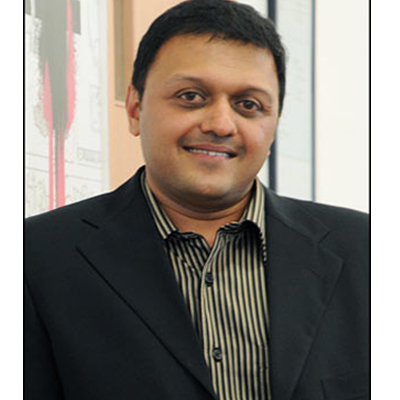
‘We will post robust double digit growth’ : Disney UTV executive director and Disney kids network business head Vijay Subramaniam
The kids television market in India is a tough nut to crack. Disney UTV executive director and Disney kids network business head Vijay Subramaniam, however, believes that the brand-driven media conglomerate has got the right formula to break the nut.
Two of the channels have succeeded to penetrate the ratings. Disney Channel houses its global brands like MickeyMouse and is growing these franchises. Hungama is a fun-filled channel and works on Japanese anime content. TheWalt Disney Company India is now pulling its resources behind Disney XD to make the comedic action channel popular in the Hindi speaking markets.
The company‘s strategy is two-fold: offer a wide spread of content that entertains not just kids but also the family; support this with strong activation to connect directly with the TG through multiple touch points.
The challenge is to expand the advertising revenue which is pegged at Rs 2.5 billion. The genre is under indexed and the growth in audiences is not translating to a corresponding increase in advertising monies.
Disney is waiting for digitisation to develop other genres that will yield more subscription revenues. The company is determined to find potential in live action and has three shows in development stage. Local animation is another genre that it wants to explore actively. The superhero genre is also to be exploited as an opportunity.
In an interview with Indiantelevision.com‘s Javed Farooqui, Subramaniam talks about the potential the kids genre has amid tough revenue challenges.
Excerpts:
What is the challenge the kids broadcasting genre faces today?
Some of the challenges that existed earlier even prevail today. Distribution, for instance, was a hard game to play when we launched in 2007. That situation continues and India is still one of the most expensive markets to procure distribution. So that definitely is a challenge. But we hope things will better with digitisation.Another challenge that has stuck around is that the kids market is highly under indexed. You can take a five year trend and you will find it is still under indexed, despite the fact that viewership on kids channels have grown overall. It’s a Rs 2.5-2.7 billion ad market. If you take the viewership, the total number of GRPs in 2007 was about 400-450 and currently it’s at about 700 GRPs. Every year this has been one genre that has added consistent growth, but it stays under indexed.
Is that because the genre is highly fragmented?
The question that advertisers need to ask is where the quality of viewership is and are they leveraging it. Going by the science of the marketplace, I don’t think advertisers have still realised the full potential of this audience.What could be done to overcome this hurdle?
There are three things that we consistently do from a Disney kid’s networks standpoint and we believe it’s increasingly giving us returns. One is to have entertainment content that is completely family inclusive with the kid at the centre of it.Two, every single marketing activity that we have undertaken as a network has driven a very strong engagement value building loyalty through several intangibles. These become the talking points for advertisers and, more importantly, it deepens the relationship between the consumer and the channel. Take Jet Set Go as an example. We got six million entries from across the country and the best thing is that the contest was completely driven through Disney channels without cricket and Bollywood.
Thirdly, we are constantly engaged in educating the advertising fraternity of the increase in value that the kids centric family brings. Yes, that’s a long journey to cover still. But the fact is that new categories of advertisers are walking in. Kids channels reach about 85 per cent of the genre’s universe.
We are the leading kids network with 43 per cent share and we bring the power of terrific story telling through our franchises. The activations that we do are pretty wholesome and these are things that can be easily leveraged for value by brands. Having said that, it is a very competitive marketplace. And I don’t see enough attention being given to this segment when people strategise.
So in an ideal situation what should be the size of the ad revenue market considering the audience delivery?
That would be a hard one to say. I am of the view that brands that invest in kids channels should have a long-term view of building partnerships. We in Disney believe in evolving with the consumer and it’s important that brands demonstrate similar partnerships and evolve with us as we evolve with consumers. To illustrate a point, the engagement that we brought with Jet Set Go is something that money can’t possibly buy. Just imagine 33 families coming together and nobody knowing each other as they set out to experience the whole thing together at Disneyland. So these kinds of opportunities can be created by us. It’s more of a strategy that is driving this investment as opposed to asking ‘Can you spend a little more’? It’s not just about how you spend; it’s about how much you are staying invested with this important target audience.‘The segment that we are going to drive as an opportunity as well as a strategy is the superhero genre. We have got the Marvel Universe premiering on Disney XD. That’s our first foray and we have got Marvel as a part of Disney‘Disney has been positioning itself as family entertainment channel. Do you think that works when you have to compete in the kids genre?
The kids channel label is what prevents us from looking at family as a unit. If you look at it from the lens of a television professional, then that’s a limitation. But if you look at consumers in general and brand Disney in particular, we are a family entertainment channel worldwide. There are enough adults who buy Disney merchandise and then there is Disneyland which will give you an indication of just how big the Disney brand is.Agreed we are a young brand in India and we have not been here as long as the brand has been in other countries. But that said Disney stands for family entertainment. Secondly, if you look at consumers, they have at least one meal together and even as we live individualistic lives, the meaning of family is still very strong. We believe that Disney is a brand that provides the environment for families to come together. Yes, its kids centric but it’s something that is enjoyed by the family. And we believe that we have some of the best family comedy shows.
But isn’t it still animation that works for kids channels?
Agreed that animation is the staple diet for all kids channels. But it does not for a minute mean that the two cannot co-exist. In fact, there should be a healthy balance of the two.We will continue to invest on live action and we are very clear that we want to make it work. Ok, let me change the perspective and ask the same question about Satyamev Jayate. When you bring in a new format in a new slot, you will have people who will be very enthusiastic and supportive and there will be people who will be at the fence. As leaders, it is important to bring these new formats to the country. We have to drive it in a manner that Indian audiences find it most entertaining and relevant. We started with live action two years ago with Ishaan and we have three shows under development stage now. We genuinely believe that this is an added dimension for both kids and their families.
Live action is fun but it is harder to do. We are fortunate that we have the repertoire of successful stories that have been scripted and aired successfully internationally.
What is the ratio between live action and animation on Disney Channel?
It’s between 15-19 per cent with just two shows – Suite Life of Karan and Kabir and Best of Luck Nikki.What is your content strategy for the three channels? Any specific genres that you are planning to experiment with?
One segment that we have identified clearly is live action. It’s very rich and is something to which we are committed strategically and financially; we are going to drive that to build significant volume for us.We see huge opportunity in preschool content and have ambitious plans for it. Frankly, it’s a function of right timing because it can’t be driven using the ad sales model. This is a far younger audience and requires a lot more responsibility in managing it. This is one genre we would like to explore once we see where this digitisation piece is moving.
The third genre that we want to play a role in is local animation. Indian animation has come a long way and we believe that there are lots of dimensions that are still to be explored. A day in the life of a kid is also an opportunity to explore much more; it doesn’t necessarily need to be mythology. So that’s the piece we are keen on.
Musicals is something which is at the heart of everything we do. It is another interesting genre, but the challenge is how do we do so because development in some of these things is very difficult to do in an environment that is not necessarily seen as an opportunity through the eyes of the kid.
Comedic action and adventure is an interesting genre that we are going to contribute significantly in.
Lastly, the segment that we are going to drive as an opportunity as well as a strategy is the superhero genre. We have got the Marvel Universe premiering on Disney XD with Spiderman and Iron Man-Armored adventures on Saturday. That’s our first foray and we have got Marvel as a part of Disney. There are interesting stories to be built around them.
How are Disney Channel, Hungama and Disney XD positioned?
Disney Channel is the home of Disney brand and everything it stands for. All the Disney franchises are housed under this channel. Micky Mouse Clubhouse, Winny the Pooh and Phineas and Ferbs will be championed by Disney Channel as will the live action production that I spoke of – Suite Life of Karan and Kabir, Best of Luck Nikki and Art Attack (an art and craft show).Hungama is a brand aimed at the 4-14-year-olds. It is a total unbridled fun channel, so Japanese anime is the content expression there.
Disney XD is an action and comedic brand channel targeting boys in the age group of 8-14 years.
Hasn’t Disney XD been the weak link in your network?
I would say Disney XD required the maximum amount of work among the three channels that we have in India. We have got Disney Channel and Hungama sitting pretty but our work is not finished yet. We have to stay on top of the live action game, something that I keep emphasising on. It has to be truly entertaining because that is what differentiates Disney from other entertainment products. Hungama is going to stay fun and enjoyable.With Disney XD, we are sure we will be able to take it to the position the other two are in. That’s really the game plan.
What direction are you going to give Disney XD?
Disney XD is a channel that has traditionally done well in the South and HSM (Hindi Speaking Market) was not a focus area. We are at a stage where we are going to focus a lot of our resources on Disney XD to make it strong in the HSM. We have made encouraging beginnings but we have a long way to go. We are pretty confident of reaching there. Prior to January, we were 30 odd GRPs, which is really nothing. But currently we hold about 60 GRPs on an average and are confident that it will be a 100+ GRP channel in the coming months, given that we have a whole lot of initiatives planned to give it the push.What are the growth projections for Disney network?
I am not at liberty to share financials, but they are robust double digit numbers. The growth will be delivered by consistency of performance due to high quality programming and a discerning advertiser who is placing a premium on both brand value as well as consistency. As far as break-up of revenues is concerned, its 50-50 for us between distribution and ad revenue. Licensing and merchandising is a separate business altogether.How important is new media in the scheme of things?
New media in most media companies is an extension of the linear product. But for us it’s a full-fledged digital universe onto itself. Disney is a unique brand that tells great stories and then disseminates them through as many platforms and environments as possible.We have Disney Interactive Media Group. Like DisneyConsumer Products, it is a separate company altogether that works across the length and breadth of the digital universe. When we did the Princess movie festival on the channel, we also built a game on mobile and they then fed it to over 7-8 million consumers. So that’s the scale we can build for our stories across platforms.
-
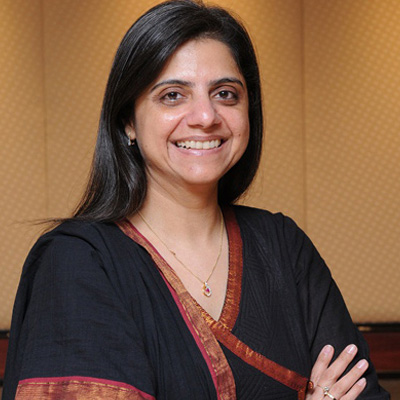
‘We have been growing at 9-10 per cent every year’ : Viacom18 EVP and GM Sonic and Nickelodeon India Nina Elavia Jaipuria
Nina Jaipuria, the EVP and GM for Sonic and Nickelodeon India, is bullish about the kids genre despite the challenges that exist. Jaipuria, who has been at the helm of Nick for more than five years, is hopeful that the channel will bounce back to its 2009 position when it topped the genre.
In an interview with Indiantelevision.com‘s Javed Farooqui, Jaipuria says that Sonic, the action and adventure channel that launched in December last year, will also witness growth. She sees the viewership of kids channels going up in the Southern market, where the local GECs still hold a stranglehold on family viewing.
Excerpts:
You have been at a GEC (Sony) and since last six years, you are handling kids channel. Which genre do you find more challenging?
Both the genres are equally challenging. But to my mind, capturing the kids is more challenging as they get bored faster. Kids have shorter attention span. Saas-bahu serials can run for 10 years and you don’t get bored but try doing that with children. It’s impossible… which really means that you have to innovate that much more quickly and stay ahead of the curve.Unlike GEC where you need non-fiction to get the eyeballs and then the fiction takes care of your bread and butter, I think there is no such concept in kids genre. I think it’s a tougher category also because we have huge pipeline issues and the timelines. A GEC channel can produce a show in two months but for us it will take two years because it is animation. So the pipeline is so much tougher and therefore we have to plan that much in advance. Having said that, the GEC category is also difficult because we are talking about a scale that is very large and thanks to competition, the risk there only gets higher.
However, if you build kids loyalty, then it is about how you keep them going. Your challenge is how you can bring them to the channel day after day.
Despite being third in the pecking order, why does the kids genre not command the kind of ad revenues it should?
It is hugely under-indexed and that has been going on for a long time. We were given for free and there is a CPRP benchmark that no advertiser is willing to pay that much.However, advertisers have started believing that kids have a lot of peer pressure, purchasing power and influence on family purchases. And, therefore, you see advertisers coming to the kids category. But it is growing slowly and steadily. Five years back, the market was Rs 1.4 billion and today it has grown to Rs 2.5 billion.
Will slowdown have an impact on ad spends?
In 2009, when there was a slowdown, we did not really witness it as much because a large portion of advertisers who advertise on kids channels are FMCGs, food & beverages and toys, which did not cut back that much compared to radio or print because they have more local advertisers and more of retail and finance.Coming to Nick, position wise the channel has slipped to No. 2 or 3. How do you plan to get back on top?
We are the number two or number three player in the category. Summer has been good and thanks to all the new content that has gone on the channel, we will continue to retain our number there position.We retained the top position for two years and I think that is a long enough time. We hope to come back (to the top position). Everything that goes up has to come down, these are all cyclical vagaries of the business.
‘Sonic and Nick are two different brands. While Nick is humour and little of action, Sonic is a hardcore action and adventure brand‘Oggy and the Cockroaches was one of your tentpole properties. This has now shifted to Cartoon network. What do you think about your other properties?
My tentpole property is Ninja Hattori and I would have also said Oggy and the Cockroaches but it has now moved to Turner (Cartoon Network). But Oggy gave us a good result for the three years that it was with us. So with all due respect, these are vagaries of the business and we are planning to build our own properties. We have Keymon Ache, of which we have already done 26 episodes and have greenlighted the second season of the show.We launched Power Rangers and now we have new Power Rangers coming back. Then after Samurai, we have Super Samurai. We have the third one as well in 2013. Thus, we will have a lot of Power Rangers as a property to build. Then there is Kung Fu Panda that we will build. So we will have a lot of solid shows post the Oggy also.
What are the genres you are looking to build content for Nick?
When we started, it was a mix of humour, comedy and various strands of it – slapstick comedy, silent comedy, family comedy shows and Keymon kind of shows.Kung Fu is a mix of comedy and action which according to me is the only show of its kind which had comedy and action put together. But slowly we realised that our kids are moving towards action even from a category point of view. Look at what’s happening with video games. So we believe that there is a little bit of action required on Nickelodeon. The only action show we are showing on Nick is Power Rangers Samurai so that those kids who want action don’t go anywhere.
What about Sonic?
Sonic and Nick are two different brands. While Nick is humour and little of action, Sonic is a hardcore action and adventure brand. So we have shows like Ultraman, Jackie Chan, Super Strikers, and Ghost at Schools.Sonic has done very well to get 8 per cent share in a difficult category as children are slow to changing habits. I think there was a gap in the market as no channel was offering 24X7 action and adventure as a proposition. So kids had to go to MTV Roadies, Fear Factor or once on a while they would go to play video games or watch movies like Dabangg. This gap we fixed with Sonic.
When kids are growing up, they are shying away from watching kids’ channels. But they were not big enough to go to MTV or Vh1. So we found out a nice gap as well as target audience. In fact, Sonic is doing very well in Mumbai, Delhi and Kolkata. We have got an eight per cent market share within six months and 22 per cent reach in 85 minutes of time spent, as of last week.
What are your revenue expectations from the two channels?
We have been growing at 9-10 per cent every year and I hope that we continue to grow at that range. From revenue perspective, ad sales is the big brother. Subscription is not significant at this stage but should grow post digitisation. After that comes licensing and merchandising, but they are taking only baby steps.How are you growing the L&M biz?
We are increasing our character base and with that we are increasing our product range. We have 55 licensees on board this year across categories. We can grow this with depth and width. What I mean by width is that we increase characters. Every single character grows into every single product category. When I talk about depth, we look at every single category in the life of a kid.We have launched footwear with Metro shoes, we also have toys of popular characters like Dora, Ninja and Spongebob. TI Cycles is going to offer co-branded Dora The Explorer and Ninja bicycles. We also have DVDs and VCDs coming for Keymon and Dora.
Talking about content, still most of the content on your channel remains animation. Why is it so?
Except Power Rangers and Ultraman, almost all of our content is animation. The reason we do so much animation is because kids come to the category for two reasons: one is to get rid of boredom and second is get rid of all pressures. And animation is the only alternate universe, which allows them to enter the fictionary and imaginary world which allows them to get rid of boredom. Try to do that with live action and you can never achieve it as it is as real as it can be. Because we are a tailor-made category for children, animation will always be the fulcrum.But kids’ channels are experimenting with Hindi movies also.
Even I don’t understand that. I put movies on Sonic because I think adventure as a genre is served with movies. But we put on kids’ movies like Jurassic Park that are catering to that genre.But is it to prevent them from shifting to other genres?
I think they are passive viewers. They are captive audiences to what they watch and, therefore despite fragmentation, the category continues to grow. The fact is that kids continue to come back to the category because the content is tailor-made for them. The only reason why the viewership hasn’t grown to the extent it should have is because India is largely a single television household.To what extent did the IPL impact the genre?
Fortunately for us, we don’t have a fixed prime time slot. And it never had much of an impact because for us we have viewership throughout the day and IPL matches were at 4 pm and 8 pm. It’s not like a GEC where 8 pm is prime time.We do have 12-3 pm and 6-8 pm as primetime slots. And the best thing about the country is that in some cities, kids go to school in the morning and in some cities in the afternoon. So somebody is watching us at all hours of the day.
While the kids genre is seeing growth in the HSM, the same cannot be said about the South market. Why?
That is because all of us are late entrants to the South market. We launched our Tamil and Telugu feed for Nick one year back. Also, kids in those markets have been watching the local content for very long in their own language. But it’s picking up.How much do you focus on digital medium for connecting with your target audience?
To me, digital is important because our TG is more digital savvy than you and me put together. Interactivity has become a large part in the kids’ space today because they have access to mobile and internet. They communicate with us on nickindia.com or sonicgang.com. We also have Power Rangers games on both these websites, besides downloads and wallpapers. There is a lot of interactivity that is happening there. Then we have contests happening on Facebook. The Keymon game on Nokia has got two million downloads. We have over 200,000 fans for Nick on Facebook and over 100,000 fans for Sonic.What are your plans for the year?
We have two big shows coming up on Nick – Cedric and Tony and Alberto. Cedric is about a boy who is mischievous and wants his grandfather to help but normally they are more in trouble than out of it. Tony and Alberto is about the story of a boy and a dog. Both are very mischievous and funny shows talking about the 9-10-year-old boys. The shows will be coming on air in July. We have two new shows coming on Sonic as well – Ghost at Schools and Teenage Mutant Ninja Turtles. -
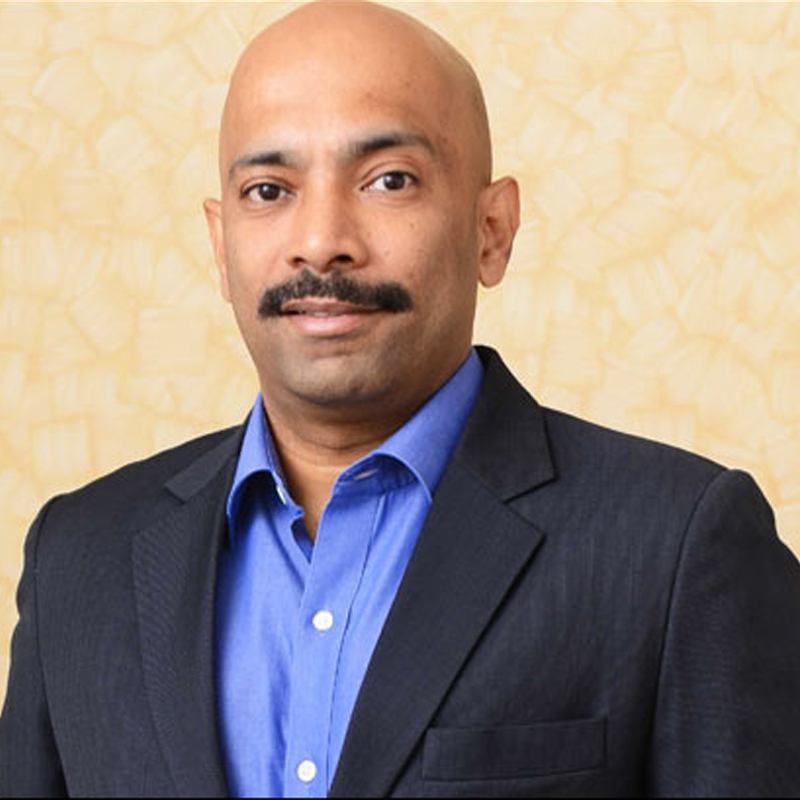
‘Star Pravah is only entertainment channel with 25% of content aimed at males‘
‘Star Pravah is only entertainment channel with 25% of content aimed at males‘
Posted on 2 June 2012 Star Pravah had a bad start and had to rework on its programming strategy to keep in pace with rivals Zee Marathi and ETV Marathi. Now having found the right content mix and being aggressive in buying movie rights, the channel leads the ratings chart.
Launching with culturally rich shows like Raja Shivchhatrapati and Agnihotra, the channel changed track and is now focusing on contemporary content reflecting today’s lifestyle. It is betting big on movies and is willing to pay high prices.
In an interview with Indiantelevision.com‘s Gaurav Laghate, Star Pravah channel head Nachiket Pantvaidya talks about the channel‘s programming plans and the challenges of the Marathi market.
Excerpts:
Q. After joining on 1 April last year, Star Pravah has grown in the Marathi general entertainment genre. What has worked in your favour?
From 120 GRPs during the last IPL, we have grown to 250 GRPs today. While the ratings are just a number, we have come a long way because we got the right strategy in place.Q. Star Pravah started with a show like Raja Shivchhatrpati and other shows portraying rich Marathiculture. Today, the shows are more on the contemporary day-to-day life. Are you talking of this shift in strategy?
We believe that whatever the content is, it needs to reflect the society of today. So while we respect the ‘Maharashtrian‘ culture, we are focussed on catering to today‘s generation.With the help of our researches and various contact programmes, we have realised that our viewers, staying in whatever part of Maharashtra, are global citizens with big dreams and aspirations. They understand the importance of values versus the changes that are happening in the current economic scenario. With our programming, we are constantly portraying “today‘s Maharashtra”.
Q. Marathi viewer is equally comfortable with Hindi. And if Hindi GECs are offering same shows, doesn‘t it pose a challenge?
One of the major challenges is that a Marathi viewer is equally comfortable in watching Hindi general entertainmentchannels, news and sports. So we decided to work not just like a Marathi entertainment channel but an entertainment vehicle. We focus on being concurrent as well as on entertaining our viewers.And it is paying also. In the last eight weeks we have been ahead of the Hindi GECs. In the week ended 26 May, we clocked 256 GRPs, highest for the channel so far.
Q. From programming point of view, what is the thought process behind the shows?
All our shows are based on unique themes and we promote the idea of positive bright relationships.Our shows like Bhandaa Saukhya Bhare (game show between saas-bahu), Devyani, Pudhcha Paaul, Swapnanchya Palikadle, and upcoming Laxmi Vs Saraswati portray today‘s time, today‘s value system and ask relevant questions.
We have kept the packaging the same… the dresses, attires, setups are still the same, but our approach is very modern.
Also, we are the only entertainment channel with 25 per cent of the FPC dedicated to the male audience. We decided to have differentiated content, so from 9.30 pm till 10.30 pm we show Lakshya (crime drama) and Anolkhi Disha (supernatural) to cater to the male audience. In future we would also like to create some shows for the kids audience as we are a wholesome entertainment channel.
‘The ratings of TV premiere of Marathi movies have doubled. We are progressive and aggressive in the film acquisition space and want better production value, for which a better price is justified ‘ Q. What are the other genres you are exploring?
We would like to explore genres like comedy, thriller and socially relevant shows. We are sticking to our identity and will make sure that we offer the complete package.Q. Many times a viewer is not happy with the quality of production. How are you tackling this issue?
A few of our shows are already being shot in high definition. And Shrabani Deodhar (creative director), at the helm of programming, makes sure our programming quality is no less than the Hindi GECs – at the price of Marathi GECs!Q. You have been acquiring a lot of movies. How has it helped the channel?
We are bullish on acquiring movies as we want to see the Marathi film industry grow. So if you see, we have acquired a major chunk of movies, including all the three national award winning movies.We are looking at buying the rights of these films prior to the release. And these films have helped us to aggregate the incremental viewers. With every blockbuster, new viewers come to sample the channel and we promote our other properties.
We have a good mix of high concept cinema as well as commercial films in our library. For high concept films we are investing in subtitling. We also put advertisements in English dailies so that a non-Marathi speaking viewer can also watch and enjoy good cinema.
Q But many players say that you are also spoiling the market with such high acquisition prices?
We want to write the resurgence story for the Marathi film industry. If you see, Maharashtra still has the lowest film acquisition price. If we keep doing hard bargain to acquire good films, it will drag us all down.In today‘s time, the ratings of TV premiere of these movies have doubled and we can recover the cost of acquisition. And after all, the price is just any number; we want to be assured of good cinema. We are progressive and aggressive in the film space and want better production value, for which a better price is justified.
Today, all the big filmmakers in Maharashtra are willing to partner with us as we are expanding their market and trying to make the economic model work for them as well.
Q. How are you marketing the channel and the properties?
We know that as a late entrant in the market, we did not have the legacy to fall back on. Thus, we had to make that extra effort to reach out to our viewer. We have very extensive direct connect programmes and activities through which we keep reaching out to them.We want to make the viewers realise that we love them, we know their aspirations and we try to meet and talk to them directly. So you will not see many hoardings from our side just announcing a new show; we will reach to the nook and corner of the state and will meet them in person. Our ground connect programme is very strong.
Q. And how is the response from the advertisers?
Today we are a big vehicle for the advertisers to put their message across. A big leap of thought for us is that economic and SEC classification is not a geographic concept anymore. The concept of rural and urban is not there. We see rural parts in metropolitans like Mumbai and Pune as well as an urban class in very small towns. We are working closely with the local brands to help give them a global identity.Q. How is digitisation going to help you?
I believe that digitisation will benefit us more than anybody as the inequalities in the distribution business will iron out.Q. How is being part of Star India helping you?
Today Star India has many No. 1 channels in the national as well as regional space. The group has done great in regional with faith that regional could be the new national. The group strength also helps us in leveraging resources. -
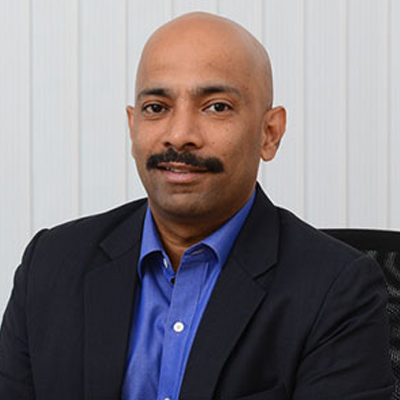
‘Star Pravah is only entertainment channel with 25% of content aimed at males’: Star Pravah channel head Nachiket Pantvaidya
Star Pravah had a bad start and had to rework on its programming strategy to keep in pace with rivals Zee Marathi and ETV Marathi. Now having found the right content mix and being aggressive in buying movie rights, the channel leads the ratings chart.
Launching with culturally rich shows like Raja Shivchhatrapati and Agnihotra, the channel changed track and is now focusing on contemporary content reflecting today’s lifestyle. It is betting big on movies and is willing to pay high prices.
In an interview with Indiantelevision.com’s Gaurav Laghate, Star Pravah channel head Nachiket Pantvaidya talks about the channel’s programming plans and the challenges of the Marathi market.
Excerpts:
Q. After joining on 1 April last year, Star Pravah has grown in the Marathi general entertainment genre. What has worked in your favour?
From 120 GRPs during the last IPL, we have grown to 250 GRPs today. While the ratings are just a number, we have come a long way because we got the right strategy in place.
Q. Star Pravah started with a show like Raja Shivchhatrpati and other shows portraying rich Marathi culture. Today, the shows are more on the contemporary day-to-day life. Are you talking of this shift in strategy?
We believe that whatever the content is, it needs to reflect the society of today. So while we respect the ‘Maharashtrian’ culture, we are focussed on catering to today’s generation.
With the help of our researches and various contact programmes, we have realised that our viewers, staying in whatever part of Maharashtra, are global citizens with big dreams and aspirations. They understand the importance of values versus the changes that are happening in the current economic scenario. With our programming, we are constantly portraying “today’s Maharashtra”.
Q. Marathi viewer is equally comfortable with Hindi. And if Hindi GECs are offering same shows, doesn’t it pose a challenge?
One of the major challenges is that a Marathi viewer is equally comfortable in watching Hindi general entertainment channels, news and sports. So we decided to work not just like a Marathi entertainment channel but an entertainment vehicle. We focus on being concurrent as well as on entertaining our viewers.
And it is paying also. In the last eight weeks we have been ahead of the Hindi GECs. In the week ended 26 May, we clocked 256 GRPs, highest for the channel so far.
Q. From programming point of view, what is the thought process behind the shows?
All our shows are based on unique themes and we promote the idea of positive bright relationships.
Our shows like Bhandaa Saukhya Bhare (game show between saas-bahu), Devyani, Pudhcha Paaul, Swapnanchya Palikadle, and upcoming Laxmi Vs Saraswati portray today’s time, today’s value system and ask relevant questions.
We have kept the packaging the same… the dresses, attires, setups are still the same, but our approach is very modern.
Also, we are the only entertainment channel with 25 per cent of the FPC dedicated to the male audience. We decided to have differentiated content, so from 9.30 pm till 10.30 pm we show Lakshya (crime drama) and Anolkhi Disha (supernatural) to cater to the male audience. In future we would also like to create some shows for the kids audience as we are a wholesome entertainment channel.
‘The ratings of TV premiere of Marathi movies have doubled. We are progressive and aggressive in the film acquisition space and want better production value, for which a better price is justified ‘
Q. What are the other genres you are exploring?
We would like to explore genres like comedy, thriller and socially relevant shows. We are sticking to our identity and will make sure that we offer the complete package.
Q. Many times a viewer is not happy with the quality of production. How are you tackling this issue?
A few of our shows are already being shot in high definition. And Shrabani Deodhar (creative director), at the helm of programming, makes sure our programming quality is no less than the Hindi GECs – at the price of Marathi GECs!
Q. You have been acquiring a lot of movies. How has it helped the channel?
We are bullish on acquiring movies as we want to see the Marathi film industry grow. So if you see, we have acquired a major chunk of movies, including all the three national award winning movies.
We are looking at buying the rights of these films prior to the release. And these films have helped us to aggregate the incremental viewers. With every blockbuster, new viewers come to sample the channel and we promote our other properties.
We have a good mix of high concept cinema as well as commercial films in our library. For high concept films we are investing in subtitling. We also put advertisements in English dailies so that a non-Marathi speaking viewer can also watch and enjoy good cinema.
Q But many players say that you are also spoiling the market with such high acquisition prices?
We want to write the resurgence story for the Marathi film industry. If you see, Maharashtra still has the lowest film acquisition price. If we keep doing hard bargain to acquire good films, it will drag us all down.
In today’s time, the ratings of TV premiere of these movies have doubled and we can recover the cost of acquisition. And after all, the price is just any number; we want to be assured of good cinema. We are progressive and aggressive in the film space and want better production value, for which a better price is justified.
Today, all the big filmmakers in Maharashtra are willing to partner with us as we are expanding their market and trying to make the economic model work for them as well.
Q. How are you marketing the channel and the properties?
We know that as a late entrant in the market, we did not have the legacy to fall back on. Thus, we had to make that extra effort to reach out to our viewer. We have very extensive direct connect programmes and activities through which we keep reaching out to them.
We want to make the viewers realise that we love them, we know their aspirations and we try to meet and talk to them directly. So you will not see many hoardings from our side just announcing a new show; we will reach to the nook and corner of the state and will meet them in person. Our ground connect programme is very strong.
Q. And how is the response from the advertisers?
Today we are a big vehicle for the advertisers to put their message across. A big leap of thought for us is that economic and SEC classification is not a geographic concept anymore. The concept of rural and urban is not there. We see rural parts in metropolitans like Mumbai and Pune as well as an urban class in very small towns. We are working closely with the local brands to help give them a global identity.
Q. How is digitisation going to help you?
I believe that digitisation will benefit us more than anybody as the inequalities in the distribution business will iron out.
Q. How is being part of Star India helping you?
Today Star India has many No. 1 channels in the national as well as regional space. The group has done great in regional with faith that regional could be the new national. The group strength also helps us in leveraging resources.
-

‘India is one of the few markets where making positive impact is possible’ : Wolff Olins MD Charles Wright
Q. Why has Wolff Olins not set up shop in the rapidly growing market of India when it has caught the attention of every big global agency?
We have no such plans to enter India soon as Mumbai is a very expensive real estate city. We do work for a lot of clients in India. But we have created Dubai as a hub from where we serve a much wider region. We service India from Dubai as a base.Q. So how do you get a feel of the local needs of the Indian clients?
In our Dubai office, we have Westerners, Indians and Arabs working together. The mix is very important. If we only have an American or European team, there would have been huge cultural misunderstandings. So what we are offering clients is the best of both worlds. The benefit from this is that clients can be assured that while we are adding an international flavour, we are also taking into account the local needs.Q. Isn’t India a difficult market from a brand perspective as it is very price sensitive?
I think we have now figured out a model for working in India. You have to, if you are to do business here. Everyone here likes to negotiate. People will bargain even if they don’t need to. I have seen people haggle when you think “why are you even bothering?” But I guess it’s a cultural thing.Q. So how do you deal with this?
Initially, it was irritating but now I enjoy it. That is, perhaps, because Indian businesses do not have the luxury of money. The idea of everything being done frugally is something I have learnt from here. If you were working for a big corporation in America, you would be accustomed to spending large amounts of money. So you could do all sorts of things which here would be considered to be frivolous. It’s something like an athelete that has trained hard and we have now become fitter at running the race the Indian way.‘We have no such plans to enter India soon as Mumbai is a very expensive real estate city. We have created Dubai as a hub from where we serve a much wider region‘ Q. What other lessons have you learnt from here?
Having Indians on the team have helped because people are direct even with me and say, “Don’t do that!” What I have learnt working here is that while in Europe modesty is a virtue, here modesty is a weakness. We have to be more forceful. As a foreigner, one might mistake forcefulness for rudeness, but it’s not so! It’s being just honest. I am still learning to be much more direct. There is a big positivity that comes from working in India.Q. What about growth?
There are a number of clients that are super ambitious. Here more than most of the countries I have worked in, making positive impact is possible. It’s not easy, but it’s possible.Q. Do Indians value brands as much as the matured consumer markets?
The word brand identity has been devalued today to mean logo – not just in India but everywhere. Having said that, I find there is a lot of interest in branding in India. You have special supplements and shows about advertising and branding. In the US, which is the most developed market, there are no TV shows on this topic. There are columns in the newspapers and trade magazines like Advertising Age, etc. Perhaps the reason behind this is that the stuff is fairly new here following liberalisation. More people can afford more things, so there is that interest in the topic. There is a curiosity about lots of things. India is like a sponge soaking up stuff not just about branding but a lot of things.Q. Isn’t that good news for a branding company?
Being a branding company, we create or refresh brands. What makes us special is that first of all we try to work for companies that are ambitious and want to do something important. From our point of view, we also want that the work has a big impact. Our internal line is that we are optimistic and ambitious for our clients. So we are looking for clients that are looking at doing good for the world rather than just making money.Q. Are Indian brands receptive to this?
Hero is a company we have worked with and if you see the ads, they all tell a story or sing a song about how each of us is a hero. I think where we got to our work is that the motor bike isn’t the point. The point is what the two-wheeler or the bike can do for the guy. This ad is a dramatic example of what I am talking about; it reflects the optimism and the ‘doing good for the world’ concept. When you give a young guy or a young couple a bike when they get married, their life takes a different shape. And that, in a small way, is about celebrating the common man as opposed to the high fancy stuff, which to my mind is brilliant.In a similar way but in a different segment, Tata Docomo talks about enabling ordinary people to do stuff that they couldn’t do before. The common thread in these two brands is the positive impact we are trying to create.
I would love to do work in the healthcare sector and financial services. Why is there no big financial group from India like in America and Europe? How come so many families do not have access to clean water? We would love to work with companies that are addressing the big issues of our times. We want to do stuff which has positive impact.
Q. How do you select brands?
We want to work with ambitious Indian clients. It could be a small company of designers or it could be companies that know about digital stuff. But they should allow us to do interesting stuff in tune with our philosophy.Q. Doesn’t this sound like you were born in a different age and era?
The company is a child of the 60s. It was the decade of the Beatles in England. In fact, they were one of the first clients of the company. That was the time when the mood was for optimism, equality and freedom. One of the characteristics of the 60s was a desire to do good. There is a sense that the culture from back then has still lived on. These kind of things get us excited – and the good news is that there is lots of such work to do in India.Q. With such independent thinking, wouldn’t you have been better off staying separate rather than selling to Omnicom?
A small group of us actually bought out the company in the mid 90s from the founders. We had an office in London and were active in Europe. We had another office in Spain and one in Portugal. But we had the dream of going fully international. We, thus, set shop in New York and started doing business in Japan because we thought that Asia would be the future.America, however, was a very tough market. So we approached Omnicom and told them that we needed their help to go international. We were willing to be acquired but wouldn’t want to be bulldozed because it’s the way that we work that makes us successful and not the size of what we do. So if we get acquired, it is on the understanding that the culture is what makes us successful and Omnicom has to trust us on this one.
Omnicom agreed to our terms. The way it works is that at the start of the year we tell them what we are going to achieve and as long as you do that, they leave you alone. It is a very fertile environment for us.
-
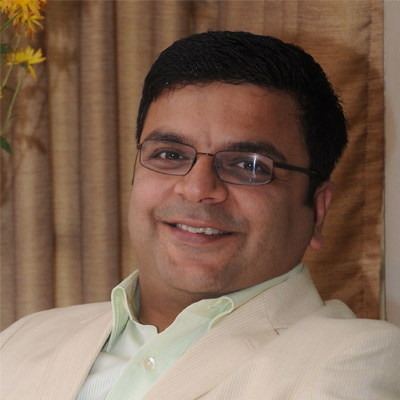
‘GEC programmers need to understand IPL viewing behaviour’ : Ormax Media co-founder and CEO Shailesh Kapoor
Ormax Media, the consumer knowledge and consulting firm for the media and entertainment industry, has entered into its fourth year of operations with plans to expand its product offerings and business.
Launched jointly by research specialist Vispy Doctor and former Filmy business head Shailesh Kapoor in July 2008, the company boasts of growth across sectors, including television, radio and media agencies.
In an interview with Indiatelevision.com‘s Gaurav Laghate, Kapoor talks about the trends in entertainment television across genres – GEC, Sports, English entertainment and infotainment.
Excerpts:
What are the significant changes you are witnessing in the Hindi GEC space, both in terms of programming and marketing?
There has been a definite movement towards light-hearted treatment of content. Stories may still be based around families and social change, but the treatment is less heavy and emotional than what it was before. Meanwhile, reality shows are going through a tricky phase, with no new ideas coming up, except Satyamev Jayate. We seem to have saturated the formats available to us.How do you see GECs getting affected from IPL this year?
There is definitely diversion of viewer attention, but like Bollywood, GECs too have realised that at some point, they will have to take the IPL on. The key is to identify which programmes to focus on during IPL and which to duck. Understanding of IPL viewing behaviour becomes critical for that.What do you think of all the sports entertainment properties that are coming up…like Super Fight League? Will they gain traction?
Mixed Martial Arts, being presented through UFC and SFL, is a very popular International sport. It should surely find its audience.What are the trends in sports viewership? Are non-cricket sporting events growing?
Yes, the growth is there, but slow. Marketing is the key. I‘m glad that a new channel (Sony Six) has launched, as any channel launch always gives impetus to sports in general.‘Language feed is the way forward as C&S penetration will continue to increase in smaller towns. Subtitling has helped English language channels a lot, and so have language feeds for English infotainment‘Your view on declining viewership of IPL?
All trends and data we have suggest IPL viewership is actually 20 per cent higher than last year. I will not like to comment on the ratings.Is too much cricket causing viewers’ fatigue?
A lot of it depends on India‘s performance. Having said that, we have a fairly lean period over the next few months, so cricket should be back in its full glory later this year.What are the trends in English infotainment and niche programming? Do you see language feeds getting more eyeballs?
Language feed is the way forward as C&S penetration will continue to increase in smaller towns. Subtitling has helped English language channels a lot, and so have language feeds for English infotainment.And what about programming trends in the English general entertainment space?
The genre needs some Indian programming desperately. The issue is – are the costs affordable. But a good Indian show, especially comedy or non-fiction, can definitely prove to be a game changer.What do you think about English music channels – now three… Will they manage to get viewers share without appointment viewing?
The genre is very niche and its business model is based largely on imagery, perception, innovations and client servicing. So viewership doesn‘t matter that much.How has been the year for Ormax Media in terms of revenue and business growth?
2011-12 has been an excellent year. We showed 62 per cent growth in our revenue, and added 24 new clients. Our proprietary product line now stands at 19 in number. Film research has been a big growth area for us last year, and should continue to grow this year too. But overall, growth has been across sectors, including television, radio and media agencies.What all new clients and new tools and products the company has launched or is launching in the near future?
We recently launched the third edition of our IPL ad tracking study, Day After Cricket. Our music countdown product ‘Heartbeats‘ is now available in a Kolkata edition also, where we track Hindi and Bangla music in the Kolkata market. Our flagship products Cinematix and Showbuzz recently went through major market expansions. Cinematix expanded from 6 cities to 16 cities, while Showbuzz expanded from 6 to 14 cities. In the coming months, we have a huge product launch lined up. Without revealing much, we can say that it will be a product every advertiser and media agency will find extremely useful and relevant.