Category: Executive Dossier

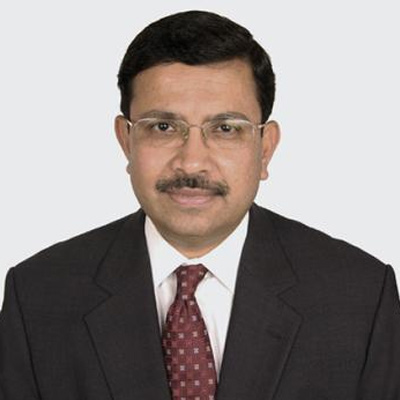
  • “BARC would like to make the entire TV ratings process future-ready”: BARC CEO Partho Dasgupta

    “BARC would like to make the entire TV ratings process future-ready”: BARC CEO Partho Dasgupta

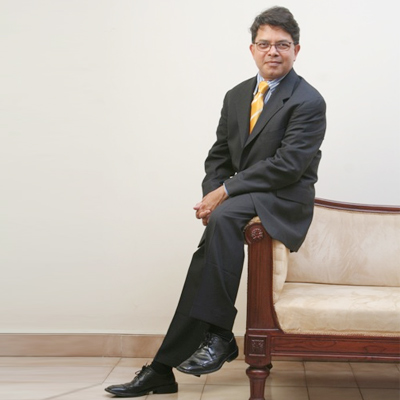
    At first appearance, Broadcast Audience Research Council (BARC) CEO Partho Dasgupta comes across as a pretty mild-mannered professional. But don‘t let that fool you: beneath the mild exterior is a steel-backed executive who has faced many a challenging task in diverse consumer industries and media where he has implemented large and small start up projects. Among this figure: Times Now, Future Media, The Economic Times and Times Multimedia. This apart, he also had an entrepreneurial stint where he co-founded a media company, apart from advising media startups and venture firms and their invested companies on brand strategies. So it is no surprise that the BARC board chose him to steer the setting up of a TV viewership monitoring system when there is a crisis of confidence around the only currency operational in India today – TAM Media.

    Indiantelevision.com‘s Seema Singh and Zeba Warsi spoke to Dasgupta to find out on what challenges await him, why he took up the job, and how he sees the road ahead.

    Excerpts:

    What are your feelings on being appointed the first CEO of BARC? What have you been busy with since joining it? And why did you take up the challenge considering the kind of brickbats that are being hurled at LVK now after years of doing the ratings? Who was it that coaxed you take it up?

    I am very happy to sit in the hot seat. Just before this I was managing the preschool business and the k12 school business growth of Educomp. I am looking forward to contribute to the broadcast industry, which I am very fond of. I love challenges – if you see my background none have been very easy roles. There was a time, then, when the joke was going around and similarly I am hearing now- whether one will ‘Bark or Bite‘ (pun intended). That is simply whether we will live up to all the hype surrounding BARC. It‘s all in good humour and I enjoy the challenge.

    You have worked with Times Now, Future Media and also worked with ET during their growth years. You also took a shot at entrepreneurship. How will you use that experience while working with BARC?

    I have been doing startups for the last 14 years – I love the whole drill – of blocking urls, looking for office, setting up new teams, new brands, processes and managing finances. I have also been on both sides of the table, as a broadcaster and also a client – so I guess I understand the pains of all sides. I am looking forward to go the whole hog again.

    What are the first few major tasks ahead of you taking over as the CEO?

    The single mandate is to design, commission, supervise and own India‘s Broadcast Measurement System. Towards this end, the establishment survey, covering approx 2.4 lakh individuals across India is already underway. This survey will give us details on television penetration in both urban and rural areas; viewership habits across all broadcasting modes, be it terrestrial, C&S, DTH, analog and digital platforms, and other developing and new platforms including newer modes of viewing; as well as viewer demographics. The study would become the basis of designing the rating panel.

    At the same time, separate RFPs for research and technology have been floated globally. Once the proposals are in, the technical committee will scrutinize all proposals in order to select the best in class research methodologies and technology. This will comprise senior experts from the industry representing all stakeholders. Experts in the technology domain are being co-opted to give us insights on the best technology available. So we are ensuring that thought leaders, domain experts and people with relevant skills are all on board from across our stakeholders to assess the best methodologies available globally.

    The group will look into all three parameters:

    • Technology of equipment across all broadcast mechanisms
    •  
    • Capture and analysis of data
    •  
    • Dissemination of data to users

    The global competitive bidding will ensure that India gets the best in class, cutting edge broadcast measurement system.

    Tell us about the structure of BARC, the members, representation and so on. Should there be equal representation from broadcasters, agencies and advertisers like it was initially envisaged?

    The broadcasters, agencies and advertisers are duly represented through their respective bodies namely IBF, AAAI and ISA. We are a neutral nodal body which will be working in a tandem with the three representative bodies. The members of each body find representation in the 10-member Board of BARC, which is already in place. The council will have its own management structure reporting to the Board.

    The tech committee has been working on certain presumptions? What are these and how do you see the tech committee contributing to making the BARC more relevant over the years?

    There are no presumptions that anyone of us are working on. Our one line mandate is to design, commission, supervise and own India‘s broadcast measurement system. And all of us are working to ensure that we get the best in class research and technology to deliver a product that would be the gold standard of broadcast research.


    BARC is striving to ensure the best of research methodologies combined with the best of technology to deliver world-class measurement.

     How do you envision the BARC office to be like – how many staff, how many people employed by it? How do you see this evolving? What will they be doing?

    We are evolving the structure. The mandate is clear and the structure will follow. We will be headquartered in Mumbai and we will be outsourcing a lot of professionals and services for specific functions.

    Tell us about the professionals you have hired so far from the industry…Any reputed names?

    We will be getting many professionals on board. Currently we have Mubin Khan as the vice president of BARC. (Khan has previously worked as senior AVP at Zee Network, media controller at Contract Advertising India Ltd., associate media controller at Mudra Communications Ltd. and was also vice-chairman of the Technical Committee of the IRS – the premier readership survey – conducted by Media Research Users Council among several other accolades.)

    What was the response to the RFIs like? Were there any surprising firms which have been observed on the list – like Infosys and TCS? Which other surprises popped up?

    The response has been very good across both research and technology companies. Global research and technology leaders have collected the RFP documents. I cannot reveal anything more at this point as NDAs have been signed with all firms concerned.

    How is the RFP process progressing? How many responses have you got? When do you expect to make announcements for the same?

    We haven‘t received any responses as of now. Separate proposals for research and technology have been sent to the various companies involved. As they go through the RFP, companies are raising certain queries, which are being formally addressed. The deadline to submit proposals is still more than a month away. The evaluation panel would scrutinize all proposals in order to select the best in class research methodologies and technology. This will comprise senior experts from the industry representing all stakeholders. Experts in the technology domain are being co-opted to give us insights on the best technology available. So we are ensuring that thought leaders, domain experts and people with relevant skills are all on board from across our stakeholders to assess the best methodologies available globally.

    What‘s the current status of the council? 

    The council is already operational. We are waiting for the RFP responses and talks are on with all bodies to better understand their concerns. The responses are expected next month.

    With the likelihood of TAM not being used as a barometer for the broadcast industry, it is quite likely that you will have to speed up your coming to market time to earlier than mid-2014? Do you think you are geared up to achieve that and what is the game plan and what signposts you will have to move forward to achieve this requirement quicker?

    The establishment survey is underway and should be out for us in December-January. After the panel discusses it, we may release it for public in February -March. The process is not an overnight one, it will take its due time and we don‘t want to rush. We are on course for a launch next year as originally planned

    Do you think what is happening to TAM is reasonable – the broadcaster back lash? What in your perception accelerated this? What is your advice to LVK and TAM?

    No comments.

    TAM has been accused of being ambiguous and lacking the required transparency. How do you plan to bring in transparency, accuracy and logical reasoning in the results?

    BARC is striving to ensure the best of research methodologies combined with the best of technology to deliver world-class measurement. To that end separate RFPs for research and technology have been floated globally. The evaluation panel will scrutinize all proposals in order to select the best in class research methodologies and technology. This will comprise senior experts from the industry representing all stakeholders. Experts in the technology domain are being co-opted to give us insights on the best technology available. So we are ensuring that thought leaders, domain experts and people with relevant skills are all on board from across our stakeholders to assess the best methodologies available globally.

    The baby is not born yet. It is too early to start speculating on how many siblings it should have. Besides, if others want to set up a rating agency, we are not stopping and cannot stop them. It is a free country.
     Do you think the ministry, TRAI and the industry as a whole prepared for a self regulatory mechanism of TV ratings? What kind of checks and balances are you going to put in to make everyone in the ecosystem comfortable?

    BARC is not a research agency. We will be working with specialists in research and technology to deliver cutting edge research. There would be adequate representation of various stakeholders in the process to ensure proper checks and balances.

    Do you think all categories will be content with BARC- GECs, news- English and regional and Niche? How will BARC achieve that? 

    It is obvious that we have to address the concerns of all stakeholders. And we are doing so through dialogues with all concerned. If anybody has a concern, they will obviously share it with their representative bodies, who are a part of the Board.

    Is the Indian TV universe more rural or more urban? How will you address issues of broadcasters who have seen a reduction of the TV universe under TAM‘s expansion into LC1 towns? Are you sure the results will not be the same as TAM‘s are currently?

    Let us await the results of the establishment survey before commenting on this.

    How will you address and cover a continually digitising India in terms of cable TV rolling out in phase III and phase IV of the cable TV universe? As well as expanding DTH homes…

    It is too early to comment on this. However, as mentioned earlier, we have a mandate to design, commission, supervise and own India‘s broadcast measurement system. This system will have to be inclusive, covering all aspects of our country‘s heterogeneity. We believe digitisation will actually make it easier for us.

    What kind of tech are you looking at putting in place? Stationary intrusive people meters which involve users to manually put in their inputs by pressing their remotes? Or more evolved ones which senses people‘s presence in the room via advanced tech? Or mobile hand held devices which have similar capabilities? And how will you incorporate tech which can be integrated with the STBs? In the next five years India will probably have about 100 million of these?

    It is too early to comment on the kind of technology, given that the RFP process is underway. Having said that, let me state that BARC would look at all technologies available. We would like to make the entire ratings mechanism process future-ready.

    How will the ratings system be funded annually? What kind of ratings are you hoping to deliver – overnight or weekly or monthly?

    BARC is a non-profit organisation under Section 25 of the companies Act, 1956. The various industry constituents would fund the research. All users of data and analysis will subscribe and pay for the same.

    TAM used only 8150-10,000 households for its rating system which was perceived as not being adequate to represent the population of 15.5 crore TV households in India. Tell us about your survey sample, how many homes, which markets, etc.

    The final contours of the panel size and dispersion will be decided only after the establishment survey is complete and the proposals studied. As mentioned earlier, the establishment survey is covering approx 2.4 lakh homes across urban and rural India.

    When the decision of setting up the council first came up in 2008, it was a joint venture only between IBF and ISA. Then how did AAAI enter the venture?

    BARC represents the entire industry. Hence, it made eminent sense to have all stakeholders on board.

    The initial investment for setting up BARC was Rs 300 million? Has the investment gone up? If yes, by how much? How was the breakup ratio between IBF, ISF and AAAI decided?

    No Comments

    Self-regulation mechanism has worked in some cases, and hasn‘t in some. How do you think BARC will envisage this mechanism in its functioning as opposed to TAM?

    BARC has representation from all stakeholders of the industry. It thus has an in-built mechanism.

    There is an accusation that “Self-regulation of television rating system in India has failed to take off as BARC has not been able to take any credible action on the recommendations made by TRAI and by Dr Mitra‘s Committee. What did the report say? Are the accusations true? How much has BARC worked on it?

    I have taken charge just this month, and the BARC team has also been just set up. We shall take up the issues as they come. Right now, the focus is on the RFPs.

    Following the report, BARC had also set up in-depth research team to study audience measurement system, particularly BARB, the UK‘s audience measurement system, how has that translated in your current structure? Are there any comparisons to be drawn between the two?

    BARC and its stakeholders have been studying the various models and methodologies adopted by broadcast measuring companies and organisations across more than 30 countries across the globe. And we will certainly look at incorporating the best research methodologies and technology available.

    Having said that, India has a lot many complexities that are unique to our country. Be it in the demographic or socio-cultural heterogeneity, the linguistic, geographic and economic disparities or even the hours of accessibility to electricity, any study done in India has to take cognizance of each of these unique complexities, and many more.

    BARC plans to be very robust. Does your set up involve putting in place a complaint mechanism system? If yes, please elaborate.

    For any organisation that is in the service industry, a robust feedback mechanism is a must. BARC is an industry body representing all constituents. There would definitely be continuous dialogue between BARC and its constituents. And this would also incorporate formal feedback mechanisms.

    We are aware that history has shown us that the market can only support one rating currency. But even as recently as yesterday, outgoing I&B secretary Uday Kumar Varma expressed reservations about a monopoly of ratings. He also said that maybe there should be more than one rating system to provide competition in the business, which will also result in enhancing the credibility of ratings. TAM which earlier was the sole rating system has allegedly goofed up and was highly criticised. What is your reaction to this? And why should BARC enjoy monopoly of ratings?

    The baby is not born yet. It is too early to start speculating on how many siblings it should have. Besides, if others want to set up a rating agency, we are not stopping and cannot stop them. It is a free country.


  • “The appeal for Indian content amongst Britasians in the UK is strong”: Business Head – FTA channels, mainstream sales head at Zee Network UK Archana Kanade

    “The appeal for Indian content amongst Britasians in the UK is strong”: Business Head – FTA channels, mainstream sales head at Zee Network UK Archana Kanade

    Archana Kanade is the young and dynamic head of free to air channels business of Zee UK. Her job: increase the cachet that the two channels she heads – Zing and Lamhe – have with Britasians in the UK. In addition, she has the added responsibility of looking after mainstream advertising sales for the network.

    Under her leadership, Zing has become the most watched Asian lifestyle channel in the UK. She has also been responsible for the launch of ‘Cloud 9‘ – the UK’s first Asian drama shot locally.

    Kanade’s background is from mainstream sales, wherein she pushed Zee TV’s shows and film catalogue to global clients. This apart she has had a three year stint in Mumbai with Applause Entertainment, a former Birla group company, involved in production of TV shows and films.

    She recently spearheaded the luanch of Lamhe in the UK, giving it a snazzy look and feel. Indiantelevision.com spoke to her to get her perspective on the potential for Lamhe and Zing in the UK in a short bite interview.

    Excerpts:

    How large is the market for Indian content in the UK? How big is the TV advertising market in the UK?

    South Asians are the largest ethnic group in the UK, with a population close to three million. The appeal for Indian content amongst this group is strong with a large number of channels catering to them. Zee is the largest and fastest growing network catering to this group and aims to distinguish its offerings and provide the best in the genre for them. The advertising expenditure of the UK market is close to US $7.5 billion.

    How many viewers do you currently cater to? How many of those belong to the South Asian and Indian community?

    Zee’s two free-to-air channels are available across the major platforms – Sky on DTH and Virgin Media on cable as well as on the mobile TV service Yamgo. Zee offers premium South Asian content to the South Asian community. Its shows and movies offer English subtitles, making it accessible to the UK’s mainstream communities too. The appeal of the Indian culture and especially Bollywood is widespread across ethnic boundaries, which extends the reach of Zee’s content.

    Furthermore, many of Zing’s shows are in English and the channel aims to be a platform targeted to the second and third generation British Asians in the UK. It is showcasingCloud 9, which represents a milestone in Asian entertainment as it is the very first daily soap-series to be produced in the UK, specifically catering to the UK Asian audiences. This soap highlights the British Asian lifestyle, drawing on themes relevant to their way of life. In a never-before-seen method, the soap showcases the British Asian community in its true form, taking away stereotype perceptions regarding the UK‘s largest ethnic group – the South Asians.

    How many viewers are you catering to currently?
    The channel is available to DTH provider Sky’s subscriber base of almost 11 million, as well as on the cable service Virgin Media’s M+ Pack.

    Lamhe gives viewers the opportunity to view some of the most popular and award-winning shows in the history of South-Asian entertainment

    How are you promoting Zee Lamhe in the UK?

    The promotional plan of the new channel is designed to target the UK’s South Asian audiences through a complete 360 degree marketing plan across outdoor, print, TV, radio and the digital space. The mediums have been carefully selected to target the key pockets of the South Asian population spread in the UK to reach the almost three million strong South Asian community.

    Since both Lamhe as well as Zing are free to air channels are you planning to take them pay anytime soon?

    Zee operates along two models – its pay products and free-to-air offerings – both with distinct offerings. The premium pay products are Zee TV, Zee Cinema and Zee Punjabi. Lamhe offers a free to air window into the GEC space; it is a platform to celebrate the best in the genre of South-Asian dramas and Bollywood Classics. Zing is the UK’s number 1 Asian Lifestyle channel, delivering the best variety of the glamour of Bollywood – music, movies and news. Both channels offer content not accessible on other channels in the UK, which is why we want maximum viewers to enjoy it for free, with no current plan on making the channels subscription based.

    With the current line-up of shows that you have to offer, are you also looking at including more shows and if so, which ones?

    Lamhe gives viewers the opportunity to view some of the most popular and award-winning shows in the history of South-Asian entertainment, including classics such as:

    • Astitva – a popular series, winning many awards in 2005, focusing on the strength and courage of women’s identity.
    •  
    • Amanat – one of the most popular Hindi television shows of its time that received the highest television ratings among many of 2000’s Hindi language shows in India.
    •  
    • Hasratein – one of the most popular television shows of the 1990s, looking at the bold topic of extra-marital relationships.
    •  
    • Kasamh Se – among the top shows in India in 2008, featuring the trials and tribulations of three sisters.

    The channel will also highlight the magnanimity of Bollywood with classic movies, featuring the best of evergreen stars such as Rishi Kapoor, Dev Anand, Kishore Kumar, plus a Raj Kapoor special season at the weekends. We are delighted to already receive great enthusiasm towards this content, with many requests for other classics that people are eager to watch again. We will be monitoring this in line with the remit of presenting the best of South Asian entertainment.

    We will be monitoring the feedback, researching and accordingly selecting the content that would connect with the audiences for Lamhe

    Since Zing is targeted at the youth and Lamhe is bringing back memories from the times passed, which is the target audience group that you are looking at?

    Lamhe is targeted at an audience that will enjoy the best in the genre of dramas and classic movies. Its content is relevant to both younger and older viewers due to the nature of the topics explored by the selected shows and also the treatment of the programming. The selected shows portray topics that were ahead of their times when they were first aired. They focus on strong storylines and their edit patterns mean they are more real to life, compared to many of today’s shows, which holds for an appeal to an international audience.

    Lamhe also endeavours to bring back memories of the time when Zee TV was the only Asian channel in the UK enthralling viewers and Zee was their home away from home. With Lamhe, we want to gift our viewers an opportunity to experience those beautiful memories once again.

    What kind of content would you like to showcase in the coming months? Any movie rights acquisition going forward?

    Lamhe’s content will be driven by what the viewers want to watch. We will be monitoring the feedback, researching and accordingly selecting the content that would connect with the audiences.

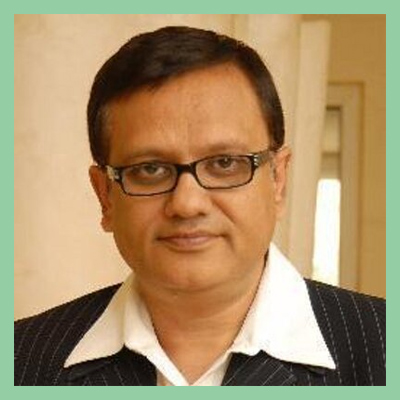
  • “How is a bad TV rating better than no rating?”: IBF secretary general Shailesh Shah

    “How is a bad TV rating better than no rating?”: IBF secretary general Shailesh Shah

    The Indian Broadcasting Foundation (IBF) got a new president in the form of MSM (Sony Entertainment Network) CEO Man Jit Singh last year. It also got a new secretary general in Shailesh Shah who last was CEO of a Singapore based venture a few months ago.

    Both got their positions when the Indian television industry is going through its toughest transition in known memory.

    India’ cable TV landscape is being rejigged through a government mandated digitisation drive. The government is constantly playing big brother on the content front, threatening to switch off channels on the slightest excuse.

    Advertising revenues for the most part have been growing marginally even as carriage fees have been battering the broadcasters’ bottom lines. And, of course, there has been an explosion with channels popping up almost every second week. This has led to fragmented audiences.

    For more than half a decade since it was set up in 1999, the IBF was a weak agglomeration, set up with the intent of representing the broadcasting community. But it did not seem to go anywhere, until Essel Group managing director Jawahar Goel became its president and it really took off under the leadership of Star India CEO Uday Shankar who invested time to get the government and other partners and affiliates to understand the industry’s point of view and react favourably towards it.

    Shah’s job is not easy: he has many masters as he leads an organisation, which has some of the most influential Indian executives on its board. But he has been running it quite deftly, absorbing and implementing their advice and inputs. Over the past three months, the IBF successfully got agencies to agree to net billings, and it is now working on getting ratings agency TAM Media to take a fresh look at how it conducts its ratings service.

    We spoke to Shah on the IBF‘s strengths, accomplishments, stance on TAM, ad cap and much more…

    Excerpts:

    How does the IBF work?

    IBF is an Association that represents television broadcasters.

    Its sole goal is to collectively improve the governance-bound economic growth prospects of television broadcasters by helping open gateways of access to revenue opportunities that matter. In doing so, the Foundation collectively a) identifies issues of import, b) researches these issues deeply, c) builds consensus around these issues , d) agrees to a strategy and execution plan on resolving issues, and most important, e) stays focused on execution until the issues are resolved.

    Simple. No rocket science. Nose to the grind kind of stuff.

    Like all such sector or industry associations, IBF works through a board.

    Members of the board and/or the foundation office bring issues to the fore, and then follow the process above to figure out if the issue is important enough, the issue is researched sufficiently to arrive at root-causes, precedent, best-practices. The issue can be addressed with a strategy that will deliver a solution effectively, and the strategy and consequent execution plan is enabled by the board to deliver.

    Every issue is dealt with through a working team, a committee, a task force or by the all important team of office bearers to arrive at conclusions and take them forward

    The foundation office ensures that when an issue is important, consensus can be arrived at and discussions, dialogue, research presentations, white papers and the like are used to help arrive at a consensus.

    So what has changed at the IBF that has brought issues like ad-slots, net billing, audience measurement, digitisation and content-complaints to the fore?

    Honestly, nothing. IBF just became a teenager. In the grand scheme of organisational dynamics, the association, I believe is maturing to collectively take on issues more holistically.

    The effort behind issues that bring researched solutions to the fore, make systematic effort to build consensus, ensure issues are genuinely industry-wide, and use the bright wisdom of its board effectively where a multiplicity of strengths lie is what IBF is doing more consistently.

    IBF also is very clear about being governance bound. As a board, it has never attempted to do anything that attempts to lead toward incorrect, monopolistic or oligopolistic practices. Ever so often, emerging sectors face flack on collusion. IBF is extremely clear on this topic – if an issue has any bell or whistle around governance, the foundation will not allow it to be dealt with.

    IBF’s ability to create teams from within its board and membership to address issues is also maturing well. The Foundation is able to consistently bring abroad representation on sensitive issues so that the resulting consensus is real, has stickiness, and will work. Similarly, teams that execute on issues or individuals that participate in committees are much more aligned to getting things done.

    There are instances where slippages do happen, not differently from any other organisation. However, the collective efforts of the board ensure these are being improved upon. More important, the Foundation has every intention of becoming the best representative of its members, ever!

    Who calls the shots at IBF?

    The board, through its president calls the shots at IBF.

    Over the years, IBF has become significantly more aligned on a bunch of topics that have come to either hurt them, or will help them.

    If such topics pass the muster on governance, and will stay governance-bound, IBF’s board will work towards a resolution, plan and focused execution.

    The big change is, there is real impetus over the last two years to not sweep topics under the carpet and the Foundation Office is playing a more active role in ensuring this remains steadfast.

    I am so green behind my ears, it would be audacious for me to claim I have driven any change. I am fortunate to have come in at a time when I am being baptised by fire

     What issues is IBF focused on resolving?

    The key priorities for IBF are digitisation, freedom of expression and a level playing field to bring every local and national channel being broadcast and distributed under the same purview of the MIB as its members and the 828 licensed channels are.

    To address these key priorities, the foundation needs to be strong. Weaning away niggling problems is part of that.

    How is IBF structured to address the issues and concerns of its members?

    IBF forms committees to address issues that will take a while to resolve, or where recurring issues need to be addressed. On point issues, it will form task forces. These get agreed to after a debate at the board.

    What have been the achievements and milestones so far?

    Credit between agencies and broadcasters, has almost become a science. An exceedingly well-established complaints council manages issues related to content. Taxation resulting from the way broadcasters invoice agencies is being resolved. With the help of advertisers and agencies, a next-in-class audience measurement system is on its way. I think the real achievement is, broadcasters are able to see several issues in the same light much more today than ever before.

    The media industry needs to dig deeply into understanding what is necessary to capture, measure and rate this vast linguistic diversity, geographic-cultural-social-economic-not-so-urbanised diversity notwithstanding

    What changes have been brought in the IBF over the past years?

    One of the biggest changes is, the tenure of leadership positions is clearly stated and accordingly, going forward, each leadership position will have limited “reign”. This is welcome because it provides opportunity and creates greater stickiness.

    What changes have you driven?

    I am so green behind my ears, it would be audacious for me to claim I have driven any change. The truth is, today is my hundreth day at IBF. I am fortunate to have come in at a time when I am being baptised by fire.

    What is your vision for it?

    Enable television broadcasters with the economic growth canvas that provides governance-bound access to multiple revenue streams and ensures collective progress through effective advocacy and interventions on issues such as digitisation, copacetic relationships with advertisers, agencies and the government, and most important, the right to express oneself with complete freedom, and the responsibility to do it correctly.

    Tell us how Man Jit Singh came to be elected as the president? How was the election? Isn‘t it true that Uday Shankar wanted another term?
    As I clearly said, the term for leadership positions is now pre-defined. The board follows due process in electing members into leadership positions and this is today followed stringently.

    The Indian Broadcasting Foundation, today, is very much a cheetah in a hurry. The past few months have seen IBF take a united and strong stance on matters like Net Billing, Ad cap and the latest TAM rating issue. What will you accredit this newfound aggression to?

    Firstly, IBF has not come together on all these issues. While we have definitely worked on net billing together with the agencies, and worked with TRAI on trying to resolve advertising minutes, TAM is a problem some broadcasters are working on. We are working with the ministry on several components of digitisation. And we are working to ensure we have the right to genuine freedom of expression as we demonstrate commensurate responsibility in using that right.


    Broadcasters are unhappy with what they are getting. So are the agencies. We have a road map for TV ratings in mind, but the industry will have to go through its recognition pains

     How has your journey as the secretary general been so far? Tell us about the highlights and accomplishments according to you?

    When one gets to work with smart do-gooders who are intent on getting things done, helping drive that intent strategically, building relationships in places that matter, driving priorities to conclusion and being impactful, the journey becomes fun. The sector is in its infancy and I get to partake as it matures. What could be more satisfying.

    Tell us what roles do the sub committees play in the over-all brand building and administration of IBF.

    As you have seen from NASSCOM, CII and FICCI, the value of any industry or sector association is directly proportional to the work it does. We are becoming a cheetah in a hurry. Time will tell.

    The Broadcast Content Complaints Council (BCCC), today has become the ultimate self regulatory benchmark for the industry. Elaborate on its strength, accomplishments, decisions and scope for improvement.

    10 per cent of our work got done when IBF worked arduously to select a pre-eminent council, which includes socially responsible celebrities and several national commissions. They have executed exceedingly well giving us a rating exceeding 80 per cent. BCCC is evolving and as you shall see in the near term, it will show value from continuous improvement. Secretary general of the BCCC Ashish Sinha has provided yeoman stewardship to ensuring the foundation for self-regulation is well in its place.

    Where do you see the on-going TAM fallout going at? What does the IBF exactly want? Do you think, an interim blackout until the establishment of BARC, is ideal for the industry?

    80+ million Telugu speaking Indians and about 60 per cent of them watching television get compared on the same canvas as 600 million cricket viewers, one million CSI New York viewers and less than 20 million Punjabi television viewers. The media industry needs to dig deeply into understanding what is necessary to capture, measure and rate this vast linguistic diversity, geographic-cultural-social-economic-not-so-urbanised diversity notwithstanding. Simplistic, superficial answers will neither solve the problem nor satisfy ratings watchers who feel like they are at a discotheque. This is a serious problem and it requires serious thinking. To repeat, TAM is not the problem. Its ineffectiveness is viewed as one. I believe a solution will emerge and I request the industry to watch this space.

    We have a road map in mind, but the industry will have to go through its recognition pains.

    In the case of no ratings for the coming month, do you agree that historical benchmarks should be the guide for advertisers? There seems to be a conflicting support on the TAM issue with broadcasters vehemently against continuing ratings, whereas, advertisers are willing to give TAM a chance to solve its issues. What do you have to say about that?

    Let me say this very, very simply – broadcasters are unhappy with what they are getting. So are the agencies. Please help me understand how a bad rating can be better than no rating?

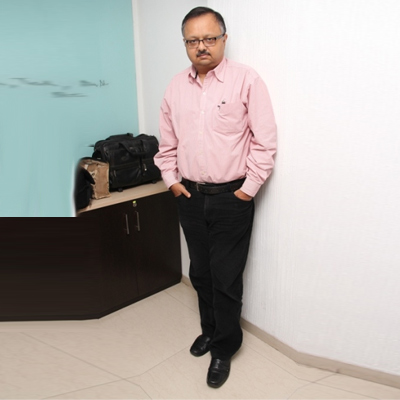
  • “We hope to reach a mature solution on the TAM ratings issue” :MadisonWorld chairman & managing director Sam Balsara

    “We hope to reach a mature solution on the TAM ratings issue” :MadisonWorld chairman & managing director Sam Balsara

    There are two kinds of individuals out there. Those, who lead their lives on their own terms and others, who lead their lives according to the terms set by the rest of the world. And then there is Sam Balsara, who creates benchmarks for the rest through his feisty attitude!

    Rated as amongst the top media professionals in the world, MadisonWorld chairman & managing director Sam Balsara is no stranger to a challenging situation. He is known to speak his mind without mincing his words. The media vet has worn many hats in various industry associations and committees over his very long career, which began at Sarabhai’s in the late sixties, early seventies and ended with him setting up Madison 25 years ago.

    Here, in an exclusive interview, Balsara opens up on the heated issue of Broadcasters v/s TAM Media. Who else can give us a better perspective than the advertising genius himself. Sit back, read and enjoy his engaging responses from this free wheeling chat indiantelevision.com had with him.

    Excerpts:

    What is your take on Indian Broadcasting Foundation (IBF) members deciding to discontinue subscribing to TV ratings provider TAM?

    It is very clear ratings are very important not just for advertisers and agencies alone, but for the whole industry which includes broadcasters who have worked so hard to built the industry to Rs 12,000 crore. If there are no ratings the confidence in TV advertising will go down.

    Take a look at radio and out of home; they have no robust measurement system, hence they account for just five per cent of the media spends. Television does have a robust measurement systems and it accounts for a sizeable 45 per cent.

    You don’t have to throw the baby out with the bathwater. If there is something wrong, you fix it. We have to remember that the TV ratings that come out every week are a sample not a census. At times, if it does not do justice, you don’t shut it down. The long term solution is definitely BARC…till then we have to have TAM.


    But then how do you address the problems that the IBF and the government has with the ratings?

    Let the IBF put out a paper on what their view is on what is wrong with the ratings methodology and what needs fixing. We can give our view on what can be done or should be. The answer is not stopping a rating system.

    Why do you say that?

    Stopping a ratings system would hurt the broadcast leaders in their respective individual genres, they would lose their leadership perception and this would hurt them. I think it is a very unwise decision.


    Let the IBF put out a paper on what their view is on what is wrong with the ratings methodology and what needs fixing. We can give our view on what can be done or should be. The answer is not stopping a rating system.

    Let’s say the TAM meltdown continues and you don’t have ratings, is historical data a valid barometer for buying TV advertising time?

    Historical data around TV viewership is not an option and is unacceptable to the buyer. I would not work with historical data for buying. If I am buying IPL this year, why should I use last year’s data? Why should and how can I use historical data for how a serial is performing? We know that viewership habits move around.

    Then what is the solution?

    If there is something seriously wrong with TAM‘s data, methodology, we should sit together, highlight the problems, diagnose the imperfections and come up with answers. We need to give a patient hearing to each other as to why it’s going wrong too!

    I am aware that TV ratings have been going down because of the rejig of the sample, digitisation and also LC1. But every time you go for a change in a changing environment, the findings are also going to change.
    But the dropping ratings are hurting broadcasters and they are saying how is that possible when we are paying for the measurement?

    That brings us to the fundamental question: should media owners pay for the ratings system? Maybe you are right! Media owners should not be involved in media measurement. But the fact is that no media owner has found fault with the ratings system when they are at No 1.

    But Star India which is the leader in the GEC space is also likely to discontinue its TAM subscription…

    Hmmm. The only thing I have to say is that if there is no viewership data, the TV industry is going to suffer.

    Is making the advertiser/ad agency pay for the data a solution?

    As far as the advertising industry is concerned, we don’t really care who pays for the data, we are concerned that we get the data. We are absolutely certain that we need the ratings.

    I am aware that TV ratings have been going down because of the rejig of the sample, digitisation and also LC1. But every time you go for a change in a changing environment, the findings are also going to change.

    What if broadcasters continue to refuse to accept TAM as the currency and want to do transactions for TV adverts with agencies and advertisers?

    For a deal to take place, each seller has to make something available to the buyer and the latter has to see value in it to pay for it. Both parties have an objective and as long as it is met a deal happens. You see if Dove is priced at Rs 30, and you see merit in buying it you will pay for it, if you don’t, you won’t. Similarly with us, we need a measurement metric before we buy media.

    The IBF seems to be pushing the agenda on various fronts. For instance, in the case of net billings it was the IBF which had its way by forcing the advertising industry to accept net billings? Will it do so even in TAM’s case?

    There is no question of IBF having its way. The AAAI, ISA and the IBF found a mutually acceptable solution. Some of our full service advertising agency members wanted the 15 per cent mention to be in the bills and we got that in. It was a mature solution that met the needs of all concerned. We similarly hope to reach a mature solution on the TAM ratings situation too.

  • “Indian TV programmes have widespread reach and appeal”: Zee TV’s global head syndication Sunita Uchil

    “Indian TV programmes have widespread reach and appeal”: Zee TV’s global head syndication Sunita Uchil

    For the worldwide television industry, Paris-based Reed Midem‘s MipCom and MipTV are akin to what the Festival de Cannes is for global cinema. Both MipTV and Mipcom attract more than 11,000 participants. Each sees the coming together of the world‘s brightest television, animation, format, and audiovisual content creators, buyers and sellers. An estimated one billion euro in transactions – in terms of sales and acquisition of TV shows, formats, feature film and documentary – is estimated to emanate from MipTV which is held in April and MipCom (held in October every year).

    While China, south Korea, Russia and Latin America have been growing by leaps and bounds in terms of programme syndication worldwide and their presence in Cannes‘ Palais des Festivals, India has been moving at a steady pace. At this year‘s MipTV close to 100 participants from India made their presence felt. Some exhibited, some came as buyers to pick up shows and formats, some did co-production deals and some came as sellers to hawk their TV shows and feature films. Viacom18, DQ Entertainment, Shemaroo, Eros, Verria, Maximus Multimedia, were among the big-name players who exhibited. But there were scores of others who came in as participants and bought and sold TV programmes, formats, films, and documentaries.

    The most prominent of the Indian exhibitors has been Zee TV. With an impressive location and display, the company has been a regular exhibitor at Mipcom and MipTV for the most part of this decade; and has been reaping the fruits of its continued participation in terms of growing syndication sales and building its brand globally.

    Indiantelevision.com spoke to Zee TV‘s global head syndication Sunita Uchil to know more about Indian programme syndication worldwide, India‘s presence at Mip, and the benefits that accrue to her company courtesy its Mip outings.

    Excerpts:

    Has demand for Indian content picked up? And what kind of content is attracting maximum attention?

    There definitely is an increasing demand for Indian ‘entertainment‘ content, especially genres such as family dramas, romance and non-fiction. Our syndication strategy (under the Zee Bollyworld umbrella) for the new show launches (Badalte Rishton Ki Dastaan, India‘s Best Dramebaaz, and now more recently DID Supermoms), has been developed keeping in mind the rapidly evolving industry where viewers can access content directly.

    How large is the Indian TV programme and film syndication market internationally? Can you give an estimate on its size? Is this growing and in which markets?

    I cannot comment on the film bit as of now, but Indian TV programs have a widespread reach and appeal. Currently it could be anywhere between US$25-$30mn. Yes, this figure is growing continuously. The recognition that Indian content receives at international markets such as MipTV and MipCom only shows that the demand is increasing globally. Content aggregators and distributors (Americas, Europe) have realised that their audiences are excited to understand more about Indian culture, cuisines, lifestyles etc; and will turn to other platforms like PPV, VOD to access this; with a shift from traditional viewing.

    Can Indian and international co-productions work? Which area – TV, cinema or animation?

    Definitely and in all three forms, Indian technology and skill are on a par with the western markets. We have seen the successful collaborations in the past few years. Growing trends like social media are bringing the world closer. Consumers are getting influenced and watching whatever their friends are watching rather than what the broadcasting networks are promoting.

    Zee Bollyworld itself is offering better customised services like dubbing and subtitling in foreign languages (in order to deliver a superior product) that truly makes it a one-stop shop for Indian entertainment the world over.

    MipTV & Mipcom India rep & indiantelevision.com‘s CEO Anil Wanvari alongside Zee TV‘s global syndication head Sunita Uchil

    How large was your delegation to MipTV this year? 

    We had representation from Europe, Africa, Asia Pacific and the Middle East region this year. Our teams are located in all these regions as well as in the USA now. Our strategy for gaining market intelligence has considerably improved. This has benefited in having a direct resource in the market with better client interaction taking place.

    ‘We are noticing a shift from consumption patterns- from traditional, DTH platforms to VOD, PPV mediums. The increasing importance of social media in influencing consumer tastes and the exposure of international lifestyles is creating a shift towards foreign content with the idea being to ‘try out new things’

    What was your objective from MipTV this year? How did you position yourself differently? Did you introduce any new products or offerings? How was the receptivity to it?

    Zee is the first to create a separate brand umbrella for trading and syndication. In 2012, we had mandated Mumbai based creative agency Young which had created the distinct Zee Bollyworld identity and this concept was well received within trade circles and has been a discernible differentiator for Zee at international content markets. At MipTV 2013, our objective was to leverage and build on this differentiator and to reinforce our positioning – ‘one stop shop for Indian entertainment content‘. We showcased our most successful properties and highlighted our dubbed content to clients.

    Any new ideas of trends you picked up this year from MipTV?

    We are noticing a shift from consumption patterns- from traditional, DTH platforms to VOD, PPV mediums. The increasing importance of social media in influencing consumer tastes and the exposure of international lifestyles is creating a shift towards foreign content with the idea being to ‘try out new things.’

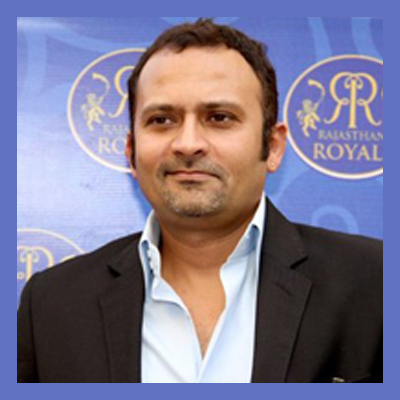
  • “I, nor my co-promoters, are wanting to exit KXIP”: Kings XI Punjab co-owner Mohit Burman

    “I, nor my co-promoters, are wanting to exit KXIP”: Kings XI Punjab co-owner Mohit Burman

     For Kings XI Punjab last year came to a good end with its dispute with the BCCI being amicably resolved. This means that it will finally break even this year according to Kings XI Punjab co-owner Mohit Burman. Next year is when it will start making profits.??Burman is also adamant about the fact that none of the co-owners are looking to exit. While the franchise will have sponsorship growth of 30 per cent there is still room for improvement says Burman given that the base is small. Indiantelevision.com’s Ashwin Pinto caught up with Burman to find out more about where the franchise is at and about the company’s plans.


    Excerpts:


    Q. What targets has Kings XI Punjab set for itself this year?

    A. We will break even this year. Next year is when we will start making profits. The legal cost, bank guarantee cost are not there this year. We will get more from central revenue.


    Q. Now that the issues have been resolved I assume that the co-owners are free to exit. Are you looking to do that?

    A. No! None of the co-owners are looking at selling a stake or exiting the team. I am not a seller at any price. In the past, too, there have been rumours of stake sale which turned out to be untrue.


    Q. What would be the valuation of an IPL franchise today?

    A. It is difficult to provide figures. However, a sort of benchmark has been set with the new franchisee Hyderabad Sunrisers.


    Q. Given that Sun TV is paying much more than what the Deccan Chronicle did, isn’t it surprising that stake sale deals have not happened?

    A. A lot of people say that a franchise’s valuation has gone down a lot from what Sahara had paid. I am not surprised that other deals have not been done. I don’t think that there are that many people in the market willing to pay these types of prices.For people who came in at the start, the Central pool revenue covered them even if local revenue took time to grow. That has not been the case for people who came in afterwards. You don’t get so much from Central revenue compared to what Sun TV is paying.


    ‘They (BCCI) should work more closely with franchises though. The franchises’ health is not always on the top of their agenda’


    Q. How do you see Sun TV faring?

    A. I don’t think that they will break even for at least three to four years. But I don’t think that they are expecting to. We are breaking even after six years. No business model allows you to break even so soon. Sun TV would have calculated their business model with a five to a 10 year vision.


    Q. Are there lessons to be learnt from Kochi’s failure?

    A. I don’t think that there are lessons to be learnt. When Kochi bought the team I told those guys that they would lose Rs 1 billion a year. If you project revenues that are not possible what is the lesson? It is a simple business model. Your franchise fee and player costs are fixed more or less. Your central revenue is fixed. The money you can make from ticket sales and local sponsorship can be calculated. It is not difficult to figure things out. Having done all that if you are still going to pay so much money ($333 million) you are not going to survive. It is not rocket science.


    Q. Is it fair to say that at one point a bubble was created?

    A. I would not say that. I would say that the people who originally came in paid sensible prices. But because of the hype that was built up the two new teams that came in – Sahara and Kochi paid prices that were unsustainable. Clearly the third new party that has just entered – Sun TV has come in at a more realistic price.


    Q. Does the BCCI need to work more closely with franchises and understand their needs so that they are more economically viable?

    A. The BCCI has done sponsorship deals at a higher price this year. Pepsi has come in as has Vodafone. The idea is that the BCCI is also trying to bring value for all the teams.

    They should work more closely with franchises though. The franchises’ health is not always on the top of their agenda but the BCCI also has the onus of doing a successful tournament.

    Obviously their premier objective is to make profits for themselves. We come a little bit below. I don’t think that it is understandable but it isn’t surprising.


    Q. Keeping costs under control is paramount in this regard. How do you do this?

    A. We are into the sixth season of the IPL and have an experienced management in place. The good thing is that we know how things work and what is required. We use our funds judiciously and in keeping with the standards that we have set for ourselves.


    Q. Could you shed light on the preparation that goes before the season starts?

    A. When it comes to preparing for an IPL season all activities related to aspects such as sales and marketing, ticketing, venue operations, cricket operations, branding etc start approximately five months in advance of the due date of the start of the season. The IPL is a five-month activity of planning for us. What you see during the 45 day season is the culmination of a lot of effort. The sales and marketing part includes sponsorship sales, associations and partnerships, ticketing plans, licensing and merchandising. Other aspects include creatives, photo shoots, the social media, website and app plans.

    In terms of venue operations we have to look at things like security, government licensing, hospitality, and stadium upkeep. From a logistics point of view one of this involves getting the best hotel and airline deals. We also prepare the season matrix.


    Q. From a cost control point of view are you in favour of player retention and the current auction cap?

    A. There are operational and player expenses. I think that the player costs are much higher than what they should be. I think that it should be a closed auction as then it would be fair to everyone. If it is a closed auction then the cap does not matter. In terms of player retention, if you are inviting new franchises then allowing player retention is not fair. At the same time as an existing franchise I want a certain amount of retention as teams to an extent are identified by key players. I would not want a completely new team next year. It is a catch 22 situation. But after the Sunrisers no new team will come in. So player retention is fine as nobody is at a disadvantage. If each team is allowed a few players it is not a problem.


    Q. Doesn’t player retention raise your costs substantially? 

    A. But the player cost will also go up through open bidding. If you want to get a certain player back you might pay more compared to having done it through retention. This is a call that you have to make.


    Q. This brings me to the issue that teams change frequently. Again next season the composition of all the teams will mostly change. Doesn‘t this create a challenge in terms of building team loyalty as there will again be confusion next year among fans as to who is playing for which franchise?

    A. In my opinion, cricket is a team game and is not led by an individual. Therefore, fans have greater loyalty towards the team then an individual player. However, players do have their own fan following but if a franchise has established connect with its fans then player movement does not make a significant impact.We shall take a call on team composition post the culmination of the coming season.


    Q. What is the revenue split between central and local?

    A. I would say that is 65:35 in favour of central revenue. Central will always be more. The amount that the BCCI can negotiate from central sponsors will be more than what we can do from selling inventory on our shirt and other things.


    Q. How has Kings XI Punjab fared in terms of sponsorship?

    A. We were targeting a 30 per cent revenue growth in terms of sponsorship this year. But the base is low. So there is a lot of room for improvement which will happen next year now that the uncertainly about whether we will take part in the IPL is not there.

    Having said that Mumbai, Delhi will always get more sponsorship revenue. Shah Rukh Khan’s team will also get more. We are a small catchment area. Also, due to factors beyond our control, like termination, companies were a little scared that we might not play. Now we are on a clear wicket. Next year we will get better amounts from sponsors.


    Q. How much of your local revenue comes from sponsorship?

    A. Almost 65 per cent of our local revenue comes from sponsorship. We got eight new partners this year in addition to the six existing partners which have renewed sponsorship deals.

    This year NVD Solar is the title sponsor. The other companies with us include Lux Cozi is Official Comfort Partner, ACC, Arise Inverters and Batteries, Raindrops Basmati, USL and McDowell’s no. 1 as Official Team Partners.


    Q. Did you approach sponsorship in a different manner this time around?

    A. We were not happy with the revenues we managed last year. We felt that there was scope for improvement. So we dealt directly with sponsors this year rather than going through agencies. We created a team that approached companies, which made a big difference. Half of the deals done were managed by directly talking to them.


    Q. Did it take a lot of convincing given the economic environment to get partners on board?

    A. Some deals took three weeks to close this year while others took a couple of months. Some deals are for a year while others are for three years.

    At the end of the day it is a question of sitting down with clients and understanding their business objectives. We have to match their objectives with our marketing parameters. We see if there is synergy in what we are doing and if a tie up is mutually beneficial. Different companies have different goals some want visibility, others want activation while some want to use our platform for better fan engagement.


    Q. Could you give me an example of this?

    A. NVD Solar came on-board as title partner since it is expanding its operations to North India. They are launching products using the franchises players as a platform. On the other hand, Lux Cozi does activation with their wholesale and retail people. They run gratification contests where people can see matches.


    Q. Have you approached ticketing and hospitality in a different way this time around? 

    A. We have set a benchmark for the services we offer at the stadium and very closely monitor feedback on ‘customer experience’ to try and make it even better every year.


    Q. The licensing and merchandising part has been slow for most franchises. How does Kings XI Punjab plan to grow this area with Miroma Entertainment?

    A. Licensing and merchandising (L&M) is an integral part of our campaign as it is a valuable tool to reach out and connect with our fans. To give our fans a chance to adorn their favourite team‘s merchandise, we ensure that we offer them a variety of merchandise and licensed goods. We have a good long-term deal with our L&M partner and are on the right path. From the revenue perspective too there shall be an increase in returns from our L&M programme.


    Q. What things do you do to keep the franchise alive during the off season?

    A. We have undertaken a number of activities in the catchment area with the intent to strengthen our bond with our fans and these have been very well received.


    We had organised The Kings XI Punjab Cup in the catchment area, which like every year saw huge participation and was a platform to promote cricketing talent at the grassroot level. We have also launched a mobile application for iPhone/iPad and android phones to keep our fans updated about information related to the players, live match data, music, photos, news and event updates, fixtures and the KXIP YouTube channel stream. Apart from this, a live in-app FanWall is available to allow the fans to engage with each other and the team by posting comments, likes and photos on Facebook and Twitter. For us, our fans are at the forefront of any activity that we undertake.


    Q. Is Kings XI Punjab also looking at playing matches in foreign locations against clubs of other countries?

    A. Yes! We are currently planning for such games overseas in ICC associate countries under the guidelines laid down by the BCCI.


    Q. What impact do you think twenty20 leagues in countries like Australia will have on international cricket?

    A. I don’t believe that globally so many leagues can work on one sport. The BCCI has stated that no Indian player can take part in any other league. So the other leagues are disadvantaged. Indian players are integral for a league to be successful.

    Secondly I don’t believe that there is a window where many leagues can take place with all the good players. The other leagues will have second tier players or they will be bad copies of the IPL.As far as the IPL’s impact on Indian cricket is concerned it gives youngsters a platform to show how good they are. They will not choose the IPL over the country. But they will use the IPL as a platform to play for their country.


    Q. The Champions Twenty20 League has not got the desirable viewership numbers. Where do you see it going from here?

    A. Unfortunately it has not managed to get the numbers. I don’t know if it will continue to be there. I have my doubts. But if it continues then it is good for the IPL teams.


    Q. What is the challenge that it faces?

    A. The challenge is that people get confused. Players can play either for their home team or their IPL team. So suddenly teams become disjointed. Key foreign players in an IPL franchise might play for their local franchise and vice versa. There is confusion on which team is from where. Maybe it needs more time.


  • ”Media agencies need to powerfully embrace new technology”: Maxus global planning director Nick Vale

    ”Media agencies need to powerfully embrace new technology”: Maxus global planning director Nick Vale

     A broadcast journalist who turned to advertising purely because he loved it, Maxus global planning director Nick Vale enjoys the energy of the ad industry. He started as a TV buyer and has done media agency work and travelled around the world. He has no qualms in taking pride in some of the campaigns he has helped create and today leads the planning function of GroupM’s fastest growing agency.


    Indiantelevision‘s Prachi Srivastava caught up with the dynamic Brit and needled him about topics varying from the role planning in media to the impact of fragmentation and the need for integration to competition within the GroupM agencies


    Excerpts:


    Q. What kind of independence do WPP agencies get as they are also competing with each other?

    A: I think WPP wants its agencies to compete well with each other. Sir Martin Sorell came to us in 2008, when we were facing recession. Everything was getting tougher and he decided against time to really grow and launch a media agency which is incredibly brave. He simply said, “Give me an agency that‘s built for the future.”


    We have set ourselves up to be something more interesting with a point of view that matched the businesses which we are leading into change. We are always looking for ways to think about what‘s next but remain grounded; about what‘s going to be the most important thing and big for our client and help them navigate the complexities of the world in which we are living today. We want to help clients make the right decision on where they should be investing money.


    Q. How is it to work with Vikram (Sakhuja)?

    A: Fabulous! Vikram has the same tremendous energy and enthusiasm, which is very becoming of Maxus as an entity. Thus he fits into it the ethos like a glove working with him is a real pleasure.


    Another thing about his appointment is that we now have senior people spread fully across the globe which is great. While Vikram sits in Mumbai, I sit in London, the CFO sits in Singapore and we have got people in New York. It also goes to show how small the world is now, because Vikram operates a tremendously successful business sitting in Mumbai.


    ‘Vikram sits in Mumbai, I sit in London, the CFO sits in Singapore. This shows how small the world is now, because Vikram operates a tremendously successful business sitting in Mumbai’


    Q. What changes have you seen in the planning process in the developed markets in last 4-5 years?

    A: First thing to say is that the world is increasingly becoming localised. Some 10 years ago we lived in a world where we had a bunch of very developed markets and then we had everywhere else. The very developed markets – from a media agency point of view – started to move into a more strategic area so that there was more emphasis on highend strategic approaches. Then there was the introduction of the discipline of communication planning, which essentially was designed to bring all the pieces of communication together. And that‘s what all the developed markets were focusing on. There were lots of account planners who used to be with agencies.


    What we see now is a much more patchwork – that is in terms of the way the world works. And it is much harder to say that you see there are some businesses or areas, which are more about strategy and others, which are not. We see much more localisation.


    Part of the reason that we have build Maxus the way we have is that we strongly believe that for you to be a powerful agency going forward you need to be a larger conglomerate of local agencies with a strong central presence which is if you like building sharing across those agencies and spreading good practices across those agencies.


    As opposed to a more top down approach where you would have a large room in somewhere like New York or London where you would have lots of skills like product planning and media practitioners who would then dictate what local markets should be doing. The result of this was you created what sounded like very clever great strategic work if you were in London, but it was very difficult to execute and would have little understanding of the sensitivity and culture of the local market.


    And rather than have a job that is about writing central strategy and ensuring that it is delivered locally my role now is to actually look at some of the best works that are coming from the market and ensuring that that work is having an impact on other markets which may have similar types of issues or they have clients that have similar kind of issues.


    According to me the really interesting work is happening in the developing markets and I see really exciting stuff coming from BRICS. And that‘s the market I am looking to. Markets like India are very very important to me. I see very exciting, extremely refreshing work from this market that I don‘t see from more traditional and more developed markets. Those markets have a very set way of working, basically set in delivery of similar type of product and we have become very good machines at delivering that product.


    I see in markets like India work that is genuinely surprising. This market has a different flavor, because it comes from a different culture and it comes from a different view of what good looks like. And for me that‘s incredibly important. A lot of what I do is about nurturing that local goodness as opposed to forcing principles of a more developed market on it.


    Q. What kind of work have you seen that is exciting?

    A. What I see in Maxus is a very powerful embracing of new technology and for me that is crucial because that‘s where the future lies. The future lies in really understanding how we can create communication that is genuinely useful to people and start to create pieces of media that do more than amplifying a brand‘s message. In lots of western markets we have a set of way of doing things.


    In India people are more excited by the possibility technology gives and are starting to create things which are genuinely interesting and creative.


    I saw a brilliant piece work from the Maxus team out of India of a Titan watch which was a light activated watch and we created apps that were light activated and would light when you put them under light and Facebook pages that were only light activated. You could see the pages only if there was a light source and it talked about the watch.


    That‘s not an idea that would necessarily come from some of our western markets. And it was one of Mashable‘s top six branded apps. It also helped achieve sales targets quickly, faster than planned.


    Tanishq the brand from the Tata group wanted to speak to working Indian women and they wanted to create jewellery that appealed to those women. So we decided that instead of going out and researching about what these women want, we created activation where we crowd-sourced jewellery design from common women at home and we asked them to design their perfect jewellery and send it to us. And then we took all that, selected the best work and put it into production. And if you look at a category like jewellery, the cost of design entails a large out going, but with an idea like that, we sourced three years of design.


    ‘I see very exciting, extremely refreshing work from this market (India) that I don‘t see from more traditional and more developed markets’


    Q. So, the planning agency is becoming more of a marketing partner than just an agency that plans spends across mediums?

    A. Absolutely! To really draw a great communication, you need amazing creativity which is genuinely the role of the creative agency. We need to have the understanding of the brand, the business of the client, but you also need deep understanding about the consumer and the consumer experience and communication – and that‘s what the media agency is.


    Increasingly media agencies are understanding that there is a very deep value that that they can bring to the brand and that‘s allowing us to increasingly suggest positions that may not necessarily be rooted in the planning and buying of traditional media space.


    Q. Can you throw light on remuneration for media agencies? Is it also going to be target driven, incentive driven?

    A. All of us increasingly look at a contract which frees you up to create great solutions and work in lots of different ways as opposed to shackling you to deliver the same product to the client. Our objective is to grow the client‘s business and we want to have opportunity to do that. So you might look on a contract where you might be charged at hourly basis or you might have a contract that might have some value-added elements – but the fact is we are no longer tied to working with a client as a percentage of advertising spend.


    Q. In terms of structuring, specialist practices are coming up. 

    A. I think that‘s what we have been doing for sometime now. For the past decade or so the media agencies have been very busy diversifying their offerings and they have done that because they see that‘s where consumers are going. They see that actually it‘s not just advertising which is having a powerful effect on consumers, so it makes sense that if you are going to be a media agency you have to make sure that you are able to deliver across all the different channels and on the media type that is most relevant.


    The world we are beginning to move into today is one where technology is driving much greater media change. We are beginning to build very strong thinking on digital based practices.


    At Maxus we have a division Metalworks and what it does is to create pieces of technology that deliver on client‘s needs and that‘s an interesting space. We have build a flu tracker which tracks Google searches by users and also changes in climate and a number of other things and then uses all that data to predict when people will start to get the flu. And it helps us determine when we need to operate and up the digital communication in channels for our flu products.


    We datamine stuff and are making predictive models that allow us to drive efficiency in advertising, communication. We have got that side which is very clever and future facing in place.


    We have something on the creative technology side as well. For instance in the Sydney office we have a beer fridge. The beer fridge is locked and the only way you can get the beer out is if you tweet the beer fridge. If enough people tweet the beer fridge then the beer fridge will start delivering beer. But that has got a lot of interest as a beer vending machine. It is the case of a real world experience in the digital space. We can take that to principle to clients and create vending machines, which react to things going on in the digital world. You kind of blur the boundaries of what traditional communication used to be.


    Q. How is the business and its structure changing?

    A. The media business is becoming more specialist and increasingly so at an executional level. We are in a business where people are very adept at a few quite specialist things. Whether that be as a buyer who buys space at the best price at the best quality or whether that be on the delivery of something that is more creative, innovative or unusual.


    The challenge is how to have a conductor who is sitting in the middle to ensure and that the orchestra is playing the same tune. And that is what we are building at this moment. The conductor is actually not one individual; he is a blend of three. The three are: the role of the client or the account director, and that is a very very senior person who has a very deep understanding of the client‘s need and the ability to get the orchestra to work together and deliver on those needs. He can be someone who can make things happen.


    The second role is that of the strategic thinker whose job is to think about the longer term and to think about where his brand should be going in the future and ensuring that the brand has what it needs to get to where it needs to, while ensuring that even the short term objectives are met.


    The third role is of the data specialist whose role is to essentially look at the all hard core information that is coming out of the client on a daily or hourly or weekly basis and making sense of it and ensuring that the strategic thinker is aware of what‘s going on and there is genuine rigour in his approach. That his approach is not just about the big idea and how it will be executed over time but that it is genuinely rooted in the way that the business is going. And of course that the execution is being managed by the accounts person.


    Another way of looking at it is that increasingly we are speeding up in the way we deliver media. We are very very fast in the way we turn around communication now. If you look at, say, the search specialist, they are constantly monitoring what people are searching for, they are changing the words people are searching for, they are changing the way they are buying accross search words. If you like, they are a one person agency. And increasingly that‘s the way execution works; its going to move much quicker.


    You have to have fast teams which are continuously optimizing, continuously changing to what‘s going on. And you can have slower teams who are more strategic who are more visionary. And whose job is to ensure that the fast teams are doing work that‘s aiming in the right direction.


    No one has really done what I am talking about but we are going to move towards that over the next couple of years.


    Q. What is the role of the client in such a scenario?

    A. The client has to be actively involved with the various specialists he hires around him, whether it is the creative agency or the media agency or whosoever. His role and involvement are becoming all the more important. Often times, the client briefs an agency and the agency presents three weeks later and only 20 per cent of what is presented is accepted. But if the client is involved all the way, then it is quite likely 80 per cent will be accepted. It is a much much efficient use of resource. I openly call my clients to be involved in strategy and creativity.


    ‘We are hiring people for attitude rather than aptitude and then training them for aptitude’

    Q. What about talent? How are you dealing with that?

    A. I think there is an issue with talent. There always has been that for the past 10 years. How do you encourage really young people to come and work in our business, and I don‘t think that challenge will necessarily go away.


    Increasingly we are hiring people who are very different from the kind of people we might have been hiring sometime ago. People who might be having expertise in something we might have not been involved in sometime ago. Instead of hiring people who are very very good at media, we are hiring people for attitude rather than aptitude and then training for aptitude.


    We need to be open up a lot more to sharing to new ways of looking at things, and we need to hardwire it into the agency. So that we don‘t just have people who are only good at only one thing but can‘t think about anything else. And I guess the challenge is as we become more focused in specific disciplines, we ensure that our people have an attitude to travel and bring more interesting thinking to our clients which may go beyond the scope of what they specialise in.


    Q. What is your view on the mobile device as a communication medium?

    A. The best mobile stuff I see is on dual screening – so it is stuff where you are using your mobile to interact with something else in an interesting way And I am still unsure about things like mobile advertising and mobile banners. I am not sure if I see work in that sphere that is exciting me at the moment.


    It is when people understand that the mobile is a device that was designed to augment you, to make you better and effective as human being, and then create pieces of communication that enable that, it will be effective. I think people who see the mobile as an entertainment device, as a small TV set, I am not very sure I buy it.


    The mobile device allows pinpoint-targeting. At a specific time and space, we can give the user something which makes his life better. Which is quite really cool. Then mobile wallets are becoming quite common and to talk to some body in that wallet is exciting.

  • ‘There are no plans to sell stake’ :KKR CEO Venky Mysore

    ‘There are no plans to sell stake’ :KKR CEO Venky Mysore

     Having won the previous edition of the IPL, Kolkata Knight Riders (KKR) is gung ho about defending the title. On the business side, the franchise is protected from the economic slowdown having done three-year deals with sponsors that will only expire at the end of this season.


    KKR CEO Venky Mysore has focused on making sure that KKR functions like a corporate. That means putting in systems and processes both on the revenue side and on the player front.


    Indiantelevision.com‘s Ashwin Pinto caught up with Mysore to get his take on the franchise‘s progress. Contrary to media reports, he maintains that the franchise currently doesn‘t have any plans to dilute stake.


    Excerpts:


    Q. Reports indicate that KKR might bring in a strategic investor?

    A: There is no truth to that at all. It does not make any sense whatsoever. There are no plans to sell stake.


    Q. Were there challenges early on in the first few seasons in terms of brand building and perception with KKR not doing well on the field?

    A: It is a fact that we were not performing at our potential. After three seasons we were the worst performing team. Over the last two years, the journey is something that we are quite proud of. A transformation took place. We changed the entire team. For the first time we qualified for the playoffs and Champions League Twenty20. Then of course, we won the event last season. The brand has also grown as a result.


    Q. With your appointment KKR‘s aim was to corporatise things. Is the franchise being run more professionally now?

    A: That is what we have aimed to do. We have looked at KKR as a business. Sports entertainment is our product. Behind the scenes, the aim has been to run it as a team and as a genuine business. The franchise model of the IPL is exciting and fascinating.


    There is a huge opportunity to leverage the brand we have built. We also want to continue building on our foundation which is the fan base. On both counts we worked hard, put a lot of new initiatives in place to build fan base and extend our brand so that sponsors who associate with us have the opportunity to benefit from the brand.


    When we do this, new revenue streams are generated. It has to be run as a team business as governance requirements are quite significant these days. We have to pay attention to that. We are proud of what we have done across the board but there is still work to be done.


    Q. I believe that after coming in, you overhauled systems and processes to an extent on the business side. Could you shed light on that?

    A. A big chunk of revenue comes from sponsorship. The key was to create a portfolio of brands that we associate with. In an ideal world you want brands that have synergies with each other and not just with KKR. You build a common platform on which each of the brands can jump on.


    You can run events and activities that are common to brands like a meet and greet and press conferences. We have the largest number of brands among the IPL franchises – 22 that we work with. This has helped us not only generate new revenue but also leverage and activate our brand that the association with each brand has been strong.


    ‘I do not know about other franchises, but our revenue generation through sponsorship and ticket sales is significantly higher than central revenue’


    Q. How is having Shah Rukh Khan as an owner helping? Is he hands on in terms of operations?

    A. If he wanted to be hands on, he would not have brought in somebody like me. We have to do our job, but having him is a fantastic experience.


    Q. Are sponsors still coming on the back of Shah Rukh Khan?

    A. Shah Rukh is Shah Rukh. You cannot take anything away from that. We have the association and strength that comes from him being in the background. But our endeavour was to make sure that we bring in sponsors on the strength of KKR. We have succeeded largely in that area.


    Q. Does the fact that you do not have a big corporate house backing you mean that you have to be prudent in spending?

    A. Of course! You run it like a business. There has to be a lot of discipline. One just has to manage it like any other business and work through budgets and keep going.


    Q. Your aim is have revenue growth of 25 per cent. What is the gameplan to achieve this?

    A. It has to be a combination of efforts. One is to increase the existing revenue streams. Another is with ticketing. There are new opportunities for packaging and improving the fan experience further. On the other hand, it is also about looking at new streams of revenue like merchandising and licensing.


    Q. Where does the franchise stand in terms of sponsorships?

    A. We are fortunate that when we did deals in 2011, it was for three years. Therefore there are no new sponsorship deals other than Pepsi which came in this year. After this season we will figure out what happens. Most of our sponsors are likely to continue. Other companies have expressed interest.


    Q. How do you cut through clutter?

    A. There is no clutter. Each brand that is with us has its own target markets and strategy. It is the association with us that takes this to another level.


    Q. Could you talk about how the Nokia association has benefited both?

    A. Nokia has been with us from day one. Nokia has said that the KKR association has been hugely beneficial. We have also benefited greatly because of the manner in which Nokia activates the brand.


    Q. In terms of local revenue, is your ticket revenue more compared to other franchises as the stadium is bigger?

    A. I do not know about other franchises, but our revenue generation through sponsorship and ticket sales is significantly higher than central revenue.


    Q. Could you talk about developing licensing and merchandising?

    A. It is an on-going process. First, you build your fan base and your brand. It is only on the basis of this that licensing and merchandising will pick up. We have a range of products. We have a KKR store online. There is a tremendous potential for growth.


    Q. How did the new slogan ‘One Team. One Pledge’ came about’?

    A. It is about a marketing strategy. Last year we had ‘New Don New Knights’ which was a new theme. Now the emphasis is on the team and how we take it to the next level. The alignment of the team being one pledge means it will go out and give its best. That is the whole thought process behind it.


  • ‘We are not in talks with anybody to sell stake’ : Rajasthan Royals CEO Raghu Iyer

    ‘We are not in talks with anybody to sell stake’ : Rajasthan Royals CEO Raghu Iyer

    Indian Premier League (IPL) franchise Rajasthan Royals has had a topsy-turvy journey in the last five years. It had a dream start when it won the inaugural IPL trophy under Shane Warne. Another high point in its five-year journey was when British-born businessman and actress Shilpa Shetty‘s husband Raj Kundra bought 11.7 per cent stake for $16.8 million, valuing the franchise at $140 million.


    Just when everything was going hunky dory, the BCCI threw a bombshell by terminating its franchise contract with Rajasthan Royals for breach of agreement. That was followed by a prolonged legal battle that ended in the courts reinstating the franchise in the IPL. That‘s not the end of it. The company‘s Foreign Direct Investment (FDI) was rejected by FIPB several times. Besides, it was under the scanner of government agencies for alleged Fema violations.


    However, Rajasthan Royals has put all that behind it and is now focused on building a strong sporting franchisee. Rajasthan Royals CEO Raghu Iyer believes that the best way to do this is by playing its own brand of cricket so that a fan loyalty is built over the years.


    In an interview with Indiantelevision.com‘s Ashwin Pinto, Iyer talks about the challenges that IPL franchises face and how Rajasthan Royals can grow to the next level.


    Excerpts:

    Q. The Rajasthan Royals franchise was bought for $67 million in 2008. What would be its estimated worth today?

    A. I don’t know what it would be valued at. But there are figures varying from $150-200 million.

    Q. Are the promoters considering selling stake?

    A. There are no talks with anybody at this stage. We are focused on delivering a very good product.

    Q. There have been allegations about lack of adequate corporate governance and transparency. Do you feel there is scope for improvement?

    A. If you are asking whether we lack in corporate governance, I would completely disagree. I would say that we were probably the only guys who went out and voluntarily made disclosures, including when we applied to the FIPB. Corporate governance is top priority for us and we would like to believe that we have ticked that in the box.


    There might have been some procedural misses here and there, which happens in any business. This is something that we want to address. When income tax and other government authorities ask questions, then you realise that you might have missed a couple of things here and there. We are being advised by top professionals.

    Q. Is it fair to say that the BCCI would not have terminated the franchise had there been more transparency?

    A. I would like to believe that we were transparent and so were the BCCI. The reason that the whole thing came up was something I don’t want to comment on as it is subjudice.

    ‘There will be some revenue growth this year but not exponential. Though more brands are coming in for sponsorship opportunities, their outlay is not as high as expected‘

    Q. The enforcement directorate has slapped a Rs 1 billion fine on the franchise. Have you appealed against this decision?

    A. Yes! We have appealed to a tribunal in Delhi.

    Q. What is the gameplan to grow the franchise’s brand value going forward?

    A. You have to focus on the product to grow the brand value. The quality of cricket the team plays is your product. We have won only three or four less games than the Chennai SuperKings.


    As long as you keep playing cricket well, the brand value will take care of itself. Obviously you add to that different things like licensing and merchandising.

    Q. What sort of revenue growth you expect this year?

    A. There will be some growth but not exponential. This will be impacted by the slowdown. The key is to go out and look for far more opportunities and not wait for them to knock on your door. You also need to be astute in terms of how you spend. That is what the franchises are trying to do.

    Q. What impact is the economic slowdown going to have in terms of revenue generation for the IPL?

    A. I would be lying if I said that it has not had an impact. There are more brands coming in for sponsorship opportunities. We have 15 sponsors and partners, including local brands like the State Bank of Jaipur and Bikaner. But the outlay the sponsors are putting in is not as high as expected. Earlier if a deal with a sponsor was worth say Rs 150 million, will he renew it for Rs 200 million? Probably not! But then you will get five smaller local guys who are each willing to pay Rs 10 million. So you will have to look at playing the volume game.

    Q. Is the situation as bad as 2009 when revenue fell by over 10 per cent for franchises?

    A. No! 2009 was a different situation. There was a complete global crisis going on. Currently that is not the case.

    Q. Who are the sponsors that are on board?

    A. We have prided ourselves on having a team that delivers value to sponsors. The only way that you can judge whether that is true or not is to see if sponsors keep coming back. The top notch brands have kept coming back like Ultratech (which remains the lead sponsor), Supertek, Garnier, Valvoline and Tata Consultancy Services.


    We ensure that what sponsors and partners want out of the IPL are met. We play our part in that whole thing. We have a fantastic client servicing team that ensures that this happens. We offer innovative products like investing in digital content. You have to give sponsors more value.

    Q. Could you talk about the YouTube initiative?

    A. The YouTube channel of ours has clips and behind the scenes stuff that cricketers do. Fans find this exciting. Is there a way in which sponsors can tap into that and do something innovative? Yes! Everybody acknowledges that digital will grow and be the medium of the future. Digital allows you to do different things in a cost effective manner.

    Q. What are the licensing and merchandising efforts made this year?

    A. Besides flags, T-shirts and bells and whistles, we are looking at an innovative merchandising option. This is about grassroots Rajasthan. Licensing and merchandising is a long term play. It takes four to five years and will depend on making sure that there is year round visibility for the franchise. Once that happens, licensing and merchandising will take off.

    Q. In terms of marketing, there doesn‘t seem to be much activity till two weeks before the IPL starts. Is two weeks enough of a time frame to generate fan interest?

    A. As a call to action, two to three weeks is enough. People know about the IPL already.


    We also look at innovative opportunities that come our way. Earlier this year we associated with the Jaipur Literary Festival and organised matches there. When important events happen in your city, you need to find a way to participate in them. But for focused marketing, two to three weeks of activity is enough.

    Q. Reports indicate that the IPL franchises are increasing ticket prices. Isn‘t this tricky given the economic slowdown?

    A. We haven’t increased the basic ticket prices. The hospitality prices have gone up. But we have enhanced the hospitality product offering so that the viewing experience is much better. We are negotiating with a five-star hotel for different kinds of food.

    Q. Are the Rajasthan Royals being remembered as a brand having famous faces like Shane Watson?

    A. The loyalty factor from our perspective is to ensure that fans remember the brand of cricket that we play. We have achieved this. We remain the underdog team but we have wooed fans by the quality of cricket we play. Hopefully, retention of a few players will be allowed.

    Q. Is it a good idea to keep having auctions every few years?

    A. There may be some confusion about who plays for whom, but it will even out over time. The key is that the brand of cricket that the different IPL franchises play has to be distinct. So the teams that are selected will reflect the brand of cricket played by that franchise.


    You need auctions so that the league remains competitive. Team composition strategies have to be built to reflect the team personality. There are also transfer windows which ensure that gaps can be filled.

    Q. The IPL will have a new team owned by a television media company. What impact will this have?

    A. It is a major development. When they (Sun TV) go out and sell sponsorships, there will be cross synergies that they can offer.


    From the league’s perspective, it is cool that franchises like this will use their platform to advertise their team. It means more visibility for the IPL. The challenge, though, is that the Hyderabad team is still associated with ‘Deccan‘. So a complete re-branding exercise will have to be done by Sun TV.


  • ‘We can monetise more in a digitised environment’ : Business Head of Sab Anooj Kapoor

    ‘We can monetise more in a digitised environment’ : Business Head of Sab Anooj Kapoor

    A product manager at Colgate Palmolive, a copywriter at JWT, an ad producer, a sitcom writer and director, and finally a television channel head. Anooj Kapoor has successfully worn different hats in his career spread over two decades. And why not? He follows what is dear to his heart, so much so that he quit Colgate to join JWT at half the salary that he used to earn at the FMCG major. Reason: he could pursue his creative instincts.


    His urge to write and direct ads made him launch his own production house called Creative Compass in 1999, which he ran successfully for three years.


    Kapoor joined UTV to head its comedy cell in 2004 and made shows like Sharaarat for Star Plus. He went on to write many shows for Indian television. In 2007, he moved to Sab and what followed was a change in positioning to a family entertainment channel. Since then, Sab has shown remarkable growth. 


    In an interview with Indiantelevision.com‘s Prachi Srivastava, the business head of Sab talks about the channel‘s growth and how it can benefit from digitisation.


    Excerpts:

    How has Sab performed after the first phase of digitisation?

    Sab has grown from 130 GRPs pre-digitisation to around the 150 GRP mark on a consistent basis. Two factors have contributed to this growth. The shows that we had launched in the digitisation phase have been received well, be it Balveer, Jennie Juju or Waah Waah Kya Baat Hai. We had set a target of 151 GRPs for March 2014 which we have achieved in January. So we are more than a year ahead in achieving our targets.


    Apart from content, what has also worked for us is the fact that we are now placed in the Hindi GEC cluster on the Electronic Programming Guide (EPG) in Mumbai and Delhi market because of which the sampling of the channel has gone up. With increased sampling, the time spent on the channel has also increased and, therefore, the growth in viewership.

    Do you see any change in viewership patterns?

    There is no such change. Our channel is for the entire family and is fairly divided between Males, Females and Kids. The representation of viewership has remained unaltered. It’s just that more families have sampled the channel; the composition remains the same.

    The 6-8 pm slot is generally for youth TV viewers. Are you looking at cracking this time slot?

    Our focus remains the family, and not just youth. Previously, we were a youth entertainment channel with shows like Left Right Left and Love Story. At that time we could collect only 20-22 GRPs. So we realised that the youth positioning is not really helping us. We, thus, changed the positioning to a family-led comedy channel.

    There was a time when Hindi GECs were having original programming on the afternoon slot. Do you have any plans to revive this slot?

    Despite our budgetary limits, we have extended our prime time programming to seven days now. We don’t have the bandwidth or interest to revive the afternoon slot as our primary TG is family and not just the female audience. Our channel has a male skew and 51 per cent of this segment constitute our audience profile.

    ‘Comedy is a very nascent genre but is bound to grow. If there are five channels that are showing the same kind of shows and there is just one channel which is showing comedy, it is obvious that people will watch us‘

    Max has a vast library. Do you plan to air movies from their library?

    Over the last four years, we have been able to build the slot of classic titles on our channel because these are the films that people are not able to watch on regular basis and there is a definite audience that we have managed to create over the last four years. They don’t get to see those titles on any other Hindi GEC. So we get undiluted audience coming to watch the classic films.

    Which are the weak slots that you would like to strengthen?

    We recently launched two shows, Hum Aapke Hain in Laws (HAHIL) and Tota Aur Maina at the 10-11 pm slot. Tota Aur Maina, which airs at 10.30 pm, is struggling a bit. We would like to strengthen that slot.

    Are there any new shows that you are planning to launch?

    We have nothing pre-IPL. We have just launched Safar Filmy Comedy Ka, which is a tribute to 100 years of cinema in India.

    How do you plan to expand geographically?

    We don’t make shows for a particular market. However, characterisation can be from a certain state. For example, HAHIL and Tota Aur Maina are both based in UP.

    Was 2012 a forgettable year for Hindi GECs as few of the new shows worked with audiences?

    The industry is indulging and over-indulging in permutations and combinations of the Saas-Bahu formula. Either the people have run out of formulas or the audience has run out of patience. The year 2012 was no different. They have the same Saas-Bahu drama and the same reality shows.

    The digital media has been growing in leaps and bounds. Any plans there?

    We are launching an app- Sab Ke Comics for iOS and Android with over a 100 Comic Strips of six shows to entertain fans on the go (on smartphones and Tablets) with short jokes from Sab shows and characters. This app is an adaptation of the successful print ads in comic strip formats in leading newspapers. These are for shows like Jeannie aur Juju, Chidiya Ghar, FIR, Lapataganj, R.K. Laxman and Golmaal.


    We have also launched Sab’s popular characters: Gadha, Gopi, Mama, and Gulgule as 3D animated talking character which repeats whatever the user speaks. The characters also react to gestures like tickling and punches.


    There is also an augmented reality app where one can scan images on a Sab TV Dairy or Calendar and see the character coming to life in a video format. Besides, one can also have their pictures clicked with popular Sab characters.


    We recently launched SABurbia which has been extended to apps. Here players can visit and interact with different show worlds and characters in a quest to help the Sab characters and become the mayor of SABurbia.

    Will Sab be able to monetise more in the digitised environment?

    Yes, the point is that we have moved into the EPG and we are in the vicinity of the other Hindi GECs, which was not the case earlier. Earlier, it was difficult for consumers to come across our channel on a consistent basis in various areas. Now the availability of Sab will be easier and, hence, there will be more trial and sampling for the channel. We believe that once the sampling increases, the retention of the audience will also increase. If there is more retention, there is more ratings. This increases the monetization scope.

    What is the future of comedy as a genre on Indian television?

    It is a very nascent genre but is bound to grow. If there are five channels that are showing the same kind of shows and there is just one channel which is showing comedy, it is obvious that people will watch us.