Category: Executive Dossier

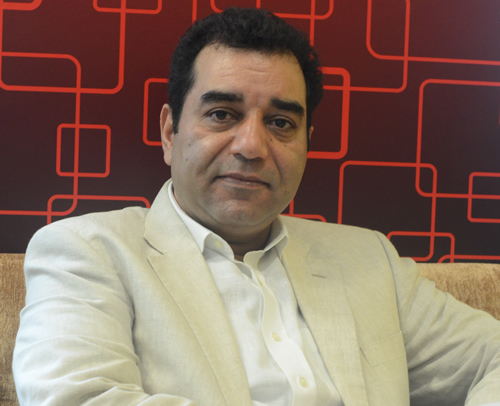
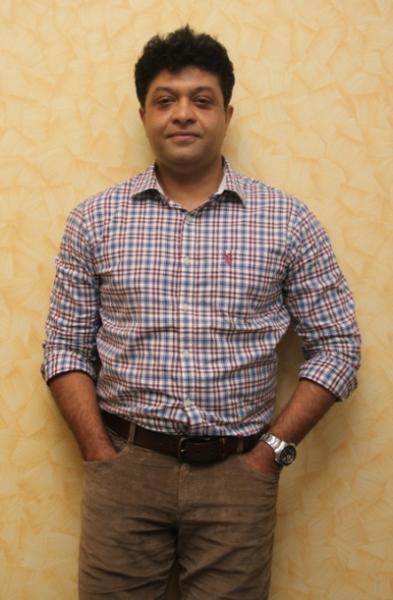
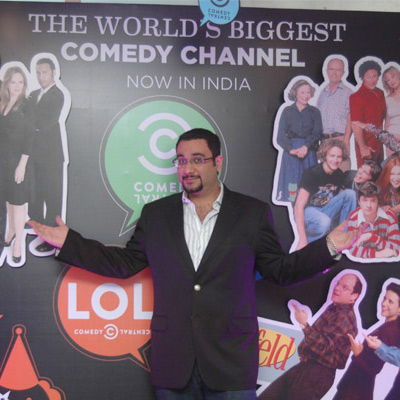
  • “We believe in tickling the viewer’s funny bone” : Viacom18 Media Sr VP & GM English entertainment Ferzad Palia

    “We believe in tickling the viewer’s funny bone” : Viacom18 Media Sr VP & GM English entertainment Ferzad Palia

    Between starting out with Vh1 in early 2005 and taking over its reins in 2010, he has played a large part in finding a place for it in a Bollywood dominated entertainment space. Most of its older cousins could not withstand the sledgehammer like onslaught of Bollywood. MTV and Channel [V] began as international music offerings then transformed into Bollywood music clones and finally morphed into youth oriented channels. But Vh1 has stood tall, boldly delivering International music and content, targeting the upscale youth, under Viacom18 Media Sr vice-president & general manager English entertainment Ferzad Palia’s stewardship.

    Palia loves the medium and has taken on another challenge: that of making Indian TV viewers tune into and laugh to Comedy Central which offers international comedy of every kind, whether stand up or the slapstick. Indian TV viewers have been relatively indifferent to jokes as they have only entertained a single comedy channel – that also in Hindi, Sab and part of the Sony stable. The task for Palia therefore is double hard, first to introduce them to laughter and then to make them to love it and guffaw to it too. But he is quite up to the task as he discloses to Indiantelevision.com’s Sidharth Iyer in this tete a tete.

    Excerpts:

    Despite stiff competition from the likes of Star World and Zee Café, you seem to be enjoying quite a presence in the English GEC space. Please tell us how?

    When we thought of launching the channel, we looked at the English general entertainment space and found there were mainly three peers who’ve been around for the last 12-15 years: Star World, Zee Café and Sony AXN. So it was quite a daunting task to even want to make an entry.

    It was really important at that point in time to have a clearly differentiated product unlike the rest, coupled with the insight that comedy is one of the best performing genres in the category and the fact that India needs some serious laughter. So Comedy Central was apt to compete in the English GEC space – a product the consumer knew is a one-stop shop for laughs.

    We did the right thing by identifying the gap and making the most of the opportunity by serving a differentiated product; creating a genre within a genre.

    The launch was crucial with the kind of buzz we created even before coming in. People came to know we were debuting in India; word-of-mouth did the trick for us clearly. Our test signal was a huge talking point among bloggers, and got social media in a tizzy.

    There has been no looking back since. We don’t see ourselves as just another TV channel but as one of Viacom 18’s brands, which the company is heavily invested in.
    We believe in striking the right chord with our audiences; tickling their funny bone so to say. We’ve done things differently, even marketing. For example, we did menu cards which had NOW on top and NEVER at the bottom. That won us accolades, and we were able to break the clutter very quickly, getting us the right kind of audience that has stuck with us since.

    Down the road, we’ve benefited considerably in getting on board over 150 advertisers across the spectrum. We’ve won loads of awards in India, Asia and more recently, at ProMax World, which is where the cr?me de la cr?me of the television industry converges every year. We’ve managed to bag 13 awards there. So everything’s fallen in place, and we couldn’t have asked for more in the 15-18 months of our existence. We continue to experiment with our local programming but are yet to find that one thing that we would be proud to put on the channel to be honest.

    We’re aware English comedy is very difficult. So, we’re still in the process of getting that right.

    About our on-ground activities, we do believe in the power of engaging directly with our audiences. So whatever you’ve seen in terms of such activities is really just the tip of the iceberg and there’s a lot more in store. So wait and watch…

    Over the past year, we’ve completely rebooted our digital presence, addressing each of our brands with consumer properties we’ve been building both online and in the form of applications.

    Similarly, the consumer property for Comedy Central has been under development for more than six months now and should be ready for launch by early October. It’s going to be very interesting with various elements to it we would be unveiling.

    It would be a good mix of the current bouquet of shows on air and since we’re more genre-driven than show-driven, we would have different strategies for different mediums. We would also be launching a Comedy Central app soon and so, these are interesting times…

    Are there any new age marketing gimmicks you’ve deployed?

    With each show we try to promote, we attempt to go that extra mile.

    For instance, the way we shot an Indian promo for our show Anger Management even though we had a big name in Charlie Sheen…

    We use different strategies for different shows: for some, we go with regular above-the-line media whereas for others, we go the full hog on digital to have a fairly digital kind of promotion.

    Going back to Anger Management, there was a lot of above-the-line media used, and you will soon get to see some more innovations on the show in the coming weeks.
    You will get to see some more path-breaking marketing once we start airing the third season of Suits.

    We have a newly incorporated digital team, which is dedicated to engaging our audiences on social media as we are extremely focused as a network.

    Our presence on digital is only swelling with 1.6 million likes on Facebook and just over 19,500 followers on our Twitter handle. We are making the right noises and reaping rewards on social media. 

    In sum, it’s dynamic stuff like creating special ice cream in collaboration with Baskin Robbins or tying up with small donuts chains. We believe when you’re catering to a select audience, you’ve got to give that something extra where marketing is concerned.

    We’re very savvy and adapt to changing trends and going forward, we plan to have newer innovations, like combining TV and digital to create further traction among our fan base.

    Speaking of licensing and merchandising tie-ups, we’ve come out with a line of South Park tee-shirts that are available for purchase online and have been hurriedly flying off the shelves. We’re already on this route and many such tie-ups are on the cards.

    What is your content strategy for Comedy Central? Do you plan on encouraging co-viewing?

    Like any other English entertainment channel, there are different shows that cater to the needs of different sets of audiences. For instance, a show like Mash, a yesteryear classic, will most likely be watched by the father of the household, possibly along with his wife and kid whereas Suits will be viewed by the youngsters above 25 years of age. There’s a bit of synergistic viewing there as well but we don’t define a strategy like we want the entire family to watch. Reason being we would become extremely limited in what we put out so we have different kinds of content for different sets of audiences across the country at different times of the day.

    But yes, we would like to believe that there’s a lot of family viewing happening for quite a few of our shows though the person influencing the family to watch together may be different in each case.


    Given the environment we are in, everyone wants a laugh and de-stress, so the idea is to not inculcate comedy as a habit but to look at it as a state of mind or as an escape route for some people. So basically you can’t create a habit such as comedy…

    What kind of advertisers do you have on board? Do you see any emerging spenders in this space?

    For a fairly young channel, we have advertisers from all major sectors including manufacturers (handsets, chewing gum and paint), banks, FMCGs and so on.

    So there is no one category driving our ad sales. The good part is we’re getting great traction among advertisers. I mean right from day one of our launch, we had Volkswagen on board, which not many channels can boast of on the first day.

    While we’re blessed with a varied set of advertisers from day one, we would still love to have many more spenders on board as it’s a tough market to operate in. Thankfully, things are looking up for us and being a differentiated product is an added bonus as people value us for it. We’re pleased to see the same treatment being meted out to VH1 which is again the only English music and entertainment channel in the country.

    How are you faring in terms of numbers?

    For English language channels, we feel the sample size is not adequate, so we don’t talk numbers. To check the affinity of the brand and to get an unbiased view on how the channel is faring – the buzz on social media should be taken into consideration, where everyone has a voice and everyone has an opinion. And you can see the results live in front of your eyes; you don’t have to wait for a period of one week or four weeks.

    We Indians don’t really know how to laugh. What are you doing to inculcate comedy as a habit with the Indian TV viewer? 

    Given the environment we are in, everyone wants a laugh and de-stress, so the idea is to not inculcate comedy as a habit but to look at it as a state of mind or as an escape route for some people. So basically you can’t create a habit such as comedy… We just expose them to things and they prefer to take a liking to it by creating a 24 hour platform to experience the best comedy from across the world.

    What are the offline activities that CC is currently carrying out? And what can we expect in the coming few months from CC?

    We are piloting a few things but it’s too early to talk about them but we won’t put out anything that isn’t the best quality as it will be residing in the same house as some of the best content in the world. So quality is the key and also the attempt is to create an ecosystem for indigenous English comedy which would be over the long term.

    We are also doing on-ground activities like Comedy Central Chuckle Fest – where we flew down some of the world’s best stand-up comedians. So we will engage with people and make them laugh at multiple touch points. And wait there’s more rather than just making them laugh we would like to put a smile on their faces.

    The new shows that are scheduled to air are Suits season 3 starting 7 October and we would be airing that as its going through a mid season break and telecast the first 10 episodes from October to December and the rest of the episodes running into January. We took this call as there is huge demand for it and people don’t want to wait for the season to end and 10 is a sizable number to play out at one go. And then we have Anger Management season 2 starring Charlie Sheen also airing in October. So the year will surely end well for us…

    What are your thoughts on the 10+2 ad cap? Does it encourage you to create more engaging content? Has digitisation helped?

    There are a few ways to look at this. One way being the likely impact of the 12 minute ruling on each individual business, but at the core of it is the fact that better channels will win. It’s that simple.

    And that is where I believe our strategy of being a differentiated player will pay off, while we are competing in the English entertainment space, we don’t see this having a great impact.

    In fact, we see it as a boon for our set of brands, because at the end of the day, we have invested in our brands for a reason and the time to reap the benefits of that will come in situations such as 10+2.

    From the consumer perspective, it’s a great thing, because they will be able to watch more content and less commercials. The good part is that we have always been cautious about this and maintained reasonable advertising stickiness in the one and a half years.

    Time will tell how it pans out for broadcasters, as some will benefit and some will be adversely affected. And I think it is also a great thing for the advertisers as their communication will get consumed in an uncluttered environment.
    So I think it’s a win-win situation for all.

    It’s been a good year for the broadcasting industry at large with digitisation coming into effect. As the consumer can experience a better quality of viewing and is not necessarily paying more, it may increase in the years to come, but currently, he/she is not paying more and getting a far better quality of service.

    The broadcaster too is benefitting financially if it wants to know its reach in terms of the households unlike in the analog era. You also have the option of watching only your favourite channels and getting them as a bunch together. Be it English entertainment, Hindi entertainment or News, unlike the analogue era where the more you paid, the higher frequency you were put onto.
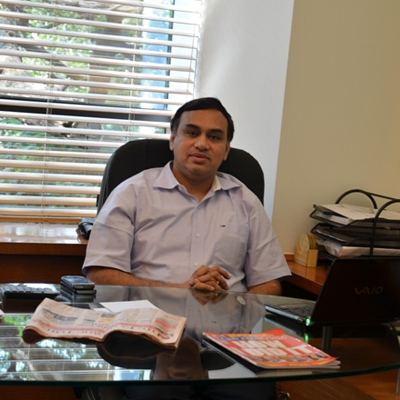
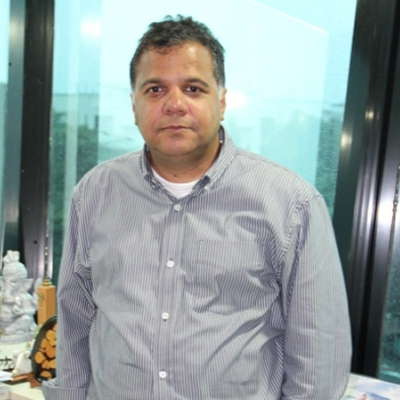
  • “We are hoping for a fair share of revenue in a digitised ecosystem” :The One Alliance president Rajesh Kaul

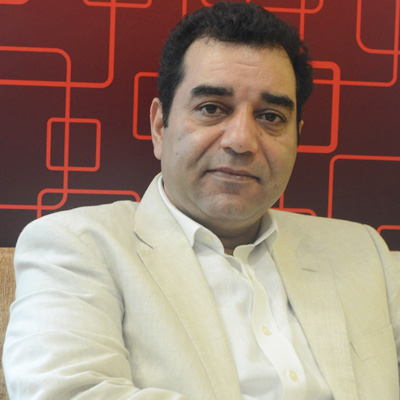
    “We are hoping for a fair share of revenue in a digitised ecosystem” :The One Alliance president Rajesh Kaul

    Cable TV digitisation has forced the entire television ecosystem to come face to face with some gut-wrenching changes. Each one of the players has come under the scathing gaze of either the ministry of information and broadcasting or the telecom regulator, the Telecom Regulatory Authority of India (TRAI). Some have even got a rap on their knuckles as the powers that be continue to work overtime on evolving a rickety old cable TV landscape into one capable of delivering top of the line world class digital services.

    Earlier this month, it was the aggregators that came under the scanner of TRAI which sent out a consultation paper which tries to reduce their importance in a digitised cable TV India. TRAI has said that aggregators tend to misuse the clout they have and need to have their wings clipped.

    The One Alliance, a  Discovery India-MSM joint venture which distributes 28 channels to the 30,000 or so cable operators nationally is one of the aggregators whose future and existence many are questioning.  But its president Rajesh Kaul, a scarred veteran of many a cable TV battle,  is hopeful things will get sorted out and work out well for him and others of his ilk such as MediaPro and IndiaCast.

    Even as The One Alliance has been celebrating the completion of 11 years of being in business, Kaul was busy preparing his responses to be presented to the regulator before the scheduled 27 August deadline. He still found some time to speak to Indiantelevision.com’s Seema Singh on trends in carriage and placement fees, the TRAI consultation paper and all things cable TV. 

    Excerpts:

    Do you see the aggregators become more relevant or less in the coming years? Why or why not?

    We will be as relevant as we are right now. We are a very important link in the chain of the entire television ecosystem. We just hope that with digitisation we will get a fair share of revenue which we haven’t got for so many years.

    What is your take on the TRAI consultation paper, which if implemented will cut down on the aggregator’s clout?

    We are evaluating the entire paper for which we need to file replies.

    TRAI in all its open houses and interaction with stakeholders has maintained that the era of regulation should go now and that they want to deregulate. So the consultation paper came as a surprise. On one hand they talk of deregulation, while on the other they put us under more regulations.

    May be the regulators need some clarification on the same and we are working on it. I am unsure of the intensity of the complaints put by the MSOs. 

    All through we have been following the TRAI and Information & Broadcasting Ministry (MIB) guidelines, with not a single case of deviation.

    There are close to 700 channels today and this has led to huge competition. The situation is such that no one channel can behave unreasonably with an MSO or with consumers. We all need eyeballs from our consumers. The competition ensures that the channels’ content and rate is good. We have to ensure that everything is as per market dynamics so that they are more liked and watched. This is the age we should be talking of forbearance rather than regulation.

    As per the TRAI regulation we are supposed to offer our channels on a la carte rate as well and this is available to the MSOs. In this country, there is a ‘must provide’ for all broadcasters, according to which not a single channel can say “No”  to an MSO for providing the channel to them.  But the MSO has the option to not subscribe to our channels. Since all the channels are on a la carte rate as well, there is no question of forcing them to subscribe to our bouquet.

    Another point that needs mentioning is that the broadcasters have not been getting a fair share of revenue in subscription. We thought with digitisation things will change. We have been a very good stakeholder in this entire process and done all that the regulator wanted us to do, be it doing quick deals to help MSOs sell the set top boxes or curbing our ambitions to make profits.  We hope that we will bear the fruit of being responsible stakeholders in this entire stretch one day.

    TRAI had even in the past come up with such consultation papers, but always heard us and I am hopeful they will listen to us even in this case. We are going to them to present our thought process. May be some wrong impression and feedback has gone to them, our duty is to explain to the regulator.

    The second phase of DAS will conclude soon. Any problems that you faced in this switch? What is the percentage growth in revenue in phase two as compared to phase one?

    We are still waiting for a transparent system. With digitisation the consumer can chose what they want, and pay for it. This transparency has not come out so far. We are still not getting reports from the MSOs and do not know who is watching what. These are the bottlenecks that we face.

    We were looking at ambitious numbers when digitisation kicked off. We didn’t get that in the first phase. Also as responsible stakeholders we curbed our ambitions then because we knew it would be difficult to expect a huge jump in the beginning. We supported the MSOs, which is what the regulator wanted us to do.

    But with the completion of phase II, we should be inching towards that fair share, which should be around 35 to 40 per cent of the on-ground subscription revenue collected. This should happen by April 2014. Channels cannot survive only on ad sales, subscription money is a very important revenue stream for broadcasters, but unfortunately it hasn’t so far happened in India.

    Another problem that the broadcasters face is the high carriage fees. In an analogue system, due to capacity constraint, broadcasters had to pay huge carriage fees. But now with digitisation there is no question of any capacity constraint, so why have carriage fees?

    How are you playing out the carriage fee market? Will the carriage fees come down? How much has this come down, pre- and post-DAS?

     In the next three years there should be no carriage fees. Though carriage fees  have come down post DAS, we still have been paying some placement fees to support the MSOs as they make their transition. But, with the completion of digitisation, even this should go down.  I expect carriage and placement fees to disappear over the next two to three years. While these were expected to go down further by phase II of digitisation, it has only been to the extent of about 25 per cent.

    Earlier the subscription revenue share we (read: broadcasters) were getting from the cable TV ecosystem was about 10-15 per cent. Now it has gone up to maybe to 20 per cent on the overall. Some broadcasters may have got 25 per cent but others may have got lower amounts of the digital dividend.  Many of the channels don’t get any subscription revenues because in the analogue environment they could not afford to have that as a part of their business model. With digitisation all this could change.

    Do you plan to add more channels in the bouquet? What was your strategy to ensure that you had Times Network in your bouquet, when other news channels were walking out of the bouquet?

    We are not market shopping for channels and we are not desperate. Only if tomorrow we come across something good, we will think of adding it to our bouquet.

    We added Times Television Network to our bouquet this year. It was a mutual decision between the two of us. They fitted in our profile and also they wanted to be a part of our network. They are a premium channel and they deserve suitable revenues considering their performance and we at The One Alliance are working to get them those revenues.

    We are in the process of concluding deals for Times with other MSOs. We have finished with Hathway, GTPL, and some other MSOs. And more are coming.

    You had a dispute with Hathway going on for some time? How is that progressing?

    There were many issues like are bound to happen in the cable TV business and yes one of these issues was the one we had with Hathway. And one of the issues – amongst the many issues – we had with Hathway was The Times network, which we have been distributing. But we amicably resolved all the issues with Hathway this evening. And the One Alliance bouquet of channels should have come back on all of Hathway networks by this evening. (26 August).

    It’s been 11 years in the business, how has the journey been so far?

    The journey has been fantastic. While we started with three or four channels now we have a bouquet of 28 channels, with extremely powerful and premium channels. We have various genres, we have a solid name and repututation. It has a journey which has had  more ups than downs.


    Unfortunately, even with the IPL being the biggest sporting property in this country, we have not been able to monetise it well due to under declaration. But, now we have aggressive plans to monetise it for the next season..

    What are the key pointers that set The One Alliance apart from other aggregators? As compared to others aggregators you have less channels, is that a limitation. How do you see things going ahead?

    We are the most stable joint venture (JV) in the industry. All the other aggregators are just a couple of years old. Our partners are very much involved and keen to ensure that the stability continues. For us the quality of the channel is important. We have never been in the race of having 50-60 channels in our bouquet. 

    We have channels from different genres in our bouquet and most of them are amongst the top two or three ranking in their respective genres. There are many more who want to be a part of One Alliance, because they trust the JV. Also our dealings are very transparent. We can add two to three channels at any given time, but our policy doesn’t allow us to do that. We have always believed in quality and so want to have premium channels in our bouquet.

    Today we are the strongest, despite having 28 channels. Also we are the only one having a sports channel in our bouquet unlike the others. Considering we have most genres covered in the bouquet, I don’t see any limitation. Our revenue is far higher than the others.

    Are you selective about the channels you take in the bouquet? What are the criteria that a channel needs to fulfill to be a part of The One Alliance bouquet?

    The channel and the company backing the channel should have similar kind of values and ambitions like ours. We also look at the channels’ performance, which we understand on the basis of the weekly television viewership ratings.

    What is the reach of the bouquet and which is the largest channel in the bouquet?  

    We currently have 28 channels from different genres in our bouquet. Sony Entertainment has the largest reach and, during IPL, Sony Max gets the largest reach.
    IPL is the biggest sporting property that we have. What is interesting is that though most sporting properties are a simulcast with Doordarshan, IPL is the one property which is exclusive on Max. This makes it the most important property in the sporting channel world and we have it.

    We are present almost across the country. We would be there in around 90 per cent of the towns, which have cable and satellite, but through DTH our reach is 100 per cent. Close to some 6,000 cable networks across the country carry our channels. 

    What is the current strength of the organisation?

    One Alliance employs 125 people with offices in Delhi, Bengaluru, Kolkata, Indore and Mumbai. Apart from this, we also have a strong distribution network with distributors in Rajkot,  Pune, Ahmedabad, Guwahati, Patna, Ranchi and Lucknow among others. Like this we have offices in 60 cities. The distributors have their own employees. So, if we take a cumulative strength, we have around 350 people working for us.

    The major revenue for The One Alliance is dependent on IPL. So till how long will IPL be with Sony Max? How do you maintain subscription post IPL and also with so many controversies surrounding IPL, how will you deal with it?

     Unfortunately, even with IPL being the biggest sporting property in this country, we have not been able to monetise it well due to under declaration. But, now we have aggressive plans to monetise it for the next season.

    What are the future plans for The One Alliance?

    We have to lead the change and ensure that everybody gets their fair share.

  • “We are hoping for a fair share of revenue in a digitised ecosystem”

    “We are hoping for a fair share of revenue in a digitised ecosystem”

    Cable TV digitisation has forced the entire television ecosystem to come face to face with some gut-wrenching changes. Each one of the players has come under the scathing gaze of either the ministry of information and broadcasting or the telecom regulator, the Telecom Regulatory Authority of India (TRAI). Some have even got a rap on their knuckles as the powers that be continue to work overtime on evolving a rickety old cable TV landscape into one capable of delivering top of the line world class digital services.

    Earlier this month, it was the aggregators that came under the scanner of TRAI which sent out a consultation paper which tries to reduce their importance in a digitised cable TV India. TRAI has said that aggregators tend to misuse the clout they have and need to have their wings clipped.

    The One Alliance, a  Discovery India-MSM joint venture which distributes 28 channels to the 30,000 or so cable operators nationally is one of the aggregators whose future and existence many are questioning.  But its president Rajesh Kaul, a scarred veteran of many a cable TV battle,  is hopeful things will get sorted out and work out well for him and others of his ilk such as MediaPro and IndiaCast.

    Even as The One Alliance has been celebrating the completion of 11 years of being in business, Kaul was busy preparing his responses to be presented to the regulator before the scheduled 27 August deadline. He still found some time to speak to Indiantelevision.com’s Seema Singh on trends in carriage and placement fees, the TRAI consultation paper and all things cable TV. Excerpts:

    Do you see the aggregators become more relevant or less in the coming years? Why or why not?

    We will be as relevant as we are right now. We are a very important link in the chain of the entire television ecosystem. We just hope that with digitisation we will get a fair share of revenue which we haven’t got for so many years.

    What is your take on the TRAI consultation paper, which if implemented will cut down on the aggregator’s clout?

    We are evaluating the entire paper for which we need to file replies.

    TRAI in all its open houses and interaction with stakeholders has maintained that the era of regulation should go now and that they want to deregulate. So the consultation paper came as a surprise. On one hand they talk of deregulation, while on the other they put us under more regulations.

    May be the regulators need some clarification on the same and we are working on it. I am unsure of the intensity of the complaints put by the MSOs. 

    All through we have been following the TRAI and Information & Broadcasting Ministry (MIB) guidelines, with not a single case of deviation.

    There are close to 700 channels today and this has led to huge competition. The situation is such that no one channel can behave unreasonably with an MSO or with consumers. We all need eyeballs from our consumers. The competition ensures that the channels’ content and rate is good. We have to ensure that everything is as per market dynamics so that they are more liked and watched. This is the age we should be talking of forbearance rather than regulation.

    As per the TRAI regulation we are supposed to offer our channels on a la carte rate as well and this is available to the MSOs. In this country, there is a ‘must provide’ for all broadcasters, according to which not a single channel can say “No”  to an MSO for providing the channel to them.  But the MSO has the option to not subscribe to our channels. Since all the channels are on a la carte rate as well, there is no question of forcing them to subscribe to our bouquet.

    Another point that needs mentioning is that the broadcasters have not been getting a fair share of revenue in subscription. We thought with digitisation things will change. We have been a very good stakeholder in this entire process and done all that the regulator wanted us to do, be it doing quick deals to help MSOs sell the set top boxes or curbing our ambitions to make profits.  We hope that we will bear the fruit of being responsible stakeholders in this entire stretch one day.

    TRAI had even in the past come up with such consultation papers, but always heard us and I am hopeful they will listen to us even in this case. We are going to them to present our thought process. May be some wrong impression and feedback has gone to them, our duty is to explain to the regulator.

    The second phase of DAS will conclude soon. Any problems that you faced in this switch? What is the percentage growth in revenue in phase two as compared to phase one?

    We are still waiting for a transparent system. With digitisation the consumer can chose what they want, and pay for it. This transparency has not come out so far. We are still not getting reports from the MSOs and do not know who is watching what. These are the bottlenecks that we face.

    We were looking at ambitious numbers when digitisation kicked off. We didn’t get that in the first phase. Also as responsible stakeholders we curbed our ambitions then because we knew it would be difficult to expect a huge jump in the beginning. We supported the MSOs, which is what the regulator wanted us to do.

    But with the completion of phase II, we should be inching towards that fair share, which should be around 35 to 40 per cent of the on-ground subscription revenue collected. This should happen by April 2014. Channels cannot survive only on ad sales, subscription money is a very important revenue stream for broadcasters, but unfortunately it hasn’t so far happened in India.

    Another problem that the broadcasters face is the high carriage fees. In an analogue system, due to capacity constraint, broadcasters had to pay huge carriage fees. But now with digitisation there is no question of any capacity constraint, so why have carriage fees?

    How are you playing out the carriage fee market? Will the carriage fees come down? How much has this come down, pre- and post-DAS?

     In the next three years there should be no carriage fees. Though carriage fees  have come down post DAS, we still have been paying some placement fees to support the MSOs as they make their transition. But, with the completion of digitisation, even this should go down.  I expect carriage and placement fees to disappear over the next two to three years. While these were expected to go down further by phase II of digitisation, it has only been to the extent of about 25 per cent.

    Earlier the subscription revenue share we (read: broadcasters) were getting from the cable TV ecosystem was about 10-15 per cent. Now it has gone up to maybe to 20 per cent on the overall. Some broadcasters may have got 25 per cent but others may have got lower amounts of the digital dividend.  Many of the channels don’t get any subscription revenues because in the analogue environment they could not afford to have that as a part of their business model. With digitisation all this could change.

    Do you plan to add more channels in the bouquet? What was your strategy to ensure that you had Times Network in your bouquet, when other news channels were walking out of the bouquet?

    We are not market shopping for channels and we are not desperate. Only if tomorrow we come across something good, we will think of adding it to our bouquet.

    We added Times Television Network to our bouquet this year. It was a mutual decision between the two of us. They fitted in our profile and also they wanted to be a part of our network. They are a premium channel and they deserve suitable revenues considering their performance and we at The One Alliance are working to get them those revenues.

    We are in the process of concluding deals for Times with other MSOs. We have finished with Hathway, GTPL, and some other MSOs. And more are coming.

    You had a dispute with Hathway going on for some time? How is that progressing?

    There were many issues like are bound to happen in the cable TV business and yes one of these issues was the one we had with Hathway. And one of the issues – amongst the many issues – we had with Hathway was The Times network, which we have been distributing. But we amicably resolved all the issues with Hathway this evening. And the One Alliance bouquet of channels should have come back on all of Hathway networks by this evening. (26 August).

    It’s been 11 years in the business, how has the journey been so far?

    The journey has been fantastic. While we started with three or four channels now we have a bouquet of 28 channels, with extremely powerful and premium channels. We have various genres, we have a solid name and repututation. It has a journey which has had  more ups than downs.


    Unfortunately, even with the IPL being the biggest sporting property in this country, we have not been able to monetise it well due to under declaration. But, now we have aggressive plans to monetise it for the next season..

    What are the key pointers that set The One Alliance apart from other aggregators? As compared to others aggregators you have less channels, is that a limitation. How do you see things going ahead?

    We are the most stable joint venture (JV) in the industry. All the other aggregators are just a couple of years old. Our partners are very much involved and keen to ensure that the stability continues. For us the quality of the channel is important. We have never been in the race of having 50-60 channels in our bouquet. 

    We have channels from different genres in our bouquet and most of them are amongst the top two or three ranking in their respective genres. There are many more who want to be a part of One Alliance, because they trust the JV. Also our dealings are very transparent. We can add two to three channels at any given time, but our policy doesn’t allow us to do that. We have always believed in quality and so want to have premium channels in our bouquet.

    Today we are the strongest, despite having 28 channels. Also we are the only one having a sports channel in our bouquet unlike the others. Considering we have most genres covered in the bouquet, I don’t see any limitation. Our revenue is far higher than the others.

    Are you selective about the channels you take in the bouquet? What are the criteria that a channel needs to fulfill to be a part of The One Alliance bouquet?

    The channel and the company backing the channel should have similar kind of values and ambitions like ours. We also look at the channels’ performance, which we understand on the basis of the weekly television viewership ratings.

    What is the reach of the bouquet and which is the largest channel in the bouquet?  

    We currently have 28 channels from different genres in our bouquet. Sony Entertainment has the largest reach and, during IPL, Sony Max gets the largest reach.
    IPL is the biggest sporting property that we have. What is interesting is that though most sporting properties are a simulcast with Doordarshan, IPL is the one property which is exclusive on Max. This makes it the most important property in the sporting channel world and we have it.

    We are present almost across the country. We would be there in around 90 per cent of the towns, which have cable and satellite, but through DTH our reach is 100 per cent. Close to some 6,000 cable networks across the country carry our channels. 

    What is the current strength of the organisation?

    One Alliance employs 125 people with offices in Delhi, Bengaluru, Kolkata, Indore and Mumbai. Apart from this, we also have a strong distribution network with distributors in Rajkot,  Pune, Ahmedabad, Guwahati, Patna, Ranchi and Lucknow among others. Like this we have offices in 60 cities. The distributors have their own employees. So, if we take a cumulative strength, we have around 350 people working for us.

    The major revenue for The One Alliance is dependent on IPL. So till how long will IPL be with Sony Max? How do you maintain subscription post IPL and also with so many controversies surrounding IPL, how will you deal with it?

     Unfortunately, even with IPL being the biggest sporting property in this country, we have not been able to monetise it well due to under declaration. But, now we have aggressive plans to monetise it for the next season.

    What are the future plans for The One Alliance?

    We have to lead the change and ensure that everybody gets their fair share.

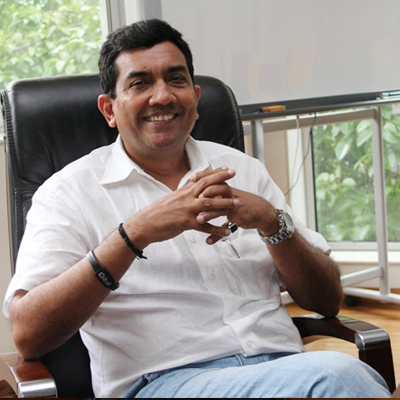
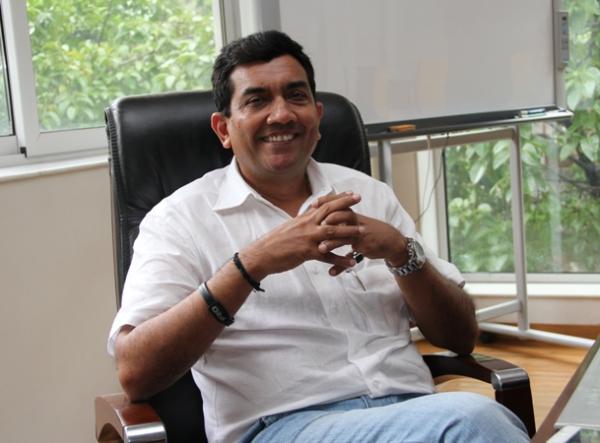
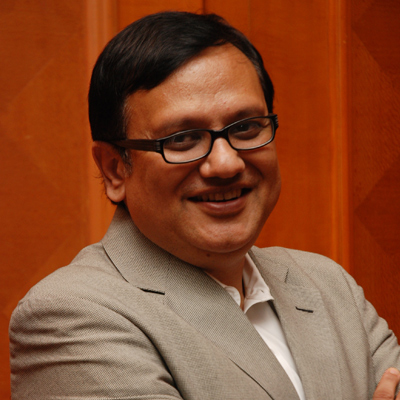
  • “Regional channels with food shows are our competitors” : FOOD FOOD PROMOTER AND DIRECTOR SANJEEV KAPOOR

    “Regional channels with food shows are our competitors” : FOOD FOOD PROMOTER AND DIRECTOR SANJEEV KAPOOR

    He’s belied the oft-stated misconception that cooks don’t make great businessmen. And he is someone who feels fortunate enough to have done things he really likes doing. His contended smile describes his success. Well-known celebrity chef Sanjeev Kapoor (remember Khana Khazana?) today has moved from being a famous cooking show host to an entrepreneur and director of India’s first homegrown food related channel FoodFood.

    But the good looking Sanjeev Kapoor, who sees opportunities where others see challenges, dismisses his achievement by saying: “I feel I am still in the kitchen and this is my favourite part.”

    In a conversation with Indiantelevision.com’s Seema Singh, Kapoor speaks his heart out on his journey which started from people laughing at his dreams for a food channel to earning their respect today as an entrepreneur who is building a solid business.

    Excerpts:

    How did Turmeric Vision (TVPL), Astro All Asia Networks (Astro) and Sandeep Goyal’s Mogae Groupa come together to start the channel Food Food? How has the association been?

    The first thought of doing a 24-hour channel on food came to me in 2003. But I was not sure I could do it on my own. And hence, I started pitching the idea to others. People thought I was mad. They thought how can a category, which is a half hour afternoon slot, become a full time channel.

    When I initiated the talks, I didn’t think that I could start a channel. There were channels in all genres, so why not have a 24 hour food channel? But I had decided I would do this with someone else. Sadly, no one thought of it as being an opportunity.I chatted with Scripps Network’s Food Network internationally, but they were not interested. I also approached the BBC, which already was already airing lots of food programming. It did show some interest in the beginning, but after the meeting was fixed in London, BBC cancelled.

    It was then that I decided that I would start the channel on my own. It was out of sheer anger. I thought this was something I really wanted to do and so started thinking, working on and understanding it. At that time, the then Sony Entertainment Television CEO Kunal Dasgupta, was someone who understood what I was envisioning and thought that food as a category will grow, which was very encouraging.

    In 2006, I set up TVPL. I applied to ministry of information & broadcasting for an uplinking licence and started building the channel. At around this time I met up and discussed my plans with Sandeep Goyal who was then the CEO of Zee TV. Being a foodie himself, he was in sync with my thoughts. It was he who suggested the name of Astro Networks as a possible partner for this venture. Sandeep also joined us as a notional partner.

    I had lost about three years in between ideating and finally setting up the company and the channel. I lost ; one because of the unfavourable market scenario from 2007 to 2009 and secondly because we were in active discussion with several media groups in India which didn’t work out.

    But when we launched it, it was at the right time!

    Who is your core target audience? How have you been able to redefine the food content in India? Do you programme the channel based on the time of the day?

    Most people would imagine food content being more women-centric. But, times have changed, and now one can see more men walking in even in a category like food, especially in the evening slot. We are also attracting a lot of younger audiences. When we started, our core target audience (TG) was women 35-years and above. We have been able to bring that down to about 25 years and our TG will continue to get younger.

    In terms of cities, the channel is available in all the HSMs (Hindi speaking markets). North, of course is big in terms of numbers for us. Maharashtra, Gujarat and other bigger cities also have great traction. Most of our numbers comes from the metros, Delhi and Mumbai being the greatest contributors.

    Ours was the first HD ready channel, with all content being HD ready since the channel’s inception. This helped us add good quality households from the top cities to our viewership. Our presence on Tata Sky, Airtel and Videocon has also helped us reach good quality homes.

    It was when I first started doing TV that people started understanding the meaning of food content. With Food Food, people expect good quality content not just boring shows. Our content concentrates on the core Indian market, with our content being 100 per cent relevant to the Indian ethos.

    We have been able to set trends for shows on other channels. They through us understand what is accepted in India. We do not only concentrate on adding numbers to our viewership, but we see it as our responsibility to define the direction of food in Indian. We now have a lot more healthy wholesome content.

    As for the programming, the early morning slot is more vegetarian, the afternoon slot focuses on learning, but not boring learning. As we move to early evening, it’s more of Bollywood and games. And evening and late evenings we have lifestyle. We keep trying and testing with our content.

    If you are a leader, you have to learn, define and teach your viewers what to watch as per the time.

    How does the channel conduct its research?

    Food Food is a specialty channel. We work with research agencies for qualitative and quantitative research. Also we are constantly in touch with our viewers through various viewers connect events. We do close to 90 events, which gives us a fair idea of what people want and what we should do or not do.


    I would say the regional channels, which have started building loyalty on food programmes are some of our closest competitors. The lavish and expensive cooking reality shows on the general entertainment channels are no competition for us; in fact they help us in building a category.

    What is your reach internationally?

    We are currently available in the Gulf and Canada. We are also in the process of finalising our reach in US. We are looking at other markets internationally through Jadoo boxes. We are working on opening up to more markets.

    Who are your competitors? How do you look at handling them?

    I would say the regional channels, which have started building loyalty on food programmes, are some of our closest competitors. The lavish and expensive cooking reality shows on the general entertainment channels are no competition for us; in fact they help us in building a category.

    We are by far the number one lifestyle channel in the country. We don’t have to worry about competitions. Most channels are in fact following us. As long as this trend continues, we are happy. But naturally, we keep a watch on what is happening and ensuring that we stay ahead.

    What are the shows that are being aired on the channel currently? Any plans of launching a new one soon?

    Currently Food Food has shows like Soki, Tea Time, Health Maange More, Style Chef, Mummy ka Magic and several health-based shows. We keep doing new seasons of our popular shows. The How to Cook series, Sanjeev Kapoor’s Kitchen and Maa ki Daal are big hits. We are continuously looking at new concepts for our shows. We do have plans for some exciting new ones. What is good is that even today the early shows, which were launched when the channel was, still interest viewers and advertisers.

    The big challenge is when you have popular shows how do you bring in new shows! For example, if the IPL is a hit and excites and engages audiences, you don’t shut it down; you come with several seasons of the format. Same is the case with us.

    What are the mediums you use for reaching out to audiences? Do you invest in digital as well? How much is your ad spent?

    Marketing and other promotional activities not only to create a recall but also build a bond. One of the good things we have seen for Food Food is that the average time spent by viewers is very high. We want to ensure that people who walk into the channel stay longer, along with getting newer sets of viewers.

    We work in two areas; firstly we market ourselves to the viewers and then to advertisers. You are as good as your shows and numbers are important.

    For our initial marketing campaign, we roped in Madhuri Dixit as the channel’s brand ambassador. This was to create the buzz. Now most of the marketing is done through our shows.

    We use all mediums like outdoor, print, digital, radio and television, but the key marketing tool for us is on-ground activities. Plus we also work as partners with different brands and also with communities such as chefs and hotels.

    Our website www.foodfood.com is very active. Our interaction with viewers on Facebook and Twitter is very helpful. We have started a Food Food channel on Youtube. We are also working on an app for the channel. Digital reach is important and we are constantly working towards making it useful for different sets of generations. Youngsters are glued to our telecasts, so we focus on what will attract them.

    Our marketing budget is as high as 20 per cent of our total budget. But I would say, we give a lot of weightage to consumer connect programmes.

    How large is the food show genre? Does it get enough traction?

    If we look at the GECs, the total contribution to the kitty is significant, and this significance can be translated into something which can have four to five channels. So we understand the consumption pattern, but not all may come in a focused way. At times the usage is too scattered, and that is the case right now.

    But whenever there is maturity in the market, there is consolidation and now we are beginning to see that. If you have a heart problem you will not go to a general physician, but to a heart specialist.

    This is going to happen in media too. Currently advertisers are going to everyone. They just look at the number of viewers, no matter what quality.

    This is not the way it works in mature markets. This maturity is coming into agencies, viewers and brands. Initially there were no solutions, but solutions are there now. Digital has been able to show that solution. TV was more in the air. Whatever agencies said was being accepted. Advertisers never delved into how people were reacting. Consumption was not being tracked. But, now it is beginning to happen. In the next few years, more specialty channels will come in and they will benefit.

    Is there enough bandwidth amongst audiences for so many food shows? What is the channel’s GRP?

    India in some sense has three religions: Bollywood, cricket and food. If we want to entertain ourselves we use these three. While Bollywood and cricket is well represented on TV, food is under-served. Slowly we are getting to see entertainment with food, and this will only grow.

    There is 100 per cent bandwidth for a specialty channel like Food Food. We have to just understand viewers’ needs and then we have to translate that demand and see if this is pan India. If the show is executed well, it is consumed easily.

    We continuously stay at around 10 GRPs. Delhi and Mumbai gives us the maximum numbers.

    It is a food channel with all shows on food, so then how do you decide on the content? What is the difference in the theme of each show? With three partners, how do you come to a consensus on the content of the channel?

    This is our full time job. We constantly keep our ears to the ground. People always tell you what they want, and I realised it when I was writing my book. We are just serving a need. It is a fairly simple task. Just listen to people. We are currently at a stage where we have to just listen and react.

    We continuously have our executive committee and board meetings. The team presents ideas and concepts to the executive committee and they approve or disapprove. It is how you live in a house, you have different members and yet you stay together. We may have our individual preferences, but what finally goes out on TV is something is that the family wants.

    Is it difficult to sustain a channel based only on food?

    If cooking is inherent or food is inherent to Indians, then for a channel like Food Food there is no question of survival. People will consume what they can relate to. And when it comes to us Indians, we can relate to food, made in our style. And this is what Food Food is all about. And so we are the highest rated.

    Even news channels are coming up with food shows, how do you cope with this competition?

    Naturally, when there is something on food which takes away from us, it is a problem, but, if it helps us its good. Larger shows are no competition. I see them as category builders. Smaller shows, if they can take away from us, can pose some competition, but I don’t see that happening.

    For the shows on news channels, the core target is men and also the time slot is different, so they don’t harm us. We see such shows as an opportunity that someone else has created for us.

    Do you want to foray into reality shows as well?

    We did a reality show before Master Chef. We had Maha Challenge with Madhuri Dixit. As and when the time is right, we will do reality shows. But I think the noise that one needs to create need not be through noisy shows. It can be done in a smart way. For instance a comedy show with Kapil Sharma gets more numbers than the bigger shows at one-sixth the cost of a big show. So my belief is that if we are able to get higher GRPs through smarter and smaller shows, we will go with that.

    GECs need to have bigger shows, so a show like Master Chef works perfectly on Star Plus. What is good is that the understanding of Food Food is being used by shows like Master Chef. There is increased understanding of what and how the food genre works.

    For us if it is about reality show it has to be something which is very real. Unfortunately in India, reality shows are associated with big budget shows. For Food Food, a reality show is about real people cooking every day not for only for 13 weeks. It may be a daily contest, which is conducted in six cities having six winners every day. This is bigger and more relevant for Food Food. We are constantly debating, and if you ask us if we will be doing reality shows, of course we will be.

    Will the 12 min ad-cap affect the advertisement in the channel? How will the channel deal with it? There are talks in the industry of increasing ad rates after the ad-cap is implemented? By how much will the ad rates go up? What is the current ad rate?

    It’s something the whole industry is facing. If that has to be followed, the whole industry will follow. This means that someone will have to pay for it. If the broadcast industry has to pay, I don’t think they can afford it. So either the viewers will pay or the brands will. As of now it is tricky and painful and hope there is some resolution.

    As I see it, there could be a 25 per cent increase in either the ad rate or subscription charges. Fortunately for us, it’s not much of a problem because we are a new channel. In a new channel the inventory consumption doesn’t start at 100 per cent utilisation; it builds over time. And we are in the process of building that. So the impact on us will be lower than those players whose inventory consumption may be 100 per cent.

    There were reports of the company breaking even in two years from its launch? How far have you reached as far as this objective is concerned?

    It’s on track. Our understanding of the business is much deeper than what it was. So I don’t see a reason for not achieving it.

  • “Regional channels with food shows are our competitors”

    “Regional channels with food shows are our competitors”

    He‘s belied the oft-stated misconception that cooks don‘t make great businessmen. And he is someone who feels fortunate enough to have done things he really likes doing. His contended smile describes his success. Well-known celebrity chef Sanjeev Kapoor (remember Khana Khazana?) today has moved from being a famous cooking show host to an entrepreneur and director of India‘s first homegrown food related channel FoodFood.

    But the good looking Sanjeev Kapoor, who sees opportunities where others see challenges, dismisses his achievement by saying: “I feel I am still in the kitchen and this is my favourite part.”

    In a conversation with Indiantelevision.com‘s Seema Singh, Kapoor speaks his heart out on his journey which started from people laughing at his dreams for a food channel to earning their respect today as an entrepreneur who is building a solid business. Excerpts: 

    How did Turmeric Vision (TVPL), Astro All Asia Networks (Astro) and Sandeep Goyal‘s Mogae Groupa come together to start the channel Food Food? How has the association been?

    The first thought of doing a 24-hour channel on food came to me in 2003. But I was not sure I could do it on my own. And hence, I started pitching the idea to others. People thought I was mad. They thought how can a category, which is a half hour afternoon slot, become a full time channel.

    When I initiated the talks, I didn‘t think that I could start a channel. There were channels in all genres, so why not have a 24 hour food channel? But I had decided I would do this with someone else. Sadly, no one thought of it as being an opportunity.I chatted with Scripps Network‘s Food Network internationally, but they were not interested. I also approached the BBC, which already was already airing lots of food programming. It did show some interest in the beginning, but after the meeting was fixed in London, BBC cancelled.

    It was then that I decided that I would start the channel on my own. It was out of sheer anger. I thought this was something I really wanted to do and so started thinking, working on and understanding it. At that time, the then Sony Entertainment Television CEO Kunal Dasgupta, was someone who understood what I was envisioning and thought that food as a category will grow, which was very encouraging.

    In 2006, I set up TVPL. I applied to ministry of information & broadcasting for an uplinking licence and started building the channel. At around this time I met up and discussed my plans with Sandeep Goyal who was then the CEO of Zee TV. Being a foodie himself, he was in sync with my thoughts. It was he who suggested the name of Astro Networks as a possible partner for this venture. Sandeep also joined us as a notional partner.

    I had lost about three years in between ideating and finally setting up the company and the channel. I lost ; one because of the unfavourable market scenario from 2007 to 2009 and secondly because we were in active discussion with several media groups in India which didn‘t work out.

    But when we launched it, it was at the right time!

    Who is your core target audience? How have you been able to redefine the food content in India? Do you programme the channel based on the time of the day?

    Most people would imagine food content being more women-centric. But, times have changed, and now one can see more men walking in even in a category like food, especially in the evening slot. We are also attracting a lot of younger audiences. When we started, our core target audience (TG) was women 35-years and above. We have been able to bring that down to about 25 years and our TG will continue to get younger.

    In terms of cities, the channel is available in all the HSMs (Hindi speaking markets). North, of course is big in terms of numbers for us. Maharashtra, Gujarat and other bigger cities also have great traction. Most of our numbers comes from the metros, Delhi and Mumbai being the greatest contributors.

    Ours was the first HD ready channel, with all content being HD ready since the channel‘s inception. This helped us add good quality households from the top cities to our viewership. Our presence on Tata Sky, Airtel and Videocon has also helped us reach good quality homes.

    It was when I first started doing TV that people started understanding the meaning of food content. With Food Food, people expect good quality content not just boring shows. Our content concentrates on the core Indian market, with our content being 100 per cent relevant to the Indian ethos.

    We have been able to set trends for shows on other channels. They through us understand what is accepted in India. We do not only concentrate on adding numbers to our viewership, but we see it as our responsibility to define the direction of food in Indian. We now have a lot more healthy wholesome content.

    As for the programming, the early morning slot is more vegetarian, the afternoon slot focuses on learning, but not boring learning. As we move to early evening, it‘s more of Bollywood and games. And evening and late evenings we have lifestyle. We keep trying and testing with our content.

    If you are a leader, you have to learn, define and teach your viewers what to watch as per the time.

    How does the channel conduct its research?

    Food Food is a specialty channel. We work with research agencies for qualitative and quantitative research. Also we are constantly in touch with our viewers through various viewers connect events. We do close to 90 events, which gives us a fair idea of what people want and what we should do or not do.


    I would say the regional channels, which have started building loyalty on food programmes are some of our closest competitors. The lavish and expensive cooking reality shows on the general entertainment channels are no competition for us; in fact they help us in building a category.

    What is your reach internationally?

    We are currently available in the Gulf and Canada. We are also in the process of finalising our reach in US. We are looking at other markets internationally through Jadoo boxes. We are working on opening up to more markets.

    Who are your competitors? How do you look at handling them?

    I would say the regional channels, which have started building loyalty on food programmes, are some of our closest competitors. The lavish and expensive cooking reality shows on the general entertainment channels are no competition for us; in fact they help us in building a category.

    We are by far the number one lifestyle channel in the country. We don‘t have to worry about competitions. Most channels are in fact following us. As long as this trend continues, we are happy. But naturally, we keep a watch on what is happening and ensuring that we stay ahead.

    What are the shows that are being aired on the channel currently? Any plans of launching a new one soon?

    Currently Food Food has shows like Soki, Tea Time, Health Maange More, Style Chef, Mummy ka Magic and several health-based shows. We keep doing new seasons of our popular shows.The How to Cook series, Sanjeev Kapoor‘s Kitchen and Maa ki Daal are big hits. We are continuously looking at new concepts for our shows. We do have plans for some exciting new ones. What is good is that even today the early shows, which were launched when the channel was, still interest viewers and advertisers.

    The big challenge is when you have popular shows how do you bring in new shows! For example, if the IPL is a hit and excites and engages audiences, you don‘t shut it down; you come with several seasons of the format. Same is the case with us.

    What are the mediums you use for reaching out to audiences? Do you invest in digital as well? How much is your ad spent?

    Marketing and other promotional activities not only to create a recall but also build a bond. One of the good things we have seen for Food Food is that the average time spent by viewers is very high. We want to ensure that people who walk into the channel stay longer, along with getting newer sets of viewers.

    We work in two areas; firstly we market ourselves to the viewers and then to advertisers. You are as good as your shows and numbers are important.

    For our initial marketing campaign, we roped in Madhuri Dixit as the channel‘s brand ambassador. This was to create the buzz. Now most of the marketing is done through our shows.

    We use all mediums like outdoor, print, digital, radio and television, but the key marketing tool for us is on-ground activities. Plus we also work as partners with different brands and also with communities such as chefs and hotels.

    Our website www.foodfood.com is very active. Our interaction with viewers on Facebook and Twitter is very helpful. We have started a Food Food channel on Youtube. We are also working on an app for the channel. Digital reach is important and we are constantly working towards making it useful for different sets of generations. Youngsters are glued to our telecasts, so we focus on what will attract them.

    Our marketing budget is as high as 20 per cent of our total budget. But I would say, we give a lot of weightage to consumer connect programmes.

    How large is the food show genre? Does it get enough traction?

    If we look at the GECs, the total contribution to the kitty is significant, and this significance can be translated into something which can have four to five channels. So we understand the consumption pattern, but not all may come in a focused way. At times the usage is too scattered, and that is the case right now.

    But whenever there is maturity in the market, there is consolidation and now we are beginning to see that. If you have a heart problem you will not go to a general physician, but to a heart specialist.

    This is going to happen in media too. Currently advertisers are going to everyone. They just look at the number of viewers, no matter what quality.

    This is not the way it works in mature markets. This maturity is coming into agencies, viewers and brands. Initially there were no solutions, but solutions are there now. Digital has been able to show that solution. TV was more in the air. Whatever agencies said was being accepted. Advertisers never delved into how people were reacting. Consumption was not being tracked. But, now it is beginning to happen. In the next few years, more specialty channels will come in and they will benefit.

    Is there enough bandwidth amongst audiences for so many food shows? What is the channel‘s GRP?

    India in some sense has three religions: Bollywood, cricket and food. If we want to entertain ourselves we use these three. While Bollywood and cricket is well represented on TV, food is under-served. Slowly we are getting to see entertainment with food, and this will only grow.

    There is 100 per cent bandwidth for a specialty channel like Food Food. We have to just understand viewers‘ needs and then we have to translate that demand and see if this is pan India. If the show is executed well, it is consumed easily.

    We continuously stay at around 10 GRPs. Delhi and Mumbai gives us the maximum numbers.

    It is a food channel with all shows on food, so then how do you decide on the content? What is the difference in the theme of each show? With three partners, how do you come to a consensus on the content of the channel?

    This is our full time job. We constantly keep our ears to the ground. People always tell you what they want, and I realised it when I was writing my book. We are just serving a need. It is a fairly simple task. Just listen to people. We are currently at a stage where we have to just listen and react.

    We continuously have our executive committee and board meetings. The team presents ideas and concepts to the executive committee and they approve or disapprove. It is how you live in a house, you have different members and yet you stay together. We may have our individual preferences, but what finally goes out on TV is something is that the family wants.

    Is it difficult to sustain a channel based only on food?

    If cooking is inherent or food is inherent to Indians, then for a channel like Food Food there is no question of survival. People will consume what they can relate to. And when it comes to us Indians, we can relate to food, made in our style. And this is what Food Food is all about. And so we are the highest rated.

    Even news channels are coming up with food shows, how do you cope with this competition?

    Naturally, when there is something on food which takes away from us, it is a problem, but, if it helps us its good. Larger shows are no competition. I see them as category builders. Smaller shows, if they can take away from us, can pose some competition, but I don‘t see that happening.

    For the shows on news channels, the core target is men and also the time slot is different, so they don‘t harm us. We see such shows as an opportunity that someone else has created for us.

    Do you want to foray into reality shows as well?

    We did a reality show before Master Chef. We had Maha Challenge with Madhuri Dixit. As and when the time is right, we will do reality shows. But I think the noise that one needs to create need not be through noisy shows. It can be done in a smart way. For instance a comedy show with Kapil Sharma gets more numbers than the bigger shows at one-sixth the cost of a big show. So my belief is that if we are able to get higher GRPs through smarter and smaller shows, we will go with that.

    GECs need to have bigger shows, so a show like Master Chef works perfectly on Star Plus. What is good is that the understanding of Food Food is being used by shows like Master Chef.There is increased understanding of what and how the food genre works.

    For us if it is about reality show it has to be something which is very real. Unfortunately in India, reality shows are associated with big budget shows. For Food Food, a reality show is about real people cooking every day not for only for 13 weeks. It may be a daily contest, which is conducted in six cities having six winners every day. This is bigger and more relevant for Food Food. We are constantly debating, and if you ask us if we will be doing reality shows, of course we will be.

    Will the 12 min ad-cap affect the advertisement in the channel? How will the channel deal with it? There are talks in the industry of increasing ad rates after the ad-cap is implemented? By how much will the ad rates go up? What is the current ad rate?

    It‘s something the whole industry is facing. If that has to be followed, the whole industry will follow. This means that someone will have to pay for it. If the broadcast industry has to pay, I don‘t think they can afford it. So either the viewers will pay or the brands will. As of now it is tricky and painful and hope there is some resolution.

    As I see it, there could be a 25 per cent increase in either the ad rate or subscription charges. Fortunately for us, it‘s not much of a problem because we are a new channel. In a new channel the inventory consumption doesn‘t start at 100 per cent utilisation; it builds over time. And we are in the process of building that. So the impact on us will be lower than those players whose inventory consumption may be 100 per cent.

    There were reports of the company breaking even in two years from its launch? How far have you reached as far as this objective is concerned?

    It‘s on track. Our understanding of the business is much deeper than what it was. So I don‘t see a reason for not achieving it.

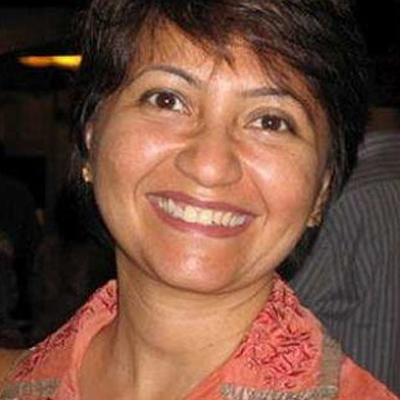
  • “ABP News has become even stronger after Star” :MCCS CEO ASHOK VENKATRAMANI

    “ABP News has become even stronger after Star” :MCCS CEO ASHOK VENKATRAMANI

    For long Indian media was agog with the news that the Rupert Murdoch-owned Star India was going to part ways with its long time Star News joint venture partner the Anandabazar Patrika (ABP) group. And when it finally did happen the split made headlines. Several questions popped up in the minds of media observers: Would losing the Star brand tag lead to an erosion of audiences? Would the little known Kolkata-based ABP group be able to sustain a national TV broadcast news operations on its own? The ABP group, led by the Sarkar brothers – Arup and Aveek babu (as they are known) – did not let the naysayers get to them. They dug their heels in and mandated CEO Ashok Venkatramani to do whatsoever was needed to keep the news channel operations going.

    Venkatramani – a former Lever India maanger – chose to maintain the status quo, keeping the branding and packaging the same; only changing the channel’s sobriquet from Star News to ABP News. In hindsight, that decision seemed to be a wise one as ABP News has retained its prime place amongst Hindi news channels even a year after the name change, and it is seen to be as strong a player as it was perceived to be under the avatar of Star News.

    Venkatramani spoke to indiantelevision.com’s Vishaka Chakrapani, recalling the challenges he and his team faced while doing the makeover and how they overcame them to create a new name that smoothly replaced the old one. Not just physically, but also in the minds of its TV viewers.

    Excerpts:

    What was the biggest challenge you faced when you became aware that the Star association was going away and you would have to go it alone as ABP News?

    The biggest challenge for us was that for a news channel everything is deposited in the channel’s credibility encapsulated in the brand name. So the brand name of our erstwhile brand was Star so the word Star was very actively there in our brand name and it carried all that it stood for. With Star going away, our biggest challenge was: how do we make sure our entire equity and credibility is transferred from the old brand name to new brand name. Along with the fact that the name will go, there was the risk of losing not just the credibility, but also the business, because everything was linked to our brand name.

    Who all would you credit the handling of the whole rebranding of Star to ABP process to?

    I think credit goes to the entire team in the company. It also goes to our partners who helped us in this, namely, Lowe Lintas that worked on the creative, Mindshare, that worked on media plan, and all our vendors, customers, partners, consumers. They helped us manage this transition by supporting us through this tough phase. So we got unequivocal support from all.

    What do you say ABP has achieved that Star could not manage to get?

    These are very big brands and we can’t compare ‘A’ brand with ‘B’ brand because by definition each stands for something unique. Each has been loved by consumers and viewers for something special. Just like Star, ABP is also loved. However, I think what has happened is that if you see the last year we’ve become stronger than before and a lot of it goes to the effort people have put to make ABP stand alone as an independent news brand. What has differentiated ABP is not the brand but the effort behind the brand.

    Why the decision to do only a name and identity change?

    The decision to change only the name and keep everything constant was deliberate because we were facing a tough challenge migrating the equity and we didn’t want to complicate the task with a relaunch because any relaunch shows shift in brand promise. As the communicating story was that ‘the brand is the same, only the name is changed’ we didn’t want to complicate it by adding a relaunch or anything new.

    The whole parting was amicable and even now Star continues to distribute our channels abroad as we both found it convenient. These are business decisions and they have already explained why they wanted to part ways. Their point of view was respected

    Tell us about codename ‘anamika’.

    It was an internal project because we were losing our name and we did not know what our name was going to be so that’s how the word anamika came – something that does not have a name. It was our way of identifying all the work associated with this project. It was more an internal nomenclature. The fact that our name was changing was not in the public domain, it was not known to all the employees. Only a few people knew so it was an identification codename.

    Would you say that things had already soured between the two company months before the split?

    Actually nothing had soured. Relations have always been cordial. The whole parting was amicable and even now Star continues to distribute our channels abroad as we both found it convenient. These are business decisions and they have already explained why they wanted to part ways. Their point of view was respected.

    Why did you stick to an existing idea of giving a three letter name?

    Given the time and risk we had, if this process had gone terribly wrong we would have had to wind up. Our revenues would have been badly hit; our ratings would have been hit and rebranding takes a lot of money. ABP is a household name amongst advertisers, buyers, newsmakers and the entire eastern part knows the name so the task becomes familiar if there is familiarity with brand and also we own the brand, most importantly.

    What was the effect of the rebranding of Star to ABP on the employees of the company?

    The employees rose to the occasion magnificently. Everyone understood the threat and they put in their best. Our attrition rates this previous year have gone down compared to industry rates as well as our previous rates. The fact that everyone contributed to its resurrection and success proved the point that employees helped the company. We continue to attract good talent. Wherever we had vacancy and wanted people, we didn’t have any difficulty. People who left us have also come back. We had realistic expectations. We did not have the ambition or desire to be the hottest company.

    Could you tell us the process that was undertaken to retain the look and feel of the channel?

    We went through all our key programs and weekly shows. We made sure that the look and feel in terms of music, graphics does not change for a while. Anchors were the same. Even the tone, tenor and language of our news remained same. We didn’t want people to miss out on anything due to logo change. Maintaining status quo was imperative and we did that.

    What about the similarity of the logo to the old one?

    Attachment to ABP does not happen because of the logo but of the overall colour, look, feel, sound, editorial twist, shows and so on. Our logo is very different. It may seem like it is similar in terms of colour and all but that was deliberate.

    How did you market the new name?

    We had a proper media plan. Every conceivable media platform was used to communicate change. It was a multi channel media plan – TV, print, outdoor, radio, internet and social media. We advertised this change like any major brand would do. Our aim was to reach 90 per cent of our news viewing audience in the shortest possible time. Consumers interact with news everywhere and we communicated everywhere that our channel was going. We were distributed across 22 countries in the world.

    Now, after a year what are the changes that you have seen after the rebranding and marketing that you did?

    There’s no big change. Life is continuing. The channel has become better and stronger. All three channels have done better than prior according to ratings. Absolute viewership as well as viewership numbers have gone up.

    Until last year ABP was known only in Bengal and Star was known countrywide. How did you plan and implement your strategy to make ABP as a national name?

    The fact that we were known as a news channel across the country and even outside of it meant that all we had to do was a seamless migration while holding on to our consumer base. That’s just what we did.

    We were clear that we will not lower our rates even if business does not come. The advertisers were extremely supportive. They understood our communication. If we are able to maintain the same reach in terms of reach, audience and news quality then there is not reason why anybody should pay us less

    What were the difficulties or hurdles that came in the process?

    I think the difficulties were many. First was that we did not have much time to do research and so a lot of the decision making was based on our own knowledge. Second was that we had to make the logo change in a way that we had to not lose some of the values which our channel had prior and carry forward those values. Thirdly we had to make sure the brand promise had to be delivered so everyone in the company had to be doing the same kind of work as before. Fourth was the physical challenge that in a very short window of time we had to change the name everywhere it appears – print, videos, historical archives, mic ids. Then next hurdle was communicating to our shareholders, media planners and buyers, newspaper vendors and consumers. We wrote to them and explained why we were opting for this change. This was a mammoth task that was to be completed in a short amount of time. We made sure the look and feel of the channel does not change.

    What are your future plans for marketing/promoting ABP?

    The plan is to build a brand. We started a new campaign a month back to strengthen the brand, its core credentials in the news domain. .

    Star has a different culture compared to ABP, would you agree? Has the organisation too evolved in its culture with the evolution into ABP News?

    Our company had a culture unique to both our parents. Just as a child is not necessarily a replica of mother or father. It has a unique personality. Our company was born out of an association of two parents and our culture is unique.

    Your background as one of the finest consumer organisations in India must be helping you a great deal? What insights do you bring to ABP News even today with your Lever experience?

    Experience does help. What I bring to ABP is not just marketing insights but the whole gamut of business, administration, finance and people management.

    What was the effect of the rebranding on the advertisers? Did you have to change ad rates or have issues with anyone with regard to the change?

    We were clear that we will not lower our rates even if business does not come. The advertisers were extremely supportive. They understood our communication. If we are able to maintain the same reach in terms of reach, audience and news quality then there is not reason why anybody should pay us less.

    Do you think you have been successful? What indicators tell you that you have?

    The whole name change exercise has become a part of history and is also a case study now in IIM Ahmedabad. The fact that we are now consistently delivering, better market share, confidence of advertisers, buyers, trade partners and newsmakers show we have been successful.

    What are other initiatives we can expect from ABP going forward? New channels? What kind?

    We are looking at growth and expansion. Now that we are on a firm footing it allows us to launch newer and better initiatives.

  • “Bollywood is not making films suited for home viewing on TV today”

    “Bollywood is not making films suited for home viewing on TV today”


    “Bollywood is not making films suited for home viewing on TV today”
    Posted on 24 July 2013
     

    He is a man who is passionate about movies, music and cricket and is lucky enough to be handling all three. Sony Max senior VP and business head Neeraj Vyas is living his passion for all three by handling Set Max and Sony Mix. The man always has work on his mind and cannot disconnect from the office even when on a holiday. And he has been at it for almost 17 years at Sony Entertainment Television (now called Multi Screen Media), first with the main channel, followed by stints at Max before finally heading it. Today, Vyas is looking at maxing Max‘s position in the Sony entertainment channel bouquet. In a t?te-?-t?te with Indiantelevision.com‘s Seema Singh, Vyas shares his thoughts on changing movie trends, the supply and demand chain and the opportunities provided by digital space and digitisation. Excerpts: 


    How do you decide on which movies to acquire? What is the life cycle of these movies? Does Sony buy movies for the entire network? Or does Set Max buy them separately?
    The movie game essentially is a demand supply situation. You can’t buy everything that is available, even if you want to, you have limited money and that money is not growing. On the other hand, acquisitions are also becoming more and more expensive. So you have got to be as prudent as possible when you buy.

    I don’t think anybody can, beyond a point, guarantee if a particular film will work or not on television. There are situations where a film has been a monster hit in the theatre circuit, but has not worked on TV. The reverse of this is also true. So, these are judgement calls that the broadcaster has to take from time to time, even in scenarios of what is available and what is not.

    By seeing the trend (actors, crew, director, past record, genre, production house and marketing), one gets a feel of how the film will perform and based on this one decides to either buy or not buy. I don’t think anybody can predict the success or the failure when he is buying the film. The meter keeps moving as per the demand and supply situation and the price obviously needs to be right to make that final choice.

    We buy a film for the network, it’s not only Max, any network today whether it is us, Star, Zee or Viacom, buys films for the network. No movie channel will be able to sustain the cost that it is bought for. It has to be played across various channels of the network for the cost to be amortised.


    Which are the movies that you have acquired recently?
    Post IPL we have come back very strongly, having four clear weeks of leadership as far as ratings are concerned. And it is a decent leadership of almost eight to ten GRPs from our closest competitions. It’s been a decent comeback from the IPL. Even pre the IPL, that is, in the second half of last year onwards, we have been the leaders.

    We kicked off post IPL with the telecast of Jab Tak Hai Jaan. This was followed by Taalash. We will be telecasting the world TV premier of Aashiqui 2 on 28 July. Among the host of other movies that we added are: Yeh Jawani hai Deewani,Murder 3Shootout at WadalaOnce Upon a time in Mumbaai DobaraEk thi DaayanGippi and Krish3.

     
    We buy a film for the network, it’s not only Max, any network today whether it is us, Star, Zee or Viacom, buys films for the network. No movie channel will be able to sustain the cost that it is bought for. It has to be played across various channels of the network for the cost to be amortised
     

    Does the network set a limit in terms of price it is willing to cough up for movies? Or do you buy movies which you think will click with the public? How big is the Bollywood movie channel industry market in terms of ad sales revenues?
    Of course there is a set limit on price. Paying absurd amount of money for any movie is not possible. Because, even if you amortise the cost over five years in terms of recovery that you make, sometimes it is not possible. The mathematics does not work out, so there is always a cut off.

    With a fair approximation it would be close to Rs 1350 crore to Rs 1400 crore and is growing at about 15 per cent.


    What is the trend in movie acquisition? We have heard that there are networks paying close to Rs 400 or 500 crore to acquire Salman Khan and Ajay Devgan movies?
    Honestly all of us have only heard about it, but there is no clarification by either the actor or his PR firm or even the channel. So nobody knows what the mortalities are and nobody knows what the working is. Frankly, all of us are only speculating and I do not want to add to the speculation. It is just a little grey right now.


    What is the lifecycle of Bollywood blockbuster on TV?
    There is a huge issue that’s coming up as far as the supply chain is concerned. I see it a little differently, simply because of the kind of movies that are being made today. If you look at the trend in the past three to four years, the ratings for the movie channels come from smaller towns. We basically cater to section C D E audiences and C D E male is the core target group for all us.

    Having said that, the films being made today are creatively better, technically sounder, performance wise better and also there is a lot of boldness in the attitude of the films. Movies today are edgier, bolder and racier. So, while all of this is good from a cinematic point of view and from a theatre-going point of view, this does not work on TV.

    For example, even though The Dirty Picture was a nice, bold, raunchy film with bold dialogues and situations one would probably go and watch it in the multiplexes and feel good about it. But the same audience will not watch it with their parents when aired on TV.

    Eight out of ten films made today are from this kind of work zone. Back in the seventies, eighties and nineties, commercial cinema was driven by certain kind of directors and producers. You had the Manmohan Desai, Prakash Mehra, Yash Chopra, and Yash Johar (among others) schools of filmmaking. They made films in a particular genre for a particular kind of wider cinema audience.

    Then you had the art house makers like Shyam Benegal, Govind Nihalani, Ketan Mehta and others who made art house cinema. So there was clear demarcation of people who wanted to watch their kind of films.

    Today, it’s great for the industry to see Vishal Bhardwaj and Ekta Kapoor coming together, with the creative sensibilities of one and commercial sensibility of the other to make Ek thi Daayan.

    Also Yash Raj Films, for example, made certain kind of cinema, but today if you look at the kind of directors that Aditya Chopra is working with like, Manish Sharma and Habib Faizal, are directors who don’t confirm to commercial Hindi cinema. They have a mind of their own, treatment of their own, message to give and language of their own to use in the kind of cinema they believe in and these are the films that are being made now.

    So even though it’s more meaningful and relevant cinema, bringing out the social realities of the country, they don’t work on TV beyond a point.


    Movies today are edgier, bolder and racier. So, while all of this is good from a cinematic point of view and from a theatre-going point of view, this does not work on TV. So even though it’s more meaningful and relevant cinema, they don’t work on TV beyond a point


    If these movies do not work on TV then why are channels spending so much on buying these movies? 
    That is because of the demand and supply game. You‘ve got to run the show. According to me, the supply chain is the larger issue more than anything else. And I think that is something that all channels need to wake up to, and figure out the right price to pay for such films, because none of the films have longevity beyond a point. They don’t have repeat viewing value.

    Movies like Hum Aapke Hai Kaun and Kuch Kuch Hota Hai still get good viewership. This is because most of the audiences are from smaller cities. Also 85 per cent of the country is still a one TV home, which is a big number.

    The supply chain is not producing the kind of content that the movie channels will ideally like and as an industry, this is the biggest challenge we face. And, on the flipside, which is worse is that we have to pay a lot more than we should be paying for those films.


    Does SET have exclusive deals with any distributor or film production houses?
    We are in talks with everybody and we have good relationships with almost all. We have key relationships with Rakesh Roshan, Yashraj Films and Karan Johar, but there is no exclusivity. The industry does not work like that. It finally comes down to who bids the highest price.


    Any plans to convert Set Max into a complete movie channel and taking cricket only on Sony Six now? Will Max telecast the next IPL season?
    That is probably an eventual reality for all us. The objective of launching Sony Six was to make it a full-fledged popular sports channel. And cricket being the biggest sports vehicle in the country, at some point, IPL will have to move onto Six. And as and when it happens, Max will become for 365 days – a full on movie channel.

    Sony Six needs to be distributed well. We are still waiting for the DAS roll out to happen peacefully. From a network point of view, IPL is the biggest thing we do. So only after Six has a bandwidth to reach out to people, the shift can take place. We may take a call on the shift of IPL from Max to Six later in the year.


    How do you ensure that the channel gets good ratings during the IPL? How do you manage it throughout the year?
    IPL ratings are cricket ratings, so the channel takes a very different avtaar during the IPL. IPL rates more than any other channel in any case. And those are very big ratings, so I think that will be very unfair comparison. What we do post IPL is what the real MAX is.

    For the rest of the year, the titles that we buy ensure good ratings. Presentation of films, marketing and packaging of promos, all lead to good ratings.

    For example, the promotion strategy (see story on Set Max goes big on marketing for Aashiqui 2) for the world television premier of Aashiqui 2 is such that we are virtually re-releasing the film. The challenge today is to retain an element of freshness of the movie being telecast on channels. The film is aired on a channel almost after two to three months of its release. By this time either the audience watches it in theatres or at home on pirated CDs. Channels have to get people excited about something they have already seen.


    The promotion strategy for the world television premier of Aashiqui 2 is such that we are virtually re-releasing the film. The challenge today is to retain an element of freshness of the movie being telecast on channels


    How do you programme the channel during the IPL season? Did spot-fixing allegations during the IPL affect the ratings in any way?
    It is very simple. When we have two games a day, we run three films and when we have one game we run four films. For the whole length of IPL (54 days), we avoid all the blockbusters or big films. This is obviously because there are two large games in a day or one in a day.

    Honestly, I don’t think it affected our ratings, because it happened only towards the last games. It surely leaves a bad taste in your mouth.


    Will the 10+2 ad cap have any effect on the channel? Will there be any hike in the ad rate?
    It is the biggest blessing that is going to happen to the genre. The number of people the movie channels reach out to is at par with every Hindi general entertainment channel of the country.

    We have a 48 to 50 per cent reach. So whether it is Max or Zee Cinema or Star Gold, the reach is not very different from Sony‘s, Star Plus‘, Colors‘ or Zee TV‘s reach.

    The ad cap will bring down the advertising time the genre currently has. The biggest problem that the genre faces is the time spent by the viewer on the channel. The current time spent by viewers on movie channels is around 65 to 68 minutes and on GECs it is around 122 to 130 minutes.

    There are clear reasons: 1) GECs air original content everyday; while movie channels air movies that have already been watched.
    2) The number of ads on GECs is limited; while on movie channels it is far more.

    Ad cap will mean a reduction in ad time and this in addition will tempt the viewer to stick on to the movie channel and watch more.

    The ad cap will lead to a hike in the ad rates. Reasons:For one, the time spent by viewers will get better, so we will have a valid reason to ask for a rate hike. Then traditionally, Hindi movie channels have been sold at a very low rate, though the correction should have happened many years back, it has not happened. So probably this is the right time to make that switch.


    With GECs also entering into the world TV premier league, how do you intend to hold on to viewers‘ perception that movie channels also offer them value? Sony has recently launched MSM Motion Pictures. Is that going to help MAX get good deals in world premiers?
    The movies are bought by the network and so in reality it becomes important to launch the world TV premier on a GEC than the movie channel. Networks pay big bucks to buy these movies, and the amount of money that is recovered in the first run on GEC is always going to be far more than what is recovered through a movie channel.

    Set Max will never telecast the world TV premier of a big film, having huge acquisitions (Aashiqui 2 being an exception, since the acquisition rate was not very high). It will always be on Sony.

    MSM Motion Pictures will help us get better deals. That is the main or one of the objectives.


    How do you see the competition in the space? Who amongst the movie channels is the leader?
    It is a very close game between the three of us. So week-on-week you see shifts happening. It will be silly if I or anyone else claims to be the undisputed leader, it is a shifting game. The genre is too small for people to take clear leaderships.


    How do you differentiate between various channels? What are the standout brand characteristics of Max?
    Max as a network is very conscious about the quality. What we air has to be cutting edge in terms of the way we look, package, present, promote and market the product. This is not only for our film, but even the channel. This can be seen in the way we promoted the IPL.


    Set Max telecasts a lot of South movies dubbed in Hindi. Do you get a good viewership for them? What led to this trend of running such movies?
    The trend started close to four years back. Close to 30 per cent of any channels fixed point chart (FPC) is now South Indian cinema, simply because it does well.

    Most of these films have extremely exciting action sequences and are gorgeously and lavishly produced. The themes of these movies are mostly revenge, emotional and social issues. By large it is Indian cinema, so the ethos does not change beyond a point, only the look of the people and the way the films are packaged is different. So that is the only reason that everybody is buying them and telecasting them. Had it not been accepted, it would not have survived for four years.


    What strategies are being used by the channel for marketing itself to increase its viewership?
    We have now decided, as a thumb rule to tie up with production houses for new releases. We are also coming up with innovative marketing strategies. For example, we roped in Ranbir Kapoor and Deepika Padukone to talk about Yeh Jawaani Hai Deewani. We promoted its theatrical release and also got them to do a channel promo talking about new releases on Max.

    We get star faces on the channel to promote the upcoming movies. This helps us further the perception of Max being the big channel with big faces. Max, in return acts as platform for movie promotion for these actors. Today, apart from the GECs, we are the only ones who have this kind of reach. Aashiqui 2 is another movie which is being promoted by the Lootera team.

    We have also tied up with Once Upon a Time in Mumbaai Dobara team for promotions. We keep doing this every month.


    Is the channel using digital space to promote its content? How? And do you have any striking case studies?
    The use of digital space became a kind of case study for us when we did the IPL. Even post the IPL we have some very aggressive plans. We were the first ones to have live tweets during the telecast of Jab Tak Hai Jaan. We got close to 2,500 responses. We also had Twitter contests called #TalaashHunt for Talaash. Through the contest we added around 11,545 followers from 11 July (Thursday) to 14 July (Sunday), the day the movie was telecast.

    We also have mega plans for Aashiqui 2. Digital is a massive reality for all of us.


    What kind of USPs do you offer to advertisers? 
    Reach is the biggest player and it is a dynamic reality. It’s unbelievable to see the amount of people we reach out to as a genre and as a channel- it’s second to nobody. This is our biggest USP. Also we commit at a very affordable price.


    Can Max become a substantial revenue creator for Sony Entertainment in terms of ad revenues and subscription revenues?
    Yes it will, in fact it already does. With the digitised environment that we have got into, we will get more paid subscribers. So, maybe in the next 16 to 24 months, all movie channels including Max will become large players in the scheme of things within the network. Also once the paradigm shifts from CPRP to CPT, the consideration for ad rates will go up, because we will have numbers to prove our reach.

  • “You have to reinvent and live on everyday on TV” : Colors CEO Raj Nayak

    “You have to reinvent and live on everyday on TV” : Colors CEO Raj Nayak

     At five most babies are just about going to kindergarten. But this is one baby that has been fighting it out in the big bad competitive world of Indian TV broadcasting. Colors, which completed five years on 21 July, has, in the process, become almost as seasoned a campaigner as its older rivals in the Hindi general entertainment channel space.


    The channel’s CEO Raj Nayak – though he was a little under the weather when indiantelevision.com met him, nursing a cold and a fever – was rather chirpy and happy on the occasion of the channel’s fifth birthday. Preparations were on for a small inhouse celebration and everyone had smiles on their faces.


    “It’s been quite a journey,” said Nayak leaning back with a distant look in his eyes. “I can vouch for that, though I have been leading the channel for only half of that period. We have been game changers, a hatke (different) channel, and we have innovated continuously and will continue to do so. ”


    To know more what else Nayak had to say toIndiantelevision.com’s Vishaka Chakrapani on the channel’s fifth anniversary, read on:


    To what do you attribute the success of Colors?


    One of the reasons why Colors has been successful is because it has been a risk taker. And of course the great job done by my predecessor Rajesh Kamat. When Colors was launched it was the eleventh player in the GEC space and at that time when there was no digitization it was a bold and courageous move because it was seen to be entering in a crowded market.


    So what did Colors do? In my opinion the first thing it came and said that all channels are doing the same, we need to do something different. So the first thing the team did was to put on differentiated content, story lines on social issues, which no one wanted to touch. Initially the channel even got a little flak for it saying we are becoming regressive.


    Second, I think when you are launching as the eleventh player your ability to take risks is high because you are down there and expectations are low. Thirdly, they said we have to break viewing habits, so lets get disruptive. And that is what they did: they stripped nonfiction content Khatron ka khiladi during the week.


    They also strategically used movies as tentpoles to complement the overall offering. At one time if a movie was premiered it was on Colors.


    But as you go higher in life, your ability to take risks becomes less. I think that’s what was happening when I joined here. It had come to a point where it was stagnant. We were dilly-dallying to take big risks.That in my opinion was confidence in our strategy. And it led to a very good dividend – leadership and being a trend setter.


    That’s what we have done since. I have been here for the second part of the innings and we have only taken risks. Not all have paid off, some have been successful, some have not but at the end of the day this is the only way this business runs, you have to reinvent and live on everyday. Creativity is not someone’s monopoly. You don’t know what’s going to work and what’s not and the only way is by taking trying out. Of course you use your experience, some consumer insights and finally your gut.

    How has the performance been on the financial and people front?


    We have grown over 50% CAGR in terms of overall revenue in the last five years. We may have slowed down in the last two years because of the base going high. We are a reasonably profitable channel have been growing year on year. So while you hear people say that Colors spends so much money on content, we also monetise well and the truth is we are very focused on balance sheet and profitability.


    What is the attrition rate like in Colors?


    We put people first because we are an organization of people. In terms of people we have the lowest attrition rate in our business. If at all people have left, it may not be more than 5-10 per cent and if they have then hardly anybody has left to go and join competition. They have left to make a movie or something else. But they have not gone to competition. That speaks a lot for the culture, values and environment we provide. The whole team is just 160 across country, so you can imagine cost of return per employee.


    My second line, the top management team, their average age is 30. The organization structure is such that we are very lean mean team. We are very well structured. There’s not too much of layers and there’s not too much of bureaucracy. The other thing is that for everybody in this organization, there’s accountability with authority. Everybody can make decisions. I believe in delegation. The way we work is like a restaurant. When it’s full, everybody picks up the plates. We are first among equals.


    As far as people are concerned, I am told, that when we started (my operations head was saying), she had five people and no equipment and the show had to go on air. It was a very small team and today it’s grown, still not too big for a Rs 1000 crore plus business.


    The number of people handling content too has remained the same to a large extent. The team may not be more than 30 people. Except for two heads, everybody’s been here forever.


    The sales team has been here forever. Probably if there is any attrition that has happened in that team because it is so dynamic, it’s happened at the junior level because it is a dynamic team. The sales head Simran Hoon, has been here since day one.

    Which are your big markets internationally apart from India?


    Colors is in 140 countries. UK, Canada, Middle East, Africa, Austraila, New Zealand you name it. From the revenue perspective, the UK, the US and the MENA region contribute a large chunk.


    Colors was not in UK for first two years. I think the moment we went into UK we had the same success, which was obvious due to word of mouth from relatives of Britasians in India. Our subscription and advertising revenues did not kick off so well. But that’s also because we were a new channel. Today it competes with every GEC channel. We have now launched another channel in UK Rishtey which is also doing very well.

    And what have the past two years been like ever since you took over?


    I think it has been one of the most exciting, most rewarding, most challenging part of my career simply because whilst I had mastered or crafted myself at being very good in one genre- that is sales and marketing – this job gave me an opportunity to have a holistic view of the entire business and that way it was extremely challenging. I think it was also an advantage I carried because I understood the business part of it.


    In a sales job you tend to be creative by default because you have to go and sell things to people. I think that came in handy to me because when I looked at a show I just did not look at it from a viewership point of view but also from a marketability and revenue generation point of view. The proof of it is that we have maintained our leadership position these last two years.


    We have done things which are completely different, non-expected from Colors and as a channel last year we posted an EBIDTA growth of more than 40% over the previous year.

    How would you rate Colors today and before you joined?


    Without sounding pompous or critical I would say 50:50. It is an unfair question to me. Having said that, out of 11 in my management team, nine have been here for five years, somebody for three and rest for two. I think it would be fair to ask them the question.


    Personally I think the stage at which I took the channel, we‘ve run with the ball, we‘ve maintained leadership status and we rolled the profitability of the channel. When I came in, I had three KRAs (key result areas) – you have to get Colors where it belongs – maintain leadership, grow profits and build brand extensions. The third part will happen.

    What’s your plan for the next few years?


    I want to consolidate Colors. Right now we are strong number two. We would ideally like to be No 1, but not at the cost of profitability. A few years from now I want to see the petals of Colors extend in the regional and movie space.


    Colors will have to have more brand extensions in the TV and digital space. Expansion is the natural progress. It is a strong brand and we need to leverage its equity.

    What have been your high and low points last two and a half years of the five?


    My high point was when I landed in Cape Town and my office called me saying we are number one. I remember the date. It was 24 December. The second high point for me was when we did a show in the late Jagjit Singh’s memory called Yaadon ka Safar. In five minutes we took a call. Another show was Yuvraj Singh’s Zindagi Abhi Baaki Hai and for me that was a good real life social message to inspire people.


    Both of them did not get good ratings but the messages and good will we generated was not just in India but also across the globe.


    These little things where we are able to as a media company do some good back to society gives me a lot of satisfaction.

  • “Sab will be among the Top Three Hindi GECs”:EVP and business head of Sab Anooj Kapoor

    “Sab will be among the Top Three Hindi GECs”:EVP and business head of Sab Anooj Kapoor

     From being a copywriter, director to business head, the soft-spoken Anooj Kapoor has worn various hats. But what makes him different from others is the way he manages the work-life balance. He proudly claims that in his more than 20 years of career there has rarely been a day when he has been in office later than 6 pm. Even today, he leaves office at six in the evening and on weekends he switches off from work, unless required. Someone who believes in working hard hasn‘t forgotten to live to the fullest too…

    Indiantelevision.com’s Meghna Sharma spoke to the executive EVP and business head of Sab Anooj Kapoor about the channel‘s current plans,the reason for there being no other channel like Sab and the channel‘s future plan.

    Excerpts:

    The channel underwent a revamp recently, was it really needed? 

    Nothing we do here is what everybody else does, starting from our programming which is totally differentiated from the rest in the GEC space. So, this revamp is not because others have done it too. All we have done is revamped the packaging of the channel. The last revamp was done almost six years ago, and we thought we have had a wonderful growth in the past five years. So we wanted the packaging to be more colourful. We have retained the old colours and added more colours to our package to convey freshness, more audience on the channel as well as more people sitting together to watch our shows. It can convey a lot of things, but essentially, we wanted a fresh look.

    You said you are adding more people who are watching your channel. So through the revamp and apps are you targeting youth now? 

    Asli maaza sab ke saath aata hai… has stood true for us. The entire family comes together and watches TV. We have a mix of audience, from males, females to kids. We also have a healthy mix of Sec A, B and C. So we are not trying to broad base our TG, it is already 4+.

    However, we cannot deny that new things always appeals to people. In the age-group of 4-14, we are the number one channel. In the last TAM rating, we were ahead of Star Plus. In the higher age-group, 15-24, we are fairly strong but we realised there is a need to engage audience on fresher platforms – facebook, comics, SABurbia and other apps. And the age-group after that, we keep appealing through our ads where the whole family comes together.

    Our other initiative ‘Sab ki Saafari‘, is also first of its kind. The idea was to get people from smaller towns meet their favourite characters or watch a shoot. Through this initiative we get our loyal audiences to meet their favourite characters and also show them what goes on behind the camera. We have another loyalty program called SABprise wherein the more you watch the channel the more you get rewarded for it. We feel that today it has to be a two-way communication. If they have given us so much and helped us grow 600 per cent in five years then we should also give them something in return.


    With the awards season on, when can we get to see Sab ke anokhe awards? 

    We are coming back with Sab ke anokhe awards in August. The first round did well for us as we got a rating of 2.8 which I‘m not going to compare with other award shows, but for a channel like ours which has a limited reach it is a very healthy rating. It was purely because of the uniqueness of the show. We came up with categories which went beyond the clichéd categories. This time we are going to add even more categories and try to be as anokha as possible. We will be sticking to our strategy of being different and innovative.


    What kind of weekend programming does the channel currently have? Any plans to introduce new shows?

    Currently, we have two silent comedies on Saturday –Guttur Gu and Malegoan ka ChintuGuttur Gu has been recognised as the longest running silent show in the world by the Limca Books of Records, and then we have Waah Waah Kya Baat Hai which consistently rates among the top five shows in the non-fictional category on the weekend. So, we have fresh weekend programming. We might add new programs in the future wherein we will look at reality or mix of unique concepts like silent comedy but nothing is crystallised yet.


    “We touched our highest rating of 159 in February this year and now with digitisation when we are far better placed”


    SAB is the only comedy-centric Hindi GEC, wherein other networks have second GEC channels, why do you think there aren‘t many players in this genre? 

    We are the number one comedy channel in the world. We are the only channel in the world which does daily comedy shows. If you will look at channels like Zee Café or Star World, the sitcoms they have are weekly and have seasons. We have Tarak Mehta Ka Ooltah Chashmah which has done 1200 episodes now, Lapataganj in its first avatar had done 850 episodes and FIR will be touching 1000 soon (in September). So while we have been able to be innovative, we have also done successful programming. All this while we know that there is a limited pool of comedy actors, writer, directors and producers.

    Also, before SAB, comedy wasn‘t seen as an important genre by GECs. We have been able to reign in that limited talent and try to cultivate a few more. With the limited pool I don‘t think there is enough talent for more than one channel to survive. And secondly, we have a DNA which has gotten us consistent success. There is no doubt that other channels have dabbled into comedy especially after seeing SAB‘s success, but all the top three or four GECs have not been able to succeed. And, therefore they are apprehensive.


    Do you work with a certain set of production houses or open to others as well? 

    We have always encouraged new producers, but at the same time we have certain set of producers that have consistently worked for us. We also have people who have never done comedy before and doing it successfully for us. For instance, Malegaon ka Chintu is produced by Deepti Bhatnagar Production which hasn‘t done comedy in the past,Gutur Gu is done by Fireworks who have in the past doneCID and Aahat. And of course, we have Asit Modi, JD Majathia, Vipul Shah and Ashwini Dheer. So, we have been able to mix both.


    You are also available in the US, UK and Europe, what has been the response there? 

    We are extremely popular abroad. In the UK we are the fastest growing channel.

    It is a fact that we have created almost 7,000 hours of original programming and when we compare data with other channels dedicated to comedy we are miles ahead of them. From the 70s, since DD started, no channel has claimed or can claim to be the number one channel based out of India but we can!


    It‘s going to be a year now since digitisation took place. How has it helped the channel? 

    We have a business model which by definition doesn‘t afford us very high rates and because we also have to keep our profits in mind, we couldn‘t place ourselves where top three or four GECs could. This meant, we could not be well placed in the analog. However, with digitisation, we now fall in the GEC cluster. Now our sampling will soar up. We also strongly feel that our trial retention rate is high.


    Currently, which are the weak slots that you would like to strengthen?

    The difference between manufacturing and television is – that in manufacturing you can perfect a formula whereas in our industry, the same raw material will go to the same factory but the end product sometime works and sometime fails.


    Lastly, when do you see Sab among the top three? 

    We are well on our way. We have never stopped growing. We touched our highest rating of 159 in February, this year and now with digitisation when we are far better placed, I hope we will one day be among the top three.

  • “The challenge in India is to create indigenous formats and retain IP that will allow us to take our shows outside”

    “The challenge in India is to create indigenous formats and retain IP that will allow us to take our shows outside”

    A vibrant and curious professional is what describes FremantleMedia India head of content Anupama Mandloi. Based out of Mumbai, Anupama joined the production house in 2010, which was then led by managing director S.K. Barua, who departed a little later. But since his departure she has been involved in furthering the India strategy, along with commercial and operations head Vidyuth Bhandary, of the subsidiary of German media firm RTL.

    The affable and soft spoken but firm Anupama is best known for her nine-year stint with Sony Entertainment Television where she finally rose to head programming. She followed that up with a stint as the non-fiction head at Star India‘s Star Plus for two years.

    Anupama loves taking the challenge of successfully setting up large entertainment properties and rolling out innovative concepts to television. She is currently creatively helming Indian Idol Junior which is being aired on Sony Entertainment Television. Indiantelevision.com‘s Seema Singh spoke to Anupama to get her insights and perspectives on the road ahead for FremantleMedia.

    Excerpts:

    Since you joined FremantleMedia, what are the changes that have been brought in the content? Elaborate on your experience with Fremantle?

    My experience with FremantleMedia has been an eye opener. The work is truly enriching. The culture is extremely professional and the people are like-minded. We enjoy content. We take pride in what we do.

    In every show, be it another season of an established format or creating indigenous content, the intent is always to push the envelope. We have introduced scripted reality shows in its true form and will be doing a lot more of that going forward.

    What is the vision for FremantleMedia in India? 

    To be the best and to work with the best. We are also looking at creating more innovative and inspiring content. To create indigenous shows that travel worldwide.

    Is non-fiction the only genre you want to cater to or are you looking at expanding into fiction and other genres as well? You seem to have a very good relationship with Sony? Have you been able to extend it to other broadcasters too? And other languages too?

    We are in the business of content creation and this is not specific to any particular genre. We have not yet moved into daily soap production but we have been creating fiction and scripted reality like Savdhan India on Life Ok, Zindagi Ki Haqeeqat Se Aamna Saamna (four seasons) and have a couple more bi-weekly shows in the pipeline.

    We enjoy good relations with all broadcasters. And yes, now that we have consolidated our space in content creation, we will be moving into drama as well but more on this front later.

    Where would you rank FremantleMedia as a production house in India? And where do you see it going in terms of being amongst the top players in India? Do you have any competitors? 

    I would rank it amongst the top players. The day we establish our credentials in the daily fiction space we will be unbeatable with our teams, our international presence and content that we can carry across continents.

    We are looking at it (the south) and while we do have licensed deals with some regional channels like Jaya TV and BIG, we have yet to get into production for regional channels

    How did FremantleMedia fare in 2012? Did recession affect the production house in any way?

    FremantleMedia started its India operation in 2010 with Indian Idol 5 and since then has produced a multitude of shows in various genres. The organisation has grown slowly and steadily and moving forward we have plans to build several verticals while strengthening the core. 2012 was a very good year for us.

    What is FremantleMedia‘s core competence in India? How large is the team? How is it structured? How many shows is Fremantle working on currently? How many hours of production have you achieved across all your shows to date?

    Our core competence is production and content creation. The internal team is lean but we work with freelancers on a project basis. We are particular about the people we work with and we focus on building talent.

    Our belief is that shows are as good as the people who make them. So we focus more on building teams. To date we have created approximately 400 hours of content.

    After six seasons of Indian Idol, what led to Sony choosing Indian Idol Junior? We know it failed in the US but has done well in Latin America? Why then go for it in India?

    Why not? It was the next logical step in the format in India. The talent we have discovered this season is a case in point.

    What are the limiting factors of doing production and the formats business in India? And what are the good points of doing production and the formats business in India? How important is FremantleMedia India in the Asian scheme of things and in the global scheme of things? 

    India is important in all schemes of things, globally or otherwise. Internationally, FremantleMedia, is not seen just as a production house. We are one of the biggest distributors of content worldwide. The formats that we own are adapted, produced and licensed worldwide. Our ability to get content to travel across the world is phenomenal.

    We collaborate with boutique content companies, license content and develop as well as adapt and produce across territories.

    In India, lack of IP while developing and producing indigenous content is a hurdle. It would be great to see shows developed locally being adapted in other countries as well. We would be able to do that with shows that have the potential to travel.

    The day we establish our credentials in the daily fiction space we will be unbeatable with our teams, our international presence and content that we can carry across continents

    Any new show that can be expected this year? Any new format deals on the anvil? 

    Yes. There are several new shows on the anvil as well as collaborations.

    How are you using digital space to promote FremantleMedia production shows? Any apps that have been added to attract audiences? What is the response to these apps? How many downloads? 

    Our formats have merchandising as well as digital extensions. On Indian Idol Junior itself we have launched an app this season that has had approximately 70,000 downloads.

    Sony is extremely receptive and keen to push the digital experience and we work collaboratively on that front. Internationally, the second screen phenomenon is huge and all our digital extensions are geared to fulfill the parallel TV viewing experience across our formats.

    Are you also looking at extending your reach to the South? 

    We are looking at it and while we do have licensed deals with some regional channels like Jaya TV and BIG, we have yet to get into production for regional channels.

    Are you open to licensing a format in your catalogue and having another production house produce the show for a channel? Has that worked? Why and why not? 

    No. That will not happen while we have our production set up in the country. It makes no sense.

    Is the format licensing biz becoming interesting in India? Why and why not? 

    Yes it is. The reason it is interesting is that there is increasing recognition of the fact that production houses own shows that have already created an audience in other territories and are now available to a new market, that is, India.The challenge is to be able to create indigenous formats and retain IP that will allow us to take our shows outside.

    What are the shows that FremantleMedia has produced so far?

    * India‘s Got Talent – two seasons

    * Indian Idol -three seasons

    * X Factor – one season

    * Zindagi Ki Haqeeqat Se Aamna Saamna – three seasons

    * Aamna Saamna Investigative

    * Savdhan India – two seasons / 44 episodes (part of a producer mix)

    * Mission Cover shot – National Geographic

    * Food Food Maha Challenge Assignment