Category: Executive Dossier

  • “Subscribers stick to us because of our services and choice of packs”

    “Subscribers stick to us because of our services and choice of packs”

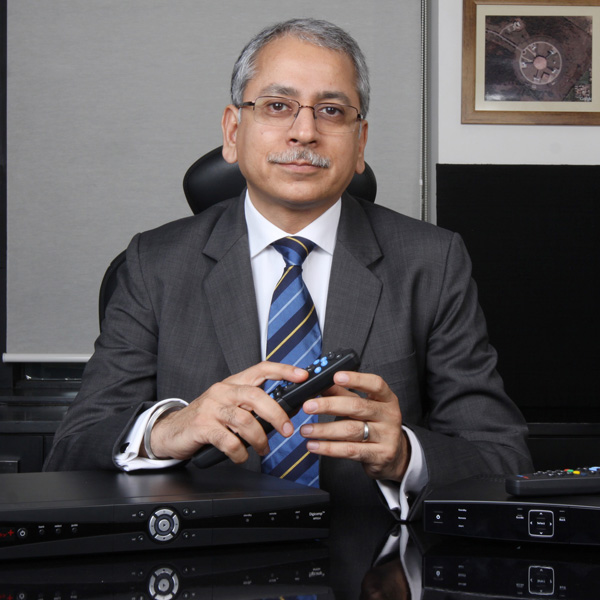
    When you first meet him, what strikes you most about him is his candour. Indeed, Tata Sky managing director & CEO Harit Nagpal has got a reputation of speaking his mind. He was not afraid to come out in the media and make an appeal to ISRO when it delayed delivering him his transponders on GSAT-10 which would have allowed him to ramp up the offerings the Tata group, News Corp and Temasek joint venture could deliver to its customers. When the appeal got no response, he did not let it dampen him. Instead he chose to upgrade Tata Sky’s set top boxes from MPEG-2 to MPEG-4 at no cost to them.


    He was also quite open at the Indian Digital Operators Summit organised by Indiantelevision.com and Media Partners Asia when he invited his rivals and other players from the cable TV ecosystem to come in and study the best practices that Tata Sky has put in place. “The time has come for all of us to collaborate and grow the digital ecosystem,” he had said. “And my doors are open to anyone who wants to see how we do what we do.”


    That offer still stands, says Nagpal, who believes that Tata Sky has some processes which compare with the finest practices globally. Especially its single-minded focus on the customer and the experiences it provides them. Nagpal strongly believes in delighting the customer and his supplier-partners as well. “In this way, we will all grow together,” he says.

    Nagpal presides over the DTH Operators Association of India and has a CV which explains his dervish like focus on the consumer. A chemical engineering graduate with an MBA from FMS, Delhi, he has nearly 28 years of work experience with stints at Shoppers Stop, Pepsi, Marico and Lakme in various leadership positions in fields like Sales, Exports, Operations and Marketing. Before joining Tata Sky in August 2010 he was the group marketing director of Vodafone plc, working out of London.


    In a conversation with indiantelevision.com’s Seema Singh and Vishaka Chakrapani, Nagpal talks about the efforts which are needed to keep Tata Sky’s 11 million subscribers happy, the company’s decade-long journey and how it’s dealing with the national digitisation rollout.


    Excerpts:


    How was the year 2013 for Tata Sky and for the DTH industry? What will year 2014 bring for Tata Sky and the industry?

    2013 was what we had been waiting for years. It was strange that in a country like India where everything is regulated, there was one full unregulated industry that required government intervention. People developed cold feet when the process of digitisation began but after the first round took place both the industry and government were confident that it has to be and can be done.


    DTH gained hugely in the process. We don’t create a new customer; instead, we convert an analogue customer to DTH. Very rarely we have fresh customers coming to DTH. On a steady basis, this industry picks approximately three million customers every year. Also, every year DTH converts around four per cent of the 100 million cable TV viewers into DTH homes. In the cities that got digitised in 2013, DTH gained nearly 30-35 per cent of cable converts.


    So while we were converting around four per cent cable TV customers into DTH subscribers per year, with digitisation, we have moved it up to 35 per cent in a month. Now did we gain or lose, it’s for you to decide. The biggest advantage of DTH is that consumers can choose their pack and pay for it.


    At Tata Sky, we’ve had a very good year, in terms of total turnover, profits, growth rate, churn, average revenue per user (ARPU) etc. In every aspect, we are leading.


    The new year will have newer services and technology being introduced.


    What differentiates Tata Sky from other DTH players?


    There’s hardly any scope for differentiation here. With content being common and everyone having access to similar technology, there is no exclusivity. The only differentiation is through the service we offer. Stakeholders are judged on: a) how they manage customers without causing much trouble for them and (b) how they help customers recover as soon as possible, in case of any issue. 

    I have always believed that there is room for innovation. We started with standard definition (SD), high definition (HD), DVR, video on demand (VOD), ‘Catch up TV’ and now have moved to ‘Everywhere TV’. We believe in introducing one service every year. The service initially starts with being accepted by leading edge customers, which then percolates to others.

    How do you decide on the new services? Also, how do you ensure that it is accepted by the consumer?

    Customers tell us what they are seeking. We just have to go back to them and seek their pain points and then find solutions for that. We don’t start with technology and find customers. We try to seek their needs and then tailor services.

    The television sets in Indian homes are getting better, and so we have to ensure that we match the screens at home. Giving digital signals to cable TV homes was the first step, the second was HD. Even for this transformation, it was the customer that gave us the cue, since they were looking for better quality. 

    The recorder was introduced when we saw that people were expected to be in front of the TV when the show was being broadcast, it was becoming impossible for them to plan their day around the show. The answer to this was the recorder.

    When we saw it was causing inconvenience for customers to physically get a DVD from market and watch it, we launched VOD and followed it up with ‘Do it yourself’ films.

    Catch up TV came in response to customers wanting to watch something that had already been aired. Our latest addition was ‘Everywhere TV’. We found out that more and more people were spending time outside and were consuming videos on mobile screens. So we thought of connecting Tata Sky to the handsets. Through this, a decent broadband or 3G connection could help people consume content through ‘Everywhere TV.’

    How much a does a consumer pay for subscribing to ‘Everywhere TV’? How do you divide the revenue share? Do you think people would want to subscribe to ‘Everywhere TV’?

    If a consumer can buy a Rs 50,000 phone, he would not mind paying Rs 60 per month for ‘Everywhere TV’. The Rs 60 is divided equally among all stakeholders. So while one-third goes as taxes, the broadcasters take one third and we keep the rest. So, we would make around Rs 20 for the infrastructure we’ve invested.

    The need on which the product is based tells me it will do well. The first launch is restricted to iOS, but we will be launching soon on Android as well. We are happy with the numbers we got in the first three weeks of the launch of the service.

    Everyone is consuming videos today. And with the video consumption going up, prices are coming down. Even mobile phone operators want people to consume videos on phone. Everywhere TV is one way of increasing consumption and as networks start getting filled it is possible for mobile operators to drop prices. Our job is to create the product and make it affordable.

    How are the multiple services helping the company?

    The services are helping us increase the ARPUs without any price rise. When you are penetrating deeper into a market, your next customer is bound to give you less. The only way you can increase it is by making him consume more of what he wants to and make him pay for it.

    By offering more services and choice of packs, we have been able to ensure that our subscribers stick to us. The fact that we have growing ARPUs, we must be doing something right, by launching multiple services. 

    Have you been able to fulfill the need for more capacity with MPEG4 boxes? By when will the seeding of the MPEG4 boxes be complete?

    MPEG4 boxes have ensured that there is no real content shortage now. We started seeding MPEG 4 boxes this year and with that we have been able to fill the gaps. We had to leave Kerala and Tamil Nadu, because of capacity constraint. With the MPEG4 boxes, we have been able to go back to Kerala with 19 channels.

    It will take close to two years for us to complete the whole replacement process. We have 12 transponders and with these MPEG4 boxes, we are fine in the short to medium term.

    Recently the aggregator IndiaCast had a face-off with Dish TV over ‘on-request channels’. How does Tata Sky manage the relationships with the stakeholders involved?

    We have great relations with our content providers. We have long and protracted negotiations with them. However, that rarely leads to a breakdown of relations and we reach a reasonable and reasoned out number to renew our contracts. If we make more money we would like to share it with the partners.

    2014 may see disappearance of aggregators? Do you think it will affect the DTH players?

    No, it will not. I have been hearing news on these lines, but it doesn’t affect us much. If it comes into force, instead of negotiating with one player, we will have to negotiate with several players. But that is easy. These negotiations do not happen every day, these are contracts signed for three to four years.


    Apprehension is that if all this will result in cost hike. But I don’t see any cost issue. In fact, with aggregation we are forced to buy certain channels, which our customers don’t want. If TRAI decides to remove the role of aggregators then I may not take all the channels. I can save that bandwidth for products that my customer wants. Currently, what is happening is more and more bandwidth is getting clogged because of the channels that broadcasters wants to push and not what customers want to watch.

    In the long run, it is all about what the customer wants.


    Are the DTH players pinching customers from each other?

    At this stage there are no such plans. With 70 per cent still being analogue cable TV homes, we have enough scope from the analogue cable TV homes. We can tap that.

    Do you think India is still far away from US standards? Can we think of a time when DTH will totally replace cable TV? 

    I think we are already there. Any technology launched in the US is also available here. There are some services that are slightly better there but that’s dependent on quality of broadband. The day that gets better, the service experience will get better. There are infrastructural constraints that keep us from providing certain services that are present in the US. But, one has to start somewhere.

    Cable is getting digitised and so it’ll be there in the industry. I don’t think India will be an only DTH country. The industry improves only when more operators try to do new things. Life starts with fragmentation and moves to consolidation. I don’t think there’ll be consolidation in this business. Yes, the number of subscribers moving from cable to DTH is larger than reverse. But that doesn’t mean the cable will disappear.

    How has the response of interior towns been to DTH penetration?

    More than 60 per cent of our new customers are not from the top 20 cities. Once a service reaches them, they respond more positively than a person in the city. Most places we are going today are places with the presence of cable. There is certainly a kind of saturation we are reaching in top cities. Not like we are not getting numbers but there are certain limitations.


    More customers are available in the interiors. A good amount of growth is coming from basic services in interiors and high end in top cities. A customer, who came to us seven years ago, picked up our innovations each year. We are hopeful that someone in the interiors will also get onto our recording facility in a few years.

    To what extent has packaging been explored in India? How do you package channels for your consumers? Is it easy for consumers to add or remove channels from their pack?

    There was a time we were creating packs that customer didn’t even understand. In India, people don’t watch metals (bronze, silver, gold packs), they watch genres. Hindi news and Hindi soaps is something that everyone watches. What we do is that we put these in the base pack and then top it with a bit of music and other genres. We, then give two language channels because in most homes two languages are spoken apart from Hindi and English. Customers have a choice of adding other genres like English movies, kids, music, knowledge, etc on top of the base pack.

    We have services by which if a person who is not getting a channel he needs, can just SMS it to us and instantly the channel will be switched on. It’s instantaneous. Customers take a pack and then add on a la carte. So they take a base pack and then add channels to it. That’s where our revenues are growing. Our ARPUs are growing because we are making it easy for our consumers to buy more content.
  • SureWaves is one of the top 5 media options: Rajendra Khare

    SureWaves is one of the top 5 media options: Rajendra Khare

    BENGALURU:  The office of SureWaves CMD and founder Rajendra Khare has the word ‘connectivity’ splashed across its walls while that of his colleague and SureWaves co-founder Anant Kansal sports ‘diversity’ on its walls. According to Khare, the two words sum up what the pioneering media convergence company is all about. In an interaction with Tarachand Wanvari of indiantelevision.com, Khare talks about SureWaves’ journey so far and the road ahead. Excerpts…

    What role does SureWaves play? Tell us something about your team.

    SureWaves is a technology-driven media company that infuses the smartness of digital media like internet and mobile into the mainstream medium of television.

    A leading advertising medium for a vast number of advertisers, television accounts for 40% to 50% of overall ad spend in most parts of the world. With close to 800 satellite TV channels in India, the audience is fragmented and reaching them in a cost-effective manner is difficult. Distinct socio-cultural regions in India necessitate advertising be communicated in the right language and in a locally relevant context. Cable TV is a viable alternative to satellite channels in delivering highly targeted advertising and at lower costs. As reported by TAM, regional cable enjoys significantly higher viewership than most satellite channels. The challenge is to be able to aggregate the inventory across cable TV channels in India to provide a single window for advertisers to buy inventory and provide accountability.

    In one of the biggest technological initiatives in the Indian television industry, SureWaves has been working on nation-wide integration of cable TV advertising through the ‘SureWaves National Spot TV Network’. With over 250 cable TV channels run by key MSOs in different parts of the country now connected to SureWaves’ central grid, it offers instant access to the combined viewership of regional cable on a market-by-market basis. The SureWaves network is now positioned as one of the top five media options for national advertisers in all parts of the country.

    This has been made possible only through the sustained passion and efforts of the SureWaves team – a rare combination of top talent in technology, media, marketing, research and analytics. SureWaves co-founders Anant Kansal and Tapan Datta bring significant experience in technology-based operations and marketing communication. Chief Operating Officer Mandar Patwardhan is a media veteran who has served long innings in mainstream television and radio. Our business leadership team is constituted by people who’ve had stints in organisations like Star, ESPN, Zee, NDTV, Times, Radio Mirchi, Radio City, Group M and Reckitt Benckiser.

    Please describe the technology deployed by SureWaves.

    At the heart of our technology is the ‘SureWaves Media Grid’, a cloud-hosted scalable platform which allows instant access to multiple TV channels, filters them basis geography and genre, checks on available inventory, and schedules commercials. The grid also provides telecast reports in near-real time for each spot across all channels with time stamps.

    The ‘SureWaves Media Grid’ works in conjunction with edge devices called ‘SureWaves MediaStation’, which reside in the respective television channel studios or cable-head ends, and perform seamless insertion of ads during scheduled commercial breaks. Technology allows not only the capability of centralized delivery, scheduling and monitoring of advertisements but also integrates with industry standard tools to enable effective campaign evaluations to seamlessly integrate with the clients’ media planning process.

    In effect, SureWaves technology is a solution for large scale media fragmentation, whereby people can watch what they like through the growing number of niche and regional channels of their choice and yet, it is possible for advertisers to reach out to people, irrespective of what they are watching. Technology makes it possible to buy inventory on a market-by-market basis, achieving a sharp targeting capability on television for greater efficiency and effectiveness. SureWaves has been a pioneer in the field and has filed several national and international patents for its innovative technology.

    You tinker only with the cable operators/MSOs’ own content, own channel, not the broadcasters’ content aired through the cable operators’/MSOs’ infrastructure?

    That’s right. We partner with MSOs, who run and own their channels and also own the channels’ commercial inventory. We do not tinker with broadcasters’ content, where the MSO is acting only as a last mile distributor of the content through their cable network. Some niche and regional satellite broadcasters have also joined the SureWaves network, and partnered us to benefit from the seamless access made available to their inventories to national advertisers by us.  

    What is your estimate of the market size?

    What SureWaves offers is comparable to the top four or five GECs in the country in terms of reach and viewership.  Top national advertisers have already tasted the benefits of our network and are making it a part of their regular media plans. In addition to the huge viewership and reach, SureWaves also offers sharp targeting capability on a market-by-market basis. International trends show that marketers and advertisers gravitate towards media, which enables superior targeting. In bigger media markets like the US, where choice of market-wise targeting on television has been available to national advertisers through Spot TV, Spot TV commands nearly 20% of the overall television ad spend on account of national advertisers.

    What kind of infrastructure do you have in place, and in which regions of India?

    The ‘SureWaves Media Grid’ is a cloud-based infrastructure which works in conjunction with Media Stations that are deployed in the studios of each of the channels who are part of the SureWaves network. We now cover all 28 states and union territories of India and deliver upwards of 80% regional cable viewership in all markets. 

    So you depend on TAM or maybe BARC, once the data is in place. Don’t you think that the sample size is too small, particularly in the case of regional cable, to present the true broader picture?

    Industry has already taken cognizance of the sample size being small for a large country like India, and concerted efforts are being made to increase it. Since the viewership measurement is presently limited to metros and 160-170 large towns, a big majority of the television-viewing population in India which resides in the 7000+ small towns and in rural India is not covered. Cable TV channels have a relatively stronger hold in these areas and the numbers for regional cable would begin to look even better as and when these towns begin to get included in measurements. In the coming years, tier-2/tier-3 and LC1 towns will be seen as real growth engines and advertisers are already beginning to factor the power of regional cable despite the gaps in formal measurement in these markets.

    Since you have a Broadcom background, don’t you think that a reverse signal will take care of a number of problems? Is a reverse signal possible, given the infrastructure at the last mile? What kind of changes will have to be made at the MSO end? Will it be cost-effective for all players, viewers and the current ecosystem?

    Reverse signal can help to an extent but it also needs to be combined with demographic data, which is an important part of the people meter-based approach to viewership measurement. There are new technologies that can be applied for recognition of television viewers. However, standard STBs serve a different purpose and are not designed to gather and transmit back the measurement data through reverse signal. Further, reverse signal data would also need to be further collated from the MSO head-ends to the measurement agencies, which may not be trivial. It is a good problem to solve but industry is in a comfort zone and there has been no real momentum in using the reverse signal for audience measurement by leading measurement agencies. A combination of reverse signal and secondary research data is perhaps an option.

  • ‘We want to be number one. Life OK has always grown in leaps’

    ‘We want to be number one. Life OK has always grown in leaps’

    When two years ago Star India decided to “reincarnate” one of its older channels Star One as Life OK and repackage it with new, fresh content, nobody expected that in a short span of time it would offer stiff competition to the other existing general entertainment offerings. For hadn’t the Star India management been at a loss for quite some time as to what it would do with it.


    But with some path breaking content like Saubhagyavati Bhava initially and Savdhaan India and Devon Ke Dev…Mahadev later, not only did the newbie Life OK lure viewers to itself but it also got industry pundits to take notice and nod their heads in appreciation.


    It still describes itself as, “a brand new general entertainment channel (GEC) that turns up the volume on the things that really matter through its unique and poignant stories” on its online homepage. And general manager Ajit Thakur is happy that he “didn’t succumb to the temptation of doing the usual GEC saas-bahu soaps.”


    On the occasion of its second anniversary Thakur had a chat with Indiantelevision.com’s Disha Shah on its journey so far. Excerpts from the conversation:


    Two years for any media entity implies that it is here to stay. Would you say that for your channel?


    Absolutely we are here to stay. But I think two years later there are lots of thoughts – the first thought is that – when we started two years back, we had the backing of Uday Shankar, Sanjay Gupta and the Star Network that this was the channel which was not going to be a flanker to Star Plus but a challenger. It was a promise. 


    Two years later, I think the promise is more than fulfilled and real. And there are many good things about it – the fact that in this year almost all channels have declined, and Life OK is only one of the two channels which have grown through January-December this year.


    We are happy at the fact that we didn’t succumb to the temptation of doing the usual general entertainment channel (GEC) – saas-bahu soaps. We have stayed away from it because we didn’t want to divide the family; we wanted to entertain the entire family. We are not targeting women, men or kids but all of them. We have managed to do it differently and with a lot of conviction, remained profitable, continued to grow, so that is a very happy place to be in, but are we there yet? No, I don’t think so we are there yet. It is a glass half full. We have a lot more shows working but we haven’t had a big impact like Mahadev in the last two years.


    In terms of marketing, we have a long way to go with the brand. Life OK is there in terms of reach and people are talking about us, but we are still not the number one channel in terms of overall numbers. And it is equally important from the perception point of view, we now have to start scaling and telling people that we are amongst the top channel. Thus perception, big shows and somewhat impact has to come through.


    What have been the high and the low points for the channel in the last two years?


    The launch of the channel was itself a high. When Mahadev took off after four months of the launch, it was a high. The fact that on weekends nobody gave us a chance but today we are at number two/three without a single singing, dancing or a big non-fiction show, on the back of alternative content like Savdhaan India and Shapath.


    I think the big high for us is that almost every day I have people calling from other channels and some production houses saying that, “We don’t care if you are at number six or four or number one. There is something working for Life OK and we want to join.” And this call comes to us every single day. That is something about the culture we have created. The young team and everybody doing their job for the first time even at the HOD level – that is the big high.


    We are still not number one, that is the low point for us. We want to be number one. The lows are that for every one hit we had three failures. But we take it in our stride, I think the day we stop failing, we stop learning. Without the low the high is not as enjoyed as when you have a low.


    To what do you attribute the success of Life OK?


    First and foremost, Star Network had the vision to create its own competition for Star Plus. Without the network, we would not have been where we were. Second, it is the sharpness and clarity of the brand vision that we wanted to be the brand for the family, we will not do saas-bahu, we will go beyond entertainment into social media messaging. Third and the most important reason is the kind of people and culture we have attracted. Even though we stay in the same Star Network building, Life OK has its different kind of culture of its own.


    How would you rate Life OK today and before you joined?


    When I came in, the channel’s work was in progress. Since I have been in the Star Network, one thing I have done for Life OK is that I have put people and team together. Most of the people who used to work for Star One are still with Life OK. So it’s about commitment to the new vision rather than different people.


    What is the life-cycle of a programme on Life OK?


    The attrition rate is very high. One, we pick up stories that are more of a finite series. Second is we don’t take regular saas-bahu stories where you know that you cannot keep the story stretching for long. Third, we always take risk in trying something new. Our risk appetite is high and also failure rate is high. But like I said, I have enjoyed. There is so much to learn from each failure. Because if we don’t try the new genre, how will we learn?


    How do you differentiate between Star Plus and Life OK’s target audiences?


    Star Plus is focused on the young new women of new India today. At Life OK, we don’t want to take a TG cut because we don’t think that is important. We want to cater to the entire family. But within that the mindset which Star Plus is targeting is different than Life OK. The difference is very clear when you see the channel – we offer something for the entire family. If you watch the channel at 7 pm and 9 pm, there will be different kind of stories. It will not be the same story set in the same house. And that is what we take pride in.


    What is the channel’s reach as compared to other channels?


    Our reach has been growing. In many weeks, we have been number two or three in the ratings chart. People were not sure what will happen to the channel after LC1 and digitization but we are the ones who have been growing right through because digitisation meant that our platform was available and we got an equal chance. 

    So in LC1, we are always going to be deeper because when we launch, we launch with 100 markets in 100 towns with outdoor and everything. So from that point of view we were fairly clear that we will be able to stick to our strategy and deliver some numbers.

    The highest reach is 55 per cent and we have reached almost to 50-54 per cent. We have hit 54 in some ways depending upon the launches and other activities. Now what we want to add to this reach is impact.


    Has the channel attracted new producers?


    Absolutely. Even when we were at number six, we have had some of the best producers working with us. Today the line-up in the next six months includes productions by Ekta Kapoor and the Barjatyas. We are also working with many Bollywood directors and actors. Whether we are at number six, four or one, the attitude and culture of Life OK has remained unmatched.


    Are you looking at pushing the envelope of storytelling further?


    All the time. It will be edgy and extreme. If you watch Ek Boond Ishq, it is extremely edgy. It is the reflection of what is happening in that household. Dil Se Di Dua… Saubhagyavati Bhavawas extremely edgy, like a thriller, Main Lakshmi Tere Aangan Ki was almost a love story in comic.


    What new genres you plan to get into programming?


    We have done fantasy with Hatim. For me Ringa Ringa Roses is also very interesting – it is not a typical horror, but about paranormal activity. I want to do a family thriller. I also want to do a period drama, which we have not done yet. These are the next two genres I can think off.


    Are you considering adapting international formats?


    That is the big part of our strategy. We will do more formats. First we started with books –Navvidhaan – which is already on-air as Tumahri Paakhi. We are looking at two more books. We are also looking at three-four American series. Also, for the first time a lot of new producers are working for the channel. All this is happening in the next six months.


    How much research work goes into developing the channel? Is it rigorous?


    A lot, because this is something I fundamentally believe in it. Research is not about should we do this or not, our research is primarily focused on what is small town in UP? What is Bombay? What are they thinking? What are the shifting preferences? Most of our research is about understanding aspirations of the audience. What they want to do? How are they reacting to things? What are their views on India or elections and many more? We are trying to understand everything that is happening in their lives. We have a very consumer focused outlook.


    How have the advertisers taken to the channel?


    If you look at the channel a year back, except for Mahadev we did not have sponsors for any show. Today, we have a sponsor for every show. In some shows, we even have two sponsors. We have grown on reach. One year back only Mahadev was delivering on reach, now shows like SavdhaanShapathEk Boond IshqGustakh Dil and even Tumahri Paakhi has good reach. Each one is attracting more advertisers and each is different.


    We have everything from Shakti Bhog to Hindustan Unilever on the channel. They are as different from each other, but they co-exist because the brand delivers reach in different markets and in different TG. And you can slice and cut it in different ways and do that. We have telecom, automobile, all the big FMCG brands and also the local brands which are coming out in a big way to advertise with us.


    What are the cumulative between men and women viewership? How much of it is children?


    It is 52 per cent female and 48 per cent male. Lot of GECs would have 58 per cent women. Within male and female, kids would be 15 per cent.


    Which are your big markets internationally apart from India?


    When Bachelorette India launched, UK and US were big markets for us. We have experimented but some of it has not worked in India. However, in International markets, it has worked well. Other markets like Canada, Middle East is very big for us and I think with Hatim it will become even bigger.


    Life OK is at number four right now, any specific programming strategy?


    Historically when we have grown, we grew to 100 then we have stayed for some time, then we went to 120 and stayed for some time, then 140 and 160. So we launched at eight per cent share, and we have seen a growth of 14 per cent share now. We have always grown in leaps. It is not a trick. What we did with Mahadev, Hatim is one scale above. We are going to take content to the next level.


    What is your plan for the next few years?


    Of course we want to continue to grow. Big plan for next year is that we want to tell people that when Life OK is serious about something, it really makes an impact. And that is what we want to do. We want to create an impact. We want to create three-four shows but all done differently. We want to have some impact properties, some big stars and directors on board.


    But most importantly, we want to break few more norms. We want to create new genres, we want to look at some American content coming to Indian television but done differently, we want to shoot in new light – what we did with mythology, we want to do the same with other shows. So anything to push the content, marketing and people agenda in a different direction.


    On the digital side, how do you keep your viewers engaged?


    I want to build the brand. I just don’t want people to come and see posters. Hatim is very active on digital but we want people to come and see the show. We talk about serious issues through all our shows. We just launched our Savdhaan app which is about when you travel to any city in the country that app can tell you what to watch out for and which streets not to go to. So the brand thought is so powerful that we want to continue to build the brand on digital. Our digital agenda is not going to be only about the show.


    Has the channel achieved a break even? (Estimated 300-350 crore per year)


    We are profitable in our year two. We are very different from the GECs. Shapath being the classic example, at 9 pm, every other GEC on weekend has singing and dancing shows – that cost is 5x and Shapath is x (20 per cent of that cost). Shapath manages 2 TVR, all the other shows get around 2.8. It is working because it is different.


    What was the biggest challenge for you?


    Biggest challenge was to stay quiet and don’t talk too much about it and just deliver results. And why should I talk about it? Viewers are accepting it, advertisers are advertising in it. Trade is interested in it.


    What future do you foresee for the channel in the digitised world?


    I think digitised world is only going to demand more content. Content will be the king. People will demand the kind of content they want. So for me, the fact that we have variety and we are younger, fresher – all of it is keeping us in good place in the digitised world.

  • ‘It is in the interest of the Indian content makers if Glow TV works’:KAGISO MEDIA ED AND KAGISO BROADCASTING CEO OMAR ESSACK

    ‘It is in the interest of the Indian content makers if Glow TV works’:KAGISO MEDIA ED AND KAGISO BROADCASTING CEO OMAR ESSACK

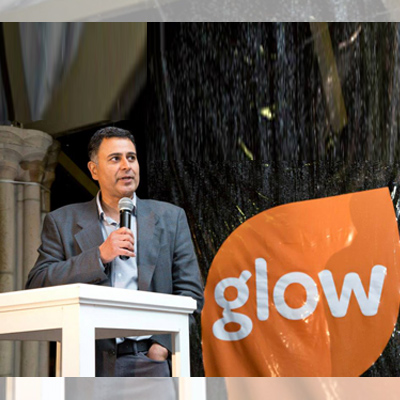
    With six radio stations – East Coast Radio, Jarcaranda FM, Heart 104.9, iGagasi, Ofm and Kaya fm – already in its kitty, the South Africa based Kagiso Media Broadcast has ventured into television with the launch of its first free-to-air (FTA) channel, Glow TV, which calls itself ‘eastern inspired’ and has Indian content accumulated from across the globe. Glow TV, a partnership between Kagiso Broadcast and Nolava Television that mainly works as content source provider, is just about a month old and is looking at creating original content in phase two.

    Kagiso Media ED and Kagiso Broadcasting CEO Omar Essack was in India recently to acquire content for Glow TV, which already boasts of shows such as season one and two of chat show Koffee with Karan and fiction show Bade Achhe Lagte Hain.

    Essack, who is of Gujarati descent, believes Glow TV will appeal not just to Indians but everyone in South Africa. In a conversation with indiantelevision.com’s Vishaka Chakrapani, Essack speaks about Glow TV’s uniqueness, appeal of Indian content in South Africa, Kagiso Media’s future plans and his expectations from the TV and digital mediums after a successful run in radio.

    Excerpts from the interview…

    What was the purpose of your India visit?

    This trip is about building relationships. All the big players in India don’t know who we are and we want to let them know our ambitions. Glow TV is our first channel but the intention is to grow and have more such channels. South Africa’s population is 50 million, out of which there are 1.5 million Indians, but our vision is a cross over. We are cherry-picking Indian content, packaging it and presenting what we think is a uniquely South African proposition – content where Indians make an appearance. This trip was to acquire programming and increase our rights. Helped by our JV with Microsoft; we want to do digital content for online and mobile as well.

    What kind of content are you looking at from India?

    As of now, we have about six hours of content repeated four times a day. We are also scouting good programming in Tamil and Telugu. The first question is whether it will work with black and white audiences; maybe a film like Cocktail would. Our target audience is females between 25 and 35 years and our primary relation for movies in India is Eros Entertainment.

    What are the shows that you currently have?

    We have a telenovela from Brazil called India – a love story that has Brazilian actors and is set in India, Rio de Janeiro and Dubai. Going forward, we are looking at more content from South Africans featuring India. The heart of our channel is to allow people with different cultural experiences to enjoy this eastern experience, which is accessible to them. We have spoken to Star, Zee and a production company that does unique content for YouTube as well as unique content in English that isn’t available on mainstream TV in India in the English language. This will help us connect with our audiences.

    What is the viewership of Glow TV and what marketing initiatives do you have in place for it?

    Glow TV currently has about 5000 STBs through Open View HD that cost about $89 (each). We are looking to find opportunities on digital platforms as well. There’s DSTV that is a big pay TV provider, which has FTA channels only at entry level. The reason we launched now is that in South Africa, it is Christmas, and people have got their bonuses on 13 December. We are assuming if we do a lot of marketing, people will buy more of the boxes.  About $9-10 million is going into marketing for Open View HD, and Glow TV is putting in $ 1.4 million, using its radio stations and websites to advertise. Our stations Jarcaranda and East Coast Radio have two million listeners each. Our primary audience is not Indians, which is why we are stretching the channel so hard.

    Soaps such as Kya Hua Tera Vada and Bade Achhe Lagte Hain are quite popular in India

    Was it easy to convince your board of directors to venture into TV?

    That was our biggest challenge since we are very successful and profitable in radio, when we thought of venturing into TV, our board was nervous. Glow TV is a proof of consent. They told us to show them we could work and bring in revenue and if we could, they would give us more money for Glow and more channels. We don’t have too much for movies but enough for shows but they are older ones that have been seen behind pay walls, which will now be FTA.

    Did you undertake any research before you stepped into TV media?

    An AC-Nielsen survey showed that when a Bollywood movie was shown on our version of Doordarshan i.e. South Africa Broadcast Corporation (SABC), a million people saw it at 2 in the afternoon, out of which 700,000 were blacks. This research convinced us that Glow could work across different ethnicities. They won’t pay to go see it at a movie theatre or for subscription but if it’s free, they will watch it.

    What is your budget for Glow?

    We are working on a lean budget but I am glad that a lot of the content makers here like Sony, Eros, Zee, Star and BBC understand we are a start-up and that we are working on a tight budget. So it is in their interest if this channel succeeds because if we are successful, we can be a big customer tomorrow. By 30 June next year, we will know if we have touched the targets that the board set for us. If we can’t prove ourselves by then, the whole deal is off.


    We are cherry-picking Indian content, packaging it and presenting what we think is a uniquely South African proposition – content where Indians make an appearance.

    What kind of advertisers do you have?

    We are currently looking at increasing viewership but are also offering advertisers a proposition. We are selling ad slots at low rates but we are also giving them our ecosystem to reach out to a large audience. Through radio, TV, digital and Glow TV put together, we are giving a 30 sec slot at a couple of hundred dollars. On our radio stations, the morning show slot is $2500. So, we are giving a radio station at a lower rate. We call this ‘glow watt bundles’. The only disadvantage of launching in October is that most advertisers are already committed. So whoever we spoke to, said they can only commit to us in January. First, National Bank and Nedbank are close to signing but they want exclusive deals from January. A soda company is going to sponsor Kaun Banega Crorepati.

    What are your plans for pay TV?

    Yes, we do not want to restrict ourselves to FTA and are looking at pay TV channels in the future. The licence we are applying for is not specifically for digital, terrestrial or satellite TV. It’s called a technology-neutral licence. We can apply that licence for any technology in the future. We may say the digital, terrestrial space is too crowded, or the pay TV satellite space is too crowded. Some of the future technology we don’t even know yet. A licence is not a guarantee. We then need to apply for spectrum. Any media company needs to be on both free and pay. If we prove ourselves, we can try our limits not just for channels but for future things like VOD.

    What kind of local content are you looking at getting from Urban Brew Studios, your own production house?

    Urban brew will get local content for our channels. We have a group in the company that harvests data and helps us know about consumer consumption patterns. One interesting finding is that we don’t have a lot of sitcoms coming out of South Africa but the US has a lot that are popular here as well. Also, there isn’t a soap opera channel with South Africans made in the country. So these are some ideas.

    Sanjeev Kapoor’s cookery skills is set to charm South African audiences

    Your company has also delisted itself from the Johannesburg Stock Exchange. What led to this decision?

    The company has delisted, we bought out 49 per cent and have made the final payment to shareholders. The main motivation is that we want to invest in new areas and our shareholder (Kagiso Tiso holdings), which bought us out is committed to investing for expansion across Africa and they have the appetite to do that.  Most of our shareholders that owned our stock owned it because we are a productive dividend payer and so, twice a year, they would surely get dividends. Going forward, if we require investment to do the things we are looking to, we may not pay dividends on a regular basis because we are looking at investing as we expand into Africa. And that may not have suited some share holders.

    What was the price paid to shareholders?

    It was a premium of 30 per cent of the price that was listing at that time. There were some who resisted it but in the end, it was an attractive price.

  • ‘We hope to build the TNA brand in India’: TNA EXECUTIVE VP ANDY BARTON

    ‘We hope to build the TNA brand in India’: TNA EXECUTIVE VP ANDY BARTON

    For little over a decade now, Total Nonstop Action Wrestling, commonly referred to as TNA, has emerged a strong competitor to World Wrestling Entertainment (WWE). Headquartered out of Nashville, Tennessee, TNA is a privately-held American organisation which deals mainly in professional wrestling with other sources of revenue being live events, product licensing and direct product sales. In India to promote the brand in a big way, Andy Barton, executive VP of licensing and international television distribution, TNA, spoke to Sidharth Iyer of indiantelevision.com about TNA’s journey so far, the India connection and the road ahead.

    Excerpts from the conversation…

    As someone who’s been with TNA since inception, how has the journey been for you so far?

    My background is in the field of entertainment and it is very gratifying as what we do is very different from any other form of entertainment and we are a 360-degree company. We own and control everything; we produce the television content, we own and control our live events program, the licensing of consumer products, so our job is basically to produce content and monetise it.

    In this unique form of entertainment, most of the content that is seen around the world is exported from US. Save for Mexico which has two very vibrant companies and Japan that has about five, there is no home-grown wrestling other than America and Japan.

    How does it feel coming to India and what are your plans for TNA here?

    I had come to India last year and got talking to several people, and when we left mid-December 2012, we felt that the fit was so good with Sony Six – they are a young brand and so are we, compared to our respective competitors.

    The excitement they have generated with The Ultimate Fighting Championship (UFC) and some of the other properties they have, like the Indian Premiere League and NBA. The excitement they showed about marketing our product in those two or three hour long meetings we had last year and the way they spit balled ideas, we felt even they want what we are looking to do with our brand. The rest is history.

    How do you plan to promote TNA in a big manner in the Indian subcontinent?

    We have plans but the number one priority is to build the brand; we know that WWE has been on air here for over 15 years, so the first biggest step for us is to build the brand in the country and from a promotional stand point, we are looking for some local talent, as it will build connect with the audience much faster if they get to see a local wrestler fighting it out with the best in the business.

    This time round, we have come with a three city tour lined up over the next few days and have superstars like Kurt Angle and Gail Kim to promote the TNA brand. Finally, it boils down to the live events that we plan to conduct in the country to give that touch and feel factor to the fans, who will be able to build a better connect with their heroes and get to know them up close and personal.

    There is a huge opportunity in the live event space, because if you go back in time, WWE came with a live event to India way back in 2002 with RAW’s Tour of India. We at TNA do believe that we have to get on the ground and take advantage of the fact that we have such an interactive show. So, it’s all about building our fan base one by one.

    WWE has a substantial lead over us, but if you have a home depot at one corner, then you have a lows depot at the other. So, competitors bring out the best in each other; but if you really see the time that WWE has been in this space all by itself after WCW went out of business, we have provided that competition to them over the past 12 years and to keep doing that, it requires hard work, capital, advertising and commitment of our talent.

    Speaking about commitment, for our three city promotional tour in India, Kurt Angle, our hall of famer is here to promote the brand on his birthday and is away from his wife and two kids for the benefit of the company. I can’t ask for anything more.

    What are your views on the biggest competitor that you have in WWE? How are you pushing the envelope to gain a bigger market share?  

    Let me give you a global perspective; we at TNA play the long ball and this strategy relates to the entire world. If we look at the UK market – we have pushed ahead of WWE there and our show is watched more in comparison to WWE week in, week out. Ditto for Germany. In the US of course, it’s going to be tough to carve a space when there is already such an old and established brand and the same is with India.

    But looking at the history of the wrestling business, there have been a lot of brands that have come and perished like Extreme Championship Wrestling (ECW) and obviously World Championship Wrestling (WCW), that was tremendously successful but it just boggles your mind that a company that was making that kind of money and was hugely popular went bust.

    There is healthy competition and WWE’s product is different from ours and it’s all going to come down to hard work and it is imperative that we sign on an Indian talent. We have earlier ties with India when we produced ‘Ring Ka King’ with Colors which gave us production capability in the country. We also opened a wrestling school in India.

    As far as professional wrestling in India is concerned, there isn’t a lot that is happening in this space. I think if we can help with the infrastructure and help the people in India who are interested in getting into professional wrestling.

    It is a well known fact that many wrestlers move from one organisation to another from time to time and also make the move back; how does this work?

    Well, it’s something that depends completely on the superstar, in Kurt’s case – he has been with us for an equal amount of time that he was with WWE. Similarly, Gail Kim too was earlier with WWE, then made the shift to TNA, went back to WWE for a short stint, and has ever since been one of our leading superstars.

    Such movements don’t generally work for everyone, but if you take a look at our wrestlers compared to WWE, we are more on the road than them. So it is really encouraging for young talent that wants to be on the road for 300 days a year. And at the end of the day, it’s all about promoting young talent for the industry and keeping the roster fresh to keep the audience hooked to the show.

    That said, there comes a time in every wrestler’s time when he has fought everyone and there is no storyline left for him to play either the good guy or the bad guy. That’s when they plan to move across to other brands and refresh their own identity and again strike a chord with a newer set of viewers.


    As far as professional wrestling in India is concerned, there isn’t a lot that is happening in this space. I think if we can help with the infrastructure and help the people in India who are interested in getting into professional wrestling.

    We also look at how good the wrestler is with the microphone and his overall presence and accordingly align his image and expect things to work out, but we end up making mistakes many a times and do things to make it better.

    How does the company go about with different storylines and scripts? And how does it generally work?

    Like for soaps, we have writers and script writers, there are outlines given, ideas that come up and then there are ideas that are dismissed altogether. So the process is very similar to that in any other creative field.

    The process may start with the storyline or with the star, so we intend to use the potential of the talent by using an interesting storyline and seeing how the audience reacts to his personality. But the process is very similar to any other show, where we have people sitting around the table and just bouncing ideas off each other.

    Finally, what does the future hold for TNA globally and in India?

    Well, it’s only going to be growth, growth and more growth. WWE has been in its incarnation ever since Vince Junior took over from his dad nearly 30 years ago while we have been around for 12 years. So, I think it is for us to create the legacy of an entertainment company that will last and thus, we need to sign more and greater talent, more live events, better storylines and so on.

    We have no off-season, we work all 52 weeks a year – so the toll that it takes on the staff is immense – from those who write the show, to the crew that works on VFX and post production, from the ground staff to the wrestlers and referees.

    In terms of India, this is the genesis of something big. I see many more visits to the country; we will be ensuring that we are in constant touch with our fan base out here through various initiatives, and I hope that within a short span of time, we will be able to build the TNA brand and further hold live events here that will be telecast globally. We hope to bring down our superstars and get them to put on a full three hour show and sign autographs and interact with fans here.

  • “We will use the Indian jersey to promote all our brands” : STAR INDIA COO SANJAY GUPTA

    “We will use the Indian jersey to promote all our brands” : STAR INDIA COO SANJAY GUPTA

    Cricket – a game played on the greens with men in various colours battling it out with a bat and a cherry. And watched by billions of viewers worldwide. And the Rupert Murdoch-owned 21st Century Fox’s Indian arm Star India once again reaffirmed how much it is committed to  the game when the Board for Control of Cricket in India (BCCI) announced that it had agreed to become the title sponsor of the men in blue for the next four years.

    It already has the television, internet and mobile broadcasting rights to domestic cricket, it made a lucrative offer to become an associate sponsor of the IPL, and is investing in different language streams of commentary and channels for the game, and what have you. Clearly, apart from entertainment, sport is coursing through the management’s veins in India.

    Indiantelevision.com’s Seema Singh spoke to Star India COO Sanjay Gupta on the reasons behind the sports drive, the title sponsorship of team India, the challenges that lie ahead in monetising all its investments.

    Excerpts: 

    What was the need to take the title sponsorship of the Indian cricket team? How many days of cricket will be played from 2014 to 2017?

    It is a very important sponsorship for us. Cricket helps build awareness of brands and associations and we are seeking value coming from both. It is a serious value that we see as a business and hence this sponsorship.  Broadcast right gives us the opportunity to put TV ads on air. What the Title Sponsorship gives us is the name on the jersey, which is a very different asset. So now we can put an ad and also logo on the jersey. So in my mind, the way we are using it is that the jersey will be used to make the Star brand more salient in our viewer’s minds. Approximately 100 or more matches will be played in this period.

    Are you planning on any innovation as compared to Sahara, the previous title sponsor?

    We believe that sport is an asset that can be used for building and marketing brands in a very effective way. This hasn’t been exploited so far in India, as compared to sports globally.

    Our aim is to reinvent sports and we spoke about this when we said ‘refresh sports.’ We thought of adding non-live content and we wanted to do it in Hindi.

    We would be using Star brands, and it could be Star Sports, Star Plus or Life OK, which could find its presence on the Indian jersey once our sponsorship commences. We would like to build our brand in a very effective way using this association.

    When Sahara sponsored the Indian team, it never put any money on television. But, we believe that the combination of putting money on television and sponsoring the jersey could be a great innovation to build stronger brands. We will get a multiplier with television.

    When the jersey has a Star Plus logo, viewers will also be informed about Star Plus shows and what the channel stands for.

    Are you allowed to change the cricketing gear as part of the title sponsorship deal?  If yes, are you looking at changing the look of the jersey?

    The jersey’s look is the call of BCCI.  Since we are the title sponsor, the jersey will now have our brand name. We are looking at using multiple brands on the jersey depending on the need. So we could start with Star Plus, and after a year think of putting Life OK’s logo on the jersey.

    With Star India banking getting its hands so deeply embedded in cricketing, there is a perception of a monopolistic setup coming into the picture?  Your take on that.

    In my mind, if I look at cricket content, it is very equitably distributed amongst all the three sports channels. So, while we have the BCCI content, Sony runs the IPL, which is the biggest cricket tournament. Besides this, Ten Sports has the rights to South Africa, West Indies and the Sri Lanka series.

    All the three brands have strong cricket content. This makes it interesting, since having cricket on all platforms makes it reach larger audience base and in turn builds sports in the country.

    Many feel that cricket is overvalued, then why is Star investing so much on the sports?

    In my mind, cricket is undervalued. If you see all pieces of content: drama, sports, news, Bollywood, the content which has the biggest affinity and reaches the largest audience is cricket. 64 crore people watched the sport last year, which is higher than any piece of content and this cuts across all regions and languages. So cricket according to me is not at all overvalued.

    Sports help build brands, not locally, but nationally. And most people who today look at building brands are looking nationally and not only in select states. Anybody who feels that cricket is overvalued and doesn’t have power, needs to see its power through its reach and the impact it has on consumers.


    I personally feel that the sports content has been limited to English language and a few people. So taking sports deeper into regional market is essential and this hasn’t been done so far.

    The biggest heroes are the cricketers of the country. They are young talented people, performing well. Investment in sports and cricket is justified.

    You can never get enough of good quality sports and content; viewers  will always want more.

    Will you be backing other sports and diversifying your sports portfolio?

    Yes! We want to. We think cricket is the main stake, but we are not a single sports nation. There is a large followership of football. We are investing in football and hockey in a big way. We are going ahead and investing in Hockey India League. We have already shown our intent in badminton, by sponsoring the Indian Badminton League. We will invest money in all sports.

    Cricket was the one sport where we were not the partners. Now we have invested in that as well.

    With India losing on foreign grounds, do you see that as a problem for your investment and viewership?

    No, I don’t. I have high level of confidence that both sport in general and cricket in particular, will have its following and deeper engagement. We have opportunity to perform better even outside and it is not that we haven’t performed. In England we did well. We performed well across best teams and across best seaming pitches. It is a phase in any team.  But fundamentally, I feel that Indian team is performing dramatically. The game of cricket has got deeper in this country. All these new cricketers are from smaller towns. Even younger generation now feels they can be a part of team. The coming in of IPL has just deepened that desire of becoming a part of the team.

    What is needed to monetise your investments in sports? Do you think digitisation will help? Even if it is not proceeding as smoothly as you expect? 

    I personally feel that the sports content has been limited to English language and a few people. So taking sports deeper into regional market is essential and this hasn’t been done so far. So to fortify sports we want to reach out to different regions and into other sports, beyond cricket. We want to make sports big for every member of the family.

    Monetisation of sports is a challenge, given there is very limited transparency in terms of numbers given by analogue distribution system. I think, with digitisation we are seeing that changing over the next few years.

    Yes, there is a challenge with the MSO vs LCO tussle. But, I am an optimist and I feel there will be a better tomorrow than what is today. Also I think the overall content and media market is growing so much that every stakeholder has a potential to earn and earn reasonably and in a fair way.

    So, I see a very fair distribution of income and every stakeholder: MSO, LCO, Broadcaster will earn a fair amount.  The reality is that of the 140 million cable TV homes, already 70 million are digital between DTH and cable, which is a big leap in two years time. This market is large and is growing fast. Though there are hiccups, I am confident that things will be better.

    Digitisation will ensure that every household is well connected with a transparent set top box, a measurement system which is more transparent and fair money will exchange hands. I don’t know if it will happen in couple of months, but I am sure that in the next three to five years, life will be dramatically different.

    But the time is limited between the sponsorship, the broadcast rights and digitisation. What if there is a mismatch? How will you recover investments?

    Our sponsorship is a way to build our brand.  We have an opportunity to make our brands bigger.  As far as the broadcast rights are concerned, we will work towards resolving issues on the ground and related to monetisation as we move forward. Yes, I agree there is a risk, but we believe there is a reasonable risk and hence the investment. 

    Is your associate sponsorship continuing for the IPL?  Also would you take the broadcast rights once the rights for Sony expires in 2017?

    We had taken the rights for three years. So it will continue for two more years.
    As for the broadcast rights, there is nothing definite right now. We have invested a lot of money in sports already and we would like to see some returns first, before we make up our mind if we want to invest more. The big question for us today is how to ensure that the big investments we have made start reaping results.
    Our commitment made in rights is close to Rs 20,000 crore. It is a huge bet. We need to now unlock value and how do we take content deeper and also invest in more sports.

    Are you seeing an uptick in Star India’s ad revenues?

    Overall the mood in the economy is not very buoyant and I think everybody this year has been very careful on where they are investing. However, as we move forward, people will look at building their brands, so they will spend on advertising as it helps build strong brands. We will have bilateral discussions with brands. We are excited about the future.

    Growth rate in this country will not be less than 4.5 to 5 per cent in the next few quarters. And it may get better depending on the policies, with the party coming to power.

    Star India is seeing a very healthy growth rate, much ahead of what the market is seeing. I think the market will in the next seven to nine months grow at 10-12 per cent and we are significantly ahead of that in terms of numbers.

    Is there scope for sports viewership to grow in India and what is the advertising revenue earned through this reach?

    The sports channel viewership is approximately 4 per cent in India, while that globally is 15 per cent. We think there is a scope for growth and Hindi and other regional language commentary will help achieve that growth in reach.  Of the total advertising revenue, sports amounts to 10 per cent revenue share. 

  • “There’s a lot of mileage in pay TV news”:BBC GLOBAL NEWS CEO JIM EGAN

    “There’s a lot of mileage in pay TV news”:BBC GLOBAL NEWS CEO JIM EGAN

    As the country sheds tears over  onion prices, cringes about the skyrocketing cost of LPG, cribs for a better system in place for tackling the ever-growing crime incidents and hopes for the 2014 general elections to change things, the news channels are gearing up to catch all the action live. 

    And when all the international and domestic news channels are at it, why should the Beeb – the world’s biggest pubcaster that reaches over 360 million households globally; 12 per cent of which are from India – miss a chance to report on the political battle of the world’s so-called largest democracy? 

    BBC Global News CEO Jim Egan, who was in Mumbai to launch its India Direct series, reveals that the channel is looking at grabbing more eyeballs during the election season. The channel plans to scale up the coverage on India in the coming months. 

    And he gave some time to Indiantelevision.com’s Vishaka Chakrapani on the sidelines of the launch, to talk about the BBC World News’ India gameplan, its global digital push wherein it aims to melt the barriers between broadcast and online news. Egan emphasised that India is an important market for BBC in terms of pay TV and digital advertising.

    Excerpts from the interview:

    What is the benefit of investing in the news business in India?

    When I say investment I’m not talking about corporate investment, it’s about editorial investment. It’s been a good year for us in India. Digitisation has been broadly good for us and we are seeing our household penetration increase. 

    What is the growth in reach that you have experienced due to digitisation?

    It has grown steadily in single digit millions and has reached 30 million now, which means one in four homes. Digitisation is moving at a different pace in different parts of India. We would like to be bigger but we are addressing a relatively niche population in the English language and thus we are never going to be a mainstream news channel in the country. 

    With so many international channels making a mark in India, how will BBC World News differentiate itself and stay on top?

    We are looking at doing product and editorial investments to the extent we can afford it. Other operators are well resourced such as CCTV in China is well financed, so is Al Jazeera. If we are going to get into a spending arms race, BBC won’t be able to get there. We will capitalise on our reputation and emphasise on being different. Being successful is not about spending a lot as some qualities cannot just be bought.

    Why has the industry been hit with a bout of layoffs happening across the world?

    The last five to 10 years have been very difficult for journalism. It’s coming to terms with internet and digitisation. In  print, it has been a very difficult time, but not so much in India. A lot of broadcast journalism has been buffeted by the internet, particularly in international news. You see lots of retrenchment and people closing bureaus. BBC is slightly different because we have both public and commercial funding that has helped us expand and maintain ourselves. We are swimming against the tide but we are doing it deliberately because we think having a well funded and well resourced international network of correspondents is what success is about.  

    What about the entry of many international news channels in the market? Could that also be a reason that’s leading to increased competition?

    There’s been a bit of fragmentation but I don’t see demand for news going down. Demand for news is going in different directions. But as long as you are prepared from the editorial and corporate points, there’s good business to be made. It’s just at slightly different places these days.  


    We would like to be bigger but we are addressing a relatively niche population in the English language and thus we are never going to be a mainstream news channel in the country…

    In the future, would having multilingual skills be an important criteria for journalists?

    That’s an interesting one. I don’t think we would hire someone just because they can speak many languages but the ability to broadcast and write digital content in those languages is something we are seeking to develop and nurture. We are going to have a dedicated Asian edition of our website with front page stories about India and China. There will be global programmes to improve the profile and output of bilingual journalists such as the ones in India. We are producing more relevant and easier to find content for our websites.  

    How important is India on a global scale for BBC World News?

    India has been and will be important for us. There is huge digital consumption that is growing in the mobile sector here. India is the fourth biggest market in terms of traffic, the first three being the US, Australia and Canada in that order. We need a big English speaking market to do well for us, and I’m leaving the UK out of this. One thing particularly exciting about India is that in the other markets digital penetration is nearing saturation point but in India there is a lot of room for growth in the mobile sector.

    In the recent years, the budget of BBC has been cut by 20 per cent. Does that affect the investment?

    The 20 per cent cut is due to TV licence fee being frozen for a period of five years, taking inflation into account. Internationally, we are funded through advertisements while domestically we are run by public money which is an involuntary payment of about $200 a year. We have the challenge and the freedom to earn commercial revenues.  

    Original content on mobile is what people seem to be asking for. Is that something you are looking to cash on?

    We are not doing that in mobile because on this platform the key for us is about following news from screen to screen. It’s about trying to make news consumption something that people can take with them with their screens and stay up to date on their mobile phones. That’s the editorial idea. The product idea is to get more video content on mobile. One line growing more steeply than mobile is ‘video on mobile’ as people’s devices become better, internet packs get cheaper and network availability becomes more reliable.  From the commercial point of view, it is working with the advertising community for digital. 

    How big is mobile advertising given that mobile marketing forms a relatively small part of the marketing budgets in India?

    I don’t think mobile marketing in India is necessarily small compared to other countries. In most countries, mobile advertising has lagged behind mobile consumption of media. That’s another area where you are seeing rapid change and the amount of money we are generating from mobile globally has come a long way in the last four months. India is one of the biggest growth markets for mobile apart from sub Saharan Africa where mobile device consumption is also increasing.  

    Do you see threat from OTT in the country?

    When I’m in India I haven’t till date heard people worrying about OTT. TV adoption is still growing as well as pay TV penetration, although not so drastically. Too many people have written of TV news as something people want to consume and as well as pay for. But I think there’s quite a lot of mileage left in pay TV news.  

    How do you deal with carriage fees in the country?

    I’m glad to say we don’t pay for carriage but we rather earn from it. I wouldn’t say we haven’t had a problem with it but it’s been a business policy. We don’t think we should have to pay people to carry us. We are very proud of the quality of BBC World News. Our business policy is often questioned.

     When do we get to see BBC HD TV in India?

    One of the new features of the new office in London is its native HD transmission from glass to glass, ie camera to screen. In a number of markets in Asia we are introducing BBC World News in HD. We would love to launch in HD here but we don’t have any active discussions underway. The markets in the world where we are present in HD, like Singapore, have given us good feedback and we believe HD would be a good value addition to our distributors.


    We will capitalise on our reputation and emphasise on being different. Being successful is not about spending a lot as some qualities cannot just be bought…

     Looking at a possibility if FDI norms are eased in India, do you see a Hindi news channel from BBC?

    I don’t think we will set up a corporate vehicle here to be honest. We have a Hindi show called Global India on ETV so it is a content supply set of arrangement. We’d like to be bigger in Hindi and other languages but I don’t see us making a corporate investment in the Hindi news business.

    Do you see the possibility of a JV in India?

    We were examining a possibility of doing a JV in the Hindi language but it didn’t work out due to issues such as FDI regulations and MIB stipulation around editorial. The concept of editorial content is very hard to share.

    There is also a financial reason. We are not in a position to make capital investment into a JV that will be successful and have an impact in one of the world’s highly contested news landscape. We are never going to be better at covering Indian news than the Indian news providers themselves.

    We will cover Indian news to show them globally but not try to outdo the local competition. That is something that you cannot do because it is an extremely dangerous and expensive game. 

    Will we see BBC World News going regional?

    We always talk about relevance more than presence. Although we won’t be a part of the Indian domestic news landscape, we want to be relevant to audiences here. There are financial limitations to such a prospect too. We can’t tailor everything for 100 different markets around the world. So, instead we always think from our broadcast centres as to where is the peak audience at that point of time that will view the channel. 

    How many Indian advertisers do you have and how have they been doing lately?

    We have about 10-20 advertisers from India such as Karnataka tourism, Bharati Airtel, Micromax and airlines who want to reach an international audience through TV as well as online. Our Europe market was hit badly due to recession but Asia stayed better. However, this year has seen a slowdown from our Indian advertisers.

  • ‘We are building India’s first Youth GEC, slot by slot’ : Channel [V] and Star Pravah EVP & GM PREM KAMATH

    ‘We are building India’s first Youth GEC, slot by slot’ : Channel [V] and Star Pravah EVP & GM PREM KAMATH

    From an international music channel in its early days to a Bollywood music driven one to a youth oriented entertainment offering. That’s the path that the Star Network owned Channel [V] has taken. Its last overhaul in July 2012 has reaped rich dividends with shows such as Gumrah and The Buddy Project generating loyal viewership apart from pocketing awards. The prestigious Indian Telly Awards, 2013 recognised the shows by bestowing the Best youth non-fiction and the best youth fiction show awards respectively.

    The man who has been piloting the Channel [V] ship through this latest journey is Captain (pun intended) Prem Kamath. A former advertising executive with stints in Enterprise Nexus and Chaitra Leo Burnett, Kamath spent a short period as marketing head of Star India before being assigned the task of heading Channel [V] and giving it direction in 2009. His successful reengineering of the channel last year led to him being given additional charge of Marathi channel Star Pravah.

    Last week he announced that he was rejigging Channel [V] once again with a new logo, new packaging and a slate of new shows.

    Indiantelevision.com’s Disha Shah caught up with Kamath for a tete a tete to understand from the man himself what is it that is working with Channel [V], where does he see it going and, finally, sundry industry issues.

    Excerpts:

    Please define the Channel [V] viewer in terms of demographics and pyschographics?

    In terms of demographics, I think the way TAM is structured, we define it as 15-24 ABC, but I don’t think that is necessarily a homogenous group. So, internally, we operate through a psychographic definition of youth. And for us, we define youth as a period between childhood and the time you gain economic independence. It means you are no longer a child and you have not started earning on your own and that life stage is what we define as ‘Youth Life stage’. Because we believe that life stage brings in a whole set of unique issues, attitudes and experiences that are common for those between 15 and 24 years of age. And this is that mindset we really try to talk to.

     What is the differentiator for the channel?

    The biggest differentiator for us is that we are far more rooted and far better connected to the youth than most other channels. We have a far deeper understanding of the youth and a finger on the pulse of the audience and that’s fairly evident from the fact that whatever the kind of programming we do, other channels start picking up two to three years down the line. We did Gumrah 3 three years back, and now you find Bindaas doing a show which is very similar, you find MTV Webbed doing something very similar, which are all slices of what we did. We do believe that our understanding of what the audience wants and how the audience behaves is far sharper and deeper than most of the people out there. I don’t mean just television brands, but brands in general and I think it’s that strength we try to leverage while creating programming and content. That’s really what is behind our success more than anything else.

    What have been the channel’s achievements over the past years?

    I came on-board in February 2009 and we did our first re-launch in August 2009, where we introduced a host of new shows and started reducing the amount of music. In those days, we used to get 8 or 9 GRPs and we were ninth or tenth on the list of youth music channels. And today, we are a 45 to 50 GRPs channel so it’s a five to six fold growth in terms of market share and revenue also. So, in terms of our run, the last four years have been extremely good. We have charted a new direction for the channel. For the channel, it was an experiment that we undertook at that point of time, but it is something that has paid off extremely well for us. We are at a stage today, where we are clear we have a foundation to build India’s first truly large mass youth general entertainment channel. And that is what we are building slot by slot.

    What circumstance forced Channel [V] rethink its raison de’etre?

    We were playing music videos at that point of time and there was a time, when people used to tune into television to find out what’s new in music. And I think that time changed several years back with the advent of the Internet, where people had multiple means of consuming music.

    The relevance of television for accessing music has gone down dramatically. I don’t think anyone tunes into television to find out what’s new in music.

    So, that was the first point where we said that if we want to be a youth channel, we have to widen our scope beyond just music, and that is where we started our journey. The second aspect is music is a commodity. It is the same content that all the 18 other music channels of the market have access to and there is no such differentiation. And thirdly, music cannot create appointment viewing, which is very critical if the channel has to monetize its audience through an advertiser.  

    All of these pointed us in that direction that if we have to become a relevant youth’s channel, we have to go beyond music into creating our own proprietary shows.

    What was the feedback that you got from viewers after the change from music to reality shows?

    The first feedback we got was a lot of hate mails from old channel viewers saying: Why are you stopping music? Why are you abandoning music and why is Channel [V] selling out music etc. But I think the kind of response we have got from our new viewers has been phenomenal. So the five-fold growth in the market share does not happen unless there is an old host of people embracing you for the new direction. And it’s a change that had to be made and we have moved forward. Now the real job for us is to build on this, consolidate on the good and solid start that we have had and go towards building something substantially larger.

    What have you learnt about your audience? Considering you have been at the helm for about four years now?

    One of the big things that we have learnt is how quickly the audience changes. How quickly the tastes change. And that is in sharp contrast to how shows run on GECs. That is something we have learnt along the way as well. We always had programs that did well for us. With the current run of shows, we have extended it to more than we should have. So the replacements that we are doing right now, in retrospect, we should have done four to six months ago. So that is something we have learnt and it has reflected in our demonstrating that we are now going with finite series. So we have series that will end in six months. We are forcing ourselves to end them after six months and we will put something new even if these shows are successful. So, all our programs are designed that way. That’s been one of the biggest learning. The other learning is connected to what I believe makes us strong, which is that we need to have a very sharp understanding of our TG. Unless we dig really deep to get a sense of the audience, we will never be able to create something which is relevant to them.

    The youth is a fickle audience with a short attention span. How do you keep them engaged?

    One of the things that reflect in our content is that these are all finite shows. They are two days a week, not even daily, and they last only six months. This allows us a story pace which is faster, lets us do things a lot more unpredictable where we don’t have to drag storylines and don’t have to just fill in six days a week. That lets us keep shows tighter, crisper, more unpredictable and therefore, more dramatic. The other aspect we engage youth through is social media. We keep them engaged through a lot of contests, questions and a whole set of engagement activities. This has been one of the areas that have worked well for us. This is revenue where we keep things fresh by doing different things on a daily basis.


    We also believe that a large part of the country is youth that is either not watching television or is watching whatever is there on television for want of a better option. And that’s the gap that we are trying to service…

    What shows are working on the channel?

    Gumrah – End of Innocence has been the big show for us. Dil Dosti Dance (D3) has always been the highest rated show since we have launched. Apart from that, Buddy Project has also been decent for us. Therefore, these are the shows that will continue, along with the four new shows that we are launching. At present, the channel is getting around 10 to 12,000 TVTs on a weekly basis.

    How many hours of fresh programming do you air currently?

    We currently run about 10-hours of programming a week, apart from the movie content that we do.

    What role does research play to help you stay connected with the audiences?

    Like I said, our entire body of work is based on fairly extensive and on-going research. All the shows come forth from specific consumer insights. And they start with the brief that is based on the consumer insights and shows are developed in and around them. So we engage with our consumers on a continuous and on-going basis.

    What future do you foresee for the channel in a digitized India? Do you expect a second and third youth channel being launched under the Channel [V] brand?

    I think as we go more and more into digitization, it will be critical for the channels to differentiate themselves sharply. The only channels that will survive are the ones that have a very sharp differentiation and those that can very well service whichever segment that they define their audience is. And that is what we are clearly doing.

    We are very clear that we are a youth channel; we believe that there is a great potential and great market for youth-centric content. We also believe that a large part of the country is youth that is either not watching television or is watching whatever is there on television for want of a better option. And that’s the gap that we are trying to service. Sometimes, digitization is great for channels like us, which are highly differentiated and it will only drive more and more demand for us.

    As far as the second part of your question, I think it’s too early for that. We are still laying the foundation of something that can be significantly larger than what it is. Overall in the market, there are youth who contribute about 3,000 GRPs if I use the old metrics. And even a ten per cent share out of that is a 300 GRP channel, so I think from 50, we still have a long way to go before we have maximized the potential of the channel that we have right now.

    Who do you feel is your competitor?

    I don’t think there is anyone who is doing what we are doing today. Both Bindaas and MTV or any of the others have 75 per cent of their content as music. We are cast in the mould of a general entertainment channel because we are running our own shows and our FPCs are in that fashion. There is no other entertainment channel which airs 24 hours youth entertainment shows. In that sense, we are fairly unique. But I do believe that sooner or later, there will be more players who will start doing exactly what we are doing.

     Is creative talent which understands youth programming as an issue today?

    No. It is a challenge. Most of the talents that are in the market today are geared towards creating content for GECs because that has been the lion’s share of entertainment so far. We are trying to source new people, we are getting people who write teen fiction to start writing for television; a couple of our writers are first-time writers on a couple of shows, who are writing for television for the first time but who have been bestselling authors. Some of the shows that are pitched to us have not come from production houses but have come from creative directors. So, we are improvising on the content eco-system as well, because there isn’t much talent available to cater to youth entertainment specifically.

    Are there enough production houses which understand youth content?  Are there any name you’d like to mention?

    Yes, it’s just the same. For example, we were doing Buddy Project with Sunshine Productions – Seema and Sudhir Sharma and two of our bi-weeklies have been done by them. So, Sunshine Productions is the one who we work with closely. Balaji Productions didGumraah for us, so our new show Teen Confessions is done by them.  So, there are some people like these we have worked in the past who we were very happy with and are doing more shows with. There are some producers who are established in the industry. So, we work with different people and we develop a certain sense of comfort. Moreover, we are constantly on the lookout and the quest for newer people and producers who will come into this world.

    Have you managed to get higher rates with the reduction in the air-time?

    Yes, we have absolutely. So this is not being just with the reduction in the air time, this is been the on-going process ever since we have re-launched, and our performance has been in an up spring. Like I said, our market share has gone up five times in the last four years; this rate increase has been on-going process since then. On a periodic basis with all our clients we revise our rates.


    Most of the talents that are in the market today are geared towards creating content for GECs, so we are improvising on the content eco-system as well, because there isn’t much talent available to cater to youth entertainment specifically…

    Are you encouraging branded entertainment and advertisement programming integration? How?

    On both we have a simple premise. We are very happy to do branded entertainment, as long as the entertainment quotient of it is not lost out. As much the brand part of it, the entertainment part of it also matters a lot to us. As long as it is entertaining for the viewers, is the concept both of us the client and us believe will be really entertaining we are very happy to explore it. The issue with the branded entertainment in the country today is that most people want to make it an advertorial. And that is something which is not okay with us because primarily our responsibility is to entertain our viewers. And we believe that if the viewers are not entertained even the brands purpose is not solved.

    Moreover, we do immense amount of integration for almost all of our shows. We have integrations; we give almost all our shows sponsors mileage within the show. We believe that this is very valid and very relevant way of building our brand for the clients and this is something we do on our on-going business.

    How strong is the distribution of the channel? How many homes do you reach?

    In a week we reach out to 1.2 crore people in our age group (youth), so that will be around five crores in a month.

    What has the impact of digitisation phase I and phase II been on Channel [V]?

    For us it has been good. Overall there is a rationalising of general television numbers, but I believe that digitisation gives us the opportunity to reach far more homes than before. The inherent advantage that in the cable system provider legacy brands goes away a bit and it gives an equal opportunity for people to sample and stand out like us. So I think it was a very positive outcome.

    How do you see the aggregators scenario evolving? Will they disappear or stay? 

    On the cable side, it is very difficult to put a prediction on that right now. Obviously there is a role for everybody to be playing and I believe that in a longer term people who innovate and add significant value to consumer’s life will have a clear module. And about broadcasters, as long as their shows are relevant and as long as shows are entertaining. Eventually people are consuming content whether it’s on television or across mediums, and as producers of content as long as that content is relevant and entertaining, they will have a very robust module.

  • Srinivasan K Swamy to lead Indian delegation at AdAsia 2013

    Srinivasan K Swamy to lead Indian delegation at AdAsia 2013

    MUMBAI:  The Indian delegate will be represented by RK Swamy BBDO and president India Chapter of the International Advertising Association (IAA) Srinivsan K Swamy in the bi-annual advertising conference that maps the ascent of Asia’s vibrant market.


    Reacting to the news Swamy said, “It is a privilege to represent the country at such a prestigious international event.” He added that India had a very special place in the recent history of the AdAsia movement having hosted two of the best events in India in 2003 and 2011. He said that Adsia 2013 would be very interesting and informative.


    Asian Federation of Advertising Associations (AFAA) chairman Pradeep Guha welcomed the announcement and said, “This year AdAsia is being held in Hanoi between 11 and 14 November. There is great interest in this event as there is a galaxy of very good confirmed speakers and Vietnam is an emerging economic leader. Besides, the region is known for its natural beauty and the UNESCO World Heritage Site Ha Long Bay.”


    The festival continues to expand over the course of its illustrious history spanning more than 55 years attracting 1200 advertising professionals from member countries, as well as the leaders of many of the most influential advertising and marketing communications enterprises in the world.


    This year, the festival will see a melange of all new things. There is special impetus on uncovering what will be the next agency business model, considering a lot of business structures are now creaking.  Also equally thrilling will be the understanding of how fast mobile advertising is penetrating the east of Asia, heralding the digital age at a faster than expected pace.

  • “Our aim is clear: creating content and news and distributing it as far and wide as we can.”

    “Our aim is clear: creating content and news and distributing it as far and wide as we can.”

    52-year old Peter Chernin does not come across like your typical media CEO. No flamboyance, no arrogance, no showing off. Just a regular business guy. The bespectacled chief operating officer of News Corp and Rupert Murdoch’s No 2 looks more like a number cruncher or an economist. An affable one too. Which he is.

    He is behind such mega blockbusters as Speed, Titanic and Independence Day, which he steered when at the Fox film studio in the early nineties. Impressed with his ability, Murdoch gave him the responsibility of running the Fox Entertainment Group (80 per cent owned by News Corp) in 1998. Which he has done fabulously well with his charge accounting for 75 per cent of News Corp’s overall operating earnings.

    He is seen to be the perfect foil to the septuagenarian Murdoch. And also a tough negotiator as Disney found out when Michael Eisner bought the Family Channel from News for $5.2 billion, a billion more than he should have paid.

    Chernin is also pretty well-informed about News Corp’s Asian and Indian operations in particular. In fact he reeled off details, which shows why News Corp remains one of the most solid media companies in the world today.

    Indiantelevision.com’s Anil Wanvari caught up with Chernin in Cannes’ Carlton Hotel during Mipcom. Chernin was awarded the Personality of the Year award by the Reed Midem. Excerpts from the interview:

    What are your views about your pet initiative – the battle against piracy? And would you reinvest the savings in the business if piracy was reduced ?

    The film business is going through a crunch time thanks to piracy. It is growing in single digits. If piracy was reduced, we could look at investing the money back. The movie business loves 20-30 per cent margins. Nevertheless budgets are going up. You can’t make a movie with a camera alone these days. The average price of a movie is $85 million. About $55 billion goes into production, another $30 million is needed for promotion and marketing. It is a tough business. The movie business is not about charity. It will disappear if things are not controlled on this front.

    From the consumer perspective if consumers don’t cut down on piracy, they will not have movies to watch. It is crucial they look at it from that aspect.

    What are the expansion plans for News Corp? Would you buy a broadcaster in the UK now that laws are proposed to be changed to allow foreigners to own networks there?

    We are very consistent that we are not interested in buying a broadcaster in the UK. We are interested in expanding the existing TV channel business. Hence, National Geographic, Adventure Channel, Fox Entertainment – which has moved in to Spain and Italy. We have invested less than $30 million for the new Fox entertainment channel we will launch in the UK.

    As far as Sky Italia goes, it is very early days as yet. We launched only on 31 July there. The response has been very positive. The conversion has been very good: about 50,000 boxes a week. We also discovered that there was a lot of piracy when it was run by Telepiu. Almost 50 per cent of our new subscribers have boxes. But now that has been stemmed. There have been no cases of breaking in of our smart cards since we started.

    Our aim is clear: creating content and news and distributing it as far and wide as we can.

    With the Direct TV approval also to come, we have got a lot on our plate today.

    We want to focus on the businesses we have. In Asia, Taiwan and Hong Kong. Star TV India has a huge profit potential. In China, we are beginning to do well. We have moved into the middle east.

    What about your plans to move into DTH in India? The group tried once in 1997, but it failed singularly then?

    The only place in the new markets we see potential for DTH is in India. And we will abide by and live under all regularity norms the countries that we operate in ask us to. You saw that in the Star News case. We see limits on ownership and those are fine by us.

    Hasn’t Zee TV beaten you to the launch of DTH in India?

    Zee TV has not launched as yet. They keep making announcements. It is a soft launch. And you are not going to see a hard launch of Zee TV’s DTH.

    What do you have to say about James Murdoch’s candidature to head BSkyB?

    I’d like to see him as CEO of BSkyB. We could have gone through the process: hiring a recruiting firm, the nominating committee and the board. And I believe James would have fitted the bill. News Corp has in the past put in place candidates into BkyB and they have done well: Sam Chisolm, Tony Ball. Our track record has been good.

    We will not put in an inferior candidate into place into what has been built into a huge business. There is a fair bit of noise being made about James. It think it is ironic. The media should quieten down. He is a very experienced executive. A professional. He has built up India into the fastest growing business we see. Let him come in. The people in the UK will love him. I am sure the BSkyB guys in London must be talking to their colleagues in Star Hong Kong to find out whether he is a good guy or a jerk. And the verdict is going to turn out to be very positive. At the end of the day we need a good guy for the job. Which he is.