Category: Executive Dossier

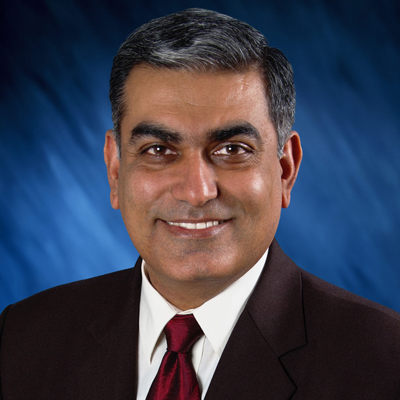
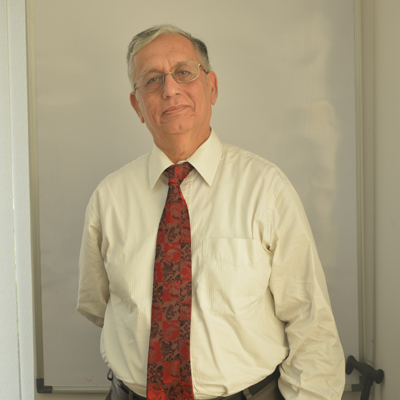
  • Sunil Lulla will bring in a new dimension in our offering to clients: Nirvik Singh

    Sunil Lulla will bring in a new dimension in our offering to clients: Nirvik Singh

    When indiantelevision.com wrote about Sunil Lulla taking up a leadership position in Grey India, it did surprise many in the industry. Very few knew or recollected that Lulla’s roots have been in advertising: he was an account director at HTA (now JWT India) and had also taken the role of regional client servicing director on the Colgate Palmolive business with Y&R New York.


    The announcement of his joining saw the departure of president & CEO Jishnu Sen. Lulla is taking over at Grey India at a time when it is in the midst of a grow-grow phase. On the global front, Grey was ranked as the agency of the year by adage.com for its revenue growth, client retention and the fact that it won almost all of the client pitches it made in 2013.


    In India, Grey, the advertising network of the Grey Group, acquired a majority stake in rural and marketing communications services provider RC&M just as the year was drawing to a close.


    It has done well on the awards front too, both in traditional and digital advertising.  It can be noted that Grey India picked up a Gold Lion at the Cannes this year in the Press category for the work done for P&G’s Duracell Batteries.


    Indiantelevision.com’s Priyanka Nair got in touch with Grey Group Asia Pacific CEO Nirvik Singh to chat with him about the leadership change in India, and what he expects going forward.


    Excerpts: 


    With Sunil Lulla coming on board, what are the areas in which Grey India is looking at expanding?


    We have been investing in India continually and with RC&M coming under our fold, I believe we have the right expertise and capabilities currently across the full marketing spectrum. Sunil Lulla would play a critical role in integrating and strengthening our offering.


    In the 30 years of experience that Sunil Lulla has, he has been associated with the broadcast side of the business most. How do you think his expertise will help in the growth of Grey India?


    With his 30 years of working experience, Sunil brings with him a wealth of knowledge from the media side of the business, not just broadcast. From our conversations, he has shown that he knows the heavily fragmented media landscape in South Asia in depth. By having him leading our operations in India, he is able to add a new dimension in our offering to our clients.


    How has the year 2014 been so far for Grey India?


    2014 has been really good for Grey Group, not just in India but across Asia Pacific as well. We are seeing clients in the market increasing their marketing spend with us, both regional and local clients. All in all, I expect India to be a really strong performer at year end. Malvika Mehra (National Creative Director) and team have been performing consistently as well – they have brought home yet another Gold Lion from the Cannes Lions International Festival of Creativity. This is their second year in a row they are doing so.


    What are the plans lined up for the digital side of your business?


    Sudhir Nair (Senior Vice President, Head of Grey Digital India) will be working closely with Sunil on this, but I must say our digital team has been stellar in their creative solutions and output (using Twitter to launch a car and YouTube for a test drive). Digital is definitely a big part of the picture and the continued investment in talent and capabilities is top of our priorities.


    What is at top of your wish list for Grey India?


    Win more Cannes Lions next year!


    Till when will Jishnu Sen be with Grey India? Could you elaborate on the experience of working with him? 


    It has been a truly great journey – I have seen him grow into the CEO’s role and he is a great chap to work with.

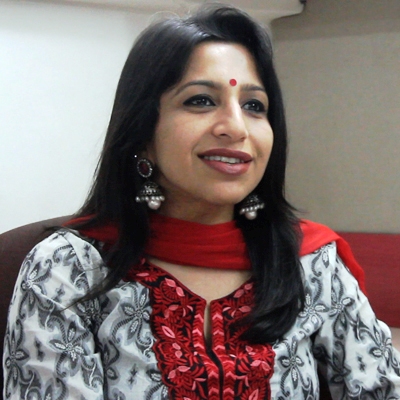
  • India needs more storytellers: Nina Jaipuria

    India needs more storytellers: Nina Jaipuria

    People say behind every successful man, there is a woman; but behind every smart child, is a dedicated mother. Such is the case for Viacom18 EVP and business head kids cluster Nina Elavia Jaipuria. For someone who started her career from advertising is now heading one of India’s largest kids channel, Nickelodeon,  Nick Jr. & Sonic. 


    The soft-spoken Jaipuria has brought Nickelodeon from being one of the low ranking kids channel to one among the top players. And, even though this may not have been an easy task, she has made it appear like it is a child’s play. 


    Jaipuria during her visit to indiantelevision.com’s office as the Guest Editor of the Day, spoke about the kids space, the need for storytellers, the growth of Indian animation industry and much more.

     Excerpts:   


    How do you differentiate the content between the channels you handle? How do you ensure that kids tune into your network?
     

    There are a couple of things that keep kids glued to television. The first and foremost is storytelling and scriptwriting. Kids love repetition. While it may be boring to you as a story teller, it is fascinating for them. The second most important is the character, because it is the character at the end of the day that forms a bond, a relationship with the child, and that relationship and bond is what brings the child to the TV daily. So the character needs to be endearing and has to have the ability to create a bond with the child. And, third is the quality of the animation which is an important aspect

     
    Kids come to our channel to get rid of their boredom and to de-stress. To me, the only medium that transports  them to the imaginary world, where they want to escape, so the quality of animation and how the content is delivered is really important.


    Coming back on how we differentiate from other channels. Well, while at times, we differentiate with the way we tell the story, sometimes, we don’t need to differentiate. To be honest, comedy and humour is a very central part of kids’ entertainment, and so a lot of other channels too have the same kind of programmes like we have. But, then there are different genres of comedy, that’s how you’d probably differentiate. So while a few show slapstick humour, a few will have silent humour, chase, slice of life, which is family based etc. So yes, while we do differentiate at a micro level, most of us deliver humour and comedy.


    We have differentiated offerings like Sonic, where we identified that there was not much action being offered to children. So Sonic offers action and adventure like Kung Fu Panda,Ninja Turtles, Supa Strika and Idaten Jump.


    So, differentiation from that perspective also happens, but, to me, the biggest differentiation is the character at the end of the day.


    What’s the age group you target for different channels under the kids cluster?  


    I would imagine that it’s not so much segmented on age as much as it is on gender. The kids category is very boys skewed to begin with. You generally see a lot more boys watching the category, while the younger girls, according to me are watching family drama, this is unfortunate, but true.


    But, Sonic is further skewed. You’d probably have 80:20 ratio, where the segmentation is more on gender than it is on age. The kids category is watched mainly by kids in the age group of 4-14. Of course, we have a slice of 4-9 year olds, and 10-14 year olds as well, and that is how we pretty much see a lot of data that comes in the category. But, normally the sweet spot would be 7-9 year olds. Sonic could go a little older as well, based on the action that we offer. Nick Jr targets 2-6years old preschoolers while Teen Nick targets teens.
     

    How do you keep pace with the kids?


    While some of it comes with experience; some of it also comes from the fact that you have to be very predisposed to this category. You have to like kids. Every place you go to: be it birthday parties or movies, you need to study kids and that’s how you pick up some of the pieces.

     Of course, we also have a very formal way of keeping pace with them, and that’s when we conduct a whole lot of research. In fact, even Viacom International does a lot of research. The very recent one was called ‘The kids of today and tomorrow.’


    Social media also helps keep pace with what kids are doing today and then of course we interact with parents to get the feedback. 
     

    Can you elaborate on ‘The kids of today and tomorrow’ research? 

     
    This was actually an international research, of which India was a part of. The research, not only made me happy as a broadcaster, but also fortified the hypothesis on which we were working from both the content and marketing perspective.

     
    The biggest highlight for me was that the children are very high on the happiness scale. They are extremely positive, and that’s where I devised the fact that humour and comedy is really important. The second big thing is that despite all the different options of entertainment that are available to them and the social media, screens and the gadgets, eventually they feel closest to their family. The third highlight is that kids love honesty and that’s what we do all the time on our channel: be honest with kids.
     

    Lastly of course, the study also highlights the fact that kids today like to be connected. They really are screenagers and tech savvy. 
     

    How do you implement that research on the channel?

     
    Humour is pretty much the key to their relaxation and that’s what we do at Nickelodeon. In fact, the DNA of Nick is ‘Funny Rules.’ Anything that we do on the channel is about fun and humour. So every single show on the channel, whether it’s Motu Patlu or Pakdum Pakdai, Ninja Hattori or Shaun the Sheep, have various slices of various types of humour.

     
    From a screenager perspective, we want to stay ahead of the curve and our mission as an entertainer, is to be made available at a time, place, and screen that is convenient to the kids . We do have a very strong presence online with three websites, and a whole lot of games. The Nick World App which is on both iOS and Android, also takes us into that online world. In fact, these screens actually compliment the big screens.

     
    Through these screens, kids get a chance to interact with the characters they love. It is here that the character steps out of his world and into the real world. Catering to the screenagers is number one priority for us.


    You currently have the Nick App. Do you plan to launch more in the future?

     
    Yes, in the future of course. Dreamstar Stardom Saga is another app we have which is actually based on fashion. Through this app, we talk to the tweens, where they can design their own clothes and choose to be film stars.

     
    Investment in the digital strategy and assets will continue because I believe that’s where kids are going and that’s where we need to stay ahead of the curve. So, definitely, apps are here to stay, video games are here to stay. In fact, during the IPL season, we also had a game with Motu Patlu on Cricket.
     

    How important is summer vacation for the channel?


    As important as it is for children. In fact, they are waiting for it and so are we, because, we are a seasonal category, so to speak. Our channel viewership peaks in April, May, June- which is the time kids enjoy their summer vacation and then in October, November and December, which is Diwali and Christmas time. All these months are the busiest periods for all kid entertainers, because that’s the time when most kids are the most vella. And, that’s when that word ‘boredom’ is thrown far more often. The viewership grows by 15-20 per cent in these months.


    Does every channel in the space look for new content in these months? What are the on-ground activations the network undertakes to woo kids? 

     
    Of course. Everyone is working hyperactively or 24×7 to make sure that we get the eyeballs, but of course the best man wins eventually. While you’ll see a slew of new content that hits the channel, you will also see a lot of marketing campaign that goes around the content.

     
    For example, this year, Nickelodeon was at the Phoenix Market City located at Kurla in Mumbai with Furfuri Nagar recreated for almost a month. There was a lot of engagement on ground where kids could engage with the characters. We also had van activation for our other properties, which went to about 30 odd cities in the country. That apart we had gaming championship on Sonic with Funcity.


    Did IPL affect viewership of the kids genre?


    No. In all the seasons that IPL has happened, and it’s quite a few now, the category sees no effect. That again comes from the perspective that there is no primetime or off-primetime in the kids category. We pretty much get ratings throughout the day. 60 per cent of our ratings come from 11 a.m. to 6 p.m. So it’s pretty much throughout the day. Therefore, it’s so much more difficult for us because we have to keep the channel alive for almost 16-17 hours as compared to a GEC which only has 7-12 hours of original content.


    Has the Indian animation industry evolved? What do you prefer- Indian or international content? 

     
    Yes, it has. While we started off with a lot of international content on our channels, over the time, Indian animation has made its way into the category and whether that’s Motu Patlu orChhota Bheem or our own Pakdam Pakdai a lot of content has made its way through in the category. Evolving business models have made this possible.
     

    But, this doesn’t mean that international content doesn’t work. Ninja Hattori is a Japanese show and it has been on the channel for the past 7-8 years and is doing very well. It still continues to be the super hero for a lot of kids. So, while Pakdam Pakdai and Motu Patlu have made their way through the channel, Ninja still rules the roost for us. So, there is no formula. While some of our competitors have only Indian toons, some of them have only international. So, it doesn’t matter where the character is from, because kids really know no geography. At the end, it’s about how endearing the character is.
     

    Can India grow the next big toon character?

     
    Dora is a large character all over the world. This is because she is far more generic in her sensibilities. It is an aspirational show that teaches English and is the pre-school heartthrob. If we look at creating such a character from India, there’s nothing that stops us. Now the animation industry has come of age and we have found our own business models to create that in India. We have enough investments coming in from not just broadcasters but other interested parties as well.

     
    However, you have to create characters that will cross boundaries. You can’t have a mythological character and expect it to cross boundaries. But if we keep that as a brief, I’m sure we can create such characters. I mean what stops us from creating the next Spiderman?

     
    What’s missing today is the scriptwriting ability. There is a large gap that exists so what we need to get in place is a lot more training and development for scriptwriters.


    Do you think Teen Nick has the potential with its programming to have its own individual channel?

     
    Absolutely, I think it does and it will probably be merited when we slowly and steadily move towards 100 per cent digitisation, and into VOD, SVOD and OTT.
     

    Today, the content on that channel is very international, and appeals to English speaking audiences.


    Are you looking at buying formats? 
     

    There isn’t anyone in the kids space that buys formats. Because, most of those formats would be live-action and live-action isn’t really where we want to invest our money in. If we wanted to make that kind of investment, we would rather invest in animation. It is very difficult to create the animation pipeline from the perspective of scriptwriting which is the biggest challenge.

     
    Then of course production cost is huge. An episode costs three-four times more than that of a live action show. So, we’re talking about big money here and to create that pipeline takes a lot of money.  I would rather continue with animation and let the GECs deal with live-action.
     

    What learning’s have you acquired from your audiences over the years?


    You need a central character that keeps kids glued to you as a preferred entertainment brand. They have short attention spans, so we have to keep our channel alive. Therefore channel packaging and channel interactivity is very important. From Nickelodeon’s perspective we celebrate every special occasion with children: be it Mother’s Day, Fathers’ Day, Friendship Day or Raksha Bandhan and this is a key for keeping the interaction going. So on Valentine Day we came up with ‘Kaun Banega Valentoon’ and we declared Ninja Hattori as the winner.

     
    We have also learnt that the minute you open out to kids, they open out to you. Also touch, feel and play is very important to children and while we do a lot of stuff that is mass media, we also do  BTL activities, only from the perspective of tangibilizing the brand. So you see meet and greets in malls and other outlets. It’s all about engagement beyond television.
     

    Every year we do 500 to 800 school contact programmes. I know it is a small amount in terms of number but every year when you do so many schools, you are touching kids as a captive audience.

     
    We’ve learnt the hard way as well. We always thought that the carrot stick approach works well. We have sent kids to watch the football game in Manchester or to the World Cup. And, we realised that when we do that there’s only one kid who gets to go versus 13 million who are viewing our channel. 

     
    Also, while we earlier had live action, we don’t have them anymore.
     

    The same goes for advertisements. As a responsible broadcaster, we will not advertise any cola brand on our channel and it’s also vice versa. No cola company will come to us either.


    Doesn’t this restrict you from advertisers?

     
    No it doesn’t. What does is the 12 minutes ad cap. While we have a genre that has nine per cent of total viewership, but we still get ad sales less than two per cent. So, we are hugely under indexed as a business. When I took over, the industry was only one per cent and now it has grown to two per cent. A part of that is the baggage that we carry from being given for free to now becoming a sizeable category to reckon with and make sure we get what we deserve.

     
    The usual suspects are the kid advertisers like milk food brands: Complan, Horlicks, Bournvita, ITC foods, Britannia, Kellogs, ice cream and juices. But you also have a segment which is non-kids and that is close to 10 per cent to 15 per cent of the total advertisers. These are FMCG, consumer non-durables, insurance, etc. So we really aren’t missing the cola but even if we did, I can tell you from a responsibility perspective, we won’t air it on the channel.
     

    What do you keep in mind while planning your marketing strategies? 

     
    It can be noted that gaining the gatekeeper’s trust is extremely important from a responsible broadcaster’s perceptive. Parents are always cautious of what their kids watch. Having said that we don’t always plan our marketing strategies keeping parents in mind. We draw our marketing plans depending on preferences too. For instance, we use social media extensively for Nick Jr to target young parents.

     
    While most of our investments are on consumer marketing we do have specific budget for adults. We constantly come up with interesting concepts to cater them as well.   


    Are there any challenges that the kids cluster faces in terms of distribution?  


    We have gained the most from digitisation. So while we have got the distribution parity with all the neighbourhood problems being solved, ease of navigation has also happened. This has helped kids to watch content with just a click of button.

     
    There is so much more to see today. All this has grown viewership. With digitisation, micro segmentation in the category has happened even further.

     
    Viewership has grown over the past five years, at the CAR of 13 per cent and so has the ad sales.


    Any new shows you started recently?

     
    Well, we started Teenage Mutant Ninja Turtles (TMNT) on Sonic, and now looking forward to the movie in August, which will be a worldwide release. The way we look at Nickelodeon, we have our three stalwarts, which are the three musketeers: Ninja Hattori, Motu Patlu and Pakdam Pakdai. Kids want to see more of their favourite characters, but in new stories. From a Sonic perspective, we have just launched Idaten Jump, which is a biking show and then there’s Power Rangers: Mega Force. From a Nick Jr. perspective, we have Peter Rabbit and Tickety Toc and House of Anubis on Teen Nick.


    2D or 3D animation, what receives more traction?

     
    It doesn’t matter to kids. They don’t know the difference between 2D and 3D. The only thing that matters to them is the story, the characters and how it looks. The quality of animation should be good, whether through 3D, 2D, or flash, it is of no relevance to children. Look at Ninja Hattori, it is such an old show and still gets us about 50 per cent of the ratings. Also Motu Patlu, which is a new show gets an equal amount of rating.
     

    Will we see some of the old library content like Kenan & Kel, Drake & Josh on Nick soon?

     
    Well, if the Indian sensibilities change, then we might. But, they were on the grid about eight years ago and nothing came out of it. So, it really depends if the Indian psyche goes through a full circle and back to that requirement. From an entertainment perspective if it touches their hearts and chords, then yes.
     

    But, since our library content is an asset, we can do a lot of that with VOD, SVOD and OTT to those who might want to consume it.
  • “The country cannot afford to have tens of millions of bad STBs deployed”

    “The country cannot afford to have tens of millions of bad STBs deployed”

    For a company that was founded just about 23 years ago, Broadcom Corp has indeed come a long way. Founded by a student-professor combo, it is expected to announce financial toplines in excess of $8.5 billion this year. But more than that it is a market leader in providing chips for technologies such as enterprise networking, set-top boxes, and mobile connectivity functions.


    Earlier this year Broadcom president & CEO Scott McGregor had announced that both China and India are critical markets for the company at a conference in Shanghai. He had highlighted that Broadcom’s investments in research and development in India are probably the highest outside of the US. 

    Broadcom executive vice-president & general manager of broadband communications group Daniel Marotta had stated at the same conference that the company sees huge opportunities in the digitisation of the Indian cable TV business and that it had developed a special chip for the market as the ARPUs in the country are low. 


    Indiantelevision.com’s Sandhya Sutodia got in touch with Broadcom India managing director Rajiv Kapur to get further insights into how he views the progress of India’s government mandated digitisation and the opportunities available to his firm.


    Excerpts:


    What is the current state of digitisation in the country and Broadcom’s role in it?


    Digitisation has just about begun with phase III and IV still ahead of us. The new government seems to be putting its focus on various forward looking initiatives. We expect digitisation to continue with a high momentum.


    As Broadcom, we have prepared a variety of STB platforms providing a range of solutions for operators to offer to their subscribers. These range from the very basic cost sensitive SD zappers to entry HD platforms to higher end PVR and server class solutions. We offer several unique market differentiating features in each of these platforms, allowing subscribers and operators to enjoy the best of digital TV.


    Broadcom also invests heavily in hybrid solutions enhancing live TV with interactivity and over the top content and applications. Our lowest end SD solution offers USB and Ethernet interfaces at market competitive prices.


    We have a host of suppliers ready with STBs designed, both in the country and abroad, ready to ship as operators place future orders for the next wave of digitisation they are preparing for.


    How do you see the growth in the next two years?


    We expect the high growth in STB sales to continue beyond the digitisation deadlines. First reason is that subscribers may stagger their purchases of STBs for their second and third TVs in some homes.  Then, continued sales of TVs drives a healthy demand for more STBs in a market where TVs are always recycled to another room or home. Third, and most importantly, operators will continue to catch up with additional technologies and applications we invent on a continuous basis to drive improved user experiences and in turn higher retention and ARPUs for themselves.


    How are the dynamics of the business changing since the past couple of years in the Indian market?


    One visible change is a rising interest in local design and manufacturing. We are finally seeing supplies for the national optical fiber network (NOFN) which demanded a large percentage of made in India products. Small entrepreneurs are stepping up to design and manufacture electronics products locally. Operators are showing more acceptance of locally manufactured products.


    What are Broadcom’s recent innovations and solutions for the cable industry?


    We have implemented an almost complete turnkey solution for the low end cable TV market which includes a ready hardware and software stack to go along. This is so optimised that the memory footprint is very small, thus reducing costs. Additionally, market differentiating features like fast channel change have been added to enhance the user experiences in a digital world.


    We also invested in a range of STB solutions that have a unique technology that allows operators to manage their networks with high quality of service. The end-users benefit with better video and service at lower costs and faster response times.


    We have also invented new architectures for broadband on coax that are designed for deep finer, low density networks. This lowers costs of installation for operators so more customers can enjoy high speed broadband despite lack of subscriber density.


    Please share some of the latest developments at Broadcom for the STB space?


    We keep innovating on market differentiating features. With a large R&D team in India, we take advantage of the local resources to invent new features for the country. We named a few above. There are many others. For example, we automatically can adjust the volume of programs to levelize them across ads or channels. Or we can automatically reformat video received on live TV for viewing on a mobile screen in the same room or for take away. Many more examples exist.


    What concerns you about digitisation in India over the recent past?


    Rapid paced digitisation is always risky. Additionally, quality of hardware and services are critical, not just for now but for a long life of hardware ahead. I am particularly concerned about some of the suppliers that are shipping into India.


    For example, most STBs in India face a high risk of lightning or surge burn out. Operators have been experiencing this. We strongly recommend all STBs imported into the country be specified to meet a high protection standard to reduce risks and damage commonly seen here.


    Additionally, the harsh conditions in India make it important that performance of each STB is predictable and consistent for years to come despite physical damage, moisture etc. Legacy CAN tuners in TVs are known to have a varying performance from STB to STB, and over the years.


    The country cannot afford to have tens of millions of bad quality STBs deployed. We cannot waste energy and resources to replace STBs in a few years. The quality of every STB is critical.

  • By imposing digitisation, government is giving away the market to DTH: BP Rath

    By imposing digitisation, government is giving away the market to DTH: BP Rath

    When he is not actively focused on growing the business of the company, he is a family man.  He spent eight years at his current group’s parent company– Indian Metals and Ferro Alloys and then driving the group’s venture into cable and television in 1998. Currently the president and CEO of Ortel Communications, Bibhu Prasad Rath has ensured that the company not just grows, but becomes one of the big players in the country.


    From finance to marketing and then to the cable business, he has seen it all for the company headed by Jay Panda and Jagi Mangat Panda. By taking a cue from the US cable TV  biz, he and his team at Ortel looked at consolidating the fragmented mom-and-pop Indian cable TV industry.


    Rath took out some time to talk to indiantelevision.com’s Vishaka Chakrapani about Ortel’s future business plans, rollout of digitisation and the key areas of growth and development in the coming few years. Excerpts:


    What is the philosophy at Ortel?


    The core philosophy of Ortel is to have access to the consumers’ homes. We want to be a communication pipe to consumers’ homes which is capable of delivering a wide range of related services in future. To achieve this we decided right from the beginning that we would have last mile ownership, because in cable TV, video services are one way, and data is two way. Two way services are extremely sensitive to network parameters.


    In the traditional B2B model where the MSO reaches out to the LCO and then to the consumer, close to 80 per cent of the work is done by the LCO. The MSO does very little and so there is no quality uniformity and many times the LCO lacks the right equipment. Workmanship matters a lot in any communication network. It is a choice that we made from the beginning that we wouldn’t deal with any LCOs. Our business is B2C.


    Many people tell us that our model is unique. We, at Ortel, follow the international model by having a network that is capable of delivering both the services- cable and data.


    The biggest advantage of this model is that we can build a network and also provide data services.  The disadvantage is that because you are doing last mile, it is capex heavy. So you can’t do the kind of large spread operation that an MSO-LCO model can do.


    What is your reach?


    We are now operating in four states- Odisha, Chattisgarh, West Bengal and Andhra Pradesh. On an overall basis we have a network capacity of 800,000 homes but the subscriber base is 520,000 of which 80 per cent is concentrated in Odisha and the rest in the other states.


    We want to expand a lot more in other states but we haven’t been able to raise money. We look forward to raising capital in the next one year. Then our focus will be to expand in our existing and other neighbouring states such as Madhya Pradesh. Our focus is also to expand geographically to other states and more in Chattisgarh and Andhra Pradesh. Our idea is to build a regional last mile play. We do not intend to go national now.


    What is the status of your IPO?


    Right now, though the markets are improving and we hope that they continue to do so for next three to four years, we are not actively looking at it. We are looking at other means of fund raising such as private equity as well as international strategic options. The likelihood of opting for private equity is definitely higher.


    What has been your progress in digitisation?


    We have been digitising for nearly five years now, much before the mandate came in. We don’t have an under-declaration issue. We have to digitise because it enhances the capacity by getting more number of channels so that we can effectively compete with DTH operators.


    Odisha comes mostly in phase III and IV. Kolkata came in phase I and Vishakhapatnam (Vizag) in phase II. Our digital base is 15 per cent of our total subscribers. Analogue has always been a fixed price model. In every city you have different sections of consumers with different needs for content and different paying abilities. In digital you can offer customised products to customers. Digital is an important tool to tier the service. There are four markets in Odisha where we have been digitising- Bhubaneswar, Cuttack, Rourkela and Jharsuguda, apart from Kolkata and Raipur.


    Which are your key investment areas for digitisation?


    We are doing three kinds of investments. One is backend. We have five headends in Bhubaneswar, Jharsuguda, Rourkela, Kolkata and Raipur. We don’t intend to set up any more headends. What we are looking at now is intercity connect through infrastructure providers (IPs), mainly RailTel. Wherever we do digital we will take the feed from Bhubaneswar. At present, we give the feed to Vizag through RailTel.


    The next area for investment is the network. We have a fully digital network which is broadband ready so that isn’t an issue.


    The third cost is the set top boxes (STB). Currently we get a STB for Rs 1700. The box vendor asks for only half the amount and we pay the rest in installments, while we charge consumer only Rs 500 per box. We are looking at raising money for geographical expansion.


    What is your current ARPU?


    Our analogue ARPU is Rs 150 plus taxes, digital is about Rs 185 plus taxes and broadband is about Rs 375 plus taxes.


    Then we also get 15 per cent to 20 per cent incremental customers.


    How digitisation ready are you?


    In our case, SMS, encryption, billing, tiering and CAF for every digital customer and encryption, billing, and CAF for analogue customers is already in place since the past 15 years. We have a billing database where every customer’s data is entered. A collection team of nearly 700 people on contract basis go to all the neighbourhoods at the beginning of the month and collect money by providing a bill and receipt. We have a call centre where customers can lodge complaints and the locally situated service centres take care of their complaints. So the entire B2C backend is already in place.


    Our main challenge now is to seed the STBs. It isn’t possible to complete that by 31 December at the pace at which it’s happening right now. Our current focus is not on spread but on depth. Our biggest market is Bhubaneswar which is already 65 per cent digital. By 31 December about half of our entire subscribers should be digital.


    What do you have to say about TRAI’s digitisation mandate?


    We don’t believe digitisation is mandatory, it needs to be voluntary. When you go to smaller markets, digitisation becomes unviable. The main issue is how do you take the signal to homes? It’s either by setting up a headend or RailTel.


    In smaller markets the number of people is less, so the cost per person increases and becomes unviable. We have spoken to regulators that going forward, smaller markets are going to be difficult and by imposing digitisation, they are giving away the market to DTH which isn’t fair to the cable industry.


    We also intend to explain this to the government. They need to do a further cut off for phase III and IV, say half or quarter million population. Below these population numbers, we require either an exemption from mandatory digitisation or even longer time until the market situation stabilises and costs come down and people start getting returns to invest for digitising the less populated areas.


    What is your subscriber churn?


    We are facing around 1 per cent churn every month but on net basis it is positive. Churn happens because people shift their house to another city or maybe in the same city, some due to timings such as exam time, and I’m sure some due to bad service. On an average we also get around 500 DTH converts per month.


    What is the status of your broadband offering and what are your plans for the same?


    Broadband has been a key focus area at least at a mental level. 10 years ago, TV was the only thing in life. Now people are slowly moving to browsing and watching videos on smartphones. The TV set as a device at home is going to see a reduced utility over a period of time and internet is going to be used more. Ultimately we see this business as a broadband business and not just as a TV business. Whether this will happen in 10 or 20 years, I don’t know but it’s going to be business of broadband, not so much of analogue or digital.


    Out of our entire network capacity, we can give broadband to 400,000 homes. But our actual subscriber base for broadband is 11 per cent of total TV subscribers, that’s about 55,000. This 11 per cent gives 20 per cent to 22 per cent of overall revenue.


    Our focus is to increase broadband penetration from 11 per cent to 25 per cent.


    What broadband services do you offer?


    We are currently operating on DOCSIS 2.0. The same cable that goes to a consumer’s house is split inside for TV and for PC. We also have wired and wireless modem services for using many devices. In retail we provide speeds ranging from 512 kbps to 2 mpbs.


    What is your main focus now for Ortel Communications?


    Our main focus for the next few years will be digital and broadband. Any other service rides on broadband or digital. The only other service we have been trying to get in the past also, but it isn’t working out due to regulatory issue, is the voice service.


    Our aim is to go from the current subscriber base to 30,00,000 in the next three to five years.


    How has your growth come? Organically or through LCO acquisitions?


    We have acquired about 1000 LCOs since 2008. Half of our growth is organic and half is inorganic.


    Initially our growth was only organic and in competition with LCOs. Subsequently, since 2008, we switched to the LCO acquisition model. We acquire the LCO, dismantle the network and lay our own network.


    The LCO exits the business with a revenue share. We buy out the LCO with a structured payment where part of money is paid at the time of buying and the rest is given over a longer period of time ranging from 5 to 7 years. So the LCO owner gets more than what was originally committed because he gets a revenue share. The LCO’s owner does not go back and start competing with us.


    The key difference is that in the organic model when you are competing, you need a longer time to reach critical mass. If you are acquiring then it happens right at time of acquisition. Depending upon what works best for a situation, we follow either model.


    How has your revenue grown?


    Last year our revenue was Rs 132 crore, while this year we expect it to reach Rs 155 crore. The EBIDTA margins are usually 32 per cent to 33 per cent.

  • We are very choosy when we hire people: Gaurav Hirey

    We are very choosy when we hire people: Gaurav Hirey

    Founded a decade ago, WPP Group’s biggest media agencies came under one umbrella to form GroupM and since then there has been no looking back. In India the agency has been crowned as the ‘Dream company to work with’ as well as ‘Dream employer of the year’; with over 1300 people spread across 10 cities and have 20 offices and growing each day!


    With the appraisal season on, Indiantelevsion.com’s Meghna Sharma caught up with GroupM South Asia chief talent officer Gaurav Hirey to know more about the machinery that runs the agency.  He has the expertise of around 20 years in talent management and believes himself to be a game changer who brings innovative full impact talent initiatives to life and helps organisations leverage their most important resource – their people – to be the best that they can be.


    What makes GroupM the dream company to work for?


    Our people make GroupM a “Dream Company”. It is our talent vision to make people our unfair advantage in the marketplace by being not just the best place to work in but the place where the ‘best’ work.


    We do not have one single employee value proposition we have six. These are five agencies Mindshare, Maxus, Mediacom, MEC and Motivator and GroupM as the conglomerate. It has been our ability to define our Employee Value Proposition clearly and manage it well which recently earned us the title of “Dream Company to work for” in 2014.


    Whether it is having an opportunity of being a part of the Youth Executive Committee (YCO) and working with the best in the industry, or getting a paid holiday on your birthday or being able to have access to a bouquet of learning and capability options or selecting a career path and growing within the company, GroupM as an organisation is able to provide options to our employees at each and every stage. We are a place where we don’t just offer jobs we offer careers!


    GroupM was also named ‘Dream Employer of the Year’ in India. How do you choose the talent?


    Selectively! We are very choosy when we hire people. 


    GroupM is a group of five media agencies and each of these agencies have defined a set of behaviours that they believe in coupled with their client and employee proposition. We match the candidate to these behaviors arriving at a best fit for the candidate not just from a role perspective but also from an agency perspective thus giving the candidate the best possible opportunity to succeed.


    How different are your HR policies from the others?


    As any responsible corporate, we do have the typical, run of the mill HR policies. However The GroupM Talent function is always striving to ensure that we build policies keeping our employees at the centre of everything we do. Principally we customise all our initiatives to what the business needs rather than focusing on doing HR for the sake of HR.


    For example, we have an office policy that states clearly that office times are 9:30 am reporting to 6:00pm. However we allow complete flexibility to managers and teams should they decide they want to stick to these times or need flexibility. We do not in most cases behave typically like companies who deduct leaves and salary for those who report in late to work in spite of working late the previous day! 


    Any special benefits or incentives for the employees?


    We have several benefits which are a first within the media planning industry.  We offer outpatient support to our employees and they can claim medical expenses up to a certain amount.


    We also insure the lives of our employees for four times of their annual compensation so that it secures their families in case of any serious event. We offer hospitalization and medical insurance to all our employees and their immediate family members.


     In terms of absolute rewards we have made our employees our partners in growth and most of our employees are eligible for variable pay depending on their and the company performance in addition to the base salary that they take home. We also have an online system that allows all our employees to be recognised and rewarded! They are eligible to earn stars and then redeem them online for a host of benefits!


    Our endeavour at all times is to ensure the welfare of our employees and ensure that they feel they are appropriately compensated for their efforts at work.


    What are the various capability-building initiatives undertaken by the agency? What is the frequency of such initiatives?


    There is an enormous focus on capability building within GroupM. Within the media industry one of the most common feedback that you get about GroupM is that they build careers of their employees and training is one of their biggest tools. We have an in-house trainer pool of over 45 trainers. This group is called the Aspire team and on an average every employee in GroupM gets about four man days of training.


    Aspire does an annual training needs assessment post which the training calendar is prepared. We have a huge focus on training team managers and leaders and we make a considerable amount of effort ensuring that our people are best equipped to handle their roles. We also focus on customised training and personalised executive coaching to those who need them.


    Other than the above we offer various external, regional and global training programs conducted by our global and regional partners and by WPP our parent organisation.


     How well-functioned is the grievance cell?


    We believe in constant and two way communication with our employees. Open Houses and town halls are a norm and our senior managers make it a point to stand there with our employees and communicate to them very transparently what is happening within the company and how the business is performing on a regular basis. During these interactions employees are free to voice their concerns and we address each and every one of them. 


    We also have a “Post Box” which is present in every office that allows employees to write not just about their grievances but also share ideas and suggestions. The best ideas get implemented and the employee who has shared theta gets recognised and rewarded. 


    We maintain a continuous feedback system within GroupM, for all new joiners we have a breaking in feedback , a six monthly feedback and an annual feedback which is captured and actioned on. On an annual basis we have an employee satisfaction survey that is conducted not just in India but globally to hear what our employees are saying and post the results of the survey we implement action plans for those areas that employees have pointed out need addressing.


    Our leaders operate on an open door policy and team members know that they can walk in to anyone and speak about their concerns in addition to this at any point they have an open option to walk up to any HR team member and speak to them if their  issues are not addressed. We are firm believers of active engagement at all times.


    At GroupM we believe that we are in the business of people and it is they who will lead us to creating client delight and they can do so only once they are delighted. To achieve this we believe constant and continuous two-way communication is essential to delivering value to our clients through our people! Our people know that there opinion counts and what they say matter to us!


    In today’s world when there are too many opportunities available, how do you retain talent?


    It is our belief that gone are the days when you could hire someone and he/she would work all their life for you! Today we consider ourselves as borrowers of talent. People will stay with you only once they are clear about what is in it for them! It is our ability to be able to articulate this clearly that has helped us retain our talent. GroupM and the agencies have the lowest attrition in the media industry in India and this is all thanks to our leaders who have walked the talk and ensured a transparent and an open environment for our people.


    During economic slowdown, did the agency let go of any people? If yes, then how many and at which level?


    We generally have been a cost conscious company. We believe that if there is an investment that has to be made it needs to be rational and logical. I still remember the high level meeting of the executive committee that was called when we realised that the economic environment globally had taken a dive. There was a complete consensus across the room that we will make it work and that none of our employees will be let go. HR embarked on a project that helped us re-profile and reposition our client teams and structures allowing us to ensure that every employee was gainfully employed and contributed to the organisation. In fact that year, not only did we close with a growth number but we also managed to recognise and reward our employees. I am extremely proud of the fact that in spite of the tough times as an organisation, the leadership team was able to place our people right at the top of our priorities and we were able to ensure continuity for each and every employee of GroupM! We did not let go of anyone.


    How does the appraisal system work in GroupM?


    We have an online appraisal system at GroupM for all our business units. We follow the management by objectives system, there are two parts, the first part consists of setting SMART objectives and the second part accesses the team member with regard to the behaviours/values of the agency or the business unit the team member belongs to.


    We ensure that managers have a conversation and there is a sign off from both the team member and the appraiser thus ensuring alignment on the final rating that is received by the team member. We have recently started getting our team members to also rate their appraisal performance as we believe that managing performance is an ongoing and continuous process and we would like our managers to be better at it.


    For leaders and senior managers we also conduct a 360 degree evaluation where even the team members get an opportunity to give feedback to the managers.


    According to you, what is the biggest HR issue gripping the corporate in the country?


    The issue that really keeps me awake these days is on how we can engage the millennia’s and get them to stay with us to build a career. Given that today the motivations of youngsters are very different and they are looking for fast growth, it is a challenge to be able to manage their expectations. The organisation of tomorrow is going to be built on their shoulders and if we are not able to engage, retain and grow them then that would affect us and our business. Even though we enjoy the lowest attrition rates across the media industry, I yet get worked up when I see youngsters joining us and leaving us in a short time. 


    We have rolled out several initiatives to engage them and get them to participate in decision making. The most talked about initiative has been the Youth Committee of GroupM where we have displayed the will to take participative management to the next level and give the youngsters a voice in organisational decision making. I am optimistic that with such initiatives like the YCO we will be able to retain and grow young talent within our agencies!  


     What is your take on revision of HR policies to cater to employees’ needs? Have any of the policies changed to suit the employees? (Give examples)


    Any policy that does not address an employee’s need is there just to be filed and kept in a policy manual with no impact!  HR policies have to be treated as guidelines and they need to be reviewed periodically. As a practice we do this once in two years and make the changes necessary. Like I mentioned we changed the working hours policy and empowered our unit heads to decide how they need their teams to operate. Similarly we also changed the leave policy to ensure that employees take their annual leave compulsorily ensuring a healthy work life balance. Customizing policies to meet the employee and business need is critical to the very existence of the policy without it, it’s just a piece of paper that gets filed in!


    One HR policy you are really proud of and why?


    There are several but one that I am particularly proud of is the policy of Holidays on Birthdays!


    This is because it was suggested by our Youth Committee (YCO) last year and was implemented immediately. The policy clearly states that you can take paid leave on your birthday no questions asked. It is simple and completely empowering, just like many other initiatives/policies in GroupM which allow our employees to decide for themselves!

  • We’re both a kid-centric and family-focussed network: Bikram Duggal

    We’re both a kid-centric and family-focussed network: Bikram Duggal

    He is a man with a mission – to bring a smile on children’s faces and Disney India executive director, kids channels and franchise marketing Bikram Duggal, has been going about it with grace and alacrity for nearly four years now.

    Through a raft of channels including the Disney channel, Disney XD, Disney Junior and Hungama, Duggal has woven magic into the lives of kids and their families day after day. As someone who leads from the front, he has channelled generous amounts of creativity, optimism, trust and quality into the organisation. In an exclusive interview with Disha Shah of indiantelevision.com, Duggal recalls some of Disney’s defining moments while sharing a few tricks of the trade…

    What is Brand Disney’s India story?

    Disney is a brand which has story telling in its DNA. It is our legacy. Our promise is special entertainment with a heart. And that translates very strongly for Disney in India. There are various factors that have made Disney a strong brand. The key Disney values are “express yourself, believe in yourself, follow your dreams and celebrate family”. We try to see to it that we stay true to them and they permeate through everything that we do.

    Disney channel is not just a kid-centric channel, but a family-focused channel as well. It is with shows like Best of Luck Nikki or Shake It Up and also with Oye Jassi that we plan to differentiate ourselves not only in the kid’s entertainment space but also in the entire television spectrum of the country in the coming months.

    Story telling is our legacy and a large part of it is when we entertain through our classic movies like Snow White and Cinderella. Be it classic Disney princesses or Mickey, the engagement with and affinity to these characters is still very high. Even with Disney Pixar films like Finding Nemo or Cars, the characters are still a major pod of engagement for our channel.

    What about animation?

    Yes, animation is also responsible for the success of Disney channel over the years. Animation is the bedrock of the network. We are trying to collaborate with local studios for live action productions. Be it acquired series like Doreamon or Disney Channel originals like Phineas and Ferb, we have characters and stories that resonate with Indian families day in and day out. That is what has led to the core philosophy of bringing magical properties and permeating them with the core values of families.

    How do you differentiate Disney’s target audiences?

    As I said, Disney channel is both kid-centric and family-inclusive because it not only has animation, but also live action original productions which appeal to the entire family. For Disney Junior, it is all about the special entertainment that we provide for kids aged two to seven years. The entertainment is curated for the youngest members of the family. It has a lot of in-built learning. Hungama appeals to kids in the age group of four-14 and the way it is positioned is it fills kid’s lives with enthusiasm and laughter. Plus, there is a lot of Indian local animation on the channel. Disney XD super serves the boys and their passions like sports, action, and humor are manifest in a strong way.

    Are you planning to tap into new genres?

    Some of the live action original productions that we have are re-versions or adaptations of popular story telling that we have internationally. Like Best of Luck Nikki, The Suite Life of Karan and Kabir  which we have re-versioned as they are timeless stories that can be told anywhere in the world. The whole idea is to see how to take this story telling cushioned in Indian values to another level where our target audience in India will find it truly engaging.

    There must have been both highs and lows. What is the life span of a programme on Disney?

    To be honest, there is so much happening around us; we have been continuously connecting with the consumers.  Research and feedback have shown us that the channel is a happy place to be for people. I don’t think there is any low point because the television industry in India is doing phenomenally well and we are growing in double digits.

    Talking about other Disney properties and the high points, Disney Junior that we launched a couple of months ago has the philosophy of engaging with kids (2-7 years) and then their parents, especially mothers. We believe that there is an opportunity to connect with kids and stimulate their imagination with magical storytelling, which is our forte. Series like Sofia, the First, Jake and the Never Land Pirates and Doc McStuffins stand true to the core value of Disney which is magical story-telling and we plan to air more of these in the next few months.

    On the other hand, Hungama is all about an unapologetic sense of mischief bringing enthusiasm and laughter in kids’ lives. We are collaborating with local animation studios for in-house animated productions like Chor Police and Ninja Warrior and a few more to increase the primary focus on anime for children and teens.

    What about the level of engagement with consumers?

    There are a lot of consumer engagements we have been doing; whether they are through content or on-ground activities. We just did Disney Princess Academy where we got girls from all across the country to come and learn to be a princess as that is something they desire to be. When they see our films and the great story telling, they want to engage at the same level. Mothers and daughters came together in eight cities and lakhs of people submitted their entries. Content which is based on our core philosophy and engagement points across consumers’ lives is something we are trying to do on a regular basis.

    Tell us about your biggest marketing campaign – ‘Jet Set Go 3’?

    Disney’s core philosophy is giving magical experiences to kids and families. These experiences go beyond entertainment for us. It is holistic entertainment that touches consumers’ lives. And from that perspective, we knew that summer is a very good period for kids and families and they want to be entertained in a special way. We thought we would definitely want to bring in an event or marquee property which becomes that talking point of what summer holidays mean to kids.

    Speaking of magical experiences, there can be no place like Disneyland. We knew Disneyland was special to a lot of people, but we wanted to bring it closer to Indian kids and families and tell them a little more about it. We wanted to do something special, so we thought why not send a plane full of people to Disneyland.

    In the first year, which is three years ago, we chose one kid who was the hero because he was taking his family. He was the centre point of gratification. The same way, we choose one kid every day for 30 days. That was the best part: it was not one, two or three but 30 families who went together: 150 people going together and enjoying themselves in Disneyland and coming back with long memories. We got so many emails from them saying it was the best time they ever had in their entire life. It was a fantastic programme and we received millions of entries.

    Needless to say, we repeated the exercise the next year only to find it was a bigger success. We brought in designers Shantanu and Nikhil to create a new line with Disney characters for kids who did a fashion show at the airplane hangar when the plane took off. This year, we decided to send people to all Disneylands of the world. So, one family will go to each of the Disneylands in California, Florida, Paris and Hong Kong. The response has been just amazing and Disneyland brings a smile to everyone’s faces.

    ‘Jet Set Go 3’ has been a hugely successful brand initiative which is running for three years. We get millions of entries and it has become a marquee property for the kids’ category so much so we look forward to doing it many times over. The other new thing this time is we will be shooting each family in Disneyland and airing that episode on Disney channel in August.

    How do you market this property? What are the criteria for selecting families?

    The good part is that Disney India reaches out to its entire audience in a month’s time. If we have a dedicated promotional plan, which we do have on our network, we are able to reach out to all our audiences on television. In the first year, we went outside our network as well, but the property has now become almost like a social currency when kids meet up. After the first year, we didn’t have to do anything more because kids were already aware of it and we just needed to announce it on our network to get millions of entries.

    The great thing about this initiative is that not only people from Mumbai and Delhi are participating, but others from smaller towns, TL2 and TL3 towns are participating as well. It is very heartening that people have warmed up to this concept. In the backdrop of India’s economic growth and people’s desire to grow, it shows that they really want to explore such activities.

    Replying to the second part of your question, the criteria for selection is largely kids and families who have scored maximum points per day.

    Has social media played a big role?

    Yes, a major role. In fact, a lot of these people, who were selected, have put their experiences on Facebook and Twitter. And that has gone viral. The fact that common people from small cities win, has been well received. Not only are there people who are going to Disneyland for the first time, there are also people going abroad for the first time. So, stories like a foreman from a mill in Jalandhar winning, has gone viral. Be it the people who’ve put it up with the help of the younger generation or with our help, the stories of these people are in fact, truly being heard on social media.

    How much is the total marketing expenditure? Is it more this year as compared to previous years?

    The total marketing expenditure is fairly big as the property takes about 20-25 per cent of the total annual budget. Yes, this year the expenditure is more, mainly because we are aiming to shoot these episodes in Disneyland, and all across the world.

    Are there any special shows as it is summer time?

    Yes, absolutely. There is a new animation series called Arjun launching on Disney channel on 1 June and we are really looking forward to it. It is our number one promotion on the channel and we are really looking forward to how it fares.

    We are also re-launching Pokemon in a big way to appeal to kids on Hungama. From a Disney Junior perspective, in the last few months, the reach of the channel has increased tremendously since it was launched on key DTH platforms like Tata Sky, Airtel and more. A lot of promotions are happening on those platforms and we are keen to build that property.

    Post summer, what is the plan?

    The shows which I spoke about are not only restricted to summer. We are banking heavily on them and we think that is the kind of story telling that the channel has and we are going to move it forward. But those marquee properties will see a lot of support in the months even after summer. And you will see it going right up to October.

    There are a lot of properties which are going to come up from a marketing perspective and you will hear about them soon. But what I can tell you confidently is the fact that this whole proposition of family-inclusive is very important for us. I think there is an opportunity to tell a unique story and how there are timeless stories which resonate across the world. We want to keep telling those stories and in times to come, you will see we would have been doing much more in that area on Disney channel.

  • “Phase III and IV should be broken into three phases”: Ashok Mansukhani

    “Phase III and IV should be broken into three phases”: Ashok Mansukhani

    Having served as Indian Revenue Service Officer in the income tax department for 22 years, Ashok Mansukhani’s last government posting was as Doordarshan deputy director general (1992-96), during which DD metamorphosed from being a single channel broadcaster to a multilingual and multichannel regional entity reaching over 100 million homes in the country.


    Mansukhani’s association with the cable TV industry started in 1996 when he joined IndusInd Media and Communications Limited (IMCL), the media wing of Hinduja Ventures Limited (HVL), as director. Over the years, he became executive director and then president of Hinduja TMT before taking on the mantle of whole-time director of HVL.


    In his present capacity, Mansukhani is preparing IMCL for a future that is essentially about pay-per-view, video-on-demand and triple-play services, even as his contemporaries grapple with the initial phase of digitization. With his vision and experience, Mansukhani has also been appointed president of the MSO Alliance.


    In a t?te-?-t?te with indiantelevision.com’s Seema Singh, Mansukhani, who is just back from a week-long holiday, talks about the way the industry is moving in terms of digitisation, plans for IMCL, and the growing need for communication among its various stakeholders.


    Excerpts:


    IMCL underwent huge reshuffling a couple of months back. What was the reason behind it?


    There is a new digital era that has come in and the board and promoters may have felt that it would be good to bring in fresh talent, to get professionalism in the analogue regime as we transit to the digital era. And what has really been done is that a new team has been brought in that not only understands media but will be able to carry the media assets of the Hinduja group in the next 10 years. So, it is from that point of view that changes may have been made.


    The company recently got the licence for taking forward its Headend In The Sky (HITS) project. How far has the work progressed?


    Every possible step will be taken to meet the December 2014 deadline. There are certain permissions which are statutory in nature and which need to be taken. There could be perhaps a three to four week lag factor because of elections. But post 15 May, the process will get fast forwarded and personally, I would like to see it operational before the end of the year.


    Will HITS play a major role in phase III and IV markets? How will IMCL cope with these phases?


    Yes it will, because it is meant to really take advantage of the fact that in phase III and IV, there are hardly any MSOs that operate. But there are 6,000 independent operators and 60,000 LCOs and a majority of them are in phase III and IV. Now they will find it tough to meet digital regulations, quality of service norms, subscriber management system, conditional access systems and sourcing of STBs.


    It is a tough task for a small guy, but if he continues to be the proprietor of his network and is helped by a HITS platform to be able to supply high quality 300-500 channels in MPEG 4 capacity, then surely it will cause excitement. To add to it, it will be a prepaid model, having complete transparency.


    Yes, HITS will play a major role, but that doesn’t mean that Indigital will be left behind. From the group’s perspective, both will be developed and both are being developed.


    Incable exists in phase III, but not in phase IV. For phase III, there are already specific cities for which plans are being drawn up. Incable is also pioneering the concept of digital feeds, which is fibre optic based feeds. Because it may not make sense in a city like Udaipur to put up a digital headend of Rs 10 crore, but it may make sense to take a city like Bhopal and set up a headend and the rest of the state can well be served by fibre optic feed, because then the cost of transmission goes down.


    Incable anyways has thousands of kilometres of installed fibre optics of its own, which many others do not have. So we have the capacity and we will now utilize that. Even in phase II, we have digital feeds running through fibre optics. There have been regulatory issues like broadcasters having a different view, but our say to broadcasters is that in digitisation when every box is accounted for and every customer is paid for, then surely the mode by which we transmit should not be the problem of the broadcaster, but should be left to the MSO to work out the best cost effective model.


    Digitisation means that you can use a mix of both. Currently, fibre in India is to the colony gate and in the time to come, it will be to home and when that happens, there will be quadra-play. We will have cable telephony as well coming in, but these are far away, at least 3-4 years away.


     Will we see investments in IMCL as well by the group?


    IMCL is currently being funded by HVL through a preferential share capital based on its requirements for phase III and consolidation of phase II. IMCL will not suffer from shortage of money. That’s not the issue. The issue is that IMCL has to cope with change and with that change, whatever support is needed is available.


    SitiCable has launched local cable TV channels. Is IMCL treading that path? If you have to launch a channel, what kind of content will you have?


    We are the pioneers as far as local content is concerned. In Mumbai for example, we had In Mumbai channel which we started way back in 1995-96. It was operational for a couple of years and was very popular. It had a mix of news, local events, interviews and it was more of a city-specific channel. At one stage, almost every city that Incable was operating in had a local channel and even today there are local channels, but it has typically not been run by the company in the recent past, but has been run by people who had perhaps bought time on the channel or have agreed to share a part of their advertising revenue.


    So basically, they source the content and not the company, since our focus had shifted more on distribution. But today, with a fat distribution pipe being created and video on demand on the way, with two-way to happen with broadband, localization of content, in my view, has a strong public demand.


    It also helps in stickiness in terms of vast competition in MSOs and DTH. So at one stage, when In Mumbai was part of Incable, it was a reason that people stayed with us, because they wanted to watch it. Also we had In News which ran in five languages.


    Localisation, not on the Siticable model, but perhaps reviving the In Mumbai model, may take place.


    While news and sports are important, I feel localized content, like local events, regional events, festivals and community events, have been neglected. The vast progress that we have seen internationally is more of a mom and pop show in India.


    This area can undergo an upgrade, both in terms of quality and quantity. It is an interesting area to look at. Animation is again an interesting area that can be tapped.


    Content can be self generated, syndicated or can be brought in and then re-created. What we have seen recently is that there is enough competition in every sphere of television and yet there is scope. Therefore, our sister company in entertainment will look at it and take advantage. There are 30 million cable TV homes with boxes, another 100 million to follow. 2014 is an ambitious year. Even if we can achieve 50 per cent of this, there will be 80-90 million cable TV homes to tap. 24 hours of programming is needed. It is not easy to really supply that content, so perhaps it’s easier to create content or to source it and then re-purpose it for your own audience.


    The Telecom Regulatory Authority of India (TRAI) recently came out with its regulation on tariff rise in non DAS areas. How does it impact the business of MSOs?


    This simply means that the cost of television has gone up by 27 per cent. When the consultation had started, I had personally taken it up with TRAI and told them that the price shock, if it has to be given, must be in phases. It was expected and long due and in the long run, as long as packaging is sensibly done, a la carte channels are offered, it will benefit all the stakeholders.


    In the beginning, customers will be hit by the price shock, but after that, they will adjust.


    Time has come for MSOs to discipline themselves. The MSO today has to take a stand that it doesn’t make sense for a non-paying or a zero paying LCO to have the signal.


    Every change is resisted initially, but once it happens, things fall into place.  There is a need for more communication in the industry.


     When do you see gross billing starting in Mumbai for phase I? By when will digitisation of 38 cities in phase II be completed?


    There have been discussions and there are amendments in the entertainment tax acts, but the notification has not been issued as yet by the entertainment tax authorities. According to me, in whichever way gross billing has to happen, it will take a couple of weeks more.


    The 38 cities that comprise phase II should be completed by 30 June.


    When do we see packaging of channels taking place in phase I and II cities? Why is it taking so long? What kind of packages can one expect?


    The initial task of installing 30 million STBs was tough. Today, attention has shifted to packaging which will also be a function of the prices at which packages can be obtained from the broadcaster. There is disaggregation that will happen soon, which will lead to re-pricing of packages, possibly from July 1.


    Packaging has to be a joint exercise of broadcasters and MSOs. Currently, it is not. So that’s another aspect which needs to be kept in mind that at the end of the day, it is the product of the broadcaster and the distribution is ours.


    What if packaging teams were to be set up between MSO Alliance and IBF as an example? They could then get together and do a customer research and find out who wants to do what.


    New models for packaging need to come in. Why should I pay ‘X’ amount for sports throughout the year, when during the year, there will be only three times that we watch Sports channels,. So can’t we have variable pricing, say during the world cup?


    The second phase of digitisation will happen when the market will mature. And all this will happen in 2014-15 and 2016.


    DTH today has a much better hold on packaging, than the MSOs. Regional packages need great attention and especially for national MSOs. The need of a customer in Bengaluru is different from that of a customer from Gujarat. Packaging requires research and customer connect. The customer is being currently taken for granted and they do not like it.


    We still need to move to the CPS model and once that happens, the MSO can collect the money and pay the broadcaster. There are people who are still working with an analogue mindset in the digital era.


    One way is to sell the channels on an a la carte, the other way is to shrink the package and the third is to say that I will give you growth, but cannot give the growth you demand which has no relation with the actual size of my network.


    Why is there resistance from broadcasters, every time a new packaging model is suggested? 


    When status quo is disturbed, things change. Also when a particular channel is not available in a package offered to most, then the broadcaster may lose the advertisement support. But in time to come, we will move to a 50:50 regime, in subscription and advertisement.


    What is the impact of the TRAI regulation on disaggregation on MSOs?


    The regulation has given a great level playing field for independent MSOs like IMCL. So far, there has been clear favoritism towards MSOs who are owned by broadcasters and therefore, independent MSOs have had tough times or litigation times and that has taken away from further move to say digitisation. This is a welcome move and yet, sufficient safeguards have been given to the broadcasters. They have got 27 per cent tariff hike. The order should be accepted in the spirit. It is to increase digitisation and not to harm anyone.


    Are you looking at enhancing broadband services, like Hathway Cable & Datacom did recently?


    We have broadband services and that will be a key focus area in the years to come and what I personally look forward to is: pay per view, video on demand and triple play services. But these will take time. These services will be possible more in the prepaid era.


    We always have been operating broadband as we have the ISP licence.


    We don’t want to ape Hathway. They have their own focus point, we have ours. We want to develop digital best practices, keeping in mind what the customers want.


    How would you look at phase III and IV markets? Will Incable compete with HITS in these areas?


    It will be in phases. We will first concentrate on phase III, where we already have a reach, so we will see which cities to cover there. Then we have to decide which cities will be covered by the HITS platform. Which cities will have headend and which will have fibres. These are things that the IMCL management is working on.


    No, the two will not compete with each other, as the markets will be different. There could be synergies in best practices but not in market.


     Should phase III and phase IV of digitisation be taken at the same time? Do you think it can be completed within the deadline of December 2014?


    My view is phase III and IV should be broken into three phases. If it took two phases to do 30 million homes, how can one expect 100 million homes to be done in two phases? The statistics don’t work and then currently, there is no movement in phase III.


    While TRAI gave a start date for implementing digitisation, there is no need to give an end date. The regulator should incentivise those who digitise faster. Tax holiday or tax benefit or a better rate in terms of 42 per cent guideline of the Supreme Court, would work better than giving deadlines.


    Phase III and IV is huge and untapped. The industry needs to be recognised as a small industry. Also there is a need for bank financing, formation of cable cooperatives and associate ventures. This is the reason that IMCL has pioneered joint ventures which exist is smaller towns and cities.


    Dish TV launched its new Zing service in February; does it bother the MSOs in any way?


    90 per cent of cable TV homes in phase I and II remained with MSOs. While the customers may have switched MSOs, they largely stayed with being a cable TV home. And this, when everyone thought that DTH players will have a smooth walk in these cities. DTH is an expensive proposition.


    If DTH players think of launching something which is less expensive, it can lead to cannibalizing DTH itself and not necessarily an MSO. The MSO already has a sunken asset. We are just looking at stickiness of consumers and return on investment. Such moves will not affect MSOs.


    Post elections, there can be a regulation on the cable TV monopoly. Do you think that will impact MSOs?


    It may affect the regional MSOs, but not the national ones. These are proposals, but what comes out in the fine print will finally determine our way to look at it. I expect lighter facilitative and not restrictive regulations and I think TRAI is moving towards that.


    What are the biggest challenges for you today?


    The ability to harness the latest technology with the fastest way in which you can bring in specialty content at the cheapest possible cost in such a way that every member of the value chain is made happy with the money he retains after all taxes are paid is the real business plan challenge that industry needs to work on and which we are also working on. Ultimately, we should be able to run a profitable business.


    Do you see the ARPUs going up? If so, by how much, and when?


    The ARPUS will go up by 20 per cent in the next 12 months.

  • Our aim is to roll up all the taxes under one GST: Uday Singh

    Our aim is to roll up all the taxes under one GST: Uday Singh

    The word piracy sends shivers down the spines of all content owners, but there is one man who has made it his mission to eradicate piracy from the media and entertainment space. That man is none other than Motion Picture Distribution Association (India) managing director Uday Singh.


    With over 28 years of sales, marketing and general management experience in scaling up operations and building business from start up for MNCs in India and attaining a leadership position in the market and business with significant turnaround and change management; Singh has done it all.


    He has key experience in media entertainment, consumer electronics, domestic appliances and multimedia industries. He has had stints at Philips, Sony Pictures Entertainment (India) and PVR Pictures earlier.


    Being a creative and result driven executive with expertise in setting up new markets developing and delivering strong results; Singh has been ensuring in getting the various industry stakeholders together to fight against piracy.


    Speaking to indiantelevision.com’s Sidharth Iyer, Singh dwells on various perennial issues like piracy, high taxation, specific copyright laws and the difficulties that MPDA faces in propagating anti-piracy in the country.     


    It’s been five years since MPDA India has been present in the industry, how has the journey been? Highlight your roles and responsibilities.


    There are three aspects: first there is the legislative side where we look into getting a specific legal framework into place which can protect copyright. Next we take care of the enforcement, which is basically keeping a check on people who steal content and monetise from the same by redistributing it across the globe and finally the outreach, how do we best reach out to our first line of defense – which is the cinema staff and theatre owners – educating them on piracy and how it works, so that they can recognise it and nip it at the bud.


    On the legislative side we have carried out a lot of initiatives. 90 per cent of all pirated copies are camcorded in cinema halls, and an Ernst & Young 2008 report claims that as much as Rs 16,000 crore is lost every year due to piracy and as many as 577,000 direct jobs are also lost as a result of theft and piracy, afflicting India’s entertainment industry.

    We have been working with local bodies and try and implement the global best practices out here. We have also observed that many jurisdictions like in US, Philippines and other regions in the Asia Pacific as well, specific camcording legislations have made a big difference in getting piracy down and we intend to bring that practice to India as well.


    Is there a set guideline for understanding the copyright laws in the country? Have you managed to reduce the taxation on films?


    We have been lobbying with the government to have provisions made for the same, and the cinematography bill does carry some provisions because only very specific provisions can make a difference, as our copyright laws tend to be very broad and its only best to have specifics in place to better understand and implement the copyright law in the country.


    The other major hurdle for films is the taxation levied on them, and being one of the highest taxed industries it does take a toll on the budget and revenue scale. We have been working with other industries and the government to rationalise those taxes and eliminate some of them if possible and hopefully roll them all into a single goods and services tax (GST).


    However there is a service tax on the input side, so some of the studios that are producing the movie domestically have to face it by increasing its production costs. Currently there are three levels of taxes; the service tax, the entertainment tax and the local body tax. Thus, our recommendation and appeal to the government and the authorities is to roll it all into one single GST to avoid any duplication.


    What are the challenges faced by MPDA and how do you overcome the same?


    There have been issues in the television side of things, where we have been talking to the government and making our submissions on issues such as, liberating the pricing, the must provide and must carry provisions, among others.


    It was also heartening to see that the foreign direct investment (FDI) in the television and broadcast sector also witnessed a hike. So, we look at very generic issues and how the government can better regulate the media and entertainment sector, primarily focused on where our studios feel where we should get involved on the legislative side.


    We also have the Los Angles Film Council, where we have been lobbying for the ease of shooting and working with the government for getting to a single window clearance, there are 70 clearances otherwise required before even shooting a single frame.


    Our efforts and initiatives will be again presented in an E&Y report, which talks about how to simplify, incentivize and further how to promote film tourism. The plan is to promote film tourism in a big way and we have some great examples of how it has been done in other places like Canada and Thailand. Keeping in mind that we have some great technicians and production crews here, India can become an important destination for films as well in the near future.


    On the enforcement side, we are no longer chasing the guys on the streets as it has all moved online and it’s now gotten into camcording. We have managed to eliminate quite a few significant release groups, who have been copying and redistributing a lot of the films. 


    MPDA has played a big role in ensuring that piracy is looked at as a serious offence, how do you intend to put an end to this evil?


    Our intention is not to catch a kid who’s taking a trophy shot in front of the screen, but the people who actually steal the content and make a living out of it. After 2012, there have been almost 67 incidents where we have apprehended pirates who used to capture the video and slap on a different audio and export it to other neighbouring countries.


    We also work with cinema staff and have educated nearly 1,400 of them on what are the best practices to propagate anti-piracy, by putting up signs in the surroundings of the theatre. They have also been educated on how best to deal with incidents of camcording. We have also tried to sensitise various law enforcement authorities on the various issues and problems due to piracy and how they can help in preventing such occurrences.


    I believe, unlike ever before, we have been able to work hand-in-hand with the local film industry and really come together as stakeholders of the industry and really put an end to this evil.


    In the recent past you have associated with the Anti-Video Piracy Cell of Andhra Pradesh, and also carried out various initiatives on the ground, your thoughts on the same…


    The Anti-Video Piracy Cell (AVPC) of Andhra Pradesh has been one of our brightest spots in the fight against piracy. It’s been a very proactive cell and very aware of the changing trends in the space of piracy. They have an in-house team for the mapping of sights, and we found a great ally in them for our fight against piracy.


    With AVPC, we only thought that the need is to contemporize the way we catch hold of the pirates and with the ‘Indian Movie Cop’ and other such applications we have tried to keep a check on digital piracy.


    The app really helps in educating everyone on piracy and the laws of the land, and to keep it interactive we also put up trailers of upcoming releases just to give the user that extra bit to help serve a larger cause among other reward schemes.


    It is a known fact that there have been leakages on the cable TV front, how do you plan to overcome the issue?


    Digitisation has really helped on this front and it has certainly not been an easy process, but a large step by the government to clearly make this decisive move to get to know who the subscribers are and get to know where they are.


    Over a period of time, the broadcast industry has taken interest to resolve the problems relating to cable leakages. It used to be very robust in the analogue world, and still continues to happen, but like the film industry, the broadcast industry too needs to come together to address this perennial issue.


    With a lot of Hollywood studios currently operating in the country, does it help in better promotion of their interests among local production houses?


    Largely, these are decisions taken by the individual studios and it’s for them to be able to decide with whom they want to tie-up. There have been instances in the past three to four years where a lot of studios have taken an active part in the local productions.


    But, again it’s their own strategy on how they best want to enter the market. And once we address larger issues like taxation, ease of operation or piracy, we would be able to provide a substantially better climate for them to come in here.


    Is the regulation in India strong enough to support your initiatives? If not, what is lacking?


    There is a combination of issues; the laws are very generic in nature – while they may have served their purpose – increasingly we have seen that when there are specific laws for specific issues there are better results.


    When we talk about the copyright amendment, we are talking about the technological protection measures. There is an access control and a copy control and barring of hacker tools. In our current legislature, we are talking about copy protection and not about the access; so with the evolving technology, it took almost 10 years to pass that bill.


    So legislation is always going to be a long time consuming process and what we have to do is ensure in bringing to the government’s notice how other jurisdictions have handled these issues and what have been some of the best practices.


    The second aspect of it is enforcement; in terms of the police force they are certainly overburdened and we all recongnise that, with copyright figuring in the lower priority offences. But wherever we have gone and educated them about the issues relating to piracy, they have responded well.


    There are cases where we find the judiciary more proactive in a particular area like Delhi, but in recent history we have had judgments from Mumbai, Chennai and Kolkata as well.  So almost all the high courts are getting up to speed on all the copyright issues.


    And with the piracy now moving online, there is a need for a lot of hand holding to make content distributers and owners aware of how rapidly the landscape is changing. And we can’t ignore the fact that a lot of these offenders are linked to other organised crimes too, thus becoming difficult to track them down.


    Can there be a stop to piracy globally? What preventive measures can be taken?


    There can’t be a total bullet proof plan for this; it’s very similar to other crimes. But, what we can clearly do is to create a favourable environment where if not eradicate then at least we can apprehend the criminals.


    Eventually you will find that there are only a few people who are causing most of the damage and they are part of much more organised syndicates. There also needs to be an updation of the loss due to piracy report as there has been a huge increase in the number of internet connections since 2008.


    The need of the hour is to also educate the film industry on how things work, with most films being made available online just hours after its release. There have been attempts made to resolve this issue, but to no avail.


    There are two ways by which this has been kept under check internationally, one to have an administrative relief and the other a judicial relief. We have noticed that these work in blocking content from getting leaked outside the authorised personals’ hands.    


    Recently there has been a rampant emergence of rogue sites like Torrentz, what is MPDA’s take on them? Also, your thoughts on user generated content sites like YouTube.


    These rogue sites are primarily designed to steal content and monetise by making it available online. Mostly they make money through advertising and in certain cases even through subscriptions. It’s surprising to find that a lot of advertisers who are associating their brands with these rogue sites are only creating a bad impression of themselves on people who then associate them with supporting piracy. They may be having subscriptions, because they may have a camcorded print and they put it up very quickly and start building a premium subscription revenue model.


    To counter these sites, what we have done is listed out the legitimate and licensed sites from where movies can either be streamed or downloaded with a cost attached to give the people the option of viewing legitimate content and also getting the content owner his rightful due.


    Coming to the user generated content sites commonly known as UGCs have brought in a lot of mechanisms to deal with piracy among other issues, but still it’s not been enough. Lot of them have their filters and they have been trying to work with the industry on how best it can work. But in many cases we find that without the permission of the user, any site that puts up that content is something that we are not comfortable about.


    Eventually what I believe is, with more and more filters coming in and more and more legitimate sites coming up the whole content distribution and exhibition will undergo an evolution.


    In the past, physical copies of pirated VCDs and DVDs were available on streets. You don’t find many of these pirates nowadays, what has MPDA done to eradicate this problem?


    Actually in the past few years, we have not really focused much on that front. In the 1990s we were really going after each and every pirate on sight and almost 5,000 to 6,000 cases were being registered, but without a single conviction.


    We realised that the source was through camcording and three major areas where it was taking place was Ahmedabad, Indore and Ghaziabad. As we started making inroads and worked with the police and the theatre owners to eradicate these rogues from the streets, they went deeper into the heartlands.  


    The DVD is practically dead… so what is the way forward for moviemakers to monetise their content?


    The consumption of movies has not gone down, but the way the movie is being consumed has evolved. And technology is allowing us to give legitimate content. For example with Apple TV the user can simply just click on the movie that he wants to watch and buy it or rent it.


    So the consumer is looking at all kind of content, for the big screen, mobile screen, content on the go, and something wherever he can watch. Thus, to cater to the user’s interests we too are changing our business models to accommodate the demands and supplement those demands with supplies.


    In India the video market never really took off like in other parts of the globe. The time when we were looking at buying VCDs, DVDs came into play and now Blu-Rays are in the market, so with constant evolution taking place, the best thing is to move along with the choice of the user and it also helps as we can directly skip to the digital era.


    What is MPDA’s plan for the year 2014?


    In FICCI Frames 2014 we launched a report with Deloitte on the economic contribution of the motion pictures business in India. We have seen that the media and entertainment sector contributed substantially, almost Rs 50,000 crore in 2013 and generates almost 1.8 million jobs.


    It is very important that when we talk to the government they realise the potential of this sector and given the right inputs, it has the potential of proving more employment and also contribute handsomely to the GDP growth of the country.


    Currently, it’s at a growth rate of 12 per cent, which is almost two and a half times our GDP growth and it can grow at a faster rate if given the proper impetus.


    During the year we will continue to simplify the process for films by getting in the single window clearance. So our next step will be to closely look at it and incentivising and finally promoting the initiative. And we would help the industry flourish and get to its optimum potential.

  • We are neither threatened by Hindi nor do we ignore it: Ravish Kumar

    We are neither threatened by Hindi nor do we ignore it: Ravish Kumar

    Certainly not his maiden stint at handling regional, Ravish Kumar was earlier with Star, managing Star Pravah and Star Jalsha for two years. While he originally got on-board Viacom 18 to head the network’s proposed movie channel which did not materialise for some reason, he quickly rose to the challenge of reviving three regional territories.

    Today, as Viacom 18 executive vice president and business head – regional channels, ETV Kannada, ETV Bangla and ETV Odiya, Kumar is close to completing three years with the network even as the regional market continues to grow from strength to strength.

    On any given day, Kumar is running from pillar to post, what with three different portfolios to handle. However, on a rare day that he was able to find some time, indiantelevision.com’s Vishaka Chakrapani sat him down to understand the business of regional channels. Excerpts…

    How has your experience been with working on regional channels?

    To take up these channels and turn them around is a huge task. Regional channels involve a lot of experimenting and risk-taking. These are vibrant channels in vibrant markets and are full of ideas.  We have started seeing results on some of the channels and on others we have built a solid foundation.

    What makes each market different from the other?

    All states are unique and have a varied cultural background, literature, heritage, theatre etc. This gives a tremendous canvas to paint from.  There is a strong sense of expectation and a strong sense of progressiveness from the people, which means there is a lot of place for us to introduce discontinuities in content.

    After the acquisition by Network 18, one of the first things you did was to get Bigg Boss on the Kannada and Bangla channels. How has it worked and how are the formats working for regional?

    In all three markets, we changed the primetime slot within one year and have reinvented the entire portfolio of fiction and non-fiction. We’ve experimented with established formats like Bigg Boss and Jhalak Dikhlaja and also created our own IP with a show called Indian.  The base of the show is that while you are a Kannadiga, do you understand the nuances of being an Indian. We took a team of 18 to 22 people and took them across the country, where they had to adapt to the local way of life. This is our own format, which gave us more or less the same ratings as Bigg Boss.

    We did Indian in Kannada last year and we intend to renew it but we are looking at reinventing as well. Season one is done and it is of no use to do it a second time. The IP is the fundamental guts of the show which takes you out of your comfort zone and gives you experiences that you haven’t had before to make you a more confident person.  We go for the emotional hook that makes you stronger and exposes you to a life as never seen before.

    So last year, we experimented with big-ticket formats and right now, we are doing a hybrid of Jhalak Dikhlaja called TakadhimithaDancing Stars in which we have licensed the version from BBC Productions and are producing it on our own. We have worked successfully in all three models. International formats, our own IPs, and a hybrid model.

    Adaptation is a misused word. You have to look at whether a show is relevant for the market. Whether the practice or the theme of the show is prevalent in that region.

    If you are doing a huge international format show like Bigg Boss or India’s Got Talent, the scale of production is huge. You have to pay format fee, licence fee that takes the cost to a different level. So there is a certain expectation with what you can do and what you cannot and there is an expectation that people also have which is hard to meet.

    But reinventing for a show every year is a difficult task. It is a challenge because it’s not easy to reinvent. But in a regional market, there is so much more to do. I can be as creative as I want. We don’t care about ratings; what we care about is making sure people like what we put there. We have upped the quality and variety of content in the three channels. So deliver a product and keep your faith in it.

    But big formats have not yet entered Odisha yet? What kind of a market is it?

    Odisha is a smaller market for us and not as well developed or monetised as the others.  There is a limit on the amount we can spend in this market. But what works here is dubbed shows. And we also have six to seven of our own shows. The weekend property is song and dance-based as opposed to big shows due to budget restrictions.

    In Odisha, we are in the process of adapting shows from Tamil and Telugu and from our sister channel, Colors, too. In terms of content, people want soaps, drama, aspirational and progressive shows. In the regional market, you also have the responsibility to educate people. For viewers such as housewives, television is their window to the world. Their ecosystem is very limited. When they watch a serial like Balika Vadhu, which is followed by a learning section, that is what they are really interested in.

    Colors manages to make money out of Bigg Boss by balancing its PnL and not by money earned through the show. Do you also work in a similar manner for regional adaptations of Bigg Boss?

    We are far more sensitive to PnL. There is a limit to the amount of money I can put, even though I want to do a big-ticket show. So that confines or prevents me from taking on more than I can chew. You need to be sensitive to costs in these markets because the cost Hindi can afford is not necessarily the cost we can work with in the regional space and we don’t want to compromise on quality.

    What are the kind of fiction shows that you have on your Kannada channel?

    We have done adaptations of Balika Vadhu and Madhubala called Puttagowri Maduve and Ashwini Nakshatra, respectively. We also have three of our own original shows: Agnisakshi, which is recently launched; Lakshmi Baramma and Charanadasi. Everything has worked for us. So we seek to provide quality and outstanding stories. Madhubala and Ashwini Nakshatra may have started out similarly but now, their stories are extremely divergent.

    How has the market evolved in these three states?

    I think regional continues to grow faster than Hindi. Earlier in Bangla and Kannada, you would pull in GRPs by pulling in people to watch. The market now has stabilised at a level and now you are taking share from each other. The TV penetration and coverage continues to grow. We are going to have a new method of looking at data, which might lead to some redefinition of universe. TV hasn’t reached saturation. We are now seeing increasing penetration of second TV households.

    ETV has a slightly older audience due to its long existence. How do you ensure your fiction shows reach out to the right TG, especially the youth?

    In fiction, our stories are very mainstream and we are giving newer talent a chance. We are supplementing it a lot with our non-fiction shows. Non-fiction is what draws the youth to the channel.  But we ensure that whatever we put out is not excluding any particular group. We are realising that great content works across the board. The definition that we have to tailor content to fit an age group is a myth.

    Would it have been possible for the ETV group to make such investments prior to acquisition by Network 18?

    These channels, according to my understanding, had been on the selling block for quite some time. So, they were managing bottom lines carefully and not looking at growth. They were actually managing for profit. Would they have actually turned around and put this kind of money in the shows? Probably not, but it is hard to answer.

    How do you manage competition with the Hindi market?

    Anyone who wants to watch Hindi is welcome to do that. We don’t fight Hindi.  We continue with our strategy, irrespective of what Hindi is doing. Let me put it this way – we are not threatened by them but we don’t even ignore them and if there is any learning to be had, we are constantly monitoring Hindi to see what we could be doing bigger and better. I have a canvas that is beautiful. It allows me to pick and choose from Hindi and international as well.

    What is your viewership share in each state?

    TAM data for the four-week average ending week 12, shows that in Kannada, we are 25 per cent; Udaya is 31 per cent; Suvarna is 22 per cent; and Zee Kannada is 12 per cent.  We used to be number four or five in this market and now we are a strong number two. In Odisha, Tarang has 40 per cent, Sarthak has 30 per cent and we are at 14 per cent. In Bangla, Star Jalsha is 49 per cent, Zee Bangla is 37 per cent, and we have 10 per cent.

  • There is no channel loyalty in the genre: Monica Tata

    There is no channel loyalty in the genre: Monica Tata

    With nearly 25 years of experience behind her, HBO South Asia MD Monica Tata brings expertise in the management of television networks’ operations to the table.


    Tata has worked as part of the leadership team at Turner and has had a consistent record of increasing sales, effective negotiations, profit and loss analysis and strategic implementation of business operations; her performance with Turner and prior to that, Star India, stand testimony to her path of excellence. 


    An ability to overcome obstacles and capture opportunities by closing exclusive deals and creating and implementing savvy marketing strategies has been her forte. Tata’s efforts have been validated in the past, when she was adjudged one of India’s hottest young executives in media in 2009 by Business Today; counted among the ‘Next 30’ most powerful women to look out for in 2010; and among the top 50 influential women in media, marketing and advertising by a leading industry magazine – IMPACT in 2012.


    Sidharth Iyer of Indiantelevision.com spoke to Tata, who was also the Guest Editor of the Day, about the progress made by HBO in the past decade and the traction received by HBO Defined and HBO Hits among other things. Excerpts…


    Currently, the market is cluttered with nearly 10 English movie channels. What is HBO’s strategy to stay ahead of competition? What is the impact that the new players have had on the genre? Has it really eaten into someone’s ad pie?


    HBO has been around for 13 years, but when we launched HBO Defined and HBO Hits, the whole integrated strategy was what we were working towards for sustaining all the three channels.


    The proposition in premium and basic is very different; the basic clearly runs on advertising revenues and the content mix that you will witness in the basic version is driven by genres that are well received, primarily action and comedy. And that is what drives ratings, viewership and ad revenues in the end.  


    For our premium channel, the main proposition is that it is 100 per cent ad-free, and it has HBO original content and allows us to take more risks as we don’t have the sword of ratings hanging over our head as we are creating and providing a proposition.


    So, the way the sharing of the content is structured, it brings about a viewership experience between the three which is quite unique by itself. There is competition in this space now compared to a decade back, when there were only three major players.


    I think there is clear fragmentation in the genre and the major point of concern is that if you compare it to the English news channels, where there was an advent of more channels and it helped in increasing the size of the advertising pie; the same can’t be said for the movie space.


    Even as more and more channels have come on-board, the pie hasn’t really grown and that is a cause for concern for the genre. The viewership pie has grown by about 5-6 per cent but the revenue generated from advertising still stands between Rs 450 – Rs 500 crore, which was around Rs 350 crore a decade back… so really not much has changed.


    Having said that, this is one of the few genres where the revenue index to ratings is very high because of the premium value it holds in the market and with genre-specific channels also coming out now, the opportunities are there to be harvested.


    Which studios do you have first output deals with? How big is the movie library of HBO?


    We have tie-ups with Warner Bros and Paramount for first output deals, and the concept in the category has been changing in recent history. And the other prevalent issue is that content flows from one studio to one broadcaster and then to others with first, second, third and fourth runs.


    So, if we take an example of any movie in the last five years, it would have been seen on five different channels. But, where we are different is in the fact that apart from the deals with bigger studios like Warner Bros and Paramount, we have deals with other smaller and independent studios and producers of content as well.


    On the acquisition front, we not only look at acquiring big titles, but also some niche movies which are high on brand value and content as well. We recently got on-board some of the best movies from the recently concluded Oscars and are proud to have exclusive rights to titles like ‘12 Years A Slave’, ‘Gravity’ and ‘The Great Gatsby’.


    We would be having anything between 700-800 movie titles and are certainly focused on building on this along with creating more engaging original content globally.


    How has the traction been for HBO Defined and HBO Hits? What are the challenges faced by the genre in today’s day and age? How can they be overcome?


    When HBO basic was launched, the lay of the land was only ad revenue supported and we have continued to grow in the space. And we were able to bring HBO Defined and HBO Hits into the country on the back of digitisation.


    The response for the ad-free service is really encouraging, after having executed it on key platforms. The challenge now lies in growing that base, as the transition on the DTH platforms has been really smooth but the hurdle comes with the cable services. I believe the cause for the issue is the fact that there are too many stakeholders coming into play with multi-system operators and then the local cable operators to funnel it down to the end consumer.

    In the end, the industry needs to come together and keep in mind the interest of all the stakeholders and come up with the right value chain for a healthy ecosystem.


    HBO GO – the online streaming service of HBO – was launched in the Philippines yesterday, any plans of bringing the service to India? 


    HBO GO is a versatile service enabling subscribers to maximise their HBO experience across multiple devices, whether at home or on the move. But, there are a lot of hurdles that we need to consider before getting such a service to India. HBO GO’s broadband streaming service allows users to enjoy uncut, award-winning HBO and Cinemax Original content on multiple devices including computers, tablets and smartphones (iOS and Android) anywhere, anytime. The service is currently available only in Hong Kong and now Philippines.


    In India the service can’t be launched currently because we want to ensure that when the consumer logs on to watch some of his/her favourite HBO originals, they should not have to wait for the video to buffer and should be able to enjoy seamless viewing. The opportunity is really a great proposition for subscribers, who will have unlimited access to an extensive library of original movies, concerts, documentaries, and series, including complete seasons of favorites like Sex and the City, Band of Brothers, The Pacific, The Sopranos, and Entourage, and thought-provoking titles like Angels in America and John Adams. Special behind-the-scenes content of HBO Originals such as Boardwalk Empire, True Blood and Banshee will also be available exclusively on HBO GO, if and when the service comes to India.  


    Social media is a platform that is really acting as a great catalyst for most channels in the English movie genre, what is HBO’s strategy in the space?


    Social media is certainly a great focus point for us. We make a lot of effort in keeping our fans engaged on our social platforms, with a fanbase of over 3.1 million on Facebook and nearly 36,500 followers on Twitter, I believe we have encouraged the fans to really voice their thoughts on the kind of programming that they would like to view on the channel and we do consider their views.


    Our digital media is handled by New Delhi based OMLogic, who really help in keeping our social audience engaged with continuous uploads and comments flowing in. DDB Mudramax helps us with the planning and execution of our creative campaigns and we are well represented by Madison PR, who do a great job in handling our public relations for us.


    What do you think works in today’s day and age, appointment viewing or brand loyalty; or a good mix of both? What is it that viewers expect from the English movie genre?


    If you cover the logo of any movie channel with your hand, you won’t really know which channel you are seeing and this will be the case even five years down the line. To me, this is the biggest problem with the genre as there is no loyalty; the consumer is not watching the channel but the titles.


    So, if they are aware that a certain movie is coming on one channel, they will go to that channel, so the question really is how to create brand loyalty. In today’s fragmented world, there is so much of choice; the consumer is spoilt for choice.


    So the added value that we believe in to promote the proposition of brand loyalty is the cinematic experience. We believe we are doing that with HBO Defined and HBO Hits, with no advertisements, there will be no breaks, there is an HD experience and add to that, the technologically advanced sound with Dolby Digital surround sound.


    And the future lies in adopting technology in a big way, to the extent that I would go on to state that in today’s day and age, technology is king. And the idea is to bring the technological experience to the audience. We have taken the first step with ‘HBO on Demand’ on Tata Sky and these are the kind of things that will be bringing a revolution in the genre.