Category: Executive Dossier

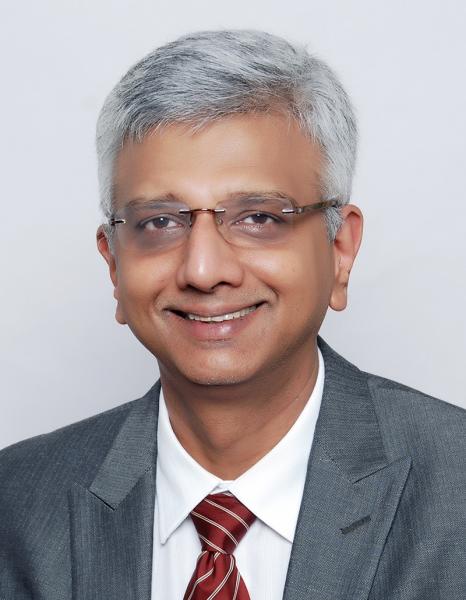
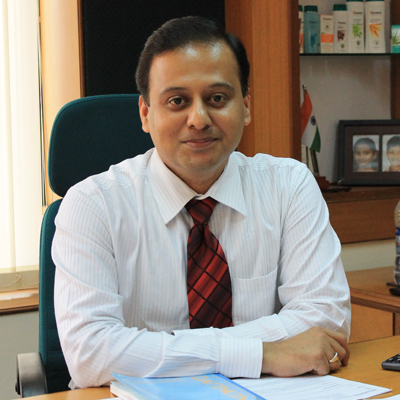
  • “Through loyalty programmes we aim to maintain the profitability of our customer”: Mark Spicer

    “Through loyalty programmes we aim to maintain the profitability of our customer”: Mark Spicer

    Loyalty and incentive programmes from brands are not new to India, right from the points that one accumulates by swiping a credit card to the free recharge that groups such as the Future Group offer.


    Multi-national loyalty and incentive programme player ICLP says that it helps customers connect and transact with brands in new ways every day and helps increase customer engagement with the brand. 


    ICLP India operations general manager Mark Spicer has over 20 years experience in the loyalty and incentives industry across all sectors with previous roles at Aimia, Maritz, Grass Roots and Skybridge Group. With particular experience in the telecoms and financial services sectors he has managed and delivered programmes for clients including Mobily, T-Mobile, O2 and Vodafone in addition to coalition programs and other pre-paid plastic card products. Spicer is responsible for managing the business, existing client relationships and driving continued commercial growth throughout India.


    Excerpts of an interaction between Spicer and Tarachand Wanvari:


    What are the various solutions that you offer?  Could you elaborate with examples – in India and other countries?


    With over 25 years of global experience, ICLP has a unique understanding of loyalty and a fully comprehensive range of solutions and capabilities to enable brands to meet their business and marketing objectives. We offer a full range of B2C and B2B end-to-end loyalty services – from consulting and understanding the clients business, through the customer journey right up to creating and development of a loyalty program to drive customer engagement and loyalty. The biggest part of the work we do is helping the client understand who their customers are by uncovering customer insights and analytics.


    Are your loyalty solutions, card based or smartphone based or something else for the end consumer?


    Our loyalty solution is customised based on the understanding of client’s business objectives and reasoning for the programme. Our solution can be anything from a simple card based system to non-card based system to digital/smartphone application but as per our experience ‘cards based system’ are still popular as it creates a sense of belonging and provide recognition to the customers. Take a look at some of the renowned frequent flyers programme like Miles and More, Asia Miles, Jet Privilege etc. there is a sense of pride among the higher tier members of owning a membership card.


    What verticals are your target groups and why?


    In the last few years, Indian market is going through considerable change. Companies have to adapt to the speed of the market to drive customer engagement and also to ensure customer returns.  Indian companies that are focussing on acquiring and retaining their customers have become aggressive in implementing loyalty programmes.


    We are targeting all the leading Indian MNCs across varied sectors but our core focus is financial services, telco and retail as they are highly competitive markets, customer churn rate is incredibly high and need the help in understanding their customer to ensure they remain loyal.


    What according to you is the market size for your products/services in India? What kind of growth rates do you predict?


    There are different estimations available in the market. As per our estimate, the exact size of the loyalty market in India is difficult to estimate or predict, as India is undergoing a lot of changes in terms of policies and processes. The loyalty market in India is still on a rise and at a nascent stage when compared to other developed countries.


    There is tremendous scope of growth in this industry and at this stage estimation of the market size will not provide a correct picture.


    You have entered quite late-there are a number of loyalty programmes already in India –Reliance or the Star cards, or discount offers from medical dispensaries like Religare or Apollo Pharmacy, or retail such as Future group, petro cards, tie up with credit and debit cards, etc.


    I would argue we have arrived at the right time! Whilst there are programmes that have been around for a long time, the Indian consumer is greatly informed and therefore it’s now that an understanding of the customer is even more critical.


    With more competitors in the market place – customers are shopping around and with the introduction of international brands, this too has increased competition – our arrival is at the same time as the market place changes and we are able to help with Glocalisation i.e. global expertise to act local.


    Indian brands often devalue the points that have accumulated? Why? Do you think that this is appropriate and will not lower/dilute brand trust/faith? Does this happen in other countries?


    As a programme grows, develops and changes, the value of point changes over time. No different to the fluctuation of currencies. Points are a currency and their value changes over time, sometimes increasing and sometimes decreasing.


    As with foreign currencies, it does affect brand trust so therefore the business model attached to the programme has to take into account potential fluctuations to avoid them.


    What kind of growth rates do you think your customer could achieve using your business intelligence, solutions and tools?


    Our focus is to help organisations demonstrate the positive commercial impact that loyalty marketing strategies have on their organisation. Each loyalty programme will have differing results – but the goal is to at least maintain the profitability of the customer/actually keeping them as a customer. As the understanding of customers increases, then you can start to target them with offers which then potentially can increase their profitability.


    One thing we do know – status tiers – once a customer has reached a high level of status tier, they try to maintain it. Therefore maintaining their level of profitability and ensuring they remain as a customer.


    I understand that you intend to use inputs and data picked up from other geographies and use your experience in other countries for Indian brands. Do you think that you could slot businesses/brands catering to the Indian price sensitive consumer with other geographies?


    We certainly spot similar behaviour across geographies and the example above is a great example of where customer behaviour is consistent across the globe.


    Though India is particularly price sensitive market, these conditions are changing rapidly. With its young demographic pattern, India has a huge population in the younger age bracket and typical consumers in this group are ready to pay a price. They have large disposable income and earning more than yester years. Nobody could have thought of buying a cell phone for Rs 30,000+ years ago. Today, this age group across gender are buying iPhone, Samsung etc. all the latest gadgets.


    India is in transition phase of being a smart market whereby the consumers are price sensitive but is also willing to pay a price for the right product suited to their needs. This has also become evident from our recent global consumer loyalty research that ICLP commissioned in association with Forrester Consulting – Crossing the Loyalty Chasm demonstrated that Indian consumers were more willing than consumers in any other market to pay a premium for products and services of brands that they are loyal to and are amongst the most likely to make recommendations and brand advocates. 


    What of consumer fatigue? What about the points accumulation/redemption infrastructure? A pique that one has often heard about point of sale (POS) expressing inability to swipe the points onto a card because of poor connectivity/infrastructure?


    Nothing stays the same for long; therefore a loyalty programme must not stay the same. Programmes have to grow, develop, change and evolve in order to avoid consumer fatigue. Consumers are also changing at a fast rate so therefore it’s even more important that the programme changes at the same pace – which is hard and tricky to do – but doing nothing is not an option.


    There are some great programmes in the Indian market, but customer expectations are continually increasing and therefore everything else has to keep up.

  • “We hope Brandz study will propel other brands to become like the top 50”: Prasun Basu

    “We hope Brandz study will propel other brands to become like the top 50”: Prasun Basu

    WPP CEO Sir Martin Sorrell calls him the data analyst expert.  Prasun Basu’s relationship with WPP’s brand, media and communications research company Millward Brown, goes back a couple of years.


    In 2013, two years after he joined Millward Brown as managing director of East Africa operations, he was elevated as managing director south Asia region. A frequent presenter and writer for many journals, publications and seminars, he co-authored the article ‘The New Indian Consumer’ published in the Harvard Business Review in 2006, and ‘The Curve-fitting Problem’ in the leading journal Philosophy of Science.


    On the debut launch of BrandZ top 50 most valued brands in India, indiantelevision.com’s Meghna Sharma caught up with the man for a quick conversation on how he sees the report helping the Indian market, the future scenario and any favourite brand which he would like to see on the list.


    Excerpts…


    You launched the BrandZ top 100 in China four years ago and two years ago came the top 50 in the Latin American market. Why made you opt for India now and not before?


    You need to ask this question to Martin. In the relative order of things, China is a much bigger economy today. There was a time when India and China were almost at par. India had a great story but China had a massive one in the last decade or so. The country has really pulled itself out of the crowd especially amongst the BRIC markets. And after seeing the success in China, it gave us enough confidence that we should go with India. It’s also important to remember that we don’t cover the UK or US. It’s just China, LatAm and India.


    In the coming years what changes do you see in the top 50 compilation? Currently, the top five have three from the financial sector.


    If you see our global reports, this year Google dislodged Apple and it did so with a huge margin. While last year, Apple had a large gap. So, I’m sure changes will come because India is a dynamic market than any other. India is also a very stable economy. If we look at the past, India was one of the less touched markets during recessions. I expect some changes by next year for sure.


    What expectations do you have from the new government and how do you see it impacting the market?


    The way the Prime Minister Narendra Modi is implementing his policies, there is a very clear sense that this will start having results, but the size of the economy at the current stage will take a little time to show results. So you might see results in six months, I don’t know. Two years down the line, probably yes. In his term we will see results.


    We are talking about FDI in railways, defence; nobody ever thought about FDI in defence. He has already taken up the limits in insurance. It is very clear in which direction he is heading. With ‘Make in India’, the country which has been driven by the service sector is not talking about manufacturing as well. So, while the service sector continues to do well and we manage to build the manufacturing industry then think about the quantum shift we will create.


    How do you see the report helping the Indian clients/brands?


    Actually it can help in a big way. For some of them, especially the big brands on the list, it can give them a very sound evaluation of the work they are doing, it will give them more confidence and more boldness to do what they are doing better. It will reinforce their talent in either building skill or building brand equity and consumer connect.


    The other thing it can do is that it will propel other brands to try to become like the top 50.


    Apart from this, the third community that will gain is the financial community within the companies like the CFOs, evaluation people etc.


    Globally, technology companies rule the list. Why is that not the case in India?


    Look at what is happening in the e-commerce sector in the country. So, who knows maybe we will see them in the list soon if they go public. Some of the best minds in technology are sitting somewhere else and with India being a very clear economy, global technology companies trade freely here. So as a result, building local outfits has not been much while it is quite opposite in China.


    How important is advertising when it comes to building of a brand?


    ICICI Bank was the first one in the financial sector to advertise years ago with Amitabh Bachchan. The campaign helped it reach the level it is today and since then, many have followed suit. Different brands have different strategies to succeed. Today, one doesn’t have to do just television advertising, social media route can be taken as well since it has become very important today. Some do CSR activities which help them connect with the consumers. Word-of-mouth is an excellent way as well, used by many high-end brands.


    Is there any particular brand which you would like to see on the list?


    We have followed a very transparent method in India and are very proud of the list we have come out with.


    I would like to see Indigo on the list because it has done an amazing work. It doesn’t believe much in TV advertising and concentrates more on outdoor, print etc. But they have built themselves very well and the service experience has been built through word of mouth. Their position is also very clear – arrive on time – and has struck to it over the years.

  • “We will be enriching our movie catalogue over the next six months”: Mansi Shrivastav

    “We will be enriching our movie catalogue over the next six months”: Mansi Shrivastav

    Mansi Shrivastav comes across as a calm, joyful young lady. With reason: the content head of two English entertainment TV channels – Movies Now and Romedy Now which entered the genre late- has managed to create offerings that have given the older established players some sleepless nights. A large part of the credit goes to her: among the first employees to have been,  she has battled in the doorways of MipCom and MipTV and other content markets, along with her former boss Ajay Trigunayat, to acquire the best of Hollywood movies and show – and succeeded.

    The catalogue she acquired has helped carve out a space for the two channels in the minds of the victims of several TV viewers.

    Born in Jamnagar, she is a Stephanian who did her English literature graduate degree and then decided to pursue a Masters in Spanish. Midway she knocked on the doors of NDTV in 2001 and was hired to work for Star Plus’ Ji Mantriji – a Hindi adaptation of the BBC show Yes Prime Minister.

    It has been a whirlwind journey for her since and Mansi declares that if it were to be captured on celluloid, the film would be aptly titled ‘Rush’.

    Indiantelevision.com’s Herman Gomes caught up with to get insights into what has gone into making the two channels the successes they are today. Excerpts:

    Take us through your journey so far.

    It has been a roller coaster ride because it has been about news, reality shows, fiction as well as nonfiction shows. I joined Times almost a year before Zoom went on air. This was followed by the launch of Movies Now and Romedy Now and it has been a good 13-14 years.

    What were the initial problems Movies Now had to face at the time of launch?

    We had entered a very competitive market where established players were already present. Some of them have been there for more than a decade or even two in some cases. When we came in, we had to break a lot of perceptions. People were apprehensive about the kind of content we were going to launch.

    Other channels had already established long running deals in the market with the parent company. The initial challenge, therefore, was to reach out to every market and explain to the world who we were, buy the content and give them strong reasons to engage with us rather than the established players in the market.

    The other major challenge was breaking myths per se, because everyone felt the content was blocked by other players.

    Many months prior to the launch, we had to undertake a lot of research; 89 per cent is the number we all have ingrained in our minds. This is because 89 per cent of the viewership is generated is from library titles. So we remained focused on this number and purchased content and titles which had high levels of repeat potential like Baby’s Day Out, Titanic, Terminator and Die Hard. What started off as a challenge turned out to be the recipe for success.

    Which are the different studios that you have signed output deals with?

    Our very first partner was Fox Studios followed by our second deal with Warner. They together continue to remain as our base deals. We also have had deals with Sony and MGM. While we engage with many independent studios worldwide, we have worked with several studios in the US and Europe for smaller deals.

    At the time of our launch we showcased Rocky titles, which was a small deal with MGM, but Rocky was precious and with a fantastic marketing campaign it came to the viewers like never before because we scheduled it and programmed it in a certain way. In fact, the very first promo that went on air on Movies Now at 6 in the morning was Rocky.

    How large is the library of your two channels?

    It’s large but I won’t be able to quote a number but it is almost 1000.

    How different is the lineup of Movies Now from that of your other channel Romedy Now?

    They are totally two different brands. Movies Now has content that is very adrenaline pumping, action, science-fiction, martial arts, thrillers and even slapstick comedies like Baby’s Day Out and Dumber and Dumber type of content. Romedy Now is focused towards a psychographic segmentation that has been done on the basis of three emotions. They are as different as chalk and cheese but both complement each other since both are catering to two different kinds of personalities or maybe even two different facets of the same personality.

    While Romedy Now cheers up your day and makes one feel upbeat, Movies Now on the other hand is literally about guns and fast paced adrenaline thrillers. The idea during the launch was that they would remain distinct.

    Which are the titles that have done well on Movies Now and which have been your favourite among them?

    That’s a tough question. I like Avatar. There are some titles, which can surprise you out of nowhere.  A random title like Aliens in the Attic performed well for us. I think the challenge for the content team was not just to pick the obvious titles like Die Hard or Terminator. The interesting ones for us are titles that surprise us as well as add a little bit of extra viewership peaks in that week.

    What is the research that the channel undertakes before launching a show?

    The launch of a new show in India is very different from the US. So for us it is important to see the context of how it is going to be viewed here in India. There are some shows that are detached from the Indian context and will probably alienate the Indian viewer.  A lot is based on gut, of course, but there are examples of shows and trends that are doing well in the market. But the final decision we make as a programmer is by watching a show and taking a call whether it will work for our particular target audience.

    Is the research carried by an in-house team or sourced from an independent research agency?

    We do both. But we have a strong research team, which is constantly looking at market trends and viewership patterns. TAM is also of help and there are agencies and focus groups that the marketing team engages with.

    Can you tell us about the recent premieres on Movies Now?

    We do not focus much on premieres but premiere-wise we have had Rush – both movie and the show. The movie Rush is adrenaline pumping and very iconic. Its characteristics are very much in sync with the philosophy of Movies Now. There is also Rush that is the form of a series whose format and content is engaging. Our next premier will be Olympus has Fallen while we have monthly properties for Independence Day, Dushera and Diwali

    How successful is your micro property Moviethon?

    Moviethon was a launch property. It’s been one of our successful ones because of the fact that it does not break up the day and has back-to-back blockbusters, which is what Movies Now always promised. Through it we bring to our viewers uninterrupted entertainment at any given point of the day. When we launched in 2010, we had made a conscious call not to break up the day into separate morning and afternoon properties. The whole endeavor was to provide non-stop back-to-back blockbusters. There was a time when Moviethon on the Sundays was performing better than several of the players put together in the market. Moviethon is an amalgamation of the best titles.

    For example, we started off with Shaolin titles for the first time in 2011. It was so successful that we have repeated it several times but every time with a new bouquet of titles. When it was launched for the first time we pitched it against a very important property that was going out in the market on our competitive platform. Shaolin won hands down. What we had done is we had taken the entire gamut of Shaolin movies that was there and positioned it in a certain time slot and added a very different marketing spin to it saying that Shaolin was sexy and not boring. It’s been a very promising one and therefore we continue to show it here. It’s been on for four years now.

    Are you looking at expanding with new titles?
    We are constantly expanding and are looking to associate with newer studios. In the coming six months there is a very significant component that is going to be added to our library and it will add richness to both Movies Now and Romedy Now in terms of content.

    What are the key challenges that you face as a programmer within the English entertainment genre?
    I think today the key challenges would be to get content. Buyers and sellers are vying for the same product, which has made it a precious commodity. Therefore, we are constantly fighting for the best titles that are in the category across studios. Also, I think the challenge is to pick the best content and in that I would mean a combination of new and old titles.

    Then, how important a role does marketing play for the new channels?

    It is very important for all of us but for us more so because we focus on titles that have already come in the market. We are not just focusing on new titles but on titles that viewers want to see and some of those titles may not have been aired for two to three years.

    When we had launched, there was a whole gamut of titles we had bought which had not even seen a primetime during that period. But for us marketing has been key factor because we have brought together titles that have been aired before but not in the same form.

    Rocky and Shaolin are examples. Fans may have seen Bond titles on other platforms but on Movies Now it had a different take and all the credit goes to our marketing team who put Bond out there as one of our prime time viewership garners. 

    Another example was Chaplin, which had a very different marketing campaign. Expectations were low since it was a black and white film but internally we had a lot of conviction that we would do well. But in spite of all the apprehension Chaplin was one of the highest rated films in that week across English movie channels. It added an entire new look and feel to that property.

    We have heard that the two channels will be revamped this festive season. Is it true?
    We are looking at a re-ignition. We want to promote a lot of festivals and are thinking of adding new content. We had Terra Nova for the first time, followed by Crisis and now Rush. Overall, in the coming six months additional adrenaline blockbuster titles will be added but there will not be a change in strategy.

    What is the line up for your 1 pm slot and how important is the slot?
    The 1 pm slot today is the most important slot after the primetime as it garners the highest viewership after 9pm. When we launched, we focused a lot on our non- prime time slots like the 1 pm and 3 pm slots. Amongst all of them, we have been doing exceptionally well at 1 pm. Thus, Movies Now has been a leader for many of the weeks in the 1 pm slot. We sometimes play a very big blockbuster at 1 pm or a repeat telecast of a movie one may have missed the night before. But since it is a very critical spot we are careful how we schedule the movies.

    Do you see a growth in consumption patterns of Indian audiences for English movies and shows?
    I think it is happening as we speak and we are slowly catching the wave. We ourselves have moved from initially targeting just eight metros to now including 1 million plus towns. The country is already consuming different kinds of English content, whether it is a Spiderman movie in different languages or even in pirated forms. I think there are enough platforms that are catering to the various demands as well. Romedy Now is an example of a movie channel which does not have the usual adrenaline, action, sci-fi kind of movies but the appreciation that it is receiving and the viewership it is garnering is an example of how the country is moving towards larger and higher consumption patterns for English content.

    Do you see an Indian production company coming up with an English show, soon?
    That will be interesting but a lot will depend on quality. Quality is the key for us. As long as Indian production houses produce such quality works it could be possible of course. There was a show like 24 that was produced in India and it was of high quality standards. As long as the content is in sync with our brand we wouldn’t hesitate to engage with such houses especially for Romedy Now. There is every possibility that you may see content that is locally produced. The only filter would be that it would have to be within the gamut of ‘Love Laugh and Live’. You can’t have a Hollywood film and then suddenly switch to another piece of content which is not so well produced.

  • ‘In a fragmented environment, managing leadership position is a challenge but we’ve done so in the kids’ space’ : Monica Tata – Turner International India VP ad sales & networks (India & South Asia)

    ‘In a fragmented environment, managing leadership position is a challenge but we’ve done so in the kids’ space’ : Monica Tata – Turner International India VP ad sales & networks (India & South Asia)

    The kids’ channels’ space in India suddenly became the talk of the town with the Walt Disney Company buying out UTV’s kids’ channel Hungama TV. In the midst of this hullabaloo, the market leaders – Cartoon Network and Pogo – stood unperturbed and went about their daily business.

    Turner International India vice president advertising sales and networks (India & South Asia) Monica Tata too comes across as calm, composed and confident. She has recently been given the added responsibility of Cartoon Network and Pogo’s operations in India spanning programming, marketing, public relations, production, research and licensing to drive the channels’ business initiatives and revenue growth.

    What’s more, as part of her portfolio, Tata is also responsible for the development and launch of Galli Galli Sim Sim, the localised version of the revolutionary TV series, Sesame Street, on Turner’s entertainment networks. In addition, she will continue to oversee advertising sales for Cartoon Network, Pogo, CNN and HBO.

    In a chat with Indiantelevision.com’s Hetal Adesara, Tata speaks on the Disney – Hungama alliance as well as Turner’s plans to stay on top… no matter what!

    Excerpts:

    How has last year been compared to the previous year in terms of revenues?
    Year on year, Turner International India has been showing outstanding performances, whether it is in terms of channel shares or revenues. 2005 was a fantastic year. From an ad sales perspective, we grew by 25 per cent and the combined growth between Cartoon Network and Pogo was about 30 per cent.

    We established ourselves in numerous spaces. For example, from a sales perspective, we expanded our base of advertisers when we decided to go into the retail advertising strategy. As a result of this, we added nearly 56 new clients to our portfolio.

    From a network perspective, we further consolidated our position as being the number one and number two kids channels. We came up with huge amount of initiatives on the content and marketing sides. For Cartoon Network, we did the Powerpuff Generation contest and Toon Cricket event. Last year, we had the biggest phenomenon in kids’ programming – Beyblade, which sort of changed the game for us in the market from a content and licensing point of view.

    As far as Pogo is concerned, we had Pogo Funtakshari and Pogo Amazing Kids Awards. We also launched quite a few original productions, which is a clear focus for us even this year.

    We did shows like M.A.D and Bam! Bam! Bam! Gir Pade Hum. Apart from that, we also launched a couple of Indian acquisitions likeKhichdi and Karma. Shaktiman, of course, was not launched last year, but it continued to reinforce our position in that aspect as we wanted to ensure that Pogo was seen as a channel for kids and families.

    From a marketing point of view, we supported all of this. We had a huge amount of on-air and off air activities for Join the Powerpuff Generation and Pogo Amazing Kids Awards.

    As far as licensing business goes, we launched a new range of products. We had started out with a seven categories and then introduced more than 30 product categories. In the licensing business, we had our brands like Johnny Bravo, Powerpuff Girls and Dexter and, of course, Beyblade was added on when it became a huge phenomenon.

    All this kept reinforcing to everyone around and also within the company that we need to keep consolidating and moving on. And, that is what we have been doing very successfully in 2005. Overall, in Turner India, between Cartoon Network and Pogo, we have created new benchmarks for ourselves so that we are able to better that in the coming years.

    What percentage does the licensing and merchandising business contribute to the company’s overall revenues in India?
    Merchandising has recently become big for us. While the division was always there, it was only last year that we came out in a big way by bringing out more categories and consolidation began. We’ve shown a 50 per cent growth so far from a year on year perspective.

    At the moment, this business contributes about 10 per cent to our bottomline, but it’s still tip of the iceberg. The potential is huge with the retail business becoming big in the country and everyone focusing on it. This is one area, which is going to get a huge push by the network in India in the coming years.

    Can you give us a breakup of the revenue contribution of the four Turner channels in India – Cartoon Network, Pogo, HBO and CNN?
    I can’t share the exact figures, but each channel’s positioning is very different. Cartoon Network and Pogo are very focused on the kids entertainment space. HBO is clearly targeted towards upwardly mobile English speaking individuals and CNN has its own distinctive positioning.

    In their individual space, we are leaders when compared to nearest competitors; whether it is in terms of revenue or channel share. CNN’s positioning is more driven with high networked individuals.

    Collectively, we have done extremely well and have shown year on year growth. As a network we have grown by 30 per cent.

    ‘On our merchandising business, we have shown a 50% growth so far from a year on year perspective

    HBO recently hiked its ad rates. What prompted this decision?
    This decision was basically based on the demand and supply graph. As the market grows, so does demand. Whereas the supply is limited as there are not too many players of HBO’s reckoning in the market.

    HBO is the leader of the pack amongst the few channels that exist in the space. And, because HBO has been strengthening its positioning through its content as well, it made sense to come out and consolidate our rate strategy. That’s when we decided that it was time to take the next step and increase the rates. It makes the game a little more interesting.

    Going forward, is there going to be any change in strategy in selling HBO?
    The strategy is pretty much the same. We are focusing on client solutions and integration. Selling time is generic across every channel. But we are looking at bringing additional value to the table for our clients. Our team comes up with ideas and strategies and we go to the client as a problem solver rather than telling them about our channel and rates and asking them to buy it.

    We’ve come up with some great creatively integrated solutions for Titan Xylus, which revolved around Titan’s positioning statement for their brand. So the movie selection, packaging and promotion happened accordingly. The client also felt good about it because there was clearly a distinction that we brought to the table. We have also done similar initiatives for Pepsi TV and are in the process of finalizing something for Marico’s Parachute.

    We keep adding brands and coming up with integrated creative solutions for clients.

    What is going to be your strategy to improve ad sales across the bouquet?
    Ad sales is a critical function. Improvisation on every strategy whether it is ad sales, programming or marketing is always important. The whole objective is to keep bettering what has been done before. Our internal mantra is: we are our own competitors.

    Keeping that in mind, the strategy really is to focus and come up with the best marketing solutions for clients and to be seen more as a partner in the game rather than creating a them-versus-us situation. We try to see wherever a partnership can be further consolidated and figure out how to bring the best value to a client. At the same time not losing focus on what you think is value for your brand.

    So whether it is Cartoon Network, Pogo, HBO or CNN, the distinction we bring to the table is the solution providing techniques or approaches we have.

    With CNN, for example, we did this exercise with the department of tourism. We created six films for them where we needed to identify certain genres to highlight facts about Indian tourism in the international market. Such initiatives make the difference.

    With the news channels space opening up in the last couple of years, how is CNN perceived in the market versus earlier when there was not much competition in India?
    I think the perception is still the same that CNN is a global leader. CNN clearly brings that value to the table wherein it is an international news channel. We are not even in the space of competing with Indian channels and we don’t consider them as competitors. Our position is clearly distinctive and the clients we go and talk to are the people who are looking for international audiences and not so much the Indian audiences. That’s where the clear distinction lies.

    For us, it’s not about what the other news channels are doing because that’s not where we are placing ourselves. With all the surveys that we have done globally and at the Asia Pacific level, CNN is the clear leader in every aspect. That’s where our positioning stands and will continue to.

    What are the properties on each channels – Cartoon Network, Pogo, CNN and HBO – that you believe will drive revenues in the next fiscal?
    We have so many of them. As a channel per se, when you take kids into account, Cartoon Network will have a clear focus on better content coupled with marketing support, more communications techniques and mediums. Between Cartoon Network and Pogo, that’s where the consolidation will happen.

    For HBO again, better content and hence better integrated solutions to clients will be able to drive growth apart from the rate increase that will drive revenues. The same goes for CNN as well. The strategy remains the same.
    For Cartoon Network and Pogo we have defined three pillars, which are: content, creativity and choice. This will be coupled with innovation as well.

    So if we say content is king, then innovation is key. That is important because in today’s dynamic environment where there is so much of choice, if you’re not going to be different then you will be left behind. So, how you make yourself different is not found in just one big Black Book. The difference lies in every aspect of how we do our business.

    In Cartoon Network and Pogo’s case, we’ve been around for the last 10 years and in these 10 years we were in a monopolistic environment so we were obviously number one then. But even in a multi-layered environment we have still maintained our leadership position.

    Therein lies the answer and speaks volumes about our credibility and what we bring to the table. We know the kids best, we listen to them and going by what we hear, we replicate what we have on-air. Those are the things which will continue to be our focus in the coming years.

    You have recently been given added responsibility of overseeing programming, marketing, production, research and licensing to drive Cartoon Network and Pogo’s business initiatives and revenue growth. Are there any new initiatives or new revenue generating areas that you are looking at in the kids’ space?
    Like I said, we believe we are our own competitors and we will be focused on what we think is best so as to take it to the next level.

    New media is going to be a huge focus in India in the coming years. We will be seeing how we can leverage that — whether it is wireless or dotcom – and how we can integrate them in our portfolio.

    Our products and licensing division too has huge potential. It is our philosophy that Cartoon Network and Pogo are super brands in the kids’ entertainment space and we have consolidated our position in the last 10 years. But how do we take our experience of television, outside of television is what this division will help us to. This will create multiple touch points for our brands. From television to a bus stop, mall, shop and a theme park, Cartoon Network will be omnipresent. At every level, wherever you are, your brand will be there and that’s the kind of experiential marketing is what we will be focusing on.

    When will the branded theme parks be ready in India?
    We are launching Pogo Planet first by mid-next year and the Cartoon Network theme park will be launched by the end of 2007.

    What do you think about the recent buyout of Hungama by Disney? How will it impact the overall kids’ channels’ space in India?
    Actually this consolidation is something that we were expecting. In fact, we were expecting it earlier. This doesn’t come to us as a surprise because when you have to deal with well entrenched players, you need things like this to happen.

    That said and done, we will not change our strategy, our thinking and how we want to deal with our business. Those cannot be based on other people’s strategies or on changing market dynamics. We will do what we think is best for us because that’s where our forte lies. We will continue to re-invent and keep pushing the envelope as much as we can to maintain our leadership position.

    All said and done, Disney will now be in a better position in the space and Hungama is a strong brand. How do you see the kids’ channels’ market changing with this development?
    I think fragmentation is a reality and that’s something every genre has experienced in these 10 years of the cable and satellite boom in the country. And what is interesting to know is that despite the fragmentation happening in the kids space, we are still maintaining our leadership position. I just want to reiterate to everyone that just don’t forget that we have been here for 10 years and you can’t overnight come up with something, which our experience has build for us.

    Secondly, in a fragmented environment, managing leadership position is a challenge. So while people have come in and taken a bit of share, within that itself we are in the number one and two positions. In terms of audience shares, the analysis that we do is based on what the industry benchmarks are in terms of a 24 hour channel share. You can’t have an analysis based on specific markets and time bands and say you’re number one!

    While we are still the leaders, we are not being complacent about it. We are rolling out many new initiatives and of course our biggest launch this year is going to be Galli Galli Sim Sim. That’s taking the whole association with Sesame Workshop to the next level. It is going to change the whole game, not only in terms of television viewing but also in terms of education in the country.

    These things are only going to consolidate our position in the kids’ channels’ space.

    Have you seen any new brands/categories coming in the kids space?
    Over the last few years we have seen a huge shift of focus in brands that we used to call originally non-traditional advertisers, who one would have thought would not come on to a television channel — whether it is the banking sector, financial sector or personal products. Now over the last year or so, the lines between the traditional and nontraditional have blurred.

    Even now about 35 per cent of my audience base is adults. So, we are talking to them too and you will see a lot of advertisers who are not just selling confectioneries, sweets and candies. We have grown our advertiser base and that’s where the opportunity lies – how do you increase the pie by tapping into other genres of advertising.

    Clients like L’oreal, TVS, Citibank, ING Vyasa, P&G and Levers brands like Clinic All Clear and Surf have come on to our kids’ channels.

    And what about HBO?
    HBO again has seen a huge shift in advertisers. The base has expanded. Telecom and financial sectors have been new additions, which we have managed to pull away from the English news genre.
    What are the challenges involved in selling a channel where decisions are based to a degree on perception in the absence of high ratings as in HBO?
    It is about managing perceptions and managing clients’ expectations. These are key to brands like HBO. As you rightly said, these are not sold on ratings but on the environment you’re buying into, the value you’re bringing for the brand and on how you’re able to differentiate the buy on the channel versus a rating driven channel.

    Relationship building is another important aspect in the market, which is a big connect that we have in the market across all the brands we represent. While HBO has been a recent entrant in our lives, between Cartoon Network and Pogo, we have built many relationships in the industry. Our aim is to always find ways to consolidate our relationships in the market.

  • “Reliance’s Big brand is focusing on  the localised content, local IP space:”  Tarun Katial

    “Reliance’s Big brand is focusing on the localised content, local IP space:” Tarun Katial

    He is amongst a select lot of advertising professionals who have pole-vaulted over the fence to the broadcast side – and stayed there. In fact, not many recollect that Tarun Katial began his career at Saatchi & Saatchi as a media trainee. More might remember him from his O&M days when he headed TV media buying for the Mumbai office. The then Star India CEO Peter Mukerjea picked him up to work in programming along with Sameer Nair, and the rest, as they say, is history.  From Star, he moved onto head Sony Entertainment programming, before heeding the call from the Anil Ambani-Amitabh Jhujunwala combine to help take the billionaire businessman’s  entertainment ambitions further under the umbrella of  Reliance Broadcast Network Limited (RBNL). 


    It has been quiet a journey. He heads what is considered as India’s most widely spread private FM radio network – Big FM 92.7 which has a footprint of 45 stations. Katial also handles a clutch of TV channels – Big Magic, Big Magic Bihar and Jharkhand, Big Thrill – the TV production wing Big Productions and the group’s activation arm. 


    Despite arriving late in the broadcast TV game, Katial managed to forge alliances with US major CBS and German media megalith RTL. He launched channels in partnership with them quickly from 2010 onwards with the clear intent of building a strong network. The CBS joint venture unravelled end-2013 while the RTL one got unstuck a couple of months ago. Katial – with a sanguine look in his eye says “things happen, then they don’t and the other way round too. But they are all a part of learning and experiences.”


    A firm believer of differentiation and localisation of content, Katial has been at the helm of one of India’s youngest media houses. It was this approach towards business that got him the ‘NewsCorp Achiever for Asia’ award and later led to him being included among the best in ‘India Today 30 on 30’ list. Katial’s much older today and his hair has greyed in parts, but the man has retained his hankering, his drive for innovation and challenges. He got into a conversation with Indiantelevision.com’s Seema Singh and Meghna Sharma, to talk about his experience, his good moments and not so good ones too, and also about his future…


    Excerpts


    How has the journey been so far? The company has seen a lot of ups and downs, what do you have to say about them?


    It has been an interesting journey. When we launched, all our competitors were at least five to seven years ahead of us, well established brands with not only equity, but also ad-consumer connect and legacy of their media house ownership.


    But, we were neither a media house nor a recognisable brand. To add to that, our parent brand Reliance did not allow us to use its brand name, since that is a part of our branding guidelines. We didn’t have any legacy knowledge in the system either. So it was all done from scratch. 


    The team has almost remained the same, since the time we launched. The executive board of the company is also still intact.  Right from deploying CAPEX to building a brand, an identity to positioning the brand, to winning small victories to larger wars, it has been an interesting journey to say the least. 


    In the last two years, the brand has really come of age, We realised that while we fought the marginal differentiation game, we had to be exponentially different to be able to succeed. 


    So we decided to position our brands to recreate every local market and that’s when we decided to go retro for our radio station in Mumbai and Delhi, regional in Bengaluru, melody in Chennai and largely Bengali with Hindi retro in Kolkata. 


    Today, I am quite proud to say that in most markets that we operate, we are either number one or number two, with a huge gap between us and our competitors. 


    You were a late entrant in the game, have you been able to deliver on the challenges? Which have been the areas that you have succeeded and areas which still remain to be tapped?


    The initial challenges were basic understanding of the business to building a consumer brand to building a differentiated positioning and differentiated offering, then to be able to consolidate and work around it. 


    In the brand’s journey you are sometimes able to take risks and sometimes not, sometimes you are able to expand and sometimes you have to consolidate. And in all of that, I think a new brand is not at the same place as an established brand. 


    Radio lacked measurement and we have worked with the industry to introduce RAM. 70-80 per cent of radio spends, today, are in measured markets and advertisers are able to measure the ROI they get from radio. The coming in of measurement rapidly increased the number of brands that had faith in radio. What it also did was, it helped radio move away from being just a frequency medium to being a rich range medium and classic advertisers like the FMCG category started to rely on radio for their communication needs, which has been very good for the category and very good for us. 


    Again in the television business we were laggards. Every business takes time to find its strategy. We started from the English space and then decided to venture in the local language proprietary content space. What we’ve been able to learn and reconcile with this is that we want to be in the local space like we are in the radio business. 


    Television is a much younger business than radio and I think the success we have seen in the TV space in the past six months has been very good. With our Big Magic Bihar and Jharkhand channel, we are clearly the leaders. Whether it’s Big MemsaabBig Bahuriya or Police Files, we have  great content. 


    Also we are the only ones with local production capabilities in Patna and we have been able to build a new community of technicians, actors and producers there.


    On the national front, while we started with Big Magic in UP, it was in April-May this year, with the launch of Akbar Birbal that we decided to take the channel national. 


    There are obviously challenges and we have a great distance to cover but I think the two month report card has been very healthy and positive. We have been able to launch a whole slew of content like:  Uff Yeh Nadaniyaan with Upasana Singh, Raavi Aur Magic Mobile and Ajab Gajab Ghar Jamai with Himani Shivpuri and Sumit Vats. 


    We are going block by block, building on that channel. While today we have about 2.5 hours of original content, we would probably take it up to 3-3.5 hours by the end of this quarter. 


    We believe that regional content is the way forward. It allows you to connect with the audiences and stay centric to consumer’s needs.  Also when you own the intellectual property, you can take it international, deploy it on digital and on various forms and fashions. So I think that’s really our strategy going forward in the television space.


    Why did you think of starting a production unit in Patna? 


    We started our Patna operations four months back, as we believed that local and regional channels should be run from where they belong and a lot of the Bihar channels tend to run from Delhi or Mumbai. But, according to me, this prevents you from building a local connect or local relevance. So we decided to do shows which are locally relevant. 


    Big Bahuriya is a show which surfaces latent issues between mother-in-laws and daughter-in-laws. It has done very well for us and it has all been shot in Bihar and Jharkhand and in the homes of people. Then, Big Memsaab, a studio based game show for women, is also based out of Patna. We built the studio and shot there, giving opportunity to local contestants, local people to come and take part. Similarly, Police Files is a very gritty, in-your-face crime show, where we work with real footage and real issues and crime scenes in Bihar and Jharkhand. 


    These programmes have been produced by local producers like Abhay Sinha, Amitabh Verma and Kamlesh Guthi Singh.  


    Are you looking at rebranding Big Magic Bihar and Jharkhand?


    Yes. We are looking to rebrand and probably call it Big Magic Ganga.  This should be done by mid August. We have already got the approvals for the same. When we rebrand, we will launch in a fairly big way. 


    Your business model earlier looked very lucrative, with TV, Radio, Production and Activation arm, how do you plan to keep up the whole chain to make it look more lucrative? How do you plan to synergize what is under you? What is your current business model?


    Actually we have strengthened our approach a lot now. We have a strong activation business called ‘Big Rural.’ We probably are the only ones who do intellectual property work in the rural space. We have built some very good brands, like ‘Big Disha’, where we do rural career counseling, partnering with Gillette.


    In fact a number of brands partner with us, through which we do hundreds and thousands of activations across schools and colleges. 


    We have also built a new brand called ‘Mele Ka Big Star’ and ‘Hindustan Ka Big Star’ where we cover large melas across UP, MP, Bihar and Jharkhand. Through this, we do a big talent hunt partnering with successful brands like Horlicks, Hero, Godrej and Emami among others.


    We have built a very big property with on-ground activation called Close Up Antakshari. Also on the production side, we have done a lot of proprietary work. Like the Big Star Entertainment Awards and now the monthly Life OK Now Awards.  We do different kinds of work under Big Productions. 


    So your business model still remains the same?


    Yes it continues to be the same. But one of the differences we brought about in the business model is that instead of focusing on client specific activation, events or productions, we are now doing more branded content activation which has attracted   a lot of clients. Through this, a lot of clients can partner and benefit rather than a single client carrying the cost. We have also built some single client properties. For instance, the Hajmola Chatpata No 1, which has a deep penetration in UP, was a success and we plan to do a follow up this year. In short, we have built some long standing properties rather than just activation.


    Are you creating activations for your television channels as well? When will we see the transformation of Thrill? Also will it continue to being male skewed? Will it be in English? 


    We are in no rush to do more in our television space until we attain a critical mass market for  Big Magic and Big Magic Bihar and Jharkhand. For us, the next big thing will be to Indianise Thrill and add local content on it as it is our second priority in the television space. We are currently in the consolidation space. And we also have the phase III of radio rights on our head. So, I think we need to see how much of bandwidth we have for television.


    Thrill will be rebranded by end of this year and while comedy will be on Magic, Thrill will continue to have action. The content on Thrill will be in Hindi only. The whole point of a buyout from RTL was to start doing local content. We are working with some key producers in the space.


    Are you looking at an English channel?


    We won’t do English for some time now. We believe we want to be in the local IP space. We want to have our own IP.


    Was this the reason that the joint ventures ended?


    Our strategy is to be in the local content, local IP space. We want to be centric to the consumer and move around according to the changing trends and tastes. We want to be able to take the channels to different platforms. But in the English space, you are under the rental model. What we do after the license period gets over? What is your legacy in the space?


    Why did you decide to launch the channel with international partners – CBS and RTL?


    You learn with every category you get into. I think when we got ourselves into the English space, there were fewer partners, less competition, but over the three years the space became fragmented and crazy. 


    What is happening with Big Magic and Big Magic Bihar and Jharkhand and Big Magic International, post the breaking of the JV?


    We now own all the content and that’s the reason we launched Big Magic internationally. We are now available in the US, Australia, Canada and are planning to launch in some countries, this year. UK is one of the targets and the talks are already on. 


    If you see the financial statement of this year, the company has done better as compared to 2013. But the network is still incurring certain losses. How are you looking at improving this – especially on the television side?


    RBNL is in its investment phase on TV and it’s on the return phase on radio and that’s how we are balancing it. You need to have some initial losses for any network to grow. You can’t cut the investment short because there are loses in the business, right?


    I will not define them as loses; they are investments. For any business to grow you need investments and we are happy to make investments in the TV business. We are happy to reap the benefits of the radio business. The radio business is close to Rs 200 crore plus, which is not a small number.


    So, will you be pushing radio more?

    Both are different businesses and have different sets of challenges; and we want to grow in both the businesses. And you have seen what we have done with Big Magic. We have been launching a new show almost every week if not every month and the kind of investment that is going behind content, marketing is quite incredible. Last week, we launched the new season of Uff Yeh Nadaniyaan. We have brought in new faces; we have upgraded the look of the show. So, at every step of the way we are investing in the content of the channel.


    What kind of management reshuffle will we be seeing. Are you getting in  more new people?


    We have brought in more people to strengthen the team. On the sales side, we have created a vertical approach, keeping the customer at the centre of it. So we have done a vertical for single customers, a vertical for government sector customers, a vertical for key accounts, a vertical for corporate accounts and new business developments. So, we have a customer centric approach and we have got sales directors on all these verticals. We have got Gurudutt Jakhmola for the government side, Ajit Singh has been roped in for single accounts, Rajesh Mishra for corporate account side and Vijay Koshy on the key account side.


    So, we have got four vertical heads. On the creative side, we have got Manisha Tripathi as the creative and programming head of radio.


    Are you looking at fresh investments coming in to the company?


    Obviously, we will make investments into our radio business as we go into phase III of licensing; we will definitely make investments in current licenses migrating into 15 years and acquiring new licenses.


    And what about television?


    Television is now at the cusp of breakeven, but we will continue investing in Magic.


    What about the licenses of channels like Love? Will you be giving them away? Can we expect more channels in the future?

    We will keep them. Currently, they are in the hibernation stage.  We will be working with our three channels for now. And as and when opportunities come, we will tap into it. 


    How do you plan to get cash flow in the company? Why did you plan to delist?

    For now, we are a delisted company and so we do not need to worry.


    We didn’t want to live quarter to quarter and the promoter believed that he had great value in the business and so he should go behind it and give it all the investment it requires to give it a long term run. 


    For a business in its early stage it is tough to live in a quarter to quarter manner. I can tell you, I have worked at News Corp in my early days at Star and if we were to live on a quarter to quarter basis, we would have never made the kind of investments we did. 


    Also, we didn’t list because we wanted to. We listed because we have a legacy of Adlabs being listed. Our licenses were in the erstwhile Adlabs which demerged into Reliance Media Works which then became Reliance Broadcast Network. We have actually never done an IPO. 


    According to you, which is the most ad revenue generating channel? 


    Big Magic is actually at a 100 per cent inventory fill and it is doing exceedingly well. But I think the one that has real big potential going forward is our Bihar channel. It’s a media dark region and a lot of advertisers want to penetrate that market. Also, it has one of the fastest GDP growth in India. 


    Are you looking at geo-targeting at any stage?


    We had some options at doing geo-targeting with Big Magic because it’s very big in UP. We keep toying with the idea. With a 50 sales offices in the country for our radio business, it will be an easy task.  But we haven’t really tapped into that yet.


    Is distribution a challenge? Is it getting expensive now?


    It’s not very expensive, it is actually getting cheaper. Digitisation has clearly made distribution democratised. Placement is still expensive but distribution is not. And if you have differentiated content then placement is not a key challenge. 


    In fact, we have had a reduction in our carriage fees dramatically over the years across the network and I can tell you that some of the DTH platforms have been very welcoming for our channels.

    What is your budget for marketing on a yearly basis? Does it keep increasing year on year?


     See, we have priority markets, where we invest heavily. Also, we have great advantage of having cross network between radio and TV. So, what people can’t buy, we can buy very easily. Most networks have to buy on radio networks like us, but for us that’s a very big advantage. So between network media and third party media, I think our budget will be close to 20-25 crore. 


    According to me as the channel gains popularity, its marketing spends reduces. 


    I can tell you, our radio market budget has come down substantially from the years we launched it. It’s a set brand. When we launched the show with Annu Kapoor we did not do any marketing because the content was strong. I think good content markets itself after a point. The word of mouth, the advocacy becomes so strong that you don’t have to knock on any ones door.


    What made you change your whole content from recent Bollywood tracks to retro on Big FM? How big is your research team for both television and radio?


    You have to give yourself some serious delta of differentiation, it can’t be marginal differentiation. And you have to take some risks and risks pay off eventually. 


    We have an intense research team, which comprises music experts and even university graduates who have done a post graduation in music. We won’t take such a risk without understanding the consumer’s likes, dislikes and choices. Even within the retro music we have serious segregation on timeless music and time-bound music. 


    Similarly for television, we work closely with Dragon Fly for a lot of research. 


    There seems to be a sudden rise of in-programme advertising? Do you also use this tool to advertise?


    We do a little bit of it, but more in Bihar and Jharkhand because we have a game show on the channel and also because there is a lot of good opportunity there. But I still believe that you can’t make good content into a teleshopping network.


    I think the consumer is becoming extremely discerning so you need to be smart about the way you do these things. What we did with Clinic All-Clear on one of our shows on Big Magic called Raavi was that we spoke about educating the girl child, while soft branding the product with the message.


    Are you looking at doing more events apart from the current slate? 


    I think they need to make sense from a consumer perspective. You can’t just do them because you want to do them. You have to do them because there’s an insight in them. We currently have a slate of 20-30 events, which I don’t think is little by any standard. 


    Does the network make any content for only digital  consumption?


    We are currently not making content for digital only, but we are re-purposing a lot of content for digital. Like we do short stories of Akbar Birbal, only for digital. We have our own YouTube channel, where we condense interesting episodes and put on that channel. The content is such that it can be watched in about nine minutes. 


    Where do you see the network three years down the line?


    The network will be very consumer centric, adapting to changes in consumer trends, very well differentiated and distinct, whether it’s the TV network or the radio network and building on insights continuously. For us consumer-centricity is the key and that’s what we are working on and that’s why we have done what we have done both in TV and in radio. You can’t win by duplicating anybody.
  • To create an ‘Aha!’ moment, create experiences: Jeff Cheong

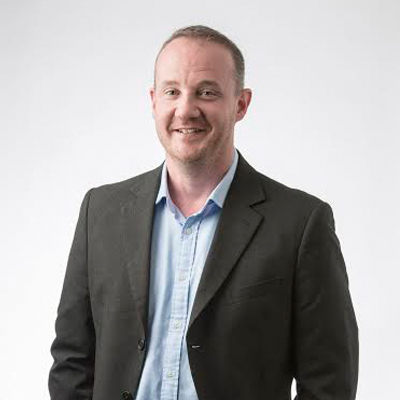
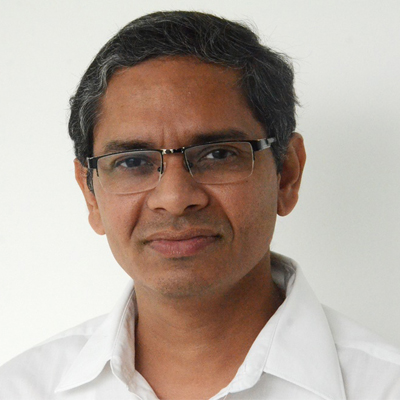
    To create an ‘Aha!’ moment, create experiences: Jeff Cheong

    It was in June this year that Jeff Cheong was promoted to president of Tribal Worldwide Asia as part of DDB Group’s leadership and succession strategy to enhance digital creativity within the region.


    In 2008, a year after winning the Singapore Airline business with TBWA, Cheong helped kick-start Tribal DDB Singapore. In a short span of five years, the agency has grown to 120 staff with expertise from user experience to e-commerce and a tech innovation team.


    Under Cheong’s leadership, Tribal has built an expertise on delivering innovative digital-to-life solutions for regional clients such as Unilever, McDonalds, Changi Airport, DBS, StarHub, Ministry of Communication and Information and National Library Board.


    Recently, Cheong also led the Singapore office to launch the DDB i-store, featuring over 30 tried-and-tested tech solutions, which have been adopted as DDB Worldwide best practice. He has been tasked to grow the best practices in digital creativity for the region across technology, social media, content and e-commerce platforms.


    In a t?te-?-t?te with Indiantelevision.com’s Priyanka Nair, Cheong, talks about his views on the talent in Indian digital marketing space, creative challenges on the medium, expectations from this market and much more.


    Excerpt…


    Is being creative on digital much more challenging than other mediums?


    Creativity has always been challenging in the business of communication. The idea of being creative is to spark a human conversation. This is the very reason why we follow the philosophy of creativity in humanity. According to me, market scenario also plays the role of an influencer in creative processes.


    Maturity of media platforms and infrastructural barriers are a few other things that could pose as challenges in bringing out creativity across the table. Having said that, nothing stops from being creative. To create an ‘Aha!’ moment, create experiences. Using technology for the sake of it is not cool. Going forward, we want to create experiences that are enjoyable.


    What are the key things that brands need keep in mind to build a healthy conversation on social media?


    Adding celebrity quotient in communication plans is a big thing in a market like India. According to me this is a very interesting and smart route taken by many brands. Worldwide too many marketers have understood the power of influencers on social media. Brands need to work on identifying the right set of influencers to help create the right buzz.  


    When bloggers are spotted and involved in an activity, their posts are as good as a classified advertisement. Engagement on social media cannot be force fitted but needs to be very strategic.   


    How has marketers’ demand for digital marketing changed in the recent years?


    One observation that I have made is that across markets, the social media landscape has changed. Brands are constantly looking at driving conversations that in turn helps in building a large fan base. This constant process turns out to be the key performance indicator for many brands. It can be noted that Facebook changed the algorithm over night.


    These are major factors that have pulled brands to use this medium interestingly. The challenge that needs to be addressed by agencies time and again is to be realistic on this medium. This fact also answers your first question on why is it challenging to be creative on digital.


    What do you have to say about India’s talent pool in the digital marketing space?


    The talent I am exposed to here is fantastic. I had the chance of interacting with the 22Feet team in person. I felt as if I am entering my own office back in Singapore. The energy is the same. The kind of questions raised during brainstorming was similar too.


    I also had the opportunity to attend a few client meetings. I like the spark that digital professionals have here. The future looks extremely promising.


    What are your observations on India as a market in digital eco-system?


    I would have to draw a parallel observation with Australia to elaborate on this further. Five years ago situation in Australia was not the same. The market scenario today has been elevated to another level. Today, Australia leads on the chart of smartphone business. Mobile has changed the game for consumer marketing there. If this could happen within a short period of time there, India is not far behind.


    India is a young country, with tech savvy people. As infrastructure improves, there will be an explosion in the business of digital communication as well. The country will catch the next wave soon, its time wait and watch!

  • We will look for international, local collaborations and diversifications: Sameer Nair

    We will look for international, local collaborations and diversifications: Sameer Nair

    I had never gone away”, says the man who is credited with bringing KBC and K shows to the Indian television screens. Sameer Nair, after a hiatus of three years, is back at doing what he does best. He has been busy exploring opportunities in online video, e-commerce, film & television production, education, hospitality and of course, helped the newest entrant, AAP, into Indian politics.


    A maverick as many call him goes by the philosophy – communicate clearly, be polite, be persuasive, sweat the detail, seize the moment and create not compete for what is already created.


    As the new group CEO at the country’s biggest production house, Balaji Telefilms, he will work closely with Shobha and Ekta Kapoor to take it to the next level.


    Indiantelevision.com’s Meghna Sharma caught up with him to know about his views on today’s audiences, their taste, Balaji’s success in gripping the viewers’ pulse and its future plans.


    Excerpts…


    You had the genius to select the content which caught the pulse of the viewers. How has that evolved? How do you keep abreast with the change in taste?


    Television is dynamic. When we did ‘KBC’ and ‘Kyunki saas bhi kabhi bahu thi’ which went on air on the same night, quickly followed by ‘Kahani ghar ghar kii’ and ‘Kasauti zindagi kay’, it used to be half an hour weekly programming on three main channels – Star Plus, Zee and Sony. This gave viewers 90 choices to pick from. At Star our big strategy was to channel this to daily and changed the whole schedule, reducing the primetime viewing choice to five. Which others followed and continues to be even done today. It was a new concept then and people liked it. With Imagine, we got mythology into primetime which can be seen today as well.


    In the last 22 years of Indian television, we have had a full generation of television – executive, creatives. When I started of in 1993, we were the pioneers then, and had only the legacy of Doordarshan (DD) to look back at whereas today’s generation has 22 years of television to study. So, in the last 20 years, there has been a lot of process especially in consumer taste because the country has progressed. Today we have 150 million television homes, 800 million mobile phones, internet, disposable income has increased and content has kept in pace with it because of the new talent entering the space. For instance, Colors has had wonderful success, Sab has created a special niche for itself and done remarkably well, production houses are doing well and coming up with shows like ‘24’ and ‘Yudh’.


    Content has evolved and so have the people.


    Channels do a lot of research, but what I feel is that research can only prevent you from doing a mistake. It can tell you what not to do and not what to do. Finally, what has to be done is done with meticulous details, creativity and the way a story is told. For instance, ‘kyunki…’ as a daily show was a good idea strategically, but people remember the story of Tulsi in the big Virani family. It is all about great stories, well told.


    What is your role as group CEO?


    Balaji is in a very good place and we have had a successful run of films as well as shows. I was doing a count and Balaji has 15 of the top 50 shows currently on the Indian television screens. There are a very few listed industries in this space and it is one of them.


    And in the past six months we have been discussing the growth plans and one of the main take outs of those meetings has been that we should scale up the company. So, now Balaji will do more movies, more television, we will look for international as well as local collaborations and look for diversifications.


    I have really come here to work with Shobha and Ekta Kapoor to do that.


    Which verticals are you looking at for collaborations?


    Could be movies, shows, formats or just partnering with an international company on specific projects. If there is a format company looking to set up a shop here in India or wants to do catalogue shows here then that could be an opportunity we would be looking at.


    Between Ekta, Shobha and you, how are the roles divided?


    Ekta is creative and she is great at that. Mrs Kapoor has been the operational backbone of the company, so I will work closely with her. And also with Ekta. The main aim here is to work together and look for growth opportunities.  


    What in your assessment are Balaji’s strengths and weaknesses? And what are its opportunities?


    Balaji has a very good team and they have produced some incredible work. So, if there has to be a weakness then it is to have craft a strategic plan and then execute it. At its current stage, the Indian television industry is at its best and has no weaknesses. But of course, one can always do better and look at different genres, show etc. But, I wouldn’t say that these are weaknesses but are opportunities.


    As for the strengths, they are very strong on creative, production and have the ability to deliver. The talent in Balaji is phenomenal and there is a lot of ambition.  


    What is Balaji’s USP- is it talent, creativity or the ability to know what viewers want?


    The USP is the storytelling. Ekta’s way of telling a story is what sets her apart from the others. The market is crowded and a lot of others are also doing a great job. It is not a monopolistic market. But Balaji is special.


    A lot of famous faces have come from Balaji’s house. How is the talent management arm, Spark, doing?


    I haven’t taken a look at it yet, but will soon do. I want to do some reorganisation with that arm. We at Balaji want to manage the talent in the country and look at growing more talent.


    Lately, we have seen channels experimenting with finite shows. According to you, what is its future in India?


    The market is already segmenting. There is a segment which will continue to watch the dailies and then there is another who will consume mythology and historical shows. But there is and will grow into a bigger section of audience which is interested in finite shows. So, there will be two distinctive audiences – you and your mother.


    Niche is always more valuable. And with digitisation it will benefit the industry and the viewer as one can choose to pay for a channel showcasing only hi-end products. As this group grows, it becomes a business model.


    The market is moving that ways and we are the market leaders.


    Globally, there are firms like Shine, BBC, Fremantle who have spread their wings internationally. Do you think Balaji can be India’s Shine?


    A lot of global companies which have come to India and come with their format catalogue which they are selling in India tend to be in reality and game show space. But we haven’t seen any international firm making any head way in the fiction space. The same thing applies on reverse basis. The west has been more advanced than India when it comes to television. The formats have done well there and since they are universal, they can travel across the globe.


    What Balaji will look to do is to partner with them. The future of this business is creative collaboration rather than destructive competition. We are looking at more people to work for.


    And we have already had a few offers to co-produce international movies into Hindi with a foreign partner. Maybe, later we could do shows as well and who knows set up a collaborated company in the future.


    Earlier there was Balaji and Balaji alone, apart from UTV. But today we have Beyond Dreams, Director’s Kut, Swastik which are producing big ticket shows. Did Balaji let go of opportunities? Or was it the content demand that helped them crop?


    It’s an expanding market and there is a limit to what a production house can do and should do. So, it’s just a dynamic market. There are too many channels and we need more shows so therefore more producers are needed to produce these shows.


    It is a nice competitive space with good creativity energy.


    Balaji did produce regional content for TV, will we see that happening again? What about venturing into regional films?


    I have heard that regional market is going through a bit of turmoil and price points have really crashed there. So, we are looking at the regional market to work with the right partners. So, again the big focus in on collaboration.


    Balaji has a lot of inherent strength and a lot of reverse so we have to see if we can collaborate with creative people there. We have an open door policy and anybody with a great idea can approach us. We are always looking for people to work with whether in television or films or new media.


    As far as films are concerned, what is the strategy?


    We have had a good run this year and the plan is to settle towards eight to 12 movie slates per year. So we will have to work really hard to achieve this because it will have to be across genre and across budgets. We have always done it that way and that’s why we have had films like ‘Ragini MMS 2’, ‘Mein Tera Hero’ and ‘Ek Villian’. So there is a lot of variety and we will be looking at scaling it up.


    What will be Tanuj Garg’s role now?


    The film arm is strong and has churned out fabulous work in the past. And will continue do so. Tanuj will be reporting to me.


    Balaji doesn’t own IP. Is that what has kept its price at the level it is?


    There is too much hype given to Intellectual Property (IP). The value of IP is when it has the ability to monetise the content. Movies have IP because after the theatrical release you can sell the broadcast rights to a channel and then re-syndicate it through DVDs.  In television, the kind of shows that are being made there is not much beyond what is in the first run. The channels are anyway syndicating it aboard.


    The US has so much of IP because of the content available there. For instance, they can have a great run of a show like ‘Big Bang theory’ and then sell it in India because we watch it too. But the reverse doesn’t work for us. For example, we can’t sell a ‘CID’ there for the Americans to watch, but we will watch ‘CSI’. So, IP makes sense when your content can cross boundaries and still be consumed.


    What is on the agenda for the next couple for years?


    We are looking a long term strategy of growing the business. In the next three to five years, we should double or triple in size. That means more shows, films and some good co-productions.


    The big agenda is that we are looking for creative people and companies to partner with and grow in inorganic manner as well.


  • Will work closely with IBF and ISA to meet BARC deadlines: Ambi

    Will work closely with IBF and ISA to meet BARC deadlines: Ambi

    An advertising person constantly strives to connect market research data to insights to come up with a winning campaign and who better to understand it than MG Parameswaran aka Ambi. The brain behind the transformation of Ulka Advertising into Draftfcb Ulka Group (now FCB Ulka), the former IIT-ian with a sharp wit and a way with words knows his subject at the back of his hand.


    The man, who has seven books to his credit in which he has penned down insights from his 35 year long working career in advertising, is the new president of Advertising Agencies Association of India (AAAI).


    The newly elected executive council will meet in next 10 days and as he takes charge for the year 2014-2015, Indiantelevision.com’s Meghna Sharma speaks to him on the key focus areas, awards and much more…


    Excerpts…


    What are the five things you will focus on as the new AAAI president?


    The new elected executive council will meet to deliberate on what should be the key initiatives, but from the top of my head, I think we need to move on the following points with speed:


    – AAAI will literally move to its new office in the next six months; this is a spacious office located mid-town. We will create facilities for our member agencies to use (for outstation agency members it can be a big boon).


    – AAAI will endeavour to work closely with IBF and ISA to ensure that the BARC deadlines are met and we have a world-class television measurement system in place soon.


    – AAAI will try to help member agencies face the challenges of the future; targeted seminars and workshop on the business of advertising will be a priority going forward; but first we will ascertain the demand for such programs.


    – Talent development at the grassroot level will be a priority; we will see if we can leverage the online medium to help reach top class training to smaller cities and towns of our country.


    – AAAI has played a vital role in the development of sister organisations; we will endeavour to build strong bridges to all the other industry organisations including ISA, IBF, INS, Ad Club, IAA, IMAI, Outdoor Association, Radio Association, Cinema Association etc.


    To sum it up, we will ensure that AAAI serves the purpose of all its member agencies, big and small, in big cities and in small cities and help them stay vibrant and profitable, play a more meaningful role in helping their clients and the society at large.


    In the next year, what will be the focus area – seminars or awards – for the organisation?


    Awards were never the be-all and end-all of the AAAI. Unfortunately, that gets the maximum media coverage. Many things that AAAI does, like helping member agencies collect outstanding amounts from clients or helping media organisations collect their rightful dues are not as exciting to write and read about. Further, many of these are really in the private domain. AAAI is an industry body set up the help ad agencies do their business better, serve clients better and do well. Towards this end AAAI has held workshops, created forums and also hosted award shows. We will continue to do all that.


    In the recent past, many objections have been raised regarding obscenity in advertisements. Do you think there is a need for stricter rules?


     All ads have to follow the norms laid down by society. AAAI was one of the founding partners of ASCI and I think ASCI, in the last few years has made its process a lot more efficient and effective. All the big advertisers have signed off that ASCI will have the last word. Similarly all media organisations have agreed to abide by the ASCI rulings.


    Obscenity can come at you from any category, undergarments, perfumes etc. If readers feel any specific ad needs to be pulled off they should complain to ASCI. The process is well laid out on its website.


     Having said that, let me reiterate, an ad has to be measured against what is prevalent in society at large. At one time no Hindi movie showed a man and a woman kissing. That has become a norm today, and some heroes / heroines are vying to set new records. The society is also changing rapidly enabled by the rampant spread of digital medium. So our standards for measuring ads should also become more flexible. What was obscene 10 years ago may not be seen as obscene today. One needs to factor in the variable that consumers are not morons; they do see ads with a tinted pair of spectacles, especially ads that promise miraculous results, like deos.


    Finally, it is ASCI’s turf to decide what they think is permissible and what is not.


    Also, how do you plan to get back the lost glory of Indian awards?


    Awards play a useful purpose to motivate young people to stay engaged in the advertising industry. There is nothing to beat the joy of receiving an award in front of your industry peers. AAAI will work closely with Ad Club to ensure that we have a transparent mechanism in the jury process. Efforts will be made to ensure all the key agencies participate in the Awards. Please remember the Abby Awards belongs to Ad Club and has a wonderful history backing it. That will not be allowed to fade away.

  • “We believe that advertising is about storytelling”: Rajesh Krishnamurthy

    “We believe that advertising is about storytelling”: Rajesh Krishnamurthy

    The hair care category is considered to be one of the largest segments in the personal care industry in India. The estimated size of anti-hair fall segment is Rs 1400 crore and is growing at 9 per cent year on year. One of the leading brands of this category that has a range of herbal products is The Himalaya Drug Company.


    It was early last week, when The Himalaya Drug Company rolled out a mass media campaign for its anti-hair fall shampoo. The brand recently is seen being promoted on various media platforms. 


    In conversation with indiantelevision.com The Himalaya Drug Company consumer products division business head Rajesh Krishnamurthy speaks at length about the brand’s marketing strategies, the worry about media segmentation, its sales targets and much more.


    Marketers are worried about the media segmentation that is happening in India. What are your thoughts on this?


    We believe that advertising is about storytelling and we should use different mediums strategically to communicate the story. Each media delivers on a significant objective. Depending on the brand’s requirement at that point in time, we would leverage media vehicles accordingly. With the anti-hair fall shampoo campaign, the media mix involves both traditional and digital, we launched with a television commercial and eventually for more targeted marketing we would invest in the digital medium.


    How does this come as a challenge while rolling out a 360 degree marketing campaign? 


    The biggest challenge is allocation of resources, as each medium has its own merits and demerits; the media mix has to be strategically decided on the basis of the brand’s requirement, the effectiveness of the medium and the RoI generated. While television and outdoor help us in reaching out to the target audience, the digital medium helps us in engaging the consumers with our brands. Himalaya Shampoos enjoy a strong equity in south India with 4.5 per cent market share. This new communication has been developed to support our key variant and build share in the hair fall problem segment nationally.


     Where does marketing fall in Himalaya’s personal care business?


    Marketing is the backbone of our personal care business. A right marketing mix driven by relevant consumer insights strikes the chord with the consumer. At Himalaya, we believe in steady and consistent investment in brand building and driving initiatives through extensive marketing research, be it in product development, understanding consumers and their needs, positioning of our products and communicating effectively.


    We had the first mover advantage with our face washes in 2006 and today our Purifying Neem face wash is the leading face wash brand in India. Our products’ USP lies in its ingredients, Neem has been successful in reducing pimples, and today it resonates well with our consumers because of the marketing campaigns devised to effectively communicate the product benefit of Purifying Neem face wash over the years.


    With tight competition in the category what are the differentiating areas that you are focusing on?


    Our strength lies in developing efficacious, natural and 100 per cent safe products which build connect with our consumers. Our products are enriched with well researched ingredients which help deliver the product benefit and this is what differentiates us from our competitors. Research has shown that despite major brands being present in the hair fall space, it still happens to be one of the biggest concerns amongst women today. Our TVC communicates how Bhringaraja and Butea Frondosa offer an effective solution to hair fall; it also brings out the message about how the brand would like to help its consumers make the right choice.


    Can you define your TG for this segment?


    We have noticed that today’s lifestyle has resulted in more women and men experiencing hair fall at a much younger age, hence our communication is directed towards youth between the age group of 18-25 years.


    While many brands of this category are trying to incorporate specific media vehicle in their communication plans why did you decide to take the mass media marketing route now?


    We have a strategic media plan starting with a mass marketing vehicle. The essence is to create visibility for the brand and connect with the TG with this commercial. While television delivers on these two aspects; digital media also offers room for interactivity as an added benefit. We have launched our communication on YouTube as well and soon we would launch a digital campaign for anti-hair fall category.


    Where does digital stand in your media mix? Can you elaborate on the activities planned for your digital campaign?


    Digital is an important medium of communication for us. The audience is young and tech savvy, hence we need to be active on this space to build on Himalaya as a trusted brand. We would launch campaigns involving SEO, SEM, display banners, interactive microsites and engaging social media presence starting with Facebook in the coming months with some exciting campaigns for our TG.

  • Missed call from FB will accelerate digital engagement: Valerie R Wagoner

    Missed call from FB will accelerate digital engagement: Valerie R Wagoner

    It was in April that Facebook announced that it had 100 million active users in India, and was aiming at touching the one billion landmark. The social networking site which now has an established subscriber base, is looking at launching more ad inventories. The latest from its kitty is the missed call ad product, which according to Facebook has already started generating some buzz.  


    The announcement of this new ad format had come at a time when Facebook COO Sheryl Sandberg was visiting India hobnobbing with government officials, and small and medium business owners.


    Facebook has partnered with ZipDial, a Bangalore based mobile agency for this. Indiantelevision.com’s Priyanka Nair speaks to ZipDial founder and CEO Valerie R Wagoner at length to understand the mobile marketing ecosystem in India, partnership with Facebook, the agency’s journey and much more.


    How has marketers’ demand from mobile marketing changed in recent years? 


    In emerging markets where the vast majority of consumers are still not online and still pay for things in cash, there is exceptionally little data on consumers and their preferences and behaviours. However, only this year, marketers we work with, are ready to embrace a comprehensive data strategy.


    Four years ago at the end of 2009 when we started ZipDial, marketers were barely getting comfortable with using the mobile at all, and it was an era of small experiments. By around two-three years ago in early 2012, using the mobile for media activations had become an industry standard. By now, marketers are truly embracing both, bridging offline-to-online consumer experience over the long-term, and driving a real business impact from data and analytics.


    You have been in the business for four years. How were the initial days?


    The idea for ZipDial was born from a brainstorming session between Sanjay Swamy (now chairman of ZipDial) and me on a late night flight back to Bangalore from New Delhi. Over next couple months, we fine tuned the idea further with as many as 600 varied user cases.


    The idea just stuck, and within a few more weeks, we had launched a minimum viable product. I think the ideation and execution happened within a short time. But ideas are cheap. Anyone can have an idea. To be really successful, an entrepreneur has to be great at execution, to think strategically about how to drive real inflection points in the business, and have the stamina to see through. What was launched as a mere polling product, over time transformed into a full-fledged mobile marketing and analytics platform.


    ZipDial founder and COO Amiya Pathak and the tech brain created a prototype during IPL 2010 wherein users could give a missed call and get live cricket scores. With zero marketing, within a couple of months, millions of users were zipdialing millions of times a day. It took off completely word-of-mouth. That was the first sign of success. Shortly thereafter we cracked P&G Gillette as our first big client, and we never looked back.


    How did you partner with Facebook? Can you elaborate on how the partnership will work?


    We launched the Facebook-ZipDial missed call ad product with Facebook as its partner for emerging markets (only company in the world). We collaborated and drove conception, design, development, sales, and analytics. In fact, given that the vast majority of the engagement happens on ZipDial after the user clicks on the Facebook ad, we have a lot of interesting data comparing performance across different media as well as performance between Android and feature phones.


    The purpose of the Facebook-ZipDial ad product is to create online-to-offline engagement and driving results. Facebook can track to the level of a click and online engagement. Upon user dialing, ZipDial takes over the consumer experience to drive actual outcomes in the offline world via retargeting, for example reminders to the user encouraging them to buy a product, visit an outlet, watch a particular TV channel, download particular content or an app, etc. Everything is 100 per cent permission-driven by the user and is targeted to them.


    We also need to track performance of Facebook v/s other media channels because ZipDial integrates across all media channels, including print, TV, OOH, and non-Facebook digital ads. We can track which media drives higher RoI for the advertiser.


    To put this in simple words, Facebook is the media where the ad is displayed. The user clicks on the ad. As soon as the user responds to the ad, it bridges from Facebook into a 100 per cent ZipDial experience.

    Coca-Cola (Coke Studio), L’Oreal (Garnier Men), P&G (Gillette), Mondelez (Cadbury Dairy Milk), Disney Channel and Nestle are a few campaigns that have used the inventory so far.


    We also need to give a performance analysis across media. This includes results from analysing the cost effectiveness of each media in terms of driving unique user acquisition. The metric used is user acquisition cost = spend on media / number of unique users who engaged from that media, averaged across all client campaigns.


    It can be noted that digital (including Facebook and non-Facebook digital) performed 10.40 times better than print and Facebook performed 3.02 times better than non-Facebook digital ads.


    How does the Garnier Men campaign for which Facebook has partnered with you work?


    Garnier Men had been for long planning to run a campaign with ZipDial for print and digital media. ZipDial designed and implemented the campaign on the platform in order to drive engagement with brand content around IPL 2014. The ZipDial campaign for Garnier Men was planned well in advance.


    Luckily the Facebook-ZipDial product was launched in time such that Facebook could also become part of L’Oreal’s marketing plan for the Garnier Men campaign. The results have been phenomenal with the Facebook-ZipDial ad performing 16 times better in terms of RoI than the same ZipDial integration with Garnier’s Print Ads.


    What according to you makes a campaign hit on mobile?


    There are many reasons. But, one of the major reasons is that today almost 100 per cent of all emerging market consumers have mobile phones. There is an ease of use in the design format that makes it a single click transition from online to offline in a seamless and user-friendly manner.


    Mobile is the unique ID for the customer. Even when consumers bridge from the on-Facebook experience to an offline experience such as watching a TV show or purchasing a product, there can be an offline-engagement in a targeted way.


    What are the key things that brands should keep in mind to build a healthy social conversation? 


    We strongly believe in the six best practices for social and mobile activations. One, know your customer; a visit from an anonymous user is not enough. All engagement should be verified and known-user engagement so that the brand can personalise the experience later.


    Two, don’t lose your customer, use re-targeting and follow-up engagement, don’t just make it a one-off transactional experience. However, never ever spam your consumers, and always make the experience permission-driven and privacy protected. Three, there is simplicity in the call-to-action, do not overwhelm consumers with too many options. Give them one single compelling message and way to engage.


    Four, there is multiplicity after the call-to-action. Target your response to users on a personalised basis in terms of content and interface. No two users with different profiles should receive the same content/interface. Five, it allows to measure your media. Never run a campaign without the ability to track and measure response rates and RoI. This applies across all digital and traditional channels, including print, television, etc.


    Six, every media can go viral, including offline. Never miss an opportunity for a viral campaign. ZipDial achieves between 60-400 per cent increase in reach of media through viral campaigns even when the only media used is offline traditional media. This improves RoI immensely.


    Mobile being a personal medium, there is a lot that a brand needs to keep in mind before making that one missed call. How do you make sure that a user doesn’t hang up?


    The ZipDial platform does all the hard work automatically for the brand. Marketers only need to think about what their brand benefits and the message they want to get. The ZipDial platform does all of the hard work in analysing data and results, profiling users based on preferences and behaviours, and automatically delivering the right personalised message to the right user at the right time, and even through the right user interface (i.e. voice, text, WAP, Apps).


    ZipDial always puts the consumer’s interests and the consumer’s privacy first. If this is broken, then ultimately it reflects poorly on the brand. Conversion rates on ZipDial campaigns are between 9-45 per cent compared to industry standard conversion rates of less than 0.5 per cent. Users trust the privacy-protected and personalised ZipDial experience and therefore stay more engaged.


    Typically how does ZipDial help a brand to roll out its mobile campaign?


    ZipDial keeps a close watch on the needs and trends in the market before advertisers even realise it themselves. We invest in developing our engagement, retargeting and analytics to keep the industry move forward.


    We also work closely with all for brand marketing as well as for trade marketing. Our focus is also to integrate our advanced platform into their overall consumer loyalty, data and marketing strategies. We work hand-in-hand with our most forward thinking marketers and then replicate and scale the solutions across the industry.


    How has H1 of 2014 been for Digital ZipDial?


    ZipDial has already more than doubled its revenue run rate in the first quarter of the financial year. We look forward to working further with clients about their comprehensive mobile, data and loyalty strategies.


    What is at top of your wish list for 2014? 


    Taking ZipDial’s innovative platform global is one of our main priorities for this year. We have already started to expand into the rest of Asia, but we are even more excited to take our expansion further into Africa very soon.