Category: Executive Dossier

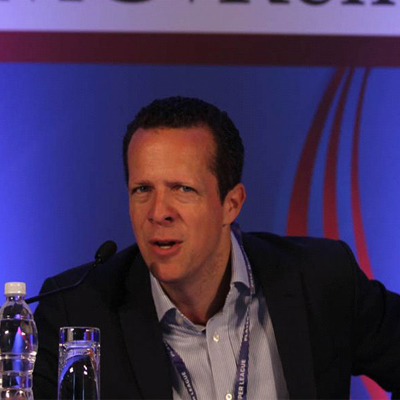
  • “I&B to partner with ASCI to curb misleading advertisements”: Narendra Ambwani

    “I&B to partner with ASCI to curb misleading advertisements”: Narendra Ambwani

    An IIM Ahmedabad alumnus, Narendra Ambwani has spent over 34 years of his career with Johnson & Johnson. He led the rapid growth of Indian operations of Johnson & Johnson by building hugely successful and strong brands like Johnsons’ Baby and Stayfree. His strong focus on people engagement and development made J&J India as one of the “Best Companies to work for” in India.


    Ambwani, a professionally trained CEO coach and business advisor, now serves on boards of leading companies in India and acts as business advisor for marketing of FMCG products.


    In the coming year, we hope to promote ASCI’s guidelines more vigorously among advertisers and creative agencies, so that new ads meet ASCI’s standards at the creative stage itself, he said while taking charge as Advertising Standards Council of India (ASCI) chairman .


    During the year 2013-14, the Consumer Complaints Council (CCC) met 41 times and considered complaints against 1,937 advertisements. Indiantelevision.com’s Meghna Sharma spoke to the new chairman to see what is on his priority list.


    As the new ASCI chairman, what will be on your priority list and why?


    Our priorities for year 2014-15 are:


    •         Self discipline by creators of advertising – This would ensure that the advertisements are compliant with the self-regulation code of the ASCI at the time of their creation itself.


    •         Easier access to ASCI services – More and more consumers now have better access to internet. Social media is also playing a very important role when it comes to consumers expressing their opinion. Our efforts are underway to make it easier for consumers to reach ASCI – be it to complain against objectionable advertisement or for ASCI members to get trained on self-regulation code. We would announce these initiatives in the coming months.


    •         Collaboration with the regulators – The new mantra of “Less Government, more Governance” is in the true spirit of self-regulation. Department of Consumer Affairs, FSSAI and the Ministry of Information and Broadcasting is looking to partner with ASCI to curb the issue of misleading advertisements and protect the consumers’ interest. We are closely collaborating with e-regulators and are a key stakeholder in the Inter Ministerial Committees.


    •         Being seen as fair by all stakeholders – For every complaint that we process, one party is always unhappy! If a complaint is upheld, it is the advertisers and if a complaint is not upheld, it is the consumer who may feel that has ASCI been fair. By continuing to keep our processes transparent and decisions providing clear rationale, we would be seen as a fair and unbiased organisation taking very objective decisions. Our aim is to communicate this better with all our stakeholders.


    Recently, ASCI had set new guidelines that will not allow ads for fairness creams and other fairness products to depict people with dark skin as inferior to those who are fair. What triggered the association to come up with the new guidelines now?


    While all fairness products are licensed for manufacture and sale by relevant state Food & Drug Administration (FDA) under the Drugs & Cosmetics Act, there is a strong concern in certain sections of society that advertising of fairness products tends to communicate and perpetuate the notion that dark skin is inferior and undesirable. ASCI code’s Chapter III 1 b already states that advertisements should not deride race, caste, colour, creed or nationality. Yet given how widespread the advertising for fairness and skin lightening products is and the concerns of different stakeholders in society, ASCI therefore felt a need to frame specific guidelines for this product category.


    Setting up these new guidelines for the skin lightening and fairness products will help advertisers comply with ASCI code’s Chapter III 1 b which states that advertisements should not deride any race, caste, colour, creed or nationality . Given how widespread the advertising for fairness and skin lightening products is and the concerns of different stakeholders in society, ASCI saw the need to setup specific guidelines for this product category.


    What other segments are under scrutinisation? Why?

    None at this moment.


    You have said that ASCI wants to collaborate strongly with the regulators and consumer groups. When do we see that happening?


    ASCI has been in close contact with all the key stakeholders such as regulatory bodies or consumer groups. It is an ongoing process and with the efficiencies that we have achieved in the last few years in terms of speed of complaint redressal, regulatory bodies and consumer groups are seeing ASCI as a strong partner. This collaboration is continuing to strengthen as these stakeholders are now relying more and more on ASCI to process complaints.


    As awareness increases, will we see more marketing activities from the association to let more common people complain about ads?


    We have seen encouraging responses in the last couple of years and are looking forward to reaching out to the consumers extensively. We organise campaigns and seminars in colleges for the youth to be aware of ASCI. We have a dynamic PR team that helps us spread communication and visibility of the council to our consumers. With our digital medium consumers lodge complaints via the ASCI website, the ASCI Facebook page, email and through smartphones. We also have maintained the traditional mediums i.e. toll free telephone and regular post for increased customer feedback. Growing awareness of ASCI is evident in the fact that the number of complaints that we have processed in the last two years have grown ten folds!


    ASCI code of conduct is known to all advertising agency. Then why do we see repeated offence. Do you think the penalty should be more stringent?


    By and large, contrary to the perception, we have a very healthy compliance rate with the ASCI’s CCC decisions. There are very few repeat offenders and the compliance rate is more than 90 per cent. With the strong support coming in from the government bodies, we are confident that the compliance rate would only improve further.


    Last year, ASCI reduced the complaint processing turnaround time to just 12 days. What can we expect this year?

    This year we have some very interesting initiatives planned. We would announce them in the coming months. These are in line with the priorities set for the year 2014-15.


    Lastly, any advice for the advertising agencies?


    Regulate yourselves, else somebody else would regulate you!

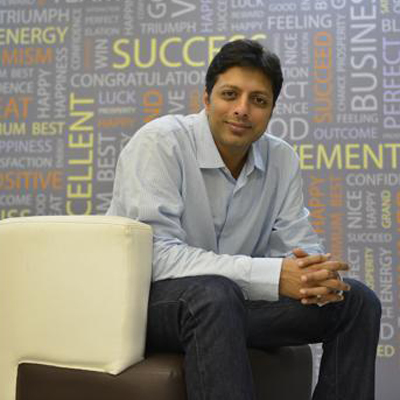
  • “Carriage fees make the market place beyond reach in India”: Derek Chang

    “Carriage fees make the market place beyond reach in India”: Derek Chang

    Shy and reserved is what you could use to describe him. Open minded is another term. But Scripps Networks Interactive (SNI) managing director of APAC operations Derek Chang is far from shy about growing his network of lifestyle oriented content for TV and internet in the region.


    Chang has delved in all parts of the media industry with companies such as DirecTV, Charter Communications, The Yankees Entertainment and Sports Network, GlobalCenter and TCI Communications/AT&T Broadband.


    While SNI has successfully created niche content in the US, it has yet to enter India and Chang is well aware of the restrictions and regulations of the country. His network produces over 2000 hours of original lifestyle programming annual put out on channels Food Network, HGTV, Travel Channel, DIY Network, Cooking Channel and Great American Country.


    In a freewheeling chat with indiantelevision.com’s Sandhya Sutodia, on the sidelines of Indian Digital Operators’ Summit (IDOS) 2014, Chang spoke about the network’s future plans to grow itself in the country and the region.


    What is the spread of SNI in Asia Pacific?


    Scripps Networks owns and operates four channels across the Asia Pacific region including Asian Food Channel, Food Network, Travel Channel and HGTV, which will be launched at the end of the year. HGTV will debut on StarHub in Singapore as the first regional channel dedicated to the growing home and lifestyle category in Asia. Our preparations for the launch of the channel are very simple. Talks are on with distributors to launch it across the whole of Asia along with other operators. Scripps Networks launched HGTV in the US 20 years ago, and the network has grown markedly since then. It is now the number one upscale network for women. We have seen an increasing demand for high-quality lifestyle content all around the world and are excited to continue the HGTV brand’s global expansion, starting with the Asian region.  


    How do you market the channels in APAC?


    We work with distribution partners to help market our products. They help us market our product and run events in creating interests, on air promotion for our content. I am responsible for designing and executing growth strategies in the Asia Pacific region for Food Network and Travel Channel, both of which are available to viewers in selected Asian markets. My focus is on leveraging the Scripps brand across all distribution platforms in the region as well as managing regional programming and marketing strategies.


    Scripps Networks Interactive has ambitious goals to significantly broaden its presence in Asia, including wider distribution of our lifestyle brands and programming capabilities.


    How important is the APAC region for the company? What is your model of operation?


    We originated in US and that is the most significant market for us. Now we are investing globally and nationally. Right now the US contributes most of the revenue to the company. Asia Pacific is a wholly owned subsidiary of the US based company and contributes a small per cent to the overall international business. Asia Pacific is a small business. We have not set any targets from this market yet. However we see attractive growth opportunities.  In the UK, our channel UKTV is a 50:50 JV with BBC Worldwide. In Canada, we have a partnership with Shaw Media. In some places we work in partnerships and it is not always necessarily a subsidiary of the US-based company.


    Are you looking at any such partnerships in India?


    We are evaluating our strategy in Asia and in India too. It depends on how we see the potential market and the success model. The potential market has its own characteristics and challenges and we have faith in our brands and content.


    Content is what drives the media industry across the world but in India it is not yet content. Are you looking at increasing your advertising subscription?


    Yes, we try to increase our advertising subscription wherever we work. With growing demand for high quality home lifestyle entertainment in Asia, we keep looking for better revenues.


    How do you view the digitisation drive in India?


    It seems to me that India has been talking about digitisation from quite some time. And the industry is addressing all the challenges. Executives with lots of experience pointed out the challenges at the IDOS sessions. Slow work but yet progress is there.


    Carriage fees is a factor that is crippling Indian broadcasters? How would you deal with it?


    I have not experienced it yet so I would not be able to comment on it well. The hope is that it goes down and that would reduce one of the barriers for us. We have a unique situation here as it increases the investment of programmers and broadcasters and it is a challenge. It makes the market place beyond reach for many. We have to believe that it will come down.


    Given the diversity of languages in India, what would be your choice of language when you enter?


    The content would be in English and after exploring other markets and if we feel that the content would be attractive to that particular market, we might think of other languages. We have not made any decision about what we want to do in India. We want to see the demographics first.


    Tell us something about existing Asian Food and Travel Channels?

    As a leader in lifestyle programming, Scripps Networks Interactive owns the food category in Asia with iconic lifestyle brands such as Asian Food Channel and Food Network. People are drawn here because of the rich food culture, and AFC (Asian Food Channels) is a platform that celebrates all that the region has to offer. AFC has built a strong viewership across Asia and we will continue to fulfill our viewers’ demands with new and exciting original content and initiatives, which is in line with plans to expand our presence in the region.


    They will serve the company well as we invest in the channels, work to broaden their distribution on all platforms, and explore new business relationships throughout the region.


    Tell us more about the programmes on HGTV?

    HGTV will premiere with a robust line up of top-rated programs about property, hybrid construction, design and extreme spaces. Hit programs such as Property Brothers, Kitchen Cousins and The High Low Project, will entertain and inspire viewers with fresh ideas and authentic stories on how to find and love their own dream home. As a continued commitment to cater to local audiences, Scripps Networks will also produce localised original short-form content exclusively for the launch of HGTV in Asia, based on the popular series, Extreme Homes.

  • “Hero ISL will be equivalent to the Barclays Premier League”: Nitin Kukreja

    “Hero ISL will be equivalent to the Barclays Premier League”: Nitin Kukreja


    Try naming some of the sports played in India and one will be able to count them on one’s fingers. Cricket will top the list leading to clichés such as ‘India is a cricket obsessed nation’ or ‘cricket is a religion in India’.


    Ironically, India’s National Sports Developmental Bill 2013 recognises 66 sports in the country.  


    Off late, we are witnessing a rousing appetite for emerging sports from the birth of leagues like the Pro Kabaddi League (PKL), World Kabaddi League and the upcoming Hero Indian Super League (ISL).


    Star India is one of the broadcasters aiding the growth of a multi-sport ecosystem in India. After the success of the PKL, it is gearing to make the ISL a roaring success too. Leading the sports division is Star India president sports Nitin Kukreja who joined the group in August 2007. With earlier stints at Pricewaterhouse Coopers and Morgan Stanley, the young executive talks about how the broadcaster plans to reach out to multiple sports fans in India and the strategy ahead of India’s footballing movement exclusively to indiantelevision.com’s Herman Gomes.


    Excerpts:


    Which are the sports Star is looking at experimenting with in the next five years?

    Over the past year, we have invested in sports like kabaddi, hockey, badminton and football, apart from cricket. Whichever sport we invest in, our objective is to make the game relevant and exciting even for the un-introduced population, thereby attracting viewers and eventually helping the entire sports ecosystem of the country.


    For the first time we have a TV network which is the promoter of the upcoming Hero Indian Super League. Is the league based on the Japanese J league model where the teams were named after their home city and emphasis was laid on the grassroots development programme?

    Football is a universal language that cuts across culture, race, religion and economic might. Being a prime provider of sports content to the sports fans in India, it was natural for us to become one of the promoters of the Hero ISL. We have gone a step ahead, as for the first time in the history of football, we’ll telecast the matches live with commentary in five different languages – English, Hindi, Malayalam, Kannada and Bengali.


    The Hero ISL is conceptualised jointly by IMG-Reliance and Star India. We’re also fortunate to have the support of the All India Football Federation (AIFF) that reaffirms the commitment of the governing body to develop and promote the game in the country. With the league, India has joined the world of football and Star Sports is attempting to reach each and every sport lover in the country in his own language.


    Grassroots development is one of the most important aspects in the agenda for the Hero ISL. The mandate for winning a city team in this league was not just based on the highest financial bid, but also on the bidders’ proposal of a sound plan for developing football in the catchment area they wished to bid for.

    What are the factors that offer huge consumption potential for the businesses of sports in India?


    Our country is one of the youngest in the world and statistics show that over 50 per cent of India’s population is aged less than 25 years. In fact, India is set to be the youngest country in the world by 2020. It is this segment that provides a huge potential for the business of sports in India. For far too long, we have been a single-sport country. At Star, our efforts are aimed at inspiring people to make sports an integral part of their daily lives. We believe sports is more than getting people to watch TV, it is about shaping a culture where sports can thrive and talent can be honed.


    We realised that there is a growing appetite from Indian sports fans for cricket and other kinds of sports. We want to address this need and offer the best of cricket, international sports as well as domestic and global leagues that will give birth to a new sporting nation.

    The success of Star Sports Pro Kabaddi League indicates that the appetite of sports fans in India has grown beyond the boundaries of just cricket. However, all of sports constitute just four per cent of the total TV viewership in our country, which is substantially below general entertainment and news. Of this, almost 3.5 per cent is contributed by cricket. While cricket remains central to our business, Star is making significant investments to increase the fan following for non-cricket sports in India. The passion with which the Indian youth connects with different sports is the key to this business.


    How many viewers are you planning to reach out to, during the League?

    The Hero ISL will be the first sporting event in the country to be backed by a never seen before ubiquitous broadcast plan, with a potential to reach around 85 per cent of India’s television audience. This ambitious plan is expected to herald an unparalleled reach for any content, in the history of Indian television. Spanning over eight channels in the sports and general entertainment categories, the Hero ISL will be televised in five languages: Star Sports 2 (English), Star Sports 3 (Hindi), Star Sports HD 2 (English), Star Gold (Hindi), Star Utsav (Hindi), Asianet Movies (Malayalam), Jalsha Movies (Bengali) and Suvarna Plus (Kannada). Through this, we would engage more viewers in non-English speaking regions of our nation and present the game in the language that the fans speak.


    Which are the international agencies that you have got on board to provide better production values for the ISL?


    While there are millions of football lovers in our country, the popularity for international tournaments and European leagues has been predominant. We plan to change this with the Hero ISL, which will be a world-class product equivalent to European leagues like the Barclays Premier League.


    In our commitment to showcase a truly global league, we have partnered premier international agencies such as IMG for the live programming of the matches, Argentina-based 4HUMANS to put forth superlative graphics design and the UK-based AE Graphics for its execution.
     

    While Star invested in the infrastructure for the Pro Kabaddi League, how much will you be investing in infrastructure in different cities for the Hero ISL?


    We are investing heavily in the sport, not just monetarily but by putting in sincere and significant efforts as well. Our investments go beyond infrastructure building, whereby we’re working towards grassroots development for the sport that will help putting India on the global map for football.


    The league has invested in stadium refurbishment in the eight identified venues to create a platform to groom young footballing talent in the country. These include Salt Lake Stadium (Kolkata), Jawaharlal Nehru Stadium (Chennai), Jawaharlal Nehru Stadium (Delhi), Fatorda Stadium (Goa), Jawaharlal Nehru Stadium (Kochi), DY Patil Stadium (Mumbai), Indira Gandhi Athletic Stadium (Delhi) and Shree Shiv Chhatrapati Sports Complex (Pune).
     

     In how many years do you see the franchise teams breaking even?


    It is too early to talk about that. All our efforts at this point in time are pointed towards building it as a premium property. But given that the game has such an enormous potential we’re confident that the league will enthrall sports fans and be commercially successful as well.

    Many football experts and club owners in India are of the opinion that the Hero ISL will affect the I-League and lead to it becoming an inconsequential format. What are your thoughts?


    We’re glad that I-League exists today, as having multiple properties that support the game only help the overall sports ecosystem in a country. However, the Hero ISL is an entirely different property with a well-differentiated offering.

    Some I-League clubs have joined our property; team owners from Salgaocar, Dempo and Shillong Lajong FC co-own teams in the Hero Indian Super League. This really benefits Indian football as a whole in the long run.


    How has starsports.com been performing and how will you utilise the platform during the Hero ISL?

    All matches of the Hero ISL will be telecast live on starsports.com. Over a short span of time, the traction on starsports.com has grown significantly and we are expecting a steep growth in online traffic for all our upcoming football properties. The website is currently approaching a 100 per cent growth already over last year’s football subscription numbers, with almost 70 per cent of the traffic coming from the age group 18 – 24.

    Besides live telecast of all Hero ISL matches, starsports.com will also present video on demand content, match highlights and full match replays. Our reach on football this season is touching 25 per cent of the entire core football watching audience on TV.


    What is more exciting for a football fan is that Starsports.com offers all matches of the Barclays Premier League, Spanish La Liga , Italian Serie A and the Hero ISL offering a wide variety of content to the viewers.


    While advertisers missed the bus for the Pro Kabaddi League how many advertisers have you got on board for the ISL besides Hero Motocorp? Are you looking at providing a combined on ground and on air package for advertisers?


    There are no preset benchmarks for the game of football in India and we intend to set them right at an unprecedented scale and vision to serve our product. Our focus has been on building the Hero ISL as a premium property and we’ll continue with that approach. For the first season of the league, we are offering package deals for brand visibility, both, on-ground as well as on air. With Hero Motocorp being signed as the title sponsor, there is a lot of buzz and anticipation around the associate sponsorships. We’ll announce the names of the associate sponsors as well soon.


    What was the ad revenue from the Pro Kabaddi league?

    Firstly, we did not sell Pro Kabaddi to advertisers, simply because we treated it as a start-up in its investment phase, like any other new business. Star Sports was the title sponsor for the league. However, the advertiser interest kept mounting as the league progressed and got an unprecedented, rather historic response from people across the country.

    Don’t you think two Kabaddi leagues will cause a viewer fatigue?


    Cricket has demonstrated that the fans just cannot have enough of the sport that they love. We are used to seeing cricket, tournament after tournament, all year long. The recently concluded Pro Kabaddi League indicates the mass acceptance of Kabaddi as an engaging sport and there is no way that having two Kabaddi leagues will create a viewer fatigue of sorts. In fact, the two leagues are different from each other in terms of their formats and the game-play, which overall makes Kabaddi even more interesting. It only increases the exposure and penetration that the game deserves.

    Are you looking at building new leagues in India for volleyball and basket ball?

    Following the overwhelming success of Pro Kabaddi League, we are currently focused on repeating the act with the Hero ISL. As of now, we don’t want to divulge the details of properties in the pipeline. Being the leading sports network in India, we have continually worked for the betterment of sports, and we’ll take up any opportunity that is aligned with this objective. Rest assured, we will keep you abreast with any further developments.

    Do you now see India becoming a multi sports nation soon?
    The appetite of the Indian sports fans has been steadily increasing and there is an increasing acceptance of non-cricket sports. However, the nation is still far away from being known as a multi-sports nation today.

    At Star, we believe that India with its 1.2 billion population should not be a single-sport nation. Hence, we’re putting forth and reintroducing other sports like kabaddi, football, hockey, badminton, etc. to revolutionise the sporting landscape in the country. We are sowing the seeds to spawn a multi-sport culture, and our vision will definitely translate into reality.
     

  • “Content is a key pillar to provide breakthrough solutions for clients”: Kartik Sharma

    “Content is a key pillar to provide breakthrough solutions for clients”: Kartik Sharma

    He took charge in January this year and since then there has been no looking back.


    The humble and calm, Kartik Sharma, the managing director south Asia of Maxus, has had a great year, so far. Maxus India began 2014 on a high note with several breakthrough campaigns like “Power of 49” for Tata Tea, winning business worth Rs 300 crore, new senior management appointments. The ‘agency of the year’ title at Emvies 2014 was the cherry on the cake.


    Sharma has been with the company for seven years and has contributed to shaping the Maxus brand, creating client delight and helping Maxus dominate industry awards along with Ajit Varghese who has been appointed CEO Asia Pacific.


    The agency was named as the fastest growing media agency by RECMA and retained the title of the most “dominant” agency profile for the fourth year in a row in 2013.


     Indiantelevison.com’s Meghna Sharma spoke to the man, who specialises in communication planning, behavioural economics, media research, analytics and technology, to know what Sharma attributes these achievements to; his blueprint for the agency in the coming months, and industry’s forecast.


    Excerpts…


    How does it feel to be the ‘Media Agency of the Year’? What made you differ from the competition?


    It’s a fantastic feeling to be ‘The’ media agency of the year, something which we have been dreaming for over seven years. Emvies being the most coveted and respected forums in India, winning here gives us tremendous satisfaction as the award is a reflection of effective work done for clients. The difference over competition is our focus across all clients (we won a metal for 10 clients) and across various categories suggest Maxus’s focus across various disciplines which we have been building over the years. Some of our competitors have won only on a few clients.


    Your client Tata Beverages won the ‘Client of the Year’ for ‘Power of 49’ campaign. Were you expecting it? According to you, what made the campaign a success?


    We were expecting good wins for the ‘Power of 49’ campaign. The client of the year was a bonus. The reason for the success of the campaign was that it was based on some fantastic insights and impeccable execution. Also, the entire timing of the campaign enhanced the effectiveness of the campaign.


    It’s not even been a year since you took charge as MD, how has the journey been so far?


    The journey so far has been fantastic. I couldn’t have asked for more. Apart from winning the Emvies ‘agency of the year,’ Maxus has been winning consistently over the last few months. Consistent wins across award forum which includes Asian Marketing effectiveness awards for data analytics innovation, win at the WPP Atticus on analytics, recent wins at the MMA, Smarties (1 gold, 2 silver, 2 bronze), again Agency of the year at the Big Bang held by Ad club Bangalore, highest award at the WPPED cream awards clearly indicates the focus that Maxus has on doing effective work across clients.


    Apart from the wins, we have added several senior leaders to Maxus who have rich experience in building brands. This helps us do cutting edge work for our clients. Overall, it has been an extremely satisfying journey so far, with many more exciting projects for the rest of the year.


    The year 2014 has started on a good note for Maxus with over Rs 300 crore businesses. What would you attribute it to?


    Our record at pitches is at the back of integrated thinking that we bring to the table backed by great insight. Every pitch we work very hard irrespective of the size of the business. We spend a lot of time understanding the brand challenge which helps us craft integrated communication solutions and not media plans.


    Apart from this, a lot of emphasis is also on delivering ROI and measurement.


    You also bought in new people to strengthen the team. What will they be looking and what more can we expect from Maxus in the coming months?


    All our senior leadership’s single line mandate is to provide client delight. Till now they have done a fantastic job and even in the future the mandate won’t change. Our goal is always to be the trusted partner for all our clients.


    The agency recently launched Resolve. What was the idea behind launching it and what has been the response from the clients on it?


    In today’s complex and dynamic media environment the shift from media plan to communication plan was imminent. We saw this coming and started work nearly three years ago where Maxus India worked with the global leadership team to develop a proprietary framework called “Relationship Media” (RM). The heart of RM is the ever evolving and non-linear purchase pathway & media has a critical role to play in this pathway. Also the pathway changes dramatically by the category type.  All the standard industry tools cover very limited touch points and also do not factor the brand/category challenge. For example whether you are selling a financial product or auto, which are typically targeted towards say men, the standard industry tools will throw similar media choices. This is because they don’t address consumer pathways. They just look at plain demographics. Resolve was our answer to address this challenge where more than 60 touch points are captured, the pathway for each category is mapped and a multi touchpoint optimisation now made possible at the hands of our planners. It’s a revolutionary tool which uses primary research done by Point logic for 25 categories with a sample size of more than 2000 individuals.


    The beauty of the tool is that it recommends the media task for the brand (beyond just building salience) and shows the most influential touch points (beyond just reach) to achieve a particular task. We have received extremely positive feedback across clients as such a tool doesn’t exist and is able to add terrific value to their communication plans. 


    Digital, data and technology were identified as the key growth drivers for Maxus. What are the key areas for you?


    I mentioned earlier in the year that Maxus will focus on digital, data and technology and there is no change in that. Additionally, I would say content is a key pillar, which can provide breakthrough solutions for clients. The ‘Power of 49’ campaign is a good example of the same. Over the next few months you will hear many more case studies from Maxus.


    Today digital is no longer just another medium but has become an integral part of a marketer’s plan. What digital strategies do clients expect from Maxus?


    The digital landscape is an ever evolving area and most of our clients expect integrated full service solutions from us. In fact we currently do many things beyond digital planning & buying. We work in other areas such as owned media management, social, creative development, website development and even CRM.


    Name some of your best digital campaigns.


    The list is pretty large. In no particular order a few examples are our search work for Fiat which was appreciated and won many awards. Our campaigns for Tata Sky where we demonstrated the product features across various websites using the remote and not the status bar, Vodafone Selfie is a great example of meshing digital with activation and many many more.


    GroupM revised annual advertising expenditure (AdEx) estimates for 2014 to 12.5 per cent from 11.6 per cent. What are the reasons for it? Which sectors are spending and how is the year looking?


    The sentiment post elections have been positive with a new and stable government. One of the key sectors adding to growth is retail and more specifically e-commerce brands. They are aggressively investing in building brands in both traditional and digital media. Other industries like auto, telecom, financial services & FMCG are expected to increase spends.


    What are the challenges ahead for you and Maxus?


    Currently, one of the key ingredients of our past few years’ success has been the culture and that’s critical for us to maintain at all times. The key challenge is to maintain the culture of Maxus at all times. At the end of the day ours is a people business and if we can keep the culture intact which we define as PACE (Passion, Agile, Collaborative & Entrepreneurial) then we will be in a good place. 

  • “Our niche properties might very soon see a hike in the ad rates”: Rajesh Sethi

    “Our niche properties might very soon see a hike in the ad rates”: Rajesh Sethi

    Ten Sports, one of the few sports broadcasters in South Asia recently extended the broadcast rights for the premium football competitions: UEFA Champions League and UEFA Europa League for the next cycle of three seasons starting 2015-16.  

    The network also bagged the rights for the 2018 Gold Coast Common Wealth Games. Overall, it will be seeing a major revamp in early 2015 which could see new channels either being added or existing ones being removed.

    Heading these path breaking changes is the network’s CEO Rajesh Sethi.

    Indiantelevision.com’s Herman Gomes talks to the enterprising man who took over his new job in July last year and finds out  not just about  the acquisitions but also about India’s new found sport-Kabaddi.

    How has Ten Sports progressed in the past 12 years since its launch in April 2002?

    Ten Sports was launched in April 2002 and our offering mainly revolved around India-Pakistan series. In this, we had the opportunity to host some of the best matches in the history of India and Pakistan cricket (including the legendary Sharjah series). We have grown from one channel to eight channels and a dominant sports broadcaster in the sub continent.  We have a significant presence in international markets like the middle east/far east and the Caribbeans.

    But sports industry witnessed a gradual shift in terms of audience preference and tastes since early 2010. Generation Y started picking up interest in other sports like soccer, tennis, hockey and badminton. Also this era saw an emergence of a niche audience which focused on sport like Golf. In this context, it was imperative for us to break out of the clutter and honour our viewer’s preference. 2010 marked the launch of Ten Cricket and Ten Action which were dedicated cricket and football channel respectively. Next in line was a dedicated golf channel – Ten Golf – which was launched in the year 2012.

    Also sports as a genre saw a rapid increase in its aspirational quotient. Individual sports also started flaunting its plush green outfields (as is witnessed in football, golf and LFL) and picturesque landscapes (as is visible in Tour-de-France). Sports’ viewing was no more watched just for its adrenaline quotient but also for its ‘awww’ moments. Hence in the year 2011, Ten HD was launched to enhance the overall experience of the sports audience by broadcasting the content in the HD format.

    In your previous interview you said that as a strategy you have never completely rested your fortunes on only India cricket. Is there any change in your strategy now? How are you approaching football?

    Taking cue from the previous statement, it is true that we completely do not rest only on India cricket, we believe in bringing content across genres in terms of football, cricket, tennis, golf, multi sports events, wrestling etc from across the world to our viewers to enrich their viewing experience.

    Football is world’s most followed sport, while India is considered as the sleeping giant of the game. We have always been the propagator of this beautiful game since inception as we bring across best of football content and experience to our viewers which include UEFA Champions League, UEFA Europa League, Super Cup, Copa Del Rey, Capital One, Skybet Championship, French Ligue, A-League and I League.

    Do you see the HD feed as a value proposition for your channel Ten HD? And what has been the audience response for your Ten Golf channel?

    With growing HD TV penetration every year, it is imperative for us to bring value proposition before the market gears up.

    HD households in India is approximately 10 per cent, while, Sports HD viewing share in the overall pie is close to 8 per cent.

    Unlike GEC, sports broadcasting is all about being able to replicate the real ground experience. In this context, HD (with its power packed Dolby Sound offering) channel plays a critical role in ensuring the quality of the content is top notch and brings home the real ground experience. Our HD offering in the form of Ten HD is rapidly gaining traction and we are extremely happy with the uptake of the same by our distributors.

    With increasing HD demand even MSOs are gearing up with a stock of HD boxes for installations at customer end.

    Ten Golf responses have been very encouraging as we offer almost 80 per cent of exclusive and premium content. Ten Golf is niche offering in our product portfolio and it is still in the nascent stage of its life cycle. We view it as a long term investment in our portfolio. In the context of 400 million sports viewing TV audience, the current golf viewing audience of more than half a million in India, is touching only the tip of the iceberg. In such a scenario, channel distribution plays a pivotal role in providing the channel to as many MSO and DTH platforms. Clearly, change will not happen overnight. It will require a lot of effort to break the status quo. We believe that electronic medium can shape this change, provided all the cable and satellite operators make it available for their subscribers to discover and develop a habit of consuming golf. Our intent is to get more amateur golfers involved with the game which in turn leads to greater viewership when golf is reintroduced as an Olympic sport in 2016.

    Ten Sports went big with its efforts to promote the 2014 Commonwealth Games. How did the property fare for your channel? Why did you decide on extending your rights for the 2018 Commonwealth Games as well?

    As a sport network, we truly believe that it is our duty to bring best of sports in the market. Carrying our faith forward, we decided to be the broadcast partner for CWG in the Indian subcontinent.

    As a measure to promote CWG and to support the Indian contingent, we brought in the proposition of “Saare Jahan Se Aacha, Hindustan Hamara” via a 360 degree marketing approach which united the sports fans in the country and helped in the uplift of multi sporting events and sports persons from various parts of the country.

    As a result of our initiatives and the good performance of Indian athletes, the sporting event was highly accepted and engaged by the fans, sporting personalities, journalists, media houses, corporate and other non sporting fans.

    The Asian Games are scheduled to begin on 19 September 2014. How are you planning to telecast the sport in India? Will there be language commentary? Any special marketing initiatives?

    Asian Games is one of the most popular multi sporting event in Asia. We intend to enhance the experience of viewers via broadcasting on dedicated channels in our network in tandem with live streaming of the event on our digital platform “www.tensports.com”

    We developed our marketing campaign drawing insights from Indian athlete’s performance in the just concluded Commonwealth Games, to carry forward the quest for the medal hunt, where we intend to motivate them via our communication theme “Go for Glory”. To amplify the theme we have done tie ups with Mary Com – the movie starring Priyanka Chopra. And dedicated Asian Games promos featuring Priyanka Chopra.

    We have exploited all the marketing collaterals like billboards, dedicated e-mailers, digital media activations, with our centralised theme.

    Ten Sports has extended the broadcast rights for the UEFA Champions League and UEFA Europa League for the next cycle of three seasons starting 2015-16. How have these two properties performed for your network?

    UEFA champions’ league is the biggest and most prestigious football club competition on the planet. Top teams and best players compete in this tournament.

    Both UCL and UEL are popular in our country and have been very well received by the Indian audience.

    Also, with increased football fan following, we intend to bring best of football action for our viewers. The popularity of the league is also reflected on the TAM numbers where in UEFA is head of all other competitive country leagues.

    MSOs and DTH operators are creating separate sports packs for their subscribers. How do you view this trend and how does it affect you?

    MSO, currently do not have fixed packages in place. They are still in the process of freezing their packages, while, DTH players are bringing different packages for retaining their existing customer base and to attract new potential customers.

    We see creating sports packages as an opportunity, positive move to bring in sports enthusiast. It will help in bringing quality viewers (the core audience of sports), loyal and passionate follower of sports.

    What is the growth in subscription that you foresee with the completion of digitisation in phase I and II?


    Digitisation offers great benefits for viewers by giving them a choice of what they want to view and also gives a choice to broadcasters to provide them with a wide range of content by giving them multiple ways and means by which he can consume the content. With our differentiated sports offering (in terms of dedicated channels for each of the major sport) we have ensured that each group of individual can avail the sport of his/her choice. This is in-line with how TV viewership has shifted in the developed markets. Globally, sport broadcasting is gradually shifting from B2B to B2C. B2C helps you connect with your audience in a much more refined manner and increase the overall quality of your content.


    Beyond enhancing the content quality, digitisation also helps in bringing transparency to the overall subscription business enabling better clarity on the number of subs. This enhances better revenue realisation with minimal revenue leakages. 

    All in all we feel digitisation will have a definite positive impact in the growth of the subscription revenues and we are very hopeful of a healthy double digit growth in our year on year subscription revenue.

    Your new website was re-launched on 27 March this year. What is the amount of traction you have been able to receive since it was launched? Is your content sourced from bloggers or created in house? 

    Our approach for the development of the new website was to focus more on sporting events. The whole architecture of the website was redesigned to enable users to easily access the information to their desired sports or event. This approach has proved highly successful; our dedicated pages for sporting events are attracting good traffic and are engaging the users. We have seen more than 40 per cent increase in the “time spent on site” since the re-launch.

    We also observed that traffic on site was diversifying with various devices contributing with mobile devices rapidly increasing the share. The site was made responsive across all platforms, to give users an enriched experience. This resulted in increased consumption of content from site, highlighted by 40 per cent increase in page views / session and a staggering 70 per cent increase in stay time on site from mobile devices.

    The blogs and content is created by our brilliant team of in-house sports writers, who churn out insightful articles. We plan to reach out to sports bloggers and enrich tensports.com with more user generated content.

    Are you seeing an increase in your ad revenue?  In terms of your competitors what is the position of Ten Sports currently?

    We are witnessing incremental growth in revenues from niche sports (like Golf) and other non-cricket sports.  This is a positive trend change for us, where as in cricket we still witness a steady growth in revenue with respect to non-India cricket.

    Ten is number one in non cricket properties and also have leading properties in Wrestling (WWE), Football (UEFA), Athletics (CWG, Asian Games). There are several other non-cricket properties which we have closed recently and are awaiting final completion of paperwork.

    We witnessed record ad sale rates in our recently concluded Commonwealth Games. We were able to charge ad rates which were good 20-30 per cent higher than our previously concluded athletics events. We are seeing similar level of built-up for the upcoming Asian Games. We are currently in the process of analysing each of our properties and some of our ad slots for few of our niche properties might very soon see a hike in the ad rates.

    Unlike GEC business, sport broadcasting is an event based business and purely dependent on what event we have in a particular year. So competitive benchmarking would not be the right thing to do.

    Sports analysts feel that India may soon have a second sport which is Kabaddi due to the fact that two Kabaddi Leagues came up this year and one of them did well in terms of response and production values. What are your thoughts? Do you see other Indian sports having a similar future?

    India, being a growing market for sports, has a very bright future with Indianised sports content. With increasing opportunity in different genre of sports like Football, Hockey, Badminton, the participation and performance of Indian players have grown tremendously.

    Hockey India League which was introduced was considered successful in its first year of inception, but it didn’t grow as expected in its second year. We still have to conclude – is hockey a dawn for Indian sport.

    Kabaddi, which is very popular in rural and tier III urban cities of our country, Indian audience has been very receptive for Kabaddi league. We wish the sport to grow with the Indian audience, though it’s at a very early stage.

    Now, Ten Sports is being marketed along with Taj Television. How do you view this business move helping Ten Sports channels?

    It definitely helps our business to grow. With a bouquet of 47 channels of Zee, it becomes much easier for us to reach to the audience in lesser developed parts of the country. This move has given us an opportunity to reach sports followers.

    It has helped us to explore and identify certain lesser known or rather unknown spots.

    Is Ten Sports looking at acquiring any new properties in the future and which are these? Are you also looking at a revamp?

    Acquisition is an ongoing process. We intend to acquire best of sporting properties on continuous basis.
  • “India is an incredibly important market for us with no dearth of stories to tell”:   Ravi Agrawal

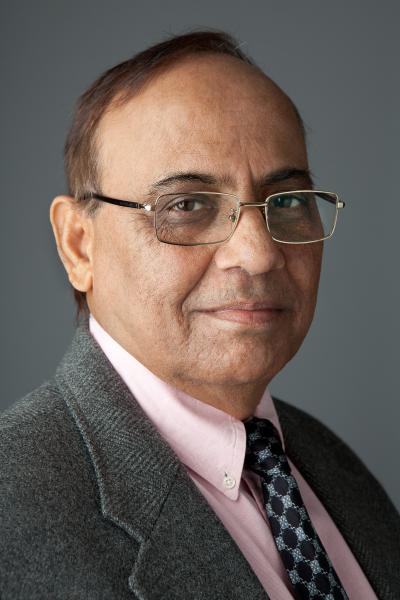
    “India is an incredibly important market for us with no dearth of stories to tell”: Ravi Agrawal

    It has been just six months since he’s taken charge of CNN International operations from south Asia. As bureau chief from New Delhi, Ravi Agrawal has been associated with the media conglomerate since he stepped into the media fraternity eight years ago.


    First in London and then in New York, Agrawal has been producer for several shows including ‘Fareed Zakaria GPS’. Now in Delhi, he will be looking at increasing the coverage from the country with a new government at the helm. As the world’s focus shifts towards South Asia, Agrawal will lead the CNN team from India to deliver key stories for the global English audience.


    In conversation with indiantelevision.com’s Vishaka Chakrapani, he shares a few insights on the focus of CNN International in the country and what Indian stories mean to the world.


    Excerpts…


    How important is India in terms of world stories for CNN International?


    India is a great fascinating story now. It’s 1/6th of humanity. It has become an increasingly important force economically speaking and is demographically vibrant. In all our stories we emphasise that the median age of Indians is 27 which means half of all Indians are under 27 years of age which when compared to other countries shows India as a very young and vibrant country. It has immense potential to be a huge player. The spurt in growth of smartphones which will grow from 130 million users today to 250 million in the next five years will impact stories and the economy. This in turn will also impact how we as journalists cover stories. India is an incredibly important market for us and there is no dearth of stories to tell us. 


    What are the changes you’ve brought in the reporting teams?


    Historically, we have had a very strong presence in India and are looking at maintaining that with two correspondents in Mumbai and Delhi for politics and business. With producers and cameramen and now we are well positioned to attack not just breaking news but also trend stories.


    What stories from India interest your audience?


    Certainly demographics interest us as well as the growth of digital in the country. The reason why Flipkart raised $1 billion was because there was a feeling that with the growth of the smartphone industry, Indians are going to spend a lot of money online. Immediately after, Amazon announced its investment of $2 billion here. We are fascinated with this because it changes not just retail but also the media, banking and daily life of people.


    Politics is also of interest to us, especially with the arrival of a new government which has got a mandate after 30 years with absolute majority. A lot of businessmen we spoke to are optimistic about the opportunity India has in store. Our challenge is how will we cover the larger India narrative that is on the cusp of doing what China might have done 20 years ago which is high speed growth, big transformative change across country and as journalists we need to analyse whether this change will actually happen.


    We do have a commitment to doing strong people stories. For all of India’s economic advances, there are a number of social ills too. We have a show called Freedom Project where we tackle world issues but they have mostly led us back to south Asia.


    Have there been any changes in the reporting style?


    That’s a constantly evolving process. We use Live-U for reporting, which enables us to go anywhere and broadcast with just two people. In India, with widespread technology and 3G coverage, we get amazing signals and so we can be more mobile and live.


    We invest a lot of money and resources in our photographers. We shoot state of the art 16:9 HD and we broadcast in HD in the US and you can see that difference the way our shots are framed, the way we get to places that few others get to. Some examples are our coverage in Gaza, Africa for Ebola and the Ukraine crisis. We invest a lot in just reaching these places and reporting from there. It costs a lot to get there first, to ensure security and to be with experienced teams.


    Does CNN have any plan to produce shows from India anytime soon?


    We have a bureau where we have a number of places where we can go live from, but we don’t have a studio yet. However, we are committed to telling the India story. One of our shows, Connect the World has now shifted from London to Abu Dhabi that puts focus on the Middle East and South Asia. That’s a global story, watched in Latin America but it still nods to the fact that its 8:30pm in India when its telecast.


    During elections, Becky Anderson came to India and hosted her entire show from here.  We are well equipped to broadcast live from India by getting anchors here for breaking news. Indian elections were covered in both our International feed and the US feed. Americans love elections and so a number of shows did live and guest segments with Becky.


    Any plans for a regional focus in India?


    We are essentially an English channel catering to an English speaking audience that is the upper niche, outward looking, global traveller with business interests. The global viewer is English and India will soon be the biggest English speaking audience.


    How do you operate on digital? Is digital a precursor to TV for breaking news now?


    We’ve stopped distinguishing between TV and digital. We don’t think of a story as ‘this is a web story’ or ‘this is a TV story’.  The basic research needed for both is the same. CNN is truly one of those places where we think multi-platform for every story. When we take a picture we think of it in terms of the best TV imagery and also if it can be used online. The aim is to show it visually for TV and in a simple way for digital. We ensure that we aren’t just tweeting our stories but also engaging people and collecting news. When there is breaking news, we first verify and then put it out on multi platforms simultaneously.

  • “Any model that guarantees 70% of your revenue is a great business to be in”: Fraser Castellino

    “Any model that guarantees 70% of your revenue is a great business to be in”: Fraser Castellino

    In April 2014 he was appointed as the COO of Kings XI Punjab, the team that sparkled on field during the seventh season of the Indian Premiere League (IPL). Fraser Castellino has over a decade of experience of working in the sports industry.  Besides leadership roles in IPL teams like Royal Challengers Bangalore and Rajasthan Royals, he was also instrumental in setting up the Sahara Group’s polo and other non- cricketing ventures. Castellino is a marketing graduate from Mumbai and also holds a bachelor’s degree from St Xaviers College.

    Ahead of the upcoming Champions League Twenty2O, Indiantelevison.com’s Herman Gomes talks to him about the franchises plan ahead and the factors that have contributed to the team making a profit this season.

    Excerpts…

    It was one of the best seasons for Kings XI Punjab having reached the finals. What are your thoughts?

    Yes, you’re absolutely right. We went on to win 11 out of the 14 games in the home stretch which was great. I think what was most exciting for me was the fact that Kings XI Punjab this year, demonstrated a brand of cricket which people identified with. People actually wanted to come and watch us play the games, because they loved the entertainment factor around our team.

    There were teams, who set up scores of 200 but we chased those down. There were teams that put us in to bat first, we scored and defended it. When I spoke to some cricket experts, one of them mentioned to me that teams did not know what to do with Kings XI Punjab. Opposing captains didn’t know whether to put us to bat or whether to make us chase or what to do at all because we guys seemed to tackle anything that came our way. That was a great and pleasant feeling.

    It wasn’t also that we were going overboard with it, but it was great to know that so many people identified and wanted to watch Kings XI Punjab.

    Earlier this year, KPH Dream Cricket showed a profit of Rs 78 lakh before tax. So you have finally broken even and made a profit. What has been the winning combination for your team?

    Yes, we have made a profit this year. There were a couple of reasons that contributed to this. We made a lot of smart decisions about the way we spent money this year. One of the first things was with player costs. A lot of people don’t know this but 60 to 70 per cent of the cost is actually the player cost which is the amount of money you spend on buying the players.

    If one spends Rs 60 crore, that’s 70 per cent of the budget. I think Kings XI Punjab this year was very smart in purchasing players and thus saved money. But having said that, we still bought a great team.

    Secondly, our team performed well. When a team performs well, people want to buy the tickets and come to watch the matches.  In India, there is a typical problem. People want to come for the games but in exchange for a free ticket. But this time we had people who actually were willing to buy the tickets and come and watch because they were enthused about the kind of brand of cricket that we played.

    Then there was sponsorship money. When a team is doing well, it makes money because the structure of the sponsorship contract ensures that when a team moves into the playoffs, the sponsor pays bonuses.

    Then finally is the prize money you win. The winning team as well as the runner-up make very decent sum money which comes to the franchise.  These factors have contributed to our winning combination.

    How well is the team preparing ahead of the upcoming Champions League?
    The Champions League is a very clear tournament. We get a participation fee for qualifying and participating in the tournament. And we pay 10 per cent of the player cost for the team. So one is already in a very good position, since they are making some money even without doing anything. The rest is taken care by the organisers. The travel etc is all paid by the organisers so there is no cost to the franchise. The big upswing is winning the tournament because the prize money is half million dollars. So that is the target for us. So in terms of preparing, we are looking at the apple and saying let’s go and shoot it.

    Have you looked at new deals with sponsors?

    We have signed two new sponsors ahead of the upcoming Champions League which is Air Asia and HTC. There are also a couple of other brands that will be announced in a couple of days. It’s simple business actually. All brands want to associate with the winning combination and many do well and perform.

    How difficult is it for a franchise to get a sponsor on board?
    The IPL is a successful property. Brands, want to be associated with it. But there are only those limited number of teams. So I think as long as we see the IPL remaining prime, every team will receive sponsorship. The amount of sponsorship one earns will depend on how the team performs and the stars one has. We have done well this season and we hope to continue doing it.

    How much of your local revenue comes from sponsorships?

    Sponsorship would be about 60 per cent of our local revenue. The rest comes from gate revenues.

    How is the team now approaching licensing and merchandising and how important is it for you?

    Licensing and merchandising should be looked at a greater context. Licensing is still progressing but if one looks at merchandising and the amount that teams make from it, I think there is a lot of potential to grow further. For Kings XI Punjab there is great potential. The Punjabi fan base is large. Our catchment area is not just Punjab or Himachal but everywhere the Punjabi exists.  This can be UK, Toronto, Canada Dubai or Australia. Punjabis are everywhere and these are our fans. The answer to your question is if we can take our merchandising internationally, then I think we will have a different story to tell.

    How much amount do you allot to digital marketing to interact with fans?

    There is a small team that works on various programmes. We have interesting deals where we don’t spend much money on digital marketing.  We in fact make money from it. Digital is actually a revenue line.  It’s small right now but for every video we put on YouTube, we earn money from it. In digital marketing there is a way of earning money and that will be our focus growing forward.

    During the off season what are the various programmes the team engages with?

    During this time our team works on sponsors, ideation, planning, thinking about players. We have programmes to engage with our fans like the Kings XI Punjab Cup which is a local identifying talent tournament. It is played all across Punjab in cities like Jalandhar and Amritsar. We target players between the age group of 18 to 25 years. These are players who play for colleges, clubs and various tournaments.

    Do you think the BCCI should be working more closely with teams to make them more profitable?

    The BCCI has done what they had to do. They have sold the franchise and every owner has bought the teams. They haven’t changed the terms and we need to work within those frameworks we bought in 2008 to make money.  I think any business that guarantees you 70 per cent of your revenue is a great business to be in. A team owner may have a different view but I personally feel BCCI doesn’t have to do anything more.

  • The future is about reinventing and recasting: Rohit Ohri

    The future is about reinventing and recasting: Rohit Ohri

    Dentsu created waves early this year when the Indian National Congress chose the agency to handle its creative mandate for the 16th Lok Sabha elections. The country’s oldest party might have lost in the elections but the communication was the talking point among industry as well as people.


    Rohit Ohri’s nearly twenty-four year journey in advertising communications, began with the Tata Son’s Marg Publications, but he soon moved to JWT, first Kolkata and then Delhi. Under his leadership and strategic direction, JWT Delhi’s top-line doubled, making it the largest branch office of any advertising agency in India, the largest and most profitable JWT office in Asia Pacific and the third largest JWT office in the world.


    In August 2011, Ohri, a golfer at heart with a seasoned sense of humour, joined Dentsu India Group as executive chairman. Today, he has additional responsibilities on his shoulders as its CEO in APAC (south).


    Indiantelevision.com’s Meghna Sharma caught up with the man to know more on how his term has been with the agency so far and what can be expected from it in the coming months.


    Excerpts…


    The year started with the great Indian political tamasha. How was the experience especially when the party blamed the agency for the debacle?


    The congress party had organised a pitch wherein 16 agencies were pitching, which included JWT and McCann and another six to seven top agencies. We won the business on the basis of our merit. We made over 16 pitches before we actually won the business, so everybody saw the quality of work and what we could deliver before being chosen.


    We had absolutely no problems with the congress party at all. None, whatsoever. And this blame game is a media created story. We have got letters from the party’s head of the communication cell that they are very happy with us especially for the quality of work that we delivered and the professionalism with which we worked. Congress party is not blaming us at all, it is an absolute lie.


    The first phase of campaign that we had created was really strong and worked really well. The fact is everybody we talked about the campaign, told us that it was strong and strategically correct.


    I think the issues are much larger and advertising campaigns are at best support but there has to be an overall positivity behind a candidate or the party. Unfortunately, it was a tough election.


    I would say the year started off pretty well for us. As an agency, and it was on the basis of merit and I am quite proud of it. Most of the bigwigs in politics believe that election campaigns are won on the ground. What a party does at the ground-level with the party workers makes a great primary for a win.


    We did not do the Delhi campaign; it was done by JWT and McCann. But see what happened to Sheila Dixit government.


    The real thing is what the need of the nation is.


    And then came the debate over the new Airtel ad?


    I think it is fantastic. The Airtel ad is about connectively and if the ad itself creates conservations then what more do you want?


    Everything generates two or more different point of views. So, if the ad shows new dynamics of relationships, it is bound to generate buzz. Change is not accepted easily. Today, we all are creating content that everyone wants to talk about and viralise. So, here it did the same. We had Barkha Dutt doing a show on it and people were logging on to just see the advertisement. So, which client will be unhappy with it?


    You will complete three years in the agency, soon, how has the journey been so far? What have been the high and the low points?


    I haven’t had any low points. When you look at cultural transformation in an organisation, I think when I look back and then see today’s Dentsu, it is in a much stronger place than when I had joined. I think that is an enormously gratifying feeling.


    So, I do feel that agency works very well in terms of where it wants to go in the future. Lot of things in terms of our acquisitions, not just of the company, the talent, and how we build within the Dentsu agencies and how we have integrated well with Taproot and WebChutney matters. And now on a larger level, with the entire Dentsu Aegies Network how we are leveraging the strength across the entire network. We have come a long way and I think we are very happy about that.


    It wasn’t very difficult for you to merge the cultural differences between the various Indian and international agencies?


    No not at all. If you fundamentally look at a few values of the network, it is about the focus on the quality of creative, integration and on collaborative model of working together. These are things that Dentsu Inc holds very close to its core in Japan.


    Example, today everybody talks about integration. It has really turned a new paradigm for advertising and communication agency. Almost 12 years back, Martin Sorrel started the whole thing of unbundling. It created individual interest versus brand interest dominations. In many ways what happened was that fragmentation was created between advertising and marketing and the agency structure was going somewhere else.


    That is the reason Dentsu never unbundled itself. It always stayed as an integrated agency firm from day one. The network saw this happening internationally and as the world’s largest advertising agency, could pretty well have gone the same way but decided not to do.


    Agencies within the Dentsu Aegis Network collaborate around a particular client saying that if a particular client needs x, then we will work around that particular client. So that the client’s interest is served before anything else. There is certain liquidity in the network and the network is dependent on the basis of client’s needs.


    With four creative agencies under the belt, how do you make sure that there isn’t any overlapping?


    The fact is that from a philosophy perspective it is one Dentsu; each one of the agency with the exception of Taproot. We have three Dentsu branded agencies and then Taproot which is our acquisition. There is one thinking around all of them. Physically three separate entities have been created so that there is absolutely 100 per cent confidentiality with each and every client.


    How has the partnership deal with Aegis Media helped Dentsu in escalating its position?


    The partnership with Aegis Media has been perfect for us. Primarily, because Denstu’s core vision, philosophy and point of view on advertising has been about innovation and integration. If you look at that, to deliver integration we need the best in class services across the whole wide number of platforms.


    We now have various offerings and all those capacities ready to take to the clients’ saying that ‘with all our entities, we can actually empower your brand.’


    In many ways Denstu has completed Aegis and Aegis has completed Dentsu. Now we are a full service integrated brand solution company.


    You have said that digital ad campaigns will drive Denstu’s next big initiatives. So, in the future, do you see brands being lead by chief marketing officer or chief technology officer?


    For Dentsu, the core of the brand is really about the intersection between creativity and technology. Technology is not just a lap over but technology is something we use as point of view. Technology is needed to reach out to new consumers and empowering them. Dentsu has a rich heritage of harnessing technology for brand communication in a creative and interesting manner.


    Going forward, it is a marriage of the two – creativity and technology. It’s not that human beings have become robots. Human beings will be human beings. There will be hearts; emotions and softer side that you need to connect with. It is important for us to say that technology is the enabler. So, how can we make it seamless to form connect with the consumers. It should be able to connect across multiple screens. Seamless connectivity is the idea and technology is letting it happen.


    Now that you are talking about seamless connectivity, there has been an increase in penetration of smartphones and tablets. But do you think brands know utilising that medium effectively especially in the rural India?


    As smartphones penetrate deeper and deeper into the socio-economic gratification, we will see a phenomenal rise of it.


    When mobile phones came, they changed the way we connected. Smartphones are the next level of it in the transformation. The power is in our hands it is only multiplying. One can watch videos, work, buy products etc all by a click on the device in my hand.


    However, one of the biggest challenge in front of the brands is that how to use that powerful device. Mobile is a great way to pole-vault over the lack of infrastructure. Where roads can’t reach, voice can reach. So, there is a huge opportunity for brands especially e-commerce because a large part of commerce comes from small towns where premium brands don’t have stores. The whole democratisation of luxury has happened so everyone has access to every brand. And this is what technology is doing.


    Also, there is a democratisation of creativity. Competitor of a creative agency is not another creative agency but it is the consumer. Today, individuals create content and upload it which sometimes become viral. As a brand/marketer, I will have to create something which people want to share and watch.


    One of your favourite digital campaign is…


    We saw many wonderfully crafted campaigns at Cannes Lion, this year. One campaign where Sweetie, a 3D CGI created child, from the Philippines working in the online sex industry was the perfect honey trap. It proves that how technology can be used to innovate for the betterment of the society.


    Dentsu has made a number of acquisitions in the country. So, will we see a lot more in the near future? Is that the way forward?


    India is a very important market for us and hence, we will look at more acquisitions here. We have a long-term strategic plan for the country and globally also. For us, it is all about a constant process of excellence, so we keep looking out for companies and opportunities. We want to build the Dentsu Aegis Network’s vision that is to build a complementary network – a network of complementary services rather than a network of competitive services. So, we want to have a collaborative culture within a network and it is very important to be complementary to each other. Because when two competing brands come together, brands don’t benefit from it but in a complementary set up clients benefit.


    Seeing that digital is the way forward, is acquiring digital agencies on priority list or creative?


    Currently, we have a very strong digital presence in India. We have iProspect, Isobar, Webchutney, which are complementary in the way they work but each has its own core competence. So when the three come together we have a powerful offering for the clients to leverage.


    We always look at bringing services – creative, digital, OOH, activation or any other – that are cutting-edge. That is how we look at organic and inorganic growth.


    How has the performance been on the financial and people front?


    Last year, for instance, our creative network grew at 65 per cent which made us the fastest growing Dentsu-branded agency anywhere in the world.


    It is a fantastic testimony of the fact that we have really come a long way and that Dentsu’s evolution and cultural changes bought in internally and externally have really worked for us. We may want to be anything but what you want to be, has that been bought by clients? That has been a very clear case for us.


    Touchwood, in the last three years the senior management lost nobody. Talent has always been my first and foremost agenda. We are a talent business so one has to bring in talent through collaborations, direct hiring or partnership.


    What can we expect from Denstu in the coming years?


    One of the things which we are really forward to bringing in for our clients is some of the technology platforms we have in Denstu Inc to India. We are already in a very advanced stage of conversation with one of our clients.


    We want to fundamentally change the paradigm of engagement with the consumer and when you interphase creativity with technology then you have a whole new paradigm of engaging with consumers at a deeper, meaningful and intimate communication. That’s what I’m excited about.


    As we go forward, it is about reinventing and recasting which advertising promised to do but has not really done for a long time.

  • “ISL teams to breakeven in two-four years”: Andy Knee

    “ISL teams to breakeven in two-four years”: Andy Knee

    International Management Group or simply known as IMG has been a world renowned leader in sports, fashion and media management with operations in more than 30 countries.

    In 2014, IMG was acquired by WME a global entertainment and media agency. In India, the company has formed a joint venture with Reliance Industries. The JV was formed between good buddies Mukesh Ambani and former IMG chairman Teddy Forstmann who died of brain cancer in November 2011.

    IMG Reliance has signed a 15 year partnership with the All India Football Federation (AIFF) to improve and popularise football in India beginning from the grassroots to the professional level. One of its initiatives is the Hero Indian Super League- an IPL styled tournament for football that is slated to begin from 12 October 2014.

    Present at the international and domestic player draft was IMG football vice president Andy Knee.  His previous stint was at electronic giant Phillips where he was the head of sponsorship. In 2006 he was appointed as director of the Football Championship League where he was responsible to raise the profile for the 24 clubs and improving the competitions revenue.

    Though the league is highly pressurising, one will find Knee always at ease and silently observing team owners replying to hard hitting questions from journalists. On the day of the international player draft, Knee speaks exclusively to indiantelevision.com’s Herman Gomes.

    Excerpts

    The league will kick off in October this year. How is IMG-Reliance developing the league for the first time in India?

    We are doing something unique. We are taking a lot more risks than we typically do in a project. So we are investing in buying rights, in the infrastructure, marketing and putting up an expert team of football from India and abroad to help galvanize the league for the first time.  We want to make the Hero ISL an astounding success and generate value and return more importantly for our clubs and the league to be a catalyst for football to explode interest and participation here.

    In China, IMG has stake in the Chinese Football Association promoted Super League. Commercially the league there is secure and financially controlled by the government. Why have you chosen a private drive model here?

    What we do in China is very different. There we have a 10 year deal with the Association where we represent rights and sell those rights to sponsors. They have an existing league and therefore we do not have an ownership position in China.  IMG works with them to help generate more revenue from the league. We also advise them on how to improve their administration and governance of the sport. In India it is very different. It is not typical of what IMG normally indulges in. Usually we have clients or we work with or on the behalf of partners.  We have had business in India for a very long time and we have been successful in the creation of the IPL. We now looked at football and thought how is it possible that a country of this importance and size does not have advanced football infrastructure industry? So our former owner Ted Forstmann along with Mukesh Ambani discussed it together and decided to do something great in football by coming up with the ISL.

    China has certain advantages. They have got some great stadia and they are fortunate from that point of view, but China hasn’t been in the world cup in recent memory.  Japan and Korea have also risen fast and it proves it can be done. So I think if everyone is pulling in the same direction it will be a very big help.

    IMG has a presence in almost 30 countries. What are the global learnings you have put in to develop the sport in India?

    Globally, we have been representing TV, sponsorship and licensing rights. We have also worked with player business, TV production, hospitality, ticketing, commercialisation of stadia over multiple markets.  We bring that experience to India.  Frankly speaking only some of it is relevant here. For example we helped the financing and seat sale of the Wembley stadium. Is that relevant to India? Unfortunately not! Sadly we are away from our teams being in a position to invest in a significant new stadium. I hope that opportunity comes but that’s a little bit down the chain. So we take the expertise we have all gained through working many years in football and apply those bits that are relevant for India.

    Sports fans and analysts are of the opinion that the ISL will reduce the I-League tournament to an inconsequential format. What are your thoughts?

    I understand that when a new format is introduced it can be seen as a threat to the established leagues. My view is that it can’t be a threat to the I-League because the football pie in the country is very small at the moment. I do not know what is the size of the football industry here but all I know is that it is very small. We could all fight over a small slice of the football pie but actually there is just not much there to get there. We all need to make that pie 100 times bigger and there is plenty to go around. So it is about the game at the moment. It’s not about who gets what bit. Co existence can happen very easily but I hope the ISL will popularise the sport unbelievably. So people would want to watch Delhi Dynamos and then go and watch Mohun Bagan at different time of the year. They are just football fans who watch the Premiere League but they also love the fact that India has a real football league they can support and be proud of.

    How much will IMG-Reliance be investing for the infrastructure of the game in India?

    Well we are not spending too much money on the grassroots facilities. I would love us to be in a position to do so but we are not going around building pitches. We need some far better football facilities but we are not doing that. We hope that will happen organically because people are getting greater interest in football so more space is given to football. Whether its I-League or ISL teams there will be greater money coming for the sport but that money will be reinvested for the football ecosystem to grow, develop and expand.

    It is understood that each of the eight teams have to annually spend Rs 2 crore to invest in grassroots programme to develop football. How will that amount be utilised?

    This is what the teams have to do. Teams bought the rights to run their respective teams and the money they have paid is for a 10 year period and they pay it in 10 equal slices in one year. On top of that there is a requirement to invest in grassroots. This is the requirement we put on teams but at the same time actually we probably didn’t need to because all the teams understood how important this is. The teams know they have to invest in grassroots, in local football programmes in local communities. The teams have got to spend on two requirements-  grass roots and  marketing. The teams do not have to send us that money. Absolutely not! That’s for the teams to build their brand, popularity and love of the game in their local cities.

    IMG ran a three day Grassroots Developmental Programme in Kolkata where we conducted theory as well as practical sessions. We are going to roll that out farther to other cities and teams will do their bit in local cities.

    What is the age group you are planning to target through the Grassroots Developmental programme?

    Typically we look towards the age group of 11 or 12 year olds. This is not certain but we may go a little older because the U-17 World Cup is a very focal point. The teams and we would like to play our part in helping India to produce a team to be proud of in 2017.

    Will the Hero ISL have a league ambassador?

    We had talks if we wanted a league ambassador a big name who just works on the behalf of the league but we decided not to. The teams have got some great owners and some great marquee players so there is no magic celebrity we are planning to unveil. We want the league owners to stand out and the teams themselves. Yes we know we need some stardust but we have people like Ranbir Kapoor and Sachin Tendulkar to do that.

    How did the league go about deciding a fixed price for each of the players?

    Well we had a base price for each of the players that the teams agreed. There is pressure on the business models of the teams. They will lose money for the first couple of years but this is an investment. But we agreed on a price that will make the teams happy. This is the sport where if you want the best you have to spend eye watering sums of money. We found a point where we said not all of these guys are a big name but they are going to be of very good quality. So we will get great playing products and market these guys so that Indians appreciate. They might not be the Beckhams , Messis or Ronaldos but these guys are fantastic players in their own rights. But more importantly than that we need to showcase Indian talent and reassure the country and sports fans that we might be 150th in the FIFA rankings but there is talent here and reasons for real optimism about the future.

    India will be hosting the under 17 World Cup in 2017. What is the Indian government planning for the World Cup and how will it be contributing to the league?

    From what I have heard the government has some plans in terms of upgrading the stadia. I assume the stadia will be good. Well we have got some great team owners and known companies who are behind the league. We have got support of the government and so there will be greater investment in the sport from that point of view.  It’s funny how 20 to 30 years ago you could find the typical teams in an U 17 World Cup like England, East Germany, France and Spain. But now, those teams can come from anywhere. Everyone is developing football unbelievably fast and India has a big gap and it’s not like we can close it. With the third highest number of people playing football (I think only Germany and the States has more active footballer) Don’t tell me there is no talent here. Of course there is talent. We just need to put the processes and infrastructure in place in developing the talent.

    By when do you see the teams breaking even?

    We hope that will happen in two-four years and that depends on certain factors. If India properly embraces football and fans turn on their TV and come to the stadia, it will happen faster. If the reception takes a little bit longer to get warmed up it will happen a bit later. We realise this will not be a success overnight. We will love it if it explodes interest in the first year but at the same time there is the acceptance that Rome wasn’t built in a day. So every team and the league knows you have got to have some patience here. 

    How do you see Star’s association helping the league and will there be localisation of the sport in terms of commentary?

    This is a sport that must succeed on TV.  We have got the most powerful Indian TV network that is going to publicise the ISL across all its channels in different languages.  We have got a partner that really believes in it and has invested significant money. There will be some localization, I am sure, but I do not know how many languages. Star is desperate to take the game to people across India. They have got their skin in the game and their bosses in the states are looking at it closely and there is pressure on us too and we have a partner that is very committed for this league to succeed.

    On a parting note what message would you like to give to football fans in India?

    Tune in, come and have a look and enjoy it. I think this is going to be something that India has never seen from a quality and show point of view and I hope people embrace it, whether they watch 20 minutes of one game or whether every single game of the ISL.

  • “We are customer obsessed, not competition obsessed”: Amit Agarwal

    “We are customer obsessed, not competition obsessed”: Amit Agarwal

    Since its inception over 20 years ago in the United States, Amazon.com has been obsessed with a fervor to serve its consumer and being the ‘earth’s biggest bookstore’. It has grown from a ‘dot-com’ corporation into a king in the domain of internet retail. And now, its Indian arm under the leadership of Amit Agarwal, is looking at achieving the same landmark.  


    Describing his current role as ‘Bringing Earth’s Biggest Selection to India; building India’s most customer-centric company’ on Linkedin, the new role has countless firsts for Mumbai-born Agarwal, now an American citizen. He has never worked in India in a business-facing role and never headed country operations as well.


    The IIT-Kanpur and Stanford alumnus has been with Amazon since 1999. He has worked in various departments in the company including technical advisor to CEO Jeff Bezos between 2007 and 2009, before heading the operations in India.


    Born in 1974, Agarwal joined Amazon as a part of its technology team.


    Just a year old and Amazon India has already become the biggest threat to the seven-year old Flipkart in the Indian e-retail market. With an action-packed first year, the global online retail giant is gearing up to play a dominant role in the $13 billion Indian e-commerce industry.


    In an interview with Indiantelevision.com’s Pranati Deva, Amazon India VP & country manager Amit Agarwal discloses Amazon India’s journey in the Indian e-commerce space and plans for the future.


    Excerpts…


    What inspired you to finally start an arm in India? Flipkart started in 2007, why did you think 2013 was the right year to jump into the Indian e-commerce space?


    We believe that we entered the India market at the right time. Indian e-commerce space is still in a very nascent stage with significant potential for innovation to improve customer experience. We believe that the growth is at an inflection point and there is tremendous opportunity. 


    We have received a fabulous response from both customers and sellers in the last 14 plus months of our India operations. We launched in India with two departments – Books and Movies & TV Shows – and in these 14 plus months, our total selection now stands at more than 17 million products across 30 departments and hundreds of categories. We have witnessed phenomenal selection growth across several categories and are already the largest store  in 12 of the 30 departments that we have on amazon.in including Books, Music, Video Games, Toys, Home & Kitchen, Luggage and Backpacks, Fashion Jewellery, Beauty Products, Movies & TV shows, Men’s inner wear , Sports, Fitness & Outdoors and Pet Supplies.


    What is your current strategy in India? And how will your strategy change if the e-commerce sector opens up to FDI?


    Our strategy for amazon.in is the same as our global vision to be India’s most customer-centric company by giving customers more of what they want – low prices, vast selection, fast and reliable delivery, and a trusted and convenient experience – and provide sellers a world-class e-commerce platform. The execution of this strategy is local. If you look at the logistics infrastructure, Amazon has built one of the most sophisticated logistics infrastructures that has ever been built to serve sellers and customers


    We start with the customer experience and work backwards from it. Building a great customer experience drives traffic; traffic attracts sellers; more sellers drive more selection and this further improves the customer experience.


    We have always maintained that opening up this sector to FDI will be good for consumers and Indian businesses as it would allow us to partner with local manufacturers to source products not carried by other sellers in the marketplace, giving Indian consumers unique and wider choices at lower prices. Allowing FDI, also, positively impacts infrastructure development in the country.


    The announcement for the $2 billion investment in Amazon India came in just days after Flipkart announced fundraising of $1 billion. Was the announcement strategically placed?


    We are customer obsessed and not competition obsessed.  We aspire to provide Earth’s biggest selection and the most trustworthy and convenient online shopping experience to our customers in India.  And we have been investing aggressively right from the beginning.


    Our rapid growth in a short time and the significant opportunity ahead of us makes us very comfortable in making this large additional investment. We are not surprised if our rapid growth and customer experience ambitions have increased investment elsewhere as well.     


    What areas will you mainly focus on now, after the investment?            


    We don’t talk about any of our future plans but essentially it will go towards growing our business and enhancing customer and seller experience. 


    Which categories contribute the most to your revenue?


    Categories with the strongest growth are Books, Consumer Electronics, Shoes, Baby Products, and Watches.


    To increase your demand in the Indian space, which brands have you associated with recently for their products?


    We are witnessing that both brands and SMEs are willing and are excited to use the Amazon India marketplace to reach to consumers nationally. Brands and sellers see a lot of value in their association with us. We not only play a significant role in driving sales but also in building consumer awareness about products and educating them about the benefits of these offerings so that they are able to make smart purchase decisions.


    Today several sellers and brands are keenly exploring possibilities of exclusive associations with us. For example Amazon India is the exclusive retail partner for Microsoft’s entire Interactive Entertainment Business portfolio which includes Xbox One, Xbox 360, Kinect, Xbox Live, Xbox Accessories and all Microsoft-published Xbox game titles. Similarly, Philips has made available its new Philips Disney Imaginative Lighting range for kids exclusively on www.amazon.in. In mobiles we have exclusive launch deals with Samsung for the Samsung Galaxy K Zoom, Karbonn, Lava, XOLO, OPPO mobiles, etc.


    We are also the exclusive online partner for KitchenAid, a premium kitchen appliances brand from Whirlpool that launched in India in March, for Waterlily LA, a premium leather handbag brand headquartered in Los Angeles that made its India debut on Amazon.in as well as for many more. There are several such examples across the 30 departments that we, at present, have on Amazon.in. We are very excited to see this response from brands and sellers and this stands proof to the value that they see in associating with us.


    What is Amazon India doing differently to stay ahead of the competition in India?


    In terms of services – we were the first ones in India to introduce premium guaranteed delivery services including the ‘One-Day Delivery’ service for items fulfilled by Amazon. Within a short time we have been able to make available over 300,000 products for next day delivery across hundreds of pin codes in India. More than 60 per cent of our customer demand is already eligible for next-day shipping on products fulfilled by Amazon.


    We are investing in making sellers successful; continually looking for ways to do the heavy lifting for them; and enabling them to sell more and make more money. We started with over 100 sellers and today this base has grown to more than 10,000 sellers.


    We now have seven fulfilment centres in India with a total storage capacity of half million square feet. All FCs are aimed at meeting fulfilment needs of retailers and small and medium-sized businesses and to help them achieve nationwide scale.


    We are the first ones in India to introduce customised, personalised and multi-lingual Amazon.in Gift Cards that enable customers to buy over 15 million products (excludes ebooks) from our marketplace. Customers can purchase the Amazon.in Gift Cards of any value starting from Rs 10 up to Rs 10,000. Available in nine Indian languages including Hindi, Kannada, Marathi, Tamil, Gujarati, Telugu, Malayalam, Bengali and Punjabi in more than 200 designs that celebrate various special and memorable occasions in a person’s life.


    Indian Postal Services (IPS) is one of the prime carriers that Amazon India uses as a delivery channel Amazon uses the extensive IPS network to service over 19,000 pin-codes through 140,000 post-offices across all 35 states and union territories in India. Number of deliveries through India Post has increased from 800 (June 2013) to 35,000 (in July 2014)


    For us it is always ‘Day 1’ and today we believe we have the right ingredients to entice and delight our customers with a trusted online shopping experience.


    Learning points so far about the Indian consumer and the e-commerce market in India?


    Our experience of working around the world has shown one thing, that customers around the world are similar. Customers around the world always want a vast selection at low prices and a convenient, reliable and trustworthy online shopping experience. Indian customers are no different.  I am yet to come across a customer who will say that they want a smaller selection or higher prices. And we are focused on ensuring that we are able to deliver and raise the bar for online shopping in India.


    What are your views about the Indian e-commerce industry and what are your expectations from the sector in the coming future?


    Indian e-commerce space is still at a very nascent stage with significant potential for innovation to improve customer experience. The growth is at an inflection point. With increasing internet penetration, both broadband and smartphones, there is an interest and demand from mini metros and smaller towns across the country. We see as a tremendous opportunity and are very excited by it.