Category: Executive Dossier

  • “Want to be the ‘Influencer Network’ in 2015”: Sunil Lulla

    “Want to be the ‘Influencer Network’ in 2015”: Sunil Lulla

    With over 30 years of experience, Sunil Lulla brings skills in media, marketing, communication and management.


    From spending an early part of his career, which spanned over a period of nine years, in advertising with JWT to rolling out indya.com, in the first wave of the internet; from bringing zing and youthfulness to MTV to help build the television business for The Times Group, Lulla has been a prominent member on many industry boards and forums where he shaped policies and set industry standards and best practices.


    His decision to move on from the Times Television Network managing director and CEO to Grey Group India chairman and managing director did come as a shock to many. Nonetheless, the man who engages in a new passion every few years is back to his first passion.


    In a freewheel interview with Indiantelevision.com’s Meghna Sharma, Lulla talks about his plans for Grey and much more.


    Excerpts…


    Back to advertising. So far, so good?

    Very good. The communications business is the best place to stay eternally young (smiles).


    If you had to compare, how different has been advertising’s evolution from that of broadcasting industry?

    Both bring new challenges and new ideas each day, blended with a frenetic pace and an youthful environment. TV broadcast is focused around the consumer via which it builds relationships with the customer. Advertising is built around the customer via which it creates story telling for the consumer. They are different spectrums. The TV industry faces significantly more regulatory challenges than the communication industry. There is a zameen aasman ka difference in scale and profitability. Advertising brings the edge of ideas unlimited.


    It’s been four months, any changes that you have brought in the company? Why?

    Grey group is a stable, growing business, producing famous and effective work. I’ve used the time to get to understand the business better. Meeting clients and understanding their challenges and in helping gear Grey group offer integrated solutions and ideas, across advertising, communication, the vast spectrum of digital and social; activation and advocacy. These are via our own Grey group services and those with partners / affiliates, such as RC&M, Penn Schoen Berland and Talent House. Importantly, working closely with the team, which is energetic, talented, innovative and always bubbling with ideas and energy. I believe in the short period of four months, gearing to grow and being able to work across services seamlessly, has been my focus.


    Many of our clients are now accessing more than one service from Grey group. For our affiliate partners, we have been able to provide Grey thinking, muscle and experience. What’s visible is perhaps the new campaigns of Swacha Bharat, the Border Security Force and the announcement of Quickr and Reach Mobile as new businesses.


    Importantly, in the next few weeks there are many campaigns of Grey group, which continue to define culturally sensitive communication, aimed at changing social behaviour, which is one of the biggest challenges any communication company can deliver on. We believe our clients should be satisfied with our services and offerings but continuously challenge us to deliver outstanding performance. Which is exactly what Grey clients do.


    How has the year 2014 been for Grey India?

    There has been top line and bottom line growth as per expectations. The new account wins are all based on differentiated communicate on briefs and the focus on adding alliances is preparing Grey group for a strong 2015. Talent has been stable and the awards have been coming in. All in all – a good year for Grey. We are not very boastful about our achievements; our clients hopefully do the talking for us.


    One mandate, which you are really proud of, and why?

    I cherish my new role at Grey group, via which we are building a differentiated service business to build strong brands for our clients. Each of our clients are precious to us and the work we do, we believe, plays a big role, in making their brands famous and effective.  I do believe the new ‘Swacha Bharat’ campaign enables us to work with the Prime Minister’s vision of changing behaviour which is always a tough task. The communication is simple, mass oriented and evokes the right emotive and attitudinal cord.


    How much of the business that you generate out of India is globally aligned?

    Some of our global alignments are P&G, GSK, Volvo, amongst others. 65 per cent of our business is India alone business.


    Competition is growing multifold, so how would you differentiate Grey from the others?

    We believe Grey group’s thinking and capability is being rapidly geared to offer integrated solutions around advertising, social, mobile, web, activation, advocacy, rural and crowdsourcing. With many more to be included. Powered by our vision to create Famous and Effective solutions, work and brands, Grey group is becoming a highly differentiated ‘Influencer Network’. We say Grey groups role to influence consumer choice and thinking and via its array of skills it is designed to be ‘an influencer network of choice, creating famous and effective work’. Each way of approaching the consumer needs to be true to the host medium but interconnected to the behaviour we need to change. Grey enjoys a very strong reputation because of its Planning, Creative, Digital and Communication Skills and this is poised to grow with strength.


    According to you, has Grey really been ‘Famously Effective’?

    Absolutely – the wins at Cannes and Effies are a great testimony. The growth of each of our clients business is evidence of the work – working!


    What are the plans lined up for the digital side of your business?

    Growth is the obvious agenda. Growing and strengthening resources in the Delhi and Bangalore NCR are on the agenda for 2015. Focusing on having more of our clients across our range of services avail of our Award winning Digital solutions. Continuing to create cutting edge and new solutions is the everyday task. Focusing on learning and training for our talent is the key.


    How do you see an increase in media fragmentation impacting creative agencies?

    Agencies should stop worrying about definitions. We do not see ourselves as a creative-alone agency. Grey’s role is to influence consumers and we believe that requires each of us to continuously grow skills and expertise, which is our focus. Agencies can easily learn, adapt and innovate to tell stories be it on a one to one basis or one to many basis. If there is no structured integration, then one must bring it in any way into the service, as businesses will not grow in a linear fashion.


    With an increase in penetration of smartphones and tablets, the biggest challenge will be on how to most optimally use the mobile phone for building a brand. What advise will you give the brands and digital agencies?

    We reserve recommendations like these, exclusively for our clients (Smiles)


    Do you think Indian advertising has been able to shift paradigms with changing times?

    The glass is always half full, which makes it encouraging for the industry to keep pouring skills, ideas, talent and investment in creating culturally cutting edge work. The new Swach Bharat campaign defines that. On an overview, the Indian industry has successfully paved the way for new paradigms.


    What is at top of your wish list for Grey India for 2015?

    Be the Influencer Network which successfully enables Famous and Effective Brands and Communications.
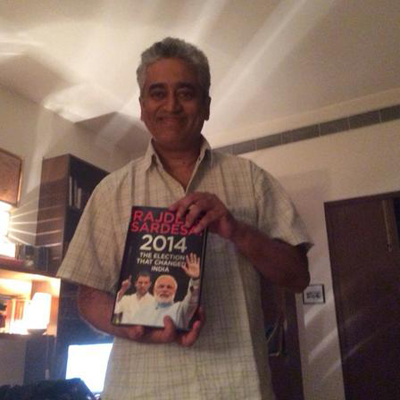
  • “Mr Modi, when are you giving me the big interview you promised?”: Rajdeep Sardesai

    “Mr Modi, when are you giving me the big interview you promised?”: Rajdeep Sardesai

    He is one of Indian television’s most recognisable face as a news presenter and now the author of the best seller ‘2014: The Election That Changed India’. Rajdeep Sardesai may have quit Network18 as IBN18 editor in chief and later on joining the India Today Group as consulting editor, but the man with over 26 years of experience in the field continues to be recognised for his work.


    Sardesai was honoured with the Asian TV Award on 11 December for ‘The Best News Presenter’ for his coverage on the counting day of the general elections.


     The award is a special one for him as he becomes the first Indian to receive the recognition. On the occasion, in a quick chat with Indiantelevision.com’s Herman Gomes, Sardesai speaks about the recognition and upcoming plans for the New Year.


    Your feelings on receiving the award? Do you see Indian journalism receiving its due credit?

    When I was with NDTV, The Big Fight had won the Asian TV Award, three times in a row. At CNN-IBN, India at 9 and our election coverage had won awards for the best news coverage and best current affairs, but to win an individual award as the ‘Best News Presenter’ feels special. Being nominated with icons from CNN, Discovery, Nat Geo and CNBC, along with Chinese and Korean TV, makes it special. I feel honoured to be honoured as the only Indian.


    Are awards and recognition important for journalism?

    Being the first Indian to receive an award like this, feels nice, but only for a moment. Journalism is not about winning awards but about work or the interview you do.  Elections after all is a team game. The award is also for all those who worked with me as a team at my old organisation, CNN IBN.


    Any celebrations planned?

    I am going to have a quiet dinner when my son returns from his hostel. I am planning to take him out for dinner next weekend.  I owe a lot to the family.


    How well is your book ‘2014:The Election That Changed India’ been performing on the shelves?

    The book as of last week was placed at number two in the non-fiction category, behind Sachin Tendulkar’s autobiography: ‘Playing It My way’.  It has been on the best seller list for six weeks. I am told that in one month it has sold more than any other nonfiction political book of 2014. I am taking the book across the country for various promotions and lit fests.  On the weekends I promote the book while on weekdays I am caught up anchoring my show. It’s a packed week!


    Are politicians affected by the revelations in the book?

    Interestingly I find the Congress politicians having more problems with the book than BJP. The BJP politicians had feared the book, but Congress seems to be unhappy now.


    How has the state of journalism changed over the last one year?

    One of the continuing fears I have is the tendency to sensationalise. That continues to remain a trend and has not stopped. This is what I call window journalism, where you have eight people in a window, talking at each other rather than talking to each other.

    But at the same time there is some good work being done. But the sad part is it does not get the due recognition, because some of the less important work dominates the more worthy work.


    We are destroying our credibility in the long run.


    How do you view the growth for online journalism?

    My belief is that digital is going to see a big revolution in the next few years. It will not happen overnight but will take two to three years.


    Are there chances of you joining back CNN-IBN?

    There are no such plans. 2014 has been a roller coaster year for me. Our election coverage is being recognised at the Asian level. The book was a high point while my departure from CNN IBN was an unfortunate one. 


    It has been six months since the new government came to power. Do you think Aache Din Aa Gaye?

    Ache Sitare Aa Gaye, ache din we don’t know. Maybe next year. It’s too early to judge.


    One question you would want to ask the Prime Minister Narendra Modi?

    Mr Modi, when are you giving me the big interview you promised?


    How do you see the year ahead for the Indian media and how are you planning to welcome the New Year?

    I view the year 2015 as the year of introspection for the media including myself. 2014 has been a year of excitement. I am welcoming 2015 by going to Goa and resting by the beach.


    For this year do you want to be known as Rajdeep Sardesai: the journalist or the author?

    I want to be known as a journalist who has written a bestselling book!

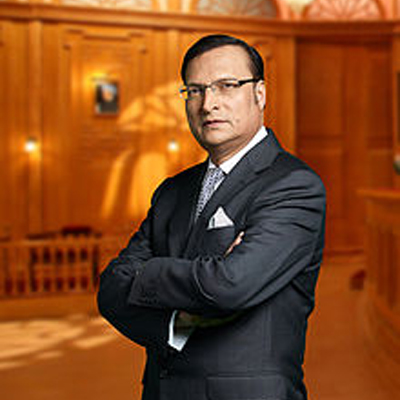
  • Subhash Chandra knew I had a winning concept: Rajat Sharma

    Subhash Chandra knew I had a winning concept: Rajat Sharma

    In the 21 years of this show, nobody has been forced to reply, Rajat knows the art of extracting a reply through his sweet questioning. Another big quality of Rajat is that he uses his tongue sparingly in his show, but he uses his heart to the fullest. A clever mind works behind this,” is how Prime Minister Narendera Modi described the man who has been for 21 years making the icons of the country answerable.


    Rajat Sharma’s journey with ‘Aap ki Adalat’ began with Zee TV in 1994 and from then there has been no stopping. The talk show has seen politicians, sportspersons, celebrities and others pour out their heart as well answer some of the trickiest questions.


    Amidst the celebrations, indiantelevision.com’s Meghna Sharma in a freewheel chat with Sharma spoke about what keeps him ticking, his favourite interview and much more.


    Excerpts…


    21 years is a long time, what do you have to say about the journey? What keeps you ticking?


    It still feels that the journey has just begun; all my memories with the show are still very fresh. The type of guests we have hosted on ‘Aap Ki Adalat,’ their replies, the viewers’ response, the in-studio audiences, the ambience that makes me feel at home every time I step into the Adalat Studio, the affection showered upon me, probably the never-ending love of my viewers…all makes me feel really blessed and probably gives me the strength to keep going.


    When did you come up with the idea of starting ‘Aap ki Adalat’? Any glitches faced while launching the show?


    The idea came up in a casual conversation with Zee TV owner Subhash Chandra on a flight from Delhi to Mumbai, 21 years ago. Without much thinking I told Subhash Chandra how the interviews should be done for TV. I told him about putting politicians in the dock and making them accountable to public. After we landed I forgot about the conversation. Subhash Chandra, however, was quick to realise that I had come up with a winning concept.


    Your most memorable interview so far and why?


    Like I said, all of my interviews have been really special and still very fresh in my memory, however if you tell me to pick one, I would pick the one with the then PM candidate, Narendra Modi. The reason for my pick is not only did the show created a huge ripple in the broadcast media Industry, when almost India’s 85 per cent news audiences watched the show’s first telecast with competition reduced to negligible numbers but also because of spontaneity and ease with which Mr. Modi responded even to the trickiest questions…given the fact that he had a really bad throat after addressing six-odd election rallies during the hectic campaign spree. We weren’t expecting more than 15 minutes of shoot. We ended up shooting him for over two hours and the result was breathtaking.


    Whom/what do you attribute this success to? How do you still maintain the charm of the show?


    Talking of success, I am very sure that it wouldn’t have been the way it is now if the director of my show, who also is my wife, Ritu Dhawan wouldn’t have been around. She is the one who has been standing like a rock behind my success…taking care of everything, from my looks to the positioning of the show, she is everywhere.


    I have always believed in doing my job right and just focus on that. We have been able to create the right mix of depth, detailing and research mixed with the right amount of humour, we have ensured to keep the show relevant to the changing preferences of the audiences over the last two decades, probably that’s what you are referring to as charm.


    After 21 years, will we see any changes in the format?


    Change is inevitable, however more than planning any such change we would rather keep ourselves adaptive to what our audiences would prefer.


    From President to PM to celebs, everyone attended the celebrations. What do you have to say about the support?


    One word, I am overwhelmed. Feeling deeply humbled. While just focusing on my work, I never expected the amount of affection and respect showered upon me by all including country’s topmost icons. I am more than grateful to all and most to my viewers who have backed me all through as their advocate while I tried to amplify their voice with who mattered.

  • “Failures can teach you, what success can’t”: Namit Sharma

    “Failures can teach you, what success can’t”: Namit Sharma

    From directing fiction shows at Cinevistaas to film production and script writing at Yash Raj and handling events and non-fiction properties at Wizcraft International Entertainment, he has done it all.


    Namit Sharma, the programming head of Zee TV, has bought to the table years of expertise.


    The channel, which is running strong at number three at the TAM TV ratings chart, currently, has explored new concepts this year. With Zee’s three shows not only being the slot leaders, but also in the top 10 fiction shows category, Sharma feels it is in a happy space to be in but believes that  there should always a hunger for more.


    In his first interview, after taking charge at Zee TV, Sharma chats with indiantelevision.com’s Disha Shah in his office about challenges in churning out newer concepts and how to understand audiences’ likes and dislikes amongst other topics.


    Excerpts…


    It’s been almost nine months since you took charge as the programming head of Zee TV, how satisfied are you with the current positioning of the channel?


    There are two answers to it.


    The idea is to be happy with whatever you do because I think from a product and positioning point of view we have changed in the last nine months. We made a conscious shift about how we look and feel. There is certain uniformity in what we are doing and a certain sense of it coming together. The numbers have been good, so satisfied at that level. We are aligned with the legacy of Zee and yet evolving in a direction that we want to take the channel in.


    But at the same time, we will always be dissatisfied because we are hungry for more.


    From handling events to broadcast, did you face any challenges in the transition? Were you prepared for it?


    When you come from a creative background, the easiest part is always about interacting with the industry and getting the best talent to work with you.


    When you take charge or join a new team then there is always a lot of excitement and energy and people expect you to bring newer ideas to the table. At Zee, I have always been encouraged for bringing in fresh thinking. I am very happy the support I have received from the management and the team.


    The challenge always is to try and get inside the consumers’ mind, create products for them and then wait for their reaction to understand what they like and don’t like. Then, after a few months again one has to figure out a way to surprise with with something new and exciting. It is a vicious cycle.


    How difficult it is to churn out new concepts always? What kind of concepts you are looking out for?


    With general entertainment channels (GECs) widening their scope and a number of GECs being launched, the challenge that all broadcasters will face henceforth is that now everybody will dip into the same research pool or try to align themselves to a very uniform way of working.


    While, the uniform way of working is a good thing, one should never allow oneself to not think out-of-the-box. You work towards your TG, create content for them; you sort of know your audience but at the same time you should have the ability as a creative person to surprise yourself and them. There are some happy surprises and there are some not so happy surprises (laughs) and that’s roughly the unpredictability of what we do, that’s the challenge and excitement.


    Yes, it’s difficult to find clutter-breaking ideas but we have this year we did manage to create some extraordinary concepts. We are now seen as a channel that has clutter-breaking ideas within the traditional format. The classic example is Jamai Raja, within the family drama fun, there is a prime-time daily soap with a male protagonist. KumKum Bhagya is another clutter breaker and Jodha Akbar has been a clutter breaker for over year and a half now. They are also slot leaders. Jodha Akbar and Jamai Raja are consistent slot leaders. KumKum Bhagya is a recent convert and we are hoping to stabilise it as a number one show at 9pm for a very long time with very interesting characters and unpredictable twists and turns in the story.


    I am happy with the fact that Zee is now being identified as a platform, as a destination where you can consume the new traditional form of content and where shows are designed for the entire family and yet they provide newer twists, newer characters and clutter breaking ideas. Each show now comes with a new idea and that’s important to us.


    For a very long time now, Zee has been stuck at number three in the ratings chart, according to you what went wrong and how do you plan to rectify it?


    We sustained the number two position for a very long time; we will be back sooner than later. We don’t analyse this on a weekly basis because it is healthy to work in a scenario where everybody is active and fighting hard to keep their spot and aim higher. The greater satisfaction is not only in the numbers, but in the consumers’ appreciation and good feedback on a daily basis.


    All shows don’t click so according to you, what kind of content works on television today?


    If I knew that, I would have sealed a 20-year deal with Zee TV (laughs). I think there are some thumb rules that we all live by and within that thumb rules we try to find innovation and newness. Everybody talks about new launches, but the greater challenge as a programmer is on-going shows. Once the show is on-air and you have put behind the mad eight months of hard work into the launch and then everyone is scratching their heads saying what should we do next on this show to keep the momentum going. And that’s where the criticism comes in and then you are reacting, you are trying to clear your mind about how the story should go now, so these are bigger challenges.


    Frankly, I love failures because failures can teach you what success can never teach you. Your successes teach you nothing. You just become worse as a person with every success because then you are like “I know everything”. As a creative and a television person, I have to start my day saying, “I don’t know anything”. Sometimes the audience will teach you, sometimes a writer who walks in will teach you something. Every day you can learn so much from different people.


    Today, there is nobody in the world, who has 100 per cent track record of success, there is no creative person or network or programmer or broadcaster who has a 100 per cent success rate.


    From mature markets in the US and UK to slightly less mature markets like us to under developed markets, be it film or television, you will always find that sometimes a product works and sometimes it doesn’t and that’s how the cookie crumbles.


    We always fine tuned the formula a little bit and it is not linked to success but is about coming closer to the audience. For me, as a programmer, the most satisfying moment is when the consumer says “the product is really good”. Numbers is like cash, they come and go. When we meet our consumers, they tell us anything they don’t like about the show, that criticism is well accepted and when they tell us that they like something, that appreciation is also welcomed.


    This year we saw a lot of new shows to the kitty, so what is your strategy in terms of programming? Have you been able to understand your audience and their liking and disliking?


    This is going to be an on-going process for anybody who does this job. There is an audience which changes every day and we will change with the audience. This is an on-going process of understanding the consumer, trying to find the best concepts and trying to make that concept work. This is what we do in the business, seven days a week, be it as broadcasters or writers or producers. And that’s what we live for. That basic essence is never going to change, but yes, in the coming months you would see a certain alignment of the programming within itself. You will see certain kind of alignment in the content within the brand values and a certain coming together of the Fixed Point Chart (FPC) with very exciting new products.


    You tried stand-up comedy through Bh Se Bhade, but didn’t really click with the audience, what new offering are you looking at for the audiences?


    Yes, Bh se Bhade did not survive for very long. Then we had Gangs of Haseepur which ran for six weeks, some weeks did well, some weeks did not do well, fair point. And then we launched Neeli Chatri Waale, which is about 10 weeks old. It’s been delivering decent numbers. More than numbers on Neeli Chatri Wale, we feel pride because in it because it’s a show that is about hopes and aspirations of a middle class family. We are really proud of the show because it is something unique and has the good old formula of good storytelling, good characters, good humour, seek and moral built into every episode. So while it’s delivering in its slot, and is fairly delivering to what we had expected it to deliver but we always see the show from a very different filter. We always protect the show and make sure that we don’t touch the soul of the show.


    How do you see competition coming from other channels?


    Competition is an everyday part of our life. They are competition to us and we are competition to them. Nobody is resting, nobody is sleeping easy, and nobody has a peaceful existence (laughs). We are possibly on one of the hyper dynamic businesses ever. You really have to not love yourself to do this because everybody is firing salvoes from all different corners on an everyday basis and there is really no choice of waking up in the morning and fighting a new battle with a smile on your face and a hope in your heart.


    On the non-fiction space, don’t you feel it’s time that Zee moves forward from the dance reality show regime and brings in freshness? Are you looking at reviving Sa Re Ga Ma Pa?


    We are very sure that we don’t want to be different just for the sake of being different. If our consumers like something and if we do well, then we are happy to do it differently. It’s like saying, why is there a love story in a soap? People always question song, dance, and entertainment value of a non-fiction show. Similarly, why don’t one question relationships or love stories in a family drama? This is bread-butter, how do you package it, how aspirational, emotional and engaging we make it defines the success of that particular show.


    Non-fiction is a bit like playing black jack. It’s very easy to risk something very big and it’s very easy to think that you can play safe and you can still lose. Unlike fiction in which you can go wrong and go then correct it within the show. Because non-fiction shows have a 13-week cycle, you can win big or lose big. That’s the risky part of doing it, but that’s also exciting because it allows you to innovate and experiment every 13 weeks.


    At what intervals do you come up with the findings and how do you then change content on the channel?


    Zee has a very robust system of talking to its consumers and allowing the consumers to talk to the channel. Be it through programs or postal addresses earlier and now e-mail id, we are in constant dialogues with our audience. Over and above that we also actively keep talking to the audience through various forums to understand what they like and don’t like.


    Where do you Zee five years from now?


    Zee is the only channel that for over two decades has been a part of India and its life. It is a very difficult track record to beat for anybody and any competition. I really hope that five years from now we continue to be in hearts of the audience because that is exactly where we want to be.

  • “Channel V’s biggest competition is Life OK and Star Plus”: Ajit Thakur

    “Channel V’s biggest competition is Life OK and Star Plus”: Ajit Thakur

    Three years ago when Star India decided to re-launch one of its redundant channel, Star One, as Life OK with new and fresh content, nobody expected that the channel, in a short span of time, would make a strong hold at number four at the ratings chart.


    Taking the responsibility on his young shoulders was none other than Ajit Thakur, who didn’t succumb to the temptation of doing the usual general entertainment channel (GEC) saas-bahu soaps, to create its own identity in the clustered market.


    With the channel creating new heights with its unique and poignant stories, the network handed additional responsibility to Life OK EVP and GM to head one of its sister youth entertainment channel, Channel V.


    In his first interview, after taking the charge at Channel V, Thakur chats with indiantelevision.com’s Disha Shah about his new role, challenges that he has to face and how he handles the two channels. 


    Excerpts:


    Life OK and Channel V are two very different entities, so how are you coping with the two properties?


    Life OK is my baby. I launched the channel so my attachment to it will never fade away. Also, the channel is in a very competitive category so it requires a lot more attention from me.


    On the other hand, Channel V holds a strong position in its genre and has a strong team. The brand thinking is sorted. The way I am seeing my role is that on Channel V my job is more like a mentor and on Life OK, I am the doer.


    And in both channels, the biggest challenge is how to build a great second line. Channel V has Nipa Asharam and Vaishali Lavania , who are very strong marketing and programming heads, respectively and on Life OK, we have Sushma Rajesh and Yuvraj Bhattacharya. I need to build these teams and move towards chief mentoring role so that I can think about how to grow the two channels. It’s tough; I have to add four hours more to my work day (laughs).


    Was it a difficult decision to head Channel V? How has the year been for the channel?


    I have loved the Channel V brand. The kind of content we get to do on the youth channel, we can’t do that on a regular general entertainment channel (GEC). I was excited about it. And since, Sanjay Gupta thought it was right for the company, so I took it up.


    Channel V is in a great place because it has been number one for 52 weeks in a row, all thanks to it, sticking to the brand positioning, ‘Correct Hai’. As a brand it is testimony to the fact that in the youth space if you get the brand and the positioning right, the youth will come to television.


    My aim for Channel V is that it should give Life OK and Star Plus a run for the money. In terms of programming, at Channel V we should create content that changes and creates a revolution.


    What is going to be your strategy in terms of programming, marketing or digital so that the youth channel can create a revolution? How are you going to achieve that?


    In terms of the brand, no changes, I am very happy with it. But in terms of programming, we can do a lot more. Today it is the leader with 40-45 GRPs, why can’t it be 100 GRPs is the question I ask myself. The youth is watching content and in that context we have a lot of opportunities thrown at us.


    We have few daily shows like Sadaa Haq, D3, P.S I Hate You and Gumraah is twice a week. We plan to add more original hours of content. In the coming months, we are launching some very interesting new shows. One of them is called ‘Friends’.


    We are exploring ways of how we can grow the channel faster. It could be with more shows and more platforms. It could be either or both.


    What kind of platforms?


    Platforms like IndiaFest. It is one of the biggest youth festivals in the country, can that be made bigger? Are there ways to take the footprints of the brand beyond just TV and on TV what can we do more? The brand is good, the team is good, and my task is to grow the footprint of the brand.


    Do creative talent understand the youth programming today? Are there enough production houses which understand the youth content?


    Yes. And the younger they are the better they understand. We have a very young people as interns, who work in the team and they come up with some really good creative ideas. Answering second part of the question, there are enough writers. There is writing talent, the task is to find that talent and get them to work for us.


    You have to find a different set of story tellers, if you will take the same GEC story tellers, they will write it like a GEC. So, the challenge is how to find those new people. At Channel V, we are always looking for new writers and producers.


    Youth is a fickle audience with a very short attention span, so how do you plan to keep them engaged?


    Early days, don’t know, yet. But the channel will have a very big role to play in the life of the youth in India and that is what we are preparing for. We don’t know the answers yet whether it will be events or on-ground or digital or television.


    How do you see current competition coming from other channels?


    Channel V’s biggest competition is GECs; it’s not the youth channels. Because a lot of youth are watching GECs, so how do we convert them to watch Channel V. Channel V’s biggest competition is Life OK and Star Plus.


    It’s been a year since the revamp. How has it helped the channel, so far?


    We have seen almost 30-40 per cent growth in terms of viewership in across markets and it’s been growing steadily. It went up to a high of 50 plus TRPs, so I believe it is in a good space.


    How has been the advertisers’ response towards the channel?


    They are very happy with it. In fact our advertisers’ base has been growing; more brands are coming on to the channel. IndiaFest is happening is February and we have already sold it, so people are seeing the power. Everybody wants a pie of the youth and within that this is by far the number one platform.


    And how is the licensing and the merchandising business doing?

    Not very big right now. I am not very sure what to do with it. It’s an extension of the brand, but currently not on the radar.


  • “I am a firm believer of strengthening what we have already started”: Sudhanshu Vats

    “I am a firm believer of strengthening what we have already started”: Sudhanshu Vats

    Over the past seven years, Viacom18 has grown to be one of the bigger conglomerates in India. The JV which started off as a partnership between Viacom International and Network18’s subsidiary TV18 and is now a JV between Viacom and Reliance Industries which has taken over Network18 has grown out of just a broadcasting business into a film and live events business.


    At the helm of it is Viacom18 group CEO Sudhanshu Vats who joined the company nearly three years ago after a double decade long stint at Hindustan Unilever Limited (HUL). Energetic and dynamic, Vats has a belief of uniting the entire Viacom18 channels and departments into ‘one Viacom18’.


    Spending much of his career at HUL, Vats still thinks from a consumer perspective. Speak to him now of content and he will first think of what the consumer is doing. On the occasion of the completion of seven years of the company, he speaks to indiantelevision.com’s Meghna Sharma and Vishaka Chakrapani about the growth of the company and where it is headed.


    Tell us about the seven year journey.


    When Viacom18 was formed seven years ago, there were only three channels MTV, Vh1 and Nick, and now we have 10 channels. That is an expansion in our broadcast business. We have also entered the film entertainment business through Viacom18 Motion Pictures in 2011. About a year and half ago, we got into experiential/live entertainment business. So now we have broadcast, films and live entertainment under our wings. We began our journey at about Rs 100 crore. In the last seven years we have grown 20 times. 


    A significant milestone is that we have turned PAT profitable in FY-14. That was our first year of PAT profitability at Viacom18. It’s important to not only grow exponentially but also profitably. Profitable growth is sustainable and gives you fuel for investment.


    What’s your growth strategy?


    I am a strong advocate of sharper segmentation. The more I think about it, the more I am convinced. Let us start from a consumer point of view. What is happening in India is that the country is urbanising at a very fast pace, income levels are growing, people are becoming more aware. Urbanisation is happening more rapidly than we see because it goes beyond the tangible phenomenon of growth in cities / urban habitats, attitudinally India is urbanising at a rapid pace. 


    Prime Minister Shri Narendra Modiji’s campaign is all about tapping in to the mindset of urban Indian youth who may not stay in urban India but has a mindset of aspiration, opportunity, development, fair play, which is universal. From the point of view of content, we see that when we move from rural to urban we move from a “We to I” mindset and develop a stronger individual identity. So we want to customise content for every Indian. In the utopian sense 1.2 billion people want 1.2 billion packages. Are there screens available to consume content? Yes 900 million. Is there capacity to carry content? Yes, with the digitisation of cable network and planned growth in broadband and 3G/4G we are building sufficient capacity in the content pipes. With consumer desiring more and more content it can’t be the same/similar content being churned out. So sharper segmentation is needed.


    In each of the genres we exist, we will segment further and deepen our presence. We will continue to look at adjacent genres. We have Colors and Rishtey in Hindi GEC. Post legal and regulatory clearances, we will have a strong presence of Viacom18 in regional GEC genre as well.


    Within Colors, a few years ago we didn’t have comedy sub-genre and we now have Comedy Nights with Kapil – and that’s a hit. We are also looking at other sub-genres. It’s about providing a spectrum of options to viewers within the channel.


    Was moving into movies an alternative to launching a movie channel?


    When we look at movies, we look at whether there is a consumer case, and also a commercial case. Movies have about a 13-14 per cent viewership according to TAM. So there is a consumer case. However a movie channel isn’t differentiated enough. We aren’t so sure if there is a commercial case for us, given the rising acquisition rights for films.


    What about a sports channel?


    Sports is a genre that we aren’t looking at in the short- to medium-term. If you look at the consumer case again people are watching a lot of cricket. But even in that, it’s a 0-1 situation. When India is playing international cricket or it is a short form game, viewership is huge but the moment India isn’t playing, or it is test cricket, viewership drops. At the same time viewership for domestic cricket is very poor. For other games, viewership will take time to develop. 


    It is a genre which has promise in the future. But it is a long gestation game. It needs deep investment and commitment.


    Leagues are increasing in number. Where do you see them going?


    Leagues are an interesting development where players are finding a sweet spot between sports and entertainment. Is it a promising place in the future? Perhaps yes. All this depends on the journey of the company. For Viacom18, I think there is enough and more to be done in deepening our current genres or entering identified adjacent genres. Our focus should be to strengthen the same. Having said that, we will continue to evaluate all opportunities from time to time. 


    How is the business of Live Viacom18 doing? A few months ago it was bringing in 2 per cent of your revenue. What is it now?


    This year we should be at about 4 per cent of our total revenue.  Live entertainment is the place where we start getting straight into the wallet of the consumer. It broadens our revenue streams – first is advertising, second is subscription and third is direct share of the wallet. In urban India, this phenomenon will grow rapidly. Particularly in certain genres like music, there is nothing to beat live entertainment. Other forms of entertainment are passive. So if you see in EDM or Bollywood dance music, we have two properties – Vh1Supersonic and MTV Bollyland. I am equally keen on the kids genre. The entire piece on experiential entertainment is a good space. We want to surely reach 10 per cent in future.


    Are you expanding the number of events that you have?


    Last year Vh1Supersonic was a standalone property. This year we are doing arcades and mini events in big towns- Bengaluru, Mumbai, Delhi with three artists. We have taken Vh1 Supersonic gigs to 50+ clubs and hundreds of colleges. With MTV Bollyland, we went deeper to mini-metros and towns with 1 million + populations – in fact it’s going to be 12 towns this year. We are also taking the IP outside India with the first event soon to be held in Dubai.


    Will there be any more additions to the list?


    I am a firm believer of deepening and strengthening what we have already started. For Colors, we will evaluate as we move forward, because we do a lot of non-fiction shows and the genre lends itself very well to live events.


    How has your ad inventory grown due to the 12 minute ad cap rule?


    A 12-minute ad cap for pay TV is a step in the right direction – it improves viewer experience. The viewer wants quality content and while he or she may want to watch some advertising, the problem lies in the fact, that there are cases when advertising outweighs the content duration. In future good content will command a premium on the 12-minute ad inventory. In India ad rates are under-indexed, possibly amongst the cheapest in the world, so there is a lot of room for growth. Colors, MTV, Nick, Vh1 and Comedy Central have successfully improved ERs. Across our genres our attempt will be to get good content that leads to higher viewership and better rates.


    What is the network’s take on geo targeting?


    The pilot has been conducted in the kids’ cluster. It’s a clear win-win situation for both broadcaster and advertiser, therefore it gives us confidence to scale it up across genres. While the FMCG sector will derive a lot of value, other sectors also stand to benefit from this. In addition geo-targeting will help us tap newer clients and local advertisers in future.


    What is the state of carriage fees? Has it come down or is it still on an upward swing?


    Overall carriage has come down in the past two years. The broad understanding was that with digitisation there would be no carriage at all. So it hasn’t come down as much as we would have liked it to. This is due to the lack of addressability of the consumer/viewer. No wonder then, that carriage, rather than continually coming down, has begun to rise again in recent months. As we move forward, MSOs would need to drive revenues and collections from the subscribers, thereby reducing /eliminating dependence on carriage.


    What about the unequal advertising/subscription skew in India?


    Worldwide ad subscription revenue tends to be almost equal. Like many things in India, change for the better is slow but gaining momentum.


     What best practices does Viacom18 need to grow?


    The next growth phase requires that we build capacity in talent, systems and processes and invest behind key strategic opportunities. Capacity building especially in processes and systems is an ongoing journey. We have begun to lay greater emphasis on analytics, automation and processes such as ERP. They are being implemented at Viacom18. We have focused leading brands in each genre and this is unique to us. Finding the right balance between independence and interdependence is important, hence we are driving synergy as we grow. We are building greater interdependence – in our processes and in our culture.


    We are hiring from colleges, as well as carrying out lateral hires. We constantly evaluate how best do we provide our people with new and exciting opportunities within the organisation. Finally, we also have a structured end-to-end approach to offer to our clients through our Viacom18 Integrated Network Solutions team. We offer a full bouquet of services to advertisers, who can partner with us on live events, broadcast, film integration – the entire spectrum of consumer connect.

  • “Govt. doesn’t recognise the importance of cinema”: Subhash Ghai

    “Govt. doesn’t recognise the importance of cinema”: Subhash Ghai

    Born to a dentist father in Delhi, Subhash Ghai entered the film industry in 1970 after attaining his diploma from Film and Television Institute of India (FTII). The film director, producer and screenwriter, known for his works predominantly in Bollywood has given notable films like Kalicharan (1976), Karz (1980), Hero (1983), Meri Jung (1985), Karma (1986), Ram Lakhan (1989), Saudagar (1991), Khalnayak (1993), Pardes (1997), Taal (1999) and Black & White (2008).


    In 2006, he set up his own film institute Whistling Woods International in Mumbai. The institute trains students in filmmaking: production, direction, cinematography, acting, animation. Ghai has done brief cameos in his directorial ventures.


    Mukta Arts managing director Rahul Puri spoke to Ghai to know about changing times, new vertical of the business, the market scenario and much more.


    Excerpts:


    Tell us about the differences in the film industry today from when you joined? How has the influence of branding and other media (like television and digital) changed the way that the film industry is perceived now?


    The main difference in the film industry is that now it has become broad in terms of media, technology, and communication from what it was in 1970s. Earlier in 70s, films were the only mass media to entertain people whereas today there is a huge growth in terms of content and reach in television, radio, digital and social media, which has taken entertainment to a different level. Nowadays, branding has become ‘THE’ thing for today’s generation. A sports man, a fashion designer or a chef, everyone has turned themselves into brands and tell me who hasn’t? Film industry might be only one dimension of the entertainment world, but it still holds a major importance and impact in media.


    The film industry continues to be iconic yet the size and scale of the industry is comparatively smaller than many others. Is the mindspace the industry occupies today in terms of influence and marketing justified? 


    No. The film business is a showmanship and a business we term as ‘Showbiz’, which influences all other industries like television, digital, music, events, fashion, and festivals with a big dividend. So, if you have a look at the film business in the theaters, it is very discouraging. But on the other hand, we are also involved in other aspects of media business such as satellite rights, music, events, branding, franchising that brings more money than theater business. Henceforth, marketing has become a bigger gamble to attract initial draw towards theaters and even to other aspects of media. 


    Where do you see the film industry reaching in the next decade? Will this growth/change come from new content or new delivery platforms (digital/theatres/mobile)? Where is the best hedge for risk in the industry today?


    Film industry always survived because of its bigger frame images in cinema halls. Cinema experience is a social bonding for people, it is a collective gathering, it is an event, a festivity! It can cover many weekends if the movie is really brilliant, and to create its presence such films run in maximum theaters. And now with the changing technology and improving higher standards, we will see a drastic change in theaters with 180/360 angle big screens to draw audiences from their homes. 3D, 4D and 5D theaters, mobiles, big watches and so on, the digitisation will bring Rs 100 crore to Rs 200 crore on first day of release in theater and television screens simultaneously. Content will be improvised accordingly, and more fantasies genre will be touched upon as I firmly believe that ‘a child in a man will never die’.


    People talk about a new type of content coming into to Indian films. Is this a hype? Are we actually telling newer stories or is the format of our storytelling changing but the core remains the same?


    Content keeps developing with time. Film content will soon adapt the following and some of which are already taking place such as:

    1.     Real life issues/biopics
    2.     Super star fantasies in mainstream style treatment
    3.     Science fiction
    4.     Animation – mythology/kids fantasies


    India has a lot of rich content in terms of stories in its heritage; soon, maybe by 2015, it would dominate internationally with its content. Though, it is said that there are only 36 plots in human drama, Shakespeare and Mahabharta says it all.


    There is a trend today about remakes. Some of your own films are being remade. How do you feel about that and do you think the remake trend is causing original content to suffer?


    Honestly, if you ask me I think nothing is original. Art itself is an imitation of universal existence and its various versions thereafter. A film like Aurat in 1940 was made Mother India in 1957 which was remade as Dewaar in 1975. We all should look at remake as an adaptation, transformation, inspirations of same plot which touched millions of hearts and souls… and the adaptation from a different filmmaker’s perspective makes the content looks fresh. Every remake comes with new packaging as ‘old wine in a new bottle’, but only classic stories will be repeated like our epics which are evergreen.

    What is the key to being successful in the content creation business? There are so few people who are able to sustain it. What do you attribute your success to?


    According to me the key factors are – develop your skill for the business, do market research, have a talent for ideation and innovation! My quest is to observe life and to present current and old dishes in new plate and that is my strength.


    You are very active on social media platforms. What do you feel is the benefit of this media and is it really something that will revolutionise marketing of entertainment?


    My only personal factor in being active in social media is to connect with the people I do not know as it widens my horizon and I can express directly to them. So we talk about our work to people and take feedback from strangers too, it develops your skill to improve as well. Such open platforms are good ways to communicate.


    What are your hopes from the new government, both at the centre as well as in Maharashtra. The film industry, as mentioned, is iconic in brand and has a lot of brand value but this doesn’t always deliver incentives to the industry from the government. Do you think this will change?


    Unfortunately, the government at the center or state level has never recognised film industry what it deserves, they don’t share the vision as it can be powerful media to influence people. It’s a major device to develop a culture in children of tomorrow. With the government, it’s not only the financial issue; it’s the issue of recognition of ‘importance of cinema’ that the government needs to look into. Please study what American cinema has done to its own country and how it has influenced other major countries and India is nowhere close to it, yet. Cinema speaks about your country, culture and brings tourism and business.


    The government has set up a new Skills Ministry. Given your involvement with education at Whistling Woods, what do you think will be the benefit of this to the film industry?


    This is the first positive step taken by the new government, which brings big hope to fulfill my dream to see India to be known as the ‘Big Think Tank’, an ‘ideator’ rather than just a doer. Whistling Woods has been doing this since its inception in 2003. If you look at most of our alumni, they all are actively working towards bringing a new change in cinema and media industry.  They are doing brilliant in their respective cinema and media jobs. I only hope and wish that government should be able to recognise this soon.

  • We want to create a new category, Sportainment: Uday Sodhi

    We want to create a new category, Sportainment: Uday Sodhi

    The last couple of years have been good for sports in India. As more and more leagues are launched, the sports channels have a lot to offer to the viewers. And in a bid to capture viewer’s attention, many of them have launched portals.


    One such is, LIV Sports from the Multi Screen Media (MSM) stable, which was launched just before the FIFA World Cup 2014 Brazil commenced.  It has been a late entrant when compared to its competitors like Tensports.com and starsports.com, but has been able to make a mark in the digital space.


    In September, the portal saw former HeadHonchos’s CEO Uday Sodhi taking charge as MSM executive vice president and head digital business to take the portal to the next level. With LIV Sports acquiring the mobile and internet broadcast rights of the UEFA Euro 2016 Qualifiers for India and the Champions Tennis League, the executive spoke to Indiantelevision.com’s Herman Gomes about the portal’s growth so far and his future plans for the site.


    Excerpts…


    What is the growth LIV Sports has seen since its launch and in which markets? 


    The success has been phenomenal. With LIV Sports we are aiming to create a new category of Sportainment or Sports Entertainment. The objective is to empower the sports fan with deep statistics on video as well as engage with the fence sitters. 


    We registered a record number of downloads and live match views between 13 June and 13 July 2014.  It attracted over 20 million page views in July. Viewers spent on an average of 28 minute watching the live streaming of the matches across online, mobile and the tablet LIV Sports application.


    Of the total traction observed on LIV Sports, the maximum percentage of unique views came from the six metros (53 per cent) with Mumbai and Delhi in the lead (13 per cent each), followed by Bengaluru (10 per cent). 83 per cent of the total viewers in the country were within the age bracket of 18-34 years. The World Cup also attracted 25 per cent female viewers; engagements like the Predictor, ‘Mohit Bana Messi – Jerseyfy Me’ and ‘Pehchaan Kaun’ helped achieve this number. We also registered phenomenal numbers in terms of social presence. The Blogger outreach programme enabled a reach of over 2.85 million.


    Technical problems were witnessed initially… 


    Initially, we did face some technical glitches because of the overwhelming number of active users on our site. But we upgraded our technical capabilities and erased out the issues.


    Which are the different audiences the portal seeks to target through its sports entertainment content?


    In an attempt to redefine the way sporting content is presented and consumed, LIV Sports has blended sports with a right dose of entertainment. LIV Sports viewers gets the best of both worlds, high quality interactive sports content, comprehensive informative data and analytics as well as fun and entertaining content – keeping every cross section of consumers actively participating with addictive engagements modules.


    “My time, my content and my device” is where today’s audience is heading. Consumers want to engage, interact and consume content at their terms, at their convenience and in their method. They want personalised and contextualised experiences with each click. Their attention span is ever-shrinking and secondly, keeping them engaged with the right packaging is thus imperative. And that’s why our focus is on the mobile platform, to create a customised viewing experience and allow them to stay updated with their favourite sports.


    It’s been over two months since you took charge. What is on your priority list for the website?


    Over the next few months, viewers will be able to catch up with the widest range of sporting content, including football, NBA, UFC, tennis and cricket on LIV Sports. The digital destination offers live and exclusive video content along with a complete coverage of the latest sporting content present, across devices. Our key focus is on mobile platforms to provide both content on live streaming and video on demand for catch-up content. With superior handsets and improved connectivity, we’re witnessing huge growth on mobile and see it as a continuing trend.


    What is the revenue model of the same?


    We saw significant downloads of the app on both iOS and Android during the FIFA World Cup 2014. Revenue model is subscription and advertising. We worked with partners across categories for FIFA World Cup 2014 and we’re in constant discussion with potential advertisers for upcoming sporting properties.


    Do you see e-commerce platforms advertising online on sports websites?


    Certainly. E-commerce is a key category and we’ve already worked with brands in this space. LivSports.in offers brands the opportunity to create targeted campaigns for a defined audience.


    How do you view the growth of sports platforms in the coming years?


    Digital, video, online and mobile is fairly new in sports broadcasting. With the increase in the bandwidth and increase in internet penetration, video consumption overall is going up. With live sports, a publisher/broadcaster needs to have very good infrastructure in place in order to have a large number of users watching the live streaming of the match together, in high quality. We are getting there slowly. 


    Video inventory in sports is hard to find, since legally licensed rights are expensive and it requires the marketing bandwidth to reach out to the target user group. Football has the second largest viewership after cricket. Interest in the sport is growing, with investment in local leagues as well. 


    In terms of data points, as per the recent Mobile Sports Report released by Adobe, watching sports online or on mobile devices is the primary driver of the continued worldwide growth in digital video consumption. Some of the key findings have been that sports video streams increased 640 per cent, year on year, compared to an overall growth of 440 per cent for all types of content. Secondly, sports events accounted for 37 per cent of all streams, compared to 32 per cent for news programs and 28 per cent for TV shows. And finally, one quarter of all sports digital viewing now happens on mobile devices, a 73 per cent year-over-year increase. And though tablets lead all forms of non-TV devices for video viewing, streams on smartphones and gaming consoles are also growing rapidly.


    We need to be where the consumer is i.e., be it mobile, TV, online or a tablet at the same time.


    Which are the other sports properties you look at tapping in the future?


    We are looking at expanding with a mix of sports including NBA, UFC, TNA and more.

  • “Star’s new RIO: The way forward for DAS”

    “Star’s new RIO: The way forward for DAS”

    The industry, even after the digitisation in phase I and phase II areas has not yet moved to complete addressability. Channels today are still being offered as a single bundle and negotiations have happened on one aspect only, and that is price. There is differential treatment of small and big operators. The concept of packaging has not been implemented yet and as a result of which the true benefits of digitisation have remained unlocked.

    In this scenario now, Star India has come up with a plan which has got everyone thinking. The new Star RIO promises flexibility to the operator to choose channels, and enables them to showcase channels as per consumer demand.  The offer for the distribution fraternity nationwide, is a single, transparent, non-discriminatory one – a standard offer that is open to all cable operators.

    The new RIO allows tiering of customers through a structure that does not push all channels in the base pack. Instead, it encourages operators to create packaging tiers based on consumer profile

    The network in order to align both the operators’ goal and its own aim has now come up with incentives, which allows discounts on all Star channels. The multi system operator (MSO), if agrees to take the incentives can get extremely high discounts on the base price of the channel.

    The incentive could also give benefits to the end-consumers. While currently, a consumer has to pay for all the channels, Star’s modified RIO enables the cable operator to offer his subscribers as per the customer profile / demand. This places the power in the hands of the consumers – they choose their required channel packages and pay only for those channel packages.

    The incentives, which vary for each channel, are non-discriminatory, pre-stated and available to all DAS cable operators. Operators are free to opt for incentives as per their discretion.

    The scenario now is that many MSOs have said they want to go with the old RIO and on an a la carte basis only.

    Indiantelevision.com speaks to Star India EVP distribution Krishnan Kutty on the whole Star RIO deal, the incentives and the reaction from the MSOs and distribution community on the new RIO deal.

    Excerpts:

    What are the salient points of the TDSAT order for your new RIO and MSOs? Are you happy with the order? Will you disconnect any MSO if it does not sign the new RIO?

    We are taking an unequivocal stand before the industry that we will behave in a completely transparent manner, which is why we filed the affidavit.

    Going forward, we will sign only the new RIO with all MSOs.

    We are attempting to create a structure which will lead to better choice for consumers, healthier overall industry economics and this a positive step towards the same.

    We believe the true value of digitisation will get unlocked for stakeholders including consumers, with this structure.

    In line with the TDSAT order, MSOs will have to sign the new RIO before 10 November, failing which we will be left with no choice but to switch them off. 

    Why do you think some MSOs are saying they will go with the old RIO?

    With anything new there will be a time of adjustment. A lot of the issues that have been raised is I think driven by a worry about the change. The change will need all stakeholders to make adjustments and readjust their business models moving forward.  We genuinely believe that this will lead to a far healthier digital ecosystem over a medium term.

    What are the issues Star India is facing in making the MSOs understand the incentive scheme? Why do you think they are facing issues with implementing the RIO?

    We have had positive discussions with a lot of operators and have been signing contracts at a steady pace.  I think the discussions that we have had in the context of this model have been the richest ones we have had for the longest time. It has been a genuine discussion about what is the best consumer offering to be created, what do consumers value and what should be the business design moving forward. There are of course concerns about the transition. Which we should all work towards solving.

    During a recent meeting of the MSOs, three crucial points were raised, that the incentives are unachievable and that there are technical challenges in meeting the RIO deal. What’s your reaction to all this?

    The scheme has been modelled on basis of the consumer demand for various Star channels; consumer profiling for each of the channels and the current economics of the cable industry. We believe the scheme is extremely realistic and achievable.

    As for the technical issues, one of the mandatory conditions of DAS implementation is that each individual consumer should be addressable – in essence, every MSO should be capable of administering changes in consumer account, including package/ channel addition or removal as required.

    DAS has been implemented two years ago, and we see no reason why there should be technical problems in implementing something which was to be done at the on-set of DAS itself. 

    MSOs are saying that the viewer’s cable bill will go up as now the MSOs will have to pay 100 per cent more to the broadcaster. Is this correct?

     We have already communicated to viewers that each of our entertainment channels are available like almost in the range of 30 paise per day, our sports channels are available like at around 50 – 60 paise per day. With the new incentives in place , these are likely to go down even lower. Compare this with the price that one has to pay for newspapers, or for a movie ticket or for attending a stadium for a live match.

    Then, why would the MSOs have to pay 100 per cent more to Star? Why would the cable viewer’s cable bill go up?

    Can you elaborate ways of creating packages, how your new RIO is platform-friendly, and how it will help MSOs to create viewer-needs-based offerings?

    It all depends upon the kind of packaging that the operator chooses to do.

    Typical Consumer Packaging Pyramid:

    Also in all this, how does a LCO benefit from the incentives that are being given to the MSO? Will there be talks between the broadcaster, MSO and LCO to ensure that the discounts are being passed at the LCO level as well?

    Star, as a broadcaster, has no direct role in the MSO- LCO deal/agreement. We believe that the key for both MSOs and LCOs is to establish the right value proposition for the consumers. This will be the key to the long term success of their business and we believe they will jointly drive towards the same.

    As a key stakeholder of the industry, we would be more than happy to help partner with both for truly unlocking the value of digitisation for all the stakeholders, including the end consumer.

    Do you think that if MSOs do not implement your new RIO fairly and do not inform their subscribers of the possibilities, it will cause viewers to move to DTH?

    We truly believe that ‘Consumer is the Queen.’ If not offered an appropriate value proposition (content & relevant pricing in this case) the consumer will opt for other service providers .

    We also feel that our new RIO will benefit all stakeholders, if  implemented fairly and in the true spirit of the offering.

    Why do you think are the MSOs opting for selling channels on a la carte basis only?

    We believe that many of the concerns are driven by the worry about change and how does it impact them and how will they transition into a consumer oriented model. We are confident that platforms when they give themselves time will come around and understand that this is for the long term health of the industry.

    While the leading MSOs have said that they would put all Star channels on a la carte, how have the independent MSOs and the newly formed cooperatives have reacted to the incentive scheme?

    We are happy to share that the independent MSOs have applauded the new RIO for its transparent and non-discriminatory offering sign-ups have already begun.

    How many deals have you signed from the time the TDSAT came up with its order? How many of these have opted for scheme?
    We have signed almost 33 per cent of the operators. About 10 per cent had already signed prior to the TDSAT order and will continue on those deals. Of the balance, all have opted for the new RIO incentive offering as it provides them with level playing field as well as flexibility to address their consumer’s needs.

    Star India CEO Uday Shankar had said that meetings will be held with MSOs in various cities to make them understand the whole system, is that happening? Which cities have you covered? Which is the next stop?

    We have had meetings with almost all the MSOs in the DAS markets, except the city of Vizag where we have had telephonic discussions with our customers. We have had one-on-one meetings to explain the new RIO incentive offering and its workings to all our MSOs.

    Star has said that the incentive system will be very transparent. But will the system be transparent to the extent of one MSO knowing the discounts the other MSO is getting by meeting all the criteria?

    This indeed and truly is a transparent system and Yes, one MSO can find out the discount that the other MSO will get by meeting all the criteria – A point to be noted is that, it’s uniform and non-discriminatory and hence the same yardstick applies to all MSOs, making it easy for them to establish and leverage their advantages by meeting all the criterias.


  • “We don’t want to be the first but be the best”: Pradeep Hejmadi

    “We don’t want to be the first but be the best”: Pradeep Hejmadi

    With multi-dimensional understanding of the media business, he has spearheaded and successfully launched innovative and first-in-class profit-bearing initiatives in the Indian media marketplace.


    Having more than 18 years of well-rounded experience in the Indian media industry spanning media sales, media planning and buying, consumer research, business planning and product development, former TAM Media Research senior vice-president and  now Zee TV business head Pradeep Hejmadi,  is in the happy space.


    Hejmadi has filled up the position which was vacant since 2010 and believes he has a long way to go. With the channel’s fiction offerings doing pretty well as per TAM TV ratings, according to Hejmadi it is time for the channel to strengthen its weekend band with new shows and target younger profile.


    In a conversation with indiantelevision.com’s Disha Shah, Hejmadi talks about the challenges that he had to face when he came on-board, the channel’s biggest upcoming property – ‘Aryan’ and how it will live up to the channel’s expectations. 


    Excerpts:


    It’s been five months since you took charge as the business head of Zee TV.  How has the experience been so far?


    It was like getting onto a running horse or a speeding vehicle. For me, it was more about gathering the right amount of momentum to get on-board and steer it in the right direction. The initial challenge was to get a sense of the pace like what track are we on and what track we need to be in and what is the destination and fix those things. Then it was just to get on-board and work with the team to add to the spirit and the momentum.


    Have you brought any changes in terms of content and marketing?


    Nothing at all… (laughs).. Honestly talent has been there. It has all the ingredients. Zee has had a legacy of being a pioneer in creating new formats and being acknowledged by viewers as a powerful brand in the fiction space.


    There were just a few small things that needed to be aligned. Firstly, it was getting our priorities in order which we did as a team. It was about sitting down and saying “What are the things that we are doing right now and what are the serious things that we need to take on the front and which are the things that we need to start on a development front.” So it was really about setting our priorities right and then getting a process and a way of functioning to harness the best that was already there.


    So we have a very good creative team; an effective marketing team and a powerful PR and digital team working here. We just had to bring all these pieces together and get them to fire in proper synchronization.


    And obviously, every time you hit a bump on the road, there can be a bit of alignment requirements as well. This is the other piece that is required but it is no rocket science. Life is no different, irrespective of what work you do because principles are the same. I came here to help several millions of consumers. At TAM, I had a responsibility in delivering in a particular manner and here I have the responsibility of delivering in a slightly different manner.


    Which band works wonders for the channel? Weekday or weekend programming?


    The beauty about facts is that you don’t have to think about them, you need to note them down. When I joined Zee, Jodha Akbar was on top and that was one show which was standing for us on top. Most of the other shows delivered medium range ratings and on the non-fiction end we had Dance India Dance (DID) which was winding up.


    It was in an interesting phase that I came on-board. We prioritised and looked at what are the things that are really going to give us reflection points in our shows and the teams took the backend to it. They put the energy back into it. There was a need for some alignment, because so much happens at the same time. One has to understand that the buzzing lights on the road are not the street markers. Those are pass inkers. So if you start thinking that they are the ones you have follow then you lose your direction.


    So we needed to separate the cat eyes on the road from the blinking headlights of the other vehicles to remain in the race and that is what we did as a team. We made that difference between those blinking cat eyes versus the shinning lights of some vehicles. With that focus, by god’s grace and the opportunity that audience provides you to get your act together, we are where we are and intend to be.


    ‘DID’ has delivered good ratings during weekends, do you think ‘Aryan’ will live up to the expectations?


    Sometimes media business is like a circus. There will be both clowns and animals and so when you a buy a ticket, you just don’t buy it for the clown. The same thing happens when you sit in front of the television screens. It must have a mix of multiple things.


    So we should not compare a horse stick with a clown act.  In the same way, there is no comparison between DID and Aryan. What we are trying to do with Aryan and other shows like Neeli Chatri Wale and the 9 pm non-fiction band is to create variety so that the whole family can sit together and watch. Not for even a moment, are we wanting Aryan to compete with a DID. They both are very different.


    DID is a platform to identify and give to the industry a fresh pole of choreographers. These are the guys who have raw talent in them but are not actors. Aryan on the other hand is meant to appeal to a family, be inclusive of the family but bring in the audience through a slightly younger profile because that is the kind of profile that starts watching television on a weekend. It is a story that will inspire people to believe in themselves. Our intent is to create a nice family blog where you go back to general entertainment days where you can actually sit with your family and watch television.


    We don’t want passing of remotes to happen. That’s our intent of weekend programming. Weekend is an environment we are going to create for families to sit and watch television together.


    In the future as well, we will create different kinds of properties to give audiences a variety to enjoy. Weekend programming is by sheer nature very varied; while some do celebrity-based dance shows, we do non-celebrity based shows.


    As for Aryan, it took us almost eight months to be where we are now and the challenge continues as it is a trilogy. Maharakshak is the brand and Aryan is the first of its trilogy followed by two other superheroes.


    Will we see a return of Sa Re Ga Ma Pa? And is the channel working on new formats?


    Yes. Sa Re Ga Ma Pa will soon hit the television screens. Work is on. Once we reach the stage where we are confident of the talent and the format we will announce it officially. As of now, we are working on multiple projects and those will go on air first.


    Talking about new formats, one should not forget that every format demands newness. DID and Sa Re Ga Ma Pa are power brands for us, so we don’t have to go looking for something new. We need to make sure that we do justice to the standard that it has lived up to.


    I think sometimes audiences are comfortable in what they are familiar with but they would like to see something better and if we are able to provide that with little alterations then that too becomes new for them.


    Is an increase in number of hours of original programming in fiction on agenda?


    Yes, but gradually. The audience has limited time so we have to make sure that we become their preferred choice.


    We are clear that we will create new properties and put out more hours but we have to make sure that every hour is worth its value in gold for the audience because every time we put a new show we are expecting the audience to shift its time. We are not in a mad rush to just keep on expanding slots because we are answerable to millions of viewers who come to us every week.


    Once we are at that point where we feel that it is time to go on to the next one, we will. We are in no hurry to score on somebody else’s score sheet. Our focus areas are very clear in terms of what we want to do. We don’t want to be the first but be the best.


    Zee being the pioneer, are you planning to revive the afternoon slot anytime soon?


    Given the way the industry is balanced between a hybrid revenue model of advertising and subscription, it is not that if I go to open an afternoon slot and get audience’s affection, it will translate into subscription revenues for me. It has to be advertising revenue and then over a period of time subscription revenue will start coming in. And advertisers somewhere think a 2 rating point in the afternoon is worth less than a 2 rating point in traditional primetime. So as long as that mindset is there, it does not work for me from an economic model point of view.


    For makers to make a show and put it in the afternoon costs as much as to make a show what advertisers love to call, prime time. If I can deliver 6 per cent reach and 2.5 rating in afternoon, as a content provider I don’t see what is wrong in it. But somewhere the yield on that has always been a matter of concern and therefore over a period of time, if you see that what Zee pioneered and others followed, has now died because economically the model crashed.


    With digitisation dates being postponed, how do you see it impacting the channel?


    Digitisation is a far bigger phenomenon than a short-term milestone. We have to learn to do well no matter how the environment changes. I don’t see how it will impact the channel in the immediate run. However, it will help us on the distribution level to ensure better revenues and possibly reduce the carriage costs etc. But at the same time, we should not forget that audiences need that time to be able to cough up money, last miles to go and put up the boxes and it needs to be done in a more organised and systematic manner.


    From Zee’s perspective, whatever be the environment, playing out of a set-top box or an analogue cable or DTH service provider, we need to be as relevant and as important for the audience to come and watch us. Those are just means of getting there. We would like digitisation to happen sooner, but also done in a systematic manner so that it makes sense for the whole value chain.