Category: Executive Dossier

  • “Special ads will soon start storming in for mobile phones:” Rajdeepak Das

    “Special ads will soon start storming in for mobile phones:” Rajdeepak Das

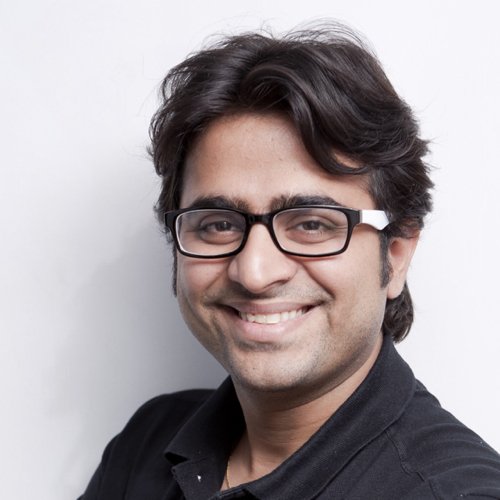
    At a young age he decided to convert his passion into profession. At 21 he made his first ad and by the time he was 23, he joined Contract Advertising. At 25 he was off to BBDO Bangkok where he waited outside the office for 17 days as the security did not allow him to go inside due to a language problem.


    At 28 he started BBDO Mumbai with five creative officers and five interns and took the company to new heights. He has many accolades against his name and one of them is being the youngest executive creative director. He is Leo Burnett India chief creative officer Rajdeepak Das.


    A Bob Dylan and Steve Jobs fan, a firm believer in Hope, Faith, Love and Charity, Das speaks to Indiantelevision.com’s Anirban Roy Choudhury about the changing advertising industry and the role that mobile is going to play in near future.


    Excerpts:


    Do you think the ad fraternity will have to start adapting to the growth of smartphones in India?


    Special ads will soon start storming in for the mobile phone where the format is not landscape anymore. It will be more candid, more catchy, sometimes longer and interactive. Mobile opens a number of avenues like geo-targetting. For example, there is no point in showing a Bandra person, an ad about Delhi. Moreover, mobile also enables us to know the behavior and attitude of users. The adaptation has already started and the ad fraternity is creating special creatives and strategies for smart phones.


    Do you think the device mobile phone is used a little too often in ads now?


    We have 300 million TV and 500 million mobile phones and therein lay the answers. In next 10 years, the country will have 1.2 billion mobile phones, which will be three or four times more than a TV. People are on Facebook, Whatsaap, Twitter and the amount of time they spend on the mobile is way more than TV. The time spent on mobile phones is only likely to increase more with time.


    Let’s take prime time for example. What has happened to prime time? It used to be from 7 pm – 10 pm but that has changed. Now the prime time is the time you are in the toilet or traveling. The phone has enabled us to decide our prime time where we can consume content at our own convenience. The mobile phone is a major target of brands and hence in every second ad there is a phone on the screen.


    Do you think different treatment should be given to campaigns curated for a high magnitude and prolonged event like IPL to avoid repetitiveness?


    Vodafone came up with 52 days 52 ads with their Zoo Zoo campaign during IPL. So variety is possible. We launched around five ads during this IPL. Sometimes repetition is necessary to make something noticeable hence you can’t totally get away with it.


    What role is social media playing in advertising? Are shares and likes becoming one of the prime demands of clients?


    I think this is one of the best times to be in the creative field. While we are solving clients’ problems, it’s not about shares and likes. It’s more about creating something that addresses the problem.


    Gone are the days when advertising was just creating an ad. Now it is about understanding issues like clients problem, business problem etc. At times you might not even need an ad. A simple change in packaging, understanding the ground territory or understanding what people want can do the trick


    At Burnett, we follow the philosophy of Human Kind, so we try to understand the problem from people’s point of view. Social media has emerged as a weapon for us. The interaction has become faster, we get to know the reaction immediately and if we see that we need to correct it somewhere, we go ahead and do it.


    Crash the IPL was a great example of crowd sourcing. Do you think following its success, it can become a trend and disrupt the ad agency?


    If I want something to be written, I can go to the crowd. There are many amateur writers. All of them will send something but will it carry a solution for the brand? Maybe… maybe not.


    It is not necessary that quality content can become a quality solution. So with crowd sourcing, the chances of hit are less and miss are more while an agency will surely provide you with a solution.


    Interaction with crowd will always be there. There will be more interactive creative campaigns, which will make people talk about it. But for the time being, I don’t see crowd sourcing becoming a trend and hurting ad agencies.


    Due to YouTube and other technical innovations, foreign ads have become easily accessible and with that emerged a competitive debate. Where do you see us compared to them?


    What works in India will work anywhere in the world. We cry, we smile, we fall in love, we have desires and greed and that’s the same everywhere. I love Japanese ads and ads of Thailand. So if it is good work, it will garner global recognition.


    The difference is in quality of production. Their crafting is better than us and they exhibit some quality work. Having said that, we are not far behind. Our directors are getting better as is our story telling. At the creative thinking level, we are at par if not better than them.


    Do you think out of the box ideas, which once created can be recreated? And if it is recreated, will it work?


    It depends on the story telling and how well the execution is. Dil Chahta Hai,Zindagi Na Milegi Dobara and Rock On had the same story. Did it work? Of course it did. It worked and it became bigger and better. So out of the box concepts will always stand out and there will be many more recreations. It will be a mix of new and old, depending on the need of the brand. Everything will work if it is done eloquently.


    What should young minds who aspire to become an ad man do? Is classroom education enough?


    Classroom education is not enough. They should start working as soon as possible. Work for small clients, less money but work. They should start practicing the art as early as possible. The greatest of minds in this world are college dropouts. I am not insisting anyone to dropout from college but them becoming big have a reason.


    They learn by themselves. For them, learning 5+5 = 10 is not as easy as it is for someone in college and schools. In the process of learning 5+5 = 10, they learnt 10 different things, which made them what they are. I want all of them who aspire to become an ad man to start working as early as possible and that will take them a long way.


    What do you like about the advertising industry and is there anything that the industry should change?


    The beauty of our industry is that whether it is an intern or a chief creative officer, we all start by looking at an empty white page. Whoever cracks the idea and comes with a better concept is victorious. So there’s a subtle unanimity in all hierarchal positions. In other words, there is no boss or everyone is the boss.


    The thing that the advertising industry needs to change is to stop making an ad, if it is not necessary. An ad is not the solution of each and every problem. We should understand the problem and address it. After duly understanding the problem, if there is a need of an ad, only then should we go for it. Ads shouldn’t be a subject of hatred for consumers. We can’t keep interrupting someone with a pop-up ad. By doing that, we will only manage to get skipped and nothing beyond that.


    What’s the way forward for Rajdeepak Das?


    I love what I do and there is one thing that I will do till my last breath and that is ads. I want to keep making quality ads provide creative solutions to brands, which helps them rejuvenate their statistics. I believe in the four magical words that I saw written on Steve Jobs’ grave: Hope, Faith, Love and Charity and that says it all.

  • “ASCI’s goal is to promote self regulation and keep regulatory body away”: Narendra Ambwani

    “ASCI’s goal is to promote self regulation and keep regulatory body away”: Narendra Ambwani

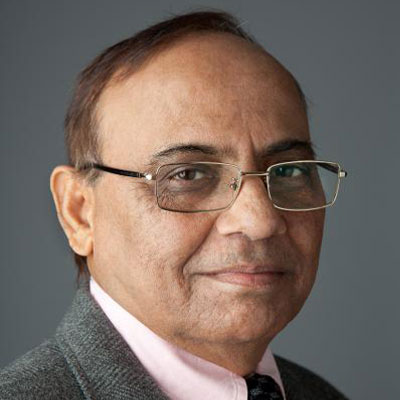
    We are in an era where advertising is redefining itself every second day, where regulations are questioned on the basis of its relevance in current scenario every hour and a new advertisement is released across various platforms every second in some part of the country. In a scenario like this, a nonprofit organization- Advertisement Standards Council of India (ASCI), which builds on the philosophy of self-regulation, examines thousands of complaints from various sources and at the same time makes efforts to empower advertising aspirants with various initiatives.


    An organization in existence since 1985, ASCI got recognition from the government of India Consumer’s Affairs Department in 2015, which ASCI chairman Narendra Ambwani terms as one of the biggest feat achieved so far.


    In conversation with Indiantelevision.com’s Anirban Roy Choudhury, Ambwani points out the importance of keeping a regulatory body away from the advertising fraternity. He feels that the only way one could do so is by promoting self regulation, which is the major reason why ASCI is endeavoring more in spreading awareness and empowering the fraternity by educating them.     


    Excerpts:


    What are the steps being taken by ASCI to educate ad makers in order to ensure that no derogatory work is done?


    We came up with the e-learning prospect, where people can enroll at a very low rate (Rs 500 for students, Rs 1000 for individuals). We didn’t keep it free because we need some money to upgrade the website and maintain a good workflow and that’s why we kept the minimal fees, and it’s not at all a profit making initiative. This consists of 13 modules on advertising, which has various chapters based on the advertising course. Each and every chapter is introduced by prominent figures of Indian advertising history, which includes Sam Balsara, Piyush Pandey and others and then we have examples defining the code and conduct.


    Suppose the chapter is about making unsubstantiated claims, with examples we will show that the claims made weren’t substantiated enough and hence it was challenged. At the end of the chapter there will be a quick test, which one has to undergo in order to prove that he or she has understood the chapter. The entire course is executed with the help of enhanced online technology and though it is not physically interactive, it is very much technically interactive. On a successful completion, one will get marks and a certificate from ASCI.


    What is the duration of the course and who all can enroll for it?


    The course can be pursued by anyone interested and can be undertaken at his or her own pace. The one time registration is valid for six months and one can do it any time till the registration is valid. It requires about four hours of work and if someone is focused, they can finish it in the given timeframe. The main idea behind the entire course is to educate people so that every ad is made by following the code and conducts so that we don’t have to challenge any. Every ad is made after putting a lot of efforts and money, and after a complain comes, if the ad has to be removed or modified, it upsets the entire schedule and hence why not create something that is right the first time round.


    Will there be any marketing activity to promote the e- learning innovation?


    We are promoting the initiative; in fact we have already started to do it through our members. We have around 350 members from the entire advertising fraternity, which includes agencies as well as consultancies. Our members are being mailed and at the same time we are asking them to inform people about the initiative in their respective organisations. Apart from that, we are also undertaking some activity at the school level where advertising is taught. We are requesting the authorities to enroll their students so that they understand the ASCI codes before they pass out. We are also very much active in the social media space.


    Will lessons on new age advertising also feature in the modules?


    The lessons will make people aware about code and conduct of advertising across all mediums whether it is digital, print or outdoor. The principles on the basis of which the ASCI codes are structured are uniform across all the platforms and hence the lessons are equally relevant throughout different parabolas.


    Apart from the e-learning initiatives, what are the other attempts ASCI has made so far or is planning to execute in the near future?


    In March, we had organised a conference where we invited marketing folks to participate. We took the opportunity to promote self-regulation and people of high repute from the advertising industry came in and spoke about it. That was one of our ways to promote ASCI and its code of conducts.


    How does the ASCI mechanism work?


    ASCI is not a regulatory body. We don’t decide if an ad should be made or not or if it is right or wrong. If any individual or company finds an ad offensive or derogatory, they can register a complaint. We have an independent panel, which is called the Consumer Complaints Council (CCC), which has two divisions. One has 14 members while the other has 21. The majority is from civil society, which includes professors of IIT, people from the medical field and journalists. So overall, it’s a wide mix of people from various fields. Once the complaint comes, we verify it. It has to be credible and not anonymous and the complainer’s details should be available with the secretariat. The complaint has to be for a current advertisement and not for an ad that was aired a year ago. Once the complaint is verified and the objections are examined, we give a week’s time to the advertiser to respond. Once the response comes, we send the ad to the technical expert. For example, if an ad says that a product will make hair 10 times stronger, the technical expert examines if the claims are substantiated. After the technical committee analysis is received, the complaint is brought to the weekly CCC meeting. The CCC then decides if the complaint should be upheld or not.


    What happens after the complaint is upheld?


    After the complaint is upheld, we write to the advertiser that the complaint is substantiated and that the board found issues in their ad. We tell them that they need to modify their ad rectifying the concerned issue. After that we give them two weeks’ time to implement the changes. In almost 90 per cent of the cases, advertisers comply with the guidelines and remove the concerned parts.


    The mechanism takes three weeks minimum to come to a conclusion, if not more. For that period does the ad stay on air?


    Yes, the ad stays on air for that span of time. Three weeks is the minimum time required to complete the due process and we need to undergo the process. In case an ad is extremely derogatory and we feel it is truly offensive, we have a system called Suspended Pending Investigation (SPI), which we impose. However, that happens very rarely. ASCI chairman heads SPI. The chairman shares the said offensive ad with CCC members and asks for an immediate suggestion. After the suggestion is received, if the members feel that the ad needs to be brought down immediately, we write to the advertisers to hold the ad till the investigation process is concluded.


    What have been the major challenges in front of ASCI?


    The major challenge was to make people aware about ASCI. Social media played a vital role and the website also helped us. Earlier people had to fill a form and send it to us through post but with the website in place, we have now started receiving a lot of complaints. Last year, we got around 6000 complaints. So the more people connect with us, the better it is for us. That’s the major challenge at hand.


    Apart from that, there are a few rouge advertisers, who do not comply with any code of conduct and often they fail to respond to ASCI too. They put their ads late night making unsubstantiated claims promising Dhan Laxmi or Sukh Shanti and people going through stress often fall into their trap. Getting them off is the other major challenge that we have at hand.


    Recently ASCI signed an MoU with the Indiam Government’s Department of Consumer Affairs. Can you throw some light on the development?


    The MoU with the Department of Consumer Affairs states that any complaint received by the government will be dealt by ASCI. Additionally, we will also endeavour into joint promotional activities, which is a major boost for us. Getting recognition from the government and being asked to deal with complaints is a huge step forward. It signifies that the philosophy of self-regulation is making strong statements across all levels. It has been great working with the new government as it has been very cooperative so far.


    ASCI’s procedures, which also involve scientific research, may turn out to be very expensive at times. How is the organisation funded?


    The funding of ASCI is through its members. We have approximately 350 members from the industry who contribute. That’s where the major funding comes from. Apart from that, we raise funds from various initiatives like conferences, training etc. Overall, it’s a tight budget and as we all know ASCI is a non-profit organization. We are like any other NGO. It’s just that we are an industry NGO.


    As you said the major portion of the funds are raised through members who apparently are also involved in the advertising industry. If an ad from their company comes up for adjudication, will ASCI take it to CCC?


    Of course we will. In fact most of the complaints are against our members’ company because the members represent 90 per cent of the advertising fraternity. ASCI looks into each and every case without a bias. In fact, there is a rule that if either complainant or advertiser against whom the complaint is from the CCC, he or she will not take part in the adjudication process of that particular case. So there are no possibilities of partiality or vested interest when it comes to the adjudication of any case.


    Going forward, what are ASCI’s strategies and goals?


    We have many strategies to ASCI’s credit. We achieved the government’s recognition on the aspect of self-regulation and the possibilities of a regulatory body to regulate advertisement, which none of us wanted, is dimming gradually. We are launching an app to ensure more and more reach, getting more and more people enrolled in our e-learning initiative is a major task at hand currently and we are building strategies around it.


    While I speak about goals, we only have one goal and that is to prevail our philosophy, which is fairness, responsibility, decency, honesty and truthfulness and conscience in advertising. The day ASCI will empower every advertiser with the code and conduct awareness to a level that the CCC fails to find one guilty party will be the best day for ASCI and that’s the only goal.

  • “CNN Digital’s goal for 2015 is to create personal & engaging mobile news experience:” Etan Horowitz

    “CNN Digital’s goal for 2015 is to create personal & engaging mobile news experience:” Etan Horowitz

    A former journalist, with experience in print, broadcast, online and mobile, Etan Horowitz is currently serving as CNN Digital senior mobile editor. Horowitz, throughout his career, has combined his love of technology with his passion for journalism.


    As the editorial lead for all of CNN’s mobile products, Horowitz works closely with CNN editorial teams to plan and publish news and information optimized for phones, tablets and other mobile devices. As a key member of the homepage team, Horowitz also drives awareness of mobile audience behavior through increased training and the use of analytics tools.


    He works closely with the mobile product, business and design teams on setting CNN’s global mobile strategy and updating CNN’s mobile apps. He also oversees CNN’s editorial strategy on news reading app Flipboard. During Horowitz’s tenure, CNN has continued to show substantial growth in mobile.


    Before CNN Digital, Horowitz worked as a digital media producer for CNN International. While there, he was responsible for producing content for TV that originated on digital or social platforms. He played an important role in the coverage of the 2010 Haiti earthquake, the 2010 World Cup in South Africa, the Arab Spring and the Royal Wedding.


    In a t?te-?-t?te with Indiantelevision.com, Horowitz talks about the journey of CNN apps so far, building of the mobile audience for CNN and more…


    Excerpts:


    What initiatives did CNN Digital undertake to cross the 50 per cent mobile audience mark?


    We had a three-part strategy focused on awareness, analytics and action. Awareness meant making sure our staffers were constantly looking at our mobile products as they did their jobs. So we made sure to put live views of our mobile website and apps on everyone’s computers as well as on big monitors throughout the newsroom. At key meetings, we made sure to always show our mobile products. We even devoted an entire week in May 2014 to raising awareness among the staff, which was a big success. 


    Once we had more people looking at our mobile site and apps, we focused on analytics to get a better understanding of how our audience was consuming our journalism on mobile devices. We made sure to have the same reports for mobile that we’ve always had for desktop and we also explored mobile only analytics reports, such as data on how many people tap on a breaking news app alert from the CNN apps. A big takeaway from this exercise was that our peak usage times for our desktop and mobile sites are different. Specifically, in the United States, between noon and 1 pm ET is the biggest usage period for our desktop website, while between about 8 and 11 pm ET is the peak usage time for our mobile site. These learnings helped us to focus our staffing and efforts appropriately. 


    Finally, “action” meant making sure that all of our staffers had the knowledge and skills to make changes and tweaks to our mobile platforms to ensure we were delivering the highest quality journalism to our audience. Without the awareness or analytics, this would not have been possible. When stories are commissioned or when headlines are being written, we keep the mobile audience at the top of our minds and always ask ourselves “what’s the best way to tell this story to someone reading it on a phone?”


    What happened after crossing that mark and what are CNN’s ongoing investments in mobile?


    Globally, we crossed the 50 per cent mark in the summer of 2014. Since we had already been preparing our staff for crossing that mark, nothing special happened once we passed it. However, passing that mark and our continued mobile growth has helped keep everyone focused on providing the best experience for our mobile users. Our executives have made mobile our top digital priority and we often share metrics and numbers to keep everyone up to date about our mobile growth. 


    Is there any special strategy to create editorial content primarily aimed at mobile audiences?


    The best strategy is to put yourself in the shoes of someone seeking news and information on a phone and thinking about what you would need. So mobile app push alerts are incredibly important to our strategy because they deliver important news to your pocket. This year we’ve been focusing even more on mobile-native storytelling with projects like Snapchat Discover and John Sutter’s Poor Kids of Silicon Valley interactive, both of which were designed primarily for a mobile audience. Video is a big focus for CNN and something that has been very popular with our mobile audience, so we always try to incorporate video into our mobile storytelling efforts.


    Personalization is a big focus for us this year, as evidenced by our recent CNN App for Apple Watch, which lets users choose the news sections they want to see. 


    Is there a special analysis to understand how CNN’s mobile consumption is different from consumption on other platforms and to implement plans based on audience patterns and habits?


    Yes, as mentioned earlier, we rely heavily on audience analytics to tell us how mobile audiences consume our journalism. For instance, users of our mobile apps tend to consume more stories and videos per visit than users of our other digital platforms.


    Are the mobile app push alerts a key driver when it comes to the long sustainability of apps?


    Mobile app push alerts are incredibly important to our mobile strategy as they serve as a utility for users of our apps. This year we are working to improve the alerts experience to offer more control and personalization to users of our apps.


    Don’t you think it is highly important to have journalists who understand the mobile platform?


    Any journalist working today needs to understand the rapidly changing ways that users are accessing news and information. We work hard to make sure our staffers know how our mobile sites and apps work, how users are consuming our content on them and what the latest trends in content consumption and delivery are. 


    How do mobile apps fit into your overall mobile strategy, especially when you have a responsive website?


    In January of this year we re-launched CNN.com as a responsive site. This was a huge improvement because it meant that all of our content was easily accessible to users on any device. Now that we have the responsive site, we are putting a lot of effort into rethinking our mobile apps to focus on being more engaging and personal. A top strategic pillar in 2015 for CNN Digital is to “create the world’s most personal and engaging mobile news experience,” and we think our mobile apps will play a big role in meeting that goal.  


    What role does social media play when it comes to content creation? Is it important to have a good social media base?


    Social media and mobile consumption are very closely linked together because the majority of social media consumption happens on mobile devices. So when someone taps on a link to a CNN.com story on Facebook, they are often opening our mobile website because they are using Facebook on a phone. Stories that perform well for us on social media also perform well for us on our mobile sites.


    We’ve recently added some features to our mobile site to further strengthen this connection. For instance, when you read a CNN.com article on your phone, we now have an icon to share that story directly to the WhatsApp messaging app. 


    Do you see mobile apps as the future when it comes to platforms for news gathering?


    There are many examples of journalists using mobile devices today to capture news as it is breaking. CNN does a great job of placing journalists in the field around the world, and our team is often well positioned to both live report through their mobile devices and connect with others who are capturing content. We have a Social Discovery department dedicated to finding and verifying content because it can be the first window into a story.


    Every news agency has a mobile app now. What is your strategy to stay ahead of the others?


    CNN’s mobile apps have been downloaded tens of millions of times and are widely praised as a top app to download across devices. We are really focusing on making our apps even more personal and engaging. One recent innovation was the launch of CNNgo in our CNN App for iPad, which puts users in control of how they watch CNN TV and offers related content to the stories they are watching. Were also making a big push onto wearable devices, as evidenced by the launch of our CNN App for Apple Watch. CNN was the only news provider featured on stage by Apple as the company unveiled the Apple Watch.

  • Content theft negatively impacts profitability, thus resulting in less investment capital: Uday Singh

    Content theft negatively impacts profitability, thus resulting in less investment capital: Uday Singh

    For every one individual, Indian theaters lose 100 because of cheaply available pirated DVDs and illegal streaming. While creative minds are traveling that extra mile to exhibit quality, illegal infiltration of camcorders and hall prints are creating holes in creators’ pocket. Descending footfalls, and shutting down of theatres are not good signs for the film industry and experts don’t see the phenomenon changing unless and until piracy is strictly addressed, the abysmally low growth rate poses enormous challenges in front Indian Film Industry.


    Motion Pictures Distribution Association (MPDA) India under the leadership of managing director Uday Singh is associating with various organization of national and international magnitude to come up with a solution and create a scenario that helps creator getting his due recognition.


    From educative measures to penalizations in a conversation with Indiantelevision.com’s Anirban Roy Choudhury, Singh discusses the strategies and plans MPDA is roping in to counter serious issues like piracy and content theft.


    Excerpts:


    Do you feel it is important to change the behavior of consumer and make them understand the value of content, which may result in them saying no to piracy? If yes, then how can it be executed?


    Our goal is to help and support industry growth through the creation of a sustainable ecosystem for creative industries and educating consumers on the need to protect creative industries is therefore very important through industry initiatives.


    One such initiative was our launch of a website: www.findanymovie.in, in association with the Film and Television Producers Guild of India (FTPGI), which serves as a resource for online audiences to access movies and television shows legally. The launch of Comicorner at the 2014 Comic Con held in Hyderabad was amongst the others. Comicorner presented us with an opportunity promote copyright and content protection through interactive activities.


    The FICCI report indicates very low rate of growth in the cinema industry. Do think piracy is one of the major reasons behind that?


    Content theft negatively impacts profitability, thereby resulting in less investment capital. Less capital pegs down the number of films that can be financed, thereby creating fewer jobs, and reducing the range of film and television productions made for audiences to enjoy.


    In 2014, the MPDA partnered with FTPGI, the Film Federation of India (FFI) and the Federation of Indian Chambers of Commerce and Industry (FICCI) to launch a report entitled ‘Economic Contribution of the Indian Motion Picture and Television Industry’ by leading financial services firm Deloitte Touche Tohmatsu India. The report estimated that the Indian Motion Picture and Television industry contributes $8.1 billion (Rs50,000 crores) to India’s economy and supports 1.8 million jobs. Through this report, it is evident that the industry has the potential to contribute on a much larger scale if content was better protected and the complex taxation of the industry is reviewed.


    What is the main source of piracy in India?


    Piracy in the film industry originates from ‘camcording’ in cinema halls. Over 90 per cent of new release titles originate from cinemas. These infringing copies appear online within few hours of a film’s release. This affects the performance of the film, the distribution cycle and jobs.


    The rising threat of Internet piracy via Illegal or “rogue websites” contribute to, facilitate, and induce the illegal distribution of copyrighted works, such as movies and television programming. In 2014 alone, 30 camcords from India were synced to 54 additional audio resources in 15 different languages.


    What in your opinion should be the strategy to counter piracy?


    We need to recognize that in the next two years, India will have the fastest Internet traffic growth (348 million Internet users) and is already the second largest mobile user base in the world, after China, which has over a billion users. The growth in mobile penetration and more users having access to faster Internet speeds, signal the growing need for adequate legal protection and enforcement measures to combat piracy through cyberlocker, BitTorrent, web based file hosting, wireless access control (WAP), blogs and online radio sites services, which stunt India’s creative industries.


    Illegal camcording of feature films in theatres remains a major threat to the sustainability of the movie industry. Once an illegal camcord copy of a film is uploaded to the Internet, it can significantly impact on the amount of revenue the producers can recoup from the theatrical release. We therefore encourage the Government to implement specific anti-camcording provisions in the upcoming Draft Cinematograph Bill, 2013 and make adequate provisions for ‘Technology Protection Measures’ in India’s IT Act, in light of the roll out of the Digital India initiative and the upcoming National IPR Policy, which will help in protecting IP across creative industries including films as a category.


    Do you think proper credentials of intellectual property can help the industry to grow further?


    Promoting and protecting Intellectual Property in creative industries will enable India’s creative industries to enforce their IP rights and achieve their full potential in a rapidly changing marketplace. We applaud the Government of India (Department of Industrial Policy and Promotion, Ministry of Commerce and Industry) for pushing forward the much-needed National IPR Policy that envisages IP as an integral part of India’s overall development policy.


    What are the initiatives that MPDA is taking for IPR in India?


    MPDA India works closely with the local industry, Government, law enforcement authorities and educational institutions to promote and protect the film and television industry in India. The MPDA over the years has formed strategic alliances with the local film industry in India to launch campaigns to promote legitimate access to content, prevent content theft, share global best practices and promote industry growth.


    Initiatives include, our strategic alliance in 2012 with the Andhra Pradesh Film Chamber of Commerce (APFCC) to pool resources and jointly tackle issues such as camcording, cable theft and to promote public awareness and education campaigns on the importance of content protection.


    Since2012, the MPDA and the APFCC have carried out four successful enforcement operations that resulted in the arrest of members of criminal camcording syndicates and taking down of infringing websites. We’ve launched a mobile application – Indian Movie Cop – that serves as an online and mobile copyright information and awareness tool in eight Indian languages to reach out to wider audiences and industry stakeholders across India. The app was also designed as an interactive tool to help educate law enforcement officers about relevant laws that are applicable during ‘an arrest’.


    Through our partnership with FICCI and the U.S. Patent and Trademark Office (USPTO), we have conducted several training programs for multiplex operators across the country, especially in regions where content theft/ piracy is rampant. Further, we have supported several sensitization programs for law enforcement officers and the Judiciary across major cities in India. Through co-operation from our member studios producing local language films, we launched outreach initiatives targeting online audiences through ‘content protection’ messaging from over 30 Indian celebrities. The cumulative reach of these videos has been over 50,000 over the past two years.


    MPDA’s multi-pronged approach to increase public education on the value of the local screencommunity provides an insight into the industry and benefits that come from accessing only legal content has been well received by local screen communities in India.


    What technological protective measures need to be taken in order to create safe ecosystems for content to be distributed freely?


    With the arrival of the digital age, it is possible for consumers to make numerous copies ofcopyrighted materials, without a discernable loss of quality, unlike analog. This leads to the possibility that copyright protection could be overridden by uncontrolled copying, especially since such illegal actions are often difficult to trace.


    Technological Protection Measures, or TPMs, are defined as being any technology, component or device designed to prevent or restrict acts with respect to works or other subject matter that are not authorized by the rights holder of any copyright-related right.


    Today, technology enables copyright owners to control access to and the duplication of copyrighted works through encryption software and copy-controlling mechanisms, which are relevant to copyright holders in the digital age. TPMs maybe software or hardware based and can be implemented for broadcast content, packaged media content and interoperability.


    What are the policing mechanisms that we can see going forward to prevent piracy or breach of intellectual property act?


    Enforcement of copyright continues to remain a challenge as ‘IP Issues’ remain low priority amongst law enforcement officials. Further,law enforcement officialsacross various levels need a deeper understanding of the Internet, advances in technologyand how online content theft and the widespread distribution of infringing content is facilitated.


    Currently, while enforcement of IP is considered as low priority, there is also no systematic and active coordination and collaboration between enforcement agencies to tackle organized copyright or content theft.


    We therefore recommend the setup of a National IP Enforcement Task Force, which will work in a coordinated, systematic and efficient manner not restricted by jurisdictional issues, have a clear view of inter-state operations of organized crime units engaged in piracy and will ensure protection of intellectual property rights – both at source and online.


    There is also a need to establish clear guidelines/standard operating procedures for enforcement of IP related issues at a national level and adequately train enforcement agencies to carry out their responsibilities through systematic processes and sharing of international best practices and developments through timely sensitization programs. Training programs should address offences relating to IP laws including online and off-line piracy through statutes such as the Copyright Act, 1957/ IT Act, 2000 for IP violations.


    What are the penalties and penalizations shortlisted, which will be imposed in case of a breach?


    Penalties for copyright infringement include:


    ·Section 63 of the Copyright Act, 1957 which mandates copyright infringement as a criminal offence implicating prison terms, on conviction, of up to three years with a minimum terms of six months and or a fine of Rs50,000 up to Rs2,00,000.


    ·Penalty for second conviction- According to Section 63A of the Copyright Act, 1957, a second conviction for copyright infringement implicates prison terms of not less than one year and up to three years and fine not less than Rs 1,00,000 and up to Rs2,00,000.


    ·Penalty for possession of plates for purpose of making infringing copies:Section 65 of the Copyright Act, 1957 mandates the possession of plates for the purpose of making infringing copies as an offence and also implicates prison term of up to two years and a fine. Thus even the possession of duplicating equipment for the purposes of making infringing copies of works is an offence under the Copyright Act, 1957.


    ·Penalty for circumvention of DRMs:Section 65A of the Copyright Act mandates prison terms of up to two years in case of the circumvention of technological protection measures, that isDRMs, with the intention of infringing copyrights.

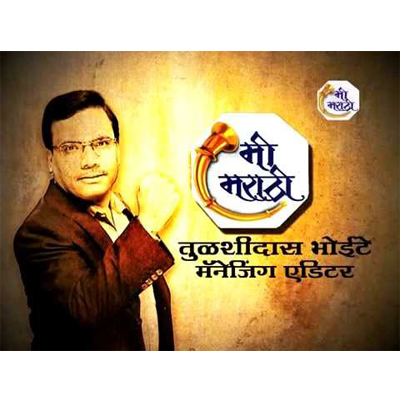
  • “Media today is suffering from ideological corruption”: Tulsidas Bhoite

    “Media today is suffering from ideological corruption”: Tulsidas Bhoite

    Mi Marathi, a Marathi news channel has been working hard to gain cognizance since its revamp from an entertainment channel to a news channel in March 2014. The channel, after a year of constant endeavour to connect with the viewers, has become the chart topper in the Marathi news space.

    At the forefront of Mi Marathi is a team of veteran journalists and among them is the channel’s managing editor Tulsidas Bhoite.  

    Bhoite started his career in 1992 in print media. It was in 2000 that he moved to electronic media with his debut stint at ETV. He has worked with leading channels like Zee Marathi, IBN7, Star Majha, Zee 24 Taas, TV 9 and Jai Maharashtra.

    Indiantelevision.com’s Seema Singh spoke to Bhoite about the transition of Mi Marathi from an entertainment channel to a news channel, the challenges and much more.

    Excerpts:

    What was the reason behind converting the entertainment channel Mi Marathi to a news channel?

    I think it was a wise decision by the management. I travel a lot with all segments of people, be it with commoners or professionals from different field. As per my analysis, there is space for more than 10 news channels in Maharashtra. The market here is quite weak in terms of both revenue and TRP, and so far, not a single channel has tapped the market fully. Currently with seven players in the region, we have only just managed to tap 50 per cent of the market.

    How did the transition take place? What happened to the GEC employees?

    We haven’t removed a single employee from any department because we didn’t want to write-off any people. Everyone has their own talent, and it was our duty to cultivate that talent for the betterment of the channel. We decided to use GEC talent for news and fortunately the management allowed us to do that. As the pace of work in a news channel differs from that of a GEC, we do face the problem of speed but our employees are coping and trying to change their functioning style.

    When the management decided to relaunch the channel as a news channel, they started hiring best professionals from the industry. The hiring process is still on and we have on board the three best faces from the industry in Kumar Ketkar, Nikhil Wagle and Bharatkumar Raut.

    We are hiring more talent from the news industry now. Even today, we do not have any technical backup like the other news channels, because of the space crunch. Plans are also afoot to shift to a new office and buy more technical equipments. With no technical support and just 60 per cent workforce as compared to the other news channels, I think we have been doing a fairly good job.

    How is the management-employee relationship in the company? Are employees involved while taking decisions?

    We ask our employees to give ideas. We may or may not accept the ideas, but we always ask people to participate in the ideation process. In fact, Jhingroo, the icon created by the channel during elections, was the idea of our creative team, which is still being appreciated by many.

    Being the seventh player in the market, what was the strategy to attract viewers? 

    Yes, we entered the market as the seventh player in the regional news space in March 2014. In order to remain relevant in the space, we had to create a new market for ourselves. As I mentioned, there is a large part of Maharashtra, which is still uncovered by news channels. So our strategy was to create a new segment for ourselves in the news market and also grab existing viewers of other news channels.

    We decided to cover news differently. For example in Mumbai, channels generally cover Mantralaya when it comes to politics, stock market for financial and a select two or three theatres or multiplexes when it comes to entertainment news. We changed this. We sent our cameras to that part of the society, where others hesitated. The news industry generally works on a myth of the up market and down market. But if you see, only 10 per cent of the news channel viewer comes from the so called up market strata.

    Even in the rural parts of Maharashtra, channels focus on the sugar belt of Pune or Nasik. We completely changed that. We always cover every news right from rural to urban, from upper to middle to lower middle class. And I’m not saying this because I’m a journalist, but this is the most practical approach. Even advertisers want to cater to the rural markets these days.

    What were the challenges you faced when you entered the market?

    The first challenge that came our way was that no one wanted to accept us as we weren’t big faces, when we launched. Traditional leaders thought we could not carry on the channel. But when we applied our strategies to run the channel, after four months they started taking cognizance of the channel.

    What did you do right to get to the number one position?

    Firstly, the selection of issues and subjects to cover. Secondly, we consider the opinion of each person in the team as important. Thirdly, when others are trying to think on an issue, we have already acted on it. We connect our channel directly to viewers, from all segments. We are always trying to give them a say in each and every programme. To understand the pulse of the audience, we never forcefully apply our views on the audience. We give the audience a chance to express their opinion.

    What’s your Target Group?

    While we don’t focus on one TG, we look at targeting the 15-45 year olds. For example, our character Jhigroo, resonates not just with politicians, but also the younger generation, who while are not too interested in politics or the news, but like the animated character. We want to catch the young audiences.

    How did you ensure that you did not lose out on your viewers from the entertainment channel, while making new ones in the transition?

    Most channels apply the ‘Hot Cut’ policy. But during the relaunch, we did not make the mistake of ‘Hot Cut.’ So while a show was on air, we did not cut the programme to go on air on something that was happening now because that could have harmed us. So we used the phase out process. We kept 50 per cent programming and 50 per cent news from September 2013 to March 2014. And from March, we relaunched fully as a news channel and we continue treating news in a different way. A lot of emphasis is being given to the presentation of the news, despite lacking on the technical front.

    How do you plan to maintain the number one position?

    When we announced the relaunch in the newsroom, I had said ‘our struggle is man vs machine.’ While content is the king, distribution plays a crucial role and we are hoping to expand our reach.

    My aim is to not just get good numbers. My ultimate goal is that the channel should be cognizable, right from the top person to someone sitting in the rural area. People should know the channel and the content. Number one, two doesn’t really matter.

    We would like to capture 50 per cent of the market to be able to do more experiments with the content.

    What are the challenges in the Marathi news space?

    In Maharashtra, people are open to other languages, and so we have to compete with Hindi news channels as well. Our strategy is to go to people, pick up their issues and give them a voice.

    Do you think advertisers should put in more money in regional channels? Is there scope?

    There is an untapped market in Maharashtra. However, when it comes to news genre, I don’t think any sales team in any of the channels has the potential to tap that huge market, and this includes my channel. There is a need to set up that team. We need to look at people with good ideas, who can tap that market.

    The logo has remained the same even after the relaunch. Any plans to change that?

    We thought on that. The creative team has created a different logo as well, but for now we will stick to the current logo. Our communication from class to mass shows that they like our current logo.

    Are you looking at revamping the channel?

    My team is currently struggling with the limited resource. But we need to move to a new space and as soon as we find that space, we will have two studios and better equipment and lighting. The revamp will be in the next six months.

    We are also working towards bringing in more graphics in the next 15 days. We will not stick to a single rule of programming. Adding more content to the channel is an unending process. We are making rules, only to break them.

    How has Nikhil Wagle’s presence helped the channel?

    If you study our viewership pattern, we are equally distributed throughout the day, from 3 pm to 11 pm. We wanted to strengthen our 9 – 10 pm time band and so when Nikhil Wagle agreed to join our channel, we offered him that time band. He has his own followers in Maharashtra, and that cannot be denied. Our mood and his is the same and that helps the channel a lot.

    How many journalists and bureaus do you currently have?

    In all over Maharashtra, we have nine bureaus and we will increase that to 12 in the next three months.

    Of the nine, seven are connected by lease lines. We will also start our studios in the next three months. We want to give our correspondents in these studios an opportunity to handle their own small shows on regional basis.

    In Mumbai, we have a team of 12 reporters and 20 camerapersons and out of Mumbai we have 60 reporters and 30 camerapersons.

    What’s your take on prime time debate?

    When deciding the strategy for the channel, I think like a viewer and not like a journalist. People are fed up of debates and that’s a fact. Fortunately, we only have one debate showPoint Blank hosted by Wagle, who is a man of content.

    We take only four people on the panel in order to give proper time to each one to represent their point of view. Media is suffering from ideological corruption. We are media, we are supposed to give equal opportunity for people to give their opinion. There should be discussion and not debate.

    Vir Sanghvi had once said, “We don’t have news channels, we have low cost entertainment channels.” But I think people are fed up of such low cost entertainment and so we are trying to deliver hard core news.

    If you check our ratings, we aren’t getting good ratings for any of our entertainment shows.

    Have you subscribed to BARC? Will you be discontinuing your TAM subscription? 

    We haven’t yet subscribed to BARC, but we will. We haven’t taken a decision on whether we will continue with TAM or not. We may continue with both TAM and BARC.

  • “Make sure that the attitude you wear fits you and is not forced:” Vijay Subramaniam

    “Make sure that the attitude you wear fits you and is not forced:” Vijay Subramaniam

    The youth of India believe in purposive action and are restless for change at all levels, their own lives, society and circumstances. One man, who has studied the young adults very closely is Disney India Media Networks VP – content and communications Vijay Subramaniam.


    Talking about one of the leading youth network in the country, bindass, with his passion and perseverance, the channel has been consistently entertaining young adults with content and campaigns that are purposive and action-oriented, with more than 1000 hours of path-breaking original content.


    He intends to inspire the youth of the country to actively do something about issues that surround them and believes that young people can fight the system and bring in the change. With Subramaniam being at the helm since its inception, the channel has grown in viewership by more than 150 per cent and today reaches out to 1.3 times more young adults since launch.


    In conversation with Indiantelevision.com’s Disha Shah, he talks about bindass’ journey, his views about today’s youth and how different they are from previous generations, the best way of engagement and more.


    Excerpts:


    How has bindass’ performance and journey been since its launch?


    It’s been one of the most interesting journeys for us with the brand. Seven years ago, when we set up bindass, it was exciting for us to be able to create a well defined Indian youth brand. The landscape back then and even now is such that most young adult brands tend to be international. It was an interesting challenge for us to provide the Indian youth with a brand, which they could not only relate to and see the reflections of themselves in, but also a brand that would understand the nuances of everything Indian.


    The journey has been incredible. In terms of viewership alone, in the last seven years, we have grown by over 150 per cent. We have added 90 million viewers, who are tuning in on a weekly basis. The evolution of this brand has seen significant increases in its performance at every step.


    Today as a composite, if we take the other brand that we had launched alongside bindass, i.e bindass play, together they command 19 per cent of the market of young adults, which is essentially the age group of 15-24 Sec AB.


    What do you think about the youth today? How is this generation, as a group, different from the previous generations (both politically and socially)?


    One of the corner stones of our success, both as bindass as well as to tell great stories to this audience, has been our ability to constantly converse with them. Very often people talk about research which is very important but I do believe that continuous dialogue with our audiences is the most important factor.


    Young people are casual, informal and shape the world through that lens. First and foremost I think today’s generation is booming with confidence. Everyone today is hoping to hit the high orbit and want to do well for themselves. There is a lot of optimism there.


    Secondly, they live in a world of abundance. What they see out there is really what we describe as tetras of opportunities. What’s crucial for them is their ability to make sense of it all. The youth today looks for meaningful relationships with brands, such as us, that help them navigate through the tetras of opportunities and help them to get through their desired goals. It’s also a generation that has deep-rooted commitment to things that really matter to them. As we have seen very often, when push comes to shove, this generation rises up and is willing to be scouted.


    Another interesting dimension is their interpretation of freedom. It is very important and matters a lot to them. Here, I am talking about all kinds of freedom, from expression to choosing their own boundaries. Alongside this dimension are achievements and successes and with that comes materialism.


    They live in a world where there are no borders, frankly. Be it social media or the amount of technology available to them… today’s generation is born into it. Their ability to see the world through a global lens is far easier than generations prior to that.


    Overall, it is a very confident, optimistic, positive and energetic generation and we at bindass reflect all of these in everything that we do in our journey with them.


    What according to you is the best way to engage the young? What works with them?

    Engagement is a broad term. For us, we have to choose methods of engagement on the basis of what we mean to them – while we are their friends; we are also responsible for their entertainment. Our focus engagement is through entertainment that is purposeful, enabling, funny as well as empowering. Our aim is to provide content that allows them to lean back and yet the message is the lean forward one.


    Through the themes that I spoke about, comes the ability to engage. However, what makes for fruitful engagement with them is dialogue and not monologue. The dialogue should reflect their attitude and spirit and above all else we should be able to constantly walk in step with them as their attitudes change, are shaped and re-shaped. That’s what creates successful meaningful engagement with young people.


    bindass’ shows like Halla Bol, Yeh Hai Aashiqui and Emotional Atyaachar all cater to the youth. How do you ensure that each show stands different from each other?


    We have a continuous conversation with our TG and that is possible only because of our robust research mechanism. We have tried to focus on different dimensions in the themes that we believe entertain young people in India. From that perspective, we have explored the entire spectrum of the theme of love and relationships. Right from Yeh Hai Aashiqui, which talks about strong love stories and relationships, to the other end of the spectrum – Emotional Atyachaar that talks about what happens when love goes wrong or even Pyaar Ka The End.


    And why this is important to young people? They want a 360 degree view of themes that matter to them because ultimately at some level they relate to it. While they are being entertained by the content, they absorb what is shown and also apply it to their lives.


    Talking about our second theme, empowerment, the first season of Halla Bol narrated stories of women facing harassment and fighting back. The second season took it a few notches higher by showcasing women fighting the system. We are seeing a lot of success in our society on that front. This is yet another reflection of how important empowerment is for young people.


    We also did a show called Change Ayega, Hum Layenge, which was a satire on the fact that if you are just going to indulge in armchair activism, nothing is going to change. Young people have to get up and get going and bring about change.


    The inspiration and source for a lot of differentiation comes in our deep understanding of themes from all dimensions. And that allows us to put our stories and different pieces of content that are both entertaining and engaging and at the same time giving a very holistic view of the themes that matter to the young people.


    Does creative talent understand youth programming today?


    Absolutely for bindass. For us, our success as a brand has been to be able to partner with creators right across the board and help them benefit from our rich understanding of young adults in India. A lot of this knowledge that we have, is transferred within our creative eco-system.


    From an overall industry perspective, creative talent today is progressive and has a good understanding of the target audience. It is ultimately about your focus. If they are focused on the youth, the understanding is very high and if their focus is on other age segments, then their understanding is not necessarily that high.


    What have you learnt about your audience?  


    One is the dialogue, which is a two-way interaction with the audience, regardless of the medium of entertainment. Second is to be able to wear your attitude and make sure that the attitude fits you and is not forced. It’s like a group of friends, each one has a distinct personality but when they come together, they form a nice group. The third lesson is that if you want to win them. you have to walk with them and be one of them. Lastly, this is a restless audience because they have so much to achieve and so we have to reflect those needs.


    What are the platforms on which the youth consumes more content today – television or digital?


    Between the access of technology and that of hardware, the fact remains that they are looking for their source of entertainment at points and devices that are convenient to them at that point in time.


    Keeping this in mind, as a brand that they care about, it is important for us to reflect that moment. This is the relationship that is changing in terms of their traditional consumption and we do believe that we need to be present wherever they want us to be present.


    For example, earlier the youth looked at television as a lead medium, whereas digital was to provide marketing support and extend a bit of the television universe. But at bindass, we have always pioneered our digital first strategy. We have always looked at these two universes as being symbiotic and not one leading and the other following. We have also looked at important philosophies through all these access points for young people and all of these are active and not promotional.


    Besides television, bindass had also launched initiatives like Dreamstart and bforchange. How has the response been for them?


    We were very clear that bindass will play a certain role on television and there are other roles that bindass, as a brand, will play with our other consumer touch points. Both the properties played a very important role on digital as the call to action made way for live conversations, tracking progress, engaging and interacting that are best done using the digital environment.


    Both initiatives had started with driving the brand message of being the enabler of purposive action. Today I am very proud to say that the partnerships Dreamstart did are commendable and we are getting perfect partners for the initiative. We are trying our hands on the music space as well. With the other initiative bforchange, we could bring about 170 NGOs onto a digital platform and make it so easy for people to access and pledge their support to them.


    Nowadays, most of the Hindi general entertainment channels (GECs) are tapping into the youth genre through new shows. Do you feel that going forward they can be your direct competitor?


    We welcome them (laughs). We are not just about the shows that we air but also a state of mind in the lives of our consumers. We are a part of the youth’s group today and in order to stay there, we need to stay relevant.


    Anyone who is willing to entertain will get the attention of the audience if done correctly. Young adults today loves a variety of entertainment. At any point of time, while they will be entertained by many, the fact is that they still prefer a few and those are the ones that they have made an emotional investment in. We believe that bindass is a brand that our audiences will make an emotional investment in.


    On the other hand, the advantage of more variety of programming coming through is that we get to tell even more differentiated stories of high quality. When Hindi GECs also move in these dimensions, it also gives a creative uplift to the entire eco-system and that is a welcome benefit for all of us.


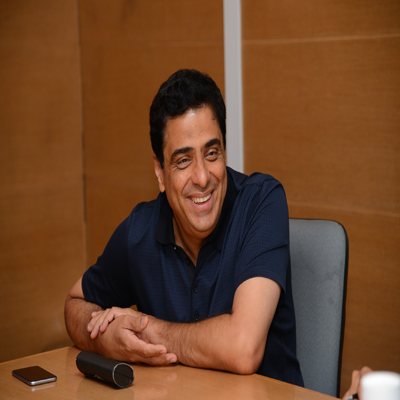
  • “Good ideas always find an investor, so there is no point compromising with the idea:” Ronnie Screwvala

    “Good ideas always find an investor, so there is no point compromising with the idea:” Ronnie Screwvala

    20 years back when the word entrepreneur was rarely pronounced correctly, a 19 year old man in the midst of great legacy businesses turned out to be a stand-out first generation entrepreneur, who fearlessly kept invading into undiscovered territories.


    After starting as a local cable operator, he went on to finding United Television Group (UTV), ventured into sports with Kabaddi and funded e-commerce enterprises like Lenskart and Zivame. While the world was witnessing catastrophes, he decided to turn philanthropist with the Swadesh Foundation. From Shanti on Doordarshan to Swadesh on the big screen, from Rang de Basanti to Dev Dhe has enumerable number of trophies in his cabinet.  


    The distinguished voyage that ignites million minds, the role model for aspiring entrepreneurs in India – Ronnie Screwvala in conversation with Indiantelevision.com’s Anirban Roy Choudhury, shares his priceless guidelines for young aspirants.         


    Excerpts:  


    What triggered you to pen Dream with Your Eyes Open?


    Entrepreneurship is a challenge and the perception that only people with huge initial capital can become an entrepreneur is a myth and that’s the message I wanted to convey and that’s where the book came into picture.


    Dream With Your Eyes Open is not an autobiography but a voyage that has both highs and lows, failures and success, encouragement and demotivation. Another reason behind penning down the book is to encourage aspirants to go for entrepreneurship passionately and not take it as a second option.


    What do you think is stopping India from becoming a global leader when it comes to entrepreneurship?


    20 years back when I started, people could hardly pronounce the word entrepreneurship. Even today, while on the one side, there are a fair amount of businesses, on the other, there is huge parental pressure of going and getting a good job. Entrepreneurship has always been plan B. But that doesn’t stand true.


    One can either go and get a good job or turn an entrepreneur – both are equally respectable. The most important reason for less growth is the fear of failure. In India, people don’t talk about this fear and if they do, they can’t handle it. For most people, failure means the end of the game… the fear that everything is over is what acts as an obstacle.


    The thought process needs to be that if you failed yesterday, you should see today as another day and move forward. When you have such a fear about failure, you don’t start. That is one of the reasons why India is ranked between 140 to 150 when it comes to entrepreneuring nations.


    How does an aspiring entrepreneur deal with the intriguing question of ‘How do I get funded’? Do you think in order to find that answer, the basic idea gets feeble or compromised?


    Everyone in India thinks that you need an investor to start a business and finding one is the biggest challenge. In my opinion, that’s not the procedure that you need to follow always. If we look at the entrepreneurs who are prospering today, all of them bootstrapped themselves on their own. Bootstrapping is a must when it comes to entrepreneurship. You have your idea and you should start executing it and only after you reach a particular level, should you go for an investor.


    Your success ratio goes up if you bootstrap first and then go for an investor. If you get an investor early on, you get spoilt. The entire work culture changes and half the time the investor runs the business that you are supposed to run. The hunger is much more when you are doing it on your own and hence if you have an idea, you should start executing it and after you have concept proofed it to yourself, you go for the investor. A good idea will always find an investor therefore there is no point compromising with the idea.


    Is stagnancy another reason behind the low rate of entrepreneurship growth in India? Do you think one should have the hunger of invading into new territories?


    It’s good that these questions are coming now because a few years back, no one thought about what happens after the substantial establishment of a business. In India, after a certain level we refrain from moving forward, get stagnant and eventually start downscaling.


    In business, downscaling begins the moment stagnancy sets in. So, one should always be open to venturing into new territories as entrepreneurship doesn’t mean earning a livelihood but generating employment. The more we explore, the more are our chances of succeeding.


    Do you think digital can give birth to a non-advertiser source of revenue model, which will be subscription based?


    If we see globally Google, which is the world’s number one company, has taken its platform YouTube and left it free. It runs on advertising. Facebook is also on advertising. If we look at it from that perspective, that’s where it’s going.


    Let’s face it, in two weeks’ time, a newly released movie is available on Tata Sky for Rs 75 but people are refraining from opting for that as there are pirated DVDs available for Rs 35. Piracy is a huge barrier of subscription based model and to counter piracy we need consumer behaviour to change, which is a slow process and will take time.


    Digital media is cost efficient. The capital investment is less when compared to the other mass medium platforms and hence there is a slim chance of having a subscription based revenue model. However, it will take time as there are bandwidth and technological issues that need to be sorted first. For now, I think advertising is going to be a long-term stay.


    Don’t you think an investor, after financing the concept, at some point of time starts regulating the strategic affairs?


    If you are a strong entrepreneur, you will never let anyone regulate you. I think there is a misconception that an investor comes in to regulate. Investors have two aspects: firstly, his risk capital is higher than most entrepreneurs because he is choosing one out of 999 and secondly, all investors get into a portfolio investment mode where they know out of 10, five will fail, three will somehow sustain and two will succeed. Who else in the entire cycle has got a risk of five failures out of 10? So, investors are seasoned veterans, who take their decision after enormous number of research and knowledge so that they put their money in right place. 


    Investors’ key is to back entrepreneurs with whatever they are doing and not regulate them. So it’s a misconception that an investor regulates. Yes, if things go wrong, an investor may get hyper and interfere with a perception that he can add value. It’s a myth that investors regulate a company.


    What’s your opinion on the Indian eco-system? Is there enough encouragement and support from the Government’s side for an aspiring entrepreneur?


    I don’t think it’s the government’s job to support. The thing that everyone is looking at is ease to do business. So the business environment has to be simplified by the government. When it comes to taxation, with 30 per cent tax we are one of the least taxed nations of the world. The tax structure in the UK and the US is higher than India. With the Goods and Service Tax (GST), it will come down to 16 per cent, which solves many problems. In the UK, value added tax (VAT) is at 17 per cent so there is no room for blaming the government.


    The reason why service tax was increased is to bring it closer to GST. The complication lies in the number of regulations and multiple-window clearances. The media is the least controlled in India. In the US, you have to be a citizen of the United States to be able to operate any digital or broadcast media, whereas in India anyone can operate an entertainment venture and hence when it comes to democracy and freedom, India beyond question beats the rest.


    Regulations make doing business complicated in India as there is no single body that deals with all the regulatory issues, which makes opening a business in 10 days impossible.


    Do you think it’s important to add entrepreneurship as one of the major aspect when it comes to academic upbringing of the youth in India?


    There are 10 million graduates coming out of college every year. Do we have jobs for all of them? The answer is a big no. The only way of tackling that problem is adding entrepreneurship in the curriculum as early as possible. I started at 19, so an early start is possible provided you think about it at an early stage. The manifestation should be there. The target should not be to get a job and then become an entrepreneur.


    Managers and presidents of big companies should think about where they will stand ten years down the line when there will be a hundred million skilled youth looking for jobs. Hence they should devote time into entrepreneurship, which will provide job to those skilled people.


    You are venturing in motorsport now. Can you throw some light on it?


    Well, yes I am venturing into motorsport. However, the report stating an investment of Rs 300 crore is incorrect. Nowadays, whatever you do, a zero gets added automatically. Here motor sports doesn’t mean cars. It caters to bikers in India, which is the largest bike selling nation of the world. The over 250cc category has grown at an incredibly high rate in last five years and we are looking at a tourism based sport. Currently, we are researching on the ten most exotic places in India, where on television one will enjoy India’s natural beauty along with skilled bikers. The plan is to make it a tourism cum sporting event.


    In the beginning, we will get a mix of Indian and international bikers, as the aim is to make it world class. Each team will have one Indian and one foreign biker for the first two years and after that we would look at making it a 100 per cent Indian event.


    From the first super-flop Dil Ke Jharoke Mein to the blockbuster entrepreneur writing his book, how will you describe the versatile voyage of yours?


    The opening four lines in my book is about the biggest failure of my life Dil Ke Jharoke Mein, which is what I started with. The concept behind starting the book with that was to convey that failure is just a part of life and not the end of the world.


    My journey so far has been to not stop after a failure but to keep moving on. Cable was different, UTV was different and sports is different. I have always rediscovered myself and for me that’s the way forward.


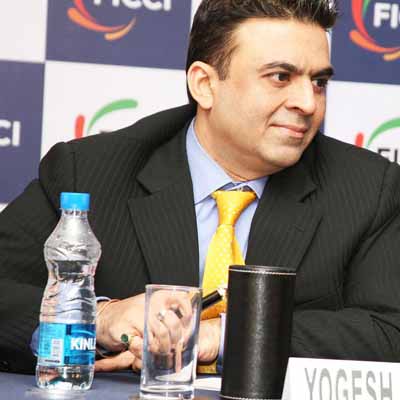
  • “Ad cap should have been restricted to only pay channels”: Yogesh Radhakrishnan

    “Ad cap should have been restricted to only pay channels”: Yogesh Radhakrishnan

    A veteran in the cable TV industry, someone who dabbled in the sector almost three decades back, Yogesh Radhakrishnan, now the MD and CEO of Pioneer Channel Factory, has seen the sector grow from the scratch.


    Known for setting up businesses, Radhakrishnan has been the man behind building IndusInd Media and Communication Limited, ETC and ETC Punjabi, rejuvenating Zee Cinema, setting up Zee Middle East, launching the first HD movies channel with Times Television Network – Movies Now and the first HD music channel – MTunes.


    Radhakrishnan, who has seen the sector emerge from a mere video-tape business to entering the digital era, talks to Indiantelevision.com’s Seema Singh about the emergence of cable TV in India, the first satellite channel, the emerging music sector and more…


    Excerpts:


    How did you get into the cable industry? How was the sector then? Why did you move out of it?


    In an era when the only form of entertainment was Doordarshan, I was fascinated how it could capture loyal viewership despite old, dusted black and white movies they telecast. I sensed that if people were given the option of better quality of movies on their own TV sets without the hassle of VCR or cassette which was prohibitively expensive there would be a huge demand for it. Thus was born the idea of launching cable TV in India. However re distribution of home video cassettes was illegal so in the year 1988, I pioneered the launch of India’s first copyrighted cable content with my three other partners under the brand name Cable Master. This gave the entire cable TV trade a flip and a legal straw to hold on to as the Government was yet to announce licensing policy for cable TV operators.

    In the next stage of evolution from cable to satellite TV, in the year 1992, we were all geared to launch a channel but lost out the lone transponder on Asiasat 1 to Zee. Those were the days  of quotas and licence raj and we had to partner with an established business house to do business in India.


    At that time the Hinduja group was on the verge of launching IndusInd, and so we partnered with them to create a media division and that is how the IndusInd Media Communications was created as a joint venture.

    Incable emerged to be the largest consolidator at that time to bring in the economies of scale in a city like Mumbai which had more than 8000 cable operators. We were the biggest players across most of the states in the country.

    Under IndusInd, we launched India’s first cable channel In Mumbai and a 24 hour movie channel CVO.

    Recognising the strength of ground distribution that our company had, we got many offers for joint ventures from the likes of HBO, Time Warner Cable, TCI etc. A huge multi million dollars offer from Rupert Murdoch didn’t go through due to valuation differences between the Hinduja’s and News Corp.


    In 1997, the cable industry got into a turmoil and that was the day I decided to move out of cable.


    You went on to launching ETC which you later sold to Zee? What’s the story behind that? How did Movies Now and the distribution venture with BCCL happen?

    In the year 1998, the concept of a 24 hour music channel was a need I saw and that is when I launched ETC, a channel focusing on new releases, as has been established nowadays the exposure of songs on TV plays a big role in the box office success of a film. ETC became the number one Hindi music channel followed by MTV, which was then a Hinglish channel.


    ETC was the second listed company after Zee and after the successful launch of the channel, we also pioneered the daily live telecast by securing the rights to the telecast of Gurbani from the Golden temple and thus ETC Punjabi was born which went on to become the No.1 Punjabi channel and continues to be in that position till date in its other avatar PTC Punjabi.


    After music and Punjabi channels, we saw the gap for 24 hour Hindi news channel, and that is how ETC News was conceived even before Aaj Tak was launched. But Technology wasn’t in place at that time a camera cost Rs 20 lakh, which today is close to Rs 50,000. Editing equipment, bandwidth for news feeds had to be sourced from DD, all in all, it was an expensive proposition. Hence, a 24 hour news channel had to be put on hold.


    Subsequently in 2002 when we got a good offer from Subhash Chandra, we sold ETC Networks to Zee.


    And then my association with Zee began, which was also an exciting time. I was a partner with Zee Middle East. Subsequently, I went on to build a strong company in Zee Middle East, which till date is one of the strongest markets for ZEEL.


    In 2008, I sold back my equity to Zee and wanted to return back to India where the action really was. Former Times Television Network CEO English channels Ajay Trigunayat, was in Dubai then. We got together with our project to launch India’s first ever English Movie channel in HD.


    I had discussions with BCCL MD Vineet Jain and a JV was formed in 2010 to launch four channels and then we further got into launching a distribution venture together called Prime Connect.


    Movies Now was one of most successful TV channel launch. It went on to becoming the No. 1 channel in the first week of its launch. Finally, in 2012, I exited the company by selling my equity back to BCCL.


    Then you moved on to setting up Pioneer Channel Factory? How is MTunes doing?
     

    Following the trend of people wanting to go to multiplexes for the pleasure of enjoying quality production of Hindi cinema and their desire to watch songs in its full glory, I set out to launch MTunes, india’s first Bollywood music channel in HD on the premise of Bollywood music like never seen before. Our songs were carefully selected to ensure they lived up to the channel premise.
     

    Acknowledgement from advertisers came as we got many campaigns exclusively on our channel due to its HD premise. Today, MTunes delivers far greater HD audiences than English movie, entertainment or even sports for that matter.


    Our second music channel Music Express resonates well with the industry, we package music with Glamour and Gupshup. Bhakti Sagar is our foray into the spiritual space.


    How will digitisation help the music channel industry?

    In analogue what was important was opportunity to see (OTS). In digital, all the channels are blocked in one category. The advantage for us is that we are in HD and so we got the advantage of the four million eyeballs. Our reach is good in HD and we are also available on SD. So for our advertisers it is a win win situation.


    How big is the music channel industry currently?


    If you take 14 music channels on an average, advertising and promo put together, we would be around Rs 700-Rs 900 crore.


    Unless and until you can differentiate yourself, you will not be able to grow majorly. If you see the broadcast business, be it GEC, sports or music, it’s very unfortunate that you are operating in the world’s cheapest advertising market (CPT) and cheapest pay TV market and this growth is slow.


    What is your take on music channels turning into youth general entertainment channel? Are you looking at foraying in the youth space?
     

    No way. It is a lovely genre to be in and is growing. Youth programming will drive this market to a large extent.


    But I don’t look at great economics that really works in any GEC space, unless and until there is good subscription that one is getting. If you strip off the subscription from all these channels and make them play pure advertising driven GECs I think each of them will lose money.


    Where do you see the music channel industry heading, considering music is easily available, you think there is still a market for music channels?

    Linear television will always have its market. Music will continue to be in a market where there is a television population which is very huge. There are a lot of people who watch content online and for them we are present online. There is still a large market and it will continue to be that way.


    Television is larger than life, especially music channels like MTunes which is very current and new and which plays new music and promos and that is what people look forward to rather than online where you need to make searches for content, while here content just keeps flowing.


    Why did music and news channels not follow 10+2 ad cap?


    US is such a free market and FCC is very strict in terms of regulation, but they do not have an advertising cap. Why should the government intervene on how much of advertising air time one should carry. For a moment Pay channels could be directed but definitely not the FTA channels. And that’s what we argued in the court. In short people will not watch your channel, if you put too much of advertising. So why is it that the government wants to intervene with channels and that too for free to air channels. We are not charging customers any money, its free.


    If we put in excess advertising, anyways our ratings will fall as no one would watch the channel, and that would affect our business.


    Ad cap should have been restricted to only pay channels, as India is the only country, where the pay channels are getting paid from both subscription and advertising.

    Government needs to create level playing field. Currently as independent networks, it is a difficult situation.


    How do you think music channels can start generating more revenue?
     

    Carriage is the biggest drainer. Network channels have the advantage of either not paying carriage or less carriage. Advertising is stuck in the low rate game. Cartelization is a good experiment that we all can get into in order to get decent rates. But, with the plethora of channels available, advertisers have a lot of options.

    It’s not just the music channels, but with new GEC launches, competition is getting tough even in the GEC space.


  • “2020 is when digital will command one third of all media spends & that is a significant market to go after”: Rajiv Dingra

    “2020 is when digital will command one third of all media spends & that is a significant market to go after”: Rajiv Dingra

    Even before many knew about social media, let alone analyse the medium’s power, Rajiv Dingra at the age of 22 knew he was entering into something which was only going to grow bigger. Dingra, who founded digital and social media agency WATConsult in 2007 with four employees has today built up a team comprising 160 people across four cities: Mumbai, Delhi, Bengaluru and Kolkata.


    Acquired by Dentsu Aegis Network in January 2015, Dingra is looking at not just expanding the business, but also aiming to be one amongst the top tier digital agencies by 2020.


    In a span of seven years, the agency has worked with over 100 brands like Warner Bros, PVR, SAP, Nikon, Tata Salt, Godrej, Bajaj Allianz and Mahindra & Mahindra, and others across the world.


    In conversation with Indiantelevision.com’s Seema Singh, Dingra talks about the evolution of digital space, life after the Dentsu acquisition, his future plans and more.


    Excerpts:


    How did you start WATConsult? What gave you the idea to start a digital agency way back in 2007?


    I was a blogger first. I used to run a blog called WATBlog. But, I wasn’t making much money through that. Soon after, people started coming to me asking how they could engage with bloggers, so from there, I started the side business of blog consulting. This went on to social media consulting and all of this happened within a couple of months. It wasn’t a revolution of sorts, it is just that one thing led to another.


    The initial idea was to create a social media consulting company. WATConsult was formed when I got Rediff onboard, which gave me an advance cheque of  Rs 4 lakh. This was the seed capital for the company.


    When I started the company, we were just four people, which included two interns. Today, we are about 160 people, with four offices across country: Mumbai, Delhi, Bengaluru and Kolkata.


    One client led to another client, and it kept growing. It took us a lot of time to take off ground in 2007-08, but by 2009 I was pretty clear that we wanted to make this big. It was in 2009 when we started getting retainer client and building a team.


    We started moving office, every six months, because we were growing that fast. In the five years from 2009-2014, we doubled our growth, in terms of people, revenue and profits.


    When you started in 2007, except for the interns, did you have any other partner?


    For a long time I had no partner. In fact I registered the company in 2008 alone with my father being the dormant director. So it was pretty much a single man company.


    How did the acquisition by Dentsu Aegis Network happen? Why did you think of partnering with the agency?


    Talks with Dentsu were on for the past two years. What worked for us was that over the past two years, they actually saw us growing. Moreover, we were actually doing whatever we were telling them that we would do. They became more confident in us, as they saw that we had the capability to perform.


    We were very confident in them as they have a differentiated model of operating in India with one P&L model, which is unlike any other network.


    They wanted to collaborate with us and that is what we liked. You can grow by collaborating, not by competing.


    It was very clear for us from the beginning that digital is a platform and not a skill. Eventually everybody will be digital savvy. Over time all advertising will be just advertising and will not be segregated on the basis of print, TV or digital advertising. More and more agencies will be integrated. This could take anywhere between five to 15 years.


    We started social media, when people didn’t even know what social media was. We have done the deal with Dentsu when we see the future as integrated. We may be five years early for that, but then that’s fine. The way we look at it is that it will happen eventually and so we wanted to prepare ourselves with the network that works collaboratively to be in the best position to take advantage of that eventuality.


    Has it impacted the work culture at WATConsult? Has your role changed?


    It hasn’t impacted the work culture but it has definitely increased the amount of work we are expected to deliver. The good news is that the group has a lot of opportunities for WATConsult. We are being invited to pitches. They are business and client focused and so are we.


    As for my role, it is still the same. While I was initially talking to external clients, now my role is to also talk to stakeholders within the network.


    Are you looking at expanding your office or employees?


    We were always looking at expanding our office. That has got nothing to do with the acquisition. We will be moving into a larger office for close to 250 people. Our vision is to have 300 – 350 people in the next two – three years. We plan to expand in Delhi and Bengaluru since we are winning a lot of clients there.


    Beyond people, we would want to work with larger clients with larger mandates. We are currently participating with Dentsu Aegis Network on global pitches as well. We are very excited.


    What do you look for people when you hire them?


    I would hire a humble person anytime. There is a very clear reason for that: if you are not humble, you don’t think you want to learn too much. If you don’t want to learn, you can’t be a part of a growing organisation, which we are. The next quality I see is the person’s passion to learn.


    How have you seen the digital space change and grow since 2007?


    I remember in 2007, we had to think before putting a budget in lakhs in our presentations. Today, client comes and says that they want a plan in one week for Rs 1.5 crore. So, number wise it’s mind boggling.


    I have to, at times, unlearn what I had learnt when I started my career. Beyond the numbers, it is just the breadth of the space. Today, we are doing digital video commercials, shoots, websites and social media, all for the same client. What I am seeing is that clients are embracing digital and once you start embracing the medium you start spending as well.


    Digital is starting to get a lot of respect and attention even at the CMO level, which is a big difference from 2007-2011. Today, I have not seen a pitch where the CMO is not present for signing on the digital agency.


    The future is coming from digital. According to reports, digital advertising currently is at Rs 3500 crore. In another five years, another Rs 6000 crore will be added, thus making it a Rs 9500-10000 crore market. It is a 150 per cent growth in next five years.


    What is the ROI on digital?


    People have been advertising on TV, even without knowing the exact return on investment. Just because you can calculate numbers in digital doesn’t make that a scapegoat, which it has been for very long. I think a lot of marketing is gut and feel. Yes, there are surveys, analysis, TRPs and numbers to back the feel, but I have known marketers who know this as an art.


    Digital is going to grow. So either you do more of it and figure out the ROI mechanism or you sit at the fence and wait for the ROI. And maybe when the ROIs come, you will be too late in the learning curve. The earlier you start, the better asset you can create for your product.


    GroupM estimates digital growth at 37 per cent. Do you agree with it?


    I think every year it is between 30-40 per cent, but agencies like ours, which is focused on social, mobile and video, will be growing at at least 80-100 per cent. In fact what is pulling down this growth is search and display.  


    Is there a set format for digital advertising? What works on digital?


    There is no format. Even advertising, which is a 100 year old profession, has no format of making a creative or TVC. As a brand you want to elicit a certain response from the audience so you create content, videos, infographics etc.


    Format doesn’t matter. What we know is video, social or mobile is going to through the roof. So what we are trying to find is how we, as an agency, can integrate all this in our campaigns while keeping true to the brand requirement and brief and the creativity on that.


    As for what works on digital, it is storytelling and novelty. If you haven’t seen or heard something before, it works on digital. Getting good storytellers is a struggle, but then as the space evolves gems come up.


    Is there a research, which is done to find what clicks with the TG? What is the duration?


    We do closed group research, online team monitoring and also create our own dashboards to understand the working for the brand, comparing against other competitors.


    Quantitative research, which is driven by digital happens within a week. But qualitative could take 10-15 days.


    What do you feel about the ‘Digital India’ campaign launched by Prime Minister Narendra Modi?


    Growth of internet is going to help our business tremendously. With internet connectivity, several clients’ rural budget will go up. The reason for collaborating with Dentsu is that they have a rural agency and they have a huge footprint in rural India. We, over the five years, are making the bet that the change will happen sooner rather than later.


    I want to take WATConsult to top tier of digital agency in the next five years. I see 2020 as a big year where digital will be closer to one third of all media spends and that is a significant market to go after.


    How has pitching to a client changed over the years?


    Clients do not look at us as just an execution agency anymore. Earlier, the brand would only think of the campaign and digital leg had to be set up just a day or so before the launch of the campaign. This has changed now. We are now being called when the idea brainstorming is happening collaboratively with mainline agencies. We are planning on the digital campaign two months prior to the launch of the campaign.


    Money wise also there is a lot of change, but for me this is a significant change.


    The year started on a good note for the agency. How do you see the year panning out for you?


    2015 is a key year for us as we are looking at a bigger office, investing in talent, setting into gear our achievement of vision 2020, which we have internally set. It is also a year where we look to more closely collaborate with Dentsu and become a part of the family and leverage that to grow WATConsult.


    I genuinely feel that the vision that we had independently, both in terms of achievement of numbers and clients, we have surpassed that this financial year. We are seeing some great positive response from our clients for our work. I am extremely bullish and for me the GroupM’s 37 per cent digital growth prediction looks a little small. We would like to look at 50 per cent or more growth this year.