Category: Executive Dossier

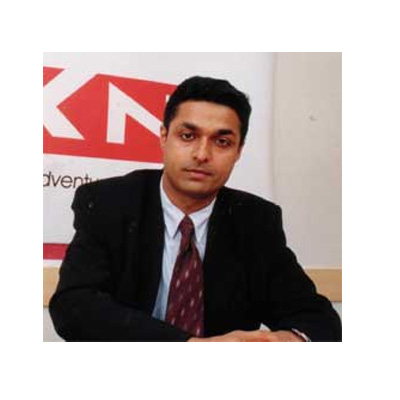
  • ‘The more local digital advertising gets, the more effective it will be:’ Amagi co-founder KA Srinivasan

    ‘The more local digital advertising gets, the more effective it will be:’ Amagi co-founder KA Srinivasan

    In this era of digitisation, the advertisement ecosystem has taken a big leap with digital advertising entering the fray. There was a time when people used to read advertisements, and then with the advent of television came visual ads, which could only be shared by word of mouth. Now with access to internet, ads can be read, seen and shared with help of just one device.


    With brands choosing the digital platform to announce launches of new products with help of email marketing, search engine marketing mobile and web marketing, have now given ads a new dimension to reach people. Digital advertising has broken the limitation of time slot for ads and has increased reach by leaps and bounds.


    Amagi co-founder KA Srinvasan spoke to  Indiantelevision.com about geo-targeted marketing, brands shifting towards digital marketing and much more.


    Excerpts:


    Many channels are tying up with Amagi for geo targeting. Property Now from Times Network is one of them. Do you think split broadcasting will be the way forward?


    Hyper local advertising will be the future of broadcast and television; in general it is going to be more geo targeted. Customised content created as per consumer’s preference is going to have a lot of impact. With the concept of geo generic mass content, as content becomes more local, the ad’s visibility for viewers will increase. Nowadays, content is created based on country, city and regional level not just in India but across the globe. The original goal for over-the-top (OTT) in digital world is to personalise lifestyle and provide content depending on consumer’s interest, preferences and their past watching behavior.


    What do you think will define the new era of effective advertisement?


    The change that we have observed is the more local advertisements get, the more effective it will become. Many of our advertisers are targeting specific local audience. It is effective from both advertising and communications perspective. Viewers will identify the product and advertisers will have a much better brand name at regional levels. From a content owner’s perspective, more advertisers will be able to reach out and from a broadcaster’s perspective, the future is all about getting local in terms of content.


    Now after installation of your technology in multiple system operators’ (MSO) headend, how do you plan to seize digital?


    Keeping that in mind, we launched a product called Thunderstorm, which allows television content owners and television networks to provide personalised advertising in the digital space. Our customers will be able to deliver their content over mobiles, tablet, and television screens and on web. However, there is one problem with monetising the content as the ads, which are telecast on television and which go on the sites are the same. The same goes with handsets. Everyone is watching the same ad on mobile but it is not giving any revenue. We have built a platform that allows advertising networks to have completely different advertising depending on the targeted audience and geographical area.


    Is Amagi focusing more on the digital space now?


    We are enabling content on advertising for television and helping local network owners to ‘hyper local’ the ad content. As content viewing shifts more towards digital, we are trying to bring the product in a more personalised way in digital. Our aim is to personalise and localise cable, television and digital.


    From many years the ten second ad slot has been ruling television and continues to do so. What more will the digital medium adapt?


    Today, the digital media is used as a distribution platform by television networks. What we are trying to do is, using the same content in different versions and using the digital platform for distribution of these ads. In terms of distribution, digital can do much better experimentation and inter-activity than what traditional television offers. Many advertisers are not only creating one commercial but creating multiple versions of it. On the digital platform, attention time span is going to be very limited as compared to traditional television. And because of this broadcasters and advertisers are experimenting. They are trying to create content, which can get the brand name in just five seconds, so that the user does not skip it.

    Digital allows fine grain targeting and that is the reason why we are able to do a lot more interesting stories. It is going to evolve and shift the platform from television to digital. We will then see more of digital specific content. 


    How many broadcasters do you have on board right now?


    We have around 20 plus broadcasters and multiple television channels across many countries. And at the end of this financial year we will have 40 plus channels. And many of them are from traditional satellite and television that are shifting towards the digital platform.


    You talked about the product Thunderstorm for creating personalising content for advertising. What are the new innovations that Amagi is currently focusing on?


    We have partnered with television networks to conceptualise content better. Geo targeting is focusing on satellite to help advertisers in creating personal advertising. We aim to eliminate satellite completely and move to digital where they can use closed bar internet technology. By using that platform, they can deliver their content in fraction of the cost to operators and consumers not only in India but around the world. Many big platforms are leveraging ahead from traditional television and satellite. We see rapid growth in terms of digital advertising in future.

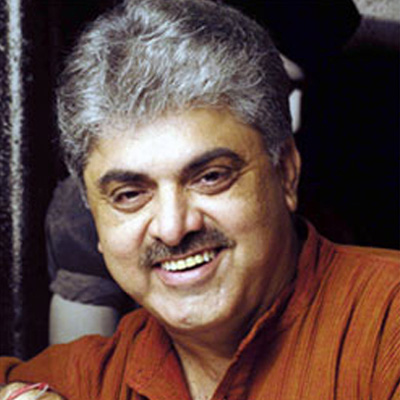
  • ‘Augmented reality will become a big part of the film marketing & promotions:’ Merzin Tavaria

    ‘Augmented reality will become a big part of the film marketing & promotions:’ Merzin Tavaria

    Anything is possible” is the powerful thought that Prime Focus co-founder & chief creative director Merzin Tavaria lives by. His colorful career, which spans over almost two decades took a different turn when he partnered with Prime Focus founder and CEO Namit Malhotra, and co-founders Prakash Kurup and Hufeza Lokhandwala to set up the digital solutions provider that brought about a creative revolution within Bollywood and the entertainment industry in India before moving on to become an international success.


    Tavaria has donned several roles through his journey with Prime Focus, though his biggest contribution to the company and to the world of entertainment remains as a creative leader. His ability to think out of the box allowed him to experiment with the technology was available two decades ago to push the boundaries of special effects on screen. He was instrumental in guiding Prime Focus through its many phases — starting from editing TVCs in a small garage in Mumbai to packaging for channels like MTV and Channel [V], to making India cinema more familiar with motion control technology… the list goes on. Today Prime Focus is a key provider of visual effects and digital conversion solutions globally.


    Their work on film projects like Gravity, Guzarish, Ghajini, Avatar and Blue speak highly of the quality and handwork that Prime Focus puts in them, and there is no question about Tavaria’s role as a creative genius in their success. 


    In a free wheeling conversation with Indiantelevision.com’s Papri Das, Tavaria speaks on recent projects, the ever changing landscape of technology as well as on the emerging trends in VFX in India and Hollywood.


    Excerpts:


    Take us through Prime Focus’ journey and how the company became an international name?


    The big change that happened in the usage of visual effects in Indian cinema was in 2006. From 50 to 100 shots per film, we jumped to 1500 shots. VFX became a part of the entire film making process rather than coming in only during post production. However when recession hit in 2008, the entire progress that we had made till then, came to a stand still. With budget cuts, visual effects dropped low on filmmakers’ priority list. That’s when we started our foray into the international market and things started looking bright for us as a digital solutions provider. We were proud to be part of Avatar in 2008, and by 2010, we had established our market abroad.


    The year 2010 saw us introducing the concept of conversion, from 2D to 3D and that opened up a myriad of new opportunities for us. Before that movies were shot in 3D but after Avatar, filmmakers in Hollywood wanted to explore conversions.


    What are the current international trends in visual effects?


    3D is pretty big internationally and it is going hand in hand with virtual reality. That would be the next big thing. Augmented reality too is picking up pace, not just in movies but in many other different arenas. Augmented reality combined with virtual reality can work wonders for films. It was a phase that came in a few years back and quietened down but I think augmented reality is going to make a huge come back as we have seen it emerging in a big way this year.


    Virtual reality will push the budget of the films up by quite a few notches as well as it’s a new medium that needs to be explored. That said, augmented reality will become a big part of the film marketing and promotions, and bring it into your house, in malls or just outside theatres. It will add another way to engage the consumers and so the entire landscape needs to be changed to prepare for its wide range of applications.


    What new is happening with 3D in Indian cinema?


    Unfortunately, emerging trends in 3D are mostly global. Nothing interesting is really happening in the Indian landscape. I feel bad about that because there is so much we can explore with 3D and filmmakers must realise that it’s not just about releasing movies in the 3D format. 3D is a very immersive experience and some of our action films can greatly benefit from it wherein viewers can become part of the whole experience. I don’t see that happening in India soon but I hope the situation changes.


    What is the current demand for VFX in Indian cinema? 


    India has always been a try and test market, before going forward. We have seen a big change in the last two years when it comes to demand, specially in mainstream blockbusters like Bang BangKick and even recently released films like Bajrangi Bhaijaan and Phantom. All these movies have started using technology in a big way. Brothers is another big example where without the use of visual effects, the movie would not have been what it is. Technology played a huge part in the production and narrative process. The crowd that is seen in the film was not just about crowd multiplication but crowd stimulation, which was done through Computer Graphics (CG). It was a big project for us to use VFX at that scale and volume.


    How far behind is Indian cinema from its international counterparts? Are you happy with the kind of budgets Indian films set aside for VFX?


    It is unfair to compare the two because one is an Indian audience and the other is global. When you are making films for a global audience, your opportunity and footprint is much wider so the final revenue cannot be compared to that of India. 


    However, I feel that we need to do a bit of rationalisation and work on how producers locate their resources including VFX within their available budget. We are working with certain filmmakers and producers to create awareness for visual effects and the many ways that they can use it to enhance their films. They also need to budget for visual effects upfront rather than at the end, so there are no hidden surprises as far as cost is concerned.


    On the brighter side, filmmakers are starting to acknowledge the role VFX that plays in a film’s success. For example, scenes that were supposed to be shot in Shimla in Bang Bang, were actually shot in Delhi. It would have taken a huge hit on the film’s budget to shoot the entire thing in Shimla. The complete landscape had to be changed to make Delhi look like Shimla. We had to place mountains and rivers and the entire terrain needed to be changed. There was definitely a monetary benefit in it for the film’s producers.


    What are types of VFX that are popularly being used in India now?


    Right now whats popular is embedding VFX in scenes, specially to enhance action sequences. We are also seeing demand for the type of technology that we used for Brothers


    In general, there are two primary ways in which VFX is used in films. One would be the ‘in your face’ visual effects that we are so used to seeing in sci-fi and superhero movies. The other, which is increasingly becoming more popular in India, is visual effects blended in the narrative to enhance the entire look and feel of the film.


    The reason why we don’t see the other type more often is simply because we are not making too many films like AvengersIron Man, or Gravity here. Of course, when films like Ra.One or Krrish are made, we do use in-your-face VFX. But those films are rare and come out after long intervals unlike in Hollywood. If you take their summer line-up for 2015, there were multiple VFX and CG heavy films like Ant Man, Jurrasic World, Avengers and Transformers amongst many others. India is more into action and dramas.


    Why do you think India shies away from producing movies like Ant Man or Jurassic World? Do you think India picking up?


    It’s an evolution that needs to happen. Hats off to Rakesh Roshan, who reinvented himself to do projects like that. We need more pioneering people like him in the industry to actually attempt that type of filmmaking. We also need the right kind of script that supports such visual effects. It can’t be forced into a script, which has no room for such effects.


    We have enough super hero characters in our mythology, which haven’t really used to their potential. Baahubali would be a good example, and those films need to be taken seriously going forward. We haven’t been able to cash in on that yet but there is scope for sure. It takes investment of money and time, and the minute you short circuit that, the outcome isn’t that good. Filmmakers immediate knee jerk into thinking that those type of films don’t work, when in reality you need more patience for the formula to work. It just takes someone to do that.


    Why do you think Indian cinema are obsessed with mythology? Why don’t we make enough sci-fi films?


    Writers need to think big and make a story that is fit for sci-fi like visual effects. It starts with storytelling without which you can’t move forward in that direction. With mythology, they have a ready script and a story, which has worked for ages and their characters are ready as well. Our filmmakers like the tried and tested formula route and shy away from experimenting. We often hear people saying that India doesn’t have the technology to do so, which is wrong. If we had a ready script that allowed us to use special effects in a more futuristic way, we would absolutely love to do that for India. If we can do it for the rest of the world, why can’t we do it for India?


    Can you see VFX playing a role in Indian television?


    Visual effects plays a big role in television globally. I am not happy with its use in India though. There is so much more that producers can do with it. It requires the same seriousness, which they give to producing a show in general. Once we get used to a certain quality and see that it has worked, we often don’t want to put in an effort to upgrade.


    Visual effects and CG on international television has grown by leaps and bounds as compared to India. There are so many TV shows that cater to the super hero genre and sci-fi, like Star Trek. India isn’t looking at those kind of projects and therefore there is no opportunity to bring in such technologies to television here. Additionally, the narrative of technology is also limited because of the kind of stories we consume on television, if you consider just fiction.


    Tell us about Prime Focus’ new production facility in Mumbai?


    That is the part of our whole expansion measure. Through out last year we have been consolidating our visual effects team with Double Negative in London, which is one the leading studios in the world. Everything from Terminator to Avengers have done by Double Negative. The idea has always been to do some of that high end work and bring that to India. The merger deal we did with film city also brought up this property that we aim on redoing for launching this studio. We will be using Double Negatives technology and experience of years on the bigger Hollywood projects


    Which movies according to you have made good use of visual effects?


    There are quite a few that have caught my eye and it is always a learning experience to see our others use VFX. Transformers, for example, is a beautiful movie and use of CGs is completely mind blowing. Michael Bay is a an amazing story teller and he has done a good job with VFX too. Then there’s the new Star Trek that comes out as well as the new Avengers. They just keep surprising you with new ways to use visual effects. The icing on the cake was Dawn Of The Planet of Apes, which brings reality so close to you that you forget after five minutes into the movie that the characters are all created in CG.


    What are the upcoming projects that Prime Focus is working on?


    We are working on quite a few projects both here and internationally. However, I can’t name some of them due to non disclosure agreements.


    We completed working on Mission Impossible 5 and we should be working on Snow White and the Hunstmen Part II as well as on Inferno, which is the part three of The Da Vinci Code.


    In India, we have a whole line up of releases, one of them being the Shahid Kapur and Alia Bhatt starrer Shandaar. We also worked on the recently released Katti Batti and Hero. There are many more to come.

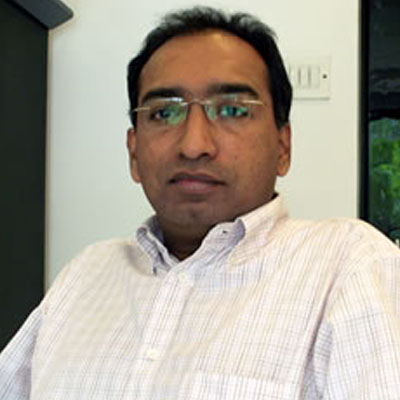
  • “India programming is the key growth pillar of our content strategy:” Rahul Johri

    “India programming is the key growth pillar of our content strategy:” Rahul Johri

    Completing twenty years of operations in India this year is Discovery Channel and it can be safely said that since its launch in 1995, the network has not only grown in terms of the number of channels but also in terms of producing original content.


    Helming it for the past 13 years is Discovery Networks Asia-Pacific South Asia senior vice president & general manager Rahul Johri. In his decade plus stint, Johri built a robust portfolio of 11 brands in the South Asia region including Discovery Channel, Animal Planet, TLC, ID-Investigation Discovery, Discovery Kids, Discovery Science, Discovery Turbo, Discovery HD World, TLC HD World, Animal Planet HD World and Discovery Tamil. Moreover, he is also credited with generating revenue, affiliate partnerships, viewership growth, content creation, government relations and talent management.


    In conversation with Indiantelevision.com’s Seema Singh, Johri throws light on the network’s journey in India so far and more.


    Excerpts:


    How has the network’s 20 years journey been in India? From setting up operations to getting in viewership, what were the challenges that the network faced?


    It’s been a fantastic journey for Discovery in India. We have presented and engaged the viewers with new brands and compelling content over the years. We expanded penetration in the country with our localisation strategy.


    We have brought in an eclectic programming mix across networks that have the right blend of Indian and international content. We have consistently presented India themes that can travel the world and international themes relevant to India.


    Throughout the last 20 years in India, Discovery Channel has demonstrated its commitment to satiate the curiosity of viewers by showcasing them some of the most fascinating stories from the past, current and future; breathtaking locations across geographies, continents and universe; and astonishing and most passionate personalities from across the world.


    What have been the high points of this 20 year journey?


    The last 20 years have been quite a fascinating journey for us. Discovery pioneered factual entertainment in India with the launch of Discovery Channel in 1995 and introduced a refreshing new wave of programming and completely changed the viewer’s expectations from television. 


    One of the high points has been the encouraging feedback from the viewers on our content. The success of our languaging strategy was immensely satisfying as it brought the viewer in every corner of the country closer to the Discovery world.


    Having unmatched access to produce shows of remarkable stature like Rashtrapati Bhavan, National Defence Academy in India and present them to Indian audience and around the world is extremely gratifying.


    And of course the expansion of our portfolio into 11 unique content channels catering to distinct viewer segments is a testimony of the value our brand offers and the trust it enjoys among its core audience.


    What was the thought behind launching these 11 different channels? Are there any new channel launches in the pipeline?


    We have expanded our portfolio three times over the last five years. Each channel launch was aimed to offer new and distinct entertainment experience to the Indian viewers. We expanded the definition of factual entertainment by launching Animal Planet in 1998, which presented wildlife programming.


    When we launched India’s first international lifestyle channel – TLC, viewers announced their liking for it almost overnight. It was a strong inflection point for the burgeoning Indian television market. The entire industry, including the advertisers and affiliate, took note of the refreshing content and what it meant to viewers.


    The aspirational, well-travelled and globally active Indian viewer demanded more unique content, 24-hours 365 days a year. Therefore, we launched two successful media brands from our global portfolio– Discovery Turbo and Discovery Science in 2010.


    We brought in premium viewing experience with the finest HD portfolio in the country with the launch of three HD channels – Discovery HD World, Animal Planet HD World and TLC HD World.


    We entered the Hindi entertainment genre with the launch of India’s first Hindi entertainment channel dedicated to true stories of mystery, investigation and suspense – ID.


    Filling in the gap for meaningful entertainment we launched Discovery Kids delivering smart fun programming to millions of kids in India.


    We are committed to the Indian market and will continue to present the best brands, content and finest viewing experience to India.


    What is the current viewership of the network in general and Discovery Channel in particular? What are the steps being taken to improve these numbers?


    The network has grown to a total of 11 channels, reaching 267 million cumulative households. We will continue to invest in content, communication and availability across all our networks. 


    The JV with MSM to distribute its channels has now ended. What is the plan now? Has the distribution team started working on the deals?


    Discovery has the finest team and with the addition of the affiliate team, we are a formidable strength and fully geared to capitalise existing opportunities and create new growth avenues.


    Our success depends on the power of our brands and we continue to offer maximum value to our partners.


    What is the content strategy for the network going forward? How many hours of content would we see getting added to the network by this year end and how many of these would be Indian productions? Can you elaborate on the content strategy for each of the channel in the network?


    The content strategy of the network is to deliver high-quality and differentiated programming that satiates the curiosity of the viewers. We will continue to make a difference, ignite minds and entertain viewers.


    Discovery globally spends over a billion dollars on content every year and Indian audience, similar to other markets around the world, get access to this content through the various networks present in the country.


    In India, Discovery Networks launches the maximum variety of programmes in the industry. India programming is the key growth pillar of our content strategy. We started with Indian Rendezvous as the first India series back in 2002. We went on to present path-breaking India shows ranging from exclusive accesses such as Revealed: World’s Biggest ElectionsLine of Control, Humayun’s Tomb, Living with KKRand many more.


    Continuing to offer the widest repertoire of programmes, we launch more than 300 high-quality programmes every quarter catering to the interests, passions and demands of children, youth, women, men and families. We strengthened our India content slate with an unprecedented 100 original hours in the last two years bringing unique stories, pristine subjects, and exclusive accesses.


    How has advertisers’ interest grown towards the network’s properties?


    We are fortunate that advertisers find value on our platforms. We continue to enjoy advertisers’ confidence and respect. We have strived very hard to offer distinct audience segments for different product categories. We have one of the largest client portfolios on our network. As the leader of factual entertainment in India, we believe we are in a good space.


    From when the network entered the market to this day, what’s your take on subscription revenues in the country for a network like DNAP? With digitisation in Phase I and II cities, has the condition improved? Do you see the subscription revenues going up with phase III and IV getting digitised by 2016?


    Digitisation is a change agent in this country. We are absolutely delighted that it is bringing positive results for the viewer and for other stakeholders including the broadcasters.  


    We believe that the networks that are investing in their content and differentiating their brands will continue to reap benefits.


    After 20 years… how do you now plan to take the journey forward? What are the future plans?


    Our vision moving forward is based on a few key principles. They are:

    – Maintaining leadership across genres

    – Maximising viewership

    – Building on the strength of Discovery kids and establish ID as a “must watch” channel

    – Continue to produce path-breaking India content

    – Continue to innovate and deliver value to advertisers

    – Relentlessly explore new opportunities of growth


    How do you plan to stay ahead of competition in the genre?


    Our network of channels enjoys strong brand equity and viewership across the country amongst viewers, affiliate and advertisers alike. What differentiates Discovery is its ability to respond to change and innovate in line with the current and emerging viewer trends. From early adoption of new technologies, creating viewer-delighting content and building winning partnerships; we have set multiple industry benchmarks.


    If you reflect on Discovery’s track record of last 20 years, we have been ahead of the curve in anticipating trends that match the needs of the viewer. Be it launching the lifestyle channel TLC to being the first high-definition channel available in the country with Discovery HD World. We have offered viewers remarkable and never-seen-before content in innovative formats, delightful themes and finest personalities.

  • “India Today TV has become a very strong alternative to the noise that dominated news television:” Ashish Bagga

    “India Today TV has become a very strong alternative to the noise that dominated news television:” Ashish Bagga

    May 2015 marked the re-branding of the English news channel Headlines Today as India Today Television. The group cited research conducted by the group, which showed higher brand recall value for India Today than Headlines Today as the reason for the name change. The change immediately showed results as it saw India Today Television toppling market leader Times Now to claim position as the leading English news channel in terms of viewership according to BARC ratings in the first week of its re-launch. 

    The journey from there on has been a good one for the channel as it has maintained the number two rank on the ratings chart. The challenge now is to take it to the top and sustain the pole position.   

    In an interview to Indiantelevision.com’s Seema Singh, India Today group CEO Ashish Bagga talks about the journey so far and the plans ahead.

    Excerpts:

    It has been seven weeks since the channel revamped to India Today TV. How has the response been?

    Of late, the English news television genre was dominated and characterised by loud debates with little being added to viewers’ usable knowledge. The last seven weeks have witnessed a starkly different product with a clear vision to take forward the 40 year legacy of the India Today brand.

    The launch has been amongst the most successful media launches in recent times with the channel showing considerable growth from the launch week itself as per BARC ratings. A lot of the success of the new channel can be credited to the brand strength of India Today along with the new content strategy, dynamic visual format and robust marketing that added to the increased popularity of the channel. The success of the launch has been very promising especially as the channel is built on the same ‘Gold Standard’ of journalism of the India Today brand. This clearly underlines that the brand extension was the right decision and the product has become a very strong alternative to the noise that dominated news television.

    What was the channel’s positioning in the ratings chart before the revamp? What is the percentage hike in viewership that you have witnessed after revamping?

    On a comparative level with Headlines Today, the average weekly market share for a four week period since the launch of India Today Television has increased from 11 per cent to 23 per cent. (four weeks average of last available data from TAM Week 10 to Week 13, CS 25+ M AB Top 6 Metros and post launch four week ratings as per BARC Week 21 to Week 24, CS 22+ M NCCS AB Top 6 Metros: Table below).

    The launch of India Today Television showed the highest growth, of almost 110 per cent in market share over Headlines Today, while most other channels showed negative movement during the same period.

    This positive growth clearly establishes the acceptance of the India Today brand among news viewers.

    How has the revamp helped the channel in attaining the number two rank? What were the changes that were made in the channel, that worked in favour?

    India Today Television was launched on a philosophy of keeping the India Today ethos of journalism at the core, while being relevant to the evolved news audience. This philosophy called for a paradigm change in TV news delivery formats to make the channel the definitive knowledge source. The most radical change was in the form of a pioneering visual format, which integrates digital interactivity and makes it possible for multiple news updates simultaneously on the screen. The digitally inspired screen with innovative elements like the roller deck has redefined the news viewing experience on television.

    The immense pull of the India Today brand along with a renewed content strategy designed to be a knowledge source had the viewership of the channel grow from the launch week itself.

    Has there been a shift in the positioning and target audience of the channel post the revamp due to which it has started gaining eyeballs?

    The content strategy is built on the principle to be the ‘fact factory’ as against an ‘outrage factory.’ Therefore the new positioning builds on the ethos of the India Today mega brand and goes after the viewer that seeks knowledge as against entertainment. The channel is engineered to cater to the viewer’s intelligence and to specifically appeal to a progressive audience that is seamlessly consuming news across platforms.

    The focussed promotions around the launch of the channel saw a lot of additional viewers who were drawn to the channel due to its distinct offering. 

    What is your strategy now to ensure that you move to the top position or maintain the current position?

    India Today Television is slated to become the No. 1 English News channel backed with a journalism that builds on the values that have defined news in the country for around four decades. The convergence has created synergy of content that will see the launch of a series of new shows. In addition, a lot of thought leadership event properties are lined up that are sure to provide the channel with unrivalled content. We will continue with focussed marketing for the brand to keep it ahead in preference.

    Though the growth in ratings has been very encouraging, our focus will be to make India Today TV a knowledge source by staying true to the same principles of journalism that had kept the magazine brand an undisputed leader. 

    How much of a role has distribution played in the numbers that the channel has achieved?

    It was a tactical booster made to facilitate and give the new brand enough sampling. This intervention seems to have done its job.

    What has been the response from advertisers?

    The consistent ratings of the channel from the launch week itself has created a steady increase in advertising. We are targeting shorter commercial breaks and increased premium. The value that the channel provides to advertisers has led to an increase in advertising and premium has definitely grown manifold for marquee shows led by Rajdeep Sardesai, Karan Thapar and Rahul Kanwal.

    What is the channel’s perception on BARC ratings and measurement mechanism?

    The channel’s focus towards excellence in journalism is clearly being reflected in the ratings. We are happy that the measurement system by BARC provides a robust and scientific measurement tool for viewership trends. We had in fact used the BARC system very effectively to build on the launch media plan.

  • “If OTT players offer a unique proposition, all of them can co-exist:” Debashish Ghosh

    “If OTT players offer a unique proposition, all of them can co-exist:” Debashish Ghosh

    ditto TV – India’s first OTT venture owned by media mogul Subhash Chandra – is all set to thrust forward in the space with a strong focus on innovation and fresh content. The OTT player has launched its international operations and will soon have content from across the globe. 


    In conversation with Indiantelevision.com’s Anirban Roy Choudhury, ditto TV CEO Debashish Ghosh shares his vision and thoughts on the emerging OTT market in India. Prepared to take on international players entering the market, he says that Zee Entertainment Enterprises does not believe in loss making business propositions. Every business under the conglomerate is financially independent. The emerging market not only has the potential to grow rapidly but also offers ample scope for innovation.


    Excerpts:


    Is India ready for OTT platforms? How is the market shaping up?


    The Indian market is surely getting ready for OTT. The only challenge that Indian OTT players face is that of bandwidth. The cost of data be it mobile or cable is high. For an average Indian to shell out Rs 2000 individually to have internet on their mobile is still a challenge. Yes, things are improving and it’s but natural that penetration will increase. Statistically, we are going over the US when it comes to penetration of the Internet.


    We at ditto TV are cognizant of the bandwidth condition in the country from the very beginning. Hence, we are not a platform that only works on 3G or Wi-Fi. ditto TV also works on 2G, WAP as well as on feature phones. The OTT market in India is growing and has great growth opportunity. The infrastructure will get better and data will become cheaper as we go along. The growth of OTT will also be interconnected with the new set of consumers that are coming in. Anybody born post 1990s and is above 25 years old doesn’t really watch TV today. They watch all their content on the digital platform.


    Which revenue model will sustain in the long run for OTT players in India and which model will ditto TV follow?


    I don’t believe any one model will work. It has to be a hybrid scenario. Advertising revenue for at least next three – five years is not the proposition that will be sufficient to offset the cost, so if the business strategy is to incur huge losses then going with the advertising platform is okay. We don’t believe in such loss making propositions. We believe in that whatever business we do, must pay for itself and that’s the reason why we follow the subscription model. I think we are one of the two players, who follow a subscription revenue model. World over the subscription based revenue model is something that’s proven to be sustainable and I don’t see that changing in India.


    What kind of advertising can OTT platforms offer? What is the advertiser’s overview on the platform?


    If today India is paying for TV that means they are paying for content. The way digital platforms have progressed in this country, creates a challenge. So far the advertising model was working but we all know that it’s stagnating now. Display advertising by its own nature isn’t attractive anymore on digital for brands. As digital is a measurable medium, people over the platform want to target a specific audience and hence the funda of mass roll-out does not work here. That’s why a proposition like native advertising is coming in and innovations like brand solutions, integrated marketing and most importantly proposition like highly targeted advertising will work. Now when a brand wants to advertise, they won’t say “I want ‘X’ GRP” or “‘X’ circulation of a medium,” but will instead say “I want to target 1 million Male, who are aged between 24-32 and are interested in sports.”


    BARC is scheduled to release data for all screens which will also include screens that OTT caters to. Do you feel we have enough data to provide brands with a platform for targeted advertising?


    Even if BARC provides data for all screens, it will still remain a sample based proposition.


    On the other hand, publishers today have the capacity to roll out empirical data. We can give empirical data of the number of people watching our content, how they are watching it, how much time they are spending and how many of them are coming back. Based on this data, we can target specifically. That infrastructure is a function of technology and technology exists today. There are many data management companies like Lotame and Bluberry, which are in play today. So it is possible to fulfil advertisers’ demand and those who can fulfil this will remain in play or get premium CPM for their inventory. The growth will come from targeted advertising. But I believe that India is a market where if the content is original, attractive and effective, people will pay for it.


    What’s your take on the current content on OTT platforms? What will be ditto TV’s content strategy and what kind of content is likely to work?


    Largely, OTT players today are going for pre-produced TV content, which is easily available. At the same time, brands, freelancers and MCNs are also creating a lot of original content. ditto TV has also invested in creating original content. We launched a music show, which is exclusively for digital and then we are also moving towards producing a whole lot of original shows in different genres like humor, horror, short series and short movies etc. This is sharable content that resonates with consumers, which is not necessarily long. 


    I believe that the debate between long and short show is a wrong one. Content is what is important. If the content has quality, short will also work. We can take example from Sujoy Ghosh’s Ahalya, which got more than two million views in three days. So if the content has quality, it will fly. We make so many long movies but how many do we actually remember at the end of the day?


    Do you think an ‘only original’ content strategy is monetarily sustainable at this stage?


    Creating content cannot be the only strategy. Producing content is also a strategy. One must have all sorts of content including original content. You cannot drive something only on the basis of original content. Let’s face the reality, TV content is still attractive and liked by the mass so there is no point in saying that we will only create original content and dump TV.


    Also if you create content, you have to find different ways of monetizing it and that’s where syndication comes in. If you are stuck to a particular model, it’s highly unlikely that you will recover money. Also, the more the content is watched, the more relevant it becomes. House of Cards, Game of Thrones and Orange Is The New Black are examples that we already seen.


    Do you feel post the 4G launch, there will be more mobile consumption?


    I am keenly waiting for 4G to roll out. But I believe that content will be consumed on both mobile as well as broadband devices. Expecting someone to watch content full day standing on one leg is a little too much as entertainment is not only about content quality but also experience. So group viewing will continue but at the same time when someone is travelling, instead of missing the content because they are in transit, they will watch it on mobile devices, which they wouldn’t be able to do if OTT wasn’t present. In my opinionm consumption is never a ‘or’ but is always an ‘and’ proposition.


    Do you feel that the launch of global OTT players Netflix and HOOQ can pose a threat to existing Indian OOT platforms?


    India is a very big market and there is scope for everybody to play, provided you are unique. Whether you are ditto TV, HOOQ, Netflix or Hotstar, your USP should be clear to the consumers. The consumer is fickle, so if these players bring in a unique proposition in terms of content and entertainment, all of them will reside simultaneously.


    However, in the long run, there will be players who will survive and those who will perish. The platform offering the best holistic experience will survive and hence OTT players will have to keep innovating and setting benchmarks.


    Was ditto TV’s new TVC with the tagline ‘Who watches TV alone?’ launched with the aim of taking a dig at Hotstar’s ‘Go Solo’ campaign?


    If you don’t go only by the last line, with this campaign what we are actually trying to convey is that television viewing is a collective experience. Initially when TV came to India, it used to be a community viewing. We all used to go to the neighbour’s place and watch Mahabharat. I believe that has not changed significantly because it’s entertainment at the end of the day.


    Entertainment is consumed with people one cares for and that’s what we wanted to communicate. In today’s world, where cultures are shifting, people are moving out of their families, nuclear families are mushrooming but relationships do not change. So if people have separated due to circumstances, they don’t need to change their habit of watching TV together. That’s why we showcased mother – daughter, fiancé, brother and sister as well as friends in our campaign. This campaign was executed after research and has nothing to do with Hotstar or its campaign.


    With the campaign, was the aim to reach a particular milestone in terms of downloads? What is ditto TV’s subscriber base at this stage?


    Downloads mean nothing to us. Ideally, download should mean nothing to everybody. It is just an eyewash. Being a subscription based platform, we analyse ourselves on the basis of the number of active subscribers we have and our target is always to enhance the subscriber base, not the downloads.


    We have 1.5 million monthly paid subscriber base out of which most of them are based in India. We have just launched our international operations and have around 20,000 international subscribers. We believe that international operations will play a big role in our growth in terms of monetisation. 


    What is the roadmap ahead for ditto TV?


    Our goal is to have a worldwide presence with a versatile range of content, which includes both regional as well as international content. We will keep innovating and offering people an exquisite experience. We will make subscription easy and have a wide range of packs, which will make people pay for what they want.


    A Bengali has no necessity of a South Indian pack and vice versa, so we will make sure that channels are not forced on to consumers. We allow users to download shows and watch them at their leisure. So overall, we will keep innovating and I believe that’s something that the OTT sector also needs to do non–stop.


  • “There is no creativity or innovation in the Marathi news channels’ space:” Nikhil Wagle

    “There is no creativity or innovation in the Marathi news channels’ space:” Nikhil Wagle

    At the age of 19 he became the editor-in-chief of a regional daily and today has journalism experience of more than 35 years. Besides being on top of each and every beat, he was keenly focused on investigative journalism. 


    In August 2004, he became a victim of aggressive Shiv Sena supporters who were irked by his belligerence and brave journalism. He is the inspiration for many igniting minds who are keen to peruse a career in journalism; he is none other than veteran Marathi pressman Nikhil Wagle.


    Speaking exclusively to Indiantelevision.com’s Sagar Shere, Wagle shares his vision on the Marathi news space, where he feels there is huge room for creative experimentation.


    Excerpts:


    How has your stint with Mi Marathi been so far? What was the reason behind choosing the channel when you switched from IBN Lokmat?


    It’s just been nine months since I joined Mi Marathi and I am not working full time here. I only do one show for them which is Point Blank. The reason behind switching from IBN Lokmat was that the entire IBN network was taken over by Mukesh Ambani. We had conflicts on policies and ideology with them. We worked under Rajdeep Sardesai as a team and resigned because we thought Ambani will not give us the freedom to work as a journalist. 


    I liked the policies of Mi Marathi and their ideation behind news so I thought of coming to Mi Marathi. 


    There has been a drastic growth in the Marathi news channel space. What do you think is the pulling point for audiences and what does the Marathi news channel genre needs to work on to get in more viewers?


    Marathi news channel is growing and it was always better than Hindi news channel on the basis of content. When IBN Lokmat and ABP Mazha were newly born, they infused young blood and were ready to experiment. However now they seem to have faced a setback. These days Marathi news channels have started following a set pattern for everything, be it for news gathering, news visualizing, programming or debate. There is no innovation in Marathi news space. 


    From your perspective, what are the changes that you have seen over the years in the genre? In terms of approach for news, do you think there is a different strategy that Marathi channels are adopting now? 


    We need more creativity, more ideas and more experimentation in Marathi news channels. We should infuse young blood so that we can experiment and create good content. We need to concentrate on investigative journalism. These days all news channels thrive on byte journalism and feature programmes. However the need of the hour is investigative journalism. Over the past seven years, news channels have turned stale. We need fresh outlook. Moreover, new perceptions and innovation is always accepted by the audience. 


    Do you think there is scope for more news channels in the Marathi space?


    There is ample scope for Marathi news channels because IBM Lokmat has gone down in TRP and advertising. There was competition between IBN Lokmat, ABP Mazha and Zee 24tass. However, over the last one year there is no competition between these news channels. Also there is no quality news gathering, quality of format and quality programmes.


    If there is no competition you lose the passion and that is what has happened with Marathi news channels. At this point in time, if someone tries to break the format and comes up with something new, it will be great and viewers will definitely like it.


    What is the target group for regional news channels?


    Target audience for Marathi regional channels are all Marathi speaking audiences. They cater to middle class, higher middle class, rural and urban audience. Everyone has a different taste and a news channel should look after all its target audiences but sometimes you don’t need to look for a TG because some stories are important for the nation news wise and at that time you don’t look for TG. Stories like farmers’ suicide, terrorist attacks and natural calamities are serious issues and you can’t look at the TG before showcasing them.

  • “Any channel that we launch in the future, will be successful in year one:” MK Anand

    “Any channel that we launch in the future, will be successful in year one:” MK Anand

    Heading the broadcasting expertise of a media conglomerate, which has been operating in India since 1838 is certainly a job of immense pressure. But there is someone who has been doing it with élan and that too at a time when every day gives birth to a new trend, every month, a new competitor enters and claims to be different. He is none other than Times Network CEO and MD MK Anand.


    Not long back, acknowledging the emergence of digital and new media, Anand spearheaded a staggering move in which the Times Television Network was transformed into Times Network. Despite having an English movie channel championing the ratings week after week, he marked the launch of another channel in the same genre, with a bigger and better philosophy. Under his leadership, various channels of the network secured pole position on numerous occasions in their respective genre. 


    Speaking exclusively to Indiantelevision.com’s Anirban Roy Choudhury, Anand shares his vision for the media industry especially the English entertainment industry and the road map ahead for Times Network. 


    Excerpts:


    Can you give an overview of Times Network’s news and entertainment channels and which segment is priority?


    Being in niche broadcasting, I believe all sectors need attention because it’s a highly competitive industry with some strong players. So innovation needs continuous attention. Our leadership position has been good in both English movies and news space. On the other hand, Zoom needed some specific product attention in the first quarter with reference to the re-launch, marketing etc.


    What next for the news sector? Property Now is launching soon and you already have Times Now and ET Now. Is there a Hindi news channel foray on the cards?


    Not really. I don’t think there is sense in it right now. The portfolio that we already have needs to be adequately and correctly monetized. I think there is headroom for both in subscription as well as ad sales, which we have seen in the past six quarters or so. We have been able to continuously move the needle on that and until we exhaust that, I don’t think there is sense in stretching and going into a different language all together.


    As of now, we are leaders and I feel we will be able to sustain this leadership in the top end category of the broadcast audience. There is a lot to be done there before we move into regional news etc.


    The network already had a English movie channel in Movies Now, what was the reason behind launching MN+? Was it to attract advertisers?


    I don’t think it is right to launch products for consumers because you have an advertising business opportunity. You launch products because you have consumer demand. So, the launch of Movies Now and now MN+ is to acknowledge the fact that with DAS Phase I and II and now as we go to Phase III and IV, the potential to launch more and more niche channels and to reach out to specific viewers is better and cheaper than it was with analog.


    Niche is the way to go. Niche is to acknowledge that specific groups in a large population and vast universe have different tastes. Movies Now is more descriptive as it caters to the whole English viewership but within that there is romance, action and slow movies sector. When you acknowledge the specific niches, you can come up with products like MN+. These channels come up because of niche recognition not because of advertising opportunities.


    What has been advertisers’ reaction so far to MN+?


    We are delighted with advertisers’ reaction. It is one of the channels, which has almost reached a maturity level in the shortest period of time.


    Speaking of the English entertainment genre as a whole, a few international channels have found it difficult to find a foothold in India. On the other hand, we have Colors Infinity and MN+ launching in the wake of the HD boom. What do you think is the need of the hour when it comes to English entertainment in India?


    The HD market is definitely growing. It is the natural progression of television viewing just like black and white went to colour, terrestrial went to cable and satellite. Similarly, HD technology is getting diffused and being adopted.


    The top of the pyramid is obviously the best place for advertisers to be, whether it is in print or television and therefore the returns on HD from an advertiser’s point of view will be much more than the other areas. HD is the future of all broadcasting. In fact, soon there’ll be someone launching a 4K channel and then 4K will be the future. So technological advancement per se will be the future of all broadcasting.


    English entertainment was mainly targeted at the metros at one point of time. Do you see the target group growing now given the fact that we are seeing growth everywhere?


    All this is happening because of digitisation. More channels per cable allows for better penetration. Secondly, in the past when TAM in its panel change introduced LC1, there was a rush to reach those markets.


    I think advertising optimized distribution and the way niche channels or networks distributed in the past is now gradually changing. One of the reasons why the base is expanding is because of digitization and the possibility that subscription revenues will eventually start flowing from consumers to cable operators in a more transparent manner and through MSOs and DTH operators to broadcasters. 


    Broadcasters know that in the next two to five years, subscription revenue will be a lot more transparent. From that point of view, it is a bet that we take and go to those markets.


    OTT player HOOQ armed with English entertainment content has entered the Indian market. With Netflix speculated to launch in India next year, do you think OTT services are a threat to traditional television model in a country like India?


    There will always be a huge base of Indian consumers who will be consuming English news, English entertainment, English GEC content. It could be through Netflix or it could be through Movies Now or MN+. The fact of the matter is that consumption is not going to go down.


    So if you’re asking me whether broadcasters should now stop investing in content because Netflix is coming in; I don’t think so.


    Just because a YouTube exists, does it mean that other apps are not going to survive or will get lost? These are all businesses, which have been built over the last ten years. You never know what’s going to happen in the next ten years. A Netflix equivalent or a bigger player may be coming out of India in the next ten years. However, that will happen only when Indian entrepreneurs – whether it is broadcasters or otherwise – play in that market with their own hands. So we won’t fade away because some competitor is coming into play.


    Do you think the time is right for India to create original English entertainment content? What is the scope for such content?


    That has already started with the infotainment segment whether it is travel or lifestyle type of content. There is a lot of stuff, which is made for India and can also travel across. However, creating entertainment content for Indian production companies will take some time and even if it happens, those will have wings to fly only when they are produced for the global market and not for the Indian market alone. The Indian market is not big enough for that as of now.


    Do you foresee digital overtaking television when it comes to news consumption? Or do they complement each other? Arnab Goswami recently said that by 2020, digital will probably overtake television. What is your viewpoint?


    In some sectors like news, yes, digital is likely to overtake television, but certainly not in all sectors. News will be travelling across multiple platforms.


    Brands like ZoOm and Times Now, which started on the broadcast medium, can now co-exist on the mobile platform with the emergence of the digital medium. I am not very sure if that will be the case with other genres. Maybe in the next elections, we will have a lot more apps giving competition to the broadcast platform. At the same time, television channels will also have a lot more viewership on apps. In the foreseeable future, both the platforms will complement each other and happily co-exist.


    What kind of push and emphasis is the network giving to the digital medium?


    We are ready to go full-fledge in terms of the launch of Times Now app. Video-on-demand (VOD) totally depends on Intellectual Property (IP) and we have some very strong IP in terms of Times Now’s News Hour and Frankly Speaking. However, to venture into VOD, we will need more IP. 


    Arnab is someone who every CEO would love to have in his team but do you sometimes feel that he is becoming bigger than the brand?


    (Laughs) That is like asking a production company if they were happy to have Johnny Depp or Salman Khan in their team. What I would say is that we are happiest to have him inside rather than outside. 


    Times Network recently promoted Arnab as the editor in chief of ET Now. What is the road ahead for ET Now and what role will Arnab play?


    ET Now has completed six years. The channel, in its first three and half years of existence, was able to challenge CNBC and become number one. The fact that we have been able to challenge CNBC is a big achievement.

    Getting numbers, viewership or reach is not what we want out of this market. ET Now’s challenge is something larger, which is to be appealing to a broader base than just the so-called ‘stock market players’ or ‘business viewers.’ And that is exactly where Arnab would be useful. 


    Can you throw some light on ZoOm’s positioning and the way forward?


    When we had launched ZoOm, music formed 80 per cent of the programming mix, whereas now that number has come down to 60 per cent. So 40 per cent of the channel’s programming is now content. Ideally, as we go forward, I see almost 65 per cent of the channel’s content comprising Bollywood trends, lifestyle and trivia. And viewers will be able to consume this content on the broadcast platform, as well as on platforms like digital and social media.


    Is the Indian media and entertainment industry moving towards more subscription and less ad revenue model? What is the scenario at Times Network?


    In the industry, we are already subscription positive. When it comes to Times Network, we are yet to shake off the burden of carriage fees and hence, we are still advertising led. Moreover, that is also because we don’t have a large channel, which at times is a handicap when it comes to distribution. 


    But yes, over the last two years, significant headway has been made. DTH operators and MSOs have started acknowledging the fact that we are a useful bunch to increase ARPUs. When it comes to the high-end consumers, you cannot have a distribution and subscription pack without including the Times Group channels. We have subsequently been able to use that to our advantage to improve our carriage versus subscription position. Our net income has improved. We are sure that it will continue to improve and we will get to a positive situation in a year or so and that’s big.


    Going forward what is the road map ahead for Times Network? Will there be any new launches?


    We would like to launch at least one or two channels every year complementing our catalogue. Property Now is a complement to ET Now, whereas MN+ complements Movies Now. So we will launch a new channel wherever we feel a need gap, which can be profitably filled.


    One thing I am sure of – both the channels that we have launched or any channel that we launch in the future, will be successful in year one.


    For the next couple of years, what we need to articulate is the fact that the sum is a lot more than individual parts. What I mean by this is, when you look at the holistic picture, we are talking to top two per cent of Indians. India’s population is 134 crore and India’s monthly English viewership is 2.6 crore, which is exactly two per cent of country’s population.


    On a regular basis, we are talking to 1.3 crore people, which means that we reach out to one per cent of India every day. However, when you look at that one per cent, it’s not just any one per cent. We are serving India’s most influential broadcast audience, and that is very important because that’s not just any audience. We are reaching to the decision makers. Last year, we managed to secure 30 per cent growth. My primary target is to secure 30 per cent CAGR for the next two years as that will take us to a very strong position as a network.


    What is your take on the digitisation progress so far?


    Given the size of the market, its ability to pay for boxes and the current state with reference to the mostly unorganized sector, DAS Phase I and II have really happened at commendable speed. Now we need to wait and watch the progress that takes place in the Phase III and IV. However, I am not very satisfied with the way Phase III has progressed.


    Has the new government addressed key issues bothering the media and entertainment industry? 


    I don’t think we are in a situation where things can be changed overnight. What we all are now looking at is Phase III and IV of digitization. The most important contribution I expect from the new government is to pace up the economy. If the pace is good, media will be good. Businesses like ours are very heavily advertising led and advertising follows the economy. As of right now, if we have done so well last year as well as this year until now, it’s because of the new government.


    What’s your take on BARC?


    I am very happy with BARC fundamentally because we have been able to hold on to our leadership. Moreover in the case of ET Now and Movies Now, our ratings have improved.


    Overall, the transition was smooth. And even though there have been some teething issues, I think things will get sorted in time. The management team and the technology are able and good.


  • “We are aiming to get digital users to switch to our OTT platform”: RC Venkateish

    “We are aiming to get digital users to switch to our OTT platform”: RC Venkateish

    At a time when digitization of cable television is throwing up a major challenge to direct-to-home (DTH) operators, Dish TV has reported a 55.2 per cent higher profit after at Rs 54.21 crore in the quarter ended 30 June. It is the first DTH company to report a profit after tax, also adding 390,000 subscribers, which was only slightly lower than the figure of 404,000 in the fourth quarter of 2014-15. Dish TV now has 13.3 million subscribers. The ARPU is more or less the same, but subscriber acquisition costs are running at Rs 1750 per subscriber.


    In an interview with Indiantelevision.com, Dish TV CEO RC Venkateish spoke of the work that had gone into achieving this success.


    Excerpts:


    To what do you attribute your success in reaching out to more subscribers and coming up with an impressive revenue figure?


    I feel that the credit goes to better marketing strategies and the youth-based Zing, which has been lapped up by the people because of the local content. In fact, Zing has also succeeded because there is greater emphasis on the language of the region where it is beamed with local content and programming.


    Can you throw some light on the plans to launch Zing in the Kerala market?


    Zing has been present in the Bengal, Tamil Nadu, Andhra Pradesh and Maharashtra. And we are now expanding and moving to Kerala with Malayalam content.


    Dish TV’s subscription figures are somewhat lower than those in the last quarter of 2014-15. Comment.


    Well, the effort is to consolidate and grow. Dish expects to add 1.5 to 1.7 million subscribers this year. Do not overlook the fact that last year we had got 332,000 subscribers in the same period (first quarter of 2014-15). The gradual shift to digitization will also help, and therefore the concentration at present is on Phase III and Phase IV.


    But the ARPU shows an increase of only one rupee over the previous quarter, ending up at Rs 173 a month.


    The ARPU is always typically low in the first quarter but picks up later.


    The Government is emphasizing on indigenous set top boxes. Are you installing local STBs for your subscribers?


    Dish is currently getting these mostly from Korea though every effort is being made to get good quality indigenous STBs.


    Dish TV also has a tie-up with Kolkata Knight Riders. How much of the budget goes into marketing and advertising?


    The players wear Dish TV armbands, and the tie-up gives us the opportunity to have in-stadia advertising through boards etc.


    I would not say budget, but around 3.5 per cent of the topline sales go into advertising and marketing. The advertising is not done merely through Zee’s own channels but also through other channels, digital platforms, hoardings, newspapers and FM channels.  


    Can you tell us something about your future plans?


    We are working on our over-the-top (OTT) platform – DishOnline and aiming to get digital subscribers on to this platform.


    There has been some tirade against local channels run by DTH operators. Comment.


    We do not have a local channel. But the channel that opens as one switches on Dish is aimed only at advertising various schemes of the platform and modes of payment.


  • “While we want films to be our anchor, we are equally excited about digital & TV:” Ajit Thakur

    “While we want films to be our anchor, we are equally excited about digital & TV:” Ajit Thakur

    From transitioning from Unilever in London to the Indian media space, Trinity Pictures CEO Ajit Thakur was lucky enough to get mentorship from two of the best minds in the media space – Ronnie Screwvala and Ekta Kapoor. Having learnt a lot from Screwvala in terms of business in media and from Kapoor, the madness of creativity, Thakur couldn’t have asked for a better learning ground.


    Since the time he came to India in 2007, he always wanted to make films, but then only landed up doing television stints with Sony and Life OK, which he found equally exciting.


    With a specific agenda on films that is to create his own label, he then finally got a platform in Eros International (with Trinity Pictures) to realise his dream.


    In conversation with Indiantelevision.com’s Disha Shah, Thakur speaks about his movie making passion, what Trinity Picture stands for, his journey from TV to films and more.


    Excerpts:


    What are the three core elements that you envisioned while launching the Trinity Pictures banner?


    Since the time I came back to India in 2007, I always wanted to make films. But when I came here I realised that all the platforms were equally exciting. Even after having moved to films, I still believe that television is as exciting a medium. But I had done two very good stints in TV with Sony and Life OK, so I thought it was time for me to do something in films now.


    My agenda was to be very specific – create a different studio and when I met Sunil Lulla and Kishore Lulla at Eros, they were both excited about it. Most importantly, they had the ideal platform for me to do what I wanted to do. So in February, Trinity Pictures was set-up as an in-house production house within Eros.


    There are three unique things about Trinity. Firstly, as a company we will focus only on developing franchises films because I believe focus gets you success. Keeping in mind Indian and global box office trends, there is space for franchise films. In India, as of June the top two films are returning films like Tanu Weds Manu Returns and Furious 7. While India is slowly waking up to the power of franchises, Hollywood has been tasting success with it for more than a decade. Even if we do come across a great script, which we can’t convert into a franchise, Trinity will pass it on to Eros. Our focus is very clear.


    Secondly, at Trinity we are not looking at ourselves as being just a film franchise studio. We will create franchises that can go across and beyond screens. It can happen that we develop a idea for digital, take it to TV and then to films. We are keen at making digital comics and character games for each franchise. One franchise might start with a comic and then become a film, while another might begin as a film and then hop on to the gaming platform. The possibilities are endless.


    Thirdly, we will be the first studio to have an in-house writers’ room. We are hiring 10-12 writers and three are already on-board through this unique open application that we have. We will have all these writers developing concepts and ideas for us in-house.


    From Yash Raj Films to UTV, many studios today have multiple film banners to cater to different genres. Why did Eros feel the need to launch a separate banner too?


    I think it is not about the need for a separate banner as much as about the fact that all these films could have been done under Eros. However, when I presented the idea to Kishore, he saw the merit in having a separate identity to these franchise films. So, while Eros stands for certain kind of big films across genres, Trinity will stand for big films within the franchise space. And moreover, I believe it sits in well as a strategic thing from a market’s promise that both the brands can grow.


    Eros is at the threshold of really aggressive growth in the next five years. It fits in the plan to have a second brand under it. More importantly, Trinity is not like the second label of other studios. Other studios use the second label to make small and alternative films; Trinity will cater to mainstream and big films.


    From TV to films, what were the initial challenges that you faced and how have you adapted to the new medium?


    There were no challenges, just opportunities. I am a curious person and for me it’s a process of evolution, so I don’t see them as challenges. Between Ronnie Screwvala and Ekta Kapoor, I couldn’t have asked for a better learning ground. My stints in broadcasting were also fantastic. I never thought I would do TV for so long but I did enjoy it a lot.


    At Sony, it was a great learning curve. It was a place where I really felt confident for the first time as we did Kaun Banega Crorepati and Crime Patrol and a lot of alternative shows. At Sony, we moved away from the saas-bahu sagas and experimented with alternative programming, which worked. I had great support from Man Jit Singh and NP Singh.


    Post Sony, Life OK was a dream job and I couldn’t have asked for more. From the foundations of Screwvala and Kapoor to witnessing growth as a person and professional, my Star India experience was fantastic. I haven’t seen a company with more talented people between Uday Shankar and Sanjay Gupta and all the colleagues I have worked with. I was learning everyday at Star.


    Life OK is like my baby, but more than Life OK, it is about just how much I learnt from the Star system. I couldn’t have asked for a better place to get to that level of confidence. And I believe it was great I did that and then jumped into films. I wish I had given more time to Channel V but my dream was to make films. I am now applying a lot of my learnings from there. Finally, it is about content and how you create it.


    Bollywood has a different set of dynamics and the only challenge has been to get to know big stars and directors and telling them that how somebody who has not made films before wants to make big films.


    What was the mandate that was given to you for launching this new banner? Walk us through your responsibilities at Eros.


    Eros is at a threshold of the next level in its journey. What we have charted out for the next three-five years is to become one of the leading global players in entertainment. Not just film entertainment, but also across digital, TV etc. Trinity Pictures fits in well with that plan for Eros to go to the next level. Eros’ top brass comprising Kishore, Sunil and Jyoti Deshpande believe that we can create four-five valuable franchises in films and beyond over the next three years.


    The second thing within that is to get the best talent to work with us directly. Traditionally, we have been following the acquisition model as well as producing our own films. Trinity will produce all of it in-house. The idea is to build relationship with talent because Trinity is a content production studio, which goes beyond just films. I am also helping develop content for Eros Now in space of original mini-series.


    How are you going to use all the different mediums? What is your strategy?


    The only difference between all the mediums is the target group that we are looking at. There is a certain target group that goes to theatres to watch films, a different group that watches digital content and a slightly different group that watches TV. More women drive television and more men drive films in terms of the demographic profile. That is the only thing I have to keep in mind.


    All we are looking for is good ideas and once the idea comes, we slot it for television, films or digital and then we will move it around. The main beauty of franchises is that it is platform agnostic. We can take the same franchise across mediums. The key point is where we want to start from and the target audience.


    Trinity is a multi-screen studio. Of course, we want to anchor ourselves in films but we are equally excited about digital and television.


    Give us an insight into the working of Trinity Pictures? What is the team structure like?


    It is a very small team. Till a month back, I was the only employee along with my assistant. We are taking time to find the right people. The aim is to have three teams comprising project managers, production heads and in-house writers. We already have on-board one of the top writers of Bollywood – Shridhar Raghavan, working with us as a consultant.


    As of now we have three full time writers. On 22 June, we are holding our first writer’s assessment workshop, wherein 250 applicants have evinced interest. Hopefully by next month, we should have 10 writers on-board. We are also looking at scouting for writers in Delhi and Kolkata.


    What is the potential that you see in building franchises in the Indian market?


    Significant. Like I said, this year the top two grossing films have been franchises. Look at Hollywood in the last one year, out of top 12 films, 10 films were franchises. Moreover, from 2008 onwards it has been the same. While franchises have tremendous potential, it needs a lot more development. It is almost like television where you build characters, even if the story gets over, people come in for characters and that is what franchises are about. You invest in characters and once when people fall in love with characters, they come for the next film.


    For example, Jurassic World has done the highest weekend ever in US. It is another returning franchise! The truth is all around this, but yes these are big films and you have to mount it well and get it right.


    What genres will Trinity Pictures be looking at to build movie franchise? How many films you have pitched to the management till now? When can we see first movie going on-floor?


    We are looking at full range of genres. We are looking at Superheroes, action – thrillers, spy and detectives, super natural horror, period and mythological as well as teens and kids. Within franchises, we want to explore everything.


    We have an agreement on eight projects and we will hopefully lock four by next month. We are hoping that a couple of these films to go on floors by September-October and we will definitely have two releases next year.


    Are Superhero films the best bet as far as franchises go or do other genres like comedy, thriller, horror have potential too?


    Making superhero films in India is difficult. I think, Hollywood has set a benchmark that we have to really find a right idea to be able to compete with them. If you make something like a pale replica, it won’t work.


    Will Trinity be making films that have a wider reach and appeal than just the Indian market?


    Yes. The franchises have the potential to reach out to the global audiences because they are universal themes and not just Indians. We are looking at all markets like UK, US and the Middle East for our films.


    Will you be looking at producing only Hindi films or is regional cinema also on the cards?


    At Trinity, we want to first focus on Hindi films and we might look at couple of English language films. However, regional cinema is part of Eros portfolio. We have a massive presence in South and we are expanding in Marathi and Bengali. Eros will continue doing a lot of regional cinema, while Trinity will focus on Hindi currently.


    Mythology as a genre has been working great guns on Indian television. However, as far as films go, Indian producers have so far failed to exploit the genre on the big screen. Will Trinity be looking at building on mythological films?


    I definitely relate to mythology and historicals, but obviously they have to be at a scale that is very different for TV for it to be worth being a film. I have a couple of subjects but I want to make sure that the right investments and right technicians are available to make it happen. Mythology in films has to be much bigger. Moreover, the average filmgoer is younger, so just mythology pitched like that won’t work. You will have to make it larger than life to pull in the younger audience.


    What is your target in the first year of operations?


    To have four films ready, make two films till next year and also make one very big franchise. For the four films, the story is done. We will be now be getting into screenplay writing. Over three years, we are aiming to have four-five big franchises across mediums and are also hoping to create a mini-series that completely changes the way content is seen for digital.


    What about the other talents like directors, actors?


    Like I mentioned earlier, that films is not the only criteria at Trinity Pictures. Having said that, we definitely want to work with established directors for our bigger films. At the same time, I am also very open to new directors and writers. However, some films will need experienced hands. The great thing is that all the directors I have spoken to, have been very excited about what Trinity wants to do in terms of franchises, having a writers’ room etc. We are in discussions and negotiations with a few directors.


    As far as actors go, we have not thought about it at the moment. Directors will finally decide on the actors. Our focus is to create good scripts and get good directors in.


    Is Trinity Pictures looking to exploit the film franchises for merchandising, animation etc?


    Absolutely. Like I said, gaming and comics will be a part of merchandising. We will also be looking at animation films but that will take some time. First, we want to get a couple of good films and franchises rolling… but everything will travel from one medium to another.


    What kind of budgets is Trinity Pictures looking at for making films?


    All kinds of budgets from Rs 5 crore to Rs 50 crore to even Rs 100 crore films.


  • “Under Arnab’s guidance, ET Now will innovate & redefine biz news genre:” MK Anand

    “Under Arnab’s guidance, ET Now will innovate & redefine biz news genre:” MK Anand

    Launched on 17 June, 2009 Times Group’s business news channel ET Now, has now completed six years in the Indian television industry. ET Now is the youngest player in the English business news space and faces firm competition from CNBC TV 18, NDTV Profit and UTV Bloomberg.

    On numerous occasions the channel has grabbed the pole position in terms of viewership. What’s more, as per the recent Broadcast Audience Research Council (BARC) India ratings it is placed in second place with 136 (000s) sum, while CNBC TV 18 holds the pole position with 154 (000s) sum.

    Times Network has been strongly promoting the business venture and in order to strengthen it further, the network has now given Arnab Goswami the additional responsibility of being its editor-in-chief. Speaking to Indiantelevision.com’s Anirban Roy Choudhury, Times Network CEO and managing director MK Anand shares the network’s plans and proposals for the future.

    Excerpts:

    How has ET Now’s journey been so far?

    It has been a splendid journey. In just three and a half years, ET Now had established itself as the No.1 business news channel of India, beating a global giant competitor and creating history of sorts. Recently, the BARC measurement system has re-validated our position as India’s Number 1 business news channel. ET Now was launched on 17 June, 2009 in a challenging economic environment, and practically rewrote the script for the genre.

    Over the years, the channel has not just gained its viewers’ trust but has also gone on to become the preferred choice of India Inc. and policy makers alike.

    What’s your take on the business news market? Do you see it growing?

    The business news market, like the Indian media market in general, is most definitely poised for strong growth. Despite recent volatility, we are in the middle of a structural bull run that could see a whole new set of viewers tuning into business channels like ET Now, for unbiased news coverage and analysis. We believe in re-imagining and creating new value with our products. If last year is any indication, our bet on the English audience and more specifically on the English news category will pay us handsomely. We see geometric growth in the medium term.

    What will be your strategy to stay ahead of competitors?

    ET Now has built its leadership on three key pillars – speed, integrity and expertise. We will continue to up the ante on all three pillars and further consolidate our leadership by reaching out to a wider catchment of viewers. Our distribution has already been scaled up substantially. We also have the best in class content team. The trick is to relentlessly be ahead on quality. We are confident to be able to do it.

    Over the years, what has been advertisers’ reaction towards the channel?

    Advertisers and brand owners have been extremely positive and encouraging; they have continuously reposed their confidence in us, for we cater to the audience that matters the most. ET Now continues to reach out to maximum viewers in the English business news category and we ensure our advertisers get the maximum ROI for their spends. Our ad growth is the best indicator of our advertiser confidence.

    How aggressively will Times Network push to promote ET Now?

    ET Now is an integral and important part of Times Network’s news portfolio. The recent clutter breaking consumer and trade engagements, never-seen-before budget campaign and the recent leadership drive, reinforces Times Network’s intent towards ET Now’s growth and success.

    Can you throw some light on the channel’s distribution numbers? How do you plan to improve it further?

    For ET Now, the focus earlier was only on metros. However, with digital addressable system (DAS) implementation in Phase II and the demand of the channel growing in markets beyond metros, ET Now’s penetration has increased to almost 100 per cent in all 1 Mn+ markets. We have also doubled the penetration in 0.1 to 1 Mn markets, in the last 10-12 months.

    With the impending DAS III & IV phases, the focus on LC1 has also increased for all broadcasters and likewise for ET Now, where language is no longer a barrier considering the kind of content it provides.

    With Arnab Goswami as the new editor-in-chief, will there be any change in programming?

    Arnab has been a champion of innovation in the general news genre. Under his guidance, ET Now will continue to innovate and redefine the business news genre. We have a winning team and a champion leader.

    What is the channel’s stand on the new rating body BARC? Do you see enough difference when compared to TAM?

    We are happy with the new measurement system. BARC is technologically advanced and is larger than the erstwhile base of meters by almost two-and-a-half times. An extended viewer base has certainly helped bring in more consumers into the analysed set and helped us improve our services to them and thus generate more value. With BARC, we have retained the No.1 spot across channels, and we continue to lead the broadcast space in the respective genre with a clear margin. Times Network’s ‘Now or Nothing’ philosophy, helps us sustain our leadership across genres with differentiated and hard hitting content and stay on top of the audience pyramid as always.

    As ET Now celebrates its sixth anniversary, will there be any special programming to celebrate the occasion?

    This is ET Now’s anniversary week and we thought we must delight our loyal viewers. So we have launched a ‘Built on Six’ contest, where in six lucky viewers have the chance to win an iPhone.

    On the programming front, we have a power packed line of shows and experts this week. Some of the most seasoned market experts like Vallabh Bhanshali and Ramesh Damani will be speaking exclusively to ET Now and sharing their insights on the market. We also have some exclusive interviews lined up with key ministers and govt officials. That’s not all, we also have a special show on 17 June (anniversary day) called Stocks and Stars, which will feature Bollywood superstar- Amitabh Bachchan.