Category: Executive Dossier

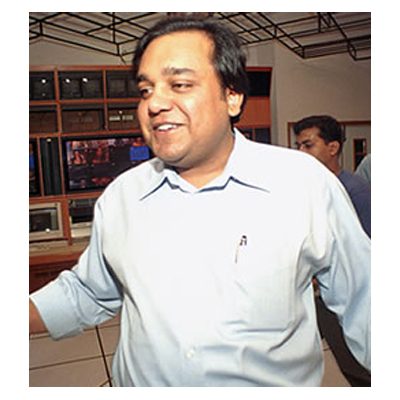
  • “Our aim is to get into the Top 5 this year”: Tarun Katial

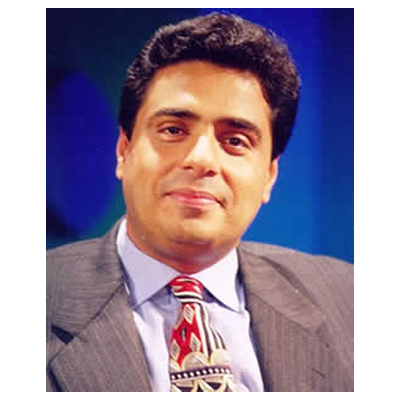
    “Our aim is to get into the Top 5 this year”: Tarun Katial

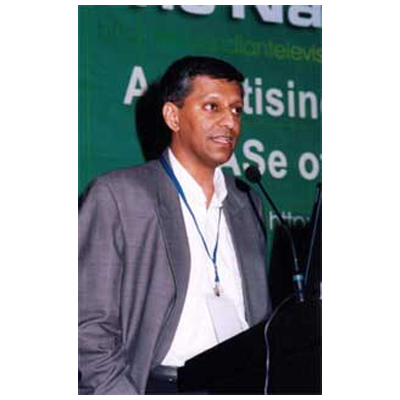
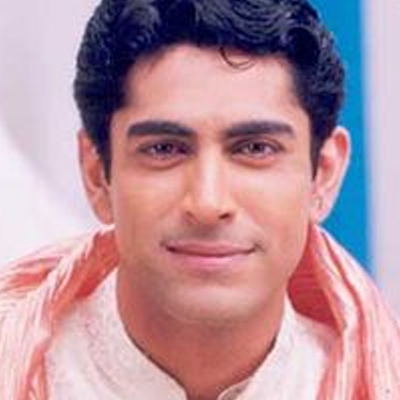
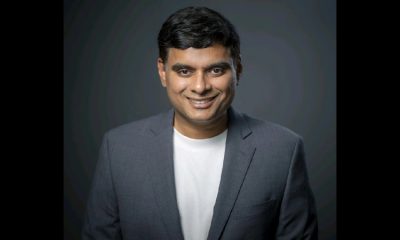
    Tarun Katial has many notable achievements to his credit. Among them: being one of a bunch of  advertising media professionals who  made an effective and successful transition to broadcasting. As programming head of Star Plus, he ensured that the network stayed on top of the viewership ratings in the last decade, before he shifted to Sony Entertainment (now SPN TV).

    But what has kept him busy over the last decade is radio, followed by TV, at the Anil Ambani group owned Reliance Broadcast Network Ltd (RBNL). As CEO he is responsible for the nationwide radio network under the 92.7 Big FM brand and two successful channels – Big Magic and Big Ganga. It is with the last two that he has disrupted the broadcasting ecosystem by building audiences for the two niche channels and making them profitable.

    Indiantelevision.com had a conversation with Katial who spoke about the selloff rumours, his radio journey, benefits of DAS Phase III and trends in television content.  

    Excerpts:

    These days whenever we read we read about the network, the one canard that comes up is the sell off of RBNL. Is there any truth in the entire rumour?

    We are a 10-year old brand and the journey has been very interesting. At this stage of our brand life cycle we look for opportunities to partner with different people. We have been in the process of exploration for sometime now but there isn’t anything definite about the option that we are exploring. Only time will tell where it goes.

    You are the one at the helm of a television channel as well as a radio network. Both are placed poles apart. As a professional, how do you manage the two roles?

    I draw motivation from my consumers and I think it’s an interesting time where consumer and media are concerned…where the content is concerned. We see ourselves as a platform, as a content rich company, and we look to evolve as a company which can stay ahead and map consumer trends as much and as far as possible. It is also hard but interesting as how can you differentiate yourself from everybody else in the market as there are some media companies which are doing excellent work and it becomes a very tiring task to be able to build a product which can actually stand out.

    And now you have been doing it since a decade? What are your key observations over this journey?

    I think consumers have incredibly changed. From time where we started feature phones or smart phones were way away. Apple, Blackberry were not even there to now where everything is smart. You can’t hope that a consumer will latch on to something unless you’re unique, you are value creating, you have a point view and you have place in his daily life and media consumption habits. Until you are cutting edge, sharply focussed and you stand for something you cannot make progress.  

    Do you think the art of storytelling has also changed over the years when it comes to radio?

    We have really evolved as a network and it has taken a lot of time and effort in creating some of the content pillars we have. Yes, the art of storytelling is very rich now. Whatever you do it has to be in depth. If you look at some of our shows like Suhaana Safar with Annu Kapoor whether its Nayak with Sanjeev Srivastava or its Arth or our National breakfast show with Siddharth, each of our shows rely on a huge amount of research and consumer insights.

    Are you happy with the way the industry is evolving in terms of advertising?

    I think the advertising industry has discovered radio from the past three or four years. Every single activity is extremely active on radio. People have seen distinct convergence of their business through radio advertising today. If you look at the national category to local categories, FMCG (which is very number oriented and reach oriented) to the real estate business  – all have discovered radio as their advertising objective.  

    What now for BigFM?

    We are interested in more radio stations coming up. We are exploring how we are going to play them out. Whether we are going to come up with the  retro format in some cities or local format in many cities. So yes we are working on them. There are some interesting markets including Pune, Nagpur, Lucknow which is a very old radio market.

    As we spoke about phase III and now let’s shift our focus to the other phase III which is the DAS Phase III? Has it really happened? Do you see any difference?

    The court cases apart, cable TV digitization has been very, very encouraging. Whatever the remaining pockets will get covered sooner the later.  I think there has been certain amount of innovation from the DTH end. We have seen some very different packaging options coming from the DTH players to cater to the market. Pre-paid options, small ticket size packaging – entry level packaging has been introduced by all the DTH players which is encouraging. The other big encouraging thing is even a more consolidated push in the free-to-air and free dish market. The current FICCI estimates now put this at 30 million which probably will be double that of any other operator. Phase III pushed free TV deeper and our estimate is that  if FreeDish was to start doing regional entertainment, which now it has started to do, this could lead to very polarised Pay TV- free TV scenario. I envision there will be three buckets: one is cable in the main metros, secondly, it will be DTH largely national and then there will be free TV which will be again across metros, mini-metros and small towns.

    How much is the BARC rural roll out a factor behind the separate Pay TV and free TV markets?

    If you look at TAM numbers of free TV they were very encouraging. Some of the TAM estimates for urban on free dish were almost 50 million this year. FreeDish is not a rural phenomenon alone. Yes it has a lot of push in semi-urban areas but it has significant reach in metros, mini-metros and all sorts of strata. We have ourselves seen a 13 per cent reach increase in a city like Delhi.  

    If we go back to the discussion regarding Bhojpuri, is there a market only in Bihar and Jharkhand, or is it across India?

    So we have done lot of work with a large section of the Bhojpuri community across the country. If you look at Ganga’s number even in Mumbai, it is very high and strong. To everyone’s surprise Ganga can actually beat some of the local channels in Bombay. And the truth is there is a population of  Bhojpuri immigrants across the country today. There is Punjab, there is Gujarat, there is Bombay there is Kerala and there is Kolkata, you will see a lot of Bhojpuri speaking people and they are very language loyal wanting to consume entertainment and content in their own language.

    From a brand perspective have you seen advertisers getting on board with a national audience perspective or only those catering to Jharkhand and Bihar in Bhojpuri?

    Actually that depends on the advertiser’s objective, when they look for deep penetration in the market, they tend to influence Bihar and Jharkhand. When they are looking to get their messages nationwide, yes there is large spillover that they can benefit from, and they do benefit from. Initially brands spread the budget in regional then spread across the country.

    Be it Akbar Birbal, be it Chutki, be it Rasoi ki Rani, there is certain amount of differentiated programming. From where do you spark this programming strategy?

    The backend of our programming strategy is good people. We have a very good research team, research desk who actually snap in consumer trends. We entered the entry to television business late and we realized that it is very important for us to look into these trends and identify those which would help us stand apart from the large players. That’s why we tend to do things differently, we tend to do things remotely and we have been fortunate to have a lot of people around us and have been able to do good work.

    In terms of your team structure, are you in that perfect place you want to be?

    Yes, I think we are never perfect, imperfection is also beautiful.

    Has TV storytelling changed since the growth of digital?

    I think storytelling has always changed according to the target audiences we are talking to. There are three or four aspects. One, people love stories that are page-turners. So the level of hooks that you need in stories today are far more than you needed earlier.

    It’s an impatient audience at this time. You can’t hope to hold on to audiences with simple story telling any longer. So it’s very layered, it’s very fast-paced and it’s very hooky.

    When it comes to characters, there are two or three things to them. One thing, why people want realistic characters, is because that at some level they need to be inspirational for them. So it’s a mix of two other people they look for. In cinema you can get away with being realistic but in television you need to be slightly loud and over the top.   Increasingly viewers are looking for characters that they can relate to but also stand out.

    But the quality of storytelling has certainly improved, the quality of production has improved, so have production costs also gone up?

    I think production costs are steady…basically production cost has stayed flat. I think that’s not because of storytelling it is because of technology. Technology has really helped to bring production costs downward. Editing facilities have really helped. Linear and nonlinear facilities are easier and quicker. Standing infrastructure on sets and technology have helped put budget into better talent in writing, better talent in acting, direction and better costumes. Production cost has stayed flat but the composition of the production budget has changed.

    Is the equation of advertising revenue and production costs profitable at this stage without growing any numbers?

    Yeah, I think the margin is there, definitely profits are there. I think all the businesses today have become far more profitable than they used to. We broke even on Ganga much sooner than we thought. The cost mixes are much better than it used to.

    Since you have Big Magic and Big Ganga, one thing that we see on every channel now a days is Naagin, How far are you from a Nagin show in your channels?

    I don’t think we are looking to get to Naagin. A bunch of guys have done Naagin and they have done a wonderful job.

    Is it a trend that something gets successful and then everyone follows it?

    Yeah I think everybody does it all over the world. One horror show starts many follow, one crime show starts many others start to make them. It’s a trend. People do enough of the genre and consumers will see that what are its possible variants, then they move to the next one.

    Do you think somehow content is getting a little less progressive?

    I think content is getting more innovative and more lateral. People are thinking of different ways of storytelling. We have to put our imagination around this. You know if we were to call Nagin regressive then we should also call Vampire Diaries regressive but we watch Vampire Diaries then we don’t tend to call it regressive.

    All the sci-fi or supernatural that goes around in American television, we don’t tend to call it regressive because it comes from Hollywood.

    So you don’t agree to the fact that BARC data is somehow regulating what content can be watched?

    See BARC data has given a perspective as to what people want. Everybody is trying to deliver balanced content across demographics. Somebody might focus on metro somebody might be doing so on other towns. It depends on the strategy you are taking and then the advertisers will buy you accordingly.

    We spoke about your entire radio evolution that you have gone through. Are you happy with the way evolution is happening on TV? Yes on one side we are having HD discussion and 4k discussion. On the other hand nobody knows that consumer is going to pay for content as yet. So what is next with TV?

    I think we should stop thinking TV, and you need to start thinking content. I think as TV channels and broadcasters are building great content, they are also becoming content powerhouses. Whether you see what Star has done with Hotstar and Sony has done with SonyLiv or Zee has done with OZee, it’s not really about TV but it’s about content.

    I think as long as we can build content that appeals to consumers, that consumers want to consume, whether it is on time-shifted DVRs or it’s on DTH or it’s on FreeDish or on OTT platforms or apps it will work . Increasingly,  we are finding ways for monetizing these platforms.

    So, I don’t think that TV is going to go away or content is going to go away. The way uniquely TV broadcasters are structured in India that they are content companies rather than TV companies. We are largely by ourselves content companies. We commission content and run content on a made-for-hire basis. Soo TV companies in India are not going anywhere, They may be simple TV ventures or they could become video platforms or they could become multiplatform companies.

    Time is already out there, there is Voot, Hotstar, Sony Liv, oZee. We are working on one or two platforms. We are working on a separate audio platform. People will continue to consume our content in different forms and fashion, in different ways and we are going to continue to monetize that, which is not changing.

    Star has launched Hotstar, Viacom has launched Voot. What is your plan with digital?

    We are working with a couple of plans. There is definitely going to be an audio platform, on video we will most probably partner with couple of the current platforms. We are in the midst of conversations.

    Are you happy with entire OTT ecosystem? How it is progressing? Again we are giving content to all for free.

    I think that’s a customer acquisition strategy.  Most people do this at the beginning. Everybody spoke about how e-commerce is giving free discounts but you have to look at the ecosystem they have been able to create. They have been able to create a habit of people buying online and all predictions and projections are saying that this online marketplace system is going to go a long way.

    There is Amazon here. Alibaba is going to come. So yes there is an entry level cost and cost of customer acquisition that everybody goes through. As long as you can get the right mix of free vs subscription and get your customer acquisition threshold out there, you always have the opportunity to switch.

    I can tell you when we started Star in 1999, we were a free to air channel and for many years we didn’t have any conditional access system. We completed our first round of KBC and Kyuki and then we moved to conditional access and subscription came in and so on and so forth. The subscription ecosystem grew to what it has only the past 15 years.

    When  C&S started in India, it was a paid ecosystem but ecosystems develop themselves and over a period of time every model does find its feet. But you have to give customers a chance to get used to that ecosystem before you start to monetize it. You can’t say I will monetize it before the customer is even there.

    Has the TV habit been formed now that TV is celebrating now that 25 years of satellite TV in India?

    Yes subscription revenues have started rolling back to TV channels, And the numbers are pretty significant. If you look at any TV channel balance sheet, they have a significant amount of subscription revenue. It’s not small numbers, it may not be as much as they expected but it’s not small either.

    With Reliance Jio coming in, do you see the infrastructure getting better for OTT content?   

    Yes OTT platforms will thrive under Jio but what will thrive is content. There is no OTT content without good content. I think content, content makers, broadcasters like us who have content to be able to monetize and deliver them on various platforms will breathe easier.

    Future Plans?

    I think we have a lot to do. We have a serious distance to go with Big Magic. We will be the number 11 player in the GEC space. Our aim to get into the top 5-top 7 by this year for sure. So that’s a task and with Ganga we want to invest more in content and make it go international. There is a large Bhojpuri population across the world so that’s something now we are working upon.

    With radio we have 14 stations coming up. That’s more than a station a month. We are getting some India dark regions like the Northeast which we are extremely excited to discover. Indian media has not really penetrated into the Northeast.

    Has digital become one of the prime spending platforms?

    Yes, we do spend increasingly on digital but we also spend across platforms. One platform we don’t spend too much now is print because we have not seen any traction from it.
     

  • “Our aim is to get into the Top 5 this year”: Tarun Katial

    “Our aim is to get into the Top 5 this year”: Tarun Katial

    Tarun Katial has many notable achievements to his credit. Among them: being one of a bunch of  advertising media professionals who  made an effective and successful transition to broadcasting. As programming head of Star Plus, he ensured that the network stayed on top of the viewership ratings in the last decade, before he shifted to Sony Entertainment (now SPN TV).

    But what has kept him busy over the last decade is radio, followed by TV, at the Anil Ambani group owned Reliance Broadcast Network Ltd (RBNL). As CEO he is responsible for the nationwide radio network under the 92.7 Big FM brand and two successful channels – Big Magic and Big Ganga. It is with the last two that he has disrupted the broadcasting ecosystem by building audiences for the two niche channels and making them profitable.

    Indiantelevision.com had a conversation with Katial who spoke about the selloff rumours, his radio journey, benefits of DAS Phase III and trends in television content.  

    Excerpts:

    These days whenever we read we read about the network, the one canard that comes up is the sell off of RBNL. Is there any truth in the entire rumour?

    We are a 10-year old brand and the journey has been very interesting. At this stage of our brand life cycle we look for opportunities to partner with different people. We have been in the process of exploration for sometime now but there isn’t anything definite about the option that we are exploring. Only time will tell where it goes.

    You are the one at the helm of a television channel as well as a radio network. Both are placed poles apart. As a professional, how do you manage the two roles?

    I draw motivation from my consumers and I think it’s an interesting time where consumer and media are concerned…where the content is concerned. We see ourselves as a platform, as a content rich company, and we look to evolve as a company which can stay ahead and map consumer trends as much and as far as possible. It is also hard but interesting as how can you differentiate yourself from everybody else in the market as there are some media companies which are doing excellent work and it becomes a very tiring task to be able to build a product which can actually stand out.

    And now you have been doing it since a decade? What are your key observations over this journey?

    I think consumers have incredibly changed. From time where we started feature phones or smart phones were way away. Apple, Blackberry were not even there to now where everything is smart. You can’t hope that a consumer will latch on to something unless you’re unique, you are value creating, you have a point view and you have place in his daily life and media consumption habits. Until you are cutting edge, sharply focussed and you stand for something you cannot make progress.  

    Do you think the art of storytelling has also changed over the years when it comes to radio?

    We have really evolved as a network and it has taken a lot of time and effort in creating some of the content pillars we have. Yes, the art of storytelling is very rich now. Whatever you do it has to be in depth. If you look at some of our shows like Suhaana Safar with Annu Kapoor whether its Nayak with Sanjeev Srivastava or its Arth or our National breakfast show with Siddharth, each of our shows rely on a huge amount of research and consumer insights.

    Are you happy with the way the industry is evolving in terms of advertising?

    I think the advertising industry has discovered radio from the past three or four years. Every single activity is extremely active on radio. People have seen distinct convergence of their business through radio advertising today. If you look at the national category to local categories, FMCG (which is very number oriented and reach oriented) to the real estate business  – all have discovered radio as their advertising objective.  

    What now for BigFM?

    We are interested in more radio stations coming up. We are exploring how we are going to play them out. Whether we are going to come up with the  retro format in some cities or local format in many cities. So yes we are working on them. There are some interesting markets including Pune, Nagpur, Lucknow which is a very old radio market.

    As we spoke about phase III and now let’s shift our focus to the other phase III which is the DAS Phase III? Has it really happened? Do you see any difference?

    The court cases apart, cable TV digitization has been very, very encouraging. Whatever the remaining pockets will get covered sooner the later.  I think there has been certain amount of innovation from the DTH end. We have seen some very different packaging options coming from the DTH players to cater to the market. Pre-paid options, small ticket size packaging – entry level packaging has been introduced by all the DTH players which is encouraging. The other big encouraging thing is even a more consolidated push in the free-to-air and free dish market. The current FICCI estimates now put this at 30 million which probably will be double that of any other operator. Phase III pushed free TV deeper and our estimate is that  if FreeDish was to start doing regional entertainment, which now it has started to do, this could lead to very polarised Pay TV- free TV scenario. I envision there will be three buckets: one is cable in the main metros, secondly, it will be DTH largely national and then there will be free TV which will be again across metros, mini-metros and small towns.

    How much is the BARC rural roll out a factor behind the separate Pay TV and free TV markets?

    If you look at TAM numbers of free TV they were very encouraging. Some of the TAM estimates for urban on free dish were almost 50 million this year. FreeDish is not a rural phenomenon alone. Yes it has a lot of push in semi-urban areas but it has significant reach in metros, mini-metros and all sorts of strata. We have ourselves seen a 13 per cent reach increase in a city like Delhi.  

    If we go back to the discussion regarding Bhojpuri, is there a market only in Bihar and Jharkhand, or is it across India?

    So we have done lot of work with a large section of the Bhojpuri community across the country. If you look at Ganga’s number even in Mumbai, it is very high and strong. To everyone’s surprise Ganga can actually beat some of the local channels in Bombay. And the truth is there is a population of  Bhojpuri immigrants across the country today. There is Punjab, there is Gujarat, there is Bombay there is Kerala and there is Kolkata, you will see a lot of Bhojpuri speaking people and they are very language loyal wanting to consume entertainment and content in their own language.

    From a brand perspective have you seen advertisers getting on board with a national audience perspective or only those catering to Jharkhand and Bihar in Bhojpuri?

    Actually that depends on the advertiser’s objective, when they look for deep penetration in the market, they tend to influence Bihar and Jharkhand. When they are looking to get their messages nationwide, yes there is large spillover that they can benefit from, and they do benefit from. Initially brands spread the budget in regional then spread across the country.

    Be it Akbar Birbal, be it Chutki, be it Rasoi ki Rani, there is certain amount of differentiated programming. From where do you spark this programming strategy?

    The backend of our programming strategy is good people. We have a very good research team, research desk who actually snap in consumer trends. We entered the entry to television business late and we realized that it is very important for us to look into these trends and identify those which would help us stand apart from the large players. That’s why we tend to do things differently, we tend to do things remotely and we have been fortunate to have a lot of people around us and have been able to do good work.

    In terms of your team structure, are you in that perfect place you want to be?

    Yes, I think we are never perfect, imperfection is also beautiful.

    Has TV storytelling changed since the growth of digital?

    I think storytelling has always changed according to the target audiences we are talking to. There are three or four aspects. One, people love stories that are page-turners. So the level of hooks that you need in stories today are far more than you needed earlier.

    It’s an impatient audience at this time. You can’t hope to hold on to audiences with simple story telling any longer. So it’s very layered, it’s very fast-paced and it’s very hooky.

    When it comes to characters, there are two or three things to them. One thing, why people want realistic characters, is because that at some level they need to be inspirational for them. So it’s a mix of two other people they look for. In cinema you can get away with being realistic but in television you need to be slightly loud and over the top.   Increasingly viewers are looking for characters that they can relate to but also stand out.

    But the quality of storytelling has certainly improved, the quality of production has improved, so have production costs also gone up?

    I think production costs are steady…basically production cost has stayed flat. I think that’s not because of storytelling it is because of technology. Technology has really helped to bring production costs downward. Editing facilities have really helped. Linear and nonlinear facilities are easier and quicker. Standing infrastructure on sets and technology have helped put budget into better talent in writing, better talent in acting, direction and better costumes. Production cost has stayed flat but the composition of the production budget has changed.

    Is the equation of advertising revenue and production costs profitable at this stage without growing any numbers?

    Yeah, I think the margin is there, definitely profits are there. I think all the businesses today have become far more profitable than they used to. We broke even on Ganga much sooner than we thought. The cost mixes are much better than it used to.

    Since you have Big Magic and Big Ganga, one thing that we see on every channel now a days is Naagin, How far are you from a Nagin show in your channels?

    I don’t think we are looking to get to Naagin. A bunch of guys have done Naagin and they have done a wonderful job.

    Is it a trend that something gets successful and then everyone follows it?

    Yeah I think everybody does it all over the world. One horror show starts many follow, one crime show starts many others start to make them. It’s a trend. People do enough of the genre and consumers will see that what are its possible variants, then they move to the next one.

    Do you think somehow content is getting a little less progressive?

    I think content is getting more innovative and more lateral. People are thinking of different ways of storytelling. We have to put our imagination around this. You know if we were to call Nagin regressive then we should also call Vampire Diaries regressive but we watch Vampire Diaries then we don’t tend to call it regressive.

    All the sci-fi or supernatural that goes around in American television, we don’t tend to call it regressive because it comes from Hollywood.

    So you don’t agree to the fact that BARC data is somehow regulating what content can be watched?

    See BARC data has given a perspective as to what people want. Everybody is trying to deliver balanced content across demographics. Somebody might focus on metro somebody might be doing so on other towns. It depends on the strategy you are taking and then the advertisers will buy you accordingly.

    We spoke about your entire radio evolution that you have gone through. Are you happy with the way evolution is happening on TV? Yes on one side we are having HD discussion and 4k discussion. On the other hand nobody knows that consumer is going to pay for content as yet. So what is next with TV?

    I think we should stop thinking TV, and you need to start thinking content. I think as TV channels and broadcasters are building great content, they are also becoming content powerhouses. Whether you see what Star has done with Hotstar and Sony has done with SonyLiv or Zee has done with OZee, it’s not really about TV but it’s about content.

    I think as long as we can build content that appeals to consumers, that consumers want to consume, whether it is on time-shifted DVRs or it’s on DTH or it’s on FreeDish or on OTT platforms or apps it will work . Increasingly,  we are finding ways for monetizing these platforms.

    So, I don’t think that TV is going to go away or content is going to go away. The way uniquely TV broadcasters are structured in India that they are content companies rather than TV companies. We are largely by ourselves content companies. We commission content and run content on a made-for-hire basis. Soo TV companies in India are not going anywhere, They may be simple TV ventures or they could become video platforms or they could become multiplatform companies.

    Time is already out there, there is Voot, Hotstar, Sony Liv, oZee. We are working on one or two platforms. We are working on a separate audio platform. People will continue to consume our content in different forms and fashion, in different ways and we are going to continue to monetize that, which is not changing.

    Star has launched Hotstar, Viacom has launched Voot. What is your plan with digital?

    We are working with a couple of plans. There is definitely going to be an audio platform, on video we will most probably partner with couple of the current platforms. We are in the midst of conversations.

    Are you happy with entire OTT ecosystem? How it is progressing? Again we are giving content to all for free.

    I think that’s a customer acquisition strategy.  Most people do this at the beginning. Everybody spoke about how e-commerce is giving free discounts but you have to look at the ecosystem they have been able to create. They have been able to create a habit of people buying online and all predictions and projections are saying that this online marketplace system is going to go a long way.

    There is Amazon here. Alibaba is going to come. So yes there is an entry level cost and cost of customer acquisition that everybody goes through. As long as you can get the right mix of free vs subscription and get your customer acquisition threshold out there, you always have the opportunity to switch.

    I can tell you when we started Star in 1999, we were a free to air channel and for many years we didn’t have any conditional access system. We completed our first round of KBC and Kyuki and then we moved to conditional access and subscription came in and so on and so forth. The subscription ecosystem grew to what it has only the past 15 years.

    When  C&S started in India, it was a paid ecosystem but ecosystems develop themselves and over a period of time every model does find its feet. But you have to give customers a chance to get used to that ecosystem before you start to monetize it. You can’t say I will monetize it before the customer is even there.

    Has the TV habit been formed now that TV is celebrating now that 25 years of satellite TV in India?

    Yes subscription revenues have started rolling back to TV channels, And the numbers are pretty significant. If you look at any TV channel balance sheet, they have a significant amount of subscription revenue. It’s not small numbers, it may not be as much as they expected but it’s not small either.

    With Reliance Jio coming in, do you see the infrastructure getting better for OTT content?   

    Yes OTT platforms will thrive under Jio but what will thrive is content. There is no OTT content without good content. I think content, content makers, broadcasters like us who have content to be able to monetize and deliver them on various platforms will breathe easier.

    Future Plans?

    I think we have a lot to do. We have a serious distance to go with Big Magic. We will be the number 11 player in the GEC space. Our aim to get into the top 5-top 7 by this year for sure. So that’s a task and with Ganga we want to invest more in content and make it go international. There is a large Bhojpuri population across the world so that’s something now we are working upon.

    With radio we have 14 stations coming up. That’s more than a station a month. We are getting some India dark regions like the Northeast which we are extremely excited to discover. Indian media has not really penetrated into the Northeast.

    Has digital become one of the prime spending platforms?

    Yes, we do spend increasingly on digital but we also spend across platforms. One platform we don’t spend too much now is print because we have not seen any traction from it.
     

  • Prasar Bharati’s monopolistic-era mind-set has to change: CEO Jawhar Sircar

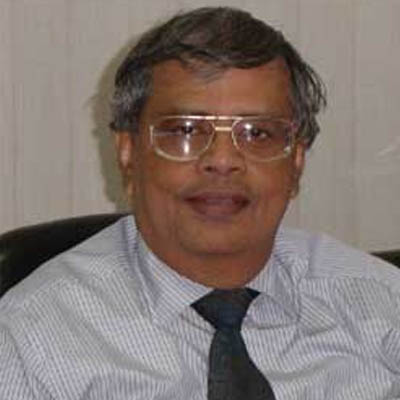
    Prasar Bharati’s monopolistic-era mind-set has to change: CEO Jawhar Sircar

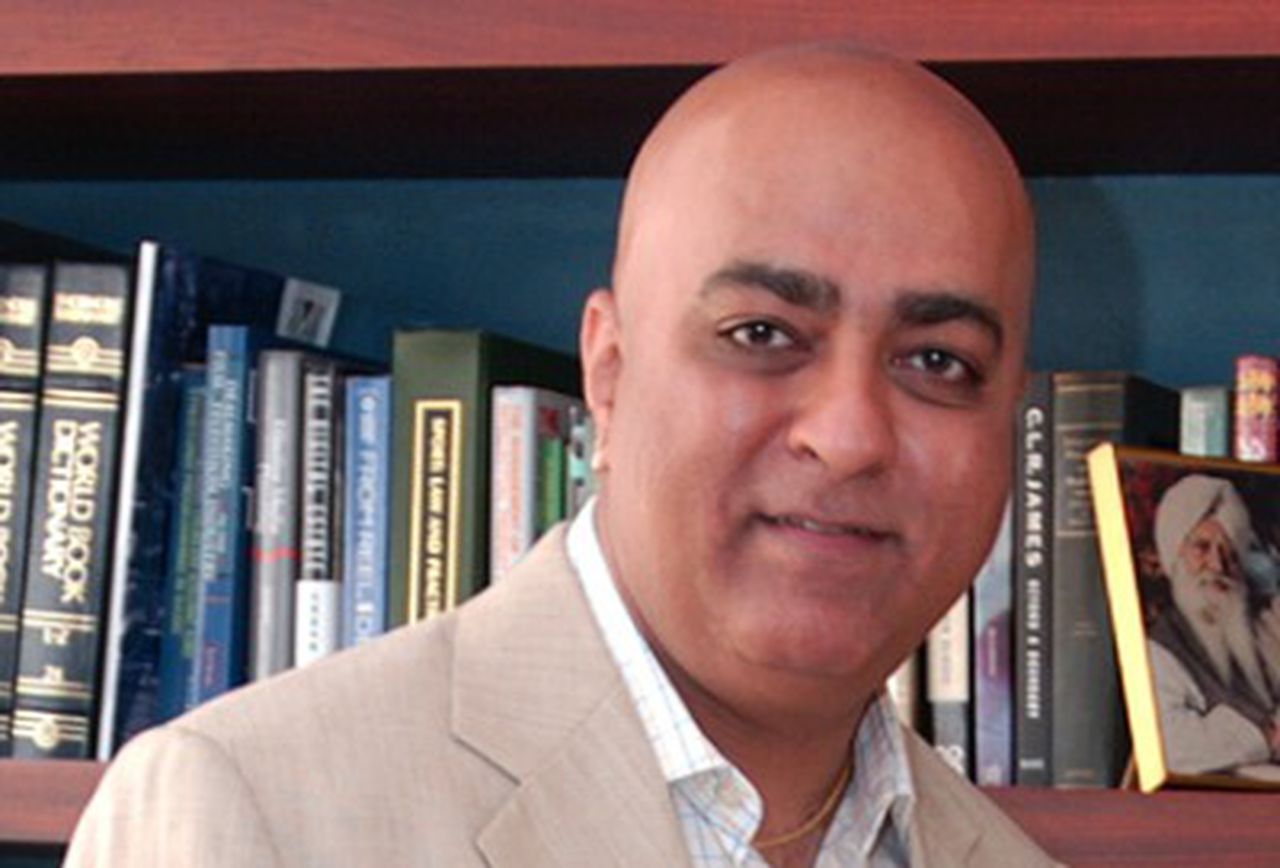
    Jawhar Sircar, the 60-something chief executive of India’s public broadcaster Prasar Bharati, is bubbling with ideas and energy —- in sharp contrast to the organisation’s headquarters that gives a casual visitor a sense of life in slo-mo.

    Prasar Bharati is the parent organisation of 57-year-old Doordarshan and 86-year-old All India Radio, the country’s public broadcasters who claim to cover almost the whole of this vast country stretching from Kashmir to Kanyakumari — and a little beyond to a few islands in the Indian Ocean.

    Critics say age and a semi-lethargic attitude of the over 40,000-strong workforce impede both the organisations from being nimble footed in an age when technology has vastly changed the speed and mode of delivery of video and voice. Add to these government controls (via annual funding from taxpayers’ money to bridge the gap between revenues and expenditure) and Prasar Bharati continues to function as a moribund government organisation despite an autonomous status.

    The chief executive of Prasar Bharati, who joined the organisation in 2012 after serving in the government for over 30 years, is not shy to admit that some fundamental problems stop it from being `India’s BBC’ or `India’s NHK’. He goes a step ahead to say (with tongue firmly in cheek) that functionaries of Prasar Bharati “are living in a time warp” — in a world of their own that could be a zillion years behind reality.

    Even if you give full marks to the tech and social media-savvy Sircar for being candid, it cannot be wished away that both DD and AIR will continue to be an extension of the government’s PR division unless there’s a radical change in the thought process of India’s ruling class and policy-makers.

    Sitting in his office, in New Delhi’s PTI Building, amidst files and colleagues, many of them keep trooping in and out for advise and suggestions, the multi-tasking Sircar, is completely at ease conversing with Indiantelevision.com’s consulting editors B B Nagpal and Anjan Mitra on a wide range of subjects. Edited excerpts from the interview:

    Q: What could be the five guiding principles that you have etched out for Prasar Bharati’s possible reform?

    JS: Having joined the organisation in 2012, I don’t have much time left now, but I am still trying to (a) bring about transparency (b) prioritise our objectives as a public broadcaster (c) get the organisation adjusted to competition (d) get the organisation to look at non-terrestrial and satellite-based transmission and (e) strengthen the FreeDish platform.

    Q: Do you think all of these could be achieved; especially as majority of Prasar Bharati workforce seems to still live in a pre-Independence era?

    JS: Sadly, the majority mindset is a big hurdle in moving forward in an era where technology is changing fast and competition (from private sector) reacts faster to changing situations and ground realities. Many of my colleagues still believe they are in a monopoly era when DD and AIR were the only source of entertainment and news for Indians. Such a mentality needs to change if we are to be in the race as a viable and relevant organisation.

    Moreover, I and the board of Prasar Bharati, have been functioning with inadequate human resources at senior levels too. There had been no Member-Finance for a long time and regular Director-Generals for DD and AIR are yet to be put in place.

    However, I also believe that with some change in mindset and additional revenue, which can accrue from infrastructure sharing with private sector players and better use of under-utilised existing infrastructure, Prasar Bharati can be more relevant as an organisation and to the Indian public.

    Q: Can you give an example of monopolistic era mindset that, probably, tries to be immune to technological advances?

    JS: (Smiles) During the first few years of my tenure nobody here understood what OTT (over the top) stood for and how it’s relevant to our services. Another example is that of adoption of MPEG-4 broadcast technology. It had been cleared one and a half years back, but procedural delays hampered quick adoption.

    Q: Now that we are talking about new technologies, what would your reaction be if digital terrestrial TV (DTT) is thrown open to private sector players by the government?

    JS:  Prasar Bharati approved DTT over a year back. We were told to come up with a plan but no base paper could be prepared as there was some resistance internally from certain quarters. And, Prasar Bharati is not afraid of private players’ entry into DTT… we are quite open to the idea. Rather we’d support any such move if the government some time allows private players in DTT.

    Q: What can Prasar Bharati gain by supporting private players’ entry in an arena that had been a monopoly of the pubcaster?

    JS: Changing with the times makes you relevant. Why should DTT be Prasar Bharati’s monopoly? By allowing others, Prasar Bharati can earn additional revenue as we can lease out our infrastructure to private players who, otherwise, would have to make huge investments in setting up infrastructure. Let a private sector (content) aggregator come forward with a business plan. DD, anyway, is investing on DTT infrastructure.

    Q: You earlier talked of bringing about transparency in Prasar Bharati. In what way do you feel the proposed e-auction system will be an improvement on the systems adopted until now to obtain content?

    JS: The proposed e-auction would be a completely transparent method and a step towards overall transparency in the organisation to acquire content for DD. It will also put the onus on the successful bidder to ensure good content.

    Q: But, before the current SFC system of self-financed commissioned programmes, DD had a system of sponsored programmes whereby good programmes where especially produced for DD. How is e-auction going to be an improvement over the sponsorship scheme?

    JS: That kind of system had led to monopolization… with a few big names dominating the entire prime time of the public broadcaster. Ultimately, the same big names from Bollywood made serials for Doordarshan and left little scope for fresh talent.

    In fact, I had initially faced internal resistance to the plan for e-auction of prime time slots too, and it took serious convincing on my part for the idea to sink in with others. DD has already announced that this is being done on an experimental basis and may be extended to its other channels if the scheme is accepted.

    I am confident that audience loyalty, national sentiment, and the vast reach of  Doordarshan would help to make the scheme a success.

    Q: You referred to giving a push to FreeDish, which is the country’s only free-to-air KU-band service. What are the plans and what would be the present subscriber base of FreeDish?

    JS: As the antennas are available in the market (at a nominal one-time price ranging between Rs 3,000-4,000) and no monthly subscription is paid, it is difficult to know how many television households have FreeDish. This audit will become easier when we complete the process of encryption of FreeDish while keeping it free to air.

    Exact figures may be difficult in our case as even the Telecom Regulatory Authority of India admits there is a gap between the number of active and registered subscribers of private DTH operators. But it is understood (from feedback from market and sale of antennas) that there are around 15 million households hooked to FreeDish.

    In recent times, FreeDish has got some very good response from private TV channels…many of them, including the big names, want to hop onto FreeDish’s platform for wider reach of their products. We have plans to increase the number of FTA television channels on the platform so a consumer gets more choice.

    Q: There were plans to upgrade FreeDish to MPEG 4 to increase its capacity to carry more signals. But there has been no report on the progress in this regard.

    JS: It is not possible to implement MPEG 4 and the new Indian Conditional Access System (iCAS) together at the same time. But the commitment of FreeDish is to reach the rural areas and also cover all the areas not reached so far by television.

    Q: After initial protests by Prasar Bharati, Broadcast Audience Research Council had begun to give rural data separately. Are you satisfied with the audience measurement system?

    JS: We at Prasar Bharati have had some issues with BARC, which we would prefer to raise directly with the organisation. But our understanding is that DD covers a large part of India via its terrestrial and satellite services.

    Q: Why is it that Prasar Bharati cannot function like BBC or other public service broadcasters in the world?

    JS: The move to greater professionalism is eventually bound to happen, but some hurdles have to be crossed including those relating to budgets.

    Public funding on the public broadcaster in India is just Rs 2,400 crore as compared to Rs 51,653 crore in Germany, Rs 39,800 crore in the United Kingdom, Rs 34,097 crore in Japan. The amount spent on Prasar Bharati was even lower than those spent on pubcasters in Canada, Australia, and Korea.

    The per capita funding in India on the pubcaster is only Rs 19 as compared to UK and Germany where it is approximately Rs 6,000 to Rs 7,000. Even Malaysia has a per capita funding of Rs 350.

    Q: What are the constraints on acquiring good content for Doordarshan? 

    JS: The expenditure on content in India is a mere six per cent as compared to 75 per cent by NHK in Japan and 71 per cent by the BBC.
     The Indian Government gives 62 per cent as compared to 100 per cent in Russia, 98.2 per cent in Malaysia, 97 per cent in Germany, and 83 per cent in the UK. So, this should answer your question.     

  • Prasar Bharati’s monopolistic-era mind-set has to change: CEO Jawhar Sircar

    Prasar Bharati’s monopolistic-era mind-set has to change: CEO Jawhar Sircar

    Jawhar Sircar, the 60-something chief executive of India’s public broadcaster Prasar Bharati, is bubbling with ideas and energy —- in sharp contrast to the organisation’s headquarters that gives a casual visitor a sense of life in slo-mo.

    Prasar Bharati is the parent organisation of 57-year-old Doordarshan and 86-year-old All India Radio, the country’s public broadcasters who claim to cover almost the whole of this vast country stretching from Kashmir to Kanyakumari — and a little beyond to a few islands in the Indian Ocean.

    Critics say age and a semi-lethargic attitude of the over 40,000-strong workforce impede both the organisations from being nimble footed in an age when technology has vastly changed the speed and mode of delivery of video and voice. Add to these government controls (via annual funding from taxpayers’ money to bridge the gap between revenues and expenditure) and Prasar Bharati continues to function as a moribund government organisation despite an autonomous status.

    The chief executive of Prasar Bharati, who joined the organisation in 2012 after serving in the government for over 30 years, is not shy to admit that some fundamental problems stop it from being `India’s BBC’ or `India’s NHK’. He goes a step ahead to say (with tongue firmly in cheek) that functionaries of Prasar Bharati “are living in a time warp” — in a world of their own that could be a zillion years behind reality.

    Even if you give full marks to the tech and social media-savvy Sircar for being candid, it cannot be wished away that both DD and AIR will continue to be an extension of the government’s PR division unless there’s a radical change in the thought process of India’s ruling class and policy-makers.

    Sitting in his office, in New Delhi’s PTI Building, amidst files and colleagues, many of them keep trooping in and out for advise and suggestions, the multi-tasking Sircar, is completely at ease conversing with Indiantelevision.com’s consulting editors B B Nagpal and Anjan Mitra on a wide range of subjects. Edited excerpts from the interview:

    Q: What could be the five guiding principles that you have etched out for Prasar Bharati’s possible reform?

    JS: Having joined the organisation in 2012, I don’t have much time left now, but I am still trying to (a) bring about transparency (b) prioritise our objectives as a public broadcaster (c) get the organisation adjusted to competition (d) get the organisation to look at non-terrestrial and satellite-based transmission and (e) strengthen the FreeDish platform.

    Q: Do you think all of these could be achieved; especially as majority of Prasar Bharati workforce seems to still live in a pre-Independence era?

    JS: Sadly, the majority mindset is a big hurdle in moving forward in an era where technology is changing fast and competition (from private sector) reacts faster to changing situations and ground realities. Many of my colleagues still believe they are in a monopoly era when DD and AIR were the only source of entertainment and news for Indians. Such a mentality needs to change if we are to be in the race as a viable and relevant organisation.

    Moreover, I and the board of Prasar Bharati, have been functioning with inadequate human resources at senior levels too. There had been no Member-Finance for a long time and regular Director-Generals for DD and AIR are yet to be put in place.

    However, I also believe that with some change in mindset and additional revenue, which can accrue from infrastructure sharing with private sector players and better use of under-utilised existing infrastructure, Prasar Bharati can be more relevant as an organisation and to the Indian public.

    Q: Can you give an example of monopolistic era mindset that, probably, tries to be immune to technological advances?

    JS: (Smiles) During the first few years of my tenure nobody here understood what OTT (over the top) stood for and how it’s relevant to our services. Another example is that of adoption of MPEG-4 broadcast technology. It had been cleared one and a half years back, but procedural delays hampered quick adoption.

    Q: Now that we are talking about new technologies, what would your reaction be if digital terrestrial TV (DTT) is thrown open to private sector players by the government?

    JS:  Prasar Bharati approved DTT over a year back. We were told to come up with a plan but no base paper could be prepared as there was some resistance internally from certain quarters. And, Prasar Bharati is not afraid of private players’ entry into DTT… we are quite open to the idea. Rather we’d support any such move if the government some time allows private players in DTT.

    Q: What can Prasar Bharati gain by supporting private players’ entry in an arena that had been a monopoly of the pubcaster?

    JS: Changing with the times makes you relevant. Why should DTT be Prasar Bharati’s monopoly? By allowing others, Prasar Bharati can earn additional revenue as we can lease out our infrastructure to private players who, otherwise, would have to make huge investments in setting up infrastructure. Let a private sector (content) aggregator come forward with a business plan. DD, anyway, is investing on DTT infrastructure.

    Q: You earlier talked of bringing about transparency in Prasar Bharati. In what way do you feel the proposed e-auction system will be an improvement on the systems adopted until now to obtain content?

    JS: The proposed e-auction would be a completely transparent method and a step towards overall transparency in the organisation to acquire content for DD. It will also put the onus on the successful bidder to ensure good content.

    Q: But, before the current SFC system of self-financed commissioned programmes, DD had a system of sponsored programmes whereby good programmes where especially produced for DD. How is e-auction going to be an improvement over the sponsorship scheme?

    JS: That kind of system had led to monopolization… with a few big names dominating the entire prime time of the public broadcaster. Ultimately, the same big names from Bollywood made serials for Doordarshan and left little scope for fresh talent.

    In fact, I had initially faced internal resistance to the plan for e-auction of prime time slots too, and it took serious convincing on my part for the idea to sink in with others. DD has already announced that this is being done on an experimental basis and may be extended to its other channels if the scheme is accepted.

    I am confident that audience loyalty, national sentiment, and the vast reach of  Doordarshan would help to make the scheme a success.

    Q: You referred to giving a push to FreeDish, which is the country’s only free-to-air KU-band service. What are the plans and what would be the present subscriber base of FreeDish?

    JS: As the antennas are available in the market (at a nominal one-time price ranging between Rs 3,000-4,000) and no monthly subscription is paid, it is difficult to know how many television households have FreeDish. This audit will become easier when we complete the process of encryption of FreeDish while keeping it free to air.

    Exact figures may be difficult in our case as even the Telecom Regulatory Authority of India admits there is a gap between the number of active and registered subscribers of private DTH operators. But it is understood (from feedback from market and sale of antennas) that there are around 15 million households hooked to FreeDish.

    In recent times, FreeDish has got some very good response from private TV channels…many of them, including the big names, want to hop onto FreeDish’s platform for wider reach of their products. We have plans to increase the number of FTA television channels on the platform so a consumer gets more choice.

    Q: There were plans to upgrade FreeDish to MPEG 4 to increase its capacity to carry more signals. But there has been no report on the progress in this regard.

    JS: It is not possible to implement MPEG 4 and the new Indian Conditional Access System (iCAS) together at the same time. But the commitment of FreeDish is to reach the rural areas and also cover all the areas not reached so far by television.

    Q: After initial protests by Prasar Bharati, Broadcast Audience Research Council had begun to give rural data separately. Are you satisfied with the audience measurement system?

    JS: We at Prasar Bharati have had some issues with BARC, which we would prefer to raise directly with the organisation. But our understanding is that DD covers a large part of India via its terrestrial and satellite services.

    Q: Why is it that Prasar Bharati cannot function like BBC or other public service broadcasters in the world?

    JS: The move to greater professionalism is eventually bound to happen, but some hurdles have to be crossed including those relating to budgets.

    Public funding on the public broadcaster in India is just Rs 2,400 crore as compared to Rs 51,653 crore in Germany, Rs 39,800 crore in the United Kingdom, Rs 34,097 crore in Japan. The amount spent on Prasar Bharati was even lower than those spent on pubcasters in Canada, Australia, and Korea.

    The per capita funding in India on the pubcaster is only Rs 19 as compared to UK and Germany where it is approximately Rs 6,000 to Rs 7,000. Even Malaysia has a per capita funding of Rs 350.

    Q: What are the constraints on acquiring good content for Doordarshan? 

    JS: The expenditure on content in India is a mere six per cent as compared to 75 per cent by NHK in Japan and 71 per cent by the BBC.
     The Indian Government gives 62 per cent as compared to 100 per cent in Russia, 98.2 per cent in Malaysia, 97 per cent in Germany, and 83 per cent in the UK. So, this should answer your question.     

  • Content IP ratio sharing depends on the risk appetites of the broadcaster and producer: Sumeet Hukamchand Mittal

    Content IP ratio sharing depends on the risk appetites of the broadcaster and producer: Sumeet Hukamchand Mittal

    MUMBAI: Two legendary creative talents from the Indian television and film industry, writer Shashi Mittal and writer and director Sumeet Hukamchand Mittal shared a vision to create content that leaves a lasting impact on the hearts and minds of their audience. Today their company, the Shashi Sumeet Group, is a leading name in the media and entertainment industry with Shashi Sumeet Productions Pvt. Ltd for creating content for television; Shashi Sumeet Motions Pictures Pvt. Ltd for films; Shashi Sumeet Innovations for television commercials; Qats Whiskers for brands; and online platforms.

    Started in 2009, Shashi Sumeet Productions is among the few production houses which have given some landmark shows to the television industry in India. With shows like Diya Aur Baati Hum, Punar Vivaah, Tumhari Paakhi and Tu Mera Hero the production house has set new benchmarks for content excellence in the industry.

    Shashi Sumeet Productions became the first production house to make the journey from ‘reel’ life to ‘real’ life in December 2015 at Pushkar by having a lane named ‘Hanuman Galli’ there. This was inspired by the lane of the same name in its television family drama Diya Aur Baati Hum. Further, the production house got recognition from the Limca Book of Records for having back -to – back shows on Indian general entertainment channels at prime time i.e. from 8pm – 10pm in the year 2015-2016.

    In conversation with Indiantelevision.com’s Sonam Saini, Sumeet Hukamchand Mittal founder director of Shashi Sumeet Group shares the journey of his production house and its plans of venturing into Hindi film making, intellectual property rights (IP) for content, among other things.

    Excerpts

    Q1. Shashi Sumeet Productions has produced 16 shows in 7 years. How has been the journey so far?

    Sumeet:  The journey has been wonderful. The production house is seven years old. So far the journey has been challenging and fulfilling as well. Whatever we have done until now has been done with passion and dedication. I believe that if one’s intentions are good, one will always be successful.  In todays’ scenario if we are touching hearts and not just ears and eyeballs then it’s a bog high point for us. 

    Q2. What according to you is the most challenging genre for television production?

    Sumeet: I would say there is no specific genre which is difficult for a producer. Rather it is holding the audience’s attention that is the most challenging thing. In today’s time there are so many options available, hence holding onto audience is the big thing. If an episode is weak then you might lose the audience. So quality content is necessary.  Every genre is working these days including adventure, horror, supernatural and comedy.  

    Q3, Diya Aur Baati Hum completed 1,300 episodes recently and now there are rumours that the show is going off air. Is there any truth in those rumours?

    Sumeet: I too have heard a lot about the show going off air.  But these are just rumours. Our story was very clear – it was about a girl Sandhya who wanted to become an IPS officer but was married into an orthodox family. But still she wanted to make her dreams come true.  In a way, the story line was very thin.

    So when Sandhya became an IPS officer, people thought now that her dream was over, the show would go off air. But Diya Aur Baati Hum is not going off air and I have confirmation from the channel’s side as well. May be the rumours were spread because the TRPs of the show had reduced.  We are working hard on script making new episodes.

    Q4. What was reason for pulling off shows like Tu Mera Hero and Badi Devrani?

    Sumeet: Badi Devrani was not doing well, Tu Mera Hero ended with high ratings in the range of about1.8. Today getting that number is very difficult for an average hit show.  

    Q4: After Balaji’s Naagin on Colors, it seems that the supernatural wave has hit television screens and is proving to be successful. Will we also see Shashi Sumeet Production producing such creative content?

    Sumeet: If any show or film works, duplication of its concept, ideas is bound to be there. We have seen that trend in the case of Diya Aur Baati and Punar Vivah. We have been talking about a supernatural show since quite a long time. Our drive is to create fantasy. Believe me, even we wrote a soap named Naagin which was on Zee TV.  We are still thinking on those lines and that is not just because Naagin is a hit show. We definitely have concepts that we are proposing to channels.

    Q5: We are seeing many production houses curating content for digital platforms. Will we see you also producing for them?

    Sumeet: Of course, we will produce content for the digital platforms!. We are working on it, but we are not in a hurry.

    Q6: What sets the Shashi Sumeet Group apart from the other content producers in the industry?

    Sumeet: The Shashi Sumeet Group by itself has an identity that sets it apart from other content production houses. We work with the one mantra that we want to create content for every platform. We didn’t want to restrict ourselves to daily soaps. We are making stories for brands. We might also do some fiction series with overseas partners. We are planning to go into movies. Quality content on different platforms is what we intend to create. At present we are working on two shows – one is a home grown show and other is a format show that we are producing here in India.

    Q7: What is your opinion on Intellectual Property staying with the channel? Do you think it should be remain with the production house?  

    Sumeet: I think it’s the biggest and the hottest topic of discussion in our country. Things are different here as compared to other countries. I doubt the scenario will change overnight, but I believe that IP can be shared between the channel and the production house on an immediate basis as they both share the risk. IP ratio can depend on the risk appetites of the broadcaster and producer.  We are looking at that very aggressively. We have signed one of our IP’s with a Brazilian producer, this is our own home grown IP, our own content.

    Q8: According to you, what is lacking in the television content production space in India? And how does Shashi Sumeet aim to fill that void?

    Sumeet: We always talk about differentiated content but we should genuinely try making different shows by putting an ‘x’ budget for a particular show.  We should be crisp and concise in storytelling.

    Q9: What are Shashi Sumeet Production’s plans going forward? What’s in store from your production house in 2016 in terms of fiction and non-fiction?

    Sumeet: We are focusing very much on content right now. One year down the line, our production house will come out with different shows. We have a few shows in the pipeline and we will soon announce our venture into Hindi movies. 

  • Content IP ratio sharing depends on the risk appetites of the broadcaster and producer: Sumeet Hukamchand Mittal

    Content IP ratio sharing depends on the risk appetites of the broadcaster and producer: Sumeet Hukamchand Mittal

    MUMBAI: Two legendary creative talents from the Indian television and film industry, writer Shashi Mittal and writer and director Sumeet Hukamchand Mittal shared a vision to create content that leaves a lasting impact on the hearts and minds of their audience. Today their company, the Shashi Sumeet Group, is a leading name in the media and entertainment industry with Shashi Sumeet Productions Pvt. Ltd for creating content for television; Shashi Sumeet Motions Pictures Pvt. Ltd for films; Shashi Sumeet Innovations for television commercials; Qats Whiskers for brands; and online platforms.

    Started in 2009, Shashi Sumeet Productions is among the few production houses which have given some landmark shows to the television industry in India. With shows like Diya Aur Baati Hum, Punar Vivaah, Tumhari Paakhi and Tu Mera Hero the production house has set new benchmarks for content excellence in the industry.

    Shashi Sumeet Productions became the first production house to make the journey from ‘reel’ life to ‘real’ life in December 2015 at Pushkar by having a lane named ‘Hanuman Galli’ there. This was inspired by the lane of the same name in its television family drama Diya Aur Baati Hum. Further, the production house got recognition from the Limca Book of Records for having back -to – back shows on Indian general entertainment channels at prime time i.e. from 8pm – 10pm in the year 2015-2016.

    In conversation with Indiantelevision.com’s Sonam Saini, Sumeet Hukamchand Mittal founder director of Shashi Sumeet Group shares the journey of his production house and its plans of venturing into Hindi film making, intellectual property rights (IP) for content, among other things.

    Excerpts

    Q1. Shashi Sumeet Productions has produced 16 shows in 7 years. How has been the journey so far?

    Sumeet:  The journey has been wonderful. The production house is seven years old. So far the journey has been challenging and fulfilling as well. Whatever we have done until now has been done with passion and dedication. I believe that if one’s intentions are good, one will always be successful.  In todays’ scenario if we are touching hearts and not just ears and eyeballs then it’s a bog high point for us. 

    Q2. What according to you is the most challenging genre for television production?

    Sumeet: I would say there is no specific genre which is difficult for a producer. Rather it is holding the audience’s attention that is the most challenging thing. In today’s time there are so many options available, hence holding onto audience is the big thing. If an episode is weak then you might lose the audience. So quality content is necessary.  Every genre is working these days including adventure, horror, supernatural and comedy.  

    Q3, Diya Aur Baati Hum completed 1,300 episodes recently and now there are rumours that the show is going off air. Is there any truth in those rumours?

    Sumeet: I too have heard a lot about the show going off air.  But these are just rumours. Our story was very clear – it was about a girl Sandhya who wanted to become an IPS officer but was married into an orthodox family. But still she wanted to make her dreams come true.  In a way, the story line was very thin.

    So when Sandhya became an IPS officer, people thought now that her dream was over, the show would go off air. But Diya Aur Baati Hum is not going off air and I have confirmation from the channel’s side as well. May be the rumours were spread because the TRPs of the show had reduced.  We are working hard on script making new episodes.

    Q4. What was reason for pulling off shows like Tu Mera Hero and Badi Devrani?

    Sumeet: Badi Devrani was not doing well, Tu Mera Hero ended with high ratings in the range of about1.8. Today getting that number is very difficult for an average hit show.  

    Q4: After Balaji’s Naagin on Colors, it seems that the supernatural wave has hit television screens and is proving to be successful. Will we also see Shashi Sumeet Production producing such creative content?

    Sumeet: If any show or film works, duplication of its concept, ideas is bound to be there. We have seen that trend in the case of Diya Aur Baati and Punar Vivah. We have been talking about a supernatural show since quite a long time. Our drive is to create fantasy. Believe me, even we wrote a soap named Naagin which was on Zee TV.  We are still thinking on those lines and that is not just because Naagin is a hit show. We definitely have concepts that we are proposing to channels.

    Q5: We are seeing many production houses curating content for digital platforms. Will we see you also producing for them?

    Sumeet: Of course, we will produce content for the digital platforms!. We are working on it, but we are not in a hurry.

    Q6: What sets the Shashi Sumeet Group apart from the other content producers in the industry?

    Sumeet: The Shashi Sumeet Group by itself has an identity that sets it apart from other content production houses. We work with the one mantra that we want to create content for every platform. We didn’t want to restrict ourselves to daily soaps. We are making stories for brands. We might also do some fiction series with overseas partners. We are planning to go into movies. Quality content on different platforms is what we intend to create. At present we are working on two shows – one is a home grown show and other is a format show that we are producing here in India.

    Q7: What is your opinion on Intellectual Property staying with the channel? Do you think it should be remain with the production house?  

    Sumeet: I think it’s the biggest and the hottest topic of discussion in our country. Things are different here as compared to other countries. I doubt the scenario will change overnight, but I believe that IP can be shared between the channel and the production house on an immediate basis as they both share the risk. IP ratio can depend on the risk appetites of the broadcaster and producer.  We are looking at that very aggressively. We have signed one of our IP’s with a Brazilian producer, this is our own home grown IP, our own content.

    Q8: According to you, what is lacking in the television content production space in India? And how does Shashi Sumeet aim to fill that void?

    Sumeet: We always talk about differentiated content but we should genuinely try making different shows by putting an ‘x’ budget for a particular show.  We should be crisp and concise in storytelling.

    Q9: What are Shashi Sumeet Production’s plans going forward? What’s in store from your production house in 2016 in terms of fiction and non-fiction?

    Sumeet: We are focusing very much on content right now. One year down the line, our production house will come out with different shows. We have a few shows in the pipeline and we will soon announce our venture into Hindi movies. 

  • OMD CEO Stephen Li on why agencies are struggling to retain talent

    OMD CEO Stephen Li on why agencies are struggling to retain talent

    MUMBAI:  Stephen Li’s takeover of OMD’s Asia Pacific business as the new CEO made several headlines in October last year, after former CEO Steve Blakeman relocated to London. After all, Li’s movement from MEC as the CEO for Asia Pacific after a happening 10 year stint in the company surprised many. In addition to launching the sports and entertainment partnership company MEC Access Asia Pacific, Li also handled MEC’s multinational clients in APAC, such as Chevron, Singapore Airlines and Citibank.

    At the same time anticipation grew over his upcoming new role in Omnicom Group’s subsidiary OMD, and his plans for the company in the India market, which is part of his mandate. With a keen eye for detail and a well-seasoned foresight in a new market, Li was the perfect fit to take on a challenging  and dynamic market like India.

    It’s been six months since he took over the role  and now at the edge of his ‘honeymoon period’ in India, Li reflects on the goals he set for himself and the company, the progress he has achieved and the emerging new challenges of working in a market like India.   

    In a candid chat with Indiantelevision.com’s Papri Das, Li shares his fears on becoming too complacent, his plans on upping the ante for the agency’s performance in 2016 and why it is a task to retain good talent within agencies these days.

    Excerpts:

    Q1. What were your initial goals for the India market when you took on the portfolio at OMD?

    Ans: My initial goal in India was to keep the motion going, not to stagnate the progress and keep innovating. From a business development perspective, I wanted to ensure that our global clients who are currently not working with us in India, become clients here as well.  By working with the global teams in London and New York, we wanted to bring those businesses to OMD in India. Though they are old partners, the mandates would be different and the communication would require a completely different treatment in India.

    Q2. Have you achieved the goals you set for yourself for India when you joined office?

    Ans: We are making progress. I have been here in OMD for a little over six months now. I guess you can say in some ways I am coming to the end of my honeymoon period. Now I have got to make things happen. It is beginning to take shape in India.

    Q3. What challenges have you faced in India so far on the path to achieve your vision for the company?

    Ans: The two challenges that we have faced in India are at two fundamental levels. On one side is the eminent question of how do we ensure to keep developing the best possible work. Which is not always easy. Especially when you have clients who sometimes put you in a box as an agency, guided by their’ ‘I want this’,  ‘I want it this way’, ‘I want it by this time’,  ‘ I want it with this much money’. Our ability to innovate within the parameters of the clients requirement, not being  reckless and or not in a way that is totally  counter cultural, or breaks the back every time, but to challenge ourselves creatively for our clients is the real concern in India.

    It is not an India specific problem, it is a universal challenge, to be honest. As a media agency we must challenge ourselves to be more creative.

    Q4. Agencies are swearing by data these days. Does that take away from the creativity you are striving for?

    Ans: In most industry award shows we see media and creative being judged differently. I think that our definition of creativity needs to change as well as data can be applied in a very creative fashion also.

    Q5. Between your global and local clients who are more particular and restrictive about your work?

    Ans: I think it’s not a matter that can be generalised into global and local clients. There are some global clients who are very open to creative innovations and willing to take risks and then you have some local clients that are incredibly conservative. It comes right back to the attitude and mentality of the agency. We have a broad sweeping set of clients from large global conglomerates to very niche eCommerce ones. It is a challenge for us to be doing equally great work across the board.

    Q6. Which is the biggest challenge to a media agency right now?

    Ans: How do we continue to ensure that we are attracting and retaining the best talent in the industry’ is the single biggest issue currently in our business.

    Q7. What is holding back media agencies from retaining good talent? Surely, money isn’t a factor.

    Ans: Yes it is more complex than that. I think a lot of aspiring creatives enter the industry with the vision to make ‘good ads’. But the definition of advertising is now so broad you could even be creating communication for brands, whether you work in a media agency or creative agency, or working for  Google or Facebook, or for a digital agency or you can even do a user generated work from your own living room. Also because the ability to create is now so broad that you are no longer forced into a particular profession. Therefore as an agency that means we have to compete with so many different people or businesses for that gene pool of talent.

    Q8. How are you planning to counter this issue?

    Ans: As an agency it is crucial to always be seen and known for doing great work. People don’t come into this business to simply get paid well, but for the satisfaction of doing great work. They want to go back to their friends, family and peers and say, ‘look what I did’. We need to be able to always offer each individual the opportunity to do great work.

    Q9. Speaking of talent, do you think the talent in India is at par with the rest of the world

    Ans: There is a definitely a desire amongst the talent I see in India to push boundaries and be future facing. My question to agencies and also to clients is that are we allowing that talent to really shine, and giving them enough opportunities? When you ask them if they are looking at things from a globally relevant perspective, I would say definitely yes. India is such a connected country in every shape and form. There is very little that happens in the rest of the world that India is not aware of. I don’t think the challenge is in if people have a broad view or education. I think the challenge comes back to us — do we have the guts as agency leaders and marketers to recognize their spirit and creativity and do all we can to nurture them to their full potential.

    Q10. Are you happy with the number of new businesses that OMD media has acquired in the last six months?

    Ans: I am never happy with the amount of new businesses. We can always do better. In terms of OMD India, the opportunities we are getting are good. I want that to be bigger and better, and of course that is not a purely an Indian responsibility. The Indian team really puts its best foot forward to ensure it is leading as much growth as possible domestically in India. But it’s the responsibility of the rest of the OMD network as well to ensure that when it comes to global clients and opportunities, they are brought to India as well. It is happening now, but I want to see more of that. That is part of the priorities for us this year and for 2017 as well. I think having a balance between a top down global growth to a bottom up local growth is very crucial for any big agency.

    Q 11. The marketing scene in India is going through a disruption. How equipped is OMD India to deal with it?

    Ans: We are very much equipped in that area. We are no longer looking at communication as ‘branded content’ or digital activation, but smart and engaging content. What I mean by that is its no longer enough to just entertain, we have to be able to engage audiences or consumers while entertaining them. This starts from having a deep seated understanding of consumer insights. I think media agencies have a head start in this as we already have a comfort around data and systems and processes in place for its analysis.  The comfort also allows us to measure any piece of content that we put out to be measurable. This why I think OMD has an advantage as we are already looking at it not only from the ideation and creating standpoint, but from delivery and measurement as well.

    Q12. What is your target for OMD in India in year?

    I think I have two primary targets for India. Firstly, I was really keen to up the ante when it comes to our award presence and our award successes. Campaigns like the ones we have done for Kinder Joy and Johnson and Johnson have already won a few awards and we hope they will be recognised in few more places as well. That is one of the targets we aim to hit. Secondly, recalling what I said about retaining talent. We plan to continue to challenge ourselves to attract the best people into OMD. That is what I am currently working very closely with the management team to do. We are looking far and wide and not just the media agency side of the business. We are looking across the segment agencies, communication partners and creatives to bring digitally savvy future facing people into the team. I will be back in India often to ensure that it’s on track.

  • OMD CEO Stephen Li on why agencies are struggling to retain talent

    OMD CEO Stephen Li on why agencies are struggling to retain talent

    MUMBAI:  Stephen Li’s takeover of OMD’s Asia Pacific business as the new CEO made several headlines in October last year, after former CEO Steve Blakeman relocated to London. After all, Li’s movement from MEC as the CEO for Asia Pacific after a happening 10 year stint in the company surprised many. In addition to launching the sports and entertainment partnership company MEC Access Asia Pacific, Li also handled MEC’s multinational clients in APAC, such as Chevron, Singapore Airlines and Citibank.

    At the same time anticipation grew over his upcoming new role in Omnicom Group’s subsidiary OMD, and his plans for the company in the India market, which is part of his mandate. With a keen eye for detail and a well-seasoned foresight in a new market, Li was the perfect fit to take on a challenging  and dynamic market like India.

    It’s been six months since he took over the role  and now at the edge of his ‘honeymoon period’ in India, Li reflects on the goals he set for himself and the company, the progress he has achieved and the emerging new challenges of working in a market like India.   

    In a candid chat with Indiantelevision.com’s Papri Das, Li shares his fears on becoming too complacent, his plans on upping the ante for the agency’s performance in 2016 and why it is a task to retain good talent within agencies these days.

    Excerpts:

    Q1. What were your initial goals for the India market when you took on the portfolio at OMD?

    Ans: My initial goal in India was to keep the motion going, not to stagnate the progress and keep innovating. From a business development perspective, I wanted to ensure that our global clients who are currently not working with us in India, become clients here as well.  By working with the global teams in London and New York, we wanted to bring those businesses to OMD in India. Though they are old partners, the mandates would be different and the communication would require a completely different treatment in India.

    Q2. Have you achieved the goals you set for yourself for India when you joined office?

    Ans: We are making progress. I have been here in OMD for a little over six months now. I guess you can say in some ways I am coming to the end of my honeymoon period. Now I have got to make things happen. It is beginning to take shape in India.

    Q3. What challenges have you faced in India so far on the path to achieve your vision for the company?

    Ans: The two challenges that we have faced in India are at two fundamental levels. On one side is the eminent question of how do we ensure to keep developing the best possible work. Which is not always easy. Especially when you have clients who sometimes put you in a box as an agency, guided by their’ ‘I want this’,  ‘I want it this way’, ‘I want it by this time’,  ‘ I want it with this much money’. Our ability to innovate within the parameters of the clients requirement, not being  reckless and or not in a way that is totally  counter cultural, or breaks the back every time, but to challenge ourselves creatively for our clients is the real concern in India.

    It is not an India specific problem, it is a universal challenge, to be honest. As a media agency we must challenge ourselves to be more creative.

    Q4. Agencies are swearing by data these days. Does that take away from the creativity you are striving for?

    Ans: In most industry award shows we see media and creative being judged differently. I think that our definition of creativity needs to change as well as data can be applied in a very creative fashion also.

    Q5. Between your global and local clients who are more particular and restrictive about your work?

    Ans: I think it’s not a matter that can be generalised into global and local clients. There are some global clients who are very open to creative innovations and willing to take risks and then you have some local clients that are incredibly conservative. It comes right back to the attitude and mentality of the agency. We have a broad sweeping set of clients from large global conglomerates to very niche eCommerce ones. It is a challenge for us to be doing equally great work across the board.

    Q6. Which is the biggest challenge to a media agency right now?

    Ans: How do we continue to ensure that we are attracting and retaining the best talent in the industry’ is the single biggest issue currently in our business.

    Q7. What is holding back media agencies from retaining good talent? Surely, money isn’t a factor.

    Ans: Yes it is more complex than that. I think a lot of aspiring creatives enter the industry with the vision to make ‘good ads’. But the definition of advertising is now so broad you could even be creating communication for brands, whether you work in a media agency or creative agency, or working for  Google or Facebook, or for a digital agency or you can even do a user generated work from your own living room. Also because the ability to create is now so broad that you are no longer forced into a particular profession. Therefore as an agency that means we have to compete with so many different people or businesses for that gene pool of talent.

    Q8. How are you planning to counter this issue?

    Ans: As an agency it is crucial to always be seen and known for doing great work. People don’t come into this business to simply get paid well, but for the satisfaction of doing great work. They want to go back to their friends, family and peers and say, ‘look what I did’. We need to be able to always offer each individual the opportunity to do great work.

    Q9. Speaking of talent, do you think the talent in India is at par with the rest of the world

    Ans: There is a definitely a desire amongst the talent I see in India to push boundaries and be future facing. My question to agencies and also to clients is that are we allowing that talent to really shine, and giving them enough opportunities? When you ask them if they are looking at things from a globally relevant perspective, I would say definitely yes. India is such a connected country in every shape and form. There is very little that happens in the rest of the world that India is not aware of. I don’t think the challenge is in if people have a broad view or education. I think the challenge comes back to us — do we have the guts as agency leaders and marketers to recognize their spirit and creativity and do all we can to nurture them to their full potential.

    Q10. Are you happy with the number of new businesses that OMD media has acquired in the last six months?

    Ans: I am never happy with the amount of new businesses. We can always do better. In terms of OMD India, the opportunities we are getting are good. I want that to be bigger and better, and of course that is not a purely an Indian responsibility. The Indian team really puts its best foot forward to ensure it is leading as much growth as possible domestically in India. But it’s the responsibility of the rest of the OMD network as well to ensure that when it comes to global clients and opportunities, they are brought to India as well. It is happening now, but I want to see more of that. That is part of the priorities for us this year and for 2017 as well. I think having a balance between a top down global growth to a bottom up local growth is very crucial for any big agency.

    Q 11. The marketing scene in India is going through a disruption. How equipped is OMD India to deal with it?

    Ans: We are very much equipped in that area. We are no longer looking at communication as ‘branded content’ or digital activation, but smart and engaging content. What I mean by that is its no longer enough to just entertain, we have to be able to engage audiences or consumers while entertaining them. This starts from having a deep seated understanding of consumer insights. I think media agencies have a head start in this as we already have a comfort around data and systems and processes in place for its analysis.  The comfort also allows us to measure any piece of content that we put out to be measurable. This why I think OMD has an advantage as we are already looking at it not only from the ideation and creating standpoint, but from delivery and measurement as well.

    Q12. What is your target for OMD in India in year?

    I think I have two primary targets for India. Firstly, I was really keen to up the ante when it comes to our award presence and our award successes. Campaigns like the ones we have done for Kinder Joy and Johnson and Johnson have already won a few awards and we hope they will be recognised in few more places as well. That is one of the targets we aim to hit. Secondly, recalling what I said about retaining talent. We plan to continue to challenge ourselves to attract the best people into OMD. That is what I am currently working very closely with the management team to do. We are looking far and wide and not just the media agency side of the business. We are looking across the segment agencies, communication partners and creatives to bring digitally savvy future facing people into the team. I will be back in India often to ensure that it’s on track.

  • Rajat Nigam: Innovation, pricing and technological flexibilities are keywords of the business model

    Rajat Nigam: Innovation, pricing and technological flexibilities are keywords of the business model

    People are seldom aware of the importance of technology in seamlessly supporting a large media network such as the one Reliance has. Owned by Mukesh Ambani’s Reliance Industries, Indian mass media venture Network18 Media and Investments Limited is one of the oldest television networks in India. Known for its array of business channels in India, the network has partnered with other networks such as ETV and Viacom.

    At the helm of the group’s technologically integrating other networks and channels under one umbrella efforts is Group Chief Technology Officer Rajat Nigam. Managing the technology and technical infrastructure of all Network 18 products, be they television, radio or digital and also looking after Reliance Infocomm, industry veteran Nigam has an experience of about 20 years in the fields of television, radio, sports etc.

    Nigam is gearing up to bring better upgradations and new technologies with best practices that include having an unified digital newsroom with integrated technology and workflow supporting different businesses of traditional broadcast and digital platforms.

    Speaking with Indiantelevision.com’s Megha Parmar, Nigam sheds light on the challenges that he faces for the smooth functioning of all the channels under the network, digitization, DAS, VOOT, on HD and 4K, competition and the technological roadmap. Excerpts of the interaction:

    What books and blogs do you read, more so currently?

    In this collected world, you have lots of things to read about. If you are asking about my personal interest, I like reading blogs on cricket and the discussions that happen in various business forums. I also keep track of multiple newsletters globally that keep me updated about everything for which I have subscribed. It’s my sneak-peek into what is happening in this world.

    What has been the most complicated assignment done by you?

    I have been here in Network18 for about 10 months now, which is a significantly small time. However, I can’t say that there was nothing challenging, because Network18, just by its size and expanded horizon is a challenge as well as an integrated opportunity.

    With so many channels under the group, what are the challenges that you usually face for the smooth functioning of all of them?

    Broadly speaking, we can divide Network 18 into two parts. One is the entertainment sector and the channels which are related to it and the other is the news sector. In entertainment there is fiction as well as factual entertainment. So the more challenging aspect from a technical point of view is to create a workflow around the sector. Entertainment channels by their very nature are packaged channels with more emphasis on the creative content.

    From the technology point of view, the challenge of virtue and integration happens mostly in news channels. The content keeps generating instantly and all the time across the globe to which we need access. You have to start putting it out with speed and accuracy. So, from Network18’ perspective, it’s a very difficult thing to integrate this and to enhance the quality and productivity to ensure an efficient workflow. It’s more of an opportunity. But this requirement is more on the news channels side. We currently operate more than 20 news channels in India and are the biggest news network in the country. All the news channels are based out of different places and locations in the country. We have an integrated newsroom operation which creates an opportunity for professional satisfaction as well as the channels’ growth.

    Network18, on the one hand is a content generator, and on the other is a content aggregator. We are quite rich on digital as well, with portals like moneycontrol.com which has a huge subscriber base.

    Network 18 has taken over some other networks. How easy or difficult was it integrate technologically these other networks and channels under the Network18 umbrella. What were the challenges faced?

    Technology in the broadcast and digital industry is moving very fast. That by itself is a challenge in every aspect. Having different networks and groups integrated is a challenge, but it is a challenge that is possible to overcome. We have laid a roadmap for it and are working towards it. We have partly achieved it as well.

    We will reveal more information about the unified newsroom soon.  As far as integration is concerned, it will be one of the biggest in the globe.

    Network18 has recently launched VOOT, what are your thoughts on that and other digital properties?

    Yes, VOOT managed by our group company Viacom18, is the OTT carrying content of entertainment genre. We, as a group, are committed to provide premium quality offering for our viewers across platforms. VOOT is a destination where superior quality entertainment content for all age groups can be accessed at any place and on any device. Network18 has been one of the top two digital networks for many years now, having a variety of rich content. All of our products have uniqueness and are widely accepted, be it Moneycontrol, Firstpost, Overdrive or any other property. News18 and Pradesh18 provide digital consumers news as it happens with the latter being highly localised and available in multiple language. We shall continue to expand our digital offerings in the coming months with innovative and smart technology solutions creating digital destinations underlined with philosophy of mobility and personalisation.  

    What are the challenges you face on your digital platform as India is yet to see a completely rolled-out phase of digitization?

    If you see the global practices, it’s natural to consider and figure out what could be in store for India. We clearly are at an early stage when it comes to digitisation. One part of it is happening on field – that is the roll-out of DAS IV which will get completed by December 2016 and is very important from broadcast’s business point of view. But, from the technology point of view, digitisation or the digital world, enabling us around content differentiation is more relevant. There are a large number of OTT platforms that are getting rolled out in India, while some are available in India from outside. VOOT is an entertainment platform which has rolled-out effectively and the response has been very good. We are very confident about the content that we have.

    VOOT uses high end technology and surely provides a high quality experience which is very important in this era. With respect to content, the advantage that we see as a network is the vastness in our content, which is our USP.

    How many updates has the app undergone so far as in the software that runs these devices, considering that portable devices – be they on mobile screens and other touch screens that are evolving quickly?

    In a digital era, the upgrades and updates are extremely important. Five years back, innovation was supposed to be a unique thing where the focus on innovation was an option. In today’s time, innovation is a routine and continuous. If we don’t innovate, we are sure to perish. The upgradations and updations will be a regular part, whether it is VOOT or for all our digital products. We will continue to enhance our user experience and the aim is to provide quality service. Consumer gratification is the bottom line.

    We have a highly capable team of talented people who remain updated on what is happening in the world and they innovate themselves. It gives us confidence in enhancing our product. We continue to reach the expectations of the viewers and that also provides us an edge over the competition. Everything which is good for the network will be explored.

    What is your take on OTT and where do you see it over the next five years in India and globally?

    OTT is openly a very generic word. It’s a term which is used in hurry. The most common OTT that we use in our daily lives is WhatsApp. When we see the bigger picture, OTT is across. From the content consumption point of view, the challenge is with respect to the infrastructure as we are not yet a digital country. We are yet to have a digital structure at par with the other countries in the world. In the next few months or in a year, we will have a better infrastructure and that’s when the actual OTT business model will start working.

    With Netflix entering India, is India using that as an advantage and leapfrogging technologically?

    India is a different country and the consumers are totally different. We cannot generalise what is happening outside with the Indian market. The platform that you are referring to is extremely successful in the world, but the challenge with respect to India is pluralism of taste, language and the fragmented consumers. This is where the problem lies in India in contrary to other international players.

    Innovation, pricing and technological flexibilities are keywords of the business model. We keep that as a part of our working guidelines. The challenge that we have from a network’s point of view and a network dominated by news is skilled talent with innovative approach. It is a part of the culture and it needs to be imbibed.

    What’s your idea about expanding Talent Quotient (TQ)?

    There is always a need to improve TQ and should happen in a coordinated fashion, so that we can reach the common objective.

    Will DAS IV be a boon or a curse for the network? How has DAS I, II and III affected Network 18?

    This is the last phase of digitisation. Digitisation has been long in demand from the industry. We surely look forward to get benefitted from it. DAS IV is in the interest of everyone i.e., the broadcasters as well as the viewers. Honestly, even if there is no guarantee on it, digitisation is bound to happen. One has to compete with different platforms with the content available across platforms, its digital formats. It is also important to have content delivered in good quality as well as in a controlled or adequate manner that the consumer wants. It’s good that we are in the last phase and post December, the scenario is going to be better and there will be unification across.

    The earlier phases have been beneficial. DAS has provided us better control on the business. More of control and transparency is good for business.

    Given that many networks are going HD and 4K, what is your take? And your take on 8K?

    India as a country has been late at adopting technology. High definition TV channels started in 2010 in India which was by far quite late if we compare the availability of HD TV and content outside. From 2010 to 2016, suddenly there was a splurge of HD channels in the country and that will continue to happen. Going further into the next stage, more people have started talking about 4K and 8K. Honestly, 8K is something which is used as a term in the labs today; it does not have relevance for the consumer’s application at present. From the television perspective, 4K is a generic term. The real term is UHD TV which is more relevant for television.

    Now the way the chain for television is built, for the conversion of a channel to 4K, the complete chain has to be changed from content production to content delivery. The content can be produced at a controlled rate as a broadcaster. 4K is surely bound to happen, but it will take time. 4K content is premium quality content which will ride on the digital platform for sure. In the days to come, there are platforms which will carry 4K content, but the challenge there again would be the availability of 4K content.

    We have been exploring 4K content and as a group we want to be at the forefront in that respect. We have also highlighted some 4K content. We have studied the entire workflow. We are sure that we would be one of the early adopters of 4K content, but it’s still sometime away before 4K content starts streaming into houses.

    What are Network18’ plans in that direction?

    4K is more relevant for entertainment channels and sports. We don’t have a demand or high compulsion for news channels in HD as yet. Conversions are driven by business models, and currently the models that are followed in SD news channels are themselves not hugely motivating. That is why if a channel wants to get upgraded to HD, the big value chain has to get upgraded. The entire infrastructure also needs to get upgraded. However, gradually we will see a few news channels in HD, but the entire news fraternity going HD is not an immediate proposition.

    In the case of Network 18, we are HD ready and have a proper technology roadmap with us whenever it happens. We will look into giving HD feeds in near future.

    What is your opinion about reverse signals and the challenges its implementation will bring out?

    They all are different philosophies and ideas to provide innovation to the consumers. We are looking at new cultures and technologies and building them up even more, which will translate to a good workflow. The challenges are common, though the viewer/consumer remains the king and he needs to be gratified. Every strategy needs to be driven for the viewer’s benefit. We are migrating to a unicast industry, but as the number of users is high and each consumer would be the user of the content, it is still far for us.

    Many companies have started going the cross platform partnership way. Your view on that? Will Network 18 do something similar?

    As I mentioned earlier, innovation is the key in today’s time and is extremely important. Network 18 has a portfolio which is highly diversified. There is no immediate need for looking for collaborations from outside. However if there is an opportunity, we will be open to it.

    Network18 has an eCommerce platform, online publications, etc. How are they different from the technology perspective compared to eCommerce giants such as Flipkart, Amazon, etc.?

    Every organisation is bund to have an advantage of carrying legacy with it. We were in the business much before the earlier younger players started coming into this market. We have been in the market. However, legacy also comes with experience and that is our strength. But the challenge is to have an integrated infrastructure and technology to support each other that we are working on.

    We have seen news in two forms – video and text. What type of results does that have?

    Video is certainly going to be the future. We have recently rolled out our new website news18 and it has got a good response. The user satisfaction has been high and the quality is good. The technology that has been used for it is also optimum quality. The decoding that has been done is also high. It is integrated with news TV. It is only to provide news in a better way to the on-the-go users.

    What else is there on Network18’s technology road map?

    Technology has, off late, changed its form from being a business enabler to being a business driver and this has been duly recognised internally by us. The industry is witnessing interesting times wherein technology is galloping imparting pluralism in relevant aspects from content production of next generation 4K and HDR immersive experience to gratifying content consumption on multiple platforms taking the industry from broadcast to unicast mode

    Network18 technology teams, supported by the management, are engaged in all these emerging trends and continue to focus on evaluating newer technologies and innovative workflows to enhance working efficiencies and improve presentation values. Upgradations and bringing new technologies with best practices in the facility is work- in- progress.

    We shall soon have a unified digital newsroom with integrated technology and workflow supporting different businesses of traditional broadcast and digital platforms. Going by our size of such a vast news network in multiple languages and genres, a global solution designed for the network that would allow searching and sharing of content and news stories across locations with ease and efficiency will soon be commissioned. It will be a one of its kind, even globally. We are quite excited about our plans and these will unfold in the days to come. We continue to strive for professional excellence.

  • Rajat Nigam: Innovation, pricing and technological flexibilities are keywords of the business model

    Rajat Nigam: Innovation, pricing and technological flexibilities are keywords of the business model

    People are seldom aware of the importance of technology in seamlessly supporting a large media network such as the one Reliance has. Owned by Mukesh Ambani’s Reliance Industries, Indian mass media venture Network18 Media and Investments Limited is one of the oldest television networks in India. Known for its array of business channels in India, the network has partnered with other networks such as ETV and Viacom.

    At the helm of the group’s technologically integrating other networks and channels under one umbrella efforts is Group Chief Technology Officer Rajat Nigam. Managing the technology and technical infrastructure of all Network 18 products, be they television, radio or digital and also looking after Reliance Infocomm, industry veteran Nigam has an experience of about 20 years in the fields of television, radio, sports etc.

    Nigam is gearing up to bring better upgradations and new technologies with best practices that include having an unified digital newsroom with integrated technology and workflow supporting different businesses of traditional broadcast and digital platforms.

    Speaking with Indiantelevision.com’s Megha Parmar, Nigam sheds light on the challenges that he faces for the smooth functioning of all the channels under the network, digitization, DAS, VOOT, on HD and 4K, competition and the technological roadmap. Excerpts of the interaction:

    What books and blogs do you read, more so currently?

    In this collected world, you have lots of things to read about. If you are asking about my personal interest, I like reading blogs on cricket and the discussions that happen in various business forums. I also keep track of multiple newsletters globally that keep me updated about everything for which I have subscribed. It’s my sneak-peek into what is happening in this world.

    What has been the most complicated assignment done by you?

    I have been here in Network18 for about 10 months now, which is a significantly small time. However, I can’t say that there was nothing challenging, because Network18, just by its size and expanded horizon is a challenge as well as an integrated opportunity.

    With so many channels under the group, what are the challenges that you usually face for the smooth functioning of all of them?

    Broadly speaking, we can divide Network 18 into two parts. One is the entertainment sector and the channels which are related to it and the other is the news sector. In entertainment there is fiction as well as factual entertainment. So the more challenging aspect from a technical point of view is to create a workflow around the sector. Entertainment channels by their very nature are packaged channels with more emphasis on the creative content.

    From the technology point of view, the challenge of virtue and integration happens mostly in news channels. The content keeps generating instantly and all the time across the globe to which we need access. You have to start putting it out with speed and accuracy. So, from Network18’ perspective, it’s a very difficult thing to integrate this and to enhance the quality and productivity to ensure an efficient workflow. It’s more of an opportunity. But this requirement is more on the news channels side. We currently operate more than 20 news channels in India and are the biggest news network in the country. All the news channels are based out of different places and locations in the country. We have an integrated newsroom operation which creates an opportunity for professional satisfaction as well as the channels’ growth.

    Network18, on the one hand is a content generator, and on the other is a content aggregator. We are quite rich on digital as well, with portals like moneycontrol.com which has a huge subscriber base.

    Network 18 has taken over some other networks. How easy or difficult was it integrate technologically these other networks and channels under the Network18 umbrella. What were the challenges faced?

    Technology in the broadcast and digital industry is moving very fast. That by itself is a challenge in every aspect. Having different networks and groups integrated is a challenge, but it is a challenge that is possible to overcome. We have laid a roadmap for it and are working towards it. We have partly achieved it as well.

    We will reveal more information about the unified newsroom soon.  As far as integration is concerned, it will be one of the biggest in the globe.

    Network18 has recently launched VOOT, what are your thoughts on that and other digital properties?

    Yes, VOOT managed by our group company Viacom18, is the OTT carrying content of entertainment genre. We, as a group, are committed to provide premium quality offering for our viewers across platforms. VOOT is a destination where superior quality entertainment content for all age groups can be accessed at any place and on any device. Network18 has been one of the top two digital networks for many years now, having a variety of rich content. All of our products have uniqueness and are widely accepted, be it Moneycontrol, Firstpost, Overdrive or any other property. News18 and Pradesh18 provide digital consumers news as it happens with the latter being highly localised and available in multiple language. We shall continue to expand our digital offerings in the coming months with innovative and smart technology solutions creating digital destinations underlined with philosophy of mobility and personalisation.  

    What are the challenges you face on your digital platform as India is yet to see a completely rolled-out phase of digitization?

    If you see the global practices, it’s natural to consider and figure out what could be in store for India. We clearly are at an early stage when it comes to digitisation. One part of it is happening on field – that is the roll-out of DAS IV which will get completed by December 2016 and is very important from broadcast’s business point of view. But, from the technology point of view, digitisation or the digital world, enabling us around content differentiation is more relevant. There are a large number of OTT platforms that are getting rolled out in India, while some are available in India from outside. VOOT is an entertainment platform which has rolled-out effectively and the response has been very good. We are very confident about the content that we have.

    VOOT uses high end technology and surely provides a high quality experience which is very important in this era. With respect to content, the advantage that we see as a network is the vastness in our content, which is our USP.

    How many updates has the app undergone so far as in the software that runs these devices, considering that portable devices – be they on mobile screens and other touch screens that are evolving quickly?

    In a digital era, the upgrades and updates are extremely important. Five years back, innovation was supposed to be a unique thing where the focus on innovation was an option. In today’s time, innovation is a routine and continuous. If we don’t innovate, we are sure to perish. The upgradations and updations will be a regular part, whether it is VOOT or for all our digital products. We will continue to enhance our user experience and the aim is to provide quality service. Consumer gratification is the bottom line.

    We have a highly capable team of talented people who remain updated on what is happening in the world and they innovate themselves. It gives us confidence in enhancing our product. We continue to reach the expectations of the viewers and that also provides us an edge over the competition. Everything which is good for the network will be explored.

    What is your take on OTT and where do you see it over the next five years in India and globally?

    OTT is openly a very generic word. It’s a term which is used in hurry. The most common OTT that we use in our daily lives is WhatsApp. When we see the bigger picture, OTT is across. From the content consumption point of view, the challenge is with respect to the infrastructure as we are not yet a digital country. We are yet to have a digital structure at par with the other countries in the world. In the next few months or in a year, we will have a better infrastructure and that’s when the actual OTT business model will start working.

    With Netflix entering India, is India using that as an advantage and leapfrogging technologically?

    India is a different country and the consumers are totally different. We cannot generalise what is happening outside with the Indian market. The platform that you are referring to is extremely successful in the world, but the challenge with respect to India is pluralism of taste, language and the fragmented consumers. This is where the problem lies in India in contrary to other international players.

    Innovation, pricing and technological flexibilities are keywords of the business model. We keep that as a part of our working guidelines. The challenge that we have from a network’s point of view and a network dominated by news is skilled talent with innovative approach. It is a part of the culture and it needs to be imbibed.

    What’s your idea about expanding Talent Quotient (TQ)?

    There is always a need to improve TQ and should happen in a coordinated fashion, so that we can reach the common objective.

    Will DAS IV be a boon or a curse for the network? How has DAS I, II and III affected Network 18?

    This is the last phase of digitisation. Digitisation has been long in demand from the industry. We surely look forward to get benefitted from it. DAS IV is in the interest of everyone i.e., the broadcasters as well as the viewers. Honestly, even if there is no guarantee on it, digitisation is bound to happen. One has to compete with different platforms with the content available across platforms, its digital formats. It is also important to have content delivered in good quality as well as in a controlled or adequate manner that the consumer wants. It’s good that we are in the last phase and post December, the scenario is going to be better and there will be unification across.

    The earlier phases have been beneficial. DAS has provided us better control on the business. More of control and transparency is good for business.

    Given that many networks are going HD and 4K, what is your take? And your take on 8K?

    India as a country has been late at adopting technology. High definition TV channels started in 2010 in India which was by far quite late if we compare the availability of HD TV and content outside. From 2010 to 2016, suddenly there was a splurge of HD channels in the country and that will continue to happen. Going further into the next stage, more people have started talking about 4K and 8K. Honestly, 8K is something which is used as a term in the labs today; it does not have relevance for the consumer’s application at present. From the television perspective, 4K is a generic term. The real term is UHD TV which is more relevant for television.

    Now the way the chain for television is built, for the conversion of a channel to 4K, the complete chain has to be changed from content production to content delivery. The content can be produced at a controlled rate as a broadcaster. 4K is surely bound to happen, but it will take time. 4K content is premium quality content which will ride on the digital platform for sure. In the days to come, there are platforms which will carry 4K content, but the challenge there again would be the availability of 4K content.

    We have been exploring 4K content and as a group we want to be at the forefront in that respect. We have also highlighted some 4K content. We have studied the entire workflow. We are sure that we would be one of the early adopters of 4K content, but it’s still sometime away before 4K content starts streaming into houses.

    What are Network18’ plans in that direction?

    4K is more relevant for entertainment channels and sports. We don’t have a demand or high compulsion for news channels in HD as yet. Conversions are driven by business models, and currently the models that are followed in SD news channels are themselves not hugely motivating. That is why if a channel wants to get upgraded to HD, the big value chain has to get upgraded. The entire infrastructure also needs to get upgraded. However, gradually we will see a few news channels in HD, but the entire news fraternity going HD is not an immediate proposition.

    In the case of Network 18, we are HD ready and have a proper technology roadmap with us whenever it happens. We will look into giving HD feeds in near future.

    What is your opinion about reverse signals and the challenges its implementation will bring out?

    They all are different philosophies and ideas to provide innovation to the consumers. We are looking at new cultures and technologies and building them up even more, which will translate to a good workflow. The challenges are common, though the viewer/consumer remains the king and he needs to be gratified. Every strategy needs to be driven for the viewer’s benefit. We are migrating to a unicast industry, but as the number of users is high and each consumer would be the user of the content, it is still far for us.

    Many companies have started going the cross platform partnership way. Your view on that? Will Network 18 do something similar?

    As I mentioned earlier, innovation is the key in today’s time and is extremely important. Network 18 has a portfolio which is highly diversified. There is no immediate need for looking for collaborations from outside. However if there is an opportunity, we will be open to it.

    Network18 has an eCommerce platform, online publications, etc. How are they different from the technology perspective compared to eCommerce giants such as Flipkart, Amazon, etc.?

    Every organisation is bund to have an advantage of carrying legacy with it. We were in the business much before the earlier younger players started coming into this market. We have been in the market. However, legacy also comes with experience and that is our strength. But the challenge is to have an integrated infrastructure and technology to support each other that we are working on.

    We have seen news in two forms – video and text. What type of results does that have?

    Video is certainly going to be the future. We have recently rolled out our new website news18 and it has got a good response. The user satisfaction has been high and the quality is good. The technology that has been used for it is also optimum quality. The decoding that has been done is also high. It is integrated with news TV. It is only to provide news in a better way to the on-the-go users.

    What else is there on Network18’s technology road map?

    Technology has, off late, changed its form from being a business enabler to being a business driver and this has been duly recognised internally by us. The industry is witnessing interesting times wherein technology is galloping imparting pluralism in relevant aspects from content production of next generation 4K and HDR immersive experience to gratifying content consumption on multiple platforms taking the industry from broadcast to unicast mode

    Network18 technology teams, supported by the management, are engaged in all these emerging trends and continue to focus on evaluating newer technologies and innovative workflows to enhance working efficiencies and improve presentation values. Upgradations and bringing new technologies with best practices in the facility is work- in- progress.

    We shall soon have a unified digital newsroom with integrated technology and workflow supporting different businesses of traditional broadcast and digital platforms. Going by our size of such a vast news network in multiple languages and genres, a global solution designed for the network that would allow searching and sharing of content and news stories across locations with ease and efficiency will soon be commissioned. It will be a one of its kind, even globally. We are quite excited about our plans and these will unfold in the days to come. We continue to strive for professional excellence.