Category: Executive Dossier

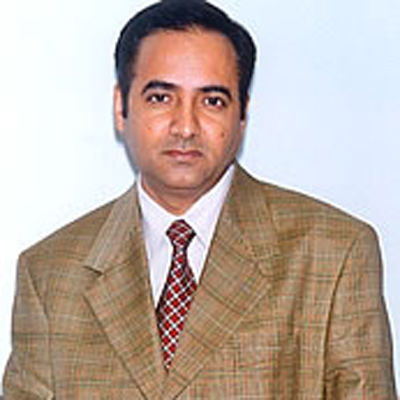
  • We believe the new cable TV tariff order will benefit everyone – Hathway Cable video CEO TS Panesar

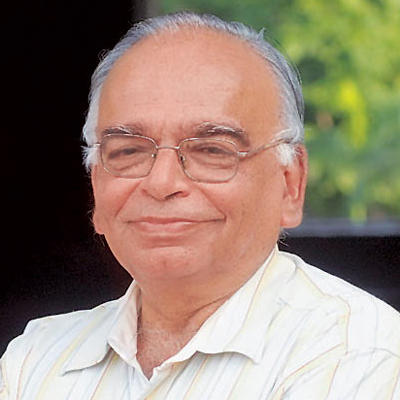
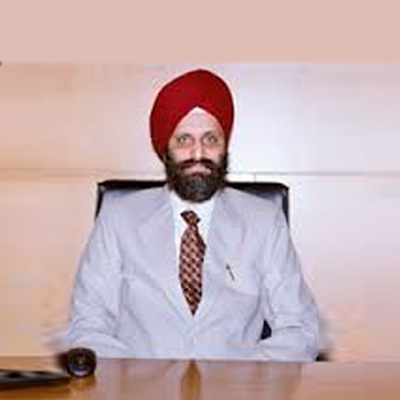
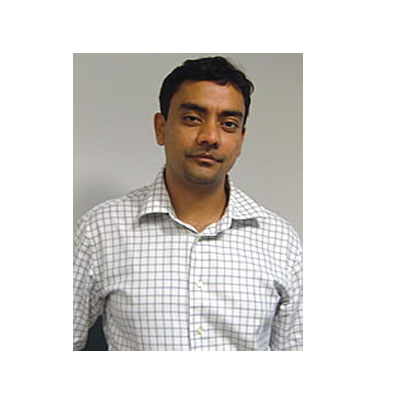
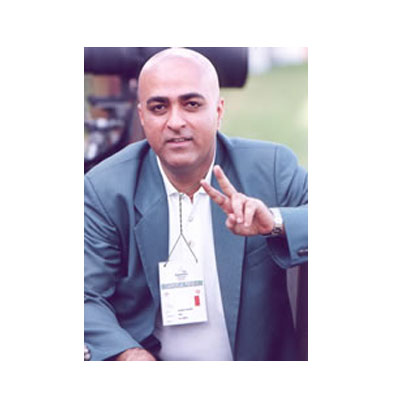
    Tavinderjit  Panesar is in the hot seat. As the CEO of the video business of the listed MSO and Rajan Raheja group company Hathway Cable & Datacom, he has to steer it in challenging times.

    The company’s share price has been waddling around in Rs 30-40 price range despite being spoken of as one of the jewels in India’s cable TV sector, and attracting investment from international firms.

    But, digitisation has put the entire sector under pressure; especially phase III  and phase IV. Phase I and Phase II, while they have been reported as completed, have not resulted in the sector getting the same organised structure that the telecom sector is. Then, ARPUs from subscribers have increased only marginally, even as investments in infrastructure in terms of STBs, content from broadcasters, customer service, and programming have been going up.

    To top it all, Indian broadcasters have objected to the draft tariff order that the industry regulator TRAI has issued, and have taken the matter to court. Which has left the distribution sector between a rock and a hard place as no one knows which direction tariffs will take.

    In such a scenario, the feisty industry veteran will have to bring all his 13 years and more of TV distribution experience to bear in order to deliver what he has been brought in for. He took over as the CEO of the video business from Jagdish Kumar who departed from the company in November 2016.

    Indiantelevision.com’s Parvinder Sandhu got into a conversation with Panesar to discuss about the industry, its state and the way forward. Excerpts:

    How would you view the overall status of the cable industry?

    The pay TV industry is consistently growing year on year in India and digitization has given a further boost to this sector. BARC data  indicates that the total number of pay TV subscribers have risen to 183 million  this year from 152 million in 2016. And there is still much more potential in this industry and enough room for everybody to grow.   In spite of the growth prospects, MSOs are still facing a lot of operational challenges like increasing content cost, inefficient ground collection mechanism and many more. However, from last few years, MSOs have also started adapting to newer and improved technologies and automation systems, thereby able to offer services which are at par with DTH providers.

    Today, the MSOs main task is to improve operational efficiency by controlling or reducing the content cost which has reached to level where it neither can be absorbed by the business nor can be passed on to the customer and by improvising processes and systems on the ground. First time in the MSO industry, Hathway has implemented a portal for LCOs through which he can manage his business very efficiently. This has helped us in building trust with the LCO and resulted in improvement in collection efficiency for both, LCOs and us. We are hopeful that the new regulations which are currently being deliberated upon will be implemented thus helping everyone to become profitable across the industry.

    With the right steps, there is a bright future for all value chain members i.e. broadcasters, service providers and consumers.

    Are DTH services with their competitive pricing of services, threatening MSO business?

    Historically, cable TV provides more value for money than DTH. Today also, it is our constant endeavour to maintain the same.

    Cable TV has unique advantages over DTH, like personalised 24*7 service to customer by our LCO, no service interruption due to weather, no limitation of bandwidth & hence being able to provide better quality service etc.

    Hathway understands the ease of interaction DTH subscribers enjoy with them which MSO industry is also trying to develop through the LCO network using technology and automation. Hathway was the first to create an interactive portal called Hathway Connect for its LCOs making their lives easier, convenient and more efficient. Using this portal, LCO can provide DTH-like experience to customer during his interaction. An LCO has access to every information of their customer which is very useful while interacting with customers. He can do the transaction instantly for the customer through this portal thereby provide necessary comfort to him. This has helped the LCOs run their business efficiently and effectively, in turn offering better quality and high standard & customer delight.

    For online payments, we have also integrated our systems with various payment gateways like Bill Desk & Citrus along with wallets like Mobikwik, Free Charge, SBI Buddy, Oxygen, Airtel Money etc. to ensure ease of business for the LCOs and renewal for customers.

    We have also recently launched our Value Added Services — Hathway Special catering to customers looking for additional services over and above broadcaster channels.

    We have also expanded our HD channel offering matching the  DTH offering

    In short, cable TV has also started providing similar experience like DTH to their subscriber and hence there is no threat to cable TV from DTH.

    There has been lot of hype in India for the two years about Make In India, a pet initiative of PM Modi. Has it resulted in any gains for the set-top box manufacturing?

    The Government’s flagship ‘Make in India’ initiative has helped India garner visible momentum, energy and optimism in key sectors. India is on the path to becoming an elite manufacturing hub through this initiative and box manufacturers have also definitely got a boost. During the inception of digitization the I&B ministry was talking very proactively to ministry of micro, small and medium enterprises to work out ways for the Indian industry to take advantage of the digitization process. While there are many indigenous box manufactures in India, some of the critical components of the set top boxes are yet to be developed locally. This is why most of the set top boxes are still being imported currently.

    What percentage of STBs would be imported by Hathway? Does it source boxes from few Indian manufacturers?

    We look forward to using a completely made in India box. However, till many key components are not developed indigenously we will have to import boxes to maintain competitive pricing and quality of service

    Essel group chairman Subhash Chandra recently said that STBs being used in India are still very basic, a far cry from technological developments around boxes globally. Would you agree with such an analysis? And, if yes, does such basic boxes hinder in providing better consumer experience in India?

    A true visionary and media veteran Dr. Chandra has always envisioned positive growth for the sector. He was one of the first to acknowledge the fact that with superior set top boxes the industry will definitely see more progress. As he correctly said the set top boxes being imported are very basic, and that there are more advanced boxes which can help in creating a better viewing experience for the end consumers.

    Though India is considered a price sensitive market, what, according to you, does the Indian consumers really want — affordable products or high-priced products that can give better consumer experience and a plethora of services?

    India is definitely very prudent when it comes to pricing mainly due to affordability factor. However, the aspirational level of the Indian consumer is always very high, and hence he always look for advance technologies for better quality and ease of operation. Also, there is more younger population in India which is always looking for technology and innovations.

    Since inception, DTH is thriving more on technologies and hence expensive right from installation to monthly subscription compared to cable TV.Cable on the other hand is always more value for money than DTH, be it the pricing orchannel offering or the wider bandwidth thus offering better picture quality.  We can boast of personalized service which our LCOs offer to the end consumers. They are available 24/7 to address all consumer concerns. In last few years, the MSO and the LCO also have started improving service levels to consumer using various technological initiatives and streamlining processes thereby giving better value for money than DTH which the consumer is looking for.

    How is Hathway tackling the challenges of digitisation and technological developments in media that’s happening nationally?

    For a country as diverse as India, to bring about any change will, of course, have its own set of challenges. Although, mandatory digitisation of cable TV has opened up a whole new world of possibilities ensuring that the broadcasters reap benefits with strong growth in both advertising and subscriptions without any incremental investments, service providers like Hathway are at disadvantage the most with  increasing content cost for the same ground collection. While we have aligned our LCOs to streamline collections through our Hathway Connect portal, as much as possible, there is still scope for improvement. We are also ready for “cashless” operation and promoting it to support India’s central government initiative. Our systems can accept all types of online payments from LCO or customer. We are constantly realigning our business to be able to monetize on digitisation.

    What would be Hathway’s total subscriber base? Are they all direct subs or also through franchisees/JV partners, if any?

    We have a total subscriber base of more than 12 million including our JV partners and subsidiaries.

    Does Hathway prefer directly selling to consumers or likes taking the JV route?

    Both LCOs and JV partners have contributed to our growth and we acknowledge the positive impact both brings to Hathway. Each has their own strengths and we have been fortunate to be able to capitalize on the same. We will continue to operate using either LCOs or JV partners as per need to consolidate and strengthen our base.

    With new video delivery techs, like OTT, coming in and catching consumer’s fancy, how do traditional MSOs like Hathway remain relevant? What innovations do you need to do?

    With the surge of smart phone consumption in India, we have over the last few years noticed a shift in viewership patterns. Consumers today are very discerning towards the content they view. There is a paradigm shift in wanting to watch content on the go like news and sports as averse to a daily soap.  The shorter format content is preferred over hour or half hour duration content. This phenomenon is more wide spread with the millennial groups and it is only fair to look at OTT as solution for this. OTT has the potential to tap into this entire younger generation and will help in brand positioning. OTT is definitely in the pipeline for us and we will be launching the service soon.

    For an MSO, what are the other  areas of monetisation or earning revenues apart from traditional services like cable TV and broadband delivery into homes?

    In cable TV, we are looking at innovative way of increasing the top line with value added services.  We have already launched paid value added services under the umbrella brand as Hathway Special. These services will be ad free and can create good attraction for customers. We are planning to expand these services up to 30. Beside these services, we also have our in house channels which can generate ad revenue as additional revenue stream. We are also trying to find new ways to utilize our EPG properties for advertising which can be useful to build up revenue further. At the moment, business is not profitable for us and we are looking at many avenues to improve the revenues so that we can re-invest into the business.

    TRAI has floated a consultation paper on infrastructure sharing by various delivery platforms in India. is such a technically, financially and practically feasible?

    There has not been much movement in this. It’s a good initiative and we are open to it.

    That brings me to the issue of tariff structure proposed by TRAI, which has been put on hold due to a case in Madras HC, as to how does Hathway view the draft tariff proposals? Why are some stakeholders upset with the proposals?

    The tariff structure proposed by TRAI will help in creating a level playing field for all as the consultation paper reviews the existing tariff arrangements and seeks to develop a comprehensive tariff structure for addressable distribution of TV broadcasting services across digital broadcasting delivery platforms (DTH, cable TV, HITS, IPTV) at wholesale and retail levels. If implemented, it will bring in more transparency and fuel growth by regulating the broadcast distribution system. The order will help to create a more symbiotic ecosystem unlike current price unregulated one.

    Under the current dispensation, the broadcaster is free to negotiate every year with service provider for their content due to which there is year-on-year increase in content cost without any linkage to revenue generated by that content. It has reached to the level where it is becoming difficult for MSO to absorb this cost increase without affecting revenue from customer and market forces do not allow to increase revenue from customers.

    We are hopeful that the new regulation will put things in right perspective. The new tariff order gives the consumers the power to choose what they want to watch and ensure content is being distributed with fair trade margin, thus balancing the entire ecosystem. This might be leaving the broadcasters with the fear of losing out on market share or reach of their channels and hence advertising revenues because of which they are opposing the implementation.

    However, we feel that new tariff order will bring in much needed transparency in the distribution system in which every key member will be benefited. This forward looking order has been conceived to ensure growth in the industry while improving the current scenario for the broadcasters as well as for the DPOs. We are hopeful that the new tariff order sees the light of day and helps in regulating this entire ecosystem.

    What are the expansion plans of Hathway?

    While we are open to mergers and acquisitions, we will take viable and judicious financial decisions.  But, our main priorities are optimising our operational efficiency as it will help cut back on unnecessary costs for us. We are continuously devising innovative ways to increase efficiency while reducing cost. We are also continuously expanding and upgrading our technical infrastructure to improve customer delight and reduce customer churn.

    Does it make business sense for an MSO to have in-house TV channels also? Does it add value and add to the revenue kitty?

    This is one of the major differentiators between DTH and Cable TV. We are at an advantage over DTH due to adequate bandwidth that we have with the flexibility of adding in-house services. Not only does it help in creating niche content for our subscribers but also helps in generating additional revenue for us.

  • Indians ready to pay for compelling health-related content, says Brilliant Living TV CEO

    Indians ready to pay for compelling health-related content, says Brilliant Living TV CEO

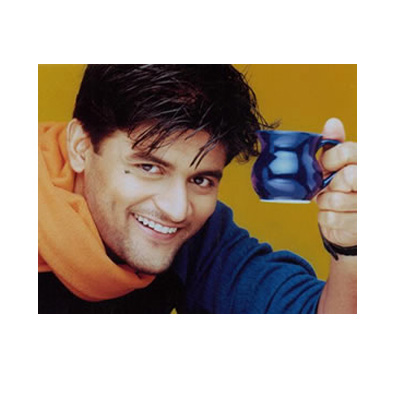
    Staying fit and healthy is one of the top priorities in today’s hectic lifestyle. Brilliant Living TV is an initiative by Suniel Shetty & Adarsh Gupta, which recently tied up with SonyLiv VoD, Vodafone and Tata Sky DTH to offer health and fitness content.

    The Tata Sky interactive service enables subscribers to access a world of fitness experts that train the country’s film stars, from the comfort of their homes. Tata Sky’s Pallavi Puri had said that there was a growing desire to find solutions that help manage the challenges of a fast paced and demanding lifestyle. However, not everyone had access to right exercising regimes or trainers across the country. It was this insight that triggered the Actve Fitness service, where Tata Sky offered celebrity fitness experts who would help subscribers to stay fit.  Celebrity fitness trainers such as Kaizzad Capadia, Yasmin Karachiwala, Abbas Ali, and Shifuji share workout, yoga sessions, self-defense and fitness tips that any individual can follow at home.

    Brilliant Living TV’s founder and CEO Adarsh Gupta added that their focus had been on creating passion and excitement for fitness amongst all Indians by guiding them through fitness exercises such as work-out videos, yoga  and meditation. The former Times Music COO and HMV Saregama music business head who, in December 2014, launched ‘s first-destination fitness channel bringing together the best global fitness & wellness experts, shared some insights with indiantelevision.com’s deputy editor Parvinder Sandhu. Excerpts from an interview:

    Do you believe more people in India are inclined towards fitness of late, unlike the scenario, say, 5-10 years ago?

    Fitness and wellness has emerged as a megatrend in India today. From being a niche sector 5-10 years ago, fitness today has become a subject of priority in the tier 1 and 2 cities like never before. There are three categories of people in the fitness ecosystem: enthusiasts, dabblers and fence sitters. Between these categories there are approximately 50- 60 million people in the top 20 cities in India today.

    public://0e4cd13.jpg

    Until recently food or travel industry seemed to be growing in India. But, lately, growth seemed to have slowed down. Why would you not think that fitness is another fad?

    Fitness is too intrinsic to the well being of a person and that realization has hit people. The trend today is prevent-rather-than-cure. I believe fitness is too solid an issue on people’s agenda to pass off as a fad. Look at more matured markets as a reference point and it is clear that this emerging megatrend in India is here to stay and grow.

    How big is the health, fitness and wellness market in India?

    The fitness market, which includes essentially the gym eco-system, is expected to be around Rs. 7000 crore (Rs.700,00 million) in the current year. If we expand the scope of the industry to wellness, which then also includes segments such as beauty services /spas/personal health counseling and yoga, the size of the category is in the region of 35,000 core (Rs 350,000 million) and growing 15-17 per cent per year.

    How big is the health and fitness genre on/through television?

    Actve fitness was the first dedicated fitness/wellness media service that launched in  in 2015. The launch was an unprecedented success and is now being replicated by other leading media houses in India. We at Brilliant Living TV are driving this agenda. Having achieved the position of the most credible content creator in this genre, we have launched and are in the process of tying up the best platforms in the media space in India and relevant markets overseas.

    If I were a broadcaster, why would I think of Brilliant Living TV as a wellness content provider or why would it come to my mind?

    At Brilliant Living TV, we have the distinction of being the only domain experts that have mapped this category end to end like no other content creator. This is not one of the many things we do…this is the only genre that we super specialize in. The best experts in  and the more advanced markets have all been signed on with our company for exclusive long term deals ensuring the very best expert talent is only with Brilliant  Living TV. We have also been able to layer fitness / wellness with a heavy dose of  Bollywood / celebrity content coefficient ,giving us the all round best competitive advantage.

    Is Brilliant Living TV a VC/investor funded company? Or, is it privately funded?

    Our company is currently privately funded. However, we will be looking to raise our first round of capital for funding growth objectives soon.

    How is BLT company’s internal structure?

    Suniel Shetty (partner) plays the role of the mentor and guide for BLT. He has been an iconic star who has been known for his fitness through the years and is still fighting fit to the point of being inspirational. He guides us on all aspects of the domain. Additionally, Vikram Razdan (another partner) who is a film industry veteran looks after production for Brilliant Living Television.

    How many companies like Shemaroo, Brilliant, etc are supplying health and fitness content to television networks in India ?

    Currently there are about 3-4 companies like Shemaroo/Rajshri and a few other that have a presence in this genre. However there are rumors that there is a lot of activity by new companies in this space.

    Approximately, how much is Brilliant Living TV’s share of the pie? You are 25 months into the business and by when would you potentially break even?

    From the point of view of the content catalogue, we are the most dominant player in the category today. We would be bordering approximately 1000 plus hours of content already, which would put us at about 70 percent of this category today.

    How many well-known fitness experts have you tied up with and is there something unique in your strategy?

    Across the domains of yoga/all forms of fitness/nutrition and spirituality, we have over 400 of the best experts from India and overseas markets signed on to us. It is unique in the sense that we were the first ones to identify fitness/wellness as an opportunity for us to become the domain leaders. The strategy has paid off as we are already spearheading this genre for the most credible and reputed media platforms in India. Besides, most of the remaining platforms are also engaging with us for launches in the near future.

    How smooth is it to sign up celebrities and manage (co-ordinate with) them?

    The moment you get into the realm of managing celebrities and celebrity experts, there is bound to be a degree of kid glove management involved, and we as a team are real good at it.

    As a strategy would you rather not concentrate on the merit of content than the celebrity quotient in the business?

    Like i mentioned earlier, there are three categories of people in this ecosystem.

    1. Enthusiasts – driven by fitness

    2. Dabblers – keep coming in and out of fitness

    3. Fence sitters – people who think about getting fit but have done nothing yet.

    The celebrity content works beautifully well to motivate the fence sitters and dabblers to get into the fold of fitness. And, hence celebrity content is critical to our content strategy.

    Do you think people are ready to pay for non-entertainment programmes in India?

    Yes our launch with Tata Sky has proved that people are willing to pay for a genre that has a compelling proposition. All our engagements across Ttata Sky, Vodafone and SsonyLiv are paid services. We believe it is still a genre of very high demand and relatively low supply and, hence, a perfect market for the paid ecosystem.

    What are the terms of the Tata Sky deal and was it difficult to convince the team there?

    We have a exclusive arrangement only for the DTH segment with them. Outside of DTH, we are free to do what we want. When we approached Tata Sky, the team was looking to start a service under the actve portfolio dedicated to fitness. It may be coincidence but, in retrospect, we timed our initiative really well.  

    While the product design for Active Fitness is done by the Tata Sky team, rest of the work is done jointly. The programming scheduling, packaging, etc is all worked on jointly between the teams.

    How does it work? You supply a single type of linear content, say, every week/fortnight to Tata Sky and then get paid depending on number of subscribers?

    We have a defined refresh rate of content every month that we provide to our platforms. And yes, our revenues are a function of the number of subscribers.

    Would you curate your fitness content in the traditional form, or do you also incorporate different styles/genres?

    Our objective is to showcase the wealth of knowledge that  India has to offer.. yoga and fitness in its most authentic forms. We do, however, believe that we need to package this content in a contemporaneous way so as to appeal to the youth today.  

    Does one get a variety of health and wellness content with one subscription — for the whole family?

    Yes if you subscribe to actve fitness, you get content for all groups. This includes kids, youth, middle aged, senior citizens and dedicated women-related content.

    Do you need to keep innovating on content or is it standard form?

    Yes we need to keep innovating. While we offer the most traditional forms of yoga workouts, we also showcase the best that the world has to offer in terms of trending workouts like zumba/ariel yoga/pilates/masala bhangra workouts, etc. to name a few.

    Would you also negotiate deals with other DTH players or broadcasters? Would the content be similar or differentiated?

    I cannot comment on this DTH aspect at this stage. But we have already launched with Sony and are in the middle of tying up with other prominent broadcasters as well.

    How much according to you is the wellness business on hand-held devises like mobile phones in India?

    There is a growing apetite for all kinds of content on mobile phones and fitness is a part of that emerging story. The logic is simple. In today’s dynamic world where people are forever short of time, if we had a “do it along” fitness workout on our mobile phone, we could be at it anywhere anytime.

    What strategy works well for you? SVoD or AVoD?

    Our current strategy is SVoD. However, over time we will be looking to expand to the AvoD side of the action too. In our experience both work in India, depending on the core proposition. Majority of action currently is skewed towards AVoD. However, all major players have already either launched an AVoD option or are in the process of putting one together

    Is the health content on OTT/VoD platforms similar to DTH content? Is one able to choose different genres of fitness programmes on SonyLiv?

    Yes the offering is very similar. At the moment, we are focusing on full length workouts on SonyLiv. However going forward, we are considering shorter workouts as well.

    Is the SonyLiv deal exclusive in some way?

    Brilliant Living TV exclusively powers the fitness/wellness genre for SonyLiv. The Sony team has clearly viewed this as a great strategic differentiator and is driving the initiative accordingly.

    What is your analysis of people being ready to pay for fitness content on mobile?

    They may have recently learnt to pay a minimal amount for GECs, sports and movies on Amazon, Netflix etc.

    Too early to say. However, my conviction is that fitness is such a compelling genre where options like gyms etc cost a lot more, we expect a good response of the paid audiences. We are in discussion with other OTT players too, but cannot discuss details at this point of time.

    Few OTT/VoD players share their numbers of active subscribers. Subs seem to switch a bit too often, or switch off completely. Is that something that bothers content providers?

    As a content provider, we understand the need to build a core base of loyal users. We also recognize that there will be a certain percentage of churn on an ongoing basis and we are prepared for that.

    India has too many Internet infrastructure challenges. How would you overcome those?

    Our offering is adaptive. Hence, the feed adapts itself to the (Internet) speeds available to the viewer.

    You seem to be well-entrenched in the health and fitness space. What are the measures that you are taking to maintain your lead?

    We are constantly working on increasing our content library with the most happening workouts and experts across domains. We believe we have a significant lead over any other player in this genre and plan to maintain it.

  • OTT/VOD disrupted traditional ‘appointment viewing’ in India: Spuul’s Subin Subaiah

    OTT/VOD disrupted traditional ‘appointment viewing’ in India: Spuul’s Subin Subaiah

    The global OTT video market is poised for nearly exponential growth, a report by Digital TV Research states. It forecasts that global revenues will climb to US$ 65 billion by 2021 covering 100 countries. By 2020, AVOD’s revenues of US$ 15.4 billion are expected to surpass SVOD revenues of US$ 14.6 billion. As per Frost & Sullivan, the video market is anticipated to expand at a CAGR of over 80 per cent till 2020.

    By 2019, Cisco research states, almost 80 per cent of the global Internet consumption will be video content, OTT streaming will fuel growth, traffic from wireless and mobile devices will rise to 66 per cent in 2019, and Internet video to TV will increase fourfold by 2019.

    Competition in the OTT segment is increasing owing to companies seeking to expand their user bases in other countries.

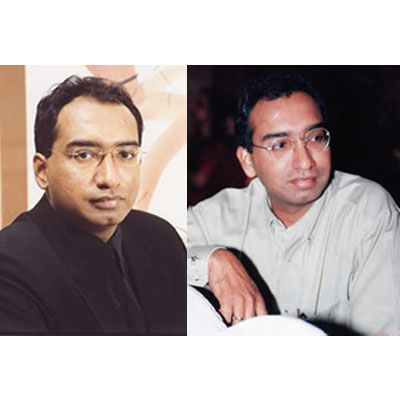
    Indiantelevision.com’s Parvinder Sandhu caught up with Subin Subaiah, the global CEO and director of Spuul, a Singapore-based aggregator, which has a catalogue of 1000 movies, over 10,000 hours of programming and 18 million downloads to date. Co-founded by Subaiah, Sudesh Iyer, and S Mohan, Spuul (inspired from spool) has reduced the lead time between movie premieres in theaters to its availability on its platform to just two weeks and has established tiny downloads of less than 70mb for viewers in low bandwidth areas.

    A banker who held senior positions at leading global financial institutions, Subin, mixing grit and persistence with patience and respect, set up Spuul in 2012 based on his absolute conviction that on-line streaming is the pre-cursor to the world of virtual cinema.

    Excerpts from an interview:

    How will you define Spuul? A start-up or a mature media company?

    Start-ups are a buzzword these days. But, for how many years, a company can be called a start-up, and why? Start-ups need growth funding and capital support till they become self-sustaining corporates with independent and massive marketing budgets and eventual taxpayers. We are a mature start-up, which will be cash-flow positive in 18-24 months. Start-ups are nurtured till an inflection point comes in the industry.

    How do you see Spuul in the Indian OTT eco-syestem?

    In India, the OTT and VOD eco-system is still evolving and it may take 12-24 months to mature. Internet penetration here is quite low and the data cost is high, unlike in the US, China, or the UK. However, in India, the OTT/VOD eco-system is interdependent on a lot of stakeholders such as telcos, content owners, broadcasters, fibre-to-home entities, DTH players, IPTV, the OEMs and the device industry. Almost all the OTT/VOD players are struggling to find the right approach to the consumer and to understand the ideal user experience.

    Spuul is a pure play and dedicated OTT player without an agenda. We are a disciplined ship — a premium solution for the common man. Spuul is seeking to partner various industry outfits and is seeking content deals. We have already made our presence felt and are neither anxious nor feel threatened about competition. We use our own metrics to figure out ways to serve consumers.

    Considering what you said about success’ interdependence on other factors, how would you describe the Indian market?

    India is a complex market, no doubt. In India, one needs to see who is able to pay how much and what kind of value for money the consumer is seeking. We continuously address the consumer’s issues and expectations. No doubt, one would need growth capital, but the timing is important. It’s not primarily about money, but more about who we can partner with. This is a deep-pocket business. In the OTT/VOD business, there has been an escalation in

    i)    content cost;

    (ii)  customer acquisition cost;

    (iii) BTL cost (cost of e-commerce is exorbitant) and

    (iv)  ability to hire and retain talent.

    Though Reliance Jio, for example, is giving ESOPs, it does not work well in India since employees here expect cash today and not (notional money) for the future.

    What are your expectations from the Indian market?

    We expect Internet penetration in India to be sufficiently better in 12-24 months time. By that time, Internet, hopefully, would have enabled around 100-200 million people with easy access and affordable Internet. The arrival of Reliance Jio will hopefully change the scenario as it’s not just about good penetration, but affordable price points and quality (of service) that are also significant. When these converge, digital consumption would be much better.

    The market dynamics keep changing. Now, after demonetisation, many players like us had to integrate with payment wallets. So, we had many balls in the air — we may catch some and drop some. But, it’s okay.

    What , according to you, is making OTT/VOD services mushroom all over despite Indian challenges? Has there been some major shift in viewing trends?

    With the arrival of OTT/VOD, ‘viewing by appointment’ has been tossed out of the window. But, another big challenge for the OTT/VOD players is how they deliver the same content (that had been delivered till now or is still being done so via legacy platforms) on whichever device the consumer has. The scene has shifted from the broadcaster to the consumer.

    Consumer in India needs to be first educated about the difference between paid and free content platforms. Second, they also need to be made aware of legal and pirated content. Education will lead consumers to understand the rewards and penalty for making the right or wrong choices. As of now, the consumer has made soft choices.

    The industry too needs to understand some of the issues: how to provide hassle-free content? How much content is being consumed? Which type of content is being used? When is the content consumed?

    How is Spuul trying to address some of the issues in the Indian market?

    Spuul is non-discriminatory and sees every consumer as a potential client. Spuul enables downloads, consumption (rendition) of content in accordance with the device  — whether it’s running on an Android or Windows-based or some other platform, the size of the screen (large, medium or small), whether it’s a mobile phone or a tablet and similar such issues. It’s a technical game and we pride ourselves as being the best at it. The problems of easy content delivery are something that forces companies such as Spuul to find solutions on a bumpy road.

    Would you enumerate some of the initiatives of Spuul in this  technical game?

    We are the pioneers of  Progressive Download (the process wherein a user downloads his/her favourite show for offline/low bandwidth viewing). Wi-Fi needs to significantly grow for a smoother user-experience in India. Other OTT/VOD companies soon caught up with Progressive Download technology as there’s hardly anything proprietary in such technologies. As OTT/VOD is a big execution game, technology, marketing and agility to adapt to changing landscape is as important as having good content.

    In the OTT/ VOD realm, there are primarily two kinds of people who need to be taken care of:

    1.Content consumer (all his likes/dislikes need to be kept in mind and served accordingly) and

    2.Content owner who expects content to be showcased properly. We also need to take care of the licencing rights and that  best exposure is given to content for the satisfaction of the owner as well.

    As content-owners strike different deals these days to multiply its monetisation, how do companies like Spuul take care of sensitivities, including IPR issues, while rolling out services?

    Sometimes, content owners are reluctant to part with their content. What if we were to licence a top media/production house content and show it alongside C-grade movies? That’s simply not done. At Spuul, we maintain that image of the content-owner and ours is as important. As we need to have a working model that is sustainable and long-term, we need to have a degree of decorum and a certain premium-ness attached to our product.

    Relationships with the studios are important. In a corporate world, we all need to be careful about transparency in our deals and need to be aware about fighting piracy. Pirated Hindi movies that were available online lose more than half the revenue that they may have earned legitimately if online pirates had not milked their products. Spuul has created some rules around its content. Hindi movies are digitised with sub-titles. A-grade and B-grade movies are made available to discerning customers. For example, Spuul is also careful in choosing its content when it comes to markets such as the Middle East. For the sake of offering some select C-grade movies, one cannot risk jeopardising the whole franchise. We must eliminate that risk  entirely.

    We do offer some regular content like Bollywood and regional films. Racy and edgy content is a major attraction and is loved by people in the 18-35 years age-group. Except Eros, we have a tie-up with almost all producers and major content-owners. We are also in the process of moving from Hindi to Punjabi and South Indian movies and, subsequently, decent Bhojpuri movies. The inspiration for south Indian content came from a Delhi incident where we overheard a taxi-driver and his friend discussing action and VFX-laden movies from south India.

    However, Spuul is not rushing in to provide original content. We are a technology company, and not a creative organisation. Big studios can afford to have, say, 10 originals of which three may fail. It still works out to be reasonably profitable. If I were to get two million users who are spending say US$ 5 a month, for example, I can break even for my US$ 10 million investment.

    The market trends and consumer choices need to be tracked, so it seems?

    Absolutely. We do keep abreast of the market trends in terms of price points, recency of content (how soon it is available after being released in theatres) and originals. But, India is a low-yield market  compared to the Middle East, North America and New Zealand. Those markets are more remunerative with bigger payments and higher churn rates. In India, against 60 per cent consumption, the revenue is 20 per cent. However, in the rest of the world, revenue is 80 per cent against 40 per cent consumption.

    (60 per cent of Spuul content is consumed in India and the remainder by the Indian and sub-continental diaspora, across the world. In India, almost 90 per cent content of Spuul content is consumed on mobile devices.)

    public://url.jpg

    How different is the Indian consumer from those elsewhere for Spuul?

    In India, the consumption patterns are different. There is an involuntary churn since consumers switch from one telecom service-provider to another. After the switch, one needs to re-acquire the consumer, which entails a reasonably high cost. The country is a different ballgame altogether. Users here would want to watch selective content, but privately. It is not the same as content on cable TV, for example, where it is watched by the entire family. A majority of women in India do not leave their homes, lest they miss on their favourite TV programme.

    In the OTT/ VOD world, one needs to constantly empower and engage with the user. A consumer needs to be prompted to download the OTT/VOD app, which he may or may not, depending on his mood, availability of memory/space on his devise, Internet speed, cash balance and finally his willingness to spend. We may need to have all his co-ordinates to reach out to him – his email IDs, FB account IDs, his mobile number, etc. The environment is totally different from the cable TV business.

    (Spuul India CEO Rajiv Vaidya held forth on certain marketing aspects. He said that Spuul’s sachet pricing was applicable only in the India market. The sachet pricing is marketed through the telecom operator. A user is offered an entertainment pack of various duration ranging from a day to a week to a fortnight, depending on the consumer’s financial capability. The fee is automatically deducted from his prepaid mobile balance once he chooses to take a service. In India, almost 90-95 per cent mobile voice and data subscribers are pre-paid consumers.)

    You said Spuul has tie-ups with content owners. Does that strategy also include broadcasting companies?

    Spuul had taken a conscious decision to offer primarily movies and that’s why we do tie-ups with content-owners. But, I agree it would have been better if we too had a content supply chain as it happens when the OTT/VOD platform is a (brand) extension of a broadcasting company or a production house (Hotstar, Voot and Balaji’s ALT readily come to mind). A production factory is always valuable and movie studios are our production factory.

    Still, Spuul has partnerships with several broadcasters, especially the GECs, which are primarily looking at marketing their content to the Indian and sub-continental diaspora abroad

    How would a Spuul service be different from others and other delivery platforms such as cable and DTH?

    Spuul  has tie-ups in place where it gets a week-long or a 10-day exclusive window before new movies are aired on television  via DTH or cable TV services. We need to market and leverage that window correctly through digital and targeted marketing. We need to study users’ browsing habits and aim properly at targeted customers. We also need to engage directly (through in-app notifications). Text messages or SMSes are expensive in India. But, in the Middle East, we have tie-ups with telcos through whom we do SMS blasts to thousands of customers together.

    How does Spuul view the arrival of big daddies such as Amazon Prime and Netflix in India?

    The likes of Amazon Prime Video and Netflix would help expand the OTT/VOD market and all new players are welcome. They have educated the Indian consumer that one needs to pay to watch good content at a convenient time and place. They all have helped in enlightening people that one can’t rely on pirated content and, thus, have helped the ecosystem grow. Everybody here is learning and nobody is an expert on content.  All companies have their advantages and limitations. Some are in the OTT/VOD business alright, but their primary aim is to grow e-commerce revenues.

    Will AVoD be a success?

    AVoD is not expected to succeed because potential advertisers expect certain million downloads before they take a call on putting their money. Also, content owners generally are not happy when their creations are available for free. They expect it to be put behind a pay-wall.

    What are Spuul’s targets?

    Of the 23 million global consumers, 60-65 per cent users have downloaded the Spuul app. Of the Spuul subscribers, around 60 per cent are in India and the remainder in the U.S, U.K, Australia and New Zealand. We are growing 30-40 per cent month on month. Of the projected 700-800 million global OTT/VOD subscribers by 2020, we are targeting approximately 200 million or roughly 25 per cent to be on the Spuul platform.

    By 2020, owing to the sheer numbers and the status of being the second-largest penetrated market, India’s OTT/VOD subscribers should leapfrog ahead of the U.S but remain below China where the growth trajectory is similar. The opportunity in India is huge.

  • OTT/VOD disrupted traditional ‘appointment viewing’ in India: Spuul’s Subin Subaiah

    OTT/VOD disrupted traditional ‘appointment viewing’ in India: Spuul’s Subin Subaiah

    The global OTT video market is poised for nearly exponential growth, a report by Digital TV Research states. It forecasts that global revenues will climb to US$ 65 billion by 2021 covering 100 countries. By 2020, AVOD’s revenues of US$ 15.4 billion are expected to surpass SVOD revenues of US$ 14.6 billion. As per Frost & Sullivan, the video market is anticipated to expand at a CAGR of over 80 per cent till 2020.

    By 2019, Cisco research states, almost 80 per cent of the global Internet consumption will be video content, OTT streaming will fuel growth, traffic from wireless and mobile devices will rise to 66 per cent in 2019, and Internet video to TV will increase fourfold by 2019.

    Competition in the OTT segment is increasing owing to companies seeking to expand their user bases in other countries.

    Indiantelevision.com’s Parvinder Sandhu caught up with Subin Subaiah, the global CEO and director of Spuul, a Singapore-based aggregator, which has a catalogue of 1000 movies, over 10,000 hours of programming and 18 million downloads to date. Co-founded by Subaiah, Sudesh Iyer, and S Mohan, Spuul (inspired from spool) has reduced the lead time between movie premieres in theaters to its availability on its platform to just two weeks and has established tiny downloads of less than 70mb for viewers in low bandwidth areas.

    A banker who held senior positions at leading global financial institutions, Subin, mixing grit and persistence with patience and respect, set up Spuul in 2012 based on his absolute conviction that on-line streaming is the pre-cursor to the world of virtual cinema.

    Excerpts from an interview:

    How will you define Spuul? A start-up or a mature media company?

    Start-ups are a buzzword these days. But, for how many years, a company can be called a start-up, and why? Start-ups need growth funding and capital support till they become self-sustaining corporates with independent and massive marketing budgets and eventual taxpayers. We are a mature start-up, which will be cash-flow positive in 18-24 months. Start-ups are nurtured till an inflection point comes in the industry.

    How do you see Spuul in the Indian OTT eco-syestem?

    In India, the OTT and VOD eco-system is still evolving and it may take 12-24 months to mature. Internet penetration here is quite low and the data cost is high, unlike in the US, China, or the UK. However, in India, the OTT/VOD eco-system is interdependent on a lot of stakeholders such as telcos, content owners, broadcasters, fibre-to-home entities, DTH players, IPTV, the OEMs and the device industry. Almost all the OTT/VOD players are struggling to find the right approach to the consumer and to understand the ideal user experience.

    Spuul is a pure play and dedicated OTT player without an agenda. We are a disciplined ship — a premium solution for the common man. Spuul is seeking to partner various industry outfits and is seeking content deals. We have already made our presence felt and are neither anxious nor feel threatened about competition. We use our own metrics to figure out ways to serve consumers.

    Considering what you said about success’ interdependence on other factors, how would you describe the Indian market?

    India is a complex market, no doubt. In India, one needs to see who is able to pay how much and what kind of value for money the consumer is seeking. We continuously address the consumer’s issues and expectations. No doubt, one would need growth capital, but the timing is important. It’s not primarily about money, but more about who we can partner with. This is a deep-pocket business. In the OTT/VOD business, there has been an escalation in

    i)    content cost;

    (ii)  customer acquisition cost;

    (iii) BTL cost (cost of e-commerce is exorbitant) and

    (iv)  ability to hire and retain talent.

    Though Reliance Jio, for example, is giving ESOPs, it does not work well in India since employees here expect cash today and not (notional money) for the future.

    What are your expectations from the Indian market?

    We expect Internet penetration in India to be sufficiently better in 12-24 months time. By that time, Internet, hopefully, would have enabled around 100-200 million people with easy access and affordable Internet. The arrival of Reliance Jio will hopefully change the scenario as it’s not just about good penetration, but affordable price points and quality (of service) that are also significant. When these converge, digital consumption would be much better.

    The market dynamics keep changing. Now, after demonetisation, many players like us had to integrate with payment wallets. So, we had many balls in the air — we may catch some and drop some. But, it’s okay.

    What , according to you, is making OTT/VOD services mushroom all over despite Indian challenges? Has there been some major shift in viewing trends?

    With the arrival of OTT/VOD, ‘viewing by appointment’ has been tossed out of the window. But, another big challenge for the OTT/VOD players is how they deliver the same content (that had been delivered till now or is still being done so via legacy platforms) on whichever device the consumer has. The scene has shifted from the broadcaster to the consumer.

    Consumer in India needs to be first educated about the difference between paid and free content platforms. Second, they also need to be made aware of legal and pirated content. Education will lead consumers to understand the rewards and penalty for making the right or wrong choices. As of now, the consumer has made soft choices.

    The industry too needs to understand some of the issues: how to provide hassle-free content? How much content is being consumed? Which type of content is being used? When is the content consumed?

    How is Spuul trying to address some of the issues in the Indian market?

    Spuul is non-discriminatory and sees every consumer as a potential client. Spuul enables downloads, consumption (rendition) of content in accordance with the device  — whether it’s running on an Android or Windows-based or some other platform, the size of the screen (large, medium or small), whether it’s a mobile phone or a tablet and similar such issues. It’s a technical game and we pride ourselves as being the best at it. The problems of easy content delivery are something that forces companies such as Spuul to find solutions on a bumpy road.

    Would you enumerate some of the initiatives of Spuul in this  technical game?

    We are the pioneers of  Progressive Download (the process wherein a user downloads his/her favourite show for offline/low bandwidth viewing). Wi-Fi needs to significantly grow for a smoother user-experience in India. Other OTT/VOD companies soon caught up with Progressive Download technology as there’s hardly anything proprietary in such technologies. As OTT/VOD is a big execution game, technology, marketing and agility to adapt to changing landscape is as important as having good content.

    In the OTT/ VOD realm, there are primarily two kinds of people who need to be taken care of:

    1.Content consumer (all his likes/dislikes need to be kept in mind and served accordingly) and

    2.Content owner who expects content to be showcased properly. We also need to take care of the licencing rights and that  best exposure is given to content for the satisfaction of the owner as well.

    As content-owners strike different deals these days to multiply its monetisation, how do companies like Spuul take care of sensitivities, including IPR issues, while rolling out services?

    Sometimes, content owners are reluctant to part with their content. What if we were to licence a top media/production house content and show it alongside C-grade movies? That’s simply not done. At Spuul, we maintain that image of the content-owner and ours is as important. As we need to have a working model that is sustainable and long-term, we need to have a degree of decorum and a certain premium-ness attached to our product.

    Relationships with the studios are important. In a corporate world, we all need to be careful about transparency in our deals and need to be aware about fighting piracy. Pirated Hindi movies that were available online lose more than half the revenue that they may have earned legitimately if online pirates had not milked their products. Spuul has created some rules around its content. Hindi movies are digitised with sub-titles. A-grade and B-grade movies are made available to discerning customers. For example, Spuul is also careful in choosing its content when it comes to markets such as the Middle East. For the sake of offering some select C-grade movies, one cannot risk jeopardising the whole franchise. We must eliminate that risk  entirely.

    We do offer some regular content like Bollywood and regional films. Racy and edgy content is a major attraction and is loved by people in the 18-35 years age-group. Except Eros, we have a tie-up with almost all producers and major content-owners. We are also in the process of moving from Hindi to Punjabi and South Indian movies and, subsequently, decent Bhojpuri movies. The inspiration for south Indian content came from a Delhi incident where we overheard a taxi-driver and his friend discussing action and VFX-laden movies from south India.

    However, Spuul is not rushing in to provide original content. We are a technology company, and not a creative organisation. Big studios can afford to have, say, 10 originals of which three may fail. It still works out to be reasonably profitable. If I were to get two million users who are spending say US$ 5 a month, for example, I can break even for my US$ 10 million investment.

    The market trends and consumer choices need to be tracked, so it seems?

    Absolutely. We do keep abreast of the market trends in terms of price points, recency of content (how soon it is available after being released in theatres) and originals. But, India is a low-yield market  compared to the Middle East, North America and New Zealand. Those markets are more remunerative with bigger payments and higher churn rates. In India, against 60 per cent consumption, the revenue is 20 per cent. However, in the rest of the world, revenue is 80 per cent against 40 per cent consumption.

    (60 per cent of Spuul content is consumed in India and the remainder by the Indian and sub-continental diaspora, across the world. In India, almost 90 per cent content of Spuul content is consumed on mobile devices.)

    public://url.jpg

    How different is the Indian consumer from those elsewhere for Spuul?

    In India, the consumption patterns are different. There is an involuntary churn since consumers switch from one telecom service-provider to another. After the switch, one needs to re-acquire the consumer, which entails a reasonably high cost. The country is a different ballgame altogether. Users here would want to watch selective content, but privately. It is not the same as content on cable TV, for example, where it is watched by the entire family. A majority of women in India do not leave their homes, lest they miss on their favourite TV programme.

    In the OTT/ VOD world, one needs to constantly empower and engage with the user. A consumer needs to be prompted to download the OTT/VOD app, which he may or may not, depending on his mood, availability of memory/space on his devise, Internet speed, cash balance and finally his willingness to spend. We may need to have all his co-ordinates to reach out to him – his email IDs, FB account IDs, his mobile number, etc. The environment is totally different from the cable TV business.

    (Spuul India CEO Rajiv Vaidya held forth on certain marketing aspects. He said that Spuul’s sachet pricing was applicable only in the India market. The sachet pricing is marketed through the telecom operator. A user is offered an entertainment pack of various duration ranging from a day to a week to a fortnight, depending on the consumer’s financial capability. The fee is automatically deducted from his prepaid mobile balance once he chooses to take a service. In India, almost 90-95 per cent mobile voice and data subscribers are pre-paid consumers.)

    You said Spuul has tie-ups with content owners. Does that strategy also include broadcasting companies?

    Spuul had taken a conscious decision to offer primarily movies and that’s why we do tie-ups with content-owners. But, I agree it would have been better if we too had a content supply chain as it happens when the OTT/VOD platform is a (brand) extension of a broadcasting company or a production house (Hotstar, Voot and Balaji’s ALT readily come to mind). A production factory is always valuable and movie studios are our production factory.

    Still, Spuul has partnerships with several broadcasters, especially the GECs, which are primarily looking at marketing their content to the Indian and sub-continental diaspora abroad

    How would a Spuul service be different from others and other delivery platforms such as cable and DTH?

    Spuul  has tie-ups in place where it gets a week-long or a 10-day exclusive window before new movies are aired on television  via DTH or cable TV services. We need to market and leverage that window correctly through digital and targeted marketing. We need to study users’ browsing habits and aim properly at targeted customers. We also need to engage directly (through in-app notifications). Text messages or SMSes are expensive in India. But, in the Middle East, we have tie-ups with telcos through whom we do SMS blasts to thousands of customers together.

    How does Spuul view the arrival of big daddies such as Amazon Prime and Netflix in India?

    The likes of Amazon Prime Video and Netflix would help expand the OTT/VOD market and all new players are welcome. They have educated the Indian consumer that one needs to pay to watch good content at a convenient time and place. They all have helped in enlightening people that one can’t rely on pirated content and, thus, have helped the ecosystem grow. Everybody here is learning and nobody is an expert on content.  All companies have their advantages and limitations. Some are in the OTT/VOD business alright, but their primary aim is to grow e-commerce revenues.

    Will AVoD be a success?

    AVoD is not expected to succeed because potential advertisers expect certain million downloads before they take a call on putting their money. Also, content owners generally are not happy when their creations are available for free. They expect it to be put behind a pay-wall.

    What are Spuul’s targets?

    Of the 23 million global consumers, 60-65 per cent users have downloaded the Spuul app. Of the Spuul subscribers, around 60 per cent are in India and the remainder in the U.S, U.K, Australia and New Zealand. We are growing 30-40 per cent month on month. Of the projected 700-800 million global OTT/VOD subscribers by 2020, we are targeting approximately 200 million or roughly 25 per cent to be on the Spuul platform.

    By 2020, owing to the sheer numbers and the status of being the second-largest penetrated market, India’s OTT/VOD subscribers should leapfrog ahead of the U.S but remain below China where the growth trajectory is similar. The opportunity in India is huge.

  • “There would be  a lot on TRAI’s plate in 2017” – RS Sharma

    “There would be a lot on TRAI’s plate in 2017” – RS Sharma

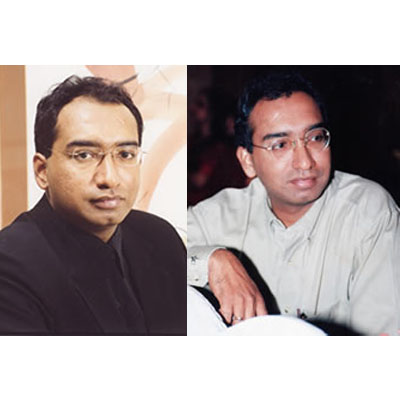
    RS Sharma, chief regulator of India’s telecoms and broadcast carriage services, is a plain-speaking person who doesn’t mince words. He is forthright inhis thoughts on the Telecom Regulatory Authority of India (TRAI)’s role, which, according to several reiterations, is work towards creating a regulatory environment to remove ambiguities and litigations. While doing so, if the regulator has over-reached, Sharma says, he and his colleagues are willing to correct themselves if stakeholders convince them of their viewpoints as part of a healthy and democratic process of debateand discussions.

    A senior-level bureaucrat, whose last assignment in the government was Secretary, Department of Electronics and Information Technology, Sharma as the Chairman of TRAI is convinced that pressures notwithstanding, it’s the job of a regulator to be not only technology agnostic, but also stakeholder-neutral in its efforts to create a level-playing field for all for the growth of telecoms and broadcast sectors. Being tech-savvy (he is one of those in the government who was active on Twitter much before it became a buzzword as a communication tool within government setups) helps in a highly technological world.

    Indiantelevision.com’s Consulting Editor Anjan Mitra engages Sharma on various issues and Sharma, true to his self, doesn’t flinch away from answering the queries, even those critical of TRAI’s role.

    Edited excerpts from the interview:

    As the chief regulator what would be your overview of the telecom and the broadcast sectors?

    Both the sectors are very vibrant in our country.  In the telecoms sector, we have almost a billion plus people connected through mobile phones and other devices. However, we need to essentially now focus on the issue of data speed and availability. In this regard we have already given various recommendations to the government, both in the wireless as also in the fixed line segments.

    The focus is on implementation of Bharat Net (taking broadband to all parts of India, including rural areas, via fibre optics), promotion of digital cable TV for supply of broadband, facilitating an environment for creating Wi-Fi hotspots and liberalizing the satellite bandwidthregime so satellites can also be used to provide broadband services, which also means an Open Sky policy. All these initiatives,if implemented, are expected to increase availability and improvement of internet infrastructure for the people of this country, which is the first most important prerequisite of Digital India — broadband as a utility to the citizens. We see telecom space developin that direction.

    The broadcasting sector too is vibrant where we now have about 900 plus TV channels, which have a wide range of programming catering to a wide section of the people through various delivery platforms. Fortunately, by the end of this calendar year, the fourth phase of digitization (of TV services) could be completedwhere all stakeholders have contributed and participated equally. We should also not forget the Indian TV network is one of the largest networks in the world and when it gets fully digitized, it would be a real achievement.

    So, to facilitate further smoothening of the digitization path, we would be bringing out three important guidelines on issues relating to tariff, interconnection and quality of service. After having worked almost through the year (2016) and examining the broadcast and cable sector comprehensively, the final guidelines on the three issues would be issued that will herald a new, but common framework for all platforms.

    When are these final guidelines likely to be issued by TRAI now that legal hurdles to implementation of digitization or DAS have been cleared by courts?

    The final recommendations will be issued at the end of this month, which will also coincide with end of this year and the guidelines, hopefully, will bring about more harmony in the TV sector and various delivery platforms prevalent in the country.

    At TRAI, we can only create an environment for TV (carriage) services, while it’s the Ministry of Information and Broadcasting (MIB)’s role to actually push networks and stakeholders to adhere to the digital deadlines and enforce the schedule. But we are ready to provide any assistance to MIB if asked for.

    (This interview was taken earlier in December after the Delhi High Court had dismissed all cases relating to extension of  deadline of Phase III of digitization. Subsequently on December 23, 2016, MIB extended the deadline for Phase IV of DASto 31 March, 2017 owing to uncertainties in the market.  The last and fourth phase was to have been completed on 31 December, 2016. Same day, Madras High Court passed an interim order, valid till next hearing mid-January 2017, directing TRAI to maintain status quo and refrain from issuing any further guidelines relating to the broadcast sector, especially if those guidelineshad any bearing on copyright issues raised by petitioner Star India and Vijay TV, amongst other things.)

    A regulator’s job is to be a facilitator and help create a business environment that’s win-win for all stakeholders. But why is it that many directives and guidelinesare legally challenged by the industry?

    Everybody in this country has a right to take recourse to legal help and I would not like to comment at all on the issue as to why our directives are challenged by the industry. However, all that I would say is that there is a due process of law and which takes care of many such issues. While many of our directives are upheld by the courts and TDSAT(the Telecoms Disputes Settlement & Appellate Tribunal), some of them are struck down too. It’s a process available to Indians under the Constitution.

    What were the underlying objectives of TRAI when it started drafting a new set of guidelines for the broadcast and cable sector?

    Our main objective — and purpose for all guidelines for both the broadcast and telecoms sectors — is to reduce ambiguity in regulations. The broadcast segment is no exception.The aim is to create a kind of regulatory environment where there is less ambiguity and lesser scope for litigations. Litigations take place because of ambiguity (in rules and regulations).Especially in the broadcasting sector there are no or few contracts (amongst stakeholders), which result in people going to courts of law. So, TRAI is trying to streamlinethe sector. It is not only the TRAI regulations that are (legally) challenged, but stakeholdersalso litigate amongst themselves. We want to create a much more rational level playing field for all stakeholders, including the consumer.

    However critics, including domestic and foreign industry bodies, say TRAI ends up over regulating. What do you have to say about this criticism?

    In sectors where there are multiple stakeholders litigating amongst themselves, somebody will have to establish basic rules. If stakeholders interact among themselves without any rules, that is fine with us. However, we also have to understand that the most important stakeholder in all this is the consumer and it should not happen that the consumer ultimately is the sufferer. Though TRAI doesn’t believe in unnecessary regulations, at the same time some regulation defining the playing area isnecessary for an orderly growth of the industry.

    When industry bodies do benchmarking of Indian regulations versus FCC or Ofcom or some other Asian markets, India and China emerge as highly regulated markets. Comment.

    I don’t want to comment on those benchmarks as I am not really aware of them or the methodology used. But I certainly don’t agree that we are regulating when regulation is not necessary. We also believe in minimal regulation. Because of high level of litigation-related activities happening in the Indian broadcast sector, we feel there is a need to clarify issues. It is better to have some basic rules of the game rather than having ambiguous situations, which results into too many litigations and waste of time.

    So, you feel the draft broadcast regulations are aimed at streamlining the sector and bring about more transparency?

    Certainly yes and that’s what we hope will be achieved ultimately. Recent courtjudgments have also clearly held that the processes in this kind of interconnection environment should be transparent. So, less ambiguity and more transparency are two guiding principles that have helped us in draftingthose regulations, though we are still open to amendments.

    Why is the Indian Broadcasting Foundation (IBF)critical of many TRAI stands if the regulatory bodyis working towards transparency?

    We have had very intense and vibrant engagement with the industry on all the consultation papers.Stakeholders’ comments have been very precise and in a way it has been an enriching experience for TRAI. So, as and when we do come out with final recommendations, we hope to have plugged any loopholes in the drafts.Every stakeholder has a right to be critical and IBF too is expressing its views. I think it is all part of a healthy democratic and transparent process of interaction.

    What is TRAI’s stand on new technologies being introduced in the telecom and broadcast sectors?

    Our view on technology is that we must promote innovation and technology in these sectors. We should not try to throttle them (new techs) just because there are legacy business models. Business models must adapt to technology, rather than technology being stifled in order to protect business models. That essentially has been our approach to technology.

    There’s lot of fusion taking place in the technological world and India must not shy away from embracing them. For example, in certain countries 4G is passé and they are talking about 5G, which too would ultimately arrive in India. As both our telecom and broadcast and cable networks would be one of the largest in the world soon, if infrastructure development is robust, why should India or its consumers be five years behind in technology and be deprived of latest marvels of technology? As a developing country we need technology more. Reason is simple: a better technology is not only cost-effective, but also helps in more productive use of resources. Technology will help the country in more efficient use of bandwidth, for example, which is not a commodity that’s in unlimited supply.

    Why then a new content delivery tech like OTT, for example,is being attempted to be regulated with a legacy mindset?

    TRAI is not looking at any extra regulation as we feel regulations, in general, should be technology agnostic. However, if there are any barriers to adoption of a technology, TRAI would try to either remove those or work towards relaxing those barriers. For example, there is a consultation paper on sharing of infrastructure in the broadcasting sector. At present,sharing of infrastructure is not permitted essentially because of certain licence conditions. On this issue,we feel — though final recommendations are awaited— a broadcast carriage company need not necessarily share infrastructure even after TRAI comes out with guidelines.But if there is a condition in thelicence that prohibits sharing, we may, probably, have to relax those conditions. Our broader approach is if some licence conditions stop a business from optimal utilization of resources, we should try to remove such regulatory barriers.

    We should facilitate adoption of new technologies, not really regulate or mandate them. If there are regulatory barriers, then appropriate action for introduction of newer technologies should be taken.

    Though TRAI has dealt with it in a piecemeal fashion earlier, what is the regulator’s overall stand on the contentious issue of Net Neutrality?

    We have already dealt with the issue of Net Neutrality from the zero tariff perspective sometime in February. Now the government has asked us to provide it with comprehensive recommendations on the issue. We are in the process of further studying the feedback from people and stakeholders on the issue after which some additional consolations would take place. As the drafting of our final position may take a couple of months more, I am unable to spell out TRAI’s stand on Net Neutrality at this point of time. But I hope it should suffice when I say TRAI is not against any new technology whether it is OTT or 5G or anything else.

    Q: Earlier, you referred to an issue relating to Open Sky policy aimed at making leasing of capacity on Indian and foreign satellites liberal. That matter is not moving within the government. Any comment?

    I don’t want to comment on that as ultimately it is for the government to act on TRAI’s recommendations. We have recommended a number of times (in favour of a more liberalized satellite policy).On such policy matters, it’s the government’s prerogative to take some action. However, TRAI will keep tracking the issue. But there’s no denying for the success of Digital India, providing broadband via satellites in difficult geographical terrains like India’s North-Eastern states is a crucial aspect. But on such matters the government’s decision is final.

    Don’t you think that the time has come for India to have a comprehensive convergence law and a fully converged regulator?

    I certainly agree we need to, probably, have alaw on convergence. But I am not the competent authority to comment on such a regulatory regime’s structure and mandate as it is the government’s job and prerogative to do so. However, I do feel because of technological developments, a lot of convergence is happening in various sectors, including telecom and broadcast segments. Probably, we need to revisit our regulatory structures. But, as I said earlier, it is the government’s prerogative.

    As the chief regulator you must be coming in for pressure from many sides, including political. How do you keep yourself neutral?

    For the last 15-16 months that I have been at TRAI, I have not been subject to any pressure. I am very happy that we at TRAI are doingour job of being a facilitator and see that both the segments grow in an unhindered fashion.

    What would are the achievements of TRAI in 2016 and what is the agenda for 2017?

    As we are not an operation agency, we don’t have quantifiable targets,unlike the Aadhaar (unique identity for Indians) project, of which I was a crucial part, where we had a measurable target of for a particular period of time.TRAI primarily has three functions. Function No. 1 is to advise government on issues referred to us. Function No. 2 is that TRAI can also take up issues suo moto and advise the government accordingly. Function No. 3 is to issue regulations related to tariff. I think, we have discharged our duty in a satisfactory manner during 2016.

    What we plan to do in 2017 is something interesting. While there will be always issues that willneed TRAI’s urgent attention — for example, the government may ask foradvice on spectrum prices — we are trying to create a calendar for the next year. So we hope by the end of this year we will come up with calendar highlighting the works that need to be taken up in 2017 and which will act as a roadmap.

    What are the issues likely to figure in that roadmap?

    There are many issues. For example, various issues relating to data and bandwidth are important and TRAI would like to examine those, including data and  consumer protection. Then there are matters like Internet of Things (IoT) and other new areas where our approach will always remain to regulate minimally. I would also like TRAI to take up the implementation of the framework that we are putting in place for the broadcast sector. Then there are issues like audience measurement and digital terrestrial broadcasting. There would be lots on the plate in 2017 for TRAI.

  • “There would be  a lot on TRAI’s plate in 2017” – RS Sharma

    “There would be a lot on TRAI’s plate in 2017” – RS Sharma

    RS Sharma, chief regulator of India’s telecoms and broadcast carriage services, is a plain-speaking person who doesn’t mince words. He is forthright inhis thoughts on the Telecom Regulatory Authority of India (TRAI)’s role, which, according to several reiterations, is work towards creating a regulatory environment to remove ambiguities and litigations. While doing so, if the regulator has over-reached, Sharma says, he and his colleagues are willing to correct themselves if stakeholders convince them of their viewpoints as part of a healthy and democratic process of debateand discussions.

    A senior-level bureaucrat, whose last assignment in the government was Secretary, Department of Electronics and Information Technology, Sharma as the Chairman of TRAI is convinced that pressures notwithstanding, it’s the job of a regulator to be not only technology agnostic, but also stakeholder-neutral in its efforts to create a level-playing field for all for the growth of telecoms and broadcast sectors. Being tech-savvy (he is one of those in the government who was active on Twitter much before it became a buzzword as a communication tool within government setups) helps in a highly technological world.

    Indiantelevision.com’s Consulting Editor Anjan Mitra engages Sharma on various issues and Sharma, true to his self, doesn’t flinch away from answering the queries, even those critical of TRAI’s role.

    Edited excerpts from the interview:

    As the chief regulator what would be your overview of the telecom and the broadcast sectors?

    Both the sectors are very vibrant in our country.  In the telecoms sector, we have almost a billion plus people connected through mobile phones and other devices. However, we need to essentially now focus on the issue of data speed and availability. In this regard we have already given various recommendations to the government, both in the wireless as also in the fixed line segments.

    The focus is on implementation of Bharat Net (taking broadband to all parts of India, including rural areas, via fibre optics), promotion of digital cable TV for supply of broadband, facilitating an environment for creating Wi-Fi hotspots and liberalizing the satellite bandwidthregime so satellites can also be used to provide broadband services, which also means an Open Sky policy. All these initiatives,if implemented, are expected to increase availability and improvement of internet infrastructure for the people of this country, which is the first most important prerequisite of Digital India — broadband as a utility to the citizens. We see telecom space developin that direction.

    The broadcasting sector too is vibrant where we now have about 900 plus TV channels, which have a wide range of programming catering to a wide section of the people through various delivery platforms. Fortunately, by the end of this calendar year, the fourth phase of digitization (of TV services) could be completedwhere all stakeholders have contributed and participated equally. We should also not forget the Indian TV network is one of the largest networks in the world and when it gets fully digitized, it would be a real achievement.

    So, to facilitate further smoothening of the digitization path, we would be bringing out three important guidelines on issues relating to tariff, interconnection and quality of service. After having worked almost through the year (2016) and examining the broadcast and cable sector comprehensively, the final guidelines on the three issues would be issued that will herald a new, but common framework for all platforms.

    When are these final guidelines likely to be issued by TRAI now that legal hurdles to implementation of digitization or DAS have been cleared by courts?

    The final recommendations will be issued at the end of this month, which will also coincide with end of this year and the guidelines, hopefully, will bring about more harmony in the TV sector and various delivery platforms prevalent in the country.

    At TRAI, we can only create an environment for TV (carriage) services, while it’s the Ministry of Information and Broadcasting (MIB)’s role to actually push networks and stakeholders to adhere to the digital deadlines and enforce the schedule. But we are ready to provide any assistance to MIB if asked for.

    (This interview was taken earlier in December after the Delhi High Court had dismissed all cases relating to extension of  deadline of Phase III of digitization. Subsequently on December 23, 2016, MIB extended the deadline for Phase IV of DASto 31 March, 2017 owing to uncertainties in the market.  The last and fourth phase was to have been completed on 31 December, 2016. Same day, Madras High Court passed an interim order, valid till next hearing mid-January 2017, directing TRAI to maintain status quo and refrain from issuing any further guidelines relating to the broadcast sector, especially if those guidelineshad any bearing on copyright issues raised by petitioner Star India and Vijay TV, amongst other things.)

    A regulator’s job is to be a facilitator and help create a business environment that’s win-win for all stakeholders. But why is it that many directives and guidelinesare legally challenged by the industry?

    Everybody in this country has a right to take recourse to legal help and I would not like to comment at all on the issue as to why our directives are challenged by the industry. However, all that I would say is that there is a due process of law and which takes care of many such issues. While many of our directives are upheld by the courts and TDSAT(the Telecoms Disputes Settlement & Appellate Tribunal), some of them are struck down too. It’s a process available to Indians under the Constitution.

    What were the underlying objectives of TRAI when it started drafting a new set of guidelines for the broadcast and cable sector?

    Our main objective — and purpose for all guidelines for both the broadcast and telecoms sectors — is to reduce ambiguity in regulations. The broadcast segment is no exception.The aim is to create a kind of regulatory environment where there is less ambiguity and lesser scope for litigations. Litigations take place because of ambiguity (in rules and regulations).Especially in the broadcasting sector there are no or few contracts (amongst stakeholders), which result in people going to courts of law. So, TRAI is trying to streamlinethe sector. It is not only the TRAI regulations that are (legally) challenged, but stakeholdersalso litigate amongst themselves. We want to create a much more rational level playing field for all stakeholders, including the consumer.

    However critics, including domestic and foreign industry bodies, say TRAI ends up over regulating. What do you have to say about this criticism?

    In sectors where there are multiple stakeholders litigating amongst themselves, somebody will have to establish basic rules. If stakeholders interact among themselves without any rules, that is fine with us. However, we also have to understand that the most important stakeholder in all this is the consumer and it should not happen that the consumer ultimately is the sufferer. Though TRAI doesn’t believe in unnecessary regulations, at the same time some regulation defining the playing area isnecessary for an orderly growth of the industry.

    When industry bodies do benchmarking of Indian regulations versus FCC or Ofcom or some other Asian markets, India and China emerge as highly regulated markets. Comment.

    I don’t want to comment on those benchmarks as I am not really aware of them or the methodology used. But I certainly don’t agree that we are regulating when regulation is not necessary. We also believe in minimal regulation. Because of high level of litigation-related activities happening in the Indian broadcast sector, we feel there is a need to clarify issues. It is better to have some basic rules of the game rather than having ambiguous situations, which results into too many litigations and waste of time.

    So, you feel the draft broadcast regulations are aimed at streamlining the sector and bring about more transparency?

    Certainly yes and that’s what we hope will be achieved ultimately. Recent courtjudgments have also clearly held that the processes in this kind of interconnection environment should be transparent. So, less ambiguity and more transparency are two guiding principles that have helped us in draftingthose regulations, though we are still open to amendments.

    Why is the Indian Broadcasting Foundation (IBF)critical of many TRAI stands if the regulatory bodyis working towards transparency?

    We have had very intense and vibrant engagement with the industry on all the consultation papers.Stakeholders’ comments have been very precise and in a way it has been an enriching experience for TRAI. So, as and when we do come out with final recommendations, we hope to have plugged any loopholes in the drafts.Every stakeholder has a right to be critical and IBF too is expressing its views. I think it is all part of a healthy democratic and transparent process of interaction.

    What is TRAI’s stand on new technologies being introduced in the telecom and broadcast sectors?

    Our view on technology is that we must promote innovation and technology in these sectors. We should not try to throttle them (new techs) just because there are legacy business models. Business models must adapt to technology, rather than technology being stifled in order to protect business models. That essentially has been our approach to technology.

    There’s lot of fusion taking place in the technological world and India must not shy away from embracing them. For example, in certain countries 4G is passé and they are talking about 5G, which too would ultimately arrive in India. As both our telecom and broadcast and cable networks would be one of the largest in the world soon, if infrastructure development is robust, why should India or its consumers be five years behind in technology and be deprived of latest marvels of technology? As a developing country we need technology more. Reason is simple: a better technology is not only cost-effective, but also helps in more productive use of resources. Technology will help the country in more efficient use of bandwidth, for example, which is not a commodity that’s in unlimited supply.

    Why then a new content delivery tech like OTT, for example,is being attempted to be regulated with a legacy mindset?

    TRAI is not looking at any extra regulation as we feel regulations, in general, should be technology agnostic. However, if there are any barriers to adoption of a technology, TRAI would try to either remove those or work towards relaxing those barriers. For example, there is a consultation paper on sharing of infrastructure in the broadcasting sector. At present,sharing of infrastructure is not permitted essentially because of certain licence conditions. On this issue,we feel — though final recommendations are awaited— a broadcast carriage company need not necessarily share infrastructure even after TRAI comes out with guidelines.But if there is a condition in thelicence that prohibits sharing, we may, probably, have to relax those conditions. Our broader approach is if some licence conditions stop a business from optimal utilization of resources, we should try to remove such regulatory barriers.

    We should facilitate adoption of new technologies, not really regulate or mandate them. If there are regulatory barriers, then appropriate action for introduction of newer technologies should be taken.

    Though TRAI has dealt with it in a piecemeal fashion earlier, what is the regulator’s overall stand on the contentious issue of Net Neutrality?

    We have already dealt with the issue of Net Neutrality from the zero tariff perspective sometime in February. Now the government has asked us to provide it with comprehensive recommendations on the issue. We are in the process of further studying the feedback from people and stakeholders on the issue after which some additional consolations would take place. As the drafting of our final position may take a couple of months more, I am unable to spell out TRAI’s stand on Net Neutrality at this point of time. But I hope it should suffice when I say TRAI is not against any new technology whether it is OTT or 5G or anything else.

    Q: Earlier, you referred to an issue relating to Open Sky policy aimed at making leasing of capacity on Indian and foreign satellites liberal. That matter is not moving within the government. Any comment?

    I don’t want to comment on that as ultimately it is for the government to act on TRAI’s recommendations. We have recommended a number of times (in favour of a more liberalized satellite policy).On such policy matters, it’s the government’s prerogative to take some action. However, TRAI will keep tracking the issue. But there’s no denying for the success of Digital India, providing broadband via satellites in difficult geographical terrains like India’s North-Eastern states is a crucial aspect. But on such matters the government’s decision is final.

    Don’t you think that the time has come for India to have a comprehensive convergence law and a fully converged regulator?

    I certainly agree we need to, probably, have alaw on convergence. But I am not the competent authority to comment on such a regulatory regime’s structure and mandate as it is the government’s job and prerogative to do so. However, I do feel because of technological developments, a lot of convergence is happening in various sectors, including telecom and broadcast segments. Probably, we need to revisit our regulatory structures. But, as I said earlier, it is the government’s prerogative.

    As the chief regulator you must be coming in for pressure from many sides, including political. How do you keep yourself neutral?

    For the last 15-16 months that I have been at TRAI, I have not been subject to any pressure. I am very happy that we at TRAI are doingour job of being a facilitator and see that both the segments grow in an unhindered fashion.

    What would are the achievements of TRAI in 2016 and what is the agenda for 2017?

    As we are not an operation agency, we don’t have quantifiable targets,unlike the Aadhaar (unique identity for Indians) project, of which I was a crucial part, where we had a measurable target of for a particular period of time.TRAI primarily has three functions. Function No. 1 is to advise government on issues referred to us. Function No. 2 is that TRAI can also take up issues suo moto and advise the government accordingly. Function No. 3 is to issue regulations related to tariff. I think, we have discharged our duty in a satisfactory manner during 2016.

    What we plan to do in 2017 is something interesting. While there will be always issues that willneed TRAI’s urgent attention — for example, the government may ask foradvice on spectrum prices — we are trying to create a calendar for the next year. So we hope by the end of this year we will come up with calendar highlighting the works that need to be taken up in 2017 and which will act as a roadmap.

    What are the issues likely to figure in that roadmap?

    There are many issues. For example, various issues relating to data and bandwidth are important and TRAI would like to examine those, including data and  consumer protection. Then there are matters like Internet of Things (IoT) and other new areas where our approach will always remain to regulate minimally. I would also like TRAI to take up the implementation of the framework that we are putting in place for the broadcast sector. Then there are issues like audience measurement and digital terrestrial broadcasting. There would be lots on the plate in 2017 for TRAI.

  • Pro-boxing  in India would gain if Vijender is world champ: Neerav Tomar

    Pro-boxing in India would gain if Vijender is world champ: Neerav Tomar

    Earlier December, when Indian boxer Vijender Singh landed the last sucker punch at Tanzanian boxer Francis Cheka, it was not just the end of another bout by knock-out, but the beginning of a journey for a lot of Indian boxers. Francis, a former World Champion, had warned not just Vijender, but India as a country.

    The African had appealed that he would box Vijender and India to shame, while our own hero was his usual, calm self. “I will put him down with one punch,” Vijender had said. And sure he did, that too in style.

    As the houseful Delhi stadium cheered Vijender on, another saga was unfolding — the arrival and taking root of pro-boxing in India. The man behind this pro-boxing movement in India is a sportsperson himself and has represented India on various international tournaments. Neerav Tomar is a former national squash player who set up IOS Sports and Entertainment in 2005. IOS Sports manages Vijender Singh and is seeing him grow as a professional boxer.

    With 16 years of experience spread across playing sports and leading a successful sports management business, Tomar possesses an in-depth understanding of the dynamics of the sports and entertainment industry. He believes that “India will undoubtedly be the next big thing in the international sports and entertainment market” and that IOS is well equipped to provide its stakeholders with tailor-made sports and entertainment solutions. 

    Excerpts from an edited interview:

    How would you rate the Vijender vs Cheka fight in terms of public following and what has been its impact on the game in India? Also, how did demonetization affect it?

    It has been a phenomenal response. We were a little nervous about the demonetization angle and it was difficult to do an event during this sudden economic crisis in the country. As sales in general are down, corporate sponsors are not coming in. Leagues like IPTL and PWL have also been affected likewise. We kept our hopes alive and eventually got a massive response. It was a packed  Thyagaraj Stadium in Delhi. We surely would have had better financial support if not for demonetization, but in terms of public response and the publicity done by Star Sports, it helped to make the event a success. This was the second bout in Delhi and the reception proves Pro-Boxing has arrived big time in India.

    We were in talks with a few big names that eventually did not come on board because their individual sales had dropped due to demonetization. But we were able to secure numerous smaller sponsors. We’re here for the long run and we have to sustain in the market.

    What was the prize money for the bout?

    We’re keeping the original figure under wraps for now but it was about half a million Indian rupees.

    public://neerav tomar.jpg

    How has professional boxing grown in the last two years in India and how has IOS Sports and Entertainment helped it?

    We’ve been pioneers in India for pro-Boxing. We started off with taking Vijender to the UK last year that started his professional boxing career. IOS Boxing Promotions is a separate company altogether, which is entirely focusing into growing the game on Indian shores. We’ve done a good deal with Star Sport for the fights, which is currently under renewal. We’ve signed up Akhil Kumar and Jitender Kumar for professional boxing too and also planning to start an academy in National Capital Region of Delhi for about 40-50 boxers who would take the game forward.

    We’re looking to have our own stable of quality of boxers and have regular fights; about 16-18 fights in 2017 in India. We’re looking at cities like Chandigarh, Mumbai, Guwahati, Sikkim and Chennai to hold these bouts and cater to cities that have decent following in boxing. In this regard, some research too has been done. We’re not planning to host any major fight in Delhi as it has witnessed two back-to-back big bouts. In the next one year or so, we need to rotate the championship fights throughout India. Hopefully, Vijender would feature in about 5-6 fights next year.

    What was the total audience for the Vijender-Cheka bout if all platforms like digital, TV and ticket sales are taken into consideration?

    We’re yet to get the (television) numbers from Star Sports; so we’ll have to wait a little more. The 6,000-seater stadium was packed. Of the total tickets, 4000 were paid tickets and 2000 tickets were given to sponsors and the organisers. We’re estimating a good rating on the TV platform too.

    What exactly is the deal with Star Sports?

    The first two fights of Vijender in the UK (2015) were shown by Sony Six. After that, we’ve had a one-year contract with Star for six fights. Star has been extremely happy with the numbers after the India show in July 2016 (Vijender vs Kerry Hope). The event got good ratings and they promoted the fight in a big way even while cricket (India-England Test series) was on. We’re going to start discussions for an extension soon. In India, normally, TV channels don’t pay a licensing fee and pro-boxing is probably the only sport that has got a licensing fee clause attached to promotion via broadcast.

    Star pays us a gross amount and retains the rights to get the sponsors on board. The whole business model works similar to that of cricket.

    Where do you see professional boxing in India over the next two years and would its viewership grow?

    I think it has a huge potential as the public has shown good interest in combat sports. It’s a mass sport, is flashy and glamorous. We hope other promoters would come up soon and help us to build the market for the game. Currently, we’re the only company trying to create a mass reach and, thus, it will take some time for the viewership to grow.

    Pro-boxing is more like film-making. There’s a story, there’s a build-up and then you reach the climax, which is the fight. Emotions are involved and as we grow, the fights would grow bigger and be more exciting. The Wrestling League (PWL) did pretty well and I think boxing is ten notches higher than mat-wrestling in terms of excitement and energy in the ring. Hopefully, Vijender would fight for a World title in the next one-and-a-half years and that would be a massive moment for Indian professional boxing.

    Do we see pay-per-view platform being used in Vijender’s fights anytime soon like Floyd Mayweather title bout?

    We’re not ruling it out at the moment. We do have plans to introduce the pay-per-view model in India, which is only going to happen once we’ve bigger and grander fights. We’re just a year away from using such a model that is dominant in the US. The plan is certainly on the cards, but it’ll take some time before we implement it in India. With Vijender fighting in America and Europe also, we are still deciding how we go about it.

    Are there any major changes you deem important for the growth of the game and its viewership in India?

    We need more names, more heroes. Only the first step has been taken and two big shows have happened in the country. Boxing shows of this magnitude have never been seen in India before. We need to have regular fights with involvement of Indian boxers and generate similar kind of excitement. We also need to have a world champion from India. Who better than Vijender to frame it?

    What else is in the plans for IOS Sports and Entertainment?

    We’re into multiple verticals. We have the Hockey India League wherein we manage the Delhi Waveriders. We look after the overall management, sponsorships and the branding for the Waveriders. We also have the Gujarat Lions’ management in the IPL. So, we’re looking at these two big events in 2017 and would like to focus on them in a positive way too.

    We also have a talent management wing, which includes Saina Nehwal, Mary Kom and Suresh Raina, among others. We’ve been waiting for the demonetization effect to subside and then start with the IPL dealings. We’ll be entering the market in January for sponsorships for Gujarat Lions. There’s speculation that the market will be affected by a decline in overall sales and, hence, sponsorships for the Lions too likely to be affected.

  • Pro-boxing  in India would gain if Vijender is world champ: Neerav Tomar

    Pro-boxing in India would gain if Vijender is world champ: Neerav Tomar

    Earlier December, when Indian boxer Vijender Singh landed the last sucker punch at Tanzanian boxer Francis Cheka, it was not just the end of another bout by knock-out, but the beginning of a journey for a lot of Indian boxers. Francis, a former World Champion, had warned not just Vijender, but India as a country.

    The African had appealed that he would box Vijender and India to shame, while our own hero was his usual, calm self. “I will put him down with one punch,” Vijender had said. And sure he did, that too in style.

    As the houseful Delhi stadium cheered Vijender on, another saga was unfolding — the arrival and taking root of pro-boxing in India. The man behind this pro-boxing movement in India is a sportsperson himself and has represented India on various international tournaments. Neerav Tomar is a former national squash player who set up IOS Sports and Entertainment in 2005. IOS Sports manages Vijender Singh and is seeing him grow as a professional boxer.

    With 16 years of experience spread across playing sports and leading a successful sports management business, Tomar possesses an in-depth understanding of the dynamics of the sports and entertainment industry. He believes that “India will undoubtedly be the next big thing in the international sports and entertainment market” and that IOS is well equipped to provide its stakeholders with tailor-made sports and entertainment solutions. 

    Excerpts from an edited interview:

    How would you rate the Vijender vs Cheka fight in terms of public following and what has been its impact on the game in India? Also, how did demonetization affect it?

    It has been a phenomenal response. We were a little nervous about the demonetization angle and it was difficult to do an event during this sudden economic crisis in the country. As sales in general are down, corporate sponsors are not coming in. Leagues like IPTL and PWL have also been affected likewise. We kept our hopes alive and eventually got a massive response. It was a packed  Thyagaraj Stadium in Delhi. We surely would have had better financial support if not for demonetization, but in terms of public response and the publicity done by Star Sports, it helped to make the event a success. This was the second bout in Delhi and the reception proves Pro-Boxing has arrived big time in India.

    We were in talks with a few big names that eventually did not come on board because their individual sales had dropped due to demonetization. But we were able to secure numerous smaller sponsors. We’re here for the long run and we have to sustain in the market.

    What was the prize money for the bout?

    We’re keeping the original figure under wraps for now but it was about half a million Indian rupees.

    public://neerav tomar.jpg

    How has professional boxing grown in the last two years in India and how has IOS Sports and Entertainment helped it?

    We’ve been pioneers in India for pro-Boxing. We started off with taking Vijender to the UK last year that started his professional boxing career. IOS Boxing Promotions is a separate company altogether, which is entirely focusing into growing the game on Indian shores. We’ve done a good deal with Star Sport for the fights, which is currently under renewal. We’ve signed up Akhil Kumar and Jitender Kumar for professional boxing too and also planning to start an academy in National Capital Region of Delhi for about 40-50 boxers who would take the game forward.

    We’re looking to have our own stable of quality of boxers and have regular fights; about 16-18 fights in 2017 in India. We’re looking at cities like Chandigarh, Mumbai, Guwahati, Sikkim and Chennai to hold these bouts and cater to cities that have decent following in boxing. In this regard, some research too has been done. We’re not planning to host any major fight in Delhi as it has witnessed two back-to-back big bouts. In the next one year or so, we need to rotate the championship fights throughout India. Hopefully, Vijender would feature in about 5-6 fights next year.

    What was the total audience for the Vijender-Cheka bout if all platforms like digital, TV and ticket sales are taken into consideration?

    We’re yet to get the (television) numbers from Star Sports; so we’ll have to wait a little more. The 6,000-seater stadium was packed. Of the total tickets, 4000 were paid tickets and 2000 tickets were given to sponsors and the organisers. We’re estimating a good rating on the TV platform too.

    What exactly is the deal with Star Sports?

    The first two fights of Vijender in the UK (2015) were shown by Sony Six. After that, we’ve had a one-year contract with Star for six fights. Star has been extremely happy with the numbers after the India show in July 2016 (Vijender vs Kerry Hope). The event got good ratings and they promoted the fight in a big way even while cricket (India-England Test series) was on. We’re going to start discussions for an extension soon. In India, normally, TV channels don’t pay a licensing fee and pro-boxing is probably the only sport that has got a licensing fee clause attached to promotion via broadcast.

    Star pays us a gross amount and retains the rights to get the sponsors on board. The whole business model works similar to that of cricket.

    Where do you see professional boxing in India over the next two years and would its viewership grow?

    I think it has a huge potential as the public has shown good interest in combat sports. It’s a mass sport, is flashy and glamorous. We hope other promoters would come up soon and help us to build the market for the game. Currently, we’re the only company trying to create a mass reach and, thus, it will take some time for the viewership to grow.

    Pro-boxing is more like film-making. There’s a story, there’s a build-up and then you reach the climax, which is the fight. Emotions are involved and as we grow, the fights would grow bigger and be more exciting. The Wrestling League (PWL) did pretty well and I think boxing is ten notches higher than mat-wrestling in terms of excitement and energy in the ring. Hopefully, Vijender would fight for a World title in the next one-and-a-half years and that would be a massive moment for Indian professional boxing.

    Do we see pay-per-view platform being used in Vijender’s fights anytime soon like Floyd Mayweather title bout?

    We’re not ruling it out at the moment. We do have plans to introduce the pay-per-view model in India, which is only going to happen once we’ve bigger and grander fights. We’re just a year away from using such a model that is dominant in the US. The plan is certainly on the cards, but it’ll take some time before we implement it in India. With Vijender fighting in America and Europe also, we are still deciding how we go about it.

    Are there any major changes you deem important for the growth of the game and its viewership in India?

    We need more names, more heroes. Only the first step has been taken and two big shows have happened in the country. Boxing shows of this magnitude have never been seen in India before. We need to have regular fights with involvement of Indian boxers and generate similar kind of excitement. We also need to have a world champion from India. Who better than Vijender to frame it?

    What else is in the plans for IOS Sports and Entertainment?

    We’re into multiple verticals. We have the Hockey India League wherein we manage the Delhi Waveriders. We look after the overall management, sponsorships and the branding for the Waveriders. We also have the Gujarat Lions’ management in the IPL. So, we’re looking at these two big events in 2017 and would like to focus on them in a positive way too.

    We also have a talent management wing, which includes Saina Nehwal, Mary Kom and Suresh Raina, among others. We’ve been waiting for the demonetization effect to subside and then start with the IPL dealings. We’ll be entering the market in January for sponsorships for Gujarat Lions. There’s speculation that the market will be affected by a decline in overall sales and, hence, sponsorships for the Lions too likely to be affected.

  • Indian players have an edge over global OTT platforms: Akamai’s Sidharth Pisharoti

    Indian players have an edge over global OTT platforms: Akamai’s Sidharth Pisharoti

    Starting from one of the biggest Information Technology companies, Wipro Technologies, as a technical facilitator, he pursued young professionals program in general management from Indian Institute of Management, Calcutta. Soon after attaining a degree, he joined American content delivery network (CDN) and cloud services provider Akamai Technologies, Inc. as a relationship manager of emerging customer group in December 2006. Presently serving the company as the regional VP for media in APAC and Japan, Sidharth Pisharoti is a goal-oriented professional known for his alertness in innovating and bringing in new ideas to improve business processes.

    In an interview with indiantelevision.com’s Megha Parmar, Pisharoti shares interesting insights on a variety of topics, including the growing OTT space in India, impact of 4G, changing consumer behavior and the way forward for the entire digital eco-system. Edited excerpts from the interaction:

    Akamai Technologies, Inc. is an American content delivery network (CDN) and cloud services provider headquartered in Cambridge, Massachusetts. The company’s advanced web performance, mobile performance, cloud security and media delivery solutions are said to be revolutionizing how businesses optimize consumer, enterprise and entertainment experiences for any device, anywhere.

    Edited excerpts from the interview:

    Q: Akamai provides several products like web performance, cloud security, media delivery, etc. In a country that’s increasingly getting digital, who would be your Indian customers and how are each of these products faring?

    Akamai is very focussed on India. We are the largest content delivery platform in the world, which also applies to India. We have 3000+ servers, 59 networks across 14 cities in India. If you look at our customer base, we probably have 265 customers here and these are across different industry verticals. We have the customers who are amongst the top five IT services, media services, commerce services segments, apart from top three three stock exchanges in the country. So, whether you talk about IT, media and entertainment, e-commerce, retail or finance, we have customers across all these verticals.

    Q: Over The Top (OTT) is the new buzzword in India as the number of players, both global and local, grows. What is your take on it?

    If we focus on the media and OTT space, it is growing at   fast pace in India. If you look at the number of OTT platforms that are providing content, it is increasing by the day and so are the audience. The good news here is that not just the services are available, but the consumer pattern, behaviour and the adoption too are growing by the day. Earlier, there was a notion that mostly sports, cricket and live cricket are in demand. But that notion has changed a lot in the recent past. It’s not just live content but also on-demand content, episodic content and anytime content that is available out there which is being consumed by the users.

    Q: What could be the reasons for this change in consumer behaviour and consumption patterns?

    What is happening now is that there are more smart phones being available in the market. Even at Akamai, a big chunk of our delivery is happening to smart phones apart from the traditional internet devices. There are two major developments in India.

    First, the smart phone market has changed and accessibility has improved. Today, you can get a decent Android device at Rs 4,000, which is pretty affordable as compared to what it was four-five years ago. Second, the overall infrastructure has improved. Not just launch of Reliance Jio has spurred on other players, but availability of 4G across the different networks has improved too as compared to what it was one year ago. Today, 4G is available almost throughout the country and with Jio’s arrival the reach has further improved.  

    Both the factors are equally important for any kind of content to be consumed, especially when you are talking about OTT, which is primarily consumed by personal computing devices. The screen size is getting smaller and the consumers are increasing. We are moving away from demography of people who believed in the family viewing experience to having a personal single screen for each member in the house.

    Q:When you say more people are consuming more on smart phones, is the time spent on viewing too increasing? If yes, who are these people and what are they watching?

    The viewing time is definitely increasing. If we look at purely episodic content as video on demand (VOD), the viewing time has increased from what it was 18 months ago.  The average time spent was 5-7 minutes, but it has gone up to as high as about 18-20 minutes now. This is a three-fold jump than what the average session brings in. We are seeing an improvement in the viewing time because of these two reasons. Content providers are ready to provide good quality videos without any buffering or start time. That is the experience the consumer wants — he wants a television-like experience. Because content creators are able to provide uninterrupted content, the viewership is going up. It is not yet as big as TV’s, but it is getting there.

    People are watching from across various demographics though we are yet to nail down a particular type of individual watching. We are having difficulty in pinpointing that as of now, but consumers from tier 2 and tier 3 cities and towns are increasing and are coming to our platform.

    Q: What do you think will be the impact of 4G in India? Do you think it will open up choked and inadequate availability of bandwidth?

    Absolutely. We are already seeing 4G’s effects. More and cheaper bandwidths are available with consumers that are improving consumptions. The consumption was not that great earlier because of two factors. One, the availability and affordability of good quality phones and, second, data costs were high. Even four month back, before the launch of Jio, we were talking about Rs 200/ GB. Today we are talking about Rs 50 per GB. I think, in a year from now even this is going to substantially come down. Data has to become like any other affordable commodity. When it becomes the new normal for the consumers, the industry is obviously going to be impacted.

    Q: While players are still experimenting with their models, what, according to you, will stay in long term?

    See, you have to shift the deal. The consumer will either pay for content or for data. Expecting them to pay for both the things is pushing it a bit too much. Today, the reason behind content creators predominantly offering ad-driven content is because they can’t charge for it as the consumer is already paying for the data. When data becomes cheaper, that is when these creators or broadcasters with their platforms can charge for the content.

    To answer your question, it has to be a dual approach. There has to be content that is available on the `freemium’ model with some part being free of cost, that is advertising-supported, and some behind the pay wall for which the subscribers will need to pay. The Indian consumers will adapt to this model slowly. The day data becomes cheaper and easily accessible, that day content providers can make lot more earnings from subscription perspective.

    Q: When you talk about `freemium’ model, payment gateways remain a crucial part. Will making payments online become easier with ongoing digitization and government push towards cashless transactions in the aftermath of currency demonetisation?

    If you had asked me that question a month ago, I would have said this is definitely a challenge. But, now with demonetization happening and the country trying to moving to a cashless economy, cajoled by the PM Modi government to increase of digital wallets, etc, the scenario is undergoing a change. That is good news for all the online players. Not just OTT, but anyone who is selling or buying online benefits from these changes.

    I think in the medium to long term, the problem will resolve, but, right now, not many consumers are comfortable transacting online. It’s less of being comfortable or paying than choosing what they should pay for. For them, paying for data and content is like a double whammy. With data becoming cheaper, consumers will be willing to pay for content. With the new norms that the government is pushing, it will be easier for the consumers to pay through digital wallets.

    Q: A lot of online content creators are betting big on the kids’ space with original content. Do you think there’s demand for kids’ content in India?

    I think it’s a very good genre to be in. If you remove T-Series and Eros content, some of the biggest YouTube channels in India focus on kids’ content and would definitely have large subscriber base. Such channels have original content created by small companies who are purely creating it for kids. So people who are producing kids’ content are going to be benefitted. It is a big genre, which is has eluded the focused of big OTT players.

    Q: What about the regional markets in India?

    Not many players have looked at it separately and are primarily providing content in Hindi or English. If you look at the OTT space today, some of the big players do have regional content, but their catalogue of regional content is not as complusive as their Hindi catalogue. Though a small quantity of original regional content is being produced, OTT platforms are also syndicating it content from some of the south  Indian media houses. Eventually, each of these markets, for example states of Kerala,  Andhra Pradesh or Tamil Nadu, will have one local OTT player who will be the biggest local player in that market with local content. And, there will be cross syndication. So the national players will definitely syndicate content of all languages, but local players will focus on content of their region’s language and will syndicate content from other languages. I think that is the future. Just like the television space where there a few national level TV channels and many in local languages.

    We will have one or two big OTT players — we are already seeing the emergence of two very big ones platforms at a national level — and then we will see each of the Indian states having one big local player.

    Q: But will that not clutter the space or confuse the consumers? What if they want international as well as their regional content together on one platform?

    The current and future generations are the new subscribers or consumers who are getting online. They are already digital and understand only the digital language.  For many of these consumers TV or cable is non-existent as most of their video consumption is online. Unlike in the US, where there are two large players who are catering to the whole market, the scenario in India is different because in the West primarily there is one language (English) that is popular. We have a huge population with different cultures, speaking different languages and dialects and, hence, there is space for more than just two local players.

    Q: Apart from infrastructure problem, what are the other challenges in the current digital space?  

    Another challenge is to put together the video eco-system. Most of these OTT  companies or the media houses are used to broadcast business because that is their bread and butter. In the last 20 years, they have been working on broadcast and they know that after the content is ready, they have to push it through satellite or cable to people’s homes. But digital is a different ball game. Once the content is prepared, it has to go through its own video platform for it to be ready for a satellite or mobile phone. The biggest challenge is the digital media workflow. The first step is content preparation, which basically means that once you get content that’s to be broadcast, you have to encode it or convert it into a format that can be consumed digitally. Then, you have to re-package it to ensure that it fits all the different softwares on different devices.

    The next step is to transport it to all these formats, repackage it again to make sure storage is proper for a content management system and then send it to a content delivery platform. Then you have to get it on your video player and how do you plan to use it in your analytics and reports. This entire media platform workflow is not easy to manage and is a big challenge when lot of people move from traditional broadcast or regular online streaming to a pure OTT platform. The complexities are very high and that is a challenge.

    Q: Online video consumption has also increased digital piracy. Isn’t this a big challenge for content owners too?

    The good news is that there are lot of companies, including us, who offer security services. Using these services combined with DRN, content protection is possible. Security is like insurance. Can someone give you a 100 percent security? No. But, can you give 99.9 per cent security? Yes. Simply because technology is available today. Whether it is securing your application or data centre or media content, Akamai has a a range of security offerings, which help the media customers to help the customers.

    Second, I also believe that piracy exists when there is non-availability of content or when it is expensive to acquire or view. It happens when someone finds some content at a cheaper price than the legal content. But, today content providers are either giving it for free or are offering it at a very nominal price. Hence, they are killing piracy by making content more accessible. People who are involved in digital piracy are not succeeding because that content is anyway available in high quality on a particular device at affordable rates. So, why would a person go and buy pirated content? This is the case for majority of content. Digital piracy is slowly getting killed. The only problem is movies. But again with platforms like Hotstar, they are releasing movies within four-five weeks of a movie’s release.

    Q: Different mix of companies have got into digital space with even DTH operators now active in this space. Who will be the next bunch of customers for them? What is the scenario there?

    It’s an interesting proposition. I believe you will probably have only one leader in that space too. On one hand, you have folks like Tata Sky who have already moved to that model and are leading in that space. On the other hand, you have dittoTV , which offers you a TV-kind of a service. And, then you have telcos like Reliance Jio, which gives similar kind of service. It will be interesting to see how that plays out. I think there will be a consolidation eventually. I don’t think that for a pure play of a bouquet of channels service,  like each of these players are offering, you can have three to four players.

    It’s about curated content, original content and watching content from wherever the consumer wants. As the market is so fragmented, some of the content syndication deals will be interesting. But, I think they will all reach a point wherein they will realise that rather than syndicating the content, it is better to have it under own network as it is more lucrative. When this happens, you will stop seeing content syndication as well. We have to wait and watch. From DTH point of view, we can have more than one large player.

    Q: Do you see Netflix becoming successful in India? Should the Indian platforms worry about its entrance?

    Netflix, as of right now, is a very urban Indian phenomenon. It produces some original content and some premium content that is consumed by a certain section of the population. It can also turn out that their content strategy for India changes in the longer run. As of now, Netflix is not eating into the viewership base of a Hotstar or a Voot. Both these platforms have their separate viewership base, but that might change when the content that they offer changes or gets popular in India.

    I think these Indian players air some of the shows on their platform first before they go on TV. They air some shows before 24-hour of its TV release. Though it is premium subscription, it is available. So, it is not catch-up television. Their strategy is if-you-want-content-before-TV- we-are-providing-it. Eventually, consumers will start accepting that. That is the plan — consumers should first come to a digital platform and then move on to traditional TV broadcast.

    In the longer run, unless global players have a different content strategy for India, I don’t think they can have (subscriber) numbers like some of these local players do. I think the local players have a big edge over Netflix or any other global platform. Incidentally, globally too Netflix has changed its strategy and has started producing original content. It could be either the studios have stopped giving them content or are giving content at a that makes it difficult for content to be monetised by the OTT platform. So, Netflix has started becoming a media house itself. Same thing has to be India specific.

    Q: What are your predictions for the digital eco-system in the year 2017?

    The future should see is decent amount of consolidation.  In terms of pure play Indian content, I think the players who are leading, will continue to lead at a national level. Locally, there is space for few players that will cater to certain languages. Over the next two to three years, content syndication will go down as each of these platforms will get more consumers and, in turn, generate revenues through subscription. Global players will definitely enter India and will get only a handful of subscribers unless their content strategy is different. To achieve that, they will have to spend a lot of energy, resources and money in India. We can probably have maximum of 10 OTT players — three at national level, two global and couple of local providers.

  • Indian players have an edge over global OTT platforms: Akamai’s Sidharth Pisharoti

    Indian players have an edge over global OTT platforms: Akamai’s Sidharth Pisharoti

    Starting from one of the biggest Information Technology companies, Wipro Technologies, as a technical facilitator, he pursued young professionals program in general management from Indian Institute of Management, Calcutta. Soon after attaining a degree, he joined American content delivery network (CDN) and cloud services provider Akamai Technologies, Inc. as a relationship manager of emerging customer group in December 2006. Presently serving the company as the regional VP for media in APAC and Japan, Sidharth Pisharoti is a goal-oriented professional known for his alertness in innovating and bringing in new ideas to improve business processes.

    In an interview with indiantelevision.com’s Megha Parmar, Pisharoti shares interesting insights on a variety of topics, including the growing OTT space in India, impact of 4G, changing consumer behavior and the way forward for the entire digital eco-system. Edited excerpts from the interaction:

    Akamai Technologies, Inc. is an American content delivery network (CDN) and cloud services provider headquartered in Cambridge, Massachusetts. The company’s advanced web performance, mobile performance, cloud security and media delivery solutions are said to be revolutionizing how businesses optimize consumer, enterprise and entertainment experiences for any device, anywhere.

    Edited excerpts from the interview:

    Q: Akamai provides several products like web performance, cloud security, media delivery, etc. In a country that’s increasingly getting digital, who would be your Indian customers and how are each of these products faring?

    Akamai is very focussed on India. We are the largest content delivery platform in the world, which also applies to India. We have 3000+ servers, 59 networks across 14 cities in India. If you look at our customer base, we probably have 265 customers here and these are across different industry verticals. We have the customers who are amongst the top five IT services, media services, commerce services segments, apart from top three three stock exchanges in the country. So, whether you talk about IT, media and entertainment, e-commerce, retail or finance, we have customers across all these verticals.

    Q: Over The Top (OTT) is the new buzzword in India as the number of players, both global and local, grows. What is your take on it?

    If we focus on the media and OTT space, it is growing at   fast pace in India. If you look at the number of OTT platforms that are providing content, it is increasing by the day and so are the audience. The good news here is that not just the services are available, but the consumer pattern, behaviour and the adoption too are growing by the day. Earlier, there was a notion that mostly sports, cricket and live cricket are in demand. But that notion has changed a lot in the recent past. It’s not just live content but also on-demand content, episodic content and anytime content that is available out there which is being consumed by the users.

    Q: What could be the reasons for this change in consumer behaviour and consumption patterns?

    What is happening now is that there are more smart phones being available in the market. Even at Akamai, a big chunk of our delivery is happening to smart phones apart from the traditional internet devices. There are two major developments in India.

    First, the smart phone market has changed and accessibility has improved. Today, you can get a decent Android device at Rs 4,000, which is pretty affordable as compared to what it was four-five years ago. Second, the overall infrastructure has improved. Not just launch of Reliance Jio has spurred on other players, but availability of 4G across the different networks has improved too as compared to what it was one year ago. Today, 4G is available almost throughout the country and with Jio’s arrival the reach has further improved.  

    Both the factors are equally important for any kind of content to be consumed, especially when you are talking about OTT, which is primarily consumed by personal computing devices. The screen size is getting smaller and the consumers are increasing. We are moving away from demography of people who believed in the family viewing experience to having a personal single screen for each member in the house.

    Q:When you say more people are consuming more on smart phones, is the time spent on viewing too increasing? If yes, who are these people and what are they watching?

    The viewing time is definitely increasing. If we look at purely episodic content as video on demand (VOD), the viewing time has increased from what it was 18 months ago.  The average time spent was 5-7 minutes, but it has gone up to as high as about 18-20 minutes now. This is a three-fold jump than what the average session brings in. We are seeing an improvement in the viewing time because of these two reasons. Content providers are ready to provide good quality videos without any buffering or start time. That is the experience the consumer wants — he wants a television-like experience. Because content creators are able to provide uninterrupted content, the viewership is going up. It is not yet as big as TV’s, but it is getting there.

    People are watching from across various demographics though we are yet to nail down a particular type of individual watching. We are having difficulty in pinpointing that as of now, but consumers from tier 2 and tier 3 cities and towns are increasing and are coming to our platform.

    Q: What do you think will be the impact of 4G in India? Do you think it will open up choked and inadequate availability of bandwidth?

    Absolutely. We are already seeing 4G’s effects. More and cheaper bandwidths are available with consumers that are improving consumptions. The consumption was not that great earlier because of two factors. One, the availability and affordability of good quality phones and, second, data costs were high. Even four month back, before the launch of Jio, we were talking about Rs 200/ GB. Today we are talking about Rs 50 per GB. I think, in a year from now even this is going to substantially come down. Data has to become like any other affordable commodity. When it becomes the new normal for the consumers, the industry is obviously going to be impacted.

    Q: While players are still experimenting with their models, what, according to you, will stay in long term?

    See, you have to shift the deal. The consumer will either pay for content or for data. Expecting them to pay for both the things is pushing it a bit too much. Today, the reason behind content creators predominantly offering ad-driven content is because they can’t charge for it as the consumer is already paying for the data. When data becomes cheaper, that is when these creators or broadcasters with their platforms can charge for the content.

    To answer your question, it has to be a dual approach. There has to be content that is available on the `freemium’ model with some part being free of cost, that is advertising-supported, and some behind the pay wall for which the subscribers will need to pay. The Indian consumers will adapt to this model slowly. The day data becomes cheaper and easily accessible, that day content providers can make lot more earnings from subscription perspective.

    Q: When you talk about `freemium’ model, payment gateways remain a crucial part. Will making payments online become easier with ongoing digitization and government push towards cashless transactions in the aftermath of currency demonetisation?

    If you had asked me that question a month ago, I would have said this is definitely a challenge. But, now with demonetization happening and the country trying to moving to a cashless economy, cajoled by the PM Modi government to increase of digital wallets, etc, the scenario is undergoing a change. That is good news for all the online players. Not just OTT, but anyone who is selling or buying online benefits from these changes.

    I think in the medium to long term, the problem will resolve, but, right now, not many consumers are comfortable transacting online. It’s less of being comfortable or paying than choosing what they should pay for. For them, paying for data and content is like a double whammy. With data becoming cheaper, consumers will be willing to pay for content. With the new norms that the government is pushing, it will be easier for the consumers to pay through digital wallets.

    Q: A lot of online content creators are betting big on the kids’ space with original content. Do you think there’s demand for kids’ content in India?

    I think it’s a very good genre to be in. If you remove T-Series and Eros content, some of the biggest YouTube channels in India focus on kids’ content and would definitely have large subscriber base. Such channels have original content created by small companies who are purely creating it for kids. So people who are producing kids’ content are going to be benefitted. It is a big genre, which is has eluded the focused of big OTT players.

    Q: What about the regional markets in India?

    Not many players have looked at it separately and are primarily providing content in Hindi or English. If you look at the OTT space today, some of the big players do have regional content, but their catalogue of regional content is not as complusive as their Hindi catalogue. Though a small quantity of original regional content is being produced, OTT platforms are also syndicating it content from some of the south  Indian media houses. Eventually, each of these markets, for example states of Kerala,  Andhra Pradesh or Tamil Nadu, will have one local OTT player who will be the biggest local player in that market with local content. And, there will be cross syndication. So the national players will definitely syndicate content of all languages, but local players will focus on content of their region’s language and will syndicate content from other languages. I think that is the future. Just like the television space where there a few national level TV channels and many in local languages.

    We will have one or two big OTT players — we are already seeing the emergence of two very big ones platforms at a national level — and then we will see each of the Indian states having one big local player.

    Q: But will that not clutter the space or confuse the consumers? What if they want international as well as their regional content together on one platform?

    The current and future generations are the new subscribers or consumers who are getting online. They are already digital and understand only the digital language.  For many of these consumers TV or cable is non-existent as most of their video consumption is online. Unlike in the US, where there are two large players who are catering to the whole market, the scenario in India is different because in the West primarily there is one language (English) that is popular. We have a huge population with different cultures, speaking different languages and dialects and, hence, there is space for more than just two local players.

    Q: Apart from infrastructure problem, what are the other challenges in the current digital space?  

    Another challenge is to put together the video eco-system. Most of these OTT  companies or the media houses are used to broadcast business because that is their bread and butter. In the last 20 years, they have been working on broadcast and they know that after the content is ready, they have to push it through satellite or cable to people’s homes. But digital is a different ball game. Once the content is prepared, it has to go through its own video platform for it to be ready for a satellite or mobile phone. The biggest challenge is the digital media workflow. The first step is content preparation, which basically means that once you get content that’s to be broadcast, you have to encode it or convert it into a format that can be consumed digitally. Then, you have to re-package it to ensure that it fits all the different softwares on different devices.

    The next step is to transport it to all these formats, repackage it again to make sure storage is proper for a content management system and then send it to a content delivery platform. Then you have to get it on your video player and how do you plan to use it in your analytics and reports. This entire media platform workflow is not easy to manage and is a big challenge when lot of people move from traditional broadcast or regular online streaming to a pure OTT platform. The complexities are very high and that is a challenge.

    Q: Online video consumption has also increased digital piracy. Isn’t this a big challenge for content owners too?

    The good news is that there are lot of companies, including us, who offer security services. Using these services combined with DRN, content protection is possible. Security is like insurance. Can someone give you a 100 percent security? No. But, can you give 99.9 per cent security? Yes. Simply because technology is available today. Whether it is securing your application or data centre or media content, Akamai has a a range of security offerings, which help the media customers to help the customers.

    Second, I also believe that piracy exists when there is non-availability of content or when it is expensive to acquire or view. It happens when someone finds some content at a cheaper price than the legal content. But, today content providers are either giving it for free or are offering it at a very nominal price. Hence, they are killing piracy by making content more accessible. People who are involved in digital piracy are not succeeding because that content is anyway available in high quality on a particular device at affordable rates. So, why would a person go and buy pirated content? This is the case for majority of content. Digital piracy is slowly getting killed. The only problem is movies. But again with platforms like Hotstar, they are releasing movies within four-five weeks of a movie’s release.

    Q: Different mix of companies have got into digital space with even DTH operators now active in this space. Who will be the next bunch of customers for them? What is the scenario there?

    It’s an interesting proposition. I believe you will probably have only one leader in that space too. On one hand, you have folks like Tata Sky who have already moved to that model and are leading in that space. On the other hand, you have dittoTV , which offers you a TV-kind of a service. And, then you have telcos like Reliance Jio, which gives similar kind of service. It will be interesting to see how that plays out. I think there will be a consolidation eventually. I don’t think that for a pure play of a bouquet of channels service,  like each of these players are offering, you can have three to four players.

    It’s about curated content, original content and watching content from wherever the consumer wants. As the market is so fragmented, some of the content syndication deals will be interesting. But, I think they will all reach a point wherein they will realise that rather than syndicating the content, it is better to have it under own network as it is more lucrative. When this happens, you will stop seeing content syndication as well. We have to wait and watch. From DTH point of view, we can have more than one large player.

    Q: Do you see Netflix becoming successful in India? Should the Indian platforms worry about its entrance?

    Netflix, as of right now, is a very urban Indian phenomenon. It produces some original content and some premium content that is consumed by a certain section of the population. It can also turn out that their content strategy for India changes in the longer run. As of now, Netflix is not eating into the viewership base of a Hotstar or a Voot. Both these platforms have their separate viewership base, but that might change when the content that they offer changes or gets popular in India.

    I think these Indian players air some of the shows on their platform first before they go on TV. They air some shows before 24-hour of its TV release. Though it is premium subscription, it is available. So, it is not catch-up television. Their strategy is if-you-want-content-before-TV- we-are-providing-it. Eventually, consumers will start accepting that. That is the plan — consumers should first come to a digital platform and then move on to traditional TV broadcast.

    In the longer run, unless global players have a different content strategy for India, I don’t think they can have (subscriber) numbers like some of these local players do. I think the local players have a big edge over Netflix or any other global platform. Incidentally, globally too Netflix has changed its strategy and has started producing original content. It could be either the studios have stopped giving them content or are giving content at a that makes it difficult for content to be monetised by the OTT platform. So, Netflix has started becoming a media house itself. Same thing has to be India specific.

    Q: What are your predictions for the digital eco-system in the year 2017?

    The future should see is decent amount of consolidation.  In terms of pure play Indian content, I think the players who are leading, will continue to lead at a national level. Locally, there is space for few players that will cater to certain languages. Over the next two to three years, content syndication will go down as each of these platforms will get more consumers and, in turn, generate revenues through subscription. Global players will definitely enter India and will get only a handful of subscribers unless their content strategy is different. To achieve that, they will have to spend a lot of energy, resources and money in India. We can probably have maximum of 10 OTT players — three at national level, two global and couple of local providers.