Category: Executive Dossier

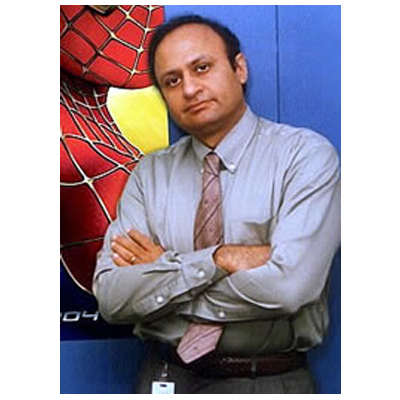
  • ZEEL to globally strengthen its ‘largest Indian entertainment’ brand identity, says Amit Goenka

    Internet is significantly changing the way we consume entertainment — AR and VR are becoming commonplace. Over 60% of the world’s population is ‘digitally connected’ today. Content companies and advertisers are swiftly adapting to the new reality and redefining their strategies to stay on the top of the game. ZEEL’s international presence makes it one of the largest Indian entertainment brands and it wants to make the brand stronger, going forward. ZEEL CEO – international business Amit Goenka discusses the group’s plans and strategies in the company’s annual report:    

    How do you think the digital market will evolve and at what stage is India in that evolution process?

    Internet is dramatically changing the world as we know it. Over half the world now uses Internet, and technologies like AR and VR are fast becoming commonplace. Internet has already become an integral part of everyday life for most of the world’s population. Over 60% of the world’s population now owns a mobile phone and is ‘digitally connected’ and we will see a proliferation of this trend going forward. With increasing online content consumption, media businesses, content companies and advertisers are also rapidly adapting to the new reality and redefining their strategies accordingly to stay ahead and stay relevant.

    Given that Internet penetration in India is still under 40%, there is a significant growth potential

    for digital content consumption. We see the growth momentum across digital increasingly

    coming from smaller towns and rural areas, as urban areas get saturated. Businesses, across

    the board, will have to look at innovative ways to reach and capture the rural market given its

    propensity to consume content in vernacular languages and lack of comfort with English.

    What is ZEEL’s strategy for digital business?

    As an entertainment content company, it remains extremely important for us to be present where

    our consumers are, and so having a digital presence remains integral to our strategy for

    future growth.

    We launched the first Over-The-Top (OTT) platform in India in 2012 – dittoTV, our aggregator

    SVOD offering for live TV. We re-launched it last year at a strategic and disruptive price of ` 20 per month. We also partnered with leading telecom operators for both distribution and payment, which has been a successful move for us. OZEE, our free-to-consumer AVOD platform, has been showing excellent traction and is a leader in engagement metrics. With the launch of our global OTT platform Z5, we will consolidate our SVOD and AVOD offerings. It will be the single destination for all our content.

    How do you see competition from local players like Hotstar, Voot and international players like Amazon Prime and Netflix?

    The industry is still at a nascent stage. Though the digital consumption has grown significantly

    over the last couple of years, most of the players are still experimenting with different monetisation models. At this point, the entry of new players, especially the international ones, to my mind, is expanding the market size and popularising the category. Players have raised significant funds and are investing in content creation. These are also exciting times for users who are being wooed across the board with a plethora of choices and are getting to experiment with different genres of content. We do see this trend settling down in the future and expect a

    degree of consolidation in the industry. This will also lead to players finding their own content

    niche in which they would want to operate. We have our own strategy in place and are geared to create a distinct positioning for ourselves despite the cluttered market.

    What would make your digital product stand out from the others?

    Content is the key to attract a sustainable viewer base across any platform. Our experience and understanding of content and consumer certainly gives us a natural edge. The content viewing pattern on digital platforms is different from television and we are tweaking our content strategy accordingly to suit these needs. In addition, a rich viewing experience aided by a highly intuitive UI (user interface) across multiple languages is one of our key focus areas. Also, given our spread of channels across languages and geographies, a strong recommendation engine would help users to seamlessly navigate content suiting their needs.

    Do you think digital will take away share of advertising from television?

    I think both would complement each other. In a market like India where television penetration

    will continue to grow for years, it will remain the primary medium of entertainment for majority of the population. Digital allows content consumption on the move and is adding to the overall video consumption. Even in evolved markets like the US, television advertising is still growing despite the increasing share of digital. While we see growth in both the mediums, digital will grow at a higher rate over the next few years in India.

    Could you give a brief overview of ZEEL’s international business?

    There are two parts of our international business – the first part caters to the Indian and South Asian diaspora and the second part, caters to the foreign audience in their native languages. As far as the diaspora is concerned, I think we have reached most of the countries with sizeable Indian population. The endeavour here is to offer more channels and expand our distribution reach.

    We started targeting foreign audience having affinity for Indian content in 2008, and have significantly expanded our presence in the last eighteen months. I think this journey has just begun. Currently, we are offering content made for Indian market, dubbed, subtitled or repurposed as per the requirements of a country. We have 13 channels in this category and as we learn more about the needs of the audience, we will gradually make content for some of those markets.

    How would you describe your international journey so far?

    ZEEL forayed into the international business in 1994 with the launch of Zee TV in the Middle East & Pakistan. Following that, we commenced operations in Europe (UK) in 1995, Africa in 1996, US in 1998 and lastly APAC in 2004. Having reached Indian diaspora in all significant markets, we started targeting markets with a liking for Indian content. This journey commenced with the launch of Zee Aflam in MENA region. Our international presence makes us one of the largest Indian entertainment brands and we want to make this brand stronger, going forward.

    What are the factors you consider while launching a channel for non-Indian audience?

    The proposition to launch a new channel begins with identifying markets where a content gap

    exists and we can leverage the strength of our library to offer differentiated content. This involves extensive research to understand the market dynamics including learning about consumer preferences, competition and market size amongst others. This is a lengthy process and only a few of the markets meet our criteria for launch. We are happy that most of our launches targeted at the non-Indian audiences have been received well. Our channels in the Middle East – Zee Aflam and Zee Alwan – have been performing well for a long time. One of our recent launches, Zee World, consistently ranks amongst the top three channels in the South African market.

  • Landing page a promotional tool, works only for a finite period, says Chrome DM CEO

    In the television news ecosystem, the latest battle that has burst out is that of landing pages on distribution platforms such as DTH and cable TV operators being hijacked by older rivals for promotional feeds. Chrome DM founder and CEO Pankaj Krishna spoke to indiantelevision.com (excerpts):


    After Dual LCNs, channels taking over landing pages seems to be the latest trend. Your take?

    If you look at historical trends, broadcasters have been actively using landing pages to garner trials and thereby viewership for years together. The idea was that higher the availability, the greater the chances that the channel would attract repeat viewing. Until about a year back, MSOs had been monetising landing pages as a source of additional revenue stream by running promos and commercials. But broadcasters taking over landing pages in totality had actually started as a deal between a major broadcaster and a big MSO, and was quickly replicated by others.

    In more recent times however, it is the media coverage of the competition in the English News genre which has actually brought it to the forefront.  

    What we have also seen is that there seems to be an effort to achieve Dual LCN through the surrogate route of being present on the landing page, and then again at the channel’s usual point of placement. I would also like to add that, strictly speaking, a channel’s mere presence on the landing page does not automatically denote it being present on Dual LCNs. In other words, all landing pages do not constitute dual LCN.

    How does taking over a landing page increase viewership?

    According to Chrome OAP, when you switch on your TV, it takes an average time of 43 seconds to arrive at the desired programme or the channel, thus potentially adding to the landing page’s viewership under the present ratings system.

    In terms of trends, where is the landing page phenomena going/headed?

    According to the Chrome Landing Page Report (LPR), in Week 22 between 27th May and 2nd June, the Teleshopping genre has the highest instances of landing pages at 178 counts, followed by Hindi GEC and English News.

    public://111111111111111111111_0.jpg

    Source: Chrome LPR, Wk-22 (27th May to 2nd June)

    If you compare this data with data from the past few weeks, I am glad that there has been a considerable fall in the number of landing pages across genre s. Furthermore, if we examine data region-wise, compared to metro cities, the landing pages have been most visible in smaller market segments. For example, UP with a 1-10 lakh population segment has witnessed maximum instances of landing pages followed by Maharashtra and Goa. Interestingly, Kerala in its 10-75 lakh market category had the third largest number of headends with instances of landing pages. If we go a step further and make a content-wise assessment, it is teleshopping which emerges as the top genre with instances of landing pages followed by Hindi GEC and English News. Yet the over-all trend seems somewhat inconsistent in view of the fact that the landing pages on channels for kids had shot up almost three times in the 22nd week before taking a drastic plunge in the third week. Moreover,

    public://222222222222222222.jpg


    Telugu channels have been relatively flat through the three weeks.


    public://33333333333333333.jpg

    Source: Chrome LPR, Wk-22 (27th May to 2nd June)

    But, wouldn’t MSOs be the bigger beneficiaries here?

    It is certainly an additional source of revenue generation for the MSOs considering that the landing page is priced on the higher side. For broadcasters on the other hand, they get to increase their viewership as well as the OTS (Opportunity-to-see). Based on a back-of-the-envelope calculation, on DTH platforms, it could run into almost Rs. one crore a day!

    How ethical is it to resort to landing pages to increase viewership?

    From the broadcaster’s standpoint, the concept of landing page as of now is open-ended. Otherwise, this would amount to a clear distortion of market stemming from exorbitant biddings offered to Multi system operators (MSOs) and the DTH Operators, who control landing pages.

    Given the tricky nature of the subject, it’s a matter of subjectivity and only the designated regulators can take a call, one way or another. I would say that taking over landing pages to boost viewership should not be used as it would force others to follow suit thus eventually triggering a bidding war.

    As a matter of fact, landing page is a promotional tool which works only when it is utilised for a finite period. If allotted to broadcasters, it would make no sense as it would amount to converting a neutral advertorial space to a full-time channel effectively, unfair for the rest of the competition.


  • “Dual LCNs is not the best thing to do” — Chrome Data CEO Pankaj Krishna

    The dual and multiple LCNs issue has sparked off a furore with English news television channels after Republic TV announced eye-popping numbers in week one of its launch.  The media has been buffeted with leaked complaints to the regulator by news channels against one another and the viewership monitoring agency – the Broadcast Audience Research Council of India (BARC India).

    Chrome Data  Analytics & Media has been monitoring cable TV and DTH networks with its own household panels. And, its founder & CEO Pankaj Krishna has been on the frontlines where the action is. We got in touch with him to get his views on the English news channel fracas and what it all means.

    Excerpts from the interview:

    Q. What’s your take on Republic TV’s distribution?

    As per the Chrome data released on 15 May, Republic had already managed the highest OTS at 65 per cent as per Chrome track 2.0, in Week 19 (6 May – 12 May), All India Urban Market, in the English News genre.

    TABLE

    MARKET

    REPUBLIC TV  

    CNN NEWS 18  

    INDIA TODAY  

    TIMES NOW  

    NDTV 24X7  

    ALL INDIA Urban

    64.7

    64.7

    61.0

    61.8

    59.3

    Source: Chrome Track 2.0, Week 19, Market: All India Urban

    Further, if you were to factor in the impact of distribution on the BARC Reach/Coverage – as per our predictive DPi (a Chrome proprietary tool which gives the direct impact of distribution on channel trials) taking into account Chrome Data released on Monday, that is, 15   May, 2017, Republic TV was well headed to take on the number one slot across India on the ratings panel.

    Chrome Predictive DPi


    OTS (%)

    Conversion

    Reach (%)

    Times Now

    61.8

    4.9%

    3.01

    Republic TV

    64.7

    5.6%

    3.64

    NDTV 24*7

    59.3

    1.89%

    1.12

    India Today

    61.0

    1.78%

    1.09

    CNN News18

    64.7

    1.54%

    1.00

    Source: Chrome Predictive DPi, Market: All India (Urban), TG: All 22+ Male ABC, Wk 19’17

    In fact in the current week 20, with a Dual LCN count 43 headends, translating to dual OTS viewer, OTS of 68.2 per cent (Part data captured Chrome OTS Data till Thursday, 18 May, 7 PM), Republic TV is well on its way to making trade headlines for week 20 as well (Saturday 13 to Friday 19 May).

    According to you, does dual LCN help channels increase their viewership?

    Yes, it does. The objective of dual LCN could be to monetise the simplest law of probability on the ratings. For example, if you were to visit a supermarket, higher visibility of a product leads to impulse buying. Similarly, the channel with higher availability increases the chances of higher visibility, which eventually escalates viewership.


    public://republic_0.jpg

    Source: Chrome SES, Week 20 (13 May-19 May 2017)

    So, is it ethical?

    Whether it is ethical or unethical is a call that should be taken by the regulators. It is beyond our purview. Looking at the larger picture, I probably would say it is not the best thing to do because if one channel opts for dual/multiple LCNs, others are compelled to follow it to safeguard their numbers, consequently causing a spiralling effect on the carriage fees. We track 1277 channels as on 18  May, 2017 (available for downlink in India), however, in linear TV, the operators can carry only 106 channels on analogue, and approximately 300 on digital – resulting in a gap in supply and demand. Dual LCNs add to this gap by further blocking LCNs.

    What else is Republic doing to escalate viewership?

    There are primarily two ways of impacting channel trials – consumer pull led by content affinity, and broadcaster push led by distribution initiatives. Republic TV had made it in both. So yes, dual LCNS do have a direct positive impact on the viewership. Consumer pull clubbed with strategic distribution planning has a huge impact on the overall performance of a channel.

    There are several other factors that boost ratings of a channel, such as the content, on-air-presentation and many more. As per Chrome OAP track (anchor delivery, graphical interaction with expert panel members, treatment to live coverage, type of stories, screen-packaging etc.), Republic TV has outscored its competition average. 

    Chrome OAP Parameters

    Republic TV

    Average of Top 3 Channels

    Anchor Affinity

    7.24

    5.19

    All day Stories covered

    5.53

    5.41

    Screen Look & Feel

    5.62

    5.25

    Breaking News & Packaging

    6.86

    4.96

    Source: Chrome On-Air Presentation Track

    Period: 6 to 11 May 2017

    Sample: 9,874

    Market: All India Urban

    Chrome OAP is a proprietary tool that helps broadcasters to optimise factors determining viewers’ behaviour and engagement with on–air screen elements. The scores are given on a scale of 1 to 10.

    As per your findings, who all are engaged in dual/multiple LCNs?

    To a great extent, it happens across the industry including all the genres. Whether a broadcaster does it, or it happens on-ground by a cable operator to fill the blank LCNs is beyond our audits.

    However, owing to bandwidth constraints, the former seems to be more likely. A number of TV channels across India are seen available on dual LCNs to reach out to more audience. Dual/multiple LCNs are mostly seen during blockbuster events (such as budgets for the business news genre) and during new launches as a part of the channel’s marketing exercise.

  • Being a ‘cry baby’ won’t help Times Group, says Republic TV’s Arnab Goswami

    MUMBAI: The slugfest between the established leader and the new entrant in the national English news genre is getting murkier by the day. After allegations of telecasting Republic TV on multiple feeds by some MSOs surfaced, and the NBA petitioning the TRAI, there were reports of unethical behaviour against the new channel’s editor.

    No might or strategy however seems to be working to put down the self-proclaimed David in its fight with the Goliath. Hours after Bennett Coleman registered a police complaint against the former editor of Times Now, the Republic TV founder and editor Arnab Goswami called up indiantelevision.com to talk about his triumphs in the audio-visual media as well as the social media.

    Excerpts:

    How is Republic TV doing?

    The channel has got tremendous traction — it’s way above on our own expectations. Our digital traction, social media traction — all have been extremely encouraging. We are tracking viewers’ behaviour and their responses to our campaigns and the stories that we are breaking everyday — it is without an iota of doubt we are on path to be the leaders.

    What do you have to say about the police complaint against you?

    I just wanted to say in the response to this attempt by the Times of India Group that  it’s a desperate act of the party which is losing. As I said at the FICCI conference recently, this is the David versus Goliath battle, and the Times of India Group has lost all its viewership.

    They must look at their content and work in their newsrooms, and sit in the police station. If they would have spent more time in their newsroom rather than in the police station, may be, somebody would have watched them. But, essentially, the desperation and paranoia of losing Goliath proves that they are unable to come to terms with defeat. The TOI Group must accept defeat gracefully — it will be better for them.

    The TOI Group must introspect the reasons for their rejection. We telecast a numbers of big stories and exposes from day one of our launch — 6 May. And, people have accepted us with open arms.

    Aren’t you legally on a weak wicket if the tapes which you played in Sunanda Pushkar and Lalu Yadav-Shahabuddin case were actually recorded during your employment at Times Now?

    (Arnab Goswami parries the actual question)

    The Sunanda Pushkar case been going on for two and half years now. Justice has been denied in this case for this period. Journalism is all about pursuing the truth, and I will pursue the truth. I am not responsible if the Delhi Police has not followed up on this case. When we were with Times Now, Prema Sridevi was instructed by her immediate superior of Times Now not to share these tapes with the police.

    You seem to be saying all that is being said against you is totally wrong.

    The paranoid behaviour of the Times of India Group including the impeccably foolish attempt  to claim copyright over the phrase “Nation wants to know” has rendered them a laughing stock in the eyes of the people across the country. Never before has one heard a case of one media house going to the police because of a story done by another media house.

    I would like like thank TOI for giving us the viewership. A senior TOI executive told us that they would be watching Republic TV. Being a “cry baby” would not help the TOI Group.

    You have still not answered our question of whether or not it’s correct to take away material that ethically belongs to your (now former) employer.

    If the Times of India Groups wants to take me to jail, I will walk from here to jail. This will be the first time in the history of journalism that a journalist and editor has sent to jail for for following a murder investigation. Would you not agree that from 6 May, news has not been the same?

    Vineet Jain and the Times Group should invest more time with their lawyers in police stations. But, I have many more news stories to break and follow.

    Are you saying that you would want to win by hook or crook?

    There is no hook and there is no crook, my friend — this is only journalism.

  • 2-14 age-group is highly under-indexed, avers Sony Yay! business head Leena Lele Dutta

    Leena Lele Dutta had been hired in 2007 to establish the content distribution and licensing division of Sony Pictures Television in India in 2007 and expand the footprint thereafter into the south Asian markets. It’s been more than nine years Dutta has been a part of growing Sony family.  Currently, Dutta is heading the Sony Pictures Network India’s CEO N P Singh’s brainchild new kids channel — Sony Yay! In conversation with Indiantelevision.com’s Sonam Saini, Dutta shared her experience of shifting from B2B to B2C.

    Excerpts:

    You have been with Sony Pictures Television for over nine years. How has been the shift from content distribution arm to heading a kids channel? What are the challenges you are facing?

    My earlier role with SPE back in 2007 was to set up the content distribution arm for India and that included licensing of various Hollywood movies the studio produced and acquire across its four main studios. Not only the movie piece but also the television shows which are actually produced there and syndicated here in the network.

    The first year was invested in establishing the content arm and figuring out the role because, prior to that, I was a hardcore ad sales person. This is was the new channel but, in seven years, the market has also evolved.

    Being the country manager, I was responsible for monetisation of the existing content, and here it is the other way round. Here, it is the health of the overall business, here it is more of a B2C business. Here your clients are 2-14-year-old kids who are there across the length and breadth of the country. A kids channel was the missing link in the network.

    It is a mindset evolution. What made is easier is the transition within the Sony family. The kids channel, NP’s (N.P Singh) brainchild, wanted to get somebody on board, and here I am.

    Where did you see scope for a kids channel?

    A lot of scope existed in the space. With our four desi shows, we are very confident of making a mark. More similar shows are coming in October, and being the only channel that caters 100 per cent desi content, we will definitely have a well-known presence by the end of first year for Sony Yay!.

    We also want Sony Yay!, as the brand name stands for happiness, to spread happiness and contentment among the kids.

    The same thing will reflect in our marketing strategies. We will have lots of mall activities, theme park activities which resonate with Yay! We will also have CSR activity which will give Yay! moments to kids. These measures will co-exist with our content offering.  We would be pursuing school contract programme after summer breaks.

    How big is the kids genre in India market?

    The category is the third largest after Hindi general entertainment channels and Hindi movies channels. Accordig to the new BARC system, the 2-14 age group (*) is phenomenally huge. The biggest challenge this category has right now is that it’s highly under-indexed. 

    A lot of advertisers are looking to invest in the kids category — to focus on the 2-14 age-group. However, they are completely discounting the parents who are watching the content as well. In the coming months, we hope to engage with parents more in consuming our channel and not only expand the category. We also have significant play in the area where it is seen more seriously than just a kids channel.

    What will Sony Yay!’s strategy going forward?

    The strategy is very clear, we wanted to be the most preferred brand among the kids. We want people to know what Sony Yay! stands for.  Our partnership with Tiger Shroff has worked tremendously well. We have got a huge response from the kids and their mothers. The launch campaign has been talked about.

    Our colleagues in the industry have observed quite a movement in this category. Whatever we are doing including our content and marketing initiatives, we are here for the long haul. From day one, a lot of investment and efforts have been put into the new channel to make a mark and shake the category.

    At the press conference, you had mentioned that the IPs remain with the channel. Is there a chance that you might sell/licence rights to OTT players?

    Those are the primary revenue models we will consider. We will also consider the licensing and merchandising model as well. That’s the benefit of owning the IPs, and not sharing. There is a strategy of monetisation going ahead with the characters, but we are not going to roll it out in the immediate future.

    What are challenges you faced while distributing the channel?

    Luckily, our distribution team has been phenomenal as we stand today we are present in almost 90 per cent of all digital homes. We have been fairly well distributed — in fact, some major MSOs are willing to carry us in top five of the kids genre, which helped boost our ranking.


    (* Sony has helped rectify the BARC India category figures to GRP 582)  


    Also Read

    Sony to shift Animax channel to SonyLiv

    Age-appropriate ‘safe’ content is taken from Nat Geo Kids, Sony & Amar Chitra: Shirsa

    Sony Pictures Network builds team for kids channel, appoints two execs

  • Industry needs to understand on-ground changes in distribution, not question flux in data, says Partho Dasgupta

    ‘Works at something sometimes somewhere’. That’s the description of the work profile on the Facebook page of Partho Dasgupta, chief executive of Broadcast Audience Research Council of India or BARC India. And, that probably also gives a hint to all about the personality of the man, who sits on a hot seat balancing the delicate (and, may be, at times challenging, some would say) interests of various stakeholders of the organization, including the government.

    When Dasgupta is not busy absorbing the data collated and crunched by his team at BARC India, he is, probably, strategizing along with his core team about the initiatives to be rolled out in a complex and diversified market like India or reading about branding and getting an insight into Indian media through books like ‘Behind a Billion Screens: What Television Tells Us About Modern India’.

    And, when he does get some family time, he would love nothing better than to travel along with his family and follow the F1 races around the world (speed helps me breathe, he says on his FB page) with a single malt whiskey – the older it is the better, his friends chuckle.

    A media industry veteran,  Dasgupta’s stints at various organizations also do give a glimpse at his various areas of interests, which include organizations like the Times of India Group, Future Group, BARC India and also an entrepreneurial jab at a start-up that he mentored. Though he’s a hard taskmaster, as claimed by some of his past and present colleagues, he is also looked up to as a ‘yaroon ka yaar’ or a true friend who’s always around when you need him most.

    On the occasion of BARC India’s second anniversary, Indiantelevision.com engages Dasgupta on a wide range of subjects in an interview. Excerpts:

    How would you describe the journey till now — challenging or a process of evolution?

    Any change is challenging and it’s true for us as well. From the time BARC India started reporting TV viewership, it has been a process of evolution for the industry, including us. The industry evolved when they understood fidelity of BARC India data, which was a true representative of actual viewership behavior. With support of industry, we have grown in both size and experience over the last two years. We have hired the right talent who have successfully reduced client queries and helped in a smooth transition for adopting the data.

    Apart from addressing data needs of our clients, we also made an effort to reach out to the public at large, and sensitize them about BARC India data. We have made headline viewership data available to all through our mobile app and social media platforms. While we have achieved some of the things we had set out for, there is still a lot we aspire to do.

    Going forward, how do you see BARC making progress? What are the timelines and signposts?

    This year we will see our panel expanding from 20,000 to 30,000 reporting homes. Combined with the newly added homes, we will also be seeding some new homes as part of our regular churn policy. We will also stop reporting on all analogue homes across the country with the exception of Tamil Nadu state from 1 July 2017. With the current digitization mandate for TN, hopefully the state’s analogue reporting will also stop soon.  All this may lead to some interim flux, but in the long term will improve robustness of our viewership data. We are also trying to innovate panel expansion by tying up directly with key DTH and digital cable operators to enable return path data (RPD).       

    This year is also crucial for us as we will launch something that hasn’t been attempted in the country as yet — a third party digital viewership measurement. We have set the ball rolling by announcing the umbrella brand EKAM under which our digital products will be offered. We are hoping to roll out the first EKAM product this year.

    Apart from ensuring a stable weekly data service, we have launched THiNK (a monthly insights newsletter), Alpha Club (a report on viewership trends of NCCS A1, A2, A3 of 6 mega cities), and kids genre special report for the benefit of our subscribers. Earlier this year, we successfully rolled out our new universe estimate. We have also set up an independent disciplinary committee to check attempts at panel infiltration. Very soon industry will also be able to access designated independent consultancy firms who would provide strategic consultancy services.

    Unlike some other global audience measurement currencies, BARC India’s impressions method seems a tad complex. How is it explained to clients, data users and the regulator and the government?

    The terminology and methodology for data outputs is in keeping with global standards. BARC India Media Workstation (BMW) software used by subscribers for viewership data is easy to operate and is being used across 27+ countries. We also engage with our clients to understand their needs and that helps us align our services accordingly. We have a strong training team, which trains and provides support to every subscriber, new and existing.

    In fact, last year we launched a BMW certification programme for our subscribers  to enable them to test their knowledge of the software. The results have been very encouraging. We also meet the regulator and government from time to time to update them about the developments.

    While it is endorsed by the industry, BARC India still faces some criticism from certain quarters and smaller TV players about security and its biases towards the biggies who are funding it. Your reactions.

    While we are a joint industry company (JIC), we have never functioned like a monopoly and so we always welcome feedback from subscribers. As far as funding goes, we got the funding without any substantial equity investment from any shareholder. Our operations are built upon a unique debt funded model. So, it would be incorrect to say that “biggies” funded BARC India. We have a common pricing philosophy for all broadcasters, irrespective of whether it is a small or big broadcaster. For transparency, we have also placed it (the subscription methodology) on our website.

    Talking of security, BARC India didn’t hold back any punches while taking action against those involved in panel infiltration and it included some of the big names as well. Yes, there are some issues which our subscribers face. But that is more to do with understanding the data. Our team is working day in and day out to help them. This is normal for any new system and for all measurement companies around the world.    

    Did BARC India and its top management foresee some of the problems and controversies that have beset the organization in recent times? Like the court cases arising out of chastising some users of paid/subscribedBARC data for alleged attempts at data manipulation?

    If acting against defaulters who try to infiltrate our panel homes leads to controversy, we would happily get into it. That’s because we are answerable to our subscribers and it is our responsibility to ensure that the data we release holds value. Panel infiltration is a legacy issue, but BARC India has decided to take it head on. With advertising expenditure on TV in an upward trend, it is very important for us to ensure infiltration activities are rooted out.

    While the defaulters have been crying foul, we have received tremendous support from the industry. Our intent is to always produce a currency which is fair, transparent and representative.

    Was the formation of the disciplinary council, which seems a revamp of the ethics committee, a result of such cases mentioned above?

    The independent six-member disciplinary council, under the leadership of Justice Mukul Mudgal, will further strengthen transparency and credibility of our measurement system. As it is an independent body, cases of infiltration or any such issue can be heard by the committee. This will ensure that both the subscribers and BARCIndia get a fair hearing in matters like these.

    We have our on-ground vigilance team, which keeps a track of any malpractice. The disciplinary council will independently examine vigilance team reports and where culpability is clearly established, it will be empowered to order punitive action appropriate to the level of an offence. This has again been done in keeping with our philosophy of transparency.

    Rolling out digital measurement was announced by you in a Hong Kong conference almost two years back. What has held back the rollout so far?

    Third party digital viewership measurement has never been attempted in India. In fact, some of the products we are launching are a global first. Also, we are a JIC, which takes a 360 degree feedback from all its stakeholders. We had to first understand the industry needs and then design services accordingly. That apart, consumption pattern in India is very different from what exists globally. This only makes the task more challenging. We wanted to come out with a product that is robust and meets everyone’s needs.

    It is important to understand that nowhere in the world have these kind of services been launched in less than at least four to five years. They are still evolving. In fact, we are being extremely ambitious when we say 18-24 months roll out of all products, which will start in a phased manner from 2017 onwards.

    Did the digital measurement rollout get entangled in lack of consensus amongst various stakeholders and plain industry politics?

    Frankly, I do not feel that there has been any unjustifiable delay. We have a digital technical committee, just like for TV. We went to several countries to understand digital measurement in those markets. Also, we had to set up a new digital team from scratch. We have invested a lot of time in understanding the needs of the industry and setting up a team which could give us the best product. We always wanted to come up with a product, which is as strong as our TV measurement. As regards consensus, I guess we are the only JIC in a major country, which has digital publishers, platforms and broadcasters on the same table, taking consensus decisions.

    What lessons have you and the organization learnt in these two years of operation in a complex, but diversified and a big market like India?

    Learning has been a continuous process and we still learn every single day from the market. What we have understood is that nothing here is permanent. Someone might be happy with the data released this week and the same person might be upset the next week as he might feel the data isn’t in his favour. I, frankly, don’t blame them. Our subscribers have been used to seeing data with hardly any variation, for years. Now, when we capture data from more number of panel homes, use better and advanced technology to monitor and measure data, the data is bound to faithfully fluctuate, which arises out of normal human behavior. This does not mean our data is not accurate, but it shows that we are capturing what India is watching.

    To give an example, in months when Indian kids are busy preparing for exams or are giving exams, kids’ genre (ratings) is bound to fall. This picks up again from March onwards when the vacation season kicks in. Our data captures such nuances and changes. Not just this, take, for instance, total TV viewership in the country. Instances of heat waves and power cuts across the country from March onwards leads to a drop in TV viewership — when compared to the October-December period. This has been a trend for long and this education is an ongoing task for us.  

    Personally you have held a view that TV is far from dead despite digital’s impressive march. What gives you so much of conviction?

    Look at advertising expenditures. Yes, digital is growing, but TV remains the most important medium for advertisers to get eyeballs. Talking of statistics, while more people are moving to digital, TV with 64 per cent penetration contributes to almost 45 per cent of ad revenue. Not just this, print, even today, contributes to 30 per cent of ad revenue and this happens only in India. With penetration of TV increasing in the next few years, its contribution to ad revenue will only go up and so, while digital is a significant contributor, it is still a small base and thus would take a while for any such tectonic shift to happen in India.

    India is an under-marketed country with the ad:GDP ratio of 0.38 per cent, while the global averages are 0.7 per cent. Countries like China and Brazil have 0.46 per cent and 1.02 per cent, respectively. Good measurement being one of the drivers, I feel advertising spends will increase in India substantially and all mediums will grow, led by TV and digital.

    How much of growth in TV viewership do you foresee in the short to medium term of one to three years? What will fuel this growth — rise of multi-TV homes in rural areas or simple one-TV homes coming under the measurement radar and, thus, increasing the total number of TV HHs in India?

    As of 2016, India boasts of 183 million TV households, a 19 per cent growth from 2015. Sixteen years ago, one-third of Indian households had TV, but today close to two-thirds of households own TV. These figures will only go up in the coming years, led by rural. Of the 183 million TV households, rural contributes to 99 million homes, but its TV penetration remains at 52 per cent. This leaves huge headroom for growth.

    Multi-TV homes in the country today stands at 3.4 per cent of total TV homes. Increase in TV homes will also be driven by this.

    Our Broadcast India 2016 survey shows a drop of 19 per cent in NCCS D/E. This means that people are moving up the affluence chain. The relative share of NCCS `A’ homes has also come down due to the rise of nuclear families. This has led to growth in NCCS `B’ and `C’ homes, and, thus, increase in TV homes. Such phenomena of nuclear families will increase in the future, leading to further growth in NCCS `B’ and `C’ as well as TV homes. Hence, overall, we still feel there is big headroom for TV growth still.

    BARC India was supposed to have been in talks with DTH operators for return path data (RPD) to boost data generation. What’s the status of that proposal?

    Yes, we are in talks with a number of DTH and MSOs. We should be making some announcement on this front soon. These are complex solutions and some of them will be world firsts.

    What are some other initiatives being planned by BARC in the short term to bring more robustness in its data generation?

    Expansion of panel size will help build higher degree of accuracy in our data. The RPD initiative is also aimed at the same objective. Annual universe updates will allow us to map changes on the ground, and that will reflect in accuracy of the data as well.

    Will the technology and the methodology used be future proof?

    Yes. In fact, the reason we chose to use unique audio watermarking technology in the first place was to ensure that it is future-ready. BARC India system captures data about TV content consumed through any form of distribution — terrestrial, DTH, analogue cable, digital cable and digital.

    Would BARC look at STB-embedded software rather than a separate meter to counter attempts at hacking and manipulations? Sign-ins could be like in Netflix where profiles sign in and tracking/recommendations happen based on profile of user.

    Our tie-ups with DTH operators and MSOs for RPD are an attempt to do this. This will not only increase the number of sample panel homes, but will also make infiltration efforts ineffective. We will innovate more with our meter technology to make it as much hack-proof as possible.

    With the movement towards handset consumption of video growing, what tech is BARC looking at monitoring such trends? When would the rollout happen and who’d fund it?

    EKAM Pulse, the first digital product will be rolled out by this year. EKAM Pulse will allow granular level ad campaign measurement. It will measure reach of ad campaigns at multiple levels of an ad campaign. Some of the metrics it will provide are unique reach, frequency, on-target percentage and demography by geography. The other digital products will be rolled out in a phased manner in the next 18-24 months. All these products will be funded byBARC India.

    Do you see BARC working with clients just as the former TAM is with Tata Sky to offer them viewing solutions?

    Yes.

    With AI coming in, how do you see that being put to viewership enhancement/tracking/recommendation and how do you see BARC reacting/using it, if at all?

    We have already deployed AI at two levels. One at the panel level, which is then extrapolated to know TV viewing habits of TV universe and the other that helps us track any aberration in the viewing pattern of our panel. We use technology in a big way and are looking to move all our applications to the big data environment and accessible through cloud to make us future ready.

    Is BARC contemplating measurement of radio listenership?

    Not as of now. The radio industry should be able to support the cost of measurement to make it viable for any player.

    What would be your message to the industry, players, the regulator and the government on the occasion of BARC India’s second anniversary?

    The industry has been very supportive in the last two years and we hope that it would continue to offer its support. In fact, I would like to take this opportunity to thank all our stakeholders and subscribers.

    One point that I would like to raise is that factors like analogue switch offs in Phase IV (of digitization), TRAI order(s) and seasonal swings will continue to impact TV viewership. However, we would like the industry to understand these on-ground changes before questioning the flux in data. While the MIB mandate is to increase the panel size by 10k each year, till our fourth year of operation, we are aiming at multi-fold increase. We would like the industry to come together and support us to achieve this target.

    Also Read :

    BARC India to halt analogue measurement from July, up overall data collection

    ‘Common standard’ good to measure ‘unbundled’ viewership & ads cost-effectiveness: EKAM

    BARC India gets thumbs up for 2016…but challenges remain

    BARC India suspends three errant channels’ review

  • Zingaat is the Las Vegas of Marathi entertainment, says Vikas Varma

    After creating 9XM,  Hummra M, Music F Fatafati, Bflix Movies,  Dicky “Speak” Pvt Ltd CEO Vikas Varma has launched his own Marathi music TV channel Zingaat. Apart from Varma,  Ramesh Jassani, Shirish Ruparel and  Narayan Sharma own shares in the company.  “All four of us bring tremendous television, advertising and media experience to the table making this a formidable combination of content, distribution, advertising, sales and marketing. The four musketeers, together, are the life force of Zingaat,” said Verma.

    In conversation with Indiantelevision.com’s Parvinder Sandhu, Vikas Varma shares his plans and insights into his channel. Excerpts:

    Where did you see space for a new Marathi music channel? Weren’t there a plenty already?

    A space or a vacuum need not exist for a product that is giving the viewers an entirely refreshing and new entertainment experience. Zingaat, as the name proclaims, is such a viewing experience, totally in tune with today’s Marathi viewer. Marathi movies and music, unjustly so, have for too long lived under the shadow of Bollywood. However, that has changed dramatically in the last few years. Marathi movies and music claimed and achieved its rightful top position and it was important to create a TV channel that reflects and celebrates just that. Thus, Zingaat.

    Zingaat looks a little like what 9XM Hindi Music channel used to look when it was #1. Your comments on that.

    9XM was created by me in 2007, which immediately became #1 in its second week of launch. But, that was in 2007, which I refer to as ‘Version-1’. After this, I created the Bhojpuri Music Channel, Hummra-M, which too became #1 and then Music-F Fatafati, the Bangla Music Channel, with similar results. Those were ‘Version-2 & 3’.

    Zingaat is a fantastically upgraded and entertaining music channel, where I have used the accumulated experience of last 10 years, since I created 9XM, Hummra-M and Music-F Fatafati. Zingaat is as different from 9XM as iPhone-1 is different from iPhone-7. That, Zingaat is the only TV channel celebrating the new face, success and pride of Maharashtra, makes it even more exciting and fulfilling for me.

    Shall we say Zingaat could have been inspired by ideas such as Sony Rox’ that primarily focuses on huge mainly-Hindi music popular in the sub-continent and among the diaspora across the globe?

    The only inspiration that Zingaat had and continues to seek, is the joy and celebration of music. It is the Zingaat way of life. Our viewers experience this and participate in this joyfulness, eagerly and happily.

    What has been your research in this context? What is your target group?

    Youthfulness, music and joy has the infinite power to attract humans of all ages and demographics. Zingaat is this sparkling, joyful TV Channel that personifies these qualities. These qualities are highlighted by our Channel Super Heroes called, Ussal, Missal and Maddy. They sing, dance, play pranks, recite poems and represent the free spirit of Zingaat and all our viewers. One does not need research to tell us that almost everyone loves candy. However, under the hood of our brand Zingaat, lies the result of some serious content selection, which has been mood-mapped to perfection.

    Our Super Heroes, Ussal, Missal and Maddy have been inspired by the colours of the rainbow and sound of falling rain, however the technology used to create them are cutting edge 3-D animation tools.

    Which genres of music do you plan to have? Have any reality shows been planned too?

    Zingaat is the Las Vegas of Marathi entertainment. Only the best acts come here. So, the display window showcases only Hit-Pe-Super-hit. Expect only the best of best on Zingaat. Yes, a few shows are in the pipeline, and we are very excited to be showcasing these products for the first time and in this manner to our viewers.

    What are the marketing plans for Zingaat?

    We have an extensive marketing plan in progress right now. This includes over 500 billboards all over Maharashtra as well as radio and TV spots. Our focus is also the interiors of Maharashtra where we will be taking road-shows and high-energy ground activation. That apart, we are organising contests for our viewers, with high-value premium gifts. And, not to forget movie halls and cinemas, where Zingaat will spread its joy and fun.

    How are the viewers responding to Zingaat. How is the feedback?

    The response has been phenomenal and in my experience, and unprecedented. Zingaat has a “Selfie’ showcase for our viewers on its TV screen which runs constantly 24X7. We have been getting thousands of beautiful selfies from our viewers non-stop. We are delighted to show-off our viewers happy faces on our channel. This is the age of the smart phone and Zingaat complements that as a ‘smart channel’.

    Excited viewers result in super excited advertisers who have been meeting us and want to be a part of our mission to heighten viewer experience. So, a lot of Zingaat razzle-dazzle is spreading its magic all around. All I can say is, the party has just begun, wear your fanciest clothes and jump in!

    Also Read :

    Large Networks lead regional channels, programme ratings in weeks 1 to 8 of 2017

    ‘Kasaav’ best film, UP most movie-friendly state in National Film Awards

    SonyLiv launches original Marathi web-series ‘YOLO’

    Gadkari unveils Marathi edition of Subhash Chandra’s ‘The Z Factor’

  • Times Now will be globally ‘regional’, non-mirror HD by next quarter

    MUMBAI: Success does not end at leadership, it begins!

    With an aim to create value and make a difference, he is a man on a mission. He quit News X in November 2016 to fill the the big shoes of Arnab Goswami. Known to be an insightful, incisive journalist, Rahul Shivshankar joined Times Now on 15 December as the chief editor, coming back after six years. In his second stint, Shivshankar has a clear strategy in place for growth and expansion of the undisputed leader in the English News space, Times Now.

    Leading a channel that has already set a high benchmark is not an easy task. And, he seems to be doing a fairly decent role as Goswami’s replacement.

    Right after rebranding its real estate channel Magicbricks Now to Mirror Now, Times Network is all geared up to launch the HD feed of Times Now by the next quarter (Q2). In an exclusive interview with www.indiantelevision.com after his appointment, Shivshankar shares his experience after joining the network, his game plan with Times Now, its programming, morning time slot, anchors, Mirror Now, the network’s digital properties, launch of Republic TV, etc.

    Edited excerpts:

    It’s been four months since your appointment in Times Now. Was it difficult to fill Goswami’s shoes? How has been the response both, editorially, and from the industry?

    I have done this for two other channels. I think, for me, it was, in one sense, working with a lot of familiar faces. I have worked in two other newsrooms also in a very senior position and ran them. So, I have great experience in carrying things around. I am a team player by nature. This new role was not discomforting.

    What initiatives have you worked on with MK Anand? Remonetise India being one of them.

    At a strategy level we have been discussing a lot of things. Some of them are already on air now — Mirror Now, for instance. Times Now is going HD very soon. It will not be a mirror of the SD version. Times Now HD will have diffferent programming. All the backend is ready. It is all a matter of plugging in and playing. 

    There is going to be a much differentiated Times Now. The channel is going to evolve into a hydra-headed entity. This will not just redefine the way you are looking, it is about redefining content. Times Now is spread across 100 countries. We are going to use our HD technology to variegate content. So, for different markets you will have different content. Times Now will become a multiple platform.

    When I joined, I saw that we were interested in only one Times Now which we have been pushing and defending for 12 years. All these years, we had not done anything different. Success does not end at leadership, it begins. The journey to innovation comes after you become a leader. The previous dispensation was in some ways complacent.

    Here is an opportunity for a brand that you can differentiate in so many ways. You can make so much value. So much capital and content is locked up.

    We want to go globally regional with the channel. We will have different types of Times Now. Maybe we will do an Asia feed which will have content about Asia or an America or Europe feed. We will become a truly global news entity. We will curate content for different markets. Even with Times Now regionally, we might have a regional feed competing in Karnataka with the local channels. There are a lot of things that we have planned.

    Who is the channel competing with?

    We are competing with ourselves, to better ourselves. The platform that I want to create out of the start that I have inherited is one that put facts right in the center. A lot of people say that facts are for Wikipedia, its plain vanilla. When people say this, they are doing a disservice to journalism. They are doing disservice to the viewers. Are people trying to say facts are incidental of people’s rights? Do they not need to be informed about facts? After that, you can take informed decisions. But, fact is the soul of journalism.

    If you see the show I present, I try at nightly basis to put facts out there because I do not want to take my viewers for granted. I don’t believe that the viewer should be treated with contempt. What is this — if you want facts, then look at Wikipedia? It’s contemptuous, professional hubris.

    There are entertainment channels out there that have no regard for facts. There are the Kapil Sharmas of the world, they are also very successful. But, if your business model is based on a psyche of infotainment quotient, that is also there. It has viewers.

    We are very clear. Times Now will put the facts first.

    How has been the recovery of your revenues post demonetisation in the last three months?

    It’s looking very good. GEC has started to recover a lot of money from the market. The market is coming back. I think we have to focus on remonetising India. That is what we did. We were quick to understand that this was a short-term pain, and a long-term gain.

    We realised that whether you like it or not, this is a move people will have to stick to for a while because we have created this problem ourselves. Corruption is not created by vacuum. It’s created by stakeholders. We had to pay the price, and we did.

    What about ‘The Newshour’? Is it doing well? Do you plan to change the format? I believe the viewership has declined after Goswami’s exit.

    A certain number of viewers who wanted a particular type of narrative have left. But, the channel’s leadership is there. We are getting 40 per cent share every day on The Newshour. How much more can we aspire for?

    I think it is important to give value. And I think when there is a change in the way you are presenting things, when you are moving from one paradigm to another, this will happen. We are adding viewers also. I don’t think 229 per cent higher from any other channel was our leadership on the counting day. Never in the history of Times Now have we had this viewership. I think people re incidental to news.

    So, there was a period of change when people were expecting certain things from a particular slot. Obviously that has changed but, the aggression has not. The advocacy has not. We continue to strongly advocate people’s issues.

    Times Now also plans to start a morning band. What is the programming strategy? How will you attract viewers to your channel with the existing  competition in the industry?

    I cannot talk about it. The moment I use the word “differentiator”, you will be able to piece together our strategy. This is at a tactical level. We have got a very paradigm altering plan for the mornings. It’s going to redefine news TV.

    Will you strengthen your faces on the channel? Will it be about face or news?

    Yes. We will strengthen the faces on Times Now. My predecessors were very focused on one individual. I think that is not how it should be. I believe networks should be built around many people, and we should all share value. In no other country in the world will you have a photograph of one person plastered in six places across the screen. You look at Aaj Tak, you don’t even see the anchors. You look at international channels, there are several anchors with different styles and different hours and are equally successful.

    I think it is very important to acknowledge the contribution of several other people. I believe in rewarding people who have done fantastically well. It’s high time we repaid the people who supported us. They are very talented. Without their hard work, you will not have any brand. So the time has come to recognise them.

    You have rebranded MagicBricks Now to Mirror Now. What was the reason?

    I think there was a demand for a product which was at some level more variegated in content. The start we made with Magicbricks was a good one. But, the response we were getting to the 4-6 hours that we were putting out was so overwhelming that we realised that under the rubric our realty, property, etc, there were many issues that people face — such as civic issues. And, nothing exists in isolation. We wanted to acknowledge these other realities, and therefore we wanted to go 24 hours. The response is huge.

    People wanted us to take up issues which were limited to the logo and branding. We could not justify that.

    So, what is the programming like? Will it also have a celebrity component as its print segment, Mumbai Mirror which is famous for its Bollywood content? Will the print and TV journalists work together?

    Those are things that are coming up, but there is crime — for instance. The programming is premature. There are a lot of things we might inhibit and lot more where we might want to expand. So, I don’t want to deceive anyone. Everything and anything that touches the heart of the city goes into Mirror. It’s a very simple equation.

    Yes, the print and TV journalists are working together because we have great synergy across. We have so many different platforms and stories from everywhere. And, Mumbai Mirror does some fantastic work. We will be partnering those different levels.

    How do you see things changing once Arnab launches his channel?

    It is good to have competition in the industry. The more the merrier.

    Your social media followers are less than that of Republic TV. You are lagging there. How do you plan to leverage it further?

    We will figure that out as we go along.

    What about your websites? How do you plan to manage your digital sites with India Times and Republic giving you a strong competition there?

    We are big on all digital platforms, and are working on our digital strategy.

  • BBC Earth will help grow nascent factual entertainment space in India, feels Beebs

    With over 20+ years of experience across the media business in multiple countries and functions, BBC Worldwide SVP and GM SE and South Asia Myleeta Aga is the mastermind behind driving content, format and digital sales of the commercial arm. David Weiland, as EVP, BBC Worldwide Asia, is responsible for all of BBC’s businesses in Asia, stretching from India to Japan and China to Indonesia. Together, the duo is responsible for all the various businesses of BBC Worldwide in Asia.

    Soon after the launch of its BBC Earth channel in India in partnership with Sony Pictures Networks India, the two Beebs execs, in a tete-a-tete with Indiantelevision.com’s Megha Parmar in Mumbai, discussed at length the future strategies of BBC Worldwide in Asia, Sony BBC Earth channel, infotainment genre and the digital eco-system in India, apart from other aspects of the business. Edited excerpts from the interview:

    As SVP and GM SE and South Asia at BBC Worldwide, what are the various challenges in these diverse markets, Myleeta?

    It’s a great opportunity. BBC Worldwide is a content company and we look for different ways to share our content based on what our market and the consumers within it want. So, in this market, our primary business happens in production, in content sales and, of course, the JV with Sony Pictures Networks India (SPNI). But, in South-East Asia (SEA), our primary business is in our linear channels and the BBC Player. These are both new areas for me. I am looking at some of the channels but not all across the markets. At the moment, I know some of the markets but about others I am still learning. So, there is a good mix of things that I have not done and am familiar with. However, I feel, I can hit the ground running. Every market in SEA is also different and unique.

    What is BBC Worldwide strategy for India and Asia?

    Myleeta: We have always taken a content approach in whatever we do. We have some iconic TV content that we sell to platforms and are increasingly selling more to digital OTT platforms. I am very much looking at that and building fan bases, maintaining them for our key program brands like `Doctor Who’ and `Sherlock’. Our production side too is doing very well. We have a full raft of productions in progress over the next one year. We are doing fiction, non-fiction, digital and branded content. So, we are working on building a full circuit production house and all of it is through a team that is built within the company. We are producing fiction, non-fiction, drama, etc and I think we have an expertise in all these genres now. Our production is very stable.

    David: We have made a change in the SEA market in the last 18 months where we launched BBC Earth, which effectively added to our portfolio. In terms of linear channels, we have BBC News, CBeebies, BBC Sport and we shut down BBC Entertainment. Certainly, in SEA we have launched a drama channel BBC First and a factual entertainment channel BBC Brit Digital. We have also launched BBC Player. I am a strong believer of linear channels. They are going to stay here and India is a proof of that. In this market you have linear channel launches all the time and there is still lot of space for growth. We want to continue in that way and also have a digital service that compliments and adds to it.

    As you have launched BBC Earth in India, what do you think about the infotainment genre here and what will the likely response to such a product?

    Myleeta: Unless we had seen a big opportunity for BBC earth, we would have not entered into a partnership with Sony. I think the factual entertainment genre has been very stagnant. I have seen Discovery’s growth 20 years ago from now when I was a part of it and there has been nothing disruptive, distinctive in the factual space for a really long time. So, I think BBC Earth will be welcomed by the audiences in India. The content is spectacular. The factual entertainment space in India is very nascent and there is a lot of room for it to grow.

    But, is it profitable in India? Do you see there is space for more players in the factual entertainment genre in India and how will BBC Earth differentiate itself from others?

    Myleeta: Yes, I think so. The genre is profitable in India. I am sure Sony will do a brilliant job in making our channel to profitability. There is still place for few more players in the space. Quality of storytelling is our biggest strength.

    David: We have launched this brand in a number of other markets and what we have observed is that the infotainment genre describes it quite well. What I think is that people are migrating towards reality-type genre and the premium factual entertainment space is being left behind a bit. I think we are filling that. And, when we look at the new type of technology that we are bringing into the genre, accompanied with new types of storytelling, it is really interesting. The other thing, particularly about young people, is that they are becoming more urban citizens obsessed with technology and have lost touch with what is happening here. Interestingly, the millennials are concerned about the Earth, state of the planet, science, and actually want to find a place where they can understand or connect emotionally with everything— but in a different way. BBC Earth’s content will be positive, young and will build an emotional connect to open people’s eyes.

    How is the channel fairing in 39 other markets?

    David: We have BBC Earth channels in South-East and North Asia. We launched it a year ago. We have been number one in four of the 12 months and in the other months we have been number two or three. The day we launched the channel was when we articulated our desire to be in the top three in the factual set and we are certainly doing it around the world. I think we have found that the brand and the content connect with the viewers.

    What’s the next launch about and when?

    David: We don’t have any concrete plans in the short term, but we are always looking at opportunities. Having this partnership in India will make us talk with Sony and others to figure out if there is anything else we need to do. We are quite agnostic in terms of our route to a market. It could be through licensing our content to one company or launching our own services or creating our services in partnerships. We look at all those opportunities, while remaining focused on our key brands. We have leadership abilities in three or four genres — premium factual, premium drama to some degree, pre-school kids and mass scale factual entertainment. We are focused and I think one should be in this global media environment.

    Content is crucial for any platform or channel’s success. Do you think that broadcasters in India are too content-driven?

    Myleeta: Yes, I do. I think the interpretations of content and perhaps the way they look at it maybe is different. They are all looking to win audiences through their content mix. I don’t think it’s a market where, for example, a brand like Star Plus will be able to attract audience, if they don’t have a hit show running.

    What do you think about the digital eco-system in India? How different is it in the global market?

    David: Digital space in India is certainly evolving. It is a challenge in terms of making money in SVoD service because you have to look at people’s desire and willingness to pay, apart from other issues like the level of piracy, price points in the Indian market and the fact that consumers are habitual to a single service that is not comprehensive. What might happen is that the market will get to the level where pay TV is today wherein you pay one bill and get a range of channels in the linear space. Why can’t it happen in the digital space? You pay one person and get a variety of apps. There are some interesting developments going on in this space. The model of Amazon channels in the US is worth looking at. On top of your (Amazon) Prime membership, you can add on additional services.

    Does BBC plan to launch an OTT platform in India?

    David: In the short term, no. But we don’t want to rule out anything. We have launched BBC Player in SEA. It is an authenticated on-demand service, which we have launched with our pay TV partners in Singapore and now in Malaysia. It offers linear channels and is downloadable for 30 days. We have also launched several other brands on the service. BBC First and Brit are now available on digital only. In the US, we have partnered with ITV to launch a British-focused SVoD OTT service called BritBox. In the UK, we have the BBC iPlayer, which is the longest catch-up service and is constantly being developed. There are many more markets in the world where we can completely run a payment-led OTT direct consumer service.

    I think there are opportunities where we can partner with telcos or platforms and we are open to that. India is a market we are looking at and studying, but don’t think we will ever launch a pure direct to consumer OTT in India due to several reasons. There are not many who have done it in India. There are technological issues — broadband roll-out is not that advanced and mobile network is not strong enough. Video and downloading content is a challenge except in certain metros. Still, BBC will be much more interested in doing a partnership with someone.

    As a production house, what is a more profitable business — pushing your content through different platforms or starting something of your own and put all the content there?

    Myleeta: We do both in SEA. We have content on our Player in Malaysia and Singapore but that does not mean we are not selling it to other digital OTT platforms.

    David: In some markets, it’s more profitable to do business to business deals, while in some others, it’s more profitable to license content to third parties. We are a content company with a difference — different from some of our global and US competitors. For them it becomes more challenging to think in a different way. We have always been a diversified business. We have different teams. The TV licensing team says `I must sell the show to a third party platform’. But, I have my BBC Player too. That team says `No, I want to put the show on the service too’. Now, I have to decide which one makes more sense. It’s good to have such choices.

    How important is audience measurement data for BBC?

    Myleeta: A small group of broad audience entertainment channels anywhere in the world are driven by numbers. That is because of the advertising revenue they depend on, which in return is dependent on eyeballs. As you get into more specialist areas, the brand becomes important as well. It’s not that you don’t need the numbers. But you can also look at the new segment of audience you are serving and how the brand resonates with that segment to attract advertisers that want a slice of that specific segment. I think our brand does resonate with advertisers of premium categories. So, I think the BARC numbers will be important for us, but won’t be everything.

    Digital rollout of Indian cable TV services is scheduled to be completed this March-end. Do you think this will boost the TV business in India?

    Myleeta: It will deliver more addressability. We are talking about being able to measure and recover revenues that get lost in the eco-system. So, will it suddenly change the ratings structure? No. But, will it increase revenue for platforms, which in turn will ease the burden of carriage fees on broadcasters? Yes.

    David: It’s a unique market and this (digital addressable services) serves it very well. There is nowhere TV is more entrenched than in India. Businesses here have liked it (digitization). But, I think, overtime it is going to get more in line with the rest of the world.

    BBC is like an old warhorse. What, according to you, does audience in India perceive BBC as?

    Myleeta: BBC Worldwide is the commercial arm of the BBC, a public service organization. The news channels and the journalistic organizations within the news channels are totally independent. BBC Worldwide only commercializes the channels, which is sales and distribution functions for the channel. But the channel is run independently. When we see BBC in this market and outside of the UK, one of the markets where the BBC brand resonates most is India. I think we all remember listening to World Service radio. So, we have been around for a long time. When people think of BBC, they think of news, both radio and TV. BBC Worldwide operates much more on the commercial side.

  • DEN is focused on upping subscription revenue & be future-ready: SN Sharma

    In the Indian broadcast and cable industry, SN Sharma is regarded as a sharp planner, quick on the uptake and a `yaron ka yaar’ (a true friend). However, as with any successful corporate exec, Sharma too has had his share of critics throwing allegations; most of them have not stuck, though. Otherwise, DEN Networks Ltd promoter Sameer Manchanda, known for his sharp understanding of human nature and a tough taskmaster, wouldn’t have got Sharma back for a second stint as a CEO to spruce up a company that had been performing below expectations on various counts.

    At the helm at DEN at an exciting phase of evolution of Indian cable sector, Sharma has got his work cut out — reduce the losses, wherever they are, and use his wide influence and network amongst the cable operators to sign up with the MSO. No wonder, his return to DEN from Reliance Jio last year, reportedly, convinced various cable operators to host few parties as they think `acche din’ (good days) are finally here. However, a small slip on Sharma’s part can shatter these high expectations of his employers and cable fraternity.  

    In a conversation with Indiantelevision.com’s Consulting Editor Anjan Mitra, Sharma holds forth on an array of subjects from reasons behind renewed focus on core business of the company, shedding loss-making investments, the way Indian landscape is changing with digitization, company’s insistence on cable subscription collections and getting future-ready. Edited excerpts from the interview.

    How would you view the cable industry at present in India?

    The cable industry in India has evolved over the years, but I would say it took some definite shape 2012 onwards in two ways. Till 2012 it was all analog though there were some attempts to bring about CAS (conditional access system) in the past, which just did not take off. So the analog regime continued till 2012 without any subscription revenue being captured by MSOs before that.  If at all something was being collected, it was in the range of Rs. 5 per subscriber. Various constituents of distribution networks — MSOs, LCOs, broadcasters and subscribers — were playing their own games. MSOs managed to survive those turbulent days because of the carriage fee charged from broadcasters. Part of that carriage money went back to broadcasters as subscription charges of their TV channels and, in the end, a broadcaster kept majority of the subscription revenue collected from subscribers. To add to the industry’s woes, the technology available was basic and there were no ways available, or being deployed, to get a count of the subscriber base or churn.

    Come 2012 and three metros matured quite ably into digital markets. People saw some change happening as the legacy businesses signaled evolution. With the sunset dates being announced by the government and regulator, there was a new hope that change is ultimately here and the industry will have to adapt itself.

    Q: What did this great hope for change bring about and what were the failures?

    Based on the hope that the Indian broadcast and cable industry was finally undergoing a major change towards digital that would bring about transparency in the whole eco-system, investors supported MSOs with their investments. The MSOs, in turn, invested in the digital cable infrastructure, building it up from the scratch literally, along with deployment of digital set-top-boxes. But in their hurry to capture subscribers, which was based on the presumption that subscription revenue will flow in, majority of the boxes were subsidized that ultimately went to add to the losses for MSOs.

    MSOs simply failed to monetize the digital structure despite investing in it, while monetization of the analog areas too dipped. Reason being legacy business models pushed back at changes that were sought to be brought about. Broadcasters, though, were smarter. Sensing that subscription revenues will be upped that can get them a bigger share of the revenue pie, excel sheets were spruced and changed accordingly to hike channel tariffs. However, the change being hoped for was not adequate. It’s difficult to change an existing system, especially so in India. It’s a human tendency. It took even the MSOs and LCOs some time to fully comprehend the new digital structure,including things like SMS, CAS and other technologies employed. Making the LCOs understand that a new structure will benefit them also and they too needed to change was a bigger challenge. Still, things started to look up by early to middle of 2016 when we at DEN took the initiative to start pushing the subscription (collection) process.

    Q: You mean though green shoots of changes were seen since 2012, things on the ground changed faster from last year?

    The period 2013-2016 did see some changes on the ground too and it would be wrong on my part not to admit them. For example, efforts made in Phase I cities yielded dividends. In some parts of these cities, MSOs did manage to get a share of Rs. 100/subscriber/month. However, phase 2 and 3 were struggling and we could only manage Rs. 35 and Rs. 20 per subscriber, per month, respectively.

    What’s the big attitudinal change that DEN undertook when it realized subscription collection could be upped?

    I don’t know whether it’s an attitudinal change or not, but our new resolve made more business sense. We took the initiative of announcing that whosoever wanted to do business with us had to adhere to our applicable subscription charges. When I rejoined DEN mid 2016, mandate given to me was simple: push for hike in subscription revenue collection from the ground. I had open sessions with all our business associates in a transparent manner and conveyed to them clearly where and what we have invested and what were our expectations from associates. We got support from our associates on the concept that we were selling them.

    Apart from the requirements of the organization, there were compelling reasons too for getting in place a structure quickly and focus on subscription revenue. Delivery technologies were changing fast and there were pressures from DTH operators. These platforms were aggressively selling to consumers their services at rates that were very competitive.  Broadcasters, on the other hand, were demanding a bigger share of the revenue pie. Now, all these pressures were not only visible on the ground, but were being felt by LCOs too. All these factors put together, along with support coming in from TRAI that helped with small tweaks in regulations (like swapping of boxes) in 2016, also made the LCOs understand the importance of getting a proper structure in place. When I re-joined, I ensured that all agreements with LCOs and our business associates were put in place in a transparent and orderly manner.

    If you were asked to encapsulate DEN’s message to all business associates, what would that be?

    We gave a message to business associates, distributors, LCOs and JV partners that had four components. First, the need of the hour was to survive and catch up with companies’ bottomlines. Second, there was a present and clear competition from newer technologies. Third,  DTH players were certainly making concerted efforts to snare more subscribers as they had the advantage of starting from a digital base, unlike cable TV that is trying to make the switchover from analog to digital. And last, there was a need to upgrade technology and infrastructure and, for doing that, financial investments were necessary.

    Not that these factors were invisible to our business associates. It’s a basic lethargy to change and lack of proper understanding of the importance of the change needed that kept LCOs from undertaking business restructuring. Unless transparency is brought about in the eco-system, future investments will not be available and unless that happens to grow the business in a modern world, LCOs and MSOs would find it difficult to survive. As an MSO, we have got the boxes seeded and it won’t be out of place to demand a fair share of the revenues collected.

    How successful has been DEN in these new initiatives aimed at business restructuring?

    In a six-month journey, in phase 1 areas where ARPU is Rs 100, DEN is able to capture Rs. 125 per subscriber; phase II ARPU has increased from Rs. 45-65 to between Rs. 90-100; phase 3 subscription has risen from Rs. 30-40 to Rs. 65-75. In phase IV where the digitisation process started this year, we have crossed an ARPU of Rs.35-40 per subscriber per month already. Future path is now chalked out as TRAI and broadcasters too are not distinguishing whether the content is being shown in urban centres or semi-urban areas as far as tariff structures are concerned. LCOs and subscribers in all phases have realised that MSOs cannot keep on subsidising the content for LCOs and consumers.

    Earlier, MSOs was getting close to 10 per cent of subscription revenue collected from the ground. But then TRAI in a fair manner handed out a formula based on which every stakeholder was to get a share from the subscription revenue pie. I believe if you follow regulations, life would be simpler. DEN signs inter-connect agreements with all its partners and if there are defaults, then signals are switched off. The seriousness of our intent is loud and clear — if you sign up, we’d do business; if you don’t sign up with us, we would switch off DEN’s signals. Such a stand has resulted in DEN collecting close to 40-45 per cent of the consumer subscription revenue now.

    If LCOs, associates and consumers understand the gravity of the change taking place, why differences amongst stakeholders persist and there’s a resistance to TRAI’s tariff guidelines?

    The biggest change is the consumer who has realized that if good services are to be had, then there’s a price attached to availing those. Kudos to the regulator too that it has kept modifying its regulations from time to time as per the need of the day. In an analog regime, it set out guidelines suited for that phase. When digitization rollout started happening, TRAI was aware there would be phases of overlap of analog and digital during transition. After completion of three phases of DAS, the regulator came out with a comprehensive tariff and inter-connect structures for a digital era, which was challenged in the court. I would say the regulator has done a great job. Sooner or later stakeholders will adjust to each other’s needs because a clear road map has been etched out by the regulator.

    (This interview was taken before Supreme Court recently allowed TRAI to announce its tariff, interconnect and QoS guidelines, even while a case questioning TRAI’s power to regulate tariff issues relating to copyrights and IPR is pending final disposal at Madras High Court)

    As a big MSOs, what are DEN’s views on TRAI’s suggested regulations on tariff, inter connections and quality of services?

    We are very much excited with this revised proposed tariffs and I would say the guidelines are well drafted.  Some stakeholders may ask for some tweaks, but on a broader perspective the guidelines point to the right directions. For example, for the first time TRAI has not only given importance and value to distribution pipes that MSOs own, but has clearly spelt out what needs to be paid for using these distribution pipes. This is a big transformation as, till now, MSOs were the only ones making investments and attempting to bring about transparency in the eco-system. As increasing value-added services (VAS) are delivered via this pipe, the importance of it would be further highlighted.

    What would be the areas of push for DEN in phase 3 and 4 of digitisation?

    In phase I and II areas, DEN has five million boxes seeded in the market, while our share in phase III areas is another five million boxes. Our total universe is approximately 13 million, including some phase IV areas. But out of that total universe, a portion is still analog, while the total number of digital boxes is a shade over 10 million. So our present focus would be to take care of the analog boxes that are already in our kitty as subscribers, while aggressively adding more in the remaining period of last phase.  

    Apart from the boxes, I reiterate, overall focus of DEN is increasing subscription revenue collection from the ground in a transparent manner, taking the share that’s due to us. This focus has resulted in LCOs too hiking their subscription rates within the regulatory framework. This is also a change as LCOs earlier in a monopolistic regime, never had to market their services, which they are doing now after regulatory pushes and visible changes in consumer consumption pattern. Today’s consumer of video is savvy, both from the point of regulations and technology available to them like mobile devises at affordable prices. Today, a customer even from smaller towns and cities is willing to pay for the experience as he values the experience. If the experience and service is good, a customer doesn’t mind paying. Adoption of new technology of cable TV will be faster if consumers are properly and extensively educated, along with effective marketing of services.

    Would MSOs be able to charge consumers Rs. 500 per month, at par with OTT services, after digitization is complete; at least in phase I and II areas?

    Consumers in phase I and II areas definitely have higher purchasing power than others, but you have to appreciate that the increase in ARPUs in these two phase-areas is also because work has been continuing over several years. Still, to answer your question, I don’t see MSOs charging Rs. 500 per month for their services immediately. However, with HD services, over a period of one year the charges may rise to Rs. 400 per month. But then LCOs too need to bring in more HD boxes.

    Q: Would you agree with visionary Subhash Chandra when he recently told cable ops they were not keeping pace with consumer behavioural changes globally and the boxes presently being deployed were very basic and tech is changing faster than business models are made?

    Of course yes. Subhashji sees the future much before others do and he’s correct in highlighting such global trends. At DEN, we are very conscious of technological changes coming in to our life and are ensuring that we keep pace with the times. Keeping these global trends in mind, we recently announced a new HD service subscription. It is consumer and LCO friendly and in next six months, DEN will push HD boxes extensively. The HD box is feature-rich and would help us in increasing subscription too.

    Our HD box features include HDTV /SDTV MPEG-4 H.264 AVC & MPEG 2 decoding; SD video up scaling to HD resolution via HDMI port, improving picture quality; SPDIF output to connect external HI-FI system or home theater for Dolby pass-through; USB 2.0 for external PVR/recording function by connecting USB pen drive as low as 4GB or USB HDD up to 1 TB and audio, video and photo play back via USB drive. Additional features (Wi-Fi and Bluetooth) related to two- way functionality are under development and would be available in a month’s time. This will help to use mobile handset as STB remote with an application and enabling interactive applications like You Tube, etc.

    Then DEN is also working on a hybrid open STB where the features likely to include STB acting as home gateway for video services in the homes with an Android Open Service Platform (AOSP) and DVB-C support; enhanced 2D & 3D graphics support with latest open GL ES 2.0 / 3.0 to support high quality games; USB 3.0 to connect external HDD to enable high speed data transfer for recording and playback and integrated Bluetooth and Wi-Fi to support two-way communication.

    We aim to seed in the market at least one million HD boxes over the next 12 months. I was surprised to get feedbacks from consumers and partner LCOs after touring small towns. There’s a fairly good demand for HD boxes in such places too. And, sitting in metros, we used to think consumers in small towns of India would not be able to afford HD boxes, which are certainly costlier than the normal boxes given to them earlier.

    Any plans for 4K boxes?

    We do plan to launch 4k boxes over the next six months as per evolving technologies and global trends very much visible in markets like the US and Europe. Such boxes would be rich in features like digital video recorder, in-built apps and go a long way in changing consumer experience. Though, we do foresee inadequate supply of 4K programming, consumer behaviour is changing and, according to our assessment, there would be a sizable number of buyers for high-end boxes, including HD, if properly marketed to consumers.

    DEN launched its broadband services with much fanfare, but losses have increased. Would you continue with it?

    We have already broken even in our broadband business as of Q3 of FY 2017. Our YTD Q3 losses are at Rs. 110 million vs. Rs. 650 million in the previous full year. We have done some experimentation in Delhi and Kanpur and not only do we plan to continue with the service, but expand it too. We plan to launch our broadband services in 15 to 20 new small towns over the next six to nine months as overall capex on rollout and subscribers is dropping. With an ARPU of Rs. 750 per month per subscriber in Delhi, we see that there would be demand for such a quality service. We plan to target smaller towns in phase II and III areas of digitization. The broadband EBITDA broke even for Q3 FY’17 despite the freebie blitz unveiled by some telcos.

    (According to data available, DEN added 20k broadband subscribers in Q3 FY’17 with the total subscriber base being 159,000; the figure for homes-passed standing at 864,000. While the year-on-year growth for broadband business was 82 per cent as on Q3, the total revenue and ARPU for the quarter were Rs 210 million and Rs 752, respectively.)

    Does DEN own OFC or leases it from associates?

    Our ownership of optic fiber is a combination of several methods. DEN itself owns several thousand kms of fiber, while we also lease from others in an attempt to future-ready our delivery pipes. Then we also use telcos’ fiber to deliver our services employing an IP technology. Our and our associates’ fiber pipes are now almost 300 to 500 meters away from each home of our direct and indirect subscriber.  That is how close we are to our consumer and, with time, we’d like to move closer. As technology marches on, a cost-value analysis will permit us to be as near as 200 meters of the last mile, which can be coax cable too. But I must insist that Indian cable distribution after digital rollout started is undergoing a huge transformation and is, exceptions notwithstanding, now ready to adopt all the future technologies, including providing high-speed broadband and other VAS, which are now surfacing globally.

    Another of DEN’s new initiative is to join the already crowding space of OTT services.  What are the reasons for doing so when bigger players are searching for revenue models?

    OTT is an additional service that can be delivered over the delivery pipe that also will supply hi-speed broadband. We are not looking at OTT space from the perspective of additional revenue. This service is to give comprehensive experience to our existing consumers as of now and highlight the fact that DEN is available to them on the go, apart from at home and work place. We currently have almost 130-140 live channels, 10,000 hours of quality video content and approximately 2,000 movie titles. Our overall approach is to be future-ready and establish consumer loyalty for DEN services. The OTT service and the app can be upgraded with new features and TV channels. However, we are not looking at getting into production of original content for the OTT service.

    How is DEN utilizing the funds from investors, both foreign and domestic?

    A major part of the investments have been in the cable business. As monetization of the company’s businesses happen, especially with digital rollout, there has been a reinforcement of confidence of investors. In the last couple of quarters, the increase in subscription revenue has not only made our investors look positive, but we also see movements in investment community that is looking at this sector in a positive way.

    Is DEN looking to raise additional funding to fund growth in areas like media and sports?

    DEN has invested in media and non-media ventures, but we are evaluating some of the investments at this point of time. Let me first clarify, DEN as a corporate entity has not made any investment in (Arnab Goswami’s) Republic TV. We invested in domestic football league and in a JV with Snapdeal for a home shopping channel. However, our experiences now tell us that we should focus on our core business, which is cable TV distribution. We have conveyed to the Board of Directors that we are actively exploring suitable exit modes involving both these investments. As we are left with only 20 per cent stake in the football venture, no cost accrues to us.

    How would you describe DEN’s bottomline?

    It is a healthy and growing bottomline.  Our consolidated 9-month EBITDA for the current financial year stands at Rs 870 million positive vs. the EBITDA loss of Rs. 1070 million during the same period in the previous year. As of now, cable business has grown well and turned around.  Last year, the losses were heavy because of our other loss-making businesses like broadband and investments in ventures like football and TV shopping channel. With football (investments) been dribbled away and broadband segment stabilizing, I would hope to close the FY 2016-17 (ending March 31,2017) on a high, though it may not be big. The journey from here should be smooth — minor negatives because of initial losses earlier, notwithstanding — and our renewed focus on core business of cable TV distribution with an agenda to correcting the subscription revenues should help.

    (According to figures available with investors, DEN’s digital subscribers contributed Rs. 10.2 crore or Rs 102 million in Q3 of FY 2016-17 to the overall quarterly revenue kitty. Cable subscriptions registered a growth of 15 per cent quarter-on-quarter. Not only DAS phase 1 EBITDA stood at 30+ per cent, DAS phase 3’s monetisation was Rs. 65, inclusive of taxes, as on December ’16.)

    Q: What is your medium to long to term vision for DEN?

    I would like to convert 50 per cent of my SD box consumers into HD subs in five years’ time, while I would like to convert at least 10 per cent of the SD boxes into HD over the next 12-15 months. These conversions will also help in upping subscription revenue collections.  In five years’ time, I would also like to have one million 4K boxes seeded in consumer homes and be elated to have a total subscriber base of 20 million.