Category: Executive Dossier

  • ZEEL CEO Punit Misra says: “We intend to compete fairly”

    ZEEL CEO Punit Misra says: “We intend to compete fairly”

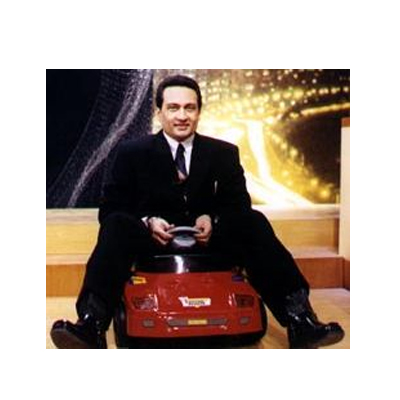
    MUMBAI: Last year in October,  Zee Entertainment Enterprises Ltd (ZEEL) appointed Hindustan Unilever (HUL) sales and customer development executive director Punit Misra as ZEEL domestic broadcast business CEO.  Coming from the FMCG sector Misra has entered the television industry with an advantage – ‘ both the businesses depend on consumer behaviour’.

    ZEEL is now the largest broadcaster in India.  First it acquired Anil Ambani led Reliance Broadcast business and recently bagged 9X Media.

    In a conversation with Indiantelevision.com’s Sonam Saini, Misra shares his one year experience and plans going forward.

    Excerpts:  

    How do FMCG and TV broadcasting compare since both of them depend on understanding audience behaviour?  

    As you said rightly, it’s all about consumer and consumer practise and not building brands. Building brands happens through content- that’s the difference because people use soap once in a day for those 3-5 minutes, but here people sit and consume and get emotionally attached. They can talk about hours but I don’t think consumers can sit and talk about consumer brands this much, so that’s the difference.

    You have completed a year in ZEEL. How has been the experience of heading a broadcast business?

    I am loving every minute here. I began with knowing nothing but there are a lot of things to do.

    Did you initiate the change after you took charge?

    It’s our initiative, not any one individual’s. Nothing works in any industry or any company because of one person. Deepak Rajadhyaksha has been raising and crafting a lot of things. Pratyusha is there and the agency team. I can’t even claim that I have done something.

    Did Punit Goenka take you through the company’s process in your first few days? How did he guide you?

    He is guiding me today as well. He’s just an amazing person. He guiding and gives space and I marvel at how he manages both at the same time. It is just incredible to have him as coach.

    What were the challenges that you faced? What milestones are you personally proud of?

    Firstly, we are supposed to learn before we start taking decisions. For me that was important because coming from a non-TV background I had to spend time to know the business, the people and the brand.

    Along with the team we are fantastically proud with the fact that we are the number one network. The fact that Zee TV is the number channel in HSM, I am proud of that.  I am  proud of the team that I have. We have retained key talent in the company since so many years.

    How do you view Zee’s presence in the market given competitors like Star and Sony are ramping up properties?

    They all have been in the market while competing. We are proud that we are number one in the Hindi speaking market Zee TV and Zee Anmol. Competition is good for the industry and for us as well.  We intend to compete fairly. KBC has grown fantastically, Sony has done a really great job. Star got IPL and congratulations to them. Colors suddenly took a hit but are back from the lead. Things to learn from them. We are all friends but otherwise we are competing tooth and nail in the space to win the viewer.  

    What was the idea behind 9X acquisition? What is the strategy for it?

    It’s the number one group in music genre that’s the reason we acquired the channels. We are still conceptualising the strategy.

    Why are you doing this channel refresh? Was there a need?

    All brands will come to a stage and think that now is the time to change and we believed that we were not doing well last year. We slipped to be in the middle. As today you know we are on number one and the timing is right.

  • Zee South biz head Prabhakaran says: “Growth trajectory is our focus”

    Zee South biz head Prabhakaran says: “Growth trajectory is our focus”

    Zee Tamil, a Zee Entertainment Enterprises Limited (Zeel) Tamil channel, today unveiled a new brand logo during the launch of the Tamil edition of ZEEL’s homegrown reality musical show – Sa Re Ga Ma Pa. The previous season of the Tamil edition was Sa Re Ga Ma Pa Little Champs, the current edition is for seniors. 

    A new daily weekday fiction show is set for launch tomorrow. Earlier this month the channel had announced two new fiction showsDevathaiyai Kandean and Niram Maaratha Pookal that went on air on 9 October in the 130pm and 2pm time slots.

    The channel has also announced a south Indian films female actor as brand ambassador in Jyothika.  An HD Tamil channel will also be launched on 16 October. Zee Tamil was launched in 2008. Earlier, along with the corporate branding changes across the channels under Zeel, Zee Tamil’s logo also underwent a change.

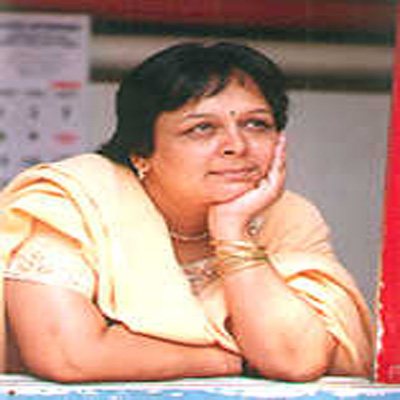
    Siju Prabhakaran is Zeel cluster head – South Business and executive vice president. He has been associated with the brand for over seventeen years during which he has held several roles and responsibilities. As the cluster head for the South Business, Siju is responsible for Zee Tamil, Zee Kannada, Zee Telugu and Zee Cinemalu. In his current position, he plays a significant role in driving the business growth of the South Cluster by strategizing for the profit and loss in these markets.

    Siju spoke with The Indian Television Group’s Tarachand Wanvari and shared details and thoughts about the new branding, the way forward for Zee Tamil, the audience demographics of Tamil Nadu, etc.. Excerpts of the interaction:

    What is the reason for the brand change?

    Zee Tamil is in the process of a beautiful change. Change is the only constant. Actually, when we took this journey two years back, we saw the growth that Zee Tamil has been witnessing in the last 15 to 16 months. Our consumer study showed that there is a need for change – from a viewer point of view.

    After an extensive consumer exercise and study we at Zee Tamil understood that one of the key challenges for today’s woman in Tamil Nadu is the ever growing need to progress with times and take the leap but also her innate belief in preserving her traditions and values. This becomes even pronounced between different generations, where striking a balance and finding the means to do it becomes her guardrail.

    Building on this consumer sentiment and  with the objective of giving our audiences inspiring sparks that will help them strike the balance between preservation and progress and then thrive in it, the channel has revealed its new brand proposition, “Manadhaal Inaivom, Maatrathai Varaverppom” which translates “let’s bridge hearts, and welcome change”.

    What are the steps that you intend to take during or for the brand refresh process?

    As a part of the brand refresh, we have come up with a brand film – basically a TVC. The new brand logo will be launched on the 15th of October at around 2000 hours, on our flagship show, Sa Re Ga Ma Pa.  The unveiling of the brand logo would take place with the entire family of Zee Tamil artists which would be a part of this. At the same time, the marketing campaign across all platforms will roll out. On the 16th, we are also launching a new show called Sembarathi which will air at 2100 hours. Just last week, we had the launch of 2 afternoon fiction shows in the afternoon band. There is a combination of new content offering and the entire brand campaign. We are also extending an HD channel to our viewers which will be available across all platforms from the 16th of October which is also a part of the brand refresh.

    Please elaborate about the brand refresh marketing campaign. What kind of spends will you make? How many TVCs, hoardings, ads? Who is handling the creatives for the campaign?

    Lowe is our new creative agency. The TVC has been shot by the national award winning director Sudha of the Saala Khadoos fame . Our in-house team has also played a part in the execution. Two TVCs’ of 90 seconds each will be shared on our network – Zee Tamil and other TV and news channels. We have an extensive print and digital and outdoor campaign across Tamil Nadu.

    As I said, the campaign will start on television on the night of 15th October, on our flagship show Sa Re Ga Ma Pa when the unveiling of the logo will take place. On 16th, the outdoors and print will start rolling out. This will be backed by on-ground activities, and the campaign will run for about four to six weeks.

    Through this campaign, we want to have maximum impact. It is not a regular campaign. Since we have a great brand ambassador – we also want to leverage on that. We are backing the brand proposition with great content. The campaign will be a 360 degree one – we plan to use all mediums for the new brand message. I don’t have the details of the exact number of the hoardings, but there will be a number of them across all major cities and towns in Tamil Nadu.
    I can’t share spend numbers, but I assure you that our spends will be substantial – about three to four times more than the amount that we spend on the launch of a regular campaign.

    Could you explain the new logo? What does it mean? You had changed your logo earlier when your corporate branding changed ….

    The entire logo showcases radiance and positive energy and that is where the colours have come from. Each market will have its own unique extension of the main corporate brand – with its regional inspiration. This Zee Tamil change is a part of that whole activity on the channel. When the Zee Corporate logo had changed, of course, Zee Tamil’s logo had also changed.

    What about the HD channel? In an analogue market such as Tamil Nadu?

    Tamil Nadu is a market with a huge DTH penetration, even though it is largely still an analogue market, but DTH has been able to make a good entry into it. As a commitment to adding value to our consumer, HD is a natural fitment. Offering HD with our investment in movies and growth plans, it is a natural extension that we 

    How about advertisers?

    There has been a good increase in the advertising segment. Tamil Nadu is a good market for advertisers. The brand campaign will see a huge value for the advertisers; we are also partnering with a few advertisers on this campaign. The advertiser value proposition is something which is a key focus of the brand campaign.

    You mentioned movies. What are your plans for movie acquisitions in a market such as Tamil Nadu that is driven by films?

    There is a legacy advantage that leaders and first movers in the market have had. But as a group, our commitment to movies across markets is constant. This year – we have acquired rights for Rajanikanth’s 2.0 across markets and Vijay’s Mersal which is a Diwali release.

    Zee Tamil is generally ranked third or fourth with Sun TV topping, followed by KTV and Star Vijay according to BARC data. How has Zee Tamil changed in terms of market viewership with respect to the competition? Star Vijay has seen growth in numbers with Bigg Boss and Kamlahasan…

    Zee Tamil is the fastest growing channel in terms of viewership for the past couple of years. To put it in the proper perspective – Sun obviously is the leading channel. And it leads not only in the Tamil market, but also on an all-India level. KTV only showcases movies – so it does not come under the GEC market for Chennai. So the ranking would be 1 – Sun TV, 2 – Vijay TV, 3- Zee Tamil.

    Around two years ago, Zee Tamil was at a five percent market share. Currently, we are at a 15 percent market share. We have had a tremendous growth. We were at a number two position in the market for almost 30 weeks, beating Star Vijay about five months back. The whole idea behind the campaign is to drive the next level of growth.

    Yes, Bigg Boss has been a great win for Star Vijay because it brought in new audiences that were earlier not present and that also helped its other programs.

    Could you tell us about Tamil audiences in general? Is Tamil Nadu also a youth driven market?

    Tamil Nadu is the largest regional market in the country. This is a market with great TV penetration – about 95 to 96 percent, high literacy rate, great urban and rural divide, a great market for advertisers. There has been a great growth in the market. When we grow, we grow at the expense of somebody else, similarly, the other channels are also growing at the expense of others. But the market is at the cusp of a huge market change. And with all the content initiatives, growth is something on the cards.

    If you look at the classification of the audience, there is definitely a young population which is consuming the television market and the reason for the content initiatives in the non-fiction space is a testimony that young people are interested towards this; the only thing is that they don’t want monotonous content. They want something that is new and of a smaller duration which is reflective all over the nation.

    What are your plans for the future?

    Growth trajectory is our focus. With the campaign, we want to strengthen our position in the market and look at offering something new and up the content offering across all genres including fiction and non-fiction. Digital is something that we are working on for upping our game. Zee Tamil is well connected across all cable and digital platforms. We have our content available on Ozee – which is going to be Z5. We have a good viewership base there, which is something that we are looking to build.

  • Alternative sports has big demand in India & consumers willing to pay for premium content: Veqta

    Alternative sports has big demand in India & consumers willing to pay for premium content: Veqta

    Where there’s a will, there’s a way. And three sports enthusiasts live up to this adage beautifully. Building a company from ground zero to a level where it’s considered a leading digital media company is no mean achievement. The company: Veqta. The persons involved: co-founders Varun Mathur, Vikram Tanwar and Gaurav Gill.

    So, what does Veqta do? It is a leading (some say the first) Indian OTT subscription service dedicated exclusively to sports. It brings a unique selection of sports action across football, basketball, motorsports, tennis, MMA, Baseball, Fight Sports, badminton, etc. from authentic sources all over the world and the best analysis/opinions from world-class experts.

    Mathur is a former management consultant having worked with companies like TCS, Accenture, Nimbus, IMG and PGTI in leadership positions. Tanwar, apart from being a member of the founding team of Veqta, was previously the founder, CEO and MD of ITW Consulting. Similarly, Gill is also the founding partner and director at Chatsworth Management & Advisors. The company, now gets viewers for sports content, which is not available on other broadcasting and OTT platforms.       

    The business whiz-cum-sports-enthusiasts talk about their journey of a year and a half at Veqta in a free-wheeling conversation with Indiantelevision.com’s Kirti Chauhan. Edited excerpts from the interview follows:

    Q. How was Veqta conceptualized and what are the changes today from the time the platform was launched?

    Gaurav Gill (GG): To design Veqta’s offerings, we were looking at the biggest catchment areas in the Indian context outside the cricket and then we started handpicking our choice of sports properties to serve the needs and demands of the Indian market. Undoubtedly, we have a sound and solid offering in fight sports like wrestling, martial art and boxing, which is the biggest category in the country after cricket. We have a strong offering for basketball lovers because the game has a high demand in urban India. South India has a fan following for motorsports. As tennis is heavily demanded but underserved sports property in India, we have kept a wide offering in the tennis category.

    Varun Mathur (VM): Life certainly has changed from the time we started this OTT platform in many ways. Most notably, when we started, it was us who chased various sports league and federations for content, but today many global sports leagues, federations and sports companies get in touch with us to have their content on Veqta.

    Q. As you have chosen a niche area of sports streaming, how much traction and viewership you are netting? What is the average time spending on Veqta?

    Vikram Tanwar (VT): We monitor user engagement on a day to day basis and have observed that users are spending fairly large time on our platform. 1.2 minute per page is the average time spent by a user and statistics say that we have an average of 11 unique page views for every user. We have crossed 150,000 downloads within a month post the subscription service launch. We have catered 1.8 million page views on Veqta’s website within the first two weeks of the subscription launch. Our digital campaign has got 1.4 billion impressions across various mediums and the campaign video has crossed five million views.

    Q. Recently, you broadcast the boxing bout between Floyd Mayweather and Conor McGregor. How was the response in India?

    VT: Boxing bout between Floyd Mayweather and Conor McGregor was our first live property after the launch of subscription package on Veqta. Our strategy was to make the battle available only on Veqta not even on television. The boxing battle and the digital campaign was a huge success, gathering around 1.4 billion digital impressions across various mediums. Within a month of activation of a subscription package, we have crossed over 150,000 downloads. This made it clear to us that in India there is a big demand for alternative sports, apart from mainline sports like cricket, and there are people willing to pay for premium sports content.

    Q. What is the strategy behind keeping subscription low, compared to other OTT platforms’ rates?

    VT: India was an unexplored market for sports outside cricket and that’s one of the main reasons for Veqta to come alive. As sports fans, our aim was to make Veqta available to as many people and give them the comfort and flexibility to watch sports whenever and wherever on the go.

    GG: Initially, we have kept the pricing very low to make people aware of the product. If the person is genuinely interested in sports, the pricing context should not be a deterrent factor. We have an introductory offer of Rs 99 (actual cost Rs 399) to attract viewers, but it is for a limited time period. We surely want to have a sound subscription revenue based model, but at the same time, we don’t want the journey of watching sports to be difficult in India.

    Q. What is your revenue model?

    VM: Veqta is primarily a subscription-based service and so a bigger share of revenue will come from subscription. According to us, India is completely ready for a very large subscription service. For certain events, Veqta will look at sponsorship and advertising revenue, but that would be the secondary focus. In India, currently, advertisement rate is low for non-cricket sports. Being a sports-oriented service, we don’t want too much of clutter with lots of advertising on our page currently. In future, we might have sponsors’ logo along with sports content.

    Q. Do you presently have advertisers on board?

    VT: Although we do not have any advertiser on board currently, we would look forward getting them. At this juncture, we want our consumers to experience the uninterrupted live sport. Every sport is designed differently. Some sports allow us to showcase ads during a game, while some don’t. While we can fill airtime during a cricket match with ads, sports like basketball, football or tennis do not allow us to showcase uninterrupted feed along with advertising spots as in-between breaks in such games are absent.

    Q. What is your marketing strategy?

    VT: We have a focused marketing strategy, which is to acquire exclusive content rights without sharing it with any other broadcaster. We have adopted this marketing strategy from the time we have launched our subscription service and it is working efficiently. The big fight between Floyd Mayweather and Conor McGregor exemplified our marketing strategy of streaming exclusive content. Also, we are using a targeted digital marketing approach through which our marketing campaign focuses on identifying the sports fan segment specifically in the country. We then interact with them over various digital platforms to engage them with Veqta.

    GG: We are currently focusing on the digital-driven campaign. Our user acquisition cost is currently exciting vis-a-vis industry norms. But in future, we would look forward at above the line (ATL) campaigns. Considering the user demographics, digital is a more efficient and effective medium compared to television in the entire spectrum of various age groups. Based on the matrix, a majority of our users currently are under 15-28 age group, which is active on digital mediums. With the help of our analytics, it is easy to track and grab more subscribers.

    Q. How is the customer acquisition done?

    VT: Our customer acquisition strategy is centered on unique content offering across sports that have a very strong offering via exclusive rights to top sports leagues, events and tournaments for the Indian territory. We use targeted digital marketing to amplify our content package with our target customers.

    Q. Do you think there is a space for a service such as Veqta when domestic players such as SonyLiv, Hotstar, Jio and international ones like Amazon and Perform Group are getting into the business of sports streaming in India?

    VM: Based on Veqta’s offerings, we don’t have direct competitors at this juncture. As compared to us, other OTT platforms like SonyLiv and Hotstar, which offer sports, talk to a different audience with different content offerings. The competitive market of OTT platforms is extremely large and diverse, which has space for multiple service providers. The OTT market space of China has got 11 sports platforms, which are running successfully. Currently, in India, we are the only dedicated sports platform. And, we believe to have a great growth opportunity having crossed the benchmark of a million users within a year. Veqta is turning out to be a great piece of a compact show for which Indian consumers are willing to pay for high-quality content.

    Q. Do you think is there any opportunity for Veqta in cricket?

    VT: We are not targeting cricket at present. At this stage, our bouquet is full of other sports like fight sports, football, basketball, table tennis and much more. We are aware of the fact that India can’t be a single sports country.

    GG: The reason cricket fans are receiving a good experience is the quality and quantity of coverage by various broadcasters and OTT platforms. At the same time, fans of other sports do not receive the same quality experience generally. Looking at this scenario, our prime focus is to address the need of non-cricket sports fans.

    Q. Are you looking at adding any new sport in Veqta’s kitty?

    VM: Veqta would be adding Cue Sports, squash, American sports, eSports, indoor sports and games and much more very soon. Apart from this, we would look to add more properties of basketball and football and more of racquet sports like tennis, badminton and squash in our kitty.

    Q. It would be really helpful if you can enumerate the sports being showcased on Veqta presently.

    VM: VEQTA is currently covering a broad spectrum of sports including boxing, MMA, wrestling, baseball, basketball, tennis, table tennis, and rugby. In tennis, we are exclusive rights holder of WTA (Women’s Tennis Association). We have the rights to broadcast International Table Tennis games. In rugby, we own the rights to stream HSBC Sevens World Series. In the rally category, we own rights to broadcast World Rally Championship. 

    Q. Would you explore adding talk shows-type content on Veqta?

    GG: We are progressively into acquiring content rights to create Veqta as the biggest sports library. We are not targeting producing content ourselves, but we have explored sports reviews, sports analysis, and pre-news shows. in the near future, we would be looking at adding sports reviews, comments, analysis, and pre-match shows. We will be focusing towards reality instead of fiction. Our immediate priority is to make sure that live sports offerings keep growing.

    Q. What type of distribution alliances would be useful for Veqta?

    VT: OTT adoption and consumption is constantly evolving and we believe that distribution alliances will help realise the true potential of any OTT offering. We are already in advanced discussions with two large telecom service providers and with one of the largest OEM handset manufacturers for distribution alliances. We are also having discussions with hardware providers to offer Veqta for the home screen and large screen viewing. These alliances might be done by pre-embedding the Veqta flagship platform in hardware and on handsets or by offering limited Veqta content through a specialist Veqta Sports offering as a part of an OTT listing/marketplace offering by the respective service providers.

    Q. As sports rights are expensive propositions how such acquisitions are funded — internal accruals or are you looking at raising funds?

    VM: We are in active discussions with companies to raise more capital. However, we have spoken about our seed funding once in media, which was Rs. 33.5 million.

    Q.  Since Veqta was a late entrant in the Indian OTT space, what were the challenges faced and benefits reaped?

    GG: OTT as a concept in India is in an evolutionary stage, so we do not consider ourselves a late entrant. As far as dedicated sports platform is concerned, we are one of the early players. Earlier entrants into space successfully introduced the term OTT to the masses, which was not only welcomed but also got a great push from the likes of Reliance Jio. After studying the market and scenario, we decided to be in the SVoD category through which we are netting good subscriber numbers. We feel the subscription-based model is the correct approach to generate good revenue.

    Q: Would you be offering sports content in Indian regional languages and from when?

    VM: We firmly believe that sports still need to touch its potential reach in India. The basic problem we face is the offering of sports in India is limited to a few languages. For example, a sport like a football has a big fan following in pockets like Kerala, West Bengal and North-East, but if the nuances are not understood by a consumer other than his/her mother tongue or in the language spoken in the region, the viewing experience could diminish. We are aiming to go forward and give more customized experience to our viewers, but not immediately. In near future, we would be able to choose some sports properties and offer commentaries and related information in various regional languages.

    Q. Is there a possibility that in future Veqta transforms into a television broadcaster?

    VT: We strongly believe in the long run OTT consumption and viewership globally across general entertainment genres will replace (traditional) television. But, our key business strategy is “never say never” as we keep striving for improvements.

    Q. What technology are you using and who has designed your backend technology?

    VT: Veqta uses the services of multiple third-party technology companies like MultiTv, Switch, Amazon Web Services (AWS), Limelight and a few more. Earlier, people were putting a lot of money in developing in-house technology. As it is difficult for niche digital broadcasters to put a huge amount of money in developing in-house technology, we prefer to use various third-party operators, including those for satellite downlink. Unlike other OTT platforms like Hotstar, Amazon Prime, SonyLiv and Voot, we play 6,000 hours of live content, which has to be accurate and efficient in terms of streaming. Ours is a tougher job as we receive IP feeds from many of our partners who are pushing content from various corners of the globe. This content bounces of several servers and IPs, so we have deployed servers closer to source to receive LIVE match feed and process it there itself, before pushing it on to the CDN. For certain other partners, we receive the LIVE matches through satellite and process the feeds here in India after downlinking them.


    Q. What is your glass-to-glass latency?

    VM: The signals we receive are delivered on CDN (content delivery networks), which are the high-speed global servers that cache and deliver web content instantly. With the help of good internet connectivity, our glass-to-glass latency level maintains less than one second, which is around 300 milli-seconds, much less than television and other sports OTT platforms. It is one of the reasons that we are getting more subscribers as they are willing to pay less and get quick sports updates instead of investing time and money on subscribing television channels.

    Q. Where do you see Veqta over the next five years?

    GG: Five years down the line, Veqta will be one of the dominant forces in the sports streaming and OTT ecosystems. It will evolve into a world-class sports network in terms of number of a sports broadcast, number of customers and in the number of geographies we operate in. Most probably, Veqta will be a global player in the coming five years. Also, we want every sports fan to have a fabulous world-class experience while watching best of sports from all over the world at any point of time.

    ALSO READ:

    Floyd Mayweather vs Conor McGregor boxing fight on Indian OTT VEQTA4

    OTT: VEQTA is exclusive Major League Baseball partner for India

    Sports OTT VEQTA launches its mobile app for sports programming

  • Prasar Bharati CEO Shashi Shekhar Vempati on SC verdict, pushing DD Sports and DTT

    Prasar Bharati CEO Shashi Shekhar Vempati on SC verdict, pushing DD Sports and DTT

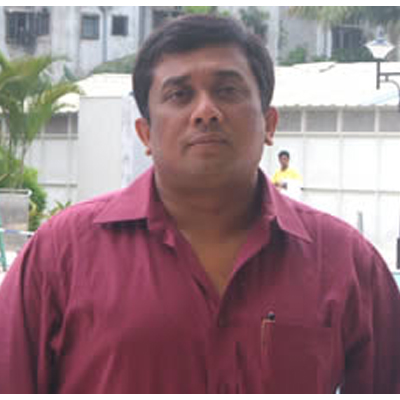
    Shashi Shekhar Vempati is probably one of the youngest CEOs to occupy the Prasar Bharati hotseat.  Additionally, he is the first private sector executive to have got the job. So, media observers expect a lot from him, especially considering his background in Infosys, one of India’s most respected infotech companies.

    And, it is during his watch last month that the Supreme Court issued a verdict upholding the Delhi High Court order which disallowed the pubcaster from sharing with cable operators through Doordarshan (DD) channels the live feed of cricket matches of which private broadcasters ESPN and Star had the exclusive rights. The bench had said under the provision of the Sports Act, the live feed received by Prasar Bharati from content rights owners was only for the purpose of retransmission of signals on its own terrestrial and direct-to-home (DTH) networks and not to cable operators.

    Many would have considered that a loss. But, not Shashi Shekhar Vempati. Clarity and optimism is something you can credit him with. He terms that loss as an opportunity. Read on to get some Vempati-speak as he talks to indiantelevision.com.

    How do you view the verdict of the Supreme Court preventing you from airing sports feeds to private cable TV operators and DTH operators which you share with private sports rights holders?

    The verdict of the Supreme Court on the sports side on the face of it looked like  a setback. And, if you go by the reactions of the viewers to them it was available by default  on Doordarshan. Several matches are not available now.

    But, in reality it was an opportunity.  Many decisions that we just postponed or did not aggressively move on.  Now, there is a real reason to do that. First is on  DD Sports. All along cricket was on DD National. The only sports channel of DD had no purpose or identity, it was just drifting.

    Now we have a reason to make DD Sports the go-to destination for cricket and other sporting events of national importance because of the manner in which the verdict forces us to operate. It creates an avenue  to make DD Sports the place for cricket.

    You cannot air cricket because of the verdict right?

    We will air it. The way the verdict on the act will be operationalised is: the signal sharing for games of national importance is meant for DD’s FreeDish and DD terrestrial. So, we will carry future matches on DD Sports, as a channel available on FreeDish and on terrestrial through DTT.

    Analogue where we have one or two transmitters where we either show DD National or News, there we will ensure that the feed is sports so that one of the transmitters will show the match on analog wherever it is available.

    For the private guys, cable and DTH operators today what are they doing? They are blanking out our screen then they are putting their own commercials, their own promotion. What we are saying is — we will have a separate feed in the future so that they don’t blank out DD National.

    It is atrocious that you can blank out a must-carry channel and put in a commercial message saying “go buy my sports pack.” That we will straightaway address.

    Now because cricket is available on DD Sports, the channel gets a facelift.  Its branding improves – brand recognition goes up. People will have a reason to periodically  tune into DD Sports. So that just takes that channel up. We have enough content on DD National.


    Which of the matches will you show?

    Well, the act,…the government has to notify what are the games of national importance.  And a that list is periodically reviewed. As of now it is all home games of India for one day and T20, then the big tournaments like the World Cup, the challenger and ICC trophy and so on.  Then certain tennis matches, certain soccer matches.

    The big thing is the FIFA under-17. The entire 52  or 56 matches we will show. The  government sees it as a big way of promoting soccer.  For the first time they are holding an international event. And if you look at the generation that we want to attract – which is what I have been talking about. Today, there is no mindshare for Doordarshan in the youth as this generation did not grow up with it. They have no memories of Doordarshan, they don’t relate to it.

    Now with FIFA Under-17 being available this soccer crazy young crowd (chuckling) have an avenue to go and see soccer on FreeDish and DD Terrestrial. DD Sports gets a facelift and it gets a mindshare in this demographic  that we have always wanted to attract and bond with.

    Second thing that I get out of this whole thing is that for all those people who think today I cannot watch those matches on DD on either my private cable or DTH…now I have an avenue to go and promote FreeDish and my digital terrestrial which is just languishing in 19 cities which are the main population centres of India.

    Now I am going to tell them you don’t have to buy that Rs 60 or Rs 120 package. Forget about all that, many of your TVs have an inbuilt digital tuner. There are certain models of Sony, LG and Samsung which have them.

    We will educate people that if you have one of these models, you already have a digital terrestrial tuner, all you need to do is turn it on.  And if you don’t have it, here is an app which you can download. And if your mobile is one of these models, using this app and the DVB-T2 dongle, which is available on Flipkart and other ecommerce platforms you can watch the matches.

    Then, there are certain makes of mobile phones where there is an inbuilt DVB chip available in the marketplace.

    The fourth innovation and I have seen certain products, there are some startups working on it: you need to plug in this hotspot, into the wall, it will get the DVB signal, it will create the wifi – and on all your devices at home you can watch it as a TV channel. We will say these products can support your app.

    How will you monetise the DTT signal?

    When we do the rights sharing under the act , the rights holder and DD both bid on who gets to market the inventory. The highest bidder then gets the rights to sell the entire FCT for the matches on DD DTT and DTH. But the sharing is 75:25.

    Now DTT becomes a new viewership base. So, for the advertisers it is a new way of connecting to the consumers. To me it is new medium to be clipped to the viewership and it’s something where we have a traditional strength because nobody else has terrestrial. We will see how that goes.

    How do you see FreeDish progressing?

    The biggest challenge with FreeDish was that STBs were not  addressable and the signals were not encrypted.  Now for a long time we have had this project to move to MPEG4…the infrastructure is in place, but it required a new STB. That spec was tendered out, iCAS was brought in. Now those boxes are getting ready and soon they will be rolling out. The biggest challenge was what was the motivation for a customer who has an MPEG 2 FreeDish STB to switch to MPEG 4. Now there is a reason, because we can go to the audience and tell them that if you want to watch cricket or any of the sports which you don’t want to pay for your Tata Sky or Dish TV or Videocon or whatever, here is a new iCAS box, it gives you all of these features. That’s another promotional avenue for me. So I am getting two promotional avenues and I am getting to rebrand and relaunch my DD Sports. So in a sense what was a setback in one aspect has opened up opportunity for me.

    One interesting thing that the TRAI is now pushing is the open STB standard with a return path. I think the return path is going to be interesting. It is going to be important for several reasons: for audience measurement, and we would all want interactivity.  Through the regulator’s efforts, and maybe a common standard – and if everyone supports that, it can bring now the price point.

    DD Kids is something which was to be launched?

    There are several ideas. And we will look at each one of them in time.

    What other steps are you taking?

    We have taken some measures following the board meeting recently. It was a long pending board meeting. A lot of decisions were taken. One of the decisions was analog.  We will start sunsetting analog. And that frees up resources. Frees up manpower. Frees up certain operating funds. Those can be put to use in areas where we definitely need a lot of things to be done.

    Information technology being a long pending area where we have not invested. Digital is another area. Then there is the sheer creativity in programming which has come down. The quality of in-house programming has come down drastically. So that requires us to invest in the right talent so we can bring it back in-house.

    DD is the largest network, it has 30,000 people and above… but it has the largest network. We have challenges that nobody else has.

    I chanced upon this report. There was a committee set up in early 2000, late nineties, led by Mr Narayana Murthy which looked at Prasar Bharati (one of the many reports). And, very interestingly, they had a chapter on engineering: they looked at the number of engineers to transmitter ratio, they said this is the highest in any country. That means there is very little automation.

    So, clearly there is a lot of opportunity to get this great talent out and put them to problems which require real attention – be it IT, be it digital, be it reskilling them and repurposing our workforce.

  • Star’s Uday Shankar on distribution challenges, IPL, FTA vs. pay TV, innovations, Made in India content…and much more

    Star’s Uday Shankar on distribution challenges, IPL, FTA vs. pay TV, innovations, Made in India content…and much more

    From the thirty seventh floor room, consisting of a table for the occupant to stand and work, some thought-provoking books and a huge TV screen, apart from other knick-knacks, the city life and environs below look scenic. Rather, most of the surrounding sea-facing skyscrapers in between the  green patches of land that could be seen below belie the image that it’s India. Until a Mumbai local train passes by, giving away the address of  Urmi Estate (which houses Star India’s Hq) , it could have been located anywhere in Hong Kong or Singapore for that matter.

    But in sharp contrast to the tranquil view of Mumbai from behind big glass windows of the thirty seventh floor, in most of the other 14 floors occupied by Star India in a tony building in South Mumbai’s Lower Parel business area, there is a sense of urgency — and excitement. And, why not? After all one of the biggest media companies in India — some say it’s the largest in terms of revenues — has many things on the plates of every employee, including the top honchos residing in the top floor. Bagging the global media rights for the  much-coveted IPL  is just one of the many issues engaging Star India’s employees. Though, in all fairness, it won’t be wrong to state that IPL probably could be one of the most important issues presently. Simply because, as the dust settles on the euphoria of this massive win , the difficult task of planning for returns on  the investment of $ 2.55 billion starts now.

    Ushered into the room with a view, its occupant and Star India chairman and CEO Uday Shankar shakes my hand warmly, exuding the same camaraderie that he did almost three decades back when we used to meet as journalist colleagues sometimes in the New Delhi house of one of his early mentors, Siddharth Ray (India’s first general manager  for Star TV  – yes, in the 90s it carried that name officially). Over tea (for him) and strong Espresso coffee for Indiantelevision.com’s consulting editor Anjan Mitra, a wide range of media matters were debated for about 90 minutes. Edited excerpts from a free-wheeling interview follow. Read on:

    How do you view the Indian broadcast and entertainment industry as of today?

    There are two or three things that I feel very strongly about. From a consumer point of view it’s a great time for them because large volumes and range of domestic and global content is being made available to them at increasingly competitive prices. But when it comes to the industry itself, it’s a bit of a mixed bag. Though the industry has grown dramatically in terms of the number of players in the last several years, the business case of the industry looks under pressure. When I say business case, I don’t mean just the profit model, which is under pressure for a large segment, but the sustainability itself for the whole industry. 

    I think, the IPL bidding is a very interesting case in point and an indicator of things to happen in future in the media sector.  This is probably the only place and example where for a major content right, the contenders included two very strong media companies (Star and Sony Pictures Networks India), two big telecom companies (Airtel and Reliance Jio) and a couple of global digital/technology companies (including Facebook). And, they all valued the property almost equally as important and almost in the same ballpark.

    So, media is no longer the sole domain of traditional media companies. We have heard this being said for some time now, but it played out for the first time in broad day light here. What is more significant is that such competitive bidding for content has not happened in the UK or the US, which are considered mature and big media markets with good broadband infrastructure, but in a country where the digital distribution of content is of very recent vintage.

    I think in some way we set ourselves up for such high inflation by creating Hotstar, which led everybody to realize that there is a value in that kind of a business model. So, for the industry this is time to wake up and take note.

    Third, while parts of the media and entertainment businesses have leaped forward as has the consumer, the distribution and the regulatory models remain locked up in legacy issues and that’s creating a bit of a mismatch. That’s a challenge that we need to solve together as an industry.

    What are the problems besetting video content distribution in India?

    There are various aspects. If you are talking about it in the digital domain, I think with the launch of Reliance Jio there has been a huge disruption. But access to data still remains limited and expensive. The broadband infrastructure has improved in the last 12 months or so, but is still nowhere where it should be. The number of smart phones has grown dramatically in India, but is still a small percentage of the total mobile penetration.

    On the TV side, the industry has done a great job on many fronts. Still, we have to realize that we are competing with global companies with great resources and scale, and the benchmarks too are global. Whether it is story telling or quality of production or marketing or brand strategy, benchmarks are global. So, we the content industry need to step up our game.

    The competition for Star will not be only from similarly placed media companies in India but will come from technology and other global companies; from the likes of Amazon, Alibaba, Google and Facebook. Are we ready for that as an industry? Individual companies may be ready for such competition, but I am not sure if we are ready as the content industry.

    Part of the problem is because the monetization models haven’t evolved much. We still have regulatory issues, which are challenges, though I don’t want to go into too many details on that aspect.

    Still, the entire TV distribution industry, according to me, has done an amazing job of creating 180+ million connected homes. Now that segment has to make sure each one of those homes is going up the value chain rather than trying to offer them discounts, etc. The stakeholders are competing only on the price front. If you are competing only on the price point, then you are compromising on the consumer experience and soon the consumer will start questioning whether it is worth having a cheap service, minus the experience. So, there is this whole challenge of getting the consumer up the value chain.

    Where do you see Star India placed in the scenario that you have painted where both challenges and the opportunities abound?

    There are things that an individual or a company can do with its own enterprise. Then there are things that all of us can do as an industry. I believe that if the whole industry is not progressing, individual companies can only progress so much. In that context, at Star India, we have done a good job and I am satisfied. Can we do more? Of course we can always do better. But we have managed to create a fairly deep and diverse entertainment platform on television and have leadership in a large number of entertainment markets.

    To give you an example of the enterprise we have shown, take sports for instance. Five years ago we got into sports (management and broadcasting) and have created, perhaps, some of the most exciting franchises anywhere in the world. We have not limited ourselves to the sport that guarantees success (cricket), but have gone and experimented too. We have put our faith behind new initiatives in sports whether they are kabaddi or badminton or hockey or football. Our mission is to try turning India from a one-sport nation to a multi-sport one, while maintaining the pre-eminence of cricket. Some progress in that direction has been made and it’s satisfying.

    Can Star make it a mission to get India the Olympic gold considering its continued investments in sports?

    Star is a media and entertainment company and I would not want to have the arrogance to say we can make India win an Olympic gold medal. All I can say is that we’d be happy to partner with any agency or initiative that is designed to get India closer to the Olympic gold(s). Our job is to make sure that we showcase sports’ growth and breakout stories. I think we have done that job very well. I would like to believe that with Star Sports we are able to showcase the new (sporting) heroes far more prominently today than what we could have done few years back. If national team members of various sports, who were relatively unknown, now are recognized by ordinary citizens, I think we have done our job — in fact we are doing just that.

    That being said, I would like to add that private investment in sports ought to be welcome as it is this investment that helps sporting organizations plough funds into infrastructure, training and facilities, which in turn contribute to sporting success.

    What are the changes on the content distribution front that you have seen and what are the continuing challenges for the industry, considering Star has had limited exposure to the distribution business?

    If you look at how much we have moved in the last 10 years, it’s an impressive story.  The problem is that the process of digitization, which started essentially with DTH, and then picked up steam in 2011-2012 hasn’t delivered the full value.

    Digitization still remains an unfinished agenda though it was meant to have been over quite some time back. It was supposed to have meant that people had access to better content at competitive prices and for good content to get easier distribution avenues. That hasn’t happened. The idea of digitization was also to allow content creators like us to offer integrated services to the consumers. That too hasn’t happened and the story has really not moved. Broadband access may have improved dramatically, but the participation of cable and DTH sector in that is miniscule.

    public://Uday Image--1_1.JPGDigitisation still remains an unfinished agenda. People should have access to better content at competitive prices, and for good content to get easier distribution avenues

    To put it bluntly, a bunch of people, who have got used to the idea of benefitting from an economy of shortages or scarcity, continue to create scarcities or continue to create conditions of scarcities (of content) and benefit. Fundamentally, it hurts the society and the industry. That is the disappointing side of the distribution business.

    Star could have continued contributing by remaining a stakeholder in the distribution business. Comment.

    While we were a minority shareholder (in Hathway) our ability to influence the business was limited. That is why we decided to get out because we were not shaping the (distribution or the company) agenda. We do have a minority investment in Tata Sky, but, again, our ability to set the agenda of that company is limited.

    Will Star review its distribution business exit or its paring down, now that the government has liberalized investment norms for the DTH and cable sectors?

    Government has allowed (increased FDI in DTH and cable companies) only at a headline level. The problem is that we were restricted even before the FDI investment limits went to 100 per cent. I think the Prime Minister has eased the investment norms facilitating more FDI in this sector, but we are hampered by other regulations. Cross media restrictions, which in any case is a discriminatory piece of regulation, has only blocked a company like Star from investing in the distribution sector more aggressively. This restriction is applicable only to DTH/HITS ventures but not to cable or IPTV, which in itself appears to be an arbitrary measure. And, we don’t want to skirt around regulations to create business entities to be in a business. We don’t want to invest and create a value when our say in a company remains locked. In that sense, our ability to invest more in Tata Sky is still restricted.

    Is the business model in India changing for content aggregators and owners like Star? Has it now boiled down to free-to-air (FTA) vs. pay TV?

    I am glad you asked this question. It is amazing how in this country we indulge in polarized arguments where none needs to exist.  Where does the question on pay TV versus FTA arise? Why should it exist at all? In most other countries, there is a place for FTA and pay TV businesses. The problem starts arising when they start competing with each other and that does not need to happen. In this country, a major part of the broadcasting business that developed in the last 20 years was primarily done by pay TV broadcasters. As access to FTA broadcasting, which is mostly terrestrial, was not open to private broadcasters it remained in the hands of the public broadcaster. Until Doordarshan FreeDish came along.

    Now technology has opened up an opportunity creating a space for FTA and pay TV broadcasting.  I personally believe that the two should and could co-exist in this country — pay TV for those who want to pay and have access to a much diverse and richer range of content and FTA platform for those who don’t want to pay as much for all of it but still want to get some basic content.

    Does it happen vice versa too when pay TV content or channel is brought onto a free platform just to botch up the competitor’s business plans?

    I think that should not happen. My public position has been that we should not take pay TV content onto a free platform (like DD FreeDish) because it not only undermines a pay TV consumer, but also a pay TV platform. In my opinion that is a wrong strategy. I personally started a dialogue between platforms and broadcasters to stop such a practice but it has not been too fruitful. We launched Star Bharat on the FreeDish platform, but it has fresh content.

    Q: Will Star Bharat continue to remain a pay channel also as per media reports?

    Don’t trust everything that you read in the media. However, there is nothing that prohibits a channel being available on DD FreeDish and on pay TV platforms. A whole bunch of channels in the past have done this; almost the entire language news category is on pay TV and FreeDish platforms at the same time. A whole bunch of entertainment channels too have followed that practice. So, what you hear about Star Bharat is simply mischievous.

    Q: Please clarify whether for Star Bharat a consumer will have to pay if available on DTH or cable platforms?

    Yes, a consumer of a DTH service or a cable platform will continue to pay for Star Bharat just as he did for Life OK for the time being. We sought permission from the government saying the channel will be rebranded as Star Bharat and would be offered on DD FreeDish as well. So, the pricing issue remains where it is.  Some people have chosen to find a problem with Star Bharat, while being totally comfortable with their own friendly channels. We are the only ones to have fresh original content for a channel on FreeDish like Star Bharat. Quality of production is high on Star Bharat as we are spending the same amount of money per hour or per half hour that we would have spent on Star Plus, which is a premium channel.

    Q: James Murdoch said in an investor call that Star India is on course for $ 500 million EBIDTA for year 2018 and that cricket bids would have to be disciplined. Do you agree?

    (Smiles) If my bosses have said that we are on course, then I would have to follow the directions. However, those statements were made in a responsible manner as we do have a plan and are working towards the goal. If the Indian economy remains on course, we are on course for all that.

    As far as disciplined bids (for cricket rights) are concerned, of course it was a disciplined bid for IPL. Everybody has seen how close it was where the margin of victory was just three per cent. So, what more can I say in defense? Six years ago when we signed up for BCCI rights (media rights to Indian cricket), we paid Rs. 430 million (per match). At that time critics said Star had probably paid too much. It turns out now that we didn’t and that worked out really well for us. Today that (figure) has become the new normal. Now people are saying we are paying too much for IPL (US $ 2.55 billion for a five-year global media rights) only because 10 years ago it went at a much lower price. But then ten years ago the world was different, India was different and IPL was an untested product.

    Q: Would you agree with Indiantelevision.com’s analysis that Star actually got a good bargain for the $ 2.55 billion it bid for IPL rights?

    I don’t understand why people are so excited about it. Hardly ever a sports media rights been awarded at such a close margin. Why are people asking ‘why has Star paid so much’? Clearly there were a whole bunch of people who were willing to pay and it was evident in the bidding numbers.

    public://Uday Image--2_2.JPGEach media company has its strengths. I respect Zee enormously

    As an aside, my personal view is that BCCI (Indian cricket board) lost a lot of value because of the duration of the contract. If it had been for 10 years, the value would have gone up dramatically. And, I am not just saying so because of the length (of the contract). Had it been for a longer period, per year value too would have increased tremendously —shorter the period, lesser is the flexibility. 

    Q: What are your plans to monetize the IPL property?

    These are still early days, so you have to give us time to think through our strategies, which will unfold in due course. But I certainly won’t share with the media what I am trying to do.

    Whether we have bid high or not will be judged by the fans of cricket. All I know is that IPL’s a very powerful tournament and cricket runs really deep in everybody’s bones in this country. To be successful, you just need to work on intensifying and heightening the experience of cricket further.

    I believe that power of sports is such that you don’t need to give it steroids. You just need to be true to the spirit of the game and make sure that the experience for the fans is evolving continuously.  That is where our strength comes in and I would like to believe that as Star is the company that successfully created a few sports franchises that didn’t exist in the public domain earlier. We should be able to do that with IPL too. With cricket it’s not a one shot affair, it’s a process where you need to continuously evolve and we will work on that.

    Q: Will you continue to work on Pro Kabaddi League too and bring it up to the IPL level?

    We have brought PKL already in the limelight. But to be honest, though PKL still has some distance to travel to reach the levels of IPL, its growth has been phenomenal. When we were looking for franchisees for the inaugural edition, it took Anand Mahindra’s personal charm to get people in. This time round, when we added four new teams, there was a problem of plenty — a large number of top corporate houses and individuals were extremely keen to get associated with PKL. So, clearly people believe in what we are trying to do. Look at the Indian Super League (soccer) story, which is in partnership with Reliance Industries. Except a few loyal pockets in the country, football nowhere figured in the country’s psyche or much in public debates. However, we have managed to turn the passion for football into a serious commitment for fans all over the country.

    Q) Is that why you are picking up another indigenous game kho-kho to try its rediscovery?

    Are we? We haven’t taken a decision on that sport yet. 

    Q) Which media company is the closest competitor of Star whom you respect?

    Each media company has its strengths. I respect Zee enormously.  I think it is very strong on discipline and doesn’t get distracted by what others are doing. It works hard to execute a plan it has. Similarly, other companies have their own strengths.

    This is a business where competition is very dynamic and the power lies in the hands of the consumer. One half hour gone wrong can swing things away from you. As we have such a diverse portfolio, it is not about one competitor. Even if we are the leaders in one segment, in some other part of the business we are facing heat. But the entire business, hopefully, will not face heat from any one competitor.

    Q: So Star is in a dominant position.

    I don’t like the `dominant’ word. Especially because I feel this whole idea of dominance in a business — especially a media business — is a spurious claim. Either it comes from a complete lack of understanding of the business or it’s a mischievous allegation. Simply because there is no one product called Star India. For viewers and advertisers, it is a combination of multiple TV channels and each of those channels consist of large number of shows. You may have a show at 8 pm that is chart-busting and then at 8.30 pm you may have a show that nobody is watching, which usually is the case. A show that was doing really well three months ago can go into a total free fall if one artist is not there or there’s twist in the story-line.

    Take sports, for example, again. You go and get rights of a property for a number of years and after that it goes to the public when anybody else can also bid for the rights and participate. On the digital front, the competition is even crazier. So this argument of anybody building dominance, not only Star, is totally mischievous and spurious.

    Q: Let us rephrase the question. Isn’t it a great feeling to continue being a leader?

    In some parts of the business, we continue to stay ahead and that’s because we work harder. We spend more money on our content and are less focused on profits. We reinvest (in the business) more than probably anybody else in this sector in the country. Media and critics have written for the last five years or so that Star was not making profits in sports after investing heavily in sports content and now people are saying otherwise. We have now started investing in Hotstar, a digital platform. I think the one big difference between us and everybody else, and which gives us leadership and a little more of steadiness, is that we are always trying out new things.

    We have tried to explore new horizons and boundaries. Not all such initiatives have been successful, though. I would like to believe that we have pushed the creative envelope in a responsible way far more than what has been done in the past. Are we trying to future-proof ourselves, as you ask? I wish it could have been possible. But, yes, we are investing in the future.

    Q: Critics and some industry players feel that Star India has become so big that it can challenge the sector regulator too. Comment.

    First, we have not taken on any regulator. We have had some fundamental and limited issues, which became sharper in the new tariff order (of TRAI, the broadcast regulator). Our understanding of the TRAI Act says that the regulator has jurisdiction over distribution/transmission of content, but not the content itself, which in our case can be determined only under the ambit of the copyright law of the country. The law of the land gives every aggrieved person the freedom to go to a court for adjudication. And, that’s what we have done. There is nothing like challenging the jurisdiction of the TRAI.

    Q: Is the India market over regulated compared to some other markets in Asia or the west?

    I would not make such a blanket statement. There are parts of the market that are over regulated and there are parts which are not. All I would like to humbly submit is that there are some parts in the existing regulations — especially those dealing in relationships between distributors and content owners — that are debatable. If the proposed regulations were to come into effect today as they are, any new entrant to the Indian broadcast industry would find it a difficult and expensive proposition.

    Q: What more would you like the government and regulator to do to be a bigger facilitator of doing business apart from what they have already done?

    We don’t have to create a shoe to fit every foot as there are different feet sizes. Similarly, there are different needs for different set of people in terms of content. However, let me make it clear that I am not making a case for smut because Star doesn’t do sleazy content.

    TV is a family medium and we should be mindful of that; Star certainly is. There may be families where kids also watch television along with elders, but there are homes where there are no kids. Hence, the need (for content) of the latter family might be different and mature. So, content creators should be allowed to factor in all such diversities and create a spectrum of content rather than just uniform content in a one shoe-fits- all model. TV is an instrument of change and also a huge driver of employment and wealth creation.

    While agreeing there are areas where some restrictions are needed, I would say policy-makers should allow the whole eco-system to come together and be more flexible. Take, for example, the number of people who are dependent, formally or informally, on the TV industry as a category. That number would be around five million if the whole value chain is taken into consideration. I feel the number can increase manifold.

    Q: How do you see the Hotstar growth story now that it has been launched in the US and Canada?

    I find that space very exciting. It’s a market with an affluent South Asian diaspora with huge appetite for Indian content whether sports or drama or movies. They pay high subscription money presently to watch Indian content on American platforms as the structure for getting access to South Asian content is complicated and expensive. We think with Hotstar we can make a difference by offering people living abroad high quality content and world class experience at prices far more competitive than what they are paying now.

    Q: Does Star have a time frame, say 12 months, to rollout Hotstar worldwide?

    I don’t have a hard and fast deadline. For me it is more important to first build a business, stabilize it and then scale it up. We are not playing a valuation or a stock market game. I would like to build things on a solid foundation. So, to answer your question, I think it is clearly not going to happen in one year’s time.

    Q: How closely is IPL’s monetization linked with Hotstar?

    We have got the global rights for IPL and we will explore internally what trade-offs we can do. We would have to examine whether we can get better business value by offering it (IPL) ourselves or we should license it to other companies. The financial case will influence those decisions.

    Q: Is Star still in the lookout for properties to acquire to fill gaps?

    We are not a big M&A company. In my 10 years at Star India, we have acquired MAA TV and before that Asianet (both companies located in South India).  In this company, my bosses, my colleagues and I like to build things ourselves as that way we can shape the business the way we want to. Such initiatives are also more sustainable and self-sufficient and, remember, we have an exceptionally high quality plan execution team.

    However, I would admit there are always gaps, but you need not fill all of them. Also, there are not many quality assets available in the media space presently.

    Q: What about the regional space? No opportunities there?

    There would always be opportunities, but I don’t think we are considering any (M&A) in the regional language side in the foreseeable future and going deeper in the regional markets. We already have much on the plate.

    Q: Would Star like to review an earlier decision and return to news business in India?

    There is no plan to get back into the (television) news business. Moreover, with my limited understanding, news on television globally faces challenges these days as second on second updates are available on one’s hand-held devices. So, what new proposition can one create for people to come back night after night, 365 days on television, to spend some time watching you? Those who had created a brand on news television and are carrying on can continue to benefit from a legacy habit. But creating new news brands on television is lot more difficult today than in the past. People also have access to news on digital platforms as there is so much news available in one form or the other, including professionally produced and user generated. So, at the moment there are no plans to revisit our decision to exit news business in India.

    Q: Hotstar seems to have a special affinity for Republic TV and is it filling Star’s news need?

    (Smiles) In the same way Hotstar offers Sky News, Republic too is offered to consumers. If others are interested, we will give them a platform too. Don’t read too much into the agreement with Republic TV; it’s a simple distribution arrangement.

    Q: Would you agree that because of the audience ratings game, entertainment is becoming news and news is becoming entertainment in India?

    I would, rather, not get into that argument at all. However, since you have asked, I don’t think TRP(s) is a bad word. In the business that we are in, which is called mass media, if you take out the mass there is no business left. If it is mass media, measurement of the masses comes from ratings. The question is: what all would you do to get ratings? The answer lies in each individual and each company’s value systems. At Star, we have decided that we would do certain things and we would never do certain other things to get ratings. Some other people have defined that differently.

    Q: You have said in the past media and entertainment industry is not throwing up young talents because of inadequate human resources R&D. Do you still believe so and what has Star done to counter the inadequacy?

    The industry was not geared for creating so much of output as it is today between films and TV. Look at these small shops that have mushroomed all over.  We have been unable to expand the pipeline of training creative talent whether it is at the MCRC or the FTII, for example. In the meantime, requirement has grown manifold.

    I, generally, believe that our ability to compete with companies that are modern, resourceful and global will depend on the (human) resources and talent we create in the country. In a country where formal institutions are not geared to identify and shape new talent, the industry has to do it. I have been an advocate of that for a long time. Though we need to do this collectively as an industry, a beginning has been made by Star. We have created a big academy where we have got a respected name from Hollywood to be based in India to teach.

    Q: What are your thoughts on Made in India content for the world market?

    We are doing some things on that front by creating products that we can take outside India. We have succeeded in that endeavour with few Hindi films like `Neerja’ and ‘Dhoni’.  Hopefully, we will be able to open up that market more. At some stage, hopefully, some of the sports leagues that we have created, especially kabaddi, will be of interest to people outside India.

    public://60371509.jpg

    Technology has created space for FTA and pay TV. The two could co-exist — pay TV for those who want diverse and richer content, FTA for those who want basic content

    However, I don’t see Indian drama in its current form travelling outside India for a long time. Such shows are culturally too specific and too rooted in our family culture. Moreover, our business model is different that works the best when we offer large number of episodes. When you do that, given the monetization model, limited revenue comes from the investments made in a show with huge number of episodes. Until a totally distribution driven business model for premium content comes along, I think Indian entertainment content would not be competing in the global market.

    Q: What’s your perception on linear TV continuing as a medium in India?

    In this country TV will continue for a long time. I am not one of those who believe that linear TV would disappear in five years time and people would go completely digital. First, in a country where the family values are still strong, TV continues to act as glue for the family to get together. I don’t think, and hope, it would change very soon. Second, TV’s biggest comparative advantage comes from it being very affordable. Despite prices of broadband having dropped, if you take into account the cost of data and content, a digital platform is still way more expensive than TV. For anything between Rs 150-Rs 400, people can get more content than they can ever watch on TV.

    Then there is a long tail of households that is still waiting to get into the television world. The question is: can we create innovative price models for different user groups so it’s a win-win for the creative people and the business too? 

    It is also a mistake to think that television is only competing with television. No. TV also competes with digital platforms and people only have finite time to spend watching shows. Again, are we innovating enough? I think we are not innovating enough for TV to be at the cutting edge of competition with digital.

    Q: In terms of management of Star’s Indian operations some structural changes happened two years ago. Are some more in the offing?

    We created a new structure, as you have said, where we pushed decision making further down. I think Star India is, probably, the most decentralized media company in this country. We have different CEOs for sports, entertainment, digital and South Indian markets, and a head for international business. Not only it is fairly deep, but also diverse and aimed towards creating more entrepreneurship.

    Q: Having begun your career as a print media journalist, you have gone on to head Star India, an entertainment company. What would be the achievements over the last 10 years for the company, people and you?

    We have created a healthy and robust company with a bench of high quality talents across all segments of our business. Not only at Star we have encouraged innovation and entrepreneurship, but have created serious consensus on a whole bunch of issues in the industry ranging from content creation to brands. Personally, I take a lot of satisfaction in driving initiatives like self-regulation in content, etc. Above all, it is a matter of huge satisfaction that we have taken initiatives that have gone beyond the remit of a traditional media company like Star — like create and build sports leagues.

    I keep talking about it (various sports leagues) only because it’s only a matter of time before other companies will also get into it and then the transformation would really impact the country. I would like to see the same transformation in India that has been seen in places like parts of Latin America, Africa and Europe where the power of sports has acted as a social glue to create opportunities for people who would otherwise be totally on the margins of society. Being able to be part of such a transformation has been hugely motivating for me all these years.

    Q: Where do you see yourself five years from now?

    I am typically the kind of person who doesn’t forget his background and my base has been in news where I was extremely focused on tonight’s headlines as tomorrow is another day. So, I am very focused on clarity for today without worrying about tomorrow. I believe that one thing leads to another. Honestly, I have never planned my life, but it has been a great ride till now.

    ALSO READ:

    Major restructuring in Star India; Uday Shankar, chairman & CEO, Sanjay Gupta, MD

    Comment: With IPL rights Uday Shankar gambles audaciously, must plan pragmatically

    TRAI can only regulate transmission, not broadcast material: Star tells Mds HC

    Jawahar Goel raises alarm of emerging Star cricket monopoly (updated)

    Life OK rebranded as Star Bharat may start from 15 Aug

  • “Competition in OTT solutions is what makes it exciting:” Amagi’s Baskar Subramanian

    “Competition in OTT solutions is what makes it exciting:” Amagi’s Baskar Subramanian

    Founded in 2008, Bengaluru-hqed broadcasting, cloud and OTT ad and tech solutions provider Amagi is a homegrown outfit that is slowly and steadily making its mark globally, thanks to its innovative tech prowess.  With offices in New York, London and Hong Kong, and its R&D lab in Bangalore,  Amagi has made  deployments in over 40 countries and delivers more than 80 feeds to audiences worldwide. Its client roster features some big ticket premium players like: Discovery Communications (for DSport), Vice (for its Viceland channel),  Turner, AMC, IMG and B4U.

    Like previous years, the company is exhibiting at the global broadcast and OTT ecosystem confab, IBC in Amsterdam. Among the tech solutions it is showcasing at the exhibition include:  Cloudport channel Playout, Thunderstorm OTT Ad insertion, and Storm TV localization.

    Indiantelevision.com’s Kirti Chauhan had a brief conversation with Amagi CEO Baskar Subramanian about the company’s participation in IBC as well as on its journey so far. Excerpts from the interview: 


    What are the innovations you are bringing to IBC 2017?
    This time we are carrying two big innovations. First is related to machine learning capabilities or we call it the new deep learning capabilities, the artificial intelligence approach. For the first time, we are announcing products and services that would leverage machine learning capabilities to create new services. For example, we are demonstrating the  sports highlight feature.

    In a 90 minutes live soccer match, as soon as the match completes, a video editor identifies and creates a 10-15 minutes highlight show removing injuries, fouls and much more non-highlight things.

    But, Amagi has created a system that can automatically spit out 10 minutes highlights without worrying about missing the key factors.

    This is one step in the evolution of the bunch of services we are bringing in, which is going to transform how content is processed more in terms of live as well as VOD content.

    The new capabilities allow us to create promos, key frames, and much more with the help of our new solutions, which are done manually today.

    The second big innovation is the auto ad detection capability. It is an OTT offering. We have created a mechanism that can identify an ad and content separately so that each can be monetized on an individual basis.


    What is the amount of investment put in the technologies, which you are showcasing at IBC 2017?

    Amagi has raised $60 million to date and a large part of these funds are used on technology and research and development from the past six years. The products and innovations which we are going to present in IBC 2017 are a result of that R&D. We have raised  $35 million earlier in this year from KKR Emerald Media.


    How much traction has your ad insertion solution got globally?

    The total amount of ad insertion transaction we have done is close to about $30 million.


    You are entering a competitive market in OTT end-to-end solutions. Comment.

    There are three different parts specifically to the OTT value chain today. Looking at it from the technology standpoint, there is a need for OTT platform, that is, first, the software infrastructure, users interface towards the customers and the interaction with the customers. That is the whole customer related platform which is the online platform.

    Second is the advertising monetization, which is a separate piece of managing the monetization part. And third is video back pulling which is bringing the content into the system.

    Amagi basically focuses on its strength –  which is ad monetization as well as video back and forth today. We work with multiple different online platforms.

    Yes, it is a competitive market and that is the exciting part. The market is growing dramatically in this segment. Many different players from different parts of the globe are getting into this particular space.


    Who is your target clientele for live streaming online?

    Our target clientele is everybody who is into live streaming of any sort of content. One bunch is the large professional  sports TV channels. Another bunch of clients we are targeting is Youtube stars and wannabes. Those who already exist on Youtube space now are looking to create live events and sessions.

    We have few clients worldwide who have started to look at it and lot more is going to happen in the next few months, where we will be seeing digital first companies becoming great consumers of live streaming capabilities on the internet.

    For example, we already have channels that are using Amagi’s infrastructure for live sports. In India, DSport,  a Discovery Communications sports channel, is run by Amagi. We are handling their live content day in and day out. Content coming in from worldwide is going through our infrastructure where we help them to orchestrate and create live streams for different sports events worldwide. Currently, we are managing their Pakistan vs World XI  match via Bangalore.


    How you will take out the interruptions (ad breaks) from the live content that you are demonstrating at IBC2017?

    When an event happens, we take the whole event content into the cloud, and then there is a stream of the event coming as an IP stream or internet stream into the cloud. In the cloud, Amagi can through a browser insert exact points of the ad. For example, if we are watching a cricket match, exactly at the end of an over to put an advertisement, Amagi uses its browser-based approach. Another current example, in the DSport scenario, the satellite uplink is happening in Hong Kong,  the cricket match is happening in Pakistan, the control of the advertising, graphics and sports score card is done in Bangalore.

    Amagi does the effective master control of the whole live stream from the Bangalore master control room on cloud infrastructure. Amagi has built out sophisticated and complex architecture that we are demonstrating at IBC 2017 as our new innovation.


    What would be the time lag in the telecasting of the live content?

    From the time the camera captures the event to the time it comes to on any screen is called glass-to-glass latency. In Amagi, the glass-to-glass latency is about 10 seconds.


    How have you scaled up to offer these solutions?

    Amagi’s infrastructure has been built from a software architecture standpoint through which we would be able to scale and offer thousands of services. Once, applied on a public cloud infrastructure like Amazon, Microsoft Azure, then it starts scaling up dramatically.


    How do you operationalize these channels and run them?

    Amagi uses a lot of automation instead of people and has built automated monitoring capabilities, alerts, and system capabilities. Everything is automated, as much as possible, and we minimize manpower, as well as our scalability, is automatically addressed using machines.


    How do you manage monetization?

    Amagi has the technology to identify the location of all the ads breaks on the online television content, which is available on television today. Once it is identified, we connect with ad networks and ad exchanges and sell the advertisements to them.


    What is your expectation from these innovations?

    Fundamentally the innovations we are doing are world class and pioneering. We will be probably the only company or one of the companies talking about taking the machine learning and artificial intelligence approach. Also like Google and Microsoft, we will be one of the few companies, which talks about these capabilities for broadcasting as a media business programmer.


    Also read:

    Managed Broadcast Services Amagi’s Skylight Cloud Platform

    Amagi wins IBC Innovation Award

    Amagi to provide ad solutions to Sun TV Network

  • Positive national developments will be showcased on revamped Sahara news channels

    Positive national developments will be showcased on revamped Sahara news channels

    While channels are opting for virtual reality journalism in the backdrop of generally declining news viewership and questionable methods of garnering eyeballs, Subrata Roy’s embattled Sahara media group, with an eye on a digital future, is recasting its programming and packaging its Hindi, Urdu and four other regional news channels.

    Sahara India Media (SIM) has re-employed the veteran journalist Arup Ghosh as the CEO & editor-in-chief of its media division who, it says, will maintain the standards of the media with “old-style, factual and non-noisy journalism.”

    Samay News Network, with seven editions of the Hindi daily Rashtriya Sahara and nine editions of Urdu daily Roznama Rashtriya Sahara, is now set to foster an entrepreneurial digital culture, although the new editor’s social media profiles (till Sunday evening) were antique and stayed un-updated, giving no hint of plans in the offing.

    Ghosh says he was aiming to take Samay News Network & Rashtriya Sahara (Hindi & Urdu) to the next level by introducing differentiated content, maximizing content monetisation through synergised operations between TV, print  and digital verticals.

    The new CEO, who denied knowledge of Sahara’s January 2017 Project Storm to reportedly hand over editorial control to Kolkata-based media baron Kaustuv Ray, mentioned more than once that he is reporting in to the out-on-bail Sahara group chairman Subrata Roy. And, even as Sahara sources say that Ray is still consulting with the group’s news channels, the latter refused to speak further on Project Storm when Indiantelevision.com called him up. However, industry sources pointed out that  the proposal did not materialise.

    Management of the Sahara news division aside, Arup says he is in charge now and he is excited to be back and rejuvenating it. Among the first things he has done is launch two shows – one is a live 30-minute ad-free Editor’s Choice, and a three-minute short-format show focused on the hourly news called AG’s Take. The idea is provide agenda-setting news shows that, it says, would cut through the corporatisation and trivialisation of news.

    Ghosh chatted with Indiantelevision.com’s Parvinder Sandhu on his plans. Excerpts from the interview:

    Could you tell us whether Kaustuv Ray and company are running Sahara news operations?

    I am not aware of what happened in the past. I came here when ‘Saharashri’ (Subrata Roy) called me. I was here earlier — between 2001 and 2004, when the (Sahara group) chairman had asked us to launch a bouquet of channels. We worked on the content to put up a national news channel and regional channels. Then, in April this year, I came back as there was an opportunity to revamp the channels with a lot of focus on the digital content.

    So, what is the plan, and how are going about executing it?

    We have been working on creating a digital footprint for the last five months. The salient features are: there are two expert teams working on a digital platform each for television and print.The  process would complete in the next three months. Samay News Network will have a strong digital presence — which we will monetise and create good branding. We want to take the modern route — the newspapers, for example, will have a strong e-presence — e-papers would be launched on these platforms. The television arm will also have a robust and rare digital presence.

    The second part of the story is that the content of Samay will be visible and interactive on most of the popular social media platforms — which was a little behind schedule. That process is now in top gear and moving very fast.

    For Sahara’s six television channels, we are in the process of hiring some middle-level people — anchors and others. Content rejig is currently under way. Between now and December 2017, a total technical revamp is on the cards as approved by the chairman (Subrata Roy).

    His vision is that the media wing must be strong and robust — nothing negative or anti-India, for example, should go into the content. A lot of positive national developments that have happened should be showcased in the right spirit — we are working on that plan.

    How are the channels doing, what are your recent observations?

    On most of the regional networks, I have seen, the time spent has shot up quite a bit, which is really a function of content.

    What are the new plans?

    The distribution is being beefed up — gradually. The plan is to work in phases and restrengthen the regional network and devise a new plan for the national channel. The studios etc will have to get a completely new makeover.

    I am launching a programme at 9 pm on 28 August from our modern studio of international standards. I am also launching a small digital capsule called “My Take” — within three minutes or less, I will give an update on the current topic of the day; it will keep playing on the network and also on the digital platforms. We are trying to keep things brief, we are trying to break through the madness and the clutter that has taken place in the last two to three years.

    The 9 pm break-free show would showcase two to three  top stories of the day — it will have adequate information on why something has happened. It will have one or two informed voices and a brief chat. Somebody who wants to see facts-based news that used to be telecast earlier but has ceased of late.

    This is an attempt to restore some clarity in news — to look at news the way it should be. We would rather bring in informed opinion but in a way that guests are allowed to speak, and not cut down as it happens nowadays. We also plan to bring in editors who are specialists of their respective subjects and explain the real reason behind an incident or an event that has happened — there is huge gap there that I have studied closely over a period of time, what works online and what goes viral as far as news is concerned.

    People are hungry to have an informed opinion. They may or may not agree — that’s a different issue, but there is respect and need to know why something has happened. Our new structure and news format would be rather simple. There won’t be cacophony, people shouting at and gunning for each other. It is attempt to bring sanity to news proceedings, and that is what I am working on.

    Would you explain the reasons behind this total revamp, which includes branding and content?

    We had some great shows in our earlier avatar which had received tremendous response. It was now the wish of the chairman that we should build our media brand — it is something very global and achievable. It needs a certain strategy going forward. He had shared his vision with me and I am trying to implement it.

    In the hyper-competitive Indian news market, how is Sahara looking to occupy a position — as a views channel, a news-views channel or simply an old-fashioned news outlet giving domestic and global news without views?

    I would say when somebody tunes in to a Sahara news channel, the viewer would know exactly what is happening — in a very reasonable way, some of that is old-fashioned — which got left out. People would want to know why something has happened, for which we have a strong research team.

    For example, the Ram-Rahim incident that has happened.  Our research team has studied some American cults and exploitation of women by the babas there. Our team also studied the babas of Punjab and Haryana to understand what was the need gap and why they had such a huge following. Ours will be basically factual reportage and unlike the format where people shout at the top of their voices and politicians gunning for each other. To answer your question specifically, it will be more quieter rather than old-fashioned with a lot of research and views added in. It is going back to what news used to be.

    A lot of people told me that they tune in to Doordarshan when they needed to know today’s happenings and facts. Other channels, they said, are into mindless entertainment and shouting under the garb of news.

    Have the product’s positioning and branding been thought through?

    Yes. It will take a couple of months more to implement it. We are working with a marketing and a branding team and we are doing a lot of brainstorming. Our channel heads are pretty experienced and a couple of good guys with enormous experience have joined us. The plan is to work it out and keep unravelling those processes.

    Would you be expanding the number of bureaus you have or you will depend on news agencies primarily to feed you news? How many bureau do you have at present?

    I can’t recall the exact number of bureaus, but we are there in most of the state capitals. Some of the bureaus would be expanded. We will relaunching some channels to cover Rajasthan, Haryana, Himachal Pradesh and Punjab. Some of these bureaus will be beefed up.

    There are some gaps where we did not have people, so that is being planned now. For example, coverage from the north-eastern states was less. We have recently hired some people in Odisha, and more will be employed. We have planned special coverage for Jammu and Kashmir. Studios and facilities have been built in Gurgaon to cover Haryana and in Jammu as well as in Srinagar to cover the hill state. Subsequently, a  small studio is being planned in Jaipur and one in Chandigarh to cover the Punjab and Himachal belt.

    With state elections on the cards, we would concentrating on that. We would like to go back to serious news reporting and on understanding how political elections are fought in India. Now, we have an experienced team in place. We want to move away from the dirty business of hidden cameras and stings to bring in numbers (viewership). A couple of channels tried it for a while and may be they succeeded for a while but ultimately they had to back.

    A number of news organisations such as NDTV are also experimenting with MoJo (mobile journalism) as cost-cutting measures and also being truly digital. What are your views on such initiatives and would Sahara products too employ some such measures?

    Our digital plans are already under way, and a separate team is being groomed to do digital work. I had serious discussions with the chairman as well as our media and corporate communications expert Abhijeet Sarkar.

    We understand the need for MoJo. We will be experimenting with it to a certain extent and we’ll see how far we must go with it. We would definitely like to run a profitable enterprise, which will take a while and that is the way forward. We plan to create a lot of synergies between print, digital and television wings. There is also a combined team which will ensure constant integration.

    How will the TV channels and the digital products be different or will the digital only help play out linear TV’s offerings?

    The content that television is generating will be curated; it will be customised for digital. There will be shorter and packaged stories for digital as compared to television for which editors would also go live interacting and engaging with people and adding their opinions. A website would be separately launched for that curated content.

    Rebranding and programming revamps costs money. How much is Sahara looking at investing in this part of the operation?

    I will have to check with the top management before sharing any figures.

    Will such measures help shore up the bottomline? What is Sahara TV’s annual revenues at present? Could you share the annual revenue figure?

    I don’t want to get into all that. Sahara’s media wing in the last two to three years has gone through difficult times. But, now, our revenues are shoring up. It will take us a while, we have to ensure that the digital wing is launched quickly. There are certain projections which are being made and a marketing strategy drawn up. We are also hiring a full-time sales head who will be doing things professionally.

    What are your views on TRPs for Sahara News? And, what would be the present BARC ratings that Sahara news gets?

    The ratings were low as we were lacking in distribution. The channel is now releasing funds and we are available on most of the platforms. Of course, ratings do matter. The beauty of regional channels is a lot of people like our brand. Sahara is not a new brand — it’s a well-known and respected brand, which is being represented and refurbished and pitched as a completely different channel. With more energy and better content, the stickiness is increasing. We’ll need some time and we’ll get there.

    Please name the distribution platforms that Sahara news channels are available on?

    We are available on different networks such as Den Networks, Hathway  Cable & Datacom, DIGI cable Network India, Hathway CCN entertainment (India),CCN Digital Network,Darsh  Digital Network,S R Digital Media, A C N   Digital, Digina Projects, Lucknow 9 Cable Network, Blue Sky Network, Uttranchal Cable Network, Haldwani, Rajasthan Infotech Services and Radiant Digitek.

    Amidst the revamp, are you also looking at streamlining the operations and costs? How and where?

    We want to ensure that ‘less is more’. We want to work with committed professionals and we want to ensure people who are hired are delivering, and there is accountability. We want to make optimum use of manpower and resources. We are aware that a number of large-sized broadcast networks have shut shop. Ours is a very tight operation — we just have to ensure that we are able to convert.

    How many new brand sponsors Sahara news channels have netted?

    There are a couple of names which I will mail you. (No mail was received till the time of publication this morning; the interview was conducted yesterday telephonically).

    Would you like to comment on the recent controversies surrounding multiple LCNs and alleged buying of landing pages?

    I am aware of that. This race has taken an ugly turn. A couple of new channels had a bitter fight with the older brands who say that it is humanly not possible for a channel with limited resources to zoom to the top of the chart, and then slip and then flatten. These incidents are very unfortunate. As far as our brand is concerned, we would like to stay clear of those things.

  • We are seeing consumption in languages & low-connectivity areas, says Facebook India’s Saurabh Doshi

    With millennials increasingly consuming video online and on their handsets on Youtube and on VOD services, Facebook, the world’s largest social media network, has also rushed in to provide users with their unique experience. And while it has been a little late getting to the party with video, the Mark Zuckerburg led firm has been pretty clear about its intentions to own this space as well.

    With more than two billion monthly active users, and 100 million daily  actives, Facebook could cause unimaginable disruption with its video strategy.  While that might happen online on some connected devices, in India it is going to be on mobile, thanks to its vast mobile population of close to a billion.

    Facebook India head-media partnerships Saurabh Doshi echoed that sentiment as well at indiantelevsion.com’s OTT summit VIDNET 2017 in Mumbai two weeks ago. He stated that almost 95 per cent of the Indian population logs on to the social media network on their mobiles. He was on stage having a fireside chat with well-known Youtube creator and comedian Saurabh Pant.  Excerpts from the conversation.

    Can you quickly start with what is currently happening in India and what is the trend going on on Facebook?

    We get over 184 million active users monthly out of which 178 million come from mobile phones, so almost 95 per cent of the population in India is using Facebook on their mobile. Close to 100 million visit the platform everyday. On Whatsapp, we have around 200 million monthly active users.

    The interesting thing is that Facebook also deals with multiple formats, considering use of videos. As a creator myself, I have noticed that it has exploded over the last year and seeing far more traction. So can you tell us something about the multiple formats and how best to use them.

    We started with being a text platform. Over a period of time, the journey moved to photos after which we saw a big consumer shift happening towards videos like the Ice bucket challenge kicked off its whole journey on Facebook. So it is generally from videos to live, 360 degree, and VR which is an extension of different platforms. Recently, we launched camera effects through which the creators can create filters, masks, emoji’s.

    With Instagram, what’s happening is like put up the story and you get an immediate click on it.

    Yes, Instagram is also doing great in India, its growing relatively very fast, we see a lot of youth coming on the platform. Around 200 million people across the globe are using Instagram stories.

    At a session here, Republic TV’s Arnab Goswami gave Facebook a very happy endorsement where he said he prefers Facebook over Twitter because of a lack of anonymity. What is your take on that?

    Real people on the platform have always been our USP. When you have real people and real conversations happening on real time basis, it has been carried to other platforms as well. We have a community business team across the world working 24X7 to pull out fake pages and accounts.

    As I said Facebook videos have exploded from last year, my Facebook and Youtube views are almost even and sometimes views on Facebook were far more. So is there any trend you are noticing with regards to content creation and what works and what does not, from a video point of view?

    First of all I want to elaborate a bit. Facebook started up being a friend and family network and is still that. In fact, that is the core DNA. Secondly, there is need to either have a conversation as to what is happening in your personal life and also what is happening in your surroundings like breaking news or a movie trailer etc. – the ability to give an environment where anyone can comment, chat, share.

    I have been using Facebook Live very  consistently over a period of six to eight months and I have noticed that some of the live videos hit higher numbers than the stand-up. The new Facebook layout has a separate tab for videos, where you can see videos all across the platform.

    At various points of time we keep on experimenting with lots of products, the behaviour of a user to pull out a phone, watch some videos, and look at some text. People come to the platform not only because of the news feed but also a place where the creators’ content can be curated so that people can follow those creatives.

    What kind of content do you like to watch on Facebook: is there any particular channel or creative that you find exciting? Going forward, what do you think are some of the trends you see with regards to Facebook videos?

    Personally, I am a strong consumer of news, I discover all my news through Facebook, as Satya (Raghavan fro YouTube) mentioned, we see a growth around the languages, regional content and local content. So we focus on supporting creators and organisations in some of those areas. People with low-end devices in poor connectivity areas also browse Facebook. We are seeing the consumption all across and thanks to Reliance Jio for all the efforts on the infrastructure side.

    The most crucial question, what are the plans for monetisation rollout?

    We clearly understand the need for providing the tool through which creators can make money. Premium content obviously kicks in a lot of resources, efforts. We need to have the model where the creators should be able to make money out of Facebook. Having said that, we have experimented in the past, and there are more experiments going on. Last year, we rolled out suggested  video, this year some time early in US we rolled out ad rates inside the videos where the creator could actually put an ad and make money out of it including live.

  • “We have a multi-headed monetization approach for Viu”- Vishal Maheshwari

    In January 2016, emerging markets OTT service Vuclip – operated by Hong Kong based PCCW –  appointed former Yahoo executive Vishal Maheshwari as country manager, India, close to the launch date of its Indian product. The Viu launch went through successfully three months later under his supervision. Since then the FMCG, telco and digital veteran has stealthily steered the service towards an enviable subscriber base of four million plus.

    Viu’s has been a no-nonsense-back-to-basics roll out in the country; it had none of the frills and bells and whistles that are associated with launches.

    Maheshwari has his task cut out for him. The OTT market is getting crowded with every one including his uncle, aunt and cousin believing that they could make a success of their streaming entertainment apps.

    But Maheswari believes that  Viu  is being built bit by bit, content piece by content piece, and customer by customer. And that it is on the right track.

    Maheshwari was part of Indiantelevision.com’s second edition  OTT conference Vident 2017 and he took part in a one on one conversation with founder, CEO and editor in chief Anil Wanvari. Excerpts:

    What is your view of India as a VOD market?

    We believe that this market is not a single homogeneous market, as a lot of people like to believe. We believe this a three tiered market. There is a bottom of the pyramid market which is called the mass market. There is a mid-market, which is being typically being catered to by mobile consumption and by apps.  And then there is the top end of the pyramid, that we have yet to see evolve over here. We think that eventually will happen. We are here to participate in the broad spectrum of the market. Currently we have offerings in the bottom of the pyramid in terms of the  B2B mass market offering . We have been so far been in the mid-market as we like to call It for a year and a half.  – the B2B offering

    I believe you have got a massive war chest. Apparently, Nickhil was quoted saying that he spent about 100 million dollars so far since PCCW came in. So how big is the war chest in India, if you would like to disclose that. If you don’t want to talk about the initiative in terms of local content, making sure you’ve distributed well across different devices whether it’s handsets or being inbuilt into Telco, apps etc.

    I think it is futile trying to talk about numbers in terms of millions of dollars of investments in so and so. It i suffices to say that this is a game of really deep pockets. I have always maintained that OTT is a very easy market to get into. Because I think the common understanding is that all you need is a little bit of content, slap on some technology, some vendors lurking around in Hyderabad and Bangalore who you can hire and get for cheap and you can get into the market.

    But OTT is a very very difficult market to stay in. And a lot of players who were there in this market are beginning to  sort of understand that. The key and the bottom line over here is you need very deep pockets to fundamentally stay in this game. I wish I new how long you need to sustain it; I wish I was a clairvoyant.

    Needless to say, I maintain that this is not a P&L business. It’s a balance sheet business. And you really got to have deep pockets and a very entrepreneurial attitude in terms of trying to win this market. If you try to play by the known rules of how these businesses are built, then there’s only one thing going to happen – you are gonna lose! Given that, we have our own game plan in terms of this market.

    I believe in terms of content, people expect a very different set of content from a premium OTT player. So there is UGC and the YouTube type content at one side and then there is TV broadcasting and cinema on the other side. What consumers expect of an OTT play is really something in the middle. They want content that is high quality, that is potentially cinematographic, in terms of finish, look and feel. And more importantly for the target audience that we are after, which is frankly the millennials, they want content which is real. They want content which reflects their aims, aspirations etc. So, I think you got to be very very careful in terms of how you go about executing your content game. I would say the mantra is being fresh and contemporary. Secondly, we believe regional is really an important play. We were actually the first ones to launch Telugu regional content a couple of months back and that I think pretty much took the industry by storm. That’s because the content put in over there was very high quality. The content that we produced along with Annapurna Studios, was original – Pilla and Pelli Gola.

    And what sort of traction did you get for those shows?

    I am not going to drop numbers again but let me tell you what we did. It was really interesting. Our entire philosophy towards this game of OTT is that it isn’t like a ‘one night stand.’ It is a hare and a tortoise game, but with a little bit of a difference. We don’t believe that ‘slow and steady’ is going to make us win. We believe ‘smart and calibrated’ is going to make you win.

    So when we actually launched our first suite of originals in the month of April, people were surprised, there was no brand campaign? There was  no full page in The Times of India?

    What we actually did over here was very simply put the content into the market, used all organic means to sort of see what the traction on the content was, ran that content frankly for a 10 week period, which is when we actually released our content and came back absolutely beaming in terms of  the results. The traction numbers that we were seeing over there were completely mind boggling as far as we were actually concerned. And if this year proof of the pudding is in the eating, we’ve actually come in and post that have commissioned another eight originals.

    When do we see these eight originals rolling out? Are they with the same production studios or are they with new studios?

    If it ain’t broke, why fix it? Yes, Vikram Bhatt did a couple of products with us. After Gehraiyaan and Spotlight, we have commissioned him again for another two products that will be out in the fourth quarter of this year. And you will see this new suite rolling out from the month of September onwards. We will continue to sharpen our focus on the regional market, we will be adding regional markets to our suite, we will continue our focus on Telugu and you will see some really high quality content coming for those regional markets.

    You were mentioning that you were actually going to do dual language production? Is it going to go beyond dual language, while doing a Hindi show?

    It is part of our overall DNA of experimenting. In our first round, what we actually did was create content specifically for Telugu, create content for Hindi, we have done dubs, we have done crossovers, we are actually studying how that market reacts, what their uptake on that sort of content is. And in the next phase what we are getting into is doing bilingual productions. It could make sense from an advertiser point of view.  It could make sense from a marketing economics point of view. So I think like any good old internet company we are really open to lot of experimentation and bilingual production is one of them. I don’t think the die is set as yet, we are still sort of in discovery mode on these types of things.

    Some numbers on your (monthly active users) MAUs and (daily active users)  DAUs? Downloads?

    We hate downloads because downloads is a bought number. Actually anyone can go out and buy those numbers. As company we are very focused on the metrics that can not be bought and the type of metrics we really focused on UVs (unique viewers), minutes per UV and returning users.

    I think these are the three sets we are absolutely concerned about. Those metrics you can not buy and you have to earn those metrics from the consumers.

    I think with all these three we are on top of the chart in terms of these numbers.

    We have minutes of usages in excess of 100 minutes a month. We have people coming back to us at least six to seven times in a month to view content and that is with the limited suite of the kind of content we have right now.

    Those are some very important numbers we look at and we think that, as content depth fundamentally expands, those numbers are actually going to go up. I think all indicators we are currently capped  on these two consumption metrics by the volume of depth we have available with us on our platform. So that’s the reason we are looking at large volumes of content getting commissioned because once that goes up we know the guy is going to come back to us.  

    You mentioned there are four and half million active users a month?

    Yes, that’s the number we had in the month of April in India.

    So the number has gone up?

    The number has moved up very significantly because April was when we started out with the original content. Those numbers are significantly north.

    Somebody who has visited once month is your active user?

    Everybody has got their own definition. We sort of tried to stick to the most acceptable definition that somebody at least consumed the video once a month and somebody who has  come in and just opened your app. We are sort of pretty clear in terms of the type of standard apply to us in terms of measurement. Honestly BARC coming in is going to be really very interesting.

    What lessons have you learnt in terms of distribution, the customer’s propensity to pay, content creation, technology. Sometimes acquiring a customer is not worth it that what some players are discovering. So the acquisition cost can go haywire and set your entire gameplan haywire.

    Our philosophy in terms of distribution is to go with where the customer is and therefore what we really followed has been a really multi-headed distribution strategy where we had content housed on our apps, we had content housed on our browser. We incidentally believed that the browser still have a very important role to play especially for certain types of content and specifically for certain types of devices. We have also got the Viu video audience network where we collaborated with a bunch of like minded sites who ingest our player. For instance, we have What the duck 2 today which is a cricketing product which runs on Cricbuzz also. We have a strategy in terms of YouTube, Facebook where we don’t hesitate to put our full form of original content. Therefore the strategy for distribution is very clear  – go where the customer is.

    In terms of relationship, we have a very deep relationship with Samsung, where every Samsung device that has been shipped out since November 2016, the Viu SDK ingested in every device as part and parcel of the my Galaxy 2.0 product. So, it’s a bit of a Trojan strategy that we are present on the best Android device that is out there. The underlying philosophy is don’t pull them in,  go also where they are that is the strategy we are going to continue.

    Coming to your questions of acquisition and acquisition cost, it’s a fairly bloody game at this particular point of time. Let’s face it,  your economics are going to tend to infinity and the only way any OTT player can counter that is frankly focus on the depth of engagement that he actually got.

    So there are two philosophies that drive us over there. Either I get you here and make sure that you stay with me for a prolonged period of time and you keep coming back to me. So the strategy of a  sustained-content-release calendar works really well. Or I  get you in and make you consume as much you can within a short period of time because I really can’t stop you from going. And I think that’s where a binge consumption strategy works really well.

    So from us what you will really see is a combination of sustained content release and binge watching strategy and that’s going to be very powerful in terms of trying to maximize the lifetime value of the customer as he comes in. And in terms of recouping your acquisition cost over there. Obviously, I think as we get a lot more brand visible, as brand Viu becomes known, and we expect those costs to move southwards. I think a combination of these two strategies will help us to turn the corner in terms of starting to break even at a unit economics.

    So what is the sweet spot for the price that customer can pay? You’re charging Rs99 apart from the free content that you are giving out to a premium subscriber. So is that a sweet spot  or is the Amazon price a sweet spot, Rs 40-45 when they announced.  What’s the sweet spot?

    Sweet spot is like saccharine, if you have too much of it is going to be very bitter. Our belief over here is customer are going to  pay you for value.

    Indians paid Rs 350 crore a few months back to watch a man beat up his daughters to make them wrestlers. And that’s Dangal.  People do pay for content.

    We think the fundamental point is it’s not about whether customer is willing to pay or not, it’s about the value he is seeing from what you are actually giving to him and we want to keep that power  to choose and decide in the hands of the customer.

    Our strategy is out and out a freemium pricing strategy. We believe that we will continue to give the customer the best possible value in terms of content. He can come and continue it without any barriers, as long as he does not have a problem to get somebody else to pay for him doing it via advertising. We believe we have to make advertising as non-obstrusive as possible. A bunch of initiatives we have taken over there. We collaborate extensively with Facebook and Google to ensure that advertising delveries should be non- obstrusive as possible. We are innovating in terms of ad monetization models. Native is a much abused word but we have taken it very seriously in terms of what are we doing while building our entire ad ecosystem and ad model around.

    At the end of it if we able to give enough value to that customer and he decides  that he actually doesn’t want to see your advertising, he will come and pay us. So we have the patience to sort of wait for customer to graduate from a free service to a paid service.

    Is that happening, the graduation?

    Honestly, at this point of time I don’t care. The one number I don’t look at is what is my free to paid conversion. I think it’s too early and anybody trying to build a castle on subscriptions from day one I think you are walking on  broken glass and it’s going to be very tough.

    On advertising side you have done some deals with DBS and you got some other partners on board?

    We got success with What The Duck 2 where we got DBS Yes we have DBS and Hike coming in as sponsors on the content. I think that’s a very good example of what the philosophy has been in terms of  getting the advertisers to participate as natively as possible in your content. We have recently done a show with McDowell’s known as Yaari No 1 which has Rana Dagubatti over there. It is like a Koffee with Karan kind of a show in Telugu which runs on Gemini TV. A very interesting  product where we actually have gone OTT plus TV simulcast at the  same time with an advertiser like McDowell’s actually coming in and sponsoring that particular product.  And you will see a lot more disruption over here in terms of the type of models we are looking at, they could be ad inventory based, those could be sponsorship based, branded content based or TV to OTT. So it’s going to be multi headed in terms of the monetization approach.  

  • Competing with Google & FB on free side and with Netflix and Amazon on subscription — Hotstar CEO Ajit Mohan

    One of the early movers in the Indian over the top (OTT) space, Hotstar – – part of the Twenty First Century Fox-owned Star India – has been setting a scorching pace for itself. In a nation where high data costs made customers wary of consuming content when on the move, it displayed a voracious appetite for acquiring them. Today, its massive subscriber base equals or surpasses the total subs of all the VOD services in Asia and rivals that of the big boys in the US.

    It has also been aggressive in its content strategy – paying top dollar for movies and TV series from  top notch Hollywood studios as well as for sports telecast rights.

    21st Century’s Fox’s leaders – the Murdoch brothers Lachlan and James – along with the Star India management led by Uday Shankar and Sanjay Gupta – are quite bullish that the investments being poured into Hotstar are well worth it and should bear fruit, sooner than later. Estimates are that around $500 million has so far been pumped into the VOD service.

    The man in the hotseat at Hotstar has been the US returned executive Ajit Mohan who has been steering it right from day one three years ago. With single minded focus, he has been at his task of building a robust product and a team that helps it remain so.

    The publicity shy Mohan was one of the Indian VOD leaders who had a one on one with Indiantelevision.com founder, CEO and editor in chief Anil Wanvari at the highly successful  second VIDNET OTT conference in Mumbai two weeks ago.  Excerpts from the conversation:

    First of all, I would like to start by congratulating you on your CBS Showtime deal. Tell me little more about it?

    If you look at what we have built on Hotstar premium we feel pretty proud. I think we have built a fairly distinctive subscription service which in many ways I think compares to the best in the world.  I am not sure that there is any platform worldwide that brings together the best studios for American TV shows and movies. With Hotstar Premium we have HBO, Fox and Disney movies exclusively. And we thought that the only missing piece was Showtime. So we have done an exclusive partnership with  Showtime to both bring the Showtime brand and also the best of their marquee shows  to India on Hotstar.

    I think it really completes our offering. We have built a free service that has scaled up dramatically in the past two and half years or so. Now we are kind of applying some of the same rigor and aggression on P remium as well.  From the content proposition point of view I feel pretty good about how it  looks like.

    What will we get to watch? What kind of shows and will it be on same day and date?

    It is. One of the promises we have as pat of the English part of Premium is that all the TV shows will be aired at the same time as  the US. That’s true for HBO, Fox and it will be true for Showtime as well. Billions, one of their best shows will be on Hotstar and Twin Peaks too. Overall, I think it’s a pretty exciting roster.

    I think more than any individual shows what I am excited about is that both HBO and Showtime in the US have created these fabulous premium pay TV propositions on the back of really redefining what a high quality  American show looks like. I think  by bringing them together on the same platform, what we are essentially saying when it comes to English content there really is no need to look beyond Hotstar Premium. Not in terms of other services.  Or not in terms of torrents, which is still a meaningful source of competition for us.

    We will now start investing in educating the market where there is a substantial number of users who have an affinity to English who are spending a lot of time – especially the younger demographic – digging up for content on torrents. And very often they don’t get good quality versions. They don’t get it on time.Or they get It dubbed or subtitled in a language that is not familiar.

    Now the reality is that as a consumer in India you don’t need to have  to go through the pain. It may be difficult for them to understand the richness of the proposition that is  on offer today. Now when you compare it to consumers in any other part of the world today; the Indian consumer has probably the best deal.  Rs 199 per month only…I don’t think price is a  challenge anymore. So I think it’s more about creating  awareness.  And I think there is still a segment – especially in the younger demographic – who believes it’s cool to pirate. And I am sure that philosophy will be carried by a lot of people. For most people,  it is just creating awareness that there is a serious ease of getting almost every show that you want on Hotstar Premium at a price that is quite affordable. And that is what we are going to invest in on the back of the Showtime deal and what we already have on Premium. And taking it to a mass market in a way that’s not been done in this country before.

    So will you have Hindi sub titles? Or in any other languages?

    Currently, it’s English subtitles. I think the fundamental  point you are making is improving accessibility, can dramatically expand the audience for English TV shows or movies in India. Hollywood has shown that with dubbing. The direction we are moving is to make it accessible by subtitling in multiple languages which you will see over the next few months.

    How are you doing on the app download front?

    We have crossed 300 millions downloads and we are seeing downloads across all operators. Wifi.  Jio obviously has  had a tremendous impact on the ecosystem in terms of expanding access to mobile broadband and increasing affordability. Two things stand out over the last nine months when Jio has had this massive disruption. One is that video has  benefited disproportionately. For us what the last two years -and the last year in particular – has really established is the bet that we made if data was not a constraint,  people will gravitate towards  long-form content including on a mobile. That  what we saw in the early stages of the ecosystem , people consuming short form clips, user generated content  – that it did not represent the truth. It was not the end state; it was the beginning of the market.  That has really played out  And you see that in the data, the time spent time..the watch time on video  has grown disproportionately to social media.. And by multiple factors. And Hotstar has grown – disproportionately to any other video platform.

    300 million I don’t think somebody else has this kind of numbers in the world.

    I think Jio has been an enabler. But more and more you are seeing that for sieving out where consumers are going, both in terms of adoption and in terms of watch time. I think data is an enabler. My sense is that the more people have access to 4G, the cheaper data gets – a high quality propostion like Hotstar that has both the content proposition and is compelling as well  and we are seriously investing in technology to keep improving the consumer experience. I think that combination is quite powerful.

    We are seeing that in the numbers which are substantive. One of the numbers that stands out for us is that just on the Google Playstore globally we crossed 100 million downloads a couple of months ago. From what we know, only Netflix has done that globally outside of Hotstar and may be in the entertainment space, Spotify. And it does feel like even being in one market in India, I think  the scale of what we are seeing clearly compares to the best in the world.

    I believe this should be a moment of pride for the country as well that in the mobile ecosystem that we are blazing the trail in terms of what can be done. And for us, we really think of ourselves as “we are not replicating models that have happened in other parts of the world. We are truly creating a template for what a mobile centric business could look like which would be relevant in any market.”

    How many of these are active?

    In the month of May and June 2017, we crossed more than 100 million active users

    How would you define these actives?

    Somebody coming and spending meaningful time at least once a month. The reality is almost everyone who comes to Hotstar comes multiple times a month. And very often multiple times a day. But a monthly active way is a good way to look at it as it a common measure for looking at adoption across the ecosystem. And all our 100 millions actives are unique.

    Some of the OTT players are distinguishing between monthly active users and uniques.  

    Digital is an interesting space where is there is no common measurement system in place and that equally applies to Facebook, Youtube or Hotstar. It makes sense to have a common measurement that is consistent. To the extent that  we know how to identify  unique users, their presence on devices, not everyone logs in. It’s not the same login across Hotstar, Facebook, Google  – all of those still remain. But We are seeing more than 100 million users coming to Hotstar.

    Are you still in the consumer acquisition mode or you have passed that. In what phase are you?

    I think we are going to be in a perennial growth mode for a long time because of two reasons: I think that’s the kind of company we want to build. The proposition is so exciting,  it’s relevant for more than 100 million users.

    Second, the context of India where as more people get access to  data… one of the things that we are convinced is the primary use case for getting people getting online can be video and Hotstar.

    The next 100 million or the first 500 million to go on digital in India.. we think mobile video and especially around the entertainment proposition that we have.. more than search, social media or ecommerce we can be the beach head. Because people love stories and it’s relevant for  a larger number of people. From that point of view I don’t think we are going to stay away from focusing on growth for a long time. I think we can be the primary use case for bringing people online in India.

    But your customer acquisition cost are going up or down?

    I think costs are going down. It’s a two and half year old platform now; there is a lot equity of the Hotstar as a brand. Once you reach a certain scale and have broken through I think the organic momentum starts kicking in. We are in the stage where it feels like growth is happening with far less effort than two years ago. Having said that it looks exciting to look for the next100 million users..and the next 100 million users after that.

    It’s not in an optimization mode, it’s in growth mode and in growth mode our focus is all three:  adoption of new users, it’s watch time and the third is revenue.

    I think for a uniquely consumer internet company we believe there is a virtuous cycle between consumer adoption, engagement and revenues.  We don’t see  it as competing, we see it as going together.  

    Varun (HotStar head of product and engineering EVP) said in some conference that he would like get some billion minutes. Correct me if am wrong?

    A year ago in APOSTech in Shanghai Varun had articulated this ambition of crossing a billion minutes a day in watch time. I don’t think we have said this publicly but we have crossed that  number a few times  in the past couple of months.  

    How has the playground has changed since you were here last year. What do you seeing? Your tech is keeping up or you have to spruce up your tech. You invested in Zapr to get some analytics in place. What has changed?

    Three things in my mind have changed.

    We have made significant movement in the past 12 months.  I think we have hired 60 engineers just in the last nine months. I think we are looking at doubling that number in the next six months.

    We have the clarity that we can build something unique in India and compete with some of the best global tech companies. It comes with building our own technology muscle.

    Second, if you look at the consumer internet space with lot of actions across e-commerce, fin-tech and our own media space, we have been quite thoughtful in building a deep bench in leadership. The past 12 months have been marked by a significant bulking up of our leadership capacity in Hotstar.

    Third big change that has happened as a result of that there is starting to be  a bit of a separation in terms of services that are standing out from an adoption, engagement and scale point of view – and clearly that’s happening.

    The last 12- 15 months have seen the launch of whole bunch of new services in OTT and a lot of them have very interesting propositions. They are occupying interesting positions in the market …some fairly niche but if I step back and think about it what we are proud of at Hotstar is we are breaking away when it comes to  serious scale and engagement.

    And for me it looks like we are competing with Google and Facebook on the free side which is all about its large scale,  ad supported and big numbers. And on the other front its subscription, which is still nascent, much smaller audience at the moment, we are competing with Netflix and Amazon Prime. At Hotstar, we have two sorts of vertical, one is the free ad supported business and the subscription business where we are facing two different sets of competitors.

    But I believe the ad supported services, IPL got you good revenues from two partners Vivo and Maruti. Agencies have told me its Rs 20 crore per head.

    I think we did okay.

    But that is serving out well in the terms of revenue.

    One of things is clear to advertisers and that’s a big movement in the last 12-24 months especially at a time when there have been a lot of issues around  brand safety that came up in the UK. I think two things are showing up I think most advertisers started to recognizing that the Hotstar proposition is unique. In most parts of the world high quality on demand content on streaming is completely behind the paywall. Therefore it’s not available for brands to advertise on like you can’t advertise on Netflix in US.

    So Hotstar represents a unique opportunity on digital where for the longest time advertisers could only reach audience through user generated content or short clips whereas on HotStar you get premium content which is very different from most streaming business models.

    Second thing that the advertisers started recognizing the power of its engagement. I think it different when you reach an audience when they are scrolling and checking something on social media for 30 seconds or when watching a 40 second clip. It’s a very distracted audience. So even when you presumably get scale and you get metrics like video views what you are not getting is real engagement that comes with long form content. There is a reason why television helped build brands for 50-60 years. It was because people spent time deeply immersed into stories. And that’s the proposition we offer on Hotstar.

    Sports is driving you plus Hollywood. You kind of have tip toed away from originals unlike what Amazon Prime or Netflix are doing?

    I feel I keep answering this question but for whatever reason people don’t want to embrace the answer – especially my peers. Sports is big on Hotstar.  Sports is less than 15 per cent of our total watch time. It’s definitely played a meaningful role for us.

    But TV shows and movies are much larger on Hotstar. The proposition of Hotstar at least for consumers is  that they know that Hotstar is beyond cricket or sports. On originals, almost everything we have is exclusively on Hotstar on digital. Right from the early stages we believe in the power of exclusive content. Which is why Game of Thrones, a Star Plus show is all exclusively on Hotstar. The originals bandwagon was started by the people who did not have the enough content. I am not sure why Hotstar with the most compelling  content portfolio in the world would want to get on the same bandwagon.

    Why is Republic TV  there on your platform?

    …..For more of the interview click and watch the video  link below