Category: Executive Dossier

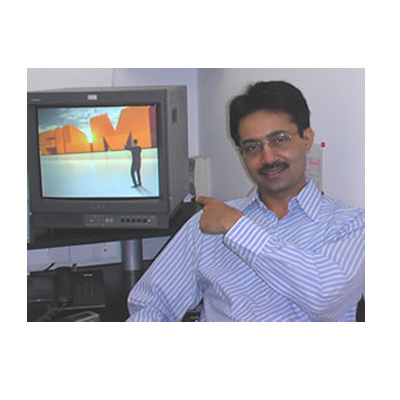
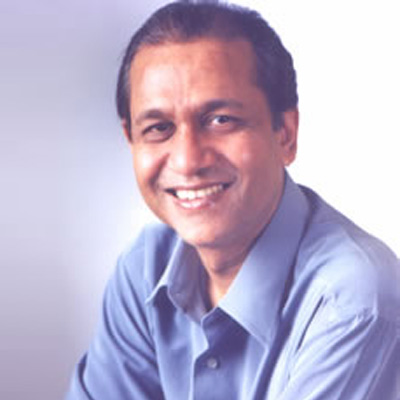
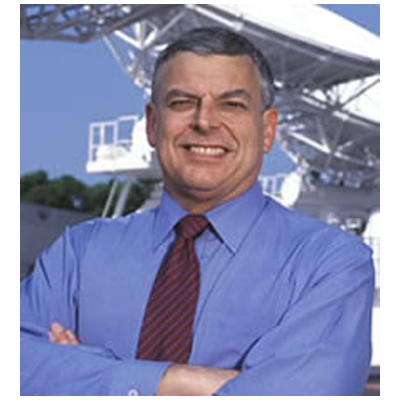
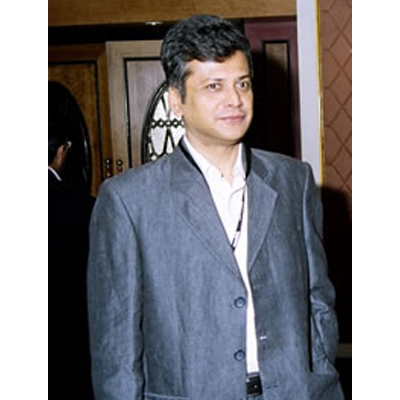
  • We can add 150 odd screens in the next 3 years: Carnival Cinemas CEO Mohan Umrotkar

    We can add 150 odd screens in the next 3 years: Carnival Cinemas CEO Mohan Umrotkar

    MUMBAI: Multiplexes are driving the growth of screen counts in India and considerably the major chains are now not limiting their objective to expansion but also focusing on premium experience. National multiplex chain Carnival Cinemas, one of the top four players in the segment, has been expanding rapidly in the last couple of years. After achieving a good growth in screen counts on the back of multiple acquisitions, it is now prioritising an upgraded cinematic experience.

    Recently, Carnival Cinemas struck a deal with TSR Films to convert all its existing and new screens into Laser in the next five years. Talking to Indiantelevision.com, Carnivals Cinema CEO Mohan Umrotkar spoke on the deal along with its marketing strategy, expansion plan, etc.

    Edited excerpts from the interview:

    What is the nature and aim of the partnership?

    TSR is the exclusive Christie RGB laser projectors provider in India. We have struck a deal with the TSR where they will supply 350 projectors over the next three years. It's a partnership of a supply agreement under which rate contract has been fixed, the quantity has been fixed and of course, this is again extendable for the quantity of future independent requirements. As of now considering our existence scheme and the plan that we have for the expansion, we expect to have 600-odd projectors which we can buy out over the next five years.

    Are you looking at more changes in terms of new technology?

    In terms of the infrastructure, we have already made major changes. Customers were able to see the changes when entering the cinema on the basis of the first interactions at lobby, auditorium, and toilet. This is nothing but the aesthetical changes; the infrastructure changes. So the next question was where we are engaging with the customer for the maximum period of time. Anybody who's visiting the cinema, I think he's more interested in the sound and the picture. And that's the heart of this. If you don't get a proper sound, picture quality, ideal experience is incomplete despite having a good lobby, premium Italian marble and chandelier. But if your projection system is not good, your sound is not good, experience is not good. Hence we thought of the latest technology. Nobody has even thought about using RGB Laser projectors in the multiplex chains, we are the first one to implement that. Apart from that I don't think so much technical changes are required now and all the other changes maybe with ticketing systems which are already there. So those are the core to the business is a projection system or a sound system.

    How much money have you put in for the new deal?

    The total investment for the deal in the next three years will be closer to around Rs 200 crore. Again, go up to at least 70 per cent to 80 per cent. Because then we are again talking about adding another 250 projectors, proportionate monies. So it will be roughly in the range of Rs 350 crore.

    Could you talk about your expansion plan in 2020?

    So if you see the past, we have also added close to around 70 to 80 screens in the last two years. Considering the market scenario, we will probably not add that more screens, but we can roughly add around 50 odd screens each year. And this is organic growth. Obviously, there is a plan for inorganic growth but that all depends upon what kind of opportunity is available, and what kind of deal is available. But organically we can easily add 150 odd screens in the next three years.

    What about your expansion plan beyond big cities?

    There’s still scope to grow in tier one, tier two obviously. To go beyond that, we have a different model which is called a Jalsa which is you know the low-cost cinema model which we are already doing. And in this entire expansion, I am not counting those screens because those are the new markets in which we also want to explore. So that's additional numbers which we're talking about.

    What will be your marketing strategy in near future?

    In the last one year, we have decided to spend money wisely. We have decided to advertise in a more sensible manner rather than just deciding to put so much of money into the news or so much of money on television. What we are promoting is the cinema because eventually the movie has been promoted by the producer and we are not the content owner. So wherever there is a new cinema name or wherever there is a renovation happening, we are just focusing on the property, we are showing this is a unique property. Marketing strategy is also depending on what is a cheap yet effective medium and that can be OOH or television. The overall marketing budget is around 1 per cent of the top line. We try to do more direct marketing, or we try to take the help of the social media, Facebook, twitter, Instagram, and e-mailers to our 50 million patrons annually. Because what we see is direct marketing, w the more effective way.

    How do you see the scope of growth for multiplexes in India?

    In India we are still around 9000-odd screens whereas almost 130 crore population. 2000 movies are being produced every year and the country is also vast. I am not saying that if China or the US have 50,000 screens, we should also have in the same range. To start with as a bare minimum, we should have anything between 25-30,000.

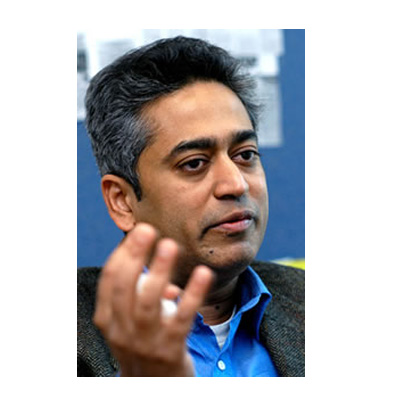
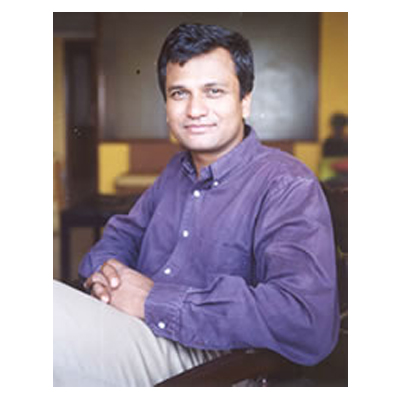
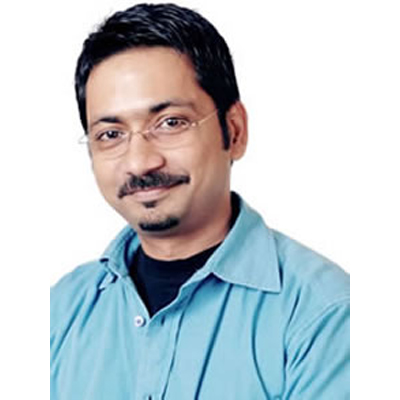
  • We see engaging stories and narrate it in the most entertaining way: Zee Studios CEO Shariq Patel

    We see engaging stories and narrate it in the most entertaining way: Zee Studios CEO Shariq Patel

    Even as the digital medium is emerging as the most preferred way to consume content, the big box at home or the movie theatres are also finding ways to retain viewers. Hence, striking the right balance between all the verticals is one of the basic premises on which Zee Studios is building itself. An old hand at the content-driven film-making is now also looking at providing content for the streaming services. ZEEL’s content creation arm is also not overlooking producing shows for TV under the head of Essel Vision Productions.

    In a recent interview with Indiantelevision.com, Zee Studios CEO Shariq Patel shared the guiding principle of the studio’s overall mandate. He did not play with words but simply said – the philosophy is to see engaging stories in the most entertaining manner. Sitting at his sunny cabin full of books on storytelling, Patel speaks about Zee Studios’ overall content strategy for the year, its partnership within ZEEL, outside the network, regional blueprint.

    Edited excerpts:

    What is the philosophy of content creation of ZEE Studios?

    So I think the philosophy is to see engaging stories, that really is the heart of anything that we are looking at doing, and then saying it in the most entertaining manner possible, that really should be at the heart of any production house.  There'll be certain people who will look at more. So as a film studio or as a content creator, you have to cater to everyone, we are not a specialised content creator in terms of that we will only do a particular kind of movie or a digital original show or TV show, or non-fiction show.  We do everything at different budgets and different skills, for the entire audience, the mass or class. So, it really is making sure that any story that we pick up, especially when we are talking about films, who is the primary audience for it. The smartness comes in is that how do you make sure that it reaches out to the audience that you've made it for in the most cost-effective and efficient way. That really is I would say winning philosophy.

    How do you strike the balance between films, TV shows, digital content?

    When it comes to films, we choose the ones we want to do. In the case of digital and television, it's all commissioned and so there has to be a broadcaster or a platform which, which has to buy into the idea. It's fairly distinct the different arms that are there. Zee Studios is the flagship brand for the films and Zee Studios Originals, which makes content for ZEE5 and as well as other platforms, which are there so we've got about three shows with ZEE5 which are in the process of pre-production and  going on the floor and then there's, of course, the TV broadcasting which so far predominantly has been with the ZEE network, so whether it's Dance India Dance or Sa Re Ga Ma Pa.

    Sa Re Ga Ma Pa Little Champ is going on the floor now. We are doing Sa Re Ga Ma Pa Punjabi and a couple of fiction shows in the newly launched Zee Punjabi channel there are about three fiction shows that we're doing between Zee and &tv. In the TV space, we have done so far, hundred percent work with Zee. There are the broadcasters we started the conversation with but it's all commissioned. So whatever the story idea, there someone has to gratify it as a client and may bring some changes. The channel people also kind of help guide the storyline and things like that wherein films it's all ours so for that there's a separate team. The creative team is more of  collaborative here.

    How are you synergising Zee Studio with other segments of the network?

    The legal entity is Essel Vision which is 100 per cent subsidy of ZEEL. On the film side, we pretty much are independent. However, having said that the films that we produce, our music most of the time is with the ZEE music and so the synergies are very strong, across different and each of the verticals. Our films go to our network channels, we'll get on to ZEE5 so that is pretty much the basic. In the off chance that the commercial value it derives from an outside platform is of higher value, we go for that. We have in the past done that, for example, Manikarnika has gone to Amazon so because of a higher value realisation. Having said that,  the business is standalone, I mean, the individual project has to recover money. More often the buyer is ZEE for our product that's there, but it does not preclude us, from doing deals that allow us to maximise revenue from an outside. Synergistically, there is an understanding, and we are mandated to, to try and make sure that we are feeding the pipeline for the TV channel and ZEE5 and the music.  So it's actually a fairly arm's length transaction with, of course, synergies and certain understanding which is there but the idea is that on a standalone basis, ZEE studios and whatever we do has to be, as profitable it is, is making sense for the business to run on its own.

    Are you looking at working with other OTT platforms than ZEE5?

    We are in conversation with all of the other platforms for various shows from the biggest international name to the newest entrant. We are in conversations with everyone, and at different stages of pitching is there are certain cases we've actually agreed on everything and then failed through budget expectations and things like that. So we are engaging with everyone and we are also looking at.  A lot of them are actually asking us for like regional content right both either as a movie or as show as regional is the next big frontier that everyone's looking at.

    What are the regional markets you are looking at?

    Marathi for sure, we will make shows in Bengali, Punjabi. Lot of the shows we are doing is going to be in partnership with other. As a studio, as a production house, we spread our net wide and we're talking to the talents of different regions. So, we are engaging with the South but not so much in the south languages. Having said that, there are some Telugu shows that we pitched but I think we are a little bit more confident in these other markets that we mentioned now- Punjabi, Bengali, Marathi for sure.

    Can you talk about your overall content strategy of 2020?

    We will release about almost 20 movies between Hindi, Marathi, Punjabi. Out of these 20 films, our in house productions will be about four or five, which would be like fully produced by us. Now, the six-seven will be co productions with other partners. And then the balance will be, pure distribution just to ensure that, we are distributing to other production houses just on the commission base. On the TV part of it, I think for the ZEE part of itself, we get the big four or five non-fiction shows including DID, Sa Re Ga Ma Pa. We've already got three fiction shows which are on air. In the Hindi GEC, there are two more shows. There's a fairly set calendar. We are trying to break through to other broadcasters and conversations are happening with other broadcasters to for us to produce and similarly in the OTT space, apart from whatever we're doing with the ZEE5, we are in conversation with other odd platforms are at different stages and we're hoping that in 2020, we will do original for one of the outside broadcaster or OTT platform. So that's the strategy.

    What are the challenges in the ecosystem you are facing currently as a content creator?

    Not specifically as such challenges but I think there are opportunities in the overall ecosystem. It's just that anyone with the right scripts and the right set up can make a film. Selling of concepts now has better possibilities because there are so many different avenues. I think it's an extremely exciting time for content creation, we as a studio are partnering with many and are open to multiple different opportunities. We have got a very strong development pipeline as well. So currently the challenge is everyone chasing the same writers, right? So finding the right talent to write the shows, write the films, because everyone's got it after a long time, especially writing talent has got the opportunity. So that's the only real constraint on the supply side. However, I wouldn't call it a challenge, I think these are opportunities. It's just an exciting time for anyone in the content creation space, if you get your development pipeline, if you get your scripts right, there is a market for it, and I think everyone's depending on what stage of evolution your company, your studio or production houses that some of them hit the jackpot earlier, some of them are hitting it later, but it all depends on us getting your raw material has to be in place, right. So I think really the constant self-constraint in terms of how do you make sure that the content that you are curating or creating is amongst the best, so that when you are putting it out there in the market, especially for OTT, it's picked up by the platform, and that really is the immediate challenge.

    Will there be any significant change in your capex for next financial year?

    We don't really have a CAPEX, our CAPEX is basically investment into acquisition of movies or signing off talent and producing and things like that. So won’t really call it CAPEX. In terms of cash-flow, of-course, as we are going more aggressive this year, we are looking at higher investment this year than what we did last year.
     

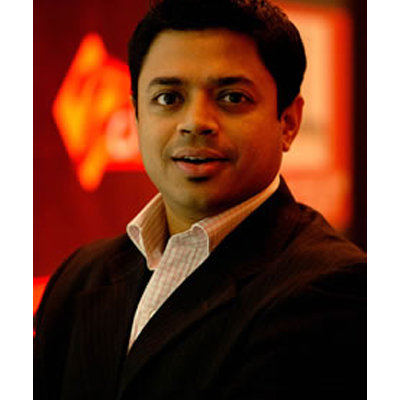
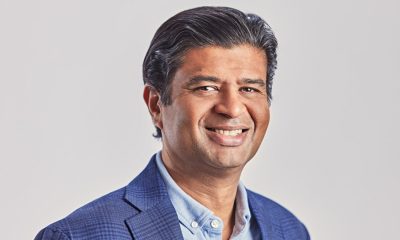
  • Star India’s Gaurav Banerjee on Hotstar’s content diversity, SVOD uptake & nurturing talent

    Star India’s Gaurav Banerjee on Hotstar’s content diversity, SVOD uptake & nurturing talent

    Hotstar has consistently outperformed some of the global over the top (OTT) platforms in India with the help of a mix of TV show content, sports and the recently-added originals. After Criminal Justice, the next original to launch under the Hotstar umbrella will be Out of Love. Launching 22 November, the series is based on BBC’s award-winning series Doctor Foster.

    Star India Hindi entertainment president and head Gaurav Banerjee attributes the platform’s success to its content mix. Compared to traditional TV, the digital space provides flexibility to creators to play with content narratives, style and direction.

    On the sidelines of the Out of Love launch, Banerjee spoke about Hotstar’s upcoming content strategy, feedback to Hotstar Specials, viewership ratio, online content regulation along with other topics in a freewheeling chat with Indiantelevision.com.Edited excerpts:

    Hotstar Specials entered the market at the beginning of this year when one of the main goals was to turn AVOD consumers into SVOD base. How has been the initial response? How has it helped to increase the SVOD base till now?

    It has been an incredibly good journey. We are very excited about the response we got. People have liked the shows. Our attempt at creating different types of content has been noticed. Sports documentary, a big edgy legal kind of drama, thriller, comedy and now a female-centered drama – we have it all. We have been overwhelmed by some of the responses we got from viewers and critics for shows like Criminal Justice. Obviously, we are doing this to power up Hotstar VIP and that strategy is playing out well.

    This is just a start. Everything takes time, consistency, effort and a series of quality content. For all digital content in our country, this is day zero. We have a lot to learn.

    What does your inside data say about viewership demography?

    Hotstar as a platform skews twoard the younger Indians. We have a great opportunity with all these types of content which are edgier and varied. The second opportunity from the creative point of view is very interesting; we can play with season length and episode length. In television, over a period of time, the format gets settled. Whereas here it can be led by the kind of stories we have such as the right point to finish a particular episode. This allows for a lot of flexibility for creative people.

    You have worked with renowned production houses or studios for Hotstar Specials. Are you considering giving a chance to young producers like you did for television business? 

    Yes we do and thank you for noticing that about Star India and that's something we are deeply proud of that we are that platform where new voices can come in and tell big stories. But we are just starting out. This is like a startup and there is a lot of content with new filmmaking, stories and talent. Hopefully, there will be a lot to talk about in the coming weeks and months.

    Now many of the platforms are launching a number of originals to build a loyal subscriber base. When do you see SVOD monetisation actually turning easier?

    Brands, including Hotstar VIP, are already attempting this. This will happen as the per capita and GDP grows and people will want to be discerning about the choices they want to make. They would want to watch higher quality and they will be willing to pay for it.

    Cinema prices have gone up but viewers are willing to pay. As a content creator platform, we have to create the experience that people really like, whether it is the technology experience, marketing, talent or stories. All of that has to combine to create something which you say that you like and makes you agree to pay more for it.

    Do you see a model emerging in the future where viewers can go for a bundled model in OTT like cable TV?

    It’s hard to tell. But I think that having an incredible content asset should be any company’s priority. Even with so many OTT platforms, viewers have a lot more choices today. So, people can decide where they want to spend. Essentially everyone is competing for time.

    What is your content strategy for 2020?

    Our first goal is variety. We want different stories and keep expanding them. This year we did a sports documentary, thriller and a social drama. A lot of OTT drama has been male-oriented. Out of Love is breaking that. It’s female-centric, emotional and about marriage. We want to keep experimenting and attract the best talent in the country. We want to work with the best actors, directors, showrunners all the time and we will do everything we can to create the right culture and figure the right scale of ambition so that Hotstar will be their target destination to work.

    Lately, online content regulation has been the talk of the town. What is your take on this?

    My team and I, across TV and digital, believe that we don’t want to do anything irresponsible. We won’t do edgy content just for the sake for it. That’s an ethical choice we all need to make. We need to figure out a method so that people don’t think of this as a chaotic classroom where there are just unruly kids and they need a class monitor or a strict supervisor. That’s the maturity needed from the creative community, platforms and the entire ecosystem and I feel if we do that we are all going to be fine.

  • Sabhyata takes a step towards redefining relationships this Diwali

    Sabhyata takes a step towards redefining relationships this Diwali

    New Delhi: Sabhyata, one of India’s leading ethnic wear brand launches their Diwali brand campaign focussed on demystifying the stereotyped relationships. The video brings to life Sabhyata’s philosophy of celebrating womanhood.

    This campaign, by Sabhyata, is an initiative to redefine the relationship between a daughter-in-law and her mother- in-law. Through the infamous domestic Saas-Bahu war around Shaam ki chai, the video showcases how when both women refuse to budge from their point, making one of them move to the kitchen seems to be an impossible task. 

    Finding himself in a difficult situation for having to keep up as an ideal son for the mother’s sake and an ideal husband for the wife’s sake,  the man of the house is found going back and forth to reach the unconventional answer .Having absolutely zero knowledge of the technical know-how near the stove, he moves in to rescue the festivity of the day. 

    Commenting on the launch of this new Diwali Campaign, Chayan Verma, Head of Marketing, Sabhyata said, “Sabhyata has always focussed on changing perceptions which is well reflected in our clothing range as well. We have rediscovered the traditional salwar-kameez to an outfit which makes a woman both stylist and confident. This Diwali, through our new festive brand campaign, we take another small step aimed at redefining the stereotyped relationships by showcasing the changing dynamics in an Indian household. ”

    The brand film will be widely broadcasted on social media and other digital platforms. This year also marks the 100th store launch for the brand in India.

    Link to the campaign video:  Sabhyata- Diwali #CelebrateaChange

  • Tasty Treat celebrates International Yoga Day with a twist

    Tasty Treat celebrates International Yoga Day with a twist

    MUMBAI: Good food and some humor can add a lot of meaning to the fast pace life we are living in. While everyone unites to celebrate International Yoga Day on 21st June, Tasty Treat the popular munching brand by Future Consumer Limited presents, ‘Tasty Treat Yogasan’. Connecting with the foodie hidden in everyone, ‘Tasty Treat Yogasan’ is a humorous campaign that highlights how Tasty Treat fans have their own ways, knacks and mannerisms to enjoy every Tasty Treat product.Tasty Treat Yogasan features asans like Stretch-asan, Chabao-asan, Chatkara-asan andCrawl-asanwhich are promoted through a series of videos on the brands social media handles.

    The campaign demonstrates the different Tasty Treat Yogasan’s like ‘Stretch-asan’; when you stretch your arms to grab your favourite Tasty Treat biscuits from the table while sitting on the couch. ‘Chabao-asan’ – when you exercise your mouth and gums by non-stop munching. ‘Chatkara-asan’ – when you do facial exercises by taking chatkaras while eating chatpatabhujia. Lastly, the ‘Crawl-asan’ – when you exercise by crawling and sneaking from your family to get your favourite wafer biscuit.

    Speaking about the interesting take of the campaignSadashiv Nayak, CEO – Food Business, Future Group says, “Tasty Treat is a fun brand that connects instantly with anyone who loves to indulge in food. We believe in communicating with our consumers in the moment and like to engage with them on an ongoing basis. The campaign has tongue-in-cheek humor which will make you smile at the same time will get your taste buds craving for some masaledar chips or munch on some thin cookies.”

    So follow Tasty Treat on Facebook and Instagram and let’s do the Tasty Treat Yogasans. Tasty Treat products are available at your nearest Big Bazaar, Big Bazaar GEN NXT, Easyday Club, Heritage, Aadhar and the stores near you. 

  • Will increase ads after sampling phase of Colors Tamil: Ravish Kumar

    Will increase ads after sampling phase of Colors Tamil: Ravish Kumar

    MUMBAI: Viacom18 has forayed into yet another regional language with the launch of Colors Tamil on 19 February 2018. Within 10 days, the network claims to have garnered positive response from the viewers on social media, advertisers and the agencies.

    Viacom18 head-regional entertainment Ravish Kumar, in an interaction with Indiantelevision.com, says that among Kannada, Marathi, Gujarati, Bengali and Odia, Kannada GEC market has more than 30 per cent share of the market share.

    Viacom18 already has five general entertainment channels in regional languages under the name Colors, Tamil is the another language that the network is betting on with crossed fingers. The region has a strong TV broadcast market, one of the biggest in the country.

    Edited excerpts:

    How has the response been to Colors Tamil?

    While it’s early in the day to comment on the feedback, the response from the viewers on social media, advertisers, agencies and the industry per se has been very positive and encouraging. People are appreciating the strong connect, the fabulous production values, the choice of stories and the manner of storytelling. Viewers have gone overboard, online, advising Arya on his endeavor to choose his soulmate. We are keeping our fingers crossed and hoping for the best.

    Are you looking at a phased launch of new shows?

    We have launched three and a half hours of weekday programming and two hours of weekend programming and we intend to increase those hours basis viewer reaction.

    What has been the advertisers’ response post the channel launch?

    We have Nippon Paints and India Gate Basmati Rice on Arya’s show (Enga Veetu Mapilla). Nippon Paints has come onboard as channel partners as well. Plenty of advertisers, both national and retail, have shown interest in partnering with us. Currently, we want to optimise the sampling of the channel amongst the viewers and hence are onboarding advertisers in a phased manner. Once we move past the initial launch phase, you will see a lot more ads on the channel.

    Is Colors Tamil a part of the base pack of all the DTH operators?

    Colors Tamil is free for an introductory period. The channel is widely distributed across key players both on DTH platforms as well as cable operators.

    How different is your content compared to the other players in the market?

    It’s different on two levels – both at the conceptual and the production levels. We are not only doing shows which are engaging and socially relevant but also bringing cinematic value on television through Alexa camera, top quality sound, enhanced production value and real locations resulting in an unprecedented never-seen-before look and feel.

    Of all your regional channels, which language has the highest viewership? 

    We are a strong No. 1 player in the Kannada GEC market and have more than 30 per cent share of the market pie. The huge surge of advertisers and love from the viewers prompted us to launch a second GEC – Colors SUPER, which is one of the fastest growing and already counted in the top tier channels.

    How big is the overall regional GEC market according to you? 

    The overall regional GEC ad market is at Rs 6100 crore currently.

    According to BARC data, the viewership of Marathi GECs witnessed a spurt in the latter half of 2017. Do you think this phenomenon reflects the larger trend of viewers shifting to regional GECs?

    India is an ‘and’ market. What we are seeing is an increase in the overall television viewership and this growth is reflected in the increasing affinity to local / regional content. The regional channels have been producing a lot of quality content and hence are attracting a good number of new viewers. Colors Marathi, for instance, introduced quite a few good concepts last year like Ghadge & Suun, Sur nava dhyaas nava, Tumcha saathi kaypan, Radha Prem Rangi Rangli etc. which saw a jump in viewership for us.

    What genre of programming is liked by the Tamil audience?

    The Tamil viewers are progressive. They look forward to content that resonate with their culture and ethos. They look forward to quality content, something that reflects their strong connect with their land as well as allows them to expand their horizons.

    What do you make of Hindi shows being dubbed in regional languages and vice-versa?

    In our experience, good content always cuts across markets and languages. If the story has local connect or viewers identify with the content, dubbing does work. Viewers are waiting to discover good content. Great stories will work anywhere in the world. Our endeavor is to provide the viewers larger than life content, whether its originally produced or dubbed. Dubbed South Indian movies work big on our Hindi movie channels. Likewise even good Hindi shows dubbed in South Indian languages have great potential to resonate with the viewers. Our ambition is to make a show in Tamil that will go global.

    Is the dubbing and subtitling cost significant? 

    In order to do quality work, you have to pay a premium. As I’ve said before, some stories are universal and can connect with viewers across languages. The advantage of having a network play is that, based on regional synergies, we can cross-pollinate content. And of-course, the dubbing quality has to be in sync with the premium production quality that we offer.

    Also read:

    Viacom18 rolls up its sleeves for Tamil market share

    Viacom18 widens regional reach, to launch Colors Tamil in Q4

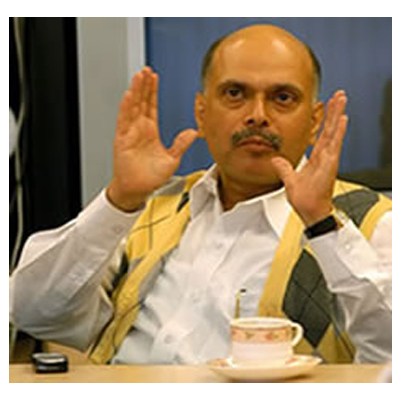
  • News is not about cacophony and stirring controversies: ZMCL’s Rajiv Singh

    News is not about cacophony and stirring controversies: ZMCL’s Rajiv Singh

    The Zee Group has completed a quarter of a century of its existence in India. Not only has it spread its wing far beyond television, since its first product launched was the channel Zee TV, but has tapped into almost all categories in the broadcast space. With a solid presence in entertainment and news already, the last puzzle was fixed when it dived into the tough waters of English news space.

    World is One News (WION) was first aired on 15 August 2016. Independence Day was the perfect occasion to launch India’s first global English news channel with a south Asian tinge. Ex-editor in chief Rohit Gandhi announced during the launch that the channel would meet the aspirations of two billion south Asians by delivering a global news network reflecting a south Asian world perspective, which has been missing.

    The channel was to be a destination for not just news but also some lifestyle, human stories, animals, food and environment related information. Its target is to capture the upcoming tech-savvy and visual Gen Z, the earliest of whom are just venturing into the corporate world.

    Indiantelevision.com’s Santosh Jangid got talking with Zee Media Corp’s group COO Rajiv Singh where he opens up about the ‘year old baby’ WION for the first time. Excerpts:

    How has the journey been for ZMCL?

    From then to now, we’ve established 13 channels with 220 million viewers. We are largest television news network in Hindi speaking markets. Television is core to our business and the last 25 years have helped us to become a large content media conglomerate. The future looks extremely bright, as we have built a strong efficiency over the years.

    Enlighten us about WION and its progress.

    When we entered the English news segment, we clearly knew that there is hardly an international player. India is a global economy and anything and everything that India does impacts the globe. We wanted to give global Indians a global voice and India never had that. WION complements our existing footprint in 171 countries and so we know we can quickly ramp up this business to scale new heights and make India stand out globally. We started that journey by giving the channel a very global look and feel. We have built it up as an aspirational channel and we are not interested in the number one game in India. We want to create a channel that is a content differentiator. WION is just a year old but it has managed to carve a niche for itself.

    What is your distribution strategy for the channel?

    WION has established a distribution centre in South Africa and shortly we will be transcending into new global corridors. Zee Media is already available in nine languages on GEC. How much time does it take to enter those markets by just tweaking the content and making WION relevant to every Indian!

    What makes WION a disruptor among the existing channels?

    WION stands for World Is One News which implies what affects the world, affects us all. We believe that news dissemination is not about cacophony and stirring controversies around breaking news. It is about building in-depth content, analysis and about investing a lot in curating and building content and for that, one needs to have international investments and international bureaus. WION has expanded to around 20 countries by expanding our international bureaus. It is one of the rare few channels to be operating out of a full bureau in Pakistan and a full-fledged office in London and the US, and a correspondent in Beijing. Soon WION will crossover from an Asian to a global channel.

    What is the local to international skew? What kind of news do you cover?

    WION has international content aired from 6 pm to 12 am. The channel has 60 per cent international content and 40 per cent Indian content that is internationally relevant. We do chase Indian relevant stories and as they say, ‘when in Rome, do as the Romans do.’ W show Indian content with a global tinge and ‘international’ as a word is misinterpreted. BBC in the UK and Al Jazeera in the Middle East are international channels but that doesn’t mean they don’t show what happens in their region and home territory.

    It is a niche market that the channel operates in. What have been some of the major challenges for you?

    It has been a challenging uphill climb but the channel has been accepted by discerning viewers. WION is available across all cable households in India. Although we have received some feedback that wasn’t very encouraging where viewers didn’t like the content or the overall channel, we take them as constructive feedback and insights and we are willing to improve that to make the content relevant to our customers.

    Where does most of your viewership coming from?

    Majority of our viewership largely comes from six metros but a large part of it also comes from foreigners residing in India as they are able to correlate with the channel effectively. The channel has a premium audience.

    How will you ramp up your distribution strategy?

    We are working towards building a global distribution network. We are in talks with The US to start global distribution. We will also make relevant content for markets like The Middle East, United Kingdom, United States and Canada. We will have more global networks next year added to our kitty of distribution.

    What target have you set for next year?

    We want to make the channel independently stand out in English news genre, add more distribution networks, and have more bureaus.

    When can we see the rollout of your OTT platform?

    We will have our platform very soon that will take the feed from the television channel and mirror that on OTT.

  • We focus on employee learning & development: Rohit Suri, GroupM

    We focus on employee learning & development: Rohit Suri, GroupM

    We care about you: that’s the message GroupM sends to its employees. While most others are scrambling to get out of the office on Friday, you will see GroupM employees dancing to Zumba or meditating away their worries through Yoga. What others may term ‘indulgence’ is an ‘investment’ for the media agency that revels in its employees’ holistic well-being.

    It is not surprising then that GroupM bagged the silver medal at the HR Excellence Awards 2017, which awards companies for outstanding human capital strategy and execution. Its efforts in nurturing and maintaining a high-calibre talent pool entail keeping the retention rate higher than the industry benchmark.

    Over the last few years, GroupM India has created a standard of excellence for several tangible and intangible employee benefits. The mAdvantage programme of 2015 has since rolled out several initiatives designed around employee healthcare and holistic wellness. Flexible timings and work-from-home policies allow employees to manage their career and personal lives.

    IndianTelevision caught up with GroupM chief HR and talent officer at South Asia Rohit Suri to understand what makes the network a winner year after year, how do they ensure a healthy work-life balance and much more. Excerpts:

    Another year, another Award! How does it feel to get recognised globally for your work done here in India?

    This is a validation of how employees feel about us internally within our system in India and the global team and how India is performing and what India is doing for its employees. This is one external validation for us. Our endeavour has been to maintain a positive work-life balance and move towards work-life integration. We make continuous changes to our policies and practices in line with the changing social and business realities. With the help of technology and a stellar team of thorough professionals, we are today one of the most preferred employers in our industry.

    What do you do to ensure a happy work place?

    We believe in total rewards, where we know compensation alone cannot keep employees happy in the company and we cannot rely on it to retain them as there will always be someone who is willing to pay more in the market. The benefits, engagement programmes, growth and development opportunities that a company provides contributes largely to make any workplace a happy workplace. We have an internal online system called as, Jobfy, where any employee at GroupM can apply for any position internally in India, Asia pacific or globally.  In today’s time, people want to change roles every 2-3 years and since we have so many diverse roles in the organisation, they can move internally. We have seen a lot of our employees move from India to Singapore, Vietnam, China and the US.

    We are deeply focussed on our employees’ learning and development. In the first 6 months of 2017, we have trained around 500 people in office hours and 1700 people on varying hours since we started using digital. We also undertake several employee welfare and engagement programmes, where an entire week is dedicated to wellness and there are doctors and dieticians on site. 

    We have recently launched an AI-based online platform where employees can chat with each other, giving us an insight as to how they feel at work and if we see a concerning message, we address it immediately.

    What are your leave policies and work from home policies?

    We have flexible timings and those who want to work from home can do so once every two weeks. If the employees want to come in late and leave early, they can do that too, because we want people to spend time with their families and loved ones. As CVL Srinivas says, ‘everyone should be able to see the sunset with their family.’

    Do you have certain special policies rolled out for female employees?

    GroupM is a gender-neutral organisation but we do have specific programmes for women employees. Maxus Media organises Work the Talk initiative, where women are trained globally to make sure they break the glass ceiling in the organisation. From a safety perspective, if a woman employee has to stay back in the office until late hours, we have cabs to drop them home. In a city like Delhi, which is not considered safe, we ensure our security personnel drop them at home safely. If she is flying in late in the night, we make sure she is provided with a cab and reaches home safely.

    What are the challenges one has to face in the changing dynamics of the industry? 

    It is more of being ahead of the curve and being proactive rather than a challenge. GroupM has an open-door culture where anyone can reach out to anyone. We encourage speaking out and having a conversation with each other and counsellors. One might often see CVL Srinivas having lunch with the team in the cafeteria and having a conversation with them. We are very transparent in nature and want people to know our business agendas, our challenges, our focus and everything else.

    Is it difficult to maintain a healthy work-life balance with changing social and business realities?

    There are two ways to look at it. One has to be innovative in terms of how they manage it. Digital has caused disruption and the pace of change is quick. Technology can make our life easier now. The social fabric is changing and with millennials coming into force, their thought process is very different. A lot of people are very ambitious in India and they just need the right direction.

    What more needs to be done in the Indian media environment to make sure there is a healthy work-life balance?

    At the end of the day, polices are just frameworks and you have to continue to look at best practices followed globally and see if they can work in India. An organisation must also come up with newer practices that will work in their company and it is an ongoing process.

    The recent allegations against film mogul Harvey Weinstein have sparked a global conversation about the issue of sexual harassment in the workplace. What precautionary measures does GroupM take to ensure women safety?

    We have established the Vishakha committee (Prevention of Sexual Harassment of Women at Workplace) across all our offices, which are headed by women. GroupM has Zero tolerance for harassment at any level. If any such act is seen happening, the conversation will happen immediately and we would not want it to be encouraged.  There has to be mutual respect and you need a very healthy environment to work in but some things are unacceptable and we don’t shy away from taking immediate actions. That could mean suspension or termination but we will never shy away from taking stringent and strict actions against any kind of sexual harassment.

    What more does the industry need to do to help sustain a healthy work environment?

    I can only speak for GroupM and as of today, the way we work is very simple. If we think there is need to change this, we will change that. Period! We constantly get feedback from employees on what more could be done and we do that. If in Delhi, a woman needs to be accompanied while going back home it will be implemented and when we felt that people should not stay back till late, that was also implemented.

    What makes employees stay back at GroupM?

    Everything depends on the culture of the organisation. Culture could be defined by the policies of the organisation, people you hire, how you interact with one another, how quick you deliver, delivery of output and passion.

  • #hoyejak: We used all SVF properties to promote Hoichoi, says Vishnu Mohta

    #hoyejak: We used all SVF properties to promote Hoichoi, says Vishnu Mohta

    Imagine, what will pop up in your mind when you hear ‘Let’s do it’ or ‘Ho jaye’, something naughty or kinky? But, these are words regularly used by Bongs in their day-to-day lives.  Hoichoi however made it into a happening and impactful campaign.

    The recently-launched OTT platform Hoichoi buzzed with a creative campaign called #hoyejak. Designed by Rediffusion Y&R, it created a hype across social media platforms such as Facebook, Twitter and Instagram.

    Hoichoi was launched on 20 September by Shree Venkatesh Films (SVF), an Indian media and entertainment company headquartered in Kolkata. #hoyejak by Hoichoi, an ad-free platform with a collection of seven original web series till date and three more to launch by the end of October, was preceded by some funny one-liners which created a lot of curiosity amongst the Bengalis during Durga Puja.

    The faces of the campaign were none other than the Hoichoi and SVF team members themselves. #hoyejak hoardings dotted the skylines of Kolkata and were strategically placed at various locations to grab maximum eyeballs. Hoichoi co-founder Vishnu Mohta, interacting with Indiantelevision.com‘s Kirti Chauhan, said, “Hoichoi means happening of positive activities around you. Excerpts from an interview where Mohta shared insights about campaign:

    Tell us about your marketing strategy to promote Hoichoi?

    In the first six months, it is all about creating brand awareness. We are not looking to the brands and advertisers in the initial phase because we are offering Hoichoi in an advertising-free form to provide uninterrupted viewing. So, we have used all our considerable SVF properties across cinemas and screens, digital and social properties to promote hoichoi.

    We believe advertising must be disruptive and highly engaging, just like the original content on Hoichoi. We launched an innovative #hoyejak teaser campaign to promote Hoichoi. It was an outdoor campaign and became the most talked about campaign of the city this Durga Puja. We had Hoichoi hoardings across the high-traffic parts of the Kolkata skyline, and those drew a lot of attention and generated conversations across mediums.

    What does ‘hoyejak’ mean and how was the response to the campaign?

    See, both, Hoichoi and Hoyejak are two very common, everyday terms used by Bengalis in their day to day conversations, and obviously were chosen because they establish an automatic connect. #hoyejak translates to “let’s do it” in English, and “ho jaye!” in Hindi. Not only the words, but also the faces we used were really pleasant, everyday faces to reflect the average Bengali on the streets of Kolkata. In fact, we used Hoichoi and SVF team members themselves in the campaign, and together, the creatives and the entire approach sustained the buzz and brought a smile to the faces of the public.

    Tell us about the timing of Hoichoi launch, and the campaign rollout

    Well, some very funny one-liners preceded the #hoyejak campaign, which created curiosity amongst Bengalis. Designed by Rediffusion Y&R, we had strategically decided to launch Hoichoi in the Durga Puja festive season, because it is obviously the best time of year to roll out anything for Bengalis, not just in India, but worldwide.  The Puja holidays not only see Bengalis turn out in their festive best with their families, but also see most Bengalis travelling back from outside Bengal to their homes or loved ones in Kolkata and across the entire state.

    Our choice of OOH locations which included the airport and Howrah station along with other high-traffic areas, gave our campaign in Kolkata a very high OTS and helped it make a big impact. It also had a lot to do with the creative content of course – not only were the ‘tease and reveal’ creatives very entertaining, but the fact that nine out of 14 creatives talked about Durga Puja, helped the campaign receive great word of mouth publicity.

    How many locations did you cover across Kolkata?

    Many. Right off, I can recall Howrah Station, Ultadanga, Science City, Syed Amir Ali Avenue, Rashbehari Metro, Harish Mukherjee Road, Ruby crossing, Gariahat Flyover, Garia, B. T. Road, AJC Bose Road, Gurusaday Road and the airport.

    How much did you invest for the promotions?

    I regret I would be unable to share the cost, but suffice to say that it was an extensive campaign that was put up across numerous prime OOH spots in Kolkata, and we did not hold back on it in any way.

    How was it received by the viewers?

    Social media platforms like Facebook, Twitter and Instagram were buzzing. On the day of the Hoichoi launch event (20 September), #hoichoi trended pan-India at the no.1 position, with #hoyejak at no. 2. Prominent Tollywood stars took to social media to congratulate SVF on the grand launch of hoichoi. Both our hashtags, #hoyejak and #hoichoi,  together generated over 3000 conversations and 47.9 million impressions, reaching approximately 6.8 million people within four hours of the launch.

    Here are the video links:

    ALSO READ :

    Hoichoi launches ‘Paranoia’ thriller series

    Niche regional OTT player Hoichoi offers Bengali content on iOS, Android and Chromecast

    Hoichoi original adult-comedy Dupur Thakurpo campaign launched

  • Strong economic logic underpins several events, says Gurumurthi, as ET Now adds new viewer category

    Strong economic logic underpins several events, says Gurumurthi, as ET Now adds new viewer category

    A while ago, the Times Network decided to embark on a mission to provide more to its business viewers of ET Now. Rather than overdose them with business news 24X7, it decided to show them how general news can also be viewed with a business lens.

    Tune into the channel after 5pm and you will get to see development related news – both economic and social, that will give a business viewer a better idea of the sector. It can also be seen as an attempt to get evening viewers, who are generally glued to the general news and debates that follow. ET Now also has general news, shows and debates to engage the upwardly mobile audience.

    Managing editor Sandeep Gurumurthy is not only behind-the-scenes but also co-hosts the 9 pm primetime debate ‘Rise with India’. In conversation with Indiantelevision.com’s Shekhar Pundir, Gurumurthy sheds light on the channel’s intent to change its positioning and what has come out of it.

    1) How has this change from pure business to a mix of offerings benefitted you?

    We are truly overwhelmed with the response so far. I don’t think any news channel has taken the leap of faith that we have. We sensed a clear need to bring intelligent and informed conversations back on news TV and no other channel saw the merit in putting development at the core of its editorial agenda.

    2) How successful have you been in discussing India’s holistic development and imagery?

    While these are early days, I think we have been very successful in establishing India Development Debate as a leading platform to discuss and debate issues relating to the country’s development. We have received great responses from stakeholders, both in the policy and corporate space. Top ministers and bureaucrats from the government such as Piyush Goyal, Jayant Sinha, Rajiv Kumar and Amitabh Kant, have participated in the show and contributed to finding solutions for the issues we raised.

    3) What impact do you see on viewers after about 10 weeks of the shift?

    To me, this is more than just repositioning. The entire organisation has morphed into a new entity with a new purpose. This is a tectonic shift and I appreciate the fact that it will take a while for people to understand the importance of this change. A year ago, this seemed unimaginable. Having said that, we have only made a beginning and set ourselves on a path, which is unchartered territory.

    5) ET Now’s new shows promised to uncover the economics behind major news around us. Please comment on the effect and impact of this strategy.

    I think with all these stories, what we are trying to demonstrate is that very often, there is a strong economic logic that underpins a lot of events that happen around us. Our endeavour is to bring that out. You can’t reduce news events to binary propositions. That’s how we want to make Rise with India, the most intelligent debate show.

    7) What would you say makes the show different from the other business shows?

    To start with, this isn’t a business show at all. This is a news debate show that focuses on development issues. Development is not just economic development but also social development. We have debated issues like hunger, sanitation, etc. which are core to India’s development agenda. Tell me another channel or show that is even talking about these issues on prime time?

    9) What change in viewership have you noticed?

    We have not repositioned the channel with an intent to drive viewership. We don’t decide topics based on what will get us eyeballs or drive viewership, we decide topics based on what will create impact and make a difference to India’s development agenda. With all humility, that is what we are doing at ET Now. Thanks to our strong brand, we are already one of India’s most watched English news channels. I am certain that in this new avatar, ET Now will draw a whole new category of viewers, who have so far stayed away from business news.

    10) Wouldn’t most leaders cater to similar topics?

    We as leaders definitely believe that these issues needed to be done differently. But we don’t want to restrict ourselves to just economic issues. Our agenda is development and we will cover every aspect of it. Most other business channels don’t discuss the kind of issues that we do. If they now start doing so, I will only be too happy.

    11) What would be ET Now’s strategy, going forward?

    We want to put development at the core of public discourse. We want to make India Development Debate, India’s most influential debate show that leads to change. We want to do whatever we can to aid India’s development agenda and help every Indian to rise with India.


    ALSO READ :

    ET Now revamps to offer both, business and general news

    The television business news conundrum

    Times TV gets into a gunfight with CNBC TV18 on Budget Day claims