Category: Executive Dossier

  • Applause Entertainment’s Sameer Nair on disrupting creativity & redefining storytelling

    Applause Entertainment’s Sameer Nair on disrupting creativity & redefining storytelling

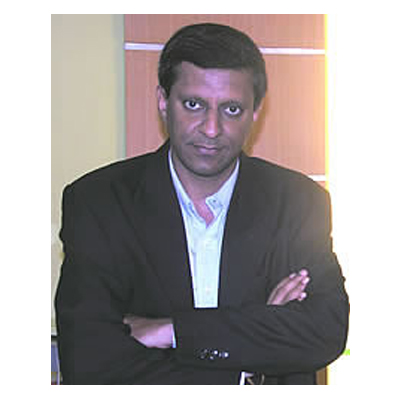
    Applause Entertainment CEO Sameer Nair, who was once a hotel management student, went on to discover his true passion for storytelling and eventually landed up in the media and entertainment industry. He spent close to three decades in understanding the TV business and created some great shows during his time at Star. Nair, credited for creating daily soap operas and bringing Kaun Banega Crorepati in our lives, is now focussed on creating premium content for modern-day audiences. According to him, premium cinematic television is something which India is missing and that is the void Nair is hoping to fill. The aim is also to create binge-worthy content for leading streaming platforms. Applause Entertainments upcoming projects include Udan Patolas, Avrodh- The siege within, Taj – A Monument of Blood and The Scam. The studio is also developing the original, multi-season series Seeker with partners Gurinder Chadha and Sunder Aaron.

    Nair, in a virtual fireside chat with Indiantelevision.com group founder, CEO and editor in chief Anil Wanvari, offered key insights into his company’s plans, creating content in today’s age and the importance of storytelling. Nair was always determined to set up his own creative studio and do all formats of content. He enjoys storytelling and loves working with creative minds. He is also positive about doing multinational collaborations in order to deliver quality content that can transcend boundaries.

    Edited Excerpts:

    Do you consider yourself a content pioneer?

    I think I have had a long career in this industry. I got acquainted with the media and entertainment business in the late eighties. I have been a content creator since then and I used to do advertising, documentaries and then I moved on to TV. Most people are unaware that I did a show called Chennai Doordarshan. After that, I spent many years with Star TV and then the famous Kaun Banega Crorepati happened. I have been lucky enough to be part of the television industry when it was in a pioneering stage. We started with a few hundred TV homes to now 200 million TV homes. I am fortunate to continue with the work that I enjoy doing. We did a lot of pioneering things. Whether I am a pioneer or someone doesn’t matter. As far as content disruption is concerned, I think it has been a natural evolution of what I have always been. This is something that I always wanted to do as a creator and I enjoy working with creative minds. Our business is a creative art-form and it takes a lot of moving parts to create what you are seeing on screen. So, I am having the time of my life.

    Do you believe you are disrupting creatively?

    The biggest disrupter happening in the past 20 years is the growth of the internet and how it is changing consumer behaviour and the pandemic has accelerated that. The things which were predicted that it will happen in the next seven to eight years is happening now. I think different people are doing different models but I am looking at investing money in creation and then taking it forward for licensing. Applause Entertainment is the movie hybrid business studio that looks after operating finance, attracting capital to content creation and then processing to licensing and monetisation.

    You had a well stretched out journey, after leaving Star TV you did quite a few films also, so how has it helped in your journey with the streamers now? Have you had to re-learn everything when you are making streaming shows?

    Way before the daily soap opera revolution happened, India used to present weekly programs. In the nineties, India produced some excellent shows. I have been a voracious consumer of all this content. I have grown up watching Hindi and English movies and American television.

    So, it is not so much about relearning, but it is a different style of storytelling which is popular in the West. They have done this kind of premium drama series that we are talking about now. So, it is a function of aligning the creative people we work with to deliver on that front. I think it is more about re-disciplining as in you get used to producing content in a way. At heart, I am a creative producer; I make things happen and execute them. As they say, history goes in a circle, it repeats itself, storytelling and universal truth remain the same but what changes are people, audiences, platform, modernity, social taste and social context. So, it is a variety of content that I like.

    If you go back in time, storytelling was happening in America and then came HBO which changed the way storytelling was done in television. Later, Netflix came and magnified what HBO was already doing.

    HBO redefined cinematic television. It attracted a lot of filmmakers and not just TV producers. I think the advantage India has is that currently, we have our HBO moment. The whole rise of OTT and devices in the last two to three years are HBO moments. The advantage is that we have a reference point as HBO. We have seen what they have done and are able to learn best practices from them. Also, the world has become a much smaller place, the scope of global learning, global understanding, adapting new shows, working with Indian and international writers is possible today. I believe creating global content is much more accessible now. At the end of the day no matter what the technology is it needs a compelling story to attract attention.

    What inspires you the most? Is it films, lives, books or to say whose work inspires you?

    I never went to film school but I have always been a fan of what we call as popular culture. While growing up my mother and I used to watch Hindi movies every week for the entire seventies. I watched a large amount of TV, Hollywood cinema, I am a big fan of Spielberg and I love the Rocky series. I am not fixated with any kind of thing, I love watching documentaries as much as I love watching comedies. I like reading books, especially short biographies. I derive inspiration from the lives of other people.

    What books do you love reading and what books you will recommend to our readers?

    I am reading a book called IBM and the Holocaust. It is about the Nazi journey and the Holocaust. I am reading 16 Stormy Days, about the creation of our constitution. Then there is a book called Within an Empire, it is my all-time favourite. I am also reading a book named Way Finder, then there is a book called A Case For God, The Unknown Man

    Do you have the ambition to become a writer, director or a showrunner?

    As a producer, we are anyway showrunners. The most important thing is the producer and executive producer which I am. I have done a few pieces but I think it requires a lot of effort and focus which I am not able to give now. About being a director, I have directed in the past but currently I am happy doing this producing business. Writing is a passion; it is something I want to do in the future.

    You were quite busy in the pandemic. You had Your Honour, Undekhi, Avrodh, Hostages season 2, Scam. Is it what you want the life at Applause Entertainment to look like? Are you looking at creating a studio like America, churning out stories every month?

    Last year we released one show every month. We did 12 releases before the pandemic happened and proceeded to do more three to five in the last four months. So that has been our plan in any case. We want to produce a large number of high-quality shows. Our goal at Applause Entertainment is to create a diversified content pipeline that includes long-form animation shows, movies, documentaries, short stories and many other stories. We are also collaborating with international partners where we are happy to co-produce and co-fund.

    The team at Applause Entertainment is looking at working with a variety of content, marketing and distribution partners. We are getting better with what we do, the learning process and after doing close to 16 shows, one gets to know the pitfalls, costs and other important aspects.

    What is your parameter of success? What is your runway to make the profit?

    We are a young company, maybe after five years, we will talk about year on year growth. We are a studio and part of showbiz; we have our business plan and the runway. The two big things that should come out of this is that we want to become a studio that is known for its creative output, quality of its product and then make money while doing so and also have fun while doing it. We are obviously not into the subscriber business; we are not a platform, so we are looking at working with a wider variety of content creators. Also, if the streamers get more subscribers, the company is automatically benefited. We are looking at a bigger horizon in the coming five to seven years. Our focus is to go local for global.

    Applause Entertainment wants to become a studio that is known for its creative output and quality shows. We are also looking at creating subsequent seasons of the existing shows as it gives more insight. We continue to develop things that we are currently doing, we are looking at engaging with streamers at an earlier stage for some specific things.

  • “Our subscriber acquisitions are returning to normalcy” – Airtel DTH’s  Sunil Taldar

    “Our subscriber acquisitions are returning to normalcy” – Airtel DTH’s Sunil Taldar

    MUMBAI: Having their heads buried in a transformative ecosystem, major DTH players have constantly been expanding their offerings and Airtel’s DTH arm is not an exception. The world is busy discussing traditional TV versus OTT but DTH players like Airtel Digital TV are embracing the opportunities coming from streaming services, according to Bharti Airtel DTH CEO Sunil Taldar.

    In an interview with Media Partners Asia executive director and co-founder Vivek Couto during APOS 2020, Taldar spoke in the session "Innovation and growth in India's Video Market" alongside Tata Sky CEO Harit Nagpal. He addressed queries about existing opportunities, changing consumer preferences during pandemic as well as the future of his own platform. He also sounded highly optimistic about creating a universe of hybrid set-top boxes along with the growth opportunity to expand the existing DTH consumer base.

    Edited excerpts:

    You run very large consumer business. How has the pandemic affected consumer behaviour, generally and specifically and what are the growth trends across your business? And what does the future look like now for the DTH industry?

    First and foremost, we are an essential service and we became a little more essential during the crisis period. And we did see a change in behaviour which led to a significant increase in the consumption of news. In the absence of fresh programming and live sports, we have seen a large number of customers turning to OTT, and we have seen demand increasing for the hybrid set-top box. So that's one shift that we've seen in the industry.

    Another thing that I would like to highlight here is true for the entire industry. We have done a lot of work to digitally service or fulfil the needs of our customers with zero or minimal physical contact. And I'm making sure that there are no safety or security concerns both for our customers as well as for our field staff. Within the business, there has been a massive focus on serving those who serve our customers and how do we enable our field staff on the ground. This entire work that has happened in the last three months will offer a significant competitive advantage to the DTH industry.

    Our acquisitions are coming back to normal. I think we are acquiring more customers today as we speak. And DTH being present in only 70 million out of 300 million homes in the country, there is a massive land grab opportunity and massive headroom for growth. And I see the long-term future of this industry to be vast.

    You have been innovative for many years. So what else are you introducing to address competition? And to appeal to wider consumer needs and requirements?

    If you look at it from a consumer route, we live in a connected world and one of the challenges of the connected world is actually proliferation of services, which forces our customers to maintain multiple relationships, which is tedious. So, there is some work that we have done, which is a first of its kind in India, such as offering a converged proposition to our consumers and allowing them to buy services like mobile, broadband, landline and DTH together. Moreover, when we say DTH it also includes aggregated content. So, it actually takes care of one of the biggest pain points for the consumer i.e., one bill, one payment, one app and one call centre to get services or address your complaints. It's a process improvement of offering a converge competition. 

    The other is there's an opportunity in the market for the entire DTH industry, which is the content creator industry to work closely with us. India is one of the most under-screened countries in the world. We have a 100 per cent control over content, distribution and security. We have the ability to deliver content to our customers on a pay-per-view right now and we have access to 70 million homes in the country, we have a trusted relationship here with 70 million customers. Now today, if we were to launch Hollywood or Indian movies on this platform, that's a massive business opportunity. In this crisis period that we're living in, I don't see theatres opening soon, anytime. Neither do I anticipate consumers walking into theatres in the near future. But even if that was to happen, given the screen density in the country, it's a very large opportunity that the industry will explore.

    What is the opportunity of hybrid boxes? 

    The future belongs to hybrid boxes. If we increase or drive the penetration of the hybrid boxes and an ecosystem develops around that there are opportunities whether it is video conferencing, gaming, e-commerce, etc. So, these are all opportunities which are there.

    What is the best way to monetise the connected box ecosystem? Is it through advertising or subscription? What is the revenue model?

    The connected box gives us good access to viewership data because it's a two-way system. Today, the entire industry operates on extrapolated data at a very small sample size of customers. Now, here we have a great quantity of data. In my view, there could be two streams for monetisation that can be watched. One is we can use this data to improve the quality of content and increase stickiness for linear programming and building large subscription business. And this is an interest for broadcasters and operators, provided both of us work together to improve the quality of content and therefore stickiness and therefore subscription. Or the other area is, advertising might be an opportunity but how do we improve the efficacy of spends for advertisers.

    DTH platforms have around 70 million subscribers and that's going to continue to grow. But first of all, do you ever see within the next five years any of the OTT platforms, the top three or four, having that kind of reach directly through a huge universe? And is that a friend or a foe? 

    Live TV is here to stay because nothing can replace live programming like news, live sports, etc. And we have embraced OTT rather than fighting OTT. If the OTT universe grows, whether one player or all, to be even 50 million tomorrow, it's actually good for us because one great consumer insight is everybody wants to enjoy that content on the large screen. It will offer help to our efforts to drive the hybrid universe. So we tend to benefit both ways, to benefit from the OTT business and also from live content. I don't think we are here to fight that.

    What are you seeing as changes in the Indian consumer ecosystem and mindset through these last few months? And some of them I'm sure are good changes and are they lasting changes? Will they have any impact on your business and products in the long-term?

    It's very difficult to say the changes that we have seen whether they are going to last forever. For example, work from home is a significant change that we have seen. Will this behaviour last forever or people will go back to working from offices once things ease out? But some of the opportunities are not related to this. It's a function of what has happened and a function of what platform do we create. As we said, pay-per-view, even if it is the launch of movies through a platform, it is a real opportunity for both today and tomorrow. If you ask me about the education segment, is that an opportunity today? Would that be an opportunity tomorrow in the connected world? That’s yes. We're actually managing connected devices, video conferencing, etc., and all these are real opportunities. And these can have a significant contribution to our top line as well as for our bottom line. What is required is for us to try penetration with an ecosystem, have the imagination and conviction right and the ability to convert.

    Some of the changes that we have seen, whether it is OTT adoption, a customer seeking education online, an opportunity for video conferencing or minimising physical contact, there are efficiencies right where we build models to where people upgrade from their existing box to a new box through absolutely zero contact.

    These opportunities are going to remain for a long period of time and fundamentally alter the way we conduct this. What we need to do is work towards the rest of the constituents of this entire ecosystem, be it broadcasters or technology providers or partners. And I think if that happens, it will fundamentally change the trajectory of the DTH industry. 

  • “The goal is to create a $100 million IP company”: GoQuest’s Vivek Lath

    “The goal is to create a $100 million IP company”: GoQuest’s Vivek Lath

    Goquest Media is an independent distributor of global entertainment content offering a broad portfolio of international television series, scripted formats, factual content and films. Supplementing its portfolio of Indian content with key acquisitions from Europe, GoQuest Media is looking to serve the scripted needs of buyers across the globe.

    The Indian OTT space is booming, with platforms clamouring to raise the bar in local scripted content. According to GoQuest Media, this new age of premium Indian drama is creating a wealth of opportunities. In the long run the company is looking at becoming a global content agency. The firm’s primary vision is to promote India on a global stage and also expand their footprint in the global market. The company recently landed the distribution rights to two original series from OTT platform MX Player, Ek Thi Begum (The Mafia Queen) and Queen.

    In a special interaction with indiantelevision.com GoQuest founder and MD Vivek Lath spoke at length about Indian and international content market, his plan going forward and much more.

    How huge is the Indian market for GoQuest in terms of storytelling and content?

    Indian market is a pretty big market for GoQuest overall. We have been in touch with all the local OTT platforms for selling content which is dubbed in Hindi or in local languages. Most of the content that we are talking about comes from outside India. There is a large amount of transaction that has been going around remake rights or adaptation rights of international shows and films into India. Indian market is growing every year and slowly as more consumers demand more content, there will also be more demand for ready content coming outside India which would be plugged into the system here.

    So, GoQuest is looking at building a major distribution/production company out of India. What's your vision.

    The vision is to ultimately build up a very strong content monetisation company across various platforms and mediums. We are currently sitting between production, consumer facing platforms. Our services are essentially limited to the montisation part. Right now, we want to vertically move towards the production side of the business. In the coming two to three  years we will also enter the consumer side of the business and become a consumer entertainment brand. The goal is to create a 100 million-dollar IP company out of India, which is not only producing content but a holding company of very large and good IPs. The vision is creating a gamut of entertainment services including production, consumer driven business and distribution. We are also planning to create financial products around entertainment. The focus is to become an end to end entertainment media conglomerate.

    GoQuest has appointed people overseas and it is trying to become India’s global agency. Can you elaborate more on this.

    We will continue to hire people outside India. Most of the people that we are hiring overseas are from the business development and partnership side. Paula, who is a Keshet alum, is based in Tel Aviv and manages businesses in Europe and US. Harshad,who is in Vietnam manages South East Asia and East Asia. From a sales reach point of view, it is important for us to put these offices in place, if we have to expand our business. GoQuest will continue to hire leaders in those regions. We have also onboarded consultants who help us with partnerships and outreach. All in all a mix of full time and part time employees. We have a team of 5 outside India and 48 within India

    Are you looking at becoming a specialist in this field?

    We are specialists in this field. We are the only company out of India, which does the kind of licensing business . GoQuest doesn’t have a direct competition in India as of now. We will continue to build in this niche, that is where we stand out. We are picking up more and more fiction stories from across the world. Our immediate goal is to build a strong fiction distribution pipeline . Pushing India to the global stage is something we are keen on. One of our goals is to push Indian content, especially the one made for the OTT players on par with the other global content that is there in the market

    How are you planning to utilise Queen and Ek Thi Begum considering Queen has recently come on Zee as well.

    Well our arrangement with MX Player is largely for distributing the show internationally. We don’t hold the rights for India. But internationally we do, and we have already started many conversations there. OTT players with in India are already licensing shows to each other and to tv broadcast. Our battleground will be to mount the shows outside India

    What is the cost of licensing?

    We act as pure play service providers distributing content in the international market. As far as Licensing is concerned, the spectrum goes anywhere between $500 per episode in a small market to $5000 in a large market. There is no fixed benchmark, it completely depends on the market and different territories. It also depends upon the quality and story of the show.

    Do you also have TV distribution rights for Queen? Also, OTT contents are now going to TV. Do you think it is viable?

    We have all the distribution rights for Queen on both OTT and TV, for the international market. According to me OTT content going to TV is a viable position. At the end it is all about who is the audience what is the audience overlap between TV and OTT. I think it is good for different companies, mediums and platforms to share the cost of content in a way. Because production costs are shooting up and to make sense of the economics of each content that is being produced, I think it is a good way of monetising it.

    Any new Indian content in the pipeline that you are planning to acquire?

    We are in advance conversation with almost all the OTT producers in India at this point for the intellectual properties they own. We are making sure that whatever show we handpick is of extremely good quality rather than taking it as a commodity approach and cross-selling product at super cheap price.

    In the current situation, where production is on hold, what is your strategy going forward?

    With production on hold, it hasn’t changed much for us. Of course, we need more and more content to drive our business. However, it’s just been three months now, there is enough content for us to sell even if the production is on hold. If the hold continues for a longer period, then it will be challenging to get new products. But our challenges will be minuscule as compared to the challenges faced by the overall industry. I am not worried as such as far as our business is concerned.

    Are you looking at content that can be remade in India?

    Absolutely, in fact we are putting together packages for about four different shows for which have acquired remake rights for India. We have put the right people behind them to i.e. writers, showrunners anddirectors and then go out to pitch the script to OTT platforms. Some of the shows we have are being commissioned by the networks in France, US and in Europe. All the shows that we have, are tried and tested so there is very limited risk about the story line. I believe there is a lot of scope of remaking content in India.

    How has the pandemic impacted your business?

    We all forced ourselves to efficiently work from home. A lot of our interactions are documented for better clarity. Use of collaborative tools to make sure things don’t go out of hand. The business momentum was significantly big at the start of this year, and that momentum has been slowed down for us now. But I believe things won’t be that bad for us going forward. Because content companies are now springing back up, consumer spending is slowly increasing. Yes, we have been affected but it is not going to be long term as far as the pandemic is concerned.

    Apart from Indian content, will you be bringing more international content in India.

    Indian content that we are distributing is for outside India. But we are bringing a lot of international content in India. We are looking at our Ruby Ring, which has done really well all across the world. We are approaching all the leading OTT players now to buy the rights. We are also looking at making that show for regular GEC broadcast. There are a lot of international shows that we are bringing in India, details will be out soon.

  • How Covid2019 is fast-tracking digital transformation in experiential marketing

    How Covid2019 is fast-tracking digital transformation in experiential marketing

    Consume or connect ? We didn’t know it at the time but somewhere in the middle of March we all got enrolled in a digital bootcamp. Covid2019 didn’t fast track digital transformation, it literally beamed us into the future. I have never witnessed such far-reaching change at such a pace.

    For an industry built on enabling human connections, Covid2019 rudely hit pause and with little warning. For those who will get the reference, it felt like Mr Freeze was on a rampage in real life. And when things thawed, we were in the future. Engagement changed overnight, calls were replaced by zoom/teams/blue jeans and webex. In a few short weeks we had already graduated to zoom fatigue and realised blue jeans were fading fast. And it wasn’t just about video messaging, the humble WhatsApp became part of the retail renaissance as the mom and pop stores leap frogged into the future and Ludo rivalled call of duty for family time.

    As isolation and social distancing become the norm for now, engagement and interaction has moved to our devices. The buzz in the experiential industry is all about pivoting to digital events. The tech jargon is flying fast and furious and it’s all about innovating or becoming irrelevant.

    Digital transformation isn’t about the adoption of technology, video conferencing has been around since the 80s and live streaming since the 90s. Most of the tech being adopted has been around for a while now and the first virtual conferences were held more than a decade ago. Digital transformation is all about staying real in a virtual environment, looking at screens not as devices to consume but as spaces to create live engagement. The screen is the new experiential touchpoint. Not just a place for content consumption but place to enable real human connections through live digital experiences.

    I am not sure if it was insight or instinct ( or maybe a combination of both) but the lockdown pioneers of digital engagement seem to understand the difference between creating digital content and producing live digital experiences. They understood that being present on the other side of a screen is not the same as participating with the on-screen experience.

    Vir Das hit a home run (no pun intended), with At Home, his online comedy tour for Covid2019 relief. A brilliant and effective use of zoom creates live engagement with the audiences. They are not watching a Vir Das special on their screens, they are part of a live experience. Kommune, the artist collective did something very similar when they created Lockdown Love , a play performed live on zoom. With every performance the experience became more engaging, with audience interaction seamlessly made part of the narrative. These early experiments by creators like Vir and Kommune clearly show that it is possible to connect with people on the other side of the screen.

    Almost every pre-pandemic human engagement has moved online. From fitness to education and everything in between. A recent article in Forbes states that virtual events are up 1000 per cent Since Covid2019, with 52,000 on just one platform called 6Connex!

    Take a look at some of the virtual events scheduled during the next few months. This July, Nintendo will host its flagship event, Pokemon GO Fest in a virtual format. XBOX is following suit with the XBOX 20/20 launch through a series of virtual events. From gaming to finance, with digital payments on the rise, June has seen the opening of Virtual bank branches across the globe from TSB in New Zealand to the Al Salam Bank in Bahrain. Hong Kong is going to see more than five different virtual banks open shop in the coming months. Commerce is not just going digital, it is going virtual. Closer home, the iconic Lakme Fashion week is going digital with the launch of “Virtual Showroom”. A digital engagement platform for designers and artists to showcase their collections to buyers and suppliers. The showroom is set to launch in Q3 with the upcoming LFW.

    We are seeing similar transformations across industries; each is an opportunity for digital experiential marketing because commerce is more than just a transaction. Digital experiential has the ability to elevate the experience and create human connections across the screen and there lies the real transformation. So while we navigate the new and wait for some of the old to return, remember it’s not just about pivoting, it’s about persevering.

    (The author is Geometry Encompass CEO. The views expressed are his own and Indiantelevision.com may not subscribe to them)

  • I am passionate about building businesses that have scale: Aditya Pittie

    I am passionate about building businesses that have scale: Aditya Pittie

    From being a young man who had to Google about downlinking and uplinking and did not know how a satellite signal works a decade ago to an entrepreneur at the helm of a media conglomerate, IN10 Media Network and Pittie Group managing director Aditya Pittie has come a long way. Anand Mahindra- and Pittie-promoted IN10 Media has television (Epic TV), OTT platforms (Epic On and Docubay), and production house (Juggernaut) in its kitty.

    Pittie finds his passion is creating value and wealth and building scale.  “That’s why I am interested in multiple businesses, not just any particular business. I am passionate about business, and building businesses that have scale, that gives employment to many people. That is what drives me,” says Pittie during a virtual fireside chat with Indiantelevision.com group founder, CEO and editor-in-chief Anil Wanvari.

    Here he talks about his and his and his father’s association with Patanjali, Aastha and Sanskar television channels, the distribution business and how he ventured into the world of broadcasting. He is very clear about where he wants to position himself in the broadcast business when he says: “I realised that it is better to be part of a smaller genre but have a better market share, rather than be part of a big genre and have an insignificant market share.” Excerpts:

    Describe your journey with Patanjali.

    Our relationship has gone stronger over the years. We have a lot of common values in terms of how business can be used to create value for society at large. We have been connected to him since the seeding of the idea and therefore we share the long-term vision and we continue to be part of that journey in some way or the other.

    Your father had gone to Haridwar and seen him there and invited him to Mumbai and conducted the very big Yoga gathering some 14 years ago.

    That was much before Patanjali. At that time, Swamiji was spreading the knowledge of yoga across the country to as many people as possible and obviously through television. He used to come live on Aastha channel. He was able to create the awareness of how simplified yoga can be done by people in their homes and the value it can add to the health, not just from a weight-loss point of view but from general mental health. So that is the time when my father went to Haridwar first and did yoga camp with him and was impressed with the vision that this man had that we decided to be part of the journey.

    Aastha and he became a big name after that.

    TV played a big role in his popularity. A lot of people don't know this: Swamiji is actually one of the very people in this country who have travelled to every single district by road. Lot of people think his popularity came from TV, which he does. But he has physically conducted big yoga camps with millions of people in the country. I don't think anybody has done this kind of large yoga camps of this scale ever in the history of the country. So his ground connection with the people is so strong; that is where the whole idea or philosophy of Patanjali comes from. It is for the real people that would not have access to real quality products in a market where brands used to mark up their products by creating brand perceptions, sometimes by compromising the underlying value of products. When he travelled across the country, he realised that there was a big gap in that. And he wanted to give better value products to consumers. That was the mission. I think while television was an important part of his popularity, a lot of people don’t know that he really worked hard. Almost seven-eight years he travelled to conduct yoga camps in every part of the country.

    You had a good starting point in a way. Your dad, Acharyaji and Swamiji. Acharyaji was extremely good at Ayurveda. Your father was a good entrepreneur. He was into real estate. Then you came in and expanded the business. Tell us about that. 

    I worked with my father for eight – nine years after my graduation. After that I thought of building my own identity and business. That is when the idea of selling Patanjali in super markets came about. That time Patanjali was a Rs 700-800-crore company. They were not present in any of the supermarket chains. And there was a lot of noise around how modern retailers eventually were going to have a larger share going forward. And I was very intrigued by that. So I thought it was a good business opportunity to build from scratch. Before that, while we were part of the Patanjali journey, I was not involved in any of the management decisions or business of Patanjali. It was completely a new business for me. Luckily, Swamiji supported and gave me an opportunity to see if there is an interest among the retailers. Then the first retailer I went to was Reliance. While they liked the idea of Patanjali they were very supportive of the fact that as an entrepreneur I had to build a business. That’s how the journey started. We piloted with five Reliance outlets in Mumbai first. I still remember I used to make the invoices myself and take order sheets from merchants, just to understand how the business is done on the ground. Then Patanjali grew and we started contributing 10 per cent of Patanjali’s overall business.

    So there is a logistics side to the business, there is construction and there is Patanjali distribution and you came to the media business.

    Real estate is my father’s business. I am not actively involved in the business any more. Over the years we build a lot of capabilities at the backend. We designed solutions that specifically catered to supermarket chains. Dealing with chains was not as easy as dealing with the unorganised sector. We created solutions for the brand to increase market share in supermarket chains. We have a large warehousing network. Now we have started looking for other clients who require this kind of logistical reach and service. Our biggest client continues to be Patanjali.

    Are you open to distributing other companies’ products?

    We are very selective. I have just done a deal with an American company for their beauty brands; they are non-competing with Patanjali. I also have some companies that use only our warehousing logistics. It is sort of a complex structure we have now. We are trying to find our feet on what exactly we would be when we go forward.

    What actually inspired you to get into the media?

    The Sanskar opportunity came to us very organically. When the opportunity came, we thought that the product was really strong. Aastha and Sanskar had 95 per cent of market share in the genre at that time. Our family – though not an orthodox Marwari family – was a pretty religious family. And the family found the opportunity to have Sanskar in our portfolio and to be able to be part of the journey as a good decision. And that’s how we got into the media business, specifically in Sanskar. When I started out, the first thing I did was to google about downlinking and uplinking. Until that time, I did not know how a satellite signal works. That was almost 10 -12 years ago. Sanskar was a very different, unique business model. It wasn’t the typical broadcast business where you invest in programming and then monetise through ad sales. Most of the programming on the spiritual genre was given by the content owners for free, because they want reach. In fact, they pay you to use your platform. It was a great experience. We ran it for five years and sold it to Swamiji for a very good return. That’s how we got interested in the media business. Then we looked at starting other spiritual channels. That’s how Shubh TV came along. And during that time, I had met Anand a couple of times. That’s how the journey of Epic started. The primary objective of the relationship was to make sure that Epic as a brand, which was loved by millions, was able to survive and continue in a viable way with critically acclaimed products, something Anand was proud of. When I researched on the channel, I realized that the product was very strong and definitely worth putting some time to make it work. And that’s how my partnership with Anand started. That’s how we started building Epic again.

    So you also have invested in the channel, right?

    Yes, there is an arrangement where I am also a shareholder.

    With Epic what did you feel was right and what did you feel was wrong? And what did you do go about correcting it?

    The product was just very ahead of its time. Mahesh Samat is a very seasoned media professional. He ran big companies. A lot of people don’t know this: Mahesh is a consumer guy. He understands what a consumer wants in general. Some of the content he created is still our flagship ones. They did a lot of things right. The timing of TAM going away and BARC coming in, etc., and the fact that the content was slightly ahead of time, something the mass audience in India at the time did not accept as Mahesh would have thought. That’s the challenge they have faced. The opportunity was obviously the fact that there was strong brand affinity. While the viewership was low, it was loyal. My research found that in niche products you have less absolute viewership, but you have relevant one. For example, the number of people watching English news is far lower than mostly all genres. But the reason why they get so much traction and advertising is because brands want that TG and affinity require English news for that. With such strong positioning and niche, I felt in the long term it would definitely reap some value. That was the base concept behind my conviction that Epic can be turned around. Then we did the repositioning and changed the distribution strategy. We did multiple things to ensure that we stay on course and on our path to profitability.

    In terms of distribution what did you change? Did you get on to more DPOs?

    Epic was always a pay channel. When you launch a new channel you have to incentivise DPOs and cable operators to carry your channel. When I took over Epic had certain deals in the market with DPOs, which I felt was not ideal, and which we then turned around in a couple of years. This year Epic will be subscription-positive from a distribution point of view for the first time. So we went from being a pay channel that incentivises our DPOs and cable operators to carry the channel to becoming a net-positive subscription earner.

    From being a man who did not know what uplinking and downlinking to a media entrepreneur, you have come a long way. What next?

    My passion is creating value and wealth and building scale.  That’s why I am interested in multiple businesses, not just any particular business. I am passionate about business, and building businesses that have scale, that gives employment to many people. That is what drives me. In Epic and in my partnership with Anand Mahindra I felt that there was an opportunity for a young guy like me to really live up to that dream of wanting to create that opportunity for others.

    So you took up Epic four years ago when you were 32. What did you learn about the business?

    Honestly, I had the luxury of having people around me who had an equation that was not limited not just to work. I worked with them like they are my friends. We have a very democratic approach to finding solutions to challenges that epic faced. We used to always ideate. It was a collective effort. One of the things was to reposition Epic. While it was intended to be a GEC, somewhere in the programming it became a knowledge-based product. People started perceiving it as an infotainment channel. Even in the market, some of the brands started calling it an infotainment channel when it always was in the GEC space. I realised that it is better to be part of a smaller genre but have a better market share, rather than be part of a big genre and have an insignificant market share. That is why I felt that it would be smarter to be moving to infotainment which is what people perceived it to anyway. And that’s why the decision to rebrand the logo the reposition the channel from GEC to infotainment came about.

    It is a smart decision, because GECs’ carriage fee is much higher.

    Carriage fees are one part of the GEC. But content is the key. To get significant market share in GEC, you need a certain amount of capital. Otherwise you cannot compete in that space. At that time Epic was loved because to make it into a GEC would have compromised the value and brand identity of Epic and what it stands for. So the objective was not only to make it viable but also to keep the essence of Epic as a brand alive and to make sure that people who love continue to get that content. It wasn’t just about viability; we had to find the right fit. That’s why infotainment was the right fit. We do about 150 hours of original programming. We acquire a lot of programming as well. We have 600 hours of our own IP, all episodic programming. People love watching them multiple times.

    How was the advertisers’ reaction?

    Infotainment genre is pretty stagnant when it comes to advertising. In the infotainment genre there is a lot of brand integration. A lot of FCTs are done just based on ratings. We have been focusing a lot on content and trying to find brands to plug into the Epic positioning.

    What is the journey ahead for Epic? You launched Epic+ HD.

    A lot of our viewers have wanted an HD version of the channel for a very long time. We want to have a separate channel and programming line-up for Epic+ HD as and when we decide to launch it. 

  • ZEE5 India bolsters its ad:tech offering with key senior level appointments

    ZEE5 India bolsters its ad:tech offering with key senior level appointments

    MUMBAI: With a vision to augment its growth trajectory in the Ad:Tech space, ZEE5 has further strengthened the team by on boarding three industry veterans led by Anita Nayyar, ex-CEO of Havas Media Group, India & South East Asia, Jayesh Easwaramony, a seasoned entrepreneur and an expert in the tech and media world known for his ability to scale businesses, and Dhruvadeep Roy, who formerly was the head of digital platforms at DAZN.

    These new hires along with the current ZEE5 team will be spearheading and be responsible for paving the next phase of ZEE5’s advertising business growth.

    An industry veteran, Anita Nayyar, in her new role as head of customer strategy and relationships, will help build the agency-partner eco-system for ZEE5 India business. In her expansive career spanning of over 20 years, Anita has been instrumental in driving strategic business development, client relations and creative narratives for brands across her stints at varied Indian and Global firms. An alumnus of IGNOU in Masters in Management, she has been responsible for driving growth at Havas Media Group as the CEO India & South East Asia. She has been acclaimed and received accolades on various platforms over the years for her leadership and achievements.

    While Jayesh Easwaramony joins ZEE5 as a consultant for Ad:Tech to drive all advertising, user data and audience-related initiatives, right from strategy to implementation with vendors and product teams. He has been an integral part of the team that has been instrumental in building the Ad:Tech capabilities of ZEE5 India. Prior to this, Jayesh was responsible to drive the APAC business of Softbank-invested advertising firm InMobi for several years and helped scale their business manifold, from setting up the Asia team to creating deep partnerships with advertisers. He brings with him vast expertise in digital advertising and data monetization. With over 20 years of experience in TMT, he has worked both as a consultant and executor in companies such as Frost and Sullivan, Tata Sky, Star India and Tata Group.

    The third leader, Dhruvadeep Roy who joins ZEE5 India product team as director product – AdTech, will be responsible for leading all the product initiatives within AdTech and help ZEE5 move towards building a self-serve platform. He brings with him an array of experience spanning over 16 years and was leading the platforms and product at DAZN sport streaming service across the UK, US, Canada and APAC in his previous avatar. He has also worked with streaming services such as SoundCloud, Xbox in Microsoft and Apple Music. Dhruvadeep holds a BSc in business administration majoring in digital media from the University of Bedfordshire. Originally from Mumbai, he has lived in Kolkata and has been living in the UK since the last 22 years.

    ZEE5 India CEO Tarun Katial said: “I am ecstatic to share that ZEE5 has already taken a step towards flagging-off its next phase of growth by welcoming three acclaimed leaders of the industry to lead the advertising tech business. I welcome Anita, Jayesh and Dhruvadeep to the ZEE5 team and I am confident that their experience will further enable ZEE5 to achieve even greater heights. This current strengthening of our leadership team is line with a clear focus to build a robust digital advertising eco-system like no other.”

    Anita and Jayesh will work closely with the recently hired chief revenue officer Rajeev Dhal to script the next chapter of growth for the platform. The library of knowledge and skills that all of these leaders possess, will give ZEE5 an advantage to truly be India’s Entertainment Super-App!

  • Eros CEO Pradeep Dwivedi on the Eros-STX merger

    Eros CEO Pradeep Dwivedi on the Eros-STX merger

    “Nowhere in the history of Bollywood has any studio really merged with a Hollywood producer in a manner like this.” This statement by Eros International Media Ltd (EIML) CEO Pradeep Dwivedi succinctly sums up the significance of the recent Eros-STX merger. The new global entertainment company will leverage the 40-year-old legacy of Eros and the strength of STX as one of the prominent Hollywood producers. In an interview with Indiantelevision.com, Dwivedi dwells at length on the significance of this merger, its strategic intent, the financial nitty-gritty of the deal, how the new entity will find common ground and tap the combined market of India, China, and the US, the OTT business and the effects of Covid2019 lockdown on the entertainment industry, among other things.

    Edited excerpts:

    The merger deal comes at a time when the entire movie production sector is shut due to the Covid2019 pandemic. So how challenging is the situation for you?

    We have been working on this merger transaction for nearly six months. The timing with respect to the production stoppage is a bit odd; it happened during the last one month. We eventually believe that in the next couple of months as and when the lockdown is lifted in phases and people get back to production work, the work on the ground in terms of production slate and shoots will resume. We had, even before the lockdown, a significant inventory of content that we had built up. So, in a phased manner we are pushing it out to the digital platform. Obviously no studio releases are possible as theatres are completely shut down, not just here but in the US as well.

    In this merger, what we were always planning as a strategic fit was the fact that you have STX, which is a Hollywood studio, which has been doing decent movies with top-of-the-line stars. The bottomline is that they have successfully created a content machine which is delivering good content with top-built star cast into the US market. We have had a similar ecosystem in Eros for nearly 40 years now; look at some of our hits like Vicky Donor. We had our own range of success.  

    Nowhere in the history of Bollywood has any studio really merged with a Hollywood producer in a manner like this.

    Can you elaborate on the structuring of the merger?

    There is a structuring of the transaction. It takes about eight weeks for all regulatory approvals to come in and then the two companies become one. At the merger, only one company will survive, which is Eros STX Global Corporation. In the interim, all of STX will be moving into a subsidiary which is incorporated in the US. That subsidiary merges into a 100 per cent owned subsidiary of Eros PLC, and that subsidiary eventually merges back into Eros. Today, Eros is listed at the New York stock exchange. In fact, if you see the stock value right after the merger announcement, it jumped almost 60 per cent in terms of value. We are getting strong analysts’ support. Just now I was talking to an investor in New York. There is huge excitement in the US and the overseas investor community on this deal.   

    The transaction works like this: STX, an unlisted company, has merged into Eros, a listed company, and Eros STX is the surviving company. So essentially what is happening is that the shareholders of STX will initially get what is known as contingent value rights (CVR). So effectively, we will own about 43 per cent of the surviving company. STX partners will hold another 43 per cent. Put together, it comes to around 85 per cent.

    Now, let me speak about the strategic intent. We want to take the best of Hollywood and Bollywood and create a big impact in China. There, we will be looking at the creation of content, by leveraging the Chinese talent in areas like acting, directing, photography, VFX, production, post-production, music, sound, etc.

    In China, who will be the partner of STX?

    In China, STX has Tencent Films and Alibaba Films as the partners on the production side. On the investment side, Tencent Holdings has invested money. They were already investors in STX to begin with. Eros has two partnerships in China for distribution. Because as you know, we made serious returns on movies like Bajrangi Bhaijaan. Other Indian movies also did really well in China, for example Dangal or Andha Dhun, which we distributed in China and did a fantastic business. We have a huge distribution model, not a production/co-production model in China. We work with Shangai Film Corporation and China Film Distribution Corporation. These two are our distribution partners.

    So you are looking at the Chinese market in a bigger way. What will be the roles of STX and Eros there?

    It will be a combined entity; there is not going to be any difference. In fact, this merger has got nothing to do with the India business per se. Eros International Media Ltd (EIML), a Bombay Stock Exchange- and National Stock Exchange-listed company, is a subsidiary of Eros International PLC.

    Eros International PLC is the holding company, which is Isle of Man-incorporated and listed in New York Stock Exchange and has multiple subsidiaries all over the world. For example, whatever OTT business we do in India is housed within Eros now, which in turn is part of EIML. The worldwide business that we do is housed in Eros Worldwide Digital which is based out of the UAE. We have distribution subsidiaries in Australia called Eros International Australia, we have one in Fiji, one in the UK, and in the US called Eros Incorporated USA, which is a distribution arm. They do the distribution business in all of those markets.  

    Please give an idea about the post-merger entity and the changes at the top level.

    Kishore Lulla, who is currently the CEO and chairman of Eros International PLC, becomes executive co-chairman of the combined company. Robert Simonds who has done about 70-odd movies as producer will be the CEO of the combined company. He will be my boss in that perspective. He has done almost 13-14 Adam Sandler’s top-selling movies.

    I will run all of the India business and there is the worldwide studio business including the collaboration that we will do with STX. So at the base level, STX Studios continues to make movies for the US market and Eros continues to make movies for the Indian market, which covers almost 60-70 per cent of our production output.

    Kishore Lulla is the executive co-chairman of the new company. Rishika Lulla, part of the management, is the co-president at the global management team of Eros-STX Global. Rishika will continue to lead the entire digital business worldwide, including what is coming from STX. Bob Simonds is the co-chairman and chief executive officer of the company. Andy Warren is the CFO of the combined company. I am running India business plus global studio collaboration. Adam Fogelson is running a global studios business. Noah Fogelson is going to manage the entire business from a US perspective. Ridhima is currently head of content – strategy for Eros. She is going to work very closely with the content leadership of STX.

    About 20-25 production output will be Indo-US collaboration that Adam Fogelson, as the president of the studio business in the US, and I will collaborate and jointly work out. Then there is about a 10 per cent layer on top of that. That will be all the Chinese movies that we want to make, with a focus on mainland China; movies that reflect their ethos, culture, science fictions, action, contemporary issues, etc.

    At the end of this exercise, there is no difference between STX and Eros. That’s the whole concept of the merger. We are one team.

    What about Eros’ OTT business?

    Ali Hussein, the CEO for the OTT business, will run the OTT business worldwide. STX worldwide does not have an OTT play, but it has a large content play. So it will obviously be selling some content to Amazon Prime, Netflix, etc. Today, Eros Now OTT has the access to Amazon, Netflix and exclusive access to Apple TV. Any India-Bollywood content you see on Apple TV will be coming from the house of Eros. The advantage it allows is that whatever the STX content is getting produced afresh we have the ability to take a call on whether we should park it in Eros Now, monetise and increase our subscriber base or to part it for Amazon, Apple, or Netflix and monetise better there. It will really depend on the financial equation there. But it gives us a tremendous amount of flexibility to be able to do both. That is one of the advantages we have on the OTT side coming from this merger.

    Will there be more dubbed versions of Bollywood and regional language films for the Chinese audience?

    There is a two-pronged strategy in this regard. As far as the digital front is concerned, we already have partnership with Wuzhou, one of the largest distributors in China. We are looking at other teleco partnerships, too. All the existing content, with dubbed and subtitled versions, will be available to the Chinese audience.

    Then there are the originals and the new movies that we do, which will be done in collaboration with the Chinese studios. It depends on who we want to work with: Huayi Brothers, Tencent, Alibaba, etc. All of these are existing partnerships. We will take a call depending on a particular project idea, which studio or investor on their side is more comfortable with or most excited by the idea.

    To answer your question specifically, yes, we will make sure that our stories are presented as an opportunity to be remade for China. We will look at China's original stories and make movies around that. And we will also look at building strong distribution strategies. So, movie production is one, distribution is another and we want to make sure that we are doing well on both the fronts in the Chinese markets. If you look at the sheer size of the market we are addressing with this joint venture, India already has 1.4 billion people, America has another population of 38 crore, and then you add China on top of that: 1.2 billion people.  So close to 3 billion people in the world is the potential market. And I am not counting other markets like Europe. Essentially, half the population of the world typically will be covered by the footprint of what we are doing right now. And we intend to make sure that we create world-class content. We have a huge reserve of stories that are original and genuine to India. For example Ramayan and Mahabharat. These stories, while they are set in Indian cultural and social context, are universal in many ways, about challenges in family, difference between right and wrong, etc. These are universal values. We intend to do this Indo-US-Chinese collaboration with the best of technology on science fiction, visual effects, etc. to create world-class content. We also wanted to showcase the slate of some of the content that we are going to make, but due to the Covid2019 situation we don’t want to do that. However, by around the end of June, when the merger deal will be closed, we will present a slate of the movies that we are going to produce.

    We believe that we will get all the regulatory approvals in the next eight weeks.

    Theatres are not going to be opened until September or October. When do you expect the production to resume?

    We believe that by middle or end of May some level of production activities will resume. Whatever can be done inside studios, not outdoor shoots, can typically start in a controlled environment in sets with the right level of hygiene, control, safety and distancing, etc., for our studio-related works to start off. I’d expect it to stabilise only by the end of June or early July.

    We still can’t say definitely when theatres will reopen. My hope is that by the end of August or early September some theatre releases will start.  

    The merged entity will have half a billion in cash, right?

    We already have about $195 million cash with us. We have secured $125 million fresh equity capital investment. We have got a limited sanction from JP Morgan in the US, which is leading a syndicate of six banks, to get another 350 million on the debt capital side. In addition, we have close to $300 million of predicted revenue from the 2019 slate of STX.

    Now, let me explain the efficiencies in the deal. Manpower costs as a percentage of our overall costs are not outside the industry norm. What that means is that these efficiencies will come largely on account of financing integrations and on account of financing/ process integration. For example, there are a lot of VFX/post-production works that STX movies need to do. We have negotiated – because we have this typical Indian approach of doing things in a more efficient and cost-sensitive manner – we will be transferring a lot of post-production works from the US studios to the Indian studios. So, that has efficiencies in savings. There is a significant saving opportunity on the financial efficiency and post-production work side. And we believe that as we integrate some of our offices we will have some savings on that side as well. We don’t expect this merger to have any large impact on any kind of reductions simply because these are very diverse universes. In our case there is a strong fit in what we do and what they do, so it is complementary. To that extent, the two teams come together, the efficiencies can be better utilised on the operation side than on the manpower side.

    How will the OTT releases work? You can’t raise the kind of money from OTT like you do through theatre releases. How will you monetise in times of shutdown?

    The film and entertainment industry is going through a cataclysmic shift due to the Covid2019 situation. Theatres are likely to remain shut for the next six months, perhaps even longer in some markets.

    If you look at the value chain of any monetisation for any studio, theatrical release is the largest chunk, followed by television syndication, digital and then DVD, cable and local TV distribution, in-flight distribution, etc. For six to nine months, theatrical will remain zero; it is a hit all companies will take in the top line. The market valuations of companies like Disney, Comcast, Warner Brothers, etc. have come down only because the theatrical revenues are not going to be there and that is true for everybody.

    It is like an airline industry business. If you are not flying for two months, your revenues will be reduced next year and you can’t fly more in the coming time to make up for the flight that you have not done. So it is the same for the theatres; that loss is real; it is going to hit our current year financials. Fortunately, it happened in the last week of March, so we didn’t lose much from last year’s financial standpoint. So we didn’t see the impact in FY 19 books. But in 2021, all studios across the world at an industry level will be hit.

    So if you are investing $100 billion in a film, you can’t get $100 billion back unless you do theatrical?

    No, that is not true. That’s what I was trying to come to. The model itself is now going to shift significantly towards digital. So, as a first step, digital or OTT will overtake television as the second port of call. As and when the theatres come back next year, you will have the releases that are there. The standstill is there on both the fronts in terms of releases and production. If there are no new movies being produced you are creating a lag in the equation completely. Once the theatres start opening up, the existing, ready-to-release movies will first get released. And we are evaluating the release of the movies that we have. We have big, multi-language movies waiting to be released. We are already sitting on some content, which we will release as soon as the theatres open up. In the meantime, we will try and monetise them on OTT. Will there be any audience in theatres for the movies which have been shown on OTT? Perhaps there will be a decline. But that’s the risk you have to take. But none of our movies are mega budget movies where we need to worry about huge dependence on the theatrical.

    So will you release on OTT first and then on theatres?

    It’s a product-by-product call. Our current strategy is to ensure that whatever content is ready with us, we will release them in OTT, because what we want to do is to give fresh content to the OTT audience. Today, the OTT audience has increased exponentially because of the lockdown. You are stuck at home and you don’t have a choice. Old movies are now popular because there is a limitation on new content that is being produced. Here, we will release and promote our old movies in OTT.

    And monetisation will definitely go up. Between last month and this month our paid subscriber base has been growing at 20 per cent per week.

    Will you be selling to other OTT platforms?

    We currently have partnerships with Amazon, Netflix, etc. We market movies to them. In the US, we have an exclusive partnership with Apple TV for Bollywood content. Same goes for STX. Eros-STX combined entity will evaluate every movie, a financial call which will have one of the two factors. We will see whether we are getting good price by selling/marketing it to one of the OTT platforms like Amazon or Apple TV or instead of putting it on a competitor platform, it is better to put it on Eros Now and monetise.  So, that is the kind of financial call that we have to make on every single movie that we make.

    While OTT is definitely the flavour of the time and everyone is talking about it, television syndication is a big deal, which is the second largest revenue stream. Theatrical accounts for 30-35 per cent, television another 30 per cent, digital used to be 20 per cent and rest 10-15 per cent is DVD and local cable TV distribution. So, only the top 30 per cent is impacted. Rest of the 70 per cent is not impacted. And the third category, OTT, is actually expanding.

    Look at an adverse scenario. If theatres don’t open for the next two years, what will you do? You need to figure out a way for the industry to monetise the content. Two things are likely to happen: studios that are agile, nimble, and mid-sized that make budgeted movies will actually do well. Look at the impact. The situation is such that the larger your studio is, the bigger the risk is, because you are putting in tonnes of money and you can’t get the money back from OTT alone. But if you are making here in India, the chances of getting the money back are much higher.

    As far as OTT expansion is concerned, we have seen extraordinary growth in the last couple of weeks.

    Were any of your projects halted because of the ongoing lockdown? And how do you communicate in these times?

    We suspended productions by the end of June.
    As far as communication is concerned we use platforms like Zoom, etc. The positive side is that a rhythm is being set. Now it starts to feel natural with all the Zoom and Skype calls. We can plan, strategise, ideate, work on script ideas, script validations, find out which projects to work on, etc. Those kinds of work can go on. But the works that have physical execution on the ground is obviously held up.

  • Great ideas can never be locked down: FCB India’s Rohit Ohri

    Great ideas can never be locked down: FCB India’s Rohit Ohri

    From JWT to Dentsu to FCB India, that’s how the career pans out for FCB India group chairman and CEO Rohit Ohri. Within a year of joining FCB India, he had bagged the title of ‘One of India’s Most Trusted CEOs of 2017’.

    FCB India also has an array of offerings to meet the end to end communication needs of its clients – two creative agencies –  FCB Ulka and FCB Interface, Lodestar UM – media planning and buying, FCB Digital, FCB Healthcare, FCB Cogito Consulting for brand consulting, FCB Asterii for analytics, FCB Aquila for activation and FCB Neon brand PR and FCB FuelContent.

    Having managed advertising communications for  top brands such as Amul, Tata, Indian Oil, Hamdard, Horlicks, etc., over the years, FCB  India  has grown to become one of the top fully integrated marketing communications companies. Recently, the company also had 38 shortlists at The One Show 2020.

    With close to three decades of experience, Ohri has been able to catapult brands into fame and the vision stays the same even during the ongoing lockdown. Indiantelevision.com’s Shikha Singh spoke to Ohri to understand how the lockdown has prevailed for him and the company, being creative during a pandemic, his top learnings from the lockdown and the future of the sector. 

    Edited excerpts: 

    You are heading a group which has three agencies under its umbrella. How is each of them faring in the thick of this crisis? Could you and how did you prepare them for this before the lockdown?  

    One of the things that we did was to go into the work-from-home mode a week before it was mandated by the government. Because of that what we managed to do was get our systems in place. So, all the staff got trained on technology platforms like Zoom and Microsoft to stay connected. We started a 24/7 IT helpline to address our employee’s queries.

    What are you doing with the projects which were already underway?

    A number of projects had to change because the environment has changed so dramatically. Many industries have had to shut down their manufacturing facilities. But our 600+ factories are working night and day manufacturing ideas that build our brands and our clients’ businesses even in these hard times. Great ideas can never be locked down. That’s why we’ve launched an initiative branded – ‘Ideas Unlocked’.  We believe these ideas will help our clients’ brands unlock new, meaningful and authentic connections with their consumers.

    How are things panning out with each of them now that we are more than a month into lockdown? Have clients kept you busy?

    We have a global EXCOM every week. I’m doing meetings with my board every week as well. Every fortnight, I’m doing town halls with all employees. The CEOs and office heads are doing weekly and daily meetings with their teams. So, the workflow is very carefully planned for each day and everybody is reporting at the end of the day as to what they managed to finish that day. For the wellbeing of our employees, we are offering them classes to upgrade themselves and their skills, especially in the digital space. We are heavily emphasizing on L&D, where we offer our employees with a list of courses they could undertake from various organisations. We are also doing a talent showcase where an employee from our office comes on Instagram to share their talent with the FCB family. We have partnered with Doctor 24×7, an app-based service which provides our employees with the opportunity to speak with doctors and health specialists across the country at any time.

    Have summer product launches died down because of Covid2019? 

    A number of product launches which were expected in May and June have got pushed. We have partnered with XP&D and BE.Live to launch a digital platform that can be used by brands for engagement and launches. Effectively moving offline experiences online.

    Does that mean the summer boom time quarter is going to be a washout? What are you doing to plug the gap?

    We are doing a lot, in terms of delivering to our clients and brands. But obviously, Q2 will be negatively impacted. However, we believe that brands should not lose their voice in times of crisis. Brands may need to pivot on their core promise and create new relevance for themselves.

    Consumers are walking through a long dark Covid2019 tunnel. Brands can either wait for the light at the end of that tunnel or light up that tunnel for consumers. We believe brands need to walk by the side of their consumers during this time of need.

    What did the first few days teach you and your teams about your business? How have senior management and other employees responded? 

    Till this SarsCov2 crisis came upon us, we did not have an official WFH policy. Honestly, I was not a believer. I didn’t think we could be effective in working from home. We have a very young talent in our agency and I thought they would get distracted and in the process not be able to work at optimum levels. Fortunately, I’ve been proven completely wrong. The kind of dedication that everybody is showing in this WFH situation is amazing! All the meetings are happening on time and are super productive.

    This, in my opinion, will be a big reboot in the ways-of-working of the advertising industry. It is actually a fantastic experience.

    What inputs have the senior management given to you? 

    I am part of the FCB Global Executive Committee. At the EXCOM, we share experiences and learnings; truly invaluable learning at this point of time. This current crisis has no playbook. Understanding what’s happening around the world and how people are coping in the current times is helping each one of us create our own playbooks.

    Has the lockdown helped show up manpower flab where we earlier could not see it or chose to ignore it? Will we see a total freeze on hiring and will we see layoffs and salary cuts in this industry?

    How organisations behave in times of crisis will determine how they will fare in the post-crisis-world. I believe companies cannot shrink themselves to greatness. In the advertising industry, people are our only assets. If an agency is looking to bounce back strongly from a crisis, it will need a highly motivated and talented team.

    Layoffs and furloughs of employees to protect company profitability are self-inflicted wounds. Wounds that can turn grievous in the post-crisis period. Undoubtedly, cost-cutting measures in this period are critical and companies need to axe all non-productive costs.  

    Is the ad industry going to de-grow 10-20 per cent in 2020?  

    There are talks about the global economy shrinking. India’s GDP has been projected to come down to zero. It is not just the ad industry, but every industry is suffering. That is the most unfortunate outcome of the recession. Pundits are forecasting that it’s going to take us till 2022 to come back to the 2019 level. What exactly is going to be the percentage of de-growth is very hard to say. It all depends on how soon we come out of this crisis and what economy-boosting measures the government introduces. If we come out of this quickly and there are enough incentives and economic packages by the government to help the industry come back on their feet, then we could be restricted to between 10 to 20 per cent of de-growth over 2019. But if the lockdown continues till June, there will be severe economic repercussions.

    What steps could you take to get the network you head back into the fast growth lane?

    The most important thing is that we are preparing for the new normal. We will definitely have a pre-covid and a post-covid era going forward. So, AC, i.e., after covid, is really going to be a whole different world.  If we really want to kickstart our business and quickly move into a recovery phase we need to help clients connect with their consumers in the new normal. We are currently doing large-scale research which will map consumer behaviour changes among consumers in the entire pre-covid and post-covid phase. With these findings, we are looking to advise clients about the big consumer shifts that may happen in different categories. This will, hopefully, enable them to create new relevance for their brands.

    Further, our partnership with XP&D and Be.Live will help brands take offline experiences online. We feel that after the lockdown is over, offline experiences will be very few and far between. We now have the capability to execute large brand launches, dealer meets and employee meets etc., online.

    We’ve also just launched Retail: DAY 1. This is a partnership with Networkbay and will enable us to reimagine retail experiences for brands.

    Now that TV has revived aggressively, has your faith in the medium strengthened?

    Television is and will always be a powerful medium. Audio-visual today is not restricted to the TV screen. Mobile is the new entertainment screen.

    The print medium is, unfortunately, facing some crippling challenges. Unfortunately, a majority of the people have stopped taking newspapers. This was a golden opportunity for the print medium to reinvent itself. Newspapers have gone online. The problem is that the online version is a replica of the offline version. And on the phone, it’s really hard to read. The format needed to be recast for the mobile screen. It is similar to running a television film online.  Being adaptive will perhaps be the most critical skill needed for survival in the new post-covid world.

  • Prasar Bharati CEO Shashi Shekhar Vempati on the fairytale rise of Doordarshan

    Prasar Bharati CEO Shashi Shekhar Vempati on the fairytale rise of Doordarshan

    For long, there were many who sang the eternal dirges of state-owned broadcaster Doordarshan. Rightfully so. For almost a decade, the broadcaster seemed to be frozen in time, in total confusion about its raison d’etre, even as private broadcasters gave it a walloping in the viewership sweepstakes.  And also laughed all the way to the bank.

    Circa 2020 and it has made an unbelievable comeback, sitting atop the BARC ratings charts. Just like in the nineties when it launched DD Metro, giving private broadcasters a run for their money under the leadership of director-general Rathikant Basu and I&B secretary Bhaskar Ghose.

    This time, it is Prasar Bharati CEO Shashi Shekhar Vempati who has done the magic rope trick for the pubcaster by launching a gaggle of old shows which made it tick  in the eighties and nineties. The prominent among them are: Ramayan, Mahabharat, Shaktiman, Buniyaad, Dekh Bhai dekh, Sai Baba, Alif Laila, and Chanakya.

    Indian audiences who have been forcibly locked down in their homes courtesy Covid-19 have been lapping up the retro fare. In week 14 of BARC India ratings, DD National's rating has moved up from 376 GRPs to 451 GRPs in 15+ HSM urban markets, beating even the top Hindi GECs, riding on the back of iconic re-runs.

    DD National and DD Bharati became the most watched channels in week three of lockdown. While Ramayan on DD National garnered 545.8 million weekly impressions in week 13, Mahabharat on DD Bharati garnered 145.8 million impressions. The re-telecast of Ramayan series garnered the highest ever rating for a Hindi GEC show since 2015. The show was highest rated in the urban market and mega cities. According to BARC India data, the first four episodes of Ramayan garnered an average of 28.7 million impressions. Numbers which have not been reached by even private broadcasters in the past half a decade.

    An IIT alumnus, who worked at Infosys for 16 years, and later became the CEO of NitiCentral.com, Vempati then worked closely on prime minister Narendra Modi’s Mission 272+ during the 2014 general elections. He then worked on several Prasar Bharati committees before taking up the job of leading it in 2017.  (Prasar Bharati as we all know is the holding company of both Doordarshan and All India Radio.)

    Vempati has been in the driver’s seat at DD since September 2019 when the then-director general Supriya Sahu moved on to another posting. Indiantelevision.com's editorial lead Firos B reached out to Vempati  for an interaction on the success of his charge. 

    Excerpts from the interview:

    Doordarshan seems to be shining bright now as compared to the private channels. What are the things you have been doing right? How have you defined the role of DD and its slate of channels?

    The nation is experiencing extraordinary circumstances unforeseen in recent memory and not experienced perhaps in over a century. The citizens see in Doordarshan both nostalgia and a reassurance. The prime minister invoked the metaphorical lakshman rekha when he called for a nationwide lockdown. The citizens in response to that clarion call made Doordarshan their home resulting in these audience figures. I am thankful to the rights holders who responded to our requests and helped us bring back iconic DD content. The appeal of this iconic content is universals across all target groups and we are not looking at any kind of segmentation-based targeting. For a long time audiences have been fragmented by the industry. TV which was once the glue that brought families together ended up on split screens. I am happy that the public broadcaster has once again brought back wholesome family viewing to television screens thus turning the calculus of segmentation on its head. 

    How did the programming of Ramayana and Mahabharata come about? What did it take to bring it on air? Who assisted you in it?

    Every one of the rights holders played their part despite the constraints of the lockdown to work overnight with our teams in Mumbai and Delhi on a war footing. The biggest challenge was incompatibility of archival media formats and transporting the content from Mumbai to Delhi. Several firms and individuals helped us out in solving these problems despite the constraints of the lockdown. It was as if it was a national duty that everyone came together to make it happen. 

    Are you happy with the ratings to all the old new shows? And are they paying good old DD ad rates when it was in its heyday or is it lower rates?

    Ratings were secondary to us. The primary purpose was to ensure the prime minister's call for a total lockdown was successful and effective. I am happy that DD played its part in ensuring the same. Advertising demand naturally followed but our priority was the social messaging which we have not compromised on despite the tremendous pressure from the market. COVID-19 infomercials continued to air on priority. I would not like to comment on rates and revenues at this time. 

    What is the road ahead for Doordarshan? 

    It is too early to speak about the road ahead as India is still grappling with the pandemic. We will, however, continue to build further on this momentum around nostalgia and work with the various rights holders to air as many iconic DD shows as possible during the period. 

    What are the efforts to produce relevant and relatable programmes to engage the audience, especially the youngsters who grew up watching satellite channels and are now on OTTs like Netflix?

    We will pursue fresh content creation once the situation normalises. Until then our priority is news and information dissemination related to the pandemic as well as enabling mass education through broadcasting till schools and colleges can reopen. 

    What is the strategy to sustain the advertiser interest?

    We have developed a sizeable pipeline of iconic DD shows which should continue to engage audiences and sustain advertiser interest. 

    You have brought in professionals from the private sector to help you in your efforts. How has this been received?

    We have cross-functional teams from both the public and private who are working together closely to deliver during this crisis. It would not be right to overstate anyone's role. 

    Will regional Kendras receive make-over in the days to come as part of the revival?

    Priority is education as DD/AIR team up with state education departments. A lot of iconic and archival content is also being aired. 

    Apart from DD Retro, are there plans to launch any genre-specific channels?

    Not at this time.  

    You have launched the Prasar Bharati News on Air app. How is it faring?

    Over the last two months since the crisis began, NewsOnAir App has since had a 125 per cent growth in traffic from India with nearly 1.5 million listeners tuning in. International traffic which accounts around 10 per cent of overall traffic has also doubled during the same period. Nearly 20 million visits during the same period for the audio content on the App across both live streaming and on-demand audio content of All India Radio. 

    DD Free Dish: Is that a lifeline during the COVID-19 crisis? How is it faring?  How many channels are on board the DD Freedish platform?

    India is lucky and unique as we are the only public broadcaster the world over to have our own DTH platform which is free to air with no monthly fees and reaching into 35-40 million households. Free Dish has become a lifeline for mass education through broadcasting during the pandemic. At this time more than 80 channels (public and private) are part of Free Dish. Since several public education channels of HRD and NIOS are also beamed on the same satellite, they can also be accessed using Free Dish set top boxes. This is a game changer for India in ensuring mass education on such a scale through broadcasting unlike any other country.