Category: Executive Dossier

  • GuneetMonga , opportunities & innovation with OPPO

    GuneetMonga , opportunities & innovation with OPPO

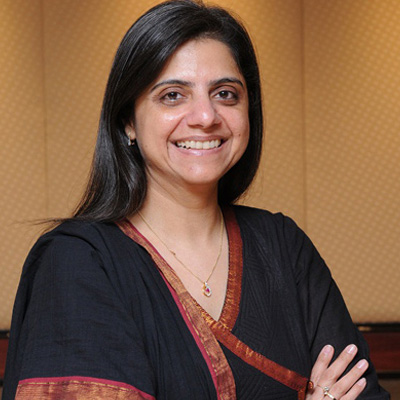
    MUMBAI: Academy award winner and BAFTA nominee, GuneetMonga needs no introduction. An ace producer, she has been assiociated with films like The Lunchbox, Masaan, Gangs of Wasseypur, What Will People Say and Period. End of Sentence. However, her journey to the top has not been that simple. 

    Western Mumbai’s ever bustling suburb, Versova, is home to several production houses, casting companies, and wannabe stars. At the edge of the sea, the borough  commands high rentals  and harbours even higher hopes for wannabes, perfectly epitomising the Mumbai film industry.
     
    On one side of the main road, the place is crowded with luxury high-rises of  actors and filmmakers and on the opposite side are rows of small cottages, shops, offices, and even gourmet restaurants and cafés. Adjoining the array of small cafés is the barely detectable office of Sikhya Entertainment, the company founded by Guneet Monga and the CEO of which she currently is. .

    At 36, Guneet Monga has emerged as one of India’s most recognised producers, who makes strides by refusing to stick to the conventional Bollywood formula. She is currently post-producing two of her projects SooraraiPottru and Pagglait and is looking forward to make a film set in space by next year. 

    Busy as she is, Monga took time to be part of a promotional and marketing campaign with global smart device brand Oppo with the theme of  #GoBeyondBoundaries around the new phone model Reno4Pro. It showcases her journey of going beyond the boundaries and leveraging technology to create a difference through her movie production business.Oppo used her as their icon because it wants consumers to go beyond their comfort zone to find their true calling and achieve true greatness just like Guneet has done and just like the brand has done with its latest device Reno4Pro. The phone maker hopes that users will find a holistic experience with the Reno4Pro which will also allow them to” sense the infinite” possibilities of expressing themselves.

    Indiantelevision.com’s Shikha Singh got into a tete a tete with Guneet  to understand what's driving her these days and her relationship with Oppo.. Excerpts from the interview: 

    How have you pushed boundaries in your career to achieve what you have today?

    After working for over a decade making movies, what I have realised is that filmmaking is a long-drawn process which might take over a year or two, hence it is very important for me to show up every day, no matter what. The journey of a film from its inception to release is long and full of challenges, so we must make sure that we put our best foot forward.

    Starting early in my life was testing. But, now in hindsight, I feel very fortunate to have started out young, as it has offered different perspectives and shaped me to make balanced business decisions. 

    Having a humble beginning from Delhi, it has only been my passion and perseverance for telling stories that has brought me this far. I have just started out, so any celebration feels premature, I have many dreams yet to fulfil and we have a long way to go from here. I’m excited for the journey!

    I believe success lies outside the comfort zone. It's a sum total of finding opportunities, as small as they may seem, and stringing them together with a larger vision.

    How does the brand Oppo relate to you?

    Oppo, has innovation at its core and has continuously believed in pushing boundaries. I identify with their brand values and have always embodied the same values in my work. With the focus of building a stronger resonance with the consumers Oppo’s latest campaign showcases how the journey to greatness starts by breaking free from the pre-existing notions and stepping out of their comfort zone. Leading the way, Oppo’s #GoBeyondBoundaries campaign further aims to empower and inspire the people of India to push limits and sense the infinite possibilities like India's first Oppo Reno4 Pro. 

    The campaign had a seamless narrative combining the product and the philosophy, which instantly connected with me. The way it celebrates ambition of pushing the boundaries and making a personal connection was very well done. Its message of getting out of your comfort zone and reaching out to people to form a deeper connection is what I would like to tell today’s youth as well — to keep striving and continue to reach out will take you on a road less travelled and help you shape your own unique journey.

    Oppo as a brand has always celebrated innovation and believed in pushing the boundaries. These philosophies are something I deeply apply in my own way of living and working as well. I have strived to break the stereotype in the world of movies, and Oppo is doing the same with their technology. Giving the consumers a world of endless opportunities.

    Sikhya Entertainment has films such as Gangs of Wasseypur, Peddlers, The Lunchbox, Masaan and Zubaan to its credit. What is your next move?

    We have two feature films in post-production stage – Suriya starrer SooraraiPottru and Sanya Malhotra starrer Pagglait. Over the last year, we have expanded across platforms. Apart from features, we have also released podcasts for Audible Suno.  My dream project is to make a film set in space and I aspire to make it next year. This one will be for all the girls who dream!

    Do you think it is a great time for independent cinema? Also, what are the challenges for independent content creators.

    I think it is a great time for content creators- independent, mainstream, digital, you name any medium or scale. Audience base has expanded and so has consumer appetite for different content. With OTT and deeper data/internet penetration, viewers are exposed to an array of content. This generates more avenues for content creators. These times are certainly exciting for independent movie makers as their work is travelling faster and farther. 

    Independent content creators mainly faced challenges due to lack of a strong platform to not just present their work but also market it. With OTT players expanding, that has changed a little. However, the new challenge is to sustain the quality of what they are offering. Audiences have more choices than ever and it is important to be able to get them hooked and sustain their attention. There is always something better waiting to attract the viewer and it is just a click away.

    Please Read More: Indian content creators must find out right stories to reach global audiences

    How OTT has opened new avenues for directors, producers or content creators? How has the opportunity increased by the launch of OTT?

    Yes, absolutely. As we now have high speed internet in most parts of the country, we have seen an explosion in creators and viewers. They are already using various platforms like Youtube, Instagram etc. in much higher numbers now. Platforms have grown more than 500 per cent  + in the past couple of years in India. I do feel It will only further scale higher from here. There is also an incredible growth in OTTs and that leads to a direct need for more content. It's definitely an exciting time for content creators.  A number of production houses today are partnering with each other or with OTT platforms to co-create content, jointly gaining from the expertise that each player brings to the table.

    For weeks now, films have been bearing the brunt of cinema complex/hall closures. As the lights are going out on live events, shoots and movie premiers, the only silver lining amidst all this is the rise of the popularity of OTT. The halting of productions may have dried up the content line, but streaming hasn’t stopped via the OTT platforms across the country. At the same time, ad-spends have gone down significantly due to a knock-on effect of the recessionary impact on financial services, e-commerce and automotive industries.

    You have gone to great extent from raising money to crowd-funding and self-financing to bring the right content on TV screens? It is assumed that producers are always rich, but what about creative producers who are working for the right content.

    To me, stories drive those conversations and convictions that lead to innovative ways to generate revenue.  In the process, the idea is to never lose sight of the story we all set out to tell in the first place. To answer your question & given the current scenario, we would see further democratization of this business, which in turn empowers my approach to film making.

    As a producer, I have always followed my gut. Making a film takes a year or two and one has to continue to feel it will stand the test of time and stay relevant when it does release.

    I am grateful that I have been able to build a solid business with making independent films that have travelled globally. We now have a much wider audience base to cater to. I don’t think anyone can ever say what will work or not, it’s always an intuition that you follow and allow it to grow over a period of time.

    Please Read More: Oscar-winning executive producer Guneet Monga joins MUBI India as content advisor

    Please tell us about your upcoming anthology ZindagiInshort?

    Earlier this year we released Zindagi In Short, an anthology of 7 short films, which was a direct-to-OTT release in collaboration with Flipkart Video. The short films are helmed by TahiraKashyapKhurrana, PunarvasuNaik, Vijayeta Kumar, Rakesh Sain, GautamGovind Sharma, SmrutikaPanigrahi and Vinay Chhawal.

    They are one of the first start-up companies in India and incubated many young engineers and business graduates to work in an e-commerce company and with ZindagiinShort, they are helping a young brigade of talented directors to fly in the film industry.I am extremely excited and thrilled that, as producers, Flipkart and I can provide a platform for the aspiring filmmakers. This was a very inspired and charged space where everyone came in and worked. The upcoming Flipkart Original also stars Deepak Dobriyal, SwaroopSampat, Shishir Sharma, Aisha Ahmed, Rima Kallingal, IshaTalwar and Manjot Singh.

    Being India’s first woman to win an academy award, what would be your advice to the youth of India be, so that they can also go beyond boundaries and achieve more in life?

    I’ve always been very ambitious and have used films as a platform for exchange of ideas and encourage free spirit. In the ten years that I have been a producer I have faced plenty of challenges, from not being taken seriously in an industry. I realised my line of work needs a risk-taking nature and I took some bold steps early on. I believe it’s important to chase and follow your dreams and never give up hope and really see through when you believe in. All I’d tell another young woman starting off as producers is to show up every day and keep working. Keep believing.
     

  • Shashi Sinha’s journey from a shy executive to the CEO-India of IPG Mediabrands

    Shashi Sinha’s journey from a shy executive to the CEO-India of IPG Mediabrands

    Coming from a sales background, Shashi Sinha had to actually take a pay cut to join the flamboyant team of Anil Kapoor at Ulka in the mid-80s, with the likes of Arvind Wable, Ambi Parameswaran, Niteen Bhagwat, and Nagesh Alai. The core team of the agency then, the men turned out to be the fortune turners for the agency, that was struggling to keep its boat sailing in those years, and Sinha gained prominence as one of the most revered minds within the industry, like all of his counterparts. 

    Today, after several decades, this soft-spoken, extremely shy yet confident man, sits on the chair of the CEO of IPG Mediabrands in India, the parent company, which bought the entire stake of Ulka in 2007, managing the second-largest media agency group that manages approximately 20 per cent of the overall media spends in the country. 

    In a virtual fireside chat with Indiantelevision.com founder, CEO, and editor-in-chief Anil Wanvari, Sinha shared his journey from being the part of the ambitious suited-booted team of Billy to leading the parent group’s functions in India and more. Edited excerpts follow.

    There have been two men in your life who have inspired you greatly; Dr Verghese Kurien and your boss Anil Kapoor, or Billy as you might call him. Please share with us the experience of working with the two. 

    The two definitely had a great impact on me. I met Dr Kurien when I was very young and worked for more than three decades with him. He taught me the importance of integrity, conviction, and self-belief. 

    But with Anil — I never called him Billy though as coming from an army background, I was taught from a young age that the boss is sir, and it took me quite some time to get used to calling him Anil too — it was a different experience. It would be far-fetched to say that he taught us marketing and advertising. But he taught us having guts. 

    He used to be very aggressive, very passionate about his work and I have seen him say such difficult words to clients, even to Dr Kurien for that matter, that none in the industry could even imagine saying. 

    To give an example, which was also our turnaround story, we were presenting to Air India at that time; JWT was the incumbent agency. Present in the room were (Subhash) Gupte and then minister of civil aviation, Madhavrao Scindia. As usual, we had prepared several designs and while we were presenting it, Scindia said that he is running short of time and Gupte asked us to quickly present what we had got. So, we started showing them the creatives without any logic, that’s when Anil (Kapoor) interrupted us and said, “…han han… aur dikhao… sab dikhao inhe…” (Yes, go on, show them everything you got).  He was visibly pissed. 

    But Scindia understood that this man is very passionate about his work and believes in the right campaign while we are forcing him to show more. The rest, as you say, is history. 

    There have been so many such incidents and imagine being an agency head so gutsy in those days. 

    Read about Shashi Sinha sharing his experience with Dr Kurien  

    Thanks for sharing that. You too have had quite a journey within the group. Did you ever imagine that you will reach here, where you are today? 

    I did not. Let me tell you a story, I have never shared it with anyone. So, I was working on the servicing side of Ulka, Ambi (Parameswaran) and I used to handle the Mumbai branch. It was in the late 90s that Anil asked me to take up media roles as well, and we began planning to set up Lodestar division. Kalpana Sathe Rao, Apurva Purohit, Arpita Menon, Ambi Parameswaran, and I worked together for it with ten other people. Apurva coined the brand name for us, and it was all going well. We were doing pretty good, we were winning awards, but we used to be very small, contributing hardly 5-6 per cent to the revenue. 

    Somewhere in the early 2000s, I was also expected to take a leadership role at a regional media agency that FCB was setting up, but that role was dismantled, and it was very painful. Then in 2004-05, Anil called me, Nagesh was also present in the room, and told me that since I have little exposure to media, why don’t I spin-off and start-up media as a separate company. 

    I discussed the proposal with some of my good friends then and they told me that probably Anil is trying to sideline me from FCB Ulka. They suggested that I start looking for other jobs. It was heartbreaking but I said, no if Anil is asking me to try something, he must be having a strong logic behind it. 

    I took the risk and just requested Anil to give us a separate office so we could create a separate entity altogether. He knew my independent streak and probably thought I will run away, but nevertheless, we moved from our Nariman Point office. 

    It took me some time to wrap my head around the job we were taking up and I was told by good friends, that we won’t be able to reach there as the job is about critical masses. But one of my good female friends told me that I don’t need to worry about profits as we are going to act as a service provider to a large agency.

    So, it all seems easy now, this decision was very difficult to take back then. But then luck played a big role. We got TATAs as clients, and then IPG started consolidating. UM was the first brand we acquired. We were working with them as partners for many years, since 2008-09. And then in 2013, the global company acquired it. 

    And then further acquisitions happened… Is your acquisition appetite over or we are looking at more, going ahead? 

    We don’t believe in acquisitions but believe in working as partners. Yes, there are multiple brands that we are consolidating, but the acquisition has been only for the digital agency, the story I just mentioned. 

    My personal belief is that acquisitions are all about merging with culture and managing them, which is not an easy task. That’s why around 80-90 per cent of acquisitions fail globally in the advertising industry because cultures do not match, entrepreneurs have different visions. I rather believe in partnerships and profit-sharing than having 51 per cent or higher stake. 

    And I am proud to say that we have been excellent in retaining our people. Even from the acquisition, we did in 2013, the core members of the team are still here with us. 

    Because you have retained your teams, is that the reason why your retention of clients is pretty high?

    I never thought like that. But as I speak now, I feel that the two are integrated but not related. Integrated in the sense that consistent teams and people understand the brand philosophy better and then they work as teams. 

    Additionally, we are very hands-on with our clients and their queries. We are not in the advisory business, but we consult them. That keeps the relationships with clients going. Even today, 60-70 per cent of our revenue comes from clients who are with us for more than 10 years. 

    And how much is the Indian business contributing to the overall group revenues, globally?

    India is a strong market for IPG. If we look at it from the purchasing by the parity factor, we are amongst the top 2. 

    Also, the culture of American companies is very stock market-driven. So, they don’t look at your profits as such, but there is constant pressure to maintain margins. That’s what we have to focus on. 

    Read More news about Shashi Sinha 

    But maintaining the margins during this pandemic would have been challenging…

    Yes, there is always this fear of pay cuts or job losses when it comes to maintaining margins. It was difficult in the past few months. In April-May, our revenue went down by 30 per cent. But we are slowly getting back on track. Also, I am glad that we are hanging in there. We all took pay cuts, but I am happy that we did not have to let any people go. 

    And also at an overall agency level, as some of your counterparts have shared with us, the valuations are low, toplines are shrinking, and share prices are suffering. And with big data and tech companies posing as a threat, it might get difficult from here. What are your thoughts?

    I think we tend to undervalue ourselves. Yes, the advertising industry has faced losses to a certain extent, but having said that, each and every agency has taken some positive strides. All of them are making profits, they are earning money. 

    It’s very easy to say that big (tech) companies are coming in but see, we have a unique capability as advertising agents; we have service industry mindset and we also have analytical skills, which are different. No one can match our ability when it comes to price points. I think we will stumble initially, but we will make our own way surely. There are challenges in the business, but it is a business of fun and joy. We have given life to it and we will continue to do so. 

  • I don’t see any reduction in press freedom in India: Navika Kumar

    I don’t see any reduction in press freedom in India: Navika Kumar

    NEW DELHI: We have seen her interviewing and grilling a number of top-notch ministers and politicians on television, read and viewed sensational stories unearthing some of the most notorious scandals of the past two decades, and most recently heard her crooning Ram Bhajans live with one of the loudest guests on any TV debates, Sambit Patra, but what remains the most striking aspect about Times Network group editor — politics Navika Kumar is her passion for good journalism and her personality that can make anyone nervous. She remains to be one of the most pivotal voices in Indian mainline media today, chasing some crucial stories and narrating them with poise yet authority. But in the recent past, she has also dealt with merciless online trolling for her reportage and her alleged pro-government stand. The lady, in an exclusive telephonic discussion with Indiantelevision.com, answers these allegations and also shares some interesting anecdotes from her professional journey. Edited excerpts follow:

    How did you get into journalism? What inspired you?

    I always wanted to be a serious research-writer on the business and economy side and while doing my master’s in Economics at Gokhale Institute in Mumbai, I decided to take training for that. When I was finishing my course, I had two options: one was to apply for a job at HSBC Bank (then Hongkong and Shanghai Bank), which my father insisted that I do and the other was to apply for a written test that The Economics Times was offering. I applied for both, while of course, my family did not know about the latter.

    One thing led to the other and I was being interviewed by Manu Sharma who was then the editor at The Economic Times and I was selected. Subsequently, I got an offer from the bank as well but I chose the former at one-third of the salary because that excited me more.

    Was it in any way difficult to convince your parents?

    Well, at that time my parents were settled in Goa and for them, Mumbai was this big, bad city. Their only concern was about my safety and how I will manage on my own. But that luckily worked out as my sister and brother-in-law were already there in Mumbai who convinced my parents that I will be safe with them.

    Then I spent two years at the Old Lady of Bori Bunder and learnt while covering the stock market, the industry, and banks. I learned a lot there.

    How did your interest in the political side generate then?

    This happened a few years down the line. Soon after my stint with The Economics Times, I joined The Observer of Politics and Economics in Delhi. I left that job before the paper got launched because I got married, had a baby, and then took a four-year break.

    I started my career again in 1995 with The Indian Express in Chandigarh, which was a very exciting stint, broke 3-4 very big stories, and got noticed. But within six months, my husband got transferred to Delhi again, and I was planning to quit the job. However, Shekhar Gupta, who was the editor at that time, told me that you have done a great job in Chandigarh, and asked me not to quit and join the Delhi office. I joined the day the Sukhram Telecom Scam was broken and was handed over the telecom ministry.

    There I learned that if you have to get your story on the front pages of a general newspaper, unlike The Economic Times, you have to have a political angle to it and that’s how my interest in the political economy started. I used to cover ministries and never the political parties but that’s also how my tryst with investigative stories happened. I then took down Pramod Mahajan, brought out stories like the sugar scam, aviation story, and the MTNL-SC story, which was very-well titled “Hello Your Lordship” by my executive editor then, Raj Kamal Jha.

    Another good thing that happened was I got the responsibility to cover every single economy debate in the parliament and while I wasn’t writing any political stories, I got my exposure to party politics and dynamics there. I was there when the Vajpayee government lost the majority by one vote, Girdhar Gamang came out. I heard all their speeches and debates in the parliament and that’s where it all began.

    As you mentioned that you brought to the forefront a lot of high-profile cases. Did it ever feel risky or challenging?

    I think when someone has to write such high-profile cases, the risk of a story is involved in the facts. So long as you are factual, so long as you have the evidence, I don’t see too much of a risk. Of course, I have my way of getting information out. I know every nook and corner in all the Mantralayas in Delhi. I know how to access files and move around without getting noticed. So, yes, those are the little risks involved.

    Also, the way you do a story in print and the way you do a story for TV are completely different. In print, you would collect all the evidence, sit at your office or home, and write a piece. But on TV, you have to locate and be at the position of where the story is.

    To give you an example, the first warning into the CWG scam came from the Indian High Commission in London and I had got my hands on a secret letter. I had then to do a piece-to-camera (PTC) in front of the Commission and I did not want to be noticed with that letter. So, that was a big challenge.

    Then there was a person called Ash Patel who was supposed to have some links with Suresh Kalmadi. My team and I had to locate his house in London and the privacy rules there are much different and strict. We were doing a PTC and his wife came out, I also got him live on camera via a phone call, and that’s how telephonic interviews started on TV.

    Those were some of the slightly risky and embarrassing moments I would say. But other than that, having your facts, I have never seen it as a risk involved.

    Reportedly, India is one of the most unsafe countries when it comes to journalists and we are constantly dropping on the Press Freedom Index. As a journalist, have you ever felt threatened or unsafe?

    I have had pressures for not doing a story earlier as well. It’s not like it has started now. I don’t see anything different today. It is a universal truth that nobody likes anything written against them but as I said, in journalism, your god is your facts, the evidence you have. You have to differentiate between allegation and facts of the case.

    Today, I think opinion has taken the place of facts, especially social media. People say things which they don’t have proof of. I don’t see any reduction in press freedom, frankly.

    I say it from experience. I was stopped from doing a story while I was working for print and that’s a secret that will die with me. The dispensation was different then. But I never faced that problem on TV. Of course, people would turn around and say “Bhakt Navika” but who cares? I have the freedom to say what I want, even today.

    Glad you mentioned the “Bhakt Navika” part. Of course, in the past few years, there have been allegations, not just on you but your counterparts too, that you are pro-government and have a certain sort of stance. What do you have to say about this?

    Frankly, these labels come on social media and people who comment there, I don’t know how much of journalism have they done in their lives and how they are in a position to label anybody. If you think this is freedom of speech, so be it. Congratulations to them!

    But for me, the issue here is that I have covered scams then and I have covered stories now. I don’t think the base of breaking stories for me has changed at all. If I find a scam today happening, I will cover it. But if there is no scam, just because it is fashionable to say that somebody stands for something, well, I can’t do it because I am not convinced.

    The telecom scam, the 2G spectrum scam, the Antrix-Dewa scam, the CWG scam; there were a billion scams that were going on, I was convinced because I was reporting on them and saw hard evidence on this. At that time, was I the only one feeling this? Wasn’t the public feeling the same? Whatever happened in 2014, isn’t it right that many in India felt that there was a time for a change? But did anybody know it would be an ideal fit? Is there an ideal fit? But a new dispensation comes, you give them a chance, you watch from close quarters and you question them on what you have to question them.

    We have done stories on the BJP government too. We did it in Karnataka, the Operation Kamal story. We covered the Sengar controversy; a BJP MLA accused of raping a girl. I had gone hammer and tongs for days, put pressure on BJP till they sacked him and he was sent to jail. When MJ Akbar’s story came out, I chased the story to the point he was made to quit the cabinet.

    Do people have short memories? Do they forget? Was that not BJP?

    I am not here to appease or impress my critics. I do my job, I do a story that comes my way and I research. I leave it at that. If I had to be driven by what social media was saying about me, I would then be doing agenda journalism.

    People may call me pro-BJP because the party frankly represents itself on my channel. I am so happy to take the Congress point of view and you can ask anybody how many attempts I have made in the last four years since I have been handling the calling card policy in Times Now. How many attempts I have made for them to bury the hatchet and represent themselves. I have given them the offers of doing one-on-one interactions, I have requested them to come on debates, putting their view across. But if someone doesn’t want to communicate with me, can you blame me for it?

    Why should I have an agenda? If I wanted to be in politics, I could choose to be there. Everybody is free in this country. But I have chosen to be a journalist and I am just doing my job.

    Does it ever impact your mental health or you feel negatively impacted by all these allegations?

    Frankly, I was not on social media for a long time. My kids set up twitter for me way back but I never used it because I did not know how to use it. And when I learned, I saw all the comments that come on social media, I said I don’t want to be a part of this negativity. We are here to work!

    I stayed away consciously until about three-four years ago when I thought that it is a better mode of communication and I can restrict myself. And if you see my Twitter timeline now, I restrict myself to the shows that I am doing, the work that I am doing on my channel. It’s not so much opinion that I want to put out there.

    And no, the negative comments do not affect me at all. If they want to say it, they can say it. I am a great Bollywood music buff and I feel kuch toh log kahenge, logon ka kaam hai kehna…

    On that note, once or twice I have also put lyrics to some songs on Twitter and you should see some comments that I have got on those songs even. So you know that it’s okay, you don’t have to bother about it. And I don’t!

    But sometimes these memes also get very funny; for example recently when you sang Ram Bhajan with Sambit Patra, the social media was flooded with them. Do you sometimes like to have a good laugh?

    I was sitting on my show that day, it was not a factual topic. We were discussing faith and I said we used to have this song in my school assembly and somebody from the studio asked me to hum it. So I hummed it because it was very natural to me, I had sung it for years in school. I felt like singing and it just came out naturally.

    I didn’t think that they would assume that I am Lata Mangeshkar. Of course, I am not. But all those who think freedom of speech is so important, why don’t I have the freedom to sing?

    It doesn’t really bother me. It’s for me kadam badhaye ja… na darr kadam badhaye ja… Jab tak dumm hai to karenge, nahi hoga nahi karenge! I will do it as long as I have the strength and conviction to do it.

    How free are you as anchor or editor of a channel to voice your own opinion and convictions out? Do you have to fit into the thought process or the political leaning that the channel management might have?

    When I had left the Indian Express and joined television, I was told I wouldn’t last six months there because I was on the wrong side of the age to make a debut on television and that television was extremely taxing. People told me that I won’t be able to do it because it meant standing outside people’s homes, waiting for comments for several hours and I wouldn’t last there. I was told this by my friends and very trusted advisors that the document journalism that I do in print would not survive in TV at all.

    But here I am! I just completed 15-years in Times Now. And the best thing about being in Times Now has been the freedom with which we work, there is no agenda, and the tenets of journalism that have stood the test of time, which is being sure of the facts before you do a story are still alive.

    Yes, there have been meetings where we are looking at general outlooks and people’s perception but never anything specific, to or fro in terms of my journalism has happened because of that. Honestly, it is a dream come true.

    Editors have come a long way. From being the faceless guardians of the society to be the representatives of people who are revered and followed by people. They are now the faces of the marketing campaigns of the channel. How do you see this evolution? Has it impacted the quality of journalism that you do?

    It is the change and evolution of all the mediums. At one time we used to use typewriters to write out print stories. I had gone to the hot press in my first job to see how pages were made and now everything is computerised. Of course, technology changes things and broadcast brings the storyteller to the people. And in that sense, people relate to it more because they see the person, and relate.

    Times have changed now, boundaries have receded. Earlier it was just TV and now it’s social media too. Why people associate more meaning to what anchors say is because they know it by their faces. 

    And when you are seen, people are observing you closely. You won’t even realise when your pupils dilated or hand moved in a certain direction. I think now, there are so many meanings attributed to even our general way of talking. People are even attributing agenda to me wearing my specs or not wearing them or wearing a salwar kameez vs wearing a saree and how many things will you bother about? I really don’t give it too much thought.

    It’s just like the editorial page articles in a newspaper, the prime time shows are the same. There will be a bit of opinion and debate and you will have a certain sort of expression. All-day it is the news and at prime time, it is an opinion and that’s the way even newspapers are. The only difference is that papers have several pages and TV has just one screen, so we get highlighted more.

    Any advice you have for the budding journalists?

    Journalism isn’t a job, it’s passion. You can’t look at it as a job and if you do, you will never be fair to it.

  • “Esports content consumption will grow 3x by 2021”: Nodwin Gaming’s Lalita Nayak

    “Esports content consumption will grow 3x by 2021”: Nodwin Gaming’s Lalita Nayak

    After her degree in English Literature from Ramnarain Ruia College, Lalita Nayak went on to work with some of the biggest brands including Times Group and JP Morgan for brand strategies and advertising, sponsorship and more.

    As she mentions, she has been a marketer for a large portion of her career and has driven operations at some respected positions. Having seen the axiomatic paradigm shift with the advent of digital, she is a seasoned marketer with valuable experience. A few months back, the marketing veteran joined NODWIN Gaming as the head of sales and marketing to drive the brand to further success after a stint of almost six years with CNBC-TV18 as the head of marketing (west).

    Esports being a fairly new industry is already turning heads. According to a market research report, the global esports market is expected to grow from $1.09 billion in 2019 to $1.11 billion in 2020 at a growth rate of 2.16 per cent. The slow growth in 2020 is mainly due to the economic slowdown across countries owing to the COVID2019 outbreak and the measures to contain it. The market is then expected to grow and reach $2.11 billion in 2023 at CAGR of 23.82 per cent. North America was the largest region in the esports market in 2019. The Asia Pacific is expected to be the fastest-growing region in the forecast period.

    Indiantelevision.com group’s Krishanu Ghosal spoke to Lalita Nayak to get an idea on what to expect out the market and NODWIN Gaming. She was precise and insightful about best marketing practices and her newfound love for the gaming and esports industry.

    Edited excerpts:

    Let’s talk esports, this is your foray into esports, what do you feel about the transition?

    You’re right. I’ve not worked with the esports industry before. Earlier I used to work for television and news and I’ve worked with a few renowned media houses. In both places, the audiences were very mature and evolved. Gaming or esports has a very different audience. The audience is diametrically opposite. The consumption of esports-related content is mostly done by an age group and almost 60 per cent of our audience is in that specific age bracket. I won’t say they are mostly but they are primarily in the 16 to 24 age group.

    If you could elaborate a little more on that?

    Today’s 11 to 24-year-old age group hardly watch TV; they are all on OTT platforms they are all consuming digital content. The generation after that I am not even sure, they will be even more specific, I think. So, my audience majorly stays on a platform like YouTube. It provides interactive entertainment. You are sitting and watching stuff on YouTube and reacting to it live. Esports has grown over the past few years in India. It’s not just about active views but about active interaction with the game. They are no longer sitting and watching they are actually commenting on it.

    What about the audience?

    This audience has a mind of its own, this audience believes that they understand the world and they also want to change the world. So, there is a big difference and this is, of course, connected to the next generation, the future. The next set of entertainment sport will be coming from this sector is what I believe.
    .
    What are your views on the Indian esports scenario as opposed to the southeast Asian or the western counterparts?

    The southeast Asian (SEA) counterparts have developed a lot. So, in places like Thailand, the Philippines, they have an evolved set of audience. There is a vast difference in the scenario between SEA and India because their audiences consume far more digital entertainment. We have other issues such as huge parts of our country surviving on 2G network.

    What do you think can be done to make Indian esports much more lucrative for brands?

    Firstly, it is the comparison that the marketers make between traditional activation of a brand vs esports. Esports is a very niche industry where we need specific branding to people who understand gaming and are strategy-oriented. This consumer base has a very stoked up interest and they have very particular preferences. So, our first interaction is to make them understand the fan base.

    The second thing about esports is that there is a lack of standardisation. For example, when the tournaments arrive, everybody proclaims that they are the largest tournament in the world. Is that really true? So, those things create an imbalance in the market because the contradiction is there.

    What about the shift in marketing paradigm?

    Most marketers need immediate results and in esports that cannot be. It will take time. That doesn’t mean it will take two decades but it is a bus that nobody should miss. When I started my career around 2013-14, digital was something that didn’t exist. It was two or three per cent of the marketing budget. Today in esports it is almost 100 per cent. For other brands from 30 per cent in March, it has gone to 80 per cent. Esports is something you don’t want to live without. It is a bit more complicated with much more novelty. It is an industry full of people with a lot of passion, who love challenges and gaming. I am talking about people who are not just a part of this industry, I’m talking about people who are actually viewing and playing.

    Let’s talk about viewership.

    Our viewership has gone up by 50 per cent in the last four months. In fact, recently I was talking to one brand and it was astonishing. They told me that there is a group of people of a particular age group about 14 to 24. They were either studying or playing games. They were not even watching a lot of content because there was no new content coming out on OTT platforms. Recently in the last month, we’ve started posting fresh content. Every day we were streaming live for three to four hours over the last three months.

    So, the pandemic has been kind of a boost for you as well?

    Well, yes, there has been a massive reach for us. Let me put it this way, it has been a catalyst. So, what may have happened a year later has happened a year earlier. See, what happens is when you’re involved in work or you’re going to the office, you think there is a schedule. But when you’re sitting at home and you’ve watched every new thing that has come on OTT platforms and your child is playing a game, you would like to join.

    What according to you should be the role of an esports marketer catering to the Indian market?

    Esports marketer is a combination of a conflict manager and a community manager. You should provide the right brand solutions and ensure that you speak regularly with your consumers. My audience has very less tolerance level but I will say that their tolerance for inefficiency is very low. They could judge you as inefficient so you have to ensure that you put out the right content every time.

    Do you see more brands coming into the Indian esports ecosystem in the next one year? 

    I see that if a brand is not a part of this yet, they will inevitably be curious about it.

    How is the market in terms of languages, the regional ones?

    Our viewership in Hindi far exceeds English. It is no longer an elitist game and that’s why there has been an upsurge in Hindi shoutcasting as well. We have started getting branches from our service providers that we need to put out content in other languages. So, we are now branching out in other languages like Hindi and Tamil as well.

    How do you tackle the challenges for the stakeholders of the industry?

    I am extremely proud to tell you that our teams are evolved and evolving a lot. They have very smart mechanisms and knack to ensure that such problems are not created. We have ensured that we value a particular rule. As I mentioned, there is a lack of standardisation. So, every time it brings in new challenges, we are learning and evolving. We craft a smart enough solution and we solve it first. We try to solve them before things get out of hand. To answer your question, there is a standardisation issue but most of it is often smoothened out by our teams.

    Taking everything into account, the pandemic, user count increasing, participation, more deals for everybody, where do you see Indian esports in the next two years?

    The industry is evolving so quickly that we are trying to catch our breath. Inevitably right now, the digital content space is taking up a major percentage of the nation’s content consumption. I have a feeling that the percentage right now that is esports occupied is going to double or triple go higher in the following year. The viewership, which is perhaps right now huge, will only grow. Live streaming something is yet to be recognised by a lot of marketers and is something we need to engage with.

    (The article is sourced from https://www.animationxpress.com) 

  • “We see TV channels as partners rather than vendors”: Havas Media Group’s Mohit Joshi

    “We see TV channels as partners rather than vendors”: Havas Media Group’s Mohit Joshi

    A seasoned professional, Havas Media Group MD India, Mohit Joshi, is known within the industry for his sharp acumen and quick knack to adapt to changing trends. With his role expanding in the agency as Anita Nayyar moved on in May, this year, Joshi led the agency during probably the toughest time in its history and again showed great strength and adaptability in taking care of the business, helping certain clients maintain good visibility and value even during the lockdown and economic slowdown. 

    The gentleman sat down virtually with Indiantelevision.com founder, CEO and editor in chief Anil Wanvari on Thursday evening to discuss the changing trends in the TV buying world, his expectations with the IPL, his newfound love for OTT content and much more in a lucid discussion. Edited excerpts follow:

    You follow the principles of purushartha, daivya and kaal in your life. That sounds interesting. Please tell us more about it.  

    Yes, I very strongly believe in the power of these three; purushartha meaning hard work, daivya meaning luck and kaal meaning time. I feel success comes when all these three work together. For example, for people working hard during this time (Covid2019) might not have the kaal that is time favouring them. 

    It seems like you read a lot of classical text. 

    Not a lot, but yes, once in a while. There are many of them that I like and keep going back to, such as Thomas Hardy. 

    Nice. So, how’s the work going on right now? Have you people started going to the office? How’s the vibe like?

    Yes, the offices are open but we are not forcing anyone to join. Additionally, we have done extensive joining assessments for the people on grounds like who all are living alone v/s who all are living with old parents or young children, who have morbidities associated, etc. So, only those people are being called to the office for whom it is absolutely safe. We are not allowing anyone who travels via public transport to come to the office. There are extensive hygiene and social distancing protocols that we are following across our offices in Delhi, Mumbai and Bangalore. 

    The vibe is great. I feel that we all have gone through a huge amount of change in the past few months and now people want to get back to the office. It is not just about work but there is also a lot of residual psychological tension that gets eased when people meet and engage in conversations.

    I personally love the days when I have to go to the office and look forward to them. 

    And how is it for your clients? Have they started opening their workplaces?

    A lot of them like Hyundai have started opening up but there are also the likes of Swiggy and Tata Motors who are still working remotely. But all of the client meetings are still happening virtually via platforms like Zoom. 

    Most of our clients are happy and positive right now. A lot of them like Hyundai were much in demand during the lockdown too and now the others too have great expectations from the festive season and also IPL. 

    So how do you see the TV viewership from here?

    I think the lockdown period was quite unique and can’t be compared to any other time. We saw a huge spike in viewership for programs like Ramayana and Mahabharata and also on news channels. 

    We have already started witnessing dips in TV viewership despite new content coming in and it is bound to happen. But I think it will stabilise now at a slightly higher level than pre-Covid2019 times. 

    Also, there is quite a hullabaloo going on TV channels, especially on news channels with Sushant Singh Rajput’s case and the sort of coverage that is happening. How are your clients seeing it; do they want to stay away from it or be present? 

    Honestly speaking, I feel that most clients should be away from this type of investigation largely; once in a while, some presence from an impact perspective is fine. But again, it is difficult to do so [stay away from such content] because most content on news is that way, they have a certain tonality. You can’t be away from this environment because then you might not find any relevant domain to be present. But in the case of very controversial domains, I personally feel that my client should be out. 

    Coming back to the client attributes, how do they view television? With situations like lowdown, when you have already committed something and have planned something for a market and that gets shut down, so does the media channel have to be flexible or the client or the agency?

    I think all three of us have been very flexible and understanding at this point in time because that’s what is required. Right now, each party understands that if one gets impacted, all three will be affected. 

    The solution to this is that we seek media platforms as partners and not just vendors. These are extraordinary times and thus require extraordinary solutions. So, I would like to get into a partnership with any channel and tell them that don’t just tell us FCTs or rates, give us options for product integrations. 

    What are the other challenges that you are facing while doing TV buying and planning?

    Television today is not just a medium of reach and impact but also a medium to drive ROI. Every client today is asking what KPIs will I get. I think it is more of an opportunity than a challenge, in fact. 

    We are using whatever data is available and we are able to do a fair bit of predictive modelling to address that. 

    Also, today, we have evolved in TV planning. We now make audio-visuals plans, which include TV, OTT and online videos. 

    A lot has changed in consumer behaviour today. I, myself, am a big example of it. I was not very much into OTT pre-Covid2019 and now I am hooked. It started with Paatal Lok and now I have watched all series like Narcos and Inside Edge. So, if a brand has to catch me, it has to be present across media and go beyond just television. 

    What part of this audio-visual planning is acquired by traditional television?

    Anywhere between 50-60 per cent to 90 per cent, depending on category and brand. We insist that all brands make even a small investment online to get an incremental reach on TV. 

    Is everything business-driven and KPI-driven then? 

    No. Let me take this opportunity to tell you the native Havas philosophy that we don’t associate with a brand that is not meaningful. It’s not just about business KPIs but also brand love. The money that a client is putting in, that’s actually for us to build meaningful brands. At the same time, I can’t go and tell a brand that I’ll make your brand meaningful, you give me money. The learnings are drawn from the bottom of the funnel and that’s how plans are made. There has to be a balance between quality and quantity. 

    You mentioned that brands are positive about IPL and the festive season. Do we see ad rates hiking?

    Rates will not go up during the festive season but the IPL will bring some stability. Some clients will invest surely, but for some business realities are more important. 

    But as I mentioned, there is a positive sentiment amongst the brands for IPL. It is coming in at the right time when brands are eager to spend. A brand like Patanjali, which otherwise wouldn’t have been a part of IPL sponsorship, is now thinking about that. We ourselves are in touch with 15 of our clients offering different deal sizes and at least 10 will surely get through. 

    Around 50-52 per cent of the overall spend by brands, this year will be during the festive season and IPL will take good 25-30 per cent of it. Categories like ed-tech, white goods, automobile, durables etc., will be active. 

    Are we seeing a slight tilt towards spending on Hotstar this season?

    I think the spend will be regular, much like last year, but new categories will come to advertise. For example, certain categories that used TV as the primary medium and digital on the side will make Hotstar their prime platform. 

    Any parting thoughts?

    As you know, we as an industry are going to see negative growth of 20 per cent this year as predicted. I think we can’t do anything about the impact on overall marketing spend and when we can’t do anything, I personally feel that we should use this time to see how we can create more innovative ways of going back to our clients and creating more value for them. So, I would rather see it as an opportunity to bring further change, transform ourselves and become more digitally savvy. 

    Watch the full discussion here:
     

  • Wanted to create prototype for digital media with ‘Bandish Bandits’: Anand Tiwari

    Wanted to create prototype for digital media with ‘Bandish Bandits’: Anand Tiwari

    Anand Tiwari, the man behind Love Per Square Foot is back with yet another directorial venture Bandish Bandits. Tiwari is a stage actor and director known for his roles in films like Kites, Udaan, Aisha, and Go Goa Gone. As a stage actor, he is best known for his role of a 'lamp post' in Rage Productions' One on One. For the uninitiated, Tiwari is the co-founder of the theatre company FAT Productions in Mumbai.

    Set in the backdrop of Jodhpur, the Amazon Prime Video is a 10-part series. The series introduces newcomers Ritwik Bhowmik and Shreya Chaudhary as Radhe and Tamanna respectively. Romantic drama Bandish Bandits is a love story of Radhe and Tamanna who hail from diverse musical backgrounds.

    In conversation with indiantelevision.com, Bandish Bandits director Anand Tiwari talks about the importance of music in storytelling, the idea behind creating the series, roping in the trio of Shankar-Ehsaan-Loy and much more.

    Edited Excerpts:

    Please tell us about your journey from being an assistant director in Barfi to now directing your own show.

    It has been fantastic, every day you spend on the set or with actors and technical team teaches you something. However, sometimes you have to learn and unlearn so many things. The circumstances are always different and not like an office job. I like to keep exploring new things. Even when I am shooting a romantic scene or any other scene, I pretend like I do not know this. I do feel that my storytelling has matured as I grew but it is a long journey, I have just started learning.

    What was the concept behind making Bandish Bandits?

    We have been making movies on music since time immemorial because that is how we have weaved our stories since theatre times. Music is an integral part of storytelling in India. Amrit (Amritpal Singh Bindra, producer) and I love music. From the time of Band Baja Baarat we have always told stories that get conveyed by music. When we looked at the content that is being created in today’s time, there wasn’t something similar to Bandish Bandits. It’s high time we create a prototype for digital media and we were convinced that audiences would also like to watch it. I believe music is the most transcending of art forms. And what better way to summarise India’s culture than mixing two forms of popular music – traditional and pop.

    How long did it take to do the research and create the whole series?

    Amrit and I have been making different kinds of content for the past five to six years. For a long time, we wanted to do a project together. It took us almost one and a half years of pure research. We spent good three to four years to make the entire series right from ideation to creation.

    Also, did you approach Amazon Prime or did they contact you?

    We took Aparna Purohit (Amazon Prime head of India originals) through our story idea and that is how it happened. Amazon Prime has always given us good originals; that is known internationally. We were hopeful that they will also like the content that we are giving to them.

    Speaking about direction, do you think you have grown as a director? Also, you are an actor too so does it help you while directing?

    Yes, it absolutely helps to be an actor because I understand that most of the time actors are struggling. It has very little to do with their fear or talent, sometimes it is so much to do with their understanding. There are so many things such as one might agree or disagree with the scenes or sometimes they are dealing with something which has nothing to do with the shoot itself. As an actor, I know the psyche of the other actors and I have a special relationship with every actor on the set. We all share a very special bond, so it doesn’t sound like an instruction which always helps.

    Which is your favourite part of the role, actor or director?

    I like being a storyteller, sometimes I can be a writer, director, actor, producer, anything. However, during a specific time, it is more exciting being a director. It also depends on the story that comes because accordingly, you will focus on that specific part. But as a director, you have a far greater perspective to the story. I really enjoy every role that comes my way.

    Bandish Bandits also marks the digital debut of Music geniuses Shankar-Ehsaan-Loy. How challenging was it to bring them on onboard?

    When we were planning this series, Shankar, Ehsaan and Loy were on top of our list. Apart from giving music in movies, they have also done many albums. They have done classical, hip hop and every kind of music. They were the first people we approached. Here, storytelling was challenged through music that they took up with us. A lot of scenes which had music in them were planned after our discussion with Shankar Mahadevan. He was able to give us the insights into what happens in a studio when a song is created.  It was a brilliant experience; all the songs that one can see in the show have been created in front of us.

  • “There’s nothing called unbiased news, only the degree of bias changes”: ABP Network’s Avinash Pandey

    “There’s nothing called unbiased news, only the degree of bias changes”: ABP Network’s Avinash Pandey

    The television news ecosphere is battling great image issues in India. Their over-the-top, arguably, frivolous, coverage of sensitive matters and in certain cases, their eyes turning blind to many important issues are attracting a lot of flak from viewers and in a few cases from advertisers alike. Recently, ABP Network (earlier ABP News Network) CEO Avinash Pandey sat down to address these issues and many more with Indiantelevision.com founder, CEO, and editor in chief Anil Wanvari over a virtual fireside chat.

    Edited excerpts:

    How have been the past few months for you amidst the Covid2019 pandemic? 

    When the Covid2019 pandemic started in March, there was a lot of uncertainty around it and no one had any idea how to exit. We could not predict the level of infections or the economic implications it brought. But we looked at it and thought, at the end-of-the-day, we can’t do what we do sitting at home. At the same time, it is important to keep our employees safe, understanding that we are making them face potential death. So, we set up a critical incidents management team and went on with our business. Some of our staff, including me, got infected but we were strong and brave enough to battle that. 

    The viewers were glued to the screen watching the news and we knew our responsibility on the highest level. Business-wise it has been mayhem in the market. The advertising inventory went down and traditional advertisers for the news channels like white goods, car and mobile manufacturers, bike companies, etc., were out of the market because the shops were not open, markets were not open. But fortunately, it picked up at the end of May for most of us. June became a big month for us; it was over-filled and looks like we are slowly inching into a new normal.  

    I would like to know from you what you think about the news industry right now. Roger Ailes, the man who founded Fox News believed that news channels have to have a lot of drama and he propagated that sort of journalism too. Do you think Indian channels have been impacted by his model of journalism?

    In a very poor way, yes. The problem of news television in India is two-fold: how the channels are, what are the entry barriers in the industry and what sort of competitive advantage each product comes and offers in the marketplace. On the other hand, the existing measurement system and how it measures the news channels. 

    As you rightly said, the big problem with news channels is drama but there was a time when there was a scope for intellectual drama. So, shows like Big Fight or sting operations on MPs, or Cash for Questions Scam got good ratings while performing basic duties of doing good journalism. Slowly, that disappeared. What you see on television now is that each channel has created a different type of Rafale and all kind of swings are happening in the studio. Ailes wouldn’t even have thought about drama like that. 

    But I will not solely blame the editors, chief editors or the people who are producing these shows because what happens in that if you do a nice investigative story for 20 minutes, chances are there that you will not get good ratings but if you do 100 news in 10 minutes or five minutes, which is basically telling the same news in five different formats, it will bring ratings. 

    The industry is heavily dependent on advertising and thus ratings, which makes you think what’s the future of doing good journalism on television in our country. 

    So is it just the ratings or you think the Indian audience is such that it likes drama? 

    I think ratings represent society. But also, if you look at the definition of NCCS A category today, our drivers will easily qualify for that. Now, the content sensibilities for different levels of society is very different. And largely because the NCCS model is so generalised, there is hardly any scope for good content. 

    Look at the overall TV industry, so many unique content channels came and shut down because of zero ratings. It’s not that they don’t have an audience but ratings do not reflect their true constituency. It is hard to believe that an audience searching for the same content on pull mediums are rejecting it on push mediums. 

    Both areas, the quality of content and how you measure it need to be worked on. All people have different views about how the rating system should reflect them and that is why we need to look at alternative methods. Some technologies are available and BARC today is headed by the best people in our industry. So I cannot say that they don't know what is to be done. The time for change is right here and if you don’t do it within the next one-two years, it will slim down. We need to refine the system for better and certainly move away from the NCCS system. 

    So how do you see the future of news channels in India? You talked about the whole push and pull medium. How do you see them diversifying on your platforms? 

    We put out the same content that we show on television on our OTT platforms right now. For example, we are the only channel that doesn’t put astrology content on our channel. We do not even take ads from such babas. We do not run the news of death till it is certified and there have been cases that we have delayed in sharing the news of certain celebrity deaths too. So, we follow certain principles and that works for us. It gets us similar traction on all platforms. 

    I am going to slightly contradict you here. Recently, National Human Right Commission had to intervene regarding the insensitive coverage of Sushant Singh Rajput’s death. They even wrote to NBA and all of you responded in your way stating you did not go wrong with that but there are doubts about that. 

    I am not in a position to comment on others but I looked at my content and it was certainly not insensitive. But a celeb’s death is to be covered in a big manner to get people’s attention. If you look at the coverage of princess Diana’s death at that time, all kind of things were written about that. I can tell you Indian media, Indian news journalists are far more sensible than that. 

    We are in a business where people are watching us all the time and it makes our jobs extremely difficult. I have worked in print and late in the night, when the page was ready, we took it to the editor for the final check after some five layers of corrections have already happened. On television, when a piece of news breaks, the assignment receives it and the panel producer on PCR who is probably fifth or sixth in the pecking order in the organisation decides to put it on air or not. The filter and duration to implement are minimal and humans sometimes do make mistakes. 

    When you don’t like something on a news channel you can complain to the NBA. But why should one be doing that? If you don’t like anything on a channel, simply change it. 

    Another thing is that all channels have a stance. They are either left-leaning or right-leaning, or to right-to-the-centre or left-to-the-centre. How does it impact the reporting on news channels and how close are the politicians to these channels? 

    It is a big question and I have a theory of my own, which many would not agree to, that there’s nothing called unbiased, only the degree of bias changes. 

    Having said that, at ABP Network, we are not aligned to any particular belief, ideology, or way of life. That’s one of the reasons why I stopped our 4-5 pm debates because I noticed that whether you are arguing on migration, labour, defence issues or education policies there is a set of people decided by a political party who come and speak on all these subjects. They are not subject matter experts. 

    So, what started happening across news television is that there is a kind of agenda being pushed through these debates. People are asking questions like how many zeroes or what is the full form on a panel, which doesn’t make any sense. If you are going down to that level, then we are not doing any service to our viewers. And that is the reason you are making an opinion that a particular channel may be aligned the particular group and we wanted to escape from that.

    And if we talk about how the channels handled the involvement of Tabhligi Jamat in the Covid2019 cases? 

    See, it was a very charged up time. The only reporting that was happening was death and that became an overbearing thought for most of the reporters too. The Tablighi conference, it used to happen each year and channels have covered that earlier too. But it was an irresponsible behaviour by the organisers this time to lock themselves up and thus leading to a spread. I am not saying that they did this willingly. 

    Now, debates with shouting matches get high ratings and Rubika’s episode never got the highest rating. There are obviously questions being raised about the said episode but when a debate happens, it is the prerogative of the anchor and panellists to take it ahead. The channel or the management has no say in that. People watched the debate for Rubika and it was a charged up time then.

    In the hindsight, it is not right to blame a certain community. But it was a time of unprecedented uncertainty. How do you blame people for reacting a certain way, too? 

    Another thing I want to touch upon; do you think news should go pay or not? You changed from ABP News Network to ABP Network, taking on newer avenues. Why not monetise news and build from there? 

    I have never been in favour of FTA channels. When you give anything in this country for free, people start taking it for granted. High-end content requires investment, then you have to try in that market, so that’s not an easy game. However, I am quite determined that we, as a network, will soon go pay

    We are building that that kind of content for us to be acceptable for people who like to pay for. 

    Do you think it will work in India? 

    My regional channels were already pay. I only became free-to-air because of the uncertain environment set by NTO 1.0. But if you look at the GEC segment, their demand did not drop because they went pay. 

    There is a science and logic behind how the distribution system works and I don’t see a decline happening. Advertisers will not go anywhere because they will get the eyeballs. And even if I have to take a hit for the initial quarter, I am okay with that. 

    Our digital business became profitable last year. We want to be the largest video company in three months. There are a lot of other things that we have planned which we will announce in due time. 

  • “India is not yet developed to venture into TV pay model”: Sri Adhikari Brothers’ Markand Adhikari

    “India is not yet developed to venture into TV pay model”: Sri Adhikari Brothers’ Markand Adhikari

    15 September 1959 saw a small transmitter and a makeshift studio in a corner of Delhi give birth to terrestrial television. Decades later in 1990, India saw the arrival of private television channels. When saas-bahu dramas ruled, SAB TV is credited for putting a smile on the face of the Indian audience with the launch of India’s first and only comedy channel. After acquiring relevant experience in the fields of advertising, marketing and media publicity, Markand Adhikari, along with his late brother Gautam Adhikari, started Sri Adhikari Brothers (SAB) Group – in 1985 as a partnership firm. Later, it went on to become the first publicly-listed television production company in India when it was listed on the BSE in 1995.

    The company initially created regional language programs in Marathi and Gujarati and then moved on to producing Hindi programs on the Doordarshan. With the advent of satellite channels in India, SAB started producing serials for Zee TV. The group had numerous channels like SAB TV (now owned by Sony Networks), Mi Marathi & Mastii. The group made regional channels for rural parts of India like Dabangg, Dhamaal and Dillagi. The duo further forayed into films.

    Sri Adhikari Brothers co-founder Markand Adhikari, in an insightful fireside chat with indiantelevision.com founder, CEO and editor in chief Anil Wanvari, got candid about his journey, plan going forward, advertising and subscription model in television and more.

    Edited Excerpts:

    You have been a part of television industry for 40 decades; can you tell us more about your journey?

    When Doordarshan started in India, it only used to telecast an infotainment show called Krishi Darshan. When I was just a teenager, I met then information and broadcasting minister Vasant Sathe to discuss the chances of bringing commercial shows in India just like the west. At that time, he only asked me to look outside the window and asked me what do you see, I said I could see green trees and a colourful world. He explained to me about vision to bring colour television in India which was heavily criticised back then. Somehow, he accepted my proposal to create a show with Shashi Sharma. It started the era of sponsorship programs on television. We did sponsorship programs on Doordarshan for quite a few years then we ventured into regional space with LPTS (Low Power Transmission). We connected to the regional centres of Mumbai and Ahmedabad. Bandini became the first serial for Bombay Doordarshan. We carried a lot of shows for Doordarshan from the mid 80s to 1991.

    My late brother Gautam Adhikari’s name was registered in Limca book of world records for directing the maximum number of shows. I made Commander with Essel Group chairman Dr Subhash Chandra and I learned a lot from him. With the help of Jeetendra Kapoor (veteran Bollywood actor), I met Ketan Somaiya, a Nairobi-based entrepreneur who used to run an Asia channel in London with Amitabh Bachchan. We created a show called Waqt for him for $11,000 per episode and at that time import and export were free. The show had 52 episodes but due to some non-payment issues, the show was stalled at 26 episodes. After this, I again switched back to Doordarshan because Zee never used to give rights to the shows. DD Metro was recently launched where I did popular shows like Shriman Shrimati and All The Best. At that time, it was Rs 1,20,000 for 10-second spots on DD Metro. Doordarshan wanted us to make an afternoon soap within 15 days. I spoke to TV Asia about my 52 episodes out of which I was only paid for 26 episodes. I imported the pending episodes on half of the rate. Starting with 52 episodes I made Waqt Ki Raftaar which eventually had 600 episodes.

    What happened after you listed your company in 1995?

    Due to the Harshad Mehta Scam, the entire stock market suffered until 1998. Finally, in 1999 the economy was witnessing a boom then I realised it is the perfect time to start our own channel. The main challenge was we were always in production. Broadcasting was altogether a new experience. Our financial adviser only gave the plan of Rs 115 crore for the channel but to launch a channel it was too less. Then with the limited amount at my disposal, I started SAB TV in 2000. Again, due to Ketan Parikh’s scam, the economy was in shambles still we managed to run the channel for five years. We were a trend-setter by bringing a niche comedy channel. Sony Networks took over SAB in 2005, which till date is my biggest regret. However, I am happy that SAB is a big brand. After SAB TV we started two news channels Janmat and Mi Marathi which later I sold at a good price.

    What do you think about the future of television?

    Television in India is not going to die so soon, it will at least stay for another ten years. In the typical Indian household, it is still a culture to watch TV together. Most of the people are not aware of the multi-set concept or firesticks. However, one of the benefits with digital channels is that it is moving whereas television is static. Television is appointment viewing, on the other hand, digital is infinite. But digital requires a lot of capital investment. One cannot enter the digital market with a three-year plan.

    Are you looking at OTT content production?

    Our next-generation has already ventured to digital space with a series called Dheet Patangey that was uploaded on Disney+ Hotstar. It is directed by Gautam Adhikari’s son Ravi. My son Kailashnath and Ravi already have close to five shows which are almost done.

    Television is heavily dependent on advertisers; do you think subscription-based models will be a viable option in the long run?

    As far as television is concerned, I think in India most of the channels will be dependent on ad revenue. Also, I believe India is not yet developed to sustain on a pay model. There are broadcasters, MSO, semi-MSOs and then cable operators who collect money from individual households. So it has a lot of loopholes and layers in between which needs to be identified. There is a lack of transparency. At the same time advertising models will not work on digital platforms because audiences are now used to watching OTT content ad-free.

    What are your thoughts on IPL which is expected to happen during Diwali? Also, will it benefit all the channels or only sports channels?

    I believe it is good news; it is creating a moment with the advertising world and advertisers. IPL or any other cricket forms were running in the same manner as it was before Covid2019. Advertising spends were created keeping all the channels in mind; it was just not for sports channels. I don’t think so IPL will impact the revenue of any other channel.

    According to media planners, 30 per cent of advertising spends are kept for IPL, so do you think it will impact other channels?

    It is not a new scenario. In fact, it is a testing time for other channels, where we will get to see how they perform when IPL arrives.

  • “Looking at creating multinational co-funded and co-financed content”: Applause Entertainment’s Sameer Nair

    “Looking at creating multinational co-funded and co-financed content”: Applause Entertainment’s Sameer Nair

    Many believe this is the golden age for content creators. Applause Entertainment is one of those at the forefront of creating digital content today. However, the company’s ambition isn’t just restricted to India but rather a global audience. Some of the recent names that can be credited to the Sameer Nair-run company are Hostages, Criminal Justice, Rasbhari, Hasmukh, The Office, etc. Under development are an Israeli thriller adaptation for India – Fauda, as well as Luther.

    In the second part of this interview, Applause Entertainment CEO Sameer Nair, in a virtual fireside chat with indiantelevision.com founder, CEO and editor in chief Anil Wanvari spoke at length about content creation for global audience, co-production in different countries, short-form content, TikTok, the role of streamers in today’s digital world and much more.

    Read the first part here

    Edited Excerpts:

    The pandemic has been longer than what we have suspected, do you think it will change the way viewers live. Due to lack of fresh content at their disposal audiences are moving from GECs to OTT now.

    I think what the pandemic has done, in India especially, is that it has exposed a new giant audience to the OTT platform. It is a forced thing that has become a habit now. I think it’s a good thing; the distribution of content via the internet is a golden age of content consumption and content creation. Television, theatre and OTT are very important parts of our business. I don’t think any one part of the business can or should replace the others. From a content creator point of view what you want to have is multiple revenue channels. If it gets monopolised then it will create distortion in the market. 

    Do you think that Indian content has not travelled the world? Also the broadcast industry is heavily dependent on advertising and subscription is not coming to the level it was expected.

    I think from our scheme of things the world is an open playground. For now, we are an Indian studio but thankfully due to streamers content is travelling globally. The US market exists all over the world but in the next 15 or 20 years, the Indian market will have the same influence. Initially, Chinese had a lot of power with their technology and the Koreans have done that but as India seems to have a large market one can be happy because it is such a huge market. But now what global streamers have automatically created is a system where content can be viewed in any part of the world.

    Certain animation studios have set outposts in Hollywood and they are starting co-production and are hiring locals from there. So are you looking at penetrating American market with American style shows rather than doing Indian shows alone?

    It is definitely a possibility and different people in different ways have done that. The story of Hollywood is like when they run out of money they find a new investor. Originally, it was run by Jews then Germans and Russians came and the Indians went for some time. If you talk about co-production in America, I believe they are already more qualified than Asians. It is more about growing together, partnerships, collaborations because they are already doing great stuff and maybe we can contribute to it.

    Is there a chance to do a co-production between India, France and the UK?

    Yes, in fact, we have been approached by a documentary company to figure out if we can co-produce some documentaries which would be partly financed by the French and partly financed by Applause Entertainment. We were looking at monetising it in a way where France would take care of Europe and we could take care of the rest of the world and India. Actually streamers while arriving are shaking up the global content. Originally what used to happen in the  West is that anyone in the US or Europe is completely aware of how these whole syndication licencing models work, how multiple financing models work or how to create content in one market and sell in different countries. Streamers have put a planner in place and they are doing this very effectively.

    We are looking at these partners and seeing how to create a multinational content which is co-funded and co-financed. Finally, what has to work is the economy, the business of it, who pays and the ways to recover money.

    What is your opinion on 15-second 30-second and 90-second short-form story format? Are they lending good storytelling?

    I think the whole TikTok revolution and before that what YouTube did and a lot of short-form content has democratised storytelling. Before the internet and social media came along, only a few could create that content. Either you have to be a filmmaker or a media and TV producer. Then YouTube came and TikTok took it even further. I think storytelling is a form of expressing creativity. I don’t believe it is right to judge anybody. With millions of pieces of content on YouTube some things rise up some things catch our attention and that is how a YouTube star or TikTok star is created just like any other platform. Story of content and its quality remains fundamental. People should be allowed to express their story.

    What do you think about the TikTok ban, now a lot of indigenous brands that have come up or do you think Indians will create a better version then TikTok?

    TikTok is more than a brand and replacement; it is an ecosystem that has been built over so many years. It has been built on very clever insight and how audiences and market works. It is not something that is replaceable; it was also an economic model that needs financial backing. In the end, a lot of social media platforms have huge financial resources that look at building customer acquisition. Personally, I think the TikTok ban will be revoked and it will be sorted out

    Do you think it is important to entertain and impact society at the same time with content?

    I think in a way we are already doing this. What we are today is the outcome we have created for ourselves. Different creators, filmmakers are trying to influence society. One can influence society in a good or a bad way. There are many movies that make you sit and think and there are also some dumb comedies. I don’t think one size fits all or there is a right way. That goes into a dictatorial regime which is against creativity. If I want to laugh about something, then I should be allowed to do so. I don’t have to be meaningful all the time. Television has been the biggest influencer in India but to what extent it has influenced, that we don’t know.

    How do you choose a story or a subject of a story and what is the process of greenlighting the project? Also, which are the genres you are looking at developing further?

    One filter for our selection process is to do something which we are already not doing or have just done. If I have three to four thriller series in development then maybe I won’t do the fifth one right now. There are some broad genres we want to focus on: thriller, crime, homeland security, military biopic, inspirational stories, romance, family drama and historical.

    For us, the process is very simple. The idea of a story comes to us, sometimes it comes through a producer or a writer, then we get into development. We are always involved in the process. We are responsible for every product that comes out of Applause Entertainment. Sometimes the idea comes attached with the producer who then comes with his own director then actors come on board. This is the overall process but it starts with writing.

    Tell us more about your joint production with Gurinder Chadha and Sunder Aaron for Seeker?

    Locomotive Global’s Sunder Aaron was already in talks with Bend it Films & TV’s Gurinder Chadha. They have developed an idea after which they approached Applause Entertainment. I have met Sunder a couple of times where I explained to him about our work. It took some time to complete the paperwork and now we are creating a multi-country writers room. There is a writer in New York then there is a writer’s room in India  and all of us at Applause Entertainment are putting this together. I am very excited about this project.

  • “Lockdown exposed audience to streaming services, cultivating new behaviour”: Netflix’s Monika Shergill

    “Lockdown exposed audience to streaming services, cultivating new behaviour”: Netflix’s Monika Shergill

    International streaming giants have revealed their audacious plans for India already. Before setting an ambitious goal for India what Netflix has done is expanding the team here with experts who have knowledge of the local market. Monika Shergill, the creative mind who has been associated with leading local names in the television industry, like Viacom18 and Star India, is now with the international streaming service. One year into her new role, she has been focusing on churning out interesting stories for the country. Although Shergill was appointed as director of the series, she is now handling the Indian content slate for the platform as VP content. 

    In a freewheeling virtual fireside chat with Indiantelevision.com founder, CEO and editor in chief Anil Wanvari, Shergill shared how the last four months fared for it, the content strategy, plans for other genres like animated content in India and the nature of the new set of audiences coming to the platform. 

    Edited excerpts:

    Your role has been redefined. Could you tell more about this?

    I joined a year ago. I joined as director of series, now I handle India content slate and I have an absolutely fabulous team and all of us are working together on the great slate that we are planning to roll out. 

    How have been the last four months for you and your teams?

    Pandemic, in general, has been difficult for everyone. Not just from the lockdown but from so many different aspects. I think it has not been easy for people across the board. Work has been a very important part of keeping engaged and busy. At Netflix particularly, what been important for us is to be able to do some sort of meaningful time where you are working on something which is impacting someone, somewhere making it easier for them during such a difficult phase.

    What has kept you busy? Are there any changes you have made post the lockdown in the process of commissioning and development?

    Travel has been restricted. So many other things have changed for other industries and entertainment also. For work, specific things I can say, we are fortunate we can work remotely with minimum disruption. Yes, the production has been stalled that’s challenging for a lot of people. But from a preparatory perspective, if I were to say it has been an intense and prolific time for a lot of creators because it gave a pause to everyone to look at ideas, write and pitch. For Netflix, it has been an intense time from meeting creators, pitch meetings and writers reaching to us. We have been very busy with everything post which we announced and we are rolling out now. A lot of people have been gainfully engaged and turning out high-quality work. 

    Are there going to be changes in functions?

    First and foremost, the safety and security of the crew are really important. While we all are itching to go to production, I think it is really important for us to ensure safety. As you know streaming projects are very large scale projects and a lot of people are involved. Generally, production is a high-touch environment. So, it’s important to have the right protocols. At Netflix, we have global best practices and we are also working with local government, producers’ body and all of our projects teams. Whenever we go into production, it will be with the highest standards, keeping all of these things in mind but meanwhile, we are writing, doing prep, casting, etc. I think it’s the same for all the streaming platforms.

    For Netflix, we are fortunate to be a global service where we have a tremendous pipe of content. We are really ahead of the curve in terms of that. Production has opened up in several countries. Even in the last four months, Netflix has been constantly bringing out new content every day from across the world. For us being a full-scale service and content coming out of everywhere and being available to you at your convenience at your language of choice is something we really work hard.

    Who are the new sets of audiences on the service?

    It’s actually not restricted to a particular area. I won’t say it is from tier III cities. Netflix is a different kind of service but yes it is from metros, mini-metros and age-group agnostic. In Netflix, it’s about accounts. So, what we know is that a certain account has signed up with us and we have different profiles. There are family accounts, couples watching and the individual. As a service, we have a very diverse set of members. What we know is what content they are watching and that is most important to us. That is how we are able to recommend to them what should they watch.

    There has been a rapid surge of OTT consumption during this time. But as TV shows are coming back, will that affect streaming viewership?

    Honestly, TV consumption was not even down before. The way the old epics performed, even on GECs. A lot of the channels were playing epic, old successful shows. The viewership was not peaking but it was good. From a steamer perspective, there was a huge burst of people who joined at the beginning of the lockdown. We also know these are temporary numbers, temporary surge. The big uptake, in the long run, is temporary. I feel what has happened, what is different, what the last four months have done is actually a whole lot of new audiences have experienced what streaming content is like, what the experience is, access to premium content is like. Perhaps numbers will go down but in terms of experiencing new service but it is a cultivated behaviour which will prevail.

    OTT platforms have been acquiring movies lately but that pipe will also dry if productions don’t resume. How will the platforms churn out content?

    Actually from our perspective, the way we are positioned both in India and globally, we have a slate for the next few months. Globally, productions have opened up in many places. We are also many quarters ahead in terms of getting our content ready. I don’t see us in trouble unless things take a turn for the worse and don’t improve for several countries. Then we probably may have a challenge towards the second half of next year. But I am hoping that does not happen for the sake of everyone because there are so many livelihoods involved. And I am also hoping all of us are figuring out solutions; there are medical solutions to the situation, there are other innovative solutions that we may bring in production. I am hoping we are able to get back to production soonest and safely.

    Regional services like ZEE5 have large content. Services like Netflix have a global mix of content but the width of slate is also important in local languages. What do you think about that?

    I agree with you that ZEE5 has a lot of local content but actually for us at Netflix, even also from an Indian perspective, we have been releasing at least three new content pieces, a mix of series, new films between licensed and originals. The way people consume Netflix enjoy Netflix is a mix of what they watch from global and Indian slate. Netflix is far from slim from both perspectives.

    Do you have plans for animated content in India?

    We are always looking for breakthrough ideas and interesting stories. If you look at our slate also, animation is on our radar. We have a very talented vertical in-house for family and kids entertainment. They are making a lot of animated content. Our internal animators are working with creators in India.

    What is Netflix doing in regional spaces?

    We are very excited about the different language content we have at our service right now. As we are moving along, it’s going to be more and more robust. It’s a very important focus area for Netflix.