Category: Events

  • Disney Star India  shortlisted for IBC2024 Innovation Awards

    Disney Star India shortlisted for IBC2024 Innovation Awards

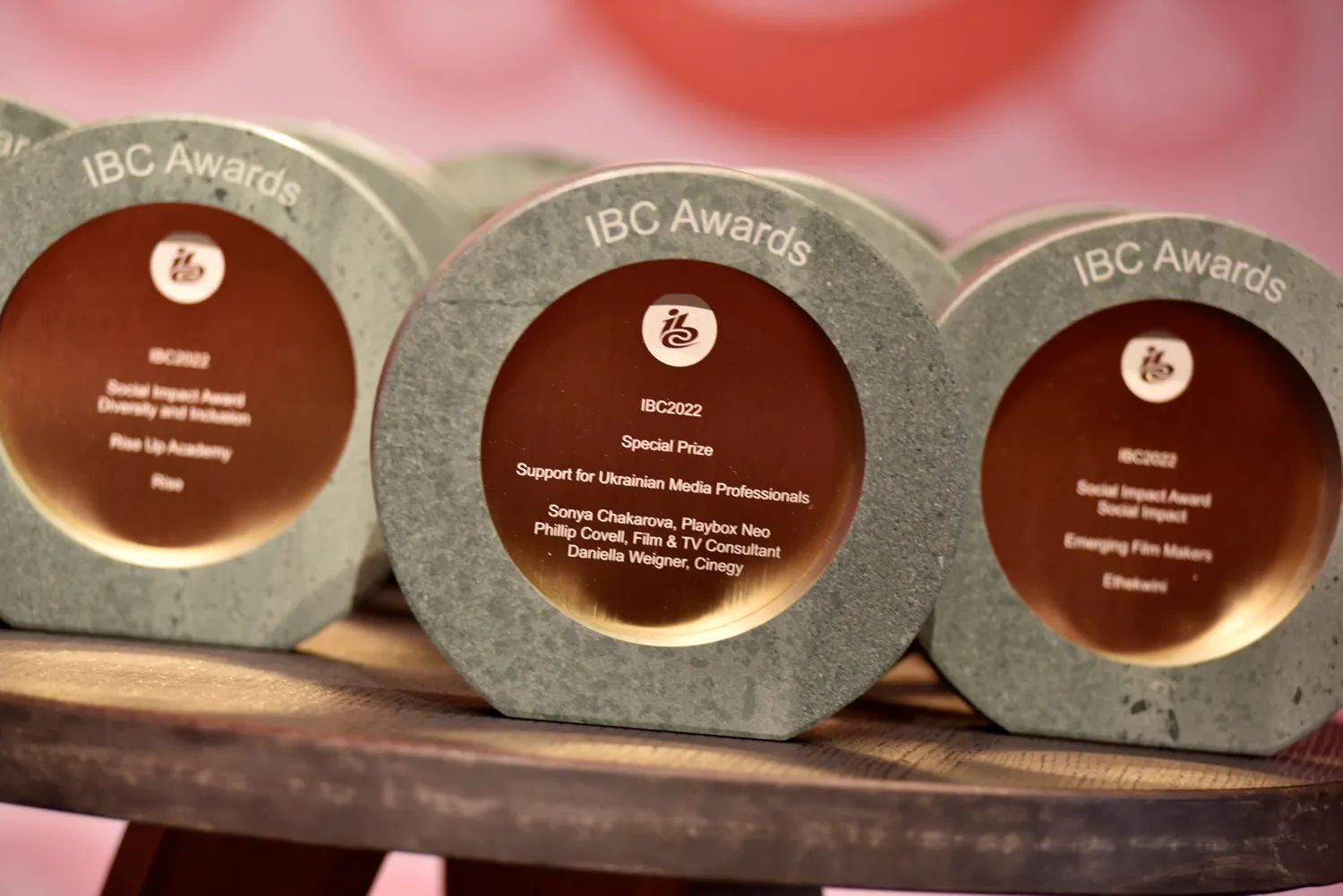
    MUMBAI: Disney Star India is in the running for this year’s IBC2024 Innovation Awards which are to be held on 15 September at 18 hours. The category for which it has been shortlisted is the social impact award for its work with India Signing Hands through which it brought the IPL 2024 coverage to almost 67 million hard of hearing and 34 million visually impaired fans on Star Sports.

    Late last month, the IBC announced the finalists for the IBC Innovation Awards which celebrate and honour collaborative initiatives leading to ground-breaking solutions that address real-world media, entertainment and technology industry challenges. This year’s awards bring together under one roof IBC’s innovation and social impact awards to create a unified celebration of industry advances, with five categories now being judged: content creation, content distribution, content everywhere, social Impact, and environment & sustainability.

    “This year’s entries once again showcased the global reach and appeal of the IBC Innovation Awards with projects of the highest quality received from six continents,” said chair of the 2024 IBC Innovation Awards jury Fergal Ringrose. “Meanwhile, constantly evolving delivery methods and audience consumption patterns demand that content producers around the globe must innovate dynamically in order to stay relevant and competitive in the modern media and entertainment technology ecosystem. I would like to sincerely thank our panel of judges for their diligence and ability to adapt, as we brought our three content categories together with environment and sustainability and social impact this year for our new-look IBC Innovation Awards.”

    Former news anchor Sasha Qadri is set to host the awards in the auditorium complex at the RAI on Sunday.

    This year’s finalists in the Content Creation category include:

    * The National Football League (US), ESPN, Disney/Pixar and Beyond Sports for creating the first fully animated, real-time NFL alternative broadcast set in the Toy Story universe.

    * Olympic Broadcasting Services and partners for live broadcast production with more than 200 smartphones contributing video for the Paris 2024 Opening Ceremony and a sea-based 5G network for sailing competitions in Marseille.

    * Aspire for working with Vislink and FocalPoint VR to develop a virtual reality over RF wireless solution for the inaugural season of Aspire’s Abu Dhabi Autonomous Racing League (A2RL).

    The organisations named as finalists in Content Distribution are:

    * Claro for creating a new approach to pay TV in Brazil, integrating streaming channels and applications, delivering entertainment to consumers with a complete pay TV offer.

    * NBCUniversal Operations and Technology for its pioneering project to transform the way its TV channels are delivered to consumers worldwide.

    * The National Hockey League (Canada and US) in partnership with Verizon, AWS, Zixi, Vizrt and Evertz, for producing a 5G and Edge compute framework for assembly, control and delivery of live broadcast.

    The Content Everywhere finalists are:

    * LaLiga for working with Play Anywhere and Ease Live to enable true fan interactivity for itself and its worldwide broadcast and streaming partners.    

    *Red Bull Media House for bringing together real-time GPS tracking, data management and advanced visualisation to transform viewing experience across live broadcast, web widgets and AR mobile app.

    * Franceinfo (France Télévisions) for working with PimpMyCompany to aggregate text/audio/video/photo messages from various platforms and broadcasting them live on air.

    Apart from Disney Star, the  Social Impact finalists are:

    * CultureQ for a new technology platform developed by indigenous-owned tech company Kiwa Digital that enables indigenous peoples globally to revitalise their language and culture at scale, while retaining sovereignty

    * Sesame Workshop for its Watch Play Learn Distribution Hub which allows government agencies and aid organisations to preview and request videos for children in crisis settings.

    The Environment & Sustainability finalists are:

    * France Télévisions for reducing CO2 emissions by 300 tons via a pioneering 100% glass-to-glass cloud production and private 5G network.

    * GreeningofStreaming for addressing growing industry concerns about the energy impact of the streaming sector, with international reach and over 30 member organisations.

    * Anton/Bauer for Salt-E Dog which harnesses the power of sodium chemistry to enable sustainable television production practices.

    The Innovation Awards ceremony will also feature the presentation of the IBC International Honour for Excellence, which goes to an individual or organisation that has made an outstanding impact in the industry, and the best technical paper, with all papers being presented at the 2024 IBC Conference that runs 13-15 September in the auditorium complex of the RAI.

  • Hyundai Motor India showcases ‘Mobility for All’ at Bharat Mobility Global Expo 2024

    Hyundai Motor India showcases ‘Mobility for All’ at Bharat Mobility Global Expo 2024

    Mumbai: Hyundai Motor India Ltd. showcased its technologically advanced products at the first ever Bharat Mobility Global Expo 2024. Based on the theme “Mobility for All”, the Hyundai Motor India Pavilion at Hall 6, Pragati Maidan presented the company’s vision for India and highlighted its commitment to India.

    Commenting on Hyundai Motor India’s participation at Bharat Global Mobility Expo 2024, Hyundai Motor India, AVP & vertical head, corporate affairs, Puneet Anand, said,” We would like to congratulate Government of India and ministry of commerce & industries for envisioning this unique Bharat Global Mobility Expo 2024. It gave us an opportunity to showcase our products & technologies to the audience. As Hyundai Motor India, we take pride in our journey of localisation, epitomising the ‘ Made in India, for the World ‘ spirit. Our commitment goes beyond cars; it’s a commitment to India’s engineering prowess and growth. Achieving 100 per cent localization in vital components reflects our dedication to the ‘Make in India’ initiative. Our state-of-the-art facilities across the nation, coupled with ongoing investments, underscore our vision for excellence. Hyundai’s journey in India is more than just automobiles; it’s a narrative of progress, community development, and a relentless pursuit of innovation, reflecting our enduring commitment to India’s future.”

    Key Highlights at Hyundai Motor India Pavilion:

    Localisation Zone

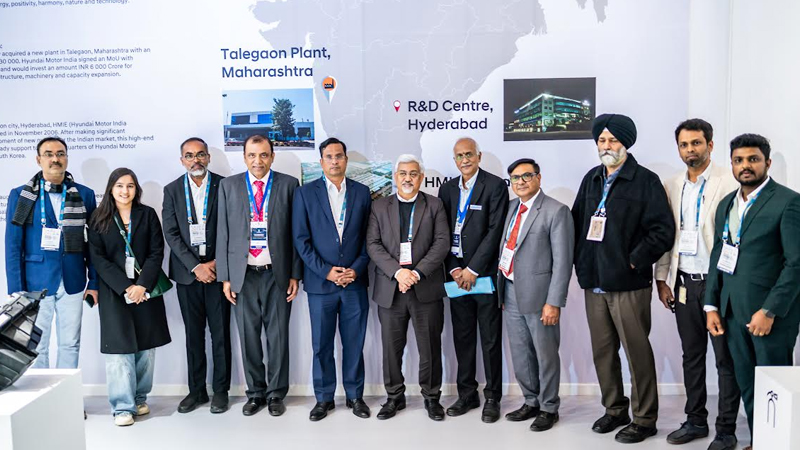
    Localisation has been pivotal in Hyundai Motor India’s journey since its inception. As the foremost exporter of “Made in India” cars globally, Hyundai’s specialised localisation zone exemplifies the extensive utilisation of parts from Indian manufacturers, showcasing the nation’s engineering prowess. In its ongoing commitment to enhancing localisation, Hyundai has achieved 100 per cent localisation in key components such as tires, panoramic sunroof, alloy wheel, and more. The company is also working towards enhancing localisation ratio for manufacturing vehicles in India, including key car components, ECM based inside rear view monitor (IRVM), higher grade AGM technology battery, and a wide range of other components. Reinforcing its commitment towards localisation, a dedicated team has been established to intensify its efforts, particularly for high-volume models, aligning with the government’s “Make in India” initiative. The zone not only highlights Hyundai’s advanced manufacturing facility in Sriperumbudur but also showcases the R&D facility in Hyderabad, corporate office in Gurugram, and the recently acquired Maharashtra facility, firmly establishing Hyundai’s presence on the Indian map. The comprehensive zone is complemented by a film illustrating Hyundai’s manufacturing excellence, emphasizing the company’s dedication to delivering the highest quality vehicles globally.

    Commitment to India

    Since its inception in 1996, Hyundai Motor India has consistently demonstrated a commitment to India, becoming the first OEM to export “Made in India” vehicles worldwide and holding the position of the largest passenger vehicle exporter from India. Hyundai has been a pioneer in the Indian automobile industry, introducing global technologies and features, and standardising 6 airbags and 3-point seatbelts across its entire range.

    Aligned with Hyundai’s global CSR guideline of ‘Continue,’ the Hyundai Motor India Foundation, initiated in 2006, has undertaken various social initiatives, including Art for Hope, telemedicine clinics, sports labs, dhyan-Do, drive for progress, BeTheBetterGuy, and more, focusing on community development, healthcare, education, vocational training, and promoting safe mobility practices.

    In 2023, Hyundai Motor India signed a MoU with the government of Tamil Nadu, committing Rs 20,000 Crore over next 10 years for capacity expansion, new products, establishing a battery pack assembly facility, and improving charging infrastructure. In 2024, an additional commitment of Rs 6,180 Crore was declared by the company including Rs 180 crore towards ‘Hydrogen Valley Innovation Hub’ in collaboration with IIT Madras. Additionally, the company has signed a MoU with the state of Maharashtra for a long-term investment of Rs 6,000 crore for infrastructure upgradation and capacity expansion for its 1 million capacity goal. These endeavours underscore Hyundai Motor India’s enduring commitment to India, paving the way for its sustained success in the country.

  • Welingkar Institute and indiantelevision.com partner on career guidance seminar

    Welingkar Institute and indiantelevision.com partner on career guidance seminar

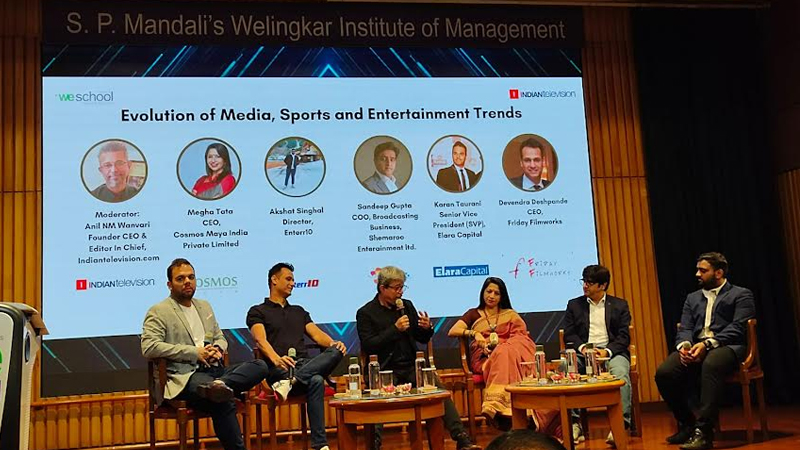
    Mumbai: There’s a tremendous opportunity for new entrants in the media and entertainment sector, despite the transformation it is undergoing and the pressure of revenues it has been facing. That was the conclusion of senior industry leaders who were part of a half-day conclave We Communique that Mumbai-based MBA institute  We School  – aka Welingkar Institute of Management – organised in partnership with Indiantelevision.com  on 17 January for postgraduate students of the media and entertainment course.

    Among the leaders who took part in panel discussions and a fireside chat included:  Cosmos Maya India CEO Megha Tata, Enterr10 director Akshat Singhal, Shemaroo broadcast business head Sandeep Gupta, Elara Capital media analyst Karan Taurani, Friday FilmWorks CEO Devendra Deshpande, Madison Media Sigma COO Vanita Keswani,  Wavemaker general manager Sejal Lodaya, Lodestar UM IPG Associate vice-presidents Shrikant Shenoy and Bhavesh Shah,  Disney Star India’s Prashant Khanna and Carat India director integrated media planning  Swarali Halepati. Indiantelevision.com founder, CEO & editor in chief Anil Wanvari chaired all three sessions.

    The speakers were spread across two sessions  “Evolution of Media, Sports, and Entertainment Trends” and “Media and Marketing in 2024. ”

    Almost all the speakers agreed that students need not be demotivated by news reports of doom and gloom that the media and entertainment industry are facing. “Yes, 2024 is going to be a year of consolidation with mergers and acquisitions seeing the course of conclusion,” said Taurani.  “Jobs are evolving but you have to get the basics right,” said Shenoy in the marketing and media session. “Learn about viewership trends, GRPs, reach etc and continue keeping abreast of developments.”

    “There is no shortage of jobs in media,” said Shah. “We are always hiring in media,” added Lodaya.  According to Keswani, the media executive’s job is becoming more about numbers and this can be fun as well.  Both Lodaya and Halepati emphasised that longevity in an organisation works very well as far as an executive’s career progression is concerned. “You should not be hopping around every few years for that marginal increase in salary,” they opined. “As long as you are learning and growing stick to the job.”

    The television panel opined that even though there is a shrinkage in the broadcast sector on the advertising inventory front (read: ad revenues), the television industry has a lot of legs. “Free TV is growing,” said Singhal, “Though pay TV is  struggling..”

    “Yes, production budgets are also slimming down,” explained Deshpande. “As are OTT series budgets.”

    He added that producers have to thus work within these budgets, and extract profits without compromising on quality through efficient production pipelines.

    Gupta extolled the student and WeWork alumni audience to learn as many skills as they can, but they need to focus on only one.

    Most of the panellists concurred that animation, gaming, VFX, AI, and ML are the most promising verticals that students should keep an eye on. “VFX studios are popping up everywhere in India and they will need talented individuals to work with them,” highlighted Taurani.

    The conclave was extremely well received with students rating it high on the knowledge enrichment chart.

  • MipFormats, Cannes: Demystifying India’s content formats space

    MipFormats, Cannes: Demystifying India’s content formats space

    CANNES: How do you work with India? Is it a new TV and digital formats’ paradise? These  – among others – were some of the questions raised and answered in the Producer’s Toolbox at MipFormats in Cannes on 3 April in Auditorium A in the famed Palais des Festivals.

    The session began with IndianTelevision Dot Com Group founder, CEO Anil Wanvari giving the 100 strong audience from about 25 countries a quick snapshot view of the Indian television industry.

    He estimated that the TV content creation business is about $620 million with about $500 million of this being accounted for by the Hindi General entertainment space. While soaps, drama, Bollywood films and songs account for a major chunk of the spend, around $90 million (including the format licence fee, production margins, and production and talent costs) is spent on TV formats.

    Wanvari also pointed out that almost all the European majors have set up shop in India, including Endemol Shine, Zodiak, Fremantle, BBC WorldWide productions.  And they have managed to build robust business.

    Wanvari highlighted the potential for new content ideas that has popped up courtesy the proliferation of platforms in the OTT and VOD space. The last couple of years have seen the entry of Hotstar (with about 40 million users; targeted to hit 100 million by end this year), Hooq, VuClip, Voot (from Viacom18), Ditto TV, OZee (from the Zee TV group), ErosNow, ZengaTV, and Netflix. Others like AltDigital (from Balaji Telefilms) are firming up plans for a launch. And the digital opportunity is only going to explode further with the impending launch of 4G services from the Reliance group which is investing about $22 billion on its broadband and 4G mobile play.

    CA Media-backed OML (Only Much Louder) COO Ajay Nair was pretty gung-ho about the Youtube promise. “We are about to launch six new shows – four of which are  formats –  with India’s top comedy talent with the support of brands. As most youth are on mobile devices, brands are willing to support any fruitful engagement they can have with them.”

    GoQuest Media CEO Vivek Lath announced the formation of GoQuest Formats a new company looking to acquire formats – even paper ones from all over the world to market them globally. “We are looking at travel show formats, convergence formats,” he said.

    Grey Matter Entertainment co-founder Rahul Sangari spoke about his music format The Remix which was produced in Vietnam and became the no 1 show there on VTV. “We are going into production in three weeks in China too,” he said. “We are looking forward to closing deals in 16 territories and hope  to do signups in the UK and the US too,” he said.
    Sangari was also pretty oprtimystic about a TV and app integrated show called Street Stars which focuses on street performers which is represented by Dentsu StoryLab at Mip.

    Zee TV’s Yogesh Karikurve opined that foreign companies wanting to explore the format opportunity in India would do well to explore licensing their formats, preferably before opting to set up a full fledged production operation.

    Nair emphasized that any international company needs to find a local partner to do the production and also liaise with the telecast partner, rather than just licence a format.

    Sangari’s view was that the need for an Indian partner arises because “India is a very different country; the cultural sensibilities and nuances have to be born in mind while creating, developing and selling a format in the country is concerned.”

    Lath said that music and dance shows have been rating well in India. “But formats targeting the new millenials  will have legs,” he said.

    Sangari agreed that India had yet to develop in terms of forking out large licensing fees for formats.  Lath interjected and said that should not be a worry for any large format distributor or creator. “Collectively if it is licensed on the regional language channels along with the mainline Hindi channel , then the licence pad can expand,” he stated.

    Karikurve talked about the potential for  factual entertainment  formats as that is a genre that ithe Zee TV group is investing in greatly in that genre. Nair agreed but added that ‘dating,’ extreme sports, music and comedy formats were becoming relevant. He ended the discussion  forecasting that around 40-50 international formats could make their way into India on digital and traditional television in the not too distant future as the appetite is definitely there. .


  • MipFormats, Cannes: Demystifying India’s content formats space

    MipFormats, Cannes: Demystifying India’s content formats space

    CANNES: How do you work with India? Is it a new TV and digital formats’ paradise? These  – among others – were some of the questions raised and answered in the Producer’s Toolbox at MipFormats in Cannes on 3 April in Auditorium A in the famed Palais des Festivals.

    The session began with IndianTelevision Dot Com Group founder, CEO Anil Wanvari giving the 100 strong audience from about 25 countries a quick snapshot view of the Indian television industry.

    He estimated that the TV content creation business is about $620 million with about $500 million of this being accounted for by the Hindi General entertainment space. While soaps, drama, Bollywood films and songs account for a major chunk of the spend, around $90 million (including the format licence fee, production margins, and production and talent costs) is spent on TV formats.

    Wanvari also pointed out that almost all the European majors have set up shop in India, including Endemol Shine, Zodiak, Fremantle, BBC WorldWide productions.  And they have managed to build robust business.

    Wanvari highlighted the potential for new content ideas that has popped up courtesy the proliferation of platforms in the OTT and VOD space. The last couple of years have seen the entry of Hotstar (with about 40 million users; targeted to hit 100 million by end this year), Hooq, VuClip, Voot (from Viacom18), Ditto TV, OZee (from the Zee TV group), ErosNow, ZengaTV, and Netflix. Others like AltDigital (from Balaji Telefilms) are firming up plans for a launch. And the digital opportunity is only going to explode further with the impending launch of 4G services from the Reliance group which is investing about $22 billion on its broadband and 4G mobile play.

    CA Media-backed OML (Only Much Louder) COO Ajay Nair was pretty gung-ho about the Youtube promise. “We are about to launch six new shows – four of which are  formats –  with India’s top comedy talent with the support of brands. As most youth are on mobile devices, brands are willing to support any fruitful engagement they can have with them.”

    GoQuest Media CEO Vivek Lath announced the formation of GoQuest Formats a new company looking to acquire formats – even paper ones from all over the world to market them globally. “We are looking at travel show formats, convergence formats,” he said.

    Grey Matter Entertainment co-founder Rahul Sangari spoke about his music format The Remix which was produced in Vietnam and became the no 1 show there on VTV. “We are going into production in three weeks in China too,” he said. “We are looking forward to closing deals in 16 territories and hope  to do signups in the UK and the US too,” he said.
    Sangari was also pretty oprtimystic about a TV and app integrated show called Street Stars which focuses on street performers which is represented by Dentsu StoryLab at Mip.

    Zee TV’s Yogesh Karikurve opined that foreign companies wanting to explore the format opportunity in India would do well to explore licensing their formats, preferably before opting to set up a full fledged production operation.

    Nair emphasized that any international company needs to find a local partner to do the production and also liaise with the telecast partner, rather than just licence a format.

    Sangari’s view was that the need for an Indian partner arises because “India is a very different country; the cultural sensibilities and nuances have to be born in mind while creating, developing and selling a format in the country is concerned.”

    Lath said that music and dance shows have been rating well in India. “But formats targeting the new millenials  will have legs,” he said.

    Sangari agreed that India had yet to develop in terms of forking out large licensing fees for formats.  Lath interjected and said that should not be a worry for any large format distributor or creator. “Collectively if it is licensed on the regional language channels along with the mainline Hindi channel , then the licence pad can expand,” he stated.

    Karikurve talked about the potential for  factual entertainment  formats as that is a genre that ithe Zee TV group is investing in greatly in that genre. Nair agreed but added that ‘dating,’ extreme sports, music and comedy formats were becoming relevant. He ended the discussion  forecasting that around 40-50 international formats could make their way into India on digital and traditional television in the not too distant future as the appetite is definitely there. .


  • Address the advertising challenges in the digital world to convert the non-believers

    Address the advertising challenges in the digital world to convert the non-believers

    MUMBAI: What do you do when you have a discussion to moderate, a ready panel of speakers on stage, but your audience is even less than the number of speakers? Well, you take the mike and charge forward without a care in world – not to put on a show, but because some issues need a serious, straightforward and honest discussion. The audience will definitely follow.

    That’s exactly what the charismatic chairman and MD of Grey Group India Sunil Lulla did when moderating a session on day three at FICCI Frames 2016. The topic was simple and burning — The Advertising Challenge amidst disruptive technology, digital innovations enabling targeted and smartadvertising — and Taboola APAC VP Ran Buck set the tone of the discussion with his key note on the issue. Buck shared his experiences on how the digital world behaved internationally from his experience of working with the brand discovery platform Taboola that helps advertisers find relevant end users.

    Lulla took control of discussion and the first thing he did was to throw a question at the audience – ‘How many believed that the digital medium will be the largest advertising revenue driver in the coming years?’ — to which most of  the audience responded by raising their hands. Next, he relayed an objective to the panellists — to convert all the non-believers in the room to believers by the end of the discussion. What a way to get the audience involved right from the start!

    The quickest way to get the ball rolling was to go through the panel as each one pointed out opportunities or challenges in advertising in the digital world.

    The panellists –  POKKT Video Ads CEO and founder Rohit Sharma, Zapr Media Labs co-founder Sandipan Mondal, Ping Digital Broadcast co-founder Rajeshree Naik, Vidooly founder Subrat Kar, Yahoo India MD and VP Gurmit Singh, and Adsparx CEO Kunal Lagwankar.

    Mondal, seated on the extreme end of the panel, pointed out the obvious and very straightforward reason to believe in the digital advertising boom. “It’s digital where the eyeballs are, and where more eyeballs will shift to. And advertisers follow eyeballs.” Gurmit Singh went into the details when chalking out the opportunities the digital age posed for advertisers and other stakeholders in the business. “If you follow the rate at which digital startups are being acquired by the big players and notice the value at which the deals happen, it gives you the idea how much the market analysts and value setters are betting on the digital platforms.”

    “Going forward,” Singh added, “Mobile will be the biggest traction driver and it is already going big in India. There are several stats and data to showcase the tremendous growth of the smartphone penetration in India. This will be followed by the huge video boom that again poses an awesome opportunity for brands to tap into. The other trend that will have a strong impact onadvertisers and will open up new vistas for them is native advertising.”

    Privacy right, Kar said, was currently a big challenge for digital advertisersand policy makers needed to come together and educate and come up with solutions for advertisers on this front.

    Having worked closely in the video advertising space on digital media, there was no one better than Lagwankar to shortlist the hiccups in the business currently. “Firstly,” he said, “it is a major challenge to retain the TV experience of seamless transition between content and advertising on VOD platforms. It’s not a bandwidth issue, but a design and aesthetics one.”

    “Secondly, ad-blockers take away a major chunk of the advertising revenues from publishers; and thirdly, content providers and distributors need to come up with a way to give seamless streaming of content between all platforms or screens, and address the needs of each screen individually,” Lagwankar stated.

    Being the optimist that she is, Naik stated, “Any barrier is dwarfed by the opportunities the medium offers for advertisers.” As the need of the hour was to state the barriers, Naik listed out a few as well. “We need a clear understanding of the medium. Lack of understanding such as equating views as metrics to measure reach and visibility by advertisers will set the industry crumbling faster than anything.”

    The often abused term ‘digital video measurement’ was tackled by the panel with a fresh perspective.  Advertisers have been heard citing the lack of a standard measurement of eyeballs on the digital platform as an excuse to not spend as much advertising dollars as they do on traditional media. Newspapers have distribution and sales count; TV has got BARC; what has the web got?

    “Perhaps web doesn’t need a ratings system,” came Singh’s head turning answer. “Web metrics at a large work differently, even within the different digital players. Some sites and apps use cookies and adtags to monitor and record consumer behaviour.”

    “There is also SDK code in apps that can be used to track how consumers interact with ads or record other analytics for the brands,” Sharma further accentuated the point. Hence the traditional concept of ratings might not be required for a vibrant medium like the web that has other powerful technological tools to fulfil the same need for advertisers.

    While the discussion on the stage covered everything including whether long form television ads would work on digital platform and content branding, a member from the audience got up and pointed out the ‘Skip button’, which was a problem of mammoth proportions.

    “While we all are banking on digital videos to drive ad revenue, what are we doing about the ‘skip ad’ button that is also the second most clicked button?” the panel was quizzed.

    Agreeing that traditional form of advertising would need some heavy tweaking to survive and coexist with ad blocking, Singh stated that digital medium empowered the end users to skip the ads, and further encouraged people to stay in the medium.

    It ultimately came down to how an ad was relayed to the consumer, whether it was in the viewer’s face, or packaged as good content with a value addition. After all, for a viewer, a good story was a good story, be it an ad or entertainment content.

    By the time the finishing bell rang, Lulla and the panellists had a hard time reaching the exit, as a sea of people hounded them for ‘one last question.’

  • Address the advertising challenges in the digital world to convert the non-believers

    Address the advertising challenges in the digital world to convert the non-believers

    MUMBAI: What do you do when you have a discussion to moderate, a ready panel of speakers on stage, but your audience is even less than the number of speakers? Well, you take the mike and charge forward without a care in world – not to put on a show, but because some issues need a serious, straightforward and honest discussion. The audience will definitely follow.

    That’s exactly what the charismatic chairman and MD of Grey Group India Sunil Lulla did when moderating a session on day three at FICCI Frames 2016. The topic was simple and burning — The Advertising Challenge amidst disruptive technology, digital innovations enabling targeted and smartadvertising — and Taboola APAC VP Ran Buck set the tone of the discussion with his key note on the issue. Buck shared his experiences on how the digital world behaved internationally from his experience of working with the brand discovery platform Taboola that helps advertisers find relevant end users.

    Lulla took control of discussion and the first thing he did was to throw a question at the audience – ‘How many believed that the digital medium will be the largest advertising revenue driver in the coming years?’ — to which most of  the audience responded by raising their hands. Next, he relayed an objective to the panellists — to convert all the non-believers in the room to believers by the end of the discussion. What a way to get the audience involved right from the start!

    The quickest way to get the ball rolling was to go through the panel as each one pointed out opportunities or challenges in advertising in the digital world.

    The panellists –  POKKT Video Ads CEO and founder Rohit Sharma, Zapr Media Labs co-founder Sandipan Mondal, Ping Digital Broadcast co-founder Rajeshree Naik, Vidooly founder Subrat Kar, Yahoo India MD and VP Gurmit Singh, and Adsparx CEO Kunal Lagwankar.

    Mondal, seated on the extreme end of the panel, pointed out the obvious and very straightforward reason to believe in the digital advertising boom. “It’s digital where the eyeballs are, and where more eyeballs will shift to. And advertisers follow eyeballs.” Gurmit Singh went into the details when chalking out the opportunities the digital age posed for advertisers and other stakeholders in the business. “If you follow the rate at which digital startups are being acquired by the big players and notice the value at which the deals happen, it gives you the idea how much the market analysts and value setters are betting on the digital platforms.”

    “Going forward,” Singh added, “Mobile will be the biggest traction driver and it is already going big in India. There are several stats and data to showcase the tremendous growth of the smartphone penetration in India. This will be followed by the huge video boom that again poses an awesome opportunity for brands to tap into. The other trend that will have a strong impact onadvertisers and will open up new vistas for them is native advertising.”

    Privacy right, Kar said, was currently a big challenge for digital advertisersand policy makers needed to come together and educate and come up with solutions for advertisers on this front.

    Having worked closely in the video advertising space on digital media, there was no one better than Lagwankar to shortlist the hiccups in the business currently. “Firstly,” he said, “it is a major challenge to retain the TV experience of seamless transition between content and advertising on VOD platforms. It’s not a bandwidth issue, but a design and aesthetics one.”

    “Secondly, ad-blockers take away a major chunk of the advertising revenues from publishers; and thirdly, content providers and distributors need to come up with a way to give seamless streaming of content between all platforms or screens, and address the needs of each screen individually,” Lagwankar stated.

    Being the optimist that she is, Naik stated, “Any barrier is dwarfed by the opportunities the medium offers for advertisers.” As the need of the hour was to state the barriers, Naik listed out a few as well. “We need a clear understanding of the medium. Lack of understanding such as equating views as metrics to measure reach and visibility by advertisers will set the industry crumbling faster than anything.”

    The often abused term ‘digital video measurement’ was tackled by the panel with a fresh perspective.  Advertisers have been heard citing the lack of a standard measurement of eyeballs on the digital platform as an excuse to not spend as much advertising dollars as they do on traditional media. Newspapers have distribution and sales count; TV has got BARC; what has the web got?

    “Perhaps web doesn’t need a ratings system,” came Singh’s head turning answer. “Web metrics at a large work differently, even within the different digital players. Some sites and apps use cookies and adtags to monitor and record consumer behaviour.”

    “There is also SDK code in apps that can be used to track how consumers interact with ads or record other analytics for the brands,” Sharma further accentuated the point. Hence the traditional concept of ratings might not be required for a vibrant medium like the web that has other powerful technological tools to fulfil the same need for advertisers.

    While the discussion on the stage covered everything including whether long form television ads would work on digital platform and content branding, a member from the audience got up and pointed out the ‘Skip button’, which was a problem of mammoth proportions.

    “While we all are banking on digital videos to drive ad revenue, what are we doing about the ‘skip ad’ button that is also the second most clicked button?” the panel was quizzed.

    Agreeing that traditional form of advertising would need some heavy tweaking to survive and coexist with ad blocking, Singh stated that digital medium empowered the end users to skip the ads, and further encouraged people to stay in the medium.

    It ultimately came down to how an ad was relayed to the consumer, whether it was in the viewer’s face, or packaged as good content with a value addition. After all, for a viewer, a good story was a good story, be it an ad or entertainment content.

    By the time the finishing bell rang, Lulla and the panellists had a hard time reaching the exit, as a sea of people hounded them for ‘one last question.’

  • Is digital taking over print?

    Is digital taking over print?

    MUMBAI: With the growing number of avenues available for news consumption in India, viewers are often puzzled about which source to trust. The explosion of digital, television and print media has changed the way of news consumption.

    And discussing how news had moved avenues with changing time were Indian Express whole time director Anant Goenka, BBC World News television presenter Ros Atkins, Extentia Information Technology CEO Umeed Kothavala, Inshorts founder Azhar Iqubal, The Wire founding editor Siddharth Varadarajan, Zee Media Group CEO Bhaskar Das and CNN International chief New Delhi bureau Ravi Agarwal. Moderating the session was MxM India editor-in-chief Pradyuman Maheshwari.

    Over the years, we have seen news moving from print to magazines to TV and now to digital platforms. Shedding some light, Zee Media’s Das said, “That the market is supposed to move, is a basic axiom. The problem that the majority of the houses are facing is that they are stuck to one business model. With digital, there are multiple ways of making money. Monetisation moves from format to format. In the end, it’s not about the medium. You can’t compare a conventional way of system with a realistic model. There are four monsters like Google, Facebook, Apple and Amazon. They make money. There will be monopolistic tendencies.”

    Indian Express’s Anant added, “Digital has arrived. Our revenues have increased over four years and I see print is going to be there for a long time. I can say that Indian Express can survive digitally with the same reportage and structure. But I think in digital you can’t just stick to advertising. That will not be much. You will have to get audiences to pay for content.

    “Every story is different, and depending on the story, we file digital first or print first. The best investigative story we like to give to print first; exclusivity is a one minute word. At the moment we find it is exclusive on the web only for a minute. Also if it is time critical to break the story, then we do break it on web”, he explained further.

    Das said, “The audiences that consume newspapers today they were born before 1970 and are not post 1990 born. At the same time, most of the stars want to see their names in newspapers.

    The Wire’s Varadarajan added, “With digital the ability to tell stories has enhanced due to the enhanced interactivity. The viewers can consume content according to their convenience on digital platforms. Every TV channel and newspaper today recognises digital as the future. But the old adage of dollars for print, dimes for digital and pennies for mobile still holds true for most organisations.”

    Inshorts Azhar Iqbal when asked about how his news application was working and what was its future replied, “We are not making any money as of now. I don’t know how are we going to perform in the future. We are focused on ‘time is money’. As long as we can attract eyeballs, we will be able to monetize”.

    Adding, Extentia Information Technology’s Umeed Kothavala said, “Digital and technology have changed the context of consumption. Along with monetization, organisations also need to keep track of the growing power of social media, citizen journalism and also the fact that there are many more options for people to get their news from”.

    Anant took on Inshorts Azhar Iqubal, making his displeasure known at the latter copying news from Indian Express without the media group’s consent and rehashing it into a 60 word article for Inshorts’ usage.

    On the entertainment front, Varadarajan commented how a majority of entertainment news in the print sector was paid for by artistes and hence they would always prefer their exclusive interviews to be printed in the print medium rather than digital.

    CNN’s Agrawal said, ““Digital news is the present, not just the future. It is the present and is very important for us. CNN International looks at providing content globally. We don’t have a print medium. The news that we cover is from a global perspective and the information can be accessed by all the people irrespective of the geography. We as an organisation think of being the first to put out the news. We then decide on how news can be distributed across the various delivery platforms.”

    BBC’s Atkins pointed out that if BBC didn’t provide relevant news to the audience, they would not come to it. “On my show BBC Outsource, if there is a credible story, say from CNN, I will show it to my audience. Given that social media is expanding and that news can be accessed through it, we have to provide credible content to the audience.”

    The panellists also discussed the importance of maintaining the same level of credibility and gate-keeping standards on a digital platform as on traditional print or television platforms.

    Voicing his opinion, Varadarajan said, “There are two things which are important – credibility and reliability. One should always try to achieve both these elements. If you can’t pick on one, than you should always give preference to credibility”.

    “We get higher fee from most of our advertisers because the news that we are providing is credible and they know this”, added Das.

    When television came in, the pundits said that it was the end of print. When roll out of the internet, they said that print and television would not be able to compete. All the mediums have so far been able to co-exist, and even grow. With so many upcoming digital avenues, what will be interesting to see is how print will retain for itself its space in the ecosystem and how digital will be a game changer that it is already has become.

  • Is digital taking over print?

    Is digital taking over print?

    MUMBAI: With the growing number of avenues available for news consumption in India, viewers are often puzzled about which source to trust. The explosion of digital, television and print media has changed the way of news consumption.

    And discussing how news had moved avenues with changing time were Indian Express whole time director Anant Goenka, BBC World News television presenter Ros Atkins, Extentia Information Technology CEO Umeed Kothavala, Inshorts founder Azhar Iqubal, The Wire founding editor Siddharth Varadarajan, Zee Media Group CEO Bhaskar Das and CNN International chief New Delhi bureau Ravi Agarwal. Moderating the session was MxM India editor-in-chief Pradyuman Maheshwari.

    Over the years, we have seen news moving from print to magazines to TV and now to digital platforms. Shedding some light, Zee Media’s Das said, “That the market is supposed to move, is a basic axiom. The problem that the majority of the houses are facing is that they are stuck to one business model. With digital, there are multiple ways of making money. Monetisation moves from format to format. In the end, it’s not about the medium. You can’t compare a conventional way of system with a realistic model. There are four monsters like Google, Facebook, Apple and Amazon. They make money. There will be monopolistic tendencies.”

    Indian Express’s Anant added, “Digital has arrived. Our revenues have increased over four years and I see print is going to be there for a long time. I can say that Indian Express can survive digitally with the same reportage and structure. But I think in digital you can’t just stick to advertising. That will not be much. You will have to get audiences to pay for content.

    “Every story is different, and depending on the story, we file digital first or print first. The best investigative story we like to give to print first; exclusivity is a one minute word. At the moment we find it is exclusive on the web only for a minute. Also if it is time critical to break the story, then we do break it on web”, he explained further.

    Das said, “The audiences that consume newspapers today they were born before 1970 and are not post 1990 born. At the same time, most of the stars want to see their names in newspapers.

    The Wire’s Varadarajan added, “With digital the ability to tell stories has enhanced due to the enhanced interactivity. The viewers can consume content according to their convenience on digital platforms. Every TV channel and newspaper today recognises digital as the future. But the old adage of dollars for print, dimes for digital and pennies for mobile still holds true for most organisations.”

    Inshorts Azhar Iqbal when asked about how his news application was working and what was its future replied, “We are not making any money as of now. I don’t know how are we going to perform in the future. We are focused on ‘time is money’. As long as we can attract eyeballs, we will be able to monetize”.

    Adding, Extentia Information Technology’s Umeed Kothavala said, “Digital and technology have changed the context of consumption. Along with monetization, organisations also need to keep track of the growing power of social media, citizen journalism and also the fact that there are many more options for people to get their news from”.

    Anant took on Inshorts Azhar Iqubal, making his displeasure known at the latter copying news from Indian Express without the media group’s consent and rehashing it into a 60 word article for Inshorts’ usage.

    On the entertainment front, Varadarajan commented how a majority of entertainment news in the print sector was paid for by artistes and hence they would always prefer their exclusive interviews to be printed in the print medium rather than digital.

    CNN’s Agrawal said, ““Digital news is the present, not just the future. It is the present and is very important for us. CNN International looks at providing content globally. We don’t have a print medium. The news that we cover is from a global perspective and the information can be accessed by all the people irrespective of the geography. We as an organisation think of being the first to put out the news. We then decide on how news can be distributed across the various delivery platforms.”

    BBC’s Atkins pointed out that if BBC didn’t provide relevant news to the audience, they would not come to it. “On my show BBC Outsource, if there is a credible story, say from CNN, I will show it to my audience. Given that social media is expanding and that news can be accessed through it, we have to provide credible content to the audience.”

    The panellists also discussed the importance of maintaining the same level of credibility and gate-keeping standards on a digital platform as on traditional print or television platforms.

    Voicing his opinion, Varadarajan said, “There are two things which are important – credibility and reliability. One should always try to achieve both these elements. If you can’t pick on one, than you should always give preference to credibility”.

    “We get higher fee from most of our advertisers because the news that we are providing is credible and they know this”, added Das.

    When television came in, the pundits said that it was the end of print. When roll out of the internet, they said that print and television would not be able to compete. All the mediums have so far been able to co-exist, and even grow. With so many upcoming digital avenues, what will be interesting to see is how print will retain for itself its space in the ecosystem and how digital will be a game changer that it is already has become.