Category: DTH

  • GST Bill, DTH and broadcasting

    GST Bill, DTH and broadcasting

    MUMBAI: When the The Constitution (122nd Amendment) Bill, 2014 was passed in the Rajya Sabha late Wednesday night, it heralded the rollout of the goods and service tax era in India. In the making for nearly 16 years it is estimated to inject an additional one to two points in growth to the world’s fastest growing economy.

    GST, as envisaged by the government, is one indirect tax for the whole nation, which will make India one unified common market. It will subsume central excise duty, additional excise duty, service tax, additional customs duty commonly known as countervailing duty, and special additional duty of customs at the Central level. GST will also subsume state value added tax/sales tax, entertainment tax, central sales tax, octroi and entry tax, and purchase tax at the state level.

    Last year when finance minister Arun Jaitley had tabled the Bill then for debate, indiantelevision.com had spoken to industry stalwarts. Videocon D2H CEO Anil Khera had at that stage opined: “GST is a welcome move. It will help the DTH sector to prosper. DTH is the biggest victim of multiple taxation policy and GST will simplify that. The industry needs a uniform taxation system and the sooner it comes the better it is.”

    Speaking to CNBC TV18 on 2 August Dish TV chairman and managing director Jawahar Goel had said that the passage of the GST amendments would benefit his company to the tune of three to four per cent initially and this would likely improve to four to five per cent going forward.

    “Currently our outgo on indirect taxes is roughly around 23 percent and then for tax administration also, our expenditure is almost 1-1.5 percent, for managing our logistics in each of the states. The savings should go directly to our bottomline,” he had shared with the business news channel.

    Broadcasters would likely be impacted too as the indirect taxes that they pay currently are around 14-15 per cent. Observers expected the outgo for them could rise to about 18-20 per cent the introduction of GST.

    (Because this is a developing story, more facts may emerge as we go along. Hence it will be updated with new viewpoints then.)

  • Q1-17: Dish TV adds 4 lakh subs, subscription revenue up at Rs 728 cr

    Q1-17: Dish TV adds 4 lakh subs, subscription revenue up at Rs 728 cr

    BENGALURU: Indian direct to home (DTH) television operator Dish TV India Limited (Dish TV) has reported growth across important financial and operational parameters including operating revenues (TIO) , EBIDTA and subscription numbers. The company announced the addition of 402,000 net subscribers for the quarter ended 30 June 2016 (Q1-17, current). It closed the quarter with 149 lakh subscribers. Average revenue per user (ARPU) for Q1-17 remained the same year-over-year (y-o-y) and quarter-over-quarter (q-o-q) at Rs 174.

    Dish TV reported 6.7 percent higher y-o-y subscription revenue of Rs 728.2 crore for Q1-17, as compared to Rs 682.8 crore. Operating revenue in the current quarter increased 5.7 percent y-o-y to Rs 778.6 crore from Rs 736.7 crore in the corresponding quarter of the previous year. (Refer Note 2.1 and 2.2 below)

    Dish TV reported PAT of Rs. 50.9 crore in Q1-17, down 24.6 percent as compared to Rs 54.2 crore in Q1-16.

    EBIDTA in the current quarter increased 12.2 percent to Rs 264.6 crore from Rs 235.7 crore in Q1-16.

    Total expense in the current quarter increased 2.6 percent y-o-y to Rs 513.9 crore (66 percent of revenue) from Rs 500.9 crore (68 percent of revenue). (Refer note 2.3 below). Personnel cost increased 9.8 percent y-o-y to Rs 38.1 crore (4.9 percent of revenue) from Rs 34.7 crore (4.7 percent of revenue). Cost of sales and services declined 1.8 percent y-o-y to Rs 358.4 crore (46 percent of revenue) from Rs 365 crore (49.5 percent of revenue).

    Dish TV managing director Jawahar Goel said, “Buoyed by digitization, notwithstanding the relative seasonal weakness in 1Q, the industry collectively added around 15 percent higher subscribers compared to the same quarter last fiscal. Dish TV maintained its lead in incremental subscriber additions during the quarter. Our strengthened distribution in DAS Phase III and IV areas along with the popularity of the Dish TV Insta Care – 4- Hour Service Assurance Campaign were instrumental in helping us maintain an edge over competition. Our regional and mass-market offerings continued to remain crowd-pullers in respective geographies.”

    “The consumers growing passion for HD has the potential to trigger yet another round of growth, beyond that being driven by digitization, for the DTH industry. Going forward, we would continue to build on our HD advantage while focusing on its sales across the country,” Goel added.

    To further enhance the digital TV experience for subscribers and build an affordable and fast deployment model for itself, Dish TV recently selected Wyplay’s Frog as the Middleware for its next generation Set-Top-Boxes. Wyplay is an HTML5 browser based system and incorporates all features required for traditional linear broadcast TV consumption, on-demand content and applications distributed over the internet.

    Talking about the first quarter results, Goel said, “Healthy subscriber additions led to a 12.3 percent y-o-y increase in subscription revenues (on a like-to-like basis). EBITDA margin bounced to 34.0 percent from 32.0 per cent in the corresponding quarter last fiscal. Net Profit for the quarter was Rs. 409 million leading to FCF generation of Rs. 627 million. Churn for the quarter at 0.7 percent per month remained well within manageable limits.”

    Expressing his views on other regulatory overhangs Goel, said, “An industry favourable resolution of the DTH license fee matter should go a long way in ensuring non-discrimination amongst various distribution platforms in the country. We are also hopeful of a just and logical outcome of the currently debated TRAI consultation paper on Interconnection Framework for Broadcasting TV Services Distributed through Addressable Systems.”

    Notes: (1) The unit of currency in this report is the Indian rupee – Rs (also conventionally represented by INR). The Indian numbering system or the Vedic numbering system has been used to denote money values. The basic conversion to the international norm would be:

    (a) 100,00,000 = 100 lakh = 10,000,000 = 10 million = 1 crore.

    (b) 10,000 lakh = 100 crore = 1 arab = 1 billion.

    (2) Dish TV says

    (2.1) For Q1-17, subscription revenue, on a like-to-like basis, was Rs 766.9 crore, a growth of 12.3 percent y-o-y.

    (2.2) For Q1-17 operating revenue, on a like-to-like basis, was Rs 817.2 crore, a growth of 10.9 percent y-o-y.

    (2.3) For Q1-17, COGS, on a like-to-like basis, was Rs 3,97 crore, a change of 8.8 percent y-o-y. The resultant Total Expense, on-a like-to-like basis, was Rs. 552.6 crore, a change of 10.3 percent y-o-y.
  • Q1-17: Dish TV adds 4 lakh subs, subscription revenue up at Rs 728 cr

    Q1-17: Dish TV adds 4 lakh subs, subscription revenue up at Rs 728 cr

    BENGALURU: Indian direct to home (DTH) television operator Dish TV India Limited (Dish TV) has reported growth across important financial and operational parameters including operating revenues (TIO) , EBIDTA and subscription numbers. The company announced the addition of 402,000 net subscribers for the quarter ended 30 June 2016 (Q1-17, current). It closed the quarter with 149 lakh subscribers. Average revenue per user (ARPU) for Q1-17 remained the same year-over-year (y-o-y) and quarter-over-quarter (q-o-q) at Rs 174.

    Dish TV reported 6.7 percent higher y-o-y subscription revenue of Rs 728.2 crore for Q1-17, as compared to Rs 682.8 crore. Operating revenue in the current quarter increased 5.7 percent y-o-y to Rs 778.6 crore from Rs 736.7 crore in the corresponding quarter of the previous year. (Refer Note 2.1 and 2.2 below)

    Dish TV reported PAT of Rs. 50.9 crore in Q1-17, down 24.6 percent as compared to Rs 54.2 crore in Q1-16.

    EBIDTA in the current quarter increased 12.2 percent to Rs 264.6 crore from Rs 235.7 crore in Q1-16.

    Total expense in the current quarter increased 2.6 percent y-o-y to Rs 513.9 crore (66 percent of revenue) from Rs 500.9 crore (68 percent of revenue). (Refer note 2.3 below). Personnel cost increased 9.8 percent y-o-y to Rs 38.1 crore (4.9 percent of revenue) from Rs 34.7 crore (4.7 percent of revenue). Cost of sales and services declined 1.8 percent y-o-y to Rs 358.4 crore (46 percent of revenue) from Rs 365 crore (49.5 percent of revenue).

    Dish TV managing director Jawahar Goel said, “Buoyed by digitization, notwithstanding the relative seasonal weakness in 1Q, the industry collectively added around 15 percent higher subscribers compared to the same quarter last fiscal. Dish TV maintained its lead in incremental subscriber additions during the quarter. Our strengthened distribution in DAS Phase III and IV areas along with the popularity of the Dish TV Insta Care – 4- Hour Service Assurance Campaign were instrumental in helping us maintain an edge over competition. Our regional and mass-market offerings continued to remain crowd-pullers in respective geographies.”

    “The consumers growing passion for HD has the potential to trigger yet another round of growth, beyond that being driven by digitization, for the DTH industry. Going forward, we would continue to build on our HD advantage while focusing on its sales across the country,” Goel added.

    To further enhance the digital TV experience for subscribers and build an affordable and fast deployment model for itself, Dish TV recently selected Wyplay’s Frog as the Middleware for its next generation Set-Top-Boxes. Wyplay is an HTML5 browser based system and incorporates all features required for traditional linear broadcast TV consumption, on-demand content and applications distributed over the internet.

    Talking about the first quarter results, Goel said, “Healthy subscriber additions led to a 12.3 percent y-o-y increase in subscription revenues (on a like-to-like basis). EBITDA margin bounced to 34.0 percent from 32.0 per cent in the corresponding quarter last fiscal. Net Profit for the quarter was Rs. 409 million leading to FCF generation of Rs. 627 million. Churn for the quarter at 0.7 percent per month remained well within manageable limits.”

    Expressing his views on other regulatory overhangs Goel, said, “An industry favourable resolution of the DTH license fee matter should go a long way in ensuring non-discrimination amongst various distribution platforms in the country. We are also hopeful of a just and logical outcome of the currently debated TRAI consultation paper on Interconnection Framework for Broadcasting TV Services Distributed through Addressable Systems.”

    Notes: (1) The unit of currency in this report is the Indian rupee – Rs (also conventionally represented by INR). The Indian numbering system or the Vedic numbering system has been used to denote money values. The basic conversion to the international norm would be:

    (a) 100,00,000 = 100 lakh = 10,000,000 = 10 million = 1 crore.

    (b) 10,000 lakh = 100 crore = 1 arab = 1 billion.

    (2) Dish TV says

    (2.1) For Q1-17, subscription revenue, on a like-to-like basis, was Rs 766.9 crore, a growth of 12.3 percent y-o-y.

    (2.2) For Q1-17 operating revenue, on a like-to-like basis, was Rs 817.2 crore, a growth of 10.9 percent y-o-y.

    (2.3) For Q1-17, COGS, on a like-to-like basis, was Rs 3,97 crore, a change of 8.8 percent y-o-y. The resultant Total Expense, on-a like-to-like basis, was Rs. 552.6 crore, a change of 10.3 percent y-o-y.

  • Q1-17: Airtel DTH revenue up 22.2 percent

    Q1-17: Airtel DTH revenue up 22.2 percent

    BENGALURU: DAS phase III has been a boost for the carriage industry in subscriber additions, revenues, and operating profits. Buoyed by the government’s decision to stick to deadlines for digitisation, the DTH industry in India is continuing its bloom run, if one were to go by the results reported by Bharti Airtel Limited about its Digital TV services (Airtel DTH) for the quarter  and year ended 30 March 2016 (Q1-17, current quarter.

    Revenue from Airtel’s DTH segment in Q1-17 increased 22.2 per cent to Rs 836.9 crore as compared to Rs 684.8 crore in the corresponding quarter of the previous year.

    Airtel’s DTH segment reported EBIT (Earnings before interest and tax) of Rs 121.9 crore (14.6 per cent operating margin) as compared to EBIT of Rs 41.5 crore (6.1 percent operating margin) in Q1-16..

    Subscription numbers

    Airtel DTH added 4.24 lakh net subscribers in Q1-17 to bring its subscriber base to 121.9 lakh rom 117.25 lakh in the previous quarter. Average revenue per user (ARPU) increased to Rs 233 from Rs 229 in the immediate trailing quarter. Airtel DTH reported a monthly subscriber churn of 0.8 percent in Q1-17, same as the churn in Q1-16 and Q4-16.

    Capex

    Airtel increased capex for its DTH segment for Q1-17 by Rs 203 crore as compared to the Rs 211.3 during the corresponding quarter of the previous year. The company’s cumulative investments into Airtel DTH increased 19.1 per cent to Rs 6,693.6 crore in the current quarter as compared to Rs 5,621.6 crore in Q1-16.

    Bharti Airtel Limited numbers

    Airtel DTH contributes just about 4 per cent to Bharti Airtel’s Limited. Bharti Airtel reported total revenue of Rs 25,546.5 crore in Q1-17, 7.9 per cent more than the Rs 23.671 crore in Q1-16..

    After accounting for exceptional items (net gains of Rs 82 crore), the consolidated net income for the current quarter stands at Rs 1,462 crore compared to Rs 2,113 crore in corresponding quarter of last year. Q1-16 net Income of Rs 2,113 crore has been re-instated to Ind-AS from previously reported IFRS figures which includes an exceptional gain of Rs 556 crore on account of this reinstatement.

    Note: The unit of currency in this report is the Indian rupee – Rs (also conventionally represented by INR). The Indian numbering system or the Vedic numbering system has been used to denote money values. The basic conversion to the international norm would be:

    (a) 100,00,000 = 100 lakh = 10,000,000 = 10 million = 1 crore.

    (b) 10,000 lakh = 100 crore = 1 arab = 1 billion.

  • Q1-17: Airtel DTH revenue up 22.2 percent

    Q1-17: Airtel DTH revenue up 22.2 percent

    BENGALURU: DAS phase III has been a boost for the carriage industry in subscriber additions, revenues, and operating profits. Buoyed by the government’s decision to stick to deadlines for digitisation, the DTH industry in India is continuing its bloom run, if one were to go by the results reported by Bharti Airtel Limited about its Digital TV services (Airtel DTH) for the quarter  and year ended 30 March 2016 (Q1-17, current quarter.

    Revenue from Airtel’s DTH segment in Q1-17 increased 22.2 per cent to Rs 836.9 crore as compared to Rs 684.8 crore in the corresponding quarter of the previous year.

    Airtel’s DTH segment reported EBIT (Earnings before interest and tax) of Rs 121.9 crore (14.6 per cent operating margin) as compared to EBIT of Rs 41.5 crore (6.1 percent operating margin) in Q1-16..

    Subscription numbers

    Airtel DTH added 4.24 lakh net subscribers in Q1-17 to bring its subscriber base to 121.9 lakh rom 117.25 lakh in the previous quarter. Average revenue per user (ARPU) increased to Rs 233 from Rs 229 in the immediate trailing quarter. Airtel DTH reported a monthly subscriber churn of 0.8 percent in Q1-17, same as the churn in Q1-16 and Q4-16.

    Capex

    Airtel increased capex for its DTH segment for Q1-17 by Rs 203 crore as compared to the Rs 211.3 during the corresponding quarter of the previous year. The company’s cumulative investments into Airtel DTH increased 19.1 per cent to Rs 6,693.6 crore in the current quarter as compared to Rs 5,621.6 crore in Q1-16.

    Bharti Airtel Limited numbers

    Airtel DTH contributes just about 4 per cent to Bharti Airtel’s Limited. Bharti Airtel reported total revenue of Rs 25,546.5 crore in Q1-17, 7.9 per cent more than the Rs 23.671 crore in Q1-16..

    After accounting for exceptional items (net gains of Rs 82 crore), the consolidated net income for the current quarter stands at Rs 1,462 crore compared to Rs 2,113 crore in corresponding quarter of last year. Q1-16 net Income of Rs 2,113 crore has been re-instated to Ind-AS from previously reported IFRS figures which includes an exceptional gain of Rs 556 crore on account of this reinstatement.

    Note: The unit of currency in this report is the Indian rupee – Rs (also conventionally represented by INR). The Indian numbering system or the Vedic numbering system has been used to denote money values. The basic conversion to the international norm would be:

    (a) 100,00,000 = 100 lakh = 10,000,000 = 10 million = 1 crore.

    (b) 10,000 lakh = 100 crore = 1 arab = 1 billion.

  • Tata Sky and Visa to collaborate for DTH recharge options

    Tata Sky and Visa to collaborate for DTH recharge options

    Mumbai: Tata Sky and Visa have collaborated to offer Tata Sky subscribers a unique QR code based mobile payment solution, powered by mVisa. Tata Sky subscribers can now recharge their account by scanning the QR code through their mobile phones directly from the TV screen or online on mytatasky.com.

    Visa Group country manager, India and South Asia T.R. Ramachandran said, “Visa is focused on digital innovation to accelerate the development of next generation platforms and solutions that will shape digital commerce. mVisa enables secure, digital commerce through the mobile phone, which today has become the single point of access to technology for consumers. The mVisa solution for Tata Sky subscribers will cater to a large user base across India; we will continue to build more such use cases across online and offline channels to accelerate the adoption digital payments.”

    Tata Sky MD and CEO Harit Nagpal said ”One of our most important pillars of business at Tata Sky is that Innovation has to be Simple and Easy to Use for all. Convenience to use any new technology is the key to ensuring its mass utility and success. We believe mVisa will help subscribers across India with this payment solution from the comfort of their homes.”

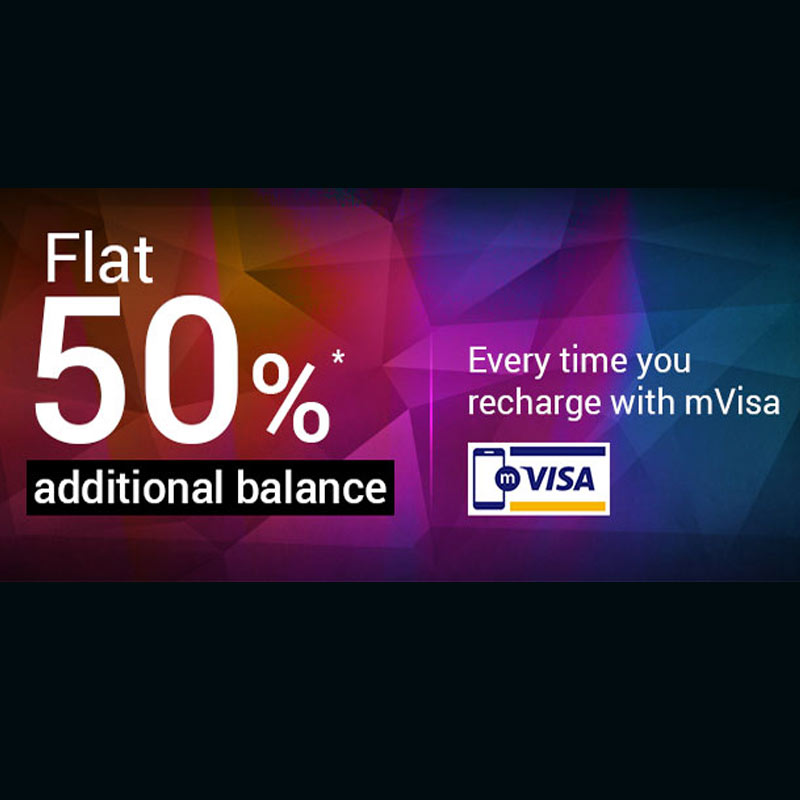
    As an introductory offer, subscribers will get 50% additional credit up to a maximum of Rs. 200 on recharge using mVisa. This offer can be availed three times in a calendar month.

    India is currently the 2nd largest smartphone market in the world, with over a billion smartphones expected to be sold in the next five years. The increasing popularity and adoption of mobile devices presents a huge opportunity for the growth of mobile-based digital commerce. The mVisa payment solution on Tata Sky will empower over 17 million subscribers spread across Indian cities, towns and villages, to make payments without having to use cash, debit or credit cards and from the comfort of their homes.

    In order to make payments, customers simply need to open their bank’s mobile application, select the mVisa option, which will activate their smartphone’s camera. The unique QR code on the TV screen (appears on clicking the home or yellow button on the Tata Sky remote control) will prompt for the payment amount, followed by entering the mPIN, to complete the transaction. It is a card-less solution which facilitates payments by scanning the merchant/service provider’s QR code. Subscribers can also log on to mytatasky.com and recharge their account online using the mVisa payment option.

    India is the first market globally where mVisa has been introduced to support the migration from cash to electronic commerce. mVisa is available on the following apps – Axis Bank Mobile Banking App, Bank of Baroda M CLIP App, Bank of India mVisaApp, Pockets by ICICI Bank, HDFC Bank PayZapp andState Bank Anywhere App. Any bank’s mVisa customer can transact on any mVisa merchant.

  • Tata Sky and Visa to collaborate for DTH recharge options

    Tata Sky and Visa to collaborate for DTH recharge options

    Mumbai: Tata Sky and Visa have collaborated to offer Tata Sky subscribers a unique QR code based mobile payment solution, powered by mVisa. Tata Sky subscribers can now recharge their account by scanning the QR code through their mobile phones directly from the TV screen or online on mytatasky.com.

    Visa Group country manager, India and South Asia T.R. Ramachandran said, “Visa is focused on digital innovation to accelerate the development of next generation platforms and solutions that will shape digital commerce. mVisa enables secure, digital commerce through the mobile phone, which today has become the single point of access to technology for consumers. The mVisa solution for Tata Sky subscribers will cater to a large user base across India; we will continue to build more such use cases across online and offline channels to accelerate the adoption digital payments.”

    Tata Sky MD and CEO Harit Nagpal said ”One of our most important pillars of business at Tata Sky is that Innovation has to be Simple and Easy to Use for all. Convenience to use any new technology is the key to ensuring its mass utility and success. We believe mVisa will help subscribers across India with this payment solution from the comfort of their homes.”

    As an introductory offer, subscribers will get 50% additional credit up to a maximum of Rs. 200 on recharge using mVisa. This offer can be availed three times in a calendar month.

    India is currently the 2nd largest smartphone market in the world, with over a billion smartphones expected to be sold in the next five years. The increasing popularity and adoption of mobile devices presents a huge opportunity for the growth of mobile-based digital commerce. The mVisa payment solution on Tata Sky will empower over 17 million subscribers spread across Indian cities, towns and villages, to make payments without having to use cash, debit or credit cards and from the comfort of their homes.

    In order to make payments, customers simply need to open their bank’s mobile application, select the mVisa option, which will activate their smartphone’s camera. The unique QR code on the TV screen (appears on clicking the home or yellow button on the Tata Sky remote control) will prompt for the payment amount, followed by entering the mPIN, to complete the transaction. It is a card-less solution which facilitates payments by scanning the merchant/service provider’s QR code. Subscribers can also log on to mytatasky.com and recharge their account online using the mVisa payment option.

    India is the first market globally where mVisa has been introduced to support the migration from cash to electronic commerce. mVisa is available on the following apps – Axis Bank Mobile Banking App, Bank of Baroda M CLIP App, Bank of India mVisaApp, Pockets by ICICI Bank, HDFC Bank PayZapp andState Bank Anywhere App. Any bank’s mVisa customer can transact on any mVisa merchant.

  • Q1-17: Videocon d2h reports PAT, 15.5percent subscriber growth

    Q1-17: Videocon d2h reports PAT, 15.5percent subscriber growth

    BENGALURU: Videocon d2h is the second listed Indian DTH player to report a profit after tax (PAT), after the Essel group’s Dish TV that turned the numbers black last year. Videocon d2h reported PAT of Rs 2.7 crore for the quarter ended 30 June 2016 (Q1-17, current quarter). For the corresponding year ago quarter (Q1-16), the company had reported a loss of Rs 24.4 crore and for the immediate trailing quarter (Q4-16) reported loss was Rs 21.2 crore.

    The DTH major also reported 15.5 percent year-over-year (y-o-y) growth in net subscriber number growth at 122.9 lakh for Q1-17 as compared to 106.4 lakh and a 3.6 percent quarter-over-quarter (q-o-q) growth from118.6 lakh. Average revenue per user (ARPU) in the current quarter increased to Rs 219 from Rs 205 in Q1-16 and from Rs 214 in the immediate trailing quarter.

    Subscriber acquisition cost (SAC) in Q1-17 was higher at Rs 1,872 as compared to Rs 1,793 in Q1-16 and Rs 1,776 in Q4-16.

    Subscriber monthly churn in the current quarter was 0.49 percent; in Q1-16 it was slightly lower at 0.46 percent, while in the immediate trailing quarter it was much higher at 0.58 percent.

    Videocon d2h reported 23.5 percent y-o-y growth in total revenue from operations for Q1-17 at Rs 818.5 crore as compared to Rs 662.8 crore and a 6.1 percent q-o-q growth from Rs 771.5 crore.

    DAS III and IV are sunshine periods for the television carriage industry. Activation revenues have been adding to the top lines and bottom lines of most of the players. Videocon d2h subscription and activation revenue in the current quarter increased 23.9 percent y-o-y to Rs 752.3 crore from Rs 607.3 crore and increased 6.6 percent q-o-q from Rs 705.6 crore.

    Commenting on the results and company outlook, Videocon d2h executive chairman Saurabh Dhoot, said, “I’m delighted to share that the first quarter of fiscal 2017 has been a landmark quarter for our Company in its enduring journey. In this quarter, we have had a positive profit after tax and achieved free cash flow breakeven. This is a great achievement.

    “In line with our focus on paying down term loans, the Company recently pre-paid further term loans, strengthening our balance sheet further. We have significantly de-levered our balance sheet and become a stronger company going from strength to strength, reducing term loans by around $200 million since our IPO, with over $ 55 million repaid in the current fiscal year.”

    Speaking on the results, Videocon d2h CEO Anil Khera said, “We are happy to report that Adjusted EBITDA for the first quarter of fiscal year 2017 grew 32.4 percent year on year, which is primarily a result of strong subscriber growth, higher revenue realizations and better operating margins. During the quarter, we expanded our retail network in areas that come under India’s Phase III and Phase IV Digitalization program. We are happy to announce our strategic tie-up with Vodafone to enable recharge using their well-established m-pesa digital wallet and at Vodafone outlets, as it will give our customers an easy and efficient way to recharge their d2h account at their convenience.”

    Let us look at some of the other metrics reported by Videocon d2h

    Adjusted EBIDTA grew 32.4 percent y-o-y to Rs 251.9 crore (30.8 percent margin) from Rs 190.3 crore (28.7 percent margin) and grew 15 percent q-o-q from Rs 219.1 crore (28.4 percent margin). Videocon d2h reports that EBIDTA per subscriber has increased to Rs 70 in Q1-17 from Rs 61 in Q1-16 and from Rs 63 in Q4-16.

    Content costs margin in Q1-17 has reduced to 36.1 percent as compared to 37 percent in the corresponding year ago quarter and 37.5 percent in the immediate trailing quarter.

    Total expense in Q1-17 increased 19.7 percent y-o-y to Rs 739.8 crore from Rs 618.1 crore and increased 3.8 percent from Rs 721.8 crore.

    Selling and distribution expense in the current quarter increased 25.7 percent y-o-y to Rs 64 crore from Rs 50.9 crore, but declined 3.6 percent q-o-q from Rs 66.4 crore.

    Employee benefit expense in Q1-17 was 4 percent higher at Rs 32.2 crore as compared to Rs 30.9 crore in Q1-16 and 10.7 percent more than the Rs 29.1 crore in Q4-16.

    Net finance cost in Q1-17 was Rs 75.9 crore (9.3 percent of revenue from operations); in Q1-16 net finance cost was Rs 76.5 crore (11.5 percent of revenue from operations) and in Q4-16 it was Rs 77.8 crore (10.1 percent of revenue from operations).

    The company had term loans of Rs 2,187 crore and total cash and short term investments of Rs 612 crore as of June 30, 2016. Videocon d2h says that it has repaid term loans amounting to Rs 387 crore in the current fiscal year. With this, it has reduced total term loans by over Rs 1,300 crore since its IPO.

  • Q1-17: Videocon d2h reports PAT, 15.5percent subscriber growth

    Q1-17: Videocon d2h reports PAT, 15.5percent subscriber growth

    BENGALURU: Videocon d2h is the second listed Indian DTH player to report a profit after tax (PAT), after the Essel group’s Dish TV that turned the numbers black last year. Videocon d2h reported PAT of Rs 2.7 crore for the quarter ended 30 June 2016 (Q1-17, current quarter). For the corresponding year ago quarter (Q1-16), the company had reported a loss of Rs 24.4 crore and for the immediate trailing quarter (Q4-16) reported loss was Rs 21.2 crore.

    The DTH major also reported 15.5 percent year-over-year (y-o-y) growth in net subscriber number growth at 122.9 lakh for Q1-17 as compared to 106.4 lakh and a 3.6 percent quarter-over-quarter (q-o-q) growth from118.6 lakh. Average revenue per user (ARPU) in the current quarter increased to Rs 219 from Rs 205 in Q1-16 and from Rs 214 in the immediate trailing quarter.

    Subscriber acquisition cost (SAC) in Q1-17 was higher at Rs 1,872 as compared to Rs 1,793 in Q1-16 and Rs 1,776 in Q4-16.

    Subscriber monthly churn in the current quarter was 0.49 percent; in Q1-16 it was slightly lower at 0.46 percent, while in the immediate trailing quarter it was much higher at 0.58 percent.

    Videocon d2h reported 23.5 percent y-o-y growth in total revenue from operations for Q1-17 at Rs 818.5 crore as compared to Rs 662.8 crore and a 6.1 percent q-o-q growth from Rs 771.5 crore.

    DAS III and IV are sunshine periods for the television carriage industry. Activation revenues have been adding to the top lines and bottom lines of most of the players. Videocon d2h subscription and activation revenue in the current quarter increased 23.9 percent y-o-y to Rs 752.3 crore from Rs 607.3 crore and increased 6.6 percent q-o-q from Rs 705.6 crore.

    Commenting on the results and company outlook, Videocon d2h executive chairman Saurabh Dhoot, said, “I’m delighted to share that the first quarter of fiscal 2017 has been a landmark quarter for our Company in its enduring journey. In this quarter, we have had a positive profit after tax and achieved free cash flow breakeven. This is a great achievement.

    “In line with our focus on paying down term loans, the Company recently pre-paid further term loans, strengthening our balance sheet further. We have significantly de-levered our balance sheet and become a stronger company going from strength to strength, reducing term loans by around $200 million since our IPO, with over $ 55 million repaid in the current fiscal year.”

    Speaking on the results, Videocon d2h CEO Anil Khera said, “We are happy to report that Adjusted EBITDA for the first quarter of fiscal year 2017 grew 32.4 percent year on year, which is primarily a result of strong subscriber growth, higher revenue realizations and better operating margins. During the quarter, we expanded our retail network in areas that come under India’s Phase III and Phase IV Digitalization program. We are happy to announce our strategic tie-up with Vodafone to enable recharge using their well-established m-pesa digital wallet and at Vodafone outlets, as it will give our customers an easy and efficient way to recharge their d2h account at their convenience.”

    Let us look at some of the other metrics reported by Videocon d2h

    Adjusted EBIDTA grew 32.4 percent y-o-y to Rs 251.9 crore (30.8 percent margin) from Rs 190.3 crore (28.7 percent margin) and grew 15 percent q-o-q from Rs 219.1 crore (28.4 percent margin). Videocon d2h reports that EBIDTA per subscriber has increased to Rs 70 in Q1-17 from Rs 61 in Q1-16 and from Rs 63 in Q4-16.

    Content costs margin in Q1-17 has reduced to 36.1 percent as compared to 37 percent in the corresponding year ago quarter and 37.5 percent in the immediate trailing quarter.

    Total expense in Q1-17 increased 19.7 percent y-o-y to Rs 739.8 crore from Rs 618.1 crore and increased 3.8 percent from Rs 721.8 crore.

    Selling and distribution expense in the current quarter increased 25.7 percent y-o-y to Rs 64 crore from Rs 50.9 crore, but declined 3.6 percent q-o-q from Rs 66.4 crore.

    Employee benefit expense in Q1-17 was 4 percent higher at Rs 32.2 crore as compared to Rs 30.9 crore in Q1-16 and 10.7 percent more than the Rs 29.1 crore in Q4-16.

    Net finance cost in Q1-17 was Rs 75.9 crore (9.3 percent of revenue from operations); in Q1-16 net finance cost was Rs 76.5 crore (11.5 percent of revenue from operations) and in Q4-16 it was Rs 77.8 crore (10.1 percent of revenue from operations).

    The company had term loans of Rs 2,187 crore and total cash and short term investments of Rs 612 crore as of June 30, 2016. Videocon d2h says that it has repaid term loans amounting to Rs 387 crore in the current fiscal year. With this, it has reduced total term loans by over Rs 1,300 crore since its IPO.

  • Q2-16: DISH Network reports 27% profit hike, loses 281K pay-TV subscribers

    Q2-16: DISH Network reports 27% profit hike, loses 281K pay-TV subscribers

    BENGALURU: DISH Network Corp. (DISH) reported 26.52 percent increase in its net profit for the quarter ended 30 June 2016 (Q2-16, current quarter) at $ 410.46 million as compared to $ 324.42 million in the corresponding year ago quarter. Despite activating approximately 527,000 gross new pay-TV subscribers, net pay-TV subscribers declined approximately 281,000 in Q2-16. Comparatively, in Q2-15 approximately 638,000 gross new pay-TV subscribers were added with a net loss of approximately 81,000 pay-TV subscribers.

    DISH reported almost flat revenue (grew by 0.12 percent) in the current quarter of $ 3,837.04 million as compared to revenue of $ 3,832.29 million in Q2-15. Subscriber related revenue in Q2-16 grew 0.7 percent to $3,826.22 million as compared to $3,801.42 million in Q2-15.

    EBIDTA in Q2-16 declined slightly (2.7 percent) to $ 899.54 million from $ 924.45 million in the corresponding year ago quarter.

    Subscribers, ARPU, SAC

    The company closed Q2-16 with 13.593 million pay-TV subscribers, compared to 13.932 million pay-TV subscribers at the end Q2-2015.

    DISH lost approximately 15,000 net broadband subscribers in the second quarter, bringing its broadband subscriber base to approximately 613,000.

    Pay-TV ARPU for Q2-16 totalled $89.98, compared to Q2-2015 pay-TV ARPU of $ 87.91. Pay-TV subscriber churn rate in the current quarter was higher at 1.96 percent versus 1.71 percent for Q2-2015.

    Pay-TV subscriber acquisition cost (SAC) in Q2-16 was $353.08 million as compared to $ 405.70 million in Q2-15.  Pay-TV SAC was $782 per subscriber during Q2-16 compared to $767 during Q2-15 an increase of $15 or 1.9 percent.  

    DISH says that this change was primarily attributable to an increase in advertising costs per activation, partially offset by a decrease in hardware costs per activation. The decrease in hardware costs per activation was primarily due to a higher percentage of remanufactured receivers being activated on new DISH branded pay-TV subscriber accounts and by a reduction in manufacturing costs related to certain receiver systems. This decrease was partially offset by an increase in the percentage of new DISH branded pay-TV subscriber activations with Hopper 3 receiver systems, which have a higher cost per unit than the prior generation Hopper receiver systems.

    Notes

    It may be noted that DISH includes all of its Sling TV subscribers in the company’s total pay-TV metrics, including in the pay-TV subscriber, pay-TV ARPU and pay-TV churn rate numbers set forth below. Sling TV subscribers are reported net of disconnects in DISH’s gross new pay-TV subscriber activations. The Sling branded pay-TV services consist of, among other things, live, linear streaming over-the-top (OTT) internet-based domestic, international and Latino video programming services.

    DISH markets broadband services under the dishNET™ brand in the United States.  In addition to the dishNET branded satellite broadband service, DISH also offers wireline voice and broadband services under the dishNET brand as a competitive local exchange carrier primarily to consumers living in a 14-state region in the western United States.  It primarily bundles dishNET branded services with its DISH branded pay-TV service.

    During Q1-2016 DISH made its next generation Hopper, the Hopper 3, availableto customers nationwide.  Among other things, the Hopper 3 features 16 tuners, delivers an enhanced 4K Ultra HD experience, and supports up to seven TVs simultaneously says the company.