Category: DTH

  • DTH subscriber growth retards in Q1-16 as per TRAI data

    DTH subscriber growth retards in Q1-16 as per TRAI data

    BENGALURU: We at www.indiantelevision.com had noted and said thatContrary to expectations that the sunset date of 31 December 31, 2015 (Q3-16 in financial terms in India) would rake in good numbers for the DTH industry for Q4-16 the subscriber base growth just did not happen.At that time, results declared by three of India’s seven DTH players whose results are available un public domain did notshow much of a change.Further, at that time, though Airtel Digital TV and Videocon d2h had both shown a small spike in subscriber additions between Q2-2016 and Q3-2016, overall taking the combined addition in subscription numbers by all the three, the change was just 3.59per cent. In the case of the third player-Dish TV, it witnessed the lowest growth over a five quarter period starting Q3-2015 until Q3-16 at 2.19 per cent.

    Results for Q4-16 (quarter ended 31 March 2016) showed a reversal of sorts in that trend. Dish TV announced that it had added 5 lakh subscribers – the highest additions in fiscal 2016. Airtel DTH and Videocon d2h added 6.19 lakh and 5.9 lakh subscribers respectively and each reported approximately 11 percent quarter-over-quarter (q-o-q) growth in operating profits in that quarter.It may be noted that TRAI (Telecom Regulatory Authority Regulatorreports for Q3-16 (quarter ended 31 December 2015) of the net active subscriber base included temporarily suspended subscribers that have been inactive for not more than 120 days – hence reflecting a huge 36 percent growth in active subscribers for that quarter.

    Besides Airtel DTH, Dish TV and Videocon d2h, there are three other private DTH players in India – Reliance, Sun Direct and Tata Sky, and the government’s FreeDish. Airtel DTH, Dish TV and Videocon d2h (the three players in this report) represent about 65 percent of the private DTH active subscriber universe in India. Please refer to Fig A below:

    public://image1.jpg

    FreeDish DTH service – the largest DTH player by far in terms of subscribers with an estimated 15 million or 1.5 crore subscribers in 2015 as per the KPMG-FICCI Indian Media and Entertainment Industry Report 2016 (KPMG-FICCI M&E Report 2016) titled The Future: Now streaming. It must however be noted that an exact number for registered or active subscribers is not available since this is a free DTH service. The proposed merger of Videocon d2h with Dish TV will create the largest private television carriage player in India and the second largest in the world, be it cable, internet television or DTH or any other.

    As per numbers released by TRAI for Q4-16 and the quarter ended 30 June 2016 (Q1-17), the growth of registered and active DTH subscribers has reduced from 4.5 percent and 4.6 percent in Q4-16 to 3.3 percent and 3.4 percent respectively in Q1-17. Overall, DTH active subscribers grew by 19.7 lakh or 8.06 percent q-o-q in Q1-17 to 605 lakh active subscribers (66 percent of registered subscribers) from 585.3 lakh (also 66 percent of registered subscribers) in Q4-16. The three players in this report contributed a combined 12.95 lakh or 65.74 percent in subscriber growth. Registered subscriber numbers were 915.3 lakh and 886.4 lakh in Q1-17 and Q4-16 respectively. In Q3-16, registered subscribers were 848 lakh.

    In Q1-17, 4.65 lakh (3.97 percent growth), 4 lakh (2.76 percent growth) and 4.3 lakh (3.6 percent growth) were added q-o-q by Airtel DTH, Dish TV and Videocon d2h respectively.

    Among the three, Airtel DTH added more net subscribers in absolute numbers in FY-16 than in FY-15, Dish TV added approximately the same number of net subscribers in both FY-15 and FY-16, while Videocon d2h saw slightly lower absolute net subscribers increment in FY-16 as compared to FY-15. Airtel DTH added 55.6 percent more subscribers in FY-16 – 16.52 lakh to reach net subscriber base of 117.52 lakh as compared to 10.62 lakh in FY-15; Dish TV added 15 lakh subscribers in FY-16 as well as in the previous year; Dish TV’s subscriber base was 145 lakh in FY-16; Videocon d2h added 16.8 lakh subscribers in FY-16 to reach a subscriber base of 118.6 lakh as compared to 17.4 lakh subscriber additions in FY-15. The above numbers are based on the financial results/investor presentations reported by the three DTH entities.

    Please refer to Fig B below.

    public://image2.jpg

    ARPU has been steadily increasing in the case of Airtel DTH and Videocon d2h, while it has was constant in the case of Dish TV at Rs 174 in Q4-16 as well as Q1-17. In Q2-17, however, Dish TV’s ARPU has dipped q-o-q by a huge Rs 12 to Rs 162.

    For the first time in Q1-17, despite having the largest subscriber base amongst the top three, Dish TV’s revenues have been the lowest. In Q2-17, Airtel DTH reported the highest revenue amongst the three followed by Dish TV, with Videocon d2h’s revenue lower by just a few crore rupees. This could be mainly because Dish TV is more of a value player, whilst the other two are premium players.  It may be noted Videocon d2h’s ARPU in Q2-17 has also dipped q-o-q by Rs 10 to Rs 209. Please refer to Fig C below for revenue and ARPU trends (Revenue numbers have been rounded off to the nearest Rs crore, ARPU numbers are in Indian Rupees, Rs)

    public://IMAGE3.jpg

    Let us see how the three have performed in Q1-17

    Airtel DTH

    Revenue from Airtel’s DTH segment in Q1-17 increased 22.2 per cent to Rs 836.9 crore as compared to Rs 684.8 crore in the corresponding quarter of the previous year. Airtel’s DTH segment reported EBIT (Earnings before interest and tax) of Rs 121.9 crore (14.6 per cent operating margin) in Q1-17 as compared to EBIT of Rs 41.5 crore (6.1 percent operating margin) in Q1-16.

    Airtel DTH added 4.24 lakh net subscribers in Q1-17 to bring its subscriber base to 121.9 lakh from 117.25 lakh in the previous quarter. Average revenue per user (ARPU) increased to Rs 233 from Rs 229 in the immediate trailing quarter. Airtel DTH reported a monthly subscriber churn of 0.8 percent in Q1-17, same as the churn in Q1-16 and Q4-16.

    Dish TV

    Dish TV reported 6.7 percent higher y-o-y subscription revenue of Rs 728.2 crore for Q1-17, as compared to Rs 682.8 crore. Operating revenue in Q1-17 increased 5.7 percent y-o-y to Rs 778.6 crore from Rs 736.7 crore in the corresponding quarter of the previous year.

    Dish TV says that:
    (1.1) For Q1-17, subscription revenue, on a like-to-like basis, was Rs 766.9 crore, a growth of 12.3 percent y-o-y.
    (1.2) For Q1-17 operating revenue, on a like-to-like basis, was Rs 817.2 crore, a growth of 10.9 percent y-o-y.

    Dish TV reported PAT of Rs. 40.9 crore in Q1-17, down 24.5 percent as compared to Rs 54.2 crore in Q1-16.

    EBIDTA in the Q1-17 increased 12.2 percent to Rs 264.6 crore from Rs 235.7 crore in Q1-16.

    The company reported addition of 4.02 lakh net subscribers for Q1-17. It closed the quarter with 149 lakh subscribers. Average revenue per user (ARPU) for Q1-17 remained the same year-over-year (y-o-y) and quarter-over-quarter (q-o-q) at Rs 174.

    Videocon d2h

    Videocon d2h is the second listed Indian DTH player to report a profit after tax (PAT), after the Essel group’s Dish TV that turned the numbers black last year. Videocon d2h reported PAT of Rs 2.7 crore for Q1-17. For the corresponding year ago quarter (Q1-17), the company had reported a loss of Rs 24.4 crore and for the immediate trailing quarter (Q4-16) reported loss was Rs 21.2 crore.

    Videocon d2h subscription and activation revenue in Q1-17 increased 23.9 percent y-o-y to Rs 752.3 crore from Rs 607.3 crore and increased 6.6 percent q-o-q from Rs 705.6 crore.

    The DTH major also reported 15.5 percent year-over-year (y-o-y) growth in net subscriber number growth at 122.9 lakh for Q1-17 as compared to 106.4 lakh and a 3.6 percent quarter-over-quarter (q-o-q) growth from118.6 lakh. Average revenue per user (ARPU) in Q1-17 increased to Rs 219 from Rs 205 in Q1-16 and from Rs 214 in the immediate trailing quarter.

    Subscriber monthly churn in the current quarter was 0.49 percent; in Q1-16 it was slightly lower at 0.46 percent, while in the immediate trailing quarter it was much higher at 0.58 percent.

    Comments

    There is not much of a change in the comments and conclusions drawn by us for FY-16 numbers. Overall, the pay DTH industry is turning profitable as is obvious from the results.

    DAS III and IV were/are sunshine periods for the television carriage industry. Activation revenues have been adding to the top lines and bottom lines of most of the players. Have they been able to optimise the opportunity that DAS has offered? Not fully! At present the focus of a majority of the players is more investor oriented, not viewer oriented. This has to change. DTH has the potential to grow even more than the predictions of the industry pundits, provided they get their act together in coming out with packaging – as has Dish TV to a limited extent. India is a price sensitive market, offer the viewers what they want at a reasonable price and the sheer volumes will bring in more and more moolah.And what happens to profits once the activation fee component goes down?
     

  • Dish TV offers ‘Digishala’ to 15 million subs

    Dish TV offers ‘Digishala’ to 15 million subs

    MUMBAI: Dish TV, India’s largest pay digital platform for distribution of television channels, is offering its 15 million subscribers digital education channel Digishala. With the placement of the channel on LCN number 2036, Dish TV became the country’s only pay-DTH provider to offer access to Digishala, government’s recently-launched 24×7 TV channel committed to educate the masses on digital payment modes.

    In this crucial hour of demonetisation, when businesses, consumers and the common man are battling tough times to stand up to the test of doing cashless transactions, government’s initiative to come up with a channel for the purpose is an innovative and commendable step. Dish TV welcomed the step by placing the channel on its platform.

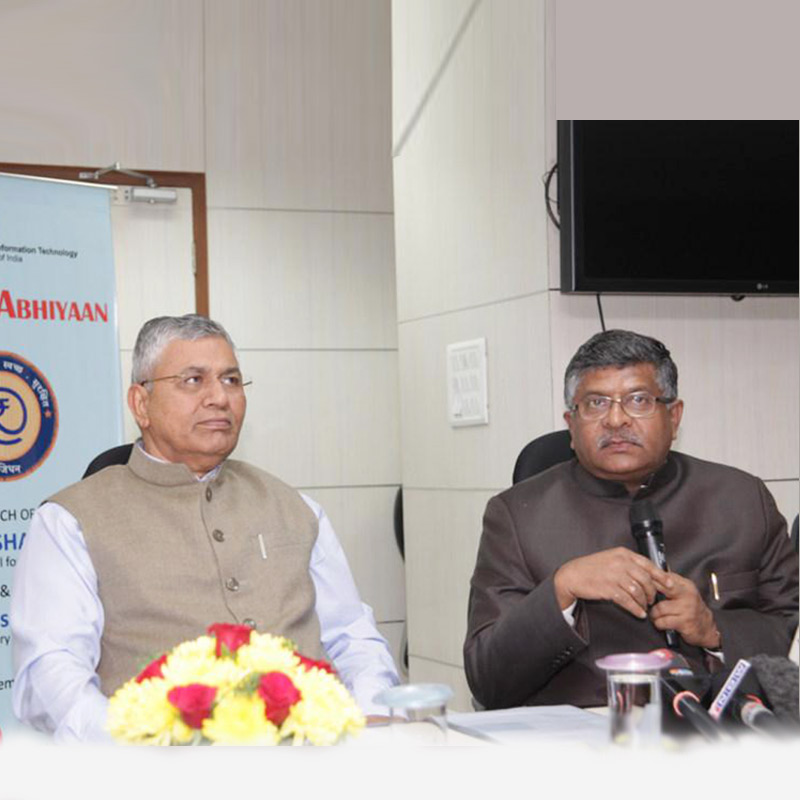
    The channel was placed on Dish TV as soon as it was dedicated to the people by the minister of electronics and IT Ravishankar Prasad and minister of state, electronics & IT P.P. Choudhary.

    Digishala is a free to air channel that aims to introduce the use of cashless, paperless and faceless transactions to rural and semi-urban people across villages and small towns.

    DishTV, the leader in direct-to-home space in India, had, in 2003, pioneered the introduction of digital modes of revenue collection and, to further harness that, had introduced prepaid cards for its trade partners. As online transactions, credit cards and a cashless society become buzz words today, Dish TV takes pride in having a subscriber base wherein more than 40% of its customers do online recharge transactions. As far as B2B transactions are concerned, DishTV have them all as cashless.

  • Dish TV offers ‘Digishala’ to 15 million subs

    Dish TV offers ‘Digishala’ to 15 million subs

    MUMBAI: Dish TV, India’s largest pay digital platform for distribution of television channels, is offering its 15 million subscribers digital education channel Digishala. With the placement of the channel on LCN number 2036, Dish TV became the country’s only pay-DTH provider to offer access to Digishala, government’s recently-launched 24×7 TV channel committed to educate the masses on digital payment modes.

    In this crucial hour of demonetisation, when businesses, consumers and the common man are battling tough times to stand up to the test of doing cashless transactions, government’s initiative to come up with a channel for the purpose is an innovative and commendable step. Dish TV welcomed the step by placing the channel on its platform.

    The channel was placed on Dish TV as soon as it was dedicated to the people by the minister of electronics and IT Ravishankar Prasad and minister of state, electronics & IT P.P. Choudhary.

    Digishala is a free to air channel that aims to introduce the use of cashless, paperless and faceless transactions to rural and semi-urban people across villages and small towns.

    DishTV, the leader in direct-to-home space in India, had, in 2003, pioneered the introduction of digital modes of revenue collection and, to further harness that, had introduced prepaid cards for its trade partners. As online transactions, credit cards and a cashless society become buzz words today, Dish TV takes pride in having a subscriber base wherein more than 40% of its customers do online recharge transactions. As far as B2B transactions are concerned, DishTV have them all as cashless.

  • No BIS specification yet for interoperable DTH boxes

    No BIS specification yet for interoperable DTH boxes

    NEW DELHI: The Bureau of Indian Standards (BIS) had so far failed to come out with specifications with regard to interoperability of STBs (set-top boxes) meant for DTH (direct-to-home) platforms.

    An information and broadcasting ministry source was answering a question by indiantelevision.com in response to a reply in the Parliament given by the minister of state Rajyavardhan Rathore.

    The minister had said the ministry had accepted recommendations of the Telecom Regulatory Authority of India (TRAI) that it should work with the BIS and the Department of Electronics and IT to ensure such set-top boxes.

    TRAI, in July 2014, on “Issues relating to New DTH Licenses” said: “The Open Architecture (Non-proprietary) Set Top Box (STB), which will ensure technical compatibility and effective interoperability among different DTH service providers, shall have such specifications as laid down by the Government from time to time” with “The Set Top Box offered by a DTH service provider shall have such specifications as laid down by the Bureau of Indian Standard (BIS) from time to time.”

    TRAI recommended that BIS should come out with updated specifications for STBs from time to time and while doing so, BIS will consult TRAI and that the license conditions should mandate the licensee to comply with the tariff order/scheme prescribed by TRAI for commercial interoperability.

    In the paper, the Authority had said that STB interoperability was not possible because of the different technologies adopted by the operators due to them entering the market at different times. TRAI thus asked the BIS to regularly keep updating the standard of STB technology.

    Then I&B Minister Prakash Javadekar had told the Parliament on 24 July 2014 that the interoperability of DTH customer premises equipment has not so far proved to be effective due to various techno-economic reasons. The interoperability had been envisaged in the DTH licence conditions, he said.

    The portability in DTH service can be achieved through technical interoperability or through commercial interoperability.

  • No BIS specification yet for interoperable DTH boxes

    No BIS specification yet for interoperable DTH boxes

    NEW DELHI: The Bureau of Indian Standards (BIS) had so far failed to come out with specifications with regard to interoperability of STBs (set-top boxes) meant for DTH (direct-to-home) platforms.

    An information and broadcasting ministry source was answering a question by indiantelevision.com in response to a reply in the Parliament given by the minister of state Rajyavardhan Rathore.

    The minister had said the ministry had accepted recommendations of the Telecom Regulatory Authority of India (TRAI) that it should work with the BIS and the Department of Electronics and IT to ensure such set-top boxes.

    TRAI, in July 2014, on “Issues relating to New DTH Licenses” said: “The Open Architecture (Non-proprietary) Set Top Box (STB), which will ensure technical compatibility and effective interoperability among different DTH service providers, shall have such specifications as laid down by the Government from time to time” with “The Set Top Box offered by a DTH service provider shall have such specifications as laid down by the Bureau of Indian Standard (BIS) from time to time.”

    TRAI recommended that BIS should come out with updated specifications for STBs from time to time and while doing so, BIS will consult TRAI and that the license conditions should mandate the licensee to comply with the tariff order/scheme prescribed by TRAI for commercial interoperability.

    In the paper, the Authority had said that STB interoperability was not possible because of the different technologies adopted by the operators due to them entering the market at different times. TRAI thus asked the BIS to regularly keep updating the standard of STB technology.

    Then I&B Minister Prakash Javadekar had told the Parliament on 24 July 2014 that the interoperability of DTH customer premises equipment has not so far proved to be effective due to various techno-economic reasons. The interoperability had been envisaged in the DTH licence conditions, he said.

    The portability in DTH service can be achieved through technical interoperability or through commercial interoperability.

  • Airtel DTH appoints Mondelez’s Sunil Taldar as CEO & MD

    Airtel DTH appoints Mondelez’s Sunil Taldar as CEO & MD

    MUMBAI: Bharti Airtel has finally got the replacement of Shashi Arora, who after a successful stint of around five years as CEO – DTH, has moved as MD & CEO of Airtel Payments Bank. The company has appointed Sunil Taldar as CEO and director – DTH.

    Taldar will be a member of the Airtel Management Board and report to Bharti Airtel (India & South Asia) MD and CEO Gopal Vittal. In his new role, Taldar will be responsible for driving growth and innovation for Airtel Digital TV, which is a key growth driver within the company’s B2C portfolio.

    Vittal said that Sunil’s rich experience across consumer facing categories would add value to its DTH portfolio. He said would also thank Shashi for his valuable contribution to Airtel Digital TV.

    Taldar has an experience of over 28 years in the FMCG industry with Mondelez (erstwhile Cadbury), where he held several senior leadership positions across multiple geographies, including India, China, and Singapore across sales, marketing, media and general management.

    In his last role, Sunil was the country head – Indonesia for Mondelez, where he played a critical role in turning around the business. Prior to this, he was India sales director for Cadbury where he transformed the company’s go to market capabilities and delivered solid growth.

    Airtel Digital TV had over 12.4 million customers at the end of the quarter ended September 2016 and the business recorded a revenue growth of 21 per cent and customer growth of 17 per cent for the same period.

  • Airtel DTH appoints Mondelez’s Sunil Taldar as CEO & MD

    Airtel DTH appoints Mondelez’s Sunil Taldar as CEO & MD

    MUMBAI: Bharti Airtel has finally got the replacement of Shashi Arora, who after a successful stint of around five years as CEO – DTH, has moved as MD & CEO of Airtel Payments Bank. The company has appointed Sunil Taldar as CEO and director – DTH.

    Taldar will be a member of the Airtel Management Board and report to Bharti Airtel (India & South Asia) MD and CEO Gopal Vittal. In his new role, Taldar will be responsible for driving growth and innovation for Airtel Digital TV, which is a key growth driver within the company’s B2C portfolio.

    Vittal said that Sunil’s rich experience across consumer facing categories would add value to its DTH portfolio. He said would also thank Shashi for his valuable contribution to Airtel Digital TV.

    Taldar has an experience of over 28 years in the FMCG industry with Mondelez (erstwhile Cadbury), where he held several senior leadership positions across multiple geographies, including India, China, and Singapore across sales, marketing, media and general management.

    In his last role, Sunil was the country head – Indonesia for Mondelez, where he played a critical role in turning around the business. Prior to this, he was India sales director for Cadbury where he transformed the company’s go to market capabilities and delivered solid growth.

    Airtel Digital TV had over 12.4 million customers at the end of the quarter ended September 2016 and the business recorded a revenue growth of 21 per cent and customer growth of 17 per cent for the same period.

  • DishTV expands its HD offering

    DishTV expands its HD offering

    MUMBAI: DishTV, has added three new regional HD channels to its HD offerings. With addition of these channels, DishTV encourages regional language subscribers to opt for HD TV viewing in their preferred language such as Marathi and Bangla.

    The newly added channels from DishTV include Zee Marathi HD, Zee Bangla HD and Colors Marathi HD.

    Announcing this new development, DishTV India chief executive officer Arun Kapoor said, “DishTV has always taken the lead in enhancing the value proposition and believes in providing the maximum and the best in entertainment to its subscribers. Our endeavor is to increase affinity with our audiences by providing them the choice of content they would like to watch. With a sharp focus on regional language content, the move aims at connecting strongly with the regional language subscribers. Addition of 3 new regional HD channels will not only strengthen our presence in the HD space but will also diversify our offerings.”

    Having already built a strong connection with the regional audience through their regional channels in HD such as Gemini HD and ETV HD in Telugu, and Sun TV HD, Sun Music HD and KTV HD in Tamil, Zee Talkies HD in Marathi, Colors Kannada HD in Kannada, Colors Bangla HD in Bangla, the addition of three more new channels exemplify DishTV’s commitment to cater to a wide range of viewers in all the regions.

    DishTV’s newly added channels will be available to the subscriber for a free preview till December 28, 2016.

  • DishTV expands its HD offering

    DishTV expands its HD offering

    MUMBAI: DishTV, has added three new regional HD channels to its HD offerings. With addition of these channels, DishTV encourages regional language subscribers to opt for HD TV viewing in their preferred language such as Marathi and Bangla.

    The newly added channels from DishTV include Zee Marathi HD, Zee Bangla HD and Colors Marathi HD.

    Announcing this new development, DishTV India chief executive officer Arun Kapoor said, “DishTV has always taken the lead in enhancing the value proposition and believes in providing the maximum and the best in entertainment to its subscribers. Our endeavor is to increase affinity with our audiences by providing them the choice of content they would like to watch. With a sharp focus on regional language content, the move aims at connecting strongly with the regional language subscribers. Addition of 3 new regional HD channels will not only strengthen our presence in the HD space but will also diversify our offerings.”

    Having already built a strong connection with the regional audience through their regional channels in HD such as Gemini HD and ETV HD in Telugu, and Sun TV HD, Sun Music HD and KTV HD in Tamil, Zee Talkies HD in Marathi, Colors Kannada HD in Kannada, Colors Bangla HD in Bangla, the addition of three more new channels exemplify DishTV’s commitment to cater to a wide range of viewers in all the regions.

    DishTV’s newly added channels will be available to the subscriber for a free preview till December 28, 2016.

  • Essel Group to acquire further 4.95 per cent in Dish TV Videocond2h from Dhoots

    Essel Group to acquire further 4.95 per cent in Dish TV Videocond2h from Dhoots

    MUMBAI: The Essel group today announced that it has agreed with the Dhoot family that it will acquire an additional 4.95 per cent equity of Dish TV Videocon d2h (DTV d2h) – the company being created out of the merger of Dish TV India Ltd (DTIL) and Videocon d2h Ltd (VD2h).

    The additional transaction will take place a day after the merged entity starts trading on the National stock exchanges at the first day’s closing price. The deal will take placed through Essel group company Veena Investments.

    The purchase will see the Essel group’s equity holding in Dish TV Videocon d2h (DTVd2h) go up to 40.95 per cent. The media group’s share of DTVd2h will further rise as it has agreed with the Dhoot family to acquire an additional 4.95 per cent equity shares from it a year after the merged entity starts trading on the NSE. Both will have a window of three months to complete the transaction then.

    The Dhoot family’s equity stake in DTVd2h will fall to 23.05 following the first sale and to 18.1 per cent following the second, while the Essel group’s holding will rise to 45.9 per cent at the end of the second transaction. This clearly indicates who will be in the drivers seat at DTVd2h – Jawahar Goel, the brother of media baron Subhash Chandra.

    The two family groups had earlier this month announced the merger of their two firms which would result in the creation of a pay TV provider with a subscriber base of 27.6 million, making it the second largest in the world just after the US pay TV giant DirecTV and ahead of John Malone’s Charter Communications.

    Pre-merger, the Essel group owns 64.44 per cent equity in DTIL, the Dhoot family owns 51.17 per cent in Vd2h. 35.95 per cent of the latter’s holding is in the hands of overseas depository holders on Nasdaq on which it is listed. The firm is to be delisted from the US exchange and the depositary receipt holders will have the option to directly get shares of DTVd2h or its GDRs as the latter is expected to be listed on the Luxemborg stock exchange apart from the Bombay stock exchange and the NSE.