Category: DTH

  • DTH adds 14 lakh active subscribers in Q2-17 as per TRAI data

    DTH adds 14 lakh active subscribers in Q2-17 as per TRAI data

    BENGALURU: The DTH industry in India has added about 14 lakh (1.4 million) active subscribers in the quarter ended 30 September 2016 (Q2-17, current quarter) as compared to the immediate trailing quarter (Q1-17). The number of active DTH subscribers in the country increased to 6.19 crore (61.9 million) as compared to 6.05 crore (60.5 million) in Q1-7. TRAI had reported 4.05 crore (40.5 million) active subscribers for the corresponding year ago quarter Q2-16. . It may be noted that TRAI (Telecom Regulatory Authority Regulator has been reportingthe net active subscriber base included temporarily suspended subscribers that have been inactive for not more than 120 dayssince Q3-16 (quarter ended 31 December 2015).

    The growth seems to have slowed in Q2-17 down despite the extended sunset date for DAS IV nearing. In the previous quarter, the industry had added 19.7 lakh (1.97 million), 25.5 lakh (2.55 million) in the quarter ended 31 March 2016 (Q4-16). Further, the industry has witnessed a faster growth of inactive subscribers as compared to active subscribers in Q2-17. Total number of registered subscribers grew 2.9 percent in the current quarter, while active subscribers grew by just 2.3 percent. In Q1-17 TRAI had reported 9.153 crore or 91.53 million registered subscribers, which grew to 9.416 crore or 94.16 million or a growth of 26.3 lakh (2.63 million) registered subscribers. As mentioned above active subscribers grew by just 14 lakh or 1.4 million in the same period.

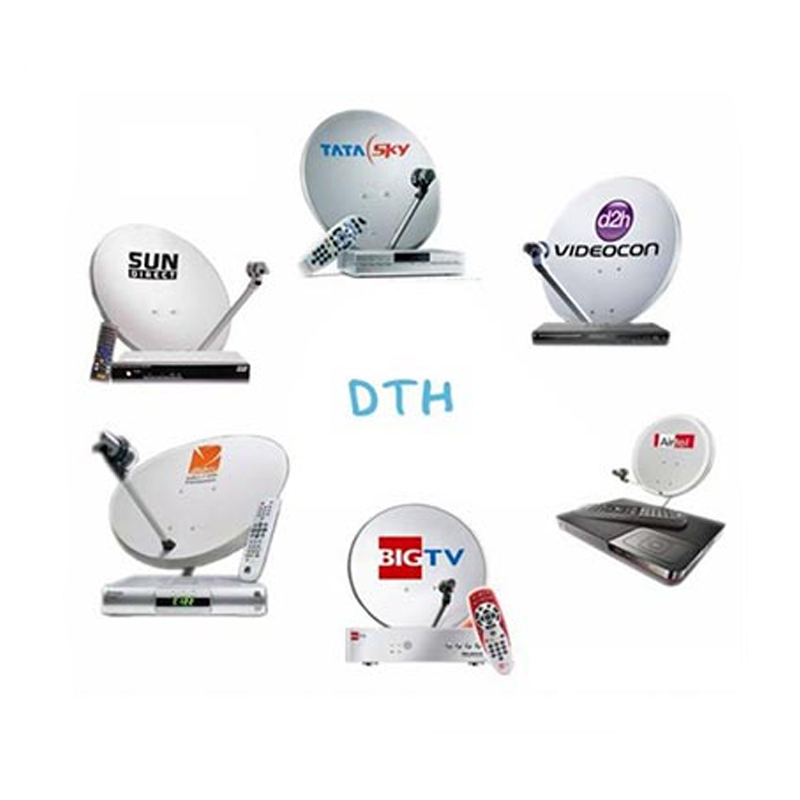
    Of the six private players in the Indian DTH ecosystem, three are publically listed and their numbers are available in the public domain – They are in alphabetical order: Airtel Digital TV Services or Airtel DTH which is a small segment/division of Indian telecom major Bharti Airtel Limited; Dish TV, the largest DTH player in the country in terms of number of subscribers; and Videocon d2h. These three have about two thirds of market share of the DTH universe in India. Of the other three players, Tata Sky is a major player and should have a market share about equal to Airtel DTH or Videocon d2h (about 20 percent). The other players – Reliance DTH and Sun Direct have a combined market share between 13 to 15 percent in terms of subscribers. It may be noted that at present probably the largest DTH player in India is the government’s FreeDish, but since it is a free service, no subscriber data is available even with PrasarBharati.

    Please refer to Fig A below for DTH subscriber growth.

    public://F1_0.jpg

    For Q2-17, the growth of the three major players was even slower than the industry – their combined subscriber base grew just 1.9 percent quarter-over-quarter (q-o-q) by just 7.45 lakh (0.625 million) to 400.25 lakh (40.025 million) from 392.8 lakh (39.28 million) in the immediate trailing quarter.

    Fig B below indicates the approximate market share in terms of subscribers of the six private DTH players in the country.

    public://F2_0.jpg

    Let us see how they performed during the current quarter (Q2-17)

    Airtel Digital TV Services or Airtel DTH

    Airtel DTH reported 21.9 percent year-over-year (y-o-y) increase in operating revenues to RsRs 854.5 crore in Q2-17 as compared to Rs 706.8 crore in Q2-16. The segment’s operating profit (EBIT) more than quadrupled y-o-y to Rs 69.8 crore from Rs 17 crore, but declined 42.7 percent q-o-q from Rs 121.9 crore.

    Airtel’s DTH segment added 18.29 lakh subscribers between Q2-16 and Q2-17, or a 17.3 percent y-o-y increase. The company says that this is the highest growth in percentage terms over seventeen quarters. It had 124.05 lakh subscribers as on 30 September 2016. Q-o-q, the segment witnessed a 2.1 percent growth (2.56 lakh adds) in subscribers from 121.49 lakh in Q1-17.

    ARPU in Q2-17 increased to Rs 232 from Rs 224 in the corresponding year ago quarter, but declined marginally (by Re 1) from Rs 233 in the immediate trailing quarter.

    Dish TV

    Three segments contribute to Dish TV’s numbers – DTH; Infra Support Services; and ‘Others’.

    Dish TV’s DTH segment revenue in Q2-17 declined 14.2 percent to Rs 509.55 crore from Rs 594.16 crore in Q2-16. The segment reported 15.5 percent lower operating profit in the current quarter at Rs 86.43 crore as compared to Rs 102.24 crore in the corresponding year ago quarter.

    The company reported addition of 2.59 lakh net subscribers for Q2-17. It closed the quarter with 151 lakh subscribers. Average revenue per user (ARPU) for Q2-17 was Rs 162 in the current quarter versus Rs 161 in the corresponding year ago quarter. It may be noted that as of this fiscal, Dish TV has been reporting ARPU number net of service tax and hence comparison with the other players is inappropriate.

    Dish TV reported 11.9 percent higher y-o-y subscription revenue of Rs 728.8 crore for Q2-17, as compared to Rs 651.4 crore. Operating revenue in the current quarter increased 9.6 percent y-o-y to Rs 779.6 crore from Rs 711.2 crore in the corresponding quarter of the previous year.

    Dish TV reported PAT of Rs. 70.1 crore in Q2-17, down 19.4 percent as compared to Rs 87 crore in Q2-16. EBIDTA in the current quarter increased 3.6 percent to Rs 264.2 crore from Rs 255 crore in Q2-16.

    Videocon d2h

    Videocon d2h reported 12.5 percent y-o-y growth in total revenue from operations for Q2-17 at Rs 776.16 crore as compared to Rs 690.08 crore and a 1.7 percent q-o-q growth from Rs 763.25 crore.

    Videocon d2h reported PAT of Rs 6.32 crore (0.8 percent margin) Q2-17, current. For the corresponding year ago quarter (Q2-17), the company had reported a loss of Rs 24.59 crore while for the immediate trailing quarter (Q1-17) the company had reported profit of Rs 2.66 crore (0.3 percent margin).

    The DTH major also reported 15.5 percent year-over-year (y-o-y) growth in net subscriber numbers at 125.2 lakh for Q2-17 as compared to 108.4 lakh and a 1.9 percent quarter-over-quarter (q-o-q) growth from122.9 lakh. Monthly Average revenue per user (ARPU) in the current quarter increased to Rs 209 from Rs 201 in Q2-16 but declined by Rs 2 from Rs 211 in the immediate trailing quarter.
  • Airtel Digital TV introduces Bengali SVOD service

    Airtel Digital TV introduces Bengali SVOD service

    MUMBAI: Leading Indian DTH player Airtel Digital TV is increasingly going to subscription video on demand (SVOD) way. Adding to its range of offering, the company announced the launch of Bangla Hitz a Bengali SVOD service. The DTH operator already offers language services in Gujarati, Tamil and Punjabi.

    This ad free service is available at f Rs 39 per month and can be accessed on channel number 702 on Airtel Digital TV. The new service will offer a whole new range of exclusive entertainment options in Bengali for Airtel DTH customers. This includes, a showcase of seven unique Bengali movies in a day, totaling up to 15-20 unique titles per week. A company press release says that the frequency will gradually be increased to four new premieres every month.

    Additionally, customers also get access to some of the finest musical performances from the region via the huge music catalog that comes with the service.

    “We are delighted to announce the launch of our subscription video on demand services in Bengali.,” said Airtel Digital chief marketing officer S. Siram,. “This service will give our users access to exclusive local entertainment content, right from the comfort of their homes. We will continue to focus on delivering compelling content for our customers and change the way customers view entertainment in India.”

    Airtel Digital TV customers will have to give a missed call to 9109121232 or SMS ADD 702 to 54325 to activate the service.
    Airtel Digital’s DTH business grew 20 per cent plus in Q2 2017 to register top line revenues of Rs 854.5 crore

  • Airtel Digital TV introduces Bengali SVOD service

    Airtel Digital TV introduces Bengali SVOD service

    MUMBAI: Leading Indian DTH player Airtel Digital TV is increasingly going to subscription video on demand (SVOD) way. Adding to its range of offering, the company announced the launch of Bangla Hitz a Bengali SVOD service. The DTH operator already offers language services in Gujarati, Tamil and Punjabi.

    This ad free service is available at f Rs 39 per month and can be accessed on channel number 702 on Airtel Digital TV. The new service will offer a whole new range of exclusive entertainment options in Bengali for Airtel DTH customers. This includes, a showcase of seven unique Bengali movies in a day, totaling up to 15-20 unique titles per week. A company press release says that the frequency will gradually be increased to four new premieres every month.

    Additionally, customers also get access to some of the finest musical performances from the region via the huge music catalog that comes with the service.

    “We are delighted to announce the launch of our subscription video on demand services in Bengali.,” said Airtel Digital chief marketing officer S. Siram,. “This service will give our users access to exclusive local entertainment content, right from the comfort of their homes. We will continue to focus on delivering compelling content for our customers and change the way customers view entertainment in India.”

    Airtel Digital TV customers will have to give a missed call to 9109121232 or SMS ADD 702 to 54325 to activate the service.
    Airtel Digital’s DTH business grew 20 per cent plus in Q2 2017 to register top line revenues of Rs 854.5 crore

  • Indian OTT/VOD  will not impact cable TV and DTH: Edelweiss Capital

    Indian OTT/VOD will not impact cable TV and DTH: Edelweiss Capital

    MUMBAI: Financial services firm Edelweiss Capital’s research division’s latest report on the impact of OTT on television in India is surely going to delight the cockles of executives in broadcasting companies and probably raise the hackles of those in the video on demand space. The report says that, even as consumers are bound to increase their spends and time spent on video – either on handheld devices or on their smart TVs or their laptops, this will have a negligible impact on traditional linear TV’s fortunes.

    Cord cutting or cord shaving which has been rampant in the US as cable TV and DTH viewers shift from their expensive services to cheaper VOD options or to cheaper TV packages is not something that is going to pop up in a hurry in India, says the Edelweiss report. The Indian cable TV and DTH segments are marked by low monthly rentals of Rs 300-450 as compared to the US where DTH and cable TV fees have soared.

    “The Indian OTT market is at a nascent stage and is quite like the US was seven years ago,” it points out.

    However, it is optimistic about the growth of the OTT sector. Currently, the challenge is broadband speed, the report points out, with the average home clocking 3.5 mbps, which is not enough to offer lag-free HD video streaming. It reveals that this will change with cheaper data and broadband options fueling VOD and OTT taking consumption of video content up from 3.5 hours to five hours daily.

    Consumers are going to open their wallets and spend Rs 600-700 per month from the current Rs 300-450 per month to view video content across various platforms in the next five years, the report says. “In the case of India, it is largely a single-TV home market where not everyone in the family gets to watch what they want during prime time which will aid the OTT space,” the report adds.

    But, VOD and OTT is only going to complement traditional television and not erode it is the report’s guidance.

    The brokerage house is quite clear that TV advertising is also going to hold its ground because its viewership is going to continue to be steady. And, there is going to be no loss in revenues on account of VOD/OTT and the heady growths in digital video consumption and digital advertising.

  • Indian OTT/VOD  will not impact cable TV and DTH: Edelweiss Capital

    Indian OTT/VOD will not impact cable TV and DTH: Edelweiss Capital

    MUMBAI: Financial services firm Edelweiss Capital’s research division’s latest report on the impact of OTT on television in India is surely going to delight the cockles of executives in broadcasting companies and probably raise the hackles of those in the video on demand space. The report says that, even as consumers are bound to increase their spends and time spent on video – either on handheld devices or on their smart TVs or their laptops, this will have a negligible impact on traditional linear TV’s fortunes.

    Cord cutting or cord shaving which has been rampant in the US as cable TV and DTH viewers shift from their expensive services to cheaper VOD options or to cheaper TV packages is not something that is going to pop up in a hurry in India, says the Edelweiss report. The Indian cable TV and DTH segments are marked by low monthly rentals of Rs 300-450 as compared to the US where DTH and cable TV fees have soared.

    “The Indian OTT market is at a nascent stage and is quite like the US was seven years ago,” it points out.

    However, it is optimistic about the growth of the OTT sector. Currently, the challenge is broadband speed, the report points out, with the average home clocking 3.5 mbps, which is not enough to offer lag-free HD video streaming. It reveals that this will change with cheaper data and broadband options fueling VOD and OTT taking consumption of video content up from 3.5 hours to five hours daily.

    Consumers are going to open their wallets and spend Rs 600-700 per month from the current Rs 300-450 per month to view video content across various platforms in the next five years, the report says. “In the case of India, it is largely a single-TV home market where not everyone in the family gets to watch what they want during prime time which will aid the OTT space,” the report adds.

    But, VOD and OTT is only going to complement traditional television and not erode it is the report’s guidance.

    The brokerage house is quite clear that TV advertising is also going to hold its ground because its viewership is going to continue to be steady. And, there is going to be no loss in revenues on account of VOD/OTT and the heady growths in digital video consumption and digital advertising.

  • Tata Sky Guru launched; to feature Sri Sri Ravi Shankar, Sadhguru

    Tata Sky Guru launched; to feature Sri Sri Ravi Shankar, Sadhguru

    MUMBAI: Tata Sky has launched a 24X7 ad-free video service providing teachings of spiritual gurus on its interactive platform. Called Tata Sky Gurus, the subscribers can now have access to the wisdom of Sri Sri Ravi Shankar (Art of Living Foundation), Sadhguru Jaggi Vasudev (Isha Foundation) and Brahma Kumaris (Brahma Kumari World Spiritual University) from the comfort of their homes.

    The exhaustive content for this service is curated by Shemaroo and will be available exclusively on the Tata Sky platform. It will include discourses, satsangs, meditations, interviews, explanation of scriptures in a relatable format, special events and exclusive live feeds of meditation sessions and the ashrams of each guru.

    “Curated and targeted content is what today’s consumer asks for. Amidst the cluttered content space, we observed that there was need for a dedicated service for spiritual seekers – people who are looking for spiritual guidance or already follow India’s most popular spiritual Gurus. Tata Sky Gurus is a service where they can have unlimited access to their Guru’s teachings and thoughts, whenever they want. We partnered with Shemaroo to create this service with exclusive and unlimited content including LIVE feeds from the guru’s ashrams,” Tata Sky chief commercial officer Pallavi Puri.

    The spiritual gurus will deliver talks and discourses across topics connecting varied human emotions, challenges and complexities of life. These topics delve deep into the understanding of what life is about and are rooted as strongly in mundane and practical matters as they are in inner experience & wisdom. The service aims to cater to subscribers embarking on a journey of spiritual awakening.

    Tata Sky Gurus will be the pioneer in providing Live feeds from Sadhguru’s ashram in Coimbatore & Brahma Kumaris ashram in Mount Abu and exclusive guided meditations in Gurudev Sri Sri Ravi Shankar’s voice.

    Shemaroo Entertainment director Hiren Gada added, “With the increasing stress and pressure in individuals’ lives, the importance and urgency for spirituality has grown. We believe this is the right time for a service like Tata Sky Gurus to be launched. Indian consumers have a huge appetite for a subject like this and with high quality content now being easily accessible, we hope the audiences will have a rich experience. Shemaroo Entertainment has been an active player in the devotional space and through this service we are adding a new dimension to our offerings.”

    Content Highlights:

    Gurudev Sri Sri Ravi Shankar:

    o Exclusive access to guided Meditations in Gurudev Sri Sri Ravi Shankar’s own voice

    o Scriptures like Geeta and Upanishads explained by Sri Sri complimented by Satsangs and talks on various topics.

    From Sadhguru’s Isha Yoga center:

    o Live & exclusive feed of Nadha Aaradhana – a daily (twice a day) meditation from Isha Ashram, Coimbatore.

    o Sadhguru’s Presence – A 20-minute meditation where Isha chant of Brahmanand Swaroopa is performed.

    o In Conversation with the Mystic – Celebrities talk to Sadhguru across varied topics.

    Content on Brahma Kumari:

    o Amrut Vela meditation (LIVE & exclusive) – A daily morning meditation broadcast from the Brahma Kumaris headquarters at Mount Abu

    o Exclusive, rare and archival footage of senior Dadis including Dadi Janaki & Dadi Gulzar where they talk on various topics

  • Tata Sky Guru launched; to feature Sri Sri Ravi Shankar, Sadhguru

    Tata Sky Guru launched; to feature Sri Sri Ravi Shankar, Sadhguru

    MUMBAI: Tata Sky has launched a 24X7 ad-free video service providing teachings of spiritual gurus on its interactive platform. Called Tata Sky Gurus, the subscribers can now have access to the wisdom of Sri Sri Ravi Shankar (Art of Living Foundation), Sadhguru Jaggi Vasudev (Isha Foundation) and Brahma Kumaris (Brahma Kumari World Spiritual University) from the comfort of their homes.

    The exhaustive content for this service is curated by Shemaroo and will be available exclusively on the Tata Sky platform. It will include discourses, satsangs, meditations, interviews, explanation of scriptures in a relatable format, special events and exclusive live feeds of meditation sessions and the ashrams of each guru.

    “Curated and targeted content is what today’s consumer asks for. Amidst the cluttered content space, we observed that there was need for a dedicated service for spiritual seekers – people who are looking for spiritual guidance or already follow India’s most popular spiritual Gurus. Tata Sky Gurus is a service where they can have unlimited access to their Guru’s teachings and thoughts, whenever they want. We partnered with Shemaroo to create this service with exclusive and unlimited content including LIVE feeds from the guru’s ashrams,” Tata Sky chief commercial officer Pallavi Puri.

    The spiritual gurus will deliver talks and discourses across topics connecting varied human emotions, challenges and complexities of life. These topics delve deep into the understanding of what life is about and are rooted as strongly in mundane and practical matters as they are in inner experience & wisdom. The service aims to cater to subscribers embarking on a journey of spiritual awakening.

    Tata Sky Gurus will be the pioneer in providing Live feeds from Sadhguru’s ashram in Coimbatore & Brahma Kumaris ashram in Mount Abu and exclusive guided meditations in Gurudev Sri Sri Ravi Shankar’s voice.

    Shemaroo Entertainment director Hiren Gada added, “With the increasing stress and pressure in individuals’ lives, the importance and urgency for spirituality has grown. We believe this is the right time for a service like Tata Sky Gurus to be launched. Indian consumers have a huge appetite for a subject like this and with high quality content now being easily accessible, we hope the audiences will have a rich experience. Shemaroo Entertainment has been an active player in the devotional space and through this service we are adding a new dimension to our offerings.”

    Content Highlights:

    Gurudev Sri Sri Ravi Shankar:

    o Exclusive access to guided Meditations in Gurudev Sri Sri Ravi Shankar’s own voice

    o Scriptures like Geeta and Upanishads explained by Sri Sri complimented by Satsangs and talks on various topics.

    From Sadhguru’s Isha Yoga center:

    o Live & exclusive feed of Nadha Aaradhana – a daily (twice a day) meditation from Isha Ashram, Coimbatore.

    o Sadhguru’s Presence – A 20-minute meditation where Isha chant of Brahmanand Swaroopa is performed.

    o In Conversation with the Mystic – Celebrities talk to Sadhguru across varied topics.

    Content on Brahma Kumari:

    o Amrut Vela meditation (LIVE & exclusive) – A daily morning meditation broadcast from the Brahma Kumaris headquarters at Mount Abu

    o Exclusive, rare and archival footage of senior Dadis including Dadi Janaki & Dadi Gulzar where they talk on various topics

  • Only Dish TV carrying HRD ministry’s educational TV channels

    Only Dish TV carrying HRD ministry’s educational TV channels

    NEW DELHI: Only Dish TV is carrying 32 educational television channels of the human resource development ministry in spite of appeals by ministry to all the private DTH operators.

    An information and broadcasting ministry source told indiantelevision.com that the department of higher education of the HRD Ministry had approved the launch of ‘Swayam Prabha’ — a project for operationalising 32 Direct to Home (DTH) television channels for providing high quality educational content to all teachers, students and citizens across the country interested in lifelong learning.

    However, Doordarshan’s FreeDish had not taken any channels as yet as it had space for only eighty channels and would consider adding new channels when it switches from MPEG 2 to MPEG4.

    There will be new content of four hours every day in these channels, which would be telecast 6 times a day allowing the student to choose the time of his/her convenience.

    The soft launch of the channels has already been done and all private DTH operators had been requested to carry the channels.

    The HRD Ministry had also requested cable operators to carry these educational channels but with no success so far, the source said.

    (This report had earlier erroneously stated that only three educational channels of the HRD ministry are being carried by Dish TV. It was an inadvertent error and it is regretted – Editor)

  • Only Dish TV carrying HRD ministry’s educational TV channels

    Only Dish TV carrying HRD ministry’s educational TV channels

    NEW DELHI: Only Dish TV is carrying 32 educational television channels of the human resource development ministry in spite of appeals by ministry to all the private DTH operators.

    An information and broadcasting ministry source told indiantelevision.com that the department of higher education of the HRD Ministry had approved the launch of ‘Swayam Prabha’ — a project for operationalising 32 Direct to Home (DTH) television channels for providing high quality educational content to all teachers, students and citizens across the country interested in lifelong learning.

    However, Doordarshan’s FreeDish had not taken any channels as yet as it had space for only eighty channels and would consider adding new channels when it switches from MPEG 2 to MPEG4.

    There will be new content of four hours every day in these channels, which would be telecast 6 times a day allowing the student to choose the time of his/her convenience.

    The soft launch of the channels has already been done and all private DTH operators had been requested to carry the channels.

    The HRD Ministry had also requested cable operators to carry these educational channels but with no success so far, the source said.

    (This report had earlier erroneously stated that only three educational channels of the HRD ministry are being carried by Dish TV. It was an inadvertent error and it is regretted – Editor)

  • DTH subscriber growth retards in Q1-16 as per TRAI data

    DTH subscriber growth retards in Q1-16 as per TRAI data

    BENGALURU: We at www.indiantelevision.com had noted and said thatContrary to expectations that the sunset date of 31 December 31, 2015 (Q3-16 in financial terms in India) would rake in good numbers for the DTH industry for Q4-16 the subscriber base growth just did not happen.At that time, results declared by three of India’s seven DTH players whose results are available un public domain did notshow much of a change.Further, at that time, though Airtel Digital TV and Videocon d2h had both shown a small spike in subscriber additions between Q2-2016 and Q3-2016, overall taking the combined addition in subscription numbers by all the three, the change was just 3.59per cent. In the case of the third player-Dish TV, it witnessed the lowest growth over a five quarter period starting Q3-2015 until Q3-16 at 2.19 per cent.

    Results for Q4-16 (quarter ended 31 March 2016) showed a reversal of sorts in that trend. Dish TV announced that it had added 5 lakh subscribers – the highest additions in fiscal 2016. Airtel DTH and Videocon d2h added 6.19 lakh and 5.9 lakh subscribers respectively and each reported approximately 11 percent quarter-over-quarter (q-o-q) growth in operating profits in that quarter.It may be noted that TRAI (Telecom Regulatory Authority Regulatorreports for Q3-16 (quarter ended 31 December 2015) of the net active subscriber base included temporarily suspended subscribers that have been inactive for not more than 120 days – hence reflecting a huge 36 percent growth in active subscribers for that quarter.

    Besides Airtel DTH, Dish TV and Videocon d2h, there are three other private DTH players in India – Reliance, Sun Direct and Tata Sky, and the government’s FreeDish. Airtel DTH, Dish TV and Videocon d2h (the three players in this report) represent about 65 percent of the private DTH active subscriber universe in India. Please refer to Fig A below:

    public://image1.jpg

    FreeDish DTH service – the largest DTH player by far in terms of subscribers with an estimated 15 million or 1.5 crore subscribers in 2015 as per the KPMG-FICCI Indian Media and Entertainment Industry Report 2016 (KPMG-FICCI M&E Report 2016) titled The Future: Now streaming. It must however be noted that an exact number for registered or active subscribers is not available since this is a free DTH service. The proposed merger of Videocon d2h with Dish TV will create the largest private television carriage player in India and the second largest in the world, be it cable, internet television or DTH or any other.

    As per numbers released by TRAI for Q4-16 and the quarter ended 30 June 2016 (Q1-17), the growth of registered and active DTH subscribers has reduced from 4.5 percent and 4.6 percent in Q4-16 to 3.3 percent and 3.4 percent respectively in Q1-17. Overall, DTH active subscribers grew by 19.7 lakh or 8.06 percent q-o-q in Q1-17 to 605 lakh active subscribers (66 percent of registered subscribers) from 585.3 lakh (also 66 percent of registered subscribers) in Q4-16. The three players in this report contributed a combined 12.95 lakh or 65.74 percent in subscriber growth. Registered subscriber numbers were 915.3 lakh and 886.4 lakh in Q1-17 and Q4-16 respectively. In Q3-16, registered subscribers were 848 lakh.

    In Q1-17, 4.65 lakh (3.97 percent growth), 4 lakh (2.76 percent growth) and 4.3 lakh (3.6 percent growth) were added q-o-q by Airtel DTH, Dish TV and Videocon d2h respectively.

    Among the three, Airtel DTH added more net subscribers in absolute numbers in FY-16 than in FY-15, Dish TV added approximately the same number of net subscribers in both FY-15 and FY-16, while Videocon d2h saw slightly lower absolute net subscribers increment in FY-16 as compared to FY-15. Airtel DTH added 55.6 percent more subscribers in FY-16 – 16.52 lakh to reach net subscriber base of 117.52 lakh as compared to 10.62 lakh in FY-15; Dish TV added 15 lakh subscribers in FY-16 as well as in the previous year; Dish TV’s subscriber base was 145 lakh in FY-16; Videocon d2h added 16.8 lakh subscribers in FY-16 to reach a subscriber base of 118.6 lakh as compared to 17.4 lakh subscriber additions in FY-15. The above numbers are based on the financial results/investor presentations reported by the three DTH entities.

    Please refer to Fig B below.

    public://image2.jpg

    ARPU has been steadily increasing in the case of Airtel DTH and Videocon d2h, while it has was constant in the case of Dish TV at Rs 174 in Q4-16 as well as Q1-17. In Q2-17, however, Dish TV’s ARPU has dipped q-o-q by a huge Rs 12 to Rs 162.

    For the first time in Q1-17, despite having the largest subscriber base amongst the top three, Dish TV’s revenues have been the lowest. In Q2-17, Airtel DTH reported the highest revenue amongst the three followed by Dish TV, with Videocon d2h’s revenue lower by just a few crore rupees. This could be mainly because Dish TV is more of a value player, whilst the other two are premium players.  It may be noted Videocon d2h’s ARPU in Q2-17 has also dipped q-o-q by Rs 10 to Rs 209. Please refer to Fig C below for revenue and ARPU trends (Revenue numbers have been rounded off to the nearest Rs crore, ARPU numbers are in Indian Rupees, Rs)

    public://IMAGE3.jpg

    Let us see how the three have performed in Q1-17

    Airtel DTH

    Revenue from Airtel’s DTH segment in Q1-17 increased 22.2 per cent to Rs 836.9 crore as compared to Rs 684.8 crore in the corresponding quarter of the previous year. Airtel’s DTH segment reported EBIT (Earnings before interest and tax) of Rs 121.9 crore (14.6 per cent operating margin) in Q1-17 as compared to EBIT of Rs 41.5 crore (6.1 percent operating margin) in Q1-16.

    Airtel DTH added 4.24 lakh net subscribers in Q1-17 to bring its subscriber base to 121.9 lakh from 117.25 lakh in the previous quarter. Average revenue per user (ARPU) increased to Rs 233 from Rs 229 in the immediate trailing quarter. Airtel DTH reported a monthly subscriber churn of 0.8 percent in Q1-17, same as the churn in Q1-16 and Q4-16.
    Dish TV

    Dish TV reported 6.7 percent higher y-o-y subscription revenue of Rs 728.2 crore for Q1-17, as compared to Rs 682.8 crore. Operating revenue in Q1-17 increased 5.7 percent y-o-y to Rs 778.6 crore from Rs 736.7 crore in the corresponding quarter of the previous year.

    Dish TV says that:
    (1.1) For Q1-17, subscription revenue, on a like-to-like basis, was Rs 766.9 crore, a growth of 12.3 percent y-o-y.
    (1.2) For Q1-17 operating revenue, on a like-to-like basis, was Rs 817.2 crore, a growth of 10.9 percent y-o-y.

    Dish TV reported PAT of Rs. 40.9 crore in Q1-17, down 24.5 percent as compared to Rs 54.2 crore in Q1-16.

    EBIDTA in the Q1-17 increased 12.2 percent to Rs 264.6 crore from Rs 235.7 crore in Q1-16.

    The company reported addition of 4.02 lakh net subscribers for Q1-17. It closed the quarter with 149 lakh subscribers. Average revenue per user (ARPU) for Q1-17 remained the same year-over-year (y-o-y) and quarter-over-quarter (q-o-q) at Rs 174.

    Videocon d2h

    Videocon d2h is the second listed Indian DTH player to report a profit after tax (PAT), after the Essel group’s Dish TV that turned the numbers black last year. Videocon d2h reported PAT of Rs 2.7 crore for Q1-17. For the corresponding year ago quarter (Q1-17), the company had reported a loss of Rs 24.4 crore and for the immediate trailing quarter (Q4-16) reported loss was Rs 21.2 crore.

    Videocon d2h subscription and activation revenue in Q1-17 increased 23.9 percent y-o-y to Rs 752.3 crore from Rs 607.3 crore and increased 6.6 percent q-o-q from Rs 705.6 crore.

    The DTH major also reported 15.5 percent year-over-year (y-o-y) growth in net subscriber number growth at 122.9 lakh for Q1-17 as compared to 106.4 lakh and a 3.6 percent quarter-over-quarter (q-o-q) growth from118.6 lakh. Average revenue per user (ARPU) in Q1-17 increased to Rs 219 from Rs 205 in Q1-16 and from Rs 214 in the immediate trailing quarter.

    Subscriber monthly churn in the current quarter was 0.49 percent; in Q1-16 it was slightly lower at 0.46 percent, while in the immediate trailing quarter it was much higher at 0.58 percent.

    Comments

    There is not much of a change in the comments and conclusions drawn by us for FY-16 numbers. Overall, the pay DTH industry is turning profitable as is obvious from the results.

    DAS III and IV were/are sunshine periods for the television carriage industry. Activation revenues have been adding to the top lines and bottom lines of most of the players. Have they been able to optimise the opportunity that DAS has offered? Not fully! At present the focus of a majority of the players is more investor oriented, not viewer oriented. This has to change. DTH has the potential to grow even more than the predictions of the industry pundits, provided they get their act together in coming out with packaging – as has Dish TV to a limited extent. India is a price sensitive market, offer the viewers what they want at a reasonable price and the sheer volumes will bring in more and more moolah.And what happens to profits once the activation fee component goes down?