Category: DTH

  • DishTV extends its connection up to Flipkart

    DishTV extends its connection up to Flipkart

    MUMBAI: DishTV has joined hands with the e-commerce giant Flipkart to bring to its customers a hassle-free connection. With this association, DishTV becomes the first DTH service provider to be listed on Flipkart.

    As part of this collaboration, for a limited period, users of Flipkart, which was voted as one of the most popular e-commerce brands in India by RedSeer report, will get an opportunity to grab offers from DishTV on their new connections.

    Dish TV India senior vice president-marketing Sukhpreet Singh expressed, “Through this move, the company aims to integrate and connect the tech-savvy consumers to entertainment services on a platform which is dynamic.”

    Flipkart senior director – electronics Hari Kumar said, “Of the total cable and satellite base of 169 million, 47 million are non-digitised households. So, there is a huge opportunity with the existing customers itself. With the TV installations expected to double over the next five years, we see a significant upside in making DTH services available at the customers’ doorstep.”

  • Tata Sky deploys DataMiner to improve customer experience

    Tata Sky deploys DataMiner to improve customer experience

    MUMBAI: Tata Sky has an impeccable reputation as being best in class in the area of customer services, tech and offerings. It has constantly been investing in tech and customer service to stay ahead of the curve as compared to rivals – Freedish, DishTV-Videocond2h, SunDirect, Airtel Digital and Reliance Big TV.

    Now the company, led by Harit Nagpal, has taken another step in that direction by deploying the DataMiner NMS/OSS (network management system & operations support system) to manage its direct-to-home (DTH) operations for both its pay TV and OTT services.

    DataMiner is a global leader in end-to-end multi-vendor network management and OSS software solutions for the broadcast, satellite, cable, telco and mobile industry. Its NMS/OSS is deployed with a majority of DTH, satellite and service providers worldwide. Its customers include: Gazprom, MTS, France Television, Megacable, Mulitchoice, KPN, Immarsat, Singtel, ABC and many more.  The company is a part of the Skyline Communications group.

    The core of the DataMiner system is a cutting-edge multivendor protocol engine, enabling integration of any device or system from any vendor, regardless of its interface or protocol. In fact, it is already integrated with over 5000 devices and systems from more than 600 key industry suppliers, which represents by far the largest third-party integration deployment available in the industry.

    The objective of Tata Sky, one of the first companies in India to launch multiple products and services, is to connect to the best content in the world on any budget, any screen, anytime and anywhere. And the Dataminer solution offered that.

    Says Tata Sky chief technology officer Yigit Riza: “Tata Sky has invested in the best-of-breed technology infrastructure to ensure maximum uptime, reliability and scalability. Software applications such as CRM, billing and ERP are deployed in a clustered environment, which not only ensures high availability, but also enriches the experience of our subscribers.”

    “The DataMiner Platform at Tata Sky offers one-screen access of the entire operation, including content acquisition and compression platforms across different vendors and technologies. The unified view enables users to easily access and configure services. DataMiner is also scalable, so we can add other equipment and systems in the near future, related to the RF platform and OTT platform,”  adds Skyline Communications regional account manager- south Asia & middle east Pramod Gupta.

    Gupta points out that DataMiner will help the DTH operator’s engineering room restore services as quickly as possible, either through automatic service redundancy switching or through operator-initiated switchover.

    “Moreover, any embedded switchover functions in the network infrastructure can be integrated in DataMiner. DataMiner automation is versatile and adapts optimally to the operational environment. The tailored failover automation engines decrease the mean-time-to-repair to the absolute minimum for every failure scenario,” Gupta says.

    For a customer like Tata Sky, this means it only need to invest in one NMS platform, instead of multiple proprietary and closed systems. End-to-end service orchestration and monitoring is at the heart of the platform.

    With the number of channels as well as its in house VAS services  increasing regularly,  the company believes  DataMiner will help it maintain or improve the QoS service it is reputed to deliver.

    ALSO READ :

    TRAI QoS implementation stayed by Delhi HC awaiting Madras HC verdict

    Tata Sky introduces Blogbuster

    DTH subscriber addition disappointing in calendar 2016

  • Govt DTH channels may beam into Tier-II theatres & other areas

    Govt DTH channels may beam into Tier-II theatres & other areas

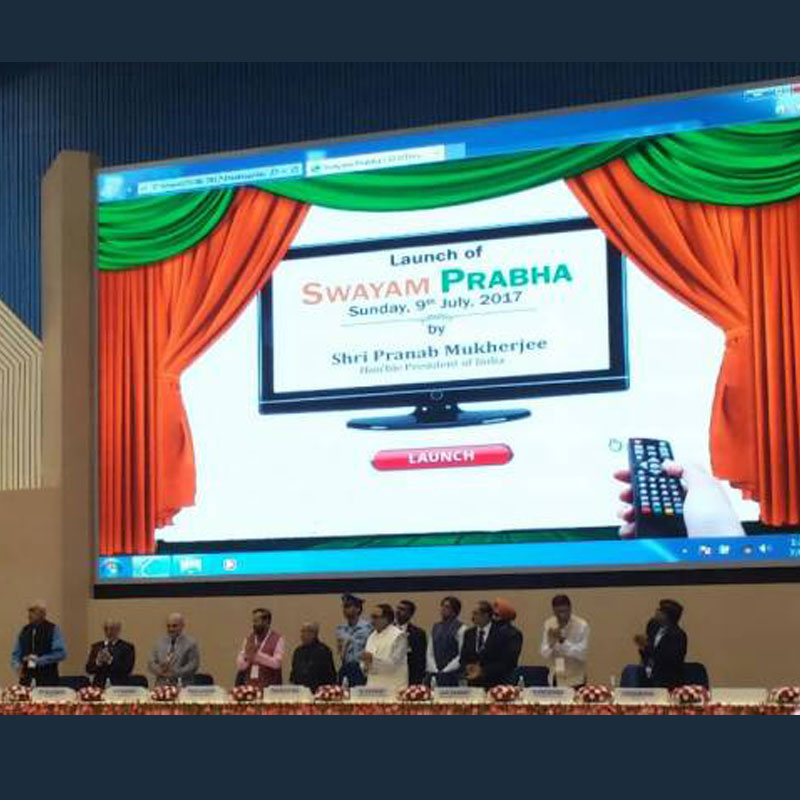
    MUMBAI: The human resources development ministry, through Swayam Prabha DTH, may plan to screen educational content in cinema halls if approved. The government is scrutinising a proposal for showing the content in theatres in small towns across India, ministry officials said.

    The HRD ministry had launched 32 channels on Swayam Prabha in August 2016 for providing higher education, including three for students to prepare for IIT entrance examination.

    The ministry is exploring ideas to relay courses through the DTH channel to cinema halls in urban areas having a population of less than a lakh and in Tier-II towns. Educational content could be shown between 7 am and 11 am or at a convenient time keeping in mind school timings of a particular area, an official told Hindustan Times.

    There are several single-screen halls that remain unutilised. Mass viewing of this content on big screens by high school and higher secondary school students could have a positive impact. However, matters related to the project cost et cetera are still to be worked out.

    The screening, idea of which was first mooted by NASSCOM, may also be done on Sundays and other school holidays, sources said.

    ALSO READ :

    32 free DTH educational channels on Dish TV & FreeDish start functioning

    Only Dish TV carrying HRD ministry’s educational TV channels

    Educational DTH channels to remain free-to-air, says minister


  • DTH subscriber growth on upswing in first quarter?

    DTH subscriber growth on upswing in first quarter?

    BENGALURU: Is the DTH subscriber growth in the first quarter of fiscal 2017 (Q1-18, quarter ended 30 June 2017, current quarter) on an upswing?  Of the six private players in the Indian DTH ecosystem, three are publically listed and their numbers are available in the public domain. Two players, Airtel DTH and Dish TV, have indicated a quarter-on-quarter growth in number of subscriber additions. Telecom Regulatory Authority of India (TRAI) has yet to release subscription numbers for Q1-18.

    Airtel has indicated subscriber additions of 0.499 million for Q1-18 as compared to 0.228 million for the previous quarter (quarter ended 31 March 2017, Q4-17, previous quarter). Dish TV reported adding 0.186 million subscribers as compared to an estimated 0.165 million additions for the previous quarter.

    The third player – Videocon d2h reported adding 0.13 million subscribers in Q1-18 as compared to the slightly higher 0.14 million for Q4-17. It may be noted that subscriber numbers are generally rounded off by the players in their reports, in some case to an extent of 10,000. Also, the sum of the net subscriber additions per quarter may not be equal to the overall subscribers reported as added in a fiscal by the companies because of subscriber churn and rounding off.

    Please refer to the figure below:

    public://F1_18.jpg

    As reported by us earlier, despite the sunset date for DAS IV having passed, the DTH industry had not been able to leverage the opportunity that it presented. Financial results of  Airtel Digital TV (Airtel DTH), Dish TV, and Videocon DTH show poor subscriber adds in the quarter ended 31 March 2017 (fourth quarter, Q4-17). As a matter of fact, subscriber additions in Q4-17 was the lowest that the three Indian major operators reported in a quarter for the financial year ended 31 March 2017 (FY-17). The combined subscribers for all the three players grew 8.33 percent to 41.23 million in FY-17 from 38.06 million in FY-16. In FY-16, the three players had added about 65 percent more subscribers in absolute numbers at 4.93 million as compared to the 3.81 million added in FY-17.

    The DTH industry witnessed a slowdown in subscriber growth even in fiscal 2016. Combined subscriber additions of the three pay-direct to home operators in India for the annual period ended 31 March 2016 (FY-16) vis-à-vis the previous year (FY-15) grew by 14.8 percent.  This subscriber growth rate was however was much lower than the growth that these entities had in FY-15 at 24.7 percent as compared to FY-14.

    The current DTH scenario in India

    Dish TV is at present the largest private DTH player in the country in terms of number of subscribers. The three players – Airtel DTH, Dish TV and Videocon d2h represent about 60 to 65 percent marketshare of the pay-TV DTH industry subscribers. The other three players are Tata Sky, Sun Direct and Big TV. Please refer to the figure below for the estimated subscriber marketshare of the private pay-TV players.

    public://F2_9.jpg

    The government’s FreeDish DTH service is the largest DTH player by far in terms of subscribers with an estimated 22million or 2.2 crore subscribers in 2016 as per the KPMG-FICCI Indian Media and Entertainment Industry Report 2017 (KPMG-FICCI M&E Report 2017) titled Media for the Masse: The Future Unfolds. It must however be noted that an exact number for registered or active subscribers is not available since this is a free DTH service. Also, the proposed merger of Videocon d2h with Dish TV will create the largest private television carriage player in India and quite likely the second largest in the world, be it cable, internet television or DTH or any other.


  • Comment: Jawahar Goel gets into the boxing ring with iron gloves

    Comment: Jawahar Goel gets into the boxing ring with iron gloves

    MUMBAI: Jawahar Goel is known to be a feisty fighter.  The third amongst four brothers, and currently the chairman & managing director of Dish TV, JG (as he is called) was probably the most vociferous amongst them, after eldest brother Zee TV chairman and MP Subhash Chandra,  in the past. Like a pugilist, he had a wide array of punches – the uppercut, the jab, the cross, and even the hook.  And he used them in good measure in the corporate world, weighing his gloves  with lead.

    He was known not to mince his words;  he would speak straight from his heart. On most occasions, they rang true. Hence, they were harsh and would land where it hurt his opponents.

    However, JG has been relatively quiet for a large part over the past half a decade. Almost reticent to a ‘T,’ he shied away from making any major public pronouncements to the media or appearing in any industry conferences.  He left the speaking to professionals in his company or his elder brother or the next generation Punit and Amit Goenka.  

    He, for a long time has smarted and yelped that the DTH sector has been overburdened in terms of entertainment taxes, royalties to government, and of course on content costs that it forks out to broadcasters. His belief has been that the DTH sector has been paying a premium to TV channels and in the process has subsidized  cable TV sector costs for content, and now the OTT platforms, which are getting it for very low cost or free.

    He should know as Dish TV is also the oldest DTH operator in India and has gone the whole route of high capex, customer acquisition, and operating costs,  negative cash flows, and a bleeding bottomline. Finally, after more than a decade of operations it attained profitability a couple of years ago.

    A pioneer, JG had a great hand to play in the setting up the MSO Alliance, a lobby body of multi-system operators or the large cable networks in the early 2000s.  Then, around three years back,  he attempted to bring together several distribution platforms to form a content aggregation company to negotiate carriage deals with large broadcasters.  It made sense on paper – might would definitely bring clout, and help the cabal hammer down prices that networks such as Star India, Sony Pictures levy was charging them. But bringing together fiercely competitive groups with vested interests was an idea bound to fail right from the get-go.  And hence the plan had to be aborted. Finally, he set up a venture called Comnet but with the combine subsrciber base of Siti Networks and Dish TV.


    Even then  JG harboured the hope  that others would join the combine. And he continued to bristle about the high costs of content and was waiting, watching, keeping his eyes open for any chance to turn things in DishTV’s favour.  He had been working hard to make the DTH operator cash positive as well as bottom line positive.  And lower content costs by growing  scale could aid him in that attempt. Quite a change for a man who was president of the broadcast industry body the Indian Broadcasting Foundation for four years or terms.

    All along he was planning to make Dish TV even bigger. It was already India’s largest DTH operator. But that was not enough for him. He was looking at more than organic growth.

    The opportunity came from unexpected quarters, rival DTH venture, the fast growing Videocon d2h’s promoters had run into a spot of bother thanks to the overleveraging they had resorted at the parent group  Videocon which is a consumer electronics major and had diversified into oil and gas, real estate, and other ventures.

    Of course, there was a relationship too for the past decade or so, with the two entrepreneurial families – the Dhoots and the Goels – having a connection through marriage.

    JG  and his team quickly evaluated what was on offer and the two groups had the media guessing what would follow next. News reports incorrectly speculated that Dish was acquiring Videocond2h.  Goel and the Dhoots instead went in for a merger, surprising many.  

    The duo’s decision created the largest satellite TV delivering platform in India. And  along with Siti Networks made the Essel Group, arguably the third largest TV distribution firm in the world, courtesy the 38-39 million subs they jointly control.

    The joint venture is expected to see the light of day anytime now following all government, exchanges, and regulatory clearances. But it has resulted in the two families having equal say in managing it. However, Dish TV has the option to either buy a substantial chunk over time from Videocon or the market. With the scale that the Essel group has got now, broadcasters will have to be ready for a  bloody battle when content contract re-negotiation comes up next with Dish TV Videocon d2h.

    JG sounded the clarion call of what is going to come up next, just last week. Clearly at his aggressive best, now that the major part of the joint venture’s regulatory and government permissions  are out of the way, he fired out a bunch of letters to the government, regulators and the media. They were meant to throw a cat amongst the pigeons.

    One of them stated that all the ministries and the Board of Control for Cricket in India had better wake up and not award the telecast rights of world cricket’s most highly valued property, the Indian Premier League to Star India, something which the  latter so desperately needs.  

    He warned that Star has too many sports telecast rights with it ( almost 70 per cent of cricket’s recach – a game that is a religion in India). If and when the IPL  rights are awarded to Star, then it would tantamount to a painful monopoly (more than 85 per cent reach and 93 per cent of the ad revenue on sports channels).  There is no way that so much power should be allowed to be concentrated in one group, he reasoned.

    He expressed that Star does not even care about public interest, pointing to its litigation with Doordarshan on cricket telecast feed sharing.  The Supreme Court recently ordered the pubcaster to make the cricket feed available only on its free to air terrestrial network, and not on cable TV or any other satellite TV platforms.

    He informed all the powers-that-be in his letter that there are clear indications that Star India wants to rule India’s pay TV market and will most likely take the charges it levies on pay TV distributors for its channels northwards, much higher than those recommended by the Telecom Regulatory Authority of India under its Tariff Order of earlier this year.  The fact that Star India and DTH operator Tata Sky (co-owned by the Tatas and Murdoch) have been fighting a battle in Indian courts against the tariff order being implemented are pointers to  its intent, he further stated. 

    The order, which was to be implemented more than six months back , has been kept on hold, pending a decision from the Chennai High Court.

    Star India cannot be awarded the IPL telecast rights, he reiterated as higher channel rates  would force TV distribution platforms to up subscription rates for their customers in keeping with what is being charged to them. This in turn would end up being anti-consumer, JG explained in the letter.

    He  went to the extent of saying that the power equation was already lopsided even when Sony Pictures Networks India had the rights to the IPL (over the last decade) and overseas cricket  matches that India plays in some countries.  (The Essel group earlier this year exited the sports telecast business by selling its Ten Sports brand and TV channels to SPNI).

    That JG is firing on all cylinders became evident very soon. He approached the courts seeking to disallow Star India from renaming its channel Star Bharat. The courts disallowed his plea.

    No one knows if this is the last of the letters and litigation from JG’s office chambers.

    For old timers,  however, this in vintage JG lobbying at his best. And it is reminiscent of when he had sent letters to almost every member of parliament in the late nineties and early 2000 stating that ISKYB (Murdoch’s fully owned DTH venture then) should not be allowed to operate in India as it would be anti-national from the security front.

    He bested Murdoch at that time as Star (or News Television India as it was called then) was not given a licence and Murdoch had to  jettison his DTH plans until he found a stronger and more acceptable partner in the Tatas.

    Will his efforts yield results this time around too?

    We will know soon when the winning IPL bids are announced.

    Also Read:

    Jawahar Goel raises alarm of emerging Star cricket monopoly (updated)

    Dish TV shoots off letter to IBF; alleges discrimination by b’casters, OTT platforms

    TDSAT ‘no’ to stay Star Bharat launch, DPO payments subject to adjudication
  • Dish TV moves TDSAT against Star Life OK name change & turning FTA

    Dish TV moves TDSAT against Star Life OK name change & turning FTA

    NEW DELHI: After having raised an alarm a day back over an impending monopoly of Star India if it wins the broadcast and other rights to IPL cricket, Essel/Zee Group’s DTH platform Dish TV has moved broadcast and telecoms disputes tribunal seeking restraining order against Star Life OK’s rebranding process and turning free-to-air (FTA).

    In its interim prayer Dish TV has sought an order from disputes tribunal TDSAT to “restrain” Star India from converting Life OK from a pay channel to FTA by changing its name to Star Bharat and joining the Doordarshan FreeDish platform. Reason?

    According to the petition, reviewed by Indiantelevision.com, Star is making the changes “without informing” sector regulator TRAI as also without giving public notice about the change as “specified in clause 4-3 of the TRAI regulations.”

    Star India is in the process of renaming on-air GEC TV channel Life OK (a pay channel) into Star Bharat and put it on Doordarshan’s FTA DTH platform DD FreeDish. Though industry sources indicated that the change was to come into effect from sometime end of August 2017, sources in Prasar Bharati, owner and manager of DD, had said the pubcaster’s DTH platform was not yet technically capable of bringing on board more channels despite they winning slots to be part of the FTA KU-band service as an upgradation process was still not complete.

    The case at TDSAT is scheduled to for an initial hearing on 25 August 2017. Dish TV, along with its partner Videocon D2h, has appealed the tribunal for a restraint on Star India and any other further direction that it may “deem fit and proper” keeping in mind the facts placed before the court.

    Keep tuned in for more episodes on the new and unfolding corporate warfare in the Indian media and entertainment realm.

    ALSO READ:

    Jawahar Goel raises alarm of emerging Star cricket monopoly

    Star Bharat to be available on DD FreeDish as b’caster’s fourth FTA offering

    Life OK rebranded as Star Bharat


  • Dish TV shoots off letter to IBF; alleges discrimination by b’casters, OTT platforms

    Dish TV shoots off letter to IBF; alleges discrimination by b’casters, OTT platforms

    NEW DELHI: In a move that’s certain to set the cat amongst the pigeons, Dish TV, one of India’s biggest satellite platform in terms of subscribers, has not only accused broadcasters of  “discrimination” relating to making available content to various pay distribution platforms vis-à-vis likes of OTT, but also “creating huge disparity” in the market.

    “Broadcasters, on one hand, keep on charging huge subscription fee from us and, on the other hand, provide the same content/channel to the OTT platforms at highly subsidized rates, thereby not only creating a non-level field, but also causing huge detriment to the subscribers of Dish TV. Availability of same content/channel on alternate distribution platform on much cheaper rate vis-a-vis DTH has started resulting into migration to the alternate distribution platforms,” Dish TV has said in a letter to the Indian Broadcasting Foundation, an apex body of TV channels or broadcasting companies operating in India.

    The Dish TV letter dated 11 August 2017, reviewed by Indiantelevision.com, goes on to highlight why the move of TV channels to turn FTA, join Doordarshan’s free-to-air DTH platform DD FreeDish after paying a carriage fee, and making available content at highly subsided rates to OTT platforms like YouTube and that being proposed by Reliance Jio slides the Indian television market’s business model to be largely advertising driven.

    “It is a common industry knowledge that the broadcasters have provided their channels to the OTT platforms at a highly discounted rates, which is totally prejudicial and discriminatory to the DTH platforms,” the Dish TV letter stated, which has also been sent to the DTH Association of India and the All India Digital Cable Federation, a body of digitally-able MSOs.

    The letter from Dish TV, written by the satellite platform’s managing director Jawahar Goel, is addressed to IBF president Punit Goenka, who also is Zee Entertainment Enterprises Limited MD and CEO, and a nephew of Goel. Goenka’s father and media baron Subhash Chandra is a member of India’s Upper House or Rajya Sabha.

     According to people familiar with the development, IBF’s member-companies have been asked to give their feedback on the content of the letter, which could be put to vote some time mid-September.

    “The IBF constitutes of seven major members, viz. Star, Zee, Sony, IndiaCast, Sun (TV group), Discovery and Times, which not only control the IBF but also are the major players collecting the subscription and advertisement revenue— collecting more than 99 per cent of the subscription and advertisement revenue of the Indian broadcasting industry,” the letter stated, adding that actions of the broadcasters “clearly indicate” the focus was shifting towards increasing the advertising revenue against subscription revenue.

    Raising the issue of sector regulator TRAI and disputes tribunal TDSAT’s emphasis on “fairness, reasonability and non-discrimination” as far as making available content to distribution platforms,  Dish TV pointed out that strategies employed by broadcasters were “deterrent to the pay TV market.”

    Pointing out that certain actions of the broadcasters could amount to breach of cross-media restrictions too, the letter exhorted the IBF members to discuss “whether the emphasis has to be on pay model (where the broadcasters can collect subscription) or an FTA model (where the broadcasters can get the advertisement revenue)”.

    Till the time of writing this report, Indiantelevision.com could not get across to IBF for a reaction.

    “Availability of same content/channel on alternate distribution platform on much cheaper rate vis-a-vis DTH rate has started resulting in(to) migration to the alternate distribution platforms,” the letter highlighted, adding that big broadcasters’ own OTT platforms (like Star’s Hotstar, Viacom18’s Voot, Sony Pictures Entertainment’s SonyLIV and Zee’s dittoTV, for example) also contributed to compounding the problem.

    The letter added: “It will be critical for your (IBF) members to spell out the strategy to hold/grow the pay TV market, which has been contributing to around 35-40 per cent of the total revenue of the pay broadcasters.”

    However, it seems that the present slew of letters from Dish TV and accusations will again rock the approximately Rs 558  billion Indian media and entertainment industry, which had thought corporate skirmishes of mid 1990s to mid 2000s had been buried in favour of overall growth of the broadcast and cable sectors and the media and entertainment industry, in general.

    ALSO READ:

    Jawahar Goel raises alarm of emerging Star cricket monopoly


  • Dish TV India reports muted numbers for first quarter

    Dish TV India reports muted numbers for first quarter

    BENGALURU: The Essel Group’s television direct to home (DTH) Dish TV India Limited (Dish TV) reported 5 percent and 5.1 percent declines in subscription and operation revenue for the quarter ended 30 June 2017 (Q1-18, current quarter) as compared to the corresponding year ago quarter (Q1-17). Dish TV says that it is making a smart recovery from the lows of the demonetization impacted previous quarters. The company reported subscription revenue of Rs 6,917 million in the current quarter as compared to Rs 7,282 million in Q1-17. Operating revenue in Q1-18 was Rs 7,389 million as compared to Rs 7,786 million in Q1-17.

    Dish TV reported a net loss of Rs 139 million in the current quarter as compared to profit after tax of Rs 361 million in Q1-17. EBIDTA in Q1-18 was 22.9 percent down at Rs 2,016 million as compared to Rs 2,610 million in Q1-17. Total comprehensive loss in the current quarter was a Rs 134 million as compared to total comprehensive income of Rs 364 million in the corresponding year ago quarter.

    Dish TV reported net addition of 0.186 million subscribers in the current quarter which takes it subscriber base to 15.7 million. The company had closed the previous quarter (last quarter of fiscal 2017 or Q4-17) with 15.5 million subscribers.

    Dish TV CMD Jawahar Goel, said, “With digitization spreading to rural India, our primary objective is to address the needs of pay-TV viewers in small towns and villages. For the first time in the history of DTH industry in India, indirect tax rates have been separately communicated to the consumers. In an attempt to make TV viewing affordable for viewers, Dish TV introduced the Rs. 160 per month (plus taxes) pack this month. In addition, by partly adopting TRAI’s new Tariff Order, Dish TV also started offering all channels, except Sports and select south channels, at affordable ala-carte prices of Rs. 8.50 and Rs.17.00 (plus taxes) per channel per month for SD and HD respectively. It would be worthwhile to mention here that none of these new offerings would be margin dilutive for our business.

    Dish TV’s total expenditure in Q1-18 increased 6 percent to Rs 7,788.5 million (105.4 percent of operating revenue) from Rs 7,350.6 million (94.4 percent of operating revenue) in the corresponding quarter of the previous year. Employee Benefit Expense in Q1-18 increased 1.5 percent to Rs 388.4 million (5.3 percent of operating revenue) from Rs 382.6 million (4.9 percent of operating revenue) in Q1-17. Operating Expenses increased 5.2 percent y-o-y in Q1-18 to Rs 3,731.5 million (50.5 percent of operating revenue) from Rs 3,547.5 million (45.6 percent of operating revenue) in the corresponding quarter of the previous year. Other expenses were flat at Rs 1,223.8 million (16.6 percent of operating revenue) as compared to Rs 1,223.6 million (15.7 percent of operating revenue) in Q1-17. Finance costs increased 12.1 percent y-o-y in Q1-18 to Rs 589.6 million (8 percent of operating revenue) from Rs 526.1 million (6.8 percent of operating revenue) in Q1-17.

    In its earnings release, Dish TV says that it is excited about the mega size, strength and reach that it is going to achieve post the formation of Dish TV Videocon Limited. The new company would be riding on the strength of a resurgent economy and a growing market that should help enhance the efficiencies from this mega merger. It says that the combination of DishTV and Videocon D2h would create one of the World’s largest DTH platform.

    Goel, said, “The proposed amalgamation will further help create scale in the highly fragmented TV distribution landscape in India while creating significant synergies through the combination. Drawing inference from our initial estimates and integration meetings held so far, we expect approximate net synergies from the amalgamation to the tune of Rs. 1,800 million in FY-18 and Rs. 5,100 million in FY-19. Significant amongst these would be synergies arising from unified content contracts as each major contract becomes due for re-setting.”

    Speaking about GST, Goel informed, ““Dish TV has successfully transitioned to the GST regime. The DTH industry has seen a reduction in the overall indirect tax rates under GST. Though benefits due to the unified tax may take some time to reflect in numbers, the sheer check on tax avoidance in the informal cable sector should be immediately helpful in reducing irrational competition from cable. The Harmonized System Nomenclature (HSN) codes, unit and rate which need to be separately declared in the invoice in value chain right from the broadcasters to the local cable operator, under GST will give a logical and systematic classification to goods and services thus reducing the possibility of misdeclaration by businesses. The total amount of GST to be collected and payable by Dish TV during the current quarter would be to the tune of Rs. 1,350 million.”

    Addressing concerns being raised on whether data prices could hit rock bottom levels such that some entertainment viewers would prefer streaming content, as perceived to have been done in the West, instead of sticking to the traditional cable/DTH distribution methods, Goel, said, “New technology would generally replace the traditional means only if it provides something better than what the incumbent is providing and at much more efficient price levels. The fact of the matter is that even at the current, all time low data prices, the cost of watching Standard Definition TV for a month through streaming devices would turn out to be at least 3-5 times higher than the popular average monthly DTH subscription.”

    Speaking on The Telecom Regulatory Authority of India’s (TRAI) Tariff Order, Goel, said, “The broadcasting community wanted forbearance on pricing which has been granted under the order. Distribution platforms have been allowed to charge for the network. The proposed Tariff Order, on seeing the light of the day, will ensure minimization of discriminatory pricing amongst distribution platforms thus ensuring a level playing field for all players.”

  • Television viewership stable despite VoDs, says DISH TV exec

    MUMBAI: People’s interest in television was intact although use of cell phones in India has increased considerably in India. After increase in internet speed, people in India had started watching videos on mobile phones. However, despite VoD services proliferating in the country, viewers preferred to watch films on television.

    DTH services leader DISH TV’s senior executive told PTI that it was a wrong perception that people lately did not watch television because of the growing popularity of video on cell phone facility. Despite the increasing tendency of seeing videos on handsets, the executive said, different studies revealed that people’s interest in watching television in all age brackets had not declined.

    DISH TV’s senior vice president (marketing) Sukhpreet Singh, who was in Indore to launch DISH TV’s “Mera Apna Pack” and “Swagat Pack” in the Madhya Pradesh market, said, in fact, the television viewership was increasing. Singh said that people watching videos on cell phones was a healthy sign for the entertainment industry.

    Answering a question, Singh said even now many cable operators in India had not come under the purview of regulation, and they were the ones who became a nuisance for both, the government and the public. It would be better if they were regulated soon, he added.

  • Rs 200 mn allocated for free DTH in border areas

    NEW DELHI: An allocation of Rs 200 million has been made for setting up direct-to-home receiver sets of Doordarshan’s FreeDish in tribal, remote and border areas, the Parliament has been told.

    Minister of state for information and broadcasting Rajyavardhan Rathre said 30,000 DTH receiver sets would be distributed in consultation with state governments. He said that DTH receiver sets had been distributed in the past by Doordarshan in selected areas.

    The question in the Parliament related to distributing free DTH connections in Naxal-hit areas.

    An earlier separate report stated that Prasar Bharati may be distributing for free around a million direct- to-home (DTH) set-top boxes in Naxal-hit areas of India.

    Besides a dedicated DD channel for Chhattisgarh, then union minister of information and broadcasting M Venkaiah Naidu had stated that a high-power transmitter would be commissioned in Jagdalpur (Bastar district headquarter) which would beam signal of AIR Jagdalpur to a radius of 200 km.

    ALSO READ :

    Prasar to distribute 1 mn free STBs, Chhattisgarh channel plan reiterated

    32 free DTH educational channels on Dish TV & FreeDish start functioning