Category: DTH

  • Dish TV India Limited achieves ISO 27001 certification

    Dish TV India Limited achieves ISO 27001 certification

    MUMBAI: Dish TV India Limited, world’s largest single country DTH Company, has achieved the ISO 27001 Certification, the international standard that sets out and describes requirements and best practices for an Information Security Management System (ISMS). Dish TV India has received ISO 27001 certification for its Noida and Greater Noida facilities.

    ISO 27001, considered the gold standard for information security,ensures systematic examination of the organization’s security risks leading to design and implementation of a coherent and comprehensive suite of information security controls. The standard also includes establishing, implementing and operating an ISMS along with constant monitoring, review and improvement so that security controls meet the organization’s information security needs on an ongoing basis.

    Exhilarated at the achievement, Dish TV India Limited, Group Chief Executive Officer, Mr. Anil Dua said, “Our unwavering dedication towards ensuring the very best entertainment experience for our customers is evident from our efforts in achieving new milestones and setting very high standards. The prestigious ISO 27001 certification will help us set the highest standard of information security controls & measures to protect information from any internal or external threat.” 

    Delighted at receiving the certification, DishTV India Limited, Chief Technical Officer, Mr. V. K. Gupta said, “With ISO 27001 certification, we have reinforced our commitment to providing complete assurance to our customers towards our security protocols, controls and practices. Information security management encompasses all types of information and determines how information is processed, stored, transferred, archived and destroyed. Dish TV India will continue its endeavor towards protection of information assets from potential security breaches.”

    Under the certification, Dish TV India implemented 114 controls, spanning 14 domains encompassing various departments such as IT, HR, Sales, Revenue Assurance, Administration, Business Process Engineering, Call Centre technology, RF and Electrical.  With more than 10 months of planning and implementing stringent controls, Dish TV India defined well-rounded ISMS policies and ensured complete employee awareness and compliance.

    Dish TV India believes that secure information is one that ensures confidentiality, integrity and availability and therefore, the need to protect information through appropriate security controls and measures. 

  • Rakesh  Jhunjhunwala picks up Dish TV shares worth Rs 93 crore

    Rakesh Jhunjhunwala picks up Dish TV shares worth Rs 93 crore

    MUMBAI: Indian billionaire investor Rakesh Jhunjhunwala-owned Rare Enterprises on Wednesday picked up 1.30 crore shares in the direct to home service provider Dish TV. Following the move, the Dish TV India’s share price rallied as much as 3.5 per cent on Thursday morning.

    According to bulk deals data on the National Stock Exchange (NSE) website, the shares were purchased at Rs 71.30 per share. Total value of the deal stands at Rs 92.69 crore.

    Last month, Dish TV reported a consolidated net profit of Rs 118.21 crore for the quarter ending in March. In 2017’s first quarter, the company suffered a net loss of Rs 29.49 crore.

    However, the merger of Dish TV and Videocon was completed on March 22.

    “Financial numbers for the fourth quarter and fiscal 2018 are thus not comparable with the corresponding periods of the last year,” the company had said in a statement.

    Also Read:

    Merged Dish TV reports maiden numbers for fiscal 2018

    Dish TV offers SD channels at Rs 8.5 per month

  • Impending tariff order implementation pushes Dish TV to sign short-term contracts

    Impending tariff order implementation pushes Dish TV to sign short-term contracts

    MUMBAI: Keeping in mind the recent Madras High Court judgement in regard to tariff order and interconnect regulation, India’s largest direct to home (DTH) brand Dish TV India is now focussin on short-term deals. As the recent judgement brought tariff-order closer to the reality, the DTH brand’s move has factored in the impending  tariff order implementation.

    The recent judgement upheld the order of Chief Justice Indira Banerjee, giving a green signal to  TRAI’s powers to frame tariff for the broadcasting sector. It has helped TRAI move forward to create a transparent and non-regulatory framework.

    According to media reports, Dish TV chairman and managing director Jawahar Goel spoke about the short-term contracts while talking to analysts. “We will get the content at the same cost as a cable operator in Chennai like Arasu Cable. The same price will be applicable to us,” Goel said on an optimistic note hoping the tariff order would remove discrimination.

    He also mentioned that the recent merger of Dish TV and Videocon d2h has managed to reduce content costs in some cases. “I can say the broadcasters have recognised the combined entity. Earlier we used to give 7%, 8%, 5% increase. This is no longer the case rather. In some of the cases, we have reduced the content costs while some agreements are still pending,” he said.

    Another face of the company, Dish TV India Group CEO Anil Dua emphasised on the importance of the unity in industry to implement the tariff order. He termed the Mera Apna Pack as a predecessor to the implementation of the Tariff Order.

    “We are the only one I guess in any of the DPO including cable or the DTH industry who are geared up to sell the pay channel based on the Tariff Order and the customer demand,” Dua said.

    Also Read:

    Third Madras high court judge gives TRAI tariff order thumbs up

    Dish TV offers SD channels at Rs 8.5 per month

  • Reliance BIG TV joins hands with 50,000 Indian Post Offices for HD DTH set top boxes

    Reliance BIG TV joins hands with 50,000 Indian Post Offices for HD DTH set top boxes

    MUMBAI: DTH player, Reliance Big TV, after announcing zero cost entertainment to 130 crores Indians, has partnered with 50,000 Indian Post Offices across Rajasthan, Punjab, Uttarakhand, Andhra Pradesh, Karnataka, Arunachal Pradesh, Assam, Manipur, Meghalaya, Mizoram, Nagaland and Sikkim for consumers to do an initial booking by making a payment of Rs 500 through post offices.

    The FREE HD HEVC Set-Top-Boxes, as promised by Reliance Big TV, can now be booked through India Post Offices all across India. This initiative will support digital India campaign by bringing urban & rural India on the same platform for entertainment and education with unified consumer offer.

    Vijender Singh director Reliance Big TV says,“With its latest offering, Reliance Big TV has disrupted the digital entertainment space in India. Now, every Indian household can have our HD HEVC Set Top Boxes at their disposal. This will give an access to free and high-quality entertainment and even more, every aspiring student can enjoy complimentary access to educational content, with our HD HEVC Set Top Boxes, which can be booked listed Indian Post Offices”. 

    The company will be starting the installation soon and all pre-booked customers will get their set-top boxes installed in their houses before 30 July and delivery of set-top boxes will start from 15 of June. The bookings for the post office will be commencing from 20 June.

    “With this tie-up, Reliance Big TV will have a wider reach since Indian Post Office has an incredible reach, which is unrivalled by any other logistics partner and the same would help the customers to book this incredible offer by paying Rs 500 at any of the post offices in the stipulated states” adds Singh.

    Reliance Big TV is further extending its Pan-India network to fully support its customers and provide an enriching content spanning Entertainment, Movies, Sports, News, infotainment, Education, Kids content and more. Its latest, cutting-edge HD HEVC device is all set to offer superior digital quality viewing.

    Furthermore, the HD HEVC Set-Top-Box by Reliance Big TV comes fully loaded with latest features, such as scheduled recording, USB port, HDMI port, recording & viewing channels simultaneously. The latest offer includes, a plethora of pay channels absolutely free for 1 year including HD channels and up to 500 FTA channels free of cost for 5 years.

    The pre-booking of the latest offer by Reliance Big TV has already commenced from 1 March 2018. Users can avail the latest offer on Reliance Big TV website (www.reliancebigtv.com) with booking amount of Rs 500 at a post office. On the receipt of Set-top-Box and outdoor unit (ODU), buyers have to pay the balance amount of Rs 1500 and enjoy a plethora of pay channels absolutely free for 1 year including HD Channels and up to 500 FTA channels free of cost for 5 years.

  • Merged Dish TV reports maiden numbers for fiscal 2018

    Merged Dish TV reports maiden numbers for fiscal 2018

    BENGALURU: The merged entity comprising of two Indian DTH players – Dish TV India Ltd reported its maiden fourth quarter and fiscal numbers for the periods ending 31 March 2018 (Q4 2018, quarter under review, FY 2018 year or fiscal under review). The two entities of the new behemoth Dish TV India Ltd were – Dish TV India Ltd and Videocon d2h Ltd before the merger. Dish TV and Videocon d2h had reported profit after tax (PAT) of Rs 82.12 crore and Rs 30.44 crore respectively for fiscal 2017. Individual revenues in fiscal 2017 were Rs 3,014.38 crore and Rs 3,071.73 crore for Dish TV and Videocon dh2 respectively. On 22 March 2018, Videocon d2h had merged with and into Dish TV India Ltd with the appointed date of the merger being 1 October 2017, or for the latter half of financial year 2018. The post merger consolidated operating revenue of Dish TV post merger for FY 2018 was Rs 4.634.16 crore and consolidated net loss was Rs 84.50 crore. Subscription revenue was Rs 4,216.7 crore. Consolidated total comprehensive loss (TCL) for FY 2018 was Rs 81.33 crore.

    Dish TV’s fiscal 2018 numbers are not comparable with FY 2017 in the form presented by the company for FY 2018. Financials of Dish TV India Ltd for the quarter ended 31 March 2018 thus represent three months’ financial performance each of Dish TV India Ltd and Videocon d2h Ltd. Similarly, financials of Dish TV India Ltd for the year ended 31 March 2018 represent 12 months’ financial performance of Dish TV India Ltd and six months financial performance of Videocon d2h Ltd. Both companies had reported separate financials for the quarter ended 31 December 2018 (Q3-2018, immediate trailing quarter, previous quarter).

    Subscriber numbers

    The merged company – Dish TV India Ltd had a subscriber base of 2.3 crore with a market share of about 37 per cent at the end of Q4 2018. This makes it the largest private DTH player in the country. ARPU (average revenue per user) of the merged entity for Q4 2018 was Rs 201. For Q3 2018, individually Dish TV had reported ARPU of Rs 144, while Videocon d2h had individually reported ARPU of Rs 208.

    Let us look at the other numbers reported by the merged Dish TV

    Simple consolidated EBIDTA for fiscal 2018 was Rs 1316.02 crore (28.4 per cent of operating revenue). Total expenditure for FY 2018 was Rs 4,786.23 crore. Employee benefit expense during the year under review was Rs 209.61 crore. Operational cost in fiscal 2018 was Rs 2,476.60 crore. Finance costs were Rs 396.37 crore. Other expenses were Rs 620.82 crore.

    Dish TV’s numbers for the fourth quarter

    Since the Dish TV-Videocon d2h merger happened in the third quarter of fiscal 2018, a year on year (y-o-y) comparison would not be an apples-to-apples comparison. We have compared how it fared in the fourth and third quarters (quarter over quarter or q-o-q) of 2018.

    The merged Dish TV India Ltd consolidated revenue from operations reduced 5.1 q-o-q in the quarter under review to Rs 1,532.37 crore from Rs 1,614.33 crore in Q3-2018. Consolidated total revenue reduced 5.7 per cent q-o-q to Rs 1,545.11 crore from Rs 1,638.50 crore.

    The merged entity reported consolidated PAT of Rs 118.21 crore (7.7 per cent of operating revenue) as compared to a loss of Rs 118.21 crore in the immediate trailing quarter Q3 2018. Consolidated simple EBITDA in Q4 2018 was 19.5 per cent lower q-o-q at Rs 400.65 crore (26.2 per cent of operating revenue) as compared to Rs 497.84 crore (30.8 per cent of operating revenue). Adjusted consolidated EBITDA (Dish TV claims that a onetime merger expense of Rs 60 crore was accounted for in Q4 2018) was 7.5 per cent lower q-o-q in Q4 2018 at Rs 460.65 crore (30.1 per cent of operating revenue) as compared to Rs 497.84 crore). Consolidated TCI in Q4 2018 was Rs 119.86 crore as compared to a consolidated TCL (total comprehensive loss) of Rs 166.31 crore in the previous quarter.

    The merged Dish TV’s consolidated total expenditure was almost the same at Rs 1,611.80 crore in Q4 2018 as compared to Rs 1,612.36 crore in Q3 2018. Operational cost in Q4 2018 increased 2.2 per cent q-o-q to Rs 866.36 crore from Rs 847.74 crore. Employee benefit expense during the quarter under review reduced 0.7 per cent to Rs 66.856 crore from Rs 67.30 crore in Q3 2018. Finance cost in Q4 2018 reduced 7.3 per cent q-o-q to Rs 132.94 crore from Rs 143.38 crore. Other expenses in Q4 2018 reduced 1.5 per cent q-o-q to Rs 195.97 crore from Rs 198.92 crore.

    Company speak

    In Dish TV’s earnings release, the company’s CMD Jawahar Goel said, “There is significant growth potential both in the short and the long term when it comes to acquiring new subscribers. While in the short term, digitisation will continue to feed subscriber additions, government schemes focused on bridging the urban/rural divide, increasing farm incomes and electricity connection to rural households will create demand for new televisions and pay-tv connections in the years to come.”

    On the merged Dish TV, Goel said, “It’s time to now put all thoughts to action and deliver what is expected from two leading platforms when they come together. I am happy to share that merger integration across functions has been successfully completed and new roles, responsibilities and key deliverables have been well received by our team.”

    “I see a new sense of passion and urgency all around in the company and believe that we have everything we need to surge ahead,” added Goel.

    Three well recognised and powerful brands- Dish TV, d2h and Zing are now being marketed under the Dish TV India Ltd umbrella. Dish TV group CEO Anil Dua said, “Revenue would be further fortified through Value Added Services, some of which have already been cross rolled-out on all three brands. With demonetization, poor rural demand and merger related distractions behind us, we are confident of a sharp turnaround in our operating and financial performance in this fiscal.”

    Also Read :

    Videocon d2h, Dish TV merger comes to fruition

    Dish TV-Videocon d2h to bank on economies of scale

    Videocon d2h delists from NASDAQ, merger with Dish TV likely on 22 March
  • Dish TV offers SD channels at Rs 8.5 per month

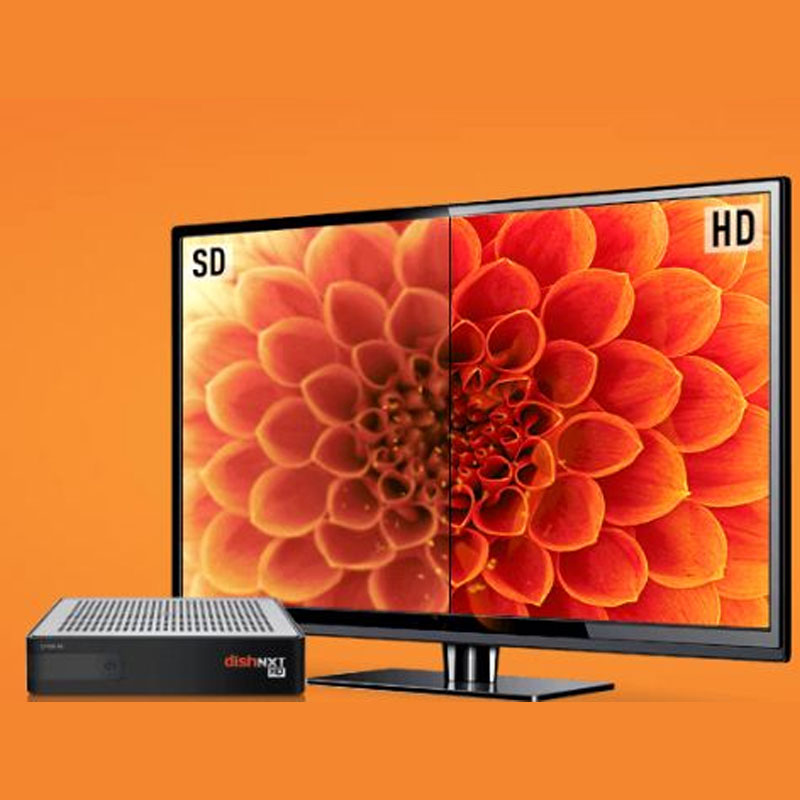
    Dish TV offers SD channels at Rs 8.5 per month

    MUMBAI: After an intense merger time with Videocon d2h, Dish TV is back with a new solution for its customers and this time it is offering SD channels at just Rs 8.5 a month. The DTH operator has even launched a 360-degree campaign to make people aware of it.

    Entitled “Saadhey aath mein jeeto saare heart”, the campaign amplifies the benefit of having the choice of hand-picking channels based on customers entertainment needs and how that ultimately leads to keeping everyone at home happy.

    The campaign, conceptualised by Enormous Brands, aims to connect both rationally and emotionally with customers who are managing delicate relationship balances at home. Aimed to reiterate Dish TV’s flexible and customisable entertainment packs and offerings, this campaign solidifies Dish TV’s position in the industry and showcases how its innovative offering of Rs 8.5 per channel per month is set to create a new benchmark in television entertainment.

    In the form of a TVC, the campaign showcases how a young man is being felicitated for having achieved an impossible feat – that of keeping his mother and wife happy by getting their favourite channels added on Dish TV. This unique superpower is available to all its customers and gives them the ability to choose the entertainment of their choice at a minimal price of Rs 8.5 per SD channel per month on their base pack.

    The seed of the idea came from the insight that today’s customers are often left wanting as most operators tie them down to a pre-bundled pack. Upgrading to a new pack becomes heavy on the pocket without the freedom to choose their favourite channel.

    Dish TV group CEO Anil Dua says, “DishTV has always leveraged relevant customer insights to launch and communicate new innovative offerings to its subscribers. Our product “Mera Apna Pack” under the DishTV brand is aimed at offering value, affordability and customer empowerment. We have just launched its new campaign that is aimed at showcasing the benefit of providing customers with the choice of watching entertainment that they want.”

    Dish TV corporate head of marketing Sukhpreet Singh adds, “With family TV viewing at the core of our business, our new ad campaign is here to win everyone’s heart with its creative jingle and quirky ad campaign tagline. To connect with customers, we will roll out the campaign on TV, print and digital platforms. Additionally, all our POS will have a dedicated space to showcase it.”

    Enormous Brands managing partner Ashish Khazanchi mentions that the agency’s endeavour is to make the brand more inclusive and charming. With this campaign they wanted to bring this promise alive in the context of families in a fun and enjoyable way.

  • How Harit Nagpal plans to keep Tata Sky ahead

    How Harit Nagpal plans to keep Tata Sky ahead

    MUMBAI: The DTH sector. What once seemed a lucrative arena has now seen companies getting acquired and merging, the competition being intense . Today, India is the largest DTH market in the world by number of subscribers. As on 30 September 2017, there were 66.99 million active pay DTH subscribers in the country. This does not include subscribers of free DTH services.

    A recent report published in Livemint sees Tata Sky CEO and MD Harit Nagpal stating that DTH has become a completely commoditised industry, like selling coal or steel, as everyone has access to everything today. He said, “If I drop prices, everybody will drop prices. So, there is really no differentiation. The only sustainable differentiation is process-centred, which is largely service. So, your boxes should fail less often, your picture quality should be good, your user interface should be better than anyone else’s, wherever there’s a failure, your response time should be the fastest.”

    Nagpal also revealed that Tata Sky’s current revenue is in the region of Rs 6000 crore where the current run rate (everyday recharge) is worth Rs 20 crore per day. Its revenue and profitability are increasing by 15-20 per cent y-o-y. The DTH player is witnessing subscribers mushrooming by 15-20 per cent every year. 

    Dismissing the general perception that Tata Sky is a premium service, he says that it isn’t so. However, the company has a higher proportion of high definition subscribers who pay Rs 500-600 every month. In the past five years, Tata Sky recorded 60 per cent new subscribers coming in from smaller towns and villages who pay Rs 200-220 per month, which is also a huge amount for them. For a business to be successful there has to be a balance of low, medium and high paying subs, Nagpal told Mint. Too many low-end customers will hamper profit and too many high-end ones will curb growth.

    The merger of Dish TV and Videocon to become India’s number one DTH entity has been of the key highlights of 2018 but Nagpal does not view the situation as a challenge and rather thinks Tata Sky’s numbers are equal to theirs or higher. 

    Cord cutting is a rage in the US with subscriber after subscriber giving up traditional TV services for OTT platforms like Amazon Video, Hulu, Netflix and Youtube. The internet content is either free or significantly cheaper than the same content provided via cable.

    In the US, cable costs $100 per month whereas in India it’s a mere $5. So, when Netflix or other OTT platforms are available at $10 each, a consumer would rather prefer watching the latter. But this won’t be the case in India due to the low pricing. Nagpal is of the opinion that India will never give up on TV even if people get on to watching OTT.

    Tata Sky recently tied up with OTT platforms Netflix, Hotstar, Youtube and Amazon Prime Videos in order to make them available to its subscribers. The DPO  says simply changing the customer premise equipment will allow Tata Sky subs to  receive both the signals—from the satellite and from  broadband, enabling viewers to watch on TV screen, live TV via satellite whenever they want to, and OTT via broadband whenever they want to.

    Nagpal concluded by saying that he does not feel pressure from OTTs since he is in the content business. “My life depends on the customer. I was buying content from broadcasters earlier and supplying it to the customer via satellite. The customer sometimes wants to watch the content of his choice, my job is to fetch that content for him. I am not wedded to the satellite,” he stated.

  • Tata Sky, Airtel DTH gain market share in 2017

    Tata Sky, Airtel DTH gain market share in 2017

    BENGALURU: Tata Sky and Airtel Digital TV (Airtel DTH) have reason to rejoice as they saw market share rise in calendar year 2017 as compared to a year ago. Both saw an increase by one per cent each at the end of December 2017 as compared to at the end of December 2016 according to Telecom Regulatory Authority of India (TRAI) data.

    Tata Sky had 24 per cent market share at the end of 2017 (CY-2017) as compared to 23 per cent at the end of 2016 (CY-2016), while Airtel DTH had 21 per cent share as compared to 23 per cent during the same period. Hence, the market share of Tata Sky and Dish TV, which lost one per cent market share in 2017, was the same. The other player that lost market share was Videocon d2h – its market share fell by a percentage point to 19 per cent in 2017 as compared to 20 per cent in 2016. 

    We had mentioned earlier that the share of the three major players whose numbers are available in the public  domain –(in order of number of subscribers – Dish TV, Airtel DTH and Videocon d2h) has been declining –  from about 65 per cent to 64 per cent in the Jun-Sep17 quarter to an even lower 63 per cent in the Oct- Dec 2017 quarter. 

    Please refer to the market shares of the six private DTH players at the end of 2017 and 2016 according to TRAI data:

    public://pic_1.jpg

    According to TRAI data, the overall private DTH active subscriber base grew by 4.19 million or 0.419 crore (7.8 per cent) in CY-2017 to 67.56 million or 6.756 crore from 62.65 million or 6.256 crore in CY- 2016. Comparatively, in 2016, the overall private DTH active subscriber base grew by 6.67 million or 0.667 crore (11.9 per cent) from 55.98 million or 5.598 crore in CY- 2015.

    As also mentioned by us earlier, quarterly data released by TRAI indicates that the industry added net 2.25 million or 0.225 crore subscribers for the quarter ended 31 December 2017 (Oct-Dec17 quarter), hence the final quarter of CY-2017 accounted for about 46 per cent of the net subscribers added during the year. The Oct-Dec17 quarter had the highest quarter-on-quarter pay-TV DTH subscriber growth in CY- 2017 at 3.45 per cent.

    We’d said that CY-2017 saw muted pay-TV DTH subscriber growth. Those numbers were based on the results declared by the above mentioned three private DTH players.

    It must also be mentioned that the government’s FreeDish DTH service is the largest DTH player by far in terms of subscribers with an estimated 22 million or 2.2 crore subscribers in 2016 as per the KPMG-FICCI Indian Media and Entertainment Industry Report 2017 (KPMG-FICCI M&E Report 2017) titled Media for the Masse: The Future Unfolds. It must however be noted that an exact number for registered or active subscribers is not available since this is a free DTH service. Also, the merger of Videocon d2h with Dish TV has created the largest private television carriage player in India and quite likely the second largest in the world, be it cable, internet television or DTH or any other.

  • Tata Sky coughs up Rs 561 crore as licence fee for FY 2017-18

    Tata Sky coughs up Rs 561 crore as licence fee for FY 2017-18

    MUMBAI: Direct-to-home operator Tata Sky has paid Rs 561 crore as licence fee to the government for 2017-18 financial year, according to a statement released by the company.

    The company paid a total of Rs 2,200 crore in the last fiscal year ended on 31 March 2018. This amount includes GST, state entertainment taxes and some other taxes.

    Commenting on the development, TataSky MD & CEO Harit Nagpal said: “With the payment made today, we have paid licence fee, past and current as per specified rates, regardless of pending litigations between the government and the platforms.”

    The Ministry of Information & Broadcasting (I&B) rules mandate DTH operators to pay 10 per cent of their gross revenue as their annual fee to the government. DTH operators, however, contend that the MIB should charge licence fee based on adjusted gross revenue left after paying several taxes and others.

    In 2014, the DTH operator had paid Rs 383 crore to the government as licence fee for the previous fiscal and arrears.

    In the same year, the MIB had sent notices asking them to pay licence fee totalling Rs 2,066 crore within 15 days. DTH operators had challenged the licence fee demand in the Telecom Disputes Settlement and Appellate Tribunal (TDSAT) in 2014.

    Tata Sky, a joint venture between Tata Sons and 21st Century Fox, has presence across 1.5 lakh towns with over 18 million connections.

    The Telecom Regulatory Authority of India (TRAI) has in its recommendations to the MIB said that the DTH licence period should be increased to 20 years while the licence fee should be charged as 8 per cent of adjusted gross revenue (AGR) where AGR is calculated taxes paid to the government.

    Also Read :

    Tata Sky brings Netflix content for customers

    Dish TV-Videocon d2h to bank on economies of scale


  • Dish TV-Videocon d2h to bank on economies of scale

    Dish TV-Videocon d2h to bank on economies of scale

    MUMBAI: The  long-awaited fusion of Dish TV and Videocon d2h  finally saw the light of day  on 22 March 2018. The pioneer in the direct-to-home (DTH) sector, Dish TV, and the fast-growing Mumbai-hqed and Dhoot family promoted service came together making Dish TV Videocon  d2h the largest pay TV operator in India and among  the top three in the world.

    The merged TV distirbution platform  will benefit from economies of scale while leveraging the individual strengths of the two services. One of the biggest attractions for the Jawahar Goel and Essel group promoted Dish TV as the acquirer was Videocon’s significantly higher average revenue per user (ARPU) as compared to Dish TV. While the former had an ARPU  of Rs 210, the latter’s ARPU stood at Rs 155-160. The combined ARPU is expected to be Rs 180. Owing to competition from Free Dish and other operational roadblocks, Dish TV had a lower ARPU but things are on the upswing, according to Dish TV CFO Rajeev Dalmia.

    Going forward, the acquirer, Dish TV, plans to keep the two brands independent in order to explore the regional opportunities as stated by Dish TV group CEO Anil Dua in an interaction with Indiantelevision.com.

    For any merger of this magnitude, integration is a big challenge and Dish TV is no exception. To ease matters, the company is concentrating on cultural integration in a bid to get the ship in order. The management undertook a cultural survey with 2000 participants so as to ease the pain of integration. Though still it has only been more than a month since the merger, the two operators’ office premises, logistics and warehouses have already been combined. Dua reiterated that the combined entity would draw synergies to the tune of Rs 510 crore through revenue aggregation and cost savings.

    In case of geographical capability, both brands bring different strengths to the table. The consolidated entity is expected to become a pan-India behemoth with its combined 29 million subscribers with Dish TV contributing with 16 million subscribers and Videocon d2h pitching in with  13 million users as on 31 March 2018.

    “Dish TV’s has always had benchmark content cost in the industry while Videocon’s content cost has been on the higher side,” said Dua acknowledging the disparity. Dish TV’s cost of content is 30-31 per cent of subscription revenue currently while the number for Videocon is higher at 36 per cent. He pointed out that the combined cost of content will be lower and hover around 30 per cent. “We want to maintain the cost of content as a percentage of total revenue—including advertising, carriage fees, value-added services along with other income—for the combined entity at 28 per cent,” added Dalmia.

    One of the key blocks of the merger is restructuring and assigning promising personnel to important positions. The management, which conspicuously does not feature anyone from Videocon, has appointed two marketing heads—one for each brand. Dish TV has put in place a common business head for North India and East India for the brands while also having a common business head for South India and West India.

    “We have one national service head for a common model of service across the country. Moreover, Ranjit Singh will continue to be the legal head for both brands,” Dua pointed out.

    Post merger, Dish TV wants to exploit the regional strengths without limiting the strength of the individual brands. The DTH operator has retained two independent brands as they have two marketing heads and two separate sales teams for each brand.

    Also Read:

    Videocon d2h, Dish TV merger comes to fruition

    Dish TV announces fresh Videocon d2h Nasdaq delisting date