Category: DTH

  • 54 channels submit bids for 44th DD Free Dish e-auction

    54 channels submit bids for 44th DD Free Dish e-auction

    MUMBAI: Fifty four channels have submitted bids for the 44th DD Free Dish e-auction, which will be tentatively held on 24 February for MPEG-2 slots.

    HSM channels: 

    According to sources close to the development, two Hindi GECs Dangal and Big Magic have bid for the auction. Among other HSM channels, seven Hindi music channels including Showbox, 9XM, MTV Beats and eleven Hindi movie channels like B4U Movies, Enter10 are also looking at vacant MPEG-2 slots. All the major players like News18 India, NDTV India, Zee News, Aaj Tak, Republic Bharat have also placed their bids.

    Regional channels: 

    In the regional cluster seven Bhojpuri channels including Big Magic Ganga, Zee Biscope, B4U Bhojpuri, one Marathi channel, four Punjabi channels and four regional news channels have placed their bids. Moreover, four religious channels are also participating the auction.

    Recently DD Free dish increased MPEG-2 slots on its platform. Private TV channels can participate in this e-auction to add TV channels on DD Free Dish, for the period from 1 April 2020 to 31 March 2021. In the 42nd e-auction for allotment of 8 MPEG-2 slots the channels that came on board were mostly new.

    As per the rules mentioned by the public broadcaster Prasar Bharati, only satellite channels licensed by the Ministry of Information and Broadcasting (MIB) would be allowed to participate in the allocation. International Public Broadcasters licensed/ registered/permitted by the MIB can also participate in the e-auction.

  • Tata Sky’s first ever App only flash sale ‘Tata Sky JingalalaAPPiness Offers’ live from 11th February

    Tata Sky’s first ever App only flash sale ‘Tata Sky JingalalaAPPiness Offers’ live from 11th February

    MUMBAI; Tata Sky, India’s leading content distribution platformannounces its first ever App only flash sale,‘Tata Sky JingalalaAPPiness Offers’on theTata Sky Mobile App.Establishing the mobile app as a one stop destination for both – utility and content, the weeklong offerings on the App are designed not only to elevate customer experience but also heighten entertainment bonanza like never before. With an objective to drive engagement, this initiative will serve the dual purpose of highlighting the ease of content availability and convenience of managing your Tata Sky account – anytime, anywhere. 

    Speaking on the flash sale, Pallavi Puri, Chief Commercial Officer, Tata Sky said,“Tata Sky JingalalaAPPiness Offers’ will provide subscribers with best-in-class product offerings thereby enhancing user engagement on the go. With an exciting and vast selection of deals and offers customers can look forward to an integrated entertainment experience that not only gives them access to a diverse content library but empowers them to customize their viewing options according to their entertainment needs”

    ‘Tata Sky JingalalaAPPiness Offers’will feature a wide range of offerings such as cashback on recharges and amazing discounts on subscription of Tata Sky Services that are available on the Tata Sky mobile App. Tata Sky has partnered with four leading e-wallets – LazyPay, FreeCharge, PayZapp and MobiKwik for ease of payments. Additionally, allsubscribers can view 400+ Live TV channelsfor freeon the app as well as avail benefits on wide array of Tata Sky services such as Tata Sky Fitness, Tata Sky Classic Cinema, Tata Sky Hollywood Local, Tata Sky Theatre, Tata Sky Fun Learn and much moreat just Re 1/-each for the first month. Subscribers can also avail of special offers on box upgrades and additional connection at home. 

    This is a one of a kind initiative in the pay tv space and another step towards delighting Tata Sky subscribers on the go.

    Offers aisekiaap Khushi se phoolenasamayenge – With so many offers at hand, your happiness will know no bounds. This is the sentiment that Tata Sky has tried to capture through the communication for the campaign. Conceptualized by Ogilvy, the campaign communication is quirky and fun, and uses colloquially used phrases to showcase the exaggerated emotions one expresses when one receives the incredible offers.

    Listed below are a few of the Tata Sky JingalalaAPPinessOffers:

    Recharge offers

    LazyPay

    50% Cashback up to Rs 100 on next Tata Sky recharge

    FreeCharge

    Rs50 cashback on recharge of Rs200 or more

    PayZapp

    15% up to Rs75 cashback on recharge of Rs400 or more

    MobiKwik

    Rs 75 cashback on minimum recharge of Rs 500 or more

    Content

    400 Channels Free

    Get all channels on Tata Sky App free during the app week

    Services

    @ Re 1

    Tata Sky Services that are available only on mobile app can be subscribed at Re.1/- each for the first month

    Offers

    Upgrade

    Special offer on a box upgrade

    MultiTV

    Special offerfor an additional connection at your home

    Android Box upgrade

    Android box price is Rs. 5999 & get 1000 Rs cashback in Tata Sky Account

    The Tata Sky mobile app enables subscribers to manage their Tata Sky account more efficiently by providing them with the ease of adding or removing channels through the mobile app. The mobile app allows subscribers to experience Live TV,On-Demand and Remote Record to set recording on the Set-Top box.Tata Sky has seen remarkable consumption on the mobile app and to keep up and further build the momentum, it now offersa variety of Tata Sky Services and utilities at a minimal cost to bring subscribers delight on the go.

    For all new subscribers, Tata Sky is offering free access to all channels for a month while providing free access to its existing users for a week.

  • Airtel Digital TV revenue stands at Rs 792.2 crore in the third quarter

    Airtel Digital TV revenue stands at Rs 792.2 crore in the third quarter

    MUMBAI: Telco giant Bharti Airtel’s direct-to-home (DTH) arm Airtel  Digital TV’s  total revenue increased to Rs 792.2 crore in the third quarter from Rs 789.3 crore in the previous quarter. The DTH operator’s EBITDA stood at Rs 544.1 crore for the quarter compared to Rs 560.7 crore in the trailing quarter.

    “This quarter, we witnessed strong 4G customer additions of 2.1 crore. Digital TV revenue witnessed a growth of 15.6 per cent on an underlying basis (decline of 23.3 per cent on reported basis due to reporting changes in DTH pursuant to the new tariff order). Airtel business revenue witnessed a growth of 6.6 per cent on YoY basis,” the company said.

    The DTH operator added 101,000 subscribers during the quarter compared to 181,000 in Q2. The average revenue per user (ARPU) remained flat at Rs 162 while the monthly churn increased to 1.8 per cenr  from 1.6 per cent. During the current quarter, the company incurred a capital expenditure of Rs 350.9 crore.

    Airtel Digital TV currently offers a total of 648 channels including 86 HD channels, 7 international channels and 4 interactive services.  As on Dec 31, 2019, the operation was available in 639 districts.

    Overall, the telecom major reported a consolidated loss of Rs 1,035 crore for December quarter compared with a profit of Rs 86 crore in the same period last year.

  • PlanetCast achieves tier 3 certification from WTA

    PlanetCast achieves tier 3 certification from WTA

    MUMBAI: PlanetCast has achieved tier 3 certification for its New Delhi Teleport under WTA’s Teleport Certification Programme by  The World Teleport Association (WTA.

    Since its introduction at IBC 2015, the certification programme has quickly become popular.  Starting with one certified facility in 2015, the programme has added 40 teleports in 3 years, and at present has 12 teleports engaged in the quality evaluation process. Certifications have been issued to teleports operated by Servicio Satelital, USEI, AXESS Networks (AXESS), STN, Eutelsat, du, COMSAT, Optus, Elara Comunicaciones, GlobalSat, Talia, Telenor, Telespazio, Vivacom, Cyta, Singtel, CETel, Etisalat, Hawaii Pacific Teleport, Intelsat, Speedcast, Telstra, Primacom, Santander Teleport and Arqiva. The industry has quickly adopted the transparent, independently verified standards as a means for teleports to differentiate themselves and for customers to choose the price-performance level suitable for their applications. 

    To achieve provisional certification, a teleport operator completes a +170-item questionnaire and submits it to WTA.  The Association analyzes the data based on standards established by its certification committee and issues the provisional certification based on the self-reported information.  The teleport then has six months to achieve full certification, for which an auditor is dispatched to visit the teleport, provide independent validation of the data submitted in the questionnaire, and identify additional factors that may positively or negatively affect the score. Full certification is issued at a tier number from 1 through 4, of which 4 represents the highest degree of excellence, and remains in effect for 3 years.

    Planetcast founder director MN Vyas said, “We operate the largest teleport in this part of the world and we are providing services to top broadcasters across the globe. The certification received from WTA is a part of our continued efforts to create an environment of high quality services emerging from India.”

    “With the addition of PlanetCast, WTA has fully certified teleports operating in the US, Columbia, Mexico, Dubai, the UAE, the UK, Germany, France, Spain, Italy, Norway, Slovenia, Bulgaria, Australia, Indonesia, India and Singapore,” said executive director Robert Bell.  “The growth of the program speaks to its value as a market differentiator and the value of the insight it gives operators into the strengths and weaknesses of their facilities and procedures.” 

    WTA’s Teleport Certification Programme serves both teleport operators and their customers by creating an objective, transparent, and internationally accepted method for teleport operators to document the quality of their operations for customers and strategic partners. It also provides a means for customers to select teleport vendors delivering the price-performance level that is appropriate for their applications.

  • Dish TV adds one more channel in its bouquet, launches Fitness Active

    Dish TV adds one more channel in its bouquet, launches Fitness Active

    MUMBAI: With an aim to make its users fit, Dish TV, a direct-to-home (DTH) service provider, has come up with the Fitness Active channel. The service provider has bouquet of channels with the brand called Active.

    The Fitness Active channel to feature Bollywood actor Tiger Shroff teaching and explaining about mix martial art (MMA) along with his younger sister Krishna Shroff, who is also a fitness freak.


     According to Dish TV’s official Twitter, “Our Mixed Martial Art guru is here to give you fitness goals this 2020. Join the gang of @iTIGERSHROFF  & Krishna Shroff with #FitnessActive.”

    Urging subscribers to start the new year on a healthy note, the service provider said gives us a “missed call on 18003157803 from registered mobile number to activate the channel at just Rs 40 per month.”

    In a video promo shared on Dish TV’s official Twitter, Tiger Shroff says, “ MMA helped me fight my battles very early in life; that’s why I started MFN – Matrix Fight Night along with my baby sister Krishna, to motivate everyone to win the war within.”

    Dish TV already have a bouquet of channels such as Cine Active, Music Active, Movies Active, Comedy Active, Cooking Active, Bhakti Active, Thriller Active among others.  

  • Subscribers’ DTH/Cable bills to go down by 14% for a-la-carte channels: ICRA

    Subscribers’ DTH/Cable bills to go down by 14% for a-la-carte channels: ICRA

    MUMBAI: The recent Telecom Regulatory Authority of India (TRAI) amendments over tariff charges could potentially lower the direct-to home (DTH)/ cable bills of the subscribers up to 14 per cent from the present levels, a credit rating agency ICRA said in an analytical report.

    According to a press statement, ICRA said that the amendment encourage subscribers to exercise their right to choose and opt for a-la-carte channels. TRAI on 1 January 2020 amended some provisions of the Telecommunication (Broadcasting and Cable) Services (Eight) (Addressable Systems) Tariff Order, 2017.

    The amendments are slated to come in effect from March 1, 2020.

    The Tariff Order released in 2017 had allowed the subscribers to choose the nature of channels as free to air (FTA) or pay channel as well as declare a-la-carte pricing of all channels.

    However, contrary to TRAI’s expectations, the rating agency said, given the high channel pricing of the popular general entertainment channels (GECs) and sports channels (with 66 of the 330 existing pay channels being priced at the ceiling rate of Rs. 19 per month).

    This move by broadcaster had tarnished the very purpose of the Tariff Order, resulting in up to 23% surge in bills for subscribers, ICRA estimated, and continued the dominance of bouquets in the subscription patterns.

    ICRA’s vice president Kinjal Shah said, “The recent amendments will adversely impact the broadcasters, revenues, the subscription revenues are also expected to reduce (as subscription charges for a-la-carte channels will reduce and due to the expected shift of subscribers from bouquets to a-la-carte selection).”

    Shah further said, “Furthermore, given the reduction in the number of channels that can be offered in a bouquet (for a given price), bundling of non-popular channels with established ones will reduce, thereby impacting their reach and thus advertisement revenues for the broadcaster. This, however, would eventually lead to an increased focus on content quality.”

    TRAI in the amendment of 2017 tariff order has also increased the channel offerings for the network capacity fee (NCF) of Rs. 130 (excluding taxes) per month to 200 standard definitions (SD) (pay or FTA) channels from the present 100 SD channels.  

    The amendments are expected to be a mixed bag of positives and negatives for DPOs. The overall reduction in NCF and the cap on NCF to be charged for additional TVs in a multi-TV home is negative for the DPOs.

    TRAI has, however, allowed DPOs to offer different NCF across geographical regions (state / district / towns) as well as offer promotional schemes (on NCF / Distributor Retail Price – DRPs), up to 90 days at a time, twice in a calendar year. DPOs are additionally allowed to offer discounts on NCF / DRPs for long-term subscription plans.  

    ICRA’s assistant vice president Sakshi Suneja, said, “After the recent changes in the tariff, the prices of popular GECs and sports channels are expected to reduce from Rs. 19 per month to Rs. 12 per month, given the revised ceiling rates for a-la-carte channels, to be included in bouquets.”

    “The amendments also seek to improve the attractiveness of a-la-carte channels, by reducing discounts that can be offered on bouquet pricing to 33% (vis-a-vis a-lacarte prices, from the existing average levels of discounts of 40-54%),” Suneja said.

    She pointed out that through the introduction of two new conditions: i) capping the maximum retail price (MRP) of a-la-carte channel that can be included in a bouquet to up to three times of the average MRP per month of a pay channel of that bouquet and ii) MRP, per month, of a pay channel to not exceed the MRP, per month, of the bouquet containing that pay channel.

  • Amazon Fire TV stick active users soar to 40 million globally

    Amazon Fire TV stick active users soar to 40 million globally

    Mumbai: As preferences of people shifting from cable TV to video-on-demand, Amazon Inc on Monday said its streaming device Fire TV stick has surpassed over 40 million active users globally.

    Amazon Fire TV has successfully left behind the Roku TV, a US-based digital media player that allows customers to access internet streamed videos. Roku Inc had 32.3 million active users in November, said PTI report.

    Apple TV, Chromecast and Fire TV have opened new avenues for the customers to stream internet content on television sets.

    The Fire TV stick launched by Amazon in 2014, features content from Netflix, Amazon Prime Video among others and casts video directly to the television.

  • Tata Sky Theatre to premiere iconic Marathi play ‘Natsamrat’

    Tata Sky Theatre to premiere iconic Marathi play ‘Natsamrat’

    MUMBAI: Tata Sky Theatre in partnership with Zee Theatre is all set to premiere the most gripping, unconventional play of Marathi ‘Natsamrat’ as tribute to the Late Dr. Shriram Lagoo, who played a leading role in the play written by Vishnu Vaman Shirwadkar.

    The joint venture between Tata Sky Theatre and Zee Theatre brings theatre enthusiasts a chance to watch the most celebrated and award-winning plays across genres from the comfort of their homes.

    The Marathi play features Mohan Joshi and Rohini Hattangadi in the lead role. It was first staged in 1970 and has seen many runs over the years with several theatre stalwarts in lead roles.

    ‘Natsamrat’ is a first Marathi play to be premiered on the channel that portrays the story of a veteran actor Ganpat Belwalkar, who must choose between a successful past and the realities of being a father to ungrateful children.

    The Marathi play ‘Natsamrat’ was also adapted into a film which received multiple accolades and has been well-received by the audience across the country.

    The iconic play Natsamrat could be watched every day until 4 January alternately at 12 pm and 7 pm on Tata Sky Theatre. It can also be viewed on the Tata Sky Mobile App under the Live TV section.

  • DTH service providers say STB interoperability unlikely to succeed in current conditions

    DTH service providers say STB interoperability unlikely to succeed in current conditions

    MUMBAI: Tata Sky, Dish TV and Hathway – Indian direct to home (DTH) service providers have provided their inputs to Telecom Regulatory Authority of India (TRAI)’s consultation paper on the issue related to interoperability of set-top-boxes (STB).

    According to Tata Sky’s response, having interoperable STBs will not be desirable due to commercial, technical, security and service-related reasons. The response stated that interoperability will only be viable if the new design of STB will have a reasonable cost with highest standards of quality, but not have any detrimental impact on the STB’s security and privacy features. The current STB ecosystem allows operators to provide secure solutions like HDCP, water-marking, fingerprint, among others at an optimum cost. The serious concern is, will third party manufacturers, developers be able to maintain the same security standards in the interoperable STB?

    As different operators keep entering the market at different points of time, operators use different compressions standards like MPEG2, MPEG4, HEVC, among others. The presence of multiple compression standards comes in the way of interoperability. As the STB model, functionality, processor speed, memory, software configuration, encryption and transmission standards are different with different operators, this will lead to serious compatibility issues if interoperability is attempted.

    The interoperable STB would soon get outdated and obsolete as a requirement would arise for operators to upgrade their STBs. The operator would get stifled by the slow pace of upgrade.

    The BIS standardisation process of various STB features would require significant cost and long gestation period. In the current scenario of the sector, with aggressive and unregulated competition coming in from OTT and mobile operators, STB interoperability is not feasible.

    According to Dish TV’s response, TRAI envisaged that it is not desirable to roll out interoperable STBs for a number of reasons, apart from the technical factors elaborated by Dish TV.  The response states that the dynamics of the STB industry are very rapid and will enable new product cycles at relatively low cost and advanced features which will get impeded, if an elaborated mechanism of interoperability including that of digital video broadcast (DVB)-C and DVB-T will be gone through. It will increase the cost at the same time disproportionately.

    TRAI should not ignore the devices including the STBs the come with broadband and OTT delivery, which are the rapidly gaining segments, having their own technologies of DRM and content protection, based on two way interconnectivity rather than one way DSA and key transfer algorithms.

    The structure of STBs vary in the cable and DTH segments, which does not warrant any interoperability to be mandated between them. DTH STBs have multiple functions that become redundant in cable-based STBs and vice versa.

    Hathway believes that there should be a provision for interoperability of STBs because with the rapid technological advancement, it will provide lot of options to subscribers. The concept is in a preliminary stage and there are not any known examples of STB interoperability available in any other country. The concept could proceed in India methodically but also need to think about various aspects and interests of all the stakeholders involved in the broadcast service value chain.

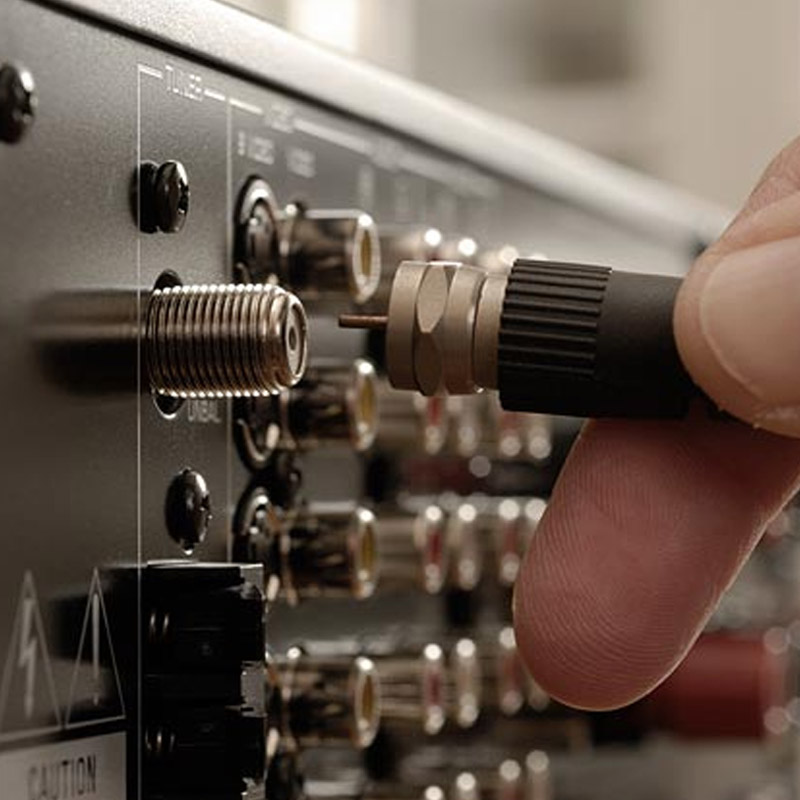
    At present, the STB architecture is designed in a way which meets the requirements of conditional access system (CAS). STB needs to be tightly bound with the CAS system for content security, which requires some parts of the CAS software to be hardcoded in the STB chipset during the manufacturing process, because of which not all chipsets support all available CAS systems. CAS is a very important component in the eco system of digital TV service. It defines the content security, specifies minimum requirement of STB’s CPU, RAM and FLASH memory, operating system and the requirement of a critical head end component – Multiplexer (MUX).

    MUX is used to encrypt channels based on ECMs generated by the CAS systems. All CAS systems have different methods of generating ECMs, that depends on various parameters like service ID, transport stream ID, source channel, session ID, among others. The length of ECMs varies in different CAS systems, which makes it difficult for MUX vendors to support all available CAS systems.

    The benefits of interoperability cannot be passed on to the subscribers in the case of an MSO, since its functioning is restricted to a specific area. The infrastructure and the set up for provision of services with a MSO and a DTH operator are completely different. The provision of service with a DTH operator is a wireless infrastructure, while with a MSO is a wired set up and depends on a local cable operator for end mile connectivity. A DTH operator can have a boundless reach, but MSO will have a limitation of reach due to infrastructure and geographical conditions.

    Due to the disparity in re-transmission infrastructure of a DTH operator and MSO, the DTH operator will not be in a position to give access to subscribers or customers of a MSO. Hence, STB interoperability for MSO and DTH operators should not be allowed.

  • Dish TV India, Tata Elxsi collaborate to launch ‘Orbit’

    Dish TV India, Tata Elxsi collaborate to launch ‘Orbit’

    MUMBAI: Dish TV India has collaborated with Tata Elxsi to roll-out ‘Orbit’, its new user interface (UI) for SMRT & Magic range of connected products for both its brands DishTV & d2h. The plan has been executed for consumers to have seamless TV and online viewing experience. Orbit is packed with an array of exciting features addressing best of aggregated content from various traditional and online sources available on the platform.

    With a simple yet exceptional UI design, Orbit is developed to create a balance between entertainment and information by providing smooth integration of Live TV, OTT, and other value-added services. DishTV India collaborated with Tata Elxsi for doing the user experience (UX) enhancements for its connected devices. Thorough consumer research, interaction modelling, multiple rounds of UI design testing was conducted to provide a simple, attractive and engaging interface, resulting in efficient and all-rounder user experience. The new interface will leverage artificial intelligence and machine learning to make it easier to find content on TV where users are restricted to traditional remotes.

    Dish TV India Ltd executive director & group chief executed officer Anil Dua said, “With the broadcast industry adopting technology at such a rapid pace, consumers today are more empowered and better informed than ever before. They expect high performance and top end innovation along with aggregated content.  At Dish TV India, we are continuously customizing our offering based on the needs of the customer, we are delighted to launch Orbit in association with Tata Elxsi, with functionalities such us search, navigation and browsing, so that a large base of our audience has an even more engaging hybrid experience on our service. With this, we hope to continue to remain the most preferred choice for consumers.”

    “Consumers have entrenched habits associated with TV viewing but there is a need for a better and more intuitive experience for navigation and consumption in this new age of digital products. Tata Elxsi has decades of experience in this space, both in design and in technology creation. Working closely with our development engineers, we were able to create a completely new, yet intuitive UI for our users. This not only created a robust product performance but also created a visual identity and a branded experience for our client Dish TV India Ltd,” said Tata Elxsi chief designer Narendra Ghate.

    The new UI will provide users an access to the featured content and simultaneously to all the new and trending content available on different OTT apps with deep-linking support. A dedicated ‘my zone’ section is designed to quickly access items pinned by user along with recommendations personalized basis one’s preferences. The refreshed look is now live for Dish SMRT and d2h Magic range of products and would soon be rolled out on recently launched android set-top box Dish SMRT hub.