Category: DTH

  • TRAI seeks suggestions to prevent misuse of fixed broadband licence fee exemption

    TRAI seeks suggestions to prevent misuse of fixed broadband licence fee exemption

    KOLKATA: One of the sectors that received a rapid boost last year amid the work from home scenario was fixed-line broadband. After years of tepid growth, deep-pocketed players, as well as smaller cable operators began increasing focus on the segment as the demand escalated.

    On Wednesday, the Telecom Regulatory Authority (TRAI) issued a supplementary consultation paper in this regard. The paper titled ‘Roadmap to promote broadband connectivity and enhanced broadband’ sought feedback from stakeholders on issues such as incentivisation, licence fee exemption, how to prevent licence misuse and verify revenue from the segment.

    Back in March, the Department of Telecommunications (DoT) wrote a letter seeking consolidated and updated recommendations from TRAI on the proliferation of fixed-line broadband in the country.

    “DoT has raised certain new issues like exemption of the licence fee on the revenues earned from fixed-line broadband keeping in view the current factual matrix and relevant issues, the likelihood of misuse by the licensees through misappropriation of revenues due to the proposed exemption,” TRAI said in an official statement.

    TRAI in 2015 had recommended that the licence fee on the revenues earned on fixed-line broadband should be exempted for at least five years. Apart from misuse of exemption, DoT has asked TRAI to give a reference on if the proliferation of fixed-line broadband services can be better promoted by providing direct benefit to consumers for usage of fixed-line broadband services.

    Although TRAI released two consultation papers on broadband-related issues in 2015, 2020, none of them discussed these issues. Hence, it started the supplementary consultation.

    The latest paper has also invited suggestions on how to permit the use of public places and street furniture for the effective rollout of 5G networks as it would play a significant role in offering good quality services by expanding the network coverage and going closer to the consumers.

    “It is also pertinent to understand the process which can be used by local bodies to grant permissions for use of street furniture and the associated policy and regulatory interventions,” it added.
  • Cable TV, broadband services impacted, as Cyclone Tauktae slams into west coast

    Cable TV, broadband services impacted, as Cyclone Tauktae slams into west coast

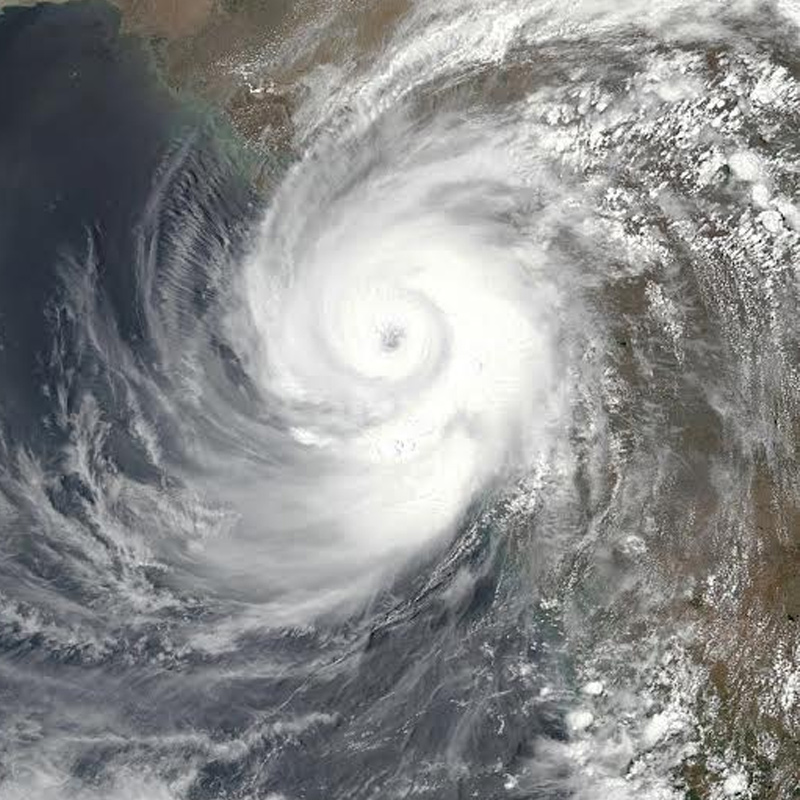
    KOLKATA: Cable TV services and broadband services were impacted across various places in Maharashtra and Gujarat, as Cyclone Tauktae left a trail of destruction along the west coast. Many users took to Twitter complaining about the long hours of network outage. However, both video and broadband services were restored within 12 hours, say cable operators

    NXTDigital MD & CEO Vynsley Fernandes said there were evident impacts on services especially in areas with overhead fibres and overhead wires. But timely weather warnings helped in making arrangements in advance. MSOs had placed teams in strategic locations to address issues and respond. “In most places, the network was restored in the shortest possible time. It did not take more than 12-14 hours,” Fernandes said.

    “There were damages but we were able to mobilise the staff and the workforce immediately. Major lines both for cable and broadband were down,” said Maharashtra Cable Operators Foundation (MCOF) president Arvind Prabhu. “There may still be some minor problems in certain households and we are in the process of addressing those as well.”

    The Konkan region was among the most-affected, as it witnessed the devastating impact of one of the most intense storms to hit the west coast. “Some independent control rooms reported problems in the Konkan region. In Mumbai city, there were issues mostly with fibre cables and overhead cables,” Prabhu added.

    GTPL Hathway cable TV head and chief strategy officer Piyush Pankaj said, the services were disrupted for around 3-4 hours in most areas. “But we were well-prepared this time. Even materials like wires were ready in advance to immediately address damages like a wire being cut or washed up,” he added.

    According to MSOs, cable TV was less impacted than broadband services as the latter not only faced connectivity issues but stress on speed as well. The impact on speed persisted for a longer time.

    Most importantly, the operators say, they learnt from two cyclones of 2020- Nisarg and Amphan after which they incurred huge infrastructural losses, especially in West Bengal. The staff had to invest more than a month to normalise the connections with damage of lakhs of set-top boxes, fibres of few crores.

  • Airtel reports growth for DTH, home broadband segment in Q4

    Airtel reports growth for DTH, home broadband segment in Q4

    KOLKATA: Airtel Digital TV, Bharti Airtel’s direct-to-home (DTH) segment has reported Rs 767.3 crore revenue in q4 FY21 compared to Rs 603.5 crore in the corresponding quarter of the previous financial year, clocking a 27 per cent year-on-year growth.

    The DTH segment has raked in Rs 248.3 crore profit in the quarter, up from Rs 152.8 crore in the same quarter a year ago. However, both profit and revenue have declined compared to the third quarter of FY21. The company deployed Rs 369 core capex for the quarter compared to 251.4 crore in Q4 FY20.

    Airtel Digital TV witnessed a decline in customer base by 156 K during the quarter from 17.9 million in Q3 to 17.7 million in Q4, despite a growth of 6.6 per cent from 16.6 million in the corresponding quarter last year. ARPU for the quarter was at Rs 144 as compared, down from Rs 154 in the corresponding quarter last year.

    Homes business segment witnessed revenue growth of five per cent year-on-year to reach 128.8 crore. The company’s focus on re-calibrated offerings and launch of Xstream bundles, with content and unlimited internet, to accelerate penetration has resulted in the highest ever net addition of 274K to reach a total base of 3.07 million, it stated. On a year-on-year basis, the customer base increased by 27 per cent.

    For the quarter, revenues from Homes operations were Rs 600.9 core as compared to Rs 572.5crore in the corresponding quarter last year and Rs 567.4 in the previous quarter.

    Overall, Airtel’s consolidated revenue stood at Rs 25,747 core, with India revenues at Rs 18,338 crore.

    “It is this relentless focus on customer obsession that has allowed us to deliver another consistent quarter in terms of performance. Our mobile revenues grew at 19.1% YoY backed by 13.7 Mn 4G customer additions. We are seeing strong momentum in our home business with 274k net adds. The Enterprise segment delivered double-digit growth. Our digital assets continue to scale and we are beginning to see strong traction in monetisation of these assets,” said Airtel India and South Asia MD & CEO Gopal Vittal

  • DTH segment expands its subscriber base by 1.01 mn in 2020

    DTH segment expands its subscriber base by 1.01 mn in 2020

    KOLKATA: The direct-to-home (DTH) subscriber base in India has reached a base of around 70.99 million in 2020, according to the Indian Telecom Services Performance Indicator Report October-December 2020 published by the Telecom Regulatory Authority of India (TRAI). This points to an addition of around one million subscribers in the year.

    While the total active DTH subscriber base stands at 70.99 million as of 31 December 2020, the segment had reported a base of 69.98 million for the last quarter of 2019.

    Tata Sky is leading the DTH segment with 33.03 per cent market share. It has marginally increased its market share of 32.58 per cent from July-September (2020) quarter. Airtel’s DTH arm has almost closed its gap with Dish TV with the former holding 25.17 per cent market share, and the latter gaining 25.45 per cent market share. Sun TV’s DTH arm has also improved its position with 16.35 per cent market share compared to 15.83 per cent in the previous quarter.

    As on 31 December 2020, there are 1,704 MSOs registered with the ministry of information and broadcasting (MIB), as against 1,613 multi-system operators (MSO) at the end of 2019. There were 1,697 MSOs including two provisional MSOs at the end of the previous quarter. Further, TRAI data indicates that there are 12 MSOs and one HITS operator who have subscriber bases greater than one million. Siti Networks, GTPL Hathway and Hathway are the top three players in this category.

    A total of 907 private satellite TV channels have been permitted by MIB for uplinking, downlinking, as on 31 December 2020. There are 326 pay TV channels including 233 SD channels and 93 HD channels and 581 free-to-air channels.

  • Negligible content investment for the urban viewer segment: Tata Sky’s Harit Nagpal

    Negligible content investment for the urban viewer segment: Tata Sky’s Harit Nagpal

    KOLKATA: The pay-TV industry in India has been highlighting the regulatory overburden in the industry for some time now. The players have been battling several legal issues, the amended new tariff order (NTO 2.0) being the most discussed one. According to Tata Sky CEO Harit Nagpal, it has not only impacted the growth of the industry, but put a halt on broadcasters’ plans to bring any change in pricing since January 2020, despite rising industry costs.

    Speaking at the recently concluded APOS 2021, the Tata Sky CEO said broadcasters will not be able to make up for this period, even if they are allowed to alter prices tomorrow. “A hole has already been created in the ability to generate revenue for the industry. There is a logjam between broadcasters and regulators via legal cases, which we are hoping settles down soon, so that broadcasters can raise prices,” he explained.

    According to Nagpal, the price hike will enable broadcasters to invest in creating more differentiated content and help them cater to increasing needs of viewers from various segments. “There has been a negligible investment for the urban viewer segment, even though it is one of the growing segments,” he pointed out, during a virtual session with Media Partners Asia executive director and co-founder Vivek Couto.

    But the Tata Sky CEO highlighted that he still remained optimistic about the growth of linear TV in India. “Both will survive; both will grow but not at the cost of each other. The people who can afford a broadband connection at home, and can subscribe to SVoD, can also afford TV because TV is much cheaper than that,” he added. “And viewers who cannot OTT subscriptions will watch content that comes only through cable and satellite. TV viewing remains a habit for Indians.”

    Recalling the days he spent days walking in and out of 1,200 customer homes in the rural area, Nagpal said there was rarely a home without a television set in India. “It’s like background noise. A family collectively consumes six to 10 hours of TV content per day. It is one segment that leaves a high opportunity for the growth of traditional TV,” he shared.

    Despite that, there are still around 100 million homes that don’t have a TV in India. The data shows that TV sales have picked up in the last few years. But there is still a gap in TV penetration this year due to the ongoing crisis, which will be filled in the next few years, he noted.

    “We have not seen signs of on-demand content or even broadband penetrating the kind of numbers that we have been hearing for the last few years. Despite the best efforts of most of the broadband operators, we have not seen numbers reaching the level that we are talking about,” said Nagpal.

    Tata Sky has embraced the change in the industry with the launch of Binge products – its smart boxes which offer both TV and OT content. The DTH operator has also marketed the product aggressively last year. 

    “We never expected these services to reach the level of DTH. We said both will grow. Maybe Binge will grow faster in terms of percentage because we have got a small base. But there is enough headroom for the satellite TV market to grow. We are pretty happy with the numbers of both sides,” Nagpal stated. 
  • Subhash Chandra denies rumors related to Dish TV India

    Subhash Chandra denies rumors related to Dish TV India

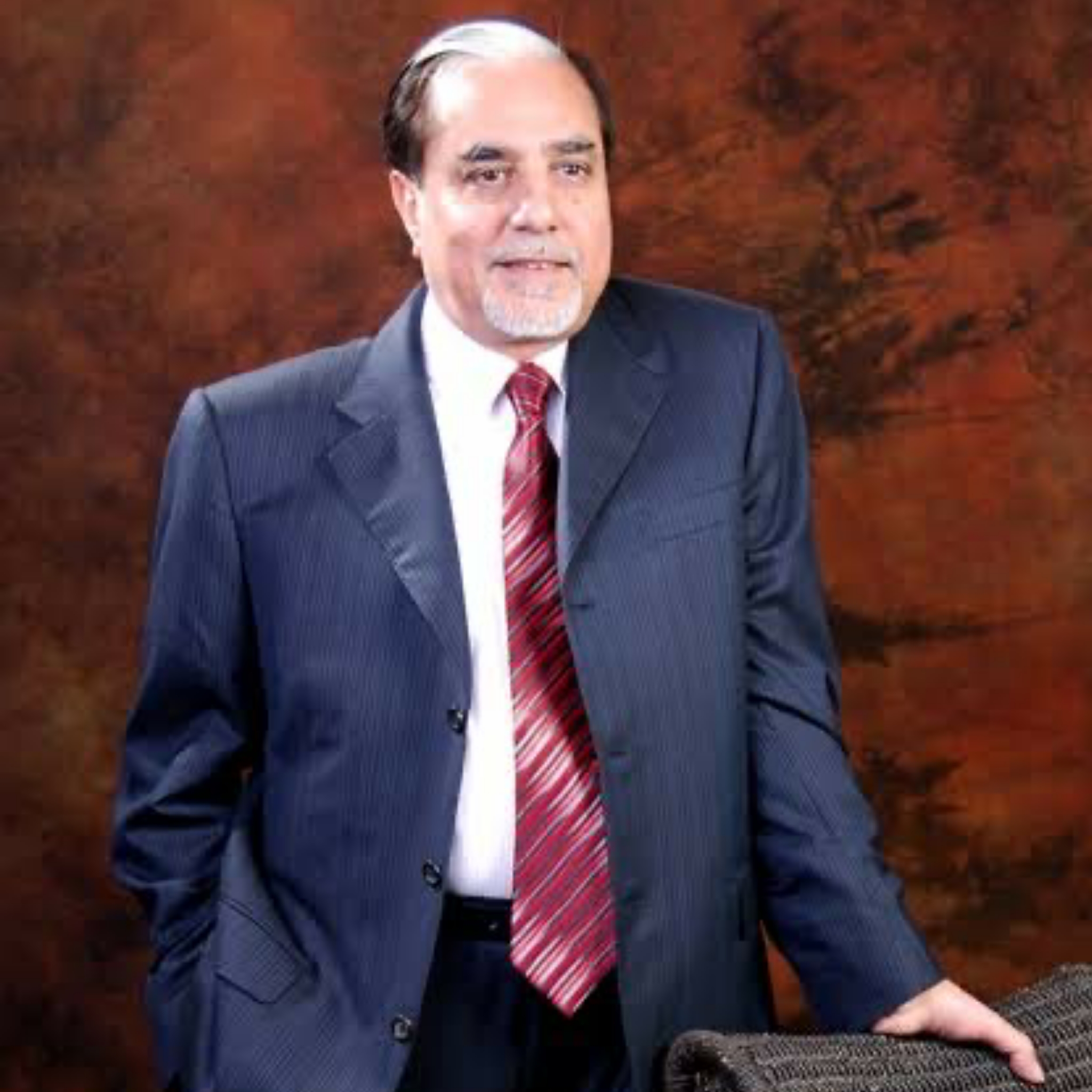
    KOLKATA: Dish TV India promoter and managing director Jawahar Goel has offered a substantial portion of his equity in the DYH operator as security for the credit facilities availed by Essel Group (Subhash Chandra Group). The group will return the security cover soon, Subhash Chandra Group official spokesperson Ronak Jatwala said in a statement.

    He went on to add that the Group is also extremely thankful to Goel. “Goel has extended support, in the form of a substantial portion of his equity in the mentioned listed entity (Dish TV), as security for the credit facilities availed by Subhash Chandra Group,” he noted.

    “The Group is confident and fully committed to return the mentioned security cover back to Jawahar Goel and his family. The group also wishes to iterate that Jawahar Goel, as the rightful owner of the equity stake in Dish TV India Ltd, had only stepped forward to offer support, and has no financial stress whatsoever in his personal capacity,” the statement added.

    Essel Group has also denied all the speculations and rumours pertaining to the shares being released from the lenders at a lower price and sold to third party investors at higher price points. These speculations are absolutely baseless and incorrect, and the company has no such intentions whatsoever, it claimed.

    “The Group has been consistently focused on its commitment towards its lenders and truly values the priceless support received during the turbulent phase, recognising their trust and belief. With their undeterred faith and support, the Group has successfully resolved majority of the issues and is on a steady path to iron out the limited pending issues,” Jatwala added.

  • In nostalgia trip, Tata Sky Seniors brings back hit DD show Swabhimaan

    In nostalgia trip, Tata Sky Seniors brings back hit DD show Swabhimaan

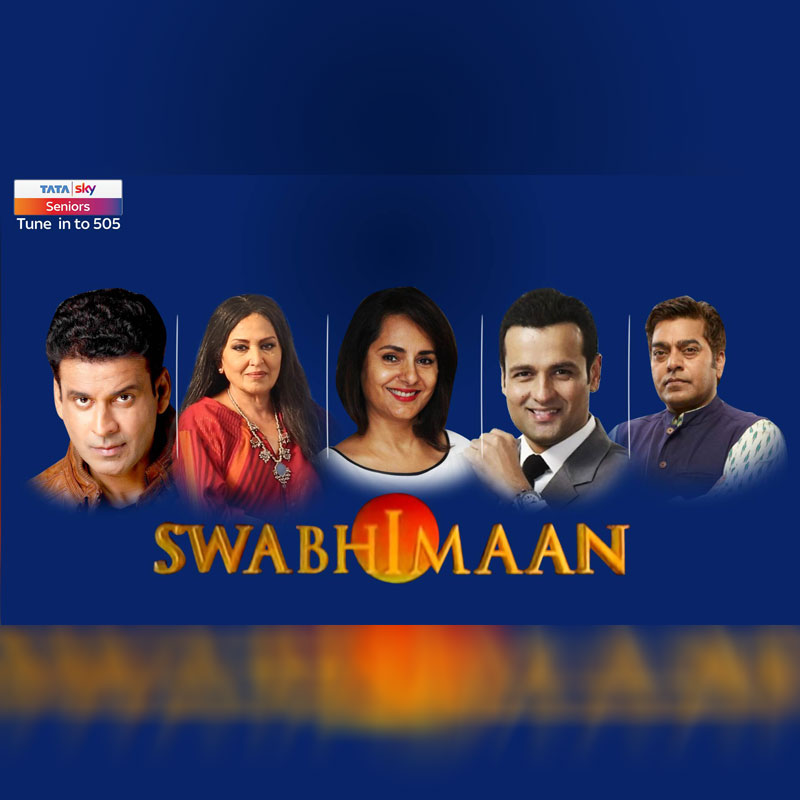
    New Delhi: The 90s’ hit Doordarshan soap Swabhimaan directed by Mahesh Bhatt and Debaloy Dey has returned to the TV screen after a long gap of 25 years. The show is being exclusively aired on Tata Sky Seniors.

    The iconic drama that ruled the afternoon primetime on television screens in the 1990s was the first TV serial to finish 500 episodes. Scripted by the columnist and novelist Shobha De and Vinod Ranganath, Swabhimaan brings back the story of succession rights and property entanglements that made waves with its original telecast in 1994.

    It is supported by a stellar cast including Rohit Roy, Manoj Bajpayee, Ashutosh Rana, Achint Kaur, Tanaaz Currim, Rajeev Paul, Anju Mahendru, Kitu Gidwani, Deepak Parashar and many more. The show narrates the story of its protagonist, Svetlana, who finds herself in a battle where there are no real winners. Insecurity, suspicion, and fear threatens to erode her vivacious spirit as she struggles to come to terms with her position – that of a pampered mistress whose tycoon patron Keshav Malhotra dies leaving her to cope with the ugly aftermath of the tragedy.

    Actor Rohit Roy said, “The audience has seen and appreciated me in several roles and characters over the years but every actor has a special show and character in his life that changes his life forever and for me, that was the character of Rishabh Malhotra in the show Swabhimaan. This iconic show returns on the TV screens, on Tata Sky Seniors, after 25 years and it is a dream come true not only for me but for a lot of people who have awaited the return of the show. Thank you so much for 25 years of love. It's time we give it back to you.”

    The show is exclusively available on Tata Sky Seniors on channel no. 505 from 19 April, Monday to Friday at 12 pm and 9 pm, with a repeat telecast at 7:30 pm on Sundays.

  • Tata Sky paints murals in homage to Gujarati cinema actors

    Tata Sky paints murals in homage to Gujarati cinema actors

    NEW DELHI: Tata Sky is painting the town red, quite literally. The DTH operator has launched a unique mural campaign in Gujarat to bring alive the local flavour by associating with popular regional film stars. 

    The campaign also embodies the concept of khidki that was introduced in the new brand purpose TVC Iss khidki ko khol dala toh life Jingalala; khidki being the embodiment of entertainment through which Tata Sky aims to provide moments of emotional gratification in everyday lives of people. 

    The campaign is conceptualised by Ogilvy and executed by Dentsu India, along with Bollywood Art Project (BAP). The ad features Ketki Dave, Rasik Dave, Malhar Thakkar, Deeksha Joshi, Siddharth Randheria and Mamta Soni, and the company believes that the inclusion of popular actors could help to build a deeper connection with the people of the state. 

    The wall murals pay homage to the Gujarati cinema actors who have been intrinsic in bringing the art and culture of the state to the forefront.

    "People’s lives are made better when they connect to quality entertainment. This thought inspired our recent national campaign – Iss khidki ko khol dala toh life Jingalala. We have now taken this thought closer to our customers in Gujarat by celebrating popular faces from Gujarati entertainment through the unique format of wall murals. These murals reinforce Tata Sky’s commitment to be an inherent part of people’s everyday lives, making quality entertainment affordable and accessible to all," said Tata Sky chief communications officer Anurag Kumar. 

    The wall murals are installed in the Lunawada, Vijapur, and Rajula towns of Gujarat. The company is now planning to expand the art installations in the form of digital wall paintings in Ahmedabad, Panch Mahals, Jamnagar, Kheda, Mahasena; gradually covering 375 walls across 133 towns. 

  • Pay-TV revenue to grow at 7 per cent CAGR over 2020-25: MPA report

    Pay-TV revenue to grow at 7 per cent CAGR over 2020-25: MPA report

    New Delhi: India is among a handful of countries where there is great scope for further penetration of television. Since the turn of the millennium, pay-TV connections have more than doubled in Indian households, though data in the public domain indicates there still remain an additional 100 million homes to penetrate.

    Now, a new report published by Media Partners Asia (MPA) forecasts India’s pay-TV industry will grow at roughly seven per cent CAGR between 2020-25. The growth will be accompanied by a significant uptick in the total industry revenues, including subscription and advertising which will reach $12.3 billion by 2025, said the industry analysts.

    The report, entitled India Pay-TV Distribution 2021 released on Monday, predicts that more than 96 per cent of India’s pay-TV homes will be digitalised by 2025.  The total pay-TV subscribers will further expand from 127 million in 2020 to 134 million during the period.

    Distribution dynamics

    The MPA has pegged India’s active DTH homes to grow from 58 million in 2020 to more than 68 million in 2025. Meanwhile, cable’s share of pay-TV subscribers will decline from 54 per cent in 2020 to 46 per cent by 2025; IPTV will pick up a small share after rolling out later in 2021.

    MPA India vice president Mihir Shah said, “Robust backend systems, the ability to offer consumers flexibility in choosing channel packages under NTO and the exit of leading private channels from DD Free Dish helped the DTH pay-TV sector grow even after the new TRAI tariff regulations came into effect.”

    Going forward, DTH will be the key driver of growth fulfilling the needs of the majority of new TV households entering into the pay-TV ecosystem. “Premium cable subscribers in urban centers remain vulnerable to churn as uptake of quality fiber-based broadband services including IPTV grows in affluent pockets of urban India,” he added.

    Monetisation, investment and the outlook for broadcasters

    The total pay-TV industry revenue, including subscription and advertising, had declined 10 per cent year-on-year in 2020 to $8.9 billion as the economic downturn post-Covid eroded advertising. The projections show that the recommencing of fresh content and live sports together with improvements in consumer and economic sentiment will lead to a sharp recovery in 2021. Pay-TV advertising will grow at 12 per cent CAGR over 2020-25 after a 25 per cent contraction last year.

    During 2020, pay-TV broadcasters generated $4.4 billion in total revenue (62 per cent from advertising and 38 per cent from subscription), down 17 per cent year-on-year. A sharp recovery is expected over the next two fiscals with the channel business and advertising primarily driving this expansion.

    According to Shah, TRAI’s heavy spate of regulations in recent years depressed investment in pay-TV content, which could have a detrimental impact on the quality of content available for the mass market.

    “We expect that more consolidation will play out in the broadcasting industry as recent tariff amendments force incumbent broadcast networks to recalibrate existing channel portfolios. The economics of less popular channels and several niche channels are no longer viable. A new and less draconian regulatory framework will help revitalise content creation in the pay-TV industry while also helping to bolster pricing power for pay-TV platforms,” he stated.

  • DD Free Dish adds six new MPEG-2 slots

    DD Free Dish adds six new MPEG-2 slots

    KOLKATA: Public broadcaster Prasar Bharati's free-to-air DTH platform service DD Free Dish has added six new MPEG-2 slots, on the back of having surpassed an estimated 40 million subscribers.

    The move comes at a time when the platform witnessed a significant jump in the overall sales of MPEG-2 slots at the recently concluded 52nd e-auction of DD Free Dish. It raked in Rs 731.34 crore from the sale of 57 MPEG-2 slots, compared to Rs 594.25 crore collected from the sales of 53 slots in March 2020.

    The third annual e-auction was conducted from 22 February and ended on 27 February. Applications were received for e-auction under six different buckets. 57 channels were allocated slots on various buckets after multiple rounds of robust bidding.

    Prasar Bharati also amended the policy guidelines for DD Free Dish slots in late February. According to the new rules, the reserve price for MPEG-4 slots have been fixed at Rs 50 lakh per annum. Earlier, the reserve price was Rs 5 lakh per annum.

    The amended rules termed ‘Policy guidelines for allotment of slots of DD Free Dish Direct-to-Home Platform to satellite TV channels (Third amendments), 2021’ came into force from 22 February. “Bidding in the e-auction of vacant unreserved MPEG-4 slots will be open to all genre (language) channels at a reserve price of Rs 50.00 Lac/annum,” Prasar Bharati wrote in a notification.

    DD Free Dish earned nearly Rs 10 crore through 53rd e-auction of MPEG-4 slots of DD Free Dish and 11 channels were successfully allocated MPEG-4 slots post the auction. According to estimates, the platform could cross 50 million households by 2025.